Two Strikes, You’re Out…

I think it’s a pretty fair assumption to say that war is a horrible thing. Although will will, by definition be a winning side and a losing side, I think we can all agree that everyone loses when war becomes the only viable option. It should be obvious that I would oppose war, given that it kind of goes against the whole “don’t spread suffering” thing that we Buddhist likes to tell people. But in an effort to let go of this morning’s sarcasm (like I could ever do that), there have been countless wars throughout human history; many of which we don’t even know about as they haven’t been covered by mainstream media.

Every war and/or battle has its horror and losses, but few have resonated with the world quite like the dropping of the atomic bombs “Little Boy” and “Fat Man” on the cities of Hiroshima and Nagasaki, respectively. Japan has always held a special place in my heart, as I’ve grown up and been exposed to its history and culture almost more so than my own. And once in a blue moon, while researching one thing I’ll stumble upon something else. This brings me to Mr. Tsutomu Yamaguchi.

I was following a routine for a while where I would write about an influential martial artist that either inspired me through their films or impressed me and drew me to the martial arts through their skills. But it dawns on me that the martial arts incorporates a lot of values that are rarely discussed. Things such as indomitable will, perseverance and survival instinct. And those values can be inspiring as well. Yamaguchi’s story resonates with me, because it shows how indomitable a person can really be, even when faced with lethal devastation.

To provide a bit of background, Yamaguchi was employed by the Mitsubishi Heavy Industries as an engineer. On August 6th, 1945 he unfortunately found himself in Hiroshima when “Little Boy” was dropped. He had been in Hiroshima for a period of time on business, and was a only a couple of miles away from the spot that Little Boy exploded. He suffered several injuries, including temporary blindness, ruptured eardrums and radiation burns. But he managed to make his way to a bomb shelter and take refuge. He spent the night in this shelter before returning to Nagasaki the following day, which is where he lived.

Now, I want all of you to think about this for a second… A massive explosion takes place, miles away from where you’re standing. Not only does it still manage to knock you off your feet, but you find yourself temporarily blind, deaf and burned. But you still have the sheer strength of will and wantonness to survive and crawl yourself to a shelter. I don’t know about you, but I think that’s pretty badass, all things considered. I don’t know if I’d have that much fortitude and I think that a good percentage of people in today’s society would likely curl up into the fetal position ad wait to be rescued. I’ve seen some people do that for non-lethal injuries. But I digress…

On August 7th, 1945 Yamaguchi returned to Nagasaki and on the morning of August 9th, he reported to work. Are you kidding me??? I’ve seen coworkers of mine call in sick because their SPOUSE didn’t get enough sleep but this guy survives a nuclear bomb drop and goes to work just over 48 hours afterwards, despite being injured? Like I said… badass! Anyway, to add salt to the wound, Yamaguchi was at work describing the Hiroshima blast to his boss when “Fat Boy” was dropped on Nagasaki. Once again, he found himself at a couple miles away from the blast and survived once again.

Despite being present at both atomic bombings, Yamaguchi went on to live a long and reasonably healthy life before succumbing to stomach cancer and passing away in 2010 at 93 years old. He kind of reminds me of my grandfather, with the exception that my grandfather was a soldier when exposed to war. The takeaway is that Yamaguchi was an engineer, a civilian and the unfortunate reality is that the innocent always pay a cost when wars are fought.

Tsutomu Yamaguchi’s story is inspiring to me because he continued to push on and fight, despite the deadly adversity he faced throughout that period in history. He was a husband and father of two daughters and live nearly a century. His will to survive was incredible and if nothing else, the man deserves a tip of the cap for his work ethic. I’m pretty certain that if an atomic bomb got dropped in Regina today, I likely wouldn’t be reporting to work a couple days later and discussing it with my boss as though it was nothing.

There were apparently many people to survive both bombings, but Yamaguchi became the only one recognized by his government as having done so. Either way, he may not know of the impact and influence he’s had on the world as a result of his will to survive. But he definitely inspired me. It’s important to keep on fighting the good fight and survive no matter the obstacles you face. You’ll be all the better for it. ☯

Zen And The Art Of Buddhism

One of the things I’m often asked is for the specifics of Buddhism and I often receive a shocked look when I don’t have an immediate answer. I usually try to explain to the person inquiring that I don’t necessarily know EVERYTHING about Buddhism, which is why I usually refer to it as a “study” as opposed to a “religion.” There’s always something new to learn and the same can be said of any faith or school of thought. And like any similar faith, there are different types and sects that accompany them.

To be honest, I don’t really want to get into all the different types of Buddhism as it can get pretty convoluted and including all the pertinent details will make this post WAY longer than it genuinely needs to be. Besides, I covered the different sects of Buddhism and you can read all about it here. But what I can say is that Zen Buddhism as I study it, originates from a Chinese form of Zen known as Ch’an. This was a form of Mahayana Buddhism that made its way to China sometime in the 6th century from India, which is where the roots of Buddhism originate from.

Zen made its way to Japan a couple of centuries later (or up to six centuries later, depending on your information source) and the term “Zen” is a Japanese pronunciation of the Chinese word for “meditation,” which is the main bullet point behind what Zen Buddhism is all about. Many scholars and information sources will describe Zen as a stripped-down version of Buddhism, devoid of scripture or official, set practices. Although this is true to an extent, Zen does prescribe to certain things like the Four Noble Truths and The noble Eightfold Path.

Zen owes its beginnings to a rich soup bowl of philosophies and doctrines, including some influence from Taoism and Confucianism, especially due to its development in China. But Zen does focus primarily on the balancing of oneself through the practice of meditation in order to attain enlightenment. I’m still working on it, by the way. But control of one’s self, including restraint, discipline and the contemplation of life and its nature are all integral components to the Zen way of being. I think that this is often one of the reasons why Buddhism holds the attention of people in the Western world; because they think it’s all sitting and meditation. They’re not ENTIRELY wrong…

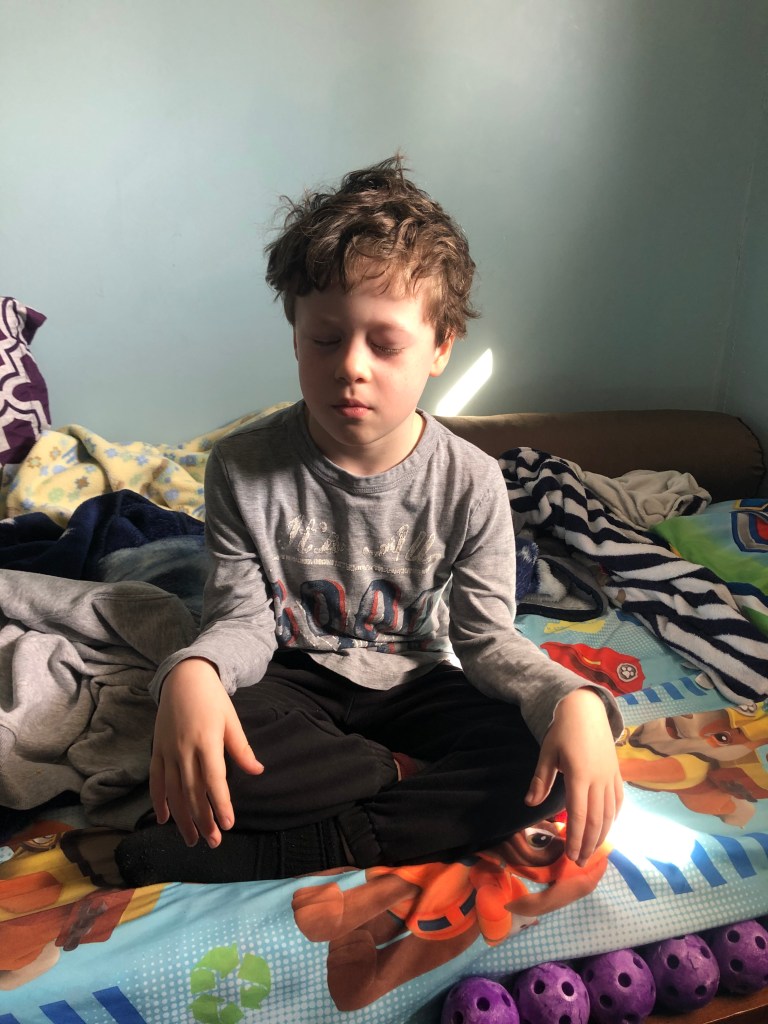
At the end of the day, I consider Zen to be a path towards bettering myself and finding some modicum of peace in an otherwise chaotic world. The success of that peace depends on the willingness to put in the time and effort and you may be surprised to learn that Zen incorporates certain practices such as exercising, waking up early and practicing a consistent norm of meditation, which is not always easy in the modern, family dynamic. I like to think that I’ve become pretty proficient at meditation in the past twenty years, but have you ever tried to centre yourself and fall into a deep meditation with your 6-year old breathing into your ear? Not so easy. ☯

The Most Difficult Choice…

As is the case when I have a few free moments, I was letting myself fall down the YouTube rabbit hole last week when I came across a short video that I thought was some sort of Spider-Man fan fiction. I enjoy Spider-Man as much as the next comic enthusiast and it was only a four-minute video, so I clicked on it to see what it contained. It turns out that it was the ending to “Marvel’s Spider-Man” video game on the Playstation 4 and it was emotionally crushing…

I’ll link the YouTube video at the end so that you can watch for yourself but despite the lesser graphics involved in the facial expressions, this is the first time that the ending to a video game nearly moved me to tears. Anyone who’s read any of the comics or watched any of the movies is likely aware that Peter Parker, AKA Spider-Man’s Aunt May is the one who deals with raising a super-powered teenager on her own after her husband dies.

I haven’t played this video game; in fact, I haven’t had a game system in this house since I sold my xBox 360 last year. But the game seems to involve a sickness of some sort that requires inoculation through a serum. The clip I watched shows Aunt May laid up in a surgical bed, apparently dying of this sickness with Spider-Man standing nearby holding the only vial of serum. The doctor who’s apparently overseeing things tells Spider-Man that he can give May the serum and she’ll live, but the cost will be that there will none left to replicate and millions will die. Or he can let Aunt May die and allow the serum to be replicate, thereby stopping the sickness and saving uncountable lives.

The scene is powerful and emotional, and you can feel the tortured effort as Spider-Man makes the difficult yet apparently correct choice by slamming the vial down and walking away. The YouTube clip ends with the scene of May’s burial, where her headstone reads, “When you help someone, you help everyone.” Despite the dim, cold basement I was watching this from, I felt the heat rise in my face and the telltale lump in my throat that predicted the tears that would inevitably start welling up. In the midst of my emotional vulnerability, it led me to wonder: could I have made that choice? Could I have let someone I love die in order to save millions?

This isn’t the first time that an impossible dilemma is presented to a protagonist. I’m reminded of “Sophie’s Choice,” a movie from 1982 where the lead character portrays a polish immigrant who had to choose which one of her two children would be killed and which one would accompany her to a concentration camp. The terror and internal struggle, not to mention living with the decision afterwards, is unimaginable. There have been plenty of other such examples in cinema and books but that ones sticks with me.

Imagine this scenario for a moment… You’re sitting by a loved one’s bedside. Maybe it’s a spouse or a child. And you’re given a choice: cure them and let them live but others will die or let your loved one die and possibly save the lives of multiple people. Could you make that choice? WOULD you make that choice? I think that at the heart of it, we’re all aware of what the right thing to do would be, but acknowledging it and being capable of it are two entirely different things. I’ve always considered myself a good person, yet I don’t know if I could bring myself to let my wife or one of my children die, even if meant saving multiple lives. Some would call this selfish, but it’s part of the internal morals we all have that sees us want to protect the ones we love above all.

Anyway, I know this isn’t a bright, happy post but it’s certainly one to get you thinking. We often take life for granted and the reality is that choices that are depicted in the clip below often do happen, albeit maybe not including costumed heroes and a city-wide sickness. People are forced to make “live or die” choices for loved ones on a daily basis and I can’t imagine the torture involved in making such a choice. Hug your loved ones close, folks. And pray that such a choice is never yours to make. Here’s the video clip… ☯

Why So Negative?

There is suffering in the world. You may have heard me say this a time or two, and it’s one of the basics behind the study of Buddhism and trying to find inner peace. In my experience, a good amount of that suffering stems from people’s negativity and complaining. I’m certainly not innocent of this, as I occasionally do my fair share of complaining about stuff, but long-term negativity can lead to a host of problematic issues within one’s own life (which I wrote about here).

A few months ago, after some soul-searching and because of certain professional needs, I decided to reconnect with the social media world. I had closed down all of my social media accounts back in late-2018 and with the exception of this blog and email, I had no contact with the online world. I got my news and current events from the radio like I did when I was a kid, and from word-of-mouth. The latter is nice, especially due to the current state of the world as it allows me to connect with people in a direct way as opposed to through a computer screen.

Although it’s been wonderful to reconnect with some old friends that I would otherwise be unable to communicate with, I’ve also been bombarded with a social feed FILLED with negativity. The worst part, and what’s caught me by surprise, is that most of it always seems to come from the same handful of people. Although one can easily believe that we all have some of “those days” when we need to vent and complain, there’s something inherently wrong if every day, every post and every comment includes negative content or “speaking out” against someone or something.

I’m actually a big fan of the “scroll on by” concept, wherein one can simply ignore and move on when they see something they don’t agree with online. But despite that concept, there’s a definite effect that involves negativity encouraging negativity. It’s kind of the same effect that leads to riots and mass disturbances; being exposed to it in the immediate moment or the long term will eventually cause you to join in. After all, human beings are inherently pack animals.

If you haven’t read the previous post that I linked in the opening paragraph, take a quick look to see what actual physiological effects that constant negativity will have on your body. People don’t realize that when they’re in a constant state of complaining and negativity that they’re not just working towards pissing off the people in their immediate environment, they also cause damage to themselves. Take a look at someone who has an ulcer as a result of years of stress, fear and/or trauma. Negativity can easily takes its toll…

Folks, it’s easy for me to sit behind my keyboard and try to tell everyone to stop being so fuckin’ negative… I would love it if society understood that the problems of the world should be dealt with rather than posted about. I often think about my chosen career as a prime example. There are a lot of people who like to complain about my industry. But those people are always more than welcome to train for it and see if they can do better. But at the end of the day, we should all be working a little bit harder to try and keep things positive.

More than anything else, this is what the world needs, right now. Not complaining about the state of affairs, how matters in the public are dealt with or constantly bashing one’s own industries. And not everyone needs to hear you complain about why you think something is wrong, especially when law and perspective may prove otherwise. Negativity is insidious, and you’ll be surprise to look up eventually and realize that if all you do is complain and be negative, that’ll be the environment you exist in. And there’s no easier way to guarantee unhappiness than to be negative all the time. I’m sure y’all know some people like this. Now if you’ll excuse me, I got some folks to unfollow and scroll on past… ☯

Keep Pushing Hard…

Life doesn’t care about one’s plans. That’s one of my most frequently used sayings across all the forums I post on, and many people feel that it has a negative connotation to it. Honestly, nothing could be further from the truth. I repeat this short phrase, almost like a mantra on a daily basis because it reminds me that I need to keep pushing and working at everything in life. And so do you. It isn’t intended as a negative thing, it simply represents the fact that if you lie on the floor curled up in a little ball instead of getting up and working at making things happen for yourself, nothing ever will.

And this leads to suffering in one’s own life. As I’ve written about before, Buddhism has this lovely concept of Four Noble Truths; the first two being the acknowledgement of suffering and the second being that this suffering is caused by us. I always like to push it one step further and point out that most of one’s suffering is self-inflicted. It’s for this reason that it’s important that one takes the necessary steps to get up and go.

A good analogy that I’ve used on others before, is to think about the remote control to your television. When I was a kid, you had to get up off your ass and turn the dial in order to change a channel… All three channels that you HAD, depending on how well your rabbit ears were aligned. Yes, I’m THAT old… My point is, modern televisions involve remote controls and many models don’t even feature physical buttons on the actual device anymore. Times have somewhat changed.

Now imagine that the batteries in your remote are dead. If you sit back and wait for the incidental chance that someone will come along and change them out for you, you’ll likely go without the binge-watching session you had planned. Especially since no one likely knows your batteries are even dead. So, maintain your own batteries. Keep yourself charged and moving. Batteries are a good analogy, too! Like a friend of mine has told me, “Be like a battery… Some negative, some positive but all power.” Man, I gotta get that printed on a t-shirt! Daryl, if you’re reading this, beers are calling, damn it!

I guess what I’m trying to get at with this poor attempt at a Monday motivation, is that there’s no turning back. Most people live regretting the past and wishing for the future and in doing so, miss out on the present. Life is hard. It’s not MEANT to be easy. If it were, where would the challenge be? That’s why the expression is “going THROUGH hell,” not “getting to hell, suffering a bit but turning back eventually.” Shit happens, bad things fall in our laps. But we owe it to ourselves to keep fighting the good fight, no matter how hopeless or tiring it may seem. No only up is through, so you need to keep pushing.

Instead of saying I regret that, say I look forward to this…
Instead of saying I wish I had, say I WILL!
Instead of Too bad that happened to me, say I will protect myself and learn from my mistakes!
Instead of I failed, say I made a mistake but I’ll recover and win!

Y’all get what I’m throwing down, here? Does it makes as much sense in print as it does in my head? Sometimes the thoughts in my head sound great but they tend to move faster than my fingers can type, so it doesn’t always have the desired impact. Last but not least, don’t be afraid to cut yourself a break. Mistakes and hardships are how we learn and grow. There would be no progress without it. As long as you’ve learned from it and you refuse to stop fighting, you may lose the occasional battle but you’ll ultimately win the war. ☯

This Is NOT The Way…

I started watching the Mandalorian a short while ago, so I have the main character’s catchphrase “this is the way,” somewhat at the forefront of my subconscious. Hence the title, in case you haven’t seen the show. But what I’m referring to with today’s title, is the use of force or violence. As a martial artist, people have a tendency to believe that I can kick ass on a whim and at my leisure. I certainly have the capabilities and training, despite the detail that stating that fact doesn’t make me out to be very humble. But humble I am, and my training doesn’t mean that I’m like an action hero who will clear a pub of multiple opponents simply for the indignity of looking at me the wrong way.

The world is a violent place, and there are many people who will make a point of BEING violent for very little reason. And those reasons are generally bullshit, anyway. As a martial artist, I take pride in the fact that I have the ability to protect myself and my loved ones. As a Buddhist, I abhor the idea that I would ever have to use it. And use it, I have. I have the benefit of the fact that for the majority of my life, my violent encounters have been in the line of duty. This certainly has never done anything to soothe the dislike I’ve felt or the memories I carry of every encounter, but it’s an important factor nonetheless.

Unfortunately, I’ve also had encounters that have taken place in my civilian life. And those have carried just as much weight as the ones that happened on the job, if not more so. How does one who believes in the prospect of a peaceful life but trains in a fighting art deal with such a scenario? Never the same way twice, is the first answer that comes to mind. That’s mostly because no two situations will ever be the same. And no two opponents will ever be the same, either. But there are some pretty common misconceptions, when it comes to defending oneself.

There are many reasons why people fight. In many cases, a person feels that he or she has no choice. It may be a question of ego, personality or even honour. Maybe the person just has a shitty personality, temper or outlook on life. Maybe, just maybe, that person is dealing with something in their lives and that something is the final straw and they’re taking it out on you. But the reality is that none of those reasons qualify. If you make the conscious decision to step up to someone and fight them, you’ve already lost. AND you’re in the wrong.

First, let’s examine the concept of self-defence. The term seems to imply that you need to fight someone else off in order to ensure your safety and well-being. Basically, you’re trying to prevent harm to yourself or another. But here’s the thing: that prevention doesn’t mean that you HAVE to fight. That’s what most people seem to misunderstand. You may eventually reach a “point of no return” where you’ll no longer have a choice than to fight, and I’ll get to that. But there are other steps you can take to defend yourself.

Diffusing the situation is a good one. Never underestimate the power of using your voice. Although it may not always be possible to calmly discuss the matter, especially with some liquored up hothead who thinks you were making googly eyes at his lady (true story). But there will be times when you’ll be able to talk your way out of things. The other good one, is getting up and leaving. And I know some fellow martial artists may disagree with this one, but why stick around? If there’s someone there who wants to do me harm, I sure as hell wouldn’t want to stick around.

Sure, some people may call me coward or chicken, but who cares? Know where I am while they’re calling me that? In the safety of my car or home. Away from harm, without broken bones, bloody appendages or criminal charges pending against me for beating the living fuck out of some asshole. But while we’re on the subject of criminal charges, it’s important to know what your rights are and what the laws may apply to your situation.

In Canada, Section 34 of the Criminal Code reads, “A person is not guilty of an offence if they believe on reasonable grounds that force is being used against them or another person or that a threat of force is being made against them or another person, the act that constitutes the offence is committed for the purpose of defending or protecting themselves or the other person from that use or threat of force and the act committed is reasonable under the circumstances.” Section 34, Criminal Code of Canada.

Those are a lot of fancy words, and you can check out the Section yourself to read the before and after, as it can sometimes lend pertinence. But the layman’s version of it, is that if someone comes at you and you genuinely believe that they mean you harm, you can use force in response as long as it’s for your own defence or the defence of another person. They also refer to it being “reasonable under the circumstances,” which basically means you can’t shoot someone in the chest because they try to punch you. But everything is circumstantial to the totality of the situation.

Patrick Swayze had a great line in his movie Roadhouse where he said, “Nobody ever wins a fight.” Kind of ironic, since the movie is all about being a bouncer in a violent bar. But realistically, there’s no shame in walking away. Unless your life or the life of someone else is on the line, fighting just isn’t worth it. Besides navigating the law, which can be open to interpretation, getting into violent altercations will change you in ways you may not anticipate. Peace is easier. ☯

Sinfully Sweet…

It’s difficult to be a good person. No, let me correct that… It can be exceptionally EASY to be a good person, but society, culture and our own personalities MAKE it difficult to be a good person. I recently read a post by a fellow blogger named Jason Youngman who, if you aren’t doing so already you should follow. He wrote a post entitled Dignity Remains Steadfast where he discusses the nature of vice and it’s vicious effect on people. He ends the post with a comparison that I find extremely fitting where, and I’m paraphrasing here, the sweetness of candy is a slow pleasure that doesn’t show the damage it does until your teeth begin to rot.

It got me to thinking about the nature of vice and how we behave in society, a point which I don’t usually address beyond an immediate situation that may have occurred in my daily life. But that in itself is a form of vice. After all, most people are geared towards living in the immediate moment and don’t usually consider the consequences of what’s to come. And from a Buddhist’s standpoint, I’ve decided it would be a good idea to share my thoughts on this subject with you.

Just to be clear, when I refer to vice, I don’t mean the iron clamping device used by a trade’s person or the nickname given to certain American police units. A vice is what’s referred to as a bad habit, behaviour or character trait that a person may have that is considered wrong by their respective society. That last part is important since depending on where you live and what culture you happen to be a part of, something can be a vice in one culture but not another.

Here’s the reality: no matter who you are or what kind of lifestyle you live, you have vices. Maybe you chew your nails. Maybe you’re a smoker or a drinker. Maybe you tend to judge a book by its cover. These are things that can be considered vices and are negative character aspects that we navigate daily life without usually even acknowledging. This is mostly because we don’t consider them to BE bad habits, even if they may have a negative impact on ourselves or those around us.

Let’s take cigarette smoking as an example, and this is a discussion I’ve had with many a friend who actually smoke. The average smoker (if there really is such a thing) believes that their use of cigarettes is a vice that affects them and only them. It’s not such a bad thing, because they’re not hurting anyone but themselves. Right? Makes sense? Here’s the problem: the eventual health complications caused by your smoking will inevitably lead to a strain on health care systems and your family, especially the if they need to provide care for you when you develop terminal illnesses brought on by your smoking habit.

Further, there’s the pollution aspect from smoking, even if you do it outdoors, the littering from all the cigarette butts left lying around and the financial constraints you’re placing on your household due to the excessive rising costs of cigarettes. I have no idea what the current cost of a pack of cigarette might be at the moment, but I’ve plenty of people complain that it’s a lot. Now, I’m not trying to use my blog as a platform against smoking. To each their own. This post is meant to be about vice, so I’ll move things back in that direction. But smoking is a good example of a common vice that many people partake of.

Another good example is sin. I was raised in a Roman Catholic household. And if I’m being honest, just about everything that someone did was considered a sin in some given way, shape or form. I may be exaggerating to an extent, but it sure felt that way as a child. Now, Catholicism differentiates vice and sin as the habit of sin and an individual morally wrong act, respectively. And they list their seven deadly sins or vices as Pride, Envy, Wrath, Sloth, Avarice, Gluttony and Lust. Does this means that when I shave and pay attention to personal grooming in the morning, that I’m guilty of Pride? If I go out to a buffet dinner with friends, am I indulging in Gluttony? Perhaps.

I use Catholicism as an example, because it’s what I grew up around and it’s familiar. But most organized systems of faith have a list of vice and/or sinful actions that they consider particular. Buddhism does as well, in fact. So if I avoid those seven indulgences, does this mean that I’m free of vice as a Catholic? And do I still have vices from another culture and/or religion’s perspective. This is the problem with vice. It can be insidious and not always noticeable in the every day.

One thought I’ve always had on vice and something I discussed with Jason Youngman, is how does it fit in the perspective of someone who is unaware of it? For example, if a person grew up in a household where there was no faith-based upbringing, are they genuinely guilty of vice? What does sin mean to someone who knows nothing of it? I think that perhaps some vices (not all) may not be viewed as such to certain people, depending on their circumstances. Some vices should just be common sense; rudeness and criminal behaviour should be a given, and every person should know to avoid them, regardless of upbringing, faith or education. But such is what makes these things a vice in the first place: the fact that people don’t acknowledge them as common sense

He made a very good point in stating that regardless of religious or faith-based upbringing, the majority of households will ensure that their children are raised on some level of morality, be it a personal or system-based one. He also pointed out that it’s necessary to acknowledge the consequences of our actions, whether we believe our actions are vice-related or not. From a legality standpoint in Canada, the Criminal Code is pretty clear on the fact that ignorance of the law is no a defence. The same can be said from a moral viewpoint, as well.

This can be easily tied in to Buddhism, as the Four Noble Truths describe that very same thing. Whereas the first Noble Truth explains the existence of suffering in the world, the second Noble truth goes on to explain that we are responsible for that suffering. The third Noble Truth covers the fact that we need to bring an end to this suffering and the fourth Noble Truth explains HOW to do so, which is described as being by following the Noble Eightfold Path.

The Noble Eightfold Path includes Right View, Right Aspiration, Right Speech, Right Action, Right Livelihood, Right Effort, Right Mindfulness and Right Concentration. Through those practices, one can achieve peace and enlightenment, although the latter can be fleeting and difficult to achieve. The point is that one needs to live well in order to contribute to the overall good in the world and help to eliminate suffering.

I could go into detail and describe each of the Eightfold Path, but I think this post has gone on long enough. I want to keep y’all engaged and reading, not using my blog as a substitute for warm milk. The take home lesson here is that we all have vices. We may not always recognize them or acknowledge them as such, but even the smallest ones will have a negative impact if left unchecked. Like the flapping of a butterfly’s wings that eventually cause a ravaging storm on the other side of the world, actions have consequences. ☯

Just Because I’m Wrong Doesn’t Mean You’re Right…

People hate to be wrong. I’m not sure why that is, but it’s a well-documented fact. Maybe it’s the fear of showing weakness in front of others, maybe it’s narcism or self-indulgence. But people flat out hate to be wrong. I’d be lying if I said that I enjoy being wrong, but knowing to accept it when you are is one of life’s big lessons. And for some reason, some will go out of their way to prove that they’re right even when they’re wrong.

Here’s the thing: whether or not you’re right will often be a matter of perspective. And a person’s perspective is very dependent on a number of different factors. One’s upbringing, values and beliefs will all go a very long way to molding a person’s perspective and lead them to where they believe they may be right about something, even when they’re not. It can be very difficult to navigate.

Always remember to be open-minded. Be willing to hear the other side of the story. It can mean the difference between fostering peace and causing unnecessary suffering. Maybe you’ll even learn something along the way. Sensei always used to say, “You have two ears and one mouth. That means you should listen TWICE as much as you talk.” Sound advice. Even if something being put out into the world is right, it doesn’t mean that you’re absolutely wrong.

But when we open ourselves to other perspectives and beliefs, it’s amazing how often it dissolves conflict. Being open-minded isn’t just something that happens on its own. It’s a choice. And a practice. ☯

Is It Enough To Say It?

With the exception of this blog because, well… that’s the whole point of it, I don’t really go around advertising that I study Buddhism. It’s obviously not a shame thing, and it isn’t as though I’m not prepared to discussed the specifics of my beliefs when someone asks; it simply isn’t something I’m in the habit of doing. And I think that this is something important in relation to anyone’s faith. Having faith or being faithful shouldn’t require you to bring others into the fold. I often think about the poor practitioners who go from door to door…

I’m sure you can think of what faith system applies, although you may be surprised to know there are several who have this practice. What’s even more surprising is when these canvassers come to my door and are greeted by conversation and an exchange of information as opposed to having a door slammed in their face. Their faith is no threat to anyone. And if one is secure enough in their own faith, there should be no fear or worry in discussing it with others. But I certainly don’t envy them the task of walking all over neighbourhoods being rejected and refused, oftentimes in the cold or inclement weather.

It often surprises some to learn that I was born into a French Catholic family, and that I was in fact raised in the Catholic faith, well into my teens. I believe this surprise comes as the converting of one’s faith is not a frequent “genuine” event. What I mean by this is that there are plenty of newer-generation folks who will claim to follow one belief system or another, often to continue adhering to a previous one or changing to another whenever it suits them.

But when I reached my teens and started studying the martial arts, I fell into Buddhism almost as easily as one starts breathing at birth. This was one of the reasons why I chose to pursue it. I faced a surprising amount of opposition, especially from my family. You would think that family would be the most supportive, but considering my mother studied at a seminary in her youth and most of my aunts of my grandmother’s generation were nuns or missionaries, I think there was an expectation there, of automatic acceptance and perhaps a minty hint of obedience. I’ve even had an ex-girlfriend who once had the audacity to flat out tell me, “You’re not Buddhist! Stop saying that…” Needless to say, there’s a reason she’s an ex…

This has always made me wonder, is it enough to simply SAY that you follow a certain system of beliefs in order to be part of it? I think back to those formative years when I started studying Buddhism and knew next to nothing. I knew the ultimate goal was to find enlightenment and peace, which is what drew me to it in the first place. It seemed far more appealing than praying to an unseen, unknown deity that never responded or helped no matter how frequent prayer was leaned upon. But to some, it harmed my credibility that I lacked the knowledge to appropriately answer some of their questions.

During my youth, I was subjected to all the usual steps involved in someone’s indoctrination into a particular school of beliefs. I was baptized shortly after my birth, had First Communion and something referred to as “Confirmation,” which is a rite that involves confirming one’s adherence to that particular religion. I think this is interesting, because for all three of these rites I was too young and had no clear concept of what I was agreeing to or accepting; a fact that has long been argued in my mother’s household.

And granted, nothing in the Holy Bible actually speaks of NOT baptizing babies and children, but all the depictions I’ve ever seen of John the Baptist depict the baptism of an adult. How can one adhere to a system of beliefs without knowing WHAT they’re adhering to? It’s a question that’s plagued my noodle for decades and in some ways, many ways, I don’t feel this is right. Every person should have the ability to choose and understand what they’re agreeing to. But once you’ve made that decision, make sure you’ve made it because it’s right for you. And because it’s something you genuinely believe in.

Consider this for a moment: What is the point of saying that you’re Catholic if you never go to church, never pray, never study the Bible and adhere to NONE of the customs? Are you still Catholic? Or is is perhaps a label you’ve chosen to accept because it was imposed on you earlier in life? Or does it make your life simpler to have yourself categorized in a world where belief systems are considered important? I use Catholicism as the example because it’s what I was born into, but the same can apply to any system of beliefs.

I don’t have the answers. I can’t answer EVERY single question about Buddhism that comes my way, but I certainly aim to learn as much as I can. And maybe that’s the point. If I knew everything, there would be no purpose to life. I study Buddhism because I ultimately know that eventually I’ll find all the answers I seek and find peace. Perhaps that realization, in and of itself, is the enlightenment I seek and I simply haven’t realized it yet. But someday I will.

Be true to yourself. Be sure that your faith does not harm you, bring harm to others or create chaos within life and you can’t go wrong. At the end of the day, the story of everyone’s life begins and ends the same way. It’s how we fill the days in between that define who we are and the mark we leave on the world when we’re gone. And do your best to encourage peace. ☯

“There Is A Misconception That Buddhism Is A Religion, And That You Worship Buddha. Buddhism Is A Practice, Like Yoga. You Can Be A Christian And Practice Buddhism. I Met A Catholic Priest Who Lives In A Buddhist Monastery In France. He Told Me That Buddhism Makes Him A Better Christian. I Love That.”

– Thich Nhat Hanh

“Seiza” The Opportunity For Meditation Facts…

A couple of weeks ago I was chatting with a fellow blogger who asked me an interesting question in relation to how I meditate. We had been discussing the ability and opportunity to meditate in the midst of being at home with family, pretty much around the clock. This discussion led to a question about what posture I use and how I deal with comfort issues and positioning during meditation. Since I effectively never do anything the easy way, the answer is not as simple as one specific pose or position.

The kneeling position, known in martial arts circles as “Seiza”

For the most part, I sit in a kneeling position during meditation. That doesn’t mean that this is always the OPTIMAL position, and I do tend to use a few different ones. But the position you see illustrated above is one that’s also associated with karate and some formal Japanese settings, so I’ve had most of my life to get used to it. Named “Seiza,” this position requires the person to kneel on the floor, placing their calves beneath their thighs and pointing the toes out behind them. The big toe on the right foot overlaps the left one, and the butt rests on the heels of the feet.

There’s a bunch of pomp and ceremony that goes into how to sit down and get up when using this posture, as well as when it’s appropriate and/or required to use it. But this post ain’t about all that. This is a posture that Sensei would often have us close out in, as it allows for a few moments of deep breathing and contemplation at the end of a workout. It also makes it significantly easier to bow respectfully when karate class closes. This posture is also used at the current karate school I train with, both at the beginning and the end of class.

From a meditation standpoint, I like this posture because it effectively forces me to sit up straight. I can breathe fully and unlike the lotus position, which I’ll cover off next, this posture doesn’t allow much room for me to slouch or slump. The downside is that sitting on one’s legs for more than about 20 or 30 minutes can lead to a condition called “paresthesia,” which is where some of the nerves and the blood flow in the legs become compromised resulting in the “pins and needles” sensation when a limb falls asleep. It’s never a good thing to block circulation, and since a Type-1 Diabetic’s circulation isn’t all that great to begin with, this can be a concern if you plan on meditating for a long period of time.

The next important posture is the lotus position. This is the classic and most recognizable posture in meditation. In fact, any time you see a statue of Buddha, he’s likely seated in the lotus position. This involves sitting with your butt on the floor with the left foot resting on top of the right thigh and the right foot resting on top of the left thigh in a cross-legged position. The hands are generally resting on top of the thighs, usually with the index and thumb of each hand joined together. This pose is not only used in meditation but is also used in forms of yoga, and is thought to promote the proper channeling of the body’s energy.

This can be a more comfortable posture to assume if you plan on meditating for a half hour or longer, as it won’t necessarily constrict blood circulation the way Seiza does. The problem I find with this posture is that unless I’m propped against a wall, I tend to let my shoulders slump or I start slouching at the upper back, which can become uncomfortable and damaging to the spine over long periods of time. Lotus has many variations to it and I usually favour the “half lotus,” which involves only setting one of the feet on top of the opposing knee with the other one simply being on the floor. This prevents the usual possible circulatory issues.

If you have Diabetes (or any other circulatory issues) there are a few things you can do to help facilitate meditation, regardless of what pose you use. You can get a meditation pillow. These are great as they keep your butt about four to six inches up off the ground, putting less stress on the knees, hips and various joints associated with meditative postures. The Japanese have special little folding stools that allow for the appearance of the kneeling position while taking the stress off of joints and allowing proper circulation.

Last but not least, you can try traditional postures, such as sitting in a chair. This is fine and I’d be lying if I said that I’ve NEVER done it. It just feels weird to me. Probably because I’ve spent my entire life using formal postures. Sitting in a chair just feels like it takes something away from the experience. You can also try lying flat, either on the floor, a yoga mat or on your bed. The only problem with this is if you lie on your bed and start breathing deeply with your eyes closed, you face the risk of falling asleep. Although I’m a big fan of naps and falling asleep isn’t necessarily a bad thing, it also usually isn’t my goal when I meditate. So I try to avoid this posture unless I’m having difficulty sleeping and I’m intentionally trying to meditate my way to dreamland.

Obviously, there are different types of meditation and postures that go along with them. Depending on what your goal is with meditation, you can’t really go wrong. The important thing is to find a posture that’s comfortable and suits YOU. It should accommodate your body and allow you to relax so that breathing, energy and blood flow are facilitated and you can focus on the mindfulness required for proper meditation. As I’ve often written, every person is different so it should be no surprise that each person’s needs and preference may be different from a meditative standpoint. ☯