Slow And Steady Isn’t JUST For The Race…

As one gets older and life carries on, one may begin to contemplate life, how it’s lived and how perspective changes over time. As a child, I wasn’t exactly what one might call energetic. Being afflicted with Type-1 Diabetes, which back then was referred to as “Juvenile Diabetes,” I was often lethargic and lacking in energy, mostly a byproduct of rampantly uncontrolled blood sugars. I’ve written about this before; I don’t begrudge my parents any damage that may have been done when I was a child. After all, I WAS a child and had minimal understanding of what had happened to me and it was the early 80’s in a small, rural Northern New Brunswick town with limited medical resources. I’m lucky I survived into adulthood. But that’s a story for another day. The point is, despite the lethargy and lack of energy, I was like most children and usually insisted on running, climbing and jumping on absolutely everything in my path. This was a sore point for my mother, with whom I spent extended time when my father was at work.

It irked her because of her concerns that I could injure myself. Unbeknownst to her, one of her most annoying (at the time) habits was irking me as well; her walking speed. Now, at the time, I simply couldn’t comprehend why my mother would always walk so damn slowly. It drove me nuts and I often tried to urge her along. This carried on well into my teens and into adulthood when I finally left home. In retrospect, I recognize that she was actually several years younger than I am now when I started to notice this trend, meaning that it couldn’t be attributed to old age. As I got older and started to raise this with her more as a conversation than a comment, her only response was, “I don’t have a reason to hurry or rush. So, why would I? This is the speed I walk. If you don’t like it, then don’t walk with me.” At the time, it seemed dismissive and ignorant. The perspective of a young teenager on the cusp of adulthood. But as I’ve grown to my current stage of this life, I recognize it as something more important.

Since I grew into adulthood and took control of my own health and wellbeing, I’ve been what many might refer to as a dynamo of energy. Every job, every karateh class and every workout I’ve ever done has been carried out with maximum effort, maximum speed and no time wasted. This habit carried on into my personal life, where chores, errands and getting things done involved hammering through them with no room or time to delay or move slowly. Certainly, my career in law enforcement has benefited from this perspective, since time and urgency can be very important elements of a police officer’s daily life. But in the past few years and since retiring from law enforcement, my views and perspectives have changed. And some of it happened without my even noticing it. It was quiet, sneaky and insidious, even. A perspective on daily life and one’s own mental health that I had never really come to appreciate or recognize before.

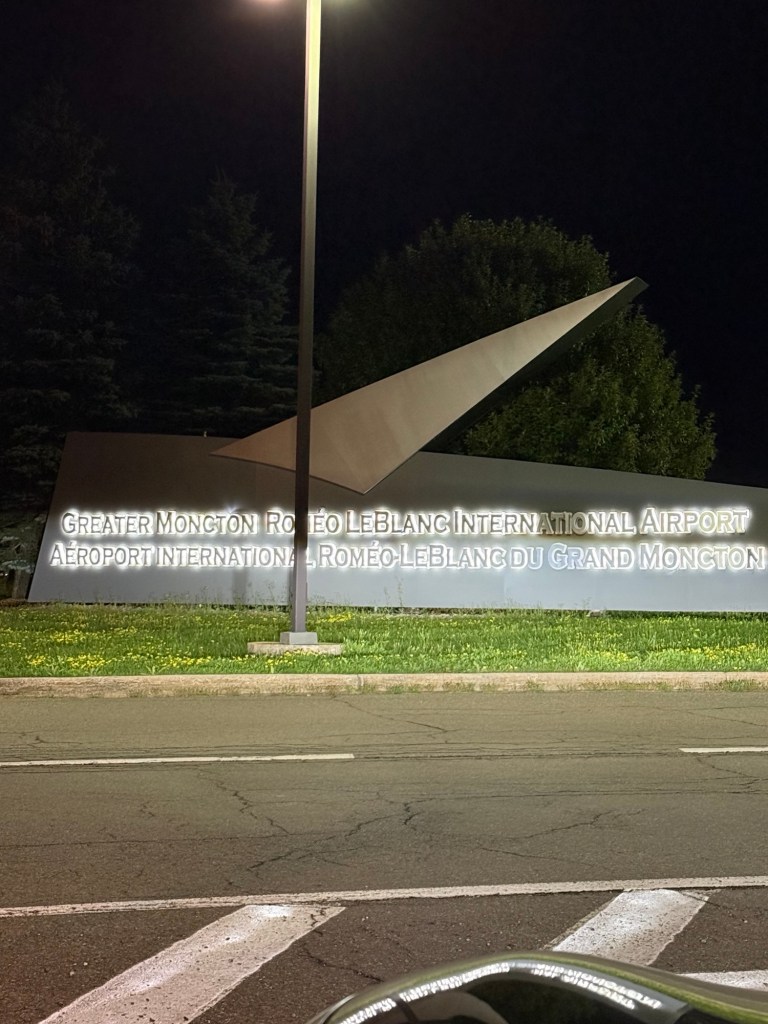
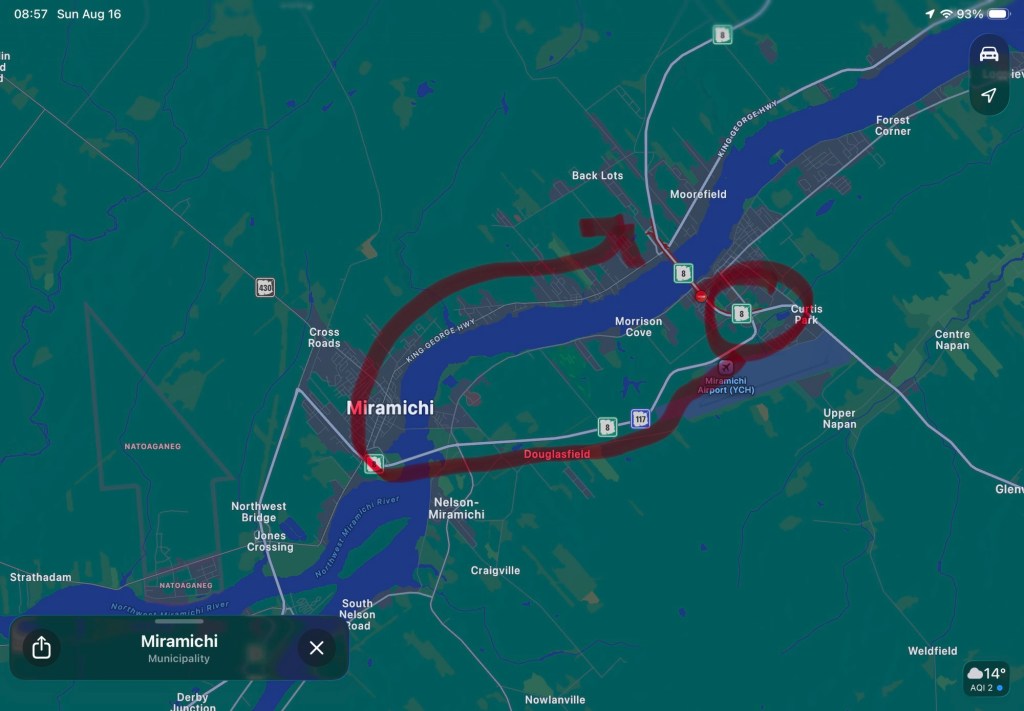
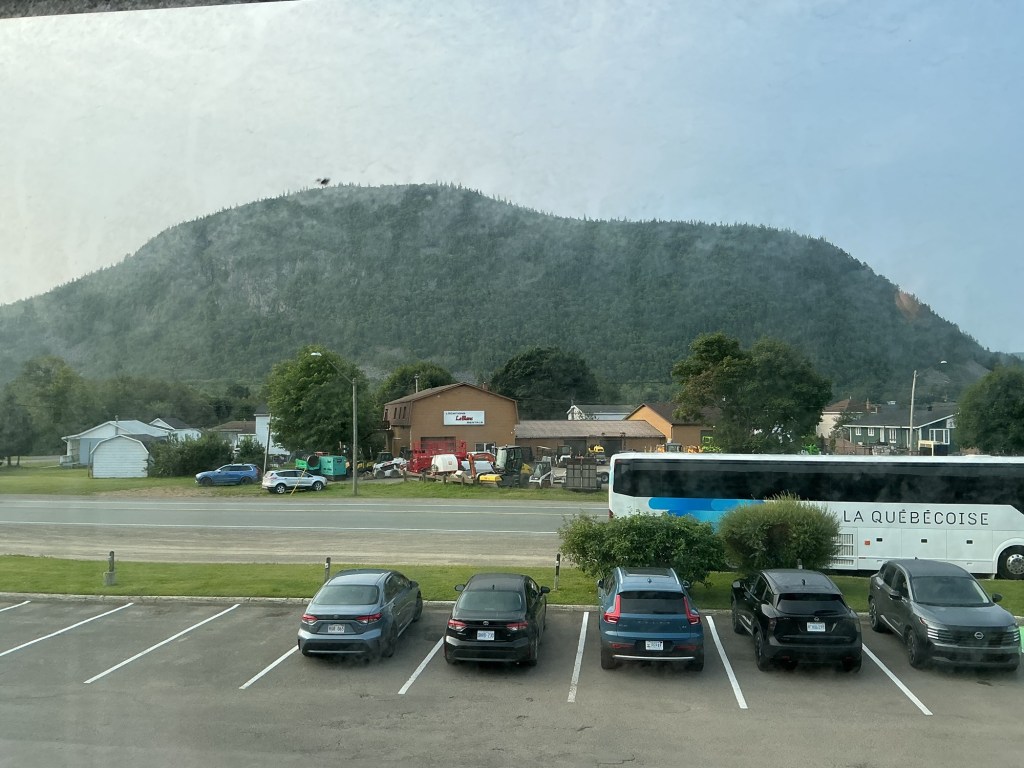
Some of this realization came from earlier this week when I travelled to a neighboring city for a work function. The hotel it was being held at was completely booked and I found myself staying at a different venue. For to parking availability, I found myself having to walk from the venue to my hotel. While this is no big deal, I found myself with some free time during the afternoon and decided to “dry run” the walk so that I could effectively time how long it would take me to get from one point to the other. This was so that I would risk being late for the event. I left point “A” and walked towards point “B” with the chronometer on my phone running to keep time. As I walked, I realized it was more of a casual saunter. I wasn’t rushing, I wasn’t hurrying, and I wasn’t just trying to get from point A to point B as quickly as possible. I was taking my time. I was walking casually. All in all, the walk took less than ten minutes at a leisurely pace, so I was in good shape. But this realization awoke… well, realization…

So much of modern life is rooted in rushing around, or what’s otherwise known as the “rat race.” This is a terrible way to live, considering this rat race is often one of the main contributors of stress, mental health issues and even physical ailments like high blood pressure and cardiac issues. While hurrying and carrying a sense of urgency can be important in some instances, finding the means to move casually and without rushing can help alleviate many of the things I named in this paragraph. It doesn’t mean I’ve grown slow, or age is catching up to me. I’ve simply begun to realize that setting the tone for oneself early on in the day can determine how one’s day will go over all. Slow and steady can allow oneself to remain calm, relaxed, maintain lower blood pressure and reduce stress. This is something I realized about two years ago when my morning routine was drastically changed.

About two years ago, I changed up how my morning routines have run. Prior to this change, I would wake to an early alarm, hit the ground running and could shit, shave and shower and be out the door tub under fifteen minutes. Looking back, I was actually proud of my ability to “launch” this effectively, first thing in the morning and more importantly, often without caffeine in my system yet. But I began to correct this process when I began to realize two very important details. One, this method of starting my day meant that I was stressed and harassed before even setting foot in my office. And two, I didn’t NEED to rush. I was in a position where I could actually take some time, first thing in the morning, to allow my mind to start absorbing the day and make my way to work calmly. The result has been getting to work much more relaxed and prepared to tackle the tasks of the day, as opposed to being a pent up ball of rage without even having started work yet

The point is, there is suffered in life. And with that suffering comes stress. At some point, we all come to realize that doing whatever we can with the tools we have available to reduce that stress goes a long way towards reducing our respective suffering. When it comes to my everyday life, I’ve come to realize that when I don’t need to rush, I SHOULDN’T rush. Will it be life changing? Probably not. Will it potentially revive some stress and help make me somewhat happier? Without a doubt. And in the end, that can make a great world of difference. Ask yourself, what is your slow walk? What can you do or what can you change, that will help you to reduce the stress in your life. And less stress means a happier, healthier life. And ultimately, that’s all one can truly hope for. Food for thought… ☯️

Does That Really Work…?

One of the questions I get asked most frequently when karate comes into the conversation is, “Does that stuff really work, though? Like, push come to shove and in a real fight, does karate really provide you any benefit or advantage?” The easy answer is yes, yes it does. The explanation behind it is a little more in-depth and significant and may not be able to be covered in one post. But there are some integral differences between what you may have seen on screen (movies & television), what you may have seen in the dojo and what actually happens in the street. And that’s what I’m going to try to cover in today’s post. Not so much the question of whether it works or not. Rather, the differences between environments and why they matter. AND why you should focus on continued training to bridge those environments. But before I branch off on too many tangents, let’s get on with it, shall we?

Let’s start with the portrayals of fights on the big or small screen. Now, I’ve written entire posts about this in the past, and there’s nothing that irks me more than when someone asks me if I’m as good as any given action star that they may have seen in the latest flick. And don’t get me wrong; I LOVE a good action movie and despite knowing the ins and outs of empty hand combat, I enjoy the fights and the action scenes as much as the next person. However… What’s important to bear in mind is that the people you see portrayed on the screen, engaged in beating the living shit out of each other, are actors, not fighters. And that twenty minute fight sequence you just wet yourself over was likely filmed over weeks, not minutes. In reality, such a fight would rarely, if ever, happen. The reason for this is quite simple; the human body can’t take it. The average real fight that takes place on the street will usually last somewhere between two to ten minutes. That’s it. By that point, one of two things will happen. Either one of the combatants will take a solid punch to the head or some other soft area, which will end the fight. OR, they’ll end up on the ground, grappling and struggling with each and both combatants will lose steam.

One can hardly blame the film industry for this approach. After all, it would be a big middle finger to the audience if, after sitting through a two-hour long film and waiting for the climactic fight at the end, the protagonist and their opponent fight for two movies and either get knocked out or gas out and give up. It would rather spoil the movie, right? It sure would, but the unfortunate after effect if that people believe that shit. Most folks genuinely believe that a trained fighter can hammer through and fight full tilt against an opponent, often a superior one in the movies, for thirty to forty minutes and actually come out successful. There are some exceptions, where organized fights like boxing will last an hour. But this is usually in digestible two to three minute rounds with breaks in between. And even then, fighters train EXTENSIVELY to last for this periods. I think it was Mickey in the Rocky movies who explained it best. I believe he said, “for a 45-minute fight, he has to train for 45,000 minutes.” This is just to build up the stamina and endurance to last for those multiple rounds. And you get the benefit of sitting, resting, sipping water and being tended to. None of those advantages will exist in the street.

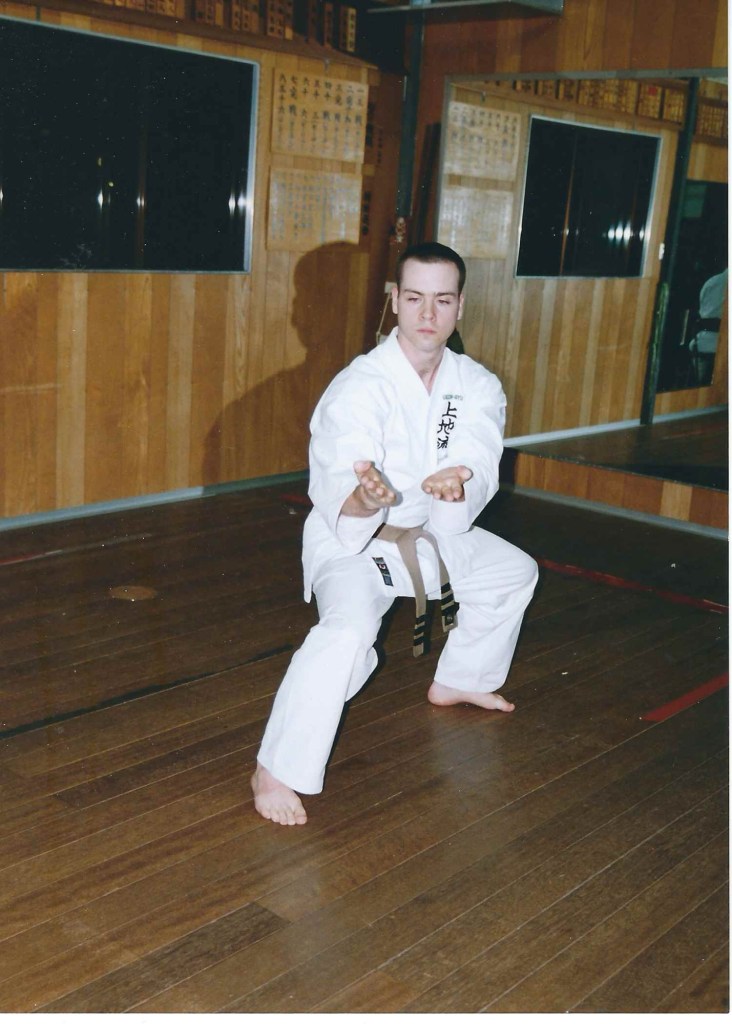
Next, let’s discuss the dojo. Now, here’s where I get a little more particular, because I’ve spent the majority of my life (more than 75% at this point) training in various dojos and formal training halls. A dojo has structure, discipline and tradition. From the moment you step into the dojo, it all hits you. You must remove your shoes and bow as you enter. You may not step on or off the mats without your Sensei’s permission. Stand in a straight line at attention. No food or drink in the dojo. Obey all instructions and do as I say, not as I do, are common elements in most traditional dojos. When casual passerby’s are watching a class train in the dojo, they’ll often see drills, katas and structure where it would be reasonable to ASSUME that none of it would apply in a real fight. Guess what? They’re right… I should probably explain that a little bit better. For the most part and for the majority of what you may see in the dojo on any given night, all of those formalized movements and exercises are intended to develop structure, framework and muscle memory.

Generally speaking, the majority of this training is meant to build the foundation on which one’s martial arts prowess will flourish. what that means is, you likely wouldn’t use a particular stance you see in a kata during a real fight. But all of those steps and stances develop your legs and techniques to allow the proper flow of what you WOULD end up doing in order to defend yourself. While some of it may look strange and possibly useless when watching it, every step, every movement and every technique taught in the dojo is just one more piece of the overall puzzle needed to develop one’s martial arts skills. There are some aspects of the stamina training I referenced higher up. If you don’t believe me, you may want to watch when a dojo has their students perched on their knuckles for 30 minutes or in a horse stance for just as long. OR when we’d spend almost an hour simply repeating the same technique, over and over, in order to ensure it was embedded into our muscle memory.

It’s safe to say that the dojo takes a significantly indirect approach towards ensuring the practitioner can develop and if necessary, use their skills to defend themselves or others. It’s not always neat or clean, and it almost certainly takes years, but the result is being functionally capable of offering some sort big defense against an opponent, when necessary. For myself specifically, I have never competed. Sensei didn’t believe in contrition or training for points. But I can tell you that in real life and on several occasions, both on the job and in my personal life, karate was leaned on to defend myself and others. I have a singular benefit of saying that I have never been overwhelmed by an opponent and I have my extensive training to thank for that. Don’t get me wrong, I’ve had the crap kicked out of me, I’ve had sprains and fractured ribs, even. Karate doesn’t make you indestructible, nor does it shield you from injury completely. The reality is simply this; if you fight, you’ll likely get hurt. How hurt you get will depend on how hard you train.

So, does martial arts work? Absolutely. Can one become proficient and carry it with them for the rest of their lives to defend themselves? Oh, fuck yeah! But how effective it’ll be will depend on how hard you train, how much you invest of yourself in it and how well you maintain yourself. This will mark the difference between walking away relatively injury-free, or suffering severe injuries. And that raises a good point. It may sound a little cliche, but a traditionally trained martial artist usually won’t WANT to fight. While some opponents will often view this as a sign of weakness or unwillingness to fight, most karateka simply acknowledge that unless there is no other choice, bringing significant injury to someone else, even if they’re an opponent, isn’t worth it. And if possible, it’s always better to walk away. Like any other weapon, just because you’re packin’ doesn’t mean you’ll pull it at every opportunity. Karate is no different. Food for thought… ☯️

It’s Not All About Me, or A Review: The Incredibles (Possible Spoilers)

Film and mainstream television can be great at making you feel like you relate to what you see on the screen. For the most part, finding a way to make characters or situations relatable to the folks watching can be an effective way to increase/ensure viewership and can often spell the success of a series or film. None of this is quite as prominent as with the superhero mythos. Generally speaking, watching Superman or the Flash swoop in and save those who can’t save themselves or thwarting the bad guys gives people something to cling to, an ideology to aspire to, and can lead to changes within the viewers life. For myself, I’m a firm believer in simply enjoying the ride; not necessarily relating to any particular aspect but accepting that a film is just a film and enjoying it for what it is. But I can’t deny that there are often aspects of myself that I see in some of these films. And light knows my wife will often point out how some characters we see are reflective of my own beliefs or personality. That’s where “The Incredibles” comes in…

The Incredibles is an animated, Disney Pixar film that was released in 2004. I remember that at the time, I was a bit reluctant to give this film any time. Especially since Spider-man 2 also came out that year, which is something a little more my speed. But once I watched it, it resonated with me in a way that an animated movie normally wouldn’t. In summary, The Incredibles follows the life of Bob Parr, a man with superhero-level strength who fights crime as part of his daily life under the name “Mr. Incredible.” When society begins to turn against the “Supers,” Bob and his family are forced into hiding and living a quiet, “suburban” life. Bob is unhappy with this, realizing that he’s living a life he never planned on, doing something he doesn’t want to do. This resonated with me, considering that I was in a quasi-similar situation, where I used to fight crime and save lives. Eventually, when certain specific parties turned against me and my career was jeopardized, I stepped away and went into proverbial hiding; choosing a different job and career path that took me away from what I had previously felt I was born to do.

Eventually, Bob is contacted by unknown parties to solicit his help in defeating and capturing an experimental robot before it gets out to the public. Behind the scenes, the robots are being designed by an evil genius hellbent on revenge against Mr. Incredibles for being shunned by him when he was a kid looking to become a sidekick. The result is Mr. Incredible is brought back into action, along with his wife Helen Parr (Elastigirl) and their children, who antelopes powers as well. While campy and entertaining, the film provides a darker look at a man’s attempt to be strong enough to protect his family and acknowledging that no level of strength will make him strong enough to deal with their loss. I may be speaking strictly for myself but that’s something that most fathers and husbands that I now would feel and experience. In the end, Bob comes to realize that he’s stronger with his family than on his own and they team up to ultimately win the day and take out the bad guys, like any good superhero movie should.

I wanted to link a few stock photos for reference, for those of you reading who may not have seen the movie. But it stands to reason that there wouldn’t be any free, stock images for this film. The film stars Craig T. Nelson as the voice of Bob Parr, which is interesting because until that point, I had only seen him in the sitcom “Coach,” or as the dad in “Troop Beverly Hills” (Don’t judge, it was a good film). The film spoke to me in a number of areas. Fatherhood and settling down with a family, not getting to pursue your chosen career and how to consolidate one’s family life with work life, being the most prominent aspects. I usually find an aspect that I can connect to. For example, I’m streaming the American medical drama “House.” I find that Dr. House’s approach and general sarcasm often matches how I interact with people. I’ll notice little things like this in most shows I watch but in this case, The Incredibles touched on enough different points I could relate to, that it prompted this post.

This is the kind of singular I have when I’m sitting quietly and left to my own devices. Y’all get a review post about a film that came out twenty-two years ago, Man, time flies. The film also resulted in a sequel, with a third apparently on the way. But the original is definitely worth a watch and given all the different aspects the film covers. And it’s fun. That’s kind of an important part. I’m still of the belief that a film is just a film and should usually be enjoyed for what it is; something created for entertainment purposes. But once in a while, some aspects or scenarios will touch your subconscious, and bring focus to aspects of your own life that you may have slowly forgotten. This is how one connects to film, how one relates, and how people end up watching in the first place. As you may have guessed, there’s no deep, philosophical point to today’s post. It’s just food for thought in an otherwise hungry society. Do with it what you will (and watch the movie)! ☯️

My Black Belt Is Not For You…

I’ve never been much of a sports guy, which has surprised most folks through the years by even more so when it comes up that I study the martial arts. “So, you ARE into sports…” No… No, I’m really not. But the distinction between martial arts and sports is a discussion for a different day. At this point in my life, I’m slowly starting to forget a time when I didn’t study karate and use it in my daily life in some way, shape or form. Karate, along with its consistent training and lessons, has sustained my health, made my Type-1 Diabetes more manageable and allowed me to defend myself and others, both in my personal and professional life, more times than I can measure. But the irony, especially when my studies come up in conversation, is that there’s really only one aspect that people always seem to focus on; my belt. For the most part, the same question is posed by everyone I cross paths with, even if it’s just conversation. “Oh, so, are you a black belt?”

A karate black belt is a quasi-magical thing for non-practitioners. For the most part, they believe that a black belt is the pinnacle of mastery, the top level, the “be-all-and-end-all” of karate. In truth, a black belt is really only just the beginning. The many, many years of training that preceded achieving black belt level was really just the beginning. And don’t kid yourself; it should take many, many years. And testing for your shodan is traditionally, a student’s way to formally ask their Sensei to teach them karate. But when people hear or know you have one, they assume you’re deadly, you’re a master at your respective style and that no one should rock your proverbial boat, for fear of gettin’ an ass whoopin’. I mean, the latter could have some element of truth, I suppose, if one has little or poor control over their temper. But again, this is a separate issue.

But most of that is smoke and mirrors. For the most part, and even if you train traditionally and hard, there will gaps. An important lesson to life, in order to remain humble AND because it could potentially save your life is a self-defense scenario, is that there’s will always be someone with more skill, more speed, more strength… The key is to be the best YOU can be, and continue to build upon yourself and improve. Your progress is no one else’s but your own, and holding a standard based on to color of your belt may hinder you more than help. For myself, promoting to black belt was one of the best days of my life. But it would prove to be just the first step in the next phase of my martial arts training. Many aspects of my training quickly turned to the philosophical, examined the why, almost as much as the how. I began looking at why we do techniques the way we do and learning how to impart that development on others, as opposed to simply mirroring what’s been done by Sensei for all the years that preceded my black belt.

Becoming a black belt is about more than status, prestige and the various “oohs” and “ahhs” you may get from folks. It’s about genuinely learning the art, researching the background, the material and the specifics behind how things were developed and why they continue to be used in the manner they are. The history of one’s style and how it came about, is at least as important as your ability to throw a punch or block a kick (although by black belt, you won’t last long if you can’t do those particular things). And in truth, I’ve seen and trained with many people who wore a black belt who could barely keep up or hold their own. And that’s kind of the key takeaway and the point of this post. It’s rarely about the rank. It’s almost always unilaterally about the drive and skill you develop. Unless you’re in a damn McDojo and you’re looking at someone who’s trained for two or three years and already has shodan around their waist.

People love the concept of a black belt and usually see it as the achievement to strive for. This is true of non-practitioners and practitioners alike. But the reality is much more difficult to accept. The belt around your waist says nothing of what your actual skill level is. Do you know what does? YOUR ACTUAL SKILL LEVEL!!! You, and only you, know how your training is going, what level you’re at and what improvements you need. And no doubt your Sensei. They should likely know what level you’re at, too. But when someone expresses fascination at your black belt, or asks how good you are, it’s important not to feed the perception. Typically, when I’ve been told comments like “Wow, you must be pretty good, huh?” Or, “You’ve been training that long? You must definitely be a black belt…” My usual response will simply be that I am what I am, and I am only as good or skilled as I will allow myself to be.

And that’s the big secret behind karate. It’s not about the specific style or what rank you hold. It’s about how hard you work, how much of your blood, sweat and tears you put into it, and how hard you’re willing to push yourself in order to keep moving forward. One’s martial arts journey is a never-ending one. As long as your lungs still draw breath, the learning isn’t over. So, don’t gush over someone being a black belt. For all you know, their belt may mean nothing, they may lack the skill that movies and mainstream media have suggested that rank carries, or they may have bought the belt at the thirst store and have no training at all. Smoke and mirrors. If you want to know whether a practitioner, regardless of rank, has any reasonable skill, talk to them. Ask them about their teaming, their background, their techniques. The knowledge and confidence with which they discuss it will tell you far more than a colored piece of cotton across one’s mid-section. Am I proud to be a black belt? In some ways. But mostly, I’m humbled that I was able to push myself and make it to this point through. My own efforts. My karate is my karate, and will never change. The color of the belt means little. And at the end of the day, the belt is really just there to hold your gi in place. Good for thought…☯️

Two Conditions By The Same Name Are Not Created Equal…

***Total disclaimer here, folks. This is a post that I wrote a few years back. But as is usually the case when one has been blogging for as long as I have, sometimes you just have to recycle or repeat the material. So here we are. Enjoy!

You know, I’ve often written about the things I don’t like being said to me or assumed about me, in relation to my Diabetes. I think this is a common issue for most folks; everyone has SOMETHING they don’t like to hear about their specific health condition, lifestyle, choices, etc… But one of the most common misconceptions people have about Diabetes is the difference Type-1 and Type-2 Diabetes. There are a number of other “sub-types,” which I covered quite a while back in my post Everyone Has a Type… but Type-1 and Type-2 are the most common and the most “well-known.” I have that in quotations because it’s amazing how little the general population actually KNOWS about Diabetes.

Every once in a while, I write a fresh post to explain the generalized difference between Type-1 and Type-2. The population at large seem to confuse and even combine the two on occasion, and the questions and “suggestions” I sometimes get from people can border on the ridiculous and dangerous. I once had a guy who claimed to be some sort of holistic healer, who claimed that he could heal my Diabetes by having me sustain myself on a diet of nothing but cruciferous greens and no insulin. Hmm, sounds FASCINATING but I wanna live…

To give you the general difference so that this post doesn’t wind up being a mile long like they usually are, Type-1 Diabetes is a condition known as “insulin-dependent” or “juvenile” Diabetes (although I haven’t heard it referred to as that last one in a long time). It happens when a person’s own immune system attacks the body’s insulin-producing beta cells, leading to the required insulin injections. Although some Type-1’s will continue to produce insulin in small amounts, eventually the pancreas stops producing insulin altogether. There is NO cure (yet), only treatment. It’s a lifelong condition and usually takes hold early in life due to its nature, although some people are diagnosed much later (my father was diagnosed as Type-1 in his 50’s).

Type-2 Diabetes is a much different creature. It usually has to do with your body’s ability to respond to insulin the way it should. It usually has to do with the body’s insulin sensitivity, which is important to remember since most people attribute the condition to obesity (even if that’s only a possible factor and not a definite one). Perhaps the pancreas doesn’t produce the amount of insulin required or the body simply doesn’t respond to it appropriately. That’s the gist of Type-2. It can be treated in a number of different ways, including diet, exercise, oral medication and in some cases, insulin injections as well. Although there is no cure for Type-2 Diabetes, its effects can be reversed through proper diet and exercise so that oral medications are no longer necessary. Type-2’s CAN potentially progress to become Type-1.

It can be frustrating when someone offers the “miracle cure” they saw an ad for on FaceBook or tells you to “just eat this or that” in order to cure the condition. The take home lesson here is that there is currently NO cure for Diabetes. It’s a dark passenger that stays with you for life. And if someone tells you they have Diabetes, don’t be shy to ask what type they have. Most of us don’t object to reasonable questions and you may learn a thing or two that will prevent putting your foot in your mouth. ☯

Not All Supplements Are “Creatine” Equal…

Okay, maybe that isn’t my best pun, but I do my best. For most of my life, there’s been a fair amount of hype behind creatine. In my twenties, I had plenty of buddies who took creatine powder to try and bulk up, gain muscle mass or in the case of the one friend, just gain mass in general. But what is this stuff and really just how efficient is it? In most cases, supplements generally take months to start having a positive and/or measurable effect on the body or one’s metabolism. Mostly because supplements often have a “loading phase,” where your body requires a period of time to start processing and using whatever supplement you’re on. This is why most health practitioners (at least in my experience) will tell you that you not only have to be consistent with your supplements, but you need to keep taking them to see long term benefits. But let’s focus on the creatine, shall we?

To be honest, with the years flowing past me like some uncontrolled, torrent of aging (yes, I’m bitter), I’ve become very aware that my energy levels and motivation to get off the couch and keep moving is starting to disappear. Although the mind is willing, finding the motivation and energy after a nine to ten hour work day to go home and hammer out an hour of sweat-inducing exercise is not only difficult; in most cases, the lack of motivation wins and we end up binge-watching old episodes of Frasier rather than working out. It’s not a good thing. Especially when you consider that it isn’t about getting buff or becoming a star athlete. It never was, but even less so now. In reality, it’s about maintaining one’s health and constitution well enough to make it to old age and still be able to function independently.

Because of this, I’ve explored a lot of different options for myself in recent years, in an effort to make sure that Type-1 Diabetes doesn’t gain leverage on me AND so that when I reach my seventies, I can still walk, function and take of myself without being relegated to a chair. Seeing both my parents confined to chairs may have had a bit of an effect on this approach. But it’s no secret that I’ve tried a number of things that just haven’t worked for me. And that’s perfectly normal, since what works for one person may not be as effective for another. For example, I’ve tried pre-workout on a few occasions. Doesn’t do a thing for me. Of course, I pound back a fair (but healthy) level of caffeine, so this should be all that entirely surprising. But it just lends itself to the fact that not all supplements provide benefits to all people. That where creatine came in. For months, I’ve been seeing adverts in my online feeds about creatine gummies. Given that I already have a powder-based shake every morning for my protein and my fiber, I was jazzed about the concept of adding another powder to it. Eventually, it stops being a shake and starts creeping into pudding territory.‘

But the gummy aspects fascinated me. So, I started to look into it. According to an article posted by the Cleveland Clinic, “Creatine is a natural source of energy that helps your skeletal muscles flex (contract). It helps create a steady supply of energy in your muscles so they can keep working, especially while you’re exercising.” The article goes on to explain that half of your body’s creatine supply comes from dietary sources, such as red meat, fish and milk. The other half is created naturally by one’s own body. Supplementing with creatine is often done because someone works out a lot or isn’t getting enough creatine through their mainstream diet. Like almost every supplement I’ve ever come across, the article warns of little information about how safe creatine may be if you have Diabetes. While I can confess that I’ve seen this type of warning on almost every supplement, over-the-counter painkiller and product in any pharmacy, this is a good reminder to consult with your doctor or health care practitioner if you’re unsure, or even just to confirm that it’s okay for you to take.

Many of the benefits identified in the article linked above include improvement of some brain function, speedier muscle recovery, increased anabolic hormones for muscle growth and tissue repair, as well as increased muscle hydration. And as we all know, hydration is an important part of not only fitness but your overall health. There are plenty of pros listed for creatine, mostly geared towards one’s muscle mass and development and hydration. But there can be some negatives, as well. The most prominent I’m seeing is potential bloating and/or weight gain due to water retention. Creatine works by pushing hydration into your muscle tissue, so you’ll likely retain much more of your water than you did, pre-supplement.

There are certainly plenty of benefits to creatine supplementation listed on verifiable sites. Another online article by HealthLine entitled “10 Health and Performance Benefits of Creatine” has a pretty comprehensive list, for those of you who want to have a read. The one that stands out for me is the one that suggests creatine “may lower blood sugar levels and fight diabetes.” That peaks my interest. But as with all supplements, it’s important to be patient and be cautious. Do your own research, consult your health care provider and determine what’s best for you. No supplement will automatically turn you into Superman overnight, so remember that you may need to partake of your supplements for some time before seeing any measurable effects. And even WITH the supplements, you may not see the effects unless you put in the work.

For myself personally, I did find some creatine gummies at my local supplements market. I’ve only been on it for a day or two and am still in the “loading” phase, but I’m anxious to see what kind of result it will provide once combined with some exercise. I’m not expecting miracles, of course but at my age, anything I can do to increase my energy levels, maintain my health and leave a prettier corpse behind is okay in my books. I reserve sharing what brand of creatine and where I got it. Maybe in a few months, I’ll share what some of my personal results and findings were. But in the meantime, as you all should, I’ll keep focusing on my blood sugars, my fitness and staying hydrated. Food for thought… ☯️

“One More Round…”

The title is an excerpt from Rocky V, where the main character, tired and beaten down by a younger opponent, stands up one more time and asks him for “one more round.” Widely panned by audiences and critics alike, I never really understood all the hate Rocky V received and in some cases, still receives. While I agree that it wasn’t the greatest out of the series of movies, it still had a reasonable storyline and some decent fight scenes. What struck the biggest chord for me in watching this movie, was how Rocky and his family basically came full circle; having gained riches through being a world boxing heavyweight champion to losing everything and moving back to the rough streets of Philadelphia where he got his beginnings. It’s an important life lesson and certainly one that wasn’t lost on me in my youth.

What’s even more extreme, is Rocky Balboa, a stand-alone movie released in 2006 that sees an aged Rocky living a life without his beloved Adrian and running a small bistro. Because of the rising unpopularity of the current reigning champ, an exhibition fight is set up between the champ and Rocky himself, bringing him out of retirement for one final foray in the ring. What’s a bit difficult in watching this movie is recognizing an aged Rocky, in his 60’s, going to town training like he did in the original Rocky movies. For old dogs like myself, it’s reminiscent of the old training montages you’d see in the original Rocky films; solid training music, working out, sweating, putting in a maximum effort to put on the best show for the crowd. It’s definitely motivational albeit a tad unrealistic. It reminds me of the recent fight between Mike Tyson and Jake Paul. Although the fight in Rocky Balboa showed significantly more substance and heart than the Tyson vs. Paul fight did.

The point to all of this and where I’m going with this post, is that much like the alpha lion stepping back from the pride so a new alpha can take the lead, there comes a time when one begins to realize that the fight is over. That the long hours of hard training and combining martial arts into one’s daily routines for maximum training and efficiency have started to pass. And eventually, one needs to recognize that there can’t always be “just one more fight.” Eventually, one needs to recognize that the last fight really was just that; the last. That’s probably the biggest and most difficult obstacle for a martial artist to face; realizing that one’s karate journey isn’t at an end but needs to significantly change to accommodate the needs of the practitioner. This recognition doesn’t come easily and is often only learned through hardship and injury.

My experience came rather painfully and roughly about three years ago. Granted, at the time, I weighed nearly 30 pounds more than I do now, and my gut definitely played a role in my speed and ability to execute techniques. I had joined a local karate dojo in the hopes of training in the dojo environment and connect with some like-minded practitioners. And with this particular dojo, I found just that. It’s without a doubt the only dojo that I found that managed to show as much interest in my style as I had in theirs. I was treated like a student as opposed to an invitee, and the instructors had as many questions for me as I had for them. It was almost symbiotic, from the karate standpoint, and I grew to enjoy training. But i did notice that it was difficult for me to keep up. Given that we were at the tail end of the COVID pandemic, it was also very difficult to breathe, since all the practitioners were required to wear face masks WHILE training. But I was getting a strong sweat going, working out and learning some new forms. I was in glory. Until I wasn’t.

I definitely started to notice that recovery time took a lot longer. I was tired and slept more during my down time and I started having difficulty finding the motivation to attend the dojo. I kept going, because I’ve been trained never to quit or give up. But I’d be lying if I said things got EASIER, the way they usually would or should. Rather, they started to get harder and more exhausting. As a result, I allowed my anger at the situation to fuel my motivation and keep pushing me harder. The penultimate event that changed my way of thinking came on a Sunday, of all things, on a day when we usually didn’t have classes. We had a weekend seminar, with several high-ranking instructors visiting the dojo to put on the seminar and provide instruction. Starting on the Saturday, it was a wonderful event. Everyone worked out hard, broke a solid sweat and enjoyed themselves. On the Sunday, we started the morning out with another workout and some instruction. Then, came the sparring…

As part of an instructional exercise, the lead instructor had two students face off within a ring. They would spar until the instructor either called one of them out, or one of the two managed to land a strike, which would eliminate the one who got struck. Then, a fresh opponent jumped in. In order to understand why this activity was a bit of an issue for someone like me, you need to understand my mindset. In my head, all the knowledge is still there. The techniques, training and muscle memory are all just as intact as the first year I trained in a dojo. As a result, and much like the aged dog growling in the corner, I’m often of the opinion that I can still respond and move just as fast as I used to. I would be proven quite wrong. I was called into the ring and sparred against my first opponent. Got him out. Second opponent, out. Third opponent? Fuckin’ out… I was on fire and became overconfident, feeling I still “had it” and couldn’t be topped. Then, one of my counterparts (in rank and experience) stepped into the ring next and everything went to shit.

While engaged in a rather spirited exchange back and forth, I overconfidently threw a left-hand hook punch that should have landed. However, my opponent ducked, redirected the hook punch and responded with a very well-placed uppercut punch straight into the lift side of my rib cage. An explosion of lightning burst from behind my eyes and my left side seized from immediate pain. Mercifully, the match was called and I stepped out, since the technique landed against me. I managed to maintain my composure long enough to walk to the edge of the circle and kneel on the floor. Once my body rested downward, the pain became aggravated, since the weight of my body was now adding stress to the injury. I realized at that point that something was very, very wrong. A doctor’s visit and some x-rays later, and I had three fractured ribs. I was on pain killers for quite some time after that.

The experience taught me several important lessons for the future. Not least of which included that the time had come for me to start slowing down and recognizing that fighting someone the same way I did twenty years ago wasn’t likely. And that in any fighting art, overconfidence and vanity can get you injured, or worse. It took several weeks and many pain-filled sleepless nights for the ribs to mend and the muscle wall to heal. After that, I made the conscious decision to continue my training in the privacy of my home. Part realization, part embarrassment, my karate journey has been a solitary one, ever since. This doesn’t mean I won’t still train with others. It simply means that I’m not trying to pretend I’m still a 23-year old black belt who is still in his prime. And that’s the important key to all this. I’ll never stop training. Martial arts is a life-long journey. But the way I started that journey can’t be the same way it ends. I’m getting older. My body is changing. And some of the amazing things I could do with karate decades ago are not the same things I can do now. And we all get there. Realizing is just one important aspect of the journey. An important piece of the puzzle. Food for thought… ☯️

Letting The Hate Flow Through You…

Okay, maybe “hate” is a bit of s strong word but I couldn’t help to have a small play on words from Star Wars. But the focus of today’s post is negative emotion, more specifically, anger. We all get angry sometimes. The best example of anger in action is in toddlers. Think about it, when a toddler doesn’t get what they want or can’t vocalize what they need, they tend to let their internal anger grow and bubble up to the surface. As adults, we tend to identify these emotional outbursts as “tantrums” and usually do our best to stop them from occurring. Sometimes, punitive discipline, such as being relegated to one’s room or having a favorite toy away, is used as a means of not only stopping these angry outbursts but to also prevent future outbursts from happening. But is that the right approach? Just to be clear, folks, this post isn’t an attempt at telling folks how they should parent their child. In fact, with the exception of this particular example, the post will be about anger in general and not focused on children. It’s just an extremely good example.

I need to confess that I’ve probably re-written this post about three times, followed by deleting the content and starting from scratch. Why? Because anger, and really, most emotion in general, has always been a bit of a difficult concept to me. As a child, I was usually timid, withdrawn and never really displayed huge outbursts of visible emotion. During my formative years, I was what most Trekkies would consider to be a proverbial Vulcan, perhaps experiencing the emotions inside but keeping them internalized so that all you see is the creepy, unsettling calm of a young child showing you nothing that you could gauge. As I got older, I was victim of bullying all throughout my school career. While this has a measurable effect on anyone it would happen to, for me, it had the effect of encouraging my martial arts training and to begin using some of my emotion as a valuable tool for growth. Some of the after effects surrounding anger didn’t work out for me so well. By the time I had graduated high school and made my way through college, anger started to become a very real part of my reality. And I externalized it likely far more than I probably should have.

It wouldn’t be until I reached the young stage of adulthood that I would begin to embrace martial arts, not only as a fighting art and means of self-defense, but as a focusing tool to allow me to channel and move my anger in a constructive way, instead of constantly losing my shit over the smallest things. Soon after, I began studying Zen Buddhist concepts, immersing myself in meditation, breathing exercises and finding ways to center myself. You would be amazed at how simple, deep-breathing exercises and clearing one’s mind can help focus and eliminate the anger in your heart. But the combination of both the martial arts and Buddhist concepts have allowed me to work through the past couple of decades in rather stressful and dangerous circles, all the while keeping my cool and controlling my anger. It doesn’t mean I don’t experience that anger; I’ve simply found a way to channel it. I often quip that I’m not calm because I study Buddhism; I study Buddhism to ensure I maintain that calm. To the average person, there likely doesn’t appear to be a difference. To the one working through, the difference is palpable.

So, what is anger? hell, what is emotion in general? Well, on the not-so-physical front, there’s a reason why people refer to emotions as “feelings.” Because it’s something you often end up feeling. Or your emotion elicits some physiological reaction in the body. If you’re sad, you’ll begin to weep. If you’re attracted to someone and begin to develop amorous feelings, your pulse and heart rate increases, you may sweat a bit and if this happens when you’re unfortunately in your teenage years, you may experience some embarrassing visible effects, which usually happen to you right around the time the teacher calls you up to the board to solve a math problem. Such is life. But because of this, and the physiological reaction they cause, most people throughout the ages have believed that emotion comes from the heart. My 11-year old son wisely commented to his mother recently that according to him, the heart only pumps blood. It doesn’t house feelings such as love. Smart kid. I may get to retire early yet…

So, where do emotions like anger actually come from, if not the actual heart? Well, that’s a complicated question and bearing in mind that I’m not a doctor, proceed at your own risk and take what I’m writing with grain of salt. For the most part, emotion stems from a number of systems within the body working together. Starting with the amygdala, which processes everything and tells your brain what emotion you should be feeling, this is coupled with the systems in the body that release key hormones and cause the physiological responses one feels. Then, your body generally pairs that with memory to connect the feeling with the thought, which elicits whatever response you may have. Some of that is primal and genetic and can’t be avoided, such as freezing in place when one hears a hissing snake. Evolution has given us certain genetic memories of when we should feel fear. There’s a whole mess of other moving parts mixed in there but as I said, I’m not a doctor and I certainly don’t understand some of it.

I found an interesting article in Psychology Today, which was posted in September of 2024, that says “(Charles) Darwin assumed a universality of emotional expressions – that they are expressed the same way across cultures and many species. He proposed that emotions are evolutionary adaptations that have helped humans and animals survive and reproduce, and argued that certain emotional expressions are linked to particular physiological responses and behaviors. Influenced by Darwin’s assumptions about emotional expression, in the second half of the twentieth century a theory developed that postulated that there are several basic hardwired emotions arising from deep, ancient, subcortical parts of the brain and that these basic emotions are universally expressed by all humans and shared by many animal species.

Some of this makes a lot of sense. After all, people across the world who speak different languages and live in different cultures all feel the same happiness, the same anger, the same sadness… Emotion is almost a universal language. This is why people know what a smile is, even from infancy, and use it to express happiness. But some of Darwin’s thoughts focus on the fact that emotions are hard-wired as a result of evolution. If you have ten minutes for a constructive read, click on the hyperlink above and work through the article. It has some great insights into different emotional models. I’m slowly working my way off topic here and going down a bit of a rabbit hole, since my initial intention had been to discuss anger. But it’s difficult to look at a singular emotion without recognizing some o the generalized processes that occur in all of them. So here we are. And we should get back on topic. Before I get angry. You wouldn’t like me when I’m angry… (see what I did there).

This raises the very basic question of, is anger a bad thing? The easy, high-level answer is no. All emotion one feels is not only perfectly normal and part of who you are as a human being, but experiencing them and expressing them is not only healthy, it’s necessary. The key point is HOW you express them. That’s what can make the difference between acknowledging that the asshole in the next lane didn’t MEAN to cut you off and you should get on with your day, or following them aggressively, while honking your horn and nearly causing a collision, just so they can see you flip them off at the next red light. And no, I’m not necessarily speaking from experience. But I have had a lot of experience. And I’ve existed in various states of anger and how I’ve dealt with it. In my teens and early 20’s, I didn’t experience or feel much anger. I’m always reminded of a time when I was out to coffee with a friend. He had always had a bit of an anger issue, and we were sitting at a corner table that had windows around it. Three youngsters stood outside one of these windows and began smoking. They were laughing and occasionally looking inside at us. My friend felt they were laughing at us and felt it was his obligation to step outside and teach them respect. I felt nothing.

Not feeling anger is not necessarily a good thing. In certain circumstances, it can signal that a person is suppressing or repressing them, perhaps as a result of an earlier trauma in life or because you were raised to believe anger was bad and would be punished. That being said, those feelings often surface as something else, such as anxiety or depression. During my younger years, I never looked at myself deeply enough to understand any of that but as I’ve gotten older, I’ve realized the importance of anger. Most people don’t take the opportunity to realize that anger can signal some very important things, like knowing that a personal boundary or belief has been crossed, that something is unfair to you or requires you to step up, emotionally. Anger is also important to help one with self-reflection; looking deep within themselves to potentially understand the source of this anger and why it was triggered. Last but not least, anger can be an incredible motivator. I’ve channeled my anger into workouts, karate sessions and as a tool to properly assert myself and re-examine situations I find myself in.

So, in closing, the important key aspect to note is to acknowledge that anger isn’t inherently a bad thing. Like most emotions on the spectrum, it’s how you process and deal with it that will make the difference. If you allow your anger to control you and drive your decisions, you can find yourself in compromising and even dangerous situations before you know it. But if you can learn to understand your anger and channel it appropriately, it can serve as an important tool that not only teaches you a few things along the way but can also be a powerful motivator for the adversity of life. The important thing is to find what works for you. Meditation and karate has been absolute life changers for me. But that may not work for someone else. After all, we’re all different people. So, the next time you get a craving for your favorite salt & vinegar chips and some wretched bastard ahead of you grabs the last bag, don’t grab them and put them through a window in rage. Instead, stop, take a deep breath and look within yourself. Don’t try to suppress your anger. Simply channel it and learn from it. You’ll be all the better for it. Food for thought… ☯️

Proper Etiquette, Or False Entitlement?

It’s a clam, quiet Saturday morning. After waking up and getting dressed, you decide it might be nice to bring your child to a local coffee shop for a breakfast pastry of a muffin. You take the opportunity to avail yourself of your favorite breakfast sandwich and a dark roast coffee, intent on watching the world around you as your 6-year old enjoys a rare outing combined with a treat. You walk into the popular coffee chain and as one could expect, the place is what the kids would call “jumpin’.” Just about every table is occupied with at least one person. You begin to consider that maybe you’ll have to take your treats to go, when you spot one remaining table with no occupants. It happens to be a 5-seater with plush chairs and a round table. Your kid excitedly runs to the table and takes a seat. you take the one next to him. You settle in and begin to relax, letting the hot caffeine course through your system. Your kid does some people watching, and stares out the window at the sunny scenery of the world.

Just about then, a group of four loud, laughing individuals come walking in to the coffee shop. They appear to be happy in their entourage, smiling and seemingly enjoying their own company and environment. They order from the coffee shop staff with an almost intentional detachment., essentially ignoring the human beings serving them coffee outside of mumbling their drink order. As they receive their drinks, they scan the room for a place to sit. Their eyes fall on you and your child and they begin to walk over. You feel your sense of relaxation shatter and already know what’s coming. As they approach, the first one speaks, “Excuse me… Would mind freeing up the table? You and your kid are taking up the only space we can sit…” You casually remind this person that there are several 4-seater tables with only one occupant that they could ask, or wait until one of them departs but this is a rare weekend outing for you and your child and you won’t be moving until you’re both done. The group become indignant and begin raising their voices and making a scene, claiming you need to move for them and have no right to take up the space when they need it. You sigh heavily and look to your child, who watches you, wondering what your reaction will be…

It raises an important question, and one that you should ask yourself: What would you do in this situation? Would you cede your table to this loud, rude group? Or would you stand firm on the basis that as a paying customer, you have just as much right to the table, since you got there first? It’s a much more common occurrence than you might think. The world seems to have evolved to a place where people carry an undeserved sense of entitlement and expectations from others, instead of recognizing that the world does not revolve around them. They lack the understanding that respect, especially as it relates to strangers in the surrounding world, if very much earned from both sides. And the moment you step out of the door, the outside world owes you nothing. But people don’t seem to understand that. Modern society seems to think they can simply demand and expect, and the world will kowtow to their demands.

I’ve seen this in dozens of stories and posts where people expect others to give up certain seats on airline flights and pitch a fit when the occupants don’t comply. It’s right up there, with expressions like “the customer is always right” and “do you know who I am?” It can make it difficult to navigate the world unmolested or without being harassed, or even enjoy the word, as it sits. The scenario in the coffee shop is just one of many things that society throws at the reasonable people when all they’re trying to do is relax and enjoy their environment. Those entitled people don’t acknowledge the world around them and when they do, they only do so when they need something from them. It reminds me of a situation I ran into at the grocery store a short time ago. I was walking through the grocery store, picking up a couple of items before going home.

As I was making my way through the far back corner of the supermarket to start heading towards the front, a lady was walking along, idly thumbing on her cell phone. She appeared to have what I assumed were two sons with her; one about six or seven years old and one in his late teens. The teen son was pushing the cart. The first problem came as the lady casually cut in front of me to walk past, nearly colliding with me. I cleared my throat but she never noticed. Then, in a display of oblivious ignorance, the older son parked his cart diagonally across the aisle, effectively blocking anyone’s ability to walk through. Then, he sat there, waiting for his mother who had gone down the adjacent aisle. I coughed once. He didn’t move. Then, I said, “Excuse me?” The boy turned and saw me and said, “Oh, my bad, man…” and stepped away from the cart.

I felt my patience waning as I saw the scene play out and considered that I may be on film, perhaps for some reality show, that I wasn’t aware of. After all, how can rational people be that oblivious, right? I said, “Could you move your cart? You’re blocking the aisle, no one can get through.” The boy grabbed the cart and pulled it away. I barely got ten felt away when I was approached from behind by the mother, who had now hung up her phone and was acting as though I had just punched a puppy. Her puppy. “How dare you speak to my son that way…?” I almost laughed at her anger. I hadn’t raised my voice, I hadn’t been rude and all I did was ask him to move his cart so that people, myself included, could get through. Despite explaining this to her, she was acting like I had kicked her kid into the gutter and spat on him. She was indignant at the fact that I had the audacity to speak up or try to get by. This is also a common occurrence that I often see within the world.

Folks, life is short. Your time on this world is fleeting. And light knows that there’s enough suffering in the world. It’s important to remember not to intentionally cause more. The world owes you nothing. And the important thing is the energy you put out into the world is what will eventually come back to you. So, if all you do is live with an inflated sense of entitlement and you think the world owes you a living, you may be in for a rude awakening. No one owes you a damn thing. And respect is earned. So, if this is you, and you can relate to the scenarios outlined in this post, put your phone down, keep your eyes up and pay attention to the world around you. And focus on putting good out into the world. Important food for thought… ☯️

That’s A Wrap, 2025!

So, my last post was something fairly festive. I had just discovered that my treatments for Diabetic Macular Edema has improved significantly. When I started the whole “eye injection journey,” I was getting them to 4-week intervals. Over the course of the past ten years, in conjunction with exercise, weight loss and continued blood sugar management, my most recent appointment on December 19th was a 14-week interval. This time around, my doctor advised that my eyes were clear and pushed me up to a 16-week interval. On this next appointment, he will be re-assessing my eyes based on the interval, to decide whether I can come off the injections or whether 16 weeks may have been too much. For someone who’s been getting needles jabbed into his eyes over the past decade, this was a big deal. It gave me some augury of thought that 2026 may be a pivotal point where things will turn around. However, and as I’ve often said, life rarely cares about one’s plans.

About an hour AFTER my last post, I checked out of my hotel and made my way to my vehicle. Because of the inclement weather, I had taken our SUV, which is our usual family vehicle. I was parked in an unfamiliar area of the hotel’s parkade, and my driver’s side was flush against a concrete pillar. As I was backing out, I had my eyes aimed towards the passenger side in order to avoid the other parked cars. I cut my wheels too early and the front driver’s side corner of my vehicle “kissed” the concrete pillar. Under normal circumstances, it likely would have caused some dents, scraped some paint and maybe cracked a few parts. But given that it was -35 degrees Celsius and colder than the devil’s balls, the fiberglass fender shattered like a cheap chandelier. The front driver’s side bumper, fender and headlight were damaged. Upon initial inspection, everything was solidly fastened in place and I felt confident that the vehicle could be driven safely. I took the road towards Regina. Here’s a pic of the vehicle…

The big problem with modern vehicle is simply this; even if this potentially looks like it could be remedied by fastening everything back together, the reality is much worse. Repairs to get the vehicle back to how it was will likely cost thousands of dollars. Merry fuckin’ Christmas to me… Perfect. I travelled back to Regina, in extremes storm conditions, no less, and stopped at the appropriate dealership. They confirmed my fears, as well as the potential cost. I left the vehicle with them. Repairs are still outstanding. Then, and shortly after getting back home, I came down with a brutal cold that had me on my ass for the duration of Christmas and a few more days after that. Once I started to feel better, the element in our oven gave out and no longer works. The stove tops still function but the oven doesn’t, which means we can’t bake anything or cook anything large-scale. Not ideal for a household of four people. So, there’s that.

And then, to add icing on the cake and because I was feeling better, I brought my sons to an indoor play park with obstacles and trampolines. During a heated obstacle course race with my oldest, I bounced too hard on one of the trampolines and got thrown sideways. I landed with my left kidney against a wooden base on one of the obstacles. At the time, the wind got knocked out of me and I had assumed the pain would pass after a bit. But the following day, the ache in my back remained. Over the course of the past few days, it’s not only remained but deepened. Obviously, I don’t believe anything is broken and I don’t need medical attention. But it was certainly a wake-up call to show that I’m no spring chicken and can’t heal quite as quickly as I used to. Hopefully, after a few hot baths and some time, it’ll heal up but it’s making it quite hard to do everyday chores and even bend down to tie my shoes.

2025 has been a whirlwind of chaos. My father made it through a coma in May as a result of pulmonary issues. My mother no longer recognizes me and is now living in the same care home as my father. My last two trips home have been a negative roller-coaster and dealing with the aspects of later adult life that we all get to, eventually. But the last month has just been a few added thorns in the black roses of my life. Luckily, my children are in good health and my home life is good. As I step into 2026, I’m hoping for happier things, better things. ☯️