Is There Ever A Good Reason To Fight?

As the title asks, is there ever a good reason to fight? Depending on your perspective, there just might be. Humans are strange creatures; we enjoy fighting for sport, recreation, for competition and for achievement. Most importantly, many of us choose to train and learn how to fight in order to defend ourselves.

Most martial artists will agree that we learn how to fight so that we don’t have to. Although this is likely true, there’s usually an unspoken line after that thought that says, “but the light help any individual who threatens me or my family!” And it’s true. You’d be surprised what one is capable of, when persons unknown (or sometimes known) threatens or harms someone important to you.

But the prospect of intentionally exchanging blows with someone just for the hell of it usually doesn’t cross our minds (unless you’re a pro boxer or fighter, in which case I’ll throw down for the many millions of dollars that would ensue). With that in mind, how does one usually focus their energy in the interest of training properly?

For some, it’s simply a matter of having enough drive to want the most out of their workout. But for others, it requires a bit of focus and concentration. Years ago, I was training with a couple of colleagues and we were doing drills on a punching bag. I was holding the bag for a guy who was basically the same height and weight as I was. He was putting his best effort into it, but the bag was barely budging.

When the time came for him to hold the bag for me, I had his teeth chattering after the first few punches. When we were done with the drill, he asked me how I could make my punches so effective. Obviously, previous strength and technique training goes a long way towards making any strike you perform more effective than the average layman.

But when you exercise or work on your fitness, especially in self-defence, it’s often important to focus on why you’re doing it. Picture this: your significant other, or perhaps one of your children, is threatened and/or attacked by someone. The only way to help them is to respond physically and fight back. Consider the fact that further injury could occur, if one were to pull a punch or kick at the penultimate moment. But if your family or loved one’s safety is at risk, you’ll put your entire heart and soul into that strike; you’ll do your absolute best to ensure that you end the threat against those you love.

This is what you need to do, whenever you train. Every punch you throw, every kick you execute, every time you strike that bag, you need to picture that very scenario. This ensures that you’ll develop that power you need to strike with all your heart and soul.

It’s inherently within my nature, and the foundation of my beliefs, to acknowledge that there’s enough suffering in the world. I have no intention of adding to that by exerting violence against someone else. The only exception is when my family or loved ones are threatened. If you include that as part of the reason for your training, you’ll increase your power and move that bag, every time. ☯

Warm It Up Nice… 🔥

Exercising is strenuous on the body, especially if you’re working out properly. Increase heart rate and blood pressure, the release of adrenaline and a whole batch of other hormones, and secondary effects on the human body. That strain is increased even further by the prospect of working out when you’re cold. And yes, it’s winter in the Canadian Prairies and I feel inclined to pick on ‘Ol Man Winter, so please bear with me…

The jury is still out on the concept of your blood thickening during the winter months. With some studies showing that winter climates tend to make our blood thicker and run slower, and some studies stating that there’s no correlation, it make it difficult to know if this is a potential cause. But let’s admit, for the sake of argument, the it always feels a bit tougher to find that “get up and go” when walking into fitness class or gym when it’s cold out.

In karate, it’s a noticeable effect… During the warmer months, people are totally game to come work out and break a sweat. But during the deep, frosty winters of Saskatchewan, the class size drops to a handful who are crazy enough to brave the elements. But besides the issue of disliking the cold and how our blood reacts, the specific aspect I want to talk about today are your muscles.

Muscles are necessary for fitness. D-uh, right? You use them for any fitness workout you may have planned, so they sort of play a key role in what you do. Your muscles are an elastic tissue, and are affected by the changes in temperature. When you spend time outside in the cold, those tissues contract and become stiffer. When you step out into the balmy, tropical weather, tissues expand and relax. This is why most fighters and athletes prefer to train and work in warmer climates.

Last Thursday, the temperature where I am sat at a lovely -37 degrees Celsius. Once the wind factor is included, it was actually in the -40’s. Stepping into karate class, I felt cold, stiff, and wanted nothing more than to go to sleep. It felt like it took WAY more effort to stretch and warm up than it rightfully should have. But this is where it becomes all the more important to stretch and warm up properly before getting into a rigorous workout.

As your muscles and joints become tighter, you lose some range of motion. You become more susceptible to muscle sprains and tears and potentially pinched nerves. It WILL take more effort to perform the same exercises as you would in warmer weather. This is why you should start your winter workout with about ten minutes of mild to moderate cardio, such as jump rope, punching bag or shadow boxing (I’ve included the ones I usually do in karate, but there are plenty of options).

So instead of foregoing your workouts in the winter and hibernating, simply take the time to warm properly once you reach your class. It will help to prevent injury and will ensure that you don’t accumulate any of that dreaded “winter fat” from ignoring your fitness! ☯

Belt It Up!

When people walk into a martial arts dojo, the first thing they look for is a black belt. Part of this is to identify who the instructor might be, and discuss the actual joining of the class. Part of it is because most people associate perfected skill with a practitioner who wears a black belt. But this is EXTREMELY far from the truth…

First and foremost, the use of coloured belts to denote rank is a reasonably recent innovation. Believe it or not, the use of the belt system as most of us know it, was first used in Judo. Back in the 1880’s, the founder of Judo (Jigoro Kano) would have his students wear either a white sash for all students or a black sash for advanced students who demonstrated proficiency. It wasn’t until the turn of the 1900’s when Judo practitioners started wearing the traditional, white martial arts uniforms we all recognize, that the system of belts expanded to include the colours we still use today.

“Belts Are Only Good For Holding Up Your Pants.”

Bruce Lee

The most common belt colours in karate are white, yellow, orange, green, blue, brown and black. What belts are used also depends greatly on what style you happen to be in. My style of Okinawan karate (Uechi-Ryu) only uses white, green, brown and black (and yellow, if you’re under a certain age). That being said, we use a number of taped stripes on each belt in order to denote different levels.

But the reality is that achieving the rank of black belt is only the beginning. In fact, I started Uechi-Ryu karate in 1989, and only reached black belt level in 2002. And even after all that time, training and development of my skills, my Sensei explained that graduating to your first-degree black belt is a student’s way of formally asking your Sensei to teach you karate.

“A Black Belt Only Covers Two Inches Of Your Ass. You Have To Cover The Rest.”

Royce Gracie

Some styles have even adopted weird, unusual belt colours, such as pink, camouflage or rainbow belts. These are not real martial arts ranks, and you should be wary of joining these clubs if such belts are used. You should also be wary if the club you’re visiting seems to have an inordinate number of black belt students. But having trained in various clubs and schools, I can attest to the fact that some students can wear a black belt and still not have any idea what they’re doing.

Being a black belt is not the be all and end all of karate. It’s not a destination, but rather one more step along the journey. Although there are very few “bad” reasons to join the martial arts, if you join with achieving black belt as a goal, karate is not for you. After all, the martial arts are not about the prestige and common misconceptions associated to black belt practitioners. ☯

“You’re Not Buddhist…”

I’m not a monk. That requires a form of ordination that I’ve never submitted myself to. But I am a practitioner of Buddhism. Despite this fact, I’m not the type of person who flamboyantly brags about all the details of my life. And my faith happens to be one of those things that I keep to myself, unless it comes up organically in a given conversation.

Over the years, I’ve had situations where people have questioned my faith. This is probably the worst aspect of this post, since no person should be permitted to question another person’s faith. But this is exactly what I found myself having to deal with; and it was with someone I was involved with romantically.

Almost a decade ago, long before the arrival of my wife and sons, I was dating a girl from a nearby city. She was a bit to deal with, as most exes are, and the fact she lived four hours away from me made it no less difficult. You know how everyone always says that long-distance relationships don’t work? There just may be something to that…

Anyway, I was visiting this girl on a particular weekend where I had four days off. I took the girl in question for a drive to a neighbouring city, where we enjoyed dinner with her older sister. After some conversation and debating on key societal issues, the moment seemed to arrive organically into the conversation where I said, “Even for me, that’s a bit much. And I’m a Buddhist!” The girl I was dating looked me right in the eyes and spoke the words that echo in my head whenever my thoughts turn to her: “You’re not Buddhist! Stop saying that to people!”

It wasn’t just WHAT I said, but the way in which she said it. The sideways glance and roll of the eyes… It wasn’t just the passing on of the information she believed to be correct; it was the attitude she pushed behind it. I had been involved with her long enough for her to know some of the finer details about me, and that this wasn’t a joke.

“Excuse me?” I replied.

She replied, “You were born Catholic and were baptized. It’s cute that you do karate, but that doesn’t make you Buddhist. You really need to stop saying that to people.”

I was taken aback and confused. Had the woman I called my girlfriend actually just pull THAT card on me? I was at a loss, because walking out would have left her stranded almost an hour from her home. And staying meant that I had to find the self-control to keep that shit locked up until we left and had a chance for me to discuss it with her in private.

Folks, it absolutely IS true that my mother is French Catholic. At the age of less than two years old, my mother had me baptized into the Catholic faith. My mother and I have had a debate for decades over John the Baptist and the issues behind baptizing someone prior to the age of consent, but that doesn’t change the reality. YOU choose your faith. YOU decide what faith you observe.

There’s a part of me that feels that if I had never embarked on my journey in the martial arts, my stepping into Buddhism may not have happened either. But that was a choice that was mine and mine alone, and no one else had any right to infringe on that. You have that same choice, so be sure to exercise it.

Ultimately, you all know that I broke up with the girl in this story, as she happens NOT to be my wife. I’d love to say that her xenophobia against Buddhism didn’t play a role in our breakup, but I’m not a fan of lying. Even if you’re trying to find yourself and learn, it’s important to be true to yourself. No one has a right to question your faith, and only you can know what you truly believe in. ☯

It’s Not Their Fault…

We all know that there’s suffering in the world. I think this goes without saying, but sometimes we encounter these prozac-dosed individuals that walk around with tweeting-bird sounds floating around their heads who seem to think that suffering doesn’t exist. In all honesty, good for you if you can truly believe this and live your life in that mindset; even if it’s false.

My point is that for the most part, we are all firmly aware that the world contains suffering. And we all endure some of that suffering, as much as we would prefer not to. As sentient beings, we have an unspoken responsibility to do our part to reduce and/or eliminate this suffering in the world, which leads one to wonder why any individual would intentionally CAUSE it…

“Pain Is Inevitable; Suffering Is Optional”

David Kessler

A few days ago, I was out running errands with my family. We rarely all go out together. Especially given the labour-intensive process required in getting an infant ready and out the door during winter months, and trying to maintain control over the destructive force of nature that is my five-year old son… But as usual, I digress…

During some of our errands, I will occasionally run in quickly without the rest of the family in order to complete one of the quicker stops. This is where the subject of today’s blog post took place.

I grabbed the couple of items I needed from this particular business and headed up to the checkout, which included two tills and two employees. There was a man there, and he was trying to return something without a receipt. I think we’ve all been there, but one also needs to understand that many locations won’t accept a return WITHOUT the receipt from your purchase. This was the case for this particular gentleman.

He immediately became belligerent and started arguing with the cashiers, which included grabbing another package off the shelf to “prove” that he had purchased the item at this specific location. The cashier calmly explained that although it was an item they carried, they couldn’t prove he had purchased it there and that it was their store’s policy not to accept a return without proof of purchase; something which was out of the cashier’s control.

The man became angry and started yelling that he had grabbed the wrong one by mistake and that it was absolutely imperative that the cashiers allow him to exchange or return it. The cashier, who to her credit maintained her calm throughout this entire exchange, explained once again that it was the store’s policy and that she had no authority to go against it.

Now folks, I can understand the frustration on both sides of this equation. I’ve tried to return items without a receipt and I totally understand how angering it can be when it doesn’t work. I have also worked retail and can tell you for a fact that in Canada, with the exception of some specific commercial laws, retail locations are under NO obligation to accept a return or issue a refund. Once the sale is made, the sale is made.

All this being said, despite the fact I try to exude calm as much as possible I have very low tolerance for people who cause suffering and cost others their time for trivial things. Especially an item that’s only $14.99 and especially when you’re tying up both cashiers with your stupidity, holding up the four people behind you. I kindly asked the gentleman to set aside his complaint for a few moments so that the staff could clear the line. This snapped the cashiers out of their stupor and one of them called me over while the other continued to deal with this angry man.

As I was finally and thankfully exiting the location, the cashier was trying to convince the man in much calmer terms that his incorrect choice did not constitute a problem on her part and that she could get him the number for the store manager and he could deal with the matter this way.

For most people, things tend to dwell on our minds. If these two employees were having a decent day, this jackass and his negative energy likely damaged or ruined these poor peoples’ afternoon. Now, I’m not saying that this particular exchange wasn’t important to this person. Maybe that $15 was the last of his money for the week and he really needed the item he sought. But one needs to acknowledge that his approach not only DID NOT get him what he needed, he spread the suffering in the attempt.

Even while dealing with something or going through something negative yourself, take a moment to consider how your actions may affect others. You have the same responsibility as the rest of us in preventing the propagation of suffering. ☯

Much Like A Coat, Your Opinion Should Be Checked At The Door

It continues to blow my mind how brazen and “cheeky” some folks become when protected behind a keyboard in the safety of their home. Even with some of the more enlightened societal concepts that have supposedly become the norm, many still believe in calling out others and speaking against them in online forums.

I recently read a post by someone who had been listing some homemade clothing and purchases they had made at a thrift store. Almost immediately, someone hit up their comments section and started calling the person out, claiming that wearing second-hand clothing was disgusting as you had no idea where it came from and that the writer should know better. This was apparently even someone who KNEW the writer.

This is a pretty tame example and they tend to get worse. I, myself, have even had people commenting and arguing with me in relation to martial arts and Buddhism on this blog! Kind of hard not to, I guess, since religion is one of the most disputed topics of conversation out there. But I’ve even had it where I’ve been verbally insulted and attacked on my blog posts. I tend not to allow an argument to ensue and simply block person and their comments as I don’t abide by unnecessary negative energy.

It’s almost a safe bet that if you go online (on any forum) and say left, someone will say right. Then they’re usually game to argue their view to the point of becoming insulting and belittling to the writer. So why are people like this? For the most part, I can almost guarantee that the same people wouldn’t be arguing like this, if they were face-to-face with the person in question.

The popular term that has labeled to this phenomenon, is known as “trolling”. This is not to be mistaken with people who genuinely want to discuss and even debate their opposing view through your comments section. Trolls basically take the time out of their day to comment in a negative fashion against anything they find online. They usually make it a point to make their comments as insulting as possible and are actively hoping to elicit a reaction from people.

An article posted on PsychologyToday.com states, “[…] trolls have markedly different personality styles: they are more narcissistic, Machiavellian, psychopathic and sadistic.” This basically means that they comment for their own self-gratification based on the responses they elicit as opposed to actually contributing to the conversation. Nice, eh?

The article goes on to explain that the best thing you can do with trolls, if you find them commenting on your post or article is to simply ignore them. This can be quite difficult, if your post is of a personal nature or you’ve vested yourself in the message you’re sending. But if you don’t engage them, you essentially take away their influence against you.

Here’s the article, if anyone wants to give it a read: https://www.psychologytoday.com/us/blog/significant-results/201408/what-you-should-know-about-online-arguments

For those who may not be a troll, I like to use a popular term I’ve found often online: “Just scroll on by…” Basically, if you don’t like what you see or read, there’s nothing wrong with just scrolling past. There is no genuine need to comment. Unless of course, you wish to genuinely debate. In which case, let me grab you a coffee! We’ll be here for a while… ☯

Bald As A Baby’s Bottom

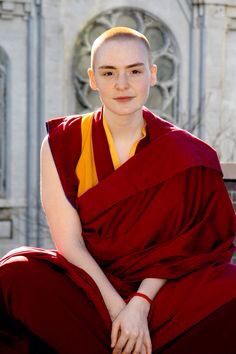
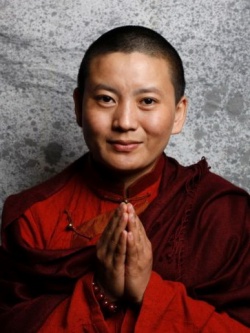
Those who know me well are aware that for the most part, I’ve kept a shaved head. This has had a bit to do with aspects of my beliefs, although one might be surprised to know that I don’t NEED to shave my head, I simply choose to do so as a show of discipline and as a sign of my devotion to said discipline.

If I can be BRUTALLY honest, it also plays a role in the martial arts as having a bald head gives a sparring opponent one less thing to grab onto. This has also been a practical application in my chosen career, as the very real threat of someone pulling on long hair and exposing a throat is a significant concern.

However, what most people don’t know is that you can practice Buddhism and NOT be bald. It’s not actually a requirement. In Buddhism, the shaving of one’s head and face signifies one of the first steps involved in becoming a monk and starting a monastic life.

This has been a common trait in monasticism for a number of different religions throughout the ages, including but not limited to Hinduism, Buddhism, Judaism and some sects of Christianity. This was usually done as a means of showing religious devotion or humility, but has also been used as a rite of passage at certain stages in life.

But for Buddhist monks, the shaving of one’s head acts as a symbol of denouncing worldly attachments. It also helps to act as a symbol of monkshood and to emulate the Buddha, who also shaved his head prior to attaining enlightenment.

So yes, Buddhist monks shave their heads and this is an observance they must follow. No, Buddhist practitioners who are not ordained as monks are not required to do so. Some of us simply choose to do so for the reasons I mentioned in the first paragraph. And no, rubbing a Buddhist’s bald head for good luck is absolutely NOT a thing. In fact, it is strongly discouraged. ☯

The Learning Stops When The Attitude Begins…

Karate requires a lot of dedication and commitment. This should go without saying, although as an instructor I have often found myself HAVING to say it. I have had a number of people who have come to train and have seen it all: sports enthusiasts, athletes, boxers and practitioners of a different style of martial art. But one thing remains consistent, regardless of your background: you have to start from scratch.

“Empty Your Cup…”

Zen Proverb

I’m sure some of you have heard the story… The one about a scholar who visited a wise Zen master and asked him to teach him Zen. Although the Zen Master did his best to try and teach the scholar, he kept interrupting and providing his own stories and opinions. The Zen Master calmly suggested that the pair have tea.

The Master poured a cup for the scholar. Although the cup was full, the Master kept pouring until the cup was overflowing. The scholar asked the Master to stop because the cup was already full. The Master agreed that it was and replied, “You are like this cup; so full of ideas that nothing else will fit in. Come back to me with an empty cup.”

There are a number of different versions of this story. I believe that even Bruce Lee offered up his own version at some point, but the lesson remains the same. You can’t walk into a dojo with a chip on your shoulder and expect to learn something. This reminds me of two stories…

“Empty Your Cup So That It May Be Filled; Become Devoid To Gain Totality.”

Bruce Lee

The first story goes back to the late 80’s, early 90’s… I was a white belt on the cusp of promoting to green. I had been training hard; three days in class and the remaining days, training at home. I was pretty good, despite being in my teens and how much of a conceit that likely sounds. I had gained mass and became larger than life; speed and precision were my tools.

One day, we had a guy who walked in off the street and wanted to learn karate. As was our custom, we explained that he could try a couple of classes to see if he liked it and if it would be something he would pursue. The man agreed to this and participated in his first class. It seemed to go well.

On his second class, we were paired off and practiced some punching drills. As luck would have it, I was paired with him. He struck me several times, causing pain and some mild injury. He had a grin on his face and when I explained that we weren’t supposed to be having contact with each other for this drill, his explanation was that this was karate and I should be able to block if someone punched. Really, asshole? That’s what you’re taking from it?

Sensei saw the entire exchange and opted to pair up with the man on the next run. Foolishly, the man tried the same tactics with Sensei, who was having none of it. Sensei exchanged blow for blow with the guy, without harming him (in any significant way). The guy inevitably ended up bowing out and stepping to the back of the class. Sensei stopped the drill and followed the man to the back of the class and spoke the words that have stuck in my head for almost three decades…

We are here to learn and teach karate. In order to learn, you have to let yourself be taught. You can’t learn if you bully your way through the people trying to teach you. And you certainly don’t come into a karate dojo with the attitude you possess. Come back when you’re ready to learn…”

The man left and we never saw him again. The second story comes much more recently… It started when I joined the Regina Institute of Kempo Karate in 2016. By that point, I had been studying karate for over 28 years. I hold a black belt and have proven my skills more times than I could count.

But when I walked into Kempo to watch that first night and the head instructor asked if I’d ever studied karate, I admitted that I had. But I wanted to learn their art in as pure a way as possible. I told the Master that I wished to start with them as a white belt. He was taken aback, considering I was already a black belt.

I walked into the Kempo dojo the following class with a white belt around my waist. I’ll admit it felt strange, wearing white around my waist when I hadn’t done so in over twenty years. But I bowed into the class and was as proud of the white belt around my waist as I was of the black one that represented my style.

The head instructor ended up forbidding me from wearing white, as he considered it an insult to my Sensei for me NOT to acknowledge my rank. The next class saw my gi adorned with my black belt, but I still held fast to the back of the class and remained humble. And this has been my practice for the past three years.

I’ve had opportunities to coach and correct some of the junior students, which has been great. But for the most part, I’ve accepted my role as a student and have spent the majority of my time learning as opposed to teaching. And this is the important part of today’s post…

The most important part of mastering any skill is rooted in one’s ability to learn. You have to open yourself up not only to learning, but to criticism and correction. Even if you’ve studied something prior to walking in, you have to be willing to admit that you may know NOTHING about the art you’ve chosen to add to your repertoire.

Although studying two arts at once includes a significant number of issues on its own, as long as you humble yourself and be wiling to empty your cup, there’s always a little more room to learn.

Think about it… Let’s examine one of the most basic techniques in the martial arts: a punch. If a 20-year student tells you that they’ve learned how to punch, that’s fine. If that same 20-year student told you that they “mastered” how to punch, they’d be lying as there’s always something more to learn.

And that’s how you should approach anything you try to learn. Face it as a beginner and learn as much as you can. Even a master can be humble in the face of learning something new. ☯

From “In-Class” to “On-The-Streets”…

I think that one of the biggest issues facing the martial arts is the misconception that what we learn in class is an accurate depiction of what you can expect in the streets. Unfortunately, there is a HUGE gap between the barefoot, gi-wearing structure of a dojo and the harsh, life-threatening realities of a real fight in the real world.

For the most part, the dojo environment is structured, controlled and there is minimal (although not non-existent) possibility of injury. The head instructor usually dictates what techniques are practiced and what drills are performed, and this leads to a controlled environment that allows a student to learn and develop at a proper pace.

But what happens if said student finds themselves squaring off against someone outside the dojo? Putting aside the premise that a martial artist shouldn’t be using their skills to fight out in public, there are a number of differences that would catch you by surprise…

  • The apparel: A karate gi is usually made of sanforized cotton, and allows for a certain level of flexibility and breathability. If you get into a fight in public, you’ll likely find yourself wearing regular civilian clothing, including but not limited to denim pants and/or coats or coverings that may hinder your movements and techniques:
  • The feet: Although certain kicks differ with different styles, the kicks I’ve trained with rely heavily on the toes and the top of the feet. Front kicks and roundhouse kicks can’t be properly executed the way they would be in class if you’re wearing footwear. Although sneakers may allow you to throw a kick in a pretty similar way as you would while barefoot, there will still be a discrepancy and therefore a possibility of injury, if you do it while wearing shoes or boots;
  • The techniques: In general, we pretty much train that if an opponent throws a high punch, we excuse a high block, right? In-class drills have a significant level of structure and control, which we lose once we face a real-life scenario. If a real opponent throws a high punch, you may find yourself dodging and striking as opposed to blocking and counter-striking.

The point behind all of this is that it’s a good idea to continue drills and techniques in class, and especially sparring. The practice as well as the sparring will go a long way towards developing muscle-memory and help you in the event of a real-world application of your art. But one should nonetheless be aware that there will be differences and even hindrances that will occur in the field. They could come as a surprise and cost you the battle, should you not be prepared. ☯

“Where Have You Been?”

Karate is a strange creature. For the most part, people tend to come and go in weird intervals throughout the calendar year. And they can hardly be blamed. Sometimes life just gets in their bloody way and there’s nothing we can do about it. I know that for myself, I’ve had work and familial obligations that have often prevented me from attending class. I’ve often had a particular instructor ask me, almost every time he’s seen me, “Where have you been?”

This is a question that has grated on my nerves, regardless of the source, for over thirty years. For the most part, I tend to get a workout in about four to six times a week, depending on appointments, work and other life obligations that seem to slither their way into my personal schedule. But the point is that my fitness and my karate are engrained into my weekly routine, in such a way that surpasses the two classes a week that I attend.

But every once in a while, these absences will be noticed by an instructor or someone else and they always seem to consider it necessary to ask why I’ve missed the classes I was absent for. Needless to say, this is a bad idea for any student, especially beginners.

Karate (or any martial arts) is a lifetime commitment. I know guys who only studied the Way for a few months and still retain some of their lessons and apply them to their everyday lives. The overall effect martial arts can have on someone is measurable, but the emotional effect it can occasionally have on one’s life is palpable…

I’ve had times in my youth when I missed a number of classes. Either because I was exhausted, sick or just plain didn’t feel like coming out. I would often scuttle my way back into class and feel ashamed at my lapse in discipline and hoping that no one would take notice. One of the benefits of being a white belt or junior grade, is you tend NOT to stand out when you’re at the back of the class.

But as far as those periods when I didn’t FEEL like training… Imagine if I was berated and pestered about my absence back then? This might have led to my departure from class for a longer period of time. But instead, my absences were considered a time of reflection and I was always welcomed back.

In my current school, I have a particular instructor who seems to make it his business to point out and ask about any absence I may have. He does this to most students, but if I’m being honest I consider myself to have a bit of a louder voice than most.

“Where do you think I’ve been…?” I usually ask. I point out that in the period where I haven’t been to class, I’ve usually managed to work out three times, which is one workout more than the scheduled classes I have with my current dojo.

This is one of those times when it’s more important to focus on the why and not the what. We all have times when we lapse in our attendance and skip a few classes. There’s nothing wrong with that, inherently. The important part is that you go back. And if you happen to be a senior belt or instructor, do both yourselves a favour and don’t poke the beast! Take your student’s absence in stride and teach them accordingly! ☯