Virtual Karate Dojo

It should come as no surprise that just about everything has moved to some sort of online forum in the past year. In my household, we’ve even started doing some shopping and Costco orders online and had them delivered; something we had never done prior to the pandemic. Considering that most things have been slowly moving towards online options in the past decade or so, the pandemic has been that last little push that was needed to force us to do everything else without face-to-face-contact. This week, the karate club I train with started having classes on Zoom.

Our Zoom Meeting Dojo (That’s me in the blue!)

It was a strange and different experience, that much I can say. As you can see from the image above, we all met via Zoom and took instruction from Master Harding as he guided us through an hour’s workout. It was interesting to see everyone who had made do with whatever space they had available in living rooms, basements and home dens. I was among the lucky ones that had a large, open space to work with that included my black, foam workout mats. But as I’ve written in previous posts, karate doesn’t require much more than a four by six-foot space to train in. And the group proved that, over the sixty minutes that followed. ☯

Keep Pushing Hard…

Life doesn’t care about one’s plans. That’s one of my most frequently used sayings across all the forums I post on, and many people feel that it has a negative connotation to it. Honestly, nothing could be further from the truth. I repeat this short phrase, almost like a mantra on a daily basis because it reminds me that I need to keep pushing and working at everything in life. And so do you. It isn’t intended as a negative thing, it simply represents the fact that if you lie on the floor curled up in a little ball instead of getting up and working at making things happen for yourself, nothing ever will.

And this leads to suffering in one’s own life. As I’ve written about before, Buddhism has this lovely concept of Four Noble Truths; the first two being the acknowledgement of suffering and the second being that this suffering is caused by us. I always like to push it one step further and point out that most of one’s suffering is self-inflicted. It’s for this reason that it’s important that one takes the necessary steps to get up and go.

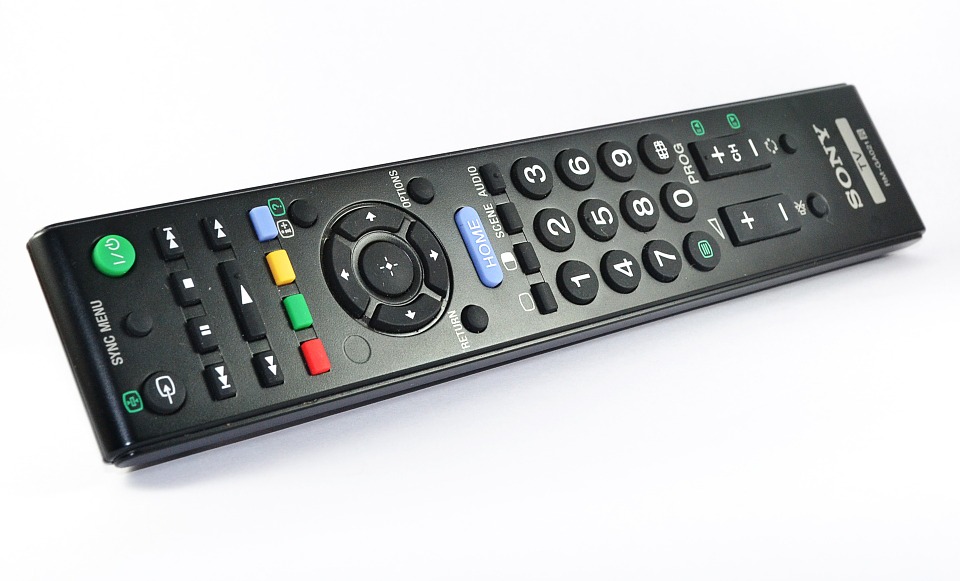
A good analogy that I’ve used on others before, is to think about the remote control to your television. When I was a kid, you had to get up off your ass and turn the dial in order to change a channel… All three channels that you HAD, depending on how well your rabbit ears were aligned. Yes, I’m THAT old… My point is, modern televisions involve remote controls and many models don’t even feature physical buttons on the actual device anymore. Times have somewhat changed.

Now imagine that the batteries in your remote are dead. If you sit back and wait for the incidental chance that someone will come along and change them out for you, you’ll likely go without the binge-watching session you had planned. Especially since no one likely knows your batteries are even dead. So, maintain your own batteries. Keep yourself charged and moving. Batteries are a good analogy, too! Like a friend of mine has told me, “Be like a battery… Some negative, some positive but all power.” Man, I gotta get that printed on a t-shirt! Daryl, if you’re reading this, beers are calling, damn it!

I guess what I’m trying to get at with this poor attempt at a Monday motivation, is that there’s no turning back. Most people live regretting the past and wishing for the future and in doing so, miss out on the present. Life is hard. It’s not MEANT to be easy. If it were, where would the challenge be? That’s why the expression is “going THROUGH hell,” not “getting to hell, suffering a bit but turning back eventually.” Shit happens, bad things fall in our laps. But we owe it to ourselves to keep fighting the good fight, no matter how hopeless or tiring it may seem. No only up is through, so you need to keep pushing.

Instead of saying I regret that, say I look forward to this…
Instead of saying I wish I had, say I WILL!
Instead of Too bad that happened to me, say I will protect myself and learn from my mistakes!
Instead of I failed, say I made a mistake but I’ll recover and win!

Y’all get what I’m throwing down, here? Does it makes as much sense in print as it does in my head? Sometimes the thoughts in my head sound great but they tend to move faster than my fingers can type, so it doesn’t always have the desired impact. Last but not least, don’t be afraid to cut yourself a break. Mistakes and hardships are how we learn and grow. There would be no progress without it. As long as you’ve learned from it and you refuse to stop fighting, you may lose the occasional battle but you’ll ultimately win the war. ☯

How I Discovered I Had Type-1 Diabetes

I’ve been a huge fan of Cobra Kai since it was released to YouTube and I was absolutely over the moon when it came to Netflix and even more so with the release of Season 3. About a year ago, I scribe to Mary Mouser’s channel and discovered that she was Type-1 Diabetic as well, and she had made a rather heartfelt and emotional video about how she was diagnosed and how’s it’s affected her life. In that spirit, I decided to do the same and the video below explains the when and how that I was diagnosed with Type-1 Diabetes in 1982, and the impact it’s had on me. Enjoy! ☯

The Perfect Hemoglobin A1C

One of the biggest challenges faced by Type-1 Diabetics is maintaining a good A1C level. I’ve been struggling with it for most of my life. In fact, in 2014 I started with an A1C of about 8.4%, which is a level that’s considered to be the beginning of a dangerous level. In this video, I explain exactly what an A1C is and the fact that for the first time in over 15 years, I achieved my goal of dropping below 7.0% with a result of 6.9%! ☯

Two Conditions By The Same Name Are Not Created Equal…

You know, I’ve often written about the things I don’t like being said to me or assumed about me, in relation to my Diabetes. I think this is a common issue for most folks; everyone has SOMETHING they don’t like to hear about their specific health condition, lifestyle, choices, etc… But one of the most common misconceptions people have about Diabetes is the difference Type-1 and Type-2 Diabetes. There are a number of other “sub-types,” which I covered quite a while back in my post Everyone Has a Type… but Type-1 and Type-2 are the most common and the most “well-known.” I have that in quotations because it’s amazing how little the general population actually KNOWS about Diabetes.

Every once in a while, I write a fresh post to explain the generalized difference between Type-1 and Type-2. The population at large seem to confuse and even combine the two on occasion, and the questions and “suggestions” I sometimes get from people can border on the ridiculous and dangerous. I once had a guy who claimed to be some sort of holistic healer, who claimed that he could heal my Diabetes by having me sustain myself on a diet of nothing but cruciferous greens and no insulin. Hmm, sounds FASCINATING but I wanna live…

To give you the general difference so that this post doesn’t wind up being a mile long like they usually are, Type-1 Diabetes is a condition known as “insulin-dependent” or “juvenile” Diabetes (although I haven’t heard it referred to as that last one in a long time). It happens when a person’s own immune system attacks the body’s insulin-producing beta cells, leading to the required insulin injections. Although some Type-1’s will continue to produce insulin in small amounts, eventually the pancreas stops producing insulin altogether. There is NO cure (yet), only treatment. It’s a lifelong condition and usually takes hold early in life due to its nature, although some people are diagnosed much later (my father was diagnosed as Type-1 in his 50’s).

Type-2 Diabetes is a much different creature. It usually has to do with your body’s ability to respond to insulin the way it should. It usually has to do with the body’s insulin sensitivity, which is important to remember since most people attribute the condition to obesity (even if that’s only a possible factor and not a definite one). Perhaps the pancreas doesn’t produce the amount of insulin required or the body simply doesn’t respond to it appropriately. That’s the gist of Type-2. It can be treated in a number of different ways, including diet, exercise, oral medication and in some cases, insulin injections as well. Although there is no cure for Type-2 Diabetes, its effects can be reversed through proper diet and exercise so that oral medications are no longer necessary. Type-2’s CAN potentially progress to become Type-1.

It can be frustrating when someone offers the “miracle cure” they saw an ad for on FaceBook or tells you to “just eat this or that” in order to cure the condition. The take home lesson here is that there is currently NO cure for Diabetes. It’s a dark passenger that stays with you for life. And if someone tells you they have Diabetes, don’t be shy to ask what type they have. Most of us don’t object to reasonable questions and you may learn a thing or two that will prevent putting your foot in your mouth. ☯

Sinfully Sweet…

It’s difficult to be a good person. No, let me correct that… It can be exceptionally EASY to be a good person, but society, culture and our own personalities MAKE it difficult to be a good person. I recently read a post by a fellow blogger named Jason Youngman who, if you aren’t doing so already you should follow. He wrote a post entitled Dignity Remains Steadfast where he discusses the nature of vice and it’s vicious effect on people. He ends the post with a comparison that I find extremely fitting where, and I’m paraphrasing here, the sweetness of candy is a slow pleasure that doesn’t show the damage it does until your teeth begin to rot.

It got me to thinking about the nature of vice and how we behave in society, a point which I don’t usually address beyond an immediate situation that may have occurred in my daily life. But that in itself is a form of vice. After all, most people are geared towards living in the immediate moment and don’t usually consider the consequences of what’s to come. And from a Buddhist’s standpoint, I’ve decided it would be a good idea to share my thoughts on this subject with you.

Just to be clear, when I refer to vice, I don’t mean the iron clamping device used by a trade’s person or the nickname given to certain American police units. A vice is what’s referred to as a bad habit, behaviour or character trait that a person may have that is considered wrong by their respective society. That last part is important since depending on where you live and what culture you happen to be a part of, something can be a vice in one culture but not another.

Here’s the reality: no matter who you are or what kind of lifestyle you live, you have vices. Maybe you chew your nails. Maybe you’re a smoker or a drinker. Maybe you tend to judge a book by its cover. These are things that can be considered vices and are negative character aspects that we navigate daily life without usually even acknowledging. This is mostly because we don’t consider them to BE bad habits, even if they may have a negative impact on ourselves or those around us.

Let’s take cigarette smoking as an example, and this is a discussion I’ve had with many a friend who actually smoke. The average smoker (if there really is such a thing) believes that their use of cigarettes is a vice that affects them and only them. It’s not such a bad thing, because they’re not hurting anyone but themselves. Right? Makes sense? Here’s the problem: the eventual health complications caused by your smoking will inevitably lead to a strain on health care systems and your family, especially the if they need to provide care for you when you develop terminal illnesses brought on by your smoking habit.

Further, there’s the pollution aspect from smoking, even if you do it outdoors, the littering from all the cigarette butts left lying around and the financial constraints you’re placing on your household due to the excessive rising costs of cigarettes. I have no idea what the current cost of a pack of cigarette might be at the moment, but I’ve plenty of people complain that it’s a lot. Now, I’m not trying to use my blog as a platform against smoking. To each their own. This post is meant to be about vice, so I’ll move things back in that direction. But smoking is a good example of a common vice that many people partake of.

Another good example is sin. I was raised in a Roman Catholic household. And if I’m being honest, just about everything that someone did was considered a sin in some given way, shape or form. I may be exaggerating to an extent, but it sure felt that way as a child. Now, Catholicism differentiates vice and sin as the habit of sin and an individual morally wrong act, respectively. And they list their seven deadly sins or vices as Pride, Envy, Wrath, Sloth, Avarice, Gluttony and Lust. Does this means that when I shave and pay attention to personal grooming in the morning, that I’m guilty of Pride? If I go out to a buffet dinner with friends, am I indulging in Gluttony? Perhaps.

I use Catholicism as an example, because it’s what I grew up around and it’s familiar. But most organized systems of faith have a list of vice and/or sinful actions that they consider particular. Buddhism does as well, in fact. So if I avoid those seven indulgences, does this mean that I’m free of vice as a Catholic? And do I still have vices from another culture and/or religion’s perspective. This is the problem with vice. It can be insidious and not always noticeable in the every day.

One thought I’ve always had on vice and something I discussed with Jason Youngman, is how does it fit in the perspective of someone who is unaware of it? For example, if a person grew up in a household where there was no faith-based upbringing, are they genuinely guilty of vice? What does sin mean to someone who knows nothing of it? I think that perhaps some vices (not all) may not be viewed as such to certain people, depending on their circumstances. Some vices should just be common sense; rudeness and criminal behaviour should be a given, and every person should know to avoid them, regardless of upbringing, faith or education. But such is what makes these things a vice in the first place: the fact that people don’t acknowledge them as common sense

He made a very good point in stating that regardless of religious or faith-based upbringing, the majority of households will ensure that their children are raised on some level of morality, be it a personal or system-based one. He also pointed out that it’s necessary to acknowledge the consequences of our actions, whether we believe our actions are vice-related or not. From a legality standpoint in Canada, the Criminal Code is pretty clear on the fact that ignorance of the law is no a defence. The same can be said from a moral viewpoint, as well.

This can be easily tied in to Buddhism, as the Four Noble Truths describe that very same thing. Whereas the first Noble Truth explains the existence of suffering in the world, the second Noble truth goes on to explain that we are responsible for that suffering. The third Noble Truth covers the fact that we need to bring an end to this suffering and the fourth Noble Truth explains HOW to do so, which is described as being by following the Noble Eightfold Path.

The Noble Eightfold Path includes Right View, Right Aspiration, Right Speech, Right Action, Right Livelihood, Right Effort, Right Mindfulness and Right Concentration. Through those practices, one can achieve peace and enlightenment, although the latter can be fleeting and difficult to achieve. The point is that one needs to live well in order to contribute to the overall good in the world and help to eliminate suffering.

I could go into detail and describe each of the Eightfold Path, but I think this post has gone on long enough. I want to keep y’all engaged and reading, not using my blog as a substitute for warm milk. The take home lesson here is that we all have vices. We may not always recognize them or acknowledge them as such, but even the smallest ones will have a negative impact if left unchecked. Like the flapping of a butterfly’s wings that eventually cause a ravaging storm on the other side of the world, actions have consequences. ☯

Just Because I’m Wrong Doesn’t Mean You’re Right…

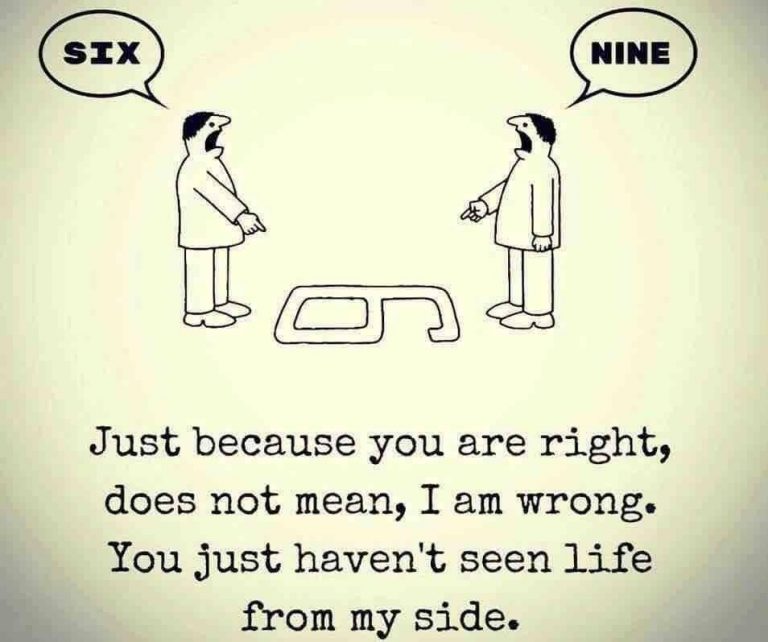
People hate to be wrong. I’m not sure why that is, but it’s a well-documented fact. Maybe it’s the fear of showing weakness in front of others, maybe it’s narcism or self-indulgence. But people flat out hate to be wrong. I’d be lying if I said that I enjoy being wrong, but knowing to accept it when you are is one of life’s big lessons. And for some reason, some will go out of their way to prove that they’re right even when they’re wrong.

Here’s the thing: whether or not you’re right will often be a matter of perspective. And a person’s perspective is very dependent on a number of different factors. One’s upbringing, values and beliefs will all go a very long way to molding a person’s perspective and lead them to where they believe they may be right about something, even when they’re not. It can be very difficult to navigate.

Always remember to be open-minded. Be willing to hear the other side of the story. It can mean the difference between fostering peace and causing unnecessary suffering. Maybe you’ll even learn something along the way. Sensei always used to say, “You have two ears and one mouth. That means you should listen TWICE as much as you talk.” Sound advice. Even if something being put out into the world is right, it doesn’t mean that you’re absolutely wrong.

But when we open ourselves to other perspectives and beliefs, it’s amazing how often it dissolves conflict. Being open-minded isn’t just something that happens on its own. It’s a choice. And a practice. ☯

Party ‘Til You Drop? No, Eating ‘Til You Drop!

It’s no secret that having Diabetes requires something of a fine balance of give and take for most aspects of one’s overall health and diet. However, when those two factors collide it can cause some chaotic issues that causes a role coaster of events that usually last for hours afterwards. What I’m referring to, is the act of overeating when one slips into Hypoglycemia or low blood sugar. It’s a common issue, but one that can cause untold damage.

Just a few short years ago, I used to have a nasty habit that when my blood sugar dropped below normal I would start eating carbs to bring it up. Sounds reasonable, right? The problem would arise when I’d KEEP eating until I felt better. That’s a problem, because if I’m still eating when I start feeling better it means that carbohydrates have already started correcting my levels quite some time ago and I’ve eaten WAY more than I need. In which case I need to buckle up, because I’m about to slingshot into Hyperglycaemia territory and I’m about to embark on a ride I like to call the roller coaster (but not a fun one!).

A few things to keep in mind when treating a low is that you have to trust that your body will do what it must, so long as you give it what it needs. Treating a low should involve consuming a fast-acting carbohydrate, such as fruit juice, regular sodas or gummy candies. Personally, I like a particular brand of jellybeans because eating a dozen of them packs a wicked carb-punch, kicks in reasonably quick AND I can buy bulk bags of them. You want to avoid things like chocolate, as they’ll take forever to kick in. They’ll still work since carbs are carbs; it’ll just take forever since chocolate is basically a slab of fat and your body will process the fat down before moving on to the carbohydrates.

The next thing to keep in mind is what might be happening with your body at any given moment. If you’re suffering a low during a workout, guess what? You’re gonna have to stop until you’ve corrected. It’s all well and good to “push yourself,” but low blood sugar isn’t one of those scenarios where you can try and reach new levels. Trust me, low blood sugar is not a place that you want to hang out. But I can personally attest to how annoying it is to be in a karate class and get a low. Stopping a workout is bad enough; leaving a class is even worse.

It’s important to know how many units of insulin you have on board at the moment, as well. If you’re suffering a low and you still have 14 units of insulin coursing through your system, your correction may need to be bigger or over a period of time as opposed to all at once, since the insulin will keep working. You want to avoid yo-yo-ing all over the place by correcting this low only to have the carbs in your actual meal kick in and make you skyrocket.

One really good example of this is pizza. The average slice of pizza is approximately 20 grams of carbohydrates (this is based on my specific experience and the pizza I consume, so always be certain to check nutritional information before bolusing) so if I’m having two or three slices, I’ll provide insulin as required. This means I’ll bolus for 40 or 60 grams of carbs, depending on how much I eat. Makes sense, right? But pizza is extremely slow to be processed.

This means that if I take ALL the insulin at once (which my current pump leaves me no choice on Auto Mode), I will likely suffer a low after a very short period of time. If I correct this low, it’s all well and good until the carbs in the pizza actually kick in and I suddenly find my blood sugar levels climbing to Everest-level heights. For foods that are that slow-acting, it’s better to deliver insulin in parts or slowly over a period of time. Some insulin pumps have the option of “square” or “dual” bolusing, which means to deliver over a chosen period of time or, some right away and some over a period of time, respectively.

It can be intimidating, since you have to face the possibility of sitting at low blood sugars for a period of time while your body processes the carbs and you start climbing to a normal level. This can be scary and sometimes not possible. For example, if you’re work doesn’t allow you to sit calmly and wait to go back to normal you may find yourself wolfing down sugar faster than your body will process it, which means you’ll experience high blood sugar soon thereafter. In the case of something like pizza, you may fall DANGEROUSLY low before the carbs finally kick and you may not have the choice but to treat the low and deal with delivering added insulin later to correct.

Riding the insulin roller coaster is no fun and can leave you feeling like crap, during and afterwards. With a little time and experience, you can learnt o adjust and know exactly what you’ll require to properly correct a low, what works for you and what works the fastest. But the important thing is to learn patience. Avoid overeating and give your fast-acting carbs the time to do their job. This is likely the hardest aspect of having low blood sugar, because no one wants to sit still when they feel shitty and they know their levels are low.

But if you correct, sit and rest and allow the carbs to kick in, you can avoid the roller coaster and be all the healthier for it. As usual, this is the part where I recommend a reasonable amount of exercise throughout the week as exercise will help to improve insulin sensitivity and takes at least one element off the table. Having Type-1 Diabetes involves many moving parts, but forewarned is forearmed. So, know your body and stay healthy! ☯

Is It Enough To Say It?

With the exception of this blog because, well… that’s the whole point of it, I don’t really go around advertising that I study Buddhism. It’s obviously not a shame thing, and it isn’t as though I’m not prepared to discussed the specifics of my beliefs when someone asks; it simply isn’t something I’m in the habit of doing. And I think that this is something important in relation to anyone’s faith. Having faith or being faithful shouldn’t require you to bring others into the fold. I often think about the poor practitioners who go from door to door…

I’m sure you can think of what faith system applies, although you may be surprised to know there are several who have this practice. What’s even more surprising is when these canvassers come to my door and are greeted by conversation and an exchange of information as opposed to having a door slammed in their face. Their faith is no threat to anyone. And if one is secure enough in their own faith, there should be no fear or worry in discussing it with others. But I certainly don’t envy them the task of walking all over neighbourhoods being rejected and refused, oftentimes in the cold or inclement weather.

It often surprises some to learn that I was born into a French Catholic family, and that I was in fact raised in the Catholic faith, well into my teens. I believe this surprise comes as the converting of one’s faith is not a frequent “genuine” event. What I mean by this is that there are plenty of newer-generation folks who will claim to follow one belief system or another, often to continue adhering to a previous one or changing to another whenever it suits them.

But when I reached my teens and started studying the martial arts, I fell into Buddhism almost as easily as one starts breathing at birth. This was one of the reasons why I chose to pursue it. I faced a surprising amount of opposition, especially from my family. You would think that family would be the most supportive, but considering my mother studied at a seminary in her youth and most of my aunts of my grandmother’s generation were nuns or missionaries, I think there was an expectation there, of automatic acceptance and perhaps a minty hint of obedience. I’ve even had an ex-girlfriend who once had the audacity to flat out tell me, “You’re not Buddhist! Stop saying that…” Needless to say, there’s a reason she’s an ex…

This has always made me wonder, is it enough to simply SAY that you follow a certain system of beliefs in order to be part of it? I think back to those formative years when I started studying Buddhism and knew next to nothing. I knew the ultimate goal was to find enlightenment and peace, which is what drew me to it in the first place. It seemed far more appealing than praying to an unseen, unknown deity that never responded or helped no matter how frequent prayer was leaned upon. But to some, it harmed my credibility that I lacked the knowledge to appropriately answer some of their questions.

During my youth, I was subjected to all the usual steps involved in someone’s indoctrination into a particular school of beliefs. I was baptized shortly after my birth, had First Communion and something referred to as “Confirmation,” which is a rite that involves confirming one’s adherence to that particular religion. I think this is interesting, because for all three of these rites I was too young and had no clear concept of what I was agreeing to or accepting; a fact that has long been argued in my mother’s household.

And granted, nothing in the Holy Bible actually speaks of NOT baptizing babies and children, but all the depictions I’ve ever seen of John the Baptist depict the baptism of an adult. How can one adhere to a system of beliefs without knowing WHAT they’re adhering to? It’s a question that’s plagued my noodle for decades and in some ways, many ways, I don’t feel this is right. Every person should have the ability to choose and understand what they’re agreeing to. But once you’ve made that decision, make sure you’ve made it because it’s right for you. And because it’s something you genuinely believe in.

Consider this for a moment: What is the point of saying that you’re Catholic if you never go to church, never pray, never study the Bible and adhere to NONE of the customs? Are you still Catholic? Or is is perhaps a label you’ve chosen to accept because it was imposed on you earlier in life? Or does it make your life simpler to have yourself categorized in a world where belief systems are considered important? I use Catholicism as the example because it’s what I was born into, but the same can apply to any system of beliefs.

I don’t have the answers. I can’t answer EVERY single question about Buddhism that comes my way, but I certainly aim to learn as much as I can. And maybe that’s the point. If I knew everything, there would be no purpose to life. I study Buddhism because I ultimately know that eventually I’ll find all the answers I seek and find peace. Perhaps that realization, in and of itself, is the enlightenment I seek and I simply haven’t realized it yet. But someday I will.

Be true to yourself. Be sure that your faith does not harm you, bring harm to others or create chaos within life and you can’t go wrong. At the end of the day, the story of everyone’s life begins and ends the same way. It’s how we fill the days in between that define who we are and the mark we leave on the world when we’re gone. And do your best to encourage peace. ☯

“There Is A Misconception That Buddhism Is A Religion, And That You Worship Buddha. Buddhism Is A Practice, Like Yoga. You Can Be A Christian And Practice Buddhism. I Met A Catholic Priest Who Lives In A Buddhist Monastery In France. He Told Me That Buddhism Makes Him A Better Christian. I Love That.”

– Thich Nhat Hanh

A Weak House Of Cards

You know, I’m a big fan of how far society and technology have come. If it weren’t for said advances in technology, my Diabetes control would likely be far less than what it is now. But there’s something to be said for the good ol’ days; the days when people actually dealt with the situation in front of them instead of taking the easy way out. And like a fragile house of cards, it can be amazing how removing one card from the pile will usually make the whole, planned thing fall asunder…

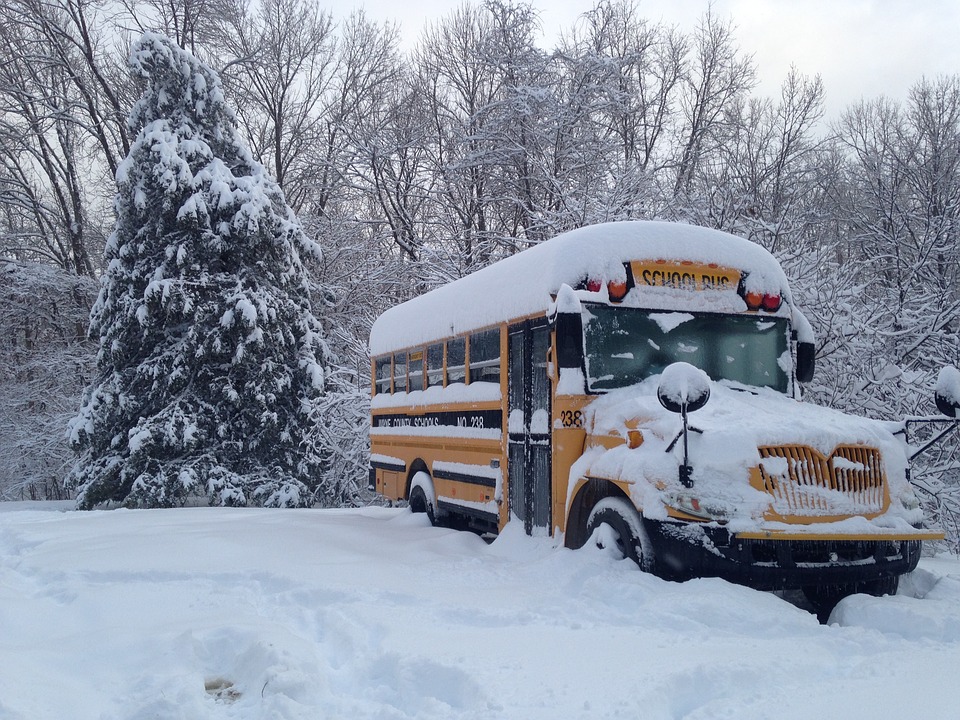
Life rarely cares about one’s plan and it can be pretty frustrating when things don’t go according to them. A week ago, I had an appointment to travel to Saskatoon for my eye injections, which take place every eight weeks. After only about six hours’ sleep, my wife and I began receiving multiple text messages followed by phone calls. It seems that due to cold weather, the bus system that would transport my son Nathan to school was being cancelled.

Not classes themselves, mind you… Just the buses. Weird. Must be a Prairie thing. This is one of those times when I become the old man who complains and tells the epic story of how every day was a 4-mile walk to school, uphill, through ten feet of snow while fighting wolves… The problem is, I really DID have an 4-mile walk to school. Not the rest of the stuff, mind you. Living in Northern New Brunswick, I used to leave the house an hour and a half before first bell in order to walk half way around the base of a mountain to reach my school. Y’all can look it up, it was a small town called Dalhousie, New Brunswick. Both French and English high schools are STILL at the top of a mountain. Granted, I had the benefit of walking on a groomed snowmobile trail. But I digress…

In my day, they cancelled schools not the vehicles that transported the students, which meant that cancellations would be announced via radio WHILE I was on foot to reach school. I would only find out that classes had been cancelled once I walked in and some cranky janitor would ask me why I was there and to go home. This would be followed by my inevitable trek back home, regardless of the cold or weather, since classes had been cancelled.

But these text messages and phone calls my wife and I received were to advise us that the bus systems meant to transport my son to school were being cancelled due to the cold weather. Not classes. Classes would still be taking place. Just the buses. Fuck. I won’t get into the specifics as to why it made it unlikely that Nathan would be going to school other than to provide that our schedules as well as the distance and location of the school meant that Nathan couldn’t walk and transporting him there ourselves couldn’t happen, either.

He missed school on Monday and Tuesday because I was absent for my eyes and we don’t have a second vehicle. The school bus system got back into the groove for Wednesday, but that was short-lived as they started cancelling it out on Thursday again. This is where that question of technology from my opening paragraph comes into play. It’s 2021, people! We’ve put people on the moon; surely there’s a way to have school buses running during winter weather. This is Saskatchewan, the cold ain’t going anywhere!

And just like that, the house of cards with which the week was standing on came tumbling down. Now, I’m not a mechanic or an expert. And I can admit that my son’s school bus is likely older than our family vehicle. I use the term “likely,” because they all look the same, regardless of their age. So it can be hard to gauge. But I can guarantee that since block heaters were invented in 1947 and covered transportation hubs are a thing, I find it hard to understand why the transportation option would be unable to run while they would still expect teachers and staff to start their own vehicles and make their way to school.

And it’s a pretty safe guarantee that most parents are not in a position to get their kids to school themselves, present company included. I don’t do the whole “wind chill” thing. If the weather says -35 degrees, then it’s -35 degrees! And I’m sure that Nathan was more than happy to have a couple of snow days, sleep in and relax at home with his baby brother. But it’s pretty weak sauce that they don’t seem able to start industrial transportation vehicles and clear them of snow in order for our children to be transported to school. Kinda makes me reconsider how advanced this whole technology thing really… (end rant). ☯