I spend a lot of time online and with my nose buried in books, looking up the various knowledge and materials that I use in my posts. But I often overlook some pretty important and key dates that SHOULD hold a special place in my martial arts journey, One of those dates was yesterday. While doing some research for a post, I brought up Google’s home page and noticed Google’s banner was adorned with some martial arts imagery of a dojo, practitioners in white gis, and an image of Master Jigoro Kano in the centre.
It was a clever rendition and looked nice, but considering Google frequently changes their home page banner, I thought nothing further of it. That’s a shame, because yesterday’s post really should have focused on Master Kano’s 161st birthday, which is why Google had it up. It also dawned on me, a touch too late, that this is usually WHY Google will put something up; to recognize a special day. But I digress…
Master Jigoro Kano
For those of you who don’t operate within martial arts circles, Master Kano was the founder of Judo. Even non-practitioners are usually familiar with that term. His efforts and teachings can be recognized and remembered as being the first Japanese martial arts to use the coloured belt system employed by most Japanese and Okinawan arts, as well as many others. He was a teacher by trade, which I have no doubt would help with teaching the martial arts, and contributed to Judo being taught in public schools.
Master Kano had originally studied Jujutsu while studying in university, long before it would make it’s way across the globe and everyone would only recognize “Brazilian Jujitsiu,” which is a combination of the two aforementioned arts. He eventually began to surpass his teachers and developed his own system, naming it Judo, which means “plainly” and “the way.” Master Kano also established the Kodokan, which is his Judo institute in Japan. I had the honour of visiting this facility in 2001. It was inspiring.
Although I consider myself a karate practitioner, Sensei also holds a black belt in Judo and incorporated a lot of Master kano’s teachings into our system. Through the decades, many of the holds, pressure points and throws taught in Judo were also taught to us. That’s why our school is called the New England Academy of Karate & Judo.
A happy, belated birthday to the late Master Kano. He may no longer be with us, but his legacy has obviously endured long after his passing and will continue on. In fact, judo was the first Japanese martial art to be included in the Olympics. It makes one wonder if he ever thought, all those decades ago, just how far his teachings would reach…☯️
Kids are amazing and they have no shortage of clever quips and imaginative ideas. Sometimes the amount of stuff my oldest son comes up with kinda scares me, especially when he starts talking about some of the “advanced” weaponry he builds with his legos and various other toys. If he ever gets a mountain fortress and a swivelling chair while petting a white cat, we may have a world domination problem on our hands. But getting them interested in the things you do can be the biggest challenge. For me, it’s been getting my children interested in martial arts.
My oldest son Nathan had some moments of interest where he would emulate some of the movements and techniques I would practice during a given workout. It was cute, considering he used to do this prior to being a toddler. I have a great video clip where he comes out of his room and sees me training, and immediately drops into a horse-stance and does a kiai. I used to show that video to EVERYONE, as I absolutely loved the precision and ferocity he did it with.
My oldest son, Nathan
This happened without my efforts to try and encourage him to do it. It gave me a slim hope that he would show some interest and perhaps prowess in karate and I would be able to start teaching him from a young age. I’ve seen the results of “forcing” children into karate, firsthand. The results are never positive. For this reason, I’ve always been an advocate of allowing children to make their own choice when it comes to sports and extracurriculars. That being said, Nathan has never shown an interest in learning beyond the occasional bout of floor grappling or “wrestling.”
When my second son, Alexander was born, he began to show some active interest almost immediately. As soon as he was able to walk without falling over, he would follow me around and do what I do. At only 2-year’s old, he currently practices punches, kicks and even lifts little 3-pound weights when I do resistance workouts. Although letting a small child use weights isn’t ideal, 3 pounds isn’t significant and it’s hilarious watching him do arm curls, trying to imitate me. Watching him on the punching bag is even better.
Beyond both of these scenarios of ultimate cuteness and adorability, one of the biggest issues is finding the time to do a proper workout when you have two small, rambunctious children clambering all over your legs. A good example was a few nights ago, when I was trying to do a short, weight workout in the living room. I’ve bring doing this push-up challenge called “Bring Sally Up,” lately (it’s been going well, BTW. Thanks for asking…) which requires the use of YouTube, since that’s where the video is. I prepped myself with a pair of shorts and a dry-fit hoodie with the hood up, which allows me to retain more heat and get a better sweat on.
The push-up challenge is about three and a half minutes long and at about the first minute mark, I raise my head just a touch to see a tiny, red-headed grin peeking into my hood. Hilarious, but obstructive. Then, as I was working through a set of dumbbell exercises, he was trying to emulate them with his 3-pounders. It would have been adorable if not for the fact that he was crowding my space and I had to keep moving or altering my sets in order to keep from cold-clocking him with a dumbbell.
I got the workout done, but it goes a long way towards showing how exercising with children involved can be complicated. The important thing is not only teaching children proper fitness safety as it pertains to proper stretching, not overdoing it and the dangers of the equipment you use, but trying to get it done for yourself in a safe, controlled manner. Kids don’t always get the potential dangers of exercise, especially with equipment. There’ll always be an excuse NOT to exercise but your children shouldn’t be one of them. ☯️
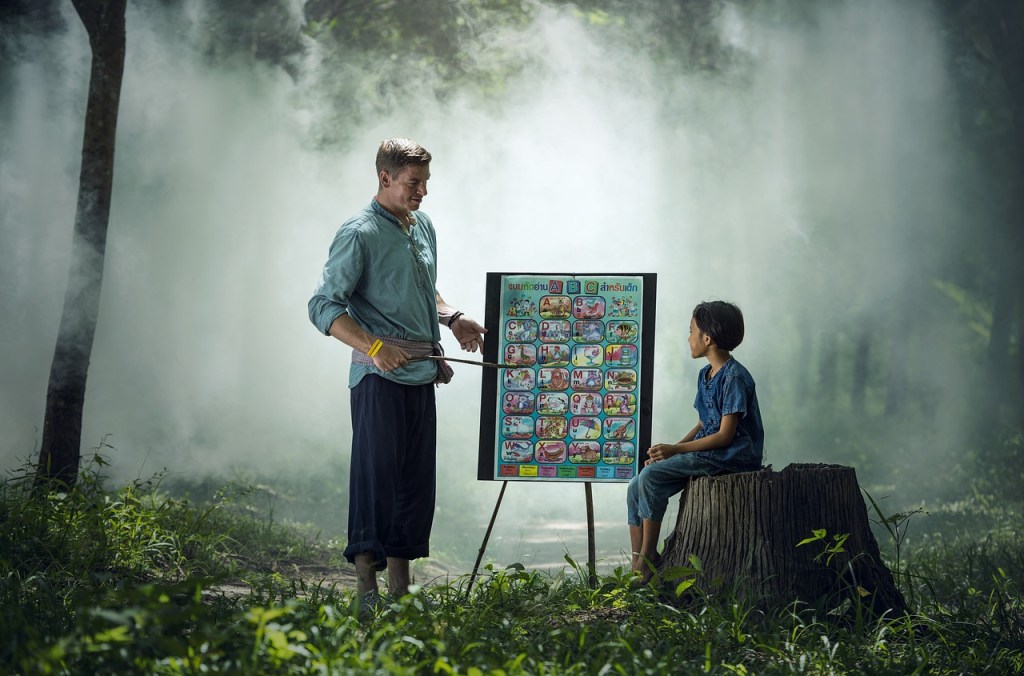
I have a great respect for teachers, a respect I wish I had when I was actually a student in school. I remember struggling to stay awake during class and considering a lot of the material boring and unimportant. As I grew into adulthood, I came to appreciate the importance of acquiring knowledge and how important those who were trying to pass it on were to me. As it pertains to karate, teaching is a very specific flavour that not everyone’s palette can appreciate. Myself included.
Having a good teacher is an integral part of a good martial arts journey. Too often, I hear about instructors who are either too violent with their students, refuse to provide certain levels of instruction or coaching or are simply more concerned with showing off their own skills than actually passing on their knowledge. These are all good signs that you’re in an ever-so-lovely “McDojo,” and you should exit, stage left if you ever find yourself in that kind of a teacher/student relationship.
I remember my first experiences with teaching karate. i was still a white belt, albeit a couple of stripes in, and I was tasked with teaching basic movements and the opening of our first forms to students who were starting classes for the first time. It was a fun experience, and it showed me some of the shortcomings and errors I was committing myself. Occasionally, I would been have a student who would recognize something and say, “Isn’t it supposed to be THIS way?” It was good, because it kept me humble and reminded me that there’s always learning to be done, even when it’s something you’ve learned already.
When I started to climb in rank and reached a senior belt level, I enjoyed taking the occasional class when Sensei wasn’t available and I continued to teach beginners and some higher belts as my own knowledge base increased. Teaching beginners was always a good thing, because it provided me with a refresher of my own materials and knowledge, which most martial artists tend to ignore as they climb the ranks. After all, it’s usually way more fun to practice that fancy, complicated kata instead of the basic one you learned as a white belt that essentially looks like you’re walking back and forth, right?
But the ability to teach and impart knowledge is a specific skill; one you don’t necessarily acquire simply by virtue of having “been there, done that.” the ability to impart knowledge is learned skill and a kept skill, but also one that has to be suited to one’s personality and overall abilities. This is a lesson I unfortunately had to learnt he hard way. And that lesson came in the form of teaching a kids’ class. When I graduated to black belt, Sensei approached me and asked if I would be willing to be the new Sensei for a kids’ class. he explained that he was getting increased pressure from some local parents to open one up again, but he simply no longer had the time or motivation to do so. He asked if I would do it, along with his silent assistance in the background.
I have to admit that I was happier than a pig in shit and very much looking forward to being an instructor. A head instructor of my own school, at that. So I got set up, sent out applications to the parents who wanted their kids to learn karate and started taking in students. During that first month, I had over thirty new kids in the class. That first class was reasonably decent, considering the children were reasonably quiet, compliant and following instruction. It helped that it was a new environment for most of them and as most children do, they were shy and withdrawn for those first few classes. then, all hell broke loose…
See, children have this thing they do where, once they get comfortable with an environment, they start getting cheeky and hyper. this is exactly what began happening in my dojo. With every passing class, it almost seemed as though I spent more time telling everyone to settle down and try to calm them to follow instruction than I was actually providing instruction. I also made the mistake of having some classes where i tried to introduce grappling by playing “king of the mat,” which resulted in the kids wanting to do nothing else.
After that first month, the total number of students dropped by half for a variety of normal reasons, including some who decided they didn’t like it, parents who thought tuition was too expensive (good luck finding another karate school that only charges $20/month) or children who had to be gently expulsed from the dojo due to refusal to follow instruction and such. It began to feel like a struggle and I quickly learned that teaching children was not my cup of tea. Within six months, I had approached Sensei and told him I would be stepping down and asked him who my replacement would be. There was none.
It was heartbreaking but I realized that teaching was beginning to take the joy out of karate for me. I didn’t want it to suddenly become something I no longer enjoyed, so despite having no replacement I made the difficult decision to close the doors of my dojo. Some of the slightly older children and the ones who showed proficiency were able to transition into the regular class and some of the parents were pretty miffed, but I closed my first dojo under a year of opening its doors.
Where am I going with this? Well, the lesson today is threefold. First, one needs to recognize that high rank does not make a teacher. It needs to be learned, inherent and wanted. Just because someone has reached the level of black belt (which isn’t the be all, end all BTW) it doesn’t automatically make them an adequate teacher. So the rank doesn’t necessarily come into it, to an extent.
The second point follows on the first, which is that you need to want it. If you start teaching others simply for the prestige of having them call you “Sensei,” then you’re doing it for the wrong reasons. Unlike classic Kung Fu movies where the aged master always retains a few key techniques for himself, true Senseis will teach their students everything they know in the hopes that the student will someday surpass the teacher.
Lastly, be clear on why you want to do it and know your niche. once again, teaching young children wasn’t my thing. I’m unfortunately too used to having structure and discipline in the people I teach to manage the chaos and lack of attention that accompanies most children. It takes a special level of patience. this is why I have the utmost respect for school teachers. When I think of the difficulties I often have trying to teach my 6-year old something important, I weep for the school staff that have to deal with him all week in tandem with a classroom full of his peers. I think they may be the true warriors… ☯️
I read a really good post recently about how “movies lie to you.” It covered a variety of things we see in the movies that generally wouldn’t be genuinely possible in real life. Things like drawing a long sword sheathed on your back, gunshots or explosions throwing people across the room or getting that zwing! Sound when drawing a sword from a leather sheath were some of my favourites. It was a pop up story on my Facebook feed, so I unfortunately don’t have a link to share, which sucks because it was a pretty good article. The one thing they brought up that caught my attention was actually something that I’ve written about before: kicks.
Do I study karate? Yes. Yes, I do. Do we practice kicks in karate? Oh, most certainly. But here’s the thing: high-flying or flowery kicks are all but useless in a real fight. Movies and television shows make a pretty good show of having martial artists duke it out with each other and there’s no shortage of kicks and it usually looks all cool and stuff. But all those high-flying kicks can leave you extremely vulnerable and standing on one foot is never a promising endeavour when you’re squaring off against an opponent.
I usually like to think, and I know some of my martial arts counterparts would agree, that any technique has its place. Some techniques are taught and practiced solely for the purpose of increasing flexibility and mobility and to develop that whole thing that if you want to kick to a certain extent, you should train further. But in actual real-world applications, it would never do to try and use a high kick against an opponent.
Not only do high kicks expose your groin and various other areas that one would rather not have struck, even a practitioner who’s trained and or acted certain kicks ad nauseam will find their balance precarious during an actual fight. One can easily make the argument that during training, you’re in a controlled environment where if you do nothing more than block, there are certain safeties in place that’s don’t exist in a real fight. When “fight or flight” kicks in, keeping your balance and composure can be challenging, despite muscle memory.
My style of karate basically includes front kicks, roundhouse kicks and blade kicks with an occasional sprinkling of back kicks. But with the exception of doing it to increase flexibility, all of our kicks are generally focused no higher than the belt line or floating ribs. I’m usually dependent on my hand strikes and blocks, since most real-world scenarios won’t involve a great deal of distance between you and your opponent. And honestly, if there IS that much distance, there would potentially be opportunity for you to simply reposition and walk away. Food for thought… ☯️
Some weeks ago, I sent out a message to a reasonable number fo people with whom I’ve trained in karate for any number of years. People who have had an impact on my journey and who have left a lasting impression. In the previous 5 volumes of these stories, I have shared their thoughts and answers to a few short questions that shed light on what brought them to the martial arts and why they’ve continued or trained in it.
The most important aspect to take away from these stories is the fact that everyone’s answers were different. Why they joined, how long they’ve done it and what they’ve gained or hoped to gain differed significantly from one person to the next and made for some interesting insight into the thought process that goes into the making of a karateka. We had one person who was essentially forced into it, another who joined along, one who wanted to learn self-defence and one who needed it to save his life.
As good as it may be and as fun as it’s been to write about these journeys, what about the ones who didn’t respond? I’ve passed on 5 stories, one of which was mine and I don’t mind sharing that I sent out feelers to over a dozen people. So, what about those who didn’t respond? An interesting phenomenon that I’ve noticed with something like this is very much the same as a previous post I did about wearing karate “swag’ or apparel.
When a person joins karate and are genuinely motivated by it, they’ll talk about it constantly. They’ll wear “karate” shirts and warmup jackets in public. Hell, one of the first things I did in my first month of training was sew my extra school patch on a t-shirt and I wore that thing EVERYWHERE. It also drew some unwanted attention, since it basically broadcasted that I was training in self-defence, but that’s a whole other mess.
My point is that as time passes, so does one’s need to validate what their doing by broadcasting it in this fashion. The same can be said of speaking about it. When I was a young white belt, I couldn’t STOP talking about Uechi Ryu. As I got older and more seasoned in the art, I changed my perspective to simply answering questions if someone asked about it. Nowadays, I don’t generally discuss karate outside the realm of my blog or if I’m actually training somewhere. It seems as though many of my senior counterparts have chosen this path, as well.
in some respects, this is unfortunate and I believe it’s a great loss that we can’t hear their stories as well. For example, although I know some snippets, hearing Sensei’s responses to the questions I posed would have been enlightening. But despite a significant period of time passing and only four questions to answer, many have chosen to remain silent, which I totally respect and understand. This brings the chronicles to a close. Should any of them reach out eventually, or choose to respond after reading this, I’ll certainly be more than happy to add another volume. ☯️
Without necessarily bragging (okay, maybe I’m bragging a little) I can usually manage about 50 push-ups before failure. That’s if I haven’t done anything prior to the push-ups, of course. About ten years ago, I could do far more. In karate, we made a point that our push-ups were always on our knuckles or fingertips. This was great for developing certain aspects of our art, including striking and pressure points. There’s no denying that push-ups are a fantastic exercise for building a bunch of different muscle groups.
Most people don’t realize that you can even change up HOW you do your push-ups for even more variety. This includes close-grip push-ups, wide-grip push-ups, single-arm and a bunch of other varieties that I usually don’t have the balls/muscle structure to try, Push-ups are about as classic an exercise as you can get. You can do them anywhere, require no equipment and they present a challenge, no matter what your fitness level. Needless to say, I’m a fan of them.
Some time ago, I found this video on YouTube of a guy demonstrating a push-up challenge called “Bring Sally Up.” The premise of the challenge is pretty simple. You play the song and every time they say “Bring Sally Up,” you push to the upper push-up position. When they say “Bring Sally Down,” you lower to the loaded push-up position and hold there until they say “Bring Sally Up” again. I decided to try this thing from a cold start, meaning I hadn’t done anything physical prior to starting it.
Theoretically, I should have been able to crush the 3:30 video without any issue, since it amounts to just over 30 push-ups (I didn’t take an exact count). But by 2:45, I was at muscle failure and dropped to the floor. My chest and arms were killing me and I was coated with sweat. It’s the pause at the bottom that does it. It’s absolutely brutal. During the version of the video I watched where the fitness trainer is providing some commentary, it’s mentioned that the more you perform this exercise, the stronger you become and the longer you can hold out. Like most fitness programs.
Anyway, if you’re looking to increase your push-up game and want to try something different, I highly recommend it. If you type “Bring Sally Up” into your search bar on YouTube, you’ll find multiple versions of the song; some where you see people doing it, some not. The version I like will be shared below this post. What I like is that there’s a timer display that counts up, showing you how far you’ve gotten. This is either good or bad, depending on whether you’re the kind of person who likes seeing time go by. There’s also a “beep” every thirty seconds, letting you know the progress you’re making in the event you aren’t watching the screen.
I like finding different ways to stay in shape. Exercise is (or rather SHOULD be) a daily part of life when you have Diabetes in order to ensure one’s continued health. Sometimes it can be integral to find ways to keep it interesting so that you don’t get bored. Boredom during fitness is one of the sure ways to ensure that you’ll skip days and eventually slip off the rails. So I gladly take any opportunity I can to try something new. Without butchering myself in the process, of course. Check out the video below and give it a try. Leave your results in my comments section, if you do. ☯️
I’ve been exposed to Japanese culture a great deal throughout my life; a byproduct of studying Okinawan karate for 33 years. And yes, I can easily say that there are important differences between Japanese and Okinawan, but for the sake of this post, we’ll lump them in together. After all, all Okinawans are Japanese but not all Japanese are Okinawans. Moving on… During my youth, I had the opportunity to be exposed to, and study, some of the Okinawan culture long before I actually travelled there. And one of the first things I was exposed to was Shisa dogs.
The year was 1996 and I was about to graduate from high school. It was as tumultuous time for me, since I had no idea what direction my life was taking and no clue as to what I wanted to do with myself. I was starting college in the fall at the insistence of my parents, even though I was being thrust into a program I didn’t want (computer programming). All I knew at the time was that I was at the peak of my martial arts skills and I wanted to continue to study THAT. This is something that would be made difficult by the fact that I would be living an hour away for school. But Sensei and I worked it out and we agreed on a training schedule that would accommodate my needs.
I stopped by his house on graduation night, since his son Guillaume was my best friend and would be graduating as well. While I was waiting for Guillaume to come down the stairs, Sensei approached me with a small bundle and handed it to me. “For you,” was all he said. In his usual custom of keeping things simple, he handed me a small, black trash bag that was knotted at the top. I could tell there were moving parts inside, but little else. I asked him if I cold open it immediately, to which he replied I should. I tore open the bag to find two small porcelain Shisa dogs inside.
I’ve had them ever since, and it allowed me to study their origins and purpose. Bear in mind that dial-up internet was barely a thing at that point, so my research had to be genuine and hands-on. But I managed. I learned some interesting things along the way. For example, some refer to them as lions and some refer to them as dogs. Sensei always called them dogs and by virtue of that, I’ve always referred to them as dogs, as well.
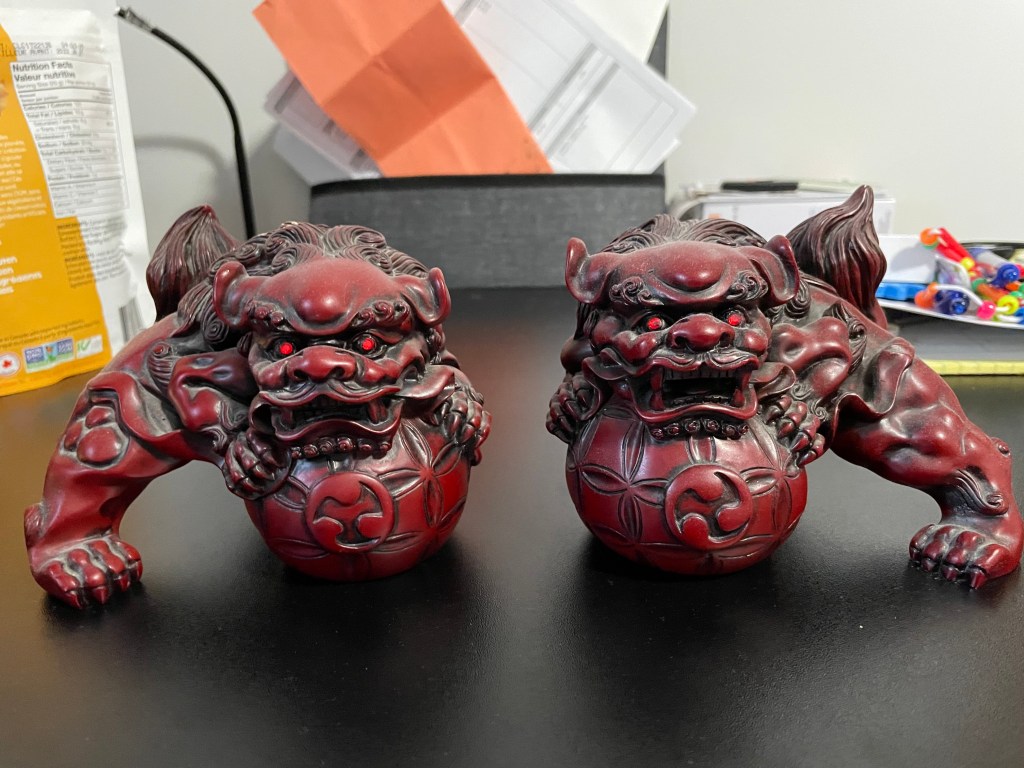
The Shisa dogs I keep at home
The pair fo dogs Sensei gave me for graduation are simple porcelain and semi hollow. I keep those at my office, since they’re smaller 9about the size of tennis balls) and fit on my office’s windowsill. The ones pictured above are the ones I purchased myself in Okinawa and are about the size of candle-pin bowling balls (the ones without the finger holes). The ones above are made of soap-stone and are quite heavy. I foolishly purchased them in a shop in Naha on Okinawa. Sensei nearly lost his mind when he saw them, considering my suitcase was quite full.
These dogs originate from China and actually have Buddhist origins. They usually come in pairs and stand guard on rooftops or at doorways/gateways. They be standing forward or off to the side (as pictured above) but the mouths are always facing outward. The thought is that the open-mouth dog (on the right) is roaring to ward off evil spirits while the closed-mouth dog is inviting the friendly spirits. What’s nice with the ones pictured above, is that there’s no mistaking which dog goes on which side.
Since these dogs were brought in from China before Okinawa became part of mainland Japan, their introduction was separate in the two places. The Okinawans use Shisa dogs in their day-to-day culture and you’ll see them in front of most buildings, including temples, homes and businesses. They’re basically the equivalent of gargoyles. Just an interesting part of the culture I’ve had the opportunity to enjoy during my martial arts journey. ☯️
No, the title doesn’t refer to Drowning Pool’s song. It refers to a particular reality that most people don’t seem to acknowledge about fights in the real world; y’all goin’ to the ground. Unlike what’s seen in the movies, real fights don’t involve a long, drawn out exchange involving multiple landed hits by both parties while exchanging witty, macho banter. Unless the one who initiates the fight manages to land that first hit, a real fight will usually involve a good handful of missed swings and awkward trips, followed by one or both opponents grappling each other and going to the ground.
For the most part, most traditional instructors advise that a practitioner should focus on one style, only. Sensei always used to preach, “One Style, One Religion, One Love.” And for the most part, i can get on board with that. How can one work towards mastering any given style if one spends their time diluting their time with multiple styles, schools and combat types. Martial art is a subjective thing. One style that suits a particular practitioner may not suit another. This is why one should take time and be patient when choosing a school.
That being said, one also needs to recognize that one can’t truly learn or understand the martial arts without including certain aspects that aren’t included in all styles. For example, we can agree that karate is primarily a striking art. Before everyone jumps on my comments section, I said “primarily.” This means that certain combat styles will lack certain required tools to properly defend oneself in a fight. If your style is mainly offensive or striking, you may not be able to adequately defend yourself by blocking incoming attacks. If one practices nothing but blocks and never learns to throw a strike, one will always be on the defensive and won’t be able to bring the confrontation to a close.
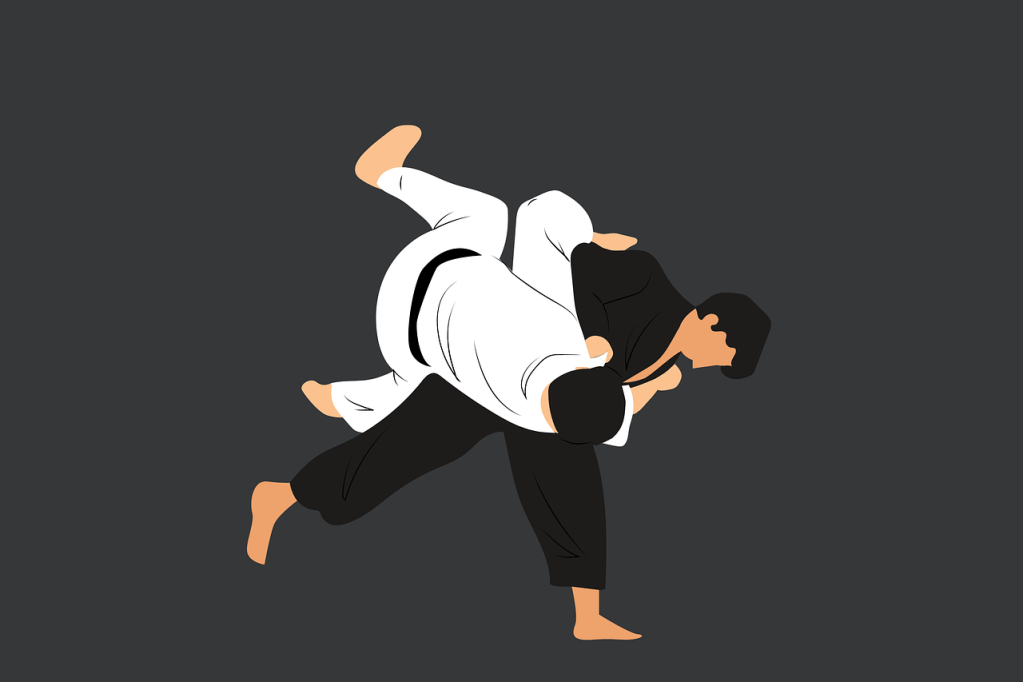
So what happens when the striking and blocking ends and the bodies hit the ground? You ever have someone weighing hundreds of pounds on top of you? Before anyone lets their mind slip down into the gutter, it can be very difficult to throw an efficient strike when you’re rolling around on the ground. This is where learning a grappling art can be integral to proper self defence. Beyond integral. Necessary. I was lucky in that my Sensei also held a black belt in Judo and he incorporated throwing, grappling and pressure points as a standard along with the karate aspect (his school was called The New England Academy of Karate & Judo)
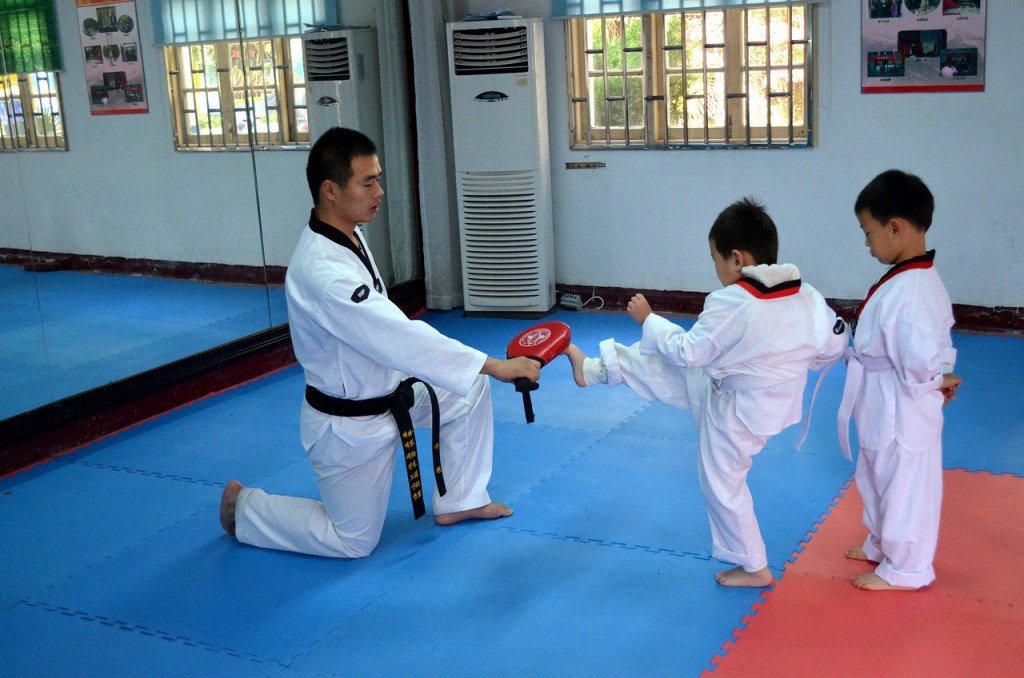
I’m reminded of a full contact match I had while going through basic training. Our instructors thought it would be a good idea to pit me against a Tae Kwon Do black belt. It was an incredible match and we both got our bells rung, but good. We faced a very specific obstacle; our styles weren’t compatible for a controlled fight. As long as he kept his distance, I couldn’t reach him with my small circles blocks and strikes. If I managed to get in close, his high-flying and spinny techniques were useless.
I’m being a bit of a dick in terms of that last comment, but the reality is that in an actual combat situation, that incompatibility would inevitably lead to those opponents going to the ground. The fact that I was in a controlled match is the only thing that prevented that, in my situation. But that’s why I highly recommend taking the time to learn at LEAST the basics of rudimentary grappling and ground work. It could make all the difference in a real life situation. ☯️
I’ve spent the past week writing about a short, four-question interview I’ve been providing to a lot of the key people from my karate background. If you haven’t been reading these posts, they’ve included a surrogate brother, friends and colleagues. The list has by no means been exhaustive, and there are a number of key people who simply haven’t responded, as of yet. Not least of these is Sensei. But as I’ve been transferring these answers from whatever messaging platform I’ve received them to the blog, it’s dawned on me that i should likely take a moment to answer these questions myself. Here we go:
Me, in the mid-90’s
Why did you join karate? I started studying martial arts in general at a very young age, but started karate specifically at the the age of ten. My health wasn’t the greatest. I had been diagnosed with Type-1 Diabetes a few years’ prior, and had suffered through a number of Diabetic comas in a short number fo years. Due to lack of education and these accumulated complications, my doctors predicted I wouldn’t live into my teens. My body had severe insulin resistance, which, since a Diabetic needs insulin to survive, wasn’t a happy combination. Doctors had no answers and basically started prepping my family for the possibility that I would die before reaching adulthood. imagine being a 10-year old kid and being told you’re going to die. That’s what I had to deal with. I wasn’t satisfied with that potential outcome and felt I had to do something to take control of my own health.
I was also significantly bullied. I was always a bit of the “different” kid in every class I attended. And I’m not talking about the modern, “snowflake” version of bullying where people’s feelings get hurt. I used to be cornered by three of the school’s “popular” hockey players, where they’d take turns punching and kicking me until I either passed out or someone came along to help. I once had an instance where a bunch of guys grabbed me and threw me into the gym showers, fully clothed. I spent the rest of the afternoon going to classes, soaking wet. The icing on the cake was having busted my face and lips on the tile flooring when I landed.
For all those reasons, I chose to step into a karate dojo and begin training in karate. I needed to improve my health, increase my chance of surviving long enough to experience life and I needed a way to properly defend myself as I had learned from a young age that the strong will often prey upon the weak.
Left to Right: Myself, Sensei, Sensei Eva and Sensei Blaisdell
2. When did you join karate? I would have joined karate in 1989, when I was about 10 years old. I was introduced to Sensei through Guillaume, whom you would have read about here.
3. How many years have you been training and are you still doing so? At this point, this year marks 33 years of studying Uechi Ryu karate. It’s been a bit of a bittersweet journey, since my departure from my home Province means that I haven’t grown and progressed to the point I would have liked. If I’m being honest with myself (and with my readers), there may have been times where I’ve taken a “break” but I’ve truly never stopped.
4. What have you gained/hope to gain from karate? I think the first and most important thing I gained from karate is perspective. People join the martial arts for different reasons, some good, some bad. Within a matter of months, my insulin resistance improved, my blood sugars started to regulate and I started to get into shape (much to the amazement of my doctors. Once my health started to improve, I began working on being able to defend myself. Since I was somewhat certain that taking my health in hand had accomplished what my doctors seemed unwilling or unable to do, now I had to make certain I could walk confidently without having my peers take advantage of me or harm me.
Demonstrating a kata in Okinawa in 2001
It all came to a head for me when I had one of my bullies try to come at me with a pocket knife. It sounds like something out of a bad movie but unlike a bad movie, it wasn’t a long, drawn out affair involving dodging and weaving, knives flashing as high-octane music played in the background. It was all of ten seconds; five seconds for him to come at me and sink the blade into my wrist and five seconds of my throwing him and breaking one of his bones. The irony is that once we received medical attention and the smoke had cleared, I was sent home for a week for “starting a fight.” No one stood up to explain I hadn’t started it. Que sera.
I tell this story as something I gained from karate because it provides two very important details to my story. The first is that I learned quickly that I wasn’t proud of what I had done and was frightened beyond reason. Fighting someone who means to do you harm is a scary thing. But more over, I learned that I wanted nothing to do with harming others. This is where the Buddhist aspect of me kicked in, believe it or not. It was in my teen years that I recognized the existence of suffering and my need to try and eliminate it from my own life, well before I had even started studying Zen.
Training with Shintaro-san in Okinawa
By the time those different aspects of my youth had been addressed, I found myself in an existential black hole. Now that I had ensured my improved health and self-protection, I needed to discover who I was as a person and what mark I wanted to make on the world. Most of the years that followed involved trying things and trying to discover my inner self. I eventually did, but I also discovered that once I started I couldn’t stop. I’ve been doing karate and martial arts in general, ever since.
By the time I reached adulthood, I had gained/developed discipline, motivation, focus, strength, concentration and the drive and ambition to accomplish anything. More than that, I joined a fellowship that would stay with me for the rest of my life. The people I’ve met, places I’ve been and the dedicated students I’ve trained/trained with are all counted among the most important of things that I’ve gained from the martial arts. Even now, being as far from home as I am, those connections remain intact.
Sensei and I in 2002, shortly after graduating Shodan
In closing, I’m going to ask a question of myself that I didn’t provide to the others. Maybe I should have. That question simply this: what does the future hold for me? When I look back at everything I’ve been through in my 33 years of karate, I acknowledge that I wouldn’t be alive today, had it not been for my training. That applies both to my personal and professional life. Karate continues to flow through my daily life in almost every aspect. I don’t have a crystal ball and I don’t know what the future may hold.
I’m inclined to believe that my days of training hard for hours on end may be dwindling away. These days, you can find me training as a guest of the Regina Institute of Kempo Karate. The great, white hope is that eventually my sons will snap out of it and choose to step into the martial arts world, as well. My youngest is certainly showing some affinity to it. At the end of my journey, passing on this knowledge to my children will be the final step I take as I lay down my belt for the last time. ☯️
In today’s volume of my personal chronicles, we look at someone whom I’ve known for over thirty years. Our history goes all the way back to before either of us was born. Our families have known each other for the two generations that preceded us, and she and I grew up living on the same street. As we grew into adolescence, we not only became friends and built the most solid group of friends one could possibly ask for, we were also a couple for many years.
When my martial arts training kicked into high gear, MJ started joining me to classes. She developed great skill and was usually a challenging opponent during sparring. If you remember Volume 2 about JL that was posted just a few days ago, he could tell you without a doubt. She’s the only one I’ve ever seen to drop him to the ground during sparring. I’m not saying it never happened before or since; I’m just saying it was the only time I ever saw it. These days, MJ is extremely busy raising her children. Here’s what she had to say:
Why did you join karate? “I had an annoying boyfriend that kept bugging me to join, lol. But to be honest, it was the best thing I ever did.”
When did you join karate? “I was 16 years old.”
How many years have you been training and are you still doing so> “I trained for about three years when I was a teen and did a year after my daughters were born. Sensei said it was like I never left. We were very well-trained.”
What have you gained/hope to gain from karate? “I’ve gained self-esteem and it gave me my beginning experiences in spirituality.”
I have to say, I definitely like the answer to the first question best. I’ll be the first one to admit that I was a significant handful to deal with during my teen years. But i can certainly be grateful that my youthful stubbornness helped MJ to find some benefit to everything we trained in. Everyone’s reasons for joining karate may be different. And everyone’s outcome may be different. the key point is to make a positive out of it. ☯️






 The Blogging Buddhist