Don’t Be Rude!

Do you remember the last time someone was intentionally rude to you? How did it make you feel? Did you dwell on it? Did it sit on your mind for a period of time after the exchange was over? Maybe not. Perhaps you’re the type of person who has thick enough skin that other people’s comments simply slide right on off your shoulders. Or maybe you’re in denial. I don’t know, I’m not a therapist or psychologist. But I DO know that most people who say they aren’t affected by rudeness, still are.

To be rude is defined as being offensively impolite or ill-mannered. The best example that comes to mind is several months ago when I pulled out into traffic into the path of an oncoming vehicle (allegedly). The person took active steps to follow me to a red light and went on to call me by a plethora of inappropriate names and insult me for cutting him off. To this day, I can neither confirm nor deny that I ACTUALLY cut him off, as it’s not my nature to go pulling out into traffic if there’s a risk of a collision. But whether he pulled into my lane or was speeding or I DID cut him off, I can’t be responsible for other people’s perception.

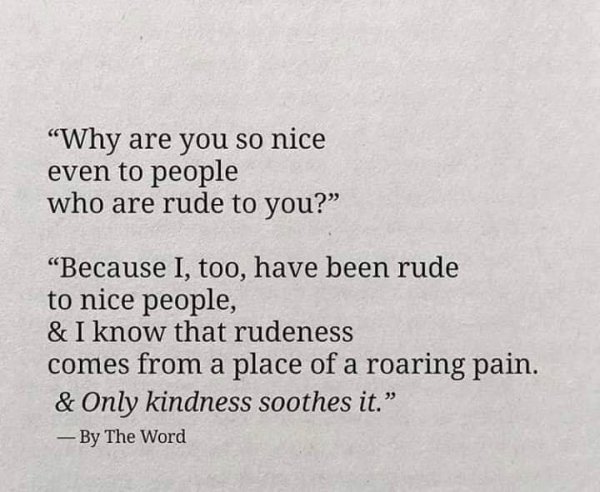
So, why are people rude? Rudeness breeds suffering, the elimination of which is at the very heart of my beliefs, yet it seems that people do it with impunity. As much as we often don’t like to think so, many of us are rude to others in the way we interact with others, the things we say and the things we do. Sometimes this rudeness happens without our knowledge that we are doing it.

Most of us spend our childhood being taught by our parents (and grandparents) that’s it’s wrong to be rude, disrespectful even. But as we reach adulthood, a sense of entitlement often makes us disregard those teachings in relation to how we interact with others and how we treat them. Although none of this is anything new, it’s important to remember not to escalate the situation or reciprocate the behaviour.

A person’s behaviour, whether rude or not, will often be rooted in their own self-esteem and perspectives. That person who bumps into you in a public place without apologizing may be going through something that actively occupies their thoughts. There’s a good chance they weren’t even aware they bumped into you. The person who screams or swears at you in public for taking a parking space or possibly cutting them off in traffic has likely forgotten about you ten minutes later and the interaction isn’t worth the stress you allow yourself to feel as a result.

As difficult as it may be to smile and walk away sometimes, rudeness is one of those behaviours that feeds on itself. If you let someone’s rudeness get to you, you’ll likely be rude to someone else and so on and so forth. Kindness is the best reaction to rudeness and walking away from the situation is always best. Don’t contribute to the suffering in the world. Light knows, there’s enough of it as it is. After all, you can only control your own words and actions; never those of others. ☯

The Most Unlikely Sources…

Something important to bear in mind is that inspiration and learning can come from some very unlikely sources. Every Sunday, I try to choose someone that has taught me something, guided me or inspired me throughout my life. I hate to admit it, but it’s been a challenge. I’ve mainly tried to keep this contained to martial artists, including the likes of Michele “The Mouse” Krasnoo, Bill “Superfoot” Wallace, Ronda Roussey and even Miyamoto Musashi. All of these folks have had an impact on my life and have inspired what paths I’ve chosen.

But I’ve also made a point of including people who have inspired or guided me in other ways, like my father. Ultimately, we can find inspiration in negative places as well. I only say this because the subject of this week’s “inspiration” post is someone who has had about as much negative (if not more) influence on the general public as positive. I am referring to a reasonably well-known action star named Steven Seagal.

It may be considered an unpopular opinion by some, but Seagal played an integral role in my interest of the martial arts. After all, he’s a master of Aikido, studied/taught in Japan and starred in a number of action movies that came out during those impressionable years when I was young enough to be impressed but old enough to think, “Hmm, this martial arts stuff is pretty cool!” He moved to Japan and studied Aikido there, and claims to have also been the “first non-Asian to open a dojo in Japan.” Whether this is true or not is anyone’s guess, but he’s had a colourful life prior to returning to the United States where he began acting in movies.

He has starred in almost five dozen movies, although a good number of those beyond the mid-90’s went straight to video. I first saw him when I was ten years old in a movie called Above The Law. In it, he plays a police officer and martial artists who uncovers a government conspiracy and helps put an end to it. Sounds pretty heroic, right? In fact, the majority of his movies have involved the protagonist being some sort of military/police/operative who ultimately saves the day. But that’s the whole point, right? We usually WANT to see the hero win. As a kid, I was awe-struck by Seagal’s ability to use grappling and striking as a means of defeating even the most difficult of enemies. And all of his films up until the late 90’s were pretty bad-ass. I can still watch some of them with deep enjoyment, although much more criticism on his martial arts technique.

Then it gets a bit convoluted. Seagal identifies as a Buddhist and martial artist. This holds some special meaning to me, being a Buddhist and martial artist myself. But it stands to reason that someone who practices a religion devoted to the elimination of suffering in the world should be doing just that, shouldn’t they? Seagal has been the subject of a lot of controversy recent decades, including allegations of sexual assault, violence against the people he works with and has ongoing feuds with the majority of his Hollywood counterparts, notably Jean-Claude Van Damme, as a prime example. Not a very Zen-like approach to life, especially a blessed one such as his.

In recent decades, Seagal has become something of a walking joke when one considers his strange political views, ongoing opinions about how other martial artists aren’t “true martial artists” and his apparent lack of self-care where his body is concerned. The man has ballooned up to the point that he almost looks like a cartoon character! My wife and I recently watched him on Netflix in a film called Maximum Conviction, where he starred alongside Steve Austin. Once again, he was portrayed as some sort of specialist who simply couldn’t be defeated. The movie basically starts out by having him beat up a prison inmate who happens to be over twice his mass!

I’m not saying that a genuine martial artist would be unable to defeat a larger opponent, but given the fact that he was 60 years of age in that movie, couple with how he’s let himself go physically, one needs to face reality at some point. It’s no surprise this was yet another straight-to-DVD movie. Even WITH Diabetes, I consider it a point of health, personal care and importance to try and maintain my physical fitness to the best of my ability; a task I feel that I’m still on top of, despite my gut slowly trying to overtake my efforts. But I digress…

My point is, Seagal helps to provide guidance in a very specific way: he’s shown me how NOT to be. His behaviours definitely don’t fall in line with someone who is a true student of the Buddhist or Martial Way. His concepts and abilities with the martial arts have been questioned for decades, both for their authenticity and truth behind his claims. None of this is how a true martial artists or Buddhist would be intended to behave. When I need to know how NOT to comport myself, I need only think of Steven Seagal. ☯

Don’t Judge A Book By Its Cover, Even If The Cover Should Reveal What’s Inside

I remember a story from years ago when I was a manager at my hometown’s local pharmacy. Yes, I was a pharmacy manager… In general, it was an uninteresting job. But like most things in life, there can be lessons to learn behind the scenes, if you’re willing to listen. This is one of those lessons…

I was helping the merchandising staff get some stock out to the floor and I was working in the painkillers and vitamins section with one of the pharmacy technicians. The pharmacy staff were always a little “holier than thou” with the front store staff as they believed that the dispensary was the only reason for the location’s existence. So, there would sometimes be a BIT of tension there. Especially since I technically had no direct authority over them as they fell under the umbrella of the Pharmacist/Owner.

Anyway, I was shelving painkillers (Ibuprofen and Acetaminophen) and the tech was shelving some vitamins. We had a plastic bin for damaged and expired goods on a wheeled cart between our two respective aisles. At one point, we took a break and I glanced down into the bin and noticed a coupled of expired items I had tossed. I also noticed a full, unopened box of multivitamins sitting in the bin. I picked them up and checked the expiration date. They were good until the following year.

I asked the tech why the vitamins were sitting in the throwaway bin. The tech took the box from my hand and showed me where the cardboard was slightly damaged on one end. That was it. The ends were still sealed and by proxy, the bottle of vitamins inside was still sealed tight and the vitamins were in perfectly good condition. I explained to the tech that we couldn’t throw out the box of vitamins based on a bit of scratched cardboard as there was nothing wrong with the bottle inside (part of my responsibility included shrinkage).

The tech pursed her lips and turned her nose up, explaining that she wouldn’t buy a damaged box and couldn’t see any customer doing so either. I asked her, “Why not? If the bottle and the vitamins are intact, there’s literally nothing wrong with it, why would you not still purchase it? Who cares if the box has some scratched up cardboard on it?” She simply shrugged and had no viable answer to give me. I was at a loss and a little bit confused, as my feeling was that the little bit of damage on the outside didn’t take away the value of what was contained within. Apparently, she didn’t agree…

This is an important lesson for the world in general, especially in today’s society of social media filters, photoshopped pictures and everybody’s immediate obsession with their outside appearance. Bullying is at an all-time high, and people’s ability to resist or stand up to it is at an all-time low. But the unfortunate reality is that the first thing people see when meeting us is what’s on the outside. And more often than not, their assessment of you is over before they get to know what’s inside the package.

The Buddhist in me thinks that this is a sad state for the world to be in. The loud, French martial artist with the attitude in me thinks that I don’t give a shit what other people think about me one way or another, but not everyone is as thick skinned. Either way, the important thing to remember is that first impressions are simply that: a first impression. Until you’ve taken the time to look beneath the surface and see what the second, third and fourth impressions may yield, judgements should be reserved and withheld. ☯

Mind And Body Connection

What is this mind and body connection we hear about in the martial arts? Depending on the instructor you have, you may hear the term often. In some circles, they throw “spirit” in there, and it becomes “mind, body and spirit,” but it’s the same concept. So, what does it mean? What are they referring to and how does it relate to martial arts?

If I have to explain what the body is, maybe you need to turn off your internet and go back to school. Your body encompasses everything that you are, INCLUDING the mind. In some respects, the body can be considered the vehicle of the mind. The real question is, what the difference between the mind and your brain may be. Is there a difference? Of course there is, and I’m going to explain it to you…

Your brain is physical (d-uh, right?). It’s the organ contained in the skull and is the most complex organ in your body. The common human brain contains over 70 billion neurons (when you total up all parts of the respective brain) and those neurons communicate through synapses that helps to control the body as a whole. Your brain is physical, tangible and part of your body. The mind is a tad bit different…

The mind is the invisible part of who you are; your thoughts, feelings, emotions and personality. Everyone has a brain. But your mind? That’s yours and yours alone. It defines who you are and how you behave in everyday life and in all the things you do. Without your mind, you wouldn’t be the person you are today. And THAT’S the difference. How does this relate to the martial arts?

In karate, we perform drills ad nauseam, the idea being that repeated drills will help “drill” the technique into us. And it’s extremely effective. It’s called “muscle memory” and it’s quite good at helping us to train to the point where, if someone attacks we can respond accordingly without hesitation. But the mind still needs to have an active role in there, despite muscle memory.

Mind and body are both part of the same whole, and it’s important that you train with that totality in mind. Your mind will tell you how to feel so that your body can react. Proper training and martial arts cannot be studied without both. So pay close attention to both. This is the only way to truly accomplish any goal, martial arts or otherwise. ☯

The Sword Saint

This week, I’ve decided to focus my attentions on someone whom I’ve read about since I was a young child: Miyamoto Musashi. Most people aren’t familiar with the name, though he was well-known in feudal Japan as the greatest swordsman to have ever been. People are more familiar with the book he wrote before the end of his life: The Book of Five Rings.

Musashi is thought to have been born in Japan in the late 1500’s by the name “Bennosuke” to a farmer. The history is a bit difficult to trace, but there is some debate as to exactly where and in what Province Musashi was born. Musashi was raised by his uncle after the death of his father, and was taught Buddhism, reading and writing (which was not a common thing in that era).

Musashi’s name was changed to “Takezo” later in life and he began to study the sword, either from his father or under his uncle, fighting and winning his first duel at the age of thirteen. Musashi was said to have fought (and won) 61 duels and battles, leading to the creation of a legend in his own right. He developed and refined his own style of two-sword combat called Niten Ichi-ryu, making use of both a katana and a wakizashi in combat.

Although best known as a swordsman, Musashi was a philosopher, artist, painter and calligrapher. I could go on about the different skills he developed and mastered throughout the course of his life, but suffice it to say that Musashi was a firm believer in studying one thing in order to master another. For example, if you study only the sword you will grow to be ignorant and unaware of anything else. In order to truly master a skill, you need to branch out and have some variety.

Miyamoto Musashi is a source of inspiration for me, because he walked his own path. Although receiving instruction at some point in his young age, he went on to develop and master his own style, suited to his own needs. A variation of his style of swordsmanship is still studied today. He’s written various works and created multiple pieces of art, and can be cited as a source of popular quotes (feel free to Google “Musashi quotes”).

To be honest, I could share quotes and passages from some of his works, but that would scarcely do him justice. If you want to learn all you can about Miyamoto Musashi, my best suggestion would be to get tour hands on a copy of his book, The Book Of Five Rings. The version translated and written by Hanshi Stephen Kaufman is the most popular version (and the most complete one). It’s a fascinating read, and the material can apply to many aspects of life, not just combat. ☯

Peace Is A Habit, Not An Accident

Although frequently misquoted, Bruce Lee continues to be a source of knowledge and inspiration to many people, martial artists or not. In my opinion, one of the best quotes he’s ever come up with is, “Do not pray for an easy life, pray for the strength to endure a difficult one.” The lesson there is pretty simple; life isn’t MEANT to be easy. Humans, as a species, would not have evolved if life was all comfort and ease.

Finding your inner peace in the midst of modern life isn’t easy. It’s made all the more difficult through recent developments that see most families isolated inside their homes together for extended periods of time. It probably SHOULDN’T be like that, but the reality is that everyone needs a bot of time alone, sometimes. Letting your head cool and finding time to be alone and to mediate can be challenging, even frustrating. This leads to an endless cycle of frustration feeds lack of peace, lack of peace increases frustration and so on and so forth…

I’m sure you’ve heard people say that life is what you make of it. And while this is true, you need to acknowledge that your life is YOUR life and that one often needs to adapt in order to find that inner peace that is so needed to make life work. That’s why there should always be a bit of time in every day that you take for yourself. It doesn’t have to be long or measured in hours, but every member of the household should be able to enjoy a bit of solitude in order to centre themselves.

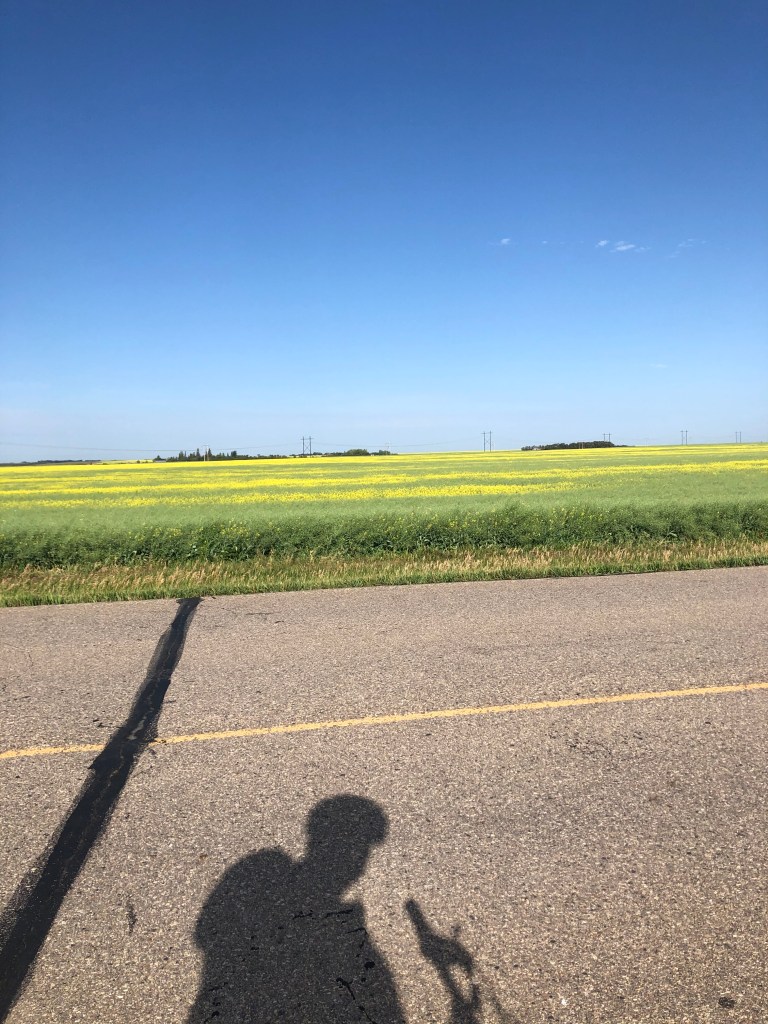
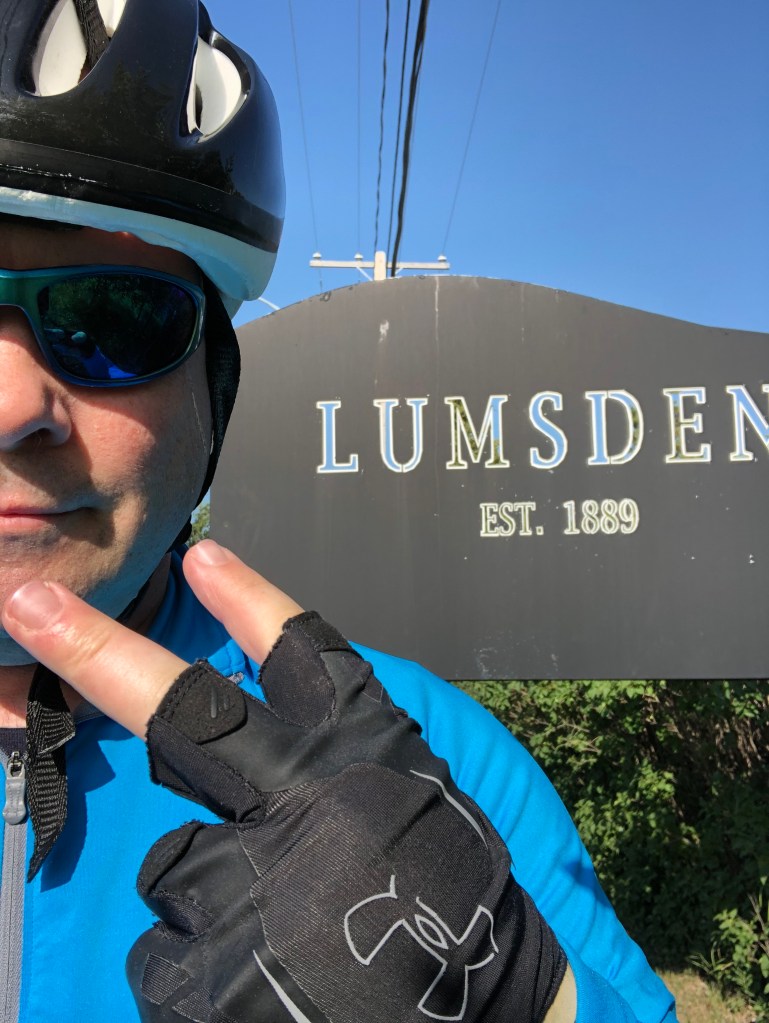
For my 5-year old son, this means sprawling in his bed with his iPad and watching Paw Patrol or Hello Ninja on repeat until he decides to go outside and try to reenact what he sees on screen. For my wife, it involves doing digital puzzles. For me, it involves finding time/space to meditate or go out on a bike ride. The bike rides have won over the most in recent weeks, especially since I’m trying to build my tolerance for long distances.

Wayne Dyer once said, “Peace is the result of retraining your mind to process life as it is, rather than what you think it should be.” If you wait until life is exactly how you want it in order to find peace, you may be surprised at how empty and shorter your life will be. Accept what is and make a point to find your own peace within your daily life. You and the people in your environment will be all the better for it. ☯

Your Way Of Living Can Be THE Way Of Living…

I’ve often seen some of these so-called “life coaches” and motivational speakers go on about the “right way to live” or the right steps to take in order to be successful. Although I will agree that some motivational speakers have got some decent advice and can sometimes provide some inspiration, an individual’s specific success is dependent on, well… the individual!

Each person is customized and grows according to their own specific circumstances and lifestyle. So it stands to reason that finding the right way to live for you can be as individualized and specific as certain medical treatments working for one individual but not the other. Makes sense, right?

As deep-rooted as this way of thinking is for me, I occasionally find things that resonate with me and I would be remiss if I didn’t share them. And here we are! I found this list while I was busy wandering down the ol’ internet rabbit hole one night, and I was surprised to find that I agreed with everything on it, which again is a rarity for me. So here’s the list for a simple formula for living:

  1. Live beneath your means;
  2. Return everything you borrow;
  3. Stop blaming other people;
  4. Admit it when you make a mistake;
  5. Give your unworn clothes to charity;
  6. Do something nice whether others see you do it or not;
  7. Listen more, talk less;
  8. Take a 30 minute walk every day;
  9. Strive for excellence, not perfection;
  10. Be on time. Don’t make excuses;
  11. Don’t argue, get organized;
  12. Be kind to unkind people;
  13. Let someone cut ahead of you in line;
  14. Take time to be alone;
  15. Cultivate good manners;
  16. Be humble;
  17. Realize and accept that life isn’t fair;
  18. Know when to keep your mouth shut;
  19. Go an entire day without criticizing anyone;
  20. Learn from the past and plan for the future; but
  21. Live in the present;
  22. Don’t sweat the small stuff;
  23. It’s all small stuff.

These are all excellent practices to develop, and I’ll admit that #12 is likely the one I have the biggest difficulty with, as demonstrated in a post I wrote entitled Let The Hate Flow Through You… I have an unfortunate intolerance for other people being unkind to me or my family, and my very capable mouth has a tendency of responding accordingly.

Find the daily practices that are important to you and fit with your values. There’s nothing wrong with finding inspiration for this from other sources, but be sure that they work for you. What fits well in one person’s life may not fit in yours. And ultimately we are only responsible for our own happiness, nobody else’s. ☯

The Pain Came First…

Imagine having to go through a surgery… Doesn’t matter for what; just a necessary surgery that will require an incision, perhaps the removal of something inside, closing, stitching and healing. Now, just imagine having to go through that WITHOUT any anesthesia. Despite being necessary, are you suddenly a bit more hesitant? You probably should be. Hell, most of us are leery of getting something BASIC done without some form of local anaesthetic, let alone major surgery.

But prior to the invention of general anesthesia in 1846, this was the reality you faced. Just imagine needing to have your appendix removed and the only way to do it was to have a bunch of medical personnel hold you down while the doctor laboured to ignore your screams of pain as he cut into you to remove the inflamed appendage. Sounds like something out of a bad Eli Roth horror movie, right? What if I told you that in some respects, life is very much the same?

Life will throw more than its fair share of painful moments at you, and I can guarantee that it does nothing to numb or soften the blow when it does. An uncle of mine always jokes that there are only two guarantees in this life, death and taxes! He stole that from Benjamin Franklin, of course (granted, I don’t think HE knows that). But on our way to the great beyond (or the next life, depending on what you ascribe to), we’ll face a number of unknowns, including how life will play out, what tragedies we’ll face and what pains will befall us. How we face those obstacles is what molds us into the people that we are.

Although it’s sometimes easy to blame others for our misfortune, and it’s quite accurate that many have a role to play in that arena, recognizing and admitting our faults is an important part of growth. I once wrote that when something bad happens in one’s life, the responsibility can be divided into three equal parts: part of it is someone else’s fault, some of it is fate, which is out of your hands. But one needs to recognize the fact that some of the responsibility will always be yours. Through words, deeds and/or actions, intentional or not, some of the fault lies with you.

To quote William Ernest Henley, you are the master of your fate. How things will play out is up to you. There are an unfortunate number of people in this world who enjoy watching it burn. They’ll do things that bring you harm, even if there is no cause or reason to do so (not that there is ever reason to intentionally do harm to others) But to continue on, to charge forward, to motivate yourself and find reason to keep going is the best damned revenge you could ever hope to bring against those who seek to harm you. And the best part is, you don’t even need to do it FOR revenge. When you are unrestrained by the harm others bring to you, that part takes care of itself!

Zen In The Apocalypse

It’s been a long couple of months, with the majority of the world doing their very best at staying isolated and social-distancing, and the small percentage of mouth-breathing idiots who are still letting their children play on public play structures and throwing parties and gatherings (I’m looking at you, Karen!). For the most part, the world has been doing what they have to.

Here in Canada, penalties and fines have been issued against quarantine violators in some of the more serious circumstances, and Provincial borders remain closed at most locations. Slowly but surely, governments are beginning to reopen certain semi-essential services, such as dentists, eye doctors and such, mostly on a Provincial basis. Back in New Brunswick, my family reports restaurants reopening with limited seating and families being permitted to travel to each other’s homes. No such leniency has taken place here in Saskatchewan.

But despite the progress that’s been made, it may still be a while before we can all romp in the outdoors and mingle with members of public like we used to. In fact, many believe that this may be the beginning of a new phase of society that could become permanent, with video meetings and working from home becoming the norm.

Despite the closing of businesses, suspension of many jobs and the financial strain that many are feeling as a result of the current pandemic, the aspect that people seem to be having the greatest difficulty adapting to, is self-isolation. Today’s society in general doesn’t do well with being told they HAVE to do something (a fact I’ve learned all too well over the past ten years), which is why we continue to have people who smoke in public places, litter and use their cell phones while driving. But I digress…

The point is, faced with the difficulty of being cooped up inside their homes on a near-constant basis with spouses and children has begun to take a toll on many, with things like cabin fever and quarantine fatigue becoming very real concerns. Emotions and frustrations are rising and the especially important detail of trying to keep children occupied and entertained when they don’t have school and can’t go play at the park can be a real challenge. And trying to stay Zen throughout it all can feel like scaling a mountain with a shard of glass in your boot…

First of all, people need to understand the difference between “quarantine” and “isolation.” I’ve been hearing folks use them interchangeably, but they both have distinctively different meanings. A “quarantine” is defined as a strict isolation imposed t prevent the spread of a disease. This usually involves isolating people who are known, believed or suspected to have, carry or could spread the disease, whether symptomatic or not.

“Isolation”, whether self-imposed or not, is a bit simpler in terms that it’s the separation of a person from others. That’s it. You don’t have the disease (that you know of) but you’re keeping yourself indoors to prevent its spread. Which is great, but it doesn’t mean you can’t step outdoors and it can have detrimental effects on your health if you don’t take steps for your own mental well-being.

The internet has done what it usually does, when something serious of this nature arises and expressed its displeasure with the propagation of memes, jokes and overall lack of seriousness for the whole thing. But the reality is that some families are ACTUALLY having difficulties being isolated together for long periods of time when the norm has been to have their own separate periods away form one another.

But what’s important to remember is that despite terms such as “quarantine” being thrown around, if you are simply self-isolating and aren’t asymptomatic or trying to recover from a serious illness, there’s plenty you can do to help stem the tide of building pressure within your household. Go take a walk. Many people take this possibility for granted, but there’s nothing stopping you from heading out and taking a nice long walk. Fresh air, alone with your thoughts and some mild exercise, it can go a long way towards saving your sanity.

Even just spending time outside, even if you aren’t doing anything, will be very helpful. Fresh air can be an incredible asset. Meditation and Zen can be difficult in a contained environment, especially with small children involved since they don’t understand when mommy or daddy need some “quiet time.” This is one of the reasons I enjoy cycling. Besides the challenge of racking up as many kilometres in as short a time as possible, the fresh air and the time to be alone with my thoughts allows me to engage in a sort of moving meditation.

So be sure to get out there and find yourself something that works for you. Even if you don’t practice Zen, everyone inevitably NEEDS Zen. Finding some balance and peace during uncertain times is important to everybody, and remember that no matter what responsibilities your shoulders may bear, everybody needs/deserves some time to themselves. Even during a pandemic. ☯

When You Never Throw The First Punch…

We live in a society where bullying has a very hot, bright spotlight shining on it. Back in the early 2000’s, anti-bullying initiatives started to take the world by storm and all sorts of different things, such as pink shirt day and anti-bullying day became a thing. Since then, heavy awareness has been brought against this pointless activity (the bullying, not the initiatives), even if it’s something that has always been around. This spotlight hasn’t done much to eliminate bullying, despite things like celebrity endorsement and attention, and the many valuable resources that have been allotted to it. And why is that?

I was bullied in my youth. And no, I don’t mean the typical, snowflake version of bullying that bothers most kids these days where someone has made fun of your clothing or appearance. Not to belittle their experiences, you understand. Every person’s threshold for bullying can be different, but I was bullied in such a way where I was often physically thrown into school showers, fully clothed. I was then forced to finish my day soaking wet with no way to get dry or obtain a change of clothes (sometimes in the depth of winter).

I had my lunch taken from me, numerous times. This doesn’t sound especially harmful, but when you happen to have Diabetes it can actually be detrimental to your health. There were days when I had to make my way home and forfeit the remainder of my school day, otherwise I’d suffer blood sugar issues that I knew my school was unprepared to deal with, as a result. I’ve had groups of four or five guys actually surround me and pound me to the ground until I prayed and wished to either black out or have a teacher come along to help. One never did.

“Courage Is Fire, And Bullying Is Smoke”

– Benjamin Disraeli

I even remember the one day where, once class had let out, I walked out to the student parking lot to find my car firmly wedged between two trees on the grassy median between the student and teacher parking lots. I was incensed, and immediately went to the principal’s office where the police were promptly called to attend. Of course, nobody spoke up to identify who did it and it wasn’t the sort of crime where the cops would dust for prints and call in CSI, so the school custodian had to count down one of the trees to release my vehicle so I could drive away. I never found out who did it.

Now if you’re clever enough to do the math, the fact that I had a car at school meant that I was at least 16. I had been studying karate since I was about the age of 10. So, many of you may be asking the question, Why didn’t you do something? Oh, trust me! That day came soon enough… But until my breaking point, I had been studying martial arts with the purpose of improving my health and overall well-being. Despite the study of a fighting art, I had never used the skills I had learned in a genuine fight, as was not my way. I was not enthused at the prospect of harming another person, even if it was in defence of myself. That all came to a screaming halt, one fateful spring morning.

I walked into a late-morning language class, which ran right before lunch period. I was almost ten minutes early, as it was my custom to typically avoid recess and the crowds of people it involved. There were a couple of students in the class who had also arrived early. Three guys, whom I recognized as being some of my most frequent oppressors, walked into the classroom and immediately spotted me at the back.

The taunting started almost immediately, with all three crowding down the row and heading slowly towards me. Some of their typical tactics took place; my books were scattered to the floor, I was grabbed out of my seat and shoved hard against the wall. You know, typical bullying behaviour. The lead bully’s taunting took a different turn when, out of nowhere he pulled out a pocket knife.

Now, to prevent any thoughts that I’m exaggerating, I feel it’s necessary to describe this “knife”. It was a small, folding 1-inch blade; the kind with a small loop and chain on it meant to be used as a keychain. It was hardly a bowie knife or a short sword, and there was no thick Australian accent telling me that “this is a knife!” But even the smallest blade can be deadly, depending on the intent of the user.

The bully smiled devilishly and held the open blade at my stomach and not only questioned what I was going to do about it, but my ability to do anything. Although it came out sounding more like “Whut are ya gonna do? Nothin’! Because you can’t…” I didn’t hear anything of what he said next as my world turned red. This was my breaking point. I had been threatened, beaten, my personal property had been vandalized and my formative years that should have been pleasant and educational for me were some of the worst of my life. Like a pressure cooker with a ruptured seal that finally blew, years of bullying and abuse finally surfaced. And it was directed against this young offender who chose to make himself feel like a big man by belittling someone else.

“Just Pretend The Guy Is Like A Balloon. If You Pop ‘Em Hard, These Guys Just Go Away…”

– Tommy Gunn, Rocky V

I moved. The movement was quick and semi-precise, and to this day I don’t recall EXACTLY what I did as I responded on instinct born from years of repetitive fight training. But when my red haze cleared, the boy was sprawled on the classroom floor with a couple of desks pushed aside. His wrist was broken and there were blood drops all over the floor. It took a moment for the adrenaline to die down enough for me to feel the sting against my flesh that made me realize that the blood was mine. I looked down and saw blood dripping from my wrist, where the blade had sliced. There was also a small cut in my pants, on the inner side of my knee, where the blade had apparently visited my leg as well. A physical shred of proof that shows that when bullying happens, EVERYONE gets hurt…

The other two guys backed away and checked on their friend, who was crying and cradling his arm. I sat quietly at my desk and didn’t move. The adrenaline dump and shock basically shut me down and all I could do was sit there. As luck would have it (my luck, at least), this was about the time the teacher walked in and saw all the chaos. My wounds were patched up. Visits to the principal’s office. Calls to the parents. A week’s suspension ensued. Not my shining moment…

Over the years when retelling this story, I’ve received a lot of mixed comments from people who believe I could have done many things differently. I could have implored my classmates for help, as there were a few people there. My response is usually that they saw the entire ordeal play out and stood by and did nothing. I’ve even had some people state that I shouldn’t have allowed myself to “suffer in silence” for so long and should have gotten faculty and parents involved. Trust me, I had done that a number of times by that point, which yielded negative results.

There are a number of reasons why people decided to bully others. And that’s the key factor; being a bully is a choice. Whether it’s for power or popularity, as a means of retaliation, seeking popularity or because one is venting the pain from being bullied themselves, none of the reasons are good. And eventually, an active step needs to be taken to make it stop. This is especially true in some of the extreme circumstances we’ve seen in recent decades where some kids have ended the pain through suicide.

I’m obviously not an advocate of violence. But the unfortunate reality is that sometimes, the only way to effectively stop the bully is to strike back. That’s the reality I faced over twenty years ago, and the same is true for many kids today. I plan on teaching my sons the same lesson that a friend of mine has taught his children. When someone does you wrong or bullies, always start by communicating with them. Ask them to stop. If that doesn’t work, the next step is to seek out a teacher or adult to help brings matters to an end. But if and when all those things fail, you still need to stand up for yourself and make the suffering stop. You should never be the first to throw a punch. But you should never accept to receive a second.

Psychology Today has a good article on the reasons behind bullying. It’s one of those things that has always been around. And unfortunately always will. Whether intentional or not, there will always be those who seek personal advantage at the suffering of others. The key is to protect oneself and in doing so, ensuring that one does not slip off the edge and become a bully themselves.

My experiences changed me. Decades later, I still have two physical scars of that encounter, and a number of emotional ones that have steered some of the decisions in my life. There have been a number of opportunities where I could have easily BECOME the bully. But bullying is a weakness, and it takes and creates more personal strength to be kind and understanding of others than it does to be a thug. ☯