Teach Or Leech, Learn Or Earn…

There’s an established standard when you walk into a martial arts dojo with the expectation of taking lessons and joining the club. For the most part, one expects to see someone with a black belt around their waist at the front of the class, teaching the student body. Not only is this NOT the case for every school you may walk into, it brings up an important point: although you SHOULD have a black belt in order to become an instructor, you should NOT be an instructor simply because you ARE a black belt!

Now that I’ve likely given you a headache with that last thought, let’s examine my reasoning behind it. Decades ago in my green belt days, Sensei had a student who lived two Provinces away. He was ranked as a brown belt but because he lived so far away, he held that rank well beyond what he rightfully should have. His skill, experience and performance put him well beyond brown, but the achievement of his black belt wouldn’t come for quite some time (much like my next Dan, which is about 10 years overdue, but that’s a different story…)

At some point, this student was approached by several people and asked to teach karate. He consulted Sensei, who agreed that he could open a branch of our dojo provided that he knuckle down and make a concerted effort to test for black belt in the near future. I attended one of his classes, about two years after he opened his doors (for the record, he still had his brown belt at that point).

I have to be honest; his teachings were exciting, dynamic and insightful. He had full and comprehensive explanations of the techniques he was trying to impart. And what’s more, the explanations made sense. His school was open for years, and as I write this I can’t confirm if it still is, or whether or not he passed his black belt (I certainly hope so).

Flash forward to a martial arts school that I currently frequent… The head instructor has found himself injured and has stepped back from teaching while he recovers. In the interim, the next highest-ranked black belt has taken over leading the classes. It’s been terrible. A pretty generic, blanket statement but accurate. His warm-ups are an exact repetition, every night. His workouts seem to drag and hold no dynamic movements or anything to keep the students engaged. He hesitates and takes full minutes between parts of his classes, as though he’s uncertain what to do next.

His explanations… well, unfortunately they often don’t make sense. He usually and steadily repeats key phrases, such as “connect mind and body” and “I wanna get the body moving a bit” several times throughout class. When he discusses a particular technique, his flow and follow-through doesn’t often match up with what he’s actually trying to do with the technique.

Don’t get me wrong; the guy is really quite nice. He’s got a great disposition and he trains well, when lined up with the rest of the class. But he seems to lack a little something in the teaching department. This has made sitting through classes problematic at best.

My experience with both these individuals have proven that holding the rank of black belt doesn’t automatically make you an instructor. Teaching is a fine skill, which may or may not be acquired and not everybody has it. Although you may hold the rank that is expected of an instructor, the color black does NOT make it so.

I think it’s important to recognize one’s strengths and area of expertise. Although you may have been doing something for years, even decades, you can expect that you may not automatically be able to teach it. And reasonably speaking, it’s much better if you relinquish the reigns to someone better prepared and suited for it. Not only is it to one’s benefit to do so, but it’s better for the prospective students you may be trying to teach. ☯

Is There Ever A Good Reason To Fight?

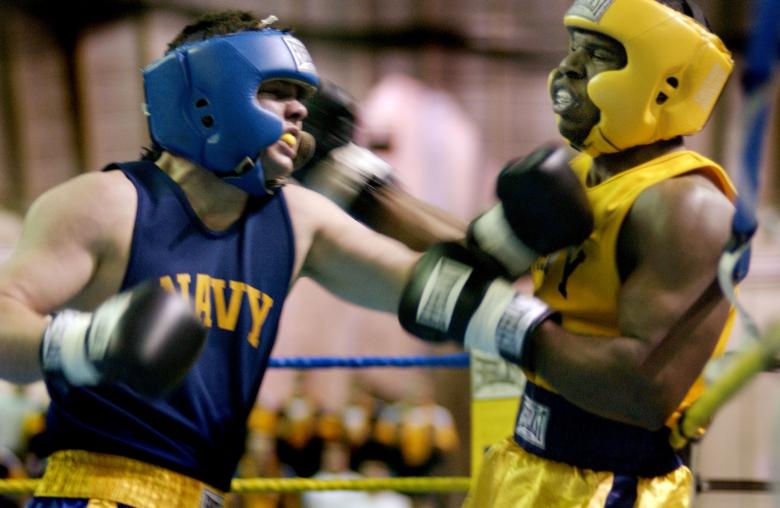
As the title asks, is there ever a good reason to fight? Depending on your perspective, there just might be. Humans are strange creatures; we enjoy fighting for sport, recreation, for competition and for achievement. Most importantly, many of us choose to train and learn how to fight in order to defend ourselves.

Most martial artists will agree that we learn how to fight so that we don’t have to. Although this is likely true, there’s usually an unspoken line after that thought that says, “but the light help any individual who threatens me or my family!” And it’s true. You’d be surprised what one is capable of, when persons unknown (or sometimes known) threatens or harms someone important to you.

But the prospect of intentionally exchanging blows with someone just for the hell of it usually doesn’t cross our minds (unless you’re a pro boxer or fighter, in which case I’ll throw down for the many millions of dollars that would ensue). With that in mind, how does one usually focus their energy in the interest of training properly?

For some, it’s simply a matter of having enough drive to want the most out of their workout. But for others, it requires a bit of focus and concentration. Years ago, I was training with a couple of colleagues and we were doing drills on a punching bag. I was holding the bag for a guy who was basically the same height and weight as I was. He was putting his best effort into it, but the bag was barely budging.

When the time came for him to hold the bag for me, I had his teeth chattering after the first few punches. When we were done with the drill, he asked me how I could make my punches so effective. Obviously, previous strength and technique training goes a long way towards making any strike you perform more effective than the average layman.

But when you exercise or work on your fitness, especially in self-defence, it’s often important to focus on why you’re doing it. Picture this: your significant other, or perhaps one of your children, is threatened and/or attacked by someone. The only way to help them is to respond physically and fight back. Consider the fact that further injury could occur, if one were to pull a punch or kick at the penultimate moment. But if your family or loved one’s safety is at risk, you’ll put your entire heart and soul into that strike; you’ll do your absolute best to ensure that you end the threat against those you love.

This is what you need to do, whenever you train. Every punch you throw, every kick you execute, every time you strike that bag, you need to picture that very scenario. This ensures that you’ll develop that power you need to strike with all your heart and soul.

It’s inherently within my nature, and the foundation of my beliefs, to acknowledge that there’s enough suffering in the world. I have no intention of adding to that by exerting violence against someone else. The only exception is when my family or loved ones are threatened. If you include that as part of the reason for your training, you’ll increase your power and move that bag, every time. ☯

Warm It Up Nice… 🔥

Exercising is strenuous on the body, especially if you’re working out properly. Increase heart rate and blood pressure, the release of adrenaline and a whole batch of other hormones, and secondary effects on the human body. That strain is increased even further by the prospect of working out when you’re cold. And yes, it’s winter in the Canadian Prairies and I feel inclined to pick on ‘Ol Man Winter, so please bear with me…

The jury is still out on the concept of your blood thickening during the winter months. With some studies showing that winter climates tend to make our blood thicker and run slower, and some studies stating that there’s no correlation, it make it difficult to know if this is a potential cause. But let’s admit, for the sake of argument, the it always feels a bit tougher to find that “get up and go” when walking into fitness class or gym when it’s cold out.

In karate, it’s a noticeable effect… During the warmer months, people are totally game to come work out and break a sweat. But during the deep, frosty winters of Saskatchewan, the class size drops to a handful who are crazy enough to brave the elements. But besides the issue of disliking the cold and how our blood reacts, the specific aspect I want to talk about today are your muscles.

Muscles are necessary for fitness. D-uh, right? You use them for any fitness workout you may have planned, so they sort of play a key role in what you do. Your muscles are an elastic tissue, and are affected by the changes in temperature. When you spend time outside in the cold, those tissues contract and become stiffer. When you step out into the balmy, tropical weather, tissues expand and relax. This is why most fighters and athletes prefer to train and work in warmer climates.

Last Thursday, the temperature where I am sat at a lovely -37 degrees Celsius. Once the wind factor is included, it was actually in the -40’s. Stepping into karate class, I felt cold, stiff, and wanted nothing more than to go to sleep. It felt like it took WAY more effort to stretch and warm up than it rightfully should have. But this is where it becomes all the more important to stretch and warm up properly before getting into a rigorous workout.

As your muscles and joints become tighter, you lose some range of motion. You become more susceptible to muscle sprains and tears and potentially pinched nerves. It WILL take more effort to perform the same exercises as you would in warmer weather. This is why you should start your winter workout with about ten minutes of mild to moderate cardio, such as jump rope, punching bag or shadow boxing (I’ve included the ones I usually do in karate, but there are plenty of options).

So instead of foregoing your workouts in the winter and hibernating, simply take the time to warm properly once you reach your class. It will help to prevent injury and will ensure that you don’t accumulate any of that dreaded “winter fat” from ignoring your fitness! ☯

Grab The Bull By The Horns…

Anyone who is at least mildly familiar with me, knows that I’m a big fan of caffeine. My day pretty much always starts with a coffee or an energy drink (sometimes both) and I would be lying if I said that I don’t turn into a cranky biatch if I don’t have some levels of caffeine coursing through my veins before I deal with the outside world.

Energy drinks have gotten a bad rap in the past couple of decades, and not always for good reason. Over-consumption, allergies and/or misuse have lead to the popular opinion that energy drinks are bad for you, even dangerous. The bottom line is that it is very much a question of moderation, much like everything else. The average person can safely consume about 400 milligrams of caffeine a day (depending on age, weight and health concerns), and the average 473 mL can of energy drink only has 160 milligrams of caffeine. You’d have to drink four cans to start creeping into that “danger zone”.

Now that we’ve covered off the caffeine issue in all it’s glory (some of my previous posts have been specifically about caffeine so I won’t go crazy here) the actual focus of today’s blog is an often-disputed ingredient that happens to be in most energy drinks: Taurine!

Taurine is an amino acid and is actually produced naturally by the human body. Despite its natural production, it can also be found in reasonable amounts in meat and fish. Contrary to some claims on the internet, Taurine is not derived from the urine and/or semen of bulls. Yes, the word “Taurine” is derived from a latin word that means bull, but unless you’re getting your Taurine from a cut of steak, it has nothing to do with an actual bull.

Taurine, unlike other amino acids, doesn’t contribute to the creation of the body’s proteins. But it has a number of uses that are beneficial to the proper health of the body’s cells. Some studies have even shown that there are measurable benefits in regulating Type-1 and Type-2 Diabetes, as well as some Diabetes-related kidney issues. MedicalNewsToday.com has an excellent article that goes into detail about some of it an can be read here; https://www.medicalnewstoday.com/articles/326476.php#why-do-we-need-it

The studies in question seem to indicate that taking Taurine supplements can help improve insulin sensitivity. But like caffeine, the amount of measurable Taurine in a can of energy drink is well below what’s believed to be safe. Although the average can has 2000 milligrams of Taurine, an article by Healthline.com indicates that doses upwards of 3000 milligrams for an entire lifetime still fall within the realm of safety. (https://www.healthline.com/nutrition/what-is-taurine#dosage)

The bottom line is that consuming energy drinks are not inherently dangerous, when consumed in moderation. And Taurine is most certainly not an included ingredient that the manufacturers have gotten from a bull’s testies! The end result is that you should take your caffeinated beverages in moderation, and never beyond mid-afternoon. Otherwise, enjoy your energy drink! There’s nothing harmful in it. ☯

Belt It Up!

When people walk into a martial arts dojo, the first thing they look for is a black belt. Part of this is to identify who the instructor might be, and discuss the actual joining of the class. Part of it is because most people associate perfected skill with a practitioner who wears a black belt. But this is EXTREMELY far from the truth…

First and foremost, the use of coloured belts to denote rank is a reasonably recent innovation. Believe it or not, the use of the belt system as most of us know it, was first used in Judo. Back in the 1880’s, the founder of Judo (Jigoro Kano) would have his students wear either a white sash for all students or a black sash for advanced students who demonstrated proficiency. It wasn’t until the turn of the 1900’s when Judo practitioners started wearing the traditional, white martial arts uniforms we all recognize, that the system of belts expanded to include the colours we still use today.

“Belts Are Only Good For Holding Up Your Pants.”

Bruce Lee

The most common belt colours in karate are white, yellow, orange, green, blue, brown and black. What belts are used also depends greatly on what style you happen to be in. My style of Okinawan karate (Uechi-Ryu) only uses white, green, brown and black (and yellow, if you’re under a certain age). That being said, we use a number of taped stripes on each belt in order to denote different levels.

But the reality is that achieving the rank of black belt is only the beginning. In fact, I started Uechi-Ryu karate in 1989, and only reached black belt level in 2002. And even after all that time, training and development of my skills, my Sensei explained that graduating to your first-degree black belt is a student’s way of formally asking your Sensei to teach you karate.

“A Black Belt Only Covers Two Inches Of Your Ass. You Have To Cover The Rest.”

Royce Gracie

Some styles have even adopted weird, unusual belt colours, such as pink, camouflage or rainbow belts. These are not real martial arts ranks, and you should be wary of joining these clubs if such belts are used. You should also be wary if the club you’re visiting seems to have an inordinate number of black belt students. But having trained in various clubs and schools, I can attest to the fact that some students can wear a black belt and still not have any idea what they’re doing.

Being a black belt is not the be all and end all of karate. It’s not a destination, but rather one more step along the journey. Although there are very few “bad” reasons to join the martial arts, if you join with achieving black belt as a goal, karate is not for you. After all, the martial arts are not about the prestige and common misconceptions associated to black belt practitioners. ☯

“You’re Not Buddhist…”

I’m not a monk. That requires a form of ordination that I’ve never submitted myself to. But I am a practitioner of Buddhism. Despite this fact, I’m not the type of person who flamboyantly brags about all the details of my life. And my faith happens to be one of those things that I keep to myself, unless it comes up organically in a given conversation.

Over the years, I’ve had situations where people have questioned my faith. This is probably the worst aspect of this post, since no person should be permitted to question another person’s faith. But this is exactly what I found myself having to deal with; and it was with someone I was involved with romantically.

Almost a decade ago, long before the arrival of my wife and sons, I was dating a girl from a nearby city. She was a bit to deal with, as most exes are, and the fact she lived four hours away from me made it no less difficult. You know how everyone always says that long-distance relationships don’t work? There just may be something to that…

Anyway, I was visiting this girl on a particular weekend where I had four days off. I took the girl in question for a drive to a neighbouring city, where we enjoyed dinner with her older sister. After some conversation and debating on key societal issues, the moment seemed to arrive organically into the conversation where I said, “Even for me, that’s a bit much. And I’m a Buddhist!” The girl I was dating looked me right in the eyes and spoke the words that echo in my head whenever my thoughts turn to her: “You’re not Buddhist! Stop saying that to people!”

It wasn’t just WHAT I said, but the way in which she said it. The sideways glance and roll of the eyes… It wasn’t just the passing on of the information she believed to be correct; it was the attitude she pushed behind it. I had been involved with her long enough for her to know some of the finer details about me, and that this wasn’t a joke.

“Excuse me?” I replied.

She replied, “You were born Catholic and were baptized. It’s cute that you do karate, but that doesn’t make you Buddhist. You really need to stop saying that to people.”

I was taken aback and confused. Had the woman I called my girlfriend actually just pull THAT card on me? I was at a loss, because walking out would have left her stranded almost an hour from her home. And staying meant that I had to find the self-control to keep that shit locked up until we left and had a chance for me to discuss it with her in private.

Folks, it absolutely IS true that my mother is French Catholic. At the age of less than two years old, my mother had me baptized into the Catholic faith. My mother and I have had a debate for decades over John the Baptist and the issues behind baptizing someone prior to the age of consent, but that doesn’t change the reality. YOU choose your faith. YOU decide what faith you observe.

There’s a part of me that feels that if I had never embarked on my journey in the martial arts, my stepping into Buddhism may not have happened either. But that was a choice that was mine and mine alone, and no one else had any right to infringe on that. You have that same choice, so be sure to exercise it.

Ultimately, you all know that I broke up with the girl in this story, as she happens NOT to be my wife. I’d love to say that her xenophobia against Buddhism didn’t play a role in our breakup, but I’m not a fan of lying. Even if you’re trying to find yourself and learn, it’s important to be true to yourself. No one has a right to question your faith, and only you can know what you truly believe in. ☯

Don’t Freeze Your Bits…

Ahhh, winter… The season of freshness. The season when everything is covered in a cleansing blanket of white that seem to invigorate… And take one’s breath away! Of all the things that affect people who live with Type-1 Diabetes, cold is one of the least considered, though it should not be forgotten.

Last Monday, I had my usual bimonthly eye injection appointment in the neighbouring city. As is my habit, I checked into my hotel a bit early so that I could park my vehicle in the relative safety of their parking structure and walk for approximately fifteen minutes across a public park to reach the hospital. This is usually done due to the lack of availability of the hotel’s shuttle and the fact that I’m too cheap to pay for a taxi.

Once I checked in, I took my first few steps in the cold, -40 degrees celsius of Saskatchewan winter. That first breath caught in my lungs and caused me to choke. But the first few steps were bearable. Then, as I continued, my limbs and face started to object to my being outside. They almost seemed to form a linch mob hell-bent on making me regret every step I took in the “great” outdoors.

By the time I had reached the hospital, two things happened: I was frozen to my core despite wearing appropriate winter apparel, and the battery on my insulin pump died on me. It shouldn’t have, since it was barely half used. But exposure to the intense cold caused the battery to bottom out.

This leads us to an important reminder about the cold. First and foremost, extreme cold forces the body into a fight-or-flight state, which can cause the release of adrenaline and similar hormones, which will cause the release of glycol for further energy, thereby affecting blood sugar levels.

There are a score of other problems that spending too much time in the cold will cause. The most important thing to remember is that although insulin is meant to be kept cool and/or cold through refrigeration, it can’t be allowed to freeze. Insulin is a protein, and if it is allowed to freeze it’ll break down and won’t function the way it should. Once broken down, it won’t lower blood sugar the way it’s intended.

As far as equipment goes, the manufacturer’s information for all things Diabetes-related, such as your blood glucose monitor and insulin pump, will indicate that you shouldn’t expose them to extreme cold. The problem I faced, in regards to my pump’s battery, is that the freezing temperature will cause the composition of the battery to become ineffective and possibly even rupture. I was lucky that my battery didn’t pop inside the pump.

If you find yourself having to venture out in the freezing, Saskatchewan winter, be sure to dress for the weather. Dress in layers, stay hydrated to prevent dehydration and cover up to prevent frostbite. But most of all, keep your equipment and insulin shielded from sub-zero temperatures and freezing as much as possible. And certainly not least, trust your blood sugars frequently to ensure you’re staying on top of it. ☯

It’s Not Their Fault…

We all know that there’s suffering in the world. I think this goes without saying, but sometimes we encounter these prozac-dosed individuals that walk around with tweeting-bird sounds floating around their heads who seem to think that suffering doesn’t exist. In all honesty, good for you if you can truly believe this and live your life in that mindset; even if it’s false.

My point is that for the most part, we are all firmly aware that the world contains suffering. And we all endure some of that suffering, as much as we would prefer not to. As sentient beings, we have an unspoken responsibility to do our part to reduce and/or eliminate this suffering in the world, which leads one to wonder why any individual would intentionally CAUSE it…

“Pain Is Inevitable; Suffering Is Optional”

David Kessler

A few days ago, I was out running errands with my family. We rarely all go out together. Especially given the labour-intensive process required in getting an infant ready and out the door during winter months, and trying to maintain control over the destructive force of nature that is my five-year old son… But as usual, I digress…

During some of our errands, I will occasionally run in quickly without the rest of the family in order to complete one of the quicker stops. This is where the subject of today’s blog post took place.

I grabbed the couple of items I needed from this particular business and headed up to the checkout, which included two tills and two employees. There was a man there, and he was trying to return something without a receipt. I think we’ve all been there, but one also needs to understand that many locations won’t accept a return WITHOUT the receipt from your purchase. This was the case for this particular gentleman.

He immediately became belligerent and started arguing with the cashiers, which included grabbing another package off the shelf to “prove” that he had purchased the item at this specific location. The cashier calmly explained that although it was an item they carried, they couldn’t prove he had purchased it there and that it was their store’s policy not to accept a return without proof of purchase; something which was out of the cashier’s control.

The man became angry and started yelling that he had grabbed the wrong one by mistake and that it was absolutely imperative that the cashiers allow him to exchange or return it. The cashier, who to her credit maintained her calm throughout this entire exchange, explained once again that it was the store’s policy and that she had no authority to go against it.

Now folks, I can understand the frustration on both sides of this equation. I’ve tried to return items without a receipt and I totally understand how angering it can be when it doesn’t work. I have also worked retail and can tell you for a fact that in Canada, with the exception of some specific commercial laws, retail locations are under NO obligation to accept a return or issue a refund. Once the sale is made, the sale is made.

All this being said, despite the fact I try to exude calm as much as possible I have very low tolerance for people who cause suffering and cost others their time for trivial things. Especially an item that’s only $14.99 and especially when you’re tying up both cashiers with your stupidity, holding up the four people behind you. I kindly asked the gentleman to set aside his complaint for a few moments so that the staff could clear the line. This snapped the cashiers out of their stupor and one of them called me over while the other continued to deal with this angry man.

As I was finally and thankfully exiting the location, the cashier was trying to convince the man in much calmer terms that his incorrect choice did not constitute a problem on her part and that she could get him the number for the store manager and he could deal with the matter this way.

For most people, things tend to dwell on our minds. If these two employees were having a decent day, this jackass and his negative energy likely damaged or ruined these poor peoples’ afternoon. Now, I’m not saying that this particular exchange wasn’t important to this person. Maybe that $15 was the last of his money for the week and he really needed the item he sought. But one needs to acknowledge that his approach not only DID NOT get him what he needed, he spread the suffering in the attempt.

Even while dealing with something or going through something negative yourself, take a moment to consider how your actions may affect others. You have the same responsibility as the rest of us in preventing the propagation of suffering. ☯

Much Like A Coat, Your Opinion Should Be Checked At The Door

It continues to blow my mind how brazen and “cheeky” some folks become when protected behind a keyboard in the safety of their home. Even with some of the more enlightened societal concepts that have supposedly become the norm, many still believe in calling out others and speaking against them in online forums.

I recently read a post by someone who had been listing some homemade clothing and purchases they had made at a thrift store. Almost immediately, someone hit up their comments section and started calling the person out, claiming that wearing second-hand clothing was disgusting as you had no idea where it came from and that the writer should know better. This was apparently even someone who KNEW the writer.

This is a pretty tame example and they tend to get worse. I, myself, have even had people commenting and arguing with me in relation to martial arts and Buddhism on this blog! Kind of hard not to, I guess, since religion is one of the most disputed topics of conversation out there. But I’ve even had it where I’ve been verbally insulted and attacked on my blog posts. I tend not to allow an argument to ensue and simply block person and their comments as I don’t abide by unnecessary negative energy.

It’s almost a safe bet that if you go online (on any forum) and say left, someone will say right. Then they’re usually game to argue their view to the point of becoming insulting and belittling to the writer. So why are people like this? For the most part, I can almost guarantee that the same people wouldn’t be arguing like this, if they were face-to-face with the person in question.

The popular term that has labeled to this phenomenon, is known as “trolling”. This is not to be mistaken with people who genuinely want to discuss and even debate their opposing view through your comments section. Trolls basically take the time out of their day to comment in a negative fashion against anything they find online. They usually make it a point to make their comments as insulting as possible and are actively hoping to elicit a reaction from people.

An article posted on PsychologyToday.com states, “[…] trolls have markedly different personality styles: they are more narcissistic, Machiavellian, psychopathic and sadistic.” This basically means that they comment for their own self-gratification based on the responses they elicit as opposed to actually contributing to the conversation. Nice, eh?

The article goes on to explain that the best thing you can do with trolls, if you find them commenting on your post or article is to simply ignore them. This can be quite difficult, if your post is of a personal nature or you’ve vested yourself in the message you’re sending. But if you don’t engage them, you essentially take away their influence against you.

Here’s the article, if anyone wants to give it a read: https://www.psychologytoday.com/us/blog/significant-results/201408/what-you-should-know-about-online-arguments

For those who may not be a troll, I like to use a popular term I’ve found often online: “Just scroll on by…” Basically, if you don’t like what you see or read, there’s nothing wrong with just scrolling past. There is no genuine need to comment. Unless of course, you wish to genuinely debate. In which case, let me grab you a coffee! We’ll be here for a while… ☯

Balancing What You Eat Can Help At Balancing Your Life

“Wow, my blood sugar is great, right now! Time to f&*k it up with lunch…” This is a typical line I often say to my wife when I test my blood and find it sitting in an ideal range. Having Type-1 Diabetes makes it reasonably difficult to find balance. On the one hand, some food items have some very clearly defined carbohydrate counts. On the other, depending on your current state of health, mood, hydration and the weather (I wish I was kidding), the same food item you ate yesterday can have a measured difference in effect on your blood sugars from the day before.

Finding a diet that works is very subjective, and having that diet work in relation to your blood sugars is by no means an easy task. For example, did you know that about a cup of a rice krispies cereal has about 25 grams of carbohydrates, whereas the carbohydrates in something less generic, like Special K is about 22.75 grams? (Source: https://www.healthline.com/health/best-low-carb-cereal-brands#medium-carb)

Although this doesn’t seem like a HUGE difference, a two or three gram difference in your meal’s total carb-count can make a big difference in the overall blood sugar levels of the day. But are carbohydrates the worst concern in your diet?

Carbohydrates are fuel. That’s the simplest way of looking at it. Along with protein and fat, it is one of the essential aspects of nutrition that’s required. The problem with carbohydrates is that some of them will burn much slower than others. This can play hell with your insulin dosage. If you take X number of units for Y grams of carbs and it has a measured effect on your blood sugar curve, you may see a noticeable difference with the same amount of carbs in a food that’s processed slower.

For example, if you compare 100 grams of red meat against a half cup of beans, the beans clearly win out where total nutrition is concerned. Beans will have more protein, almost four times the iron and magnesium and contains none of the cholesterol that you’d find in meat. However, that half-cup of beans will have 22 grams of carbohydrates to bolus for, where the meat will have none.

The difference is you CAN take insulin for the carb in the beans. Fighting off the long-term (and sometimes not so long-term) effects of cholesterol are a little more difficult; not to mention the effects on the cardiac system and your overall health.

Another good example are eggs versus tofu. I’m gonna start by saying I am a diehard hater of tofu and I refuse to even have it in my house. Although very nutritious, I’m not a fan of eating something that either has a gelatinous feel or looks like something I scraped out of the lawnmower. But I digress…

While half a cup of scrambled eggs will certainly have less carbohydrates than tofu, it also contains more than three times the amount of saturated fats as tofu. I’m still not eating tofu! YOU CAN’T MAKE ME!!! (Hides under the covers in his bed and pouts)

Last but not least are chick peas. I have a friend back home who is a big fan of chick peas, and for good reason. If you compare equal amounts of chick peas with let’s say, chicken breast… chick peas will have an almost equal amount of protein as chicken but with none of the cholesterol. Chick peas also pack a decent amount of fibre, whereas chicken has none. And fibre is one of those dietary staples that most people seem to neglect.

There are plenty of sites around the internet where you can get nutritional measurements for common foods, so I’ll leave it to you to find your own information. Your family doctor or medical practitioner should be able to refer you to a dietitian or nutritionist if you have questions or concerns related to your food intake.

The bottom line is that in the face of all these fad diets and nutritional trends out there, you need to find a balance in what you eat. Lower carb counts can help to lose SOME weight, although this is only in small amounts and usually doesn’t last. So choosing foods high in protein and minerals that your body needs may be worth the added two or three units of insulin you have to inject at mealtime. The key is knowing how your body will metabolize the specific carbs you’re eating, and distributing your insulin accordingly. ☯