Not Just The Boy Scout Motto…

Even if you’ve never been in the Boy Scouts, you’ve no doubt heard of their motto, “Be Prepared” in television or movies at some given point. I myself, was a Beaver Scout in the early 80’s, until I was diagnosed with Type-1 Diabetes and my world was turned on its head. But before I turn this post into a pity party, let’s focus on the motto, which is the aim of today’s post. Being prepared in life is important. Since we live in a relatively comfortable environment where most resources and amenities are available to us (at least here in Canada), people have a tendency to overlook good preparedness.

Now, I could be very generalized and discuss how one should be properly prepared in ALL aspects of their lives, including the care of their home, family, health and property. But what I’m going to focus on today is specifically as it relates to one’s fitness, especially in conjunction with Diabetes. It’s no secret that having Diabetes presents a plethora of challenges, especially when you’re working out. This means you need to be prepared for the inevitable issues you may face when training.

First of all, we need to agree that it’s somewhat easier to function with high blood sugar than it is with low blood sugar. There’s a certain where where either one is an issue but if you’re doing something fitness-related, you’ll find you can at least push through and won’t pass out if your blood sugars are high. The same can’t be said if your blood sugars are low. For that reason, it’s important to ALWAYS bring some fast-acting carbohydrates with you. For me, jellybeans work best. I know that some people will use a variety of juices, gummy candies and even straight sugar and water. You’ll want to find what works for you and be sure to keep it on hand. You want to avoid certain foods like chocolate, which is basically just a block of fat that will take forever to bring your levels up.

Next and equally important, is water. If you haven’t noticed from the thousand+ posts I’ve put up (yes, I am now in the thousands), hydration plays an integral role in fitness and overall health. Proper hydration is also helpful in maintaining balanced blood sugars. Most sources will say that we should all be keeping a reusable bottle with us and consistently siping from it, throughout the day. My wife is far better at this than I am. When it comes to fitness, you want to strike that proper balance and try to avoid dehydration AND drinking too much water.

You probably read that last sentence and asked, “Can you really ever drink TOO much water, Shawn?” Why, yes! Yes, you can! Consuming too much water in the wrong conditions will cause something called hyponatremia. This condition can be caused by an increase in diuretics, severe or excess sweating or consuming too much water. The result is your body’s concentration of electrolytes, namely sodium, gets too low. Back in the summer of 2020, I experienced this condition firsthand. I woke up on a day off and chugged an energy drink, which I unfortunately seem to do every morning. Then, I performed the longest bike ride I had taken (at that point) where I peddled from Regina to Balgonie.

It’s a 56-kilometre trek, back and forth, which is far from the farthest I’ve managed to achieve since then. But it was summertime, with temperatures in the mid-30’s and dry Prairie air… My phone shut down halfway due to being too hot, I was sweating like a hog and chugging back water ever five minutes. To my credit, I had brought plenty of water and fast-acting carbs, but little else. This meant that I kept pumping the water in to slate my thirst but I was losing electrolytes through my sweat. Like, a lot!

By the time I got home, every joint was killing me, I had a headache, nausea and difficulty focusing. It took several minutes of trying to look up the symptoms and my wife helping out to discover that I needed to take in some sodium. I slugged back a couple of bottles of Gatorade and ate some salt & vinegar chips and laid on my bed with the A/C going at full strength. Once my body slowly started to regulate, I got groggy and fell asleep for a while. It was probably the most uncomfortable and painful experience outside of a tangible injury or Diabetes.

Since then, I maintain a practice of mixing electrolytes with water as I cycle, which has served me well on my 70 and 80-kilometre treks. But it was an important lesson to recognize that getting to the end of a significant workout can require more than just sheer will. Easy things to carry with you, whether at the dojo or while out doing cardio, are little things like a portable battery pack to charge your phone in the event of an emergency and bandages or a small travel first aid kit. You may never NEED any of those things but it’s always better to have it and not need it.

Being prepared is an important aspect of anything one does in life. It can mean the difference between potential facing a dangerous or hazardous situation or being temporarily inconvenienced. it all depends on how prepared you want to be. For most people with Type-1 Diabetes, being prepared and constantly dragging along a small bag with carbs, testing equipment and food can mean the difference between good health or a hospital trip. Why not take the few minutes required to ensure that you always have what you need for any workout or outing you go on. ☯️

Just Shut It…

I know my title may have enticed some folks to think I’m talking about being quiet or shutting one’s mouth, but as you can see from the categories, this will actually be a martial arts post. One of the things I used to enjoy about regularly attending karate class is that it always provided me with plenty of material to write about. In some ways, a lot of ways, having studied karate for as many years as I have puts me at a disadvantage because I’ve reached the stage where trying to figure out something to write about that the average practitioner requires correction on, is difficult. But since I am now studying a new style, a lot of that perspective is making a wild comeback.

This situation describes something that happened during drills last week and happens to be one of my biggest pet peeves. I know that some practitioners may have a different view and I invite an open discussion on that view in my comments section. But the pet peeve I’m referring to is the propensity some students seem to have to punch with a loose fist. By “loose fist,” I mean that they’re throwing a punch or a technique without their fist being properly clenched shut, leaving the fingers loose and vulnerable in the event of an actual impact.

Most beginners can’t be faulted for adopting this habit, since leaving the fingers loose means there’s less tension in the arm, making for better speed when practicing a drill. For a beginner who believes they need to keep up with more experienced practitioners, this may seem like a good idea. But the cost will always far outweigh the benefit. For one thing, muscle memory is an important aspect of karate. One of the most important ways to ensure you can properly defend yourself is by developing your muscle memory to ensure that if someone attacks you, you don’t have to stop and think about what you’re going to do.

My point is that if you continuously practice your punches with a loose fist, you’ll be more inclined to do it that way in a practical setting and you’ll likely break all your fingers on the point of impact. The human hand contains over two dozen bones, with the carpals containing about eight, the metacarpals containing five and the fingers and thumb hold over a dozen. That’s a lot of fuckin’ bones that you could potentially fracture or break against someone’s skull or sternum, if you punch incorrectly.

I’m reminded of something that happened last week while performing a punch/block drill with a brown belt. The drill was pretty simple; one person would punch to the belt line and the other person would do a low block to intercept. In this instance, we were building up speed and the drill seemed to be going well. Then I made a mistake… That’s right, ME! I anticipated the punch, which is a terrible thing to do but I had almost completed the block when the brown belt’s punch came in. The result is that our fists impacted each other.

I’m talkin’ knuckle to knuckle, bone on bone, full speed impact. It was painful but manageable since my fist was firmly clenched. My partner however, not so much. There was a sickening sound as his loose fingers crunched against my fist. He backed away, doing a little hippity-hop dance and cradling his hand. Luckily, he didn’t appear to break or fracture any bones but I like to think it taught him an important lesson; especially at the brown belt level.

Some styles actually train to adopt a loose fist during the throw, only clenching the fist at the moment of impact. There are a lot of conceptual thoughts behind this, including increased speed and the ability to switch up one’s technique at the last moment. It’s a matter fo preference, I guess. Certainly no disrespect to other styles who practice this way. I’m just not a fan of potentially breaking my hand because of a last moment mistake.

Karate is a life-long commitment that requires precision and practice. It’s important to take things one technique at a time and practice, practice, practice… properly. Short cuts will get you nowhere. Even if it seems as though you may be getting to your goals faster in the moment, the cost will easily outweigh the result. After all, you shouldn’t practice until you get it right; Practice until you can’t get it wrong. ☯️

A Little Monday Motivation…

There’s no denying that the past few years have been extremely challenging for most people and even more so for some. I know that for myself, life had turned into a churning tempest of chaos well over a year before COVID-19 sunk it’s miserable talons into everything. Despite the pandemic still having a solid hold on society (some feel we’re reaching the end of it, but I believe it’s a “remains to be seen” kind of thing), life has become significantly better for my household and I. And since today is not only a Monday, notoriously known for being disliked by most adults AND it happens to be the last day of the first month of 2022, I think a little motivation is a good thing.

Sometime during the whole mess, I adopted a practice of visualizing some inspirational words. I did this by taping up something inspirational or motivational on the wall next to my desk so that I could turn and read it when I’d be working. Although I changed up the quotes and sheets I used a few times over a couple of years, the habit of visually seeing the words and reading them aloud became common for me and helped me at times when I was struggling. Being as that my workspace was located in a small nook under my stairs, the last sheet of paper was undisturbed and left alone when renovations took place and are still there.

To be honest, I don’t know who wrote this quote. I’ve used some famous ones that were easily identifiable, sure. But I can’t recall where this one came from or even who penned it. And I can’t be bothered to look. But the words are sound and I thought it would be a good idea to share it with all of you:

“Will Emerge From This Nightmare
Like The Powerful, Beautiful, Resilient Person That You Are.
It Can Be Hard To Remember This When You
Feel Like A Shell Of The Person You Once Were,
But Trust Me: You Are Capable Of Overcoming
So Much More Than You Think.”

The words still speak to me and resonate, especially during the times when things seem to get rough or difficult. As I always say, life doesn’t care about your plan. You can plan things, set up goals and do your best at working towards them but ultimately, life will decide what kind of speed bumps you encounter along the way. After all, it’s like one of my favourite characters, Jean-Luc Picard once said, “It’s possible to commit no mistakes and still lose. That is not weakness, that is life.” Food for thought…☯️

One Step At A Time…

Habits. Vices. We all have them, in one form or another. Sometimes it can be associated with our state of mind; either suffering from self-image or mental health issues or we’re simply unhappy, which is a big part of life for most people. As a result, some will seek comfort or relief from various sources including but not limited to food, drugs, smoking, alcohol and even sex. You could think that using that last one wouldn’t be a negative thing but there are a number fo negative aspects to USING sex as a coping mechanism that most people wouldn’t consider.

For me, I’ve indulged in a number nasty vices, including cigar smoking, eating and alcohol. The first and last are mostly by virtue of my previous career, relaxing me and providing calm in the middle of emotional tempests. The middle one typically happens when I’ve indulged too much in the last, as I don’t always make the best decisions. Hey, I’m human. More often than not, I somehow manage to rationalize what I’m doing to myself, with “I can work this off later” or “just this last time” (followed by buying another bottle on the way home the following day).

It can be difficult to overcome certain bad habits on your own. Especially if those habits become severe enough to be an actual addiction. In those cases, getting help from medical professionals or specialized programs can be important. But if it’s something you feel you can overcome on your own, there are a number of things you can do to help get you out of your funk. I’ll provide a few of my thoughts on what’s worked for me in the past:

  1. Don’t Put Off Exercising: Thanks to the frequent ups and downs of blood sugars, the amount of grogginess and lethargy I deal with can be a real pain in the ass. But if you can push past the fatigue and do something physical, it has a dynamo effect. Once you hop on board the exercise train, all you want is for it to move faster. Start slow and easy at first and increase resistance/distance/challenges as you go along. After a while you’ll look back and realize you’re at the level you used to WISH you were at.
  2. Don’t Quit Everything At Once: Sometime during the late summer, I decided to quit cigars, alcohol, junk food and excessive caffeine. Those sound like good ideas, right? Maybe, but doing it all at once wasn’t the greatest idea. Besides the physical toll it takes on a person’s body, you’re more likely to regress and slip up if you deny yourself everything completely. Most sources I’ve read agree that you should allow yourself the occasional indulgence. Doing so means you’ll be less likely to slip up. So if you have a habit of binging junk food, maybe allow yourself to eat out once a week.
  3. Buddy Up: A problem shared is a problem halved, right? If you need exercise, join a club, a gym or fitness group. If you’re trying to eat better, there are groups for that, too! Or you can just commit to eating better with a friend. You can keep each other on track, remind each other of your goals and step in if you happen to be “falling off the wagon.”

Improving oneself and making oneself feel better takes time and effort. If you think it’s hard, that’s perfectly normal Anything worth achieving in life is hard. Just remember that you don’t have to do any of it alone and there are always resources out there to help you reach your goals, whether it’s weight loss, increased fitness, learning a new skill or quitting a bad habit. ☯️

Shake Things Up…

As I’ve often written about before, fitness and weight loss involves something simpler yet more complicated than a fancy fad diet or weird food restrictions. And contrary to what some people still believe, crunches and sit-ups won’t do anything but firm up your ab muscles and likely won’t do much to melt the fat in front of it. You need a healthy combination of consistent exercise and proper diet, which includes eliminating unnecessary sugars, excess fats, carbonated beverages and alcohol as well as junk food in general. That sounds pretty simple in print but to someone who has unhealthy habits built into their daily routine, change isn’t without challenge.

One of those big changes for me, in recent months, has been the inclusion of breakfast into my daily routine. When most of us were kids we always heard that “breakfast is the most important meal of the day.” I was never fond of breakfast, since eating a massive bowl of cereal before school without the proper amount of fast-acting insulin to deal with it, meant I would spend my morning classes groggy and struggling to stay awake. It led most of my teachers to think I was lazy or unwilling to learn. To their credit, I didn’t understand what was going on myself, so how could I have articulated it to them? But I digress…

My point is that even in adulthood with an insulin pump and a control over my Diabetes that’s better than what in was in my youth, my morning routine usually involves forcing myself out of bed, grabbing caffeine in whatever form I can get it and getting ready for work before rushing out the door. The concept of that first meal is usually the farthest thing from my mind until I’ve been at work for an hour or two and my stomach starts protesting at the lack of tenants it has. This will usually result in my purchasing something quick and less than healthy during my morning coffee. Not so great a habit to maintain and it contributes to one’s gut.

Breakfast!

As a reasonable alternative, I’ve been using my Blendjet to carry my breakfast to work with me. I posted about this device before Christmas and as much fun as I was having with it, I haven’t been using it QUITE as much as I should have or for its intended purpose. In fact, I think my wife has been using them mostly to make smoothies for our kids, which isn’t a bad use but my intention was to have a low-carb, easy to manage breakfast. So on Monday of last week, I buckled down and started including the mini blender into my daily routine. Once I’m up, my first stop is to the kitchen, where I prepare Nathan’s lunch for school. While I’m in there, I’ll put all my ingredients into the blender and bring it downstairs with me where I shower and prepare for work. I’ll run the blender once to mix the ingredients then store it in my work bag until my arrival at work. Then, I’ll blend it again as the ingredients settle and I can gulp it down at my leisure as I work.

It’s been working pretty well. It hardly adds five minutes to my morning routine, provides me with something that keeps me filled and prevents hunger until I make it to lunchtime and the mini blender is convenient and easy to lug around as opposed to packing a meal or ordering out, which does nothing good for one’s overall weight loss and fitness goals. Granted my weekends are still reserved for a more traditional breakfast with my family. For example, this morning will likely see me preparing bacon and hash browns for my wife and I, and toast for the boys. My toddler enjoys a strip of bacon but my 7-year old absolutely hates bacon. I know, I know… I’ve failed somewhere. Moving on!

The calm convenience of breakfast in the morning sunlight

As great an addition to my morning routine as a shake may sound, it’s important to recognize that what you put INTO the shake is almost as important as including breakfast into your routine. If all you’re doing is tossing bananas, milk and chocolate syrup into your blender, you’ll be lacking some key components to your nutrition and health. I mean, eating a banana at breakfast is inherently a good thing, but you want to make sure that you’re giving your body some good stuff to help it along as well as fuel it. Normally, my shake includes half a banana, a dozen or so blueberries, a tablespoon of flax seed and a cube of frozen spinach. The frozen spinach is nice because it not only provides me with all the good stuff that spinach does, it substitutes for ice, which allows more room for the key ingredients.

I was basing all of this with water at the start, but I found the taste left something to be desired and I was still getting hungry during my morning. So I started using milk instead. This isn’t a bad thing, you know, calcium and all that jazz… Diabetics just need to remember that one cup of milk has enough carbohydrates to require additional bolusing. Plus, you can use skim or 2% milk to cut down on the unnecessary fat. If you find that your overall shake is a little bland, you can BAM it up a notch with a small squirt of maple syrup or honey. I occasionally steal a bit of chocolate syrup that my wife uses for the boys’ smoothies but again… carbs!

I know that when most people think of weight loss, their thoughts immediately go to either exercise or eating less. But it’s important to remember that your body needs rule in order to function. So eating less can only be done so much. And when all is said and done, it’s not the amount so much as WHAT you’re eating. But it’s another chicken or the egg scenario… If you eat less, you have less fuel and won’t be able to burn at your workouts as efficiently. You gotta feed the machine! But I find that having a shake, especially one loaded with fibre and good stuff, eliminates the problem of skipping breakfast, doesn’t affect my overall morning routine and is helping to get me healthier. Food for thought… (pun intended) ☯️

Just For Laughs…

I found some Diabetes-related memes online and they made me laugh, so I thought I’d share them and see if they make y’all laugh as well. Enjoy… ☯️

This first one is “ironically” funny. I can relate to this. I hate when my blood sugars spike and I seem to bolus a huge amount every hour and it doesn’t seem to come down.

Yup, at least three or four times a night.

Your Comfort Zone Is A Horrible Place To Die…

When all is said and done, you’ll really only get as much out of life as you put into it. Want to lose weight? Eat right and exercise. It won’t happen on its own if you’re sitting on the couch scarfing potato chips and doing fuck all. Wanna learn a new skill? Buckle up and settle in to study, train and develop yourself. Wanna learn karate? It ain’t a knitting circle so you need to be prepared for the blood, sweat and tears that will ensue over the next decade or more to become proficient. Notice that I say “proficient” and not “master,” as karate is a lifelong journey that you’re never really done studying.

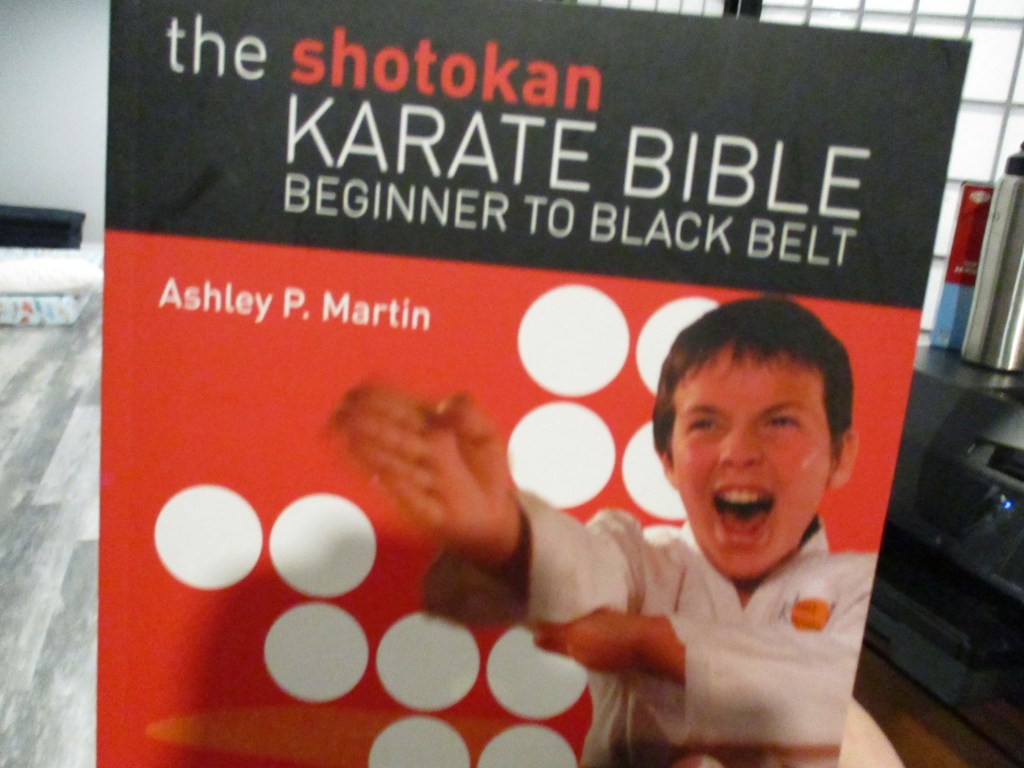
An important lesson I’ve learned recently is just how little I actually know. I’ve been studying Uechi Ryu for over three decades at this point, with one third of that time being on my own by virtue of living 3,400 kilometres away from my Sensei. The passage of time and lack of travel ability has brought me to my current state where I made the decision to transition to a new style. Still karate, of course. But I recently joined a Shotokan school and it’s already been quite the ride…

Besides the fact that I’ve become older, slower and thicker (not in the complimentary way), the challenge is significantly different for me, this time around. Add to that the fact that I’m an old dog, teaching me new tricks is not without challenge. My hat’s off to the team of instructors in my new dojo that has to deal with the skilled, unknown black belt gracing their dojo yet doing everything just a LITTLE bit different than how they do.

And this is where the relevance of the title comes in… The past couple of weeks have certainly taken me out of my comfort zone. I’ve started learning different stances, different ways of doing the techniques that ARE familiar, as well as being exposed to a plethora of new forms and katas. I’m definitely enjoying learning new things but it’s been a humbling experience to acknowledge that even though I’ve grown proficient in my style, I’ve also grown comfortable and complacent, which is a horrible state to be in. Complacency leads to loss of proficiency in a terrible “chicken or the egg’ scenario, when it comes to one’s training.

I’m glad that I’ve been able to hammer on and start learning again. Despite how long I’ve at this and the realization that I don’t quite have the same amount of piss and vinegar that I used to, it’s humbling to recognize that there’s still a lot to learn, still a long road to travel and still some exciting surprises for me in the world of karate. I attended my second class of the week last night and my legs are definitely feeling it, with the last class of the week scheduled for tonight. Between work and other obligations, I’m hoping I can keep the circulation going and hammer through tonight’s class efficiently.

Find something you’re passionate about. I think that’s my main message. It’s important to have goals to achieve, but it shouldn’t be torturous and you shouldn’t come out of it feeling as though it was a chore. It’s okay to acknowledge that it was hard; anything worth your time will be. But hard and torturous are two entirely different things. Karate started out as a way to save my life. That’s why I started training. But it’s become a part of me and something I love. I’m blessed to have found a new path on this journey and would encourage all of you to find the path that’s right for you. ☯️

The Bystander Effect…

Ah, bystanders… If you’ve ever been present during a fight in school, you know that there’s usually ALWAYS a group of looky-loos who will stand around and watch things play out. Even if one of the combatants happen to be a bully and seems to be overwhelming the other, people will usually just stand and watch as opposed to stepping in and helping or breaking them up.

This phenomenon is known as the Bystander Effct, and in simple terms it refers to a social theory where people likely won’t help someone (even if they need it) if there are other people there with them. Part of the concept is that most people are likely to believe that someone else will step in, making them hesitate to step in and help, themselves. These days, the big problem is that the majority of people are obsessed with whipping out their fucking cell phones and filming what they see in the interest of posting it on the internet as opposed to helping their fellow man/woman.

According to an article I found posted by Psychology Today, “the bystander effect occurs when the presence of others discourages an individual from intervening in an emergency situation, against a bully, or during an assault or other crime. The greater the number of bystanders, the less likely it is for any one of them to provide help to a person in distress. People are more likely to take action in a crisis when there are few or no other witnesses present.”

The article goes on to explain the perception of diffusion of responsibility and what influence society has on a person. Also, some people may choose not to react in response to fear, believing that intervening could lead to an increased level of danger against themselves. Depending on where you live, some people also have the fear of liability if they intervene, with the prospect of getting sued, buzzing at the back of their minds. While many places in North America have no legal obligation for someone to step in and help, there are places that have adopted “duty-to-rescue” laws, making it illegal to simply sit and watch if someone is in distress.

Last but not least, as I mentioned earlier, we live in world of social media and the internet. This has had an increased impact on the Bystander Effect, since most people are more likely to whip out their phones and record an incident than get involved. Another aspect is many people will avoid getting involved BECAUSE they fear it being documented on the internet. Chicken and the egg. But I if you Google “bystander effect,” you’ll find tons of examples where someone has been in distress and even in mortal danger, where others have simply recorded with their phones or sat back and done nothing.

So, how does one break this spell? Well, the ideal thing is to assume you’ll be the only one to do something. Then do it. Even if that only means using verbal intervention and yelling at the aggressor. As I always say, anything is something more than nothing. But from strictly a moral standpoint, it’s important for one to consider that if one was stuck in the same situation as they’re witnessing, they would likely appreciated someone helping out. Could there be legal ramifications? Yes, there could. But at the end of the day, if it means everyone gets to go home to their loved ones, any other challenge can be overcome. Food for thought… ☯️

Cobra Kai, Season 4: A Review (Mild Spoilers)

Look, I’ve often written about some of the issues I take with how martial arts are portrayed on the big or small screen. And those opinions still hold true but this doesn’t mean that I don’t fully enjoy watching martial arts on television. Especially when the story is sound and the plot is solid. With that in mind, I thought I would take a few moments to share my thoughts on Season 4 of Cobra Kai, which my wife and I just finished binging this weekend.

First, I’ve provided my opinion on previous seasons of Cobra Kai in previous posts, so even though some of what I’m about to say will be repeated, it’s still relevant. When I first heard about this show, I was beyond excited. After all, the last time a genuine instalment of the Karate Kid came out was 1994, with Hilary Swank playing the delinquent student who couldn’t stay out of trouble. It was an interesting take on the series, considering the original Karate addressed the classic scenario of the new kid being bullied, ten years prior to that.

When I first watched the Karate kid, I recognized a lot of what Daniel Larusso was going through in myself. Although not so much when the film came out, my formative years were chaotic at best, being bullied and considered an outcast (sound familiar?). When Cobra Kai came out, I was happy to see that Larusso had found some success in his life, including a beautiful wife and kids (one of whom is Type-1 Diabetic in real life), lovely house and prosperous business, he overcame the apparent issues of his youth and made life work for him. This resonated with me deeply.

Then, I faced a speed bump in that only the first two episodes were available on YouTube unless one signed up for YouTube’s streaming service. Unfortunately, I wasn’t willing to subscribe to YET another service, since I already have a few on the go. Lucky for me, Netflix picked up the series a short while later. I started watching it and enjoying every episode. I think it was an interesting turn of events to see Johnny Lawrence, big, bad-ass bully in the 80’s having fallen down on his luck and became the one with the struggles.

I would never wish ill on any person but there’s something to be said for karma. I know that some of the guys who used to bully me have gone on to face the same karmic consequences as the show’s anti-hero. But I digress… The concept and the storyline was sound and it only took one or two episodes for my wife to get on board and I started the series over from the beginning so that she would be caught up.

Season 3 left off with some really important cliffhangers, including long-time enemies joining forces to overcome a common foe, something you might not see in reality. It also featured episodes where Larusso returned to Japan and Okinawa and put an old rivalry to rest by sparring with Chozen and acknowledging that their respective karate comes from the same roots.

In making my way through Season 4, I could clearly see the struggle of two teachers with very different philosophies trying to keep their students on the straight and narrow. It would be similar to a plumber and an electrician trying to teach a group of apprentices BOTH sets of skills; it can be done, but the difficulty would be immense. Some students would adapt better than others and both groups would go on to compete in the All Valley Tournament, which I won’t get into detail as it may spoil a bit too much of the storyline for those who haven’t yet seen it.

The season finished on a curious note, with Larusso appearing once again to team up with another old rival. It will be interesting to see how Season 5 plays out. That being said, let’s examine a few of my pros and cons for this show. It stands to reason that it IS a show and total realism can’t and shouldn’t be expected. The storyline is somewhat sound, considering I’ve known dojos that demonstrate similar rivalries as depicted in the show.

One aspect that really gets my hackles up, is the fact that we see a number of newly-minted karate practitioners who had never donned a gi before, learning karate and suddenly getting into these long, drawn out fights with their peers within weeks of starting. Considering karate takes YEARS to become proficient, this is definitely an unrealistic expectation for anyone studying unless they have previous training and experience or have done some other martial art.

We see this effect in Samantha Larusso, the protagonist’s daughter. She had been studying karate with Larusso throughout her childhood before taking it up again. And as I’ve recently realized, it can be very much like riding a bike. Tori, one of Cobra Kai’s top students, had some previous training as well before stepping into the Cobra Kai dojo. But then we see some of the less-athletic students who, just a short while prior, were getting their asses handed to them becoming proficient in a short period of time and holding their own. Right. Okay, moving on…

All in all, it is a fantastic show with some great writing and evokes definite feelings of nostalgia in old dogs like me. Including karate into the mix is simply icing on the cake. If you’ve never seen the show, I highly recommend it as something simple and easy to binge, with the seasons running on only about a dozen episodes. ☯️

A Stroll Down The Dojo Memory Lane…

I was communicating with one of my readers and fellow bloggers yesterday (you know who you are) when I was reminded of my old dojo. Not “my old dojo” as in, where I used to train. No, I mean “my old dojo” as in, where I used to TEACH. That’s right, most of you know I practice karate by virtue of mentioning it in almost every post (did y’all know I practice karate?). But many of you may not have known that for a short time, I actually had my own dojo open. Some may assume that having practiced martial arts for over three decades, it would only make sense that I had a school open. But the reality is that teaching is a very particular beast and one that not every practitioner undertakes. In fact, I’ve known some fellow black belts who have been studying as long or longer than I have and have never taught. It happens.

At some point, a couple of years before I joined the Force, Sensei received an influx of requests for children to join the club. Although we accepted anyone who wished to learn, our teachings were a bit strict and rough for some younger children and Sensei thought that opening a second, separate dojo would be a good idea. With three current black belts (besides Sensei) currently training in the main dojo, it was agreed that I would undertake the project and take in these new students. I would come to understand years later that it might have been more productive to have a younger practitioner attend to the kids’ dojo, since they would “potentially” be more in tune with their students needs. But I was being offered a chance to open my own dojo and I leapt at the chance.

I was pretty excited to get to the dojo that night and even more excited to see how many students I would have coming in the door. More than a dozen children of varying ages were waiting for me with their parents nearby. It was a pretty slow first night, considering I had to cover off the basics and discuss dojo etiquette, as well as get all the kids registered through their parents and get certain forms filed out, etc… I still felt it went well and I was looking forward to the next class. Honestly, that first week flew by without too much difficulty and I thought I had found a niche in the form of teaching these young students. I would discover soon after that I was wrong…

You see, there’s a HUGE difference between the concept of teaching adults and teaching children. I’ve taught adults a LOT in my three decades of karate. For the most part, when an adult walks into a dojo they’re choosing to be there. I mean, I suppose it COULD happen that an adult would join karate because they’re being told to do so but I’ve never seen it. One can also expect that they’ll join for a number fo specific reasons relating to their health, weight-loss, wanting to learn a new skill or defend themselves. With children, they usually fall under two categories: they asked to be join or they are being MADE to be there by their parents. The unfortunate reality is that the majority fall under the latter category.

Another issue that I’ve noticed is that when you get an adult who joins and wants to learn, they’ll usually do everything and anything that’s required of them, even if they consider it boring or stale. Children don’t jive with that concept. In fact, for the majority of kids the curriculum needs to be kept dynamic and exciting. It needs to be fun or their eyes will start glazing over and you’ll “lose the crowd.” This is especially true of those kids whose parents have forced them to join and didn’t want to be there in the first place. It wasn’t my cup of tea but I could have learned and adjusted to this concept, given enough time. It turned out to be the parents who did me in…

After the dojo had been open for a period of time, some of my students were ready to start grading for their yellow stripes. For any non-practitioners out there, my style carries a yellow belt but for most students, the yellow belt is reserved for children and young practitioners who need room on their belt for growth over a number fo years more than their adult counterparts. Long story short, since I had never issued grading before, this was done under the supervision of my Sensei. Unlike many other schools out there, our students don’t have the luxury of testing simply by virtue of the amount of time they’ve been with the dojo. It needs to be a combination of how long you’ve been training, attendance and actual proficiency in the required techniques.

By virtue of this, not all of my newly-acquired white belts were tested for their first yellow stripe that night. While Sensei assisted in grading the students, I kept the ones who wouldn’t be testing busy. I know had a ranking system within my dojo, which should have been a good thing. Seniority can be an important aspect of karate, especially when taught in the Western world. This is because it gives the other students someone to lean on and aspire to besides the Sensei. I thought things were going significantly well for the next couple of weeks despite the fact that I certainly wasn’t made for “having fun” in the dojo. I had fun training, learning karate was fun in and of itself, but playing games and having a loud, boisterous class was weighing on me as it didn’t fit into the neat, compartmentalized image of karate that I had developed in my head.

Then, a cauldron of resentment and jealousy began to rear its ugly head as the parents of a few select students caught me before the start of class to discuss why their child hadn’t received a yellow stripe like many of the others had. I made the mistake of indicating that it was because they hadn’t been tested, which I thought would explain things. Much like a doctor who will explain something medical with the plain idea that it would explain everything, I assumed that provided an adequate answer. Instead, it added fuel to the fire in the form that the parents demanded to know WHY their children hadn’t been tested. Letting them know that they hadn’t yet acquired the level of skill required to grade for their stripe did nothing to assuage their concerns.

Within the next couple of weeks, I had a number of parents basically threaten to remove their child from the dojo if I didn’t give them a yellow stripe. This is actually a phenomenon that happens among child and adult practitioners. Some adults are pretty good at becoming petty and failing to realize that just because one has been training as long as a counterpart, it doesn’t mean you’re ENTITLED to the same belt. I had always made a silent promise to myself that a student would never receive a grading unless they’d earned it. I’m proud to say I’ve kept that promise, but it came at a cost. Once I explained that a student would not be tested for any grading until they had developed skill that would justify the rank, I began losing students. Within the next calendar month, the number of students I held and their dwindling attendance became almost non-existent.

Once it became abundantly clear that it was beginning to cost me more to run the dojo than I was making, I had to make the difficult decision to close my doors. Sensei was understandably not happy with this, but I didn’t feel I could bring myself to compromise my values and the value of the art I practiced JUST to satisfy the parents belief that “I’m paying, so you work for me,” or the jealousy their children may have felt at seeing their peers receive rank where they didn’t. I think it speaks to an ever-increasing concept of self-entitlement that the world has been developing for decades. In traditional karate, there are no participation trophies. You don’t get rewarded JUST for showing up. You want the belt, you gotta do the work.

Ultimately, I closed the doors of my dojo and we were able to absorb some of the kids into the main dojo (the ones who wanted to stick it out to learn and grow). Back then, I had often juggled with whether it was a good experience or a bad one, a good choice or a terrible one. The decision I finally came to was that there really aren’t any BAD experiences; it’s all in how we interpret them and what we learn from them. But I’ve come to learn that this is the direction the world has taken. People feel they’re entitled as opposed to working towards earning. And although I’ll be the first to admit that you gotta show up, you also gotta do the work. I would never attempt or continue to teach someone otherwise.

I never opened another dojo, after that. It was a combination of how the first one had gone down, mixed with the fact that once I joined the Force, I was transferring every few years, which I felt would be unfair to any practitioner who walked into my dojo. How bad would it suck to have someone commit themselves to my style, only to have me say, “Sorry, guys. Duty calls and I’m moving away…” only a few years into their training? That wouldn’t be fair to someone who genuinely wants to learn a style. But it also serves an important lesson to anyone looking to get into karate. If you walk into a dojo and the focus is money and EVERYBODY grades and passes when there’s testing, it may not be the school for you. I prefer to have closed my dojo than teach a watered-down version of my art to accommodate the ones who feel entitled. This is how an art remains true and pure. Food for thought… ☯️