To Master One, Study The Other…

It stands to reason that in order to truly master something, you need to be committed to it. It’s very, very difficult to say, master a karate style if you’re training and/or studying in five different styles. Eventually, the differences in methods and techniques will catch up and confuse you, leaving you unable to properly master any one style.

As Master Robert Trias once said, “One Religion, One Love, One Style…” But your style should never stand alone. There are many things that you can do to help your journey along during your training. Many popular mainstream martial artists that you see on television or on film indulge in a number of other activities that the common person wouldn’t associate with martial arts.

Gymnastics or dance are some of the most popular ones, since they can provide a significant amount of benefit. It’s almost symbiotic, where dance provides benefit to the martial arts and vice versa. I started studying dance back in 2007, while living in Ottawa (that’s right, I can cut a mean rug). I absolutely LOVED it, and the instructor frequently asked me over and over if I was certain that I had never studied dance before.

I finally admitted to studying karate, which she immediately confirmed was likely why I was so good at dance, since it would help with balance, proper stepping and remembering sequences. And there are plenty of options as it relates to the martial arts, including music, poetry, gardening and floristry. But what I’m referring to, is specifically the examination and understanding of other types of martial arts.

Miyamoto Musashi wrote, “To learn the fist, study commerce. To only study the sword will make you narrow-minded and will keep you from growing outward.” It should make sense, right? When was the last time that you didn’t learn at least something from observing the actions of others? The same can be said of martial arts styles. By observing and learning a little something about say, Judo or Tae Kwon Do, I can learn a great deal about the shortcomings of my own style, the techniques I need to develop/perfect and what my style may be lacking as opposed to others.

Don’t be afraid to branch out and explore. As I’ve often said before, if you’re part of a martial arts club that discourages the observation and study of other styles, your respective instructor may not have your best interests at heart. Although you should ensure your dedication to a specific style, learning about others can provide benefits and correction that you may not get otherwise. Another perspective is never a bad thing. ☯
Because It’s There…🌋

Every once in a while, I’m reminded of something that I used to do in my youth. Specifically, things I used to do in my home Province of New Brunswick. I’m originally from a small town called Dalhousie (not to be associated with Dalhousie University, which is in Nova Scotia) but I would frequently travel to a neighbouring town called Campbellton, which is about 25 kilometres away.

Given that Dalhousie was lacking most amenities throughout the late 80’s and early 90’s with the drop in the paper industry as the digital age started to kick in, my friends and I would often lean on Campbellton as it was designated as a city (despite only having about 5,000 people) and had plenty of commerce, restaurants and stores. It also had the only Tim Horton’s in the area at the time, if you can believe it.

So we used to travel up there a lot, and when I hit my teens I started using my bike to cycle from Dalhousie to Campbellton. It’s ironic to think that just at the beginning of this year, I considered 20 kilometres to be a milestone, when I used to bike 25 kilometres to reach Campbellton, THEN bike around town and make my way back to Dalhousie. Oh, how youth provides a certain little something…

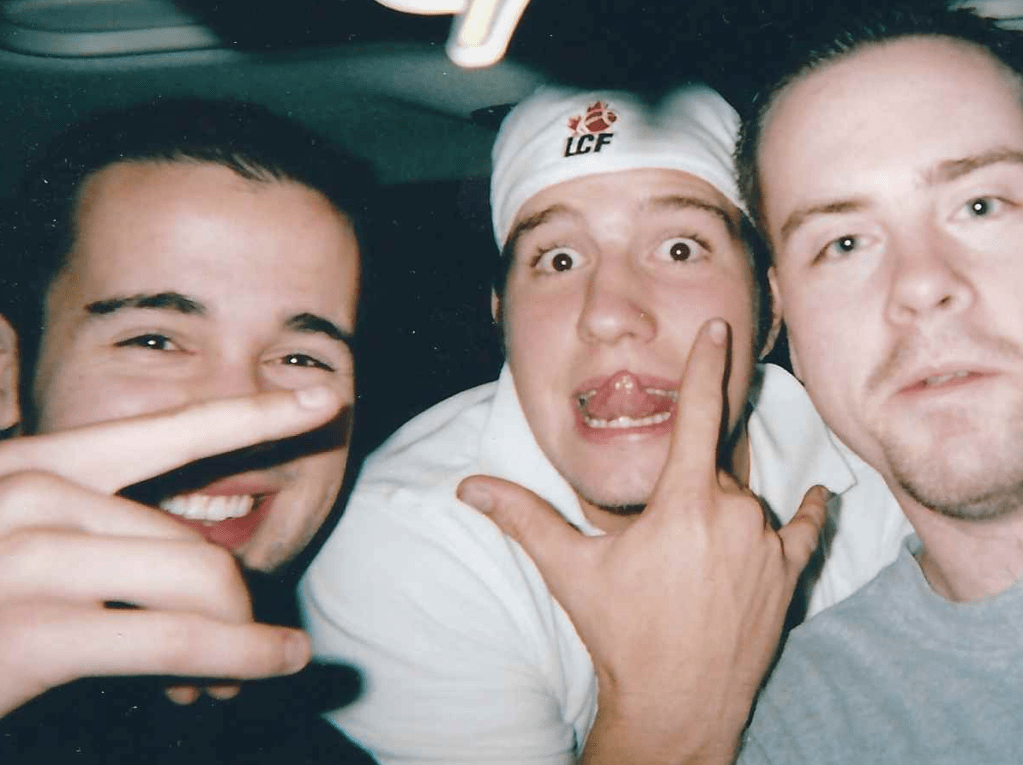
My friends Christopher (left), Kevin (centre) and I about to go climb Sugarloaf Mountain

In the late 90’s, I got into the habit of cycling to Campbellton quite frequently. Although once I got my driver’s licence and purchased a vehicle, my dynamic switched up and I started travelling up by car. I needed to find something to replace the exercise I was getting from cycling, so I chose to climb our local mountain, named Sugarloaf. Now, if you Google Sugarloaf you’ll find a number of different locations from around the world. But MY Sugarloaf is located on the southern side of Campbellton.

Sugarloaf Mountain, as seen from Highway 11, heading West towards Campbellton

Just to keep things interesting, I’ll give you some basic stats on this tree-filled lump. Sugarloaf Mountain is an extinct volcano. It was formed some 420 million years ago when thinning of the Earth’s crust allowed it to peak its nosy face out of the ground. It’s about 922 feet from base to tip, and has a walking trail around its base as well as a ski resort and multiple downhill skiing trails on the west side of the mountain.

I started climbing the mountain by its designated hiking trail for the first couple of years. But as I got bolder, I started wearing protective gloves and solid shoes and scaling the vertical sides, as well. I got a few friends to join me on some of those climbs, but they usually ended up quitting within the first 30 minutes claiming that I was out of my mind. And probably with good reason.

The boys and I, soaking wet after climbing back down in the mountain in the pouring rain

I miss climbing. I obviously don’t get to do much of it (none) considering I live in the Prairies now. There aren’t a great number of mountains out here. But I definitely plan on trying to make an effort to reconquer the mountain on the next occasion that I visit my folks. It’ll be interesting to see how different in may be, considering the mountain likely hasn’t changed, but I definitely have!

I haven’t seen or spoken to Christopher or Kevin in over fifteen years. We didn’t have a falling out or anything; we simply got on with our respective lives. And sometimes, that’s the way of it. Friendships sometimes come and go. But the good and happy memories you make along the way are yours forever. ☯

Mind And Body Connection

What is this mind and body connection we hear about in the martial arts? Depending on the instructor you have, you may hear the term often. In some circles, they throw “spirit” in there, and it becomes “mind, body and spirit,” but it’s the same concept. So, what does it mean? What are they referring to and how does it relate to martial arts?

If I have to explain what the body is, maybe you need to turn off your internet and go back to school. Your body encompasses everything that you are, INCLUDING the mind. In some respects, the body can be considered the vehicle of the mind. The real question is, what the difference between the mind and your brain may be. Is there a difference? Of course there is, and I’m going to explain it to you…

Your brain is physical (d-uh, right?). It’s the organ contained in the skull and is the most complex organ in your body. The common human brain contains over 70 billion neurons (when you total up all parts of the respective brain) and those neurons communicate through synapses that helps to control the body as a whole. Your brain is physical, tangible and part of your body. The mind is a tad bit different…

The mind is the invisible part of who you are; your thoughts, feelings, emotions and personality. Everyone has a brain. But your mind? That’s yours and yours alone. It defines who you are and how you behave in everyday life and in all the things you do. Without your mind, you wouldn’t be the person you are today. And THAT’S the difference. How does this relate to the martial arts?

In karate, we perform drills ad nauseam, the idea being that repeated drills will help “drill” the technique into us. And it’s extremely effective. It’s called “muscle memory” and it’s quite good at helping us to train to the point where, if someone attacks we can respond accordingly without hesitation. But the mind still needs to have an active role in there, despite muscle memory.

Mind and body are both part of the same whole, and it’s important that you train with that totality in mind. Your mind will tell you how to feel so that your body can react. Proper training and martial arts cannot be studied without both. So pay close attention to both. This is the only way to truly accomplish any goal, martial arts or otherwise. ☯

Sure, Go To Bed Angry…

Have you ever heard the saying that you should never go to bed angry? Of course you have! Most people at some point in their adult lives have heard that saying. It used to be an important staple of relationship advice and previous generations stuck to it like glue. In fact, it’s even quoted in the Bible. Don’t believe me? Check out Ephesians 4:26 and tell me that Paul wasn’t talking about this exact thing.

Realistically, trying never to go to bed angry is an outdated and archaic way of looking at things. And it doesn’t just refer to marriage. It applies to most relationships, regardless of their nature and/or type. There are some sources that explain that going to bed angry can actually be helpful.

According to an article posted by Psychology Today, people tend to fight over nothing when they’re tired. They’ll even fight over issues that wouldn’t faze them if they were well-rested. The worst part is, resolving whatever the issue is winds up being more difficult due to the fatigue. The same can be said of trying to resolve a problem when you’re hungry.

Going to bed while you’re still angry is not only a good idea, it can lend some significant benefits. The fact is, you’ll likely be rested, refreshed and able to approach whatever got your hackles up with a renewed perspective. You may avoid saying something stupid because you were too tired. And as I said earlier, this applies to all relationships.

There are days when my 5-year old makes me angry as hell. Strange how kids can get under one’s skin sometimes, right? Rather than lose my temper and yell at him, I usually prefer to distance myself and let him go to bed. Once I’ve got a proper night’s sleep (or some close approximation) I can deal with the previous night’s issue with a better frame of mind.

The old school way of thinking isn’t always wrong; this just happens to be one of those times when it falls short of what’s necessary. So when tempers flare, don’t be afraid to take a step back. After all, “sleep on it” may be more beneficial than “never go to bed angry.” But what do I know? I’ve never fought with my wife before bed. ☯

Knowing the difference

I’ve been reading about a number of different terms that are used within martial arts circles. Some of them have been confusing me and there’s a difference between some of the terms that are used. I thought I would take the time to cover two of them off, as many people tend to use them interchangeably, even if they’re not.

The first term I want to cover is martialist. This is a term I’ve found in a number of philosophy and martial arts books. So, what is a martialist? And how does it differ from a martial artist? Well, Webster’s Dictionary defines a martialist as someone “skilled in warlike arts and techniques.” A martial artist, on the other hand, is a person who studies an art form developed for the purpose of self-defence and combat, although most of them can find their roots in military or war-based origins.

The next term I’ll cover is Senpai. This is a term that refers to a senior member of a dojo who also instructs, generally ranked below the Sensei. In Japan, the terms Senpai and Kohai are meant to mean “Senior” and “Junior”, respectively. But in karate, a Senpai is someone who steps in and teaches as a direct assistant to the Sensei, but not the Sensei himself (or herself).

I’ll be the first to admit that the martial arts is a rich tapestry that crosses many different cultures and backgrounds. Sometimes, it gets difficult to keep all the different terminology straight, depending on your background and what style you may be studying. Doing an internet search will only get you so far, and there is a fair amount of confusion or inaccurate information out there.

if you already study the martial arts, don’t be afraid to ask you Sensei if you have questions about proper terminology. You should likely do this AFTER class, so as to not take away from the Sensei’s stretching and warm-up before class. If your instructor tells you something vague like how you shouldn’t worry about such things, he or she may not have your best interests in mind. Your curiosities should be accommodated wherever it’s appropriate. ☯

The Sword Saint

This week, I’ve decided to focus my attentions on someone whom I’ve read about since I was a young child: Miyamoto Musashi. Most people aren’t familiar with the name, though he was well-known in feudal Japan as the greatest swordsman to have ever been. People are more familiar with the book he wrote before the end of his life: The Book of Five Rings.

Musashi is thought to have been born in Japan in the late 1500’s by the name “Bennosuke” to a farmer. The history is a bit difficult to trace, but there is some debate as to exactly where and in what Province Musashi was born. Musashi was raised by his uncle after the death of his father, and was taught Buddhism, reading and writing (which was not a common thing in that era).

Musashi’s name was changed to “Takezo” later in life and he began to study the sword, either from his father or under his uncle, fighting and winning his first duel at the age of thirteen. Musashi was said to have fought (and won) 61 duels and battles, leading to the creation of a legend in his own right. He developed and refined his own style of two-sword combat called Niten Ichi-ryu, making use of both a katana and a wakizashi in combat.

Although best known as a swordsman, Musashi was a philosopher, artist, painter and calligrapher. I could go on about the different skills he developed and mastered throughout the course of his life, but suffice it to say that Musashi was a firm believer in studying one thing in order to master another. For example, if you study only the sword you will grow to be ignorant and unaware of anything else. In order to truly master a skill, you need to branch out and have some variety.

Miyamoto Musashi is a source of inspiration for me, because he walked his own path. Although receiving instruction at some point in his young age, he went on to develop and master his own style, suited to his own needs. A variation of his style of swordsmanship is still studied today. He’s written various works and created multiple pieces of art, and can be cited as a source of popular quotes (feel free to Google “Musashi quotes”).

To be honest, I could share quotes and passages from some of his works, but that would scarcely do him justice. If you want to learn all you can about Miyamoto Musashi, my best suggestion would be to get tour hands on a copy of his book, The Book Of Five Rings. The version translated and written by Hanshi Stephen Kaufman is the most popular version (and the most complete one). It’s a fascinating read, and the material can apply to many aspects of life, not just combat. ☯

The Right Frame Of Mind

Developing yourself and reaching a goal can be difficult. Especially when you don’t allow yourself to have a strong frame of mind or proper perspective. Having a partner when you work out can be extremely helpful, as I wrote about in a previous post It Takes Two, Baby…🎶. But although having someone there to spot you and motivate you can be quite the benefit, you need to allow yourself to have a correct frame of mind behind your workout.

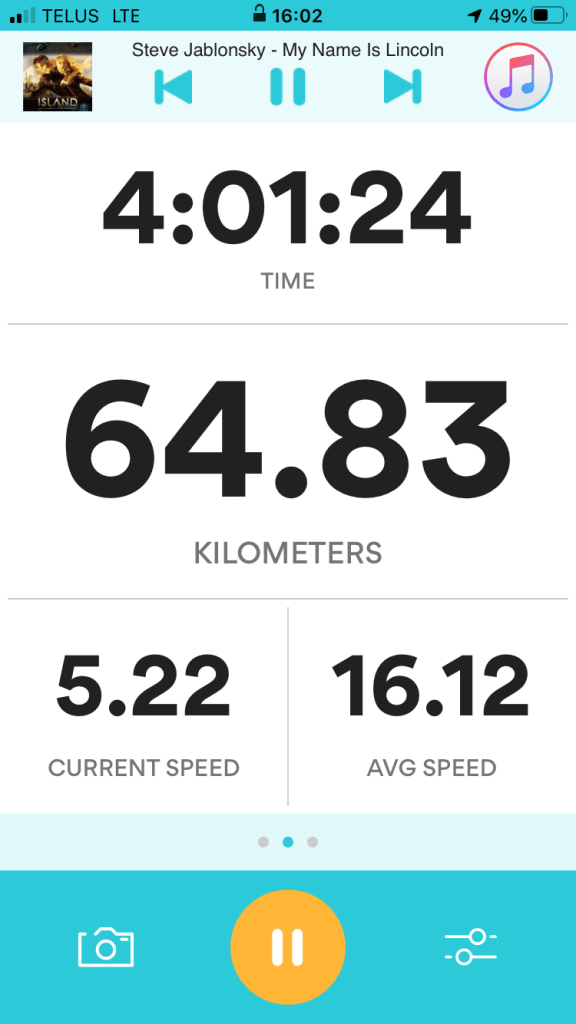
The distance I achieved yesterday

A friend of mine recently pointed out something important as it relates to fitness. Let’s say that you’re trying to lose some weight. You intend on climbing the nearby mountain with a partner, which is not only smart for safety reasons but can motivate you to push further in order to keep up. As you start climbing, you begin to feel tired. Your body is having difficulty continuing due to the excess weight that you’re trying to shed, and you feel compelled to stop.

Perhaps you tell your partner you need a rest. Or perhaps you tell them you can’t go on. Maybe you surrender to your body’s urge to have you sit down and give up. A terrible thing to allow, especially if you’ve set yourself some fitness goals that can be important for your health. For someone with Type-1 Diabetes, this can be a common occurrence, since fluctuating blood glucose levels can have the unfortunate side effect of making a person groggy and sluggish.

Yesterday’s route around the Regina Bypass

As I’ve often mentioned before, it’s important to ask yourself why? What is the reason behind your motivation? Your body should and will give out, long before you do. Why do you think people listen to music when they work out? It’s not simply for their love of it, although for some I would believe that’s included. It’s because music motivates us (and in some ways, distracts us from the physical exertion we’re going through).

This is why it’s so important to motivate yourself and stay positive. When I started cycling for fitness this year, I would get home after about a dozen kilometres and my legs would kill, I’d be exhausted and I would feel like total crap. But as you can see from the images above, the day before last saw me hit 65 kilometres. And yes, when I got home my legs killed, I was exhausted and dehydrated and needed food. But I can promise that a dozen kilometres now seem like a trivial amount, and I can do it quite easily in only about half an hour. This is something I wouldn’t have imagined when I started.

Sometimes it’s better to take things in small increments. If I’d hopped on my bike and tried to reach 60k on one of my first times out, I likely would have floored myself and became discouraged. But by staying consistent and building myself slowly, I’ve been able to keep building and developing how far I can go. The same can be said of martial arts or any fitness regimen that you may be attempting.

Let’s get back to our friend who’s attempting to climb the mountain. When exhaustion sets in and you feel like you can’t go any further, there’s no shame in taking a breather. But then, look ahead and spot a point further up the trail and tell yourself, “I can push at LEAST until that tree…” Then go for it. Once you reach that tree, maybe you’ll need another breather, maybe you won’t. But fix yourself another short goal and strive for it.

I think it was a Navy Seal that I had seen years ago, who described taking his training in steps, from day to day. At the beginning of the day, he would tell himself to simply get past breakfast. That’s it. Once this period had passed, he would focus simply on getting through the afternoon. Nothing more. With each piece of the day’s puzzle reached, he would be able to shift his focus and move on to the next, thereby guaranteeing he would make it through the day before hitting the rack. If he were to focus on completing the entire day, he would likely become discouraged and lack motivation. This is a concept that anyone can apply to their daily routines.

The idea is to allow yourself the time to grow. Have a positive and motivated perspective and you’ll go much further. If your thoughts are negative as soon as you begin, you’re sure to fail. how can you be motivated if you’re already defeating yourself? But if you focus on the positive, music, goals, health benefits, perhaps the scenery that surrounds you as you climb, you’re more likely to push farther and accomplish more.

Your own health and fitness is important; critical to your survival, really. And the proper mindset is what will help get you there. For someone with weight issues or Diabetes, staying fit and healthy can mean the difference between life and death. This is one of the reasons I push so hard. Life has too much to offer to lay down and die sooner than necessary.

And Diabetes or not, death will take me. Of this, there is no doubt. But I can promise two things: Death will lose ten pounds in sweat trying to make it happen and he’ll lose a mouth of teeth in the attempt. I intend to go down fighting. (Gee, that would make a great t-shirt) ☯

A Gentle Hand In Hygiene…

Washing one’s hands has become a popular topic of most conversations regarding personal hygiene in recent years, and it still surprises me how many people go without washing their hands frequently and especially after prepping food, using the washroom or contaminating one’s hands with something potentially painful, like hot sauce!

I’ll admit I’m usually guilty of this, at least a couple of times a month. I’ll prep a plate of nachos with cheese, varying ingredients and hot sauce and sit on the couch to watch a show or a movie with my wife. I’ll be snacking away, happy and content with the deliciousness of my nachos when, all of a sudden, my eye will itch. Absentmindedly, I’ll reach up and rub my eye. Within seconds and for minutes after, my eye is a fountain of tears and irritation as the hot sauce residue teaches me the importance of washing my hands before touching my face.

I wish I could say I’ve learned my lesson, but I unfortunately repeat this vaudeville routine on a regular basis. One of the main ingredients in most hot sauces is capsaicin, related to capsicum, which is the primary debilitating ingredient in pepper spray. And I rub that shit into my eyes on the reg… Are you sure y’all should be listening to ANYTHING I say? But I digress…

The reality is that your hands carry a shit-ton of germs. And yes, that pun IS intended, considering fecal bacteria is the most common thing on your hands, your phone, etc… Most people don’t wash their hands properly, and many that do fail to scrub up for as long as is necessary for proper hygiene. The big problem is that we use our hands for everything. We touch our faces, eyes, nose, mouth… often without even realizing it. And whatever nasty bugs we have on them will find a good home in any of those openings.

The next problem is that failing to properly wash one’s hands can lead to the propagation of those germs. By using our hands without properly washing them, we can potentially transfer germs and bacteria to food we prepare for our family or directly onto our children as we hug them and seek to protect them. And looking back on the funny story about putting hot sauce in my eye, there is another very unpopular condition that can be caused by dirty hands: pink eye!

Pink eye, or what’s known as infectious conjunctivitis, is usually caused by viruses but can also be caused by bacteria; such as the ones found on unwashed hands. I’ve been fortunate enough never to have pink eye, but it doesn’t sound like a spa treatment! And washing your hands regularly and frequently can go a long way towards helping to prevent it.

So, good hand washing practices are important, especially to help maintain proper health. Diabetics especially don’t need the added potential for germs and bacteria to cause infections and complications that could make us ill. The biggest challenge is trying to teach children. Trying to convince my 5-year old son why he has to go wash his hands before he eats, sleeps, touches the baby, etc is a battle unto itself…

Be sure to get your hands completely wet, scrub thoroughly with warm/hot water and soap for at least 20 seconds or more. Do this every time you’ve handled raw foods, did work outside, shook someone’s hands and especially after any and all bathroom use. And yes, you CAN overdo it. Washing your hands TOO much will scrub away oils needed to keep the skin healthy and cause dry, itchy skin. But you’d have to go a long way to reach that point. ☯

Sleepy Is As Sleepy Does 😴

Yesterday, I wrote a post about the importance of meals and which of those meals is the most important (despite all of them being important). One of the points I made towards the end, is that it’s important to stop eating at east a couple of hours before you hit the sack, otherwise your body is busy digesting and processing foods instead of what it’s SUPPOSED to be doing during sleep.

As a follow up to that post, I thought it might be interesting to examine and discuss exactly what the body IS doing while we sleep. For the purposes of today’s post, I won’t get into all the “brain stuff” like REM sleep and sleep cycles. Rather, I’d like to focus on the physical aspects that take place within your body while you’re dreaming about that log cabin on the lake that you plan to retire to…

Let’s start with some of physiological effects… According to a list posted by WebMD, your body temperature will drop during sleep and your breathing will deepen and slow. Your heart rate will fluctuate, but non-REM sleep will lower your pulse and blood pressure, allowing the heart and blood vessels to recover. Deep sleep cycles are where the body takes advantage to repair muscle and other tissues, as well as release chemicals that strengthen your immune system. Ever wonder why you need “rest” and sleep when you’re sick? That would be why.

While you sleep, your brain sends out messages to keep you from acting out your dreams. Essentially, your brain paralyzes you while you sleep… (because THAT doesn’t sound horrible!) During sleep, growth hormones increase and stress hormones decrease. There’s also a whole mess of stuff that happens with other hormones as well.

Sleep not only allows your body the opportunity to heal and repair tissues, it also allows your energy to be restored to face the following day’s challenges. Not to mention that your brain processes and stores information and possibly creates long-term memories during sleep. Not to mention eliminating toxins and waste from the body, which is why (outside of drinking too much water before bed) most people dash to the washroom, first thing in the morning.

So just imagine that with everything the body takes care of during your sleep cycle, combined with the fact that your metabolism slows down, you pile a bunch of food on top of it all to be digested right before going to sleep. Eating right before bed can cause heartburn, indigestion and can have an effect on your weight, since the improperly digested calories will likely be stored as fat.

Sleep is super important, and there’s a whole frontier of mystery behind it, as scientists are still uncertain why we have specific sleep cycles, why we dream and what some of the brain activity involved in sleeping is meant for. But one thing is for certain; not getting an appropriate amount of proper sleep can be disruptive and harmful to the body’s natural function. So, hug your pillow tight! Even while you’re at rest, your body continues to work. ☯

Make A Meal Of Some Information…

Mornings suck… I mean, you’re entitled to your opinion if you believe this to be false, but I dislike waking up in the morning. Maybe it’s because I never get a genuine full-night’s rest from my sleep, for various reasons. But getting up in the morning leads to certain routines that most people adhere to. Things like brewing/consuming coffee and perhaps having breakfast.

Now, I’m not a nutritionist or a dietitian and I have no formal training in those areas. I function solely on the personal knowledge and study I’ve accumulated over decades due to being a Type-1 Diabetic. And I will allow myself a brief vulnerability and admit that I’m probably one of the worst people for failing to consume what is generally considered the most important meal of the day: breakfast!

I grew up in a household where breakfast was not only considered the most important meal of the day, but it was mandatory. I have memories of my mother almost physically dragging me to the breakfast table during those awkward teenage years when all you want to do is sleep. There was no way I would be permitted to leave the house without something in my stomach.

The main idea is that eating breakfast within an hour of waking up helps your body to get the sustenance and energy it requires to attack the challenges of the day. Your body’s metabolism is usually at its lowest upon waking, which is why you need the nutrients and energy from a well-balanced breakfast to kick things off. Skipping breakfast and/or the first meal of your day can have negative effects on your body.

According to a paragraph in an article by Science Direct, “[…] the failure to eat (a well-balanced) breakfast has been documented to have a deleterious impact on cognitive performance […]” The takeaway is that trying to start your day without food in your system will affect your overall cognitive functions and impede your overall performance.

WebMD seems to agree as a quote from their webpage states, “Skipping the morning’s meal can throw off your body’s rhythm of of fasting and eating. When you wake up, the blood sugar your body needs to make your muscles and brain work their best is usually low. Breakfast helps replenish it.” The article goes on to explain that skipping breakfast can lead to feeling drained and “zapped” of energy throughout the day, an effect I can attest to have suffered from on a number of occasions.

I’ll admit that I’m quite guilty of this. My first actions in the morning usually include grabbing the first available source of caffeine and flopping down into my desk chair and working on this blog… Thoughts of food don’t hit me until close to lunchtime, by which time I’ve become hungry enough that I overeat. This is an issue that I’ve gotten into a habit of stemming by eating a simple english muffin with my coffee.

What you eat for breakfast is often as important as whether or not you choose to consume breakfast. A balanced meal of proteins, grains and dairy will help ensure your body gets the necessary “kick” it requires to make it through the day. On the flip side, if you constantly consume a breakfast heavy in fats and processed sugars like popular name-brand cereals and bacon, you may start the day with a full stomach but you may also be doing damage in other ways. So, be smart about what you eat and when (something that WOULD require the advice of a nutritionist or dietitian)

So if breakfast is the most important meal of the day, is there a LEAST important meal? The short answer is no. All three meals, accompanied with light, healthy snacks in between, are all just as important in the grand scheme of your health. That being said, lunch can be a bit on the light side, with an accompanying snack during the middle of the afternoon. Dinner (or supper) may end up being a substantial meal as it’s statistically the one we have at home with the family and is prepared to be larger to accommodate everyone. But there’s no hard and fast rule to this.

The one important detail to remember is that no matter what meals you partake in and what time you enjoy them at, experts agree that you should stop eating a minimum of a couple of hours before bed so that your digestive system has time to process your food before you try and sleep. Once you go to sleep, your body is meant to fast as it works on rejuvenating itself for the day to come; something it can’t do if it spends half the night digesting your buffalo wings from your Netflix binge!

Eating your meals at proper intervals will also help with proper blood sugar control if you have Diabetes. Maintaining a proper routine and healthy diet is always the optimal choice in order to help prevent spikes or drops in blood sugar. So, there you have it! If you grew up through the 80’s like I did and constantly heard commercials on Saturday morning about starting your morning with a healthy breakfast, that rule is still a reality today.

For myself, I usually end up skipping breakfast in favour of sleeping in for that added twenty minutes and rushing off to work. But the reality is that most studies will show that getting up a touch earlier and having a proper breakfast may go farther towards ensuring you’re awake and alert than hitting the old snooze button. So take time to grab a meal before facing the world. It always looks better on a full stomach. ☯