Too Much Of A Good Thing…

Can you ever have too much of a good thing? Yes. Yes you can. And depending on what that thing is, you can cause all sorts of damage to yourself, your health and your well-being. Don’t believe me? Choose your favourite take-out food and go eat it in buffet format… It won’t take long before you’ve overindulged and spend the next forty-eight hours regretting it for various reasons. And believe it or not, you can also have too much fitness, exercise and workouts. And even karate. There, I said it.

I think it was Epicurus who said, “No pleasure is bad in and of itself; only the consequences from overindulgences in those pleasures.” I think this applies to everything from favourite foods, sleeping and yes, even working out. I bring this up after recognizing that during the week of January 3rd, I performed 10 workouts. No, that’s not a typo! Granted, this is partially because I joined RunKeeper’s “Small Steps, Big Goals” Challenge that basically requires walking 50 kilometres and tracking them via the app, for the month of January. I’ve just been too excited (or stubborn?) at the recent purchase of my new kettlebells NOT to include a strength workout every day after my walk, as well.

What are the possible effects of working out too often or overexerting yourself? Well, according to a short article posted by HealthLine.com, most of the signs will be pretty recognizable. The first is pain, which I think makes sense. Working out causes damage to the muscle tissue, which then heals up stronger and bigger than before. This is how fitness growth is done. The next is fatigue. Not being tired, but fatigue. The difference is that being tired can be fixed almost immediately by resting. Fatigue can have a much deeper significance, including lack of energy, poor movements and lack of concentration.

You’ll also get sick more often. When you overexert yourself, your body will take longer to heal and recover, which means your body can’t fight other shit like, say colds and flus… Things like that. The last symptom the article included is difficulty breathing. If this happens, it can mean one of two things: either the exercise is too intense for the amount of oxygen you’re holding in, or you happen to be one of those poor idiots who holds their breath when doing something that requires effort! Not only should you be breathing properly throughout your workout, a decent exhale during the peak of a movement can be helpful to its proper execution. This is especially true in karate.

I’ll add a personal one that’s quite important, which is good nutrition. Most people seem to eat like trash. You need to include some lean proteins, healthy doses of vegetables (I have a rough time with that one) with at least one meal with a good dose of carbohydrates. That’s right, the Diabetic is suggesting carbohydrates. Don’t forget that carbs are your body’s fuel and you need to refill the tank after you’ve burned most of it. Although reduced-carb/reduced-calorie can help burn body fat, you can also overdo that aspect, which will lead to a whole different batch of complications.

You can avoid overexertion by acknowledging your particular circumstances. Age, medical conditions personal abilities are important and shouldn’t be ignored. Given that I have Type-1 Diabetes, testing my blood sugar levels every hour during fitness is an important aspect. You may be thinking, “Every hour? Am i supposed to be working out for longer than an hour?” Well realistically, the average karate class lasts between one and a half to two hours. My 70-kilometre bike runs last for almost four hours. It’s a bit tougher to stop during karate, since dojo etiquette usually prohibits leaving the floor without the instructor’s consent, but health comes first!

Another good way to avoid overexertion is by ensuring you’ve warmed up properly, you avoid sudden twisting and jerking movement that will hyperextend your muscles, tendons, ligaments and joints, get rest and food as appropriate and at appropriate times. And test, test, test… Different workouts will have different effects on your blood sugar levels, so it’s important to stay on top of that. Also, don’t forget to lighten the load when you need to. I’ve lost count of how many times in a gym that I’ve started doing reps only to drop to a lighter dumbbell for the next set because it was too much. There’s no shame in this. In fact, it’s a smart move and guarantees better growth and faster recovery.

The last, important point to avoid overexertion is learning how to do things properly. It may feel great to pound that punching bag for thirty straight minutes, but if your technique is wrong you can risk all sorts of injury and issues. Better to start slow and learn whatever it is you’re doing properly before increasing the intensity and amount. You’ll avoid all the nasty stuff and reap more of the benefits.

Get some rest! Did I workout in some way, shape or form every day during that week I mentioned earlier? Yes, I did. I also reached 10 workouts the following week, although some of these included the fitness challenge’s walks and some meditation (yes, meditating burns calories and can be considered a workout in some instances). One of the unexpected issues with working out almost constantly, is that your body will develop a muscle memory to constantly being taxed. This means that your system, as well as your blood sugar levels, will get used to constantly moving and exercising. The next time you have a light week where you may only work out once or twice will cause a reverse effect and mess with your blood sugars. Food for thought.

Fitness is important. Absolutely. But so is decent rest, good nutrition and proper form in all that you do. Work hard and focus on the benefits you’ll eventually gain. But keep a firm eye on what you’re doing and listen to what your body is telling you. It’s normal to feel pain during a workout, but there’s a big difference between aching or “feeling the burn” and being in genuine pain. Drink lots of water, take breaks and take care of yourself first. Your body is the engine that drives you, and every engine needs to cool down from time to time. ☯

It Ain’t All Smoothies and Sports Bras!

One of the things that the current pandemic has caused is a fine line where public fitness gyms are concerned. Some have remained open, with restrictions. Some have chosen to close their doors. I hold no judgement against either side of the coin, but I have to admit that there are pros and cons to the use of a public fitness gym. I’ve held memberships with some gyms; and unfortunate side effect of some of the places I’ve been posted over the years, since some of my work locations haven’t boasted gyms of their own.

I think that at SOME point in the past couple of years, I may have posted about the benefits of using a fitness gym… I honestly can’t remember because after almost 700 posts, they all kind of blend together. But needless to say, there are some definite benefits and advantages to using an actual fitness gym to get in shape as opposed to doing it at home, despite the fact that you CAN do so at home. And although I can’t seem to find the post where I posted the benefits, I decided it might be a good idea to post the down sides. Here are my five top down sides to training in a public fitness gym…

Membership Fees: Although it’s not only expected but required that one pays a monthly fee for the use of a public gym, sometimes those fees can seem a little off the rails. Depending on where you join, the monthly fees can lean a bit on the stupid side. Be sure to shop around and make sure that there’s a decent balance between available resources versus what you’re paying. If you live in a smaller community, you may not have much choice. But if you live in a larger centre, you have the benefit of being able to shop around and find the best value for your dollar;
Contracts: Don’t get me started! This pisses me off! Why do I need to sign a contract to join a gym? Will your building and equipment disappear if I quit your gym? No. So why do you require a fixed commitment, signed on paper from me just to allow me to lift weights for an hour, three or four times a week? What, am I renting the place from you? Can I sleep on the yoga mats at the end of the day? Give me a fuckin’ break…
Crowded Equipment: There’s nothing that quite gets me like a half dozen ‘roided up idiots surrounding the station I need for the day’s current workout. I’m the kind of guy that pre-plans his workouts before he starts, and having a group of douchebags standing at the leg press station, chatting away instead of getting their reps and moving on, ENRAGES ME TO NO END!!! Seriously though, it’s great if you can use your local gym to socialize with your friends, but I’m referring to the batch that are already huge and just hang out because they want to show off;
Other People’s Sweat: No matter how many signs they put up, no matter how many spray bottles are sitting all over the place, you’re bound to lay on a machine that was improperly washed by the previous user. Don’t even get me started on the gym showers and change facilities! I’ve always had the practice of sanitizing the machine BEFORE I hop on, but very few people maintain this practice, so Light knows what funk you may be exposing yourself to! That was a problem before COVID concerns became prominent…
Personal Perspective/Other People’s Judgment: This last one can be somewhat specific to the person, but not everyone feels comfortable stepping into a public place to try and get into shape. And I get that. What makes it worse is when you have some idiots making fun of people TRYING to make a positive change. I’ve seen some heavier set people hopping on a treadmill or elliptical with the intentions of trying to make a better future for themselves only to be discouraged by some nay-sayers who point and make fun of said people. We should grow up and be slightly more evolved at this point.

Honestly, I love using a fitness gym. It usually features multiples weight machines I would never dream of being able to afford on my own, coupled with sauna, shower and spa options that you just don’t get from working out at home. I don’t like paying for it, that’s probably the worst of the top five for me. But using a fitness gym, especially a personal trainer, can help get you on the right track for your fitness goals. ☯

You Can Buy A Black Belt At WalMart…

Karate and martial arts in general contain many intricacies, specifics and details surrounding ceremony and respect. Compared to other sports, this is one of the appeals (and hindrances) of training in the martial arts, as most people aren’t aware of them and often don’t know about them. And sometimes, even when they do, they don’t provide the respect that the culture deserves. I’ve written some previous posts about dojo etiquette, which you can read here and here, but it dawns on me that I’ve never really covered off something that’s not only important within martial arts circles, but is a serious disrespect and breach of etiquette when addressing someone in karate: asking about their black belt.

I’ll speak strictly from the karate standpoint, since this is what I’ve been studying my entire life. Training to reach black belt is a false goal. Any traditional karate instructor will usually tell you that the only thing belts are good for, are holding your pants up. In fact, I’ll push it one step further and point out that if you’re in my dojo and you tell me that you’re in karate with the sole purpose of obtaining a black belt, I’ll politely ask you to train elsewhere.

You may be asking, why would I say this? Well, first of all because it would be my dojo and I teach any who want to learn but only those whom I choose to teach. Truthfully, the use of coloured belts or any grading system in Japanese and/or Okinawan martial arts started in the late 1800’s with Judo. Prior to that, either everyone was dressed exactly the same or trained in whatever they might happen to be learning. In the 1880’s, Shotokan Karate was among the first to begin using this coloured belt system as well, and other karate systems followed suit soon thereafter.

But the honest reason I would ask a student who has the goal of achieving black belt to leave my dojo isn’t because they would be an inherently bad student or they wouldn’t work hard. The truth is that although there no truly “bad” reasons for training in karate (except for wanting to harm or suppress others), obtaining a black belt should be an incidental occurrence in your martial journey, not the end goal. In fact, my Sensei has always said that passing your black belt is a student’s way of formally asking their Sensei to teach them karate.

But one of the most disrespectful things a person can do, is ask a black belt ABOUT their black belt. Want to hear some stories about how I got here? No problem. Are you able to acknowledge the FACT that I’m a black belt? Unless you’re colour blind, you should, considering I’ll be wearing a black belt around my waist when you walk into the dojo. The disrespectful part is asking what grade of black belt someone holds, or what degree they have. Generally speaking, there’s really no reason other than unnecessary curiosity to ask someone this.

If I happen to be the head instructor, you’ll be receiving my tutelage regardless of my rank. I’ve seen brown belts open their own dojos. Although it’s pretty uncommon, it isn’t unheard of. But a traditional black belt usually won’t WANT to “brag” about what level they’ve reached and it’s usually considered impolite to ask. It reminds me of an exchange I had with someone a few years ago that went a little something like this:

CuriousGeorge: So, you do karate eh?
Me: That’s right…
CuriousGeorge: How long have you been doing it?
Me: A little over twenty years…
CuriousGeorge: TWENTY YEARS! Wow, you must be a black belt, right?
Me: Umm, well… yeah…
CuriousGeorge: What kind?
Me: Excuse me?
CuriousGeorge: What kind of belt?
Me: Black. I think we just established that…
CuriousGeorge: No, no, I mean what level!
Me: Black! I don’t think we’re understanding each other…
CuriousGeorge: No, I mean what level? What level of black belt are you? There are different levels right? Or degrees, I think?
Me: What does that matter?
CuriousGeorge: Well, I just want to know how high up you are…
Me: I’m a black belt. Anything else is an unimportant and private detail…

In this guy’s defence, despite being presumptuous in assuming that being in karate as long as I had at the time meant I held a black belt, he likely didn’t KNOW that I considered it disrespectful to ask about my rank. This is where the conversation became what many of us like to call a “teachable moment.” I know some people who have trained for decades and have never gone beyond white belt. And there’s nothing wrong with that. Karate and martial arts in general doesn’t REQUIRE you to progress through a ranking system. For some, the simple act of training is all they want/need.

But traditional black belts won’t usually want to brag about rank. You’ll rarely hear one saying, “I’m a 3rd degree black belt,” or “I’m a 5th degree black belt.” As I had indicated earlier, you’ll know I’m a black belt when you walk into the dojo and see me wearing one. To what degree matters very little. And it’s considered a faux pas in the dojo to ask. And karate is almost unique in the sense that I could drop my black belt on the ground and walk away today, and I would continue to retain my knowledge and skills. The belt is just a piece of cloth. So there you have it! A small piece of dojo etiquette that I haven’t covered before that you probably didn’t know. ☯

Not All Weight Is Created Equal…

Have you ever started a fitness regiment or a new diet and noticed that your weight increased, even if only slightly? And have you ever had a friend or family member tell you the same, tired old rhetoric that we’ve been hearing for years? “You’re gaining weight because muscle weighs more than fat…” No. No, it doesn’t. A pound of fat weighs the same as a pound of muscle. That reminds me of the trick question one of my teachers used to ask in one of my many high school physics classes: “What’s heavier? A pound of lead or a pound of feathers?” It would always be surprising (and disappointing) to see how many people automatically jumped to feathers without taking a moment to contemplate the question…

My point is, a weight is a weight is a weight. And this applies especially to fitness, where if you decide on a particular day that you’re going to arm curl 20 pounds, it really doesn’t matter what type of weight you’re using, so long as it weighs 20 pounds. Still with me? Good. But the difference is HOW you intend to use the weight in question and how you’ll incorporate it into your workout. I know some people who use kettlebells to perform hyper-extended push-ups. Sometimes dumbbells, as well. When you start adding such variety and changes, not all weights are created equal. And here’s why.

First of all, I’m not a big fan of spending money. Even when it’s for something geared towards my health & fitness, I get rather pissy when I feel I’m being taken for a ride, financially-speaking. If you’re going to invest in weight equipment, try going second hand. You’ll likely still find decent equipment that will serve your purpose, but it’ll be less costly than buying it brand new. For example, a 20-pound hex dumbbell goes for about $35. Each. That makes for an average of about $1.75/pound, which can get ridiculous when you start wandering into the realm of 40 or 50 pounds.

I’m far from being what anyone would call a “fitness expert,” and I certainly don’t have any acronyms or abbreviations following my name to claim authority on the subject. But this is one of those cases where a bit more expensive MAY (key word) guarantee you a bit more quality. And weight “machines” are fun gadgets, but bear in mind that they’re limited to only one function per station and don’t allow for workout variety. Not to mention it’ll cost you a second mortgage, your firstborn child and likely your soul. But let’s focus on free weights. Here are some of the different ones:

PLATE WEIGHTS

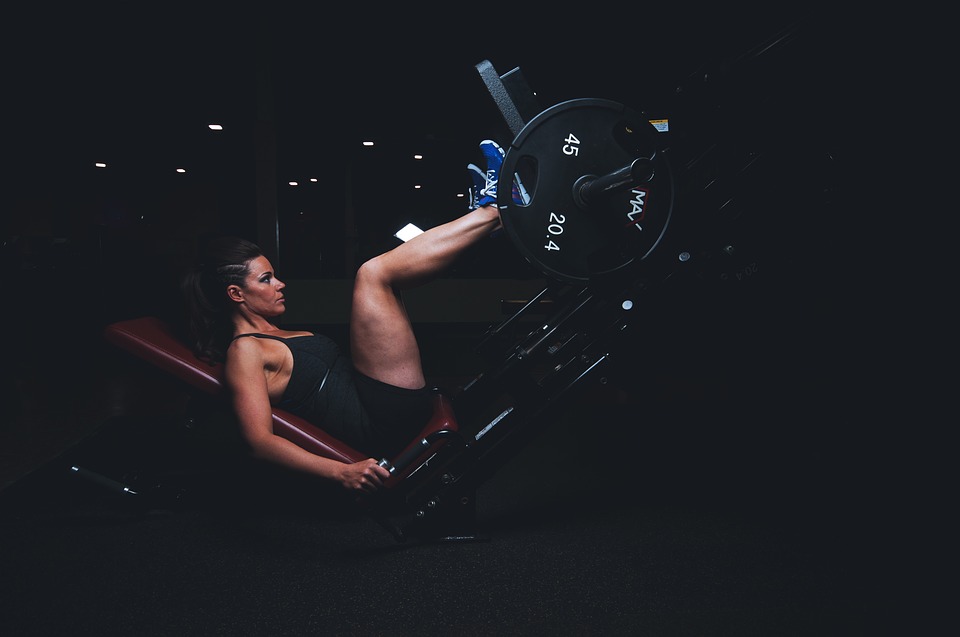
This is the old school shit, right here. A bar of metal with thread at either end, and you slap on some weight plates and cap it with a screw-on fastener. They’re metal, they’re bad ass and they make even the smallest weights look like you’re imitating Schwarzenegger. In fact, the ones you see in the photo are only 15-pound dumbbells. But the size and look of the plates lend a certain, shall we say, psychological feel. The benefit of this type of dumbbell is you can adjust it to whatever weight you choose. The disadvantage is that you HAVE to adjust it to whatever weight you choose. It can be cumbersome and time consuming to change up the weight between sets, unless you have multiple bars to use. But the durability can’t be denied and if one plate becomes damaged or broken, it’s far easier to purchase and replace the one plate than an entire dumbbell.

PVC WEIGHTS

I don’t know what the fuck these are actually called, but you likely know them from seeing them in the corner of your ex-girlfriend’s living room because she’s “decided to make a positive fitness change” in her life. They can be recognized by the bright colours and light weight amounts. The weights themselves are made of cast iron and are usually coated in their tell-tale colour using a PVC derivative. The benefit to this type of dumbbell is that it’s aesthetically pleasing to the eye and can be handy for lighter workouts, especially if you incorporate them in circuits or cardio. The disadvantage is that they rarely come any heavier than 10 to 15 pounds (although I’ve seen exceptions) and can be pretty costly, unless you buy them in some sort of set or kit that includes a batch of them in different denominations. I make light of them (see what I did there?) but the truth is we have some of these in our home and it allows my whole family to perform weight exercises with me and I use the 8-pound ones for various exercises as well.

ALTERNATIVE MATERIALS

Some weights that you find will be made with certain types of plastics, polymers, polypropylene and concrete. Like I said at the beginning, a weight is a weight and the reality is that you can sometimes get these alternative weights at a much lower price than the previously mentioned types. That’s the big advantage. I’ve seen some plastic kettlebells at a local retailer for less than a dollar a pound. If you’re starting out or even if you’re simply trying to limit equipment cost, that’s pretty good. The disadvantage is that what you’re paying won’t give you the long-term durability of some of the other types of weights. If you have plastic weights filled with concrete or sand, you need to recognize that long-term use and/or dropping can lead to these weights splitting open and making a God-awful mess. Especially if you use them for alternative exercise routines, like hyper-extended push-ups and stuff. That’s only one example, of course.

HEX WEIGHTS

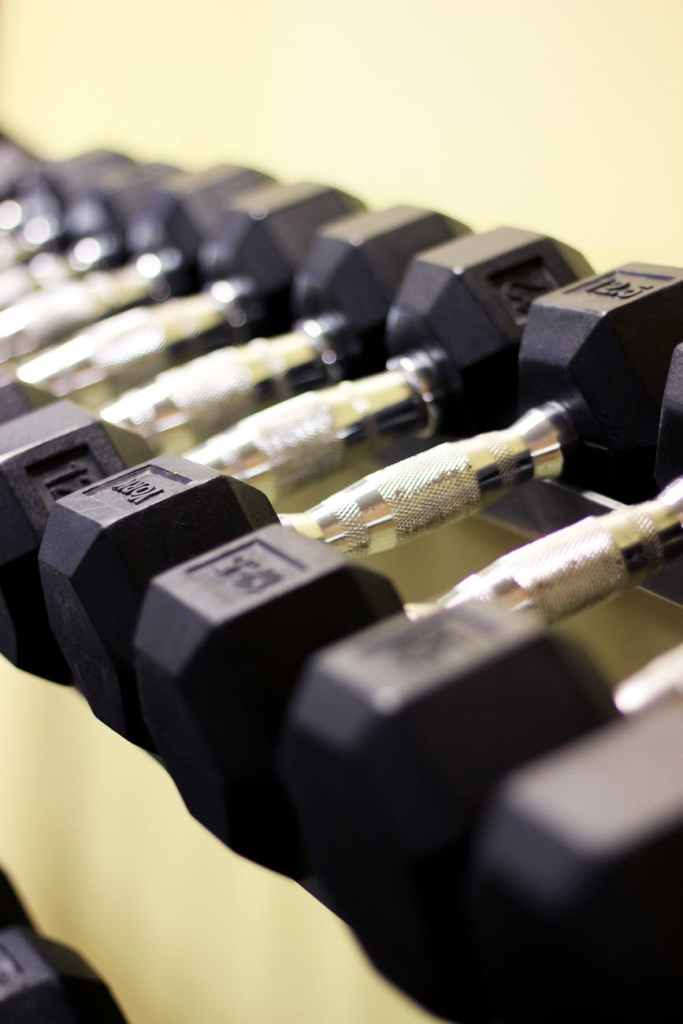
Here we go! These are the writer’s favourite, the cadillac of free weights, the best of the best… in this humble martial artist’s opinion! Hex weights are usually made out of one piece of solid cast iron and painted grey or black. The ones you see in the photo are a bit on the fancier side as they feature a chromed grip and black, PVC-coated weights at either end. The benefit to these types of weight is that they’re very near indestructible, can be used for a wide variety of resistance and circuit workouts and rarely need replacing. The disadvantage is that they cost a bloody fortune! If you get the pretty black ones from the photo, you may be easily looking at $2/pound. If you’re buying a pair of 40-pound dumbbells, that’s $160 just for a pair of dumbbells! Despite this, they still stand as my favourites. Their construction makes it impossible for them to roll away from you when you set them down, they can be used for push-ups and various alternative exercises and if you drop them on the floor, you won’t damage them. You may get pissed at yourself for the damage you’ve caused to your floor, but I digress…

At the end of the day, the weights you use will be directly dependent on your budget, preference and exactly HOW you’ll be using the weights. I still stand by my belief that finding the equipment you need second-hand from someone who no longer wants it is a better way to go, but since you’ll be the one using the stuff, you need to make certain that you’re comfortable with it. While we’re discussing comfort, make sure that you purchase weights that you’re comfortable with and can easily lift and move around. Don’t go buying a set of dumbbells that has you trembling as though you’re having a seizure in order to complete one rep. Although it’s good to push the envelope, you need to be able to move and transport your weight easily without compromising or injuring yourself. ☯

Is Traditional Karate Dead?

I’ve been studying karate for over thirty years (yes, I know that I mention that a lot) and the benefits of the martial arts on my health, my Diabetes and my overall mental well-being can’t be over-stated. My reasons for starting karate have changed and/or altered throughout the decades and there have even been periods when I’ve walked away from it for a while, even though no genuine martial artist can ever truly quit; they’ll always maintain it or come back to it in some way, shape or form.

Martial arts hit the big screens in the mid-1950’s, although what they were showing on screen could hardly be called martial arts, in any true sense of the term. In the 1970’s, martial arts blew up the big screen with Enter The Dragon, Bruce Lee’s hit movie where he infiltrates an island tournament held by a monk turned criminal drug lord. Since then, people have been fascinated and infatuated by the presence of martial arts and will often whistle through their teeth if you tell them that you study it.

The 1980’s showed a huge surge of television shows that focused on the martial arts. One of my favourites was The Master, a show about an old ninja master taking on a younger student while they search for his missing daughter. It only aired for one season, but it was timeless (plus, I was 6-years old at the time so it all looked great!). By the time the late 1990’s and early 2000’s rolled around, there was a noticeable lack of interest in the martial arts.

Unless you had already been doing it and were part of a dojo that had enough students and enough steam to host tournaments and events and keep itself going, a lot of schools (especially back in New Brunswick) saw serious lacks in attendance and students. Sensei’s dojo also felt the sting of this phenomenon, with our classes going from several dozen students per class to about a half dozen students before I moved away for work. It was disheartening to see, and it took a certain something away from the ambiance of the class. This has led me to ask the question: Is traditional karate dead?

I remember watching the very first Ultimate Fighting Championship in 1993; back when it was actually ABOUT the martial arts and not about pitting two ‘roid heads in biker shorts against one another. I got to enjoy watching a variety of realistic fights, as the original events involved individual martial arts styles, no gloves or protective equipment and most importantly, no rules. It saw matches the likes of a sumo wrestler against a savate fighter, kickboxing against karate and traditional boxing against Jiu Jitsu. It was exciting, it was bloody and it was traditional. Everyone had on their specific gi or uniform and held true to their style.

These days, so-called MMA, or mixed martial arts has taken over, and people have become less and less enthused about traditional forms of fighting such as karate. It seems the growing trend is geared towards trying to discredit traditional martial arts, filming unqualified instructors and turning one’s preference on the more streamlined punch/kick training such as the MMA. People enjoy seeing some of the fancy, high-flying antics shown on the big screen, but very few people are interested in the actual training or disciplined required to learn the actual art.

Styles such as Tae Kwon Do have managed to ease their way through these troubled waters. But in many cases, this is because their style contains such dynamic techniques as to keep the students’ focus and attention, as well as include things like board breaking, flips and intricate spin kicks, which although look nice, hold no practical application in an actually fight unless your opponent has ABSOLUTELY no fighting skills whatsoever. It may look impressive to have someone hold a board and have you spin twice through the air before kicking through it. But explain to me in what world anyone will sit still long enough for you to execute that overly complicated maneuveur?

The MMA’s end goal more closely resembles that of traditional boxing, where two opponents square off and beat the living shit out of each other until one of them submits or gets knocked out. I know I harp on MMA quite a bit in my posts. This is mostly because I’ve seen the decline in its development from a sharing of various martial arts to the barbaric bloodfest they’ve turned it into. MMA’s goal is literally to get the opponent on the ground and keep pounding on them until they tap or pass out. Not exactly something that can be referred to as an “art,” which makes sense since a singular student can’t “mix” martial arts when training.

Now, don’t get me wrong… I’m not focusing on these two sports, I’m simply using them as an example of how society has lost its infatuation with the martial arts. In fact, one of the toughest opponents I’ve ever squared off against was a Tae Kwon Do black belt (looking at you, Jesse!) And there’s no arguing that training in the MMA is a ridiculously tough workout regiment and taxes the body. No question. But the prospect of convincing students to move slowly and smoothly, doing forms for an hour at a time is much more difficult when faced against spin kicks, board breaking and the television glam of MMA.

One of the true problems may also be the fact that the modernization of society has taken away the mystery. Back in Bruce Lee’s day, the martial arts was exotic and mystical; a means of fighting not seen by most people and it was something to be sought out. Modern times and the advent of high-speed internet has taken away that aspect, as everyone has the world’s information at their fingertips. Some of the mystery and mysticism is gone.

Karate is still a highly effective and potent fighting art. I should know, I’ve used it in both personal and professional settings to protect myself and others. And I can speak from experience when I say that it is every karate practitioner’s dream to find a student who will commit to the art so that it may be passed down to the next generation. I was that person for Sensei. His art lives within me and is carried in everything I do. I still hope to find such a student.

Traditional karate may not be dead, but its spark of life is certainly dwindling. In the modern, fast-paced world where everyone expects immediate gratification, spending a decade or longer trying to reach a black belt doesn’t appeal to the younger generation when you can walk into the neighbouring McDojo and get your black belt in two years. You won’t be able to fight worth a damn and God help you, should you ever have to protect yourself or someone else, but good for you! Hopefully someday, the appreciation that traditional martial arts held will come full circle and once again be prominent. ☯

Respect, A Dying Art

Respect is a bit of a strange creature. We all think we deserve it, we all think we’re entitled to it, but very few of us do anything to genuinely deserve it. You’ll notice that I include myself in there because there have been times in my life where I’ve definitely thought I deserved the respect, even when faced with scenarios where I did very little to earn it. One good example comes to mind from all the way back, twenty four years ago…

I had suffered my first failure during my time at college and decided to take a year off, get a job to raise some added capital and hit hard again the following year. Little did I know at the time, life gave less than two shits about my plan and what started out as a part-time job quickly inflated to a full-time one within a couple of weeks. Further training and effort on my part saw me become a shift supervisor within six months, overtaking several people who had been at their job for years if not decades. (Yes, I’m a bit of an overachiever!)

Despite the celebratory nature of that accomplishment, I suddenly found myself overseeing and supervising people that I had spent the previous six months becoming friends with. This is never a good situation to be in, but it’s even worse when you suddenly take stock of the fact that you think they should respect your current station. The reality is that there is a big difference between authority and respect, and the latter needs to be earned despite having the former.

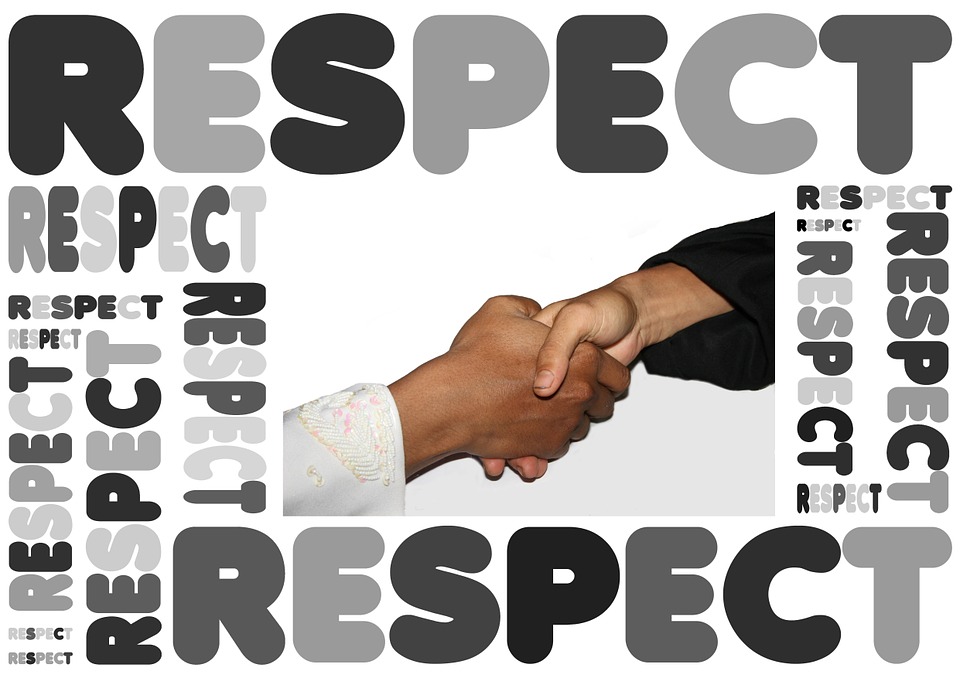
The same can be said for the martial arts, where tradition and ceremony are an integral part of the learning process and where respect is a free-flowing river that goes both ways. Bowing is a good example. What is a bow? In the simplest terms, bowing signifies a number of different things including greeting, affirmative response, gratitude or reverence as well as being a show of respect. In a karate dojo, a student is always expected to bow when entering and exiting the training area and whenever addressing one’s Sensei. Although there may not be another person there to receive that bow, it’s a ceremonial gesture that shows respect.

But what about the Sensei him or herself? Do they automatically deserve your respect? They certainly have authority over matters pertaining to your martial training, but the question is whether or not they should be respected from day one. The simple answer is yes, they should. If for nothing other than their station and as the head of the school, your Sensei should be shown respect from day one. But the kind of in-depth respect or reverence one feels for their Sensei after years of tutelage falls under a slightly different category.

Honestly, students who found themselves unable to show the basic elements of respect within Sensei’s dojos never lasted very long. After all, if you aren’t interested in the traditions and ceremonies that come with karate, go join boxing or MMA. Martial arts may not be for you. But having respect for someone is something that is generally earned by the recipient through gestures, words and actions. It isn’t something that’s automatically given.

This is especially true in the example I provided at the beginning. I’ve had a significant number of supervisors, managers and bosses throughout my life. Some have been good, some have been bad, but all of them had authority over me in some way, shape or form. All of them had my obedience (within reason); only a few have received my respect. This is because only a certain handful have been able to show that their employees and staff mattered and issued directives in the interest of them, instead of in spite of them.

The last important aspect I’ll touch on, is that respect needs to be maintained. Just because someone has gained your respect, doesn’t mean that they’ll keep it indefinitely. Through their words and/or actions, there’s a great deal a person can do to lose your respect. Certainly, the first step towards gaining someone’s respect is by showing respect yourself. But then, if that person hasn’t gained your respect, this can be difficult. It’s a tumultuous back-and-forth process that isn’t easy to navigate. The important thing to remember is to always give respect where it’s due or deserved; never expect it without earning it. ☯

Snitches Get Stitches…

If you saw someone driving erratically on the highway and thought to yourself that this person may be intoxicated, you’d call the authorities. Right? Because that person is a hazard to themselves and others and it’s in the interest of public safety to do so. If you saw someone get assaulted on the street, you’d likely do the same thing. Granted in today’s society, you’d get more people filming it on their phone than helping out, but that’s a different issue.

The irony is that all of these things, assault, driving while impaired and even “little” things like speeding or rolling through a stop sign, are against the law. Statutes and regulations have been put in place to prevent these actions. Not because they’re intended to restrict a person’s freedom but in a way, to ensure it by guaranteeing everyone’s safety; including your own. The same can be said about many of the health measures being implemented by governments in order to try and flatten the COVID-19 curve.

Hell, I’ve even seen people phone the authorities on neighbours because they’re having a loud party and the worst damage is that the person is losing some sleep because of the noise. It doesn’t stop them from calling, nonetheless. The problem is that people only report these incidents when they directly affect them or benefit them. You wouldn’t give two shits about the party happening on the other side of town or the drunk driver travelling on the other side of the Province, despite the results being the same.

In recent times, governments have begun to implement a number of laws, statutes and regulations that limit the number of people in households and certain businesses and make the wearing of non-surgical masks mandatory in public places. Since I know that the majority of my readers aren’t from Saskatchewan, I haven’t bothered to link these laws as they’re different in each country. Hell, in Canada they’re different in each Province, although my Sask readers are welcome to Google “Saskatchewan Public Health Act” if they want confirmed information.

I’ve been extremely disheartened with the reactions and comments that I’ve seen spreading across social media, since the regulations restricting the number of people in a household has been implemented. It seems that with every post that someone writes about a gathering in a household, a commenter will jump on there and indicate that they should be left alone and that people shouldn’t be “snitching” on their neighbours. Yeah. Great. That sounds ideal, but there’s a lot more to it than simply letting the neighbour have their party…

Picture this scenario: a local resident decides to invite a dozen or more of their closest friends to have a small social gathering. Seems like a good idea, right? Moral is low, a lot of people are working remotely from home and don’t have a lot of contact with the outside world and realistically, we’re all supposed to be in this together, right? The resident knowns he or she doesn’t have COVID-19 and has done the “responsible” thing and asked all the invitees not to attend if they have a fever, cough, yada, yada, yada…

One of the big problems, which has been explained ad nauseam in the past year, is that you can be carrying the virus without demonstrating any symptoms. You may have it and not even know it. So you’re temperature is fine, you’re not coughing or having difficulty breathing. Great. You head on over to your party and have an awesome time, drinking awesome shooters and maybe even meet a special someone. Fantastic. Then , those invitees all go to their homes and their work and potentially spread the virus on to the people in their surroundings because someone at that gathering wasn’t aware they were carrying the virus.

Maybe you’ve spread it to your family, who has then spread it to their work and in their schools. That results in greater case numbers, more people getting sick, schools closing and potential lives in jeopardy. All because you wanted to have your little party and people think they shouldn’t be phoning in on their neighbours. Does that seem like a bit of a bleak picture? Absolutely, but it’s also the reality. And much like the offences I mentioned in the opening paragraphs, these types of gatherings are not a scenario where “they’re not hurting anybody else,” but a case where they may likely be causing this pandemic to continue on for longer than it needs to. Oh, and it’s illegal. In case no one caught that little detail. IT’S ILLEGAL.

This time of year is particularly hard for people, especially since restrictions mean that we don’t get to see our families over the holidays. I feel that sting better than most, since my parents are in New Brunswick and there’s no realistic chance in hell that I’ll be with them for Christmas. I’m lucky; I have my wife and sons to spend Christmas with. But I’m an only child and my parents are separated due to my father being a care-home resident that’s currently locked down. But besides obeying the law, which all of us should be doing, isn’t sacrificing one Christmas worth it to ensure you may be able to live to see the subsequent ones?

I know that all of this seems restrictive, and as I’ve written on a number of occasions, people don’t like to be told what to do. But the reason this seems to be dragging on is because we loosen our grip too soon, only to have a resurgence of the virus requiring tighter measures. Wouldn’t it make more sense to simply follow regulations and restrictions, let this thing die out so that we can start looking towards the future? Seems to this Buddhist that this would be the path of least suffering. But what do I know? I’m just a short man on a tall soapbox… ☯

yin-yang-1

Help Me Keep This Permanent!

My content may be free and I absolutely love providing it, but my time is not! I’m trying to make a go of it as a full time writer but obviously, everyone needs to get paid for the time they put in. Your donation to this blog can mean the difference between seeing daily content or wondering “whatever happened to The Blogging Buddhist.” Help me keep this permanent. Any small donation helps and will not go unappreciated.

CA$5.00

Previous Experience Required

There’s nothing quite like the experience of seeking out a new career path. It can be exciting and scary, especially if you’ve been at your current job for long enough that you wonder if moving on is ideal or not. Drafting a proper resume, potentially writing a cover letter and submitting it, waiting on pins and needles to see if you’ll be contacted for an interview and then getting through said interview without turning your shirt into a sweat-soaked sponge… But life is nothing if not an adventure, and sometimes you need to throw caution to the wind.

It can also be exceptionally stressful, if the financial safety and well-being of your family depends on said change of career path. Obviously, unless you’re applying for some form of seasonal position, the holidays aren’t the best time to seek out a new job. But the timing of my post doesn’t necessarily coincide with actually seeking out a job; this is simply my soapbox and I intend to stand on it for a few moments.

Now, I’m no expert… No, wait! Yes, I am! I’ve worked most of my adult life being on both sides of the table and have been the interviewer and interviewee. I’ve dealt with the job-hunting environment on many different levels. In fact, if you happen to be job-hunting at the moment you can even check out some tips for interviewing that I provided last September in my post The Answer Is Only Important If You Ask The Right Question. And I can say with firm honesty that one of the most frustrating things to see on any job application, regardless of what side of the table you’re sitting on, is the phrase “previous experience required.”

This can be extremely frustrating because if you’re just starting out and trying to make a name for yourself, the safe bet is you won’t have a great deal of previous experience to provide. It’s like the chicken and the egg; employers want previous experience, but you can’t accumulate that experience until someone hires you and you start working. It can be just as frustrating for an experienced employee, and this is the aspect I’m focusing on today.

So, here’s the scenario: you choose your desired career path. Maybe this requires some training or perhaps you need to obtain some post-secondary education in order to get the job you’re looking for. For the sake of argument, we’ll say that you successfully get that job. For years, you pour your heart and soul into your career, advancing early, networking and making contacts and gathering additional training that makes you even better at the various positions within your organization.

Sounds good, right? Now, let’s assume that you’ve been doing this job for well over a decade and either you start having issues on the job that you can’t accommodate or you simply feel that there’s no longer any growth for you in your current job. You start to look for work in your field, but despite that decade or more of experience, you’re still asked to undergo the same extensive recruitment processes that someone green without experience would be expected to.

This begs the question: what good is having previous experience if potential employers ignore and simply make you jump through ALL the hoops anyway? And should employers be permitted to REQUIRE previous experience if preferential or streamlined recruitment processes aren’t used? I’m doing something different on this post, in that I’d like to hear from you. I’ve included a poll in the next paragraph and if my readers could take the time to answer the question or provide their thoughts in the comments, that’d be great.

There it is! I’ll step off my soapbox and let y’all get on with your day. If you’re out in the job market, best of luck to you. It’s been made all the more difficult to navigate with quarantine measures in place, and I totally feel for anyone actively hunting for a new job right now. Be safe and best of luck. ☯

What Would You Do With Freedom, If You Had It?

Freedom can mean different things to most people. For some, it means “financial” freedom, whereas one has enough money in the bank to be clear of debts and not require employment to survive. For others, it’s simply NOT being locked up or imprisoned. But in general, it means having the ability to act, speak or think without constraint. It’s being able to go where you want, when you want and do what you want. And I think that we can agree that the vast majority of people who live in North America have that freedom, to varying degrees.

I don’t think I really need to point out that 2020 has been an absolute shit show for the entire world. In fact, some would argue (myself included) that COVID-19 has acted as an ultimate equalizer, since the virus does not discriminate and can be contracted by anyone of any age, race or gender. But we’ve seen a wider variety of people catch the virus than we would have originally thought possible at the beginning, including politicians, celebrities and the elderly. And the effect is that many if not most people feel and are of the opinion that they are losing their freedoms.

It’s been an increasingly stressful time, especially for those who are separated from those they love. One good example is my mother, with whom I speak to on a weekly basis. Yes, yes, I’m a momma’s boy and call my mother often. I’m also an only child, and father to her only grandchildren. So keeping a positive connection is important, one way or another. My father currently resides in a nursing home, where he’s been for about ten years. He voluntarily placed himself there after it became clear that my mother didn’t have the physical capacity to take care of a 330-pound man in a wheelchair.

For the most part they’ve been able to make it work, with my mother renting a small bachelor’s apartment next door to the nursing home and being with him everyday. Then, along came COVID-19. My father’s nursing home has been locked down ever since, despite the fact that many others in the Province of New Brunswick have reopened their doors (intermittently, depending on the status of their cases). This is an affront to my mother, who compares my father’s residence at the home and her inability to see him to being locked up in a prison.

I may have a bit of a jaded and subjective point of view, but I don’t know many prisons that have hardwood floors, picture windows with a view of the bay and serve customized meals, three days a week. But that’s just me. The sick and elderly are among the most vulnerable, and the choice to keep the care home’s doors closed to the public is a clear result of not wanting to potentially spread the virus to every resident there. The irony is that my mother COULD visit my father. The care home is allowing immediate family to visit on an appointment basis, with restrictions in place allowing for no longer than thirty minutes and requiring social distancing during the visit.

One would think that this would be good news. I would consider it so, since I’m on the other side of the country and can’t see my parents regardless of conditions. But my mother refuses to visit my father in this fashion, feeling that they don’t pay the money that they do to be kept separated from one another. It doesn’t matter that no individual has the right to make the choice for other residents and potentially introduce the virus into their environment. She simply refuses to take advantage of what’s offered because it isn’t what she wants.

Don’t get me wrong, I love my parents and I’m simply using them as the most familiar example I can use. But the point is that when this whole mess started, we all foolishly thought the world was grinding to a halt for 30 to 90 days and then things would go back to normal. Oh, how wrong we were! 9 months later, we’re still dealing with restrictions, imposed mandates and the constant yo-yoing on local and Federal governing agencies opening things up then taking them away again as soon as an outbreak happens.

What’s been the most disheartening, is people’s reaction to doing what’s necessary. A blanket attitude of basically not giving a shit has gripped society by the gonads and seems to be keeping a firm hold. People still balk at the very notion of wearing a face mask. I’ve fallen down many a YouTube hole where people have claimed and tried to get out of wearing masks in public places because of medical conditions, despite health professionals publicly declaring that the only conditions that would make wearing a mask impossible would be so severe that the patient wouldn’t be out and about. Customer limits and home school requirements, social distancing and the inevitable folding of privately owned businesses… I wasn’t kidding when I said that 2020 has been a shit show.

The problem is that people hate to be told what to do. You can take a family that’s financially poor, struggles to make rent and has to swallow their pride and accept charity, access food banks and hand-me-down clothing and they’ll do what’s necessary. But tell them they must lawfully wear a face mask while during their weekly Walmart run and all hell breaks loose. Like I said, COVID-19 has been, among other things, the great equalizer.

For my family, it hasn’t changed a great deal of much. My employer has had me at home for almost two years now and my wife works from home. The only significant change was this week, when my son began remote learning due to an outbreak in our local schools. My wife and I weren’t happy about the change, but we complied and adapted as it was necessary to continue my son’s education. But otherwise, the bills get paid, there’s food on the table and we’re taking advantage of being able to spend so much time together.

For those who chose to complain about the government, mask and isolation requirements, consider the following OBVIOUS facts: If this were all a conspiracy on behalf of the government, I’m sure they would chose a much better method of control than making someone wear a paper-thin mask on their face. Things may seem bleak now, but it will only be through the passing of this virus that any of us can hope to experience a normal life again. ☯

yin-yang-4

Help Me To Keep This Permanent!

My content may be free and I absolutely love providing it, but my time is not! I’m trying to make a go of it as a full time writer but obviously, everyone needs to get paid for the time they put in. Your donation to this blog can mean the difference between seeing daily content or wondering “whatever happened to The Blogging Buddhist.” Help me keep this permanent. Any small donation helps and will not go unappreciated.

CA$5.00

Rules Are Meant To Be Followed

What are rules? Webster’s Dictionary defines “rules” as “a prescribed guide for conduct or action.” This prescribed guide is usually written, developed, implemented and enforced by some governing body or agency. Our modern society has a lot of rules, usually delivered in the form of regulations and/or laws. But from the simplest rules, such as “stay off the grass,” to higher laws that have been around forever, such as “thou shalt not kill,” people always seem inclined to break the rules. And why is that? Rules and laws are in place for a reason. There is a purpose behind them and without them, society would fall into total anarchy.

Just to be clear, I’m not innocent of this rebellious nature. In fact, no one is. I haven’t met a motorist yet who hasn’t at some point broken traffic laws. Just about everyone I know has dropped a piece of litter on the ground and opted not to pick it up. While the safe majority of actions people perform are not intended to be harmful and don’t result in anything nefarious, we usually live out our lives from week to week, breaking several rules without even noticing.

So, why do people break the rules? And what happens when those bent or broken rules begin to affect others? One good example I can give is a FaceBook post I recently read, that was shared by a friend of a friend. I don’t keep much of a FaceBook profile these days, so I’m unable to share the exact post or image. But as the post went, a friend shared a meme showing a twined highway where a motorist in the left lane was driving at the same speed as a slower motorist in the right lane, thereby illegally slowing down all the upcoming motorists who intended to overtake the slower vehicles.

In Canada, every individual Province has its own legislature and statutes related to the operation of a motor vehicle and/or one’s behaviour while doing so. In Saskatchewan specifically, slower vehicles are generally intended to stay in the right lane except to pass. This allows the faster-travelling vehicles to get by and is entirely the reason behind double and triple-laned highways. It allows for a smoother flow of traffic.

The meme my friend shared essentially provided a message of how wrong it was to perform this action and hinder traffic. And there are Provincial laws and statutes that make this “not okay.” But a mutual friend who commented on the post made a point of commenting how if he felt that someone was aggressively approaching behind him, he usually makes a point of slowing down in the left lane next to a slower vehicle to hinder these aggressive drivers. Oh, great. So what you’re saying is you violate a few traffic laws in order to satisfy your own inappropriate form of self-justice, which helps no one and could potentially cause a collision? Good on you, bro! Great flex!

I’m being sarcastic, in case no one gets that. Besides the illegality of that action, everyone has a story and there’s no way to know the story of motorists coming up behind this person. Maybe they’re late for work. Maybe a spouse is in labour at the hospital or a loved-one is injured or in danger. You don’t know. And now you’re being an asshole and holding them up just to make a point that not only will they not get but isn’t yours to make. This ties in to that whole “there’s suffering in the world” thing that Buddhist tend to harp about and the fact that suffering is usually caused by humanity.

This is just one example, and I’ll admit I got a little long-winded with it. But it serves to illustrate that many people find it okay to break the rules, so long as they can justify it in their minds. Rationalization of one’s personal actions are often used to get away with petty things, especially when the person believes they won’t get caught. Even though the majority of people don’t inherently mean to do wrong, the fact that they won’t get caught in the act often makes it all the more easy to do.

For others, it can be the fact that some people get something akin to a “cheater’s high” from breaking the rules and it can also provide a sense of freedom. After all, as humans, we usually don’t like to be told what to do. Even the most timid of people feel stifled and restrained by having to obey the rules. Try to interrupt my daily routine by telling me I can’t do a particular thing or go to a particular place and you’ll likely get a taste of my dark side, so I totally understand the impulse. But rules are still in place for a reason, often for the safety and security of society and should be obeyed accordingly. ☯