Is This Thing Even On???

You know, it dawns on me that I’ve been writing in some given way, shape or form since I was a child. In fact, my mother recently discovered a short story I had written and given to her when I was about ten years old. It was about 32 pages long and contained a story set in the far future involving cyborgs and fighting for freedom. Not bad, for a ten year old. I didn’t think anything of it and just wrote it for fun.

Through junior high and high school, I toted around a 300-page spiral notebook in which I spent class writing an exciting story about a subterranean world that was run by children. Think “Lord of the Flies” meets “Journey to the Centre of the Earth.” In fact, I had a childhood friend who used to read a chapter at a time as I wrote it. Despite getting caught by a number of teachers, they usually encouraged my writing and were supportive of it; albeit not in class. I ended up giving my friend the notebook prior to graduation when the story was finished. All things considered, I wish I had kept it.

But those things have always kept a fire lit within me to write. Even my chosen career has seen me develop the ability to research, take comprehensive notes and write explicit and detailed reports that would be used for legal and court matters. This is one of the reasons why, when things at work went awry and I got sent home (where I sit idle, to this day) I wanted to find a way to continue to maintain those writings skills, that ability to research and provide explicit and detailed writing. The end result is this blog.

I wasn’t sure what would come of it, when I started. I wanted to write about something I knew, hence the Buddhism, Karate and Diabetes aspects. If I’m being honest, I didn’t assume I would grow a readership and was simply writing for the hell of it to increase the above-mentioned skills. But as my posts became longer and more intricate, I started to realize that there was a significant level of satisfaction and gratification to seeing the number of views and likes I would receive on a given post.

Given that I’ve been a blogger for over two years now, I look back and recognize that some of my posts have been funny, informative, occasionally inappropriate and sometimes bordering on rude. But I’ve built myself up to almost 300 followers, which I consider to be amazing. I wouldn’t have assumed that this many people would take an interest in what I write. I’ve also had the opportunity to meet and communicate with people from around the world in a way I likely wouldn’t have, if I hadn’t started this blog.

Where am I going with this? Well, I’ve worked pretty hard at making all of this work. I research most things I write about and maintain reputable sources, usually citing them in the actual posts. I spend hours at a time in front of a keyboard, editing and changing until I feel it reads well. I recently started a YouTube channel related to this blog, where I can discuss topics that maybe don’t REQUIRE research and I can just pour out my thoughts. I’ve even overcome my personal dislike of mainstream social media and The Blogging Buddhist has its own Facebook page.

I consider one of the advantages of the current pandemic (if there really IS any advantage) is the fact that I’m home and can contribute all this time and effort to writing the posts I do. The flip side of it, is that I’ve been assuming that the pandemic has freed people up to READ as much of my blog as I write. But this doesn’t seem to be the case. On average, I get about a dozen people who read my posts on a given day. That’s less than 5% of my viewership. I’ve aired almost a dozen videos, with more in the planning stage and being edited but I only have 4 subscribers to my YouTube channel. And both of those are linked and cross-posted to the Facebook page on a daily basis.

Honestly, it’s been difficult to see other blogs and webpages that basically have nothing to them, with thousands upon thousands of followers. I don’t like admitting to jealousy and I dislike the thought of jealousy even more than admitting to it, but it can’t help but rear its ugly head in this situation. There’s a blogger out there who writes ABOUT blogging. That’s it. And the irony is that every few months, this writer basically repeats donation requests through PayPal to the point where it constitutes begging, because he doesn’t hold a traditional job and needs money to feed himself. Somehow this joker has almost 36,000 followers.

Everyone has their own journey to take, and I would never try to take away from the reason a person has for writing. It just irks me when you have someone working so hard on the one side while having someone who basically phones it in on the other, and the latter has over a hundred times the amount of followers. This is where some uncharacteristic bitterness comes in. I’m sure I’ll center myself and let it go, but sometimes you gotta vent. Am I right?

At the risk of making this post way longer than I intended it to, I bring all of this up for a reason. The reason is because today marks the 365th post in a row without missing a single day. This means that I’ve been posting daily content for literally a full calendar year, without missing a beat. I consider this to be a personal goal that I’ve achieved, and one that I’m happy with. At the end of the day, I write because I want to maintain my skills and share the information I’ve gathered over the course of my chaotic life. And because I love it. That’s got to be the most important reason. When the day comes that I no longer enjoy researching and writing on these topics, that will be the day I shut down The Blogging Buddhist permanently. Until then, I’ll just have to keep plugging away at it. One post at a time. Keep reading, folks! ☯

Well Then, Maybe YOU Want To Be The Doctor…

Being diagnosed as Type-1 Diabetic at the tender age of 4, I’ve had the benefit and burden of surviving my childhood with a plethora of different doctors, specialists and all-around know-it-alls who love the sound of their own voices and providing unsolicited opinions. But i would be lying if I said that I didn’t owe my survival through said childhood as a result of those medical professionals. During my childhood, my parents lacked the education, resources and information to provide the level of care that was required to help a small child survive Type-1 Diabetes. I mean, they did the best they could with what they had. But there’s no doubt I’d be dead by now if not for the care and advice from the many doctors I’ve had over the years.

But one thing that’s grated on my nerves in recent decades, is the use and aversion to Dr. Google. Y’all know Dr. Google, right? It’s a pretty common practice that people have where they look up their symptoms online and make clinical decisions for their health based on what they’ve found. I don’t need to tell you that this can be an extremely dangerous practice and I certainly don’t recommend it. That being said, there’s a growing number of reputable, peer-reviewed sites that can lend some invaluable information when the situation doesn’t allow for an 8-hour hospital visit or a doctor’s office visit that would likely only be scheduled months down the road.

Such sites can include some of my favourites like WebMD, Healthline.com and the Mayo Clinic’s website. One good example of this is when my wife successfully identified our son’s tendency to soil himself as Encopresis, a condition in children where bowel movements are painful so they hold it in to avoid said pain, resulting in clogged fecal matter that needs to be softened and passed through increased fiber and water intake. (Notice that I used the Mayo Clinic’s page to define Encopresis)

We didn’t just blindly accept the condition as what was happening but the information we gained gave us the ability to ask Nathan the right questions and, as a result, lead to an at-home treatment the ultimately cured the condition. Otherwise, we might have been looking at doctors’ appointments, tests, invasive probes and attempted prescriptions over days and perhaps weeks, for a simple condition my wife was able to identify in one afternoon of reasonable and proper research.

But most doctors despise this practice and not only frown on it but will directly berate patients when they hear that they’ve “checked online” in relation to something medical. One good example comes to mind from the early 2000’s when I was totally and completely exhausted, regardless of sleep. I was always dizzy, had bad headaches and my body and joints ached constantly. Although the internet wasn’t quite what it is now, I was able to research some information and found a condition referred to as Chronic Fatigue Syndrome. Based on my symptoms and the possible causes of this condition, it was recommended I see a doctor. Which I did. Then I explained. And spent the next twenty minutes being lectured on the fact that HE was the doctor and HE’d decide what my diagnosis is.

In a way, I get it. Doctors and medical professionals spend years, huge amounts of money as well as personal commitment and sacrifice to become the professionals that they are. I can understand that it would come as a slap in the face to have Joe Everyday walk into your office and tell YOU what the diagnosis is, before you’ve even had a chance to examine them. It would be like a white belt starting at my dojo and trying to tell ME how to punch or kick because they saw Van Damme do it differently.

The problem is that Chronic Fatigue Syndrome usually passes within a few months and can occur without warning or reason. There are risk factors and possible reasons, but nothing proven. I was basically ignored and sent home with the recommendation to “get some sleep,” despite my explanation that sleep wasn’t rejuvenating me. And there lies the issue: hospital and clinic wait times have just as much effect on the medical staff as they do on the patients. Doctors often double book and have to hustle patients through as quickly as they can, without having proper time to evaluate and diagnose what may be wrong.

On the flip side of things, we have those peer-reviewed sites I mentioned. You know, the ones written by doctors then reviewed and confirmed by other doctors? It’s not a good thing when a patient assumes to KNOW what’s wrong based on a few web searches. But by the same token, it’s also wrong for a doctor to dismiss a patients questions and concerns BECAUSE their information originated from the internet. After all, it’s fuckin’ 2021, people! I’ve heard multiple responses from doctors including, but not limited to:

  • “Would you like to be the doctor or would you like to let me do my job…?”
  • “Oh, you checked online?! I guess you have all the answers, then…”
  • “People need to stop risking their health by depending on the internet!”
  • “I’ll decide on that, thank you very much!” (usually before they’ve even heard my concerns)

There are many more, but online everything is the way of the world. Although skilled and likely cranky due to debt, doctors need to understand that provided information mixed with the patients genuine concerns shouldn’t be dismissed or taken lightly. After all, if you could diagnose and heal a patient in days using shared information rather than weeks, wouldn’t that be a good thing? Work smarter not harder, right?

I’ve been pretty lucky that such encounters have usually been the result of clinic or on-call doctors and not my usual family practitioners or specialists. But if you choose to use the world’s information to help in your medical care, be prepared to stand your ground and deal with some of the more judgmental and touchy doctors that are out there. This shouldn’t discourage you from doing research and looking at what may be causing a particular ailment, so long as you use common sense and call 911 if you’re bleeding or are suffering an immediate emergency. The internet can only do so much… ☯

Don’t Judge A Baseball Bat By The Matted Hair…

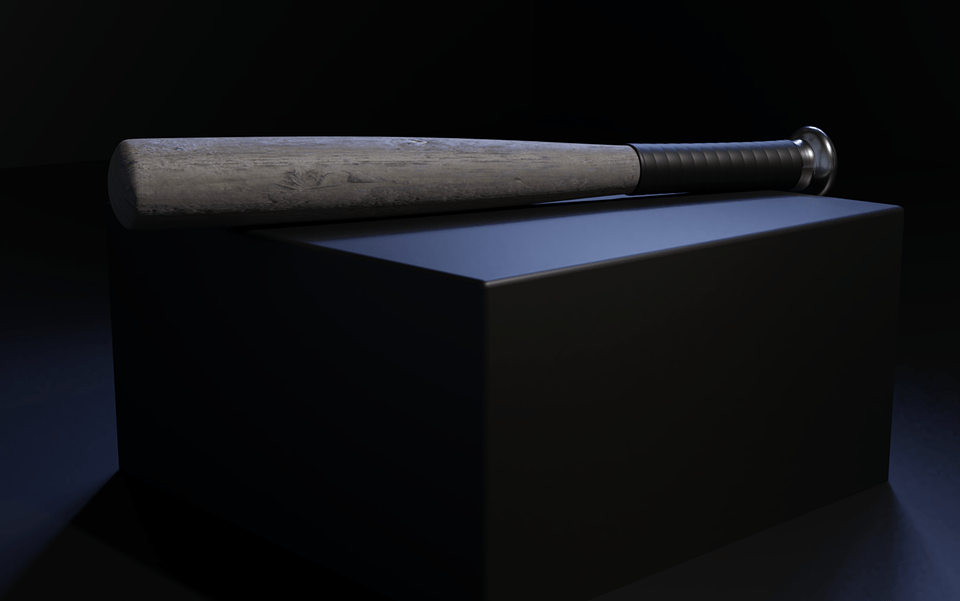
For years, I’ve heard an old adage that says if you’re going to carry a baseball bat in your car for protection, be certain to include some balls and a baseball glove; your lawyer will thank you. The implication there is that the inclusion of balls and a glove will potentially show your intention to use the equipment for their intended purpose as opposed to as a weapon. It’s always made me smile a little when I’ve heard or read it, because my thinking is the SITUATION should dictate if you’re justified, not the tableau that you create around an item you potentially intend to use as a weapon.

The use of weapons is a thing as old as humanity itself, from our ancestors’ humble beginnings with a wooden stick or club to the shiny ol’ red button that world leaders press to annihilate countries. I don’t think it’s a “red button,” actually. I think that’s just something that’s portrayed in the movies. But my point is that humanity has always used weapons in some way, shape and form. And a weapon may be an important tool for one’s self-defence, depending on the situation.

A lot of people think that a weapon needs to be something structured and specific. The baseball bat analogy is a great one because, a bat is intended as an implement for sport. Its use as a weapon is incidental. Or at least it should be. I know some people keep a bat SPECIFICALLY as a weapon. The reason I bring this up is because I’ve often heard people say that a weapons-based martial art is basically useless because you’ll rarely be caught walking around with a sword or a staff. The weapons one trains with won’t usually be readily available.

Depending on where you live and what specific laws outline, it can cause a delicate situation if someone breaks into your house and you’ve run them through with a samurai sword. But setting the legalities aside for a moment, a weapon can be pretty much whatever you put your hands on. Using the example of a sword, I think we can agree that unless you lived in Japan prior to 1868, you’re not walking around carrying a samurai sword nor do you have one readily accessible in your home.

But all the cutting and strike training you take while studying the sword will be just as effective if you manage to wrap your hands around a broom or mop handle and scythe it across your opponent. It won’t gash them open like a sword would but in a self-defence situation, striking with a blade or a stick can potentially yield the same life-saving result. And that’s the important part. That’s the benefit of karate. It’s a weapon all its own and certain movements, blocks and strike are easily transferable to a weapon, should you manage to obtain one in a life threatening situation.

Weapons are a catch-22 because if things get out of hand, they can be taken away from you and used by the very opponent you were defending yourself against. Another great beauty of karate. No one can disarm me of it, so even if I’m empty-handed I always have multiple weapons at my disposal. Obviously, we’re talking about a home invasion or a situation where you believe your life is in imminent danger. One shouldn’t be looking towards the use of a weapon, per se.

Just Because It’s Buffed Doesn’t Mean It’s Nice…

Lifting weights is an important part of health & fitness, even if you’re not necessarily trying to bodybuild. And to be clear, weightlifting and bodybuilding are not one and the same; weightlifting is only one of the activities that a bodybuilder performs in order to build upon themselves, with a score of other important factors at play. I’m certainly no bodybuilder, nor do I aspire to be. I use dumbbells and kettlebells freely, as gaining and maintaining true muscle strength is important in the martial arts and in maintaining the bodily strength required to keep healthy.

And before I go too far into my opinionated rant, let me just say that I have a reasonable amount of admiration for those who are able to sculpt and develop their bodies the way you’d see on a sports network. The old-school Schwarzenegger look may even suit some people, although I find it altogether exaggerated and a bit much. And there’s a significant difference between true strength and bodybuilding. In actual strength training, a person will use the lifting of weight to increase muscle size in order to increase strength, and can use that strength functionally. Bodybuilders are lifting weights solely for the purpose of increasing their size. Although there will be increased strength during the process, it may not be as effective as proper strength training.

The purpose of today’s post isn’t to bash on bodybuilding. As I mentioned earlier, kudos to the folks who are able to sacrifice and work hard towards making their bodies the way they want them to look. Today’s focus is on increasing the mass/size of your body and how it relates to the martial arts and proper health. As it just so happens, being a little too “buff” can have some negative and even detrimental side effects on the human body.

Let’s cover off the martial arts aspect, well… just because! I’ve seen a number of heavily-muscled people walk into the dojo throughout my youth, only to walk out after a few classes. And why do you suppose that is? Well for one thing, increased size will DECREASE your flexibility, mobility and range. You’re stiffer and tend to move much less easier. Just to be clear, I’m referring to people who are REALLY muscled. But in a combat art such as karate, flexibility and mobility are extremely important, for obvious reasons. Are there exceptions to that rule? Absolutely. But the really buff people who still have all the flexibility and mobility are VERY far between.

Speed is another. Your punch may have all the strength of those massive arms behind it, but it means nothing if I can casually avoid your fist because you’re moving like melting butter. The bigger you are, the slower you’ll move. Physics says so. You can only move so fast, as speed equals distance over time. The bigger you are, the more time it takes you to cover the distance, hence slower speed. Picture the difference between a 2-door coupe and an 18-wheeler. It’s easier to achieve a specific speed with the coupe because it takes less time to cover a specific distance due to less weight. There’s your high school physics lesson for tonight. But in the event of a real fight scenario where a person’s wellbeing hangs in the balance, expect that I’ll kick in your knee caps while you’re trying to take a swing. You won’t see it, as your field of vision won’t reach over your massive chest, but you get the idea…

And that’s the other problem is the excess size. You’ll be restricted by your own clothing, for Light’s sake! You’ll have less ability to maneuver in tight spaces, leaving the advantage to the smaller, trained fighter. This is why it’s always been a bit of an issue for me, when people automatically say things like, “Look at how buff that person is. I wouldn’t want to mess with them!” Having big muscles is only one small part of the equation that allows you to use them effectively to protect yourself and others.

And now, because I write about Diabetes, let’s discuss how increased muscle mass relates to health. Don’t forget that the bigger the engine, the more fuel is required to operate it. The human body is very much the same way. The bigger you are, the more calories you’ll need to consume to maintain your body on a daily basis. For someone with Type-1 Diabetes, who needs to calculate carbohydrate intake and take insulin dosages accordingly, this can be a significant problem. I’m not saying it can’t be done; I’m saying that finding that proper balance will be all the harder. And you may cause damage in the process, from a Diabetes-standpoint.

The next issue is the toll it takes on the body. Being too muscular is just as bad as being obese. Don’t believe me? Weight is weight, and your skeletal structure doesn’t grow stronger to accommodate your increase in mass. Your bones, organs and vital bodily systems may not be able to accommodate become too buff. Just think of your heart and how much hard it has to work to maintain all the added mass. That’s why bodybuilders will frequently suffer heart and organ issues. Schwarzenegger himself has had heart surgery. That should tell you something.

There’s nothing wrong with increasing one’s muscle mass. In fact, it’s one of those “happy medium” things where lifting weights a few times a week can decrease the chances of cardiac issues while doing it too much will tax your heart. take it with grain of salt. If we’d pay attention to absolutely EVERYTHING that can be harmful, we’d die of worry instead. Ultimately, the point is that muscle mass for strength good/ Muscle mass for size, bad. Especially from the martial arts standpoint. Just for shits and giggles, here’s a commercial from 2011 for Planet Fitness that makes me laugh every time I see it… ☯

This Is NOT The Way…

I started watching the Mandalorian a short while ago, so I have the main character’s catchphrase “this is the way,” somewhat at the forefront of my subconscious. Hence the title, in case you haven’t seen the show. But what I’m referring to with today’s title, is the use of force or violence. As a martial artist, people have a tendency to believe that I can kick ass on a whim and at my leisure. I certainly have the capabilities and training, despite the detail that stating that fact doesn’t make me out to be very humble. But humble I am, and my training doesn’t mean that I’m like an action hero who will clear a pub of multiple opponents simply for the indignity of looking at me the wrong way.

The world is a violent place, and there are many people who will make a point of BEING violent for very little reason. And those reasons are generally bullshit, anyway. As a martial artist, I take pride in the fact that I have the ability to protect myself and my loved ones. As a Buddhist, I abhor the idea that I would ever have to use it. And use it, I have. I have the benefit of the fact that for the majority of my life, my violent encounters have been in the line of duty. This certainly has never done anything to soothe the dislike I’ve felt or the memories I carry of every encounter, but it’s an important factor nonetheless.

Unfortunately, I’ve also had encounters that have taken place in my civilian life. And those have carried just as much weight as the ones that happened on the job, if not more so. How does one who believes in the prospect of a peaceful life but trains in a fighting art deal with such a scenario? Never the same way twice, is the first answer that comes to mind. That’s mostly because no two situations will ever be the same. And no two opponents will ever be the same, either. But there are some pretty common misconceptions, when it comes to defending oneself.

There are many reasons why people fight. In many cases, a person feels that he or she has no choice. It may be a question of ego, personality or even honour. Maybe the person just has a shitty personality, temper or outlook on life. Maybe, just maybe, that person is dealing with something in their lives and that something is the final straw and they’re taking it out on you. But the reality is that none of those reasons qualify. If you make the conscious decision to step up to someone and fight them, you’ve already lost. AND you’re in the wrong.

First, let’s examine the concept of self-defence. The term seems to imply that you need to fight someone else off in order to ensure your safety and well-being. Basically, you’re trying to prevent harm to yourself or another. But here’s the thing: that prevention doesn’t mean that you HAVE to fight. That’s what most people seem to misunderstand. You may eventually reach a “point of no return” where you’ll no longer have a choice than to fight, and I’ll get to that. But there are other steps you can take to defend yourself.

Diffusing the situation is a good one. Never underestimate the power of using your voice. Although it may not always be possible to calmly discuss the matter, especially with some liquored up hothead who thinks you were making googly eyes at his lady (true story). But there will be times when you’ll be able to talk your way out of things. The other good one, is getting up and leaving. And I know some fellow martial artists may disagree with this one, but why stick around? If there’s someone there who wants to do me harm, I sure as hell wouldn’t want to stick around.

Sure, some people may call me coward or chicken, but who cares? Know where I am while they’re calling me that? In the safety of my car or home. Away from harm, without broken bones, bloody appendages or criminal charges pending against me for beating the living fuck out of some asshole. But while we’re on the subject of criminal charges, it’s important to know what your rights are and what the laws may apply to your situation.

In Canada, Section 34 of the Criminal Code reads, “A person is not guilty of an offence if they believe on reasonable grounds that force is being used against them or another person or that a threat of force is being made against them or another person, the act that constitutes the offence is committed for the purpose of defending or protecting themselves or the other person from that use or threat of force and the act committed is reasonable under the circumstances.” Section 34, Criminal Code of Canada.

Those are a lot of fancy words, and you can check out the Section yourself to read the before and after, as it can sometimes lend pertinence. But the layman’s version of it, is that if someone comes at you and you genuinely believe that they mean you harm, you can use force in response as long as it’s for your own defence or the defence of another person. They also refer to it being “reasonable under the circumstances,” which basically means you can’t shoot someone in the chest because they try to punch you. But everything is circumstantial to the totality of the situation.

Patrick Swayze had a great line in his movie Roadhouse where he said, “Nobody ever wins a fight.” Kind of ironic, since the movie is all about being a bouncer in a violent bar. But realistically, there’s no shame in walking away. Unless your life or the life of someone else is on the line, fighting just isn’t worth it. Besides navigating the law, which can be open to interpretation, getting into violent altercations will change you in ways you may not anticipate. Peace is easier. ☯

Sinfully Sweet…

It’s difficult to be a good person. No, let me correct that… It can be exceptionally EASY to be a good person, but society, culture and our own personalities MAKE it difficult to be a good person. I recently read a post by a fellow blogger named Jason Youngman who, if you aren’t doing so already you should follow. He wrote a post entitled Dignity Remains Steadfast where he discusses the nature of vice and it’s vicious effect on people. He ends the post with a comparison that I find extremely fitting where, and I’m paraphrasing here, the sweetness of candy is a slow pleasure that doesn’t show the damage it does until your teeth begin to rot.

It got me to thinking about the nature of vice and how we behave in society, a point which I don’t usually address beyond an immediate situation that may have occurred in my daily life. But that in itself is a form of vice. After all, most people are geared towards living in the immediate moment and don’t usually consider the consequences of what’s to come. And from a Buddhist’s standpoint, I’ve decided it would be a good idea to share my thoughts on this subject with you.

Just to be clear, when I refer to vice, I don’t mean the iron clamping device used by a trade’s person or the nickname given to certain American police units. A vice is what’s referred to as a bad habit, behaviour or character trait that a person may have that is considered wrong by their respective society. That last part is important since depending on where you live and what culture you happen to be a part of, something can be a vice in one culture but not another.

Here’s the reality: no matter who you are or what kind of lifestyle you live, you have vices. Maybe you chew your nails. Maybe you’re a smoker or a drinker. Maybe you tend to judge a book by its cover. These are things that can be considered vices and are negative character aspects that we navigate daily life without usually even acknowledging. This is mostly because we don’t consider them to BE bad habits, even if they may have a negative impact on ourselves or those around us.

Let’s take cigarette smoking as an example, and this is a discussion I’ve had with many a friend who actually smoke. The average smoker (if there really is such a thing) believes that their use of cigarettes is a vice that affects them and only them. It’s not such a bad thing, because they’re not hurting anyone but themselves. Right? Makes sense? Here’s the problem: the eventual health complications caused by your smoking will inevitably lead to a strain on health care systems and your family, especially the if they need to provide care for you when you develop terminal illnesses brought on by your smoking habit.

Further, there’s the pollution aspect from smoking, even if you do it outdoors, the littering from all the cigarette butts left lying around and the financial constraints you’re placing on your household due to the excessive rising costs of cigarettes. I have no idea what the current cost of a pack of cigarette might be at the moment, but I’ve plenty of people complain that it’s a lot. Now, I’m not trying to use my blog as a platform against smoking. To each their own. This post is meant to be about vice, so I’ll move things back in that direction. But smoking is a good example of a common vice that many people partake of.

Another good example is sin. I was raised in a Roman Catholic household. And if I’m being honest, just about everything that someone did was considered a sin in some given way, shape or form. I may be exaggerating to an extent, but it sure felt that way as a child. Now, Catholicism differentiates vice and sin as the habit of sin and an individual morally wrong act, respectively. And they list their seven deadly sins or vices as Pride, Envy, Wrath, Sloth, Avarice, Gluttony and Lust. Does this means that when I shave and pay attention to personal grooming in the morning, that I’m guilty of Pride? If I go out to a buffet dinner with friends, am I indulging in Gluttony? Perhaps.

I use Catholicism as an example, because it’s what I grew up around and it’s familiar. But most organized systems of faith have a list of vice and/or sinful actions that they consider particular. Buddhism does as well, in fact. So if I avoid those seven indulgences, does this mean that I’m free of vice as a Catholic? And do I still have vices from another culture and/or religion’s perspective. This is the problem with vice. It can be insidious and not always noticeable in the every day.

One thought I’ve always had on vice and something I discussed with Jason Youngman, is how does it fit in the perspective of someone who is unaware of it? For example, if a person grew up in a household where there was no faith-based upbringing, are they genuinely guilty of vice? What does sin mean to someone who knows nothing of it? I think that perhaps some vices (not all) may not be viewed as such to certain people, depending on their circumstances. Some vices should just be common sense; rudeness and criminal behaviour should be a given, and every person should know to avoid them, regardless of upbringing, faith or education. But such is what makes these things a vice in the first place: the fact that people don’t acknowledge them as common sense

He made a very good point in stating that regardless of religious or faith-based upbringing, the majority of households will ensure that their children are raised on some level of morality, be it a personal or system-based one. He also pointed out that it’s necessary to acknowledge the consequences of our actions, whether we believe our actions are vice-related or not. From a legality standpoint in Canada, the Criminal Code is pretty clear on the fact that ignorance of the law is no a defence. The same can be said from a moral viewpoint, as well.

This can be easily tied in to Buddhism, as the Four Noble Truths describe that very same thing. Whereas the first Noble Truth explains the existence of suffering in the world, the second Noble truth goes on to explain that we are responsible for that suffering. The third Noble Truth covers the fact that we need to bring an end to this suffering and the fourth Noble Truth explains HOW to do so, which is described as being by following the Noble Eightfold Path.

The Noble Eightfold Path includes Right View, Right Aspiration, Right Speech, Right Action, Right Livelihood, Right Effort, Right Mindfulness and Right Concentration. Through those practices, one can achieve peace and enlightenment, although the latter can be fleeting and difficult to achieve. The point is that one needs to live well in order to contribute to the overall good in the world and help to eliminate suffering.

I could go into detail and describe each of the Eightfold Path, but I think this post has gone on long enough. I want to keep y’all engaged and reading, not using my blog as a substitute for warm milk. The take home lesson here is that we all have vices. We may not always recognize them or acknowledge them as such, but even the smallest ones will have a negative impact if left unchecked. Like the flapping of a butterfly’s wings that eventually cause a ravaging storm on the other side of the world, actions have consequences. ☯

Surviving “Family Week”

If you live in Canada, chances are that your Province uses the third Monday of February as a means of claiming another statutory holiday in order to get a paid day off. I’m sure that’s important to some people but given that my salary doesn’t change regardless of holidays, I could care less. In Saskatchewan as well as a number of other Provinces, It’s referred to as “Family Day.” Setting aside for the moment the fact that if you’re married with children EVERY day is Family Day, the school systems seem to think that it’s appropriate to include a week-long break for kids to add insult to injury.

My opening sentence may catch some people by surprise since most would be inclined to ask, “But Shawn, don’t you WANT a paid day off?” Hey, I love a paid day off as much as the next person, but if you look up Family Day (or Louis Riel Day in Manitoba, Nova Scotia Heritage Day in Nova Scotia and Islander Day on PEI) there are some Provinces that were specifically pressured by their population to name a holiday as well. Some folks just can’t stand it when others have something. But I digress…

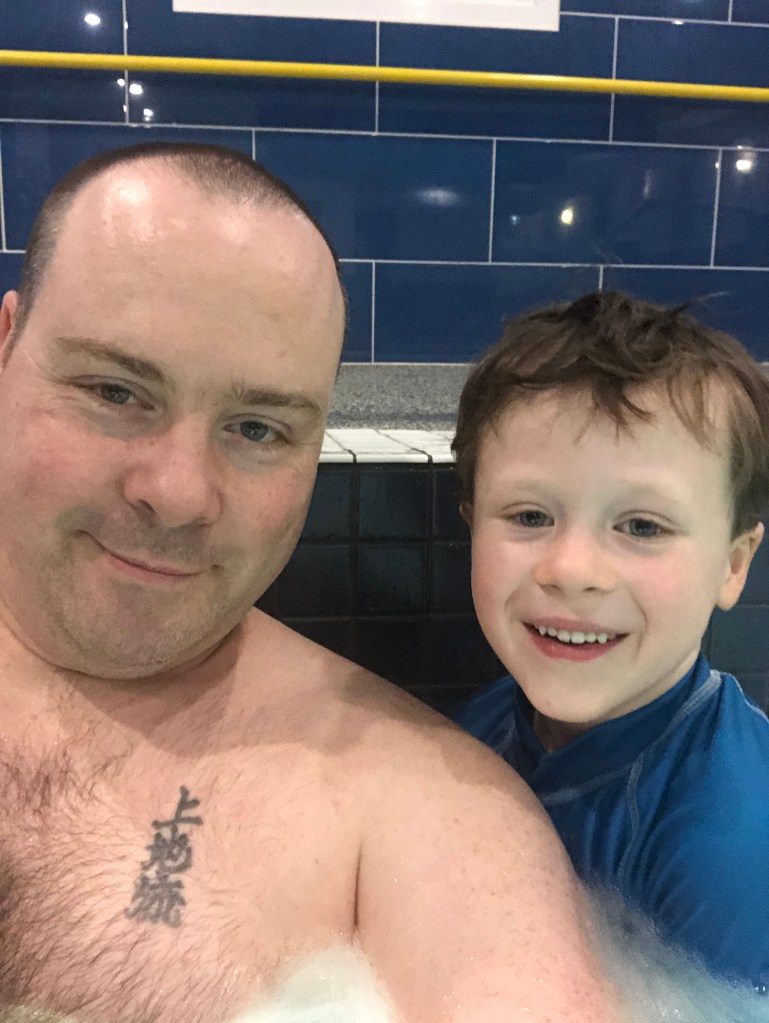
Nathan and I enjoying a whirlpool

Just to be clear, I love my sons and a week off with them at home wouldn’t be a problem if the fates didn’t feel compelled to make a whole bunch of shit happen at once. The week started decently, with Valentine’s Day and a particular family event taking place. Due to restrictions outlining the number of people permitted within a household at once, Nathan and I had the opportunity to spend the night in a hotel room once we were done.

Since we had the chance to see people, eat food outside of home and enjoy the hotel’s swimming pool and whirlpool, Nathan became enamoured with the concept of hotels and seems to be of the opinion that it’s a repeatable holiday. Not to mention he enjoyed having a queen-sized bed all to himself and thinks we should get one for his room. Bloody hell. That was our overnight and the trip back home was reasonably uneventful as well so, no harm, no foul, right? But the rest of the week would turn out to be a bag of smashed ass.

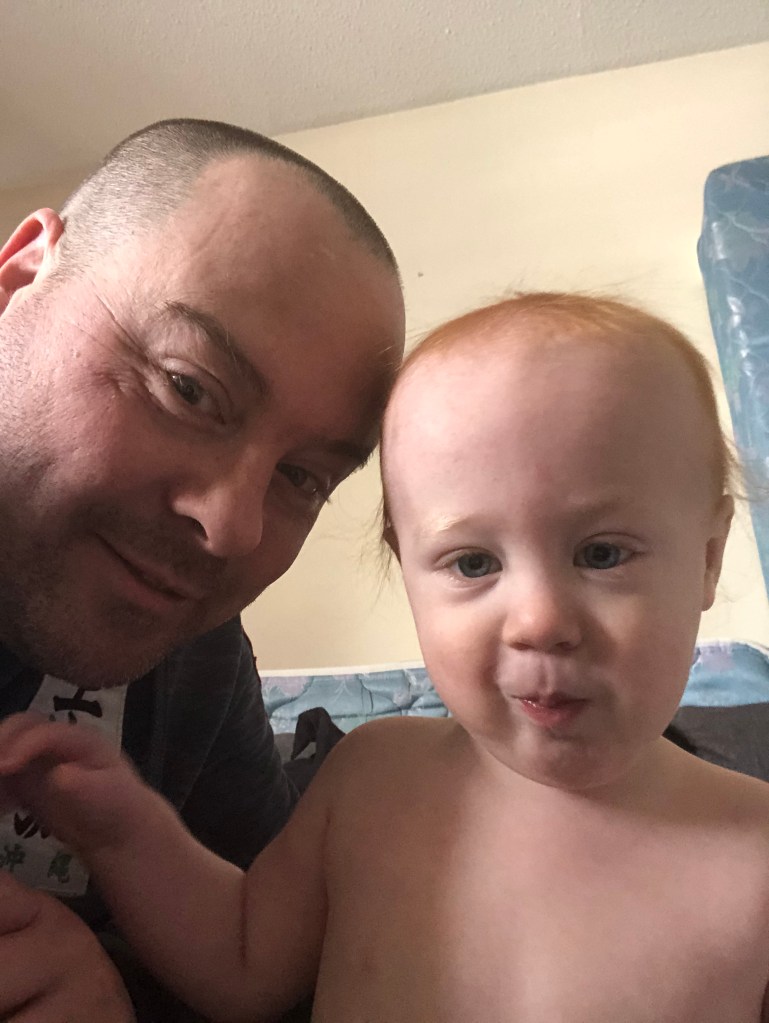
Trying to take a photo with Alex (His right had is reaching for my energy drink).

If this week off happened to take place during ANY other season, it wouldn’t be an issue. I’d be taking Nathan to the park, playing in our backyard, taking walks and hanging out in our garage working on projects of some sort (see my post about building a Makiwara with Nathan). But since the Prairies love to do that whole “freezing weather” thing, there’s little to be done outside the house since it’s too cold for Nathan to be outside for longer than ten minutes or so before his face starts to go numb.

This leaves him inside the house to serve up his usual cocktail of making noise, banging into every object in the house while the baby is napping and effectively training his infant brother to become a destructive dynamo as they both whip through the house, destroying everything in their path while making enough racket to shatter glass. Fun times. Not to mention the fact that Nathan feels compelled to say he’s hungry almost every hour, mostly due to boredom. Sometimes I can sucker him into sitting still long enough to ALMOST get through an entire movie, but that’s usually pretty short-lived.

The boys being goofy together

In the end, a combination of frosty, winter weather, a lack of indoor activities and a hyper-active child made for one hell of a long week. To add insult to injury, Alex seems to have started this thing where he goes to bed at night only to wake up screaming blue murder an hour or two later. He seems to be enjoying a particular period of sleep regression, which is just LOADS of fun for the whole family. That’s fine; I’m sure four hours of sleep per night is more than enough for the average adult in his forties (cue the sarcasm).

Nathan gets another week off in April in combination with the Easter long weekend. I don’t know about y’all, but I sure as hell didn’t get all of this time off school when I was his age. Man, that makes me sound old. But they seem to hand out days off for school kids like it’s tap water. At least the weather should be seasonally warmer by April, allowing for more outdoor activities and fresh air. My wife and I survived the week, although I don’t know if I can say it was unscathed (I can’t seem to stop my left eye from twitching) and I’ve come to appreciate the school system and the fact they seem able to deal with my child, five days a week. ☯

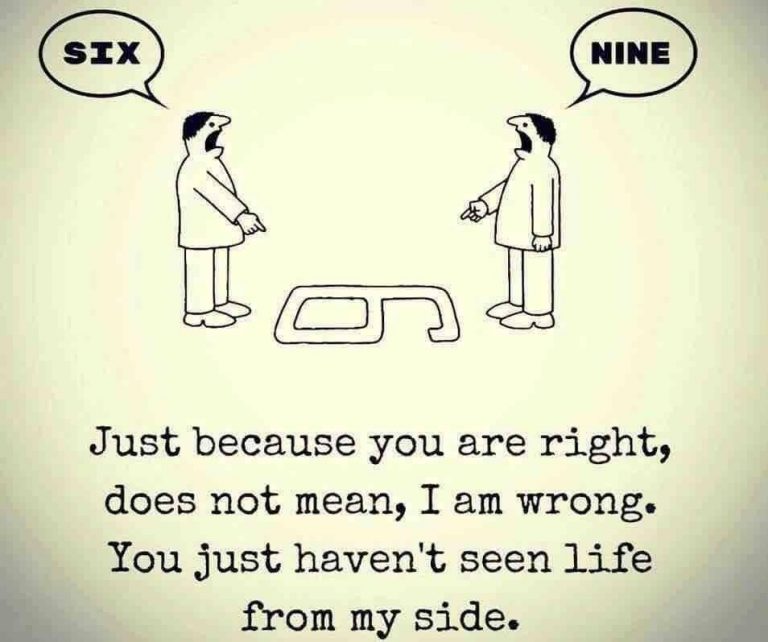
Just Because I’m Wrong Doesn’t Mean You’re Right…

People hate to be wrong. I’m not sure why that is, but it’s a well-documented fact. Maybe it’s the fear of showing weakness in front of others, maybe it’s narcism or self-indulgence. But people flat out hate to be wrong. I’d be lying if I said that I enjoy being wrong, but knowing to accept it when you are is one of life’s big lessons. And for some reason, some will go out of their way to prove that they’re right even when they’re wrong.

Here’s the thing: whether or not you’re right will often be a matter of perspective. And a person’s perspective is very dependent on a number of different factors. One’s upbringing, values and beliefs will all go a very long way to molding a person’s perspective and lead them to where they believe they may be right about something, even when they’re not. It can be very difficult to navigate.

Always remember to be open-minded. Be willing to hear the other side of the story. It can mean the difference between fostering peace and causing unnecessary suffering. Maybe you’ll even learn something along the way. Sensei always used to say, “You have two ears and one mouth. That means you should listen TWICE as much as you talk.” Sound advice. Even if something being put out into the world is right, it doesn’t mean that you’re absolutely wrong.

But when we open ourselves to other perspectives and beliefs, it’s amazing how often it dissolves conflict. Being open-minded isn’t just something that happens on its own. It’s a choice. And a practice. ☯

What To Look For When Joining A Dojo

The decision to join martial arts can involve navigating some pretty choppy waters. And knowing what to look for in order to ensure you’ll get what you want/need out of martial arts can be important. The video below explains what I believe you should be watching out for, when you walk into a dojo for the first time with the intentions of joining. This is not an exhaustive list, by any means. And if any of the martial artists reading this post and watching the video have anything to add, please feel free to include them in the comments. Enjoy!

What To Eat While Travelling

Deciding how to manage your diet while travelling can be a bit tricky. You have your Diabetes to consider, since sitting still for long hours while on the road will affect your blood circulation, insulin sensitivity and blood sugar levels. And the temptation to eat fast-food and easy gas station snack items can be really difficult to resist. This video is a quick blurb on my thoughts related to that very thing! I was “lucky” enough to have my son Nathan as a co-pilot, along for the ride.