After about thirteen years of wearing a uniform, it’s been a blessed change to go to work in a suit every day. A number of my colleagues and coworkers don’t adopt this practice, preferring to spend their work days in more casual attire, including khakis and polo shirts. But I don’t know, I kind of love wearing a suit. When one considers the broad selection of shirts and ties one can choose from, it allows for a certain level of creativity in one’s daily look that can’t be achieved when wearing an issued uniform.
That being said, I’ve noticed an interesting trend in the months that I’ve been in public while wearing a suit. Perception is everything to the average person (if there truly is such a thing as “average”), and I’ve noticed that people’s behaviour and reactions are different around me when I’m walking in public in a suit. People will be quicker to move out of my way, hold doors open for me and address me as “sir.” In some respects, it’s rather nice. In others, it speaks to a blind perception that society has about status and misinterpretation.
I can walk through the same environment wearing faded jeans and my favourite karate jacket and the responses I’ll get will be radically different. This blind perception is interesting, since I was raised that holding the door for someone is a sign of respect and politeness as opposed to being done as a result of believing the person you’re doing it for is of a “higher status” than you.
I call it a blind perception because that person wearing a suit may be on their way to a wedding, funeral or a job interview. Maybe they just like wearing suits. It doesn’t speak to status, wealth or social level like it used to in previous generations. you can still refer to someone as “sir” or “ma’am” as a show of respect and politeness without necessarily thinking they’re “entitled” to it.
I’m not sure where I’m going with today’s post. I think it’s mostly just dumping out my thoughts since it’s something I’ve noticed over recent months. Keep in mind that politeness and general respect for others should be the standard, not the exception. And certainly not dependent on what someone may be wearing or one’s biased perspective. Food for thought…☯️
Given the hectic demands of modern family life, it can be pretty easy to forget that it’s important to take time for yourself. In most cases, we get so tangled up in the requirements of our daily grind that we tend to overlook our own self-care and care of our home. I can relate to how easy that can be. For example, one of the few “benefits,” if they can really be called that, of the pandemic quarantine when everyone was pretty much sequestered to their home, is that I had far more time to do some reading, writing, playing the daily challenges on some games and playing with my kids. With some aspects of society slowly returning to normal, that extra time has disappeared and my ability to self-care seems to have disappeared with it.
Taking breaks and finding the time to relax is important. Because as they say, you can’t help or take care of others until you’ve taken care of yourself. Don’t ask me who “they” are, I have no clue. But this is a very true fact and it applies to work, leisure and family life. If one doesn’t take the time to let one’s head cool, it gets difficult if not altogether impossible to properly manage one’s daily grind and responsibilities.
Work is a great example. Any productive job will be a roller coaster of busy-ness. one week may be pretty tame and you have plenty of time to catch up on things and the next week will feel like the job is literally trying to drive you to drink from all the added pressure. And that’s why, even when it’s busy, you can and SHOULD take time for coffee breaks and step away from the computer. Whether you actually get coffee or not is irrelevant. The act of walking away from your computer or work for even fifteen minutes gives you the opportunity to recharge, get some fresh air and will actually increase one’s productivity.
Some there are and those are they, who are often inclined to believe that taking a break when they’re busy will cause the work to grind to a halt or make things worse. But let’s be realistic, here…. The work will still be there whether you take the break or not. Fifteen minutes won’t make a measurable amount of difference in the workload BUT it may make a measurable difference in your productivity. And that’s where the important difference lies.
The same applies to your home life. Maybe you have work to do at home. Maybe you have a spouse who needs your attention. Maybe you’re a parent and have to help your kids with homework and play with them. It can seem pretty daunting, especially if you work long hours, do shift work or usually end up needing to bring some work home with you. By the time the family meal is done and everything is cleaned up and you’ve squared away the kids, you’re likely too tired to commit yourself to work.
It can be all the more difficult if your life includes anything extra. Let’s use an example like, oh, I don’t know…karate! Although an experienced practitioner can train at home, it stands to reason that most students need to attend class. Finding time to do so with everything I’ve described can be a bit difficult, especially if you know that stuff is piling up and waiting for you. Not to mention that despite the fact that those activities are important to you, your family may not understand and often resent your absence.
That’s why communication is important and integral, in both personal and work circumstances. Most of the time, unless you’re being radically unreasonable, communicating and explaining your needs will go a long way towards helping others understand what you need to take better care of yourself. Once that communication has been achieved, you can work on some self-care, which in turn will help you to better help others.
Although I totally understand that it’s often easier said than done, take your breaks. Indulge in some self care. No matter the time constraints, the workload or the home responsibilities, you owe it not only to yourself but to everyone in your entourage to ensure that you’re refreshed, relaxed and can give them your best you. Working or stressing yourself into an early grave is pointless. After all, you only live once. That we know of…😉 Food for thought…☯️
This is one of those instances where I’m keeping the post short in the interest of simply sharing a little motivation. I found this little paragraph online somewhere and as per usual, I can’t seem to recall where I did. I’m sure one could find it, if one chose to Google and search a bit but I’m more interested in the thought behind it than the source. Here it is…
“You Can Rise Up From Anything. You Can Completely Recreate Yourself. Nothing Is Permanent. You’re Not Stuck. You Have Choices. You Can Think New Thoughts. You Can Learn Something New. You Can Create New Habits. All That Matters Is That You Decide Today And You Never Look Back.”
I like this. It’s simple and concise, straight to the point. It’s shown as “anonymous,” so I honestly don’t know the source, but I think it speaks to the fact that it’s important to remember that life rarely cares about one’s plan. Despite that fact, one can fight and get through just about anything, so long as you give it the effort it deserves. When faced with suffering and adversity, people often give up, throw in the towel and curl into a little ball and cry. Some may even choose to lose themselves in some rather unfortunate indulgences. But these are usually only a temporary escape and never a solution.
We all have it within us to reinvent ourselves. This is not to say that you shouldn’t stick to your guns if you’re happy with who and where you are. But if you’re NOT happy, then you owe it to yourself and to those you love to fight through and make a change. It may be rough waters to navigate, but once you clear it and see the shore, it’ll be a better life. A happier life. Food for thought… ☯️
We live in a world of entitlement. As technology grows and continues to make our lives easier, people have become complacent and demand that more things be provided and done for them instead of doing it themselves. And even when these things ARE done for them, they have a tendency to be displeased no matter what the outcome. If “A” is provided, they’ll demand that “B” be provided as well. Once “A” and “B” have been provided, they’ll complain that providing “C” wasn’t thought of and provided automatically.
If nothing was provided, they’d complain that nothing was. This is a pretty rudimentary and unspecific example, but an accurate portrayal of the direction that society as a whole is taking. Another good example is the meme I recently saw online where someone explained that social media is like comparing apples to oranges and there will always be SOMEONE who gets offended by the comparison and then accuse the writer of being ignorant because they never bothered to mention bananas and pears in their comparison. And all the while, all parties concerned seek validation and entitlement, never understanding that anything in life worth having won’t come without personal sacrifice, cost and effort.
Laziness is insidious and can cause significant damage in one’s life. If I look at myself, as a Diabetic, laziness will cause increased health problems and complications and could potentially lead to death. So, what about those who aren’t Diabetic? Laziness can lead to the same result, albeit maybe a touch slower. As I’ve often written before, the basic formula to a happy, healthy life is threefold. Energy creates life. Life requires movement. Movement promotes energy. You need all three of those factors in a continued cycle in order to live well.
If someone decides to eliminate movement and becomes a couch potato, their energy will become stagnant, they’ll become prone to illness, gain weight, and face a number of physical complications including but not limited to, blood pressure issues, circulatory issues and cardiac issues. Not least of which is the psychological impact that laziness has on a person. One’s mood and overall mental well-being depends on staying active, going to work, spending time outdoors and making a conscious effort.
Where am I going with all of this? Well, besides the aspect of staying healthy, both physically and psychologically, one needs to consider that life owes you nothing. You are entitled to NOTHING. Read that last sentence again, because it’s important. Although I have no illusions of being able to change the entire world’s perspective through a blog post, I think it’s important to acknowledge that life doesn’t care about one’s plan and a big part of one’s personal suffering generally comes from one’s own doing. Or undoing.
Let’s say you’ve been out of work for a period of time, a scenario I feel many people can relate to, considering COVID-19 has sent many people home for a variety of reasons (I miss the days where I didn’t have to reference COVID-19, constantly). Now, you’re in need of a new job. Although there can be some appeal to staying at home and letting your head cool and consider your options, life won’t get better and a job won’t magically land in your lap by staying on the couch watching your favourite re-runs of the Price is Right. The only way to accomplish anything is to shake the laziness off and step out into the light and make it happen for yourself.
I’m a little bit jaded and biased because I’m like a pit bull. When I’m faced with difficulty, I fight like a dying warrior and don’t stop until I’ve reached my goal. But imagine how much further humanity would be if everyone fought this way? Instead of having a sense of entitlement and thinking the world owes you something, step up to life, toe-to-toe and fight it out on your own terms. It may not necessarily mean you’ll succeed, but at least you’ll have the satisfaction of knowing your tried your best. Instead of sitting on the couch crying like an infant. Food for thought…
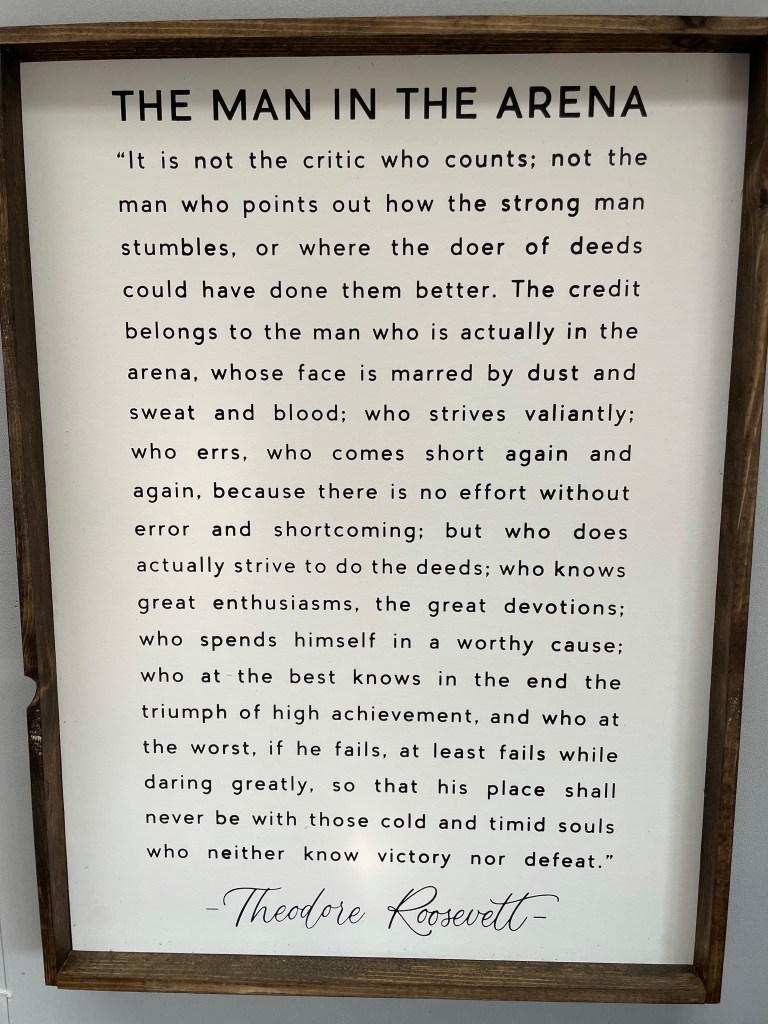
There are always battles to be fought, in life. I’ve always been a proponent that fighting should always be a last resort, but I’ve ALWAYS meant in the context of a physical altercation. The battles we fight in life may be required to make things better. Especially in light of the fact that better things will never happen on their own. You gotta want it. And own it. I recently purchased a wooden-framed quote by Theodore Roosevelt that I find fitting. I’ll share it in the photo below. Good luck! ☯️
I have a great respect for teachers, a respect I wish I had when I was actually a student in school. I remember struggling to stay awake during class and considering a lot of the material boring and unimportant. As I grew into adulthood, I came to appreciate the importance of acquiring knowledge and how important those who were trying to pass it on were to me. As it pertains to karate, teaching is a very specific flavour that not everyone’s palette can appreciate. Myself included.
Having a good teacher is an integral part of a good martial arts journey. Too often, I hear about instructors who are either too violent with their students, refuse to provide certain levels of instruction or coaching or are simply more concerned with showing off their own skills than actually passing on their knowledge. These are all good signs that you’re in an ever-so-lovely “McDojo,” and you should exit, stage left if you ever find yourself in that kind of a teacher/student relationship.
I remember my first experiences with teaching karate. i was still a white belt, albeit a couple of stripes in, and I was tasked with teaching basic movements and the opening of our first forms to students who were starting classes for the first time. It was a fun experience, and it showed me some of the shortcomings and errors I was committing myself. Occasionally, I would been have a student who would recognize something and say, “Isn’t it supposed to be THIS way?” It was good, because it kept me humble and reminded me that there’s always learning to be done, even when it’s something you’ve learned already.
When I started to climb in rank and reached a senior belt level, I enjoyed taking the occasional class when Sensei wasn’t available and I continued to teach beginners and some higher belts as my own knowledge base increased. Teaching beginners was always a good thing, because it provided me with a refresher of my own materials and knowledge, which most martial artists tend to ignore as they climb the ranks. After all, it’s usually way more fun to practice that fancy, complicated kata instead of the basic one you learned as a white belt that essentially looks like you’re walking back and forth, right?
But the ability to teach and impart knowledge is a specific skill; one you don’t necessarily acquire simply by virtue of having “been there, done that.” the ability to impart knowledge is learned skill and a kept skill, but also one that has to be suited to one’s personality and overall abilities. This is a lesson I unfortunately had to learnt he hard way. And that lesson came in the form of teaching a kids’ class. When I graduated to black belt, Sensei approached me and asked if I would be willing to be the new Sensei for a kids’ class. he explained that he was getting increased pressure from some local parents to open one up again, but he simply no longer had the time or motivation to do so. He asked if I would do it, along with his silent assistance in the background.
I have to admit that I was happier than a pig in shit and very much looking forward to being an instructor. A head instructor of my own school, at that. So I got set up, sent out applications to the parents who wanted their kids to learn karate and started taking in students. During that first month, I had over thirty new kids in the class. That first class was reasonably decent, considering the children were reasonably quiet, compliant and following instruction. It helped that it was a new environment for most of them and as most children do, they were shy and withdrawn for those first few classes. then, all hell broke loose…
See, children have this thing they do where, once they get comfortable with an environment, they start getting cheeky and hyper. this is exactly what began happening in my dojo. With every passing class, it almost seemed as though I spent more time telling everyone to settle down and try to calm them to follow instruction than I was actually providing instruction. I also made the mistake of having some classes where i tried to introduce grappling by playing “king of the mat,” which resulted in the kids wanting to do nothing else.
After that first month, the total number of students dropped by half for a variety of normal reasons, including some who decided they didn’t like it, parents who thought tuition was too expensive (good luck finding another karate school that only charges $20/month) or children who had to be gently expulsed from the dojo due to refusal to follow instruction and such. It began to feel like a struggle and I quickly learned that teaching children was not my cup of tea. Within six months, I had approached Sensei and told him I would be stepping down and asked him who my replacement would be. There was none.
It was heartbreaking but I realized that teaching was beginning to take the joy out of karate for me. I didn’t want it to suddenly become something I no longer enjoyed, so despite having no replacement I made the difficult decision to close the doors of my dojo. Some of the slightly older children and the ones who showed proficiency were able to transition into the regular class and some of the parents were pretty miffed, but I closed my first dojo under a year of opening its doors.
Where am I going with this? Well, the lesson today is threefold. First, one needs to recognize that high rank does not make a teacher. It needs to be learned, inherent and wanted. Just because someone has reached the level of black belt (which isn’t the be all, end all BTW) it doesn’t automatically make them an adequate teacher. So the rank doesn’t necessarily come into it, to an extent.
The second point follows on the first, which is that you need to want it. If you start teaching others simply for the prestige of having them call you “Sensei,” then you’re doing it for the wrong reasons. Unlike classic Kung Fu movies where the aged master always retains a few key techniques for himself, true Senseis will teach their students everything they know in the hopes that the student will someday surpass the teacher.
Lastly, be clear on why you want to do it and know your niche. once again, teaching young children wasn’t my thing. I’m unfortunately too used to having structure and discipline in the people I teach to manage the chaos and lack of attention that accompanies most children. It takes a special level of patience. this is why I have the utmost respect for school teachers. When I think of the difficulties I often have trying to teach my 6-year old something important, I weep for the school staff that have to deal with him all week in tandem with a classroom full of his peers. I think they may be the true warriors… ☯️
I usually try to keep calm in most situations. After all, that sort of lines up with the whole Zen thing, right? Most people, when hearing that I study Zen Buddhism, assume that I’m so calm BECAUSE I study Zen Buddhism. The unfortunate reality is that I study Zen Buddhism so that I CAN stay so calm. If you don’t grasp the difference between the two, don’t feel bad. Most people don’t.
That being said, there are times when my ability to acknowledge and manage my emotions and reactions is strained. Emotions are normal. Everyone has them and it would be foolish to think that one can suppress them. Nor should you. But it’s how you REACT to those emotions that defines you and controls who you are. I recently joked with a colleague that I really only have two emotions: anger and sarcasm. I was only joking, but I wasn’t really far off the mark.
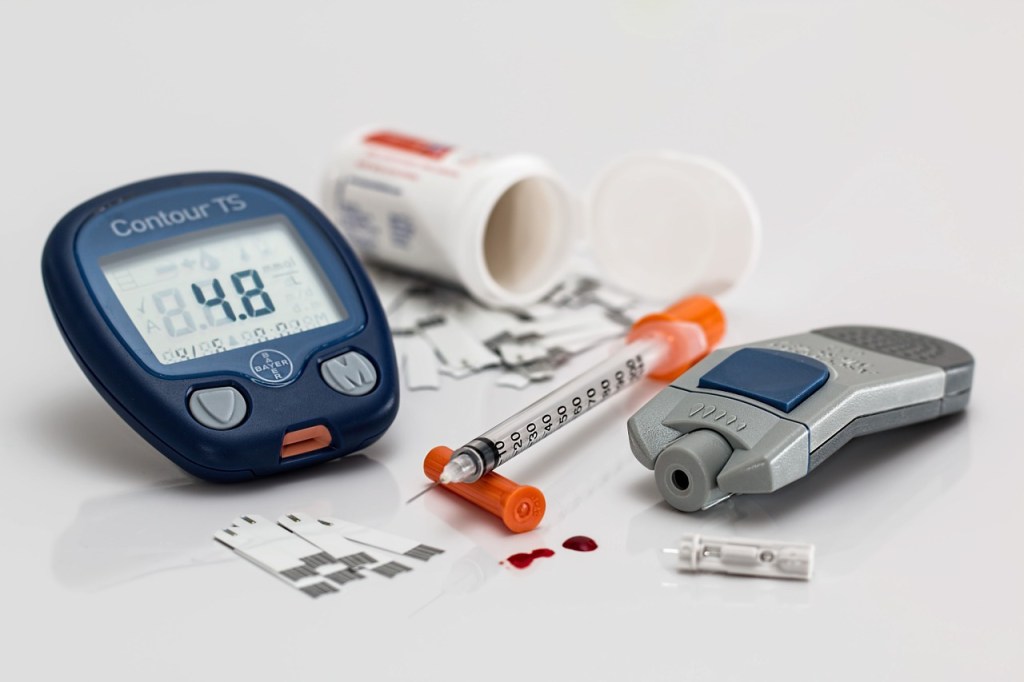
As you may or may not know, I recently started a new job. I’m incredibly happy, the staff are great, my superiors are supportive and the hours can’t be beat. Especially after spending a decade and half doing shift work. And along WITH that job, came medical benefits and coverage. Splendid. I don’t think I need to tell you that medical benefits are almost as important to a Type-1 Diabetic than the salary is. Diabetic and pump supplies are expensive and frequently need to be refilled, making for a heavy financial strain should coverage not be in place.
Not my current pump, FYI
Pump therapy has been an absolute life-saver for me, and has improved my overall control and health in ways I wouldn’t have thought possible without hospitalization mixed with constant, hands-on monitoring. But here’s the thing: it’s expensive as shit! The pump unit alone costs somewhere in the neighbourhood of $7,000 and that’s BEFORE adding in the reservoirs, infusion sets and the actual insulin required by anyone with Type-1.
In fact, when you get right down to it, having Type-1 Diabetes is expensive all around. Between insulin, blood glucose testing equipment and blood strips, lancets, needles, continuous glucose monitoring and any other medications one may need to help or assist in the proper control of one’s Diabetes can not only get costly, it can easily total to over $1,000 per month.
In Canada, we’re reasonably lucky that we have the health care system that we do. Although most people fail to realize that we technically still pay for that health care through the tax system and such. But for the most part, most things are covered, such as yearly eye exams. Under my Provincial health plan, I get a yearly eye exam at no cost. But prescriptions and pump supplies fall under a different batch of bullshit, which is where the need for medical coverage comes in.
When I started my new job last April, I received my coverage card about a month later. I walked into my pharmacy and ordered my required prescriptions and equipment and was pleased to see that everything was covered and paid for. Such as it should be. Diabetes isn’t going anywhere, and neither are the inherent costs of keeping myself alive. If one is provided with medical coverage, then PROVIDE the medical coverage, right? Apparently, not…
Last week, I went into the pharmacy and ordered reservoirs and infusion sets for my pump. Bearing in mind that this equipment comes in at about $400 and I go through a box of each a month, the cost can climb rather quickly. So imagine my surprise when the pharmacy technician walked up to the till and advised me that I had hit my “maximum” and I would have to pay the cost out-of-pocket. Excuse me? What the fuck???
I reached out to my insurance company requesting an explanation since I had been all over my online account and couldn’t find any reference to a maximum, but like most insurance providers, they were slow to respond. When they finally did, they responded with a single sentence reply that indicated that I was only entitled to $1,000 per calendar year for Diabetes equipment.
What does this mean? Is that $1,000 ONLY for the tangible equipment, or doe this apply to insulin and test strips as well? Am I now on the hook for the remainder of the year? Is there a way for me to potentially pay a monthly premium and get an increased limit? You gotta love when an insurance company gives you a generic, one-sentence reply that, although answers the base question, provides no clarity whatsoever.
I recognize that many and perhaps most people don’t have the luxury of medical insurance and often find themselves struggling from month to month in order to obtain the life-saving therapies needed to maintain control over Diabetes. For this reason, I’m extremely grateful for the resources and availability of the things I DO have. But now that life has taken a positive turn and things are looking up, I’m disappointed to find that I now have to make some very important life decisions as they relate to Diabetes. Do I come off pump therapy? Do I eliminate CGM to save on costs?
I shudder to consider going back to a basic version of injection therapy and blood sugar testing. I remember the increased difficulties I faced with my A1C’s and overall health. Some provinces have a 100% coverage for Diabetes in their health plans. I kind of wish Saskatchewan had the same. I somehow find it difficult to understand how this insurance company could actually believe that $1,000 is adequate to cover an entire calendar year of supplies. I guess I’m grateful that it all starts over in just over two months. At least I’ll have a few months of coverage to sort it out in 2022. Just another example of how Diabetes can throw a wrench in life. Not only in a physical and medical way, but a financial one, as well. ☯️
I read a really good post recently about how “movies lie to you.” It covered a variety of things we see in the movies that generally wouldn’t be genuinely possible in real life. Things like drawing a long sword sheathed on your back, gunshots or explosions throwing people across the room or getting that zwing! Sound when drawing a sword from a leather sheath were some of my favourites. It was a pop up story on my Facebook feed, so I unfortunately don’t have a link to share, which sucks because it was a pretty good article. The one thing they brought up that caught my attention was actually something that I’ve written about before: kicks.
Do I study karate? Yes. Yes, I do. Do we practice kicks in karate? Oh, most certainly. But here’s the thing: high-flying or flowery kicks are all but useless in a real fight. Movies and television shows make a pretty good show of having martial artists duke it out with each other and there’s no shortage of kicks and it usually looks all cool and stuff. But all those high-flying kicks can leave you extremely vulnerable and standing on one foot is never a promising endeavour when you’re squaring off against an opponent.
I usually like to think, and I know some of my martial arts counterparts would agree, that any technique has its place. Some techniques are taught and practiced solely for the purpose of increasing flexibility and mobility and to develop that whole thing that if you want to kick to a certain extent, you should train further. But in actual real-world applications, it would never do to try and use a high kick against an opponent.
Not only do high kicks expose your groin and various other areas that one would rather not have struck, even a practitioner who’s trained and or acted certain kicks ad nauseam will find their balance precarious during an actual fight. One can easily make the argument that during training, you’re in a controlled environment where if you do nothing more than block, there are certain safeties in place that’s don’t exist in a real fight. When “fight or flight” kicks in, keeping your balance and composure can be challenging, despite muscle memory.
My style of karate basically includes front kicks, roundhouse kicks and blade kicks with an occasional sprinkling of back kicks. But with the exception of doing it to increase flexibility, all of our kicks are generally focused no higher than the belt line or floating ribs. I’m usually dependent on my hand strikes and blocks, since most real-world scenarios won’t involve a great deal of distance between you and your opponent. And honestly, if there IS that much distance, there would potentially be opportunity for you to simply reposition and walk away. Food for thought… ☯️
Some weeks ago, I sent out a message to a reasonable number fo people with whom I’ve trained in karate for any number of years. People who have had an impact on my journey and who have left a lasting impression. In the previous 5 volumes of these stories, I have shared their thoughts and answers to a few short questions that shed light on what brought them to the martial arts and why they’ve continued or trained in it.
The most important aspect to take away from these stories is the fact that everyone’s answers were different. Why they joined, how long they’ve done it and what they’ve gained or hoped to gain differed significantly from one person to the next and made for some interesting insight into the thought process that goes into the making of a karateka. We had one person who was essentially forced into it, another who joined along, one who wanted to learn self-defence and one who needed it to save his life.
As good as it may be and as fun as it’s been to write about these journeys, what about the ones who didn’t respond? I’ve passed on 5 stories, one of which was mine and I don’t mind sharing that I sent out feelers to over a dozen people. So, what about those who didn’t respond? An interesting phenomenon that I’ve noticed with something like this is very much the same as a previous post I did about wearing karate “swag’ or apparel.
When a person joins karate and are genuinely motivated by it, they’ll talk about it constantly. They’ll wear “karate” shirts and warmup jackets in public. Hell, one of the first things I did in my first month of training was sew my extra school patch on a t-shirt and I wore that thing EVERYWHERE. It also drew some unwanted attention, since it basically broadcasted that I was training in self-defence, but that’s a whole other mess.
My point is that as time passes, so does one’s need to validate what their doing by broadcasting it in this fashion. The same can be said of speaking about it. When I was a young white belt, I couldn’t STOP talking about Uechi Ryu. As I got older and more seasoned in the art, I changed my perspective to simply answering questions if someone asked about it. Nowadays, I don’t generally discuss karate outside the realm of my blog or if I’m actually training somewhere. It seems as though many of my senior counterparts have chosen this path, as well.
in some respects, this is unfortunate and I believe it’s a great loss that we can’t hear their stories as well. For example, although I know some snippets, hearing Sensei’s responses to the questions I posed would have been enlightening. But despite a significant period of time passing and only four questions to answer, many have chosen to remain silent, which I totally respect and understand. This brings the chronicles to a close. Should any of them reach out eventually, or choose to respond after reading this, I’ll certainly be more than happy to add another volume. ☯️
Friendships are important. More so than people realize. Making one’s way through life without peers in whom to confide can be difficult. Some people do it, but even they would need to admit that there’s a significant downside and difficulty to it. It’s almost something that society expects, as well. The old prospect of being an external loner with no friends or family is a bygone concept, and some professional aspects of one’s life may even require friendships.
Ever try applying for a job that requires “personal” references? I’ve applied for jobs that have required ten of them. Imagine, when your known circle of immediate friends doesn’t even extend to ten, how badly you scramble to suddenly contact people you may not have chatted with in years in order to ask if they’d be willing to act as a reference for you? It can leave you feeling embarrassed, even if what friendships you do retain are no one’s business but your own.
Outside the employment arena, friendships are important for a number of reasons. Having friends teaches us how to associate and communicate with others, how to function outside the realm of our own mind and how to act and conform (for lack of a better word) within the boundaries of normal society. Whatever the hell “normal” is, these days.
A small problem that I’ve noticed, especially in recent years, is the sudden disappearance of a good number of people who would easily identify themselves as “friends.” You’ll notice that I refer to “them” as opposed to “us,” because although we can easily tell who we’re friends with or not, some of them may not feel the same. As a child, I can remember having a small circle of peers that I would easily identify as friends. As I got older and our respective personalities evolved and changed, these friends moved on, relationships were altered, old friends went and new friends came. But there were always a small handful who would stick around. Or so it seemed.
I recently read a quote online…. Light knows where I saw it; considering how much time I spend online researching my posts, it’s no surprise that I’d lose track. And I don’t even remember it verbatim but the gist of it is that some people aren’t loyal to you, they’re loyal to their need of you. Once their needs change, so does their loyalty. And this is an unfortunate truth that I’ve learned the hard way, especially in the past few years.
One good example I can think of is a particular friend (and obviously, I’ll omit names) who used to lean on me for all of their personal and professional problems. Never one to turn away a friend, I used to sit for long hours while this friend would vent their problems, fears, concerns and issues to me. I’m definitely not a medical professional and more often than not, I would simply be an ear to listen as opposed to trying to fix the problem.
I’ve never had an issue doing this for any of my friends when they’ve needed it. Hell, I once flew back home to help a close friend in need during one of the most difficult periods in their lives. We’re talking an expensive plane ticket, time away from my wife and kids and time off of work to go and help solve someone else’s problems. I can freely admit that I’m no saint, but one can surely admit that this at the very least falls under the category of a good friend. However, previous and subsequent visits have proven that this friend usually can’t find the means to make an effort to visit ME, despite the fact I may have no vehicle and no means to reach them.
I used the title “Fair Weather Friends” for this post and the literal definition of that term is for a friend who disappears on you when times are difficult. Although I’m referring to friendships in general, a unexpected side effect of the important difficulties I’ve dealt with in recent years have exposed these fair weather friends. The ones who were quick to turn silent once certain difficulties were brought to light. Or the ones who, despite being in close residential proximity, never return the effort that’s made to keep contact with them.
This is why I value the friendship I DO have and the ones that are maintained. The ones where we may not speak for a couple of weeks but then make a point of taking time to communicate and catch up. We stay involved with each other, even when life gets in the way. And we appreciate each other FOR each other; not for what we DO for each other. I still have some of those friendships. I appreciate and value them. You know who you are!
Yes, friendships are important. Social interactions and relationships help us to develop and grow and are an integral part of a person’s life. The important thing is to be cognizant of those fair weather friends and to be sure that you acknowledge and appreciate the important people in your life. Given the state of the world, this is more important than ever. Food for thought…☯️
Everyone likes hearing tales and stories of bravery or knowing someone they consider to be brave. In those situations, most people would utter phrases like, “they’re SO brave…” and “I’d never be able to do THAT! I’d be too afraid…” And the latter is particular, because most people seem to associate bravery with the lack of fear and this is about as incorrect a thought as one could have. Being brave or displaying bravery doesn’t mean that one isn’t afraid. Let’s dive in, shall we?
Let’s start with my preferred habit, which is to define what is is I’m talking about. Merriam-Webster’s dictionary defines “bravery” as, “the quality or state of having or showing mental or moral strength to face danger, fear or difficulty.” A pretty straightforward definition, but I want to point out a certain aspect of that definition that sticks out and digs to root of what I’m getting at today. The definition by no means indicates the absence of fear. It does, however, define it as being strong enough to confront one’s fears. And THAT is the important difference.
To be brave doesn’t mean that you aren’t afraid. fear is a normal and expected response to something that is worrisome, stressful or dangerous. It by no means suggests that if you’re afraid that you can’t be brave. Bravery (or valour) kicks in when you make the decision to confront that danger despite that fear. This can apply to a significant number of aspects of ones life, including work, interpersonal relationships, medical situations… hell, just stepping out the door in the morning. Some folks have something called Agoraphobia, which is the fear of spaces outside the home.
But if one can find it within themselves to do a thing regardless of the fear it incites, this would be bravery. Not the absence of the fear itself but the ability to confront or embrace it. Some good examples I can provide would include in 2015, when I started getting my eye injections. I don’t think I need to explain that the prospect of having someone slide a needle into my eyeball with the intentions of injection a medication into it definitely had my lizard brain saying, “Nope. Not happening. get us the fuck outta here…” Obviously, the prospect of eventually going blind outweighed my fear and I confronted it, and I continue to get these injections every seven to eight weeks.
In the beginning, I had plenty of people commenting and telling me how brave I was for going through that and that they’d never be able to, because they’d be too afraid. Bloody hell, you think I WASN’T afraid??? I sit through something that’s usually reserved as a bad scene out of a horror movie. Of course, I’m afraid. But I confront that fear. The result is that I come out of it with a maintained ability to see clearly, which allows me to do the little everyday things like retain the privilege of operating a motor vehicle and doing my work without special accommodation.
Another good example is testing for black belt. I’ve always trained very hard in karate. I’ve always been confident in my knowledge and abilities in karate. By that logic, testing for black belt shouldn’t have been an issue. But I would be outright lying if I said that I wasn’t scared shitless in the days leading up to the test. But I knew that if I wanted to continue my education in the martial arts that I had to take the added step. The result is that I was able to continue on my martial arts path, start teaching and continue this education, even today.
Granted, the inherent danger associated with those things are passive. Think about a firefighter who rushes into a burning building to save someone trapped inside. Do you think for one second that they aren’t scared? The fear is very real and the danger associated with it is very real, as well. Every time a police officer performs a traffic stop, there’s always a fear that they may be confronting someone violent and dangerous. There’s a CONSTANT fear. But they do it anyway. Now, this is the other end of the stick, of course. But the concept still stands.
Bravery doesn’t mean you aren’t afraid. It simply means that you find the strength within yourself to confront those fears and do it anyway. That’s where you’ll start to notice that you can accomplish far more in life. And you’ll be happier. No one wants to be controlled by their fears. And everyone can be brave. All it takes is the strength to step out that door the first time. And once you do, taking it one step at a time. ☯️







 The Blogging Buddhist