As The Old Saying Goes: It’s Not The Size Of The Hammer, It’s The Nail You’re Throwing It At!!!

When people work out, they tend to go for two major accomplishments: weight loss or mass development. That first one makes sense, to a point. But the second generally applies to the noticeable and well-known muscle groups, such as biceps, triceps, pectoral muscles, deltoids and quadriceps, to name a few.

But a big part of maintaining proper fitness and overall physical health is working the smaller muscle groups that help with your body’s support system and stability. Although these muscle groups aren’t directly used during weight lifting or intense physical activity, they do help to keep your body steady and stable during those particular activities.

As age has started its slow disassembly of my very soul (a bit dramatic, but bear with me!), I’ve started to notice certain pains in my body that don’t seem to go away. I’m a big fan of chiropractic medicine and massage therapy, but what do you do when those forms of treatment no longer help with the little aches and pains? Well, the little things can grow into something bigger over time!
According to an article published by Men’s Health, there are a number of muscle groups you should be focusing your attention on, in order to avoid some long term issues. And here they are:

Your rotator cuffs: This muscle group is responsible for the mobility of your shoulder joint and helps with mobility and movements that involve raising your arm over your head. The article indicates that most athletes unfortunately don’t train to repair this muscle group until it becomes injured.

Erector Spinae: Before y’all start making jokes about the name, this muscle group is built around the lower and mid back. Even though most weight lifters focus on building the upper back, this muscle group is very much responsible for support and posture.

Gluteus Minimus and Medius: Hey, I’m all for building that booty! But it ain’t all gluteus maximus! They’re the muscle groups responsible for pelvic support and stabilization while you’re busy building booty gains. Did I say it enough? Booty! There! Moving on…

Tibialis Anterior: This muscle is responsible for walking, running and sprinting. I remember getting shin splints during my basic training and cursing the fact that I had never taken the time to build these bad boys up.

Obliques: Listen, I’ve written about the issues surrounding the development of a six-pack in a previous post. I’m all about the strong hara, so I don’t focus much beyond a strong core as opposed to a sculpted middle. That being said, this is a muscle group often neglected, even by those looking to pose for an ab sculpt infomercial. They typically cross the rib cage and work towards keeping you upright.

Hamstrings: This muscle group is important as an opposing, balancing group to your quadricep. Underdevelopment of the hamstrings can result in an imbalance that can lead to knee injury.

Forearm Extensors: This muscle group is used for gripping. As in, every time you pick up dumbbells. So if these muscles groups are ignored, it sort of makes it hard to work on free weights.

For a list of possible exercises to develop all the muscle groups I’ve mentioned, you can read the Men’s Journal artilcle at https://www.mensjournal.com/health-fitness/7-muscles-everyone-ignores/

Just remember that while you’re busy sculpting your arms to get all “Arnold-esque”, be sure to pay some attention to those smaller muscle groups who are the underdogs of your body’s posture and stability. ☯

Do Unto Others, Because They’ll Likely Do Unto You…

Given my personal and spiritual beliefs, coupled with the state of the world, I often have difficulties consolidating my understanding of the world’s apparent increased oversensitivity. Although I believe we should all treat each other well, the world has become a place where everyone is offended at the smallest thing.

As a people, when someone does something to wrong us we feel compelled to act or react. Sometimes this reaction can have adverse or negative effects; not only on the person we seek to react against. This brings us to contemplate the difference between seeking justice against those who have wronged us and getting revenge. Where is the line? What is the difference?

Justice is defined as bringing a “just behaviour or treatment” against another. Although normally used in the scope of upholding laws, it basically means a fairness, focusing on impartiality and objectivity. The whole point of justice is to make things right, all the while maintaining the right.

Justice is meant to be blind.

Revenge is defined as “the action of inflicting hurt or harm on someone for an injury or wrong suffered at their hands.” This one provides more of an opportunity to obtain retaliation; since they hurt me, I’ll hurt them!

Both of these options allow for a repayment of a wrong done to us, but one creates more of an extreme than the other. Is one really better than the other?

The reason justice is blind is because is allows for the wrong to be righted with objectivity and impartiality. Meanwhile, revenge is mostly about making one feel better by causing harm on another. Revenge may make us feel better (although it plays hell with one’s karma) but justice allows for an actual repayment of said wrong. And even though revenge may feel as though the scales are being balanced, the cost is often far too high for the payback.

This is a difficult concept to explain to someone who, for example has been personally attacked or has had a loved one attacked. When extreme violence is inflicted upon us, as animals, our instincts dictate that we fight back. At least in most cases (fight or flight syndrome).

So, what about someone’s direct or indirect actions cause a general hardship in one’s life? For example, a person who speaks untruthful words that upset the balance and harmony of another person’s life or perhaps destroys their current WAY of life. How does one seek justice when everyone else’s eyes are on you as opposed to the person who caused the damage? Does it become acceptable to seek out some form of revenge on this person?

A lot of this is speculation, some of it is based on recent events within my own life. However, it’s important to remember that both these things, justice and revenge, have their place in the world. Although the first is generally more widely accepted and appropriate, the latter can often be the only way to truly obtain justice.

The important lesson for all of us is that no matter which avenue is pursued, all of it is for naught is it isn’t combined with forgiveness. Even before justice is served or revenge is obtained, being able to forgive the person who has wronged us is an important first step in ensuring our well-being. ☯

Testosterone, It’s Not Just For Action Heroes…

I’m sure most of you have heard of testosterone. It’s a hormone secreted within the body that many people attribute in derogatory ways.

“Wow, that guy has WAY too much testosterone…”

But how important is it? Although most people assume it’s a male hormone, it’s actually produced by both genders. It’s simply produced in larger amounts in men. It affects their appearance, helps build muscle and bone as well as sexual development and drive. Kind of important overall, right?

A man’s testosterone levels start being affected and drop after the age of 30. Doesn’t seem like a very advanced age, but that’s when it STARTS to decline. And problematically, low testosterone can cause a host of health issues within men.

Erectile Dysfunction! There, now that I’ve thrown the words out, we can discuss them openly. True enough, there’s always been a bit of a stigma with men discussing this issue, but it’s one of the top problems caused by lower levels of testosterone. Once your testosterone levels drop, it can cause a decrease in sex drive.

According to an article written in “Medical News Today”, roughly 1 in every 50 men are diagnosed with low testosterone levels. Besides the condition named above, this can cause hair loss, reduced bone density and muscle mass, difficulty sleeping, low energy levels, changes in mood and potential weight gain.

If it becomes a noticeable problem, you should obviously discuss it with your family practitioner. That being said, you shouldn’t assume it’s low testosterone levels WITHOUT a doctor’s diagnosis. The problem these days is that many doctors are, for some reason, reluctant to test for testosterone level deficiencies.

But if you suspect it and can get a diagnosis, there are ways to treat it. There are a number of dietary changes that can hep middle boost testosterone levels and help alleviate symptoms. A lot of them involve eating nutrient-rich foods.

If this doesn’t help, doctors can prescribe testosterone replacement therapy, which can be administered in a number of different ways. You can start seeing a difference within weeks of starting said therapies.

An important factor to keep in mind is that a man’s levels will lower slightly with time and age, and this isn’t what poses the issue. There has to be a significant drop for the symptoms to kick in. A normal drop won’t cause the aforementioned issues.

Some drops in levels will be caused by pre-existing conditions, and some of the symptoms will exist without an actual drop in levels. A little bit confusing? I would say so, but the takeaway is that communicating and discussing with medical professionals becomes important. And if you happen to hit a physician who shies aways from wanting to test for it, don’t hesitate to get a second opinion. ☯

Equality Loses Its Meaning If You Try To Punish Each Other…

There has been a fair amount of press recently surrounding a certain celebrity who has been speaking out against abortion laws being proposed in the United States. This is a hot topic that has been debated for decades, but because of the proposed means of protest, it has sparked a lot of response, both good and bad.

Just to be clear from the get-go, my personal and spiritual beliefs are as such that I’m a firm advocate of always hearing both sides of the conflict before rendering my own opinion. That being said, I believe every person has the inherent right to choose what is or isn’t done to their own bodies, regardless of what any government body may be suggesting.

But today’s blog post isn’t about the story in the news or the celebrity who is using her status as a means of garnering attention to “her” cause. Today’s topic is about equality in relationships.

Decades ago, western culture had an expectation that the man would go off to work every morning and earn the money. The woman would stay home, tend house and take care of the children. When the man got home, the expectation was that the house would be tidy, a hot meal would be waiting on the table and he would be greeted at the door by a loving wife. Is anybody else picturing an I Love Lucy or The Honeymooners episode?

Western society as a whole has moved at what can only be described as a slow crawl on matters of marital equality. It’s not the 1950’s anymore, and things have changed significantly, even though many believe it hasn’t. Both parties in the relationship have an equal right and equal capability to accomplish anything required within the household.

The thing that got my hackles up about the article I had read was how the writer referred to being a stay-at-home partner as “unpaid work”. Honestly, nothing could be further from the truth.

These days, cost of living expenses generally tend to force both partners to work full time at bringing in enough income to live. But some households still have one partner working outside the home and one partner working within.

Here’s the reality: let’s say that one of the two people in the relationship has a decent job making 100k/year working 40 hours a week outside the household. The other person stays at home, cleans, does dishes and keeps things in order. Both partners are putting in their respective day’s work with the total 100K salary being brought into the home. The tasks being done at home are essential and are part of the overall requirements of modern living. If the at-home partner stops performing these tasks, then the household stability will falter, rendering it more difficult if not impossible for the outside work to be accomplished as well. This means that the work done at home contributes to that 100k salary.

The point is, that income is only possible thanks to efforts from both relationship partners. And it becomes important to acknowledge that the one working outside the home needs to contribute once he or she returns to the residence as well. If you get home and throw your feet up while your partner is still slaving away prepping food and trying to keep the kids in line, shame on you!

My work has often involved longer scheduled days, overtime and shift work. Some days I’ve felt run off my feet, but I’ve still helped to prepare meals. I’ve always used my down time to clean, run errands and perform household chores. How could I not? I live here, too! When my son was born, I took months of parental leave in order to be home and help. I got up multiple times a night, sanitized bottles, changed diapers… the whole nine yards. My wife was not employed outside the house at the time, so I could have kept on working. But it was better for both of us for me to be home to help. None of that makes me a “better” partner than others, this is simply what the standard SHOULD be.

Good balance and communication is important!

At the end of the day, no one should be claiming that staying at home is “unpaid work”. It absolutely contributes to the household income and is a necessary function for a family household. I’m not referring to people who are convinced to leave a career that is important to them, of course. That’s an entirely different story.

That’s where proper communication and compromise comes in. Both partners needs to verbalize their wants, needs and expectations in order to achieve proper balance. Otherwise, a change may be in order. But if you do chose to stay home, remember that the work you do at home matters. And speaking from experience, everything done within a day at home is a LOT of work! ☯

Anger Is One Letter Short For Danger

Ambrose Bierce once said: “Speak when you are angry and you will make the best speech you will ever regret.”

Anger is like a virus. The stronger it becomes, the more it affects those around you. Think about it. Have you ever told someone to calm down? How often did those people ACTUALLY calm down? Telling someone they’re cranky or angry usually just makes them crankier or angrier.

Being angry can be detrimental on a person. Anger has shown to increase blood pressure and anxiety as well as cause headaches. It can increase your chance of a heart attacks and strokes.

Intense or long term anger will also cause a number of nasty symptoms, such as indigestion, insomnia and bodily aches. Pretty nasty for an emotion that is deemed normal, right? I can almost guarantee that you likely didn’t consider any of that, the last time you got mad.

Anger can be a useful emotion, if used in a positive manner. But more often than not, anger will lead to poor choices or violence and can damage long-standing relationships. In the long term, that is. If my relationships ended every time I got angry, I’d never be able to drive in heavy traffic!

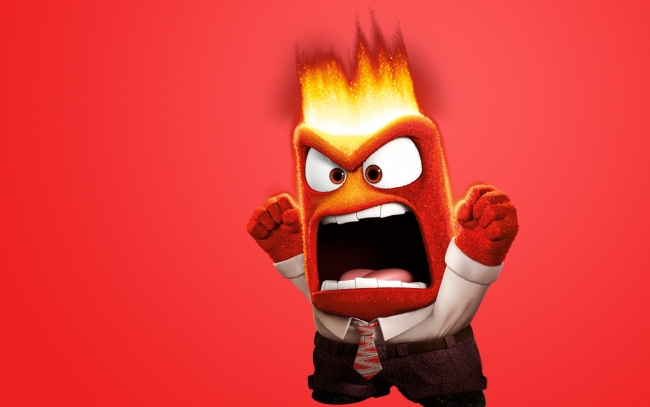
My face, before my morning coffee (kidding!)

There are a number of ways to deal with anger. Obviously, learning meditation is an effective tool for learning to control oneself. Regular physical activity is also a great help. Whatever means you decide to use, remember that as I’ve said before, emotion is an energy. And you can’t destroy that energy, you can simply transform it. This is where it becomes important to transform it into something useful. ☯

I’m Zamfir, Yo! Pt. 2

I wrote a post a little over two weeks ago about a pan flute I had purchased from China. I was extremely excited at the prospect of learning this instrument, as it has a classic place in classic Asian music.

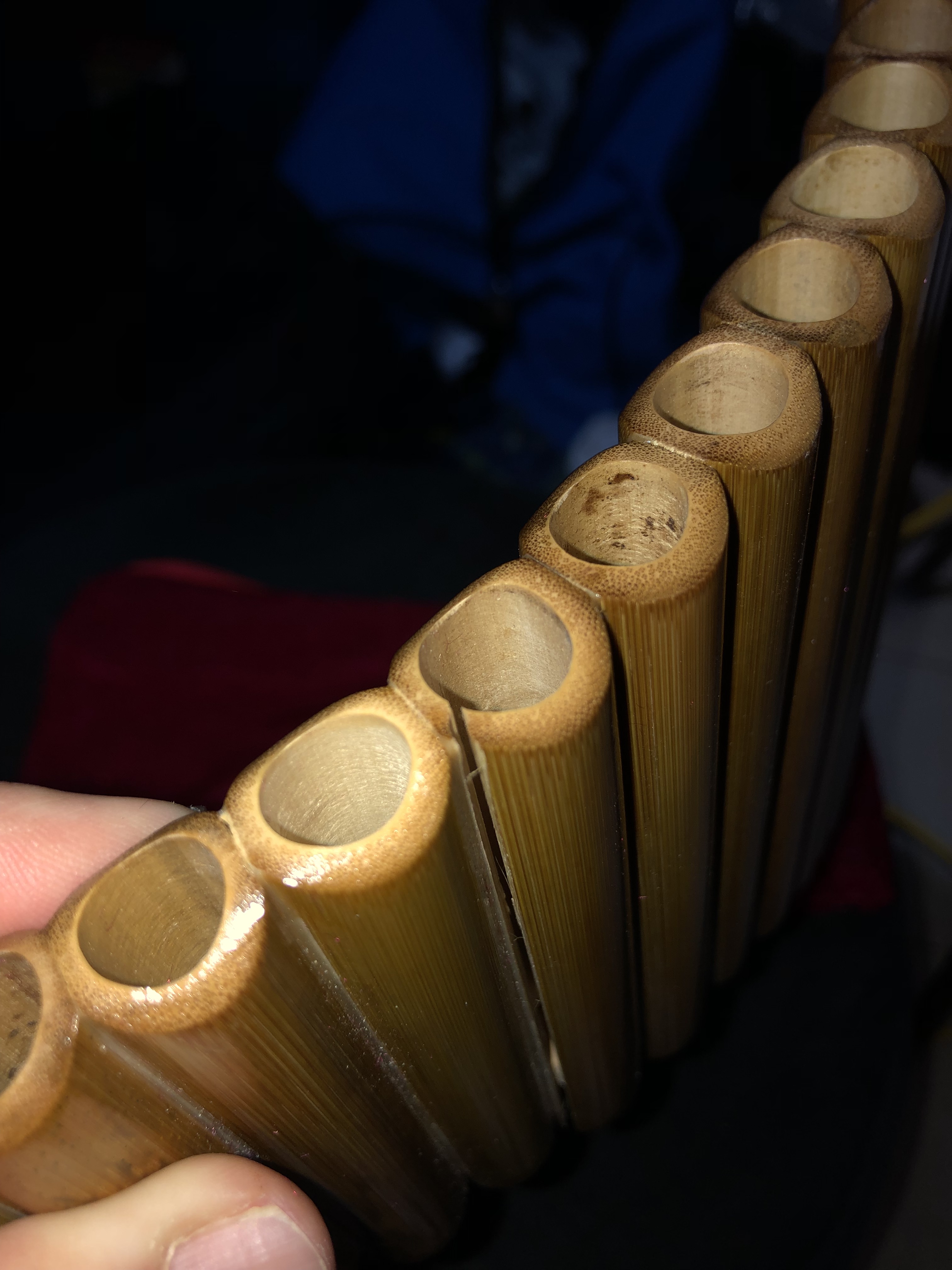
However, about a week after it had arrived, I took it out of the velour sack that accompanied it and examined the instrument. I blew the first notes on the flute and discovered that some of the notes were flat and wouldn’t play. Upon closer inspection, I discovered that the flute had a long crack down one of the tubes.

The crack runs all along the tube to the bottom

It was heart-breaking, since it basically renders the flute unplayable. Oh sure, I could probably find some tunes to play that don’t require the specific damaged notes, but limiting an instrument in this fashion does it very little justice!

Another view of the fractured tube

I’ve noticed that some of the other tubes are starting to develop some stress cracks as well. I’m not sure what I expected from a $14 purchase from China…

I’ve given the pan flute to my son Nathan, and he’s presently having a blast with it. It can give him some of his first exposure to music and instruments. Who knows? Maybe he’ll learn to play it!

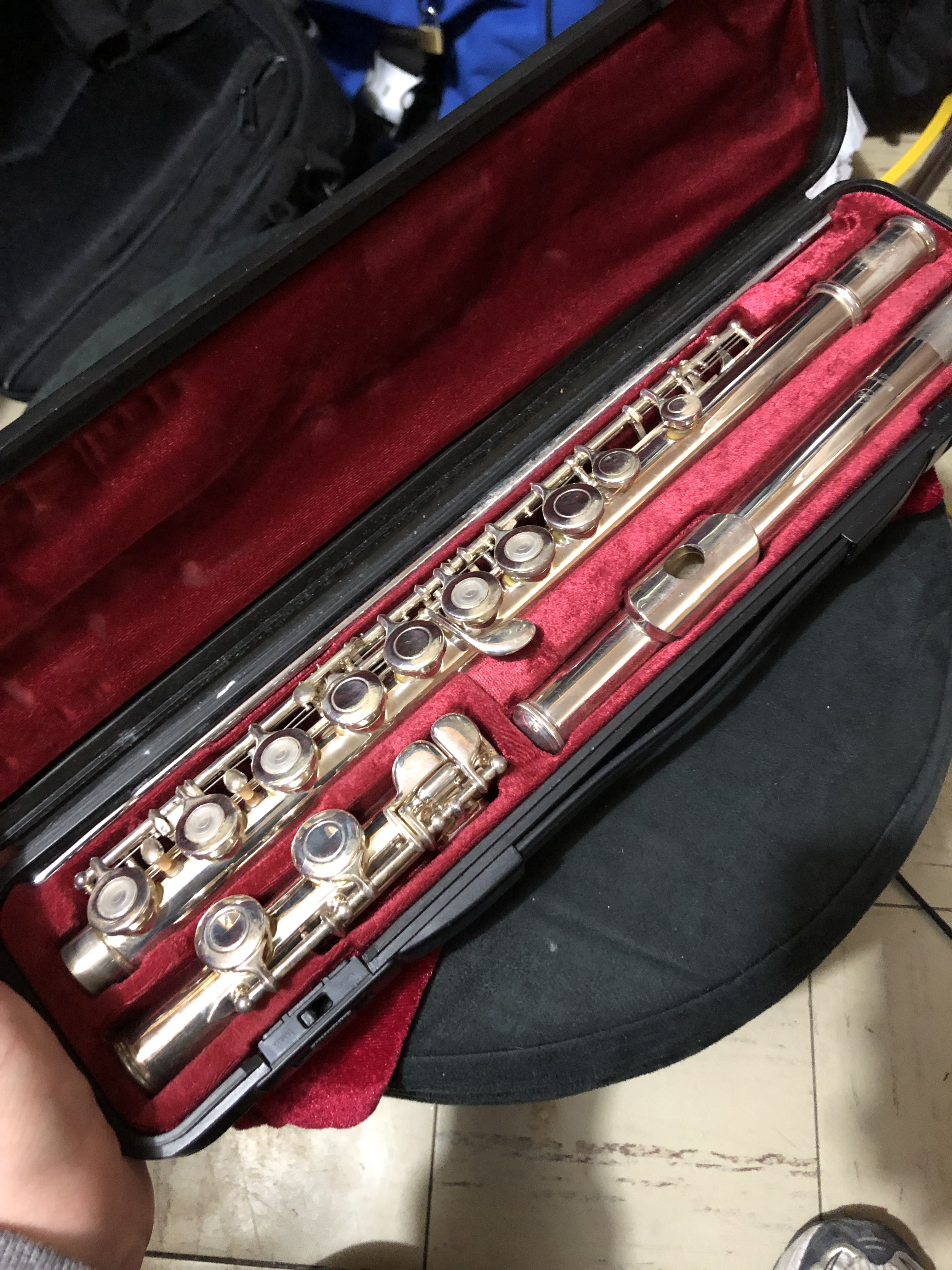
All dark clouds have a silver lining. My wife has provided me with an actual flute she had in her possession.

The new “Kaze”, which is Japanese for “wind”

I’ve purchased a beginner’s primer on learning the flute. In the months to come, I intend to start learning this instrument as a substitute for the pan flute.

Music is a wonderful form of expression and can be relaxing and beneficial for one’s health. I’ll keep you all posted on my progress! ☯

The Wisdom Of A Mother

Sometimes we don’t allow ourselves to be aware of the influence our parents have on us. As soon as we’re old enough to reach our goals, we often attribute our successes on our own merit and efforts. This doesn’t mean that the groundwork for that success didn’t come from those who have had the most impact on our childhood.

My mother lives a life of limited means. She has a small, one bedroom apartment where she can be near my father who resides in a care home. They both reside in New Brunswick. My mother has been trying to reduce the amount of belongings in her apartment due to the lack of space. One of the items she has had for the past few years is a small wooden dining table coupled with a set of wooden chairs.

My grandmother had purchased this table set for several hundred dollars a few years ago. But since she herself has been relegated to a care home, she had turned it over to my mother. Mom has been keeping this table set in her bedroom, which has been a source of issue for her. She recently decided to try and sell the table set.

The apartment complex she lives in caters to retirees, and she was certain someone in the building could make use of the small table set. She drew a quick poster on a piece of plain paper and tacked it on the building’s bulletin board.

Not an hour had gone by, and my mother was visited at her apartment by a young man who was painting the unoccupied units for the building’s manager. He explained that he and his wife were recently married, starting out and looking for inexpensive furnishings for their home. He wanted to see the table set.

My mother showed him in and brought him to the table. He examined it carefully and felt that it could suit his household’s needs, but would need to confirm with his new bride and asked if he could take a photo, to which my mother obliged.

The young man asked how much my mother wanted for the table. After quick consideration, she indicated that she would like $100 for the table, since her own mother had purchased it at about four times that amount only a couple of years ago. The young man asked if my mother would be willing to accept $80. My mother mulled it over and stated that the young man should discuss with his wife and come back the following day should they decide to purchase and the price could be discussed then.

The following day, my mother brought her small car to the local dealership for some needed repairs. The car had been making a knocking sound for a couple of weeks, and one of my uncles advised her of the cause and the need for the repair. Having nowhere to go, my mother waited patiently for a couple of hours until the repairs were done.

When she approached the service desk to retrieve her keys, she was dismayed to hear that the bill amounted to nearly $200! once again, my mother is living on limited means and did not have the funds available for such a bill.

She was considering her options when one of the kinder employees looked into it and found an extended warranty that my mother had purchased along with the vehicle; one that was still in effect. With this added warranty, my mother owed nothing for the repair of the vehicle. The employee was satisfied to tear the invoice to pieces in front of my mother.

My mother was overwhelmed and SO thankful for the discovery. For those who know my mother, her eyes well up at the drop of a hat. And this occasion was no exception. She retrieved her vehicle and headed home.

Wondering about the young man and the dining table? Well, my mother was feeling deeply grateful at being spared the hardship of a bill she couldn’t afford. She couldn’t help but feel that she needed to repay this good fortune in some way.

She walked into the apartment building and went straight to the unit where the young man was painting along with others. She asked if he had discussed the table with his wife, to which the young man stated he had. The young man explained that they had very little money and only had about a spare $50 so they wouldn’t be able to buy the table.

My mother then asked the young man if he would be willing to buy it for $20, if he took it today after his work day ended. The young man was overwhelmed and accepted immediately. He was so excited, he asked the other painters if he could leave the work site for ten minutes to load the table into his truck right away.

As my mother was telling me the story of how all of this came about, I could hear the joy and pride in her voice. not only did she get some reprieve from financial hardship, she was able to do something great for a young couple starting out. And she felt that she had positively “paid it forward”.

That’s when my mother spoke the words that have been one of the main mantras of my life for decades: “Everything happens for a reason!”

Are you kidding me? I’ve been using that very saying for almost as long as I’ve been studying Buddhism, and here my mother was probably the one who planted the thought in me, years ago.

It’s important to remember that kindness begets kindness. Positivity brings about the optimistic and positive energy of the world and creates the environment we all want to be in. Be good to others, even if for no other reason than the act of being good. I can promise you that in the long run you’ll be happier. And who knows? With all that positive karma, perhaps someone will pay it forward to you! ☯

Music Makes The World Go Round…

For those who study it, meditation is an integral part of everyday life. It can have a number of measurable benefits and help people with daily living as well as facing issues that arise in their day to day life.

Meditation, like most things, comes in a variety of types, methods, etc… But one of the most overlooked methods of meditation is music. Yes, you read that right: music!

Music has the ability to provoke a meditative state in most people, even those who have never studied meditation. Whether you listen to it, play it or sing, the end result is the same. Think about it; you listen to a peppy, upbeat song and it makes you happy or cheers you up, right? You listen to a soft ballad and it evokes memories or emotional attachment.

Music on its own can help to reduce blood pressure and has been shown to increase the release of dopamine and aid with muscle function. Listening to music during physical activity can help to motivate you and push your body farther during a workout.

Music therapy has been shown to help patients suffering symptoms of dementia and helps to reduce depression. (https://www.psychologytoday.com/us/blog/evidence-based-living/201708/music-is-good-the-soul-and-your-health)

I often use classical or asian meditation music in the background when practicing actual meditation. Any time I have a workout, whether cycling or weights at home, I put on some high energy music to help motivate me along.

So, crank up the tunes. The benefits are many and the drawbacks are few. ☯

No Means Insult… To Some!

It’s story time! In October of 2001, I had the privilege of travelling to Japan and stayed there for about a month. This coincided with my training for Shodan (black belt) and my Buddhist studies, and I had the opportunity to visit and stay with two Buddhist monasteries as well as dine and spend time with a number of Japanese and Okinawan dignitaries.

I was 23-years old when I travelled to Japan. It was the most exciting time of my life, since I had spent the majority of my life in Northern New Brunswick, sheltered from the majority of the outside world. I was about to get a crash course in world etiquette, and looking back on it I don’t believe I was as prepared as I could have been.

Obviously, the first and most important thing I learned right from the moment of my arrival, was that bowing was preferred over handshakes. Although many Japanese people have adopted handshakes due to the Westernization of their populace, the custom of bowing is still very much a staple of Japanese culture.

Chopsticks are still the most commonly used utensil, and tipping is frowned upon as the Japanese don’t believe in being given money they haven’t worked to earn (a custom I wish the Western world would adopt).

Despite all these customs (and there are many more), the biggest one is insulting your host by refusing refreshment. Believe it or not, I had never enjoyed a beer or any alcoholic beverage prior to 2001.

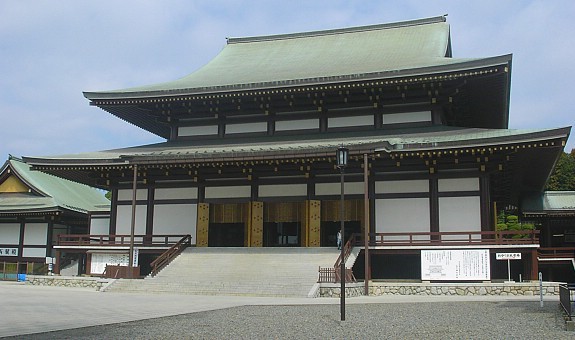
We visited a Japanese dignitary in Narita, Japan, when we first arrived from Canada. Sensei had told me that I might be offered a beer or some sake (Japanese rice wine), and that I shouldn’t refuse as it would be viewed as an insult.

Buddhist temple in Narita, Japan

When we all sat around a table within the dignitary’s household, his wife brought me a bottle of beer. Having never consumed it before, I gave the drink a couple of experimental sniffs before taking a sip. I was pleasantly surprised to see that it was carbonated just like a soda would have been.

I drank the beer the same way as I would have consumed a soda. Before my empty bottle had touched the table, the wife brought me a second. I glanced at Sensei, whose eyebrows told me that refusing the second would be as grave an insult as refusing the first.

Sensei could have told me before our arrival that I could have sipped that first beer for hours and it would have been fine, but having emptied my bottle meant that my host needed to provide me with more. It ended up being a lesson in etiquette that would be learned through experience.

I was pretty intoxicated by the time we left the dignitary’s home. It would go on to be one of the most memorable experiences of my life. Not because I got drunk. Because I learned that it is most important to learn the customs of the people you’re visiting before going.

To this day, I can’t raise a glass to my lips without thinking of Okinawa. I have find memories and dream of a time that I can go back. I would encourage anyone who travel to foreign lands to take the time to study their culture and etiquette. Not only will it make for a more pleasant experience, but it could provide some insight into why certain things are done the way they are. ☯

Do It Properly, Not Easily…

Martial arts is a special creature. I may or may not have written that, a time or two in previous posts. But it is. It’s one of the only things in the western world that combines, sport, fitness, art and mysticism bordering on the religious. It combines aspects of discipline and repetition to encourage a student’s self-confidence and growth.

However, it doesn’t. It really doesn’t. Encourage it, that is. From my experience, only about one in every 8 to 10 students will put in the raw effort and will to gain the experience and growth required to excel in the martial arts. All the fun stuff I described in the previous paragraph needs to be sought out and worked for. It doesn’t happen simply by walking into a dojo and following along.

I’ve seen too many students who attend class after class. I mean, their attendance is almost flawless (minus the ones who are “forced” there by parents, of course) but the effort they put into the classes is almost laughable.

Now, before anyone gets too high and mighty with me, I understand that every student is different; their needs are different and their wants are different. And I’ve met students who have joined the martial arts for many different reasons. Some people join to get in shape, some to learn to defend themselves… Some actually join simply for the social aspect of meeting others and being a part of something. No matter the reason, it IS important to you.

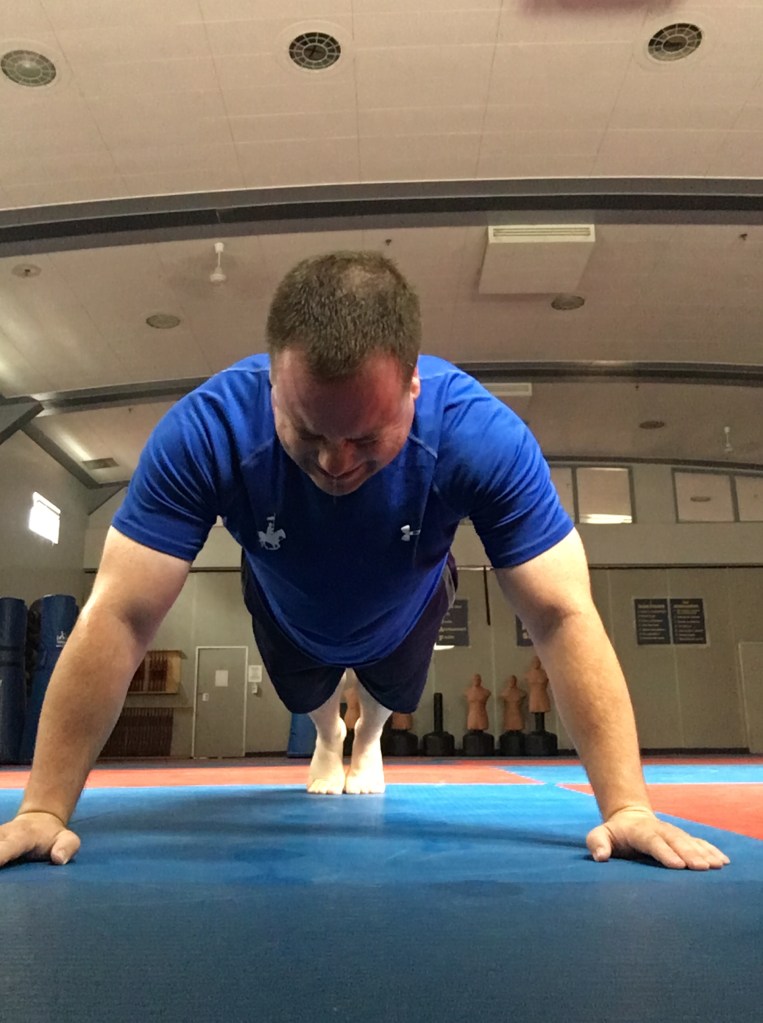
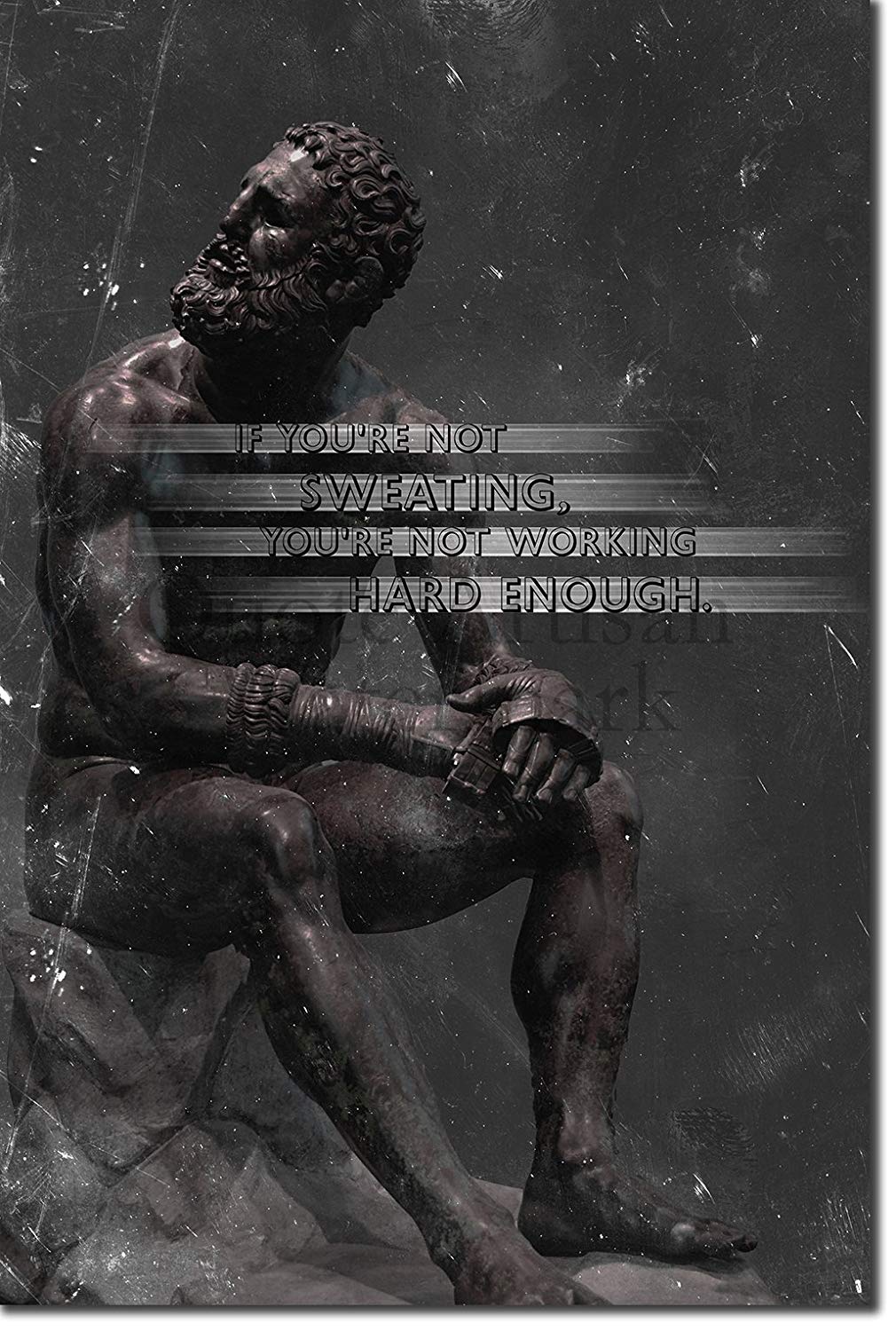
Sweat is the fuel in the forge of progress!

I frequently train at the rear of the class. I’ve long been a believer that a teacher can learn more by watching the students than standing at the front. And these days, I see so many students who phone it in while standing in class. Sometimes it’s easy to put in a minimum effort while the head instructor is busy monitoring so many students. But why be there if not to get the maximum return on your physical and spiritual investment?

Train from your soul! Give it everything you’ve got. When you train, take a look at the other students around you. Within twenty minutes, there should be a puddle of sweat at your feet. If there isn’t, then you aren’t putting your entire being into your training.

You can be in it for your own reasons. Just make sure that while they’re your reasons, they’re still the right ones! ☯