We can’t always be aware of some of the help we receive. Every person has had someone in their lives that has done or said something, or perhaps even acted on their behalf, in order to help them in some way. And this often happens in the background, in such a manner that we don’t perceive it. Being helpful is not always an easy thing, as some people are pretty demanding and/or specific about the help they’d want and how it’s done.
And last but not least is the fact that if YOU are one of the people looking to help out a friend, family member or even a stranger, you should be prepared to help out with no thought of remuneration or reward. Otherwise, what’s the point? If you expect something in return, that’s not helping! That’s called a job. I’ve often heard people telling me, “You didn’t have to…” or “You shouldn’t have…” Well, of course I didn’t have to. That’s what makes it significant.
But now that I’ve rendered my opinion on the matter, which like everything else in life may not be shared by everybody, I wanted to share something I read last week that got me thinking about a people’s perspective. There was no author associated to the paragraph I read and I couldn’t find a source on the web, so if anybody knows where this comes from, feel free to let me know in the comments. Here’s what it says:
I Gave You $10,
He Gave You $20.
You Felt That He WasBetter Just Because HeGave You More. But He Had$200 dollars, And All I HadWas $10.
The verse is significant, as it demonstrates a bit of the selfishness of current society. More often than not, we tend to view more as better when we should be viewing better as more. I know some people who would do just as the verse describes; they would give their last dollar in order to help someone out. And that kind of help is invaluable. But we often lack the perspective to see it. As the saying goes, every little bit helps. And sometimes it’s the quality of the help that’s more important. ☯
Having children is a pretty unique experience; one that can’t really be explained unless you’ve lived through it. Speaking strictly from a Diabetes standpoint, I had made my peace quite a long time ago that I would likely never father any children. Yet here I find myself with two sons. Throughout my teens and my twenties, I was led to believe by most of my health practitioners that one out of three male Diabetics end up sterile. Although the odds were greater that I’d be fine, there was a one-third chance that I wouldn’t.
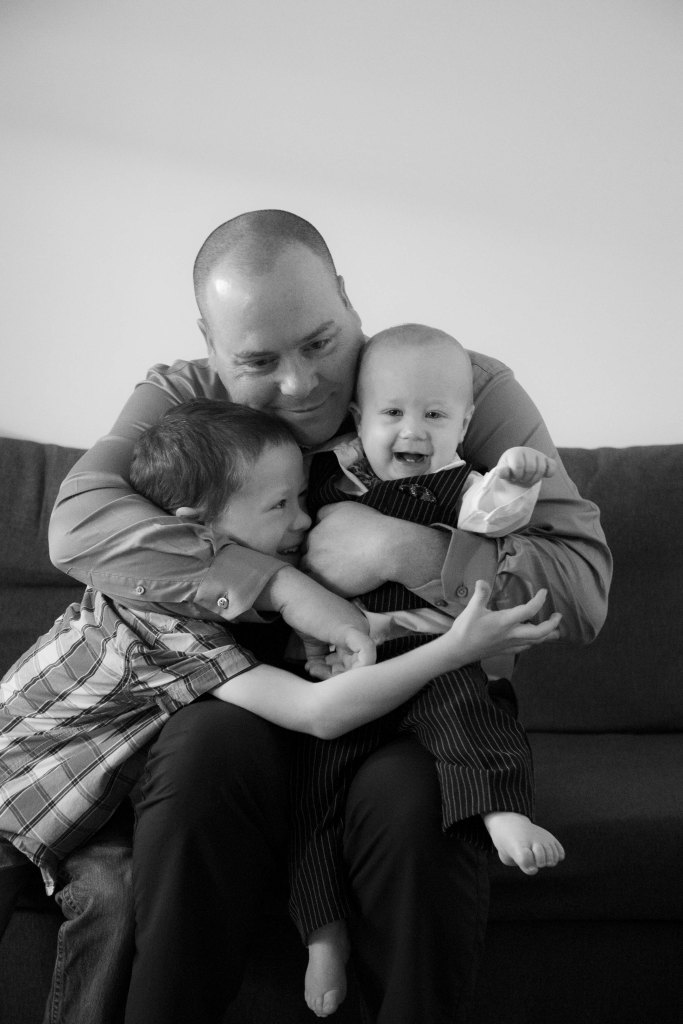
My sons, Nathan (oldest) and Alexander (youngest)
Once you have children in your life, things tend to change. You surrender any and all goals and achievements you hoped to accomplish in favour of ensuring your children’s safety and well-being. This is not without its sacrifice, and that sacrifice is usually a thankless one. Children usually don’t understand or acknowledge what’s given up for them, much less show appreciation for it. And that makes sense. They’re kids! They’re supposed to enjoy their childhood without being concerned with such things.
Everyday feels like a rough ride. I can take last Friday as an example, where something as simple as having Nathan eat supper dissolved into a meltdown and resulted in Nathan being sent to his room for the night. At time of writing this, he’s fast asleep, and will likely start his day tomorrow without any recollection of the fact that he expressed his total hate for mommy and daddy and how he would never be friends with either one of us, ever again. Parenthood can be heart-breaking.
Most people wait on baited breath, hoping their children will go on to be a leader of people, a positive influence or go on to accomplish great things, such as curing cancer, ending world hunger or becoming the next CEO of Microsoft. Personally, I just want both my boys to become good people. I want them to love and appreciate life and recognize that happiness is possible, but it sometimes needs to be accomplished and not simply a given. If they can grow to be law-abiding citizens who understand these things, I will have done my job as a father.
Life is hard and it rarely cares about one’s plans. This has certainly been proven twice, with the arrival of both my sons. In truth, they likely have just as much to teach me as I have to teach them. Hopefully, I have the wisdom to recognize those teachings and hear them when they’re given. Parenthood is an equal balance of sacrifice and reward. ☯
I feel that before I start writing about today’s topic, I should throw up a quick reminder that I am not a doctor. I have no formal training in any medical field, and everything I write about has been researched and has a source, or is something I have directly experienced or have trained in personally. So if anything I’ve written feels incorrect, please feel free to reach out on the “Contact Me” link on my Home page and feel free to voice your concerns. I’m definitely not above, nor do I object, to being corrected.
I think the title speaks for itself, and this is the topic of today’s post. This topic hits close to home for me. Much like Diabetes, this condition has affected many people I know and care about and I have in fact been affected by PTSD, myself. There has been a significant increase in attention on PTSD in the past two decades, and it has started to be recognized as a genuine mental health condition and not simply a passing thought process that the sufferer has the option of ignoring. Previously known as “shell shock” during the World Wars, it was originally associated mostly to combat veterans who had seen active military service, especially during times of war, and were exposed to the traumatic aspects of said war. This is no longer the case, and research has come to show that PTSD can affect anyone, based on their specific circumstances.
I’ll start with my usual, which is to define PTSD or Post-traumatic Stress Disorder so that we can all be on the same page about what’s being discussed. According to the American Psychiatric Association, PTSD is defined as “a psychiatric disorder that may occur in people who have experienced or witnessed a traumatic event such as a natural disaster, a serious accident, a terrorist act, war/combat, rape or who have been threatened with death, sexual violence or serious injury.”
Although accurate, this definition is certainly a broad and generalized one. And whether or not something is traumatic is usually subjective to the sufferer. But the symptoms are generally pretty universal, which can include flashbacks, nightmares, insomnia, anger and irritability, hyper vigilance and aversion to social gatherings or constant noise. According to an article posted by the Mayo Clinic, it may even be possible to develop PTSD without having personally suffered the trauma. For some people, just learning about the event can be enough to cause the damage. Like I said before, it can be pretty subjective to the sufferer.
At the outset, it can also be a condition that the sufferer isn’t even aware that he/she has. I can recall the story of a law enforcement colleague from years ago, who had been initiating a traffic stop along a busy highway. He walked towards the stopped vehicle and he saw something small sitting on the edge of the roadway. When he stopped and looked at the object, he identified it as a small child’s sneaker. He immediately threw up and went into convulsions, got vivid flashbacks of an investigation he had been working on that involved a small child who had been killed. Although he had coped well to that point, the sight of the child’s sneaker brought all the traumatic memories to the surface and he basically shut down, right on the edge of the highway.
Although it isn’t always to that extreme, I’ve heard a lot of stories like this one. And have had plenty of colleagues who have suffered in silence. The ultimate symptom of PTSD and the one that often takes hold before friends and family become aware that there’s a problem, is suicide. Because of the stigma associated with PTSD in previous decades, many people choose to stay silent about their condition and try to self-medicate or isolate from others. When that fails, many often feel the only remaining option is to end their own lives.
For myself, nightmares and insomnia have certainly been the prevalent symptoms. But hyper vigilance, irritability and anger are high on the list as well. I have difficulty being in large crowds and will often find myself with increased sense of anxiety and shaking when I’m surrounded by people, especially if it’s a room full of conversation and noise. I’m quick to anger when consistent loud noise is happening in my immediate environment, which makes my days difficult considering I have an infant in the house.
There is a lot a person can do to lessen and help treat symptoms of PTSD. I find meditation helps, although having the time and opportunity to do so has been far less in recent years. A rigorous fitness regime and plenty of fresh air. From a medical standpoint, there are many therapies and medications that can help manage and lessen, if not eliminate PTSD. I’m not a big fan of the medications route myself, but I’ve known folks that have benefited from it.
I think the big thing is to talk about it. There’s no shame and no embarrassment to having PTSD. It’s part of who you are and certainly isn’t your fault. And talking about it to family and loved ones can be a powerful means of treating PTSD, in and of itself. And if your family at least understands what’s happening, it can go a long way towards preserving those relationships in the face of the difficulties you’re facing. And if you or someone you know may be thinking of harming themselves, the Suicide Prevention Hotline is always available at 1-833-456-4566. That’s a Canadian line, of course. If you’re one of my readers from out-of-country, you’ll have to search for whatever equivalent number you may have in your country.
We’ve come a long way from the time when friends, family or employers would say, “you’re just making excuses” or “you’re just being lazy.” But there’s still a long road to travel. There’s plenty of research and articles on the diagnosis, treatment and assumed causes of PTSD. So feel free to have a read and educate yourself. And be certain that if someone you know says they have PTSD, don’t take it as a passing thing; they’re likely dealing with it as best they can. ☯
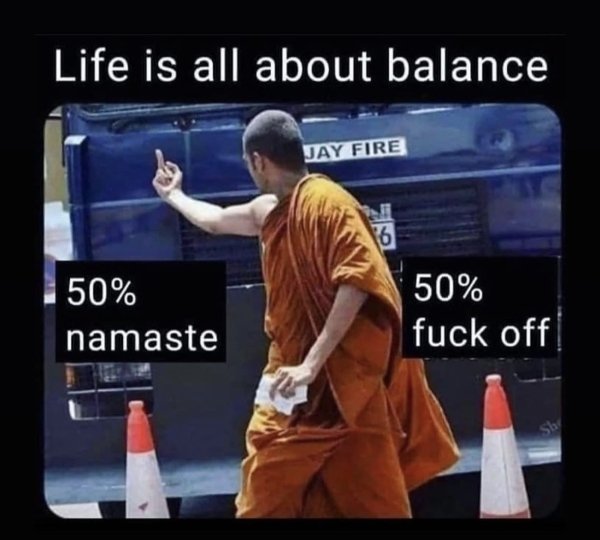
Every once in a while, I find something funny or interesting online when I’m researching other posts. I like to throw these up in a post when I find them so that others can enjoy them and get a chuckle out of it. Plus it allows me to provide a short post where I don’t go on for several thousand words. Of course, despite saying I’m trying to keep it short, here I am jabbering on…
Although I get a kick out of this, it also serves to provide an important lesson. It’s important to keep your cool in daily life. After all, things would get pretty bad if one lost their proverbial shit for every little thing. But by the same token, everyone needs to cut loose and find an outlet every now and again. Fresh air, exercise and rigorous fitness routines can help to provide an outlet so that you don’t cause a shit storm of your own. ☯
I had to go downtown and stand in line last Wednesday for something work-related that I needed. Due to social distancing requirements and the location’s own internal policies for dealing with the public, a facemask was obviously required and I was asked to wait outside the building until one of the people seeking the same service as I was, exited the building. Luckily, I was the first one at the door but I had no idea how many people may have been inside or how long it would take them to come out.
I had dressed reasonably well, wearing a cotton shirt covered by a thick, cotton hooded sweatshirt. Although I won’t be a little whiner and complain that I was freezing to death, I’ll admit that it was only 7 degrees outside with cold winds. This made the wait all the more painful. People accumulated in line behind me, and the general public’s penchant for complaining shone through like a bright beacon in the storm. People were arguing and complaining to the two poor security guards who were monitoring the building’s entrance. One lady, who was there for the same purpose as I was, had brought someone else with her and got visibly angry when she was informed that she wouldn’t be allowed to bring her friend inside with her. They had arrived together in a cab. She was pissed.
Apparently, not everyone took the same precaution as I did by checking the location’s website in order to confirm their requirements prior to coming down. But as the weeks go by, I’m noticing this kind of trend more and more, with people fast becoming frustrated with the restrictive requirements brought on by COVID-19 and the limits imposed by businesses and government locations. The wearing of masks, limits on the number of people within buildings and the need to socially distance is starting to grate on everyone’s patience as the world waits on baited breath for everything to go back to “normal.”
Here’s the problem: This IS the new normal. Leading experts, as well as health authorities and the World Health Organization all agree; there will be a resurgence of COVID-19 in the near future, and likely with a vengeance. I could try and cite some sources, but there’s enough out there that a quick Google search will show you what I’m talking about. At the time of writing this post, the Government of Canada’s website reports an estimated 158,758 active cases of COVID-19, with Ontario and Quebec carrying the brunt of that number (Canada.ca). If you click the provided link, I’m sure that number will have changed, likely increased.
One of the bigger problems is the fact that there seems to be a growing number of the population who simply don’t take the pandemic seriously. I’ve seen this first-hand and even have members of my family who think this is the case. Just a few weeks ago, I saw someone standing by Wascana Lake, here in Regina, holding a sign that stated that Corona Virus was a lie told by the government. Right. Because there isn’t enough on the government’s plate without creating a pandemic that’s currently damaging our Nation’s economy.
But plenty of people are ignoring the easy, common sense precautions that have been put into place. Things like social distancing, wearing a face mask when out in public, and avoiding outings unless for work or mandatory requirements like groceries or medical appointments. A good portion of the population seems to have gone back to the “old” normal, including having large gatherings and carrying on as though there ISN’T a pandemic happening. Idiots.
If there’s one thing history has taught us, it’s that viruses can evolve. We’re not done with COVID-19 and if people continue to ignore the easy steps, the results that follow will be much, MUCH worse. So, why take chances? Wash your hands frequently (which you should have been doing all along, anyway), before and after any outings. use hand sanitizer and wear a face mask. Stay socially distanced and don’t wander needlessly for anything you don’t absolutely need. That seems like a pretty reasonable way to avoid a serious respiratory virus that could kill you. ☯
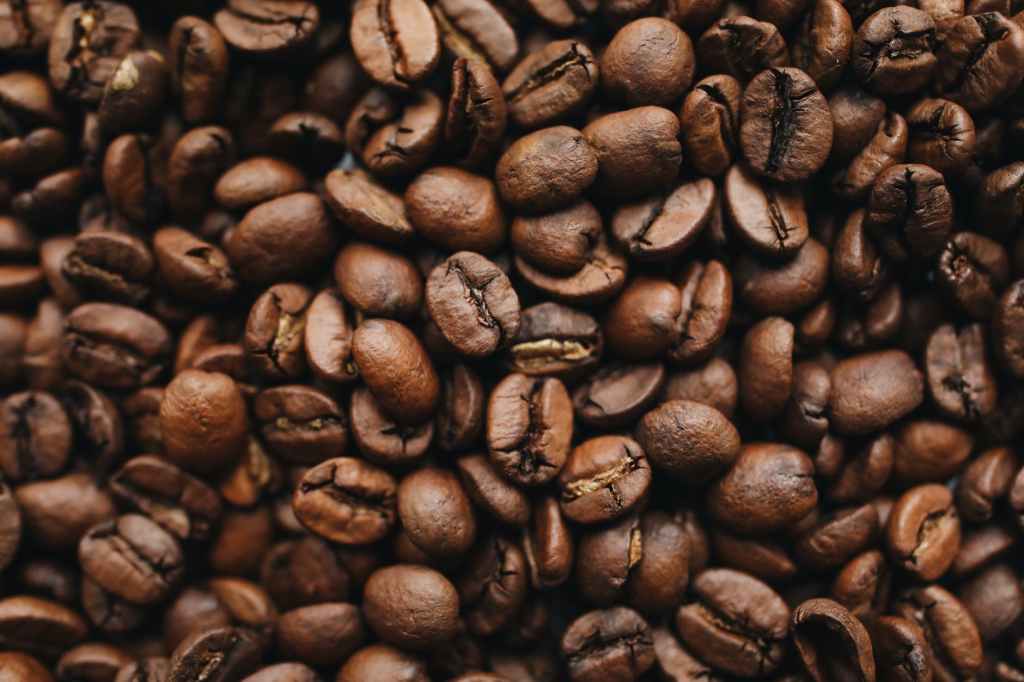
Okay, this is one of those “silly” holidays that hold no real history or bearing and that most wonder if they should actually be “celebrated.” But I enjoy including some of these from time to time, especially when they relate to something near and dear to me. And I love coffee. It’s no secret that I’m a big fan of caffeine, and since coffee is consumed pretty much everywhere in the world in some form or another, I though I would throw a few facts out for International Coffee Day…
The first thing would be the development of this holiday. The International Coffee Organization in Milan came up with this little gem back in 2014. Depending on your source, the holiday is celebrated either on October 1st or September 29th. According to a Wikipedia post, International Coffee Day is celebrated on different dates ranging from early January to early October, depending on what country you hail from. I’ll stick to Canada’s September 29th.
I couldn’t find exactly how one “celebrates,” other than to consume and enjoy a nice, hot cup of coffee. And most people do this on a daily basis, anyway. But now is as good a time as any to remind you of some of the potential health benefits of coffee, so long as with all things, you consume in moderation. Avoiding the fact that many experts believe we’ll run out of coffee beans by 2080 due to climate change, let’s examine my top five benefits of coffee:
Coffee will make you less tired: This one should be pretty obvious, but I always like to start WITH the obvious one. Caffeine is a stimulant, and once it hits your blood stream and reaches your brain, it can help wash away fatigue;
It’s good for you: As long as you don’t douse your coffee with a bunch of sugar and loads of creamer, black coffee has zero calories, zero carbohydrates and contains a batch of B-vitamins as well as Potassium;
Coffee makes us happier: This is another d-uh moment. If you’re a coffee drinker, there’s a noticeable “pick-me-up” effect, due in part to caffeine’s stimulant effect but also because we enjoy the coffee. Any good part of your day is a good part of your day, and will make you happier;
It can help stem Type-2 Diabetes: Despite having Diabetes myself, albeit Type-1, I’m a touch skeptical on this one. But there are a batch of studies that have apparently shown that coffee drinkers have a reduced risk of Type-2 Diabetes;
Coffee is high in antioxidants: Next to the occasional glass of red wine, coffee contains a huge amount of antioxidants and can help clean you out from the bad stuff.
Healthline.com has a fantastic article entitled 13 Health benefits of Coffee, Based on Science, which outlines not only the five I mentioned above but eight more benefits as well. And I mentioned moderation earlier because as with all things in life, moderation is key. Overconsumption of caffeinated beverages can pretty much worsen or CAUSE the opposite of all the benefits I have listed above.
I also forgot to mention my favourite benefit of black coffee: the enjoyment. If you had told me I’d love coffee this much, twenty years ago, I’d have called you crazy. But with all the different blends, types and flavours, there’s a lot to be experienced and enjoyed simply from that small cup of steaming liquid you start your day with. So, hopefully you did. After all, it’s International Coffee Day! ☯
I hate cardio. This probably comes as a surprise, coming from someone who believes that if you aren’t dripping in sweat when you’re done, it wasn’t a workout. And the truth of it is, I do enjoy cycling. But that’s mostly because it allows me to get outside, reconnect with nature (to a degree) and keeps the cardio aspect buried in the background. The best of both worlds. But to say that I’m heading out for a run or doing cardio for the sake of doing cardio would be a stretch.
Cardiovascular endurance training is important for one’s health. According to an article posted by the Mayo Clinic, cardio exercises help to strengthen your heart and muscles, burn calories, help control your appetite, increases sleep, promotes joint movement and helps to manage Diabetes. Cardio can be a long-term or long-distance thing, like long-distance cycling or swimming 30 laps in a pool, or something incorporated into a weight or resistance workout, such as jumping rope.
Jumping rope is an easy, convenient way of including some light cardio into your workout routine. I’ve kept a jump rope in my gym bag for the past ten years, and I make use of it whenever I get the chance. Jumping rope can burn a wicked amount of calories; several hundred calories in a 15-minute period, in fact. It can help improve overall balance and coordination, not to mention that the heart benefits are the same as with traditional cardio. And although it can be taxing on the knees and leg joints, doing it properly is considered a lower-impact than something like running.
I like to incorporate it by using it with circuit or interval training with karate techniques. For example, I’ll do a minute of front kicks, followed by a minute of high-speed jump rope. Then a minute of the next kick and a minute of high-speed jump rope. So on and so forth. Sometimes I’ll simply use it as a warm-up or a cool down. A good quality jump rope is portable, convenient and low-cost. You can stuff it into any gym back or backpack and all you need is about a 25-foot square of space.
As much as I dislike cardio, it is a necessary aspect to proper health and fitness. And there’s no denying that it also helps with the blood sugar control and sleep quality required for someone with Type-1 Diabetes. If the last time you used a jump rope was during a spirited game of double dutch during your school years, you’ll want to start slow and ensure you do it on a stable surface. Avoid grass or carpet as it can snag the rope or catch against your footwear. ☯
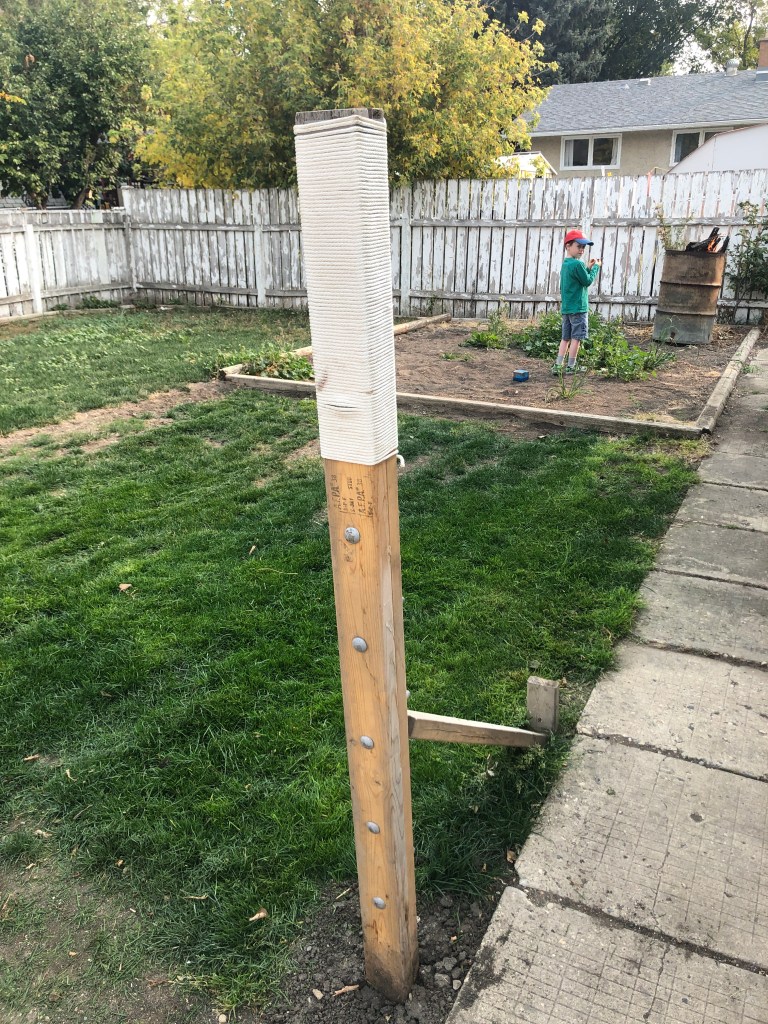
I’m wearing a worn, black pair of gi pants and a Star Wars t-shirt. Far from formal dojo apparel. The sweat has rendered the grey t-shirt black and droplets coming off my forehead splash on the unfinished concrete floor. I just finished a set of shadow boxing and I’ve been using an 8-pound sledgehammer as a workout implement for the past fifteen minutes as my son watches in fascination from the corner. My muscles and joints are all screaming for me to stop, and my knuckles are throbbing from the use of my newly-installed makiwara post outside, but I’m only half way through my workout as the next hour will bring a minimum of three of each of my katas…
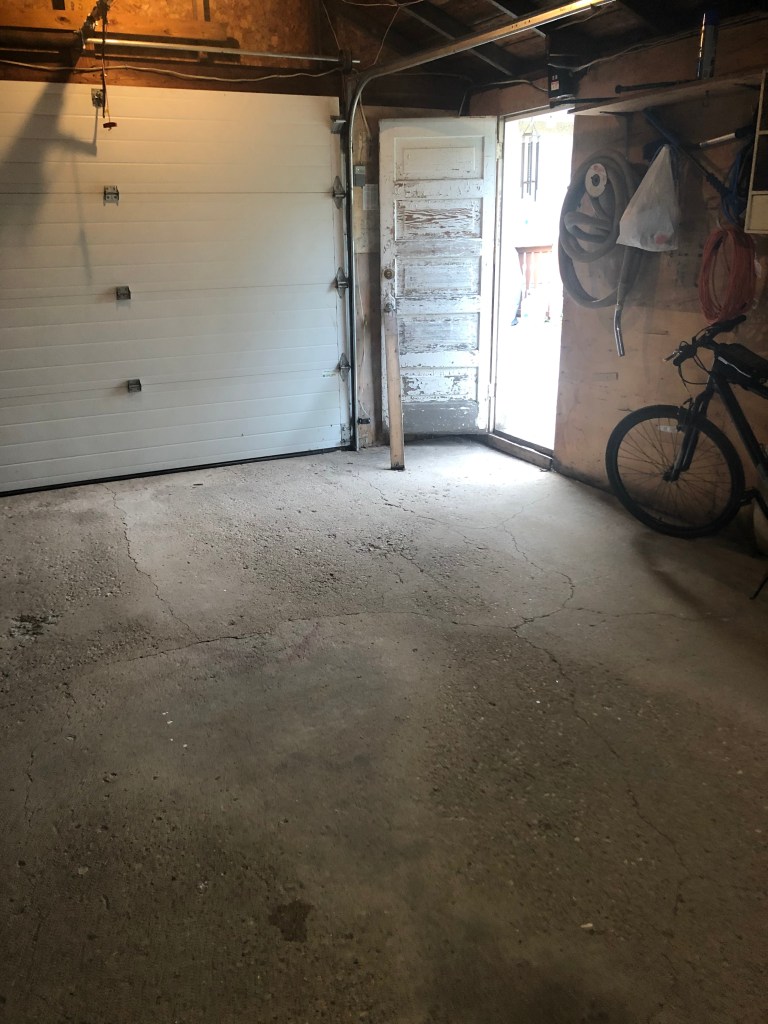
Clean, emptied out garage makes for a decent training area
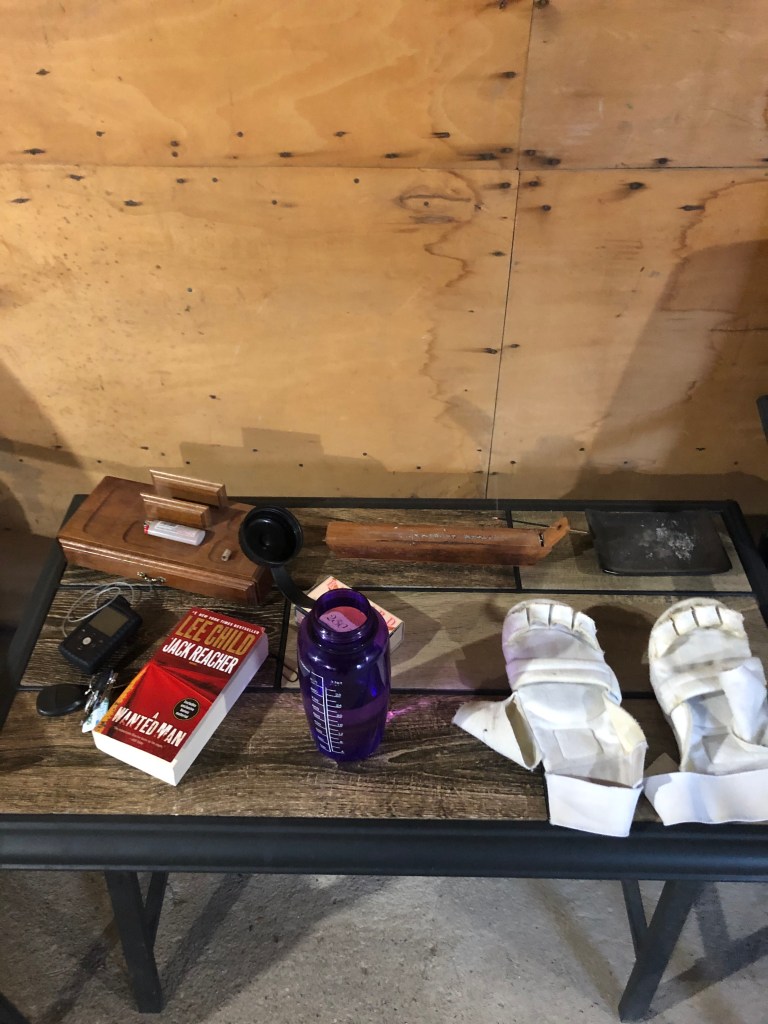
For the past couple of weeks, I’ve been using my garage as a makeshift dojo. The floor is bare, unfinished concrete and is pock-marked everywhere that something heavy or frequent traffic has damaged it. I fastened a padded punching square to the south wall and have a jumprope, an 8-pound sledgehammer and a small table to hold my water, phone and small training implements as may be required for any given session. I have a small incense burner to provide an ambiance to the environment, but with little to no ventilation inside the garage short of opening the large overhead door, I keep incense burning at a minimum.
When people hear about the martial arts, they have some pretty stereotypical images of a dojo in their heads. For the most part, people imagine a polished, hardwood floor, tatami mats in the corner, punching bags and kanji banners across every wall. Or at least, over whatever walls don’t contain photographs of the style’s masters or some the weaponry associated with the style. It’s clean and pretty and usually oozes a “karate movie” feel. But in fact, most traditional dojos (unless they’re the head of the school) never look like that.
The small table in my “dojo” holding everything I need and nothing that I don’t
When I travelled to Japan and Okinawa in 2001, one of the things that surprised me was the venue in which we spent most of our time training. Unlike the expected image of a karate school, or dojo as it is properly referred to as, we trained in a variety of different locations, including but not limited to the beach, on rocks, in school gyms, in garages and in back yards. One school we trained at the most was owned by my Sensei’s instructor and was located above his house. It contained some of the fancy elements, such as a hardwood floor and his training certifications, but little else.
There was nothing fancy. The entire ambiance was created by the efforts and energy put forward by the student body. And what energy there was! We didn’t have a single morning or evening where we weren’t drenched in sweat and felling pain along some or most of our body parts. But we learned a lot. I recently sent photos of my garage to one of my friends back home in New Brunswick and identified it as my “dojo.” His response was to laugh at the appearance. The sad part is, he’s trained in my style of karate, as well.
After only two weeks of use, my makiwara (just outside the garage door) has already shifted and has had to be adjusted. Not sure if that’s a good thing or a bad thing…
The point is, you don’t need a fancy or expensive location. You don’t need tons of equipment or have your training area look like something out of a bad 50’s samurai movie. In fact, if you study traditional karate, you can perform the majority of your (solitary) exercises within a 1-square metre space. That’s it! You can perform your katas, bunkai and kumites as well as a huge score of exercises too numerous to list out, including every push-up variation, squats, lunges and shadow boxing.
You reach certain limitations once you incorporate a partner or students, but let’s be honest: at that point, you may be using a local school gymnasium or go outdoors to a soccer field or something of the like. Some of the most traditional karate schools in Okinawa are tucked away behind a single, unmarked door in a back alley. Karate is a free-floating art, which can literally be practiced anywhere. ☯
I have clear memories of all the stuff I had to go through when I was first diagnosed with Type-1 Diabetes. Since my older brother had a wide variety of illnesses, junk food and sugary snacks were never really a staple in my household anyway, but I remember that certain things took a dramatic change nonetheless. I was no longer allowed to drink juice whenever I wanted. I was subjected to frequent daily shots for insulin and finger pokes for blood glucose testing. It was a traumatic time for a 4-year old who hadn’t even had the opportunity to grab life by the horns.
The irony is that all the traumatic stuff is the only reason I’m still alive, even if some of it was misguided, wrong and in some ways caused more harm than good. Back in good ol’ 1982, carbohydrate counting wasn’t a thing at my hospital. Maybe if I had lived in a larger centre, there would have been better Diabetes education available. But in my hometown, there was a singular mantra when it came to the control of Diabetes: Don’t eat sugar! That was it. In tandem with a morning injection of short-term insulin and an evening injection of basal insulin, my blood was tested once a day before bed and I was good to go.
Yes, you read that right! My blood was only tested once a day. Quite a far cry from the dozen times I finger poke myself these days, or the Sensor Glucose readings I get from my pump every five minutes. Not to mention that my first glucometer was roughly the size and shape of a brick. (There’s an illustration of that glucometer in my previous post: When Diabetics Get High… (but not the way you think) But Diabetes therapy has come a long way from it’s beginning, when a person diagnosed with Type-1 Diabetes usually considered it a death sentence.
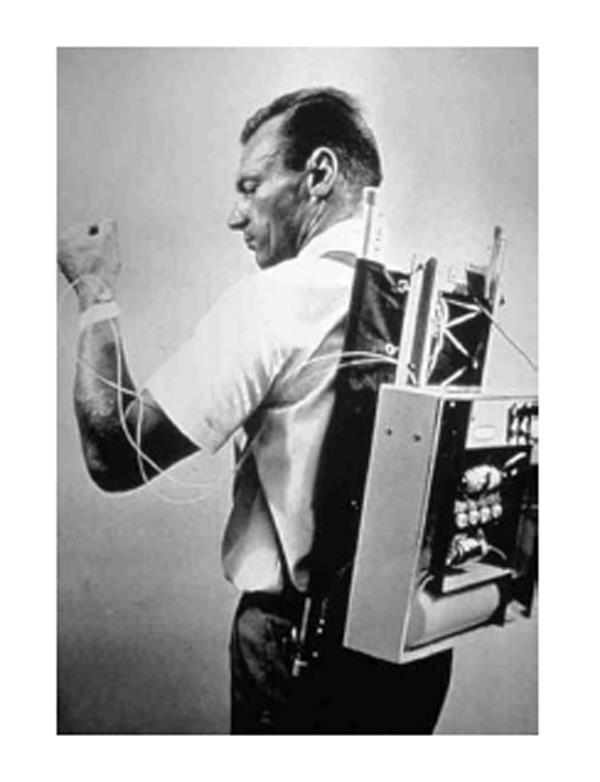
A photo of the first insulin pump
Pump therapy, along with carb-counting and exercise, have made the life of a Type-1 Diabetic easier by scores from what it previously was! As illustrated above, the first insulin pump was basically the size of a large backpack and included metal parts and was cumbersome and impractical. It looks like something Tony Stark developed in a cave. Would I use something like this today? Obviously not, but back in 1963 when Dr. Arnold Kadish designed it, it would prove to be the launching pad for an insulin therapy device that would be widely accepted.
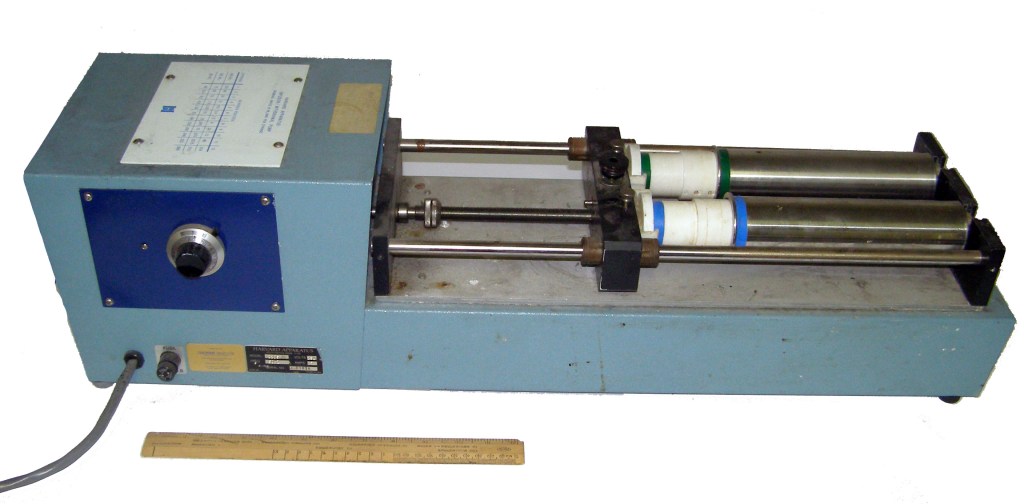
Smaller insulin pump. Source: Wikipedia
Smaller versions were developed by others roughly a decade later and they started being developed with wearability and accessibility in mind. But it wouldn’t be until the early 2000’s that insulin pump therapy would catch on as a common thing. One of the main obstacles is the overall cost. Although I don’t remember the exact retail price of my most recent insulin pump, I do know that it ran to the tune of about $8,500. If I didn’t have benefits through my work, I wouldn’t be on pump therapy.
That’s without taking into consideration that a box of infusion sets runs at about $200/month, reservoirs are about $50/month and the CGM sensors are about $400/month, making for a lovely total of almost $1,000/month when you factor in the insulin and test strips and anything else I may not have mentioned. Is it any wonder why people without solid medical insurance can’t take proper care of themselves? But I digress…
My point is that Diabetes therapy follows the very same trends as modern electronics and technology. When computers started becoming a thing, the average computer took up an entire room that had to be temperature controlled. Imagine trying to play Candy Crush on one of those bastards? The concept of a “personal computer” didn’t take hold until the 1970’s and even then they were boxy, clunky, difficult to move around and were pretty limited in what they could do. Today, the average smart phone has more computing power than what astronauts originally used to land on the moon.
The same can be said for insulin pumps. What started out as a huge, boxy, metallic backpack has now become a small, inconspicuous 3-ounce plastic box. Smaller than most cell phones. And technology is just getting better and better. There are different aspects being developed, including an artificial pancreas going through clinical trials, which could be promising for the future of improved Diabetes control. Who knows, maybe we’ll reach a technology that will allow for the wearing of a simple “insulin patch,” like a nicotine patch, and forego injections and needles altogether! We’ll get there, eventually. But getting there is the obvious problem and as the old saying goes, the waiting is the hardest part. ☯
Sometimes, you need to just sit back, take a breath and have a laugh. I found this little gem while cruising the World Wide Web for something else and I couldn’t help but chuckle. I can totally admit that I don’t know the story behind what’s happening in this photograph, but besides making me giggle like a schoolgirl, I think it also illustrates a few important life lessons.
The first is that life is, in fact, a matter of balance. As my friend Daryl once told me, life is like a battery; some positive, some negative, all POWER. But the balance among all things is what’s important. The second lesson is that no matter how disciplined you are or how hard you’ve conditioned yourself, the world can sometimes be overwhelming and cause an overt reaction from even the most serene of people.
That being said, I should once again point out that I don’t know what the story is behind this photo. There was a story a few years ago about a group claiming to be Buddhist monks collecting donation money for a temple in Thailand. I think this was in New York, and the “monks” would approach arriving tourists and try to hit them up for donations. They would apparently become aggressive and even violent if people refused. That probably should have been a sign that they weren’t genuine. But the photo certainly gave me a laugh. ☯






 The Blogging Buddhist