The Anti-Diabetes Workout Routine…

One of the things that makes me something of a Diabetes success story is my rigorous workout routine. After nearly four decades of being a type 1 Diabetic, I’ve tried a little bit of everything. This includes weightlifting, running, swimming, mountain climbing and of course, the martial arts. Even if you aren’t Diabetic, it’s important to keep things varied and allow yourself to experience a wide variety of exercise routines. Try some different workouts. One of the best sweats I’ve ever gotten was during a spin class (Thanks, Aunt Marjolaine!).

Ever since being diagnosed with Diabetes in 1982, doctors have been baffled by the fact that I have a clean nervous system, clean renal system and the heart of a horse. Most people my age with Diabetes have developed a set of severe complications that make their later life a little difficult. Despite stepping into my forties last year, this didn’t happen without a lot of hard work and effort.

Besides following a reasonable diet, balanced blood glucose, insulin levels and proper sleep (not always easy in my case), one must stay physically active as often s possible. According to http://www.active.com, the average adult should be putting in at least 30 minutes of aerobic exercise at least 5 times a week. Although every person is a bit different, this goes a long way towards maintaining good health levels and a healthy lifestyle.

When people ask me what my workout routine includes, I usually tell them that you need two factors in order to be successful: you have to push yourself and you need to have fun! If you don’t have those two things, your success rate drops dramatically.
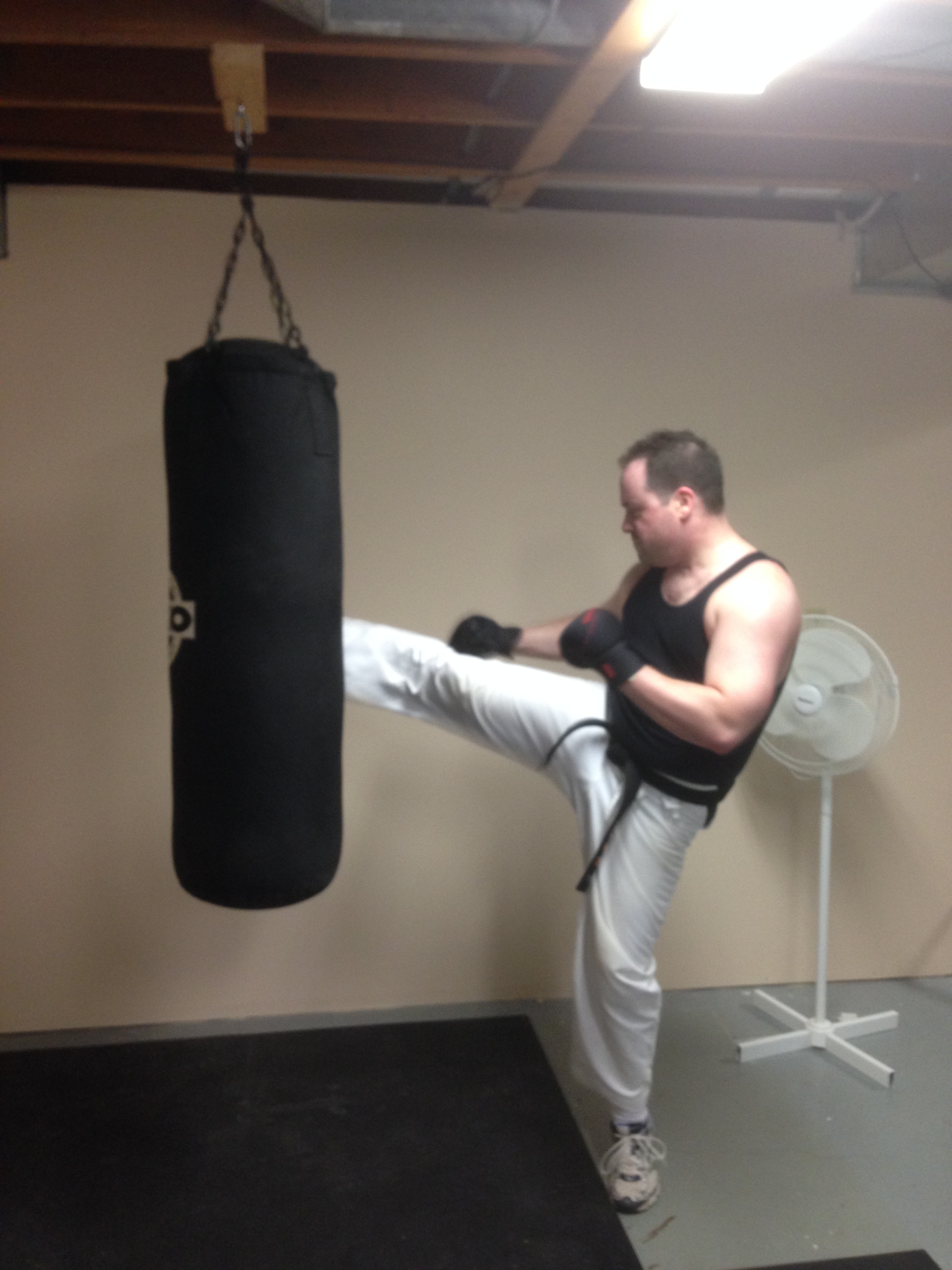
Expensive gym memberships aren’t necessary. Sometimes all you need is a heavy bag!

I like to do things that challenge me, but allow me to enjoy yourself as well. Even though martial arts was originally a means of improving my health and saving my life, it’s become a part of me and I practice it several times a week. Although my principal style is Okinawan Karate, I study Kempo Karate on Tuesdays and Thursday with a local school in Regina, Saskatchewan.

I also try to include heavy weights twice a week. Heavy weights shouldn’t be a main focus (unless you’re primarily a weight lifter), because the larger you get, mass-wise, the less flexible you become and other activities will get tedious. At the moment, my wife and I are are currently doing the 21-day MetaShred workout on DVD (this can be ordered through Men’s Health at https://www.shopetc.com/menshealth/21-day-metashred-dvd-water-bottle.html). It’s proven to be a wicked challenge. It permits variations of the workout for beginner, intermediate and advanced, allowing my wife and I to work out together and adjust individually as required while doing the work out together.
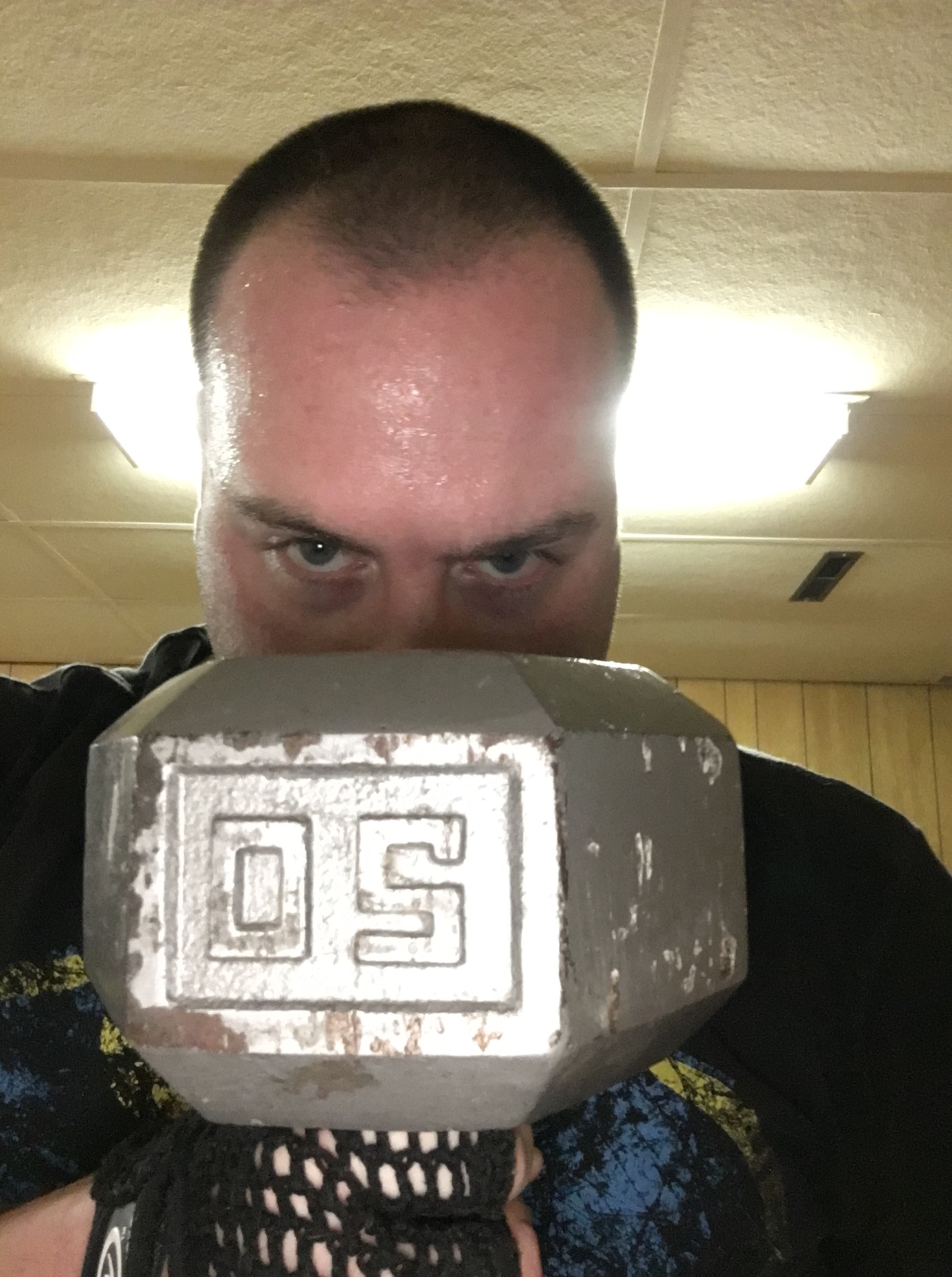
Find your maximum and try to do a few reps with something heavier; push yourself!

Up until 2016, my Hemoglobin A1C was always above 8.0 (for those of you who don’t understand, and A1C is the cumulative average of someone’s blood sugars over a three month period). The normal range is between 5.0 to 7.0 so I’ve been trying consistently to reduce it where I can. Stepping away from shift work has helped immensely as late night or overnight shifts will greatly affect blood sugars. These days, I’m hovering in the mid to lower 7.0’s, which is a vast improvement on the grand scale of things.

Although it’s a personal preference (and a religious one), meditation is also important. There are several books covering the subject that you can read, but the bottom line is that meditation can help with blood pressure, stress, sleep patterns and healing of the body after workouts.

At the end of the day, as long as your having fun, you can’t go wrong! Get off the couch, get your heart rate up and push yourself. If you go outside and have a snowball fight with your kids for an hour, you’ve already done well. And when you aren’t doing something physical, pick up a book! Read about whatever piques your fancy. Although many people feel they need a piece of paper to prove they’ve studied something, knowledge is knowledge. I used to say “when you aren’t exercising the body, you should be exercising the mind.”

Don’t be afraid to try new workout routines and change it up!

Way of the Empty Hand, Way of Life…

Someone asked me when I started studying the martial arts and what style I practice. The answer is a bit convoluted, and dates back to quite a while ago…

I’ve technically been interested in the martial arts since I was four years old. I had access to a lot of reading material as a child, since my father was almost as much into books then as I am now. I had started reading about traditional martial arts in general. This is also around the time I was diagnosed with Type 1 Diabetes. I had a significant number of medical complications in those first few years, including being comatose on more than one occasion. I wasn’t a sporty kid when I was young. Unlike most kids my age, I wasn’t involved in soccer or hockey and preferred to spend most of my time reading books and watching documentaries (yes, I know what that makes me sound like!). I had taken swimming lessons and even started the advanced training to become a life guard, although I didn’t stick with that.

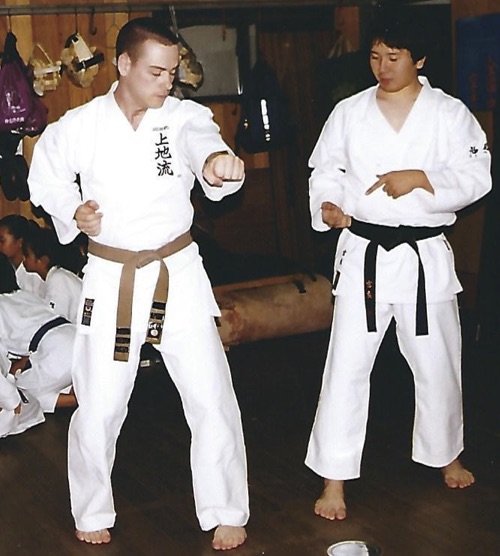
Training for my black belt in Okinawa, circa October 2001.

At seven years of age, I joined one of my friends at a local Tae Kwon Do class. I thought it would be a good way to get some exercise and it would allow me to satisfy my curiosity about the martial arts. I attended several classes over the course of the first year and started to enjoy it quite a bit. My parents didn’t approve of my choice to join martial arts as they felt that my Diabetes made me too vulnerable to be involved in rigorous physical activity. In some ways, they were very right. However, given how my body would react to Diabetes in the very near future, they were also very, very wrong…

Tae Kwon Do was fun, but it wasn’t quite right for me. For those of you who don’t study martial arts, or never have, allow me to explain; there are hundreds of different martial arts styles in the world, originating from different cultures, backgrounds and perspectives. From these styles, multiple offshoots of each style have emerged over the past centuries. Some more popular than others, some better known than others. I needed to find a style that would provide what I needed physically as well as spiritually.

In 1988, I started having more difficulties with my blood sugars and further complications arose from my Diabetes. I had an adverse reaction to extreme high blood sugar while sleeping one night and slipped into a coma. My parents found me in my bed, foaming at the mouth and my eyes rolling into the back of my head. I was rushed to the local hospital via ambulance, where they put me on an insulin drip and slowly lowered my blood sugar over the course of the following twenty-four hours and treated me for Diabetic Ketoacidosis (I ain’t explaining that one, that’s where Google comes in handy!). I was comatose for about three days. I woke up with the worse case of body pain and confusion I have ever experienced, even to this day. Further tests and a few days later, my doctors explained that I had insulin resistance. Basically, my cells were incapable of using insulin effectively, causing the high blood sugars that led to my coma. It was made quite clear that if we couldn’t find an insulin my body wouldn’t reject, my life expectancy was about three years. I was ten years old at the time.

I knew I would have to take matters into my own hands and do something. If being a child who was afraid of dying wasn’t bad enough, it often seemed as though the medical industry could do nothing to help me. Even at a young age, it appalled me that they could send a man to the moon but they couldn’t find a way to balance out my blood sugars. In the Spring of 1989, one of my best friends from childhood was studying karate in my home town. After a bit of inquiring, I learned that his father was the head instructor of the karate school, or dojo, and that it was a school of traditional Okinawan karate called Uechi Ryu. My parents were still sensitive from my coma, which had happened less than a year prior. They put a strict hiatus on my physical activities for fear that my waning health would suffer further. I ended up telling them I was quietly hanging out with friends when I attended my first karate class. I walked into that class full of hope and promise. It would ultimately lead to one of the best decisions of my life…

Practicing forms in Okinawa, circa October 2001.

Those first months in karate were rough. I had to attend classes and squirrel away my allowances to pay for tuition, all without my parents finding out. But the ruse paid off. Within the first year, my metabolism and immune system improved. I started to gain some mass and my insulin resistance began to dissipate. My parents noticed the improved blood sugars and health and I made my way forward.

By the time I had reached the point where I had to test for my green belt, it had become time to tell my parents. Considering that it would be a four hour test on a Saturday, it would be a little difficult to hide. My parents were NOT pleased with the fact that I had been keeping this from them for so long. But when weighed against the fact that it had helped towards improving my health to its current point, they agreed to allow me to continue training in karate as long as it didn’t affect my grades and schooling (which it hadn’t to this point). This solidified my martial arts lifestyle for the rest of my life.

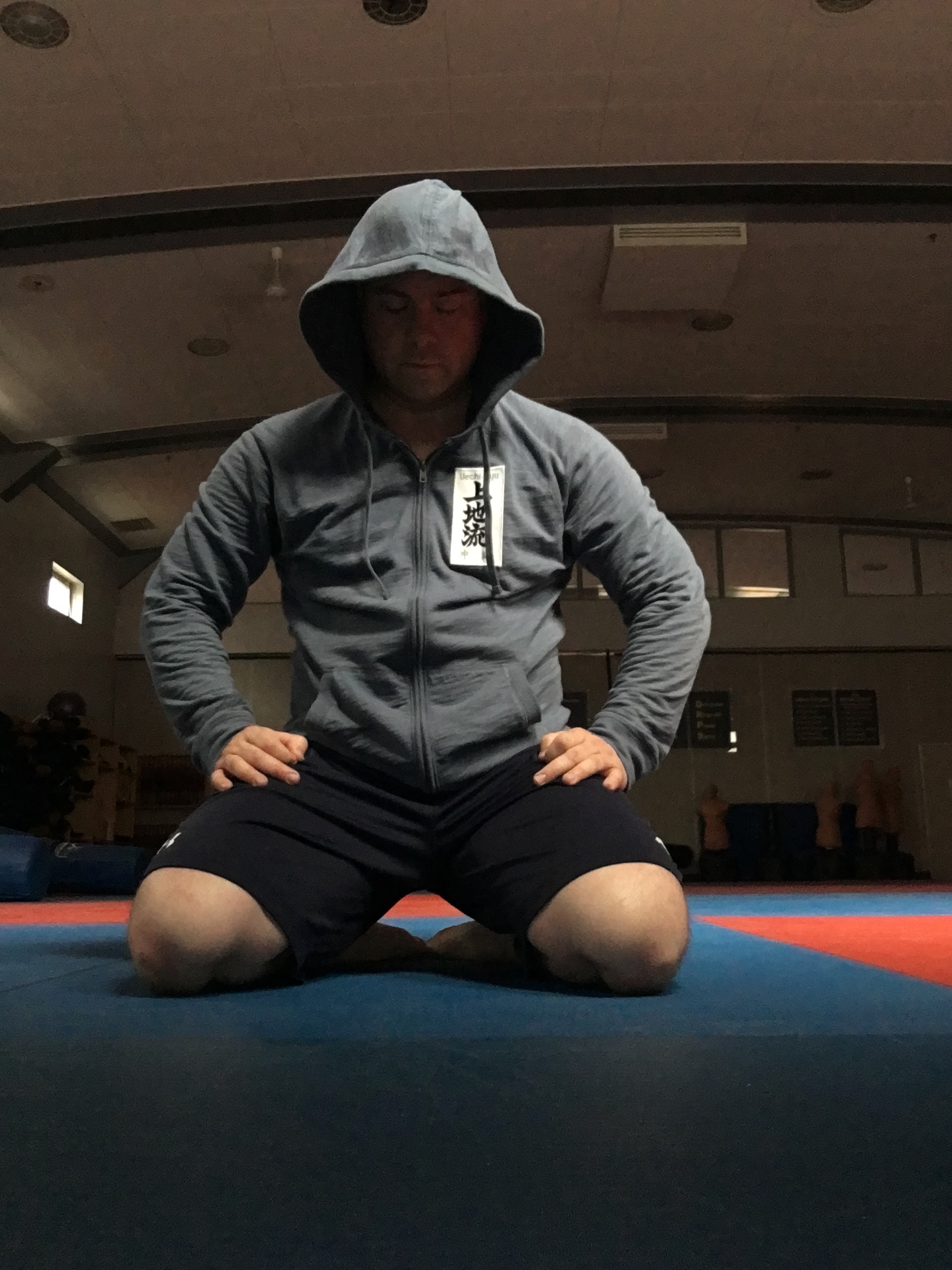
Meditating on the mats after a two-hour workout in 2017.
Photo shoot at the RIOKK 30th Anniversary celebration in 2017.

I’m not going to say that karate changed my life, but… Okay, karate changed my life. Karate saved my life. I’ve been doing it ever since and its been an important factor in every aspect of my life. Its helped maintain my health, discipline and got me to where I am today. It also helped peak my interest in my current career direction. Over the years, I’ve met a lot of amazing people through karate and have experienced wonderful things. I began studying Buddhism in 1998 and it followed me all the way to Japan in 2001 where I had the opportunity to visit and study with Buddhist monks and train with the karate masters in Okinawa.

These days, I’ve been training in Kempo karate and furthering my martial arts training. I’ve been chatting with my karate instructor about testing for my next grade of black belt and my wife and son have started to train with me.

My three year old son and I training on the mats.
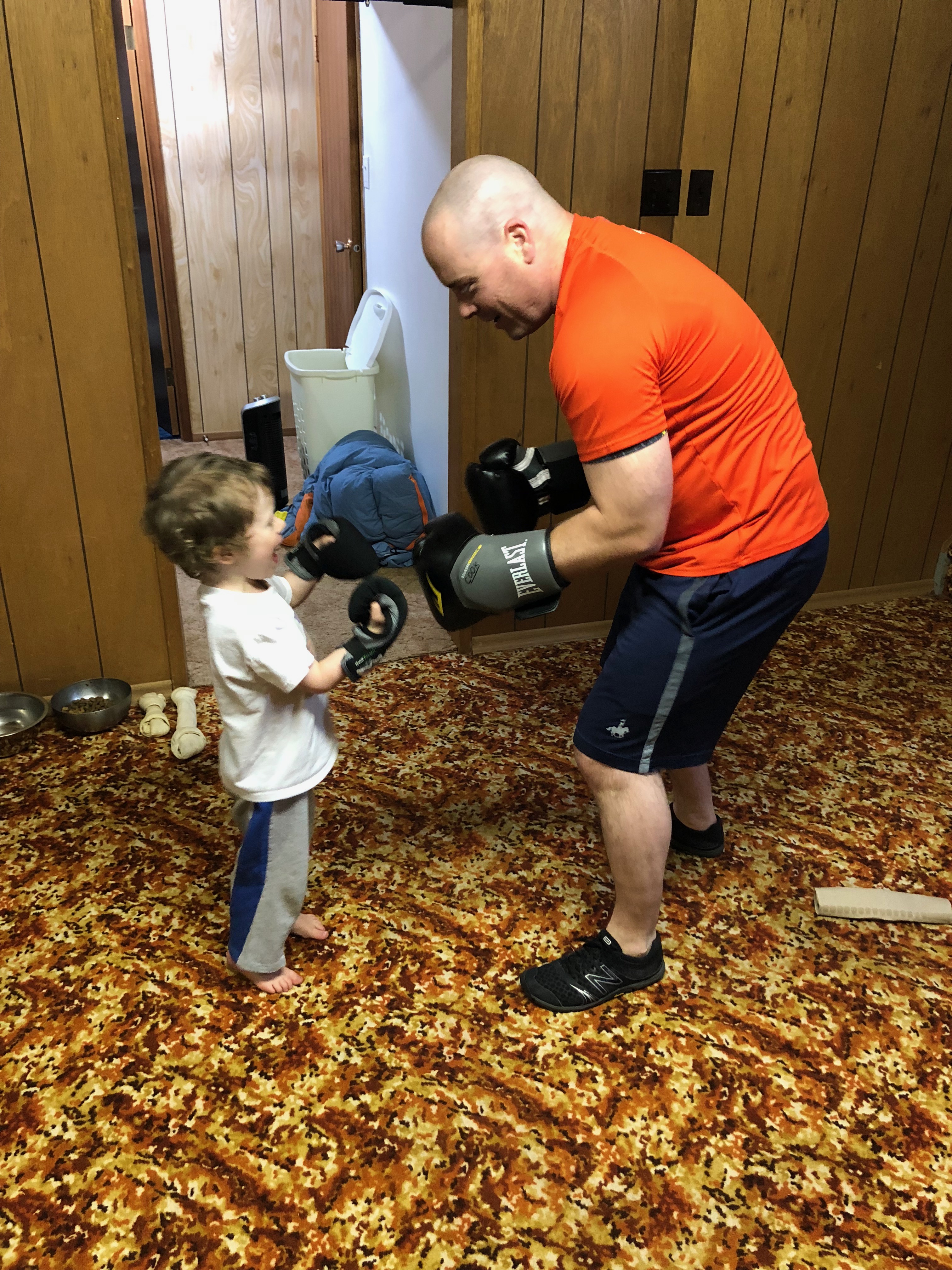
My son and I, sparring at home. Karate is in his blood!

I often wonder how far I would have made it through life, had I not started martial arts. I once heard that “we often find our destiny on the road we least thought to travel”. I have no idea who passed on the quote, but I know it’s stuck with me all my life. These days, I leave myself open to all schools of thought and train with people of all styles and backgrounds. After all, I was born with two ears and one mouth, so I tend to listen twice as much as I speak.

Feel free to leave me a comment if you’re a practitioner of the martial arts and would like to discuss.