“Good Manners Will Open Doors That The Best Education Cannot” – Clarence Thomas

To anyone who doesn’t study the martial arts, it can often seem a touch on the formal side; almost as though proper protocol and etiquette are lost on those who haven’t been exposed to it.

There is no mysticism behind the martial arts. Everything has an explanation and can be demonstrated within the realm of normalcy. However, it is the discipline behind the martial arts that lends to the formality.

There are a number of formal rules one must adhere to when stepping into a dojo, or karate studio. For the benefit of all who do not study the art, I’ll cover the basics ones here…

Bow when entering or exiting the dojo: This seems like a bit of a tiny detail, but it is an important one. It provides a show of respect. respect towards the instructors, respect towards the ones who trained before you, and respect towards the school.

Ensure your Gi, or karate uniform, is clean and pressed: This one is important not only for protocol and etiquette, but for hygiene reasons as well. And you would be surprised how many people overlook it. There’s nothing worse than someone who assumes that their last workout wasn’t intense enough to warrant laundering their uniform. Make sure it’s clean. Not only does that ensure a more “pleasant” environment for yourself and the other students, it shows proper respect for the uniform you wear on your journey…

Stand straight and pay attention: When not executing a movement in the immediate moment, it is imperative that you stand straight and tall, heels together and thumbs tucked into the front of your belt. Keep your gaze towards the front and pay close attention to what the head instructor is saying. Try to avoid looking around and fidgeting. A big part of discipline is being able to focus long enough to build an attention span beyond that of a goldfish!

Acknowledge every instruction given: Different styles will have different ways of doing this. Some will choose a shallow bow when the head instructor provides instruction, some will answer in the affirmative by saying Hai (Japanese for “yes”) or something of the like… The method of acknowledgment will depend on the style and school you’re in.

No food or drink within the dojo: You would think this one would be common sense, but a martial arts school is no place for you to sip your mocha-choca latte while your kid trains. Since the average martial arts class only lasts about an hour and a half to two hours, you can manage this easily without having food and drink within the confines of a training environment.

Get out of the way: If you become injured or over-tired, bow, step back and sit in seiza (on your knees) at the rear of the class. Stay out of the way and remove yourself from the flow of the class until your fatigue passes or your injury allows you to continue. Of course, if your injury is severe or serious enough to think you need to remove yourself, you likely shouldn’t continue as you could aggravate the injury further.

Don’t show up late: This one is a personal pet peeve of mine. Some instructors will say that if you show up late, it’s better to get “some of the workout” in rather than none at all. Although that is a great concept, showing up late can be disruptive to a class, and shows great disrespect to your class and instructors. We all have busy lives. It falls to you to plan ahead and schedule things so that you may attend class. Whether or not showing up late is appropriate will be up to your head instructor.

Don’t waste your instructor’s time: Although you’ve likely paid a fee for your presence, the instructor(s) within the school are there to impart their knowledge and skills to you and others. If you aren’t going to put in your full effort, then you’re wasting your instructors time. Effectively, you’re also wasting your time AND the fee you paid. You’re also affecting the other student’s ability to learn properly. Food for thought…

Respect and train based on your partner: You will sometimes be paired with someone of lower or higher rank than yourself. If you’re paired with someone of lower rank, you become the example of what is to be taught. If you inflict injury upon your partner, you may discourage them from further learning and you will have gained nothing yourself. If training with someone of higher rank, respect should be given and you should take every advantage to learn from this person as they are in the same position you would be if training with a lower ranked belt.

These are the most basic guidelines for training within a dojo. Does it seem like a lot? It probably does, but it is a small price to pay for the rewards one can reap by training in a traditional form of martial arts. And this is only scratching the surface.

The important thing is if you are uncertain about something, be willing to ask. Most instructors are more than willing to let you know what’s required of you while training in their dojo. And if all else fails, feel free to ask me. I know a little bit about it… ☯

If It Is Not Right, Do Not Do It…

The title is part of a quote by Marcus Aurelius, who was a respected Emperor of Rome but was also known as a Stoic philosopher. His book, Meditations, is a great read. I highly recommend it.

I’ve done martial arts long enough to see most students come and go. After all, it’s often been said (in martial arts circles) that only one student in ten thousand will stay with it long enough to achieve black belt. I think we all deal with this at some point; thinking or believing that we aren’t certain why we’re still doing it or if it serves any purpose. I had to deal with one such instance recently.

For the purposes of this post, I will call this student Jane. Jane has been studying the martial arts for a number of years. She’s what I would call an adequate student, meaning she trains hard and puts in her workout. The question becomes whether she practices and pushes herself OUTSIDE the confines of two classes that add up to about four hours within a one hundred and sixty eight hour week!

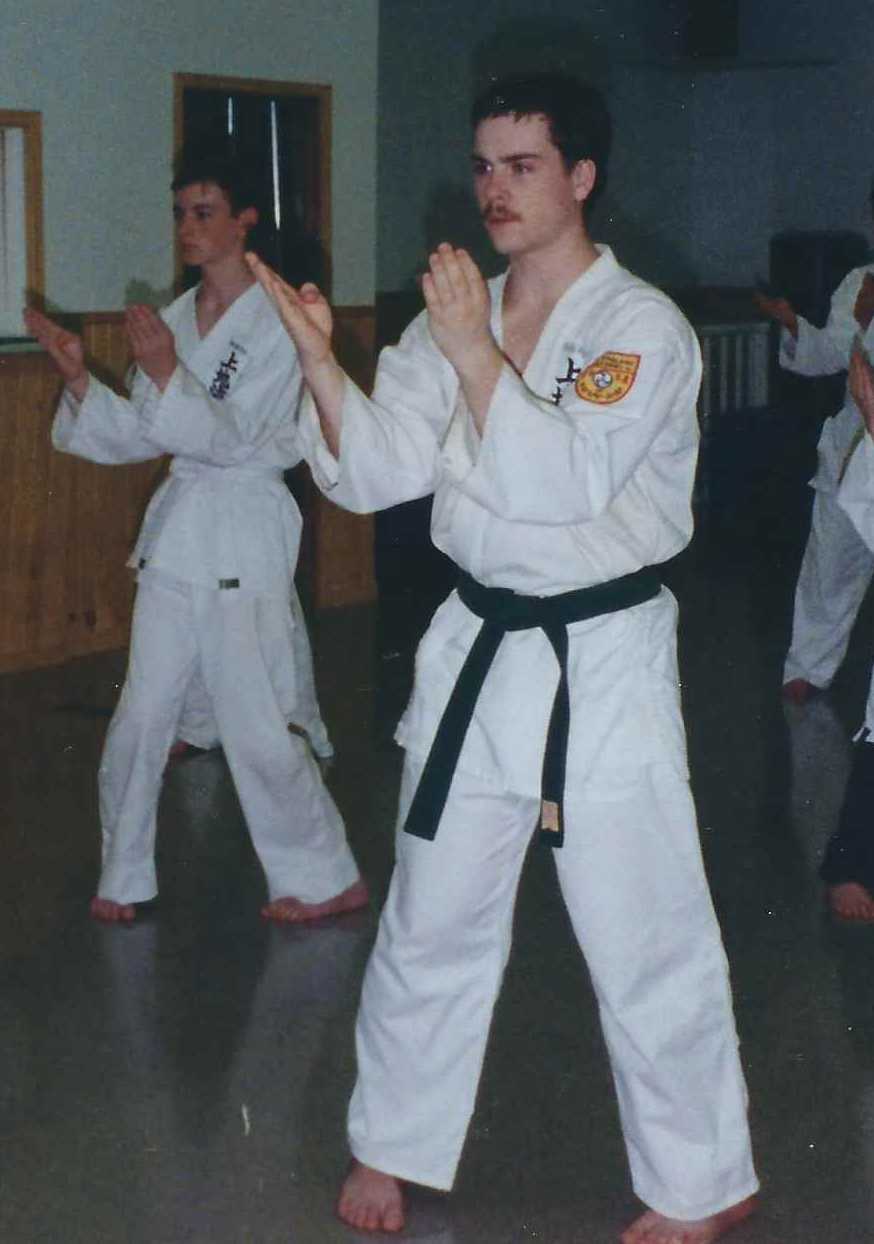
Green belt level in the mid 1990’s. The pressures of continuing on would reach me within the next few years of training…

What many students fail to comprehend is how much dedication the martial arts require. If one simply shows up to class (even every class without missing any), progression can be extremely slow and even nonexistent. There has to be a certain amount of practice outside of the dojo, at home and during your free time. Study and cross-training are necessary for a student to grow from basic and adequate to promotable.

Jane approached me after class one night and asked me if I felt that karate was worth pursuing for her. I agreed that indeed it was, but that it had to be right for her. When I asked her why she felt the need to question that, she explained that she had been sitting at the same belt rank for the past few years and felt she wasn’t progressing. She felt ignored and believed she wasn’t being given the level of attention she required in order to promote and train further.

We discussed this for a lengthy period of time but at the end, I explained that coming to karate had to be for her and her alone. If her only reasons for being in karate was to get a certain coloured belt around her waist, it may not be for her. That being said, every person feels the need to be acknowledged and have SOME advancement, regardless of what form it may take. She left that night after saying she would put some thought into it and make a decision.

That was last year. I haven’t seen Jane since. It’s quite sad, but it’s an old and typical story within the martial arts. Many students feel that if they aren’t promoting or advancing quickly enough that they are wasting their time. Most students forget that karate is like a fine wine; it must be aged and practiced until perfection is reached. And ultimately, if you think you’ve reached perfection it simply means that you haven’t.

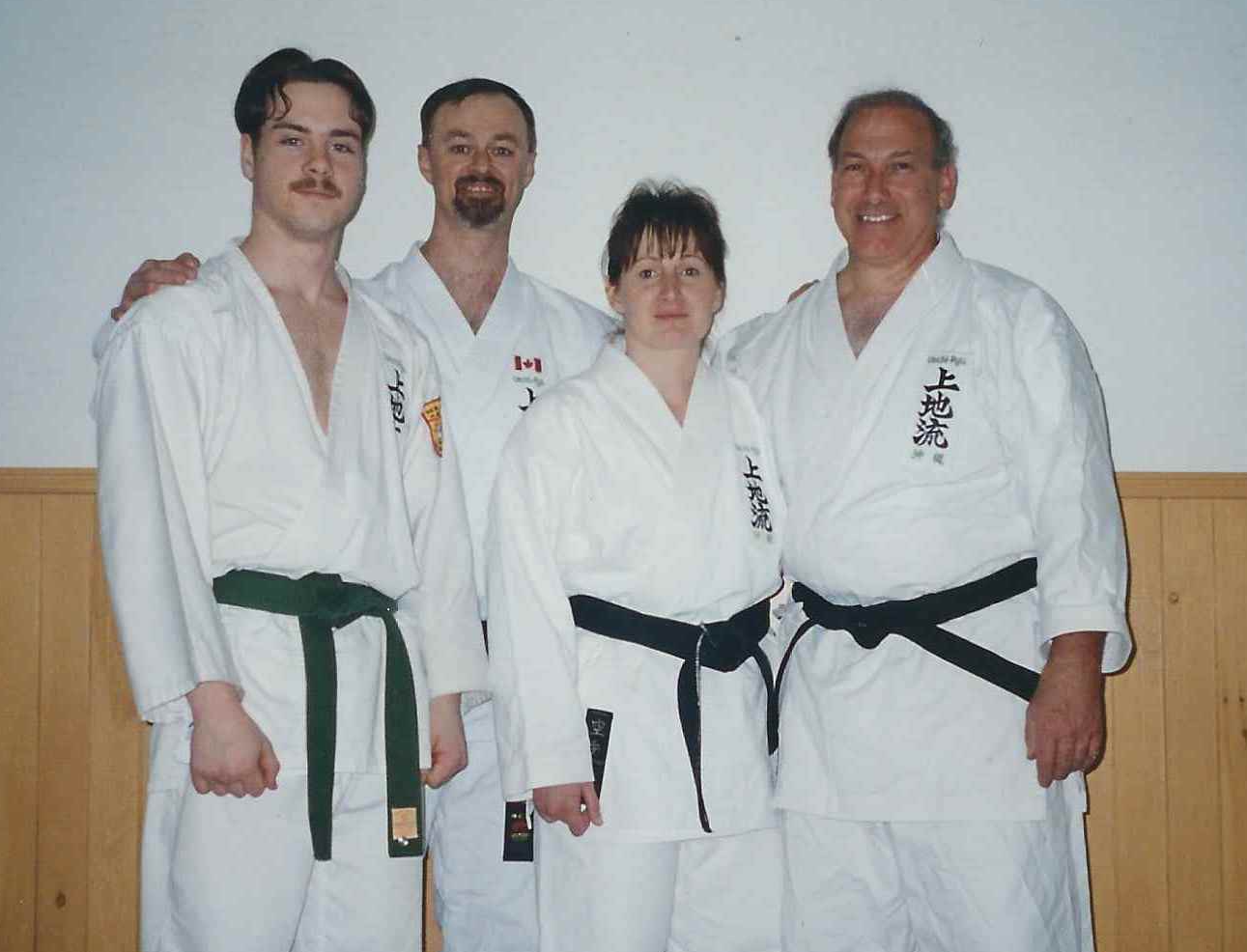
Three generations of karate. Myself as a green belt, next is Sensei Guy Levesque (my instructor) Eva (another student of Sensei’s) and Sensei Bob Blaisdell on the far right (my Sensei’s Sensei)

In the late 1990’s, I experienced the same phenomenon as Jane did. I found myself struggling to get through class. My techniques didn’t feel as sharp or as fast as they used to be. I had reached the rank of brown belt by this point, but it almost felt as though life was grinding to a standstill. I found myself wondering if, considering I had healed and improved my health, there was any reason for me to continue training in karate. I didn’t care about rank; the colour of my belt meant far less to me than how well I could use my acquired skills.

The thought of not being able to do it anymore, or stopping my training created a heavy weight on my shoulders and sent me into a slump. I was lucky to have Sensei to talk me through it and make me understand the further benefits of continuing on.

But there have been times when I’ve had to stop. Sometimes several weeks, at most a couple of months, time away to reflect has often been a tool I’ve used to bring perspective to my training and help guide me back. And I always have gone back.

When I left New Brunswick in 2009 and moved out to Saskatchewan, I had to deal with the prospect of training once or twice a year when I went home to visit. I spent several years training on my own, which meant progress and belt advancements were no longer possible. It wasn’t until late 2016 when I found a local school in which I could train. I won’t lie, it’s good to be back in a dojo environment.

If you’re questioning why you’re doing it, there’s nothing wrong with taking a break. If you step away for a little reflection and clarity, you’re not alone. And it doesn’t mean you have to quit. However, if you’ve had that time of reflection and don’t feel it’s for you, then it should likely be accepted as a sign that you should stop. And that applies to all forms of arts and sports, I think.

Be true to yourself. Nothing you do for yourself should be done because it is expected. It should be because you want to. Yes, I’m a firm advocate of pushing through and having the will to go one, but it also has to fit within your lifestyle and your personality. Taking that into consideration, we need to add to the title of today’s post. If it is not right FOR YOU, do not do it!

What Did You Think You Were Eating For?

One of the key reasons behind the consumption of food is to obtain carbohydrates for energy. The human body requires energy to carry on normal functions and, well… stay alive! But what else do we get from the food we eat?

A proper diet will also include a number of vitamins and minerals that we require to maintain proper health, growth and energy levels within the body. We’ve all heard about getting enough vitamins from a young age; I remember getting my Flintstones vitamin everyday as a kid.

But if you’re like most people, you’re likely wondering what these vitamins are for and what they do. My goal is to cover off the main ones here:

Vitamin A: This is an all-around vitamin that provides a number of functions including but not limited to the proper health of various bodily functions, tissues and helps to fight chronic disease and is known to be good for the eyes.

Vitamin B: This one is a bit complicated, as there is a large grouping of enzymes, vitamins and minerals that fall under the “B” category. In general, B-vitamins are used for energy production, immune function and absorbing iron. Some them include B2 (riboflavin), B3 (niacin), B9 (folate) and B12. There are a few more that I can’t recall, but B12 is considered amongst one of the most important of vitamins overall because it helps you turn food into energy.

Vitamin C: At some points, this one has been referred to as the sunshine vitamin. I’m thinking that’s mostly because people’s main source of Vitamin C is from citrus fruits. But this vitamin also helps with iron absorption, immune function and is a natural antioxidant that helps with the elimination of free radicals. Eating citrus fruits are also what sailors used to eat on long voyages to prevent scurvy.

Vitamin D: This vitamin helps with the strengthening of bones and teeth. Our bodies are designed to self-generate this vitamin naturally through exposure to sunlight, but obviously that needs to be done in small doses. Modern life has created an environment where more people spend their time indoors, away from the sun. So supplementation becomes important.

Vitamin E: A pretty straight forward vitamin, this one helps with proper blood circulation and clear skin.

Vitamin K: This vitamin is essential for blood-clotting. In order words, if you’re deficient in this vitamin, small cuts or injuries can cause excessive bleeding that can become dangerous.

Folic Acid: We hear people speak about this one as being necessary during pregnancy. And they would be correct! Folic Acid helps to prevent certain complications during childbirth but is important to everyone for proper cell renewal. This one is also known as Folate, or Vitamin B9 (as listed above).

Calcium: Most people should be familiar with this one. Teeth and bones, people! Teeth and bones! Good calcium levels are required to keep those body parts healthy.

Iron: This helps to build muscle tissue naturally and helps with proper health of the blood. As an interesting sidebar, it’s also what makes your blood red through the reflection of light!

Zinc: Immunity and Fertility. I’m a little unfamiliar with this one and haven’t had the opportunity to research it a great deal.

Chromium: This one is near and dear to my heart. Because it helps to control blood sugar levels. Chromium is what helps all the systems of your body to get the energy they need when they need it. Some traditional medicine practitioners will suggest Chromium supplements for Type 1 Diabetics who may have difficulty in maintaining proper levels.

Magnesium: This one helps your body to absorb all the other vitamins and minerals. It also acts as something of a relaxant to muscle tissue and play a role in proper muscle contraction.

Potassium: This mineral helps with the proper hydration of your body and helps to control blood pressure.

There are many others of course, but I’ve tried to cover off the main vitamins and minerals required for a proper diet. For more information and possible food sources for these vitamins and minerals, I’ve found the following two online articles that provide a lot of good information:

https://www.comvita.com/blog-article/10-essential-vitamins-your-body-needs/4100544

https://www.goodnet.org/articles/11-essential-vitamins-minerals-your-body-needs

We get most of what we need by eating regularly and including a variety of healthy foods. A lot of people take a daily multi-vitamin, which is fine. But unless you are experiencing symptoms or unexplained illnesses, there shouldn’t be a need to actively try and take added amounts of anything. Your medical practitioner should be able to advise you if further supplementation is required. For example, patients who are recommended to take Folic Acid and Iron during pregnancy.

Obviously, all of this is extremely important; not only for proper health and fitness, which is important to me, but to help with Type 1 Diabetes as well. A big shout out to my wife, Laura, who provided me with this blog post idea by asking about B12 yesterday. ☯

Expect The Unexpected

Based on artifacts found around China and India, the earliest evidence of something that could be considered a “martial art” is about 5,000 years ago. That’s a heck of a long time for something to exist. Inevitably, something that old will go through quite a fair number of changes throughout that length of time.

Martial arts was originally not only developed as a means of combat. It was also developed as a means of keeping fit and increasing one’s physical fitness. Over time, it propagated and there are styles of martial arts all over the world.

Through the decades, there has been a bit of an up and down in regards to how martial arts training has been approached. Although some styles used to focus on the freedom of movement and fluidity, a movement began at some point where instructors started teaching a “if they do this, you do that” philosophy. It became more reactive as opposed to proactive.

Here’s the reality: in a real fight, whether on the street or in defence of your own life, you can’t expect what your opponent will do. That being said, you also can’t focus on any one technique that you may do in response to any one attack. It becomes important to expect the unexpected!

When training, it’s important to practice a free-flowing way of fighting in order to allow yourself the flexibility to respond to any attack. This is why routine and constant drills, as well as free sparring is necessary in genuine martial arts. This allows you to groom yourself to the point where you will respond on reflex as opposed to thinking “Okay, here comes a front kick, I need to block THIS way…”

This is the difference between theory and practical application. Theory is extremely important; it’s how we learn the material required to progress. But the practical application is what’s required for survival. It’s what could potentially save your life, should you ever need to use the training you’ve undertaken.

I’m a firm advocate that you should never need to fight. But should someone back you in a corner and your life or the life of your family or loved ones ever be in jeopardy, it would be a good thing to be able to step up and do what’s necessary. Training for the unexpected will bring you closer to that goal. ☯

Did That Hurt? Well, It Was Supposed To…

I normally try and keep my inner zen and impart information objectively. My goal is generally to impart some wisdom through my stories and experiences, and perhaps teach a little something in the process.

But today, I’m going to hop up on my soap box for a little while and discuss an issue that weighs heavily on my soul. It began in the same way as it often does…

I walk into the dojo. The floor is cold and the hall is empty. The head instructor is setting up the required items for the evening’s class, and I stretch experimentally. I begin slowly; throwing a straight punch at a heavy bag. Then another, and another… Within moments, I start punching faster than I can keep track and am acting upon 30 years of instinct and training. I throw in the occasional kick for good measure, even though I’ve never been a fan of allowing my feet to leave the ground. I step away from the punching bag, allowing my breathing to steady. I fall into several forms followed by a number of knuckle push-ups. I stop and catch my breath, aware that several of the arriving students are watching me. I’m sweating profusely and have already done more on my own in the 15 minutes prior to the start of class than the entire student body…

It’s a sad story. One that has become more prominent in recent years. A lot of fitness and martial arts clubs have become a primarily social gathering, as opposed to a forum for proper training and development.

30 years ago when I started the martial arts, class started promptly at 6 pm and ended only at 8 pm. There were no washroom breaks, no water permitted within the dojo and the energy in the room was electric. Once you were inside, you weren’t permitted to leave the dojo until Sensei dismissed you, barring a medical emergency. Every student present knew their position. Everyone bowed; everyone kept going until the end. No one gave up. No one took it easy.

I feel that some of the genuine strength of the martial arts has become watered down. Let’s be realistic: all those awesome martial arts movies and kung fu flicks you likely watched as a kid (and perhaps still do) are based on real life martial artist who have spent their entire lives training and developing themselves. If not for the hard work of others, those awesome movies wouldn’t exist.

One good example is Bruce Lee. Even though he was an action movie star, he was also a traditional artist artist. Having trained from a young age, he developed himself and built himself to the point where he was able to surpass his teachings and even develop his own martial arts perspective in Jeet Kune Do. He was so skilled that the camera often had to be slowed in order be able to see the actual strike on film…

I use Bruce Lee as an example because he is well known inside and outside of martial arts circles. The likes of him hasn’t been seen since. But his example, as well as some others, set a precedence that effectively set the tone for my martial arts training from a young age well into my current state of being.

I’m a 40-year old man. By no means am I “old”, but I’m certainly not the spry, 21-year old green belt I was in 1999. But yet, I manage to work up more of sweat and burn more calories in 15 minutes than most of the teenage students in my current school will burn throughout the entire class. It may sound like a bit of a conceit, but it’s accurate. The change in the tide almost makes me feel as though traditional martial arts may disappear within the next generation.

It’s important to put in a maximum effort in any training you perform. It will sometimes be painful and it will be exhausting. But this is how you grow and progress. If you give it a minimum effort and basically “half ass” your workout, you may as well stay home. This applies to anything, whether you are training in the martial arts, learning a new sport of learning a new skill such as an instrument.

They say that showing up is the first step. I’ve heard this on occasion. And although I can agree that showing up is the first step, it is also the easiest. The next step becomes more difficult, as it requires the learner to put in a comparable effort for the skill they wish to learn.

So push yourself, damn it! If you don’t sweat, if you don’t feel aches and pains, if you don’t wake up the next morning barely able to walk, you’re not giving yourself the effort. And trust me, you are well worth the effort! ☯

If You “Whey” Out The Options…

Listen, I’m all for a bit of an advantage when trying to get in shape. There are all sorts of supplements and additives that athletes take that give them an “edge”. But how many of them are genuinely effective?

One of the most prominent and important supplements is whey protein. As a matter of import, protein is necessary for the building of muscle tissue, cartilage, bones and skin. It helps to build and support all these things, and also helps to increase strength and mass. Needless to say, most adults require a reasonable amount of protein in their diet.

According to WebMD, most adults get enough protein throughout the day. For a health adult, that means anywhere between 46 to 56 grams of protein, every day. But the question becomes whether or not they are getting the right type of protein.

Besides fibre, most natural sources of protein will help you to feel full for longer and can aid in weight loss. Decent sources of protein, such as fish, chicken and eggs are ideal. Depending on who you speak to, red meat shouldn’t be a constant indulgence, but lean cuts of meat can be a good source of protein.

Although the jury is still out, whey protein will apparently help will developing strength and increasing your athletic performance. Believe it or not, some studies have also shown that whey protein in the correct amount can help in lowering blood sugar levels, although I can’t attest to having experienced that myself.

There are tons of different brands of whey protein on the market, and they can be even be found at most chain retail locations. As always, you should consult your medical practitioner before starting any supplement, and they can recommend a brand and type that best fits what your nutritional and fitness needs may be.

It’s often said that we get enough protein with a healthy food-based diet. And if you eat three well-rounded meals during the course of your day, this may be the case. But for folks trying to build muscle mass or add a bit of an edge to your daily routine, whey protein may be the route for you. ☯

Breathe. Just… Breathe…

The human body is an amazing machine. At any given time, there are dozens of functions and processes taking place that are not visible or obvious. Some involuntary or automatic.

For example, your body has an involuntary system that keeps you from wetting your underoos anytime you have more than a few sips of your morning coffee. Once your bladder is full, the involuntary system releases and that’s where your voluntary system takes over and you need to hold yourself in order to prevent living your worst high school nightmare and creating a puddle in public!

That’s only one example, but just imagine everything that happens inside of you that you’re not aware of. One of the most important involuntary functions your body performs is breathing.

Think about it! You breathe constantly, all day and all night. You don’t think about it at all. Ever since your doctor smacked your butt and started you crying, you’ve been drawing breath.

We breathe because we require oxygen to enter our blood cells and help break down glucose and sugar, which we then expel as carbon dioxide. When we exercise, our respiration rate increases because we use our muscles and require more oxygen in the blood. Our heart rate increases along with our respiration to help pump the oxygen rich blood through our system.

Breathing can be both voluntary and involuntary. When doing the martial arts, we’ve been taught to do specialized breathing that helps control the flow of oxygen when executing a technique or doing forms. We control our breathing.

For folks in law enforcement and emergency response, tactical breathing helps to calm a person and lower their heart rate, making it easier to maintain control of a situation and properly assess things. When you panic, your breathing shallows and increases your heart rate. This is because shallow and rapid breathing reduces the amount of carbon dioxide and your body is trying to enrich your blood with as much oxygen as possible.

Why is this important? Well, from a Diabetes standpoint, we start to breathe rapidly when we experience hypoglycemia (low blood sugar). This is because the lowered amount of glucose in our blood makes it difficult to produce enough cell energy, and your body thinks it needs more oxygen.

From a martial arts or fitness standpoint, controlling your breathing will allow you to keep a cool head and control the situation you may be facing. It will also help improve your level of training. By properly exhaling during strikes or techniques, you help to properly expel carbon dioxide and this will help to prevent muscle fatigue during actual combat.

Pretty cool, right? All that is happening, just based on how you breathe. With all the things left to discover in the world, it can often be humbling to realize there will always be so much about our own bodies we don’t know.

So, keep on breathing… Actually, you don’t have a choice! But proper breathing exercises and meditation can go a long way towards helping with everything I’ve mentioned above. ☯

Do It Properly, Not Easily…

Martial arts is a special creature. I may or may not have written that, a time or two in previous posts. But it is. It’s one of the only things in the western world that combines, sport, fitness, art and mysticism bordering on the religious. It combines aspects of discipline and repetition to encourage a student’s self-confidence and growth.

However, it doesn’t. It really doesn’t. Encourage it, that is. From my experience, only about one in every 8 to 10 students will put in the raw effort and will to gain the experience and growth required to excel in the martial arts. All the fun stuff I described in the previous paragraph needs to be sought out and worked for. It doesn’t happen simply by walking into a dojo and following along.

I’ve seen too many students who attend class after class. I mean, their attendance is almost flawless (minus the ones who are “forced” there by parents, of course) but the effort they put into the classes is almost laughable.

Now, before anyone gets too high and mighty with me, I understand that every student is different; their needs are different and their wants are different. And I’ve met students who have joined the martial arts for many different reasons. Some people join to get in shape, some to learn to defend themselves… Some actually join simply for the social aspect of meeting others and being a part of something. No matter the reason, it IS important to you.

Sweat is the fuel in the forge of progress!

I frequently train at the rear of the class. I’ve long been a believer that a teacher can learn more by watching the students than standing at the front. And these days, I see so many students who phone it in while standing in class. Sometimes it’s easy to put in a minimum effort while the head instructor is busy monitoring so many students. But why be there if not to get the maximum return on your physical and spiritual investment?

Train from your soul! Give it everything you’ve got. When you train, take a look at the other students around you. Within twenty minutes, there should be a puddle of sweat at your feet. If there isn’t, then you aren’t putting your entire being into your training.

You can be in it for your own reasons. Just make sure that while they’re your reasons, they’re still the right ones! ☯

Why Having That Six Pack Is Bad For You… (And I Don’t Mean Beer!)

Listen, I know what you’re thinking. Having six pack abs is a trademark sign of someone who’s in shape, right? Maybe not. Trust me, I’d love to have a ripped midriff like the dudes we see in the movies. But there are actually a lot of reasons why a person shouldn’t.

Most genuine fitness gurus will agree that there are a number of health issues caused by training to get six pack abs. First and foremost, the type of fitness regime required to get and maintain ripped abs is ultimately unhealthy. The amount of work and effort required, combined with a stricter than strict diet, takes a toll on a person.

Although the current desired social aesthetic, ripped abs can cause all sorts of health issues.

The reality is that there is nothing wrong with developing those abdominal muscles. In fact, most people who exercise regularly will develop them regardless of their look. It’s making them visible that causes the issues.

You see, in order to have those nice, ripped abs, you need to lower your body fat percentage below what is recommended as healthy. It can cause all sorts of issues such as weakened immune system, hormone imbalances and bad structural support system for the body. Ultimately, we aren’t designed to have ripped abs.

Health issues in women can be even worse

Often, athletes who strive to get six pack abs will ignore or forego other important muscles groups in order to get that chiseled look. This means that as much as it’s the current social standard for someone who is in shape, having ripped abs in no way designates someone as necessarily being in good or proper shape.

The whole thing actually becomes worse for females, whose bodies are inherently designed for childbirth and serious damage can be caused to those reproductive systems while striving for ripped abs.

Men’s Journal actually put out a decent e-article about it and it can be read at https://www.mensjournal.com/health-fitness/when-six-pack-abs-are-bad-for-your-health-w435224/

In the martial arts world, the Okinawans believe that the soul is contained in the hara, what is known in some circles as the chi. having just an ever so slight belly means you’re soul is properly balanced. They generally frown upon having ripped abs.

At the end of the day, there are a number of better, healthier ways to get into proper shape. And although there’s nothing wrong with slimming down your mid-section (in fact, SOME weight loss can lead to better overall health) getting those oily six-pack abs everyone in the movies flaunt isn’t the way to go. ☯

The Bigger Person Won’t Always Strike…

The world is a volatile place. It always has been. Violence is a predominant trait of humanity and has always had a presence within society. We simply hear more about it during modern times, thanks to mainstream and social media and the availability of the world’s information at our fingertips, courtesy of the internet.

But is it necessary? Civil rights leader Mahatma Gandhi once said: “I object to violence because when it appears to do good, the good is only temporary; the evil it does is permanent.”

People have often asked me how I manage to consolidate the violence within my own life. Some often assume violence is dominant within me. Given my line of work (which I’ve always made a point not to specify on this blog, perhaps someday you’ll know why) and a lifetime martial artist, it can often be presumed that I have a penchant for violence.

And let’s be clear: every person is capable of violence. You don’t need a black belt or a weapon to cause harm. And I’m not exactly the smallest guy on the block. Although I only stand at 171 centimetres tall (5’7″ for you Imperial folks), I carry a hefty 95 kgs (210 pounds, again Imperial…) of which a reasonable amount is mass and not necessarily fat (although the never-ending gut battle rages on!) I have been taught how to fight from a very young age, both in class and on the street and some of what I’ve been taught will certainly do more than hurt a person.

Due to a number of the difficulties I’ve endured during the course of my life, I have an unseen cauldron of burning rage burning deep below, where I do not allow it to affect the surface. A radical mixture to be sure, when mixed with all the training I’ve received.

“But Shawn, doesn’t being Buddhist mean you don’t get angry? Aren’t you supposed to be all peaceful and stuff?”

No and yes. No, being Buddhist doesn’t mean I don’t get angry. I’m human like everyone else and I have the same full spectrum of emotions as anyone who isn’t. Yes, I am SUPPOSED to be peaceful. I actively seek out peace, in whatever form I can receive it. I am not always successful.

As humans, we shouldn’t be denying those feelings when they bubble close to the surface. Emotion is an energy; often created by endorphins and hormones, sure. But an energy nonetheless. And like any energy within our universe, it can’t be destroyed, simply transformed. So it becomes important for anyone to transform this rage into something else; something constructive.

For example, up until about two months ago I had access to a facility full of heavy punching bags and striking equipment. Speaking from experience, nothing quite helps quell feelings of rage, anger, frustration and violence quite like putting the boots to a punching bag for about half an hour. And performing an intense punching bag workout, in combination with drills and push-ups, can burn up to 500 calories per hour for an average person and help get a wicked sweat on.

Listen, no one is ever able to completely eliminate negative feelings or violence from their lives. Life, in and of itself, does not allow for such a thing. But we all have it within ourselves to take that negative energy and do something positive with it. Go for a walk. Have a workout. Renovate part of your house (ripping down walls REALLY helps burn off excess anger!)

And don’t forget to talk about it! If you’re angry, don’t be scared to SAY you’re angry. You have a right to how you feel, despite the circumstance. Whatever you do, make it a constructive choice and the outcome will never be anything more than positive. ☯