If You Get Punched In The Face, Your Stunt Double Will Likely Laugh At You

Everyone loves a good action movie. Especially an inspirational one. A perfect example of this is my favourite series of movies, Rocky… Although not all the sequels have received the same level of acclaim, I can watch the entire batch of 8 movies over and over and enjoy them as much as I did the first time I saw them (8 movies includes the newer Creed movies, just to be clear).

The first movie sends an important inspirational message; the unknown amateur boxer who trains as though his life depends on it and is given the chance of his career. Although he loses in that first movie, the moral victory sends chills down my spine (if you haven’t seen the original Rocky, I apologize for the spoilers. But the movie came out in 1976, people! You should probably get on that!)

But how much of what we see in movies is genuine and can have real-life applications? Obviously, I’m talking from a combat or fighting standpoint.

Hollywood, and mainstream sports such as boxing and MMA have romanticized the notion of duking it out, round after round, for long periods of time. Even within the martial arts, we train for hours on specific techniques, but these aren’t practical applications as they would happen in a real fight. We simply do this to engrain the technique and commit it to memory so that we can call upon muscle memory when needed.

The reality is that there is no such thing as a real fight where the protagonist and the antagonist square of and circle each other while dialoguing for several minutes before getting into an exchange that includes spinning kicks and multiple blows to the head where each combatant continues to fight it out, unfazed. All the while with a wicked soundtrack by Two Steps From Hell playing in the background…

The average street fight will last less than a minute. This includes both combatants squaring off, taking their stance and exchanging no more than three or four strikes each. This is all the time that’s necessary for one and/or both combatant to fall to the ground and keep pummelling each other until exhausted. And the reality is that if someone even matching your weight gives you a full contact punch to the head, you’re likely going down. Getting punched in the head causes the brain to impact with the wall of the skull and can cause dizziness, confusion, loss of balance and potential loss of consciousness.

In fact, in an article written in HighPercentageMartialArts.com by Louis Martin, he explains that fights “happened most often within thirty seconds” and that “after thirty seconds, the chances of a knockout or TKO dropped sharply.”

Martin goes on to explain what I described above: “Men usually charge at each other with power punches, fall to the ground, and continue punching until they get tired or knock each other out.” His article actually contains a number of interesting statistics and information regarding 200 street fights he observed to accumulate this information. (https://www.highpercentagemartialarts.com/blog/2019/3/6/how-long-do-street-fights-actually-last-and-what-can-we-learn-from-that)

Sports combatants train to build their endurance to surreal levels because they are required to last as long as possible in the ring. Martial artists will spend hours honing their skills on specific techniques so that they’ll execute them using muscle memory when the need for defence arises. But once it comes to a no holds barred ACTUAL fight against the guy who cut in line while you were waiting for your maple scone at the local coffee shop, you’re looking at about a minute at most, as far as the actual fighting goes.

So keep practicing those specific techniques. It’s important to get them down pat before trying to use them. But understand that if you get into an actual fight you’ll get two, maybe three, punches or kicks against your opponent before the outcome is decided. And in the real world, there usually are no actual winners in any fight. ☯
To Chi Or Not To Chi, That Is The Question…

What is chi? It’s a term often associated with the martial arts and usually referenced as something mystical in popular cinema. Chi or Qi, depending on your source, is defined as a pseudoscientific , unverified concept that is believed to be the underlying “life force” or energy that sustains life (https://en.wikipedia.org/wiki/Qi).

In the Japanese martial arts, this is referred to as the Hara. More specifically, we tend to centralize this to the stomach area, although it doesn’t refer to the organ itself. But it is considered the energy field of the body that sustains us (https://en.wikipedia.org/wiki/Hara_(tanden))

I’ll admit that I’m a weird mish-mash of traditional and modern beliefs. Although I don’t believe we encapsulate an unseen, unproven energy field that sustains us and makes us stronger in the martial arts (if we can tap into it), there’s no denying that from a purely scientific perspective, we have to concede that we are primarily composed of energy.

This energy is based on the atoms that constitute us, and in no way forms some unseen energy that allows us to pulverize bricks or knock people over without touching them.

I’ve written a few times on the fact that living things tend to move, and movement creates energy. This energy is required to maintain life. One needs to wonder what the possible connections may be, between the scientific energy that we know to exist or the pseudoscientific energy that’s been discussed and studied for over 2,000 years. ☯

Stress Is A Hell Of A Drug…

Most days, it seems as though there really isn’t a great deal of much that DOESN’T affect my blood sugar. It often feels as though if I take a breath the wrong way, my blood sugar may spike!

The past two years have caused a massive ball of stress in my gut. My thoughts often stray to the situations I’ve been dealing with. you wouldn’t think that worrying about something, being anxious or stressed, would adversely affect blood sugar, but it does. Here’s why:

When we become anxious or stressed, our bodies produces hormones. Some of these stress hormones can prevent the release of insulin in a normal person. But since most of us Type 1’s don’t really produce insulin anyway, those hormones tend to cause a whole bunch of other damage.

I think that most of us would agree that an hour and a half isn’t a significantly long period of time. Right? Or is that just me? My last karate class was a bit of a brutal ordeal. I started class with a normal blood sugar level. This usually means that I’ll stay level, maybe even have increased blood sugar, by the time class ends. This is because the release of adrenaline usually includes the release of glycol and causes spikes in blood sugar levels.

But this wasn’t the case for me. About an hour in, I was hit by a sudden wave of nausea, which is weird because nausea isn’t usually one of my low blood sugar symptoms. I bowed out and staggered over to my gym bag and tested my blood sugar through my sensor. I was sitting at 3.2mmol/L. For those in the know, this is starting to scrape the bottom of the blood glucose barrel!

I excused myself and wolfed down a handful of sour grape jellies, which resulted in a jump to 8.7mmol/L in under an hour. I have to be honest, fluctuating levels of that magnitude are exhausting. Add to the fact that class wasn’t out yet, and I tend to be too hard-headed to stop, even when it’s what’s best for me.

I spent the remaining half hour in a bit of a daze, trying to consolidate my sudden increase in blood sugar with the fact I still had to push myself to complete the class. All of this to say that even the mildest and most normal of human emotions can have an adverse effect on blood sugar.

All of this is to demonstrate how very important it is to test frequently and always be prepared. Carry sugared goods on your person at all times. Be sure to adjust your insulin levels and consult your medical practitioner often. Fine tuning and careful monitoring can often be the only way to ensure your continued health. ☯

Don’t Pop Your Clutch

There’s a natural inclination, when you’re working out to go hard and go strong right from the get-go! Although there’s nothing wrong with working up a good sweat (I generally encourage it, actually) it may not always be conducive with getting the most out of your workout.

Last Thursday’s karate class was interesting, because we practiced sets of 50 reps. The instructor would provide a specific technique and had us pair off and practice them back and forth for 50 reps each. We did this for almost forty minutes.

I was paired off with a young lad who was a green belt. We squared off and he attacked appropriately and I began practicing the assigned technique. When I had completed my 50 reps, my partner started in and performed his. Here’s what happened…

I started off at a steady, even pace. I focused on form and proper technique. By the time I reached 40 reps, my strikes got stronger and more focused. My partner started off by striking as hard as he could. He focused on strength and sheer force. By the time he reached his halfway point, he started getting tired and his muscles turned lactic.

What does this teach us? Well, it teaches us that learning the technique properly as a first step is of the utmost importance. Strength and power will come later. What is that quote from Bruce Lee? “I fear not the man who has practiced 10,000 kicks once, but I fear the man who has practiced one kick 10,000 times.”

Essentially, you need to try and focus on learning things properly before trying to apply it. This is sort of what form and kata are for. When entering the dojo, everyone wants to punch and kick as hard as possible and make it look fancy.

Good things take time. Patience. Perseverance and practice. There are no easy paths and even when you have experience, you sometimes need to back it off a notch and take some baby steps to ensure you gain the most from your training. ☯

The Real Holy Trinity

Quite a while ago, I posted about the cycle of life. I tend to forget how long ago, considering I’m close to having posted everyday for almost a year at this point. But given the passage of time, sometimes it becomes acceptable to repeat some of the information I’ve shared. And here we are…

Ask yourself: what is the one thing that all living things have in common? The correct answer is MOVEMENT. All things that live tend to move. This is true of even the most basic of life forms. Plants move to adjust to the environment and some flowers will even turn with the sun.

So, what does movement create? If you answered ENERGY, you are correct. Think along the lines of a hydroelectric dam. Powerful currents of water sent through turbines that create energy. It’s a proven concept of basic physics that movement promotes energy. Almost like running on a treadmill or wind turbines… Movement creates energy, no doubt.

And guess what? Energy creates life. At the end of the day, whether your beliefs are religious or scientific, one needs to acknowledge that we are all essentially made of the same stuff: energy. Down to our atomic base, we are all composed of energy. And even basic electricity has movement contained within it… Electricity is fundamentally the movement of electrons through a conductor, creating a current.

So here’s the equation: life creates movement, movement creates energy, energy creates life and so on and so forth. It’s a cycle, and an important one. If you remove or lessen any of the three, you jeopardize your health and your life. Think of unplugging your smart device, where the current of electrons stops and it is no longer receiving energy. The device effectively loses its “life”.

Look at it this way: If you happen to be a couch potato, you don’t move much. This means that your energy turns stagnant and non existent and you reduce your ability to maintain your life. In medical terms, you gain weight, your cholesterol rises and you basically die from sitting still.

So keep moving. Keep yourself motivated and energized. Even if it sometimes feels like it’s better or easier to relax and take it easy, your body and health will thank you later. ☯

Peace Means Having A Bigger Stick

Sure, the title is a quote from Robert Downey Jr. as he played Tony Stark. But wisdom often comes from the most unlikely sources. Today, I’d like to touch on a martial art style known as Kali.

Depending on your course, this style of martial art may be referred to as Escrima or Arnis. I have come to know it as Kali because of it’s attachment to Kempo karate, which is the style I currently study and train with.

Because RIOKK has roots in Hawaii (RIOKK means Regina Institute of Kempo Karate, by the way), there is a significant Filipino influence on the style. As such, the school tends to train with the Kali sticks a great deal.

Kali is extremely versatile and offers a number of variations unlike most weapons I’ve seen in the martial arts. It can apply to the sticks, machetes, blades and even empty hands. Just to be clear, my main focus over the past three decades has been empty-hand combat. I’ve had very little experience in weaponry with the exception of the samurai sword, which I have trained with in depth.

But since training with the RIOKK school, I’ve started training extensively with Kali sticks. It’s a whole different ball game when you start fighting with a stick in your hands as opposed to empty-handed. How much more basic can you get than fighting with a stick? Since the times of our ancient ancestors, using a stick to fight has been an expected tactic. Spears, lances and similar weapons that have evolved from the use of a basic stick all demonstrate that Kali can and should be considered as an effective weapon.

Some background information can be read through Wikipedia at https://en.wikipedia.org/wiki/Arnis

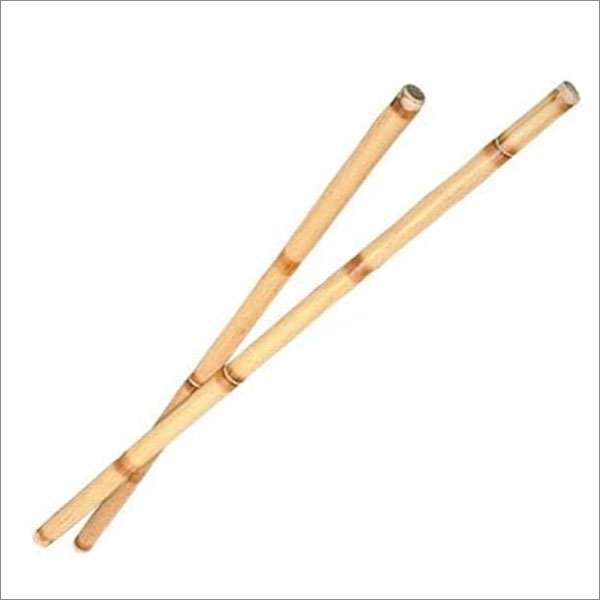
An example of wooden rattan kali sticks

Listen, I’m still an empty-hand guy, no doubt. But if I HAVE to use a weapon, it may as well be a weapon that can be accessed anywhere, right? Any old stick will do with this fighting art. Sometimes the simplest methods are the best. ☯

How Buddha Got His Groove Back

Well, Labour Day weekend has come and gone in Canada. Kids are back in school and with the start of school comes the re-opening of the karate dojo I train with here, in Regina. We usually close for the summer as the school gymnasium we rent isn’t available during the summer break. Last night was my return to class after a couple of months without training.

For those of you who read my posts religiously (I’m assuming everyone does!), I wrote a post a week ago about how in recent months, I seem to have fallen off the rails, fitness-wise. There are a number of reasons behind this, but needless to say I’ve been hammering out a few workouts at home since I wrote that post in an effort to try and get myself back on track.

Last night’s opening adult class was the icing on the cake. The reason I specify that it was the adult class is because the other black belts had the advantage of having trained at the kids’ class last Saturday. So they were full of piss and proverbial vinegar, ready to go. Meanwhile, I suffered just a BIT more. Let’s see if my vocabulary is eloquent enough to describe the experience…

I was the second one there, preceded only by Master Harding. He was setting everything up and we chatted for a few moments about our respective summers. It was good to be back and I was anxious to see how many of the students would actually show up.

I started with some casual stretches and experienced a sound akin to several hundred mousetraps going off at once! I felt muscles pull and realized that despite the workouts I’ve performed at home recently, last night’s class would put me through the paces.

The class was small but energetic. There were two other black belts besides Master Harding and myself. We spent almost forty minutes stretching, warming up and practicing techniques as a class. I recognized how out of shape I truly was.

By the end of the class, my movements were so sloppy that it almost looked as though I was performing some sort of dance that seemed to be a combination of an Irish jig, square dancing and twerking! By the time we closed and everyone bowed out, I was spent.

Needless to say, I’m in a reasonable amount of pain this morning. But it’s a good pain. It felt good to get back at it and practice the martial arts in a class environment. Next class is Thursday and I’m looking forward, despite moaning and groaning. ☯

How Not To Get Your A$$ Kicked…

I’ve reached a point in my life where I’ve been doing martial arts for more years than I haven’t. In those decades, I’ve seen some pretty incredible things and have used martial arts to help deal with a number of situations. And most of those situations weren’t fighting.

Most people consider the martial arts to be a fighting art. Although this may true on some respects, this isn’t the reason why they were originally created.

Depending on who you speak to, and what their sources are, the martial arts are believed to be several thousands of years old. Their origins are believed to be rooted in China or India, although there is some debate on which of these two cultures developed it first.

Ultimately, the Shaolin monks in China originally created what is known as their version of the martial arts as a means of staying fit and in shape. It was also considered a means of defending the monasteries if it became necessary. My style of karate is a descendent of this Chinese style.

These days, thanks to mainstream cinema and other forms of media, the martial arts is often viewed strictly as a fighting art. It would be remiss of me not to mention that the concept of the Mixed Martial Arts has unfortunately deepened this view.

“Discipline is not the enemy of enthusiasm” – Joe Clark

But it is true that traditional martial arts has a deeper purpose than simply being able to clear a room of enemies in epic empty-hand battles. The martial arts has shown to improve circulation, maintain proper health and body weight and increase confidence and personal discipline.

Certainly, over the past thirty years I’ve enjoyed the increased benefits of karate in regards to my health and Diabetes. Training hard and consistently has allowed me to be the exception to the Diabetic rule. Unlike most people afflicted with Type 1 for as long as I have, I still have a clean nervous system, clean cardiovascular and renal function. My circulatory system is also clean and clear and I don’t usually have the foot and extremity problems that most type 1 Diabetics have.

Karate has certainly been good to me over the past thirty years and has provided a wide variety of benefits, health-wise and even professionally. And if I were to recount the instances where I used it for actual fighting, I can probably count the number of physical fights on one hand. I’ve come to find that once you’ve trained long enough, the need to fight actually becomes less and less.

No matter what your reasons are for being in the martial arts, make sure that those reasons are for you and and for the betterment of yourself and those around you. If one’s only desire is to fight, there are sports in which one can indulge those desires. Martial arts is not the place for it. ☯

Respect Is The Foundation Of The Martial Arts

Lyndon B. Johnson once wrote, “Yesterday is not ours to recover. but tomorrow is ours to win or lose.” People often point out that it’s important to remember where we came from, to remember our past. Sometimes that past is not a clear, especially depending on the source.

The martial arts are incredibly old; several thousand years old, in fact. This is taking into consideration some of the paintings and artifacts that demonstrate striking and fighting that originate anywhere between 2000 to 4000 years ago. But some studies have shown some to be even older, originating in China.

Trying to enumerate the number of martial arts styles as they exist today is almost impossible. Many people try to provide a composite list, but the reality is there will always be an offshoot of a mainstream style or an independent master who creates a style all their own. This makes it reasonably impossible to know EXACTLY how many different forms of martial arts there are.

That being said, every style has a story. For example, the origins of my karate style date back to the late 1890’s when the originator of my style fled Japan to escape the mandatory military conscription. He didn’t travel to Japan for the noble purpose of learning the martial arts or studying a mystic art; he fled from conscription.

There are little details like that one present in almost every style. Although not inherently good or bad, some of the details behind the history can lend a unique perspective into where the style will take you. But like an old fashioned game of “hot potato”, the same story can have different details after decades of being passed on through different sources.

Given that the average person has the world’s information at their fingertips via the internet, everyone is an armchair historian. Many students of the martial arts will read a background on something and think nah, that isn’t true… I’ve been guilty of that myself, on occasion.

It’s important to remember that some origins and backgrounds have been passed on through spoken word. And history has often shown that this is an ineffective means of accurately passing on information. After all, the next person may omit certain key details that are important, or only pass on that which they FEEL is important.

Even with today’s use of mainstream media and internet presence, many believe that their version of history becomes “the right one”, simply because they’ve published the book on it. But ultimately, what we learn is what we learn. Although I may be wrong regarding a detail about the style you’ve spent your life studying, it doesn’t mean that respect should immediately be cast aside.

There’s nothing wrong with teaching someone why their information is incorrect or what may be false about it; especially if you’ve studied it yourself. But it becomes wrong if you choose to be confrontational and refuse to have a rational discussion about it. After all, it’s really hard to know if you have the right information unless you were there. And I can almost guarantee there is no one left who was. ☯

“Grab” On To Some Facts 🥋

I know I tend to post a lot about medical issues, problems in society and how to improve your life. This is mostly because, well… That’s the blog! It’s often hard to cover off topics about Diabetes, medical and physical health and the suffering of humanity without touching on some negative aspects.

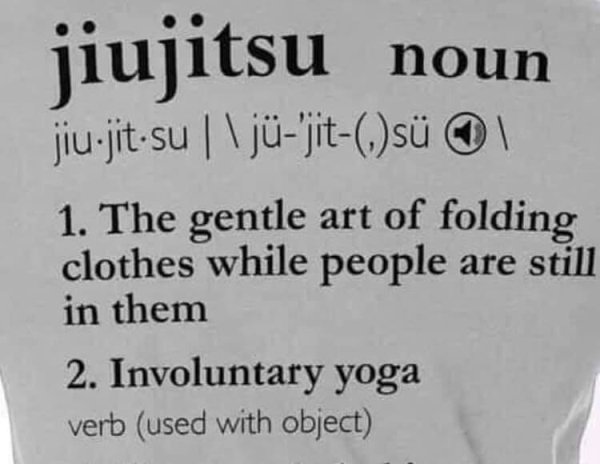
As such, I’ve decided to keep it short, sweet and light today. I found this photo on another blogging site and it made me smile. I figured any practitioners of the martial arts who are reading may get a kick out of it as well:

I think this is pretty funny, and quite accurate. But just to touch on the actual art of Jiu-Jitsu for a moment, here are five facts about the popular martial art that most people may not know or possibly get wrong:

  1. Jiu-Jitsu is not Brazilian. Despite its popularization through organizations like the UFC, Jiu-Jitsu (or Jujutsu) traces its roots back to Japan. When you hear the term “Brazilian Jiu-Jitsu”, this refers to an adaptation of an older form of Judo;
  2. Jiu-Jitsu is not only a grappling style. Most forms of the martial art also use weapons and strikes. The idea behind the style was to be able to engage an enemy who may be attacking with a short range weapon, such as a short sword or stick. Traditional Jiu-Jitsu incorporates a number of stand-up techniques and it isn’t all about rolling on the mats;
  3. The name “Jiu-Jitsu” is a romanization spelling of the correct spelling, which is “Jujutsu”. And this term didn’t come into being until the early 1800’s. The term was used to encompass a number of grappling styles, empty-handed or not. In fact, one of the systems it covered was “the way of softness”, or Judo. This was almost two hundred years before Judo’s creation by Kano Jigoro;
  4. Jiu-Jitsu is at least partly responsible for the creation and development of multiple other martial arts styles, such as Aikido, Judo and Sambo. During its early existence, Jiu-Jitsu is credited with the creation of more than 2000 offshoots of the art. Some of these retained connections with Jiu-Jitsu while others have modified their techniques and differed their styles enough to no longer considering themselves a style of Jiu-Jitsu;
  5. Brazilian Jiu-Jitsu is descendant from Judo. Brazilian Jiu-Jitsu is one of the most popular forms of the art, given how much exposure it has received in mainstream media and the propagation of its teachings. Although an extremely effective art, Brazilian Jiu-Jitsu was developed after Judo was introduced in 1914.

Sure, maybe points #1 and #5 sort of touch on the same thing, but whatevs… It’s all good information, right? I’ve been doing the martial arts for long enough to know that there’s always something new to learn, and roots always go back further than what we assume is the beginning. Enjoy the rest of your weekend, and find yourself a little something to help make you smile today. ☯