Tai Chi, The Underestimated Martial Art ☯

When one thinks of martial arts, what springs to mind are the mainstream styles that almost everyone has heard about. In that respect, I’m referring to Karate, Tae Kwon Do and Kung Fu as prime examples. And any of their offshoot styles, of course. But when someone tells you that they study the martial arts, the first thing that comes to mind likely isn’t Tai Chi

First of all, what is Tai Chi? According to a page on the Tai Chi Foundation’s website, “Based on softness and awareness instead of force and resistance, tai chi chuan (also referred to as tai chi, taiji or taijiquan) has been recognized for centuries as a method of self-cultivation and an unexcelled form of self-defence. In Chinese, tai chi means “Supreme Ultimate.” (https://taichifoundation.org/what-tai-chi-chuan?gclid=EAIaIQobChMIupeU-Kjr6AIVLf_jBx2uOA6SEAAYASAAEgLrrfD_BwE)

Fitness group doing tai chi in park on a sunny day

That’s just scratching the surface, really. Tai Chi is a Chinese martial art, which makes it a style of Kung Fu. In the Western hemisphere, people associate Tai Chi with something that the older population does to improve flexibility and blood flow in the body. Although these certainly are some of the benefits, people often seem to forget that Tai Chi is actually a fantastic style of self-defence, and traditional Tai Chi includes all the same aspects as any other martial art including weapons, forms and faster movements than the slow and steady pace we usually see happening at a public park.

The beauty of Tai Chi, which has often been referred to as “meditation in motion”, is that it’s low impact and places very little strain on the joints. For an old dog such as myself, who has been practicing high impact and full-contact martial arts for over 30 years, this can be a welcome change. The movements automatically cause you to inhale and exhale appropriately to control breathing and helps you to solidify your posture.

Tai Chi also helps by providing other benefits, including but not limited to improved flexibility, balance and muscle strength despite the slow speed and low impact. These are a result of circular movements that never extend or stretch the joints or connective tissue. The Mayo Clinic’s website has an excellent article on further benefits and advantages of Tai Chi, which can be read here: https://www.mayoclinic.org/healthy-lifestyle/stress-management/in-depth/tai-chi/art-20045184

Much like Karate, Tai Chi boasts a number of different styles and offshoots that focus on different aspects as they relate to their respective benefits. So if you’re thinking of starting Tai Chi, you may want to observe a couple of classes before you make a choice. Like any martial art, styles are subjective to the practitioner so you’ll want to ensure that you join a school that will fit your needs and requirements.

Lastly, I’d invite anyone who still thinks of Tai Chi as an “old person” style of the martial arts to do some research into the more traditional forms of the art. In fact, there are a number of reasonable videos on YouTube that demonstrate Tai Chi at combat speed and some with weapons. I, personally, have studied Taoist Tai Chi, which is an offshoot of Yang-style Tai Chi. I never stuck with it, given everything else I try to cram into my brain, but it was certainly an enjoyable experience. ☯

Hollywood Magic…🥋

You could probably kick my ass. No, really… I have every confidence that anybody who made a serious effort would likely beat the brown emoji out of me. One of the important things that any student of the martial arts knows is that no mater how hard you train and how “good” you get, there will always be someone better. I put the word “good” in quotations, because a martial artist who genuinely believes that they are good, usually isn’t.

I can freely admit that as a child, besides my waning health, martial arts movies were one of the driving forces behind my interest in training. Watching such films as Enter the Dragon gave me the inspiration I needed to make the journey towards the martial arts. But there’s a lot you can do with a movie camera. Even create a martial arts master where none exists. And that’s just a little bit sad. But I digress…

Now, don’t get me wrong. There are a number of actors who have traditional martial arts backgrounds; some whom you wouldn’t even believe! For example, did you know that Elvis Presley held a black belt in Chito Ryu Karate? A style that by all accounts, happens to be Okinawan like my own, but was developed mainly in Japan?

My point in this post, and I will attempt to keep it brief, is that you can’t always believe the skill you see on the silver screen. Actors often take supplementary training in order to fulfill the requirements of their roles. And in some instances, stories can be told that may not have necessarily happened. I am speaking, of course, of Mr. Frank Dux…

One of the most iconic and inspiring movies of my childhood was a movie released in 1988 called Bloodsport. The movie was said to be based on the true life of Frank W. Dux, although in recent years, many of Mr. Dux’s claims were found to be fraudulent and false.

This was heart-breaking for me, since Bloodsport was one of those inspirational movies that moved me to the martial arts. Although I had already started looking into different styles and training on a rudimentary level, Bloodsport push me over the top. With the inspirational story of a troubled youth seeking out the training and guidance of a well-rounded martial arts master, which leads him to a life of the straight and narrow…

I would be lying if I said that this DIDN’T bear some passing resemblance to my own youth, where I sought out Sensei’s teachings in order to improve my health, well-being and provide for a better future. I often attribute the positives ion my life to the fact that I was able to stick with it and train the way I have, and continue to do so. But this movie was based on a life that the character DIDN’T actually live!

Most people can still agree that Bloodsport was an awesome movie, a fine example of 80’s action and martial arts films. I’m not a fan of propaganda and disinformation, so I’ll let you make your own determinations on this one. If you search for Frank Dux on YouTube or Google, you’ll get plenty of articles on what I’m talking about. I will once again point out that I think it’s sad when a person can’t make their own way through life without creating a persona or a history for themselves. ☯

To Train Or Not To Train…

Not a month goes by where I don’t see a blog post, video or article that shows some average, everyday schmuck off the street, talking trash and challenging a trained fighter. It NEVER ends well, with the average Joe (or Jane) getting their proverbial clocks cleaned. As the saying goes, “You would be better off sand papering a lion’s ass in a pair of pork chop panties…”

A part of me totally understands the instinct; you’re watching a fight or watching an action movie and you may think, “That’s ridiculous! I’d totally block that and do this, instead.” But depending on whether or not you’ve received any level of training (or have trained at all), challenging someone who trains in the combat arts is a foolish endeavour at best; a dangerous one at worse.

When I trained in my younger decades, I had three two-hour classes a week, two days of training on my own at the beach or at home, several bouts of cycling, weights and rock climbing… This was all in addition to whatever materials I’d read or study, as well. I’ve always been what I would consider “skilled”, but even I wouldn’t be foolish enough to intentionally challenge someone who spends their time learning how to kick someone’s ass.

Especially in today’s modern society of armchair warriors, people who just love to chime in and provide their two cents even when it’s worth less than that, it’s a trend that I seem to notice more and more. The beauty of the martial arts is that it’s not about being bigger. Or stronger. Or faster. The martial arts is a unique journey for every student, but intense study makes for a deadly warrior, regardless of one’s motivations.

Why anyone would choose to challenge a trained fighter is beyond me. It’s one of those things that I rank right up there with snorting condoms or eating Tide pods. But it certainly makes for some entertaining videos. There are plenty on YouTube, if you feel like having a laugh… ☯

Take Time To Heal

Like most martial artists, I’m no stranger to blood, sweat and tears. There have been multiple times in the past thirty tears when I’ve “pushed through the pain” and trained and/or worked out even when I felt ill or weaker than I should have. It’s no mystery that high blood sugar and other Diabetic issues can weaken the body’s immune system and make Type-1 Diabetics more prone to colds and other annoying illnesses.

But despite one’s pride and hard-headedness, is it IDEAL to train when one is sick? Depending on who you speak to, recovery time is always the best route. Allowing your body the time it needs to heal is preferable, especially when Diabetic, to pushing your body to where you compromise your immune system and potentially open yourself up to infection.

I’ve been struggling with a cold for the past four days. At the risk of being accused of having “man flu,” my face has been swollen and in pain, sinuses are pooched and I have an extreme lack of energy. Today is one of the first days that I’ve begun to feel better. I’ve stayed off my feet and taken it easy but my wife has suggested that maybe the best medicine would be a solid workout to build up a sweat and burn the illness out of me.

I’ve done some reading from all of my general go-to websites, including WebMD and the Mayo Clinic. I’m surprised to find that most of the sources I consulted all seem to agree on the same limitations and factors when considering working out when sick.

According to a quote on WebMD by Neil Schachter, MD, “if your symptoms are above the neck, including a sore throat, nasal congestion, sneezing, and tearing eyes, then it’s okay to exercise,” He goes on to explain, “If your symptoms are below the neck, such as coughing, body aches, fever and fatigue, then it’s time to hang up the running shoes until these symptoms subside.” (https://www.webmd.com/cold-and-flu/features/exercising-when-sick#1)

According to a Q&A response provided by Edward R. Laskowski, MD on the Mayo Clinic’s website, the same “neck check’ rule is to be considered when thinking of working out while sick (https://www.mayoclinic.org/healthy-lifestyle/fitness/expert-answers/exercise/faq-20058494)

The point at which you should NOT work out, includes when one is suffering from a fever. Having a fever puts you at higher risk of dehydration, muscle cramps and aggravated Diabetic issues. Below the neck symptoms that should be considered include vomiting, diarrhea, coughing where something is expelled, body pain and fatigue.

At the end of the day, the decision whether you work out or not falls on your shoulders. If you’re not feeling up to it, don’t do it. Another option, if you feel well enough to do anything, is to simply tone down your workout so that it doesn’t floor you. Take a walk instead of a run. Do Tai Chi as opposed to shadow boxing. And if you are returning to your workout routine, do it gradually.

If your workouts are done in a public setting, such as a gym or fitness centre, then be considerate of others in relation to your illness. Don’t be blowing your nose every five minutes and putting your hands all over the equipment, spreading your phlegm on every surface. Carry a towel and be certain to place it on the bench before you lay on it. Use an alcohol-based sanitizer after you’re done with the equipment. And be certain to scrub your hands with soap and hot water often.

At the end of the day, you and your body will dictate whether you decide to continue exercising or not. Considering my cough, fatigue and all over bodily aches, I don’t regret choosing not to workout over the past several days. And a decent workout can even be beneficial as it can provide benefits such as opening the breathing passages. But I’ll admit that I can’t wait to get back at it. And don’t forget to test your blood sugar often. ☯

Sharpen Up With Some Knowledge

I’ve been studying martial arts for over three decades (32 years this month, actually) and I’ve trained in a number of different disciplines during that time. Although it’s normally ideal to stick to one style so that you can master it (or at least attempt to), it gets a bit difficult NOT to dip your toes in the proverbial martial arts pool, from time to time.

Training in the Way of the Empty Hand is usually the best option as it means that you’re never disarmed. But I would be lying if I said that the prospect of training with a weapon hasn’t appealed to me, from time to time. With that in mind, I began studying Kendo and Iaido. I studied for a number of years, although I didn’t stick to it long enough to reach a mastery. But I have enough skill with a blade to make it a useful implement of self-defence if necessary.

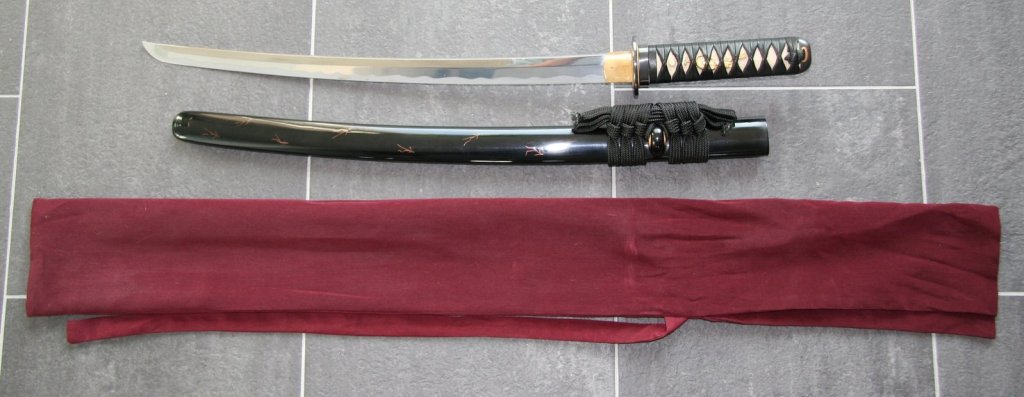
A wakizashi or “short” sword

Samurai swords are iconic and have come to be recognized in and out of the martial arts world. An extremely fluid weapon, the samurai sword was normally a symbol of military nobility in feudal Japan, and was considered to be the soul of a samurai. The wearing two swords was outlawed by the Japanese government during the Meiji Restoration (I’ll let you Google that) but they continued to be used by police and military personnel.

So, what’s known about these famous swords? Well, samurai swords are unlike any other swords in the world, with their unique curvature and single-edged blade. They’ve been forged since as far back as the 10th century, and there are legends of the first actual katana being forged by a wordsmith named Amakuni Yasutsuna as far back as 700AD.

Samurai swords, or katanas as I will refer to them from here on in, are characterized by a long, curved, single-edged blade that is at least twenty-four inches in length and a grip that is long enough for both hands to hold. When samurais wore the two swords, the katana was the longer of the two, with the shorter sword being between twelve to twenty-four inches in length and called a wakizashi.

Because the wakizashi was shorter and had a grip that would only accommodate a single hand, it was generally used for closer combat as opposed to the katana, which was better suited for full combat (once they worked their way through the plethora of weapons they carried BESIDES swords).

Last but not least is the tanto. This is a short, dagger-style sword that usually measures six to twelve inches in length. Although intended more as a stabbing weapon for close combat, the edge could also be used for slashing. Over time, it became more ornate and acted as a ceremonial dagger, but a martial art called tantojutsu.

The creation of a katana is an entirely unique process. Unlike most swords that are forged by pouring molten steel into a mold, then tempered, katanas are created by forging and combining multiple layers of different types of steel. The layers are folded, over and over again and the curvature happens over a long process of curing and tempering.

The forging process creates a curved blade that combines softer and harder metals. Hard and soft… Sound familiar? (☯) The curve and flexibility of the blade makes the katana incredibly fluid and durable. Then the blade is sent to be polished, which can take weeks, in order to get that mirrored look.

Katanas are fascinating weapons, and would often be customized with images, lacquered scabbards and even family crests and symbols on the guard and grip. And as Ryan Reynolds said in X-men Origins: Wolverine, “I love this weapon more than any other thing in the whole wide world […]. You whip out a couple of swords at your ex-girlfriend’s wedding, they will never, ever forget it.”

At the end of the day, learning to defend oneself with your bare hands should be your primary goal. After all, you’re more likely to find yourself WITHOUT a weapon than carrying one. But should you find yourself with a weapon, it’s also nice to be able to use it properly.

Keep On Rolling

If you’re anything like me, the day or two after an extreme workout will have you feeling like hell. For the most part, this sensation is temporary (see my post from four days ago entitled, Grin Through The Pain) but it can often feel as though you need an extra little something to help your tired and sore muscles along; especially if you work out frequently.

Under normal circumstances, one could easily include certain medical professionals in their training routine such as massage therapists, acupuncturists and chiropractors, bearing in mind that the three provide different functions. But with the current state of the world, it’s difficult to find a productive way of getting the same relief for your muscle tissues. Heating pads and over-the-counter pain killers can only take you so far.

This is where foam rollers come into play. Foam rollers are reasonably popular with athletes nowadays, and they first came into play in the late 1980’s when physical therapist Sean Gallagher began using it as a self massage tool. But like everything else, there’s some good, bad and ugly associated to using one.

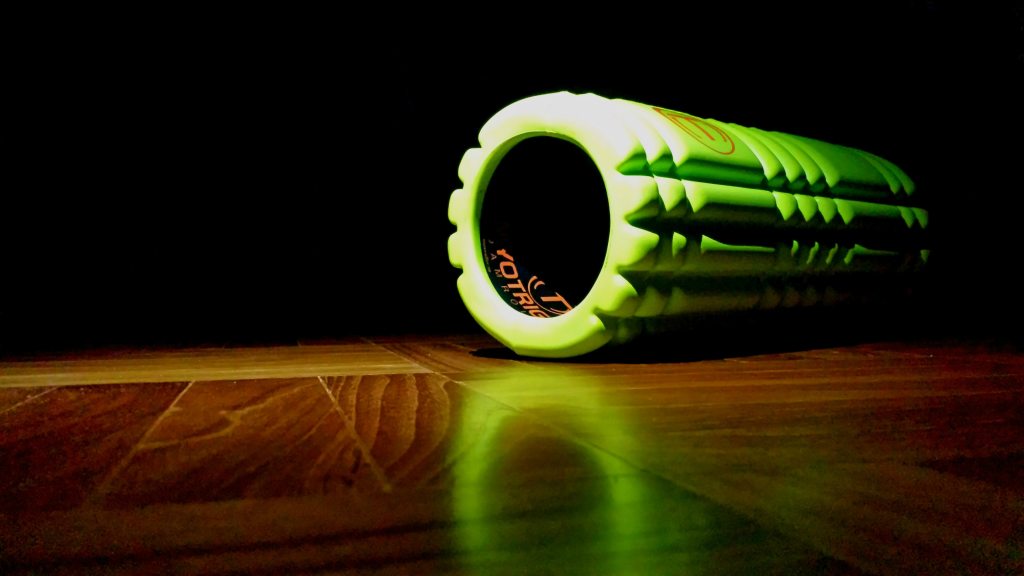
Example of a textured foam roller

The proper use of a foam roller will help to ease knots and tightness, increase blood flow through the muscle tissue and help loosen scar tissue. All of these things will significantly help with recovery time after an intense or gruelling workout. You can use a roller before and after a workout, to help with stretching and the prevention of injury.

Another good use for a foam roller is if you spend your day working in a sitting position or if you got a kink somewhere from improper sleeping positions. According to an article posted on Healthline.com, foam rolling has a number of benefits including but not limited to easing muscle pain, increasing your range of motion, temporary reduction of the appearance of cellulite, relieves back pain, helps to manage fibromyalgia and is a handy tool for relaxation.

It is advised that one needs to be careful when rolling and that one should avoid rolling over joints and to avoid foam rolling if you have a muscle tear or a break. There different types of foam rollers, including smooth rollers that are suggested if it’s your first time rolling and textured rollers that work deeper into the muscle tissue. Here’s the Healthline article: https://www.healthline.com/health/foam-roller-benefits

Like anything else, consult your doctor or medical professional before starting any new fitness routine. But foam rolling can be a reasonable addition to your at-home workout routine. It won’t completely replace a registered massage therapist, but it can provide some relief during trying times. ☯

Grin Through The Pain

Nothing quite beats the feeling you get after an intensive workout. The burn, the aching muscles and the fatigue… They all have benefits, including a better night’s sleep and maintaining your overall health. However, one of my biggest pet peeves is the fact that the following day feels as though my entire muscular system feels as though it’s been dipped in battery acid and moving becomes a painful effort.

It’s not necessarily a bad thing. Aching muscles after a workout indicate that you’re getting stronger. As you exercise and workout, your muscle tissues become damaged and break down. As they repair themselves, they become bigger and stronger than they were before. Although this is how bodybuilding is done, it also applies to most forms of intensive exercise. In my case, doing an hour and a half of forms at full strength, coupled with shadow sparring, left me feeling floored yesterday.

If you’re new to the fitness scene and are just starting out, the pain after a serious burn can be a bit scary. Most people may be of the opinion that they’ve injured themselves and may not understand that this pain is normal. One important thing is to keep moving. Continued movement will help in recovery and keep the muscles warm. If you decide, “Uh oh, better stop until I feel better…” you may be doing more harm than good.

Don’t get me wrong; there’s a big difference between moderate aches and actual injury. Knowing the difference can mean preventing further and possibly permanent injury. If you have difficulties performing normal every day tasks, such as brushing your teeth or showering, then you’ve done too much.

According to an article posted on WebMD, there are a number of different things you can do to help with the aches and pains associated with working out.

  1. Keep Moving: When we feel pain, our instinct is to rest what hurts. This isn’t always ideal for continued physical conditioning. The article suggests that doing something light the following day after an intense workout, like swimming or cycling, can be beneficial;
  2. Get Some Rest: I’m not trying to be contrary here (considering the first point), but rest days ARE necessary for proper recovery. It’s suggested that the second day after a serious burn is the worst, so having a recovery day can be ideal;
  3. Apply Heat: People often debate which is better; heat or cold. The reality is that heat helps with pain and cold helps with swelling or inflammation. If you have aches and pains after a workout, applying light heat from a warm towel or heating pad can be beneficial. The important detail is to avoid direct contact with heating devices and to use heat in short increments, such as fifteen minutes at a time;
  4. Get A Massage: Massages have a number of great health benefits on their own, but getting one after a serious workout can help increase blood flow, relax your tissues and increase your range of motion. Be mindful of the type of massage you get and be sure to let your masseuse know that you’re getting one because of an intensive workout. He or she should be able to suggest something appropriate. As an alternative, foam rolling can also be beneficial, although this should be done carefully and moderately; and
  5. Take An Anti-Inflammatory: I’m not a big fan of this one. Although it will help with swelling and pain reduction, it’s one of those things where you shouldn’t take medication unless it becomes a last resort. My reasoning for this is because prolonged use of anti-inflammatories can cause a number of annoying side-effects on the body. So this should be used in moderation.

I’ve put my own personal spin on these five points, but the actual WebMD article can be read online here: https://www.webmd.com/fitness-exercise/features/sore-muscles-after-workout

Some important steps the weren’t mentioned in the article, is staying hydrated and fuelling your body through proper nutrition. Your muscle tissue will need plenty of water, fibre and protein in order to properly build and recover damaged tissues. And if you happen to have Diabetes, be sure to monitor your blood sugar levels frequently before, during and after your workouts. ☯

Half A Heart, All Of The Will…

Throughout the years, I’ve had many friends and associates ask me how I manage to control my Diabetes and still do martial arts to the extent that I do. I’ve been studying for so long at this point that it basically feels like second nature to me, but I’ve had friends who have come to watch karate classes to see what all the hype is, only to be blown away by the physical exertion, sweat and effort that goes into traditional karate. Given my age, I would be lying if I said that my flexibility and ability to push as hard and as long as say, twenty years ago still existed.

Although I’ve had an interest in the martial arts since a very young age, it wasn’t until my Diabetes complications started to overtake my ability to fight them that I tied on a karate gi and stepped into a dojo for the first time. The rest would be a lifetime story that continues to play out to this day. The martial arts has given me so much, and I think that the average person fails to understand just how many benefits there are to proper, traditional training.

When I say “proper, traditional training,” I don’t mean a commercialized martial arts club where there are hundreds of students, you basically fend for yourself and hardly ever have any one-on-one coaching. I mean the little bare floor dojo down a side street or back alley; the one that has a dozen students at most and push themselves to the point where the floor is literally soaking up blood, sweat and tears… The kind of place where you learn, not only to defend yourself but a definite lifestyle that you keep with you until your end of days. THAT’s the kind of training I was blessed to have throughout my childhood and into adulthood.

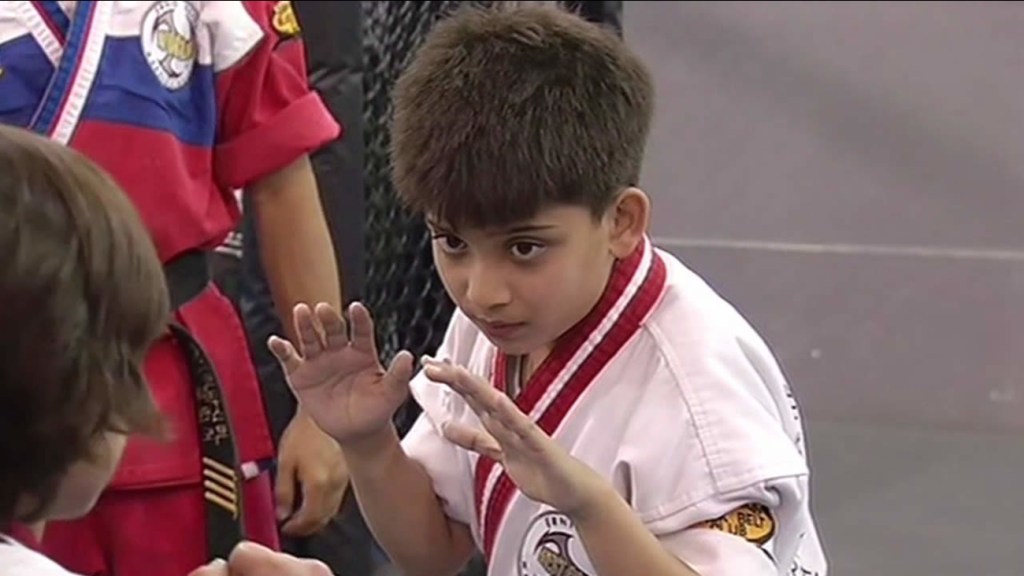
Now, I could go into one of my “fun” little bullet lists about all the benefits that martial arts can provide for someone who really dives into it and gives it their all. But instead, I’d like to bring up a very special martial artist that I read about years ago. I found a photo of this little guy while researching something else, and it reminded me of the importance of believing you can achieve your goals, no matter what. I’m talking about an inspirational young lad named Shoham Das.

Shoham Das, aged 11

Shoham Das was a young boy from San Jose, who was born with a rare heart condition in which he is missing his right ventricle and in effect only has half a heart. The condition is so rare that it’s thought to afflict only 1 in 10,000 kids. Das has had three open heart surgeries at three days old, six months old and four years old, respectively. This means his endurance tends to be low and he often requires more rest than a counterpart of the same age without this condition.

Despite this condition, Das has been studying Tae Kwon Do and mixed martial arts since the age of 7, and during a weekend in early May of 2014, Das tested and successfully graduated his first-degree black belt at the age of 11. The testing, which required two hours of combined skill in various areas of the art he studies, required Das to have his oxygen levels monitored by his mother throughout, but he was successful and continues to train.

Now if you do the math in your head (and hopefully you don’t actually have to), this means that he graduated his first black belt in only four years, and prior to maturity. Although I’m not a fan of this practice, which seems to be the norm in many modern-day dojos, you can’t argue with the focus and will required to reach this level given the specific ailments Das has been diagnosed with.

In fact, some of Das’ doctors have indicated their belief that all the physical activity and structured study involved in the martial arts has made Das’ muscles and heart tissues stronger, allowing him a better quality of life and to be able to do more without getting tired so easily.

Although Das has a lower endurance than a counterpart without his condition, he’s been blessed to study at a dojo that focuses on the skill rather than the endurance. An aspect in which Das has in abundance. Although many dojos turned him away due to his condition, Das eventually found an instructor who took him in. He kept at it and by last year Das is said to have achieved a third-degree black belt in Tae Kwon Do and continues to train.

Last month, at the age of 16, Das is looking towards the future and is considering a potential career in medicine. You can read about what he’s been up to here: https://healthier.stanfordchildrens.org/en/half-a-heart-and-a-whole-lot-of-spirit/

In the above link, Das has shown to be humble, attributing his health and continued life to his doctors and specialists. It stands to reason that he wouldn’t have gotten this far without them, but there is absolutely no doubt in my mind that the increased strength, discipline and skill he got from training in the martial arts all those years have definitely played a key role.

If you look at this impressive young man’s life and see how much he’s accomplished DESPITE his condition, it may lead you to ask what the hell some people’s problem is. Anything is always more than nothing, and amidst anything else happening in your life, it’ll always be up to you to take yourself in hand and ensure your continued health, whether you have a medical condition or not.

I look back at my life and I have a clear understanding that in order to survive given my personal complications, I couldn’t just sit back and depend on others. I had to stand up and make things happen for myself. Just like Shoham Das. Although he may only physically have half a heart, he’s got more heart than most. ☯

Two Of The Same Can Still Be Different

Karate has a rich and fantastic history, and has branched out into many different styles and genres. Karate is a specific type of martial art and not a style in and of itself. The word karate (or two words, if I’m being specific) is Japanese for “empty hand”, meaning that a practitioner is said to be studying karate do, and the practitioner is known as a karateka.

One important detail to discern is that there are two main branches of karate: Japanese and Okinawan. And although they are similar, there are some important discrepancies between the two. Here are some of the more important differences:

  1. We’re More Traditional: Okinawan karate uses karate as a way of life as opposed to a being interpreted as a sport. All the original systems of karate came out of Okinawa, and when they hit mainland Japan, the Japanese took these styles and began altering altering a number of things including the forms and techniques. Although highly effective, one of the things that Japanese karate changed was striking for points. And yes, Okinawans also compete in modern times, but it isn’t always so;
  2. We Use Weapons: Okinawa was a pretty brutal place way back in the day, and the use of weapons by the criminal element was pretty prominent. This meant that martial artists had to incorporate weapons into their training as well. After all, it’s hard to defend against a weapon unless you have one as well. For this reason, most practitioners of Okinawan karate also studied Okinawan Kobudo, which a style of weapons training. Although the use of weapons has diminished significantly over the decades, Japanese karate doesn’t use weapons at all;
  3. We Have More Natural Movements: Okinawans practice karate in ways that accentuate the natural movements of the body. Our stances are high and natural, our blocks use our opponent’s energy and we prefer to execute techniques at close range rather than from a distance. Japanese karate does very much the opposite, by focusing on low stances and approaching combat from farther distances from their opponents;
  4. We Don’t Yell Constantly: Although I will admit that there are kiai in Okinawan karate (a kiai is a single-syllable yell to focus energy during an attack), we practically never use them. Most Japanese karate styles use a form of kiai known as “osu”, which drives absolutely bat-shit crazy. Styles like Kyokushinkai use the term “osu” constantly and for everything. Osu did NOT originate in Okinawa and is widely misused in modern karate, especially in the western hemisphere; and
  5. We Focus On Our Students: Okinawan karate is particular, because the Sensei will spend one-on-one time with his or her students. Japanese karate, by contrast, teaches to large masses of students at once. This is why some Okinawan techniques are significantly more involved than their Japanese counterparts; because they are individually taught to the student, as opposed to a large group of students at once.

One last detail I’ll provide is that karate refers specifically to Japanese or Okinawan empty-hand styles of martial arts. If someone is teaching a Chinese or Korean style of martial arts, it rightfully shouldn’t be referred to as karate.

I’m not saying that Japanese karate isn’t as effective or as good as Okinawan karate, they’re just different. It’s like how a revolver and a pistol are both handguns, but their features, pros and cons are quite different from one another. Know the background and history of the art you’re looking to study, and make sure you choose the style that’s right for you. ☯

Give It Some Style, And Call It Yours…

If there’s something I’ve seen a lot of in the martial arts, it’s prejudice. Does that surprise you? It shouldn’t. Even in the most classic kung fu movies, you can see one style pitted against another, one clan fighting another or comparisons of one style against another. Prejudice has run rampant throughout the martial arts, as every style tends to believe it has the perfect way, all the while dismissing or belittling other styles in favour of its own.

I gotta be honest, that shit drives me nuts! Yes, the martial arts are thousands of years old. And some styles have a pure lineage that can be traced quite a ways back, as opposed to some others. But every style is descendent of another, almost without exception.

The biggest issue I see is when someone comes out with their own “style” and touts it as something they’ve created from scratch. This is always a bit suspicious and can possibly be a “McDojo”, depending on who and how the style was developed. But let’s examine the concept of developing one’s own style, shall we?

My own style, Uechi Ryu, was founded by Kanbun Uechi and renamed in his honour after this death. The exact history can be easily looked up, but the jist is that he fled to mainland China and studied a style of kung fu for a long period of time before returning to Okinawa and having it develop and evolve into a style of karate do.

My point is, every style comes from SOMEWHERE. So why would you be opposed to it, when someone says that they’ve created their own? There are some pretty famous people that are socially well-known, who have created their own styles of martial arts. I’ve gathered my favourites here:

  1. Jeet Kune Do: It stands to reason that this one would be on the list, and not least of all first… This is a style of Kung Fu that was founded in 1967 by none other than Bruce Lee. Lee had spent his childhood studying Wing Chung and eventually came to feel that there were too many restrictions and classical mess, and founded Jeet Kune Do as a “formless” style, which was considered more of a philosophy for practicing the martial arts. The point is, he used the influence of kung fu to develop his own style and it’s still practiced by many to this day;
  2. Dux Ryu: This is a style of ninjutsu founded by Frank Dux, an American marine who studied several different styles of martial arts. Some people may know him from the movie representation of his victory in a secret full-contact martial arts tournament called the “Kumite”. This movie was a little hit called “Bloodsport”, starring Jean-Claude Van Damme. The movie was released in 1988, and Dux had several martial arts schools in the U.S. Although some of his claims have been disputed, argumented and disproven since the release of this movie, he’s still known as a professional martial artist who founded his own style of martial arts. And the movie is totally awesome! Jus’ sayin’…; and
  3. Chun KuK Do: The last style on this list is a style created by Chuck Norris. Now, I have to be honest, I’ve never been a huge fan of his work (ducks under the desk to avoid being punched, as Chuck Norris is EVERYWHERE). But there’s no denying that the man has studied martial arts… A LOT! In fact, he’s studied Tang Soo Do, Tae Kwon Do, Karate, Jujitsu and Judo. Chun Kuk Do has many aspects of a traditional martial art, including forms and techniques adopted mostly by Korean styles as this is what Norris primarily studied. Chun Kuk Do was founded by Norris in 1990, making it one of the newest styles of martial arts.

There are students currently studying all three of these celebrity-developed martial arts styles, even to this day. And here’s a newsflash: karate is only 150 to 200 years old! In fact, Kyokushinkai is a style of Japanese karate founded in 1964, making it only 56 years old! My point is that it’s an effective style of karate and has made its mark on the world, nonetheless.

I’m not saying that every schmo who studies a martial arts for a few years can suddenly open their own doors and introduce their own “style”. But the ones who have, deserve to have that style explored and examined before being dismissed out of spite. The martial arts is a constantly evolving creature that will always continue, so long as there are serious practitioners who will indulge the way. 200 years from now, Chun Kuk Do may be as widely regarded as karate. ☯