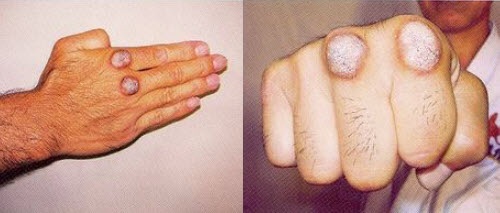
Not Just For The Movies…

I don’t generally tend to comment on things, even when it relates to something specific that I have some knowledge about. There’s never been any real value in doing so, since it usually just results in an online argument with someone far less knowledgeable who’s always willing to actively pick a fight with another person from behind the relative safety of their laptop screen. Plus, when someone believes something, it’s usually very difficult to convince them otherwise.

I don’t often get negative comments on my blog posts but everything before now and again I’ll get someone on their soap box who seems intent on picking a fight. A notable example was a few years ago when I wrote a post about proteins and the consumption of meat, only to have some die-hard vegetarian basically denigrate the entire post, accuse me of following pseudo-science and claiming I was spreading false information. In case any one of you were wondering, this is one of the driving reasons why I always include a disclaimer that I’m not a doctor in any of my health or quasi-medical posts. Bu8t I digress…

The point behind bringing this up is because I follow a number of pages online dedicated to martial arts and more specifically, karate. And it absolutely kills me when I read the number of inaccuracy’s comments made by individuals who have likely never even studied martial arts. By virtue of this and through this lens, I’d like to provide my list of most common misconceptions surrounding karate that I’ve noted over the decades.

  1. That’s a waste of time because you’d never do that in a real fight.
    I have a real problem with this kind of statement. While I can’t speak for every style, as I haven’t studied every style, nothing is wasted in karate. Every stance, every move, every strike and every technique is one piece of a significantly larger, overall puzzle that creates the muscle memory required to effectively defend yourself, should the need arise. When you see someone perform a kick straight up above their heads, the intention shouldn’t be to think “when would you ever kick someone like that?” Instead, you should consider that if the practitioner stretches and trains to kick perfectly at that height and level, it will be scores easier and more effective to perform the kick at a normal level. As I mentioned, nothing is wasted. Even if it only looks pretty and you may not use that specific technique in actual combat, it still serves a training and development purpose.
  2. Fights can go on indefinitely.
    Hmm, that a big fuckin’ no… Look, I’m a big fan of martial arts movies (normally) and I enjoy watching them as much as the next guy but real talk, here. That big fight climax at the end of the movie where the two fighters go head to head for 30 minutes or more without stopping is categorically impossible. Anyone who has ever been in a real fight will tell you that the average run time for a real fight is about two or three minutes. And karate is no exception. The amount of energy and effort it takes not only to deliver effective strikes but to block incoming attacks will have your lungs seize and your muscles go lactic after a number of minutes. Setting aside for a moment that these fight portrayals include either of the fighters taking several strikes to the head and body and yet they seem to keep fighting without interruption.
  3. Karate Doesn’t Work In Real Life/That Only Works in the Movies.
    I saved what is argumentatively not the best but the most important, for last. I’ve been fortunate to have never been severely injured during the course of my life but I have to admit that I’ve used karate A LOT! Either in the context of defending myself personally, defending others or in the course of my quasi-lengthy policing career, karate has saved my bacon (please hold all “pig” jokes) on more occasions than I can count. I’ve most often heard the argument that karate can’t stack up against other forms of “sport” combat like MMA. While I’ve never been a big fan of MMA, I’ve held a respect for it, as I would never see myself willingly sacrificing my body in that way. However, the concept of two willing participants rolling around and sweating on each other in biker shorts doesn’t quite appeal to me and doesn’t quite apply in the same self-defence context as karate would. But I digress… The bottom line is simply this: While form, karate and typically repetitive techniques may seem soft and ineffective and while one may not understand the dynamics of muscle memory and why it would help and certainly apply in a real-world context, I can confirm without any shadow of a doubt, that karate does in fact work as a martial art and a self-defence tool. I have my continued existence as proof.

That’s it for now, folks. A bit lengthy and a bit of a soap box post, but such is the way of it sometimes. The important thing to remember is not to believe everything you see in the movies but also don’t assume that martial arts doesn’t work. If anyone needs any further proof, I’m always looking for someone to train with. I’d be more than happy to share my knowledge. ☯️

No One Style Can Rule Them All…

One of the biggest pet peeves I have with the martial arts is the in-fighting among styles. Generally speaking and realistically, everyone always assumes that their style is the best, often choosing to point out what they see wrong with a neighbouring style as opposed to possibly absorbing the aspects that may not only be right, but many also be an addition to their overall tool belt. Some of this is simply loyalty, which on its face, is not a bad thing. But when you belittle or denigrate other styles, you water us all down. And that is not a good thing.

First and foremost, a little background on my own training is very important. My main style is Uechi Ryu Okinawan karate. The reason I say main style, is because I studied various martial arts in my youth and many styles of each, in order to land on Uechi Ryu. And I’ve written about this in previous posts; finding a dojo and style that fits for you is a very subjective journey and begins and ends with you. Too often, I’ve seen students convince their friends to come train, only to have the friend phone it in because they really don’t enjoy it. So an important first aspect is, if you don’t like it, don’t stick around. You’re not just wasting your time, you’re wasting the time of the Sensei and instructors that could be assisting the other students. But I digress…

It’s important to be committed to one style. Sensei used to tell me, “one religion, one love, one style.” And the reason behind this is pretty simple. You can’t master one thing while simultaneously studying four others. Only through focus, commitment and dedication can you grow and progress within your training and move towards whatever goals you may have set for yourself. But while you’re busy carrying your tool box around, keep in mind that you should always leave room for some new tools. As the old saying goes, it’s difficult to fill a cup that is already overflowing.

In recent years, I’ve had the opportunity to train in a few different karate dojos. And something that has continued to amaze me is the difference in technique and methods, even for simple things that should be straightforward. Let’s take a front kick as an example. A front kick is a front kick, right? One would be inclined to think so. In my style, you begin by bring the knee up to make a 90-degree bend in the leg, followed by pushing out and striking with the big toe. The results is a deep, penetrating kick that can devastate the spleen and soft tissues. In a style I recently trained with, their front kick fires straight out from the standing position and the strike is performed with the ball of the foot.

So, which method is better? That’s the important question. So what should one do? Critique the other style for doing it wrong? Or open one’s mind to accept that perhaps there’s a different way? Personally, I’ve always been taught that chambering your kick prior to executing is important as it allows you the flexibility of changing the kick prior to execution. For example, I can flow from a front kick and alter to a roundhouse kick with little difficulty. But the other method could arguably save valuable seconds in its execution. And there’s no denying you have less chance of breaking your toes by using the ball of the foot as opposed to the big toe.

It’s important to remember that martial arts is a lot like falling flakes of snow. In nature, no two snowflakes are alike. Each one is different and unique. This is because as they fall each flake is subjected to wind current and moisture in the air that causes their crystals to form in a unique manner that’s never replicated twice. But ultimately, it’s all snow. The same can be said for martial arts. As it progresses and grows, each style develops in its own unique way, with its own techniques, methods and perspectives. But ultimately, it’s all martial arts.

So while you should stay committed to one style as your core, take the happy medium approach. Allow yourself the opportunity to be open-minded and learn something new. See the possibilities in the styles you visit as opposed to resisting the aspects you don’t agree with. The result will be a better equipped tool box in your overall self-defence repertoire. At some point, this inevitably becomes the only way to continue to grow. Food for thought… ☯️

Slowing Is Not The Same As Stopping…

I’m sure many of you have heard the expression that you don’t stop training when you get old, you get old when you strop training. The idea behind that is that when you stop maintaining your mobility and fitness, it can have adverse effects on your personal well being. Realistically speaking, the lessening of one’s physical health will also have an impact on the mental clarity, since the mind can’t exist without the body and vice versa.

A good example for this would be my dear mother. She’s spent her entire life taking care of others. Besides being a capable woman in her own right, it started with her caring for my ailing brother, who passed away at the age of 18, followed by caring for her elderly parents since she was the eldest daughter. Even as all of these people have passed away, she then began to dote and take care of my father, who unfortunately has a condition where his spine degenerates and has him wheelchair ridden. She’s always had someone to focus her attentions on. Once the smoke cleared and there was no one left to take care of, her mind slipped away.

Most people have been confused by this phenomena and don’t understand the connection between maintaining the body and maintaining the mind. While my mother has been in a state of hyper awareness for the majority of her life by virtue of caring for others, she’s never taken much care of herself. The result is her body has absolutely no ability to sustain her mind. As a result, she has slipped away. I just spoke to her on Sunday morning by Facetime and she thought my son was a little girl and had no idea who he was. Just a bit sad.

This is why it is so important to keep moving. In recent years, I’ve come to the realization that I can longer carry on in the same fashion as i have for the past few decades. My training in the martial arts has significantly helped in my battle against Type-1 Diabetes and has helped me out of more sticky situations, both personally and professionally, than I can possibly count. But there’s no chance in hell that I can do it like I used to. This was evidenced by a very unfortunate incident at a local karate dojo where I had a couple of my ribs fractured and my muscle wall crushed in a manner that I would have easily defended from in years prior.

It makes me realize that I need to slow myself down. This is not only important in order to accommodate my age, which will never stop, but to prevent unnecessary injury. BY the way, the older you get, the longer and more difficult it is to get over injuries and heal properly. But the important thing, if you paid attention and read the previous two paragraphs, is that you don’t stop moving. Slowing does not mean stopping. And the sooner you throw in the towel and say “screw it, I’m done,” the sooner your body will have difficulties accommodating your needs into the foreseeable future. And you need your body and your mind as long as you can manage it.

Slow down if you need to. Hey, we all get there. Do I think I could still kick some ass, if I needed to? You’d better believe it! Protect my loved ones? Anyone who would threaten the well being of my family would find out that even old dogs can still punch. But I recognize that maybe those two-hour karate sessions need to drop to only one hour. Maybe my 70-kilometres bicycle treks need to become 20 or 30 kilometres instead. I’ll never stop moving. I can’t. My health depends on it. But the manner in which I move and in what amounts are what make the difference. Food for thought… ☯️

The Rusted Tools In Your Box…

The world has evolved into an environment where people will typically pick up the phone and call someone if they need something in their homes repaired. Everything from our vehicles, our property and even our bodies are typically repaired or healed by outside individuals. And more and more, as time goes by, it seems that this is the way of the world. But it wasn’t always so. I grew up with the remands of the generations that kept their own tools, worked on their own cars and repaired their own homes.

During my youth, I got to experience the watering down of this societal trend. My grandfather had a basement full of tools and a pretty comprehensive workshop. As a carpenter and a blacksmith, you can still see some of his handy work floating around my home town as things created back then were built to last, even when they were made of wood. The thing is, he used all of his tools daily, and kept them all clean, oiled and maintained as needed otherwise ensure that they lasted and were of use for their intended purpose.

Next, we have my father. A well-meaning man, he was never very handy with repairing things himself. Put him in front of a computer and he’d turn into an operator from the fuckin’ matrix… But he wasn’t very adept at getting past anything more than hammering a nail to hang a photo frame. Having been directly raised in that environment, I fall very much into this same category. My point is he had a number of very handy tools available within the home. The problem is he never used them.

The result is that within a very short number of years, those tools began to rust, corrode and erode, rendering them all but useless and in some cases completely destroyed. There was nothing more heartbreaking when I had to go home to close down my mother’s apartment than having to scrap a bunch of tools that had succumbed to the passage of time and had become absolutely useless. I mean, I wouldn’t have been able to fly a bunch of steel tools back to Saskatchewan anyway, but it was still a shameful waste. Those tools would have been better served in the hands of someone who would have used them and maintained them properly.

So believe it or not, this post is actually related to karate and the martial arts. So I’m going to bring us back to THAT. Learning different styles and techniques has often been compared to having multiples tools in your toolbox. Much like a traditional tool (hold your jokes, I’m not referring to myself), if you don’t use your techniques and train consistently, you’ll get rusty. You’ll become ineffective. Your tools will basically be useless. Only if you maintain them and work with them, will your avail;able tools continue to serve you well and protect you, in the event you need them.

Somehow, in my head, I always feel as though I could be responsive and hold my own in the event of a fight. At least part of that is true because the knowledge is still there. The light willing, that’ll never go away. So knowing how to protect and defend myself, knowing how to execute techniques and perform my katas and train effectively… Those are the things that never go away. But like the hammer that sits in the toolbox for twenty years, it may still be able to hammer a nail but it won’t keep the rust from setting in. The same can be said of us. Train hard, train consistently and keep your tools maintained. As the old saying goes, you don’t stop karate and get old; you get old when you stop doing karate. Food for thought… ☯️

You Won’t Find Reality On The Big Screen…

I think one of the biggest issues I have in modern years is the fact that we can never seem to have a movie or television show aired on screen without someone picking it apart. They question the plot, they question the background and continuity of the story, they even question the realistic nature of what they’re watching. This is just par for the course in a world where questioning and doubting everything has become the status quo, especially in online forums. I say this, fully cognizant of the fact that I’m currently voicing my opinion on an online platform, as well. The irony is not lost on me but I do find it annoying when someone watches something completely artificial, like a movie from the superhero genre, and comment about how Superman’s flight ability wouldn’t work for certain reasons or Iron Man’s suits would weigh to much to operate, even with the miniature hydraulics… I could go on and on but the point is that people have lost the ability to simply watch what’s on the screen and enjoy the ride for what it is; a ride.

But what about something that’s based on reality? There are plenty of shows and movies where the storyline and portrayed environment are realistic and rooted in real life, as opposed to fantasy or science fiction. One good example are police drama shows. being former law enforcement myself, I can promise that despite the realistic portrayal of some of the situations in a given show or movie, there are still plenty of unrealistic inconsistencies in the tactics, investigation methods and approaches used by cops on the small or big screen. I’m sure it drives my wife nuts, as I have a compulsive habit of pointing them all out. But I digress. The point of today’s post is to single out a particular pet peeve of mine as it relates to the reality behind what we see on the screen. That is to say, karate or martial arts training. For the most part, I enjoy a good martial arts show or movie like anyone else. But having practiced Okinawan karate for the past 35 years, a specific tendency that’s portrayed really gets under my skin. Specifically, I really dislike portrayals of amateurs becoming instant professionals.

To be clear, I refer to an amateur as someone who’s never trained in the artial arts and a “professional” as someone who has trained and developed for a number fo years and has some proficiency in their respective art. I do have some examples of what I’m getting at, and hopefully at least some of you will indulge me long enough to read on… By now, most people have either seen or heard of The Karate Kid. And no, I don’t mean the dog’s breakfast of a remake they released in 201, which by the way, featured China and Kung Fu, not karate. I’m referring to the classic 1984 movie that actually featured karate. Most people would know of it nowadays due to it’s spin off series, Cobra Kai. But I’ll get to THAT in a minute. The Karate kid featured a classic scenario of the new kid in town who has trouble adjusting to his new environment and navigating the social jungle that is high school. Somewhere along the way, he encounters a karate practitioner who bullies and physically assaults the protagonist, which prompts him to learn karate himself.

What I like about this particular example is that Daniel (the protagonist) was the shining example of a 1980’s victim. Small, light weight and essentially no fighting experience when the movie starts. And in true, inspirational 1980’s form, we see Danile train for almost the entire movie in order to fight for a few short rounds at a tournament, under controlled conditions, where he wins some of the battles by sheer luck. in fact, you can see the look of absent fear and doubt in his face as he fights in most bouts. It’s real. It’s viseral. As someone who’s been there, it’s relatable. The Next Karate Kid, which was considered one of the weakest entries in the franchise, was often commented about on how ridiculous is what for the protagonist to have traned for a week in a monastery and was suddenly able to defeat a larger, stronger opponent who had trained for longer. But even this example shows a touch or reality, considering if you listen to the actual story, she describes how she had some karate experience that she learned from her father just a few years prior, setting the foundation for everything that followed. This brings us to Cobra Kai…

Let me clear on one point. I LOVE Cobra Kai. When it first got released on YouTube Red and all I could watch were the first two episodes without subscribing, I was instantly hooked. Cobra Kai, in my opinion, is the perfect drama series. Touching on all the original cast and lending itself to the nostalgia associated to the generation that was there for the original film series and touching on some of the real world problems facing the younger generation, all while reinvigorating the world’s interest in the karate genre. When we look at Miguel, one of the lead actors in the series, we’re reminded of Daniel from the original films. Bullied and laughed at, physically assaulted until he starts training in karate to learn to defend himself. In fact, we see him practicing and training almost any time he isn’t in school, leading to his development, both physically and emotionally. And while that whole cafetira fight might be a bit on the farfetched side (even a seasoned martial artist wouldn’t walk away from that many opponents unscathed), it has a reasonably firm grip on the realities of physically developing oneself and training.

But let’s talk about Hawk from the Cobra Kai series. For those who have been living under a rock and haven’t seen Cobra Kai, be warned: there are spoilers ahead. Hawk is a self-named high schooler named Eli, who is yet another stereotypical demonstration of a “nerd” or “loser.” To be clear, I don’t endorse these terms, I’m using them in a generic sense to relay what the show is trying to portray. With essentially no physical constitution whatsoever and introverted personality that sees him barely speak a word in the beginning, things changed significantly for Hawk after attending one session in Cobra Kai’s dojo where he’s teased and belittled for his appearance and walks out. He then returns with fresh workout cloths and a mohawk haircut, taking the name “Hawk.” All of a sudden and contrary to any measurable logic, he’s “flipped the script” and is now extroverted, outspoken and within a few episodes is holding his own while fighting against opponents that just a short while before. Not particularly interesting.

We see the same thing happen with Dmitri, Hawk’s estranged friend, who walked in the same bullied circles and can barely walk straight, let alone make a closed fist. But then in a particular season finale, we see him not only fight but beat the living shit out of a number of other students. This is probably the most unrealistic thing portrayed about the martial arts that we tend to see on screen. And I say again, don’t get me wrong; I LOVE Cobra Kai and can’t wait to see the final season. I’m particular partial to Mary mouser, who plays Samantha Larusso as she is not only a Type-1 Diabetic but is alos an insulin pump user. If you’re very careful and know to look for it, you can occasionally spot the bump where tey accommodated her wardrobe to conceal it. But I’m just using them as a recent example of this phenomenon. There are plenty out there, in movies, shows and such. While everyone is so busy picking apart plot lines, background and continuities and technology, very few seemt o touch on the unrealistic aspects of martial arts training on the screen.

In my experience, which I also know to be a significant reality I’ve lived through, one can’t gain martial arts prowess through occasional or even light training. To develop the level of some of the skill shown on the screen in such a short period of time is significantly unrealistic. Through the years I’ve recognized that the students who only hit up the dojo once or twice a week and never take it upon themselves to train at home will very rarely develop. Karate is a commitment and a lifestyle, requiring a significant amount of time in training, both in and out of the dojo. This is the only way development and proficiency are achieved. But all of that being said, sometimes it’s important to remember that it’s just a show. Or a movie. Or a book. Or whatever. The key is to simply sit back and enjoy the ride. ☯️

“That Wouldn’t Work…”

One of the most important aspects about being a traditional martial artist is that you need to have an open mind and be willing to learn new things. Even when those new things may not be directly related to your chosen style or art. There isn’t a martial arts style out there that hasn’t incorporated something, a technique, a strike, anything, from somewhere else. To say it isn’t so would be complete and utter bullshit. If you don’t have an open mind and be willing to learn, proficiency in the martial arts is effectively impossible.

In fact, I follow a number of martial arts pages and websites, given my own experience with martial arts. Considering that my style is Uechi Ryu karate, I follow a few Uechi pages on facebook, as well. What’s nice is being able to see others demonstrate the katas and techniques I grew up with, and see some of the work being done with my style around the globe. But more than that, I enjoy seeing some of the inspirational quotes from martial arts pioneers and authors.

Once in a while, I may see something particular, like a photo of someone practicing a technique in a certain way. And since it’s 2024 and everyone is a fuckin’ armchair warrior, there is always, without fail, at least one commenter that will always say something to the effect of: “That wouldn’t work in a real fight. That technique is completely useless…” Strong words from someone who’s likely sitting in an oversized armchair, eating Cheetos and has never trained in martial arts before.

Look, I get it… Some stuff may look ineffective on the surface and to the untrained eye, it may raise eyebrows as to why one would even practice or train in some techniques if they wouldn’t work in a real fight. But here’s the thing that most non-martial artists usually don’t understand; everything in martial arts has a purpose. It should be noted that I’m not saying everything is an effective technique. I said everything has a purpose. The distinction there is quiet important.

One shining example that I’ve seen more times than I count, is a photo of a karateka kicking straight up. Besides the usual comments about why a woman would be doing karate in a training bra and the usual pointless rhetoric that gets thrown around, many would usually comment that kicking straight above your head would be ineffective and basically useless in a real fight. The issue at hand and what needs to be recognized, is not the effectiveness of the kick itself but rather, the hard work the practitioner has endured in order to have that level of flexibility, balance and precision to execute that kick properly. The end result would be that her traditional kicks will share in those aspects and be all the more effective.

It’s comparable to all the chore-based crap that Mr. Miyagi had Daniel doing in the Karate Kid. Or Cobra Kai, I guess, if you’ve never seen the original 1984 movie (although I highly recommend you do, if you haven’t. Great flick!) Mr. Miyagi had Daniel waxing cars to develop his circle block, sanding decks to develop his low blocks and painting fences to develop his wrist blocks. Daniel becomes frustrated by the chores and tries to quit, until Mr. Miyagi demonstrates the skills Daniel has learned through muscle memory and repetition. Not exactly an apples-to-apples comparison but the idea is the same.

The point is, one may not always fully understand the thought or use behind a particular technique or method of training. While you may never have engaged in such specific methods yourself, exploring it instead of commenting on it may give you the insight you lack and you may even learn a thing or two. If you’re lucky. But dismissing or commenting on any demonstrated technique, form, method of training or style, without having first walked a mile in their shoes is not only short-sighted. It’s ignorant. Food for thought… ☯️

A Belt Is Just A Belt…

I still vividly remember the first night I stepped into Sensei’ dojo. I was young, impressionable yet still chock full of sarcasm and quasi-narcissism. However, I was extremely aware of my own reality and recognized that I needed something life-altering in order to keep myself alive. Karate turned out to be the path towards that goal. After that first night, it would only get better. That’s not to say there wasn’t a significant amount of literal blood, sweat and tears. But I was willing to work at it and do what had to be done to reach my goals.

As I began to grow and progress within the dojo, I started to take notice and recognize the different belt ranks and how they seemed to play a role in the overall flow of the dojo. Generally speaking and for most people, black belt is usually the ultimate goal for the students. Ironically, achieving black belt was never ACTUALLY one of my goals, although I would eventually achieve it in early 2002. It would be a turning point for me and a significantly important day in my life and my martial arts journey.

One phenomenon that I’ve come to realize over the years is that the majority of students who stick with it long enough to reach black belt soon quit afterwards. For me, I never actually permanently stepped away from karate, although I can admit there have been times in my life where I’ve taken a hiatus. Such a break is never inherently a bad thing; one sometimes needs to evaluate one’s life in order to rot determine next steps. But the one thing I never did is hang up my belt permanently. And such a thing should not be done. Although addressed in different ways in different styles, Sensei always said that passing black belt was a student’s way of formally asking his Sensei to teach him karate. Can’t do that, if you quit.

I recently read a post online by Steve Rowe. For those who may not be familiar, Steve Rowe is a martial artists and author and has posted a number for very insightful things about the martial arts. One of the best takes on black belt that I’ve read in while was from him. Here’s a taste…

“Taking responsibility for themselves.
Their own training.
Their own standards.
Their own progress.
Never blaming others for a setback.
Being stroking enough to help others.
THAT’s a black belt.”

I wish I could find the post again but I’m sure if you Google Steve Rowe, you’ll no doubt find it. But the post goes on to talk about how becoming a black belt is an investment in oneself and how passing black belt is like finding the ladder that you now need to climb. Not only do I truly love this perspective but I agree with it, as well. Over the past 22 years, I’ve continued to push myself, to learn new things, to teach others and to continue my training.

If I were back home, I have every confidence that I would have climbed the dan ranks without question by now. But deep down, I understand that it doesn’t matter. It’s just a belt. And the certificate is just a piece of paper. It’s what you do with those that knowledge once you have it that will make you an effective martial artist. Food for thought…☯️

Questions Of Respect And Dojo Etiquette…

If you’ve studied the martial arts for as long as I have, and I know that some you have, there’s a pretty good chance that at some point, you’ve trained in a dojo that was not your own. Either a neighbouring school of the same style or visiting a completely different style, eventually you may find yourself standing on the floor of an unfamiliar dojo. And not always by choice. When this happens, it’s important to bear in mind that their processes and etiquette may not be the same as what you’re used to.

For the most part, I’ve spent my entire martial arts journey training in my home dojo. While I may have dabbled and tried other dojos, I spent almost 20 straight years training at the New England Academy of Karate & Judo in Dalhousie, New Brunswick. Uechi Ryu Okinawan karate was our style but Sensei also held a black belt in judo and often included those techniques in our curriculum. It wasn’t until 2009, when I left New Brunswick to join the Force, that I was ”permanently” out of my home dojo. I put it in quotations because one never truly leaves the home dojo.

For the first few years, I trained on my own. I had the skills and experience that allowed me to do so. My concern was that being transferred and moving every few years made it unlikely that I would stick with another dojo for any significant period of time. It also negated the possibility of opening my own dojo, as i would be effectively abandoning my students come transfer time. The result was a quiet journey of training alone. But as we all know, eventually you need the dojo environment. There’s no substitution for training with a partner.

In 2016, I moved my family to what would be our final transfer. Given that I’m located in a major centre (for Saskatchewan) and the availability of several martial arts schools, I felt maybe it was time to dip my toes in the pond once again. I visited and trained with a couple of different dojos before landing on the one I’ve been training with for the past several years. And there are some processes, good and bad, that I’ve noticed throughout the years. I call them “processes,” because I honestly don’t know how else to refer to them or how to say it politely. But here are some examples…

My style usually wears a plain, white gi with no crests of patches. Some schools like to turn their uniform into a veritable billboard for their students’ skills, including adding patches along the arms or legs for different weapons or skills they’re proficient in. Some schools title and address their head instructor differently, depending on style, background and root language. As a visiting student, some schools may not welcome you or want you there; preferring to keep “outsiders” away from their students so as not to muddy the waters.

Some schools may have a specific protocol regarding visiting belts from another style. For example, my current dojo always has its students turn and bow to me in respect of being a “visiting black belt.” Not sure when that will go away, considering I’ve been going to that school for over seven years, but it’s nice nonetheless. Some schools may be fine with a student wearing their rank from a previous dojo, while some may insist you start from scratch. The latter can be a shot in the pills to someone who’s trained for decades but if one truly wants to learn a new style, this may be the route you have to take.

The important thing to remember is that different doesn’t mean bad. If you walk into a different school with the attitude that their methods are wrong, you’ll have no room in your spirit for learning and you likely shouldn’t stick around. be open to different experiences and methods of training. And most importantly, be open and ask. Wanna know how you should do a particular thing or whether you should wear your home dojo’s gi? Ask the question. And be transparent. For a number of years, I tried to keep my rank as black belt to myself when visiting a new dojo. It’s amazing how it changes a prospective instructor’s perception of you. But honesty and openness is always the best route. Especially if you plan on training with them for any length of time.

Training in a different school can present some fun and interesting challenges, especially if you choose a school that will help increase your overall martial arts toolbox. Being open and willing to learn something different, albeit without compromising your own style, and being sure to ask and get clarification so you can be respectful and mindful while training in someone else’s dojo, are integral steps to good cooperation. And if you’re really lucky, you’ll find a dojo who will be curious enough to ask about your techniques, as well. Food for thought…☯️

Form vs. Force

There’s a significant division in martial arts circles surrounding the purpose and value of form or kata in martial arts training. People usually fall in one of two main camps; those who think kata is useful and those who do not. Reasonably speaking and for the most part, both sides have the ability to present cogent arguments to back up their position but the problem is that said position is often the result of subjectivity as a result of one’s specific style lacking forms or kata. Every style of Okinawan karate I’ve ever observed has had form, mine included.

From my perspective (because it’s the only one I can share), kata serves a number of purposes that I would argue is integral to proper martial arts training. For starters, it’s no secret that muscle memory plays a HUGE role in properly learning techniques. Kata allows a practitioner the opportunity to learn techniques in a timed, structured manner. Further, it allows you to practice in such a way that your footing, posture and placement are developed before trying to exert it at full force against an actual target or opponent. Balance and strength are also developed.

That last piece is the one that often divides discussion groups when it comes to form. Some seem to believe that there can be no strength or force exerted in a kata. I would argue that not only is this inaccurate but it certainly takes away from the purpose of the kata. In my style, Sensei would always have us train for each kata at three different speeds. The first speed would be a bit slower, with focus on stance and proper technique with minimal force behind the strikes. Second speed would involve moving a bit faster and third speed would essentially be full strength and speed, akin to a bunkai or kumite.

Such is the balance and symmetry of karate, that what is soft is also hard and vice versa. The same can be said in the dojo environment when training with others, which is the point of today’s post and something that irks me to no end. For the most part, learning a new technique and training with a partner involves a mutual respect and a lot of time and repetition. If I showed you a new kick and told you to go practice it at full strength against. One of your dojo-mates, not only would you likely fuck it up and learn it improperly but injury would likely ensue.

The flip side to that reality is that eventually, you’re gonna need to include the strength. One cannot effectively learn a technique, or KARATE for that matter, by always going slow and soft. While it may be great to say things like “it’s not a race” and “ the important part is to learn,” eventually it will become a moot point if you don’t develop the strength and speed aspects of those same techniques. Otherwise, light help you if you ever have to use one of those techniques to defend yourself or someone else. While learning the form of any given technique is key and necessary, the natural progression to one’s training HAS to include pushing the envelope.

Be leery of any dojo that not only shows little interest but actively discourages use of strength, sparring or other more intense styles of study. It’s important to eventually push yourself beyond form so that strength, speed and precision can become common place. Otherwise, you may as well go join a knitting circle. ☯️

Plan Ahead or Else…

Variety is the spice of life… Or so I’ve been told. Training in the martial arts is a puzzle with a million pieces that requires the practitioner to acquire a new piece every class. Otherwise, the full picture will never come to fruition. That being said, studying and teaching are two very different things. Even if you have an excellent teacher/instructor and train hard, manage to absorb all those teachings and become a stellar practitioner of your respective art, passing on those teachings is an entirely different bag. And it’s certainly not everyone’s cup of tea. I was often considered one of my Sensei’s most promising students. That probably sounds like I’m bragging and, well… I AM. But it’s also the truth. I lived, breathed and existed only for karate until I hit my thirties.

When I was in my mid-twenties, we opened a second dojo and Sensei asked me to lead it. I excitedly accepted, looking forward to passing on everything I had learned to the next generation of karateka. Sounds ambitious, right? I lasted six months. Although I definitely have the ability to impart knowledge and teach karate to someone else, leading an entire class was definitely not MY cup of tea and I found myself leaning on Sensei to lead classes more than I did. It taught me an important lesson about the humility required to accept what niches one can operate within. And one important detail I learned, is that you need to preplan your classes and have at least some mild semblance of what you’re going to teach on a given night.

Just winging it once the class opens up is not an option. Although being fluid and adaptable is an important part of karate, you should have at least some passing idea of what concept you intend to cover on a given night. Maybe you want to focus on kicks. Maybe it’ll be blocks or you’ll do stations to build some cardio and break a sweat. In any event, starting a class and waiting to see “where the evening will take you” is not an ideal way to impart knowledge on a student. This is why you need to at least come up with some modicum of an idea on what you’ll cover. This is also extremely important in order to keep students engaged and allow them to progress. Although I’ll be the first to admit that the belt is not important, it’s the learning, that learning does need to take place.

Variety is also incredibly important. Especially in today’s world of “right here right now,” doing the same routine over and over again, every night and in every class, can lead to negative results and the loss of practitioners. Eventually, the students will move on. And then, who will carry on the teachings? Everything, from your warm up to your core teachings to how you close out the class or allow students to train and practice on their own will ultimately show the results of what direction your dojo will take and what future it maintains. And last but not least, know what YOU want. If you don’t want to be teaching, then don’t. There’s nothing worse than an instructor who’s doing it because they think they have to. This leads to phoning it in and your students will ultimately pay the price. Food for thought… ☯️