Kids Do The Damndest Things…

It’s no secret that having children significantly changes a person’s life. For the most part, having children involves sacrificing a significant portion of one’s previous existence in favour of one that accommodates the needs of the child. While many people boast that having kids shouldn’t change your life, the reality is radically different. The ability to come and go as you please without worrying about babysitting, attending locations that allow children and saving significant time and money are just a few things that change drastically. But even some of the more simple things, that don’t involve any of the aspects named above, can be painfully changed.

One significant example for me, is the ability to train, meditate and sleep at my leisure. In my case, my boys are old enough now that we’re no longer woken at the absolute buttcrack of dawn to a squalling infant who needs direct and immediate attention. But they hinder in other ways. Cue an incident from last week, when I needed to catch up on some kata work I was contemplating. Setting aside for a moment the fact that I’m roughly 3,500 kilometres from my Sensei and get very little correction, I focus my time polishing my forms and kata using Uechi Sensei’s original instructional textbook and the few video clips from Sensei that I have. But the challenge of staying polished is significant, in the absence of an actual dojo to attend.

On this particular date, I had made a point of letting my wife know that I had some kata work to be done and that I would skip supper in favour of getting a workout in before I sat down and the cement dried on my evening. My oldest was camped out on the basement floor where he usually spends his downtime, albeit a ways away from my training area. So, THAT was fine. The problem is usually the 5-year old. Now, I get it… Daddy’s home, he’s been gone all day, a kid wants to see his father. I not only get it but I understand it. But as I’ve often written before, in order for me to take care of others, I need to start by taking care of myself. And taking care of myself means karate.

I had just changed into my karate gi, when my youngest came barrelling downstairs demanding hugs. Okay, hugs delivered. After all, what kind of father would deny his small child a hug? But then, I got down to brass tacks and clearly outlined that he needed to allow me to train or head back upstairs. He wanted to stay downstairs, so I listed three very clear and simple rules for the 30 minutes that would follow:

  1. No talking or loud noises.
  2. No wrestling or fighting with your older brother.
  3. Absolutely NO walking into my training area until I was done.

The premise was simple; I needed quiet to focus and concentrate on my kata. Otherwise, distraction leads to mistakes, mistakes lead tot imperfect form, imperfect form leads to incorrect technique in the event I ever need to defends myself. I stretched and started some simple warm-up exercises, which were going fine. The boys were huddled in my oldest’s corner, mumbling quietly to each other. Fan-fuckin’tastic. Then, right as I was in the middle of the first kata, they both bolted upstairs. Within seconds, there was yelling, crying and fighting on the stairs landing. My concentration broke and my temper flared. I crossed the floor to the bottom of the steps to determine what the hell was going on.

Setting aside that such things can distract me, and I don’t anyone commenting on that fact, they were fighting over who would go outside to move our recycling bin to the road for the following day. Of all things, these little weasels were arguing over who would GET to perform a chore their mother had given. It didn’t take me long to get them in line but the damage had been done. I gave the younger one his things that he had brought downstairs and instructed him to stay out of the basement. I fumed for several minutes and tried to perform some cleaning breathing exercises before throwing in the towel and runnning out to the garage and by ringing off 30 minutes on the punching bag, instead.

When my workout was done and I was sweaty, tired and breathing hard, I sat down on one of the comfy chairs I keep out there, lit a stick of incense and took some time to reflect on what had just happened. Should I have given up so easily? having somewhat remedied the situation, could I not have simply continued my kata workout in the house? A big part of the problem, is I allowed my temper to get the best of me. A positive is that I took it out on the punching bag, which is a darn good way of directing that negative energy. But weighing out the difference between the time I would lose trying to bring myself back to a calm focused point, or simply channeling that energy into a different type of workout became the key point that made the bag more worthwhile.

Children have a direct and significant impact on everything we do, and this includes training. When it comes to something you do as a lifestyle, like martial arts, this can pose some interesting challenges. I’ve introduced my children to martial arts on more than one occasion. The oldest wants nothing to do with it and my youngest usually doesn’t want to focus on technique only wants to spar. Which can be fine in small doses. My point is, as important as it is to make the necessary sacrifices for one’s children, taking proper care of oneself is equally as important. In some cases, even more so. This is because, as I’ve mentioned frequently in the past, one cannot help care for others if they haven’t taken care of themselves first.

So, taking time for yourself to train and practice is important, whether it means setting clear boundaries or training away from home. An important detail is to have a plan “B” in the event your intended workout goes belly up and you have to use an alternative. It’s not always ideal but it’s better than skipping the training. And once you’ve managed to have that “you” time and take care of your training, you can certainly roll around on the floor and play with the kids to your heart’s content. After all, kids won’t understand that you need that time to yourself once in a while. And it’ll be a few years yet before my boys start to realize the importance and have some level of understanding and acceptance. In the meantime, I just need to keep training in whatever way I can. ☯️

No Water Or Food In The Dojo… Important Lesson Or Unnecessarily Harsh?

When I used to train in my home dojo, there was a hard and fast rule that carried all the way until the day Sensei closed the doors; no food or drink in the dojo. For the most part, this seems pretty reasonable. His rationale was that those two hours were his to teach, and taking the time to eat or drink detracted from that time. Further, the eating of food during a karate lesson shows disrespect for those who were sweating and putting in the effort while you sat at the back, wolfing down whatever you may have brought.

There were some exceptions to this rule, of course. My black belt test was an all-day affair, lasting nearly eight hours. It would be categorically inhumane to expect a person, especially someone with Type-1 Diabetes, to go an entire day without food. But for the majority and all regular classes, Sensei would limit the allowance of food or drink past the boundary of the dojo door. This included parents or spectators, who would often bring their coffees in. It wouldn’t be unusual for him to go ask parents to step out and finish their coffee elsewhere or get rid of it.

I never questioned the reasoning behind this rule until I got older and started teaching myself. After all, I had a bit of a carte blanche to step out and treat lows, if I had to. So I had more leeway than some of the other students. I never saw it as a benefit or an advantage; just another part of my condition that needed to be addressed. But in essence, Sensei held the belief that one needed to be able to control their needs for the short, two-hour period that we were in class. One could have a sip of water in anticipation of the class, even consume as much as they wanted after. But the discipline required for those two hours included abstaining from food or drink. It would be loosely comparable to being in the middle of a real fight, where you ask your opponent to pause for a moment so you can grab some water. Wouldn’t make much sense.

The other aspect is the sheer distraction it can cause students. And for this, I have a perfect example. Just a few short years ago, I was training in a dojo as a guest. I won’t disrespect this dojo by naming it; suffice it to say I haven’t trained there in a few years. We were having a weekend class with plenty of students present. We were in the second half of class when my nose detected something familiar. Off to the side, not ten feet from me, one of the students was standing there eating a fast-food burger from a paper bag. Having arrived late for class, he opted to finish up his meal in the dojo instead of skipping class. While I can admire the dedication, one does not gain much by standing there eating instead of training.

But the more important detail is the overall effect it had on the class. Within minutes, most students could smell the tempting aroma of fried meat and condiments. Almost as soon as I detected the smell, my stomach responded with a series of audible grumbles, indicating that if I valued my life, I would get us some of that! The effect was distracting and made it challenging to focus on the lesson while most of us now had to contend with an unexpected hunger pang. In my old dojo, Sensei would have definitely told this student to leave the dojo until he had finished his meal. Of course, Sensei also didn’t allow for late arrivals. If you couldn’t be on time, better not to show up. Come to the next class instead.

This raises the question that is the whole point I do this post: Should food or drink be permitted in the dojo? Certainly, and strictly from a discipline and traditional standpoint, the answer would be no. But in all reality, we live in a world of Starbucks soccer moms and people addicted to their coffees and snacks. The thought that a parent will sit for a couple of hours on a Saturday morning watching their child practice without their hot cup of java is practically ludicrous. But then, it also raises the question about the parent showing the same level of discipline and restraint as they hope to instil in their child through this training.

So what do you think? As personal health and wellbeing is pretty important these days, staying hydrated is quite important. This raises the same question about food or drink, once again. I would still be inclined to believe that one should be able to go a couple of hours without a sip. Plus, having water or food during a karate lesson can have detrimental effects. Burping, indigestion, water and/or food sloshing around your gut while you’re trying to train… It can cause quite a bit of discomfort and nausea, leading to inherent distractions all their own. My personal take would be to leave the food and drink for after the class. Especially since most classes these days only seem to be for an hour or so. Some traditions are best kept. Food, but not in the dojo, for thought… ☯️

That White Gi Needs Some Colour…

I saw a pretty interesting post recently that got me thinking. And I really wish I had saved the post so that I could have shared it here but the way things go for me is, I’ll read or see something of interest and move on. Over the course of a few days, I’ll dwell and think about what I read, which will elicit the drafting of a post. By then, I’ve forgotten where i saw the source information, which shouldn’t be surprising given the number of martial arts pages I’m subscribed to. but, on to the meat and potatoes…

The post I read spoke about how karate isn’t;t pretty. It isn’t about flashy kicks and fancy techniques, looking good or breaking boards. Karate is brutal, effective and to the point. Karate is intended to defend oneself and inherently stop the threat in the most efficient, quickest and brutal manner possible to prevent a continuation of the threat. People pictured their favourite action star and assume that a real fight with a karateka will involve some fancy footwork and graceful dispatch of their opponent.

In reality, someone genuinely seeking to defend themselves or others will take the shortest path between two points. They’ll strike the groin. They’ll gouge eyes. They’ll break bones and render their opponent unconscious. Because at the end of the day, I, or any other traditional practitioner, don’t want the fight to linger or last one second longer than it has to. I can guarantee that none of us wanted to be in the fight to begin with, and likely didn’t instigate it. I can’t speak for everyone else, of course. But in my experience, traditional karate practitioners will carry a “walk away rather than fight” mentality.

In reality, this doesn’t take away from the level and intensity of training required in order to have those skill sets. And this brings my colourful title (pun intended) into play. Sensei used to say that a practitioner whose gi was always Snow White and never had a blemish was probably in the back painting their nails instead of practicing karate. The point was that learning karate in its true form invovles a lot of things that people don’t realize. Injuries, cuts, abrasions and wounds are common. never intentional, mind you, but it’s hard to train to your full capability without the occasional injury or slip up.

A landed hook punch while sparring will cause a nose to gush blood with the best of them. A grappling match will tear and rend fabric, causing holes, wear marks and damaged uniforms. An old adage of traditional karate is that a black belt will eventually turn white. This comes from prolonged and frequent wear and tear, which exposes the while fabric core under the black. The same happens to your gi. And your flesh.

That’s kind of the point. I’ve lost count of how many times one of my fellow students punched me in the face or stomped my toes. Hell, back in ‘23, a black belt managed to fracture three of my ribs during a scored sparring match. The jury’s out, but I’ve maintained that it’s both our faults. I should have blocked and he should have had better control. But shit happens in the heat of the moment during training and accidents WILL happen.

You can’t train in tradition martial arts without getting literal blood, sweat and tears on your uniforms. And you’ll never get anywhere without breaking nails, bleeding and going home with the occasional shiner that will have your mother have a stroke and ask “WHO DID THIS TO YOU???” Ahem,… jus’ sayin’… Totally not recounting previous childhood experiences. But this is an important aspect to keep in mind if you’re on the hunt for a place to train. If you walk in and the instructors all have a pristine gi with no stitching, tears or yellow blood anywhere, if they’re black belts are pristine and black as coal, there’s a good chance the workouts are shit.

This isn’t a universal rule, of course. But it’s a good standard to bear in mind. As I started out by saying, karate isn’t meant to be a sport. It isn’t meant to be pretty, graceful or fancy. It’s meant to be brutal, effective and destructive. And one does not forge a perfect sword without first passing the steel through the fire. Much the same is true of karateka. We aren’t for the faint of heart. Food for thought as you all keep training. Stay healthy, my friends… ☯️

Clothes Can Make The Man…

Before everyone jumps on the bandwagon and fills my comments section with hate, this post is intended for everyone, not just men. The title is just what the saying is. Aw, who am I kidding??? No one comments on my posts! But enough about me. A few years back, I posted a video on my YouTube channel (yes, I have one of those, it’s called “The Blogging Buddhist. Imagine that!) about the difference between executing techniques in the dojo versus on the street. If anyone is curious, you can watch the video here.

The jist of the video demonstrates how we train consistently in the dojo, usually wearing fitness gear or a gi, which allows for free movement, flexibility and proper execution of techniques. So what happens when you’re on the street wearing clothing that may hinder or prevent certain movements? It’s been a few years since the video and I don’t get in front of the camera a great deal these days, so I thought I’d summarize my thoughts here.

First and foremost, I got to experience this firsthand, likely more times than I can count, during my time as a police officer. Karate has saved my life in the field often enough that I became a seasoned user of the lessons I’ve learned. That’s not necessarily a good thing but here we are. And there’s nothing that hinders your free movement quite like 50 pounds of gun belt and body armour. So when I say that doing techniques in the dojo are different than doing techniques in the street, take it as gospel truth.

Let’s look at some examples. Starting from the bottom and working your way up, footwear can be both a benefit or a hindrance, depending on the technique. In the majority of dojos, the practitioner trains barefooted. I say “majority,” because I’ve seen some dojos where the students wear sneakers or Kung fu shoes. But if you’re used to executing your kicks barefooted, suddenly trying to carry out muscle memory when your tender tootsies are wrapped in a sneaker or boot can feel different and cause a difference in how you carry out the kick. This can lead to ineffective delivery or potential injury.

Pants! Gi pants are usually loose-fitting and have some give them, allowing for flexibility and fluidity of movement. Ever try to do a solid front kick wearing a pair of skinny jeans? Granted, if you’re wearing skinny jeans, you have a whole other problem. But I digress… My point is, your pants can hinder your movement and limit the height and effectiveness of your kick. This is why it may be ideal to consider either a difference in clothing or allow yourself to train with your street clothes so that you can adapt and adjust to the potential hindrance they may cause.

Tops, shirts and jackets will cause the same issue. A regular, run of the mill shirt isn’t a big deal and should cause much issue but a snug-fitting top or a thick jacket can inhibit your movements and prevent you from effectively carrying out some techniques. In our style, we have a circular middle block that is most difficult to execute while wearing a coat, since the sleeve tends to twist and hold back the arm. If your life depends on blocking an incoming attack, the last thing you want is for your movement to be hindered and potentially cause injury.

There are plenty of little details to consider, as well. Things like whether you’re carrying a purse or a backpack. Most people’s instinct is to hold on to their possessions but this can limit your free movement. Whether you’re wearing a hat or ball cap that can potentially limit your peripherals or get pulled down over your eyes, etc. While one can’t possibly think of every scenario and prepare for every contingency, these are all just things to bear in mind and that, in a self-defense scenario, you may need to decide and adjust on pretty damn quick. It’s just one way to remember that the romanticized version of karate portrayed in shows and movies are very rarely accurate and fighting in the street in the exact same way as you train in the dojo is unlikely. Food for thought…☯️

From Form To Fighting…

Over the decades, I’ve come to discover that many people, especially those who don’t study martial arts, lack appreciation for the importance of katas, or forms (whatever they may be named in one’s respective style). The problem is that to the naked eye, it will often seem as though there is no way that certain techniques learned through form would be applicable in an actual fight. As someone with almost four decades in a traditional art, I can tell you that nothing can be further from the truth.

One good example of this is Tai Chi. Most of us are familiar with Tai Chi; the Chinese martial art where you normally see the practitioner moving in slow, concentric movements that almost appear like more of a slow dance than a martial art. However, Tai Chi is a form of Kung Fu and was originally developed use as a combat style and self-defense. Over time, some styles of Tai Chi have evolved into more of a means of increasing circulation and flexibility, often focusing on more aged practitioners. But traditional Tai Chi techniques learned in this manner can be extremely effective and devastating when used in a combat scenario.

In Okinawan karate, kata is considered one’s foundation. And the entire structure of one’s ability to properly practice karate stems from that foundation. Kata focuses not only on stance and balance, but helps to develop muscle memory and techniques. Without kata, one would be essentially be flying blind and the learning process to effectively execute one’s techniques would take a significant amount of time more than simply working through form.

My experience has shown that most students aren’t fans of form. Mostly because it’s slow, formal, and doesn’t involve much of anything dynamic. Especially inn younger students who would prefer sparring or bag work, the value and concept of kata or forms can be lost on them. At least until such a time when the light clicks on and they finally get their “aha” moment. For some students, this moment never comes and what a terrible loss it is for a student ton never understand the value that form brings to their skills.

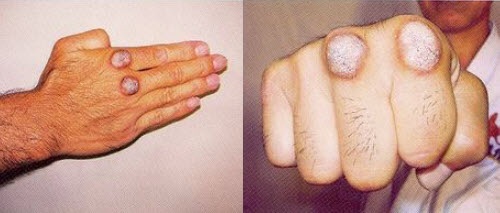
Recently, I did my first punching bag workout of the season. Since my punching bag is housed in my garage, getting out to use it depends on the weather. But I was recently able to get out there and clean out the garage and get the bag ready. It felt good to strike something with some impact. As big a fan of kata as I am, eventually, you need to develop your strength and knuckles by making an impact on an actual surface. My workout usually involves a thirty-minute timer with 1-minute intervals of striking paired with a thirty-second interval of rest in between.

As I was halfway through my circuit, I started toying with the concept of performing certain techniques on the bag in the same fashion as I would execute them in kata. This truly opened my eyes to the concept that form is not enough. As important as the foundation may be, eventually you need to build up your walls and put on a roof. Maybe it’s becoming a weak analogy but the true point here is that form is important to show you the way. Practice is what’s needed to show its effectiveness.

For the newer and younger practitioners who may be reading this, don’t sell kata short. The hour you spend doing kata may help your progress in ways you may never realize. But in the traditional martial arts, every form, every technique and every step is for a reason and serves an overall purpose in filling your self-defense toolbox. So be sure to pay attention, train hard and don’t ignore any aspect of what your style has to teach. Food for thought… ☯️

Not Just For The Movies…

I don’t generally tend to comment on things, even when it relates to something specific that I have some knowledge about. There’s never been any real value in doing so, since it usually just results in an online argument with someone far less knowledgeable who’s always willing to actively pick a fight with another person from behind the relative safety of their laptop screen. Plus, when someone believes something, it’s usually very difficult to convince them otherwise.

I don’t often get negative comments on my blog posts but everything before now and again I’ll get someone on their soap box who seems intent on picking a fight. A notable example was a few years ago when I wrote a post about proteins and the consumption of meat, only to have some die-hard vegetarian basically denigrate the entire post, accuse me of following pseudo-science and claiming I was spreading false information. In case any one of you were wondering, this is one of the driving reasons why I always include a disclaimer that I’m not a doctor in any of my health or quasi-medical posts. Bu8t I digress…

The point behind bringing this up is because I follow a number of pages online dedicated to martial arts and more specifically, karate. And it absolutely kills me when I read the number of inaccuracy’s comments made by individuals who have likely never even studied martial arts. By virtue of this and through this lens, I’d like to provide my list of most common misconceptions surrounding karate that I’ve noted over the decades.

  1. That’s a waste of time because you’d never do that in a real fight.
    I have a real problem with this kind of statement. While I can’t speak for every style, as I haven’t studied every style, nothing is wasted in karate. Every stance, every move, every strike and every technique is one piece of a significantly larger, overall puzzle that creates the muscle memory required to effectively defend yourself, should the need arise. When you see someone perform a kick straight up above their heads, the intention shouldn’t be to think “when would you ever kick someone like that?” Instead, you should consider that if the practitioner stretches and trains to kick perfectly at that height and level, it will be scores easier and more effective to perform the kick at a normal level. As I mentioned, nothing is wasted. Even if it only looks pretty and you may not use that specific technique in actual combat, it still serves a training and development purpose.
  2. Fights can go on indefinitely.
    Hmm, that a big fuckin’ no… Look, I’m a big fan of martial arts movies (normally) and I enjoy watching them as much as the next guy but real talk, here. That big fight climax at the end of the movie where the two fighters go head to head for 30 minutes or more without stopping is categorically impossible. Anyone who has ever been in a real fight will tell you that the average run time for a real fight is about two or three minutes. And karate is no exception. The amount of energy and effort it takes not only to deliver effective strikes but to block incoming attacks will have your lungs seize and your muscles go lactic after a number of minutes. Setting aside for a moment that these fight portrayals include either of the fighters taking several strikes to the head and body and yet they seem to keep fighting without interruption.
  3. Karate Doesn’t Work In Real Life/That Only Works in the Movies.
    I saved what is argumentatively not the best but the most important, for last. I’ve been fortunate to have never been severely injured during the course of my life but I have to admit that I’ve used karate A LOT! Either in the context of defending myself personally, defending others or in the course of my quasi-lengthy policing career, karate has saved my bacon (please hold all “pig” jokes) on more occasions than I can count. I’ve most often heard the argument that karate can’t stack up against other forms of “sport” combat like MMA. While I’ve never been a big fan of MMA, I’ve held a respect for it, as I would never see myself willingly sacrificing my body in that way. However, the concept of two willing participants rolling around and sweating on each other in biker shorts doesn’t quite appeal to me and doesn’t quite apply in the same self-defence context as karate would. But I digress… The bottom line is simply this: While form, karate and typically repetitive techniques may seem soft and ineffective and while one may not understand the dynamics of muscle memory and why it would help and certainly apply in a real-world context, I can confirm without any shadow of a doubt, that karate does in fact work as a martial art and a self-defence tool. I have my continued existence as proof.

That’s it for now, folks. A bit lengthy and a bit of a soap box post, but such is the way of it sometimes. The important thing to remember is not to believe everything you see in the movies but also don’t assume that martial arts doesn’t work. If anyone needs any further proof, I’m always looking for someone to train with. I’d be more than happy to share my knowledge. ☯️

No One Style Can Rule Them All…

One of the biggest pet peeves I have with the martial arts is the in-fighting among styles. Generally speaking and realistically, everyone always assumes that their style is the best, often choosing to point out what they see wrong with a neighbouring style as opposed to possibly absorbing the aspects that may not only be right, but many also be an addition to their overall tool belt. Some of this is simply loyalty, which on its face, is not a bad thing. But when you belittle or denigrate other styles, you water us all down. And that is not a good thing.

First and foremost, a little background on my own training is very important. My main style is Uechi Ryu Okinawan karate. The reason I say main style, is because I studied various martial arts in my youth and many styles of each, in order to land on Uechi Ryu. And I’ve written about this in previous posts; finding a dojo and style that fits for you is a very subjective journey and begins and ends with you. Too often, I’ve seen students convince their friends to come train, only to have the friend phone it in because they really don’t enjoy it. So an important first aspect is, if you don’t like it, don’t stick around. You’re not just wasting your time, you’re wasting the time of the Sensei and instructors that could be assisting the other students. But I digress…

It’s important to be committed to one style. Sensei used to tell me, “one religion, one love, one style.” And the reason behind this is pretty simple. You can’t master one thing while simultaneously studying four others. Only through focus, commitment and dedication can you grow and progress within your training and move towards whatever goals you may have set for yourself. But while you’re busy carrying your tool box around, keep in mind that you should always leave room for some new tools. As the old saying goes, it’s difficult to fill a cup that is already overflowing.

In recent years, I’ve had the opportunity to train in a few different karate dojos. And something that has continued to amaze me is the difference in technique and methods, even for simple things that should be straightforward. Let’s take a front kick as an example. A front kick is a front kick, right? One would be inclined to think so. In my style, you begin by bring the knee up to make a 90-degree bend in the leg, followed by pushing out and striking with the big toe. The results is a deep, penetrating kick that can devastate the spleen and soft tissues. In a style I recently trained with, their front kick fires straight out from the standing position and the strike is performed with the ball of the foot.

So, which method is better? That’s the important question. So what should one do? Critique the other style for doing it wrong? Or open one’s mind to accept that perhaps there’s a different way? Personally, I’ve always been taught that chambering your kick prior to executing is important as it allows you the flexibility of changing the kick prior to execution. For example, I can flow from a front kick and alter to a roundhouse kick with little difficulty. But the other method could arguably save valuable seconds in its execution. And there’s no denying you have less chance of breaking your toes by using the ball of the foot as opposed to the big toe.

It’s important to remember that martial arts is a lot like falling flakes of snow. In nature, no two snowflakes are alike. Each one is different and unique. This is because as they fall each flake is subjected to wind current and moisture in the air that causes their crystals to form in a unique manner that’s never replicated twice. But ultimately, it’s all snow. The same can be said for martial arts. As it progresses and grows, each style develops in its own unique way, with its own techniques, methods and perspectives. But ultimately, it’s all martial arts.

So while you should stay committed to one style as your core, take the happy medium approach. Allow yourself the opportunity to be open-minded and learn something new. See the possibilities in the styles you visit as opposed to resisting the aspects you don’t agree with. The result will be a better equipped tool box in your overall self-defence repertoire. At some point, this inevitably becomes the only way to continue to grow. Food for thought… ☯️

Slowing Is Not The Same As Stopping…

I’m sure many of you have heard the expression that you don’t stop training when you get old, you get old when you strop training. The idea behind that is that when you stop maintaining your mobility and fitness, it can have adverse effects on your personal well being. Realistically speaking, the lessening of one’s physical health will also have an impact on the mental clarity, since the mind can’t exist without the body and vice versa.

A good example for this would be my dear mother. She’s spent her entire life taking care of others. Besides being a capable woman in her own right, it started with her caring for my ailing brother, who passed away at the age of 18, followed by caring for her elderly parents since she was the eldest daughter. Even as all of these people have passed away, she then began to dote and take care of my father, who unfortunately has a condition where his spine degenerates and has him wheelchair ridden. She’s always had someone to focus her attentions on. Once the smoke cleared and there was no one left to take care of, her mind slipped away.

Most people have been confused by this phenomena and don’t understand the connection between maintaining the body and maintaining the mind. While my mother has been in a state of hyper awareness for the majority of her life by virtue of caring for others, she’s never taken much care of herself. The result is her body has absolutely no ability to sustain her mind. As a result, she has slipped away. I just spoke to her on Sunday morning by Facetime and she thought my son was a little girl and had no idea who he was. Just a bit sad.

This is why it is so important to keep moving. In recent years, I’ve come to the realization that I can longer carry on in the same fashion as i have for the past few decades. My training in the martial arts has significantly helped in my battle against Type-1 Diabetes and has helped me out of more sticky situations, both personally and professionally, than I can possibly count. But there’s no chance in hell that I can do it like I used to. This was evidenced by a very unfortunate incident at a local karate dojo where I had a couple of my ribs fractured and my muscle wall crushed in a manner that I would have easily defended from in years prior.

It makes me realize that I need to slow myself down. This is not only important in order to accommodate my age, which will never stop, but to prevent unnecessary injury. BY the way, the older you get, the longer and more difficult it is to get over injuries and heal properly. But the important thing, if you paid attention and read the previous two paragraphs, is that you don’t stop moving. Slowing does not mean stopping. And the sooner you throw in the towel and say “screw it, I’m done,” the sooner your body will have difficulties accommodating your needs into the foreseeable future. And you need your body and your mind as long as you can manage it.

Slow down if you need to. Hey, we all get there. Do I think I could still kick some ass, if I needed to? You’d better believe it! Protect my loved ones? Anyone who would threaten the well being of my family would find out that even old dogs can still punch. But I recognize that maybe those two-hour karate sessions need to drop to only one hour. Maybe my 70-kilometres bicycle treks need to become 20 or 30 kilometres instead. I’ll never stop moving. I can’t. My health depends on it. But the manner in which I move and in what amounts are what make the difference. Food for thought… ☯️

The Rusted Tools In Your Box…

The world has evolved into an environment where people will typically pick up the phone and call someone if they need something in their homes repaired. Everything from our vehicles, our property and even our bodies are typically repaired or healed by outside individuals. And more and more, as time goes by, it seems that this is the way of the world. But it wasn’t always so. I grew up with the remands of the generations that kept their own tools, worked on their own cars and repaired their own homes.

During my youth, I got to experience the watering down of this societal trend. My grandfather had a basement full of tools and a pretty comprehensive workshop. As a carpenter and a blacksmith, you can still see some of his handy work floating around my home town as things created back then were built to last, even when they were made of wood. The thing is, he used all of his tools daily, and kept them all clean, oiled and maintained as needed otherwise ensure that they lasted and were of use for their intended purpose.

Next, we have my father. A well-meaning man, he was never very handy with repairing things himself. Put him in front of a computer and he’d turn into an operator from the fuckin’ matrix… But he wasn’t very adept at getting past anything more than hammering a nail to hang a photo frame. Having been directly raised in that environment, I fall very much into this same category. My point is he had a number of very handy tools available within the home. The problem is he never used them.

The result is that within a very short number of years, those tools began to rust, corrode and erode, rendering them all but useless and in some cases completely destroyed. There was nothing more heartbreaking when I had to go home to close down my mother’s apartment than having to scrap a bunch of tools that had succumbed to the passage of time and had become absolutely useless. I mean, I wouldn’t have been able to fly a bunch of steel tools back to Saskatchewan anyway, but it was still a shameful waste. Those tools would have been better served in the hands of someone who would have used them and maintained them properly.

So believe it or not, this post is actually related to karate and the martial arts. So I’m going to bring us back to THAT. Learning different styles and techniques has often been compared to having multiples tools in your toolbox. Much like a traditional tool (hold your jokes, I’m not referring to myself), if you don’t use your techniques and train consistently, you’ll get rusty. You’ll become ineffective. Your tools will basically be useless. Only if you maintain them and work with them, will your avail;able tools continue to serve you well and protect you, in the event you need them.

Somehow, in my head, I always feel as though I could be responsive and hold my own in the event of a fight. At least part of that is true because the knowledge is still there. The light willing, that’ll never go away. So knowing how to protect and defend myself, knowing how to execute techniques and perform my katas and train effectively… Those are the things that never go away. But like the hammer that sits in the toolbox for twenty years, it may still be able to hammer a nail but it won’t keep the rust from setting in. The same can be said of us. Train hard, train consistently and keep your tools maintained. As the old saying goes, you don’t stop karate and get old; you get old when you stop doing karate. Food for thought… ☯️

You Won’t Find Reality On The Big Screen…

I think one of the biggest issues I have in modern years is the fact that we can never seem to have a movie or television show aired on screen without someone picking it apart. They question the plot, they question the background and continuity of the story, they even question the realistic nature of what they’re watching. This is just par for the course in a world where questioning and doubting everything has become the status quo, especially in online forums. I say this, fully cognizant of the fact that I’m currently voicing my opinion on an online platform, as well. The irony is not lost on me but I do find it annoying when someone watches something completely artificial, like a movie from the superhero genre, and comment about how Superman’s flight ability wouldn’t work for certain reasons or Iron Man’s suits would weigh to much to operate, even with the miniature hydraulics… I could go on and on but the point is that people have lost the ability to simply watch what’s on the screen and enjoy the ride for what it is; a ride.

But what about something that’s based on reality? There are plenty of shows and movies where the storyline and portrayed environment are realistic and rooted in real life, as opposed to fantasy or science fiction. One good example are police drama shows. being former law enforcement myself, I can promise that despite the realistic portrayal of some of the situations in a given show or movie, there are still plenty of unrealistic inconsistencies in the tactics, investigation methods and approaches used by cops on the small or big screen. I’m sure it drives my wife nuts, as I have a compulsive habit of pointing them all out. But I digress. The point of today’s post is to single out a particular pet peeve of mine as it relates to the reality behind what we see on the screen. That is to say, karate or martial arts training. For the most part, I enjoy a good martial arts show or movie like anyone else. But having practiced Okinawan karate for the past 35 years, a specific tendency that’s portrayed really gets under my skin. Specifically, I really dislike portrayals of amateurs becoming instant professionals.

To be clear, I refer to an amateur as someone who’s never trained in the artial arts and a “professional” as someone who has trained and developed for a number fo years and has some proficiency in their respective art. I do have some examples of what I’m getting at, and hopefully at least some of you will indulge me long enough to read on… By now, most people have either seen or heard of The Karate Kid. And no, I don’t mean the dog’s breakfast of a remake they released in 201, which by the way, featured China and Kung Fu, not karate. I’m referring to the classic 1984 movie that actually featured karate. Most people would know of it nowadays due to it’s spin off series, Cobra Kai. But I’ll get to THAT in a minute. The Karate kid featured a classic scenario of the new kid in town who has trouble adjusting to his new environment and navigating the social jungle that is high school. Somewhere along the way, he encounters a karate practitioner who bullies and physically assaults the protagonist, which prompts him to learn karate himself.

What I like about this particular example is that Daniel (the protagonist) was the shining example of a 1980’s victim. Small, light weight and essentially no fighting experience when the movie starts. And in true, inspirational 1980’s form, we see Danile train for almost the entire movie in order to fight for a few short rounds at a tournament, under controlled conditions, where he wins some of the battles by sheer luck. in fact, you can see the look of absent fear and doubt in his face as he fights in most bouts. It’s real. It’s viseral. As someone who’s been there, it’s relatable. The Next Karate Kid, which was considered one of the weakest entries in the franchise, was often commented about on how ridiculous is what for the protagonist to have traned for a week in a monastery and was suddenly able to defeat a larger, stronger opponent who had trained for longer. But even this example shows a touch or reality, considering if you listen to the actual story, she describes how she had some karate experience that she learned from her father just a few years prior, setting the foundation for everything that followed. This brings us to Cobra Kai…

Let me clear on one point. I LOVE Cobra Kai. When it first got released on YouTube Red and all I could watch were the first two episodes without subscribing, I was instantly hooked. Cobra Kai, in my opinion, is the perfect drama series. Touching on all the original cast and lending itself to the nostalgia associated to the generation that was there for the original film series and touching on some of the real world problems facing the younger generation, all while reinvigorating the world’s interest in the karate genre. When we look at Miguel, one of the lead actors in the series, we’re reminded of Daniel from the original films. Bullied and laughed at, physically assaulted until he starts training in karate to learn to defend himself. In fact, we see him practicing and training almost any time he isn’t in school, leading to his development, both physically and emotionally. And while that whole cafetira fight might be a bit on the farfetched side (even a seasoned martial artist wouldn’t walk away from that many opponents unscathed), it has a reasonably firm grip on the realities of physically developing oneself and training.

But let’s talk about Hawk from the Cobra Kai series. For those who have been living under a rock and haven’t seen Cobra Kai, be warned: there are spoilers ahead. Hawk is a self-named high schooler named Eli, who is yet another stereotypical demonstration of a “nerd” or “loser.” To be clear, I don’t endorse these terms, I’m using them in a generic sense to relay what the show is trying to portray. With essentially no physical constitution whatsoever and introverted personality that sees him barely speak a word in the beginning, things changed significantly for Hawk after attending one session in Cobra Kai’s dojo where he’s teased and belittled for his appearance and walks out. He then returns with fresh workout cloths and a mohawk haircut, taking the name “Hawk.” All of a sudden and contrary to any measurable logic, he’s “flipped the script” and is now extroverted, outspoken and within a few episodes is holding his own while fighting against opponents that just a short while before. Not particularly interesting.

We see the same thing happen with Dmitri, Hawk’s estranged friend, who walked in the same bullied circles and can barely walk straight, let alone make a closed fist. But then in a particular season finale, we see him not only fight but beat the living shit out of a number of other students. This is probably the most unrealistic thing portrayed about the martial arts that we tend to see on screen. And I say again, don’t get me wrong; I LOVE Cobra Kai and can’t wait to see the final season. I’m particular partial to Mary mouser, who plays Samantha Larusso as she is not only a Type-1 Diabetic but is alos an insulin pump user. If you’re very careful and know to look for it, you can occasionally spot the bump where tey accommodated her wardrobe to conceal it. But I’m just using them as a recent example of this phenomenon. There are plenty out there, in movies, shows and such. While everyone is so busy picking apart plot lines, background and continuities and technology, very few seemt o touch on the unrealistic aspects of martial arts training on the screen.

In my experience, which I also know to be a significant reality I’ve lived through, one can’t gain martial arts prowess through occasional or even light training. To develop the level of some of the skill shown on the screen in such a short period of time is significantly unrealistic. Through the years I’ve recognized that the students who only hit up the dojo once or twice a week and never take it upon themselves to train at home will very rarely develop. Karate is a commitment and a lifestyle, requiring a significant amount of time in training, both in and out of the dojo. This is the only way development and proficiency are achieved. But all of that being said, sometimes it’s important to remember that it’s just a show. Or a movie. Or a book. Or whatever. The key is to simply sit back and enjoy the ride. ☯️