Quit Bitching About It If You Won’t Fix It!

There is an undeniable truth in modern society that it’s far easier to whine and complain about things than it is to put in a genuine effort to try and fix whatever may be bothering you. This is not a generality, you understand. But for most people, it is much, much easier to complain about not getting that raise you wanted, or were overlooked for a promotion, than it is to constructively sit down with your boss and say, “I recognize that I wasn’t chosen for the promotional opportunity. Can we discuss what I can do to make myself a competitive candidate for the next one?”

This concept applies to most areas of life. Part of the reason is because it is, for the most part, much easier to complain than it is to do something about it. Diabetes and general health is no exception. I’ve had a lot of friends through the years with Type-1 who have often complained about their blood sugar levels, A1C levels and their weight or condition of their body. To these people, I’ve always asked the same question: What are you doing about it?

“Gardens Are Not Made By Singing ‘Oh, How Beautiful’, And Sitting In The Shade.”

– Rudyard Kipling

There needs to be a recognized acknowledgement that if you’re overweight and are not comfortable, healthy or happy with your body, then you need to do something about it. Start working out. Work on your health. Work on your diet. Consult a professional and get some help. There’s no shame in that. Some people feel they’ve become so far gone that they no longer believe it’s worth the effort. What are you doing about it?

If your blood sugars are running rampant and you’re suffering all sorts of complications with your eyes, kidneys and nervous system, then you need to start taking better control of your Diabetes management. If you only test your blood sugar once a month and indulge in every baked good that passes by, you’ve chosen an extremely slow and torturous form of suicide! There are nutritionists, dietitians, Endocrinologists and family physicians that can help bring you up to a healthier standard and get you to where you need to be. What are you doing about it?

If your fitness has gone to shit and you get winded walking from your couch to your kitchen, there’s a distinct problem. Humanity may have become sedentary, but staying in good physical condition is still an important aspect of a healthy life, whether you have Diabetes or not. Go for a walk, ride a bike, join a fitness club or go for a run. And if you’re uncertain how to go about any of it, there are plenty of resources both online and off that can help get you started and help you along. What are you doing about it?

“The Only Mistake You Can Make Is Not Asking For Help.”

– Sandeep Jauhar

There are obvious exceptions to every rule. It can be hard to get yourself going and there are people who have genuine conditions that make weight-loss difficult. Medical conditions can make it hard to achieve certain goals. For example, if you’ve gone blind, one would not expect that you’ll take up competitive archery! But the lesson here, is that if you find yourself capable of making a start but refuse to do so then you shouldn’t (as my title so eloquently put it) be bitching about it if you won’t fix it.

I think it was Confucius who said, “A journey of a thousand miles begins with a first step.” So take that step! Get off the couch and move a little. Test your blood sugar a few times a day instead of once a week. Opt for something healthier for your next meal instead of grabbing take-out or popping in a frozen tv dinner. Make a start. Improve yourself. Improve your life. And throughout all the progress, when faced with obstacles or adversity, keep asking yourself: What are you doing about it?

Countries Taking Care Of Their Own…

I think an aspect of modern society that’s often taken for granted is universal health care. Many countries offer universal health care, including Canada. Some other countries that have some form of universal or very low-cost health care include Australia, Belgium, Denmark, France, Germany, Japan, Portugal, Sweden, Switzerland and the United Kingdom. This is just a handful of countries that I found through a quick search and is not a comprehensive list.

Amazingly, many countries that fall under the same societal status as many of the countries listed above don’t have universal health care. For example, the United States of America, which boasts being one of the greatest countries in the world forces its citizens to depend primarily on private and privately-purchased health insurance in order to cover medical costs.

Last year, I posted an article in which I outlined the cost of all my required Diabetic supplies. Just to get an idea or general reminder, here’s a quick breakdown:

  • Insulin Pump Infusion Sets: $205.00/month;
  • Insulin Pump Reservoirs: $43.50/month;
  • Freestyle Libre Sensors: $178.00/month;
  • Humalog Insulin Supply: $180.00/month;
  • Blood Glucose Strips: $153.98/month;
  • Ramipril and Crestor (preventative meds): $120.00/month.
  • GRAND MONTHLY TOTAL: $880.48/month.

That monthly total is in Canadian dollars. So if we compare what it would cost a US citizen given the current exchange rate, a US citizen would be expected to pay $664/month out of pocket or through paid, private health insurance. Considering that the median salary in the US is about $4,700 before taxes, we’re talking 14 to 15 percent of the monthly income is contributed to Diabetic supplies. That percentage increases once you consider monthly salary AFTER taxes.

Despite universal health care in Canada, health insurance is still required for many, if not most prescription medications. This includes Diabetic supplies. There are some exceptions. For example, Prince Edward Island covers Diabetic supplies 100%. In Ontario, insulin is free for residents aged 24 and under and I know that certain supplies are provided free of charge in some of the Territories. Unfortunately, Canada lags behind many other countries with respect to insulin pumps being a “required” part of Diabetes management, and usually have to be paid out-of-pocket if one isn’t fortunate enough to have private insurance.

The bottom line is that Diabetes is one of those conditions that require constant technological upgrades, medications, different treatments continued costs that will last for life. Diabetes isn’t going away, and neither is the inherent cost to keeping yourself alive if you have it. ☯

Keep An EYE On It…

Did you ever play that game as a child where you and your friends ask yourselves, “Which would you prefer? To be blind or deaf?” Yeah, it’s a weird game and I never said that my friends and I were normal! The point is, I always chose deafness or blindness. As an adult, I know that no physical impairment is ever preferred, but I always assumed that I could live without my hearing in a much easier fashion than without my sight. Maybe I’m wrong. Who knows?

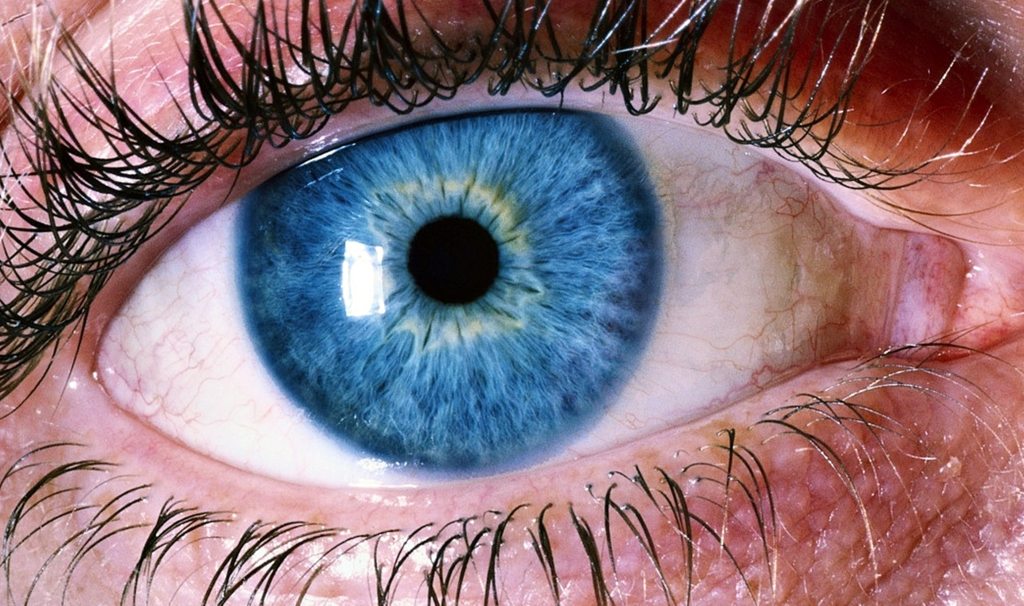
The point is, our eyes and eyesight are very important. And there are a number of serious complications that can be caused by Type-1 Diabetes that affect the eyes. Most people don’t seem to understand that the eyes are actually an extremity. one wouldn’t think so, considering the eyeballs are attached to the body mainly by the optic nerve. Despite being contained in the ocular cavity, the eyes are very much an extremity of the body and are subject to many of the same complications as your fingers and toes.

“The Eyes Are The Window To Your Soul.”

– William Shakespear

Diabetic eye disease is a common problem that affects people with Diabetes, regardless of type. And the risk of these problems increases in tandem with the length of time one has had Diabetes. There are a LOT of these complications, but I’ll cover off the most common ones as well as the ones I’ve actually had at some points, myself.

  1. Cataracts: This is a blurring of the lens of the eye. The blurriness causes your eye to be unable to focus on what you’re looking at. This means impaired vision and surgery is normally required to replace the damaged lens. People with Diabetes can develop cataracts much earlier than the average person and what’s more, it will get worse much faster;
  2. Diabetic Retinopathy: Here’s the first one that I’ve had to experience. This one is a condition where the blood vessels at the back of the eye are damaged. Although both Type-1 and Type-2 can get this condition, it’s usually attributed to poor control of blood sugar. It’s usually treated by way of laser procedures that burn away the damaged vessels;
  3. Diabetic Macular Edema: This is the second condition I’ve had to deal with, and still do. Macular Edema is a result of the accumulation of fluid near the retina and is usually a result of leaking blood vessels. If you’ve had Retinopathy, you’re likely to develop Macular Edema. Macular Edema can sometimes be treated by way of laser procedures or injections into the eyeball. I get the latter. Which sucks. A lot.
  4. Glaucoma: This is a pretty common one, and it involves fluid in the eye causing too much pressure that ultimately damages nerves and tissue. It can often be treated by medications, depending on the type but surgery is often required; and
  5. Corneal Ulcers: The most common way to develop corneal ulcers is by way of infection, and I don’t need to tell you how vulnerable to infections we Diabetics happen to be. It referred to as “corneal” because it presents as an open sore right on the cornea. However, it’s diagnostically called Diabetic Keratopathy. They usually won’t heal on their own and are usually treated by way of antifungals or antiviral medications.

There are other eye-related complications, but these are the most common ones that I’ve heard of/dealt with throughout my years with Diabetes. Obviously, prevention includes proper exercise, firm control of blood sugars and proper diet. Whether you have Diabetes or not, you visit an eye doctor at least once a year to ensure your health and prevent some of these conditions from worsening should you develop them. ☯

Skynet Is Taking Over!

I had my yearly appointment with my endocrinologist yesterday. It’s usually a pretty pleasant appointment and my doctor usually compliments me on being such a boring patient. I’m boring, because my blood sugars are well-controlled, I keep a firm grasp on my fitness and my diet and my overall health is usually NOT that of someone who has been Type-1 for over 37 years! This year’s appointment was a bit different…

Proper blood sugar control has always been a point of pride, for me. I don’t always eat in a manner that some would consider the best… As my wife and friends are quite aware, I have a fondness for cheeseburgers that borders on the obsessive. But I work out consistently, eat well in general and constantly monitor my blood sugars through my FreeStyle Libre and finger pricks.

The past two years have been among the most stressful I’ve ever been through. I’ve had sleepless nights, bad eating and the occasional indulgence in some rather high alcohol content adult beverages. In the last six months, I’ve unfortunately started to have some pretty serious blood sugar spikes. These spikes have been in the mid to high 20’s.

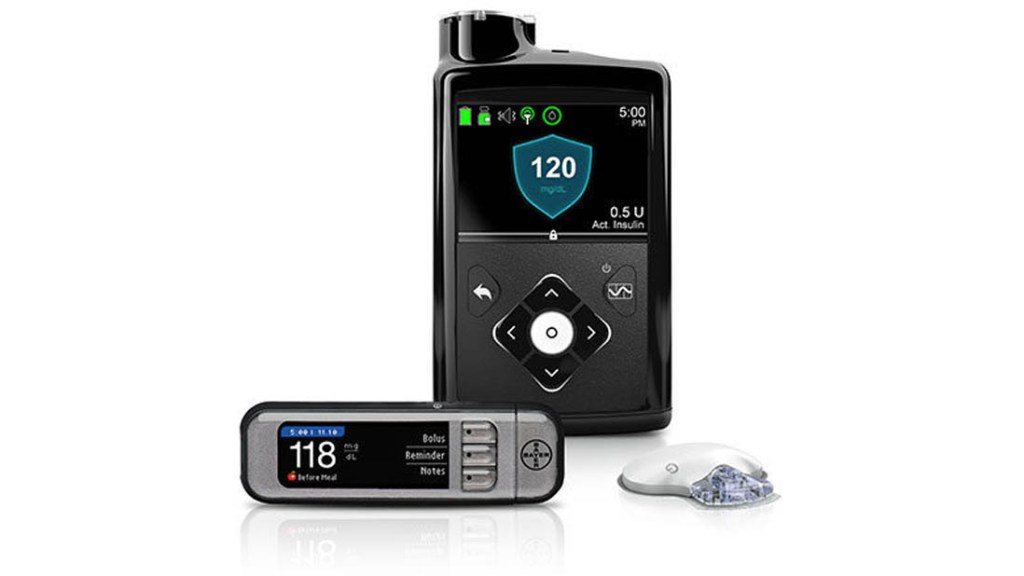
I’ve often written about the side effects and complications that can accompany badly controlled Diabetes. Given that I’m a person who practices what he preaches, this was the focal point of my concerns while speaking with my doctor today. Given that my insulin pump has been off warranty since last summer, not only was it decided that it’s time to get a new pump, it’s also time for a serious upgrade in technology!

The Medtronic 670G, which should be the pump I’ll be getting in the next month.

Not only will this new pump be all shiny and pretty, it also includes Continuous Glucose Monitoring. Now, I’ve fought hard against CGM over the past five years. The reason for that has been quite simple: I hate having things attached to my body! I resisted getting an insulin pump, years ago. Especially in light of my chosen profession, I considered wearing an insulin pump to be a hindrance. But I couldn’t have been more wrong!

Since I’ve been wearing a Freestyle Libre for the past year, I’ve warmed up to the idea of CGM, despite the fact that it will include a second piece of electronic equipment tethered to my flesh. Basically, I’m taking one step further towards being a cyborg!

The 670G has a CGM system that performs an interstitial blood glucose check every five minutes. EVERY FIVE MINUTES! That means that my blood sugars will be checked 288 times, every day! Even on my most compulsive day of constantly checking with my Freestyle Libre, I can’t match that. The pump and CGM will communicate with each other and micro insulin dosages will be provided to help maintain the best amount of “time in range” possible. I’m pretty stoked.

When I think back to the massive brick I used to carry as a glucometer, and the multiple types of insulin I had to use throughout the course of a day, I’m continuously impressed with the advent of new technologies and devices that, while not a cure, definitely help make the life of a Type-1 Diabetic just a little bit easier. ☯

Get BACK To It…

Boys, I was having a rough go of it, for a couple of weeks. Catching any sort of illness when you have Diabetes always has a different share of complications and issues than it would for a non-Diabetic, and this illness was no exception. This is about as much complaining about being sick as I’m going do, but one point that sticks out is that I haven’t had a decent workout in almost two weeks.

Enter: kids’ birthday party! My son Nathan has reached an age where he’s been getting invited out to birthday parties for the past year or two. Given the state of the world and how many people believe everything has to be bigger than life to be worth remembering, we haven’t been attending simple at-home parties with cake and presents. There’s been a Dino-bounce party, involving an indoor bouncy house gym and a couple of waterpark parties, were the family books a room at a local hotel and let’s the kids free range all over a water park with slides and fountains.

The first one of these that we attended, my wife was pregnant with our second child and didn’t partake of the watery fun. Last Saturday, we attended the second of these water-themed kids’ parties and it had a long water slide that required climbing three stories of steps to reach the top. As our infant son is only four months old, he stays with my wife, so she once again couldn’t partake of our watery fun. This means that I was left running along the deck, climbing all those steps and riding down a high-speed water slide for almost two hours with my hyperactive 5-year old.

Now, just to be clear… It was loads of fun! I mean, who DOESN’T enjoy water slides? Probably some people, but my point is that I lost count of the number of laps I swam and the number of steps I climbed, making for a wicked overall workout. The following day revealed the tell-tale tightness in my legs that usually accompanies a workout, especially since I haven’t done anything in almost two weeks. But it also accompanied something that I haven’t had much experience with: back pain.

According to an article written in WebMD, lower back pain before the age of 50 is often the result of sitting for long periods of time, which puts an increased amount of stress on the discs in your back. This is something I can easily admit to, considering my writing, reading and movie-watching habits of late. The article goes on to say that “Strength-training and cardio exercise are both helpful.” This is because it can strengthen the pertinent muscle groups and increase blood flow, which can reduce the pressure and help with the ache. (https://www.webmd.com/pain-management/features/common-pains-of-age#1)

There are a lot of other reasons why your back may ache. As most of you are likely aware, muscle tissue is elastic. As years pass, your muscle groups lose that elasticity and you may lose some cushioning in your spine. When coupled with secondary conditions, such as arthritis, osteoporosis or infections, it can easily result in back back. In my case, I’m inclined to believe that I simply pulled my back muscles as a result of overexerting myself in a short period of time after sitting like a lazy lump, blowing my nose over the past ten days.

Your back is your body’s entire support system, so it’s important not to ignore lasting pain and to take good care of it. As with most things related to the body, the first line of defence is to get plenty of good physical exercise and drink plenty of fluids. keep your core and the related muscle groups strong, and this will go a long way to preventing those annoying twinges in your back. ☯

Do You Think They Had Diabetes On The Enterprise?

Ahh, Star Trek… So many fond memories on so many lazy Sundays during my childhood… I remember laying on the couch on Sundays, watching the adventures of Captain Kirk, Captain of the starship Enterprise, guiding his ship through the cosmos and meeting all kinds of different life forms. And green women… We must not forget the green women!

I’m referring to the original series, of course, that aired in 1966. As I write this, I realize how I’ve just aged myself horribly but when I ask someone nowadays if they’ve ever seen Star Trek, I’m usually met with “What, the one with Chris Pine?” Disappointing. I no longer want to live on this planet, anymore. But on a serious note, Star Trek spawned over half a dozen television series and tons of fantastic movies, some of which have given us a glimpse into the future of technology. I’m sure we can all remember Captain Picard on Star Trek TNG, using those thin touch-pads to write his logs and reports. This was well before the advent of the iPad.

When seeing all that technology and how it’s applied in the medical context, it makes me curious just how disease-free the Star Trek universe actually is. I’ve seen them heal people who were on the brink of death, infected by alien viruses and there’s virtually no mention of disease throughout any of the series, with the exception of a few one-in-a-million incidents. It makes one wonder: Did they cure Type-1 Diabetes in the Star Trek universe?

A Star Trek medical tricorder. Yes, I’m a nerd!

For as long as I’ve had Diabetes, I’ve been hearing how “close” we are to a cure. Back in 1982 when I was first diagnosed, they predicted that we were only about 20 years away from a cure. Here we are 37 years later, and I ain’t hearin’ no cure! It seems that about every five years, they come out with something that “could” potentially be a cure, but nothing ever sticks. It probably doesn’t help that there are a lot of “cure Diabetes” books and articles out there, but they generally refer to Type-2 Diabetes, which is a whole different ballgame (And the effects of Type-2 can be reversed but not necessarily cured).

There have been a lot of promising treatments in recent decades. Different things, such as islet cell or beta cell transplantation, whole gene sequencing and even immune system manipulation have been examined and attempted. The prospect of a true pancreas transplantation has been toyed with, as well. Unfortunately, because it has to do with the immune system and the body’s beta cells, the average ability to be independent of insulin injections is only 60% after five years.

There was even talk about a preventative vaccine that could prevent the onset of Type-1 Diabetes, and was due to start human trials back in 2018. I haven’t heard much in the way of updates on the progress of this vaccine in the past two years, but if successful it would go a long way towards eliminating Type-1 Diabetes. It’ll suck for those of us who already HAVE it, but at least it would guarantee that the next generations to come won’t have to put up with injections, testing and the many complications associated to Type-1 Diabetes. I can almost hear all the anti-vaxxers grinding their teeth in opposition…

So, there you have it. I’m still hearing that magic “20 years” being thrown around when I research potential cures and timelines. But who knows what treatments and possibilities may emerge in the decades to come? By the time we reach the Star Trek age of the future, Diabetes may be a thing of the past. It sure would be nice if all it took was the gentle hiss of a hypospray against my neck and have the doctor say, “There you go, you’re healed!” In the meantime, it’s a classic case of hurry up and wait. ☯

A Shitty Thing To Write About…

Alright, let’s get serious for a moment and talk about crap! I mean the literal kind. I often write that Diabetes can and often does, affect many systems throughout the body. There are plenty of common ailments that are caused or aggravated by T1D, including vision issues and heart disease. But people are rarely aware of one of the most crappy systems affected by Diabetes: Your gut!

First of all, there are some basic steps that you can take in order to help improve your overall gut health. This includes drinking plenty of fluids and ingesting a proper amount of dietary fibre. What is the proper amount? Well, according to a post by HealthLine.com, for an average adult consuming a 2,000 calorie a day diet, “the daily value for fibre is 25 grams per day […]”

There are plenty of ways for you to get that amount easily, within the span of a day. For example, a cup of prune juice has about 2.6 grams of fibre, the same as an average-sized banana. Another option that packs a bit stronger of a wallop is bran. Raw oat bran packs 15 grams of dietary fibre in every 100 grams of the stuff, making it super easy to get your recommended daily intake by eating it in muffin form or even in a bowl with some milk, instead of your everyday Froot Loop addiction!

In my household, baby spinach is a fan-favourite, even for my picky 5-year old. Baby spinach is a healthy green and packs 2.4 grams of fibre in a raw, 100-gram serving. I usually sneak it into Nathan’s wraps and he calls it “leaf”. he doesn’t love the idea that it’s there, but he wolfs down the food nonetheless. Many vegetables will provide a decent amount of dietary fibre.

If you’re looking for a little something “extra” to help that fibre content along, there are plenty of fibre supplements that you can find at your local pharmacy. They come in capsule form, gummies and even some lovely wafers that you can fool your child into believing are cookies. And there’s always the run-of-the-mill fibre powders that you can add to a glass of water.

The next item of importance is to drink plenty of water. Drinking plenty of water will help to prevent dehydration (d-uh!), which can lead to diarrhea and continued stomach and bowel issues. Since Diabetes has this nasty habit of affecting the body’s nervous system, damaged nerves in your gut can lead to ugly complications such as Gastroparesis and Diabetic Enteropathy. In the interest of keeping this post at a reasonable length, I’ll just let all of you Google those two conditions. Go ahead, I’ll wait…

Having Diabetes is crappy enough on its own (see what I did there?) without adding to the pile, so be sure to pay attention and listen to your gut. It can help you to ensure you don’t get in shit! (Man, I’ve got a ton of these!) ☯

Let The Hate Flow Through You…

Anger is insidious. And it tends to feed on itself. Anyone who knows me, is aware that I have a bit of anger sitting in a deep well inside my gut (I can almost hear my wife upstairs, nodding her head vigorously). I take great pains not to let that anger get the best of me or direct it at others. Why would I? There are so many ways to productively deal with one’s anger, there’s no “reasonable” cause to direct it at another human being.

I was running errands yesterday morning, as I usually do. One of my stops included getting fuel for the family vehicle, which I had been planning on doing for the past couple of days. When I finished paying for my fuel, I exited the gas station onto a four-lane boulevard that ran west to east. The boulevard had a centre lane that allows for turning left or right, which is a common street layout at various locations throughout the city.

My vehicle was placed within the median lane without blocking any traffic, and I was watching the east-bound traffic for an opening to pull into the main driving lane. An approaching pickup truck signaled and moved over to its right, leaving me with an opening to pull into the lane. I merged into the lane and was greeted with the loud sound of a blaring vehicle horn.

I looked to my right and found a black pickup truck (not the one that changed lanes) pull up next to me and the male driver started gesturing and yelling at me. I couldn’t see my own face, of course. But I imagine I had a look of confusion mixed with indignation at being harassed by a random stranger. I wasn’t sure what had happened, and I can confirm I hadn’t even seen this truck when I checked before pulling out. But suddenly, he was right there!

I pulled into the left turning lane, as my intention had been to head North on the cross street. He pulled up next to me in the next lane and lowered his window. Despite my better judgement and the fact I probably shouldn’t have, I lowered my window as well. Here’s the exchange:

Angry Driver: “What the fuck is your problem, shit-head? You’re not supposed to pull out of the gas station there!”

ME: “Of course, I can. That median lane is for turning either direction. Always has been. I saw the truck switching lanes to let me in and I took the opening.”

AD: “He moved right because he was turning right, shit-head! I have the right of way and you pulled right in front of me! What the fuck is wrong with you???”

This was a strange occurrence. It wasn’t the aspect of cutting the guy off that bothered me. I can totally admit that I might have cut him off. But this felt like a role reversal. Usually, I find myself being the one who gets angry and frustrated at other drivers. Although, true to form with the population of this city, the worst one ever faces is the actual vehicle horn. Actual interactions generally don’t happen unless a collision occurs.

AD: “What kind of shit-head are you? Do you not know how to drive…?

I offered an apology, uncertain as to whether is sounded sincere or not, and tried to explain that I hadn’t seen him. He continued to call me a shit-head and swear at me, so I raised my window and let it go. I guess he’s the kind of guy who finds an offensive name he enjoys and uses it, ad nauseam. I was somewhat taken aback by the level of anger and aggression he was using against me for something so trivial in the grand scheme of things.

Did I cut him off? Maybe. I’m even ready to say probably. But there’s no rational reason to chase someone down and start swearing and name-calling because of it. I get angry. My wife can confirm her level of entertainment she gets at hearing me grumble and swear when we’re dealing with traffic. But she can also confirm that following someone to yell, argue and call them names is well beyond even MY anger. I mean, come on!

Folks, life is too short. Things will make you angry. Things will make you frustrated. That’s a part of life. The idea is not to try NOT to be angry; the idea is to find a productive way to vent that anger. And most certainly not pass it on to others. Let’s think about it for a moment. What has this guy accomplished with how he treated me, yesterday? Did he solve the problem? Did it take it back? Of course not. All it did was stoke the flames of his anger further. He probably drove on to his destination with a knot of angst in his gut and hatred for a person he doesn’t even know. I continued on to my destination stressed, confused and harassed without even being aware that I had done something wrong. As Elsa from Frozen once said, let it go… ☯

A Touch Of Innocence For Your Morning

We tend to lose parts of ourselves as we grow older. Adulthood and responsibility have the tendency of destroying certain instincts that most of us are inherently born with. These instincts are a result of a long evolutionary process of over generations. For example, how is it that my 4-month old son knows to smile when he sees me? And seems to recognize a smile as a sign of happiness and familiarity? Sure, part of it involves imitating his mother and father, but a smile is a recognizable facial expression that is used across the entire world, regardless of race, background or language.

The same can be said for dreaming, imagination and curiosity. These aspects are very prominent when we’re born and through childhood, but they slowly disappear as the crushing responsibility of daily life takes over. There’s a perfect example of this phenomenon, which I experienced this morning. Enter: my son Nathan.

Today is a school day for Nathan (it’s Friday, d-uh!) so I turned on his bedroom light at 7 a.m. and told him he needed to get up. Despite getting to bed almost twelve hours previously, he looked at me and frowned around two red, blood-shot eyes that spoke volumes since his vocabulary lacked the words he wanted to express in that very moment.

I went to work preparing his lunch and backpack and trying to get some caffeine into my system as I move about. Contrary to the process that’s usually necessary on school days, he emerged from his bedrooms a mere five minutes later, fully clothed. I asked what he wanted for breakfast and he declined to eat anything. I should’ve listened to him, because my second suggestion produced a response of frustration usually reserved when you can’t find a parking space when you’re ten minutes late for an appointment.

He expressed his desire to watch cartoons for a few minutes before leaving and, in the interest of my sanity, I accommodated him. He curled up in our home office under a blanket and started watching an episode of Paw Patrol for the bazilionth time! My recent illness had me dealing with a wave of nausea, so I couldn’t be bothered trying to argue with a 5-year old. Despite knowing that it’s a school day, he doesn’t choose to acknowledge that some urgency is required during the morning. That’s apparently a problem for adults.

Once the car was started, backpack and coffee mug loaded, I called out that it was time to go. A very frustrated Nathan came up the stairs and told me, in no uncertain terms, that I should come down to the office to get him as opposed to yelling out for him. My response was to get his damn outerwear and boots on.

As he’s sitting on the steps of the landing, slipping his boots on, his eyes suddenly light up and he says, “Look, Daddy! A spider…” I look down at the step and I see a small water drop sized insect on it’s back. I only see six legs, so I explain to him that it’s not a spider. He taps it and the legs move. His excitement grows exponentially as he realizes it isn’t dead. Getting his ski pants and boots on have been completely forgotten.

I try to steer him back on course, but his excitement becomes mixed with concern as he tells me we need to help the bug turn over so it doesn’t die. I look at the time and sigh audibly. The son of a Buddhist wants to help preserve a life. I can’t really fault him for that, can I?

I tell him to keep getting dressed and I’ll take care of the bug. I push the bug gently until it manages to flip over. Turns out, it was a lady bug (At least I hope it was. That’s what it looked like. What am I, an entomologist???”) It starts crawling away. Nathan has his ski pants almost to his waist and his boots on. Time is burning away on bus pickup and now he’s worried about the bug getting off the landing. “We need to put her outside…”

I calmly explain that it’s winter and that the snow will kill the lady bug. Better to let her make her way off the landing herself as she can walk on vertical surfaces. I manage to get him to finish getting his ski pants on and his coat gets around his shoulders and almost zipped up when he stops and kneels down to watch the ladybug walking around.

“Dude, you’re killing me! Get your stuff on! We gotta go!” He hustles into the rest of his coat and I use the term “hustle” sarcastically, and makes his way out to the family vehicle. I bring him to the bus stop and wait patiently as Nathan turns on his seat warmer and puts the radio on a station playing music. After a few minutes of silence, he tells me I need to check on the ladybug when I get home (it was gone, BTW).

He walked to the bus, gave me his customary goodbye hug and stepped up into the bus and started his day. As the bus pulled away, it dawned on me that Nathan spent the better part of his entire time at home this morning, observing, getting excited and showing concern for a tiny, insignificant insect that I hadn’t even noticed was there until he pointed it out. It fascinated him and made him curious about life and his surroundings. But daily life required me to stifle that instinct in the interest of getting him to school. And that’s what life does to you.

Childhood is a strange time in a person’s life. We spend the first two to three years trying to encourage kids to speak and walk, followed by the next decade telling them to shut up and stop running around the house. Then the following ten years WISHING they’d talk to us. All the while, their ability to appreciate the small things and be fascinated with life slowly dwindles out of them until they become the typical, socially acceptable adult that keeps their “eyes on the prize”.

Sometimes it’s a good idea to take a step back and just stare at the clouds. We’re all born with the ability for imagination, so why would we ever stop using it? Some of the greatest ideas in the history of humankind were the result of imagination and dreaming. Take some time to slow down and smell the roses. No matter how much kids can be frustrating, sometimes they get it right. ☯

Getting Over The Hump Ain’t Easy…

It’s going to be a short post today, as my bed is calling and my body is itching to comply! Four days ago, I wrote a post that walked through the process of dealing with an overnight of extreme high and low blood sugars. Although a common problem for Type-1 Diabetics, it’s not necessarily something that SHOULD happen, if one maintains proper control.

When something like what happened to me last Saturday takes place, there’s generally an underlying reason. Either you’ve gone radically off your usual food regiment, have indulged in something you usually wouldn’t, or you’re sick. In my case, I’m happy/not happy to report that it’s the latter.

As I’m sure my fellow T1D’s can agree, we generally catch every little bug that zips past us, on account of the lovely immune system we have. Although I had a bit of a headache on Sunday, I really didn’t notice a difference. But when Monday hit, I started to note the tell-tale signs that something was amiss. My sinuses decided to close up shop and become impenetrable, to air or anything else, my throat decided to mimic the feeling that’s usually reserved for a stiff shot of Fireball (but a lasting feeling as opposed to temporary) and my head thought it would be a good idea to see how well I could function through my day without proper balance by making my head spin, non-stop.

Folks, I’m not the “man flu” type of guy… Sure, I’ll bitch, whine and complain about being sick with the best of ’em, but I still get things done. On Monday morning, I still got my son up, ready for school and to his bus. I still ran errands and still did things around the house. Despite how it sounds, I’m actually not bragging; this is just my typical day. But yesterday, my system decided to double down and increase its efforts to make me feel like I had been struck by a freight train. I think the worst part of it, was swallowing my pride long enough to acknowledge that I should skip karate and allow my body to rest.

This morning, my voice is slowly walking away from the party and although my blood sugars are sitting at an awesome 6.8 mmol/L, my body is racked with pain and nausea has set in. Lovely. Although I have no issues with the whole “adulting” thing, I think the remainder of my day (at least until I go pick up my son from the bus) will include making a fort with a blankie on the couch, maybe watch some Hell’s Kitchen with my wife, and see how long I can become unconscious for.

As important as staying driven and motivated may be, it’s also just as important to listen to your body and allow it to rest when needed. Otherwise, you could be looking at twice the amount of recovery time that you’d typically need. Stay hydrated, test your blood sugars often and make sure to eat something, despite your lack of appetite. Stay healthy, folks! ☯