All The Accoutrements…

When people think of Diabetes, they usually associate its treatment with the injection of insulin. Or should you happen to have Type-2, an oral medication such as Metformin or something similar. But realistically, if you’ve had Diabetes for several years or more, the safe bet is that you’re now taking medication beyond the basics that people associate with Diabetes. This isn’t necessarily to treat something that’s already an issue; sometimes it’s simply a preventative measure, which can be important in order to try and lengthen one’s lifespan and increase one’s health.

This doesn’t necessarily involve medications, either. There are a number of specialists, medical professionals and appointments you need to keep in order to maintain your body and health. I suppose that I can start with the basics, since every Diabetic needs to do it anyway. Testing one’s blood sugar. If you’re on pump therapy with a CGM, you can get away with testing three or four times a day. You’d think CGM would circumvent this need, but you actually need to test frequently in order to keep the CGM properly calibrated. If you’re NOT a pump user and take manual insulin injections, well… I used to test anywhere between five to twelve times during a normal day. But testing my blood and taking insulin is the first requirement.

Next, I take a multivitamin. Depending on who you ask, some people believe a multivitamin is either a daily “requirement’ of their diet or they believe that they get everything they need from a genuine diet and that you shouldn’t NEED a multivitamin. Well, the jury is still out on whether a vitamin supplement delivers any benefits or not. In fact, most studies straddle the fence in terms of whether it’s useful or not. My family physician has always recommended that I use a multivitamin and I’ve stuck to that for years.

Basically, a multivitamin contains a cocktail of the daily vitamins, minerals and essentials that can help boost your diet. It’s no secret that the every day person’s modern diet often falls short of providing ALL the nutrition one needs. Plus, one thing to consider is that B vitamins can help reduce stress and anxiety, which is a nice plus. Of course, I get a massive boost of B vitamins every day from the energy drink I have in the morning. But I digress…

The next item on my list is Ramipril. This is an oral medication I take everyday as a preventative way of maintaining my kidney function and blood pressure. I don’t know about y’all, but my kidneys are rather important to me! And the issue with Diabetes is that uncontrolled blood sugars will damage the blood vessels, which result in lowered kidney function. High blood pressure will also affect the kidneys, which is why Ramipril is a nice “catch all” in order to maintain kidney function. Do I have high blood pressure? No. Except for when I catch Nathan doing something he isn’t supposed to. But prevention can often be more effective than treating the damage.

And then, we have Crestor. This is an oral medication used to treat high cholesterol and prevent heart issues through the lowering of the same. Unfortunately, I can admit that for a few years running, my cholesterol has been on the high side. Crestor helps to reduce the aforementioned cholesterol, thereby ensuring better cardiac health. During my last specialist appointments, I’ve come back down to normal levels. It was mostly diet. Exercising and positive diet change can almost eliminate the need for this medication, although it can be useful as a preventative measure as well. Even more so than my kidneys, I kinda need my heart to keep going’…

I get a yearly physical. This is also a requirement of my current job, though I can easily appreciate the preventative nature of this, as well. A yearly physical allows a person to catch any developing conditions before they become a problem. I like to think that I know my body pretty well, but when you consider that chronic headaches can be a sign of brain cancer, it stands to reason that getting checked once a year even if there’s nothing “out of this world” can be beneficial.

Last but not least, we have the specialists. Besides seeing an optometrist, I also see an ophthalmologist for examination as well as my eye injections and I see my endocrinologist every six months to a year, depending on where I’m at with my A1C’s and my pump usage. That’s just the usual stuff. Job requirements have also required me to visit neurologists and other specialists I’m sure I simply can’t remember.

If all that was needed was a quick injection of insulin every day and testing one’s blood, Diabetes management would be a breeze. But in reality, it’s an intricate mosaic of pieces that need to be held together in order to provide the colourful image that is me! (I’m sure my friends and family are peeing themselves a little from laughing, right now) ☯


Sinfully Sweet…

It’s difficult to be a good person. No, let me correct that… It can be exceptionally EASY to be a good person, but society, culture and our own personalities MAKE it difficult to be a good person. I recently read a post by a fellow blogger named Jason Youngman who, if you aren’t doing so already you should follow. He wrote a post entitled Dignity Remains Steadfast where he discusses the nature of vice and it’s vicious effect on people. He ends the post with a comparison that I find extremely fitting where, and I’m paraphrasing here, the sweetness of candy is a slow pleasure that doesn’t show the damage it does until your teeth begin to rot.

It got me to thinking about the nature of vice and how we behave in society, a point which I don’t usually address beyond an immediate situation that may have occurred in my daily life. But that in itself is a form of vice. After all, most people are geared towards living in the immediate moment and don’t usually consider the consequences of what’s to come. And from a Buddhist’s standpoint, I’ve decided it would be a good idea to share my thoughts on this subject with you.

Just to be clear, when I refer to vice, I don’t mean the iron clamping device used by a trade’s person or the nickname given to certain American police units. A vice is what’s referred to as a bad habit, behaviour or character trait that a person may have that is considered wrong by their respective society. That last part is important since depending on where you live and what culture you happen to be a part of, something can be a vice in one culture but not another.

Here’s the reality: no matter who you are or what kind of lifestyle you live, you have vices. Maybe you chew your nails. Maybe you’re a smoker or a drinker. Maybe you tend to judge a book by its cover. These are things that can be considered vices and are negative character aspects that we navigate daily life without usually even acknowledging. This is mostly because we don’t consider them to BE bad habits, even if they may have a negative impact on ourselves or those around us.

Let’s take cigarette smoking as an example, and this is a discussion I’ve had with many a friend who actually smoke. The average smoker (if there really is such a thing) believes that their use of cigarettes is a vice that affects them and only them. It’s not such a bad thing, because they’re not hurting anyone but themselves. Right? Makes sense? Here’s the problem: the eventual health complications caused by your smoking will inevitably lead to a strain on health care systems and your family, especially the if they need to provide care for you when you develop terminal illnesses brought on by your smoking habit.

Further, there’s the pollution aspect from smoking, even if you do it outdoors, the littering from all the cigarette butts left lying around and the financial constraints you’re placing on your household due to the excessive rising costs of cigarettes. I have no idea what the current cost of a pack of cigarette might be at the moment, but I’ve plenty of people complain that it’s a lot. Now, I’m not trying to use my blog as a platform against smoking. To each their own. This post is meant to be about vice, so I’ll move things back in that direction. But smoking is a good example of a common vice that many people partake of.

Another good example is sin. I was raised in a Roman Catholic household. And if I’m being honest, just about everything that someone did was considered a sin in some given way, shape or form. I may be exaggerating to an extent, but it sure felt that way as a child. Now, Catholicism differentiates vice and sin as the habit of sin and an individual morally wrong act, respectively. And they list their seven deadly sins or vices as Pride, Envy, Wrath, Sloth, Avarice, Gluttony and Lust. Does this means that when I shave and pay attention to personal grooming in the morning, that I’m guilty of Pride? If I go out to a buffet dinner with friends, am I indulging in Gluttony? Perhaps.

I use Catholicism as an example, because it’s what I grew up around and it’s familiar. But most organized systems of faith have a list of vice and/or sinful actions that they consider particular. Buddhism does as well, in fact. So if I avoid those seven indulgences, does this mean that I’m free of vice as a Catholic? And do I still have vices from another culture and/or religion’s perspective. This is the problem with vice. It can be insidious and not always noticeable in the every day.

One thought I’ve always had on vice and something I discussed with Jason Youngman, is how does it fit in the perspective of someone who is unaware of it? For example, if a person grew up in a household where there was no faith-based upbringing, are they genuinely guilty of vice? What does sin mean to someone who knows nothing of it? I think that perhaps some vices (not all) may not be viewed as such to certain people, depending on their circumstances. Some vices should just be common sense; rudeness and criminal behaviour should be a given, and every person should know to avoid them, regardless of upbringing, faith or education. But such is what makes these things a vice in the first place: the fact that people don’t acknowledge them as common sense

He made a very good point in stating that regardless of religious or faith-based upbringing, the majority of households will ensure that their children are raised on some level of morality, be it a personal or system-based one. He also pointed out that it’s necessary to acknowledge the consequences of our actions, whether we believe our actions are vice-related or not. From a legality standpoint in Canada, the Criminal Code is pretty clear on the fact that ignorance of the law is no a defence. The same can be said from a moral viewpoint, as well.

This can be easily tied in to Buddhism, as the Four Noble Truths describe that very same thing. Whereas the first Noble Truth explains the existence of suffering in the world, the second Noble truth goes on to explain that we are responsible for that suffering. The third Noble Truth covers the fact that we need to bring an end to this suffering and the fourth Noble Truth explains HOW to do so, which is described as being by following the Noble Eightfold Path.

The Noble Eightfold Path includes Right View, Right Aspiration, Right Speech, Right Action, Right Livelihood, Right Effort, Right Mindfulness and Right Concentration. Through those practices, one can achieve peace and enlightenment, although the latter can be fleeting and difficult to achieve. The point is that one needs to live well in order to contribute to the overall good in the world and help to eliminate suffering.

I could go into detail and describe each of the Eightfold Path, but I think this post has gone on long enough. I want to keep y’all engaged and reading, not using my blog as a substitute for warm milk. The take home lesson here is that we all have vices. We may not always recognize them or acknowledge them as such, but even the smallest ones will have a negative impact if left unchecked. Like the flapping of a butterfly’s wings that eventually cause a ravaging storm on the other side of the world, actions have consequences. ☯

Surviving “Family Week”

If you live in Canada, chances are that your Province uses the third Monday of February as a means of claiming another statutory holiday in order to get a paid day off. I’m sure that’s important to some people but given that my salary doesn’t change regardless of holidays, I could care less. In Saskatchewan as well as a number of other Provinces, It’s referred to as “Family Day.” Setting aside for the moment the fact that if you’re married with children EVERY day is Family Day, the school systems seem to think that it’s appropriate to include a week-long break for kids to add insult to injury.

My opening sentence may catch some people by surprise since most would be inclined to ask, “But Shawn, don’t you WANT a paid day off?” Hey, I love a paid day off as much as the next person, but if you look up Family Day (or Louis Riel Day in Manitoba, Nova Scotia Heritage Day in Nova Scotia and Islander Day on PEI) there are some Provinces that were specifically pressured by their population to name a holiday as well. Some folks just can’t stand it when others have something. But I digress…

Nathan and I enjoying a whirlpool

Just to be clear, I love my sons and a week off with them at home wouldn’t be a problem if the fates didn’t feel compelled to make a whole bunch of shit happen at once. The week started decently, with Valentine’s Day and a particular family event taking place. Due to restrictions outlining the number of people permitted within a household at once, Nathan and I had the opportunity to spend the night in a hotel room once we were done.

Since we had the chance to see people, eat food outside of home and enjoy the hotel’s swimming pool and whirlpool, Nathan became enamoured with the concept of hotels and seems to be of the opinion that it’s a repeatable holiday. Not to mention he enjoyed having a queen-sized bed all to himself and thinks we should get one for his room. Bloody hell. That was our overnight and the trip back home was reasonably uneventful as well so, no harm, no foul, right? But the rest of the week would turn out to be a bag of smashed ass.

Trying to take a photo with Alex (His right had is reaching for my energy drink).

If this week off happened to take place during ANY other season, it wouldn’t be an issue. I’d be taking Nathan to the park, playing in our backyard, taking walks and hanging out in our garage working on projects of some sort (see my post about building a Makiwara with Nathan). But since the Prairies love to do that whole “freezing weather” thing, there’s little to be done outside the house since it’s too cold for Nathan to be outside for longer than ten minutes or so before his face starts to go numb.

This leaves him inside the house to serve up his usual cocktail of making noise, banging into every object in the house while the baby is napping and effectively training his infant brother to become a destructive dynamo as they both whip through the house, destroying everything in their path while making enough racket to shatter glass. Fun times. Not to mention the fact that Nathan feels compelled to say he’s hungry almost every hour, mostly due to boredom. Sometimes I can sucker him into sitting still long enough to ALMOST get through an entire movie, but that’s usually pretty short-lived.

The boys being goofy together

In the end, a combination of frosty, winter weather, a lack of indoor activities and a hyper-active child made for one hell of a long week. To add insult to injury, Alex seems to have started this thing where he goes to bed at night only to wake up screaming blue murder an hour or two later. He seems to be enjoying a particular period of sleep regression, which is just LOADS of fun for the whole family. That’s fine; I’m sure four hours of sleep per night is more than enough for the average adult in his forties (cue the sarcasm).

Nathan gets another week off in April in combination with the Easter long weekend. I don’t know about y’all, but I sure as hell didn’t get all of this time off school when I was his age. Man, that makes me sound old. But they seem to hand out days off for school kids like it’s tap water. At least the weather should be seasonally warmer by April, allowing for more outdoor activities and fresh air. My wife and I survived the week, although I don’t know if I can say it was unscathed (I can’t seem to stop my left eye from twitching) and I’ve come to appreciate the school system and the fact they seem able to deal with my child, five days a week. ☯

Party ‘Til You Drop? No, Eating ‘Til You Drop!

It’s no secret that having Diabetes requires something of a fine balance of give and take for most aspects of one’s overall health and diet. However, when those two factors collide it can cause some chaotic issues that causes a role coaster of events that usually last for hours afterwards. What I’m referring to, is the act of overeating when one slips into Hypoglycemia or low blood sugar. It’s a common issue, but one that can cause untold damage.

Just a few short years ago, I used to have a nasty habit that when my blood sugar dropped below normal I would start eating carbs to bring it up. Sounds reasonable, right? The problem would arise when I’d KEEP eating until I felt better. That’s a problem, because if I’m still eating when I start feeling better it means that carbohydrates have already started correcting my levels quite some time ago and I’ve eaten WAY more than I need. In which case I need to buckle up, because I’m about to slingshot into Hyperglycaemia territory and I’m about to embark on a ride I like to call the roller coaster (but not a fun one!).

A few things to keep in mind when treating a low is that you have to trust that your body will do what it must, so long as you give it what it needs. Treating a low should involve consuming a fast-acting carbohydrate, such as fruit juice, regular sodas or gummy candies. Personally, I like a particular brand of jellybeans because eating a dozen of them packs a wicked carb-punch, kicks in reasonably quick AND I can buy bulk bags of them. You want to avoid things like chocolate, as they’ll take forever to kick in. They’ll still work since carbs are carbs; it’ll just take forever since chocolate is basically a slab of fat and your body will process the fat down before moving on to the carbohydrates.

The next thing to keep in mind is what might be happening with your body at any given moment. If you’re suffering a low during a workout, guess what? You’re gonna have to stop until you’ve corrected. It’s all well and good to “push yourself,” but low blood sugar isn’t one of those scenarios where you can try and reach new levels. Trust me, low blood sugar is not a place that you want to hang out. But I can personally attest to how annoying it is to be in a karate class and get a low. Stopping a workout is bad enough; leaving a class is even worse.

It’s important to know how many units of insulin you have on board at the moment, as well. If you’re suffering a low and you still have 14 units of insulin coursing through your system, your correction may need to be bigger or over a period of time as opposed to all at once, since the insulin will keep working. You want to avoid yo-yo-ing all over the place by correcting this low only to have the carbs in your actual meal kick in and make you skyrocket.

One really good example of this is pizza. The average slice of pizza is approximately 20 grams of carbohydrates (this is based on my specific experience and the pizza I consume, so always be certain to check nutritional information before bolusing) so if I’m having two or three slices, I’ll provide insulin as required. This means I’ll bolus for 40 or 60 grams of carbs, depending on how much I eat. Makes sense, right? But pizza is extremely slow to be processed.

This means that if I take ALL the insulin at once (which my current pump leaves me no choice on Auto Mode), I will likely suffer a low after a very short period of time. If I correct this low, it’s all well and good until the carbs in the pizza actually kick in and I suddenly find my blood sugar levels climbing to Everest-level heights. For foods that are that slow-acting, it’s better to deliver insulin in parts or slowly over a period of time. Some insulin pumps have the option of “square” or “dual” bolusing, which means to deliver over a chosen period of time or, some right away and some over a period of time, respectively.

It can be intimidating, since you have to face the possibility of sitting at low blood sugars for a period of time while your body processes the carbs and you start climbing to a normal level. This can be scary and sometimes not possible. For example, if you’re work doesn’t allow you to sit calmly and wait to go back to normal you may find yourself wolfing down sugar faster than your body will process it, which means you’ll experience high blood sugar soon thereafter. In the case of something like pizza, you may fall DANGEROUSLY low before the carbs finally kick and you may not have the choice but to treat the low and deal with delivering added insulin later to correct.

Riding the insulin roller coaster is no fun and can leave you feeling like crap, during and afterwards. With a little time and experience, you can learnt o adjust and know exactly what you’ll require to properly correct a low, what works for you and what works the fastest. But the important thing is to learn patience. Avoid overeating and give your fast-acting carbs the time to do their job. This is likely the hardest aspect of having low blood sugar, because no one wants to sit still when they feel shitty and they know their levels are low.

But if you correct, sit and rest and allow the carbs to kick in, you can avoid the roller coaster and be all the healthier for it. As usual, this is the part where I recommend a reasonable amount of exercise throughout the week as exercise will help to improve insulin sensitivity and takes at least one element off the table. Having Type-1 Diabetes involves many moving parts, but forewarned is forearmed. So, know your body and stay healthy! ☯

Is It Enough To Say It?

With the exception of this blog because, well… that’s the whole point of it, I don’t really go around advertising that I study Buddhism. It’s obviously not a shame thing, and it isn’t as though I’m not prepared to discussed the specifics of my beliefs when someone asks; it simply isn’t something I’m in the habit of doing. And I think that this is something important in relation to anyone’s faith. Having faith or being faithful shouldn’t require you to bring others into the fold. I often think about the poor practitioners who go from door to door…

I’m sure you can think of what faith system applies, although you may be surprised to know there are several who have this practice. What’s even more surprising is when these canvassers come to my door and are greeted by conversation and an exchange of information as opposed to having a door slammed in their face. Their faith is no threat to anyone. And if one is secure enough in their own faith, there should be no fear or worry in discussing it with others. But I certainly don’t envy them the task of walking all over neighbourhoods being rejected and refused, oftentimes in the cold or inclement weather.

It often surprises some to learn that I was born into a French Catholic family, and that I was in fact raised in the Catholic faith, well into my teens. I believe this surprise comes as the converting of one’s faith is not a frequent “genuine” event. What I mean by this is that there are plenty of newer-generation folks who will claim to follow one belief system or another, often to continue adhering to a previous one or changing to another whenever it suits them.

But when I reached my teens and started studying the martial arts, I fell into Buddhism almost as easily as one starts breathing at birth. This was one of the reasons why I chose to pursue it. I faced a surprising amount of opposition, especially from my family. You would think that family would be the most supportive, but considering my mother studied at a seminary in her youth and most of my aunts of my grandmother’s generation were nuns or missionaries, I think there was an expectation there, of automatic acceptance and perhaps a minty hint of obedience. I’ve even had an ex-girlfriend who once had the audacity to flat out tell me, “You’re not Buddhist! Stop saying that…” Needless to say, there’s a reason she’s an ex…

This has always made me wonder, is it enough to simply SAY that you follow a certain system of beliefs in order to be part of it? I think back to those formative years when I started studying Buddhism and knew next to nothing. I knew the ultimate goal was to find enlightenment and peace, which is what drew me to it in the first place. It seemed far more appealing than praying to an unseen, unknown deity that never responded or helped no matter how frequent prayer was leaned upon. But to some, it harmed my credibility that I lacked the knowledge to appropriately answer some of their questions.

During my youth, I was subjected to all the usual steps involved in someone’s indoctrination into a particular school of beliefs. I was baptized shortly after my birth, had First Communion and something referred to as “Confirmation,” which is a rite that involves confirming one’s adherence to that particular religion. I think this is interesting, because for all three of these rites I was too young and had no clear concept of what I was agreeing to or accepting; a fact that has long been argued in my mother’s household.

And granted, nothing in the Holy Bible actually speaks of NOT baptizing babies and children, but all the depictions I’ve ever seen of John the Baptist depict the baptism of an adult. How can one adhere to a system of beliefs without knowing WHAT they’re adhering to? It’s a question that’s plagued my noodle for decades and in some ways, many ways, I don’t feel this is right. Every person should have the ability to choose and understand what they’re agreeing to. But once you’ve made that decision, make sure you’ve made it because it’s right for you. And because it’s something you genuinely believe in.

Consider this for a moment: What is the point of saying that you’re Catholic if you never go to church, never pray, never study the Bible and adhere to NONE of the customs? Are you still Catholic? Or is is perhaps a label you’ve chosen to accept because it was imposed on you earlier in life? Or does it make your life simpler to have yourself categorized in a world where belief systems are considered important? I use Catholicism as the example because it’s what I was born into, but the same can apply to any system of beliefs.

I don’t have the answers. I can’t answer EVERY single question about Buddhism that comes my way, but I certainly aim to learn as much as I can. And maybe that’s the point. If I knew everything, there would be no purpose to life. I study Buddhism because I ultimately know that eventually I’ll find all the answers I seek and find peace. Perhaps that realization, in and of itself, is the enlightenment I seek and I simply haven’t realized it yet. But someday I will.

Be true to yourself. Be sure that your faith does not harm you, bring harm to others or create chaos within life and you can’t go wrong. At the end of the day, the story of everyone’s life begins and ends the same way. It’s how we fill the days in between that define who we are and the mark we leave on the world when we’re gone. And do your best to encourage peace. ☯

“There Is A Misconception That Buddhism Is A Religion, And That You Worship Buddha. Buddhism Is A Practice, Like Yoga. You Can Be A Christian And Practice Buddhism. I Met A Catholic Priest Who Lives In A Buddhist Monastery In France. He Told Me That Buddhism Makes Him A Better Christian. I Love That.”

– Thich Nhat Hanh

What To Eat While Travelling

Deciding how to manage your diet while travelling can be a bit tricky. You have your Diabetes to consider, since sitting still for long hours while on the road will affect your blood circulation, insulin sensitivity and blood sugar levels. And the temptation to eat fast-food and easy gas station snack items can be really difficult to resist. This video is a quick blurb on my thoughts related to that very thing! I was “lucky” enough to have my son Nathan as a co-pilot, along for the ride.

Don’t Look At My Privates…

Privacy is a dying creature, with the vast majority of society simply rolling over and giving up when it comes to having any modicum of anonymity. I remember dating someone, what seems like a lifetime ago, who thought it was a good idea to go through my things to see if there was anything “secret” she could learn about me while I was out of the room. Much to her dismay, I caught her in the act and it didn’t take long for me to ensure that she never set foot into my bedroom again. But it was one of my first experiences in having my privacy violated and it left a lasting impression…

I grew up in a small, Northern New Brunswick town of approximately 3,000 people. Despite how small the area may have been, I got through most of my youth without knowing the vast majority of the population or even my specific age group. I lived in a comfortable environment of anonymity and I’ve always been a private person, with little interest in having or allowing other people the opportunity to dig beneath the surface. If I wanted what was below the surface to be known, it would be ON the surface as opposed to sitting beneath it.

Privacy is important because it helps a person to set the boundaries by which they live out their lives. No matter how good and noble a person you may be, there will always be a demographic that sees things differently than you. For this reason, most people like to avoid the unnecessary judgments that may come from having your life exposed in an unfiltered way. Privacy should be a right, whether it relates to your work, your personal life or your relationships.

I often hear about occasions where a dating partner or spouse will ask to see their partner’s phone so they can look through it. If the partner refuses, they’ll often be confronted with, “Why? What are you hiding? If you aren’t hiding anything, it shouldn’t be a problem!” Although some may think this statement is accurate, a smart phone or device is one good example of where boundaries need to be set. Even in a committed relationship, there needs to be respected boundaries and one person should never obligate another to hand over something as private and personal as a cell phone.

The irony is that I’m in a relationship where I would have absolutely no issue in handing my phone over to my wife, should she ask for it. But I’ve been blessed with a spouse who has enough respect to have never crossed that boundary. I also like to think that she’s never felt she’s needed to. I use the example of a smart phone because unlike fifteen to twenty years ago, a smart device contains the vast majority of what a person would like to keep private. What with social media, text messages, e-mail and contact information, it’s no surprise that a person may clutch their phone close to the chest, if for no other reason than to help protect someone ELSE’S information.

But even simple incidents prevent the most rudimentary privacy in modern society. Because of the same aforementioned smart devices, everyone’s impulse these days is to whip out their phones and snap photo or take a video at everything they’re confronted with. Although this can be extremely handy in the right situations and can even help bring some offenders to justice in the right context, people have exchanged genuinely helping people with documenting what’s happening instead. Light knows I’ve dealt with a number of situations where I’ve asked people, “What did you do to help?” only to have them reply, “Nothing. But I recorded a video so you have all the evidence of what happened.”

I remember an incident from almost ten years ago, when a young guy was being physically beaten at school. A small crowd had gathered while two other guys took turns striking him and trying to damage the victim’s vehicle. I don’t remember who started the altercation or why, not that it mattered. But the guy suffered some moderate injuries and had damage to his vehicle that rendered it inoperable. When I looked into the matter, I discovered that absolutely no one stepped in to help this young man. But there five separate videos showing what happened. Ridiculous.

But the same can be said of simply going out and performing daily tasks. Do you know how many security systems, traffic cameras and peoples’ phones you’ve been recorded on while picking up your milk and eggs today? I can guarantee you likely don’t. This means that even on a rudimentary level and without intending to, your movements, locations and activities are tracked, pretty much throughout your entire day. Anonymity and privacy are no longer an option.

Privacy is important because as individuals, we need safe boundaries to avoid unwanted judgement. It’s a matter of having control over one’s life and being able to have some freedom of thought without being picked apart. And at the end of the day, it’s a matter of respect and trust. There’s nothing quite like having your life picked apart and opened by someone who has no right to your privacy. The level of exposure it leaves you with is immeasurable and can leave you feeling vulnerable and powerless within your own life. I can speak to this personally. It’s very much what I’ve been dealing with in recent years.

To be honest, I’m not really sure where I was planning to go with this post. And maybe it’s just one of those days where an idea popped into my head and I had to rant about it. Who knows? Not every post can be Shakespeare. But I guess the lesson is that you should trust the people around you enough to respect their privacy. If you don’t, then the solution isn’t to violate that privacy but to step away. And as a people, we need to learn that person-to-person interaction should very much be the norm over snapping photos and recording everything around us. ☯

The NERVE Of That Needle…

The human body has a pretty bad ass nervous system, and that system is responsible for more than most people think. Your nervous system is not only responsible for the sending and receiving of information between your body and your brain, it’s also responsible for generating how your body reacts to the information it receives; either from the brain or from outside stimuli. Your nerves are also what your children seem to think is appropriate to climb onto during a Sunday morning when they believe it’s appropriate to both wake up at 7 o’clock in the morning as opposed to letting their parents sleep in! But I digress…

One of the common side effects of Diabetes is Diabetic Neuropathy. This is the damage that can happen to your nervous system due to frequently high blood sugars and bad blood sugar control. This happens because as the tiny blood vessels supplying blood to your nerves are damaged, you begin to get that numb feeling in your extremities. This often starts with the feet and legs, although it can be present elsewhere. About half of people with Type-1 Diabetes will experience some level of neuropathy if they’ve had Diabetes for 10 years or more and lack proper control.

There are ways to deal with this, of course. Maintaining proper blood sugar levels to prevent the aforementioned blood vessel damage is key. Maintaining good blood circulation is also incredibly important. That’s why I often harp on and on about the importance of good fitness. It’s not all about being buff, which is a problem I don’t have, anyway. Being physically active not only helps in controlling blood sugars and processing your body’s fuel, it also goes a long way towards promoting proper blood circulation.

I often like to say that one’s body is an engine. Most modern engines have a computer controlling everything, which would be your brain. And since there needs to be some sort of interface between the engine and the computer, this is where your nervous system comes in. So what happens when you introduce something foreign into that interface? As a someone with Diabetes, I’ve been a living pincushion for 38 years. Wow, 38 years… Times sure flies when you’re dealing with Diabetic bullshit.

But seriously, I’ve had to deal with thousands upon thousands of injections during my life, including finger pricks, insulin injections, IV injections and in recent years, intravitreal injections for my eyes. So what happens if you stick one of those needles into a nerve? I can almost promise that if you’ve had Diabetes for any length of time, you’ve had this issue. Maybe you didn’t realize it at the time. Or maybe you’re dead inside and didn’t feel it. That’s not a joke; I mean that if you have neurological damage and the associated nerve is injured due to damaged blood vessels… Come on… I’m not ALWAYS sarcastic.

But being on insulin pump therapy in recent years has introduced a different problem I haven’t had to face during all those years. I now have plastic cannulas inserted into my body for days at a time. For the insulin pump aspect, it isn’t a big deal; the infusion set is changed every three days. But for the CGM, or Continuous Glucose Monitor, it can be more problematic as this sits in place for a full seven days (approximately) unless there’s an issue or a failure. So, what happens if one of those is injected into a nerve?

The first thing you’ll notice is pain. I mean, needles hurt by their very nature. But inserting one into a nerve will hurt more than usual. This can be difficult for someone with Diabetes to discern, since numbness in the extremities may make the increased pain difficult to notice. But you MAY notice continued or constant stinging at and around the injection site for as long as the cannula is in place. You may also notice a mild twitching of the muscle grouping around the nerve, which is an after effect of the nerve’s reaction.

The pain and damage is normally temporary and will go away either once the nerve heals itself or you’ve removed the object causing the issue. But since this is Diabetes and nothing is ever easy, it’s important to be aware that permanent damage CAN be caused. Of course, I’m referring to tiny, sensory nerves that are generally close to the surface of the skin. So they tend to heal up quickly, but if they’ve been cut or puncture in any serious way, it can take several weeks to heal. Increased exercise will release endorphins, which are the body’s natural painkillers and provide increased blood flow. That will also help the nerve to heal faster.

As with anything in life that gets on your nerves, you have to deal with it and make it stop. If you experience burning pain or twitching muscles that doesn’t seem to be subsiding, it may be worth it to remove the cannula or sensor and start over. If you pay for your supplies “out-of-pocket,” this may not seem like the optimal choice if a sensor is supposed to last 7 days. But it may be preferable over causing permanent damage or dealing with the pain for a week. ☯

“Seiza” The Opportunity For Meditation Facts…

A couple of weeks ago I was chatting with a fellow blogger who asked me an interesting question in relation to how I meditate. We had been discussing the ability and opportunity to meditate in the midst of being at home with family, pretty much around the clock. This discussion led to a question about what posture I use and how I deal with comfort issues and positioning during meditation. Since I effectively never do anything the easy way, the answer is not as simple as one specific pose or position.

The kneeling position, known in martial arts circles as “Seiza”

For the most part, I sit in a kneeling position during meditation. That doesn’t mean that this is always the OPTIMAL position, and I do tend to use a few different ones. But the position you see illustrated above is one that’s also associated with karate and some formal Japanese settings, so I’ve had most of my life to get used to it. Named “Seiza,” this position requires the person to kneel on the floor, placing their calves beneath their thighs and pointing the toes out behind them. The big toe on the right foot overlaps the left one, and the butt rests on the heels of the feet.

There’s a bunch of pomp and ceremony that goes into how to sit down and get up when using this posture, as well as when it’s appropriate and/or required to use it. But this post ain’t about all that. This is a posture that Sensei would often have us close out in, as it allows for a few moments of deep breathing and contemplation at the end of a workout. It also makes it significantly easier to bow respectfully when karate class closes. This posture is also used at the current karate school I train with, both at the beginning and the end of class.

From a meditation standpoint, I like this posture because it effectively forces me to sit up straight. I can breathe fully and unlike the lotus position, which I’ll cover off next, this posture doesn’t allow much room for me to slouch or slump. The downside is that sitting on one’s legs for more than about 20 or 30 minutes can lead to a condition called “paresthesia,” which is where some of the nerves and the blood flow in the legs become compromised resulting in the “pins and needles” sensation when a limb falls asleep. It’s never a good thing to block circulation, and since a Type-1 Diabetic’s circulation isn’t all that great to begin with, this can be a concern if you plan on meditating for a long period of time.

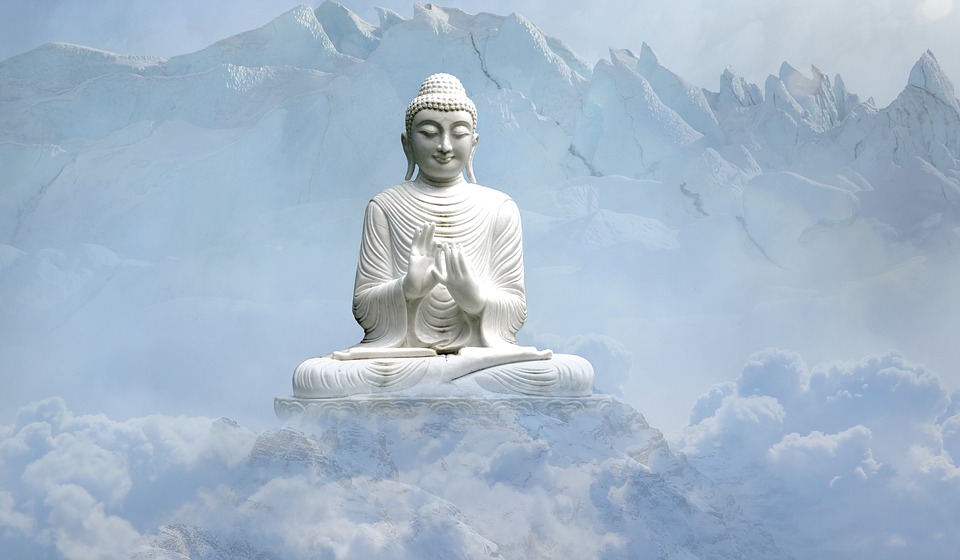
The next important posture is the lotus position. This is the classic and most recognizable posture in meditation. In fact, any time you see a statue of Buddha, he’s likely seated in the lotus position. This involves sitting with your butt on the floor with the left foot resting on top of the right thigh and the right foot resting on top of the left thigh in a cross-legged position. The hands are generally resting on top of the thighs, usually with the index and thumb of each hand joined together. This pose is not only used in meditation but is also used in forms of yoga, and is thought to promote the proper channeling of the body’s energy.

This can be a more comfortable posture to assume if you plan on meditating for a half hour or longer, as it won’t necessarily constrict blood circulation the way Seiza does. The problem I find with this posture is that unless I’m propped against a wall, I tend to let my shoulders slump or I start slouching at the upper back, which can become uncomfortable and damaging to the spine over long periods of time. Lotus has many variations to it and I usually favour the “half lotus,” which involves only setting one of the feet on top of the opposing knee with the other one simply being on the floor. This prevents the usual possible circulatory issues.

If you have Diabetes (or any other circulatory issues) there are a few things you can do to help facilitate meditation, regardless of what pose you use. You can get a meditation pillow. These are great as they keep your butt about four to six inches up off the ground, putting less stress on the knees, hips and various joints associated with meditative postures. The Japanese have special little folding stools that allow for the appearance of the kneeling position while taking the stress off of joints and allowing proper circulation.

Last but not least, you can try traditional postures, such as sitting in a chair. This is fine and I’d be lying if I said that I’ve NEVER done it. It just feels weird to me. Probably because I’ve spent my entire life using formal postures. Sitting in a chair just feels like it takes something away from the experience. You can also try lying flat, either on the floor, a yoga mat or on your bed. The only problem with this is if you lie on your bed and start breathing deeply with your eyes closed, you face the risk of falling asleep. Although I’m a big fan of naps and falling asleep isn’t necessarily a bad thing, it also usually isn’t my goal when I meditate. So I try to avoid this posture unless I’m having difficulty sleeping and I’m intentionally trying to meditate my way to dreamland.

Obviously, there are different types of meditation and postures that go along with them. Depending on what your goal is with meditation, you can’t really go wrong. The important thing is to find a posture that’s comfortable and suits YOU. It should accommodate your body and allow you to relax so that breathing, energy and blood flow are facilitated and you can focus on the mindfulness required for proper meditation. As I’ve often written, every person is different so it should be no surprise that each person’s needs and preference may be different from a meditative standpoint. ☯

Family Ties In The Dojo

We love our families and want nothing but the best for them. Sometimes, the best is not what we think it is and can only be sought out by the family members themselves. But health and fitness doesn’t discriminate, and it’s important that everyone in the family get off the couch and do something physical at least a few times a week. This isn’t always an easy thing to encourage, and some family members will often be less than enthusiastic about being put through the ringer; especially if you happen to be the instructor…

If you happen to be an instructor of a sports club or a martial arts dojo, getting your family involved can be a good or a bad thing. I’ve seen it all… Family members who have basically been forced or coerced to join and family members who feel it necessary to “tag along” even if their efforts are far below what would usually be required of the environment. It can be a difficult and awkward situation, especially since you need to go home and live in relative peace with these people once class is done.

Trying to teach Nathan the basics back in 2019. Kid can’t take a hit…

One of the best examples I can think of are Sensei and his son. As his only male child, Sensei expected his son to train diligently and consistently. And to excel. A bit of an archaic way of thinking by today’s standards but remember that I’m referring to 40 years ago. The son was made to attend every class, train every day and even to start teaching at a young age, despite the fact that by the time he reached his pre-teens, he expressed no interest in karate. As a practitioner myself, I can certainly relate to how heartbreaking that would be. But it’s important to remember that even if karate is your thing, it may not be your child’s.

The result of that forced learning is that decades later, Sensei’s son is no longer an active practitioner. Oh sure, he has skills that will always be with him. And appropriately, he was Sensei’s first student to pass black belt. Those are all important milestones for both of them. But when you compare it to someone like me, who has been eating, breathing and sleeping karate for over 30 years but who joined and trained of his own volition, the difference is I still make it a part of my daily life and have ambitions to teach.

Training with a spouse or loved one has its own set of complications. Imagine having your spouse in your karate class, yelling at her, making her do knuckle push-ups and basically flooring her physically. Then getting home that evening and expecting to share a shower or snuggling up as though you DIDN’T just make her life a living hell. Much to the same tune as working a job with a spouse, training with them can be rough waters to navigate. And if it’s to be attempted, clearly defined parameters and guidelines for what’s expected and what will be done need to be established. By the same token, making sure that nothing is done that could be considered favouritism needs to be kept in mind as well.

It’s important to remember that the familial title should be the priority. If you’re a husband, then that’s your role and it would be very difficult to be a slave-driving instructor to your spouse. They can hate an instructor all they want, so long as they get the results they seek. But it’s a little hard to release and use that hatred against your husband. The same can be said of your children, as forcing them into something they don’t want to do could potentially sour them from being interested in any similar activities in the future. And it’s just as important that ALL family members be active, albeit occasionally for different reasons.

This doesn’t mean that you can’t be active with your family. You can participate in a variety of sports and activities that can get the heart pumping without necessarily taking on an instructional role. Taking walks, snowball fights or sledding are great family activities. Even a good old fashion pillow fight, so long as you have the space and a safe environment to do so. Nathan and I often just roll on the floor mats downstairs, wrestling and grappling. He has a blast playing around while I’m slowly teaching him some grappling techniques. And he’s started showing interest in picking up the 3-pound dumbbells and imitating what I do during at-home workouts.

My wife does not train in karate, but we still work out together whenever we have the chance. Couples who get fit together, stay together. But it would be a different story if I had to act in a capacity where I had to constantly push her and force her to do more. Such student/teacher relationships can lead to resentment and hard feelings. That’s why it’s very difficult, bordering on the impossible for anyone to fill that role while still maintaining the relationship.

There’s no problem with encouraging family members to exercise together and get fit together. In fact, in can even be an inexpensive way of keeping the family involved together during trying times while getting some much needed exercise. But the day your spouse or child decides to walk into your dojo may require some wariness and caution on your part. The difference between “Yes, Sensei!” and “Yes, Dear!” or “Yes, Daddy!” can mean the difference between a happy household or a few slammed doors. ☯