I have to be honest with you: One of the things that drives me absolutely bat-shit crazy during a sparring match is one of these fools who “bob and weave,” constantly. Although this may be a short post, it covers something very important in the martial arts.
The human body has a centre of gravity. That is to say, a specific line that runs down your body into the ground that signifies where gravity has the greatest pull on you. No matter what technique or form you happen to be performing, it’s important that you keep this invisible line sitting right between your feet.
There shouldn’t be a whole lot of rocking back and forth, and your head should always stay positioned above your feet. This ensure that your centre of gravity is, well… centered! I know some mainstream martial arts styles have some very colourful flying kicks and techniques that contort the body and have the practitioner bending and leaning, but the reality is that one needs to maintain a proper fighting stance, with their feet well positioned beneath them.
If you punch or kick, don’t overreach. If you’re blocking, let the attack come to you. If you’re doing calisthenics, keep your head positioned straight up and between your two feet. your centre of gravity should always be well-balanced. If you lean of put off your centre of balance, you risk being pulled off balance or caught off guard. ☯
Humans are creatures of habit. I’ve written about this before, and it’s no less true than it was when I wrote specific posts about it. And despite this truth, habits can often have a nasty HABIT (see what I did, there?) of leaving us in a slump.
Take your fitness as a prime example. Remember a time when you found a workout that suited you. Maybe it was the style of workout. Maybe it was the specific exercises involved or the amount of sets or reps that were included. Maybe you started jogging or cycling the same route, day after day. No matter the reason, you enjoyed this workout and started doing it regularly.
The problem with this type of habit is that it can lead you into a slump. I know someone who always used to warm up with the same number of push-ups. Every workout, the exact same number of push-ups… His claim was that always doing the same number of any exercise allowed him to know his body well enough to realize if something was wrong, if a muscle was pulled or something in his body wasn’t quite right, he could compare it to the last time he did that specific number of push-ups. Although this sounds like a good theory, it is inherently flawed. You can’t grow and progress without pushing yourself beyond the limits you’ve imposed on yourself.
Imagine that every morning you wake up, have your coffee then head downstairs to your workout area to get a sweat on. You grab some 25-pound weights and do bicep curls for 3 sets of 20 reps. You do this same routine, every morning. Maybe you get a light sheen of sweat on your brow, maybe you don’t. The problem with this sort of a routine is that it doesn’t have the results that weight exercises SHOULD have.
When you weight lift, it causes microscopic tears in the muscle tissue. These tears cause the healing process of your body and encourages your body to develop to prevent that same damage in future workouts. This means that once you’ve gained everything you can out of those 3 sets of 20 reps, you either need to increase your weights, increase your sets or reps or start doing something different.
Routines can be a good thing. They’re constructive and can help you in many ways. Habits, however, are a different story and are what can cause a slump.
Don’t be afraid to change it up. If you’re a weightlifter, go take a bike ride. If you’re a marathon runner, do some light weights. One of the most difficult aspects of challenging yourself is being able to step outside of your comfort zone and do something different. ☯
I’ve occasionally written some posts that have elicited some pretty “strong” responses from people. Especially within certain sports and martial arts circles, some old school practitioners aren’t always game to hear about things they don’t want to change.
That being said, I want to discuss a particular bad habit that some modern martial arts practitioners have adopted in the past two decades: holding one’s hands on front of one’s face.
There is a significant difference between boxing and the martial arts. Boxers train for hours on end to endure repeated hits to the face and body, all while delivering them to their opponent as well. It is a sport. Mixed Martial Arts, or “mixed up” martial arts as some associates of mine have called it, have included these aspects into their fights as well. Although not boxing specifically (I’m guessing this is where the “mixed” part comes in), MMA includes many of the characteristics of boxing.
Boxers and some MMA fighters tend to square off by keeping their hands close to the sides of their faces. This is intended as a means of guarding the face and making it easy to block incoming strikes to the head and the deep bend of the elbows helps to block shots to the body. Unfortunately, to the traditional martial artist, this is a HORRIBLE way to face an opponent.
The big problem with this type of “face guarding” is that it has a tendency of blocking part of your field of vision. You’re effectively preventing yourself from seeing all around you. The other big downside is that you’re leaving your hands very close to your face, which can lead to an unintentional game of “why are you hitting yourself.” Especially when your opponent crushed your own fists and forearms against your face because you didn’t see their attacks coming due to the decreased field of vision. From your hands. Because of your shitty fighting posture.
When squaring off in a proper fighting stance, one needs to stand comfortably with the feet equidistant apart. the hands should be closed into fists and the arms should have a slight bend and at chin level. The hands will be well away from the face in front of the body. This allows a full field of vision around your immediate area and also allows you to respond and block much quicker than if your hands are right in front of your face.
Obviously, this information is based on opinion and the techniques used by my specific style of karate. I’m certain that some of my counterparts would have some “corrections” or style-specific differences. The takeaway here is that when practicing, you must train yourself to keep your hands at a relaxed posture, away from you face. this allows for the best field of view and best ability to properly execute blocks in a real fight situation. Although the normal human reflex is to cover up when someone is throwing punches, overcoming that fear and being able to trust your hands will help ensure you prevent getting smacked in the face. ☯
I wrote a post a few days ago about the reality of fighting in the street versus how they happen to be portrayed on film or even in the context of a class or gym. Following that, I had some people ask for clarification regarding the comment I made about how getting struck in the head is likely to put you down.
Just to be clear, I’m not a medical practitioner. I’ve mentioned that a number of times, but you’d be surprised how often people tend to call me on the information I share, despite making it clear from the get-go that I’m not a freakin’ doctor! So keep this in mind as you read the information I’m about to share…
First of all, if you get punched or kicked in the head by another person, it causes your brain to bounce around. Seriously! Although it isn’t all that cartoony, it will suffer some movement. And because there isn’t a great deal of space in the brain pan, the brain will likely bounce and rebound once or twice.
Unlike the romanticized image that Hollywood has created, no one has the genuine ability to receive multiple blows to the head and keep on fighting with little more than a split lip or bloody nose. Even after only one punch, the receiving person is likely to experience dizziness, nausea and loss of consciousness. This is one of the reasons why real fights barely last a minute.
That’s at the low end of the spectrum. On a more serious level, getting struck in the head, even once, can result in skull fractures, concussions and damage to the brain stem.
According to an article posted by Queensland Health, aperson with a concussion may or may not have lost consciousness. They may suffer from headaches, memory loss, nausea, dizziness and ringing in the ears. Since many of those symptoms can also occur WITHOUT a concussion, it’s important to get yourself checked by a doctor if you experience any of these symptoms after being struck.
And yes, one of the myths that has at least touch of truth to it includes the fact that a person CAN actually die from one strike to the head. Ultimately, the martial artist and Buddhist in me feels compelled to say that one should avoid physical confrontations at all costs. But should it happen and you get struck in the head, the next step (once you’ve explained your actions to law enforcement) should be to consult a doctor. ☯
There’s a natural inclination, when you’re working out to go hard and go strong right from the get-go! Although there’s nothing wrong with working up a good sweat (I generally encourage it, actually) it may not always be conducive with getting the most out of your workout.
Last Thursday’s karate class was interesting, because we practiced sets of 50 reps. The instructor would provide a specific technique and had us pair off and practice them back and forth for 50 reps each. We did this for almost forty minutes.
I was paired off with a young lad who was a green belt. We squared off and he attacked appropriately and I began practicing the assigned technique. When I had completed my 50 reps, my partner started in and performed his. Here’s what happened…
I started off at a steady, even pace. I focused on form and proper technique. By the time I reached 40 reps, my strikes got stronger and more focused. My partner started off by striking as hard as he could. He focused on strength and sheer force. By the time he reached his halfway point, he started getting tired and his muscles turned lactic.
What does this teach us? Well, it teaches us that learning the technique properly as a first step is of the utmost importance. Strength and power will come later. What is that quote from Bruce Lee? “I fear not the man who has practiced 10,000 kicks once, but I fear the man who has practiced one kick 10,000 times.”
Essentially, you need to try and focus on learning things properly before trying to apply it. This is sort of what form and kata are for. When entering the dojo, everyone wants to punch and kick as hard as possible and make it look fancy.
Good things take time. Patience. Perseverance and practice. There are no easy paths and even when you have experience, you sometimes need to back it off a notch and take some baby steps to ensure you gain the most from your training. ☯
Quite a while ago, I posted about the cycle of life. I tend to forget how long ago, considering I’m close to having posted everyday for almost a year at this point. But given the passage of time, sometimes it becomes acceptable to repeat some of the information I’ve shared. And here we are…
Ask yourself: what is the one thing that all living things have in common? The correct answer is MOVEMENT. All things that live tend to move. This is true of even the most basic of life forms. Plants move to adjust to the environment and some flowers will even turn with the sun.
So, what does movement create? If you answered ENERGY, you are correct. Think along the lines of a hydroelectric dam. Powerful currents of water sent through turbines that create energy. It’s a proven concept of basic physics that movement promotes energy. Almost like running on a treadmill or wind turbines… Movement creates energy, no doubt.
And guess what? Energy creates life. At the end of the day, whether your beliefs are religious or scientific, one needs to acknowledge that we are all essentially made of the same stuff: energy. Down to our atomic base, we are all composed of energy. And even basic electricity has movement contained within it… Electricity is fundamentally the movement of electrons through a conductor, creating a current.
So here’s the equation: life creates movement, movement creates energy, energy creates life and so on and so forth. It’s a cycle, and an important one. If you remove or lessen any of the three, you jeopardize your health and your life. Think of unplugging your smart device, where the current of electrons stops and it is no longer receiving energy. The device effectively loses its “life”.
Look at it this way: If you happen to be a couch potato, you don’t move much. This means that your energy turns stagnant and non existent and you reduce your ability to maintain your life. In medical terms, you gain weight, your cholesterol rises and you basically die from sitting still.
So keep moving. Keep yourself motivated and energized. Even if it sometimes feels like it’s better or easier to relax and take it easy, your body and health will thank you later. ☯
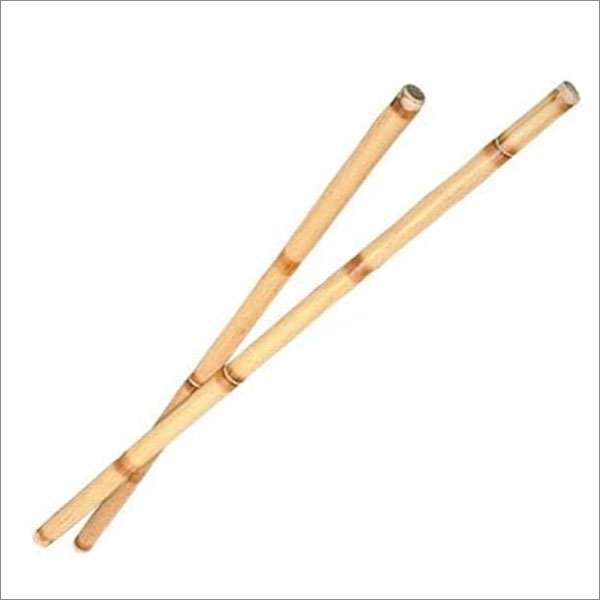
Sure, the title is a quote from Robert Downey Jr. as he played Tony Stark. But wisdom often comes from the most unlikely sources. Today, I’d like to touch on a martial art style known as Kali.
Depending on your course, this style of martial art may be referred to as Escrima or Arnis. I have come to know it as Kali because of it’s attachment to Kempo karate, which is the style I currently study and train with.
Because RIOKK has roots in Hawaii (RIOKK means Regina Institute of Kempo Karate, by the way), there is a significant Filipino influence on the style. As such, the school tends to train with the Kali sticks a great deal.
Kali is extremely versatile and offers a number of variations unlike most weapons I’ve seen in the martial arts. It can apply to the sticks, machetes, blades and even empty hands. Just to be clear, my main focus over the past three decades has been empty-hand combat. I’ve had very little experience in weaponry with the exception of the samurai sword, which I have trained with in depth.
But since training with the RIOKK school, I’ve started training extensively with Kali sticks. It’s a whole different ball game when you start fighting with a stick in your hands as opposed to empty-handed. How much more basic can you get than fighting with a stick? Since the times of our ancient ancestors, using a stick to fight has been an expected tactic. Spears, lances and similar weapons that have evolved from the use of a basic stick all demonstrate that Kali can and should be considered as an effective weapon.
Listen, I’m still an empty-hand guy, no doubt. But if I HAVE to use a weapon, it may as well be a weapon that can be accessed anywhere, right? Any old stick will do with this fighting art. Sometimes the simplest methods are the best. ☯
Well, Labour Day weekend has come and gone in Canada. Kids are back in school and with the start of school comes the re-opening of the karate dojo I train with here, in Regina. We usually close for the summer as the school gymnasium we rent isn’t available during the summer break. Last night was my return to class after a couple of months without training.
For those of you who read my posts religiously (I’m assuming everyone does!), I wrote a post a week ago about how in recent months, I seem to have fallen off the rails, fitness-wise. There are a number of reasons behind this, but needless to say I’ve been hammering out a few workouts at home since I wrote that post in an effort to try and get myself back on track.
Last night’s opening adult class was the icing on the cake. The reason I specify that it was the adult class is because the other black belts had the advantage of having trained at the kids’ class last Saturday. So they were full of piss and proverbial vinegar, ready to go. Meanwhile, I suffered just a BIT more. Let’s see if my vocabulary is eloquent enough to describe the experience…
I was the second one there, preceded only by Master Harding. He was setting everything up and we chatted for a few moments about our respective summers. It was good to be back and I was anxious to see how many of the students would actually show up.
I started with some casual stretches and experienced a sound akin to several hundred mousetraps going off at once! I felt muscles pull and realized that despite the workouts I’ve performed at home recently, last night’s class would put me through the paces.
The class was small but energetic. There were two other black belts besides Master Harding and myself. We spent almost forty minutes stretching, warming up and practicing techniques as a class. I recognized how out of shape I truly was.
By the end of the class, my movements were so sloppy that it almost looked as though I was performing some sort of dance that seemed to be a combination of an Irish jig, square dancing and twerking! By the time we closed and everyone bowed out, I was spent.
Needless to say, I’m in a reasonable amount of pain this morning. But it’s a good pain. It felt good to get back at it and practice the martial arts in a class environment. Next class is Thursday and I’m looking forward, despite moaning and groaning. ☯
Sometimes it gets tough to entertain young children. When one has to compete with modern technology, tablets and electronics, games and colouring can often take a back seat and are only “acceptable” when the mood hits them right. That’s why when an opportunity strikes for something simple and fun, we need to pounce on it!
My son is as restless as they come, kid-wise. He’s four years old and loves to move around, non-stop. In fact, if I could find a way to tap into his energy reserves I could likely get a week’s worth of work completed in one day. No doubt.
Like most little boys, my son loves guns. With cartoon shows like Transformers, Power Rangers and the like, it’s no surprise that weapons that shoot or “blasters”, as he calls them are an influential part of his play time. He often builds his legos or his mega blocks to form an “L” shape, followed by the comment “This is my blaster, Daddy!”
So last week when I was running an errand at my local retail outlet, I found a package of off-brand nerf guns that I thought would be a great outlet for him to play with. He could burn off some energy, and he and I could have some fun.
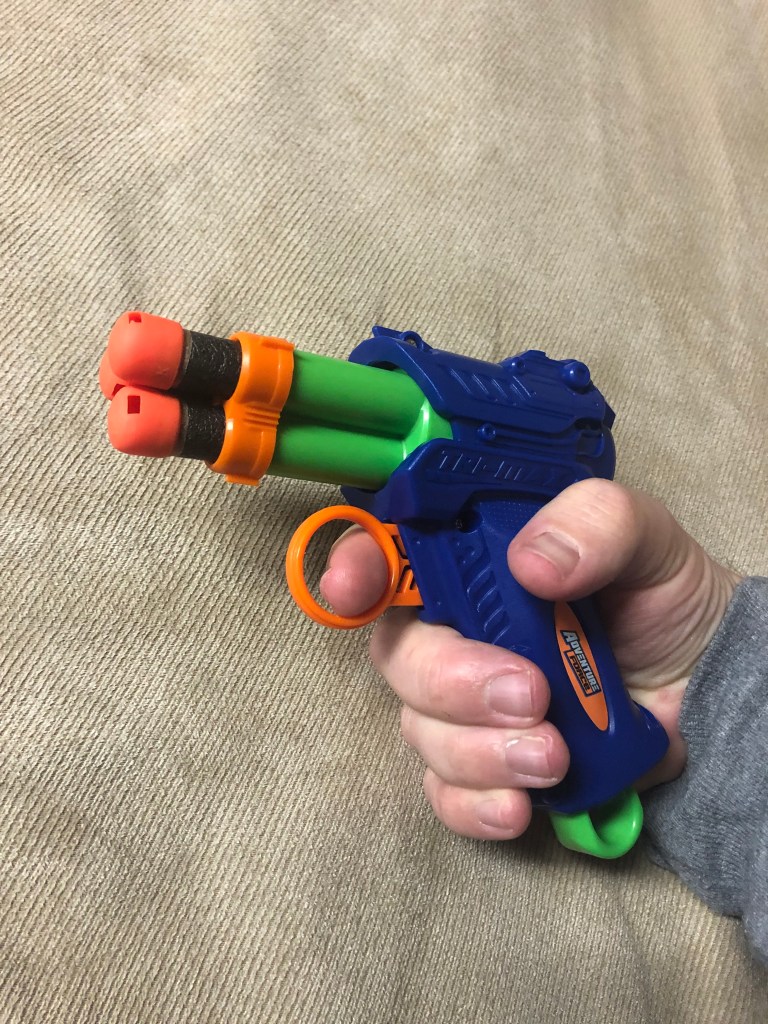
One of the two foam dart guns that came in the package. I would have taken a shot of Nathan using them, but he doesn’t sit still long enough to get a clear photo…
When I brought that package out and showed it to him, his excitement was in no way contained and he forget about everything else in the house. I agreed to open the package and we could play, with the following rules:
Never aim or shoot at Mommy;
Never aim or shoot at the Dog;
When Daddy says the game is over, we stop;
We never use our foam guns to shoot or hurt others.
He readily agreed, and we set up some “fortresses” in our basement. We had a blast and played for a couple of hours. We had one barricade that included a foot stool turned on its side combined with a blanket, and another that involved two stools piled one on top of the other. It was fun; we exchanged foam darts aback and forth, crawled on the floor to retrieve spent darts and sometimes switched fortresses so we could both experience the different angles. I hate to admit that his aim was pretty decent at times and I received some shots…
My point is that children always need sources of stimulation and exercise, but it doesn’t always have to cost you a second mortgage to do it. This two-gun foam dart set only cost $10, and he’ll have them for quite some time. He’s pestered me to play with them all weekend (despite how much pain my knees and back have from crawling on a concrete floor) and isn’t showing any sign of tiring from them. It allows me to engage my child as opposed to simply having him stare at a screen and it allowed us both to get some exercise, which is important whether you’re a child or an adult.
Last but not least, he pointed out that the foam dart guns were Just like your work guns we played with before, Daddy!” He’s had some similar ones introduced to him by some of my colleagues, which is why he enjoys foam darts so much. You know who you are and may be reading so thanks for that, guys! You know who you are! ☯
Regret is a hell of a thing. Sometimes it can consume you, if you allow it to overcome the important aspects of your life. I’ve often written that one cannot allow oneself to have regrets as the events you might consider regretting have led you to the here and now; and if you could change those events to prevent that regret, you would seriously alter the person you’ve become.
I’ve spent the majority of my life trying to defeat every stereotype that’s been thrown at me. And having Diabetes has certainly made that challenging, let me tell you. Controlling and maintaining my health has always been a priority and I’ve worked hard to KEEP it a priority.
But in recent months I’ve begun to slip. A work out less a week here… An added beer or two a night there… Apathy and laziness have snuck up on me without even noticing. I’ve told myself, “Oh, I’m just tired, I’ll get back at it tomorrow.” Then tomorrow comes and I certainly don’t get back at it.
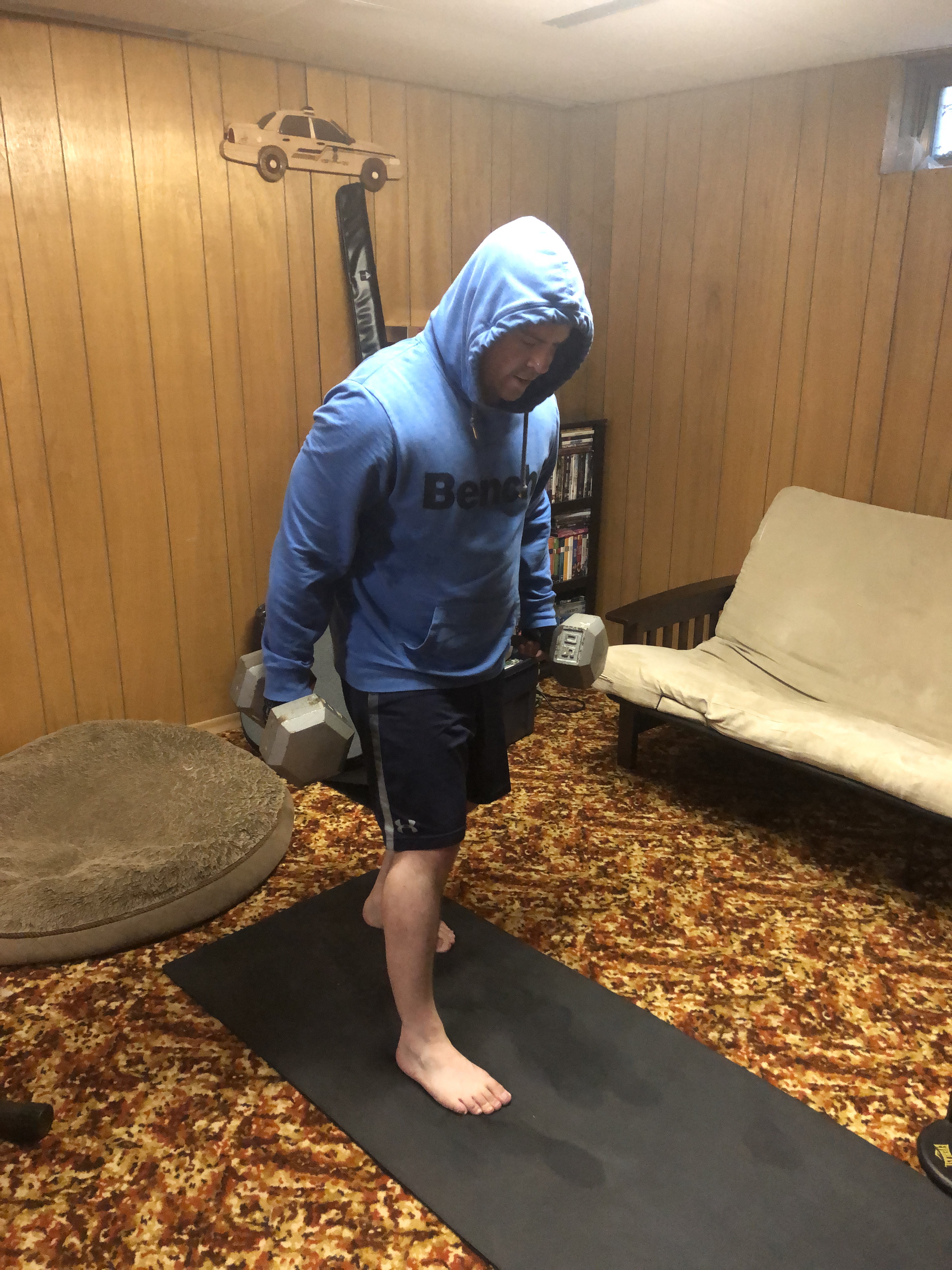
A good sweat and a little pain can go a long way
I think it may have been equal parts self-pity and self-generating laziness. The less you do, the less energy you have to get to where you need to be. But last night I was reminded of the importance of never stopping one’s physical development and health.
I was reminded because I saw the potential result of that laziness. Weight gain, reduced mobility, latent health issues and difficulty breathing… It’s amazing how much damage can be caused by not being physically active.
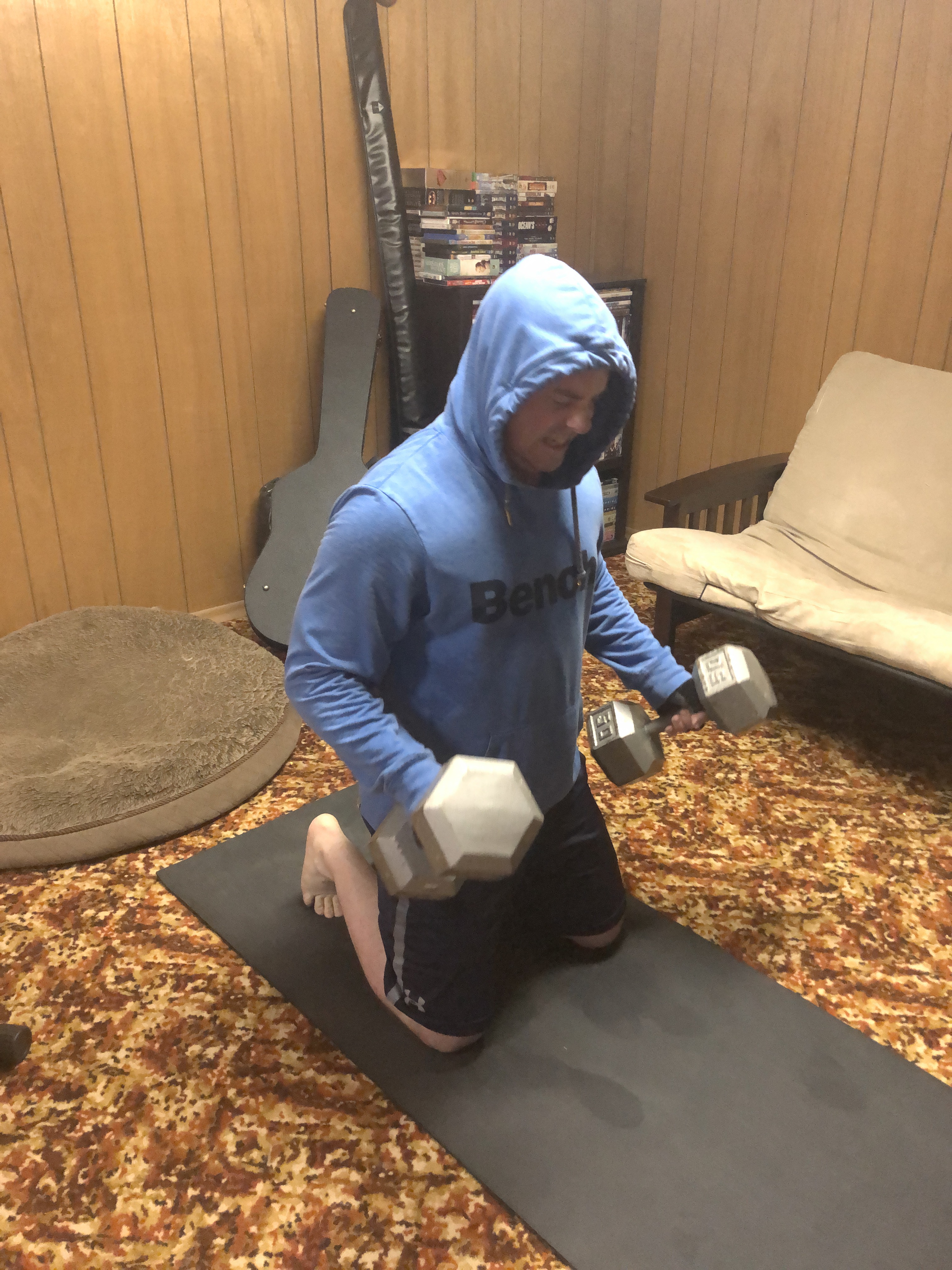
Don’t be afraid to try heavier weights. If they’re comfortable to use, they’re not heavy enough
I feel it’s time to recommit and buckle down. I couldn’t believe it when I looked at my workout log and realized I only worked out once, last week. Time to up the ante and start getting back into shape. Sometimes we need to get shaken a bit and have a little reminder to bring us back on course. ☯

 The Blogging Buddhist