Is There Ever A Good Reason To Fight?

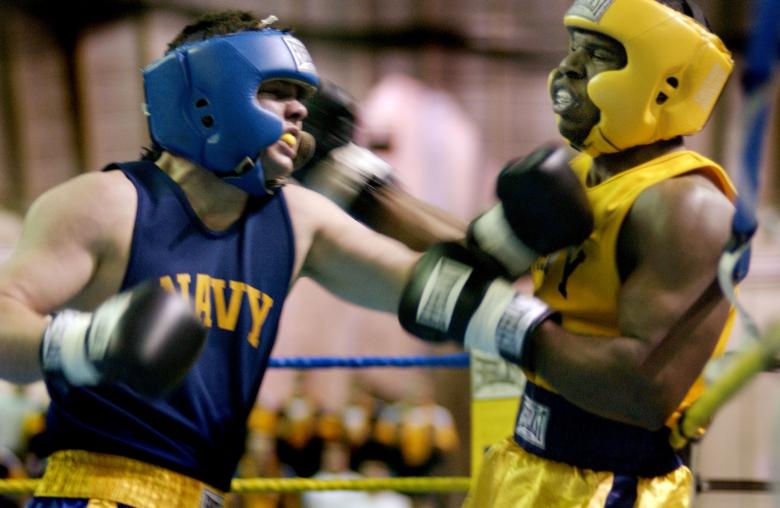
As the title asks, is there ever a good reason to fight? Depending on your perspective, there just might be. Humans are strange creatures; we enjoy fighting for sport, recreation, for competition and for achievement. Most importantly, many of us choose to train and learn how to fight in order to defend ourselves.

Most martial artists will agree that we learn how to fight so that we don’t have to. Although this is likely true, there’s usually an unspoken line after that thought that says, “but the light help any individual who threatens me or my family!” And it’s true. You’d be surprised what one is capable of, when persons unknown (or sometimes known) threatens or harms someone important to you.

But the prospect of intentionally exchanging blows with someone just for the hell of it usually doesn’t cross our minds (unless you’re a pro boxer or fighter, in which case I’ll throw down for the many millions of dollars that would ensue). With that in mind, how does one usually focus their energy in the interest of training properly?

For some, it’s simply a matter of having enough drive to want the most out of their workout. But for others, it requires a bit of focus and concentration. Years ago, I was training with a couple of colleagues and we were doing drills on a punching bag. I was holding the bag for a guy who was basically the same height and weight as I was. He was putting his best effort into it, but the bag was barely budging.

When the time came for him to hold the bag for me, I had his teeth chattering after the first few punches. When we were done with the drill, he asked me how I could make my punches so effective. Obviously, previous strength and technique training goes a long way towards making any strike you perform more effective than the average layman.

But when you exercise or work on your fitness, especially in self-defence, it’s often important to focus on why you’re doing it. Picture this: your significant other, or perhaps one of your children, is threatened and/or attacked by someone. The only way to help them is to respond physically and fight back. Consider the fact that further injury could occur, if one were to pull a punch or kick at the penultimate moment. But if your family or loved one’s safety is at risk, you’ll put your entire heart and soul into that strike; you’ll do your absolute best to ensure that you end the threat against those you love.

This is what you need to do, whenever you train. Every punch you throw, every kick you execute, every time you strike that bag, you need to picture that very scenario. This ensures that you’ll develop that power you need to strike with all your heart and soul.

It’s inherently within my nature, and the foundation of my beliefs, to acknowledge that there’s enough suffering in the world. I have no intention of adding to that by exerting violence against someone else. The only exception is when my family or loved ones are threatened. If you include that as part of the reason for your training, you’ll increase your power and move that bag, every time. ☯

Warm It Up Nice… 🔥

Exercising is strenuous on the body, especially if you’re working out properly. Increase heart rate and blood pressure, the release of adrenaline and a whole batch of other hormones, and secondary effects on the human body. That strain is increased even further by the prospect of working out when you’re cold. And yes, it’s winter in the Canadian Prairies and I feel inclined to pick on ‘Ol Man Winter, so please bear with me…

The jury is still out on the concept of your blood thickening during the winter months. With some studies showing that winter climates tend to make our blood thicker and run slower, and some studies stating that there’s no correlation, it make it difficult to know if this is a potential cause. But let’s admit, for the sake of argument, the it always feels a bit tougher to find that “get up and go” when walking into fitness class or gym when it’s cold out.

In karate, it’s a noticeable effect… During the warmer months, people are totally game to come work out and break a sweat. But during the deep, frosty winters of Saskatchewan, the class size drops to a handful who are crazy enough to brave the elements. But besides the issue of disliking the cold and how our blood reacts, the specific aspect I want to talk about today are your muscles.

Muscles are necessary for fitness. D-uh, right? You use them for any fitness workout you may have planned, so they sort of play a key role in what you do. Your muscles are an elastic tissue, and are affected by the changes in temperature. When you spend time outside in the cold, those tissues contract and become stiffer. When you step out into the balmy, tropical weather, tissues expand and relax. This is why most fighters and athletes prefer to train and work in warmer climates.

Last Thursday, the temperature where I am sat at a lovely -37 degrees Celsius. Once the wind factor is included, it was actually in the -40’s. Stepping into karate class, I felt cold, stiff, and wanted nothing more than to go to sleep. It felt like it took WAY more effort to stretch and warm up than it rightfully should have. But this is where it becomes all the more important to stretch and warm up properly before getting into a rigorous workout.

As your muscles and joints become tighter, you lose some range of motion. You become more susceptible to muscle sprains and tears and potentially pinched nerves. It WILL take more effort to perform the same exercises as you would in warmer weather. This is why you should start your winter workout with about ten minutes of mild to moderate cardio, such as jump rope, punching bag or shadow boxing (I’ve included the ones I usually do in karate, but there are plenty of options).

So instead of foregoing your workouts in the winter and hibernating, simply take the time to warm properly once you reach your class. It will help to prevent injury and will ensure that you don’t accumulate any of that dreaded “winter fat” from ignoring your fitness! ☯

Grab The Bull By The Horns…

Anyone who is at least mildly familiar with me, knows that I’m a big fan of caffeine. My day pretty much always starts with a coffee or an energy drink (sometimes both) and I would be lying if I said that I don’t turn into a cranky biatch if I don’t have some levels of caffeine coursing through my veins before I deal with the outside world.

Energy drinks have gotten a bad rap in the past couple of decades, and not always for good reason. Over-consumption, allergies and/or misuse have lead to the popular opinion that energy drinks are bad for you, even dangerous. The bottom line is that it is very much a question of moderation, much like everything else. The average person can safely consume about 400 milligrams of caffeine a day (depending on age, weight and health concerns), and the average 473 mL can of energy drink only has 160 milligrams of caffeine. You’d have to drink four cans to start creeping into that “danger zone”.

Now that we’ve covered off the caffeine issue in all it’s glory (some of my previous posts have been specifically about caffeine so I won’t go crazy here) the actual focus of today’s blog is an often-disputed ingredient that happens to be in most energy drinks: Taurine!

Taurine is an amino acid and is actually produced naturally by the human body. Despite its natural production, it can also be found in reasonable amounts in meat and fish. Contrary to some claims on the internet, Taurine is not derived from the urine and/or semen of bulls. Yes, the word “Taurine” is derived from a latin word that means bull, but unless you’re getting your Taurine from a cut of steak, it has nothing to do with an actual bull.

Taurine, unlike other amino acids, doesn’t contribute to the creation of the body’s proteins. But it has a number of uses that are beneficial to the proper health of the body’s cells. Some studies have even shown that there are measurable benefits in regulating Type-1 and Type-2 Diabetes, as well as some Diabetes-related kidney issues. MedicalNewsToday.com has an excellent article that goes into detail about some of it an can be read here; https://www.medicalnewstoday.com/articles/326476.php#why-do-we-need-it

The studies in question seem to indicate that taking Taurine supplements can help improve insulin sensitivity. But like caffeine, the amount of measurable Taurine in a can of energy drink is well below what’s believed to be safe. Although the average can has 2000 milligrams of Taurine, an article by Healthline.com indicates that doses upwards of 3000 milligrams for an entire lifetime still fall within the realm of safety. (https://www.healthline.com/nutrition/what-is-taurine#dosage)

The bottom line is that consuming energy drinks are not inherently dangerous, when consumed in moderation. And Taurine is most certainly not an included ingredient that the manufacturers have gotten from a bull’s testies! The end result is that you should take your caffeinated beverages in moderation, and never beyond mid-afternoon. Otherwise, enjoy your energy drink! There’s nothing harmful in it. ☯

From “In-Class” to “On-The-Streets”…

I think that one of the biggest issues facing the martial arts is the misconception that what we learn in class is an accurate depiction of what you can expect in the streets. Unfortunately, there is a HUGE gap between the barefoot, gi-wearing structure of a dojo and the harsh, life-threatening realities of a real fight in the real world.

For the most part, the dojo environment is structured, controlled and there is minimal (although not non-existent) possibility of injury. The head instructor usually dictates what techniques are practiced and what drills are performed, and this leads to a controlled environment that allows a student to learn and develop at a proper pace.

But what happens if said student finds themselves squaring off against someone outside the dojo? Putting aside the premise that a martial artist shouldn’t be using their skills to fight out in public, there are a number of differences that would catch you by surprise…

  • The apparel: A karate gi is usually made of sanforized cotton, and allows for a certain level of flexibility and breathability. If you get into a fight in public, you’ll likely find yourself wearing regular civilian clothing, including but not limited to denim pants and/or coats or coverings that may hinder your movements and techniques:
  • The feet: Although certain kicks differ with different styles, the kicks I’ve trained with rely heavily on the toes and the top of the feet. Front kicks and roundhouse kicks can’t be properly executed the way they would be in class if you’re wearing footwear. Although sneakers may allow you to throw a kick in a pretty similar way as you would while barefoot, there will still be a discrepancy and therefore a possibility of injury, if you do it while wearing shoes or boots;
  • The techniques: In general, we pretty much train that if an opponent throws a high punch, we excuse a high block, right? In-class drills have a significant level of structure and control, which we lose once we face a real-life scenario. If a real opponent throws a high punch, you may find yourself dodging and striking as opposed to blocking and counter-striking.

The point behind all of this is that it’s a good idea to continue drills and techniques in class, and especially sparring. The practice as well as the sparring will go a long way towards developing muscle-memory and help you in the event of a real-world application of your art. But one should nonetheless be aware that there will be differences and even hindrances that will occur in the field. They could come as a surprise and cost you the battle, should you not be prepared. ☯

“Where Have You Been?”

Karate is a strange creature. For the most part, people tend to come and go in weird intervals throughout the calendar year. And they can hardly be blamed. Sometimes life just gets in their bloody way and there’s nothing we can do about it. I know that for myself, I’ve had work and familial obligations that have often prevented me from attending class. I’ve often had a particular instructor ask me, almost every time he’s seen me, “Where have you been?”

This is a question that has grated on my nerves, regardless of the source, for over thirty years. For the most part, I tend to get a workout in about four to six times a week, depending on appointments, work and other life obligations that seem to slither their way into my personal schedule. But the point is that my fitness and my karate are engrained into my weekly routine, in such a way that surpasses the two classes a week that I attend.

But every once in a while, these absences will be noticed by an instructor or someone else and they always seem to consider it necessary to ask why I’ve missed the classes I was absent for. Needless to say, this is a bad idea for any student, especially beginners.

Karate (or any martial arts) is a lifetime commitment. I know guys who only studied the Way for a few months and still retain some of their lessons and apply them to their everyday lives. The overall effect martial arts can have on someone is measurable, but the emotional effect it can occasionally have on one’s life is palpable…

I’ve had times in my youth when I missed a number of classes. Either because I was exhausted, sick or just plain didn’t feel like coming out. I would often scuttle my way back into class and feel ashamed at my lapse in discipline and hoping that no one would take notice. One of the benefits of being a white belt or junior grade, is you tend NOT to stand out when you’re at the back of the class.

But as far as those periods when I didn’t FEEL like training… Imagine if I was berated and pestered about my absence back then? This might have led to my departure from class for a longer period of time. But instead, my absences were considered a time of reflection and I was always welcomed back.

In my current school, I have a particular instructor who seems to make it his business to point out and ask about any absence I may have. He does this to most students, but if I’m being honest I consider myself to have a bit of a louder voice than most.

“Where do you think I’ve been…?” I usually ask. I point out that in the period where I haven’t been to class, I’ve usually managed to work out three times, which is one workout more than the scheduled classes I have with my current dojo.

This is one of those times when it’s more important to focus on the why and not the what. We all have times when we lapse in our attendance and skip a few classes. There’s nothing wrong with that, inherently. The important part is that you go back. And if you happen to be a senior belt or instructor, do both yourselves a favour and don’t poke the beast! Take your student’s absence in stride and teach them accordingly! ☯

Doing It Wrong Ruins It For The Bunch…

For the past two centuries or so, many instructors of the martial arts have made a go of teaching their art as a career. There’s nothing inherently wrong with that, so long as you do it properly. Realistically, as soon as you start teaching something that you’ve spent a lifetime mastering, you’ve established yourself as a professional in that field. And any professional who teaches their trade should be compensated. Makes sense, right?

The unfortunate reality is that some of these “professionals” are anything but, and they continue to teach something that can only be described as a watered down version of the pure styles that the founders intended. This has prompted the trend known as the “McDojo”.

For those who may not be familiar, a “McDojo” is a school of martial arts that teaches a watered down version of their style and provides no genuine skills training. They often focus more on profit and student retention than the proper education of their students. McDojos can be dangerous because they instil a sense of confidence based on skills that may or may not exist within the school.

With my own karate classes starting back up after the holidays, my thoughts have been dwelling on some of the dojos I’ve visited over the decades and how they’ve presented themselves. And believe me, I’ve visited a LOT of them. Some people will tell you that style isn’t important. It is and it isn’t, as some styles will work for some but not for others. When choosing a dojo to train with, it can be difficult to identify a McDojo if you’ve never dealt with them My goal is to provide some “tips” on what to look for. Here we go:

  1. They have children as instructors: This is a problem, because it is IMPOSSIBLE to achieve a black belt in less than ten years. The amount of knowledge, skill and training required in order to reach black belt level in ANY traditional style takes years to accumulate. That means that even if you started karate at the age of 4, you would be into your teen years before the color black even comes close to adorning your uniform. I think someone described it best when they said to think about a medical doctor. Would you want to be treated by a doctor who graduated after two years as opposed to 7 to 9 years? Obviously not. The same goes for black belts;
  2. They don’t fight: Look, you can be as peaceful and serene as you want to be but the truth is that the martial arts are “fighting” arts and you can’t learn properly if you don’t fight. And there can’t be any rules. When I grew up, our sparring involved an “anything goes” mentality. We obviously avoided striking each other’s groin for the obvious reasons, but strikes to the head, throws, pressure points and any strikes you could think of were incorporated. It’s comparable to becoming a great painter; how can you become an artist if you never intend to use a brush? The only true way to measure your skill is by exercising it in actual fighting;
  3. They cost a fortune: Tuition fees, uniform and equipment purchases (which HAVE to be through the dojo) various “suspicious” costs, such as registration fees, club fees and such can all be indicators that you may be in the wrong place. When instructors focus on ensuring that you’re paying your monthly dues and each belt test has a cost for the test, the belt, the certificate and “registering” your rank with the style, there’s definitely a problem. I started karate in 1988. I started paying a fixed monthly tuition and in 30 years, it has never increased. I never paid for a belt test and in fact, my instructor always gifted each colored belt to me. Although this is the extreme, it is also a standard that other schools should follow:
  4. They don’t adhere to a structured system: This means that either they teach a Chinese style but use a Japanese belt system, or have weird patches and crests all over their uniforms or have belts that don’t exist in the martial arts (such as pink or camouflage belts);
  5. They have “masters” or “grandmasters” in their school below the age of 50: This is a difficult one, because it isn’t so much that it’s IMPOSSIBLE as it is unlikely. Attaining these ranks takes decades, and the general age that one reaches them is pretty consistent. I was raised on a system where the title of “Master” is provided to someone who has achieved a rank of 5th degree black belt or higher. But when you get someone who is reasonably young and has already achieved this rank, there’s a good chance it’s a self-promotion for the image of the school as opposed to actual rank;
  6. The information is lacking or seems “sketchy”: An instructor should be able to recount the history of his/her style. How else can you teach the style if you don’t know where it came from? If an instructor is unable to provide you with basic background of where they trained and what the history of their style is, there’s a problem.

There’s a lot involved in choosing and training with a martial arts school. The reality is that you’re going to sweat, you’re going to cry, there will be pain and you’ll likely want to quit as often as not. THAT’S the reality of training with a genuine martial arts school. It’s a life-long commitment and it will take decades to reach a significant level. And it shouldn’t require a second mortgage or your first-born to do it.

At the end of the day, I’m in my 40’s and I’ve been doing karate (as well as some other martial arts) for over 30 years. I still don’t have the title of “Master” in front of my name and maybe I never will. But my skill has been acquired through decades of blood, sweat and tears. Such is the truth behind the way; if it were the simple way, a passing way, everyone would do it. ☯

Getting Ahead Of The Curve

About three weeks ago, I wrote a post about what I intended to do for my New Year’s resolution. It’s pretty ambitious, considering most people will choose one thing or another, such as losing weight or eating healthier, joining a gym or quitting booze or smoking. I chose a rather elaborate spreadsheet that included the following steps:

  • No alcohol;
  • No tobacco;
  • Minimum of 3 workouts a week;
  • No soda;
  • No processed carbohydrates;
  • No junk food (yes, there’s a difference);
  • No added salt;
  • Minimum of 3 litres of water a day; and
  • Taking only the stairs where possible.

My intention had been to start it on December 29th as this is the Sunday that encompasses the January 1st week. However, I read someone else’s post about New Year’s resolutions and I was reminded of a couple of things.

Although it can be great to take yourself in hand and make a resolution in order to better yourself, if you wait until New Year’s in order to make that change it’s likely not important enough to you. The other aspect one needs to consider is, why wait?

I think the post I read said it best when they explained that if your resolution is to join a gym, why walk in as the new guy on January 1st when the new people will walk in and you’re already a regular? In that spirit, I started my New Year’s resolution on December 15th.

My first two weeks of the challenge

As you can see from the spreadsheet above, it’s pretty straightforward. At the end of the Saturday evening, I put green checks on the items I accomplished and a red “X” on the items I did not. The workouts have been rough, considering karate has been shut down for the holidays. Otherwise, I’d be hitting four workouts for both those weeks. Plus, it’s the holidays! I’ve been a little a little busy focusing on the actual holidays and on family.

Although there is already a touch of red on my ledger, the important aspect to remember is that a resolution is intended to help improve oneself. I’ve also been allowing myself a “cheat day” on Fridays. From what I’ve researched, folks have a better chance of sticking to any sort of regiment or major change in lifestyle and diet if they allow themselves a touch of indulgence once in a while.

I won’t bore all of you by posting updates on this every week, but I’ll provide some updates every few months to show my progress. We’ll see how long I can tough it out… ☯

Do You Even Lift, Bro?

I’ve always been a bit more of a loner when it comes to training. For the most part, I prefer some solitude in order to listen to my own music, have access to my own equipment and not be hindered by others who may be at a station that I want to use. Obviously, this doesn’t apply to the martial arts, which often requires the dojo setting for some aspects. I mostly mean resistance and cardio training.

Oh, I’ve had gym memberships in the past and have made wonderful use of them in the past. But I’ve always been surprised at the “muscle shirt, light lifters need not apply” culture that still seems to exist in many gyms.

I remember an incident from almost eight years ago. I had a membership at a local gym (the only gym in town, actually). I had gone in for a short cardio workout before starting a work shift and I saw a guy standing in front of the dumbbell racks and arm curling some 10-pound weights. I remember thinking that he was really into his workout and had a great sweat going.

Then I noticed three guys at the squat rack. They were your typical types that you’d see in an 80’s action movie. Sleeveless shirts, thick arms and chest and monopolizing the station they’ve chosen. They had been there for a while and were obviously very pleased with themselves.

When they took notice of the guy with the lighter weights, they started pointing and laughing. One of them even called out to the guy and asked, “Do you even lift, bro?” This is an expression that came out in the early 2000’s and has driven me crazy ever since.

Folks, the reality is that it doesn’t matter how light or how heavy your weights may be. I’ve seen some circuit workouts using very light weights that would land you on your ass and make you limp the next morning. The style and weight involved in your workout all depends on what your goal happens to be.

Looking to lose weight? Want to gain some mass? Want to gain some actual strength as opposed to size? The workout regiment you design for yourself is subjective to what you’re trying to accomplish. And if it’s your first time stepping into a gym or any other public location where folks workout, you’re already one step ahead of the person who chose to stay on the couch today.

Unfortunately, there may always be those who chose to make fun or belittle others who are trying to better themselves. Don’t let it discourage you. As Lao Tzu once said, “The journey of a thousand miles begins with one step.” The beginning you make today will provide the results and satisfaction you have tomorrow. ☯

A Reminder Of Respect…

I wrote a post about six months ago outlining the proper guidelines one should follow when attending ANY martial arts school. Some of these are simply a matter of tradition, some of them are necessary to ensure that a dojo runs smoothly. Some, mostly all of them, are also a show of respect for the school you’ve chosen to attend.

In recent months, I’ve had the opportunity to observe some students, visitors and outsiders in a few different martial arts circles. Based on some of the things I’ve observed, I think it would be useful for me to repost some of those guidelines. Here we go:

  1. Bow when entering or exiting the dojo: This seems like a bit of a tiny detail, but it is an important one. It provides a show of respect; respect towards the instructors, respect towards the ones who trained before you, and respect towards the school;
  2. Ensure your Gi, or karate uniform, is clean and pressed: This one is important not only for protocol and etiquette, but for hygiene reasons as well. And you would be surprised how many people overlook it. There’s nothing worse than someone who assumes that their last workout wasn’t intense enough to warrant laundering their uniform. Make sure it’s clean. Not only does that ensure a more “pleasant” environment for yourself and the other students, it shows proper respect for the uniform you wear on your journey;
  3. Stand straight and pay attention: When not executing a movement in the immediate moment, it is imperative that you stand straight and tall, heels together and thumbs tucked into the front of your belt. Keep your gaze towards the front and pay close attention to what the head instructor is saying. Try to avoid looking around and fidgeting. A big part of discipline is being able to focus long enough to build an attention span beyond that of a goldfish;
  4. Acknowledge every instruction given: Different styles will have different ways of doing this. Some will choose a shallow bow when the head instructor provides instruction, some will answer in the affirmative by saying Hai (Japanese for “yes”) or something of the like… The method of acknowledgment will depend on the style and school you’re in;
  5. No food or drink within the dojo: You would think this one would be common sense, but a martial arts school is no place for you to sip your mocha-choca latte while your kid trains. Since the average martial arts class only lasts about an hour and a half to two hours, you can manage this easily without having food and drink within the confines of a training environment;
  6. Get out of the way: If you become injured or over-tired, bow, step back and sit in seiza (on your knees) at the rear of the class. Stay out of the way and remove yourself from the flow of the class until your fatigue passes or your injury allows you to continue. Of course, if your injury is severe or serious enough to think you need to remove yourself, you likely shouldn’t continue as you could aggravate the injury further;
  7. Don’t show up late: This one is and always has been, a personal pet peeve of mine. Some instructors will say that if you show up late, it’s better to get “some of the workout” in rather than none at all. Although that is a great concept, showing up late can be disruptive to a class and shows great disrespect to your class and instructors. We all have busy lives. It falls to you to plan ahead and schedule things so that you may attend class. Whether or not showing up late is appropriate will be up to your head instructor, but true respect dictates that if you aren’t fifteen minutes early, you’re already late;
  8. Don’t waste your instructor’s time: Although you’ve likely paid a fee for your presence, the instructor(s) within the school are there to impart their knowledge and skills to you and others. If you aren’t going to put in your full effort, then you’re wasting your instructors time. Effectively, you’re also wasting your time AND the fee you paid. You’re also affecting the other student’s ability to learn properly. Food for thought…;
  9. Respect and train based on your partner: You will sometimes be paired with someone of lower or higher rank than yourself. If you’re paired with someone of lower rank, you become the example of what is to be taught. If you inflict injury upon your partner, you may discourage them from further learning and you will have gained nothing yourself. If training with someone of higher rank, respect should be given and you should take every advantage to learn from this person as they are in the same position you would be if training with a lower ranked belt.

Recently, I’ve seen everything from kids running around, coffee, students fidgeting and looking around… There was even one guy who showed up forty minutes late for class with a bag of cheeseburgers and ate while the rest of us did calisthenics! Besides the fact that the smell of burgers was killing me, a karate dojo is definitely NOT the place to eating, much less junk food.

Folks, no matter what sport or art you study, there will always be guidelines to follow. The martial arts simply has more, and that’s part of the charm. Although the above guidelines are only basic, they apply to any martial arts school you attend. Your specific dojo may have more, and this is one of those moments where it’s important to take the initiative and ask. After all, respect is a primary aspect of karate and all martial arts. ☯

The Burden Of Knowledge…

To teach is an interesting prospect. It requires a person to take the accumulated knowledge they’ve gained on any given subject and impart it on others in a way that is clearly and easily understood and absorbed. Since people aren’t exact copies of one another, this becomes all the more difficult when one considers that every person absorbs knowledge in a different way; some people listen, some people watch and some people must DO in order to learn. And I have dealt with them all…

Through the years, especially the past decade or so, I’ve had plenty of people ask me why I haven’t opened a school of karate. One of the biggest obstacles that I’ve faced is that my job usually has me moving to a different location every three to five years, which is definitely not conducive to the long-term teaching required for martial arts.

But the main reason, and the one that keeps me from slapping my style’s logo on a door is simply this: I just don’t want to. I should probably explain that statement. When a prospective student walks into the doors of any dojo, they take in the wonder and fascination that comes with watching a karate class. The students, garbed in crisp, white uniforms lined up facing the head instructor. The head instructor, or Sensei, providing the evening’s teaching in whatever form is required, be it calisthenics, forms, techniques or otherwise…

Meanwhile, what does the instructor get out of all of it? Yes, it’s important to acknowledge that learning and teaching go hand-in-hand in karate, no doubt about it. But teaching a class on any sort of permanent basis requires a certain level of loss that not all sensei are willing to pay.

If I take myself as an example, I have a certain amount of material that I need in order to pass my next grade of black belt. Now, I can train for probably about 90% of that required material by myself. But the remaining 10% usually requires a partner, specifically one who has the skill and technique to match what I’m trying to learn.

When I had opened my previous school, I would head to the dojo full of proverbial piss & vinegar, raring to go. Then I would face the dozen or so students who had attended class that night and begin our warm-up. As class progressed, my focus would always lean towards what the students required for their next grading or for the proper learning of the techniques. Sure, I’d enjoy myself and even get a good workout from the class (I could never do otherwise) but ultimately, my training and requirements came to a standstill.

And this is usually a common element of any instructor worth the belt around their waist. They put their own needs and requirements aside in favour of providing the best learning environment for the students. The students usually don’t recognize just how much of a commitment that actually becomes. I can even recall evenings where my own Sensei would only have three or four students and would openly ask what we wanted to work on that night. No matter what the answer, I would often hear a sigh and a far off look in his eyes, which I have no doubt was his recognition of the fact that he would be teaching and doing the same thing for what probably seemed like the umpteenth time, setting his own needs and wants for that matter, aside.

The only thing that ensures the survival of any martial art is to teach it to others. And most people who embark on that journey are genuinely interested in learning. But the commitment and sacrifice that happens is required from both sides: student and teacher. So, if you enjoy your training and consider it an important part of your life, thank your Sensei. He or she is giving more of themselves than you know.

As for me, the day may come when I’ll open the doors of my own dojo again. And when I do, I’ll show up and train my students with the same enthusiasm and commitment they require. No true student of the way would do anything less. ☯