I had a bunch of fun last Thursday when Nathan and I went outside to clean up the snow that had fallen the previous day. We had a heavy snowfall, which resulted in a few inches settling nicely on my driveway, vehicle and sidewalk. Homeowners are responsible for clearing and cleaning the stretch of sidewalk in front of their property or risk being civilly liable, should someone not understand that snow and ice on concrete is fuckin’ slippery. Go figure…
The point is, I started by using my newly-purchased snowblower to eliminate the two inches of loose, powdered top snow. But I still had to get in there and scrap away all the nice, packed stuff that sat underneath. My sidewalk was an absolute disaster, since people have been walking on it for days and a lot of the snow got packed down. I spent the better part of an hour, scraping, lifting and tossing heavy chunks of packed snow.
In light of the fact that I had been at it for an hour, I counted it as a workout. Why not? I had been stretching, twisting and lifting heavy weight for an hour. I’m inclined to think that this is pretty close to the definition of a workout. I wouldn’t want it to be my usual, of course. But it makes me feel better about not having time to log a traditional workout.
There are a lot of “chores” a homeowner can perform that can be intensive enough to constitute a workout. So if the winter blahs are starting to get you down and you just can’t quite seem to find the energy to do a traditional workout, turn that frown upside down by using the chores you’re forced to perform as a means of maintaining your fitness. Just be sure to keep an eye on your blood sugar levels and remember that despite the colder weather, hydration is still important. ☯
I hate snow. I have a pretty solid dislike for the cold in general, despite the fact that I don’t yearn for sandy beaches and hot climates, but the snow holds a special place in the dark recesses of my heart. Mostly because I have to shovel that white shit. And as much as I enjoy the occasional romp in the snow, or pelting my son with a solid snowball, shovelling snow is my personal version of hell freezing over.
The depth of snow behind my vehicle at 6:30 am
Last Monday, I awoke to the sight of snow on the ground. At first glance, it didn’t seem to be a big deal. Then I opened my door and noticed that the snow around my SUV was two-feet deep. FML! I have a pretty specific and time-sensitive routine during weekday mornings. Most of it involves getting my 5-year old fed, dressed and his lunch kit put together before ushering him out the door to his bus stop.
Since his bus driver has instructions not to pick up or drop off without a parent present, I’ve taken to driving Nathan to the bus stop in order to wait for the bus inside a warm vehicle. I know, right? First world pleasures, to be sure. But considering the weather reached -20 degrees on Monday, it wouldn’t have been ideal to stand outside waiting (despite the fact I used to walk in colder temps when I was a kid).
I whipped through my morning routine at double speed then bundled up in warm thermals and winter clothing in order to go shovel out my vehicle. After about an hour of shovelling, I was sweating inside all my layers and had barely cleared half of my driveway. The worst part? Three of my neighbours were smiling and waving while quickly clearing their driveways using a snowblower. I was thinking, what kind of a masochist am I? I’m 42 years old, Type-1 Diabetic and a heart attack waiting to happen!
The world is blanketed in white
After noticing that I was the only goon using a manual shovel, and the calls for service I’ve attended where people have dropped dead from heart attack while shovelling, I had decided that enough was enough. I had been complaining to my wife about it for the four years we’ve lived where we are; this winter would be the one where I purchase a snow blower.
Shovelling snow puts enormous strain on the human heart. One doesn’t realize it when doing it, but you’re moving hundreds of pounds of snow over a short period of time, when shovelling out your driveway. Add that to the increased blood pressure one suffers due to the colder weather, and it’s a recipe for disaster. Add weakened organs due to Type-1 Diabetes, and it’s almost guaranteed that you’ll drop from the strain when all you were trying to do is clean out your driveway.
One of the worst calls I’ve ever attended involved a guy just a few years older than I am, coincidentally with Type-1 Diabetes. He was clearing snow with a snowblower and simply dropped on the side of his driveway. All those factors were in play. Last Monday was enough to convince me that even if I do consider myself to be somewhat in shape, I no longer want to be struggling with the evil white stuff at 6 in the morning. Bring on the snowblower.
If you routinely shovel snow, or are one of those idiots that try to make a few bucks doing so, you need to consider a few aspects. Like any workout, you should stretch and warm up before you go conquer the great, white yeti. Even while shovelling, you need to make sure to lift and push with your legs, not your chest or back. And you should exhale as you hurl your shovelful of white shit. These are all things that you would be doing for a traditional workout, so why wouldn’t you do it RIGHT before stressing your body in cold temperatures?
Take breaks, drink plenty of fluids and treat shovelling the same way as you would, any other physical activity. This means test your blood before, during and after as well. Now if you’ll excuse me, I need to go clean the snow off my car and snow blow the driveway… ☯
A person’s body weight holds a lot of sway on many aspects of their lives. Social acceptance, self-image and what societal sub-culture you may end up with, can sometimes be influenced by your body type and overall weight. Throughout the decades, what’s been considered a “sexy” body type has changed dramatically based on the state of the world and said societal trends.
In the 1910’s, a slender body with little to no body fat was considered the ideal weight and attractive body type. But once the end of World War II rolled around the corner, the extended period of scrimping, sacrificing and the Great Depression came to end an end as well. And everyone’s body weight started to increase in the 1950’s. But how body weight has been perceived by people has changed dramatically over the decades.
It’s no secret that Type-1 Diabetes can sometimes contribute to a thicker middle. So much so, that the population often puts the cart before the horse and assume that heavier set people are more prone to Diabetes. But studies have since shown that obesity and heavier weight isn’t what causes Diabetes (even type-2), although it can be a factor in the overall totality that may cause a person to be diagnosed.
Because of this, I’ve found my weight fluctuating back and forth a reasonable amount in the past three decades. Sometimes for the better; sometimes, not so much. One of the worst instances I can remember is going home to New Brunswick to visit family. At one point, I was visiting with my grandmother along with some other family and she looks at me and says, “You’re looking well-fed, Shawn! You’ve gained lots of weight!”
Da fuk did you just say to me??? It took me a minute to understand that to her perspective, having gained some weight is a good thing in light of the fact that she spent her adulthood through those turbulent times when people could only indulge and start to gain weight once they had worked their way past the war and the economy began to recover. A weight gain was seen as a positive thing; just not to me.
My point is, despite the fact I seem to be going on a rant, is that finding one’s ideal weight not only depends on your specific body type, but a number of different factors. For example, two people can weigh the exact same thing, with one having too much “fat” and the other simply having heavier muscle mass. Consulting a medical practitioner is your best bet, since things like BMI are insanely inaccurate without medical interpretation.
The flip side to this coin, is that too LITTLE weight can also be problematic. Being underweight, despite one’s self-image, can lead to joint issues, fertility issues and immune system problems, to name a few. Even though everyone may be telling you that weight loss is ideal, such a thing is only ideal within the right context for your body type, health conditions and requirements.
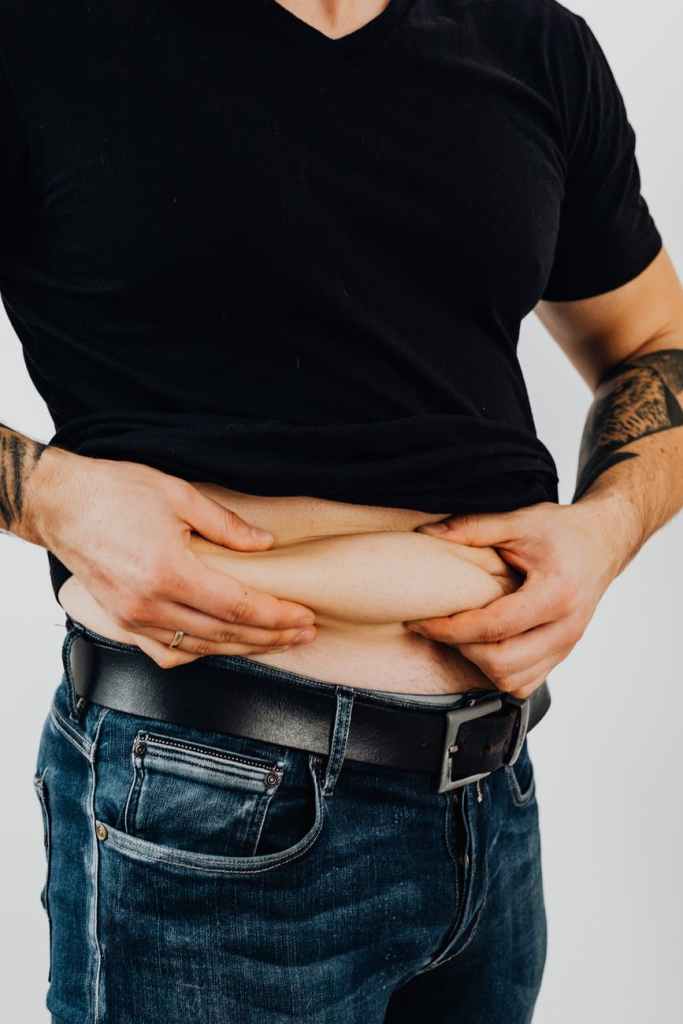
Most people don’t enjoy looking in the mirror and seeing a pouch, hanging off their gut. Trust me, I speak from experience. But realistically, so long as you’re healthy, you eat and exercise regularly and be sure to consult your doctor or medical practitioner before starting any new exercise regiment or diet, you’ll come out shining with the results you need to have. Stay healthy. ☯
Martial arts requires a lot of things: focus, concentration, dedication and commitment, to name a few. To a true martial artist, practicing any given style usually requires a life-long dedication and is a way of life as opposed to a hobby or a sport. This is why it’s typically referred to as “the way of karate.” Depending on one’s reason for joining martial arts, the sports and fitness aspect can be a good reason; provided you’re willing to include all the aspects I’ve listed above.
One of the unfortunate side-effects of having multiple styles of martial arts, is that everyone thinks that THEIR style is the best. Every person is likely to have a preference. After all, there are nearly 200 different styles of martial arts in existence around the world, including the popular ones that people are familiar with, such as karate and judo. But there are many that are a bit less familiar. No matter the style, the result should be the same: train to fight so that hopefully you never have to.
The truth is that it isn’t so much the style that matters, as much as the effort put in by the practitioner. When I first started out in martial arts, I studied Tae Kwon Do for a number of years before I recognized that it wasn’t for me. This is something that most of my friends and family don’t know. The high-flying kicks and flashy movements did not encompass what I felt MY martial arts needed to be about.
But this doesn’t mean that Tae Kwon Do isn’t an extremely effective form of martial arts. It simply wasn’t effective for me. Trust me, when I say that I’d think twice about exchanging blows with a properly trained Tae Kwon Do practitioner. During basic training, I was thrown into the ring with a Tae Kwon Do black belt. I consider myself to be an adequate fighter, but I got my bell rung several times. A tip of my hat to you, Jesse! I had a headache for days, after that fight.
The same can be said of just about any style of martial arts. Most people would think that Tai Chi is nothing but a style for the elderly, something to get older folks together for something to pass the time with the added benefit of increasing circulation and mobility. But the reality is that Tai Chi (and all its sub-styles) is an incredibly old and effective form of Kung Fu. The question is whether the practitioner chooses to train and study it as an effective form of martial arts or as a passing thing.
The big screen has done a fair bit to create this effect. Old school Kung Fu movies often showed the wise, old master holding back a special or “secret” technique that would allow him to maintain the upper hand in a fight with anyone he came across, including his students. And most martial arts movies will usually depict a student from one style pitted against a student from another, with only one being the victor. But this is hardly the reality of how things are actually done. My Sensei never held back any “secret” techniques and always shared everything he learned. This is genuinely the only way that a style would ever be successfully passed on.
Martial arts only gives out as much as a student puts in. If you don’t show up and don’t put the time and effort in, you won’t get much back as a result. Somewhere in the back of my mind, I can confirm that there have been times that I judged other styles of karate against my own. That’s simply human nature. One will always believe that their way is best. But it isn’t so much the way you choose as it is the path you take while studying the way. ☯
Despite the downward spiral that my fitness routine has taken in recent months, I’m a big fan of staying healthy. All the time and effort seems well beyond worth it, when I get the opportunity to visit with my endocrinologist and he tells me that I have the heart of a horse and all my systems are functioning ALMOST as well as someone who doesn’t have Type-1 Diabetes. This was further confirmed last week, when a visit with my ophthalmologist confirmed no presence of macular edema in my eyes, the first time in over five years.
Now that I’m done bragging about how I AM ALL THAT IS DIABETES!!!! I can get to the point of today’s post. Something I’m not a big fan of, is crowds. I prefer to train in private or in the company of my family or like-minded martial arts individuals. This doesn’t mean I won’t train with anyone who wants to learn or get in shape, but I’m not a big fan of working out in public gyms. There are a few personal reasons behind this, but there are some definite pros and cons behind getting a gym membership and working out in the public eye.
I try not to be cynical about things that can be of definite benefit to someone’s overall health, so I’m going to share my top five pros and top five cons when it comes to joining a gym and working out in public. This isn’t sourced from anywhere, it’s all me. Here we go:
PROS:
They have equipment you can’t afford: I’ll be honest, paying for fitness equipment is killer. Most retail and fitness equipment outlets charge more than a dollar per pound for dumbbells, which means you’ll be hitting the 100-dollar mark for a pair of decent 45-pound hex dumbbells. The cheapest treadmill I’ve been able to find online (that isn’t second hand) came in at just over $500 dollars. Working out with a variety of different equipment can be costly. Working out at a gym can circumvent the need to buy everything you need;
They’ll have resources: Most gyms offer personal coaching, group workouts as well as access to things like yoga and Zumba classes. It’s a great place to meet like-minded people; not the weirdos who are all muscle and no brains that monopolize workout stations, but people who are genuinely interested in getting in shape and working on their personal fitness;
It’s convenient for the working population: You can take advantage of lunchtime workouts, get to the gym right after work or even before you start work. Since most membership-based gyms offer shower service, you can be cleaned up and on your way to the office before start of shift;
It’s great for motivation: There’s no denying that humans are pack animals. There’s a reason why we gather in towns and cities. Fitness and working out is no different. Trying to get in shape can be easier if you try to do it around other’s who have the same goal in mind;
It gets you out of the house: I enjoy working out in my basement, garage and back yard. But once in a while, quarantine measures be damned, you need to get out of the house. A gym membership can be a good way to get out of the house a few times a week, even if it only means a simple travel from “A” to “B”.
CONS:
Memberships are expensive as shit: Honestly, a year’s worth of gym membership could effectively pay for that $500 treadmill I mentioned in the PROS list. And don’t even get me started on these fuckin’ gyms that are so high and mighty that they make you sign a “contract” that makes it almost impossible to quit once you’ve joined. I’ve had gym managers I had to verbally fight with, just to cancel a membership so that I could transfer with my job;
They smell like a warm bucket of hamster vomit: Not all gyms are created equal. As much as the Rocky franchise romanticized the concept of gyms that smell like blood, sweat and puke, no one wants to be in a bacteria-infested environment that smells like the backside of a dead calf. Especially if you’re breathing hard during some extreme cardio or trying to use some equipment that the last douchebag forgot to wipe down;
You may be forced to deal with haters: In my opinion, a gym should be a haven of fitness for anyone who wants to work on themselves and improve their lives, either physically or mentally. But there is an unfortunate small group of people who go to the gym and belittle people who are trying, making fun of them and making them feel worse about themselves. It can make working out difficult;
You sometimes have to wait: The one, nice thing about working out from home is that you don’t have to wait to use whatever you have available. Even if gyms have a ton of equipment you either don’t have or can’t afford, you may find yourself in a position where you have to wait in line for someone else who may be using the particular piece of equipment you need;
You gotta leave the house: Go figure, I’ll share point #5 with both lists. I’m weird, that way. And a bunch of other ways, but honestly I LOVE working out at home. I prefer it, in fact. But that’s just me. It’s always a good idea to get out of the house once in a while. But honestly, I like the practicality of having my wife and children nearby, access to my own shower and snacks, drinks and all the other stuff.
At the end of the day, I’ve worked out in public gyms AND I’ve found ways to work out at home. My personal preference is to work out at home. If I had to weigh out the pros and cons, cost ends up being the big deterrent. I’d love to keep a membership and enjoy all the benefits of working out at a gym. It would be incredibly fun to bring my wife and have her enjoy those benefits as well. But considering there are dozens of “body-weight only” workouts that one can do from home, it’s hard to justify the cost.
The rest of the PROS and CONS can sort of cancel each other out. But it’s a matter of preference. My best advice would be to give it a try. But be sure to protect yourself and join that gym that doesn’t require a contract membership and that you can leave with only a month’s notice. That’s usually pretty reasonable. You should be able to let them know within the month if you plan on quitting. But with the reasonably balanced amount of good and bad, you really can’t tell if a public gym is for you less you try it. ☯
Walking is wonderful, isn’t it? You step out into the crisp morning air, breathe in the freshness and get some mild exercise. Emphasis on the mild, but it exists nonetheless. The past couple of weeks have humbled me, in the sense that my wife’s absence with our family vehicle during basement renovations have meant that I’ve had to walk everywhere. For everything. It’s humbling because I’ve come to appreciate just how convenient having a vehicle really is. It also gives me a new appreciation for the folks who can’t afford a vehicle and ALWAYS have to walk or take public transit.
This period has seen me walking a minimum of three to four kilometres for simple things such as checking my lottery ticket at the local corner store, picking up my much-needed energy drinks and even picking up two duffel bags of groceries to shore us up until my wife got back. Not least of which is the fact that these items had to be hauled back by hand. With a bus route that only passes every 50 minutes and it being an 18 to 20 minute walk for any of the locations I require, it’s obviously more time-smart to walk.
But with a light freezing rain falling on the day I had to go do groceries, and my corner store being closed for cleaning on the day I walked to check my lotto (thanks, 7-11!), it also gave me a reminder of the good old days when I was younger and HAD to walk or bike everywhere i wanted to go. Walking gets a pretty indifferent reaction from the world in general and there always seem to be two camps: those who are indifferent towards walking, and those who believe it’s incredibly good for personal fitness.
Walking is often ignored and considered a pointless exercise, and with good reason. Since running, weight-lifting and any other extreme workouts require deeper, physical exertion in order to be completed, people tend to assume walking is not as effective a form of working out. We can be honest in the fact that walking can’t be placed in the same category as say, an hour of HIIT training. But there are still a number of benefits associated with walking regularly.
According to an online article posted by HealthLine.com, walking on a regular basis has a number of health benefits, which includes burning calories, lowering blood sugar, easing joint pain and boosting energy levels. On the mental front, walking can help improve your mood and encourage creative thinking. In fact, the Mayo Clinic writes that 30 minutes of brisk walking can add a burn of about 150 calories, with that total calories increasing, the faster and longer you walk. They also warn that if you’re walking solely for the purposes of weight-loss, a healthy diet needs to be incorporated, as well.
During my last eye injection when I took the bus to Saskatoon, I wound up walking almost 15 kilometres throughout the course of the day (For The Longest Time…🎶), and it was a significant calorie burn. And did my legs end up feeling as though Sensei had just delivered a dozen roundhouse kicks to my thighs? Hell no, because nothing hurts quite as bad as that, but it provided a decent burn over the course of that whole day.
The nice thing about walking is that it’s reasonably low-impact, so if you have knee or joint pain or suffer from obesity and are looking to start burning calories and losing weight, walking can be done for longer periods of time than traditional forms of cardio. Although walking may not be a “better” workout, it’s an effective one. And it can be a good addition to your weekly total workouts by providing a low-impact, relaxing alternative to just sitting on the couch on your rest days. So toss those earbuds in, lace up your sneakers and if you have Diabetes, plan ahead for lows and hit the streets. Your body and mind will thank you. ☯
I quote a lot of articles and posts in my blog. This is because I’m not a doctor, dietitian or fitness expert, although 32 years of intensive martial arts training HAS to count for something. But for the most part, I speak from the heart and try to be as genuine as possible while quoting sites and people that I know will add some credibility to what I say. Last weekend, I was free-falling down the YouTube rabbit one one night, since my wife was out of town and my 5-year old was fast asleep. And I found a video that moved me to tears…
Those who know me well are quite aware that I’m not a man who exudes emotion easily. But this man’s journey did it for me… The man in the video is named Vance Hinds. An assistant DA in Texas, he was living an extremely unhealthy life and weighed in at 475 pounds, which is over 265 pounds heavier than I’m currently sitting. Hinds was ironically first inspired to lose weight by a comedian named Burt Kreischer.
Although I don’t know why a comedian, of all people, would motivate someone to lose weight (I haven’t researched this person), Hinds reached out to a former professional wrestler named Diamond Dallas Page. I’m familiar with Page, having watched him wrestle throughout my 20’s and my early 30’s, and I know that he contributes a significant amount of time to helping other people achieve their weight-loss goals as a motivational coach.
I’m linking the YouTube video below. I don’t claim ownership, nor do I have any rights to this video. As I said, I just happened to land on it while surfing YouTube, one night. The video is only about 5:30 minutes and you can watch Hinds’ journey from 475 pounds to 277 pounds, for a total loss of 198 pounds. It’s pretty inspirational…
This motivates me. Here’s a guy that did it simply for the sake of improving his health and his overall lifestyle. No endorsements, no financially charged motivation; he did it for himself and his family. It brings my own journey into perspective. In 1988-89, I joined karate in order to help me overcome insulin resistance and Diabetes complications that threatened to end my life before my 20’s. I succeeded.
Now, as I move into my 40’s, I’ll admit that my own weight and living habits have fallen to the wayside. I’ve tried a number of different things to overcome these issues. And I believe that it’s important to try as many different things as possible; it allows us to find the path that’s right for us. But seeing Vance’s weight loss journey has made me realize that losing the 20 or 30 pounds I need in order to be healthier is small potatoes in comparison to what this man just went through.
When I attended the police academy in 2009, I weighed in at 185 pounds. By the time I graduated six months later, intensive training, exhaustion and diet brought me down to 165 pounds. It was the lightest I had ever weighed, at that point in my life. I’d like to say I felt great, but the exhaustion was palpable. Within two years of walking away from the academy, I broke the 200-pound threshold and I’ve been fighting to dip below it, ever since.
Obviously, Diabetes plays a significant role in how my metabolism functions and the weight I carry. That being said, I’ve seen Type-1’s who have been in the “skinny” category. Am I trying to be skinny? Fuck, no! I believe in carrying some mass, it’s one of the only way s to maintain strength. But I think that dropping some weight and finding a way to keep it off should be possible. In 2014, I was down in the low 190’s and that simply involved consistent cardio and weight workouts and a “reasonable” diet of three regulated meals a day.
Body image is an important part of who we are. You shouldn’t aspire to be who you see in magazines or on the internet, but rather who you feel you genuinely are. We can all gain inspiration from other people’s journey. The important part is finding a way to make it work for you, and to achieve the goals that you aspire to in order rot be healthy and happy. Hopefully, you all find that path. ☯
The past few months have had quite a negative impact on my overall health and fitness. Considering the flood damage to my basement, which took away my workout space, to having everything we had IN the basement moved out to the garage, thereby taking away my backup workout space, my four to six workouts a week have pretty much melted down to nonexistence. Include the fact that the temperatures here in Saskatchewan have fallen into the minuses and there’s snow and frost on the ground, making it impractical to go cycling and the fact that my dojo still hasn’t re-opened due to COVID-19, and I’ve slowly been turning into a couch potato.
My wife and I had started a routine where we would do yoga stretching in the mornings, once Nathan had gone to school. But depending on work obligations and how fussy our 1-year old infant might be on a given day, even those have slowly taken the wayside. It also doesn’t help that recent months have seen me include CGM and Auto Mode into the mix, and any new Diabetic therapy always has the potential to be touch-and-go during the first months. So working out with all of this going on has been a challenge. And the results are visible and very much felt…
I often write about all the benefits and the good things that happen when you work out consistently, but most people don’t consider the effects that may happen when you stop. Or even if you never started in the first place. I know some people that have essentially never worked out before and never had the inclination, as they’re in good health and their weight seems manageable. Does this mean they don’t NEED to work out? Absolutely not; everyone should include fitness in their weekly routine in one form or another.
There are a number of things that will happen to you physically, as well as psychologically, if you suddenly stop working out and exercising. There are plenty of good articles online that will describe the exact details, but I’m providing my personal list, based on my metabolism and the fact I have Type-1 Diabetes:
Blood sugar control will be altered: This is a pretty big one for someone with Type-1 Diabetes, because it took me all summer to condition my system and get my blood sugar levels controlled to endure 70-kilometre bike runs or 2-hour karate workouts. Now that those have ground to a halt, some of my blood sugar readings have been higher than they should be, since I’m no longer exercising and burning as many calories as I used to. Which brings me to my next point…;
Your body will store more fat: You use two primary forms of energy in your body. Carbohydrates, which is the immediate energy source you obtain by eating your meals. The second are your fat stores, which are only accessed during rigorous exercise. Carbs are a temporary energy source and need to be constantly replenished, whereas fat stores offer a wonderful amount of energy but won’t burn unless you do. So less exercise means that fat will more readily stick to your body;
Cholesterol and Insulin resistance: Lack of exercise means bad cholesterol goes up and good cholesterol goes down. Brutal, right? That’s without taking diet into consideration. And your insulin sensitivity will decrease as well, meaning you’ll need more insulin to process the same amount of carbs as before you stopped exercising;
Your endurance will vanish: Your endurance is one of the first things to start decreasing when you stop working out. The only silver lining to this one, is that it’s quick to come back once you commit yourself to training again. But it definitely makes it harder to work out as intensely as you did before, which is why it’s important to maintain certain levels;
Your mood and sleep will be altered: I could go on a long rant about the hormones and endorphins that are released in the body during exercise, but that would be a hell of a long rant and that isn’t why we’re here, today. Suffice it to say that quitting exercise will adversely affect your mood, make you more prone to seasonal depression, irritability and feelings of worthlessness. Not least of which is the fact that your sleep pattern will be all screwed up. Ever notice your level of exhaustion after a long night of cycling or working out? Once you’ve taken that hot shower, it doesn’t take long for a person to pass out once their head hits the pillow;
Your self-image will be affected: Let’s be honest with each other… You may not have a goal in mind to join the olympics or look like a supermodel. Perhaps you do and if so, good for you. But your fitness is your responsibility and you only get out of it what you’ve put in. And one must admit that having that gut start poking out when you’ve been used to being in decent shape can have a negative effect on your self-image.
People work out and exercise for different reasons. Some do it for health, some do it for sport, some even teach particular skills, like martial arts. And there’s really no bad reason for working out, but there are bad reasons for stopping. Life and obligations get in the way and let’s be honest; some days we just don’t feel like it. But it’s like trying to ice skate uphill… sometimes it’s a slippery slope, but you’ll never reach the top unless you keep on pushing. ☯
Sex. Alright, now that I’ve got your attention, let’s talk about, well… sex. For the most part, people avoid talking about sex, for a variety of reasons. Either from embarrassment, shyness or awkwardness, it’s usually a taboo subject for most folks. But it’s one of those things that’s part of the human condition. And if you have Type-1 Diabetes, it can be an even more awkward thorn in your side.
Honestly, today’s post isn’t necessarily about the difficulties Type-1 Diabetes causes during sexual encounters. I covered that off in-depth during a previous post I wrote, Cue The Barry White Music… So I won’t get too deep into those complications. However, I’ll provide that those difficulties include high or low blood sugars, neurological and blood vessel damage can lead to sexual organ difficulties in women and erectile difficulties in men.
No, I’m here to discuss the old myth that “sex before a big game” is a bad idea. There’s a standing tradition in the sporting world, and even martial arts, that having sex during training or before a big event will increase one’s chance of defeat. Well, I hate to break it to all those old school coaches, but nothing could be further from the truth.
“Women Weaken Legs!”
– Mickey Goldmill, Rocky (1976)
There was a really good article posted by National Geographic, that explains the majority of the benefits behind the practice as opposed to the perpetuated myth. But I couldn’t read it through without entering my email and joining a list, which I wasn’t willing to do. Sex lowers blood pressure, increases one’s immune system, improves sleep patterns and is even considered a natural form of pain-relief. There’s also a measurable release of testosterone, which can actually help one win a big fight as opposed to losing it.
One of my favourite athletes, Ronda Rousey, is quotes as saying that having sex “raises your testosterone so I try to have as much sex as possible before I fight, actually.” For Rousey, an increased level of sex before a big match is not only part of her routine but an important part in helping to ensure a victory. Although she’s referring mostly to increasing testosterone in female fighters, she also doesn’t hold much faith in male fighters’ belief that sex drains your testosterone. In fact, she feels that long-term abstinence will result in producing less testosterone, overall.
You can read the entire article on Business Insider, which also includes a link to the National Geographic article, if you’re game to add your email to a mailing list. But the reality is that the perpetuated myth that sex before the big game is bad just isn’t accurate. Or true. Good news for some. Not so much for others. Research shows that indulging in a “solo act” won’t release the same levels of oxytocin or provide all the same benefits as having an active partner. But I digress…
As a martial artists, I feel it important to point out that abstaining from sex for any length of time for the purpose of “improving” your training is absurd and unnecessary. As a Type-1 Diabetic I feel it’s important to advise that if you believe that having sex is forthcoming, which may be presumptuous (a point I made in my linked post above) you’ll want to ensure your blood sugar levels are controlled, you have fluids and fast-acting glucose at your disposal in case you need it and be mindful of where your equipment is located if you’re a pump user. ☯
Winter is coming! I’m not really a Game Of Thrones fan, but I love that line. Granted, I’ve never actually seen it as I don’t have cable. I am, however, a pretty big fan of the Rocky movies, which probably dates me more than I care to admit. But the one that comes to mind is the fourth instalment, where the antagonist kills one of Rocky’s best friends during an boxing match and Rocky travels to Russia to train for a revenge fight.
In this movie is likely one of the best winter training montages I’d ever seen at the time and even since then. With Vince Dicola’s “Training Montage” playing in the background, you can see Rocky using unorthodox training methods to build and develop himself in preparation for his fight against Drago (played by Dolph Lundgren). I included a YouTube video of the scene I’m referring to. Now would be a good time to point out that I have no ownership in the video nor am I responsible for it; it’s just a linked video I found on YouTube.
The scene actually demonstrates a clear difference between intensive training using machinery and a comfortable environment versus using the elements and whatever one has at their disposal. And now that I’m writing about it, I need to find a copy of this damn movie so I can watch it again! But in all seriousness, it got me to thinking about the effects of training in a cold weather environment.
First of all, let me just say that I’m a bit of a fussy bastard when it comes to temperature. I don’t like it when the temperature is very cold and I don’t like it when the temperature is very warm. So I’m basically screwed, all year long, living in Saskatchewan. But realistically speaking, I’ve found myself training in just about every climate and temperature I have available to me, and a couple that I don’t.
What I mean by the latter, is that when I travelled to Japan in 2001, we trained almost every day in 40 degree weather. It felt tropical to us, but it was autumn to the Okinawans. I was drinking litres upon litres of water and rarely went to the washroom. My body was literally using the hydration as fast as I could provide it. But the flip side to this, and the purpose behind this post, is that I’ve also gone running in snow storms. Not recently, mind you. I’m old as disco, now.
Back when I was training for my black belt, I would get off work at 1 in the morning, head home, change into workout gear and grab my walkman (think iPod, but much bigger) and circumvent my hometown of Dalhousie. This made for about 10 kilometres of running in wintery conditions, which is not a lot by my cycling standards. But I guarantee that it felt like forever while I was doing it. It probably doesn’t help that Dalhousie stands on the side of a reasonably steep hill that slopes down into the Restigouche Bay, so there was a fair bit of uphill running.
Let’s start on a positive note, because I am frequently way more negative than I should be, and let’s discuss the benefits of training in extreme cold weather. According to a post written by Dr. Adam Tenforde for the Harvard University website, working out in colder weather can help improve your endurance as “your heart doesn’t have to work as hard, you sweat less, and expend less energy, all of which means you can exercise more efficiently.”
The article goes on to explain how working out in the winter can give you some exposure to sunlight, which people tend to get much less of during the winter, as well as helping to transform certain areas of white fat, like the stomach and thighs, into a calorie-burning fat. This can be helpful if you’re like me and are struggling to tone down some of the “Micheline effect” I seem to have developed in my midsection.
Another benefit is that if you have a preferred trail that you run on, you’ll likely have it to yourself as most people have an unfortunate aversion to working out in the cold and likely won’t be sharing your enthusiasm. Now, if only I could guarantee the trail around Wascana Lake would be vacant and ice-free, I’d bike around that bad boy all winter! But I digress…
Since all the world is balance, we wouldn’t have the positive if not for the negative. So let’s cover off some bad aspects. If you have an underlying or chronic medical condition, cold weather training may not be for you. Listen to me, I sound like one of those commercials for a new prescription drug. “Talk to your doctor, if you think that running outdoors and freezing like a dumb ass may be right for you…” But seriously, things like heart conditions, asthma and many others can be adversely affected by pushing yourself when it’s cold outside.
Next, one needs to consider all the typical wintery hazards such as frostbite, which can affect any patch of exposed skin, hypothermia and even dehydration. Yes, that’s right! You can dehydrate in the cold; it’s not just an extreme heat thing. People also forget to consider sunblock when running on sunny days in the winter, despite the fact that UV rays are UV rays, regardless of the temperature. But maintaining your core temperature is important in order to prevent getting sick, as well.
According to the Mayo Clinic, you should dress in layers. Their article says to start with a synthetic layer that wicks moisture away from your body, followed by a layer of fleece or wool for insulation, topped with a breathable, waterproof outer layer. They also mention that you may have to experiment and try a few different combinations to find what’s right for you.
I use a base layer of Under Armour, specifically their “cold gear” apparel, which moves moisture away from the body but also helps to keep my body’s heat contained. I follow this up with a cotton shirt, since I don’t have fleece or wool. Even if cotton has a propensity to stay wet, it also provides a layer that will absorb moisture that makes its way through. then I have a waterproof Columbia jacket I throw on top of that. Couple it all up with a comfortable pair of waterproof boots and some windproof pants over thermals and you’ve got yourself a winter running outfit.
The last aspect I’ll cover off is the Diabetic one. Obviously, all of the problems I’ve described can affect someone with Type-1 Diabetes in some given way, shape or form. One of the bigger problems is that the cold will sometimes block or numb some of the recognizable signs of hypoglycemia, which can potentially be dangerous if you’re running far from home. Here’s where technology pays its due, as you should be carrying a cell phone and/or letting your family know where you’re going, if training outside.
The winter season shouldn’t be an excuse to stop working out. I’ll admit, I much prefer curling up on the couch with my wife, munching on nachos and binge-watching Kitchen Nightmares. But Diabetes doesn’t take a day off and neither should your health and fitness! Dress well, monitor your blood sugars and stay hydrated. Whether we like it or not, the colder season will be in full swing, shortly. ☯






 The Blogging Buddhist