In karate and in most styles of martial arts, we perform drills and techniques over and over with the expectation that it will instil muscle memory. That way, in a real scenario where one I attacked by someone else, the block and/or counter-technique will come naturally and without hesitation. If you have to take the time to think about how you’ll block and how you’ll defend yourself, it’s already too late. Although television and movies tend to romanticize long, fancy fights where both participants exchange blows back and forth, a real fight never happens this way.
Despite consistent training and muscle memory, a real confrontation leaves you with so little time to react and protect oneself that technique and smoothness go right out the fuckin’ window. Trust me, I’ve been there. When an opponent’s fist is coming at your face and you only have a microsecond to react. When you block, IF you block and I hope you do, it won’t be perfect. You won’t have the bone alignment or the proper arm position. But whatever you throw out there will be anything more than just taking the strike. And that’s the important thing to remember; it’s not about looking like Bruce Lee in his prime. It’s about blocking the attack in order to protect yourself.
This doesn’t mean you shouldn’t train consistently. It’s like stretching and warming up. Let’s agree that in a real fight, you won’t have time to stop and stretching out your limbs before getting into it. But if you stretch and train properly, your muscles will be prepared for the explosive movements that may come with a sudden need to defend oneself. The same can be said of one’s blocks. If someone takes a swing at you, as long as you can throw out something that will intercept that swing and keep you from being hurt, that’s all that matters. The muscle memory will still serve you but you need to keep it consistent. ☯️
They say a little competition is a good thing. I believe the expression is “healthy competition.” Although this can be fine as long as that competition is for the purposes of fun and is only a game. The problem begins when one’s need for competition extends beyond fun and games and drips into everyday life. If you compete against others in life, you’ll find yourself walking a very lonely path; even if you’re not alone.
The goal of life should be to eliminate suffering; suffering in one’s own life and suffering in other peoples’ lives. If you compete against others for the purposes of personal advancement, comparing yourself to others or for gain, such as money, popularity or status, the only outcome will be suffering. Status in life means nothing. And let’s not mistake status for success; those are two very different things and success can be measured by the efforts and goals you set for oneself. Status is how outside people see you in relation to personal gain. Not so great.
Back in the 1990’s (yes, I’m old) I had my wisdom teeth removed. While I was laid up for a day or two on Tylenol 3’s, I rented a handful of movies to watch. Yes, this was back during a time when you had to actually walk into a retail location, provide your personal information and borrow a playable tape (not DVD) in order to watch it at home. Anyway, I decided to binge on a particular series and rented every Rocky movie I could find. I was a pretty big Sylvester Stallone fan, so it was a no-brainer. There were four movies out, at the time.
When I got to Rocky IV, one of the things I was most amazed with was the soundtrack. One would think that I would have been inspired by the lesson behind the movie, but you can only watch Stallone lose, train and make a comeback then finally defeat one’s enemy before the movies kind of all blend together. Anyway, there’s a song by Survivor called “Burning Heart.” The song was released in 1985, the same year as Rocky IV came out. The movie has some undertones that’s suggestive that the message relates to the Cold War and if I had to guess, I’d say that the song was written specifically for the soundtrack.
Anyway, there’s a particular line in the song that speaks to me and has done so ever since. It goes, “In the warrior’s code, there’s no surrender. Though his body says stop, his spirit cries NEVER! Deep in our soul a quiet ember knows it’s you against you; it’s the paradox that drives us on.” And that’s the message: the true competition is against yourself. Work to be a bit better than you were the day before. Set goals and fight to complete them. As long as you have moved one step closer today than you were yesterday, you’re competing the RIGHT way. But as soon as you compete while comparing yourself to anyone else, the only possible result will be suffering. And that doesn’t work for anybody. Food for thought… ☯️
Considering I haven’t properly gotten a decent dose of caffeine into my system yet, I may seem a little testy while writing this post. Sometimes I wonder how different life would be, had I not tried caffeine for the first time, way back when. I guess it wouldn’t have made much of a difference since I likely would have gotten around to it eventually. Caffeine is one of those staples of normal, adult life. But as with all things in life, there is some good and bad to caffeine. And we’re going to discuss some of it, here.
How does caffeine work and why do we use it to wake up in the mornings? In simple terms, caffeine works by stimulating certain parts of the brain that tell you you’re tired, as well as stimulating the central nervous system and blood pressure. people who consume heavy amounts of caffeine may need greater and greater amounts of caffeine to experience the same effects, It doesn’t ACTUALLY wake you up or make you less tired; it simply blocks the neuro-receptors telling you that you are.
Considering some of the effects of caffeine, namely the effects on the heart and blood pressure, it’s important to remember that these things can have an effect on blood sugars and Diabetes control, as well. And considering that caffeine can dehydrate you and acts as a diuretic, all of these factors need to be considered if you’re trying to maintain good Diabetic control.
So, how much caffeine is too much caffeine? This is an important question, despite the fact that many people tend to ignore it. If you visit Health Canada’s website (sorry, I don’t have the link for it), they recommend that a healthy person should limit their caffeine intake to no more than 400 mg of caffeine per day. The key aspect here is “healthy adult.” It could be less than that number for people who already have heart issues, blood pressure issues or may be pregnant.
All of this is also extremely suggestive, since different people will have different sensitivities to caffeine and how quickly they might metabolize it. And let’s consider that 400 milligrams of caffeine is what’s found in about three 8-ounce cups of regular coffee. I know some people who get through an entire pot of coffee every morning. When you get into the realm of energy drinks, such as I do, one usual, 473 mL can of energy drink will have about 160 mg of caffeine. This means that having two cans in one day has you touching the ceiling of your daily limit.
However, when one factors in the Taurine, Ginseng and Guarana included in the drink, which all act as stimulants, it makes an energy drink significantly stronger than your average cup of coffee. And since it’s summer time, one must also remember that an energy drink won’t slake your thirst if out in the sun. In fact, it may very well dehydrate you further.
At the end of the day, caffeine consumption is not a bad thing as long as one is able to enjoy it in moderation and bear some of these concerns in mind. Energy drinks aren’t any worse than drinking coffee. Just keep an eye on your caffeine levels and overall consumption. And for the love of the light, if you don’t drink energy drinks but you see someone who is, there’s no need to comment on it! Keep that shit to yourself! I think I need that coffee, now. Excuse me…☯️
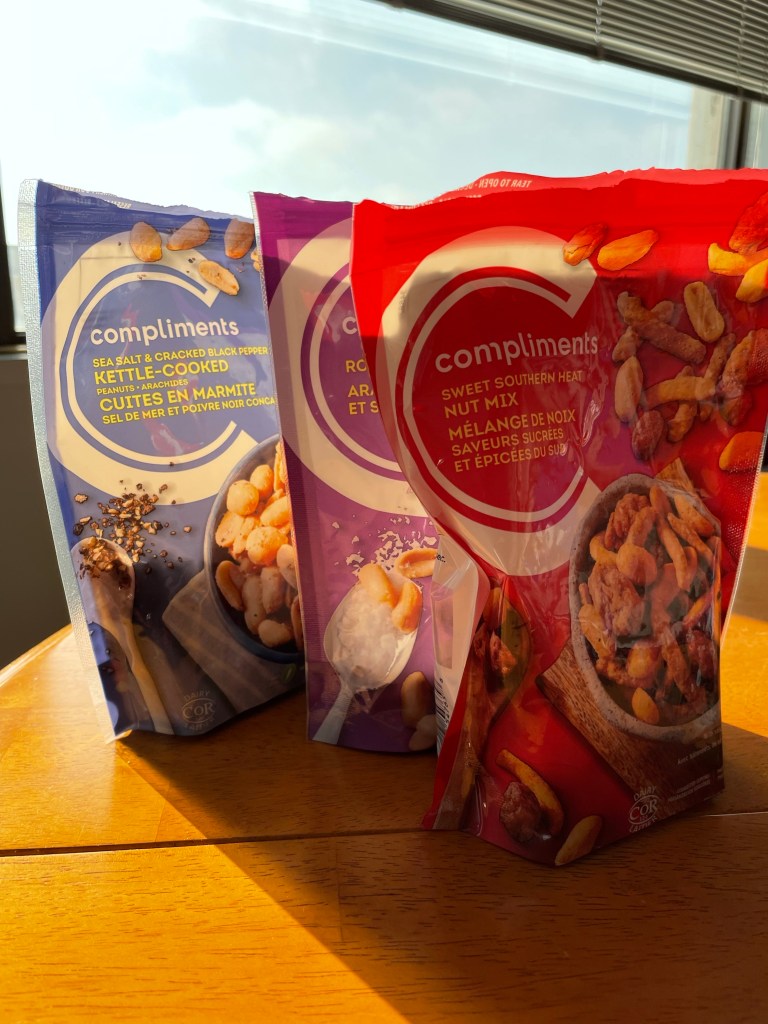
Ahh, nuts… Is there ever to be a more perfect snack? Before everyone floods my comments section, let me be clear that I’m only half serious. Nuts are a great snack, an easy way to take the tinge off one’s hunger and can help on certain levels of health. Unfortunately, if you buy them in bulk they can be a pain in the ass due to the required shelling. If you buy them already shelled, they cost half a fortune.
As with all things in life, there’s good and bad to everything but nuts are pretty good, overall. I’ve recently taken a habit of keeping a few bags of varied nuts at the office and at home. They’re incredibly handy when hunger strikes and mealtime is a fair ways away, or you brought very little and feel you may need to supplement. Let’s examine a few reasons why you should include nuts in your diet, shall we?
The nuts at my office (the non-living ones)
According to an article posted by HealthLine.com (I know, I haven’t quoted them in forever), there are a number of benefits to consuming nuts including but not limited to the inclusion of plenty of nutrients, fibre and antioxidants. The article suggest that the consumption of nuts can also help lower cholesterol and could potentially aid with weight loss.
This doesn’t mean you can sit and binge on an entire bag of salted peanuts at your leisure and expect to lose weight. One needs to bear in mind the increase in sodium intake. If possible, get your nuts salt-free. As with all things in life, a little bit doesn’t hurt. You just can’t overdo it and that previously-mentioned weight loss will only happen if one includes healthy lifestyle choices, such as proper diet and exercise. But I digress.
The big thing for me is the inclusion of fibre. Fibre is an important staple of a healthy diet because you need it for proper gut health, muscle repair and helps you to feel fuller for longer, reducing the portion of your meal and helping with weight loss. While the average adult should be consuming the higher end of 30 grams of fibre or more per day, a small serving of peanuts will give you a few grams of that total and help you along. Not bad, indeed.
The nice thing with nuts is there are tons of varieties and they can be used in many different ways. They can be used as butters (duh, peanut butter), tossed on top of your favourite salad or in your smoothie for a little added crunch or simply eaten by the handful. Just remember what I said… Although they’re better for you than eating a bag of chips or candy, moderation is still key. And if you enjoy some of the flavoured varieties, keep an eye on that sodium count. Now, let’s get nuts! ☯️
Despite our efforts to avoid them, we all have bad days. Typically and for the most part, we suffer through them, deal with them and let them pass after a good night’s sleep. Remember I said that; it will apply later on in the post. But most people will actively do whatever they can to avoid bad days, despite the fact that they’re essentially unavoidable and a part of life.
Last week, I experience one of the worst “bad days” that I can recall in quite some time. What exactly happened to make it a bad day is not important (and I don’t need to come off like a snowflake for my woes) so much as how I dealt with it. Given everything I’ve been through in my life, I’ve prided myself on being able to maintain healthy tools to manage my emotions, more specifically anger. Please note that I said “manage” my anger and not control or suppress it.
Suppressing or bottling up one’s anger is a little like shaking a bottle of carbonated soda (something Nathan loves to do). Although the bottle will hold the soda, pressure will continue to build and gather until eventually the cap will pop and that pressure will explode outward, saturating everyone and everything near it. Anger is very much the same; if you don’t have a healthy outlet for it, it will eventually build up enough pressure to eventually burst and affect one’s entire environment.
Unless someone is close enough to me to have been told this fact, people believe I maintain my calm because I study the Buddha Dharma when in reality, I study to Buddha Dharma to help calm me. The difference is important because like any other living person, I feel and experience the entire spectrum of emotions and they affect me very much in the same way as anyone else. But it’s how I choose to deal with these negative emotions that’s important.
Just to be clear, anger, sadness and any other emotion labeled as “negative” still has a purpose, even if we dislike them and don’t assume so. Much like feeling fear let’s us known that we are potentially in danger, anger and disappointment tell us something about ourselves and the situation we’re facing that we may not have been aware of, otherwise. It doesn’t mean it isn’t normal to dislike being on those situations or that something shouldn’t be done about them. Cue the advice…
Meditation can be a fantastic way to help alleviate the effects of negative emotions. By entering oneself and allowing oneself to calm, breathe and focus on the lighter things, anger will often seem to lose its strength. This may not always be the case and may not work for everybody. But it’s definitely a good starting point. Finding the time and space to do this can be challenging, but never impossible.
Physical fitness is also an important aspect. Pushing yourself through a rigorous workout that can include martial arts or just hitting a good ol’ fashion punching bag can go a long way towards cooling the intense heat that your anger may have created within your soul. Even something that isn’t intense, like taking a walk, getting some fresh air and being alone with your own thoughts can be quite effective.
Sometimes there just isn’t anything that can be done and you have to just ride it out. This can be tough, especially if you’re already angry and you have to be in the same environment as loved ones and that anger become clear and obvious to them. An important step is not to bottle it up and isolate yourself. Letting those loved ones know WHY you’re angry is not only important towards making sure they know it isn’t directed at them but also pursues potential means of help as they could say or do something to provide relief from that anger.
Ultimately, sometimes all one can do is call it a day, hit the sack and get a solid night’s sleep in order to recharge one’s batteries and let one’s soul reset. This is what I did. Once I recognize I simply had no life left in me to deal with the day, I kissed my wife goodnight and let my head hit the pillow. In keeping with the mood I was in, a strong thunderstorm raged through most of the night. The next day was a new day with new challenges so I was grateful for having gotten the extra rest. Anger is a normal part of life. The idea isn’t to avoid it and the important thing is how you DEAL with it; and deal with it, you must. ☯️
Motivation is a funny thing and I often categorize some of my posts (this one included) as a “motivation” post, but that’s usually because I hope that it’ll motivate you. But the thing is, motivation means different things to different people, depending on their perspective, how they train and what values they attach to such things as motivation.
Some people believe that you need to be motivated to start doing something good for yourself. Okay, let’s examine that concept… Normally, motivation is defined as a general desire or willingness to do something. But how can you desire doing something if you’ve never experienced it before? In order to take that first step towards better health, better fitness and overall goals, I would argue that you need WILL. So long as you have the will to take those first steps and push yourself towards a goal, progress and success will motivate you to continue on.
That feeling of motivation comes almost as a reward for pushing through the difficult, initial steps of any goal you set for yourself. Some may argue that you need to be motivated to start. I respectfully decline. You need to have the WILL to start. Motivation comes later. And once that motivation comes, it’s important to recognize that it should be geared towards a positive outcome. If your motivations are for the defeat of others, you’ll never succeed. If your motivations are geared towards status, image or ego, you’ve failed before you started.
Have the strength of will to make a start. It may suck, it’ll likely hurt and may be difficult to accomplish. But if you can rise up and push yourself enough to take those first steps, progress will motivate you and push you further. Chicken or the egg; you can’t have one without the other. Food for thought… ☯️
It’s the start of the work week for most, and I’m sure we can agree that all of us would prefer to roll over, pull our blankets in closer and just keep sleeping until Monday goes away. Much like Garfield, most people aren’t fans of Mondays. ever wonder why Garfield hates Mondays so much? It’s not like he has a job to go to or any responsibilities. But I digress…
The topic of today’s post is about naps. I love naps. I often think back to my youth, when I would have had much more free time to grab a nap here and there but neglected to do so. It reminds me of my son, who outright refuses to nap and I keep telling him he’ll regret that choice when he gets older and no longer has the option. Our two-year old still gets put down for a nap and even when he fights it, ends up getting some sleep. Ah, the innocence!
I’ve written about naps in several previous posts and the reality is that naps are actually beneficial, as long as you don’t overdo them. Like everything else in life, there needs to be a balance. But if you nap in reasonable increments for short periods of time, they’ve been shown to lower the risk of heart disease, improve one’s memory, increase productivity and improve one’s mood. In Japan, nap periods during the workday are encouraged as they’ve already acknowledged that it increases the company’s overall productivity.
I once worked in a call centre (please don’t hold that against me) and they had a break lounge with dim lighting and soft, plush chairs for a staff to use their 15-minute breaks to grab a quick snooze. I was taken aback at the prospect that someone could actually nap for that short a period of time. But once I tried it a few times, I was surprised at how much good it did. Some experts I’ve read about have explained that sleep happens in four stages of a cycle, starting with the “falling asleep” stage, followed by the slowing and relaxing of the body, followed by slipping into deep sleep and finishing off the cycle with rapid-eye movement sleep, or what’s known as REM sleep.
So how long should one nap? This is a deeply debated aspect, since most professionals tend to agree that naps shouldn’t be TOO long or you risk falling into a deep sleep that will negatively affect the remainder of you or day and potentially prevent proper sleep at night. For the most part, I’ve always read that a 15 to 20-minute nap was enough to get you to the relaxing and slowing of the body stage, without allowing you to slip into deep sleep, which can be much more difficult to come out of.
The World Sleep Society claims that naps should be less than 45 minutes. This makes sense, since slipping into “deep sleep” can make waking up difficult and leave you feeling groggy and make it harder to push through the rest of your day. There’s nothing worse than feeling as though your nap made things worse or made you more tired. The whole point is to gain a bit of rejuvenation, right?
I read an article where Dr. Sara Mednick, a cognitive neuroscientist with the University of California, explained how taking an hour-long nap can be ideal since you start to slip into REM sleep. This is where all the beneficial aspects of sleep start to kick in; body regeneration, immune system repair and improved cognitive function. And coming out of REM sleep is actually way easier than coming out of a deep sleep. Apparently. I hate waking up in general. I’d live in the matrix, if it meant I could stay asleep. But once again I digress…
Napping through all four stages of a sleep cycle can do wonders and if t you have the time for it in your day, can increase your productivity and mood significantly. But even if you have time, anything more than an hour, hour and a half and you’re looking at possibly interfering with the sleep you try to get at night. So it’s important to find some balance. If you grab yourself a nap and still feel tired and/or exhausted, it could be a sign of something else so you shouldn’t be afraid to discuss it with your doctor or medical practitioner.
Now if you’ll excuse me, as much as I’d love to keep napping I have to get on with my Monday. perhaps the day will bring an opportunity for a snooze. We’ll see… ☯️
This is my third time posting this material and no, I’m not being lazy. I consider the consumption of vitamins and minerals to be an important part of maintaining one’s health. It’s no surprise that modern nutrition is sorely lacking in most people and with every reposting of this material, I’m reminded of the importance of taking a steady multivitamin on a daily basis; a fact my doctors keep reminding me of, as well. So, bearing in mind that I’m not a doctor or nutritionist, here’s what I posted all the way back in June of 2019. Enjoy!
One of the key reasons behind the consumption of food is to obtain carbohydrates for energy. The human body requires energy to carry on normal functions and, well… stay alive! But what else do we get from the food we eat? A proper diet will also include a number of vitamins and minerals that we require to maintain proper health, growth and energy levels within the body. We’ve all heard about getting enough vitamins from a young age. I remember getting my Flintstones vitamin everyday as a kid.
But if you’re like most people, you’re likely wondering what these vitamins are for and what they do. My goal is to cover off the main ones here:
Vitamin A: This is an all-around vitamin that provides a number of functions including but not limited to the proper health of various bodily functions, tissues and helps to fight chronic disease and is known to be good for the eyes.
Vitamin B: This one is a bit complicated, as there is a large grouping of enzymes, vitamins and minerals that fall under the “B” category. In general, B-vitamins are used for energy production, immune function and absorbing iron. Some them include B2 (riboflavin), B3 (niacin), B9 (folate) and B12. There are a few more that I can’t recall, but B12 is considered amongst one of the most important of vitamins overall because it helps you turn food into energy.
Vitamin C: At some points, this one has been referred to as the sunshine vitamin. I’m thinking that’s mostly because people’s main source of Vitamin C is from citrus fruits. But this vitamin also helps with iron absorption, immune function and is a natural antioxidant that helps with the elimination of free radicals. Eating citrus fruits are also what sailors used to eat on long voyages to prevent scurvy.
Vitamin D: This vitamin helps with the strengthening of bones and teeth. Our bodies are designed to self-generate this vitamin naturally through exposure to sunlight, but obviously that needs to be done in small doses. Modern life has created an environment where more people spend their time indoors, away from the sun. So supplementation becomes important.
Vitamin E: A pretty straight forward vitamin, this one helps with proper blood circulation and clear skin.
Vitamin K: This vitamin is essential for blood-clotting. In order words, if you’re deficient in this vitamin, small cuts or injuries can cause excessive bleeding that can become dangerous.
Folic Acid: We hear people speak about this one as being necessary during pregnancy. And they would be correct! Folic Acid helps to prevent certain complications during childbirth but is important to everyone for proper cell renewal. This one is also known as Folate, or Vitamin B9 (as listed above).
Calcium: Most people should be familiar with this one. Teeth and bones, people! Teeth and bones! Good calcium levels are required to keep those body parts healthy.
Iron: This helps to build muscle tissue naturally and helps with proper health of the blood. As an interesting sidebar, it’s also what makes your blood red through the reflection of light!
Zinc: Immunity and Fertility. I’m a little unfamiliar with this one and haven’t had the opportunity to research it a great deal.
Chromium: This one is near and dear to my heart. Because it helps to control blood sugar levels. Chromium is what helps all the systems of your body to get the energy they need when they need it. Some traditional medicine practitioners will suggest Chromium supplements for Type 1 Diabetics who may have difficulty in maintaining proper levels.
Magnesium: This one helps your body to absorb all the other vitamins and minerals. It also acts as something of a relaxant to muscle tissue and play a role in proper muscle contraction.
Potassium: This mineral helps with the proper hydration of your body and helps to control blood pressure.
There are many others of course, but I’ve tried to cover off the main vitamins and minerals required for a proper diet. We get most of what we need by eating regularly and including a variety of healthy foods. A lot of people take a daily multi-vitamin, which is fine. But unless you are experiencing symptoms or unexplained illnesses, there shouldn’t be a need to actively try and take added amounts of anything. Your medical practitioner should be able to advise you if further supplementation is required. For example, patients who are recommended to take Folic Acid and Iron during pregnancy.
Obviously, all of this is extremely important; not only for proper health and fitness, which is important to me, but to help with Type 1 Diabetes as well. Taking a daily multivitamin can help to ensure that your body gets everything it needs, in combination with carbohydrates, lean proteins and fibre. My wife Laura originally gave me the idea for the post I wrote in 2019 when she asked about B-vitamins. Every time I re-post this material, I think of her. The credit for this post is all her! ☯️
When one becomes a parent, we usually hope and pray that our children will inherit our better traits and values. We hope that they’ll be strong, healthy and develop a wisdom that will allow them to push forward and make a positive presence within the world. At least, that’s what I hope for my sons. But of course, life rarely cares about one’s plans and things don’t always turn out the way we’d LIKE them to. This is why, instead of a strong martial arts acumen or a love of books or making exercise and fitness a priority within his life, my son has chosen one of my lesser-enjoyed traits: he’s a fuckin’ klutz…
Now, don’t get me wrong… I love Nathan. He’s my first-born son, he looks like me, clings to me and watches my every move. So when I say he’s a klutz, I say it with affection albeit a mild tinge of frustration since there are so many other aspects he could have prominently at the forefront. Last week, while walking on my at-home treadmill, he wiped out. This caused him to face plant and roll on his shoulder off the edge of the treadmill’s belt. He busted open his upper lip and bruised his right shoulder pretty good.
The wound on his upper lip, now scabbing and nearing removal
He worked it off like a champ, despite my letting him know it was okay to cry a bit if he needed to let it out. What was worrisome is that he still had a week of school left. In my experience, some school staff become a little overzealous and will assume some dark things when they see a child come to school with new injuries. And even though I don’t think Nathan would lie or make something upon, children have an unfortunate propensity for making shit up if they think it sounds cool or they’re trying to please or agree with another adult.
Luckily, he made it to the school finish line without an issue but that didn’t stop him from hurting himself further. once school was done, my wife took the boys out shopping on the day before Canada Day. Since we were heading into the summer, she bought Nathan one of those plastic tubes that spray water. You know the ones; you stick the tip in water and pull back the tube and it fills, then you push hard and it can squirt almost twenty feet. Well, she got him one of those on the condition that he not use water in the backyard without my permission and that it wasn’t an “everything” toy… It was only to be used with water.
Only my child would manage to self-inflict an injury this way…
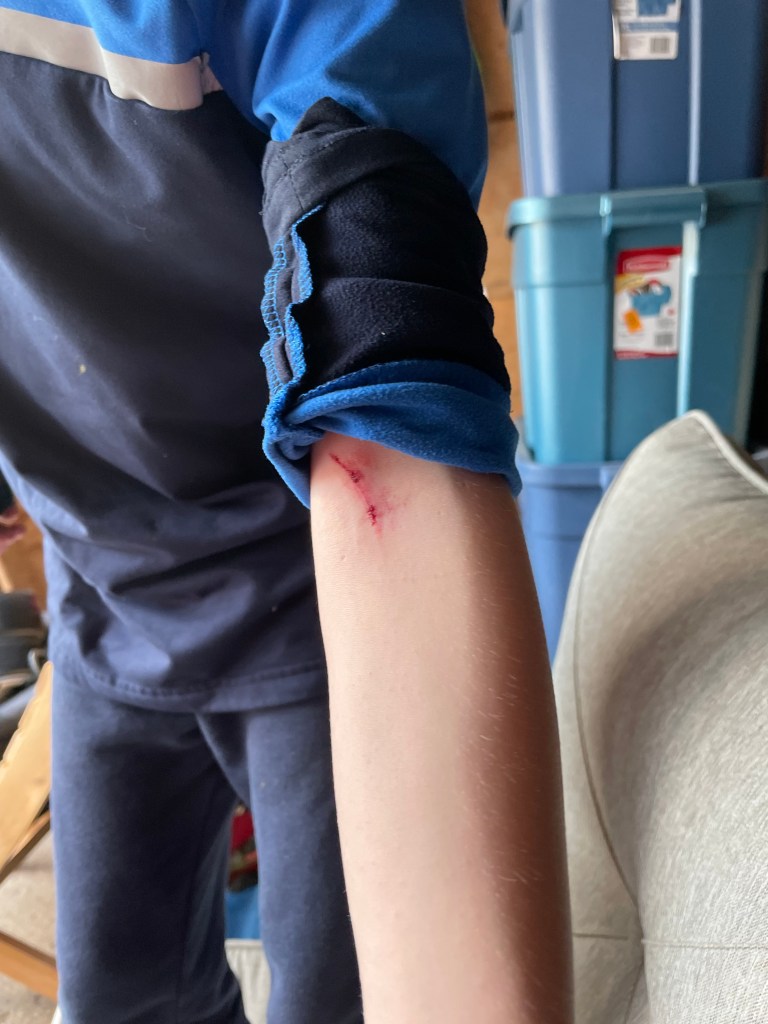
So while we’re hanging out outside last week (this was on the same day that a rabbit came to visit), he had been playing with the water tube, using a bucket I made available and told him he could refill it a couple of times, not wanting to waste TOO much water. he came running into the garage at one point with tears in his eyes and showed me his arm, as pictured above. I asked him what happened and he told me he pinched his arm with the water tube.
Now, I’m pretty good at picturing things and I have a pretty solid imagination. But I just COULDN’T wrap my head around how in the holy hell that he managed to hurt himself that way. I had him demonstrate and even to his credit, it took him a couple of tries before he could replicate exactly HOW he had managed to hurt himself. Turns out he was holding the tube almost rifle-style, with the plunger in his right hand against his left pec and pulling the tube towards him instead of pushing the plunger towards the tube.
The result was he pinched his flesh and caused the abrasion in the crook of his arm. All things considered, I think that hurt him and had him more upset than smashing his face did. It didn’t stop him from playing further, but I couldn’t help but think that only my son would be that awkward as to cause an injury with something completely safe that shouldn’t have caused said injury. Que sera… I’ll take his being clumsy and self-injurious over his being diagnosed with Diabetes, any day. ☯️
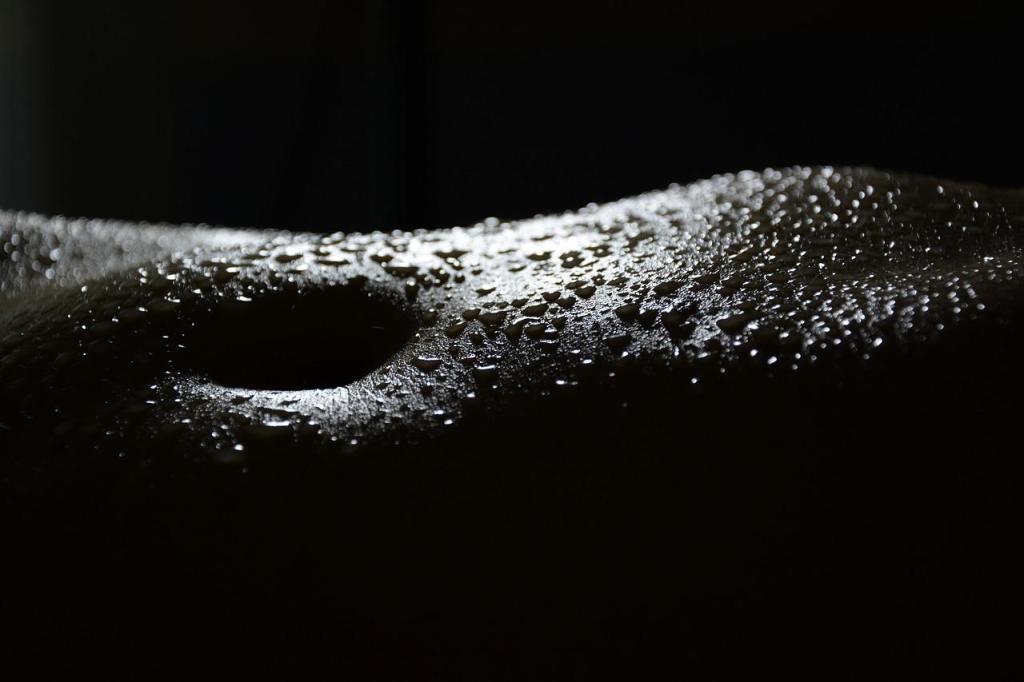
Most people don’t like to sweat. And that makes sense, right? It’s uncomfortable from a dampness standpoint. Humans have an instinct to try and stay warm and dry, and being all wet from sweat tends to contravene that. And it’s considered somewhat taboo from a societal standpoint as well. It’s seen as gross, especially if you it’s seen on someone in a work or social setting. And last but not least, depending on one’s body chemistry and what cocktail of bacterial cultures may be living on you (depending on one’s personal hygiene), it can lend for some rather pungent odours.
From a fitness and physiological standpoint, sweating is not only important but also beneficial to the human body. there are a number benefits to heavy sweating, including the release of toxins, alcohol and other waste byproducts of the body, which helps with detoxifying the body. It also helps with the overall beneficial increase in blood circulation, which has a whole score of other benefits outside of the sweating aspect. But besides being gross and making people think something’s wrong with you, what are some other benefits of sweating?
According to an article posted by HealthLine.com, heavy sweating during exercise can help to potentially reduce the amounts of heavy metals in the body. This is important for the detoxifying process. This is also true for the elimination of certain chemicals that can be harmful on the body in the long term. The sweating process is said to be an excellent elimination route for these chemicals. Sweating also helps with the elimination and removal of certain bacteria from the body, which can be beneficial.
People usually view sweat as a nasty thing but it’s actually a natural and necessary function of the body. Sweating is the body’s primary way to cool down, which is why we tend to do it when we exercise. It also happens when we’re sick as a result of having a fever. When that fever breaks, sweat will appear. The idea is that when the warm sweat evaporates on your skin, it cools your body temperature. All the other potential benefits mentioned above are just icing on the cake. Although sweat contains traces of ammonia, urea and salt, it doesn’t smell bad, in and of itself. The odour typically comes from whatever your sweat mixes with.
As with all things in life, sweating requires a balance. If you sweat too much, it can be a sign of low blood sugars or certain nervous system and thyroid disorders. If you sweat too little, you can potentially face dangerous and life-threatening overheating of the body. This can also be a result of dehydration. If you don’t sweat normally and consistently when exercising, it should be addressed in order to prevent further issues.
If you see someone at the gym who’s completely drenched while working out, don’t judge and keep your comments to yourself. Either they’re pushing as hard as they SHOULD, since a workout isn’t a workout if you don’t sweat through it, or they have a condition that makes them sweat excessively, such as hyperhidrosis. If you find yourself sweating in awkward and inappropriate times, like in the office with huge pit stains on your dress shirt, there are several treatments and prevention methods you can talk to your doctor about, in order to stem the problem. The important thing to remember is not to sweat it (see what I did, there?). ☯️



 The Blogging Buddhist