Raise A Glass… To Your Vices.

Look, I enjoy my occasional cold beer on a hot summer day like anyone else does. I would be lying if I said I Didn’t occasionally enjoy a nice black spiced rum when I write. But how do we know if our enjoyment stems from craving or addiction?

I have written previous posts on the effects of alcohol on the Diabetic system, so I won’t go into great detail about it again. I’ll simply point out that alcohol can have some negative effects, such as lowering or increasing blood sugar.

Alcohol is processed by the liver, the organ generally responsibly for the release of glucose when signalled by the body. But if the liver is busy processing all the alcohol from the keg you just tapped, it may not be able to respond accordingly and your blood sugar could drop.

The flip side is that depending on the type of alcohol you consume, there can be an increased amount of carbohydrate. For example, the average can of beer contains between 12 to 15 grams of beer, depending on the brand and type. So if you consume 3 or 4 cans, you’re taking in 45 to 60 grams of carbohydrates and it becomes important to take insulin accordingly. Certain “pure” alcohols however, contain no carbohydrates until you mix them with something. These include spirits such as whiskey and rum. Most of them lose their carbohydrate content during the distilling process.

Now that I’ve covered off the Diabetic aspect of it all, let’s discuss booze in general. I know a lot of people who consume alcohol recreationally. In fact, humanity has been consuming alcohol as early as 5000 years ago, with the introduction of drinks like Sura and Mead. Some studies have revealed we may have started even earlier than that, but as usual, I digress…

My goal today is to share the story of my first drink. I was 23 years old and in Okinawa. No, that’s not a typo. I genuinely never had alcohol until almost my mid-twenties. I often tell folks I was 21, but since I was born in 1978 and went to Japan in 2001, well… you do the math!

Given that I was diagnosed with Type 1 Diabetes at the age of 4, I imposed quite a number of restrictions on myself from a young age. Alcohol was one of them. Even throughout my teen years, I never really partook. Part of the reason was because I was generally a designated driver for friends. Another reason is because I had the opportunity to see the foolishness that ensued from said friends after drinking. I figured I wanted no part of that.

By the time that 2001 had crept around the corner, I had still never experienced the hooch. And in all honesty, I never felt I had missed out on much. But in October of that year, my karate instructor and myself along with a couple of other students travelled to Japan and onward to Okinawa.

The trip was long and complicated. We switched flights a number of times through Canada and the United States before finally crossing over the Pacific. After making a number of smaller bunny hop flights, we started the final flight that would take us from New York to Narita, Japan. It was a long, overnight flight that lasted the better part of 14 hours.

During this leg of the trip, Sensei came over and sat next to me to discuss some of the finer points of custom and tradition that I would be dealing with. Part of these customs included the fact that toasting and consuming alcohol, such as Sake and beer, would need to be observed.

When Sensei saw the look on my face, he explained that he understood that I had never drank before and that if all I did was have a sip during toasts and such, that would be adequate. He did go on to explain that custom dictated that refusing an offered drink would be construed as an insult to the host’s hospitality and that at my age, there should be no issue with accepting.

And no, before any of my readers start reading into this as a form of peer pressure, it was far from anything close to that. Had there been a genuine medical or religious reason behind my aversion to alcohol, he would have totally respected that. But I figured it would be fine.

During our initial few days in Tokyo, we visited a Japanese dignitary that Sensei was acquainted with. True to Sensei’s word, the man’s wife served us all beer. Oddly enough, it came in a plastic bottle. I had never seen that before It was Asahi or Orion beer. I can’t recall which one, as I had enjoyed them both while overseas.

Anyway, I don’t have any illusions of being a genius. But I would be lying if I didn’t admit that I feel I’m intelligent and level-headed enough to approach most situations rationally and with a touch of common sense. Once the bottle was placed in front of me, I held it up under my nose and took and experimental sniff. I glanced at Sensei, who glared at me and shifted his eyes to the bottle as if to say, “Quit f%&kin’ around and take a sip…”

So I did. Hey! It wasn’t bad at all. In fact, it had a touch of carbonation similar to soda. What was the big deal? So I started to drink it. I drank it as though it were soda. That’s where I went wrong. So very, very wrong…

I had that beer finished within fifteen minutes. Bearing in mind that this was the first beer I EVER drank, this wasn’t so smart. Remember that common sense I mentioned earlier? Gone.

In an effort to be a dutiful wife to the host, as soon as I had taken my last sip and the bottle touched the table, it was taken away and a fresh one was placed in front of me. I glanced at Sensei once again, who gave me a look akin to a disgruntled father. I took this to mean that refusing the second would be as insulting as refusing the first. And even though that assumption was correct, there was a catch. But I’ll get to that.

So, I kept drinking. The process repeated itself a few times until I had consumed 4 bottles of beer in roughly a 1 hour period. Uh oh… Houston, we have a problem! I started to feel a touch of disorientation and almost felt as though I was moving even if I wasn’t. My “no big deal” attitude was quickly replaced by an “oh, shit” attitude when I came to the realization that I was drunk. For the first time. In Japan. In a dignitary’s house, no less.

All of a sudden Sensei slaps his thighs and gets up, announcing that it was time to go. I sat there, flexing the muscles of my legs experimentally. One of the other students sitting next to me happened to be a guy I graduated with from high school. He had a drunken look on his face but was likely accustomed to the effect and was dealing with it, no problem.

He glanced at me and asked what was wrong. i told him I thought I was drunk. Bear in mind that I wasn’t demonstrating any signs of being drunk. My speech wasn’t slurred, I wasn’t swaying in my seat… Everything was based on the feelings and sensation happening inside.

He said, “You don’t look drunk.” I replied that I knew that. He also said, “You don’t sound drunk, either.” I took a deep breath and responded, “I’m aware of all that, but I’m quite sure that if I try to stand right now my legs may not support me.” He was good enough to help me to my feet and guide me out the door.

The dignitary, his wife and sons were lined up at the door to see us of. We made quite the pair, each with an arm around the other, stumbling out the door. Way to make a first impression in Japan…

I felt reasonably like crap for the next few hours, and Sensei got a great laugh out of it. When he came over to talk to me about it and ask how I felt, he also asked me why I decided to drink quite so much. I explained that I felt I couldn’t refuse any of the drinks. He agreed that this would have been an insult. The detail he failed to mention BEFORE the outing is that I could have nursed that one beer for the entire hour that we were there and it would have been fine. In fact, having a bit of beer left in the bottle would have been better, as it tells your host that you’ve had enough and they’ve satisfied their guest. this would have been a great detail to know prior to going out.

Looking back on it 18 years later, it’s great for a laugh. And I’ve often used it as a good story for people in relation to drinking and its effects. But at the time, I remember having a bit of a feeling of invincibility since I never really experienced a hangover. That’s when I reached the point back in Canada, where i overdid it. I no longer have that benefit.

Everything in moderation, folks. Although some people view alcohol as a poison on the body (and by some definitions, it is), there’s nothing wrong with the occasional drink with friends. It becomes a problem if you start needing that drink to help you go to sleep, combat certain pain or anxiety or if you’re drinking at radically inappropriate times (at work, first thing in the morning, meeting your future in-laws, etc…)

Be sure to reach out to the appropriate resources, should you feel that you fall under that category. Sometimes life slips away on us, and we don’t necessarily realize we have a problem until it’s pointed out to us. There are tons of easily accessible resources online that be searched within seconds and your medical practitioner would also be able to help. ☯

When Your Dogs Are Barking…

One of the important things that is often discussed in terms of Diabetes complications are the feet. Because Type 1 Diabetics tend to have poor circulation in the extremities, we often tend to have issues with our feet. It wouldn’t be a Diabetes post unless I listed a complication, right?

But seriously, we tend to have some seriously poor circulation and carry a lot of issues in our eyes and our feet. But why is that? As a general rule, Type 1 Diabetes tends to cause bunions, corns, calluses, hammertoes, fungal infections, ingrown toenails and dry skin. Not least of these is the fact that we tend to take WAY longer to heal any cuts or wounds in our feet as compared to a non-Diabetic person.

Most importantly, Diabetes tends to cause specific nerve damage and circulatory issues that can lead to severe foot issues. This is one of the reasons I recently posted about why Diabetics shouldn’t run around bare-footed.

According to WebMD (https://www.webmd.com/diabetes/foot-problems#1), one of the serious problems you could face is sensory Diabetic neuropathy. This is when you have nerve damage in your feet as a result of poor blood circulation. The resulting lack of feeling not only causes wounds to heal slower, but also makes it so that you don’t feel heat or pain in your extremities. This causes a score of other issues in your feet as well.

The second issue is poor blood flow, or peripheral vascular disease. This is specifically what causes the poor circulation within your feet and all the problems attached. This can eventually lead to gangrene or other conditions that will lead to eventual amputation of the foot if you don’t take proper care of it.

Obviously, all of the issues I listed in the second paragraph are worth noting, as well. But here are a few things you can do to prevent these issues.

Dry your feet. As much as that sounds like a basic step, first and foremost, you can ensure the prevention of some foot problems by properly drying between each of your toes after each shower.

Exercise regularly. You’re probably sick to death of hearing me say that, but exercising seriously deals with a whole whack of issues and is ultimately good for you, overall.

Don’t ignore foot injuries. It’s easy to overlook small cuts and scrapes, and it may be okay to do so. But paying closer attention to them to prevent infection and other issues can be just as easy and prevent long-term issues.

Your feet are kind of important. I don’t now about you, but I need them for a whole bunch of things like walking, running, kicking, etc… But maintaining good blood sugar levels, exercising regularly and checking your feet can all be easy ways to prevent deeper and more severe issues down the road.

Take a step towards preventing issues with your feet (see what i did there?) ☯

Hurts So Good…

What does it mean to be in pain? Well, from a strictly medical perspective, pain is when our sensory receptors send a signal through our nerve fibres , all the way up to our brains. Then the brain interprets the signal as pain. The human body uses this signal as an avoidance reflex, meaning it’s telling you that whatever you’re doing is harming your body and should be stopped. (Although not everyone is quick enough to stop hurting themselves, sometimes)

From a Diabetes standpoint, we experience a wide variety of pain. Neuropathy, open wounds that are extremely slow to heal and pain prior to numbness from lack of circulation are simply a few. And certainly not the worst.

It’s not always bad. From a fitness standpoint, pain can be a positive thing. SOME pain is necessary in order to help the body sculpt and grow. The idea here is to know when enough is enough and to stop before serious damage can occur.

But there’s one form of pain that is largely ignored in most circumstances. I’m talking about emotional pain. When something affects us in a negative way, we feel a sort of pain that is often very hard to describe. For some, it’s an increased feeling of fatigue. For others, it can manifest itself in any number of nasty ways including but not limited to, becoming ill, nausea, depression, problems with the digestive tract and even alcoholism or substance abuse. The expression “this breaks my heart” stems from the fact that one usually feels some discomfort in the pit of their abdomen during emotional distress.

The important thing to remember is that what hurts in your heart can also affect your body. Although that sounds a bit cheesy, it’s quite accurate. Sometimes we need to look at the big picture and acknowledge that the pain is going to happen, and take steps to help deal with it as opposed to ignoring it.

Ultimately, pain helps us grow. In any way, shape or form, it allows us to learn an develop. After all, imagine if as an infant you put your hands on a hot stove and it didn’t hurt… You’d likely leave your hand there and keep playing and critically damage your tissues. But by feeling the pain, you learn that “Oops! It hurts to touch the stove. Better stay away!” Most forms of pain will teach you something.

So ask yourself, what is my emotional pain teaching me? Am I doing something wrong, or something I disagree with? Or is it simply a case of doing the right thing? That can also be painful sometimes. Just remember that in grand scheme of things, nothing lasts forever; not even pain. ☯

Meat My Friends, Veggies…

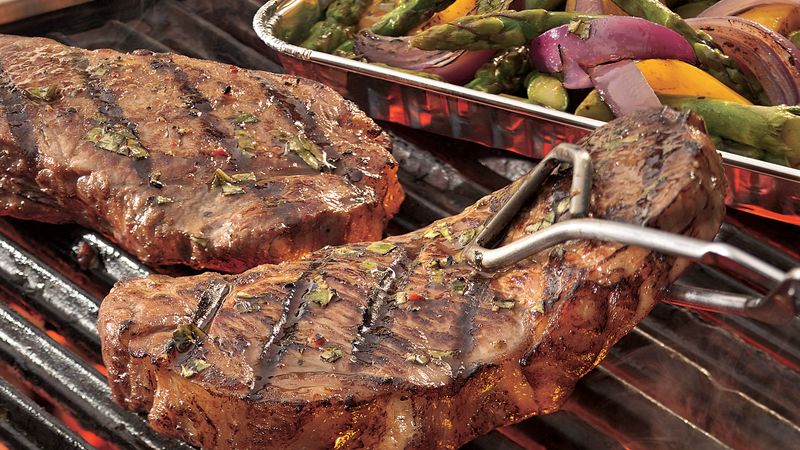
There’s nothing like a nice, thick, juicy t-bone steak, cooked to perfection on a grill. Nothing marks the beginning of summer quite like it! In fact, we had amazing steaks for my wife’s birthday. And if I do say so myself, they were delicious!

But it’s amazing how in the past couple of decades, an unspoken war against meat has taken place (or maybe it isn’t THAT unspoken if you follow social media). With the advent of all the new fitness and nutritional trends that have hit our societies in recent years, there’s been a push in favour of vegetarians and vegans.

Before I get too far into the fray, we should start by examining what the differences are between vegan and vegetarian.

A Vegetarian is defined as someone who does not eat meat, sometimes for moral or religious reasons, but most often for health reasons.

A Vegan is defined as someone who does not use or consume ANY animal product. This means that things like milk and cheese are off the menu as well. For the sake of this post, I’ll mostly stick to the term vegetarian.

So what are humans MEANT to eat? The reality is that most medical professionals agree that the human body is designed to be omnivorous. This means that we are designed to consume meat AND vegetables. Sorry to break it to you, vegetarians… Humans can and should eat meat.

According to an article published in Medical News Today, part of what allowed humans to gain an evolutionary advantage in prehistoric times may have been their consumption of meat. The increased amount of protein and energy may have been what contributed to the evolution of our complex brains and our overall evolution. And it is important to note that evolution takes place over hundreds of thousands of years. So we can’t turn back the clock on our bodies simply by cutting out meat.

A vegetarian diet can lend a certain number of health benefits. There have been studies linking a vegetarian diet to lower risk of cardiovascular disease. A vegetarian diet also contains higher levels of fibre and less fat.

Vegans are a bit more on the controversial side, as some studies have shown that being a vegan can actually be LESS healthy than a diet including meat. Although a vegan diet can also involve reducing certain cardiovascular risks and may contribute to a certain level of weight loss, a vegan diet lacks certain vitamins and minerals, such as Vitamin B12, which is usually found in eggs, fish and meat and is required for proper cell health.

According to an article posted by Independent, “A study conducted by the Medical University in Graz in Austria found that the vegetarian diet, as characterized by a low consumption of saturated fat and cholesterol, due to a higher intake of fruits, vegetables and whole grain products, appeared to carry elevated risks of cancer, allergies and mental health problems such as depression and anxiety.” Definite food for thought (see what I did there?) Here’s that article: https://www.independent.co.uk/news/science/vegetarians-are-less-healthy-and-have-a-lower-quality-of-life-than-meateaters-scientists-say-9236340.html

Before I close up, let’s examine this from a Diabetes perspective. Some studies have shown that a vegetarian diet can help better manage Type 1 Diabetes and in some cases, can help prevent Type 2 Diabetes. Since being vegetarian can help control weight and blood sugar levels as well as increase the body’s insulin response, it can certainly be helpful (as much as it breaks my heart to says so).

Any change in diet should definitely be done in consultation with your health practitioner and a qualified dietitian. As cute and trendy as being vegetarian or vegan sounds, there are a number of supplements and lifestyle changes you’ll have to make to allow this diet to work for you.

Bottom line is that the average person should be consuming small amounts of meat in combination with plenty of healthy vegetables and some carbohydrates. Also, meats such as poultry or fish are much better for you than red meat.

And last but not least, all of this is a lifestyle choice. Although some people are forced to be vegetarian due to health concerns, the vast majority CHOOSE to do so. And respecting someone’s choice is important. There are demonstrated benefits to both diets, so do everyone a solid and follow the simple idiom, You do you, and let me do me… Meaning that no one needs to hear that they’re murderers simply for consuming meat. ☯

Cleaning? Ain’t Nobody Got Time For That…

There’s been a long standing debate over the past two decades about hand cleanliness. At the forefront of this debate is the use of hand sanitizer and its effectiveness.

For Type 1 Diabetics, hand cleanliness is very important. It’s important in order to obtain proper blood sugar results when testing (having residual glucose on your fingers WILL affect your readings) and it also helps to prevent infection and other issues from constantly pricking your fingers.

In recent years, you’d be hard pressed to walk into a public access building or government building without seeing bottles of hand sanitizer EVERYWHERE! So, does using hand sanitizer as an alternative work? Yes and No. And here’s why.

According to Kelly Reynolds, Associate Professor of Environmental Health at the University of Arizona, “you’ll want a hand sanitizer that’s at least 62-70% ethyl alcohol.” Reynolds goes on to explain that you want a hand sanitizer that reduces about 99.99% of the germs on your hands as this is the level required to prevent illness.

You’ll notice I keep saying hand “sanitizer” as opposed to hand “gel”. There are a lot of different formats: gel, foams and otherwise. And the takeaway is that hand sanitizer doesn’t kill everything. Some bacteria and viruses don’t get broken down by hand sanitizer.

Ultimately, washing your hands with hot, soapy water is still the best option. Especially since hand sanitizer won’t help if your hands are physically dirty. All you’re doing is caking sanitizer on top of the grime; the hand sanitizer won’t eliminate the grime.

But even when washing your hands, there are steps to follow. Make sure to get your hands all wet and lather up properly. The temperature of the water really doesn’t matter, as the soap is what removes dirt. Once you’ve scrubbed all over the hands for at least 20 seconds, rinse them under clean water then dry them properly.

People often forget that drying the hands is an important part of cleanliness. If your hands stay wet, you’ll likely pick up plenty of bacteria. And if you air dry, for the love of all that’s good and holy, don’t use a hot-air dryer in a public restroom. Studies have shown that those devices tend to blow more bacteria on your hands than anything else. After all, if you can smell “odours” in a public restroom, it means there are particles floating around and that air dryer will blow all over your hands.

Hand sanitizer is an excellent alternative IF you don’t have soap and water available. If you have the choice between the two, take the time to wash your hands. There’s this thing about hand sanitizer killing the good bacteria on your hands. Although studies have shown that this is true, there is no evidence to support that this affects your overall health. But actual hand washing is the better alternative.

Maintaining proper hand cleanliness is quite important, as persons with Type 1 Diabetes are more susceptible to a weakened immune system defences. Wash your hands often, and not only when testing your blood glucose. Not only will it help to maintain your own health, but it will help to prevent the propagation of germs to others as well. ☯

What Makes You Stronger Can Also Hurt You…

One of the obvious treatments for Type 1 Diabetes is insulin therapy. For those who may not have read my previous posts, (I’m being silly, of course you have!) insulin is a hormone produced by the body’s beta cells in the pancreas. Type 1 Diabetes occurs when your body’s immune system attacks and destroys these beta cells, leading to the pancreas no longer producing insulin.

Dr. Frederick Banting blessed us all with the gift that is insulin in the Spring of 1921 with the help of his trusty lab assistant, Charles Best. And since then, insulin has remained the top dog in the proper treatment and control of insulin-dependant Diabetes.

Although there are several different brand names and sub-types, insulin can be described within five main categories:

Rapid-Acting: This insulin hits the system quickly and is usually taken in conjunction with a meal or to prevent spikes in blood sugar. That being said, I currently use a rapid-acting insulin (Humalog) in my insulin pump to control basal and bosul rates (Examples: Humalog and NovoLog);

Short-Acting: This insulin is similar to the rapid-acting, but it takes a little more time to kick in and peaks a little bit later. (Examples: Humilin R, Novolin R);

Intermediate-Acting: These insulins start kicking in within about an hour, but will provide basal coverage for about 12 hours in total. They are generally used for overall control, need to be taken twice a day and are used in conjunction with a rapid or short-acting insulin (Examples: Humilin N and Novolin N);

Long-Acting: This type of insulin is generally taken at bedtime and kicks in within an hour. The advantage is that it will last anywhere between 20 to 26 hours, with no peak. So it is normally used to maintain proper blood sugar levels throughout the day. This one would also need to be used in combination with a fast or short-acting insulin as it will not compensate for the carbs you take in at mealtimes (Examples: Lantus and Levemir);

Pre-mixed Insulin: This one is a bit of an issue. Each of these insulins are a combination of short and intermediate-acting insulins and can problematically take effect anywhere within 5 minutes to an hour. This is a significant problem since no two people are alike and no two insulin requirements are alike. This insulin is usually taken twice a day in conjunction with a meal (Examples: Humilin 70/30, Novolin 70/30, Humilin and Humalog 50/50).

There’s another type that is sometimes referred to as Ultra-Long Acting, but it’s basically the same thing as Long-Acting with a 36 hour window instead of 20 to 26 hours. As I look back on this list, I realize that at one point or another I have used every type of insulin on this list with the exception of Levemir and the pre-mixes. Crazy.

The American Diabetes Association webpage has a great article that explains all of these in greater detail: http://www.diabetes.org/living-with-diabetes/treatment-and-care/medication/insulin/insulin-basics.html

Humalog is what I currently use in my pump. It’s used for its rapid-acting properties at mealtimes, and intermittent basal rate to maintain levels throughout the day.

Although life saving, insulin comes with a range of possible side effects. Much like any other medication, these side effects can range from mild to severe, depending on the person and the type of insulin therapy used.

Some of the most common side effects include, but are not limited to weight fluctuations, erratic blood sugar levels, skin issues from repeated injection sites, heart attack, stroke, eye and kidney complications and in some cases, anxiety or depression.

All of these symptoms can be discussed and dealt with through your family practitioner. The reality is that at the present time, there is no cure for Type-1 Diabetes (contrary to what many conspiracy theorists and naturopaths may believe).

Insulin is not a cure, but simply a treatment that allows those with Diabetes to extend their life expectancy and live full, active lives. As usual, my go-to is to suggest maintaining a healthy lifestyle with plenty of exercise and proper diet. Monitor your blood sugars regularly and keep fighting the good fight! ☯

Bundles Of Sleepless Joy

We’ve all been there, right? It’s Sunday morning and you have the day off. The house is cool and quiet and it’s an ungodly hour that you couldn’t imagine rising at, unless work demanded it. You’re curled up securely in your blanket and plan on getting another couple of hours of sleep…

Then it happens! You hear the unmistakable pitter-patter of tiny feet making their way toward you. Oh no… you think. Just relax, maybe he’s just going potty then he’ll go back to bed… Then within a moment you hear and feel the familiar nasal breathing of your toddler on your face. It’s even worse once they get tall enough to turn on lights on their own.

You foolishly think, “Maybe if I pretend I’m still asleep, he’ll leave me alone…” Then you hear a mild whisper: “Daddy?” The whisper increases in volume and intensity until you have no choice but to open your eyes. You try to reason with the little human by suggesting that he needs to be quiet because you’re still sleeping. This request is followed by a poking of the face or a manual lifting of the eyelids. When you get angry and tell him to stop, his response is simply, “What? That was quiet!”

That’s my child. He’s such a smart ass. I have NO idea where he gets it from. Let this short story be a warning to anyone who is foolish enough to listen to the grinding gears of their biological clock!

Apparently I make a great Pole Vault landing mat!

Children are most particular, because no two children are exactly the same. Hell, even identical twins will have some different habits. According to an article written in Today’s Parent, a 2007 study conducted in Switzerland found that some healthy, normal toddlers slept a total of 11.4 hours while others slept as much as 16.5 hours. That’s quite the difference.

There are some things that you can do to help balance all this out. The same article goes on to suggest that certain external factors can contribute to radical changes in sleep habits. Loss of a pacifier or bottle, a new sibling in the household or other noticeable changes in the regular flow of household life can contribute to altered sleep habits. And it can often cause levels of stress within your toddler, even if they aren’t necessarily negative changes.

There are a number of other suggestions; unfortunately they don’t apply to my son. He’s already off naps and he generally snacks before bedtime. One good suggestion is that if you notice your child is getting enough sleep but they still wake up at the crack of dawn doing their best rooster impression, moving bedtime to a slightly later time may be the answer.

All of this information is to illustrate that the important factor is to ensure a proper sleep routine. Routine, especially when it involves sleep, is exceptionally important for proper health. This is where your circadian rhythm comes in.

A circadian rhythm is an approximately 24-hour natural process that helps your body to regulate the sleep/wake cycle. This rhythm repeats itself every day and is the reason why it is so important to have a steady routine in regards to eating and sleeping.

Studies have shown that things like late-night television, excessive or late night eating as well as erratic bedtimes can disrupt your circadian rhythm and cause a score of complications.

I don’t think I need to explain that a steady and regular routine will help with effective blood sugar and fitness regulation. If one spends half the night up in a loud night club having alcoholic drinks, one can hardly be expected to do the 20 kilometre bike run they generally do every morning. And eating your meals at erratic times and intervals will cause issues such as overlapping insulin dosages and digestive problems.

If you happen to be a frustrated parent and want some suggestions on getting your toddler to sleep better, here’s that Today’s Parent article: https://www.todaysparent.com/toddler/toddler-sleep/waking-up-early/

With the obvious exception of shift work, in and as much as your life permits it, you should your absolute best to maintain a regular sleep schedule, allowing for the same bedtime every night and enough time to get between 7 to 9 hours of solid sleep. Following this standard will help you to wake feeling more refreshed and ready for day, will help reduce the amount of required caffeine and help maintain your circadian rhythm. ☯

A Dose A Day May Keep The Doctor Away…

You know, I don’t know anyone who doesn’t absolutely hate having to take daily medication or follow a medical regiment. As a Diabetic, I can certainly attest to the fact that I’m bound to follow a number of habits that would plunge my body into chaos if I neglected them.

The human body is a fantastic and well-built machine, capable of many wondrous things. But like any machine, it sometimes needs repair and assistance.

There are some things that the body can heal things on its own. But what happens when there is a repair that can’t happen by itself? This is where we sometimes need a bit of assistance.

The newest fad (or the oldest, depending on your perspective) is the attraction that modern society has towards “natural” or “Traditional” forms of medicine. If it’s natural it must be better, right? Not necessarily.

One of the things that most people seem to forget is that modern medicine is rooted in the traditional. Chemicals and modern medications are simply a combination and evolution of elements and compounds that obviously exist in nature. People have an inclination towards wanting to avoid taking medicine.

I’ve dealt with a number of people who have fallen into the dreaded cycle of avoiding medication on the basis that they “feel better” and don’t need them anymore. Rarely do they realize that they feel better BECAUSE they’ve been taking the medication.

Imagine if someone with Type 1 Diabetes did this? I’ve seen the consequences of forgetting even one dose of insulin. It isn’t pretty. And good luck healing a broken bone or most forms of cancer will acupuncture or herbs.

Both modern and traditional forms of treatment have their place in medicine. For example, if you are dealing with muscle pains and aches, acupuncture and massage therapy can be extremely useful. If you have stomach issues or headaches, herbology can be a useful treatment. But if you have something more serious, modern forms of medication and treatment become necessary.

Although there are books and websites that boast being able to treat and/or heal Diabetes through changes in lifestyle or diet, such a thing simply isn’t possible. Until a cure is found, I require insulin therapy in order to stay alive.

This is the case with a lot of medical treatments. Not only are they required, but most also require being taken at specific intervals otherwise they become ineffective.

We would all like to believe we can overcome anything. But even the most effective machine sometimes needs assistance in running smoothly. Be diligent in your care and the administration of your treatment. Your health and well-being depends on it. ☯

Big Boned Leads To Big Problems…

I’ve often written about some of the complications that people with Diabetes face on a daily basis. certainly, the list is long and the complications are many. Today I will address one of the more common and misunderstood issues surrounding Diabetes. Weight gain and obesity.

This is a very sensitive topic in modern society, so I’m going to start this post by being very clear: This is not a slight against people with genuine weight issues or intended to body shame in any way, shape or form. Although I am a firm believer that we should all love ourselves for who we are, obesity and heavy weight-gain are serious medical issues and carry many consequences.

According to numbers provided by Statistics Canada, approximately 61.3% of Canadian adults were considered under the category of “obese” as of 2015. This is almost a 25% increase from 2004. Without including the rest of world, this is a small example of how serious an issue it is.

An important misconception is that obesity causes Diabetes. Although there is some evidence linking obesity to Type 2 Diabetes, there is no confirmed evidence of the same being the case for Type 1.

Type 1 Diabetes is an auto-immune deficiency and is NOT caused by obesity. That being said, once a Type 1 Diabetic starts insulin therapy weight gain can occur, usually in the stomach area. This is because insulin helps your body to absorb glucose into the blood stream. And as Diabetes can make you extra hungry once you’re on insulin therapy, well… Glucose absorption + extra hunger = weight gain.

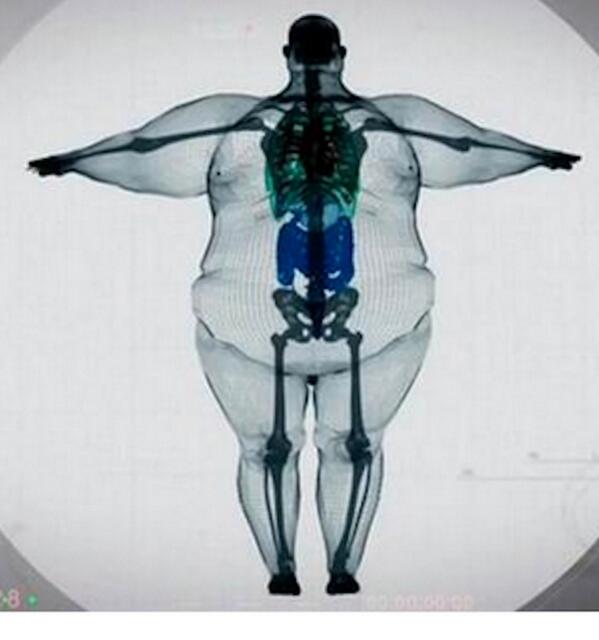
A photograph of an MRI scan that has circulated on the web for years, illustrating the fact that “big boned” is a misnomer!

There is a significant difference between being obese and being overweight. Obesity is generally defined as having a Body Mass Index (BMI) of 30 or higher. That being said, BMI is a fairly inaccurate way of measuring obesity. If you factor in my weight of 220 pounds coupled with a height of 5’7″, my BMI is sitting at 32.9, which is considered under the obese category. Anyone who has seen me in person knows that I’m a far cry from obese! Although it is a standardized form of measuring mass in the human body, it doesn’t take into account whether the weight is carried as fat or muscle. BMI is a subjective tool that has to be used in conjunction with all the other factors and assessed by your doctor.

According to a BMI calculator used on the Diabetes Canadawebsite, BMI also can’t be used for pregnant women, weight lifters, long distance runners, elderly or children. If you’re curious, the BMI calculator can be found here: https://www.diabetes.ca/managing-my-diabetes/tools—resources/body-mass-index-(bmi)-calculator

The purpose behind listing all of this is two-fold: to make people understand that being overweight is NOT what causes Type 1 Diabetes, as many television comedies or online jokes may make you believe, and that there are a number of complications that come with being overweight.

Weight gain and obesity have been linked to heart disease, stroke, gallbladder issues, some forms of cancer, osteoarthritis and gout as well as certain breathing issues and sleep apnea. The added weight one gains taxes and stresses most of the systems in the body and can lead to serious health complications. If you add that on top of having Diabetes, life becomes unnecessarily complicated. I mean, Diabetes makes it unnecessarily complicated anyway, but why make it worse?

All of these complications can be lessened and some may even be eliminated by losing some weight. The obvious steps involve a healthier diet and increased physical activity. Try to stick to foods that contain natural sugars as opposed to artificial additives and preservatives. Keep your workouts consistent, but throw in some variety of workouts to ensure you exercise all the areas of your body.

Remember, even though you should be happy with your body, health complications indicate that your body isn’t the way it should be. Consult your doctor and see what you can do to prevent these complications. ☯

Are You Down With The Thickness?

Time makes fools of us all. Not because we are fools, but because the ravages of time tend to catch us by surprise. Sometimes those ravages reveal changes we wouldn’t have expected.

It dawned on me a few days ago that we tend to photograph and document our accomplishments, but we rarely document and photograph the beginning. I have no photos of myself as a white belt.

I started karate in April of 1988. Despite my health, I was full of dreams and faith and I knew that my hard work would someday pay off. I could only speculate at how right I would become.

Three years ago, I was visiting a friend in the city whose parents were visiting. My friend’s mother made an off-the-cuff comment about how both of us had “thickened” and she would be curious to dig out a tape measure to see which one of us had gained the most weight over the decades.

Time and age catches up to us all. We don’t really have a choice; certain bodily functions tend to cause us to gain weight and our bodies to change. In fact, we tend to gain weight and lose about 8% of our muscle mass every deacde until we reach our 50’s as our metabolism slows. Fun, eh?

When I started karate in April of 1988, I weighed about 80 pounds, soaking wet. I was slight, I had very little muscle mass and my health wasn’t great.

My current stature, as of June of 2019

As of June of 2019, I weigh 220 pounds and have a significant amount of mass. This is a far cry from what started with in 1988. Sure, some of that is muscle. But some of it is a bit of the aging process.

Like I said before, we all get there. The important thing is to maintain your physical activity. This will help to maintain a healthy weight and proper physical stature as the years march on.

As I’ve gotten older, I’ve gained a lot of wisdom. If I had the physique I held in my 20’s mixed with my current physique, that would be a scary opponent to deal with. But given the current state of life, I’ll gladly accept the wisdom over the physical. ☯