“But Daddy, Zombies Are Real…”

That title isn’t just an abstract one; these are words that my 6-year old son chose to utter, just a few weeks ago. When I asked him what made him believe that zombies were real, he explained that he had seen them in “real shows,” not cartoons. So they must real. This not only prompted me to have an in-depth discussion with him about the realism of what he sees on television, regardless of cartoon or live, it also prompted me to thoroughly scrub his restricted list on Netflix, since he obviously accessed something he shouldn’t have been watching.

The unexpected result that it had, was it caused me to question how easy it would be to survive through a “zombie apocalypse.” This thought is further deepened by the fact that I’ve recently started re-reading a bunch of Brian Keene books, a well-known horror novelist. He’s had some really great ones, including The Rising and City of the Dead. But the one I’ve been reading recently is called Dead Sea, and it follows the story of a down-on-his-luck protagonist who saves a couple of kids from fires and zombie hordes when the zombie apocalypse comes. They wind up on a ship on the open sea, hence the title. CAUTION: There will be spoilers on this book, ahead. Here’s the cover, in case anyone is interested in looking it up:

So, you may be asking yourself, “Why are we talking about zombies on a Buddhist/Fitness/Diabetes blog?” Well, the answer is quite simple: because I can. But even more so, sometimes it can be refreshing to take a different perspective at things, and books often provide a means of doing just that. But what’s more than that (he says, calming his sarcasm) is that something that a lot of these stories bring up is a person’s propensity to keep fighting and survive, even when faced with what appears to be insurmountable odds. And as I mentioned in the second paragraph, it’s made me question and wonder what my odds of survival would be when faced with a situation like a zombie apocalypse.

First, let me start by pointing out that the possibility of zombies is something I find ridiculous at best, for a host of reasons. Between rigour mortis, decomposition and the concept that reanimating dead and rotting tissue in such a way as to allow mobility is an impossibility, I’m of the opinion that zombies are right up there with vampires and unicorns. Anyone with a medical degree that could correct me is free to do so in my comments section. Granted, at least the concept of a horse growing a horn out of its head is more likely than a reanimated corpse. But I digress…

The topic of this post is actually supposed to be about survival; a topic that the main character of this book touched on quite well in the first page of the first chapter. He said, “Listen… you never know what you’ll do until you find yourself in an impossible situation, so don’t ever say never. Survival instinct is a motherfucker, and when your back is against the wall, everything changes. Everything. I know. It did for me. It all changed for me.”

In the pages that follow, a number of specific aspects of dealing with any survival situation is addressed. The need for food, supplies, a safe haven for rest as well as the resources to protect yourself are all aspects of such a situation. And not only protection from whatever may have prompted the emergency, but from the people who would benefit from it as well. There are always some of those. Even in the face of our current pandemic, there have been people who have sought to use the current state of the world to their advantage, preying on those who may not know better.

I think the reason this story resonates with me so much, besides the fact I occasionally enjoy the horror/fantasy genres, is the fact that about midway through the book once everyone is aboard ship and cruising to relative safety, a character named Stephanie is identified as having Diabetes and being without insulin. She succumbs to a Diabetic coma and passes away in her sleep shortly thereafter. And THAT more than anything provides an important wake-up call for me, from a survival standpoint. It raises the question of how long would I last in an apocalypse scenario given that I would need to find some means of securing an insulin supply and the materials needed to inject it.

In all reality, I can live without my pump and even without a blood glucose monitor. It’s not ideal, but I could do it. I lived until my late 30’s without a pump. And in a total breakdown of societal resources where stores and retail locations would ultimately be looted and emptied of their contents, insulin may not be everyone’s top choice of things to grab. So I could potentially manage to scavenge and find an adequate supply. For a while. Even when you consider that a breakdown in utilities could mean that insulin supplies stored in pharmacy dispensaries would eventually spoil due to temperature extremes and lack of proper refrigeration.

But then what? If society breaks down, it’s doubtful that there’ll be manufacturers still producing insulin. So, although I could no doubt survive for a period of time (especially since the self-defence aspect would be no issue) there would no doubt come a point where, no matter how prepared I am, the Diabetes aspect of me will cause me to succumb to the new, apocalyptic environment in which I find myself. Maybe that’s why I enjoy these types of stories so much; because I know they involve an environment I couldn’t survive in and is the only format through which I can experience it. Not that I WANT to experience a disaster… I’m jus’ saying’…

Hopefully, we’ll never have to deal with an “apocalyptic”-level event in our lifetime, but it’s humbling to think about how a simple medical condition that I’ve lived with for almost four decades would bring about a swift end for me, based on the state of the world. It’s a bit of an eye-opener. Even if I fortified my home, stored non-perishable foods and did everything I could to be prepared in the event of a cataclysmic event, my downfall is more likely to be, not from zombies, lack of food or the inability to defend myself but from the lack of a small, glass vial. ☯

“Pump” Up The Insomnia…

It’s been an interesting change in routine, having started a new job last week and being half way through my second week. My wife was just commenting this morning that we seem to have developed a trend where our routine starts by waking up at 5 a.m. early in the week and on that evening, we’re so blasted from our “start of week” that we usually crash shortly after we put the kids to bed. This is followed by getting into the groove later on in the week, allowing us to stay up a bit later and completely throwing caution to the wind on the weekend, which likely leads to our exhaustion on that first morning. But I digress…

As much fun as I’ve been having, meeting new people and learning new skills, adapting my habits at home and getting proper sleep has been the biggest challenge. I’ve often said that technology is really only as good as the person wielding it and how involved they choose to be. But sometimes technology takes it upon itself to be a total pain in the ass, despite the intended programming. I faced just such a situation last night. Now, I know I tend to write these stories on occasion and it seems as though I’m just complaining about my condition. In truth, I write about these things in the hopes that other people with Diabetes will read them and relate to them, maybe acknowledge that they’re not alone in their situation. But anyway, here we go.

Finally coming down to normal

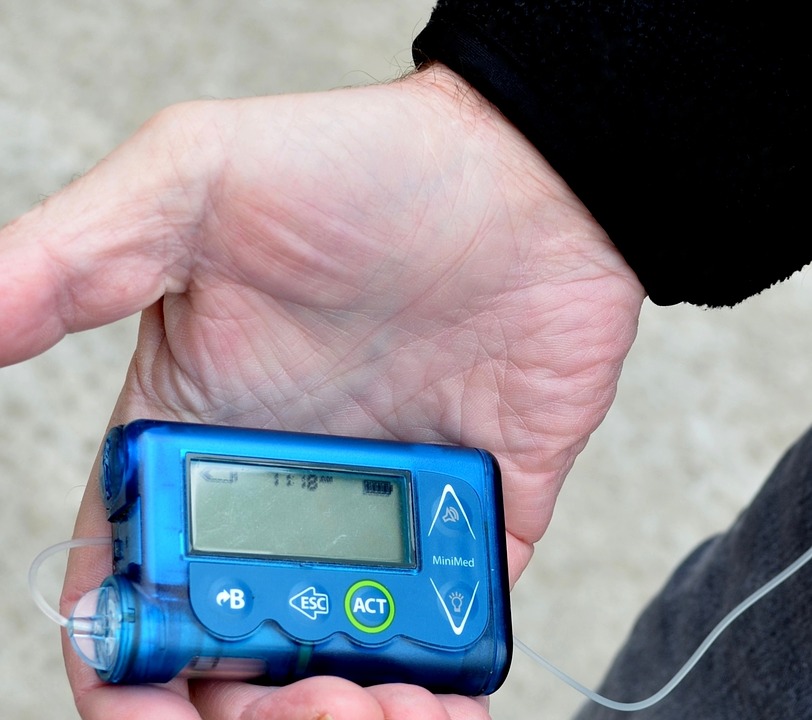
My wife was also exhausted last night, and we ended up crashing just shortly before 8 p.m. I know, I know… We’re like an old couple. Things were fine, we even allowed ourselves a brief snack in bed as we watched our respective streaming services and within the hour, I had fallen asleep. I performed a calibration of my CGM before bed, my blood sugars were normal and I anticipated a full night’s sleep. I anticipated wrong. At about 9:30 p.m., my pump began vibrating wildly. It woke me instantly and I checked what the problem was. “Insulin Flow Blocked. Auto Mode Turned Off. Consider Changing Infusion Set.”

In retrospect, if I’d been smart I would have gotten out of bed and dealt with the issue. But since I had already fallen asleep, I was groggy and pissed at being woken so I did the only logical thing. I jiggled the infusion set at the site on my stomach, acknowledged that it was likely due to my sleeping on it and reset the pump. Resetting Auto Mode involves going through a multi-level menu and turning it on, saving, then going back and providing a BG reading to get Auto Mode to kick back in. Although only a one-minute process, it’s a tedious one to perform when you’re barely awake. I also delivered a bolus to correct the fact that during this “block,” my blood sugars had creeped into the low teens, making me even groggier.

Once I fell asleep, I was once again awoken for the same reason sometime during the midnight hour. Are you kidding me??? Same issue, same error messages. Once again, the smart thing to do would have been to get out of bed and go deal with it, but I managed to acknowledge that I still had about 120 units in the reservoir, which I didn’t want to waste on a set change. I also managed to realize that if the insulin delivery had worked for the past few hours, it had to do mostly with my sleep position and less with the pump itself. I reset everything and provided a further bolus due to being in the mid-teens, and tried to will myself to stay on my back, away from the infusion site.

You can see the slight rise from my snack, followed by a bolus at around 9 p.m. when I was first awoken and how the night went to hell from there.

Just shortly after 2 a.m., the same issue happened for a third time, so this time I opted to leave Auto Mode turned off, make sure I was on my back and go back to sleep. At this point, I knew I only had a few hours left to productively sleep in some given way, shape or form, so I opted for rest over proper blood sugar control. Maybe not the smartest choice, in retrospect. But I stand by it. You can see in the photo above, how the pink drops disappear from the screen, shortly after 2 a.m. This is when Auto Mode was shut off. I also provided a bolus to help treat the fact that I was still sitting at roughly 14 mmol/L.

My alarm went of at 5 a.m. as scheduled and I turned and sat up, with my body protesting in the way it generally does at my age, when I’ve been woken every few hours. I tried turning on Auto Mode once I was standing up, but it provided the same error messages again so I called it quits and sacrificed the remaining insulin units in favour of changing out the infusion set. From the first photo, you can see that I’m slowly dropping back to normal. All I can say is that the Keurig machine in my office will be working overtime, today.

It just goes to show that Diabetes management can be trying and challenging, even during the nighttime hours when you should be able to get some sleep. And don’t get me wrong; I love my insulin pump. LOVE IT! I’ve had the best blood sugar levels and the lowest A1C results ever, this past year. But even with a device that’s as advanced as my current pump, there can still be some user error, issues and corrections that need to be made. And since life rarely cares about one’s plans, those issues can sometimes take place at night.

Moving forward, I’ll need to see about maintaining some infusion sites that don’t involve sites that are pressed against the mattress when I turn over at night. That should be pretty easy; I have plenty of real estate on my abdomen to choose from. But the Diabetes challenge never ends. The high blood sugars, repeated wake ups and required adjustments have left me feeling drained. Just one more day of battling the T1D beast! Now if you’ll excuse me, I have a much-needed morning coffee calling my name. ☯

Taking A Little Respite…

I’m an incredibly long way from what I would consider to be lazy. Between my continued efforts towards fitness, Diabetes control and giving my maximum in everything I do, I very rarely sit still. The fact I have difficulty sitting still in general tends to help, as well… But once in a while, even the most dedicated person needs to take a step back and throttle back on life and take a rest. And mental exhaustion being a very real thing, it can lend a heavy impact on one’s motivation.

A couple of weeks ago, I found myself skipping karate classes and performed personal workouts a lot less than usual. I’ve had the pleasure of throwing a couple of quick, 10-kilometre bike rides into the mix, which was nice. But with the warmer weather coming along, the opportunity for different and increased number of workouts is becoming a thing. The recent heavy snows we’ve had in Regina notwithstanding, of course. But a severe lack of motivation has unfortunately thrown a monkey wrench in my otherwise rusty gears.

I’m a big advocate of pushing oneself, and of making an effort to workout, even when you don’t feel like it. Given the nature of Diabetes and the effects it has on a person’s body, it’s no surprise that there are days where either the body or the mind simply don’t want to put in the effort. I had both my body AND my mind gang up on me in recent weeks when I’ve skipped the majority of my workouts. Even while acknowledging that I should have been doing something, I just didn’t want to. To use the vernacular of today’s younger generation, I can’t even…

And you know what? That’s okay. Even if it may feel like you’re being lazy, stepping back and taking a break from your fitness habits can have a lot of benefits. Yes, yes, I know… The benefits of doing SOMETHING definitely outweigh doing NOTHING. But here are some quick benefits that I’ve noticed, whenever I’ve taken a break:

  • You Can Relax: I think we can all agree that being “switched on” all the time can take a toll. There is such a thing as over-training, and it’s important to recognize that point. Taking a break week can let your body fully recuperate and allow you to relax a bit and maybe focus on other interests, such as reading or playing with your kids;
  • You Can Regroup: Honestly, there’s something to be said for having the time to just sit back and contemplate things. Whether you want to take the time to meditate, focus on work or even come up with some new workouts, taking a break can allow you the time to figure it out. Personally, I get bored of doing the same workout over and over and I like to design new circuits and try new things. Otherwise, I feel my fitness is becoming stagnant;
  • You Can Heal: Constantly working out can be taxing on the human body, and even more so when you’ve reached my age. Even though you can continue to work out with mild injuries (with limitations), it can be nice to allow some extra time for the systems on your body to reset themselves and for any outstanding injury to heal completely.

Given the particular life changes and adjustments tat have taken place within my household in the past week, it’s no surprise that I continue to be exhausted. Like many people, I’ve spent the last little while hibernating at home while COVID-19 has marinated on the outside. The result of this has been that waking at 5 in the morning every day is no longer something I’m used to. I’m slowly getting adjusted o it, now. But I’d be lying if I said that I haven’t been sneaking off to bed as soon as my wife and I get the kids down. Surprisingly, my blood sugars have fared quite well during all of this. I think that can be attributed to routine, since I eat my meals at pre-planned times and don’t snack or eat outside of those times.

As one always does, I’ll adjust. I usually find that taking a “lazy week” once in a while will allow me to reap all those benefits mentioned above. The important thing to remember is not to go on some sort of junk food bender while you’re sitting around doing nothing. And I’m definitely not saying that you should do this indefinitely. Or often. Especially since a sudden change in your level of fitness and activity will play hell with even the best balanced blood sugars. But if you allow yourself the occasional break, it can even help improve your mood and energy levels for when you DO get back to it. And one always needs a little time to adjust to any new routing. Food for thought… ☯

Time To KID Around, Part 2 (The Diabetes Aspect)

Have you ever tried to explain to a young child what Diabetes is? Not an easy task, especially when you take all the good, the bad and the ugly into consideration. My biggest fear when Nathan was born was the possibility that in a few short years, he would be diagnosed with Type-1 Diabetes himself and would have to deal with many of the same difficulties that I had. Since Type-1 Diabetes does involve an inherently genetic component, it’s a very real fear and one that I wasn’t looking forward to having him deal with.

Those fears were somewhat put to rest a year or two ago when we had him tested and found no issues with his immune system and insulin production. We were warned that there was still a few years of risk involved, but as it stood he was free and clear. Now, if we can be so lucky with his younger brother, Alex, I’ll be a happy camper. Dealing with the disease affected and altered my childhood in ways that I can’t help but make me wonder how life might have been different for me if I HADN’T been diagnosed. But I digress…

I don’t think I need to point out how many moving parts and components there are to the effective daily control of Type-1 Diabetes. It can be overwhelmingly irresistible for a young child to see all the equipment and electronics involved and they’ll no doubt want to touch, see and play with everything there. The important part is to be honest and not try to sugar-coat any of the details (see what I did there?).

In Nathan’s case, I’ve always been very honest and explained everything in plain language. One of the unexpected benefits to that level of honesty, is that he’s been exposed to seeing blood drawn since the day he was born. I consider this a benefit because he doesn’t have the same fear of blood that most other children do, be it mine or his own. He’ll acknowledge pain, of course. But if he’s bleeding, the blood in and of itself isn’t an issue for him.

I remember dating a girl who already had a son that was about Nathan’s age now. And if he’d scrape his knee and a bit of blood would show, he’d basically blow up and have a panic attack. Although one can understand that children view things differently than adults, even I have to admit that it was a bit much. That’s why I’m happy that Nathan has grown to be desensitized to certain things as a result of having a Diabetic father.

The biggest challenge I’ve face with Nathan, and now his brother Alex, is my insulin pump. When you have a baby sitting in your lap and he’s looking around and grabbing at everything in sight, an infusion set can be a temptation for those little hands. It took a bit of time as well as trial and error, for Nathan to understand bot to touch “Daddy’s Ouchy,” and to leave the pump alone.; something that I am now working at making Alex understand, as well.

The important thing, as I mentioned earlier, is to use plain language and explain things as they actually are. Nathan has seen photos of a pancreas, he knows it helps with the regulation of glucose in the blood through the release of insulin and he’s aware that my pancreas no longer produces insulin, which is why I need to have it artificially injected through the pump. He’s also made his peace with the fact that certain fast-acting sugared goods are for Daddy only, when my blood sugar drops. He’s not a fan of that last one, but he gets it.

Nathan has held all of my Diabetic equipment and supplies in some way, shape or form and has even had the opportunity to press buttons on my pump (with my guidance) in order to see what everything does. By doing this and ensuring his understanding, there’s less risk of him sneaking into my desk and messing around with my Diabetes equipment. But the nice thing is that although he doesn’t like them, Nathan has less fear of needles than the average kid, since he’s been around them and has watched me injecting myself since he was born. Educating is always better than forbidding. ☯

Because It Can’t All Be About The Meat…

In the past year, I’ve tried a wide assortment of meat alternatives and veggie based alternatives that I never would have considered, even just a few years ago. I still favour my Mushroom Swiss Burger from FatBurger and I can’t see myself ever swaying from it. But I would be lying if I said that vegetables aren’t loaded with a wide variety of health and nutritional benefits that make adding them to your meal a good idea. I usually favour a cruciferous option, like broccoli or brussel sprouts. But I seem to be the only one in the household who likes them. I know brussel sprouts are pretty universally hated, but sprinkle a bit of cheese on some broccoli? Fuggedaboutit…

As I have a firm belief in the balance of things, I like to point out how there’s inherently a good and a bad side to all things. We already know that vegetables can provide vitamins, minerals and nutrients that some other foods may not. And there’s certainly the benefit of feeling full for longer that comes with having plenty of green on your plate, steering one away from over eating and helping with the reduction of your total daily caloric intake. But what about veggie-based meat alternatives?

A balance can be important if you’re trying to control say, oh I don’t know… your carbohydrate intake so that you can maintain better blood sugars… From a fitness standpoint, vegetables are important for a variety of reasons besides what they provide your body for building and healing muscles tissue and there are also some vegetables that will help you to sleep and digest better. If you’re looking to replace some of the meat in your diet with an alternative, it would be helpful if you gained all these benefits in the process, right?

If we get to the meat and potatoes of it (see what i did there?), some of the meat alternatives mentioned in the opening paragraph may not be all they’re cracked up to be. And this is where the BAD side of things comes in. I’ve written about this before but as I’ve tried different things, I think it’s pretty important to recognize the potential pitfalls of trying to replace everything in your diet with a vegetarian alternative. Here’s a short list of things to bear in mind when purchase veggie-based meat alternatives at the supermarket:

  1. They’re Loaded With Preservatives: This is the first and probably the top one. Anything you eat that’s been mass-produced and sold at the supermarket will go through some sort of processing that will involve preservatives in some given way, shape or form. Without getting into the specifics surrounding potential pesticides used for crops, you can be certain that real vegetables and real cuts of meat won’t have all these preservatives, making them the better option. There are a number of negative effects to the over-consumption of preservatives, including some forms of cancer. No, I’m not trying to say that eating these meat-alternatives will give you cancer! Simply that excess preservatives have been long found to be bad for the body. Moving on…;
  2. They’re Also Packed With Salt: I’ve often written about the importance of checking the nutritional label when eating something packaged. People rarely consider the amount of sodium they may be eating when consuming something “healthy,” and portion sizes are often not proportionate with how much a person would actually eat. I learned this lesson the hard when, in an effort to reduce the amount of carbs I consume in a day, I was starting my morning with a mug of chicken broth. Sounds like a warm, reasonable way to start the day. But the portion size is usually about half a cup of vegetable broth, which accounts for roughly 25% of your daily sodium intake. Once I’ve guzzled down a full mug, I’ve already packed on well more than half of my daily intake of sodium and it’s first thing in the morning. And speaking of carbs…;
  3. They’re Full Of Carbs: I was pretty excited about six months ago when I found a package of buffalo “chicken” bites that were made with cauliflower. They tasted even better, which made me believe I had found a healthy alternative to eating platefuls of buffalo bites made of chicken, which happens to be my next food addiction after burgers. Then I realized that despite being made from vegetables, the bites had almost double the amount of carbohydrates than traditional chicken bites. It probably didn’t help that they were battered. Not so great for a Type-1 Diabetic who’s trying to control blood sugars and the amount of carbs he’s taking in!
  4. They Can Cost A LOT: Processing and packaging food that’s been prepared in any particular given way gets costly, and that cost is usually reflected in the item’s price point. It’s made all the worse when you have to make something look like something else. Have you seen the chicken nuggets made from vegetables? I swear, I wouldn’t be able to tell the difference, based on appearance. The point is, a small box of cauliflower buffalo bites will usually cost about as much as a traditional box of buffalo chicken bites, making them ridiculously costly.

So the big question is, are these veggie-based alternatives better for you? From an overall and Diabetic standpoint, the answer is a resounding NO. You’ll end up taking in as many carbohydrates, if not more than your traditional versions and you’ll pay more for it, to boot. Watching your sodium intake is quite important when you have Diabetes, as proper kidney health is always a concern at the best of times. The only way to balance the scales (except for the cost aspect) would be to eat significantly less of the alternatives, which could potentially leave you feeling hungry and unsatisfied.

On the flip side, if you’re okay with eating small amounts at a time and you’re looking for a veggie-based alternative snack, they can be okay. So long as you bolus correctly for them and take the sodium into account. The long and short of it (let’s be honest, I always go for the long…) is that you’re better off having yourself a plate of carrot or celery sticks with a touch of ranch dip, a hot bowl of broccoli with cheese sprinkled on top or even a bowl of boiled Brussel sprouts with a touch of melted butter and pepper. Any of those will be far healthier, satisfy you and make you feel full for longer, whether you have it as a snack or part of your meal, and you’ll get all the included benefits without any of the preservatives. ☯

Letting Me Off My Leash, Free-Range Diabetic

I don’t think I need to explain that people take most common, everyday things for granted. I experience this a lot because despite the advancements I’ve lived through in the past 38 years, it’s difficult to move around without a SIGNIFICANT amount of supplies. The fact that I’m fed up of it likely makes it sound way worse than it is. But eventually, a guy gets tired of carrying around a man purse just so that he can run some errands throughout the morning without concern. The “for granted” aspect comes in because most people fail to recognize how lucky they are to be able to just step out of the house with abandon.

A week ago, I decided that I would sit through a specific bus route that I would be using for work. This was so that I could time out my entry into the city in the mornings without the concern of being late. Alexander was napping, Nathan was gone to school and my wife was hard at work in front of her own computer, so I felt it was a good opportunity to go out for an hour or two. I started to pack my usual shoulder sling of supplies, when a wave of impatience struck me and I decided to go in a different direction.

I tested my blood. Perfectly normal with no insulin “on board.” Good. I took some sinus medication so that I wouldn’t suffocate through the wearing of a mask in public for a couple of hours. Excellent. That shit’s supposed to last a few hours, anyway. I had my wallet and identification, and I grabbed a face mask and stepped out the door. I waited a matter of minutes at the bus stop and after a 22-minute bus ride, I was in the downtown core and stepping into the local shopping centre.

Not my mall, by the way. I didn’t want to be the creepy dude snapping photos in the mall.

I spent about an hour and a half downtown, walking around and browsing through some of the shops before grabbing the bus for the return journey. My blood sugars didn’t bottom out, I didn’t die and I didn’t find myself needing anything that I would usually pack and drag along. It felt really nice, being able to just step out of the house and go somewhere. It felt “non-diabetic.” I’d like to say it felt normal, but I’ve had Type-1 Diabetes for so damn long that being Diabetic feels normal to me.

I’ve managed to compress what I carry throughout the course of a day into one small, single-shouldered sling and it usually contains the following:

  • Fast-Acting Carbohydrates: I favour jellybeans as they seem to work fastest for me;
  • Nasal Spray: I’ve had some mild sinus issues since childhood and occasionally need a spritz. Wearing a face mask also makes it harder to breathe;
  • Blood Glucose Meter: Besides the fact that my insulin pump seems to be a temperamental bitch who screams at me every couple of hours despite smooth blood sugars, frequent blood sugar testing is still required to ensure the proper calibration of my CGM. Plus, should there be an issue with the CGM, I need to have the ability to properly ascertain my blood sugar levels; and
  • Extra Supplies: This is a broad one, but it can involve anything, including spare pump supplies, extra insulin or added lancets and strips. There can be a lot more, depending on the situation.

Most of the time, it’s just for when I go out. But realistically, when I travel to Saskatoon overnight, I often opt for something small and portable to carry. Considering I travel up, get the injections, sleep it off then drive right back down the following day, I make a point not to pack a huge suitcase. There are no nights out on the town, requiring extra clothing or special stuff. But when I make a point to stop and take notice, I really never leave the house without bringing a whole shwack of crap! This comes from years of situations where I’ve developed a “better to have it and not need it” mentality, as it relates to Diabetes.

It felt nice to be out for a few hours without dragging a bunch of stuff. I almost felt normal, walking among people. Note that I said “almost.” Besides, as I said earlier, I’ve had Diabetes for so long that it seems normal to ME. I can hear some friends thinking, “Shawn? Normal…?” Come on, guys! Give me a break! I’m about as normal as I’m ever going to get. But seriously, if you’ve ever had a friend text you to randomly go for coffee or you’ve decided to go sit through a movie on a whim, appreciate that freedom for what it is. There are so many things that a Type-1 Diabetic needs to consider before leaving the house that it almost makes it tedious to do so. Don’t take the little freedoms for granted. Sometimes, they’re the best ones. ☯

Let’s Take A Break… Fast!

People tend to have bad habits in their daily routine. And very few people are the exception. Hell, I have many bad habits that I often TRY to avoid but I would lying if I said that my efforts are often half-hearted. But a VERY bad habit that people have is skipping breakfast. Now, I’ve written posts about the importance of breakfast before and whether or not it genuinely is the “most important meal of the day.” On the home front, the jury is still out but there certainly are important benefits to ensuring that you consume that first meal of the day upon waking up.

The whole point behind the breakfast meal is to do just that: break your fast. And as most of you already know, a “fast” is a period of time where you don’t eat. When you hear of someone “fasting,” it’s usually associated with a LONG period of time often for medical or dietary reasons. But the reality is that we fast every night, from the moment we go to bed until we wake up in the morning. Unless you compulsively snack at night. Which is another bad habit. Which I also occasionally have. My point is that breakfast is intended to be the first meal of your day that breaks your overnight fast, hence the term “breakfast.”

You may be thinking, “Why is this cheeky mother-f%&ker giving us the definition of breakfast?” Well, simply to impress upon you the importance of starting your day with a proper meal. The take-home lesson is that you should have your breakfast within an hour or two of waking up as it will be the first batch of vitamins, minerals and nutrients your body receives after a period of fasting. You should also think of it as refilling the fuel tank for your engine after it’s emptied itself out.

According to a good article on WebMD, “Skipping the morning meal can throw off your body’s rhythm of fasting and eating. […] If your body doesn’t get that fuel from food, you may fell zapped of energy — and you’ll be more likely to overeat later in the day.” The article goes on to say that your breakfast doesn’t need to be huge, but should include a variety of carbohydrates, protein, healthy fats and fibre.

However, an article posted by HealthLine.com seems to have an opposing view in that they claim that there is no evidence that breakfast eaters are healthier, that eating breakfast boosts your metabolism for the day and that in fact, skipping breakfast can have some benefits for folks who do intermittent fasting. It’s unusual for me to find a topic where those two sources oppose each other, but it’s kind of refreshing. The article caps off by explaining that breakfast is optional, won’t boost your metabolism and doesn’t automatically lead to weight gain and obesity. Basically, if you don’t find yourself hungry when you wake up in the morning, there’s no need to eat.

I’ll be the first one to agree that every person is different. Actually, I’ve written about that very thing on more occasions than I can recall. So although it may be true that skipping your first meal of the day is a matter of choice, it may not be the smart one for everyone. And this is where the Diabetic aspect of this post comes in. If you have Type-1 Diabetes, skipping a meal can be problematic. Especially if your insulin’s basal rates and your specific condition requires you to eat, first thing in the morning. You may wake up extremely high or low blood sugar.

Although I’m a big believer that a person with Diabetes can do anything that a non-Diabetic can, intermittent fasting is possible but problematic and skipping meals will skew your blood sugar control. And despite what any source material may say, I believe it’s critically important for all people to start their day with a good hit of nutritional fuel to start your day. It may not stroke your metabolism and may not affect your weight, but it helps to guarantee you won’t have that “early-morning slump” because of an empty stomach.

As I mentioned in the opening paragraph, the jury is still out on whether or not breakfast is the MOST important meal of the day. But it’s safe to say that it is IMPORTANT. Most people unfortunately tend to skip breakfast because they’re rushing off to work or taking care of their children before taking care of themselves. Personally, I usually enjoy a toasted english muffin with a slice of cheese. Some carbs and protein, doesn’t fill me to bursting and gets me on my way. It can be just as simple as that. And speaking of which, look at that! It’s breakfast time… ☯

Sleep Is For Wimps Anyway, Right?

I harsh on the complications associated with Diabetes a LOT, and usually with good reason. There’s a whole bunch of shit that usually happens when a person has Type-1 Diabetes, especially if it’s uncontrolled. Even when it IS controlled, there can be a number of obstacles that keep you from having a smooth day, night, sleep or whatever. I’m ridiculously grateful for the miracle that is insulin pump therapy, but I would be lying if I said that I don’t have days where I’d like to throw the damn thing across the room. A week ago was one of those nights…

My pump has a number of nifty alarm functions built in, designed to alert me in the event of an extreme high or low blood sugar level and asking for calibrations every twelve hours. For the most part, I can control these alarms through proper blood sugar control and by making sure I perform my calibration tests at proper twelve hour intervals that don’t include the 8-hour period that I try to sleep. But there are certain conditions where the pump will pester me, even when it shouldn’t.

If my blood sugars are level for too long, an alarm will go off because the pump is wondering why there’s no variation. BG is required. If the pump hasn’t had to provide micro-bolusing for four hours or more, an alarm will go off. BG is required. If my blood happens to be running a touch on the higher side and the pump has had to micro-bolus for too long, an alarm will sound. BG is required. If I roll over in my sleep and happen to put pressure on the CGM sensor, it’ll interfere with the signal and BG is required. Are you shitting me, pump? Really?

So my point is, how many of those alarms do you think take place while I’m sleeping? It’s a genuine issue. Sleep escapes me at the best of times… One of the disadvantages of having ADHD, OCD, PTSD and a host of acronyms too annoying to get into. But the Diabetic equation just makes it all that much worse. On the night in question, I had a request fro calibration in the middle of the night. This usually doesn’t happen, if I’m organized enough. But since I had installed a new sensor, the 12-hour cycle started at about 3 o’clock in the afternoon. So… 3 o’clock in the morning came a’calling!

Calibration is worse than “BG required,” because you can just enter the sensor glucose for “BG required.” But a calibration request actually gets you out of bed to test with an actual glucometer, which really sucks in the middle of the night. I did the calibration and went back to bed. All’s good, right? Two hours later, “minimum insulin provided for 2.5 hours. BG require to continue on Auto Mode.” Fuck you, insulin pump. Just keep doing your thing.

At 5 o’clock, the damn thing tells me that “BG is required.” No reason. No explanation. What the hell!? I ignored it until it became an audible alarm and entered the sensor glucose. At 6 o’clock, the same damn thing happened. Entered the sensor glucose again. Damned brutal. My alarm (actual alarm) went off at 6:30. So I got about four hours’ sleep before my pump started going all “Russian Sleep Experiment” on me.

My point to all of this, and maybe it’s just my day to be bitchy about life, is that despite the beauties of technology there are always some downfalls. This is DESPITE the benefits I’ve seen in the last year in relation to insulin pump therapy. But technology is only as good as the user who controls it. There are still some ups and downs that I have to deal with, but I’ve come a long way from the brick-shaped glucometer I had in 1982, or the one-a-day BG test and multiple comas. All things are relative. Now if you’ll excuse me, I have to go get some sleep… ☯

Fat Rolls Down Hill…

Before everyone jumps at me and decides to lynch me in a city square, let me start this post by premising the fact that I’ve never been the type to call a person fat… I totally agree that this is a derogatory term; one that’s been an issue since society’s perception of a pleasing form has been slim and muscular. It hasn’t always been so, but this seems to be the preference for now and considering the depth of society’s sensitivity towards being labeled or name-called, I want to be sure that everyone understands that when I refer to “fat,” I’m talking about the actual substance that causes weight gain and obesity. I’m not here to body shame or name call!

Now that I’ve clarified that I’m not some judgmental jerk and that I’m simply trying to help, let’s discuss what fat really is. Contrary to popular opinion, body fat isn’t limited to one’s gut or hanging off the arms. There are two types of body fat. The first is subcutaneous fat. This is the stuff that sits just underneath the surface of your skin and makes your gut look distended. It’s what’s getting poked on the Pillsbury Doughboy. But I digress… The other type is visceral fat. This is the nasty stuff that gathers around your heart, arteries and other organs. All caught up? Good. Now, let’s talk about this fat…

There are a lot of reasons behind WHY a person will accumulate an increase in gut size, including poor dietary choices, lack of physical fitness, alcohol consumption and in some cases, medical or genetic predisposition. I know that even I’m guilty of having gained what I like to refer to as the “COVID-19 pounder,” which refers to the nearly twenty pounds I’ve gained since the world turned into a lockdown nightmare. Diabetics will generally have difficulties with weight since insulin is a hormone and blood sugar management can make slimming down a bit difficult.

But for people in general, it can be a simple matter of just getting up off the couch and doing something. ANYTHING! Even if it simply means going for a walk. Work and lifestyle can often make it difficult as well. I know that when I was doing shift work, it played absolute hell on my fitness routines. Working overnight meant that I was usually blasted during the day and didn’t want to work out. Lack or poor sleep will also throw a wrench into your gut-slimming efforts. That’s why one needs to INCLUDE all the aforementioned aspects, fitness, diet, proper rest and good lifestyle choices, into one’s daily life.

In some cases, and the reason I’m actually writing this post, one faces a “chicken and the egg” scenario… What I mean by this is that a person will gain a bit of weight and will want to burn it off. But some excess of weight may make that person lethargic, tired and lacking in motivation to actually exercise. The result is lack of exercise and poor dietary habits will cause more weight gain. Wash rinse and repeat. I have a friend who is actually facing this scenario. He’s gained a significant amount of weight over the past few years and finds himself unhappy with the state of his body.

I’ve been trying to have him come work out with me, but he’s convinced he wants to start to his own because he wants to slim down first, despite my stating there’s no judgement. The problem is, he isn’t starting. This means the weight goes nowhere, he lacks exercise and fitness, and his shift work is dragging him further down the flubber rabbit-hole. He continues to be unhappy, which leads to further lack of motivation to do something about. Chicken and the egg. Brutal.

Just to be clear, fat is something the body needs. If you were to have absolutely NO body fat, you’d have organs malfunctioning, electrolyte imbalances and all kinds of nutritional deficiencies. A person needs at least a few percent of body fat. But trimming body fat is easier than it sounds and can involve nothing more complicated than eating more vegetables and lean proteins, cutting down on carbohydrates and overall calories (notice I said cut down, not eliminate) and exercising regularly.

Don’t let the current state of the world and lifestyle get in the way of your overall health. Even if you have a family who absorbs most of your free time, it’s very hard to take care of them if you don’t take care of yourself first. So don’t let yourself slip into an endless bad cycle. get up off the couch and start moving. As I often say, anything is something more than nothing. Just do something. ANYTHING! ☯

WD-40 And Duct Tape Aren’t Always Enough…

I was having an interesting conversation with my Endocrinologist, two weeks ago while we were busy high-fiving and patting each other on the back for an excellent A1C result (which you can see my excitement in the video I posted here). The conversation involved telling me that I was a very “boring” patient, because I took care of myself made an effort to maintain and control my Diabetes as opposed to allowing it to control me.

He explained that he occasionally spoke of me to some of his other patients (without using my name or personal information, of course) in relation to things they should be doing and he wanted my opinion as to what I felt the success of my treatment was attributed to. I gave him my usual spiel about exercising, trying to eat well and testing my blood sugars often, but the biggest factor I provided was the WILL to do those things.

It’s no secret that uncontrolled blood sugars and in fact, Diabetes in general can cause a person to be without energy, drive and ambition. Most importantly, a person who has suffered through Diabetes for any number of years will often just throw up their hands or hang their heads low and say, “Fuck it…” before indulging in an easier lifestyle and all the vices and poor health choices that it includes. And that’s where I differ from the norm…

The body is a complex machine; one that requires constant attention and maintainance. And that’s not just an expression. Although biological in nature, your body IS a machine, with a shit ton of complex and delicate moving parts, functions and movements. You need to fuel this machine in the form of food consumption for energy, patch up and repair when there’s damage and provide supplementation and medications, as well. And all of that is controlled by a meaty computer processor that’s protectively encased in an armoured helmet. Not least of which is that we have a tail pipe that vents gas and expels waste like a vehicle.

Even the most high-end and sophisticated engines will eventually seize if hey aren’t maintained, lubricated and fed the appropriate types of fuel. And the superb machine that is your body is no different. I’ve had this discussion with a number of Diabetic associates that I’ve had over the years (most of which are unfortunately already deceased). Although it can be easy to just eat whatever’s laying around and whatever’s easiest, one needs to put in the effort to eat fresh foods, lean proteins and portions that won’t cause you to balloon up like a morbid, meat-based beach ball. I’m partial to salmon and tuna steaks, and enjoy a carb-free meal of fish and brussel sprouts at least twice a week.

Exercise is already an integral part to keeping oneself healthy and it’s no surprise that it would be all the more important for someone with Diabetes. I’ve struggled for years against weight gain, blood sugar levels and better body chemistry, all of which can be manipulated and improved through exercise. And to be honest, unless you’re part of a club or formal fitness club that you’re paying for, it doesn’t have to take huge lengths of time. At home, I keep my workouts limited to thirty or forty minutes. This allows for a good sweat, an increased heart rate AND it allows me to opportunity to get the workout done before my children make me wish they were old enough to wear sparring gear! The point is that you can hammer out any variety of workouts in the short time that it takes you to watch one episode of whatever you’re binge-watching at the moment.

Between food and exercise, you need to pay close attention to your insulin levels and blood sugars. Maintaining those two aspects of your Diabetes in conjunction with food and exercise will guarantee an increased longevity and less chance of serious Diabetes complications. Most Diabetes complications are permanent. Although you can get SOME organs replaced, there’s never any guarantee. You can remedy an amputation by getting a prosthetic, but this ain’t a sci-fi movie. You won’t be hustling around with a cybernetic limb. At least not yet.

So knowing that it could help you live longer, be healthier and feel better, one would be inclined to think that this would be the only motivation you need. But unfortunately, this is rarely the case. You need to WANT those things. You also need to recognize that stepping up and putting the effort is the ONLY way you’ll get them. An important part of it is to ask yourself what you have to fight for.

Personally, I’d like to live long enough to see the potential birth of my grandchildren and grow old with my wife. I can’t do that if I have a heart attack in my forties because I ate like shit and sat on the couch day in and day out… So folks, work hard at keeping your engine running. It’s the only one you’ll get. And once you’re dead, there are no backsies! So work hard, eat well and make the effort to make all your medical appointments. Your engine will run smoother, longer and you’ll get to reap the benefits that come with a longer, happier life. ☯