Don’t Let The Mud Drag You Down…

There’s an unfortunate side-effect that comes with having Type-1 Diabetes that people often ignore or fail to recognize. For the most part, it isn’t their fault. After all, Diabetes involves so many side effects and necessary treatments for various aspects that we often tend to ignore the symptoms that aren’t detrimental. What I mean is a significant and noticeable lack of personal energy. It’s a common side-effect of someone with Diabetes but in reality, it can affect absolutely anybody.

In my teens and through the majority of my twenties, I had significant difficulty finding my “get up and go.” A lot of that had to do with improperly balance blood sugars as a result of poor insulin dosing and a diet that DIDN’T involve the calculation of carbohydrates (my family basically thought that “no sugar” was all the diet I needed). But I would often have to melt out of my bed, stagger to the washroom and physically struggle to eat, get dressed and get out the door. To say that I was thankful to have no responsibilities beyond sitting in class and listening to teachers was an understatement.

I’ve had incidents where I’ve faltered or fallen asleep in class, often because my blood sugars were too high or too low. I would usually be okay by the time classes let out, which was definitely a good thing since Sensei wouldn’t have taken that grogginess with stoic silence. He’d have punched and kicked the grogginess right out of me. But there were nights where even karate class saw me feel as though lifting my limbs was like lifting blocks of concrete and I didn’t feel as though I had the energy to put forth my best effort.

This kind of effect isn’t simply limited to someone with Diabetes, and there’s a lot you can do to reduce/eliminate that “checked out” feeling one often gets on those days where the energy to get shit done just doesn’t seem to be there. One good example I like to use when it comes to this, is how a person starts their day. I usually make a point to wake up roughly two hours before my scheduled work time. If I use a specific morning last week as an example, I awoke about five minutes before my alarm went off. Annoying, but decent.

I started by putting away all the dried dishes I had done the night before, took my prescribed medications and began sucking back some caffeine and made Nathan’s lunch for school. This was followed by preparing a work lunch for myself, getting cleaned up and dressed and getting all the trash receptacles in house emptied as it was trash day. I got dressed, brushed my teeth and stepped out to put the trash bin to the curb. I finished with ten minutes of relaxation, sitting in the living room as my infant son Alex, climbed around my legs to get some much-needed attention before I left.
I walked out the door feeling pretty good. Blood sugars were normal and my day had begun. I know some folks who get up a couple of hours before work, but basically sit like a lump until they almost literally have to step out the door. What’s the point? May as well get some extra sleep, if that’s all you’re gonna do! But my point is how you start your day sets the standard for how the remainder will go. If you start your day on a negative kick with no “get up and go,” it’s almost a certainty that you’ll like feel stagnant throughout the day. If you hit the ground running, well… An object in motion tends to stay in motion.

What people need to understand is that the energy is already there. But it’s how you promote it and use it, that makes the difference. You don’t need to be an all-star athlete in top shape in order to feel energized throughout the day. You just need to be smart about it. Light knows, I have my days where I have to hammer through the sluggishness to make it back to the pillow at night. But it’s important to remember that even the most powerful 4×4 truck will still struggle and spin its wheels, when trying to get out of the mud.

Energy creates life. Life promotes movement. Movement promotes energy. And on, and on, and on… If you get you and get moving, your energy will be better allocated and you’ll feel better. You may have to struggle through that first little bit, but it’ll happen. If you settle in like a rock, you don’t get that promoting of one’s energy that’s so critical to a healthy and energized day. So when the alarm goes off, first thing in the morning, start by getting up immediately. Avoid the temptation to hit the snooze button and stay curled up. Hit the ground running. You always be tired at the end of the day but then again, that’s when you’re SUPPOSED to be tired. And as I always say, balanced blood sugars and regular exercise are always a great help. ☯
Progress, Not Perfection

The title is a quote from a favoured movie of mine, The Equalizer. It stars Denzel Washington who plays the protagonist, a retired secret agent/assassin who seeks vengeance for harm brought against an innocent. At some point in the movie, he’s helping a fellow co-worker get into shape in order to become a security guard, and he states, “Progress, not perfection.” The quote has stuck with me since I watched the movie, and I use it often in my daily life. Wisdom from unlikely sources, right?

A couple of weeks ago, I started using a newly-purchased punching bag in my garage. As an ending to the workout, I also started hammering out a fast, 1-kilometre sprint on the bike. It’s been rough, with most of my sprints ending with me gasping for dear life and being unable to catch my breath for several minutes. It’s a fantastic measure of progress, as opposed to cycling for 10 kilometres or more, where I potentially get exhausted after the third or fourth kilometre.

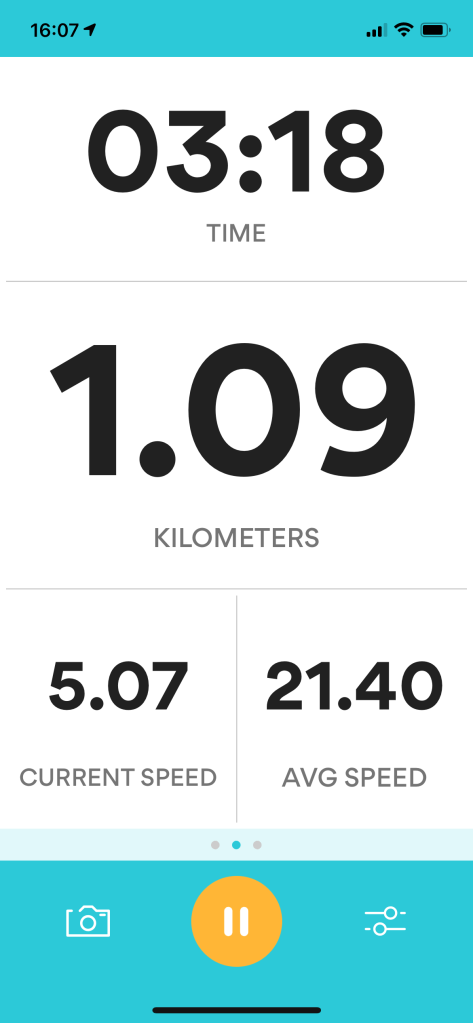
A few days ago, I hammered out a kilometre in just 3:02. My best time prior to that was a dozen seconds short of 4:00 minutes. Although this doesn’t seem like a big deal, the number of seconds shaved serves to tell me how far I’ve been progressing and how much faster I’m becoming. Hopefully, once summer kicks into high gear, I can reach last year’s failed goal of 200 kilometres in a single run. Last year, I was reaching nearly 80 kilometres in one afternoon, which is still a far cry from 200. but as the title says, progress, not perfection.

As you can see, my pace reads as 3:02/km, which is why I say I completed the kilometre in 3:02 instead of the 3:18 that’s displayed in the previous photo. The previous photo is the total time for the 1.09 kilometres. I’m hoping to shave it down to below the 3:00 minute mark before starting longer journeys throughout the summer.

Persistence and perseverance can serve you well, in all things related to self-development. If you’re willing to push yourself a bit, you can climb, ever so slowly. Progress, not perfection. Its the only way to increase one’s health, skills and well-being. ☯

Sleeping Through The Change

Sleep and fatigue are always “top of the list” topics for me, especially since Diabetes and various other issues have seemingly kept me from proper nights’ sleep for decades. It was even more difficult through my teen years, when my body seemed to turn against me in every possible way. I remember finding myself unable to keep my eyes open in class, and would usually roll out of bed around lunchtime during the summer. Ah, those were the days.

But I used to get a lot of flack from my folks who would point out that they had the time to get out of bed and almost get a full days’ work done before I’d wake up. Often, attempts at getting me out of bed would go unanswered to the point that my mother would come check on me to ensure I wasn’t in some sort of Diabetic distress. That usually didn’t end well, considering I had some pretty tight-wound martial arts reflexes by the time I reached my teens. But I digress…

In general, people tend to consider teenagers “lazy” when they reach the stage in their growth where they seem to always be tired, lack enthusiasm and motivation to do much and always seem to be moody and temperamental. As with many things in life, there are two sides to every coin. In my case, this included the Diabetes side and the non-Diabetes side, making it all the more difficult than usual. Even from the non-Diabetes side of things, there are reasons why teenagers seem to hit an “energy slump” through their formative years.

According to an article posted by The Mayo Clinic, one of the reasons why a teenager may feel tired throughout the day is because their circadian rhythm gets scrambled by puberty. Circadian rhythm is the internal clock that controls our sleep cycles, hormonal changes and appetite. That’s why we always refer to teenagers as going through “changes,” because their circadian rhythm is all over the place, causing their bodies to delay when they get sleepy.

Another issues is that teenagers tend to rebel when they reach this part of their lives. The general consensus is that it’s better to stay up late when all the action happens and sleep late into the day. The latter part of that previous sentence rarely happens, with the need to get up for school, sports and jobs getting in the way of their sleep-related plans. And believe it or not, teenage bodies require approximately 10 hours of sleep, every night. And since teenagers very rarely get that much, they’re often sleep-deprived.

I’ve written plenty of posts on sleep and what happens when you don’t get enough. Some of the more common side effects include loss of focus and concentration, irritability and mood swings. Sounds like just about every teenager I’ve ever met, myself included. Granted, I had a lot of Diabetes-related issues tacked on top of the list, which is what I’ll get to next.

Insulin is technically a growth hormone. So on top of one’s own stew of teenage hormones, I had the added benefit of competing with fluctuating blood sugars, incorrect insulin doses and dietary issues. Not to mention that I had stomach ulcers as a kid… Thinking you’d die before the end of your teen years will do that. That pretty much made me a mess, when I was a teenager. Obviously, I gained some augery of control through those formative years or I wouldn’t be here.

The lesson here is that if you’re the parent of a teenager, Diabetic or not, the whole sleepy and lazy thing is normal. It’ll pass within a few years but you need to be patient in riding it out. In reality, it’s not ACTUALLY their fault. Except for the lack of sleep. They could totally contribute to more sleep if they weren’t so stubborn as to stay up half the night. But there are plenty of things that you can do to keep your cranky teen on the straight and narrow.

Having them develop a routine and sticking with it, is a good start. And they should definitely be avoiding naps, especially long ones. Although it seems to be a more common trend in recent years, caffeine is a big no-no for teenagers as their bodies are still developing and the last thing they need is stimulants. Obviously, time outdoors and a healthy dose of exercise is recommended at any age. But as a teenager it can help to tire them out and encourage a better bed time as well as helping to maintain their health. Not all teenagers are lazy; most are just slaves to hormones. ☯

Bloody Circulation

Did you ever fall asleep on an arm or a leg as child, and marvelled at the sensation as proper body flow made its way back to the limb? Or maybe you were one of those kids who tightly wrapped a string around the tip of their finger, just to see it turn purple. Nathan does that… Freaks me out every time he does. But anyway, a limb tends to “fall asleep” when there isn’t sufficient or proper blood flow to the appendage. Left unchecked, it can become uncomfortable, numb and even painful until you get some movement into it and restore your circulation.

Everyone experiences this sensation in some given way, shape or form at one point or another in their lives. If you have Type-1 Diabetes for any number of years, this sensation happens on its own and usually far too often for comfort. Over years of having the condition, one’s blood circulation can become hindered by damaged blood vessels; a result of years of bad blood sugars, poor dietary habits and lifestyle. The damaged vessels will usually form more plaque than healthy ones, leading to less circulation.

This particular problem is aggravated if you happen to be a smoker or have high blood pressure. If left unchecked over time, it can lead to stroke, heart attack and permanent damage to limbs. Most literature seems to refer specifically to foot circulation, but it can occur in other limbs, as well. I’ve started to notice that I seem to lose feeling in my fingertips if I sit on the couch with my arm up on the back for more than five minutes. It’s incredibly annoying. I’ve also had to start altering my sleep habits, as if I didn’t already have enough trouble sleeping.

I’ll often wake up in a position where I fell asleep on my side or in a position that kept an arm or a leg under me for a period of time, resulting in several minutes of moving and flexing the limb in order to restore proper circulation before falling asleep again. It’s become somewhat problematic, and I can’t be certain if this is an issue surrounding my recent break from intense physical activity, progressing age or a combination of both. Having started a new routine where I’m awake at five o’clock every morning, every minute of sleep is critical.

All the material I’ve read (and there’s plenty out there) identifies physical activity as the top way to prevent circulatory issues in folks with Diabetes. Certain lifestyle changes, such as quitting smoking can go a long way as well. Smoking can harden the arteries and increase blood pressure, which can lead to poorer circulation. But getting your exercise in can be an easy and healthy way of increasing circulation and ensuring better health. That means it’s time for me to step off the sidelines and get back into an intensive groove,

Besides keeping good blood flow, poor circulation will also be the culprit when wounds take longer to heal. Over time, this can lead to infections and ulcers on the limb. This is one of the reasons why you often hear of uncontrolled Diabetes leading to some form of amputation. It can also lead to heart issues, since the damaging of blood vessels and arteries surrounding the heart can lead to heart disease.

Alright. Now that I’ve got everyone sufficiently bummed you all out, it isn’t ALL bad news. There’s plenty one can do to help stem and/or prevent these complications. Believe it or not, putting your feet up when you get home from work is a great start. I’ll leave it to you to decide if you may be putting your life at risk by coming home and kicking up your feet, first thing. But jokes aside, putting your feet up when you sit can be helpful. Keeping the movement going is another good practice. When my wife and I are watching television for any length of time, I’ll usually flex and move my toes every few minutes. Its become a subconscious habit, and it helps to maintaining proper circulation.

Other steps include all the usual stuff that any doctor will tell you. Increase your overall weekly fitness. Take a walk, go running, cycling or swimming. Aerobic exercise is best in this instance, but as long as you incorporate movement everywhere in your body, you can’t go wrong. Maintaining good blood sugar levels and better overall A1C’s is also key. The better controlled your blood sugars are, the less overall damage to your circulatory system you’ll cause. Doctors will often recommend sleeping with a pillow between one’s legs to prevent blocking blood flow, but let’s be honest… I move way too much in my sleep for THAT to be effective.

I’ve grown up seeing far too many other folks lose a foot or a leg to amputation due to poor circulation due to Diabetes. Although none of the complications associated with Diabetes are pleasant, I think using the use of my eyes or legs would definitely be at the top of my “nope” list. Last week, I started waking up at 5 o’clock, going downstairs and cracking out a quick, 30-minute circuit workout before getting prepped for work. With better weather on the horizon, it’s a good first step in moving back towards proper fitness. And letting it flow. ☯

Punch Your Way To Fitness

One of the things I miss most about training at my local karate dojo is dealing with the lack of a punching bag. I’ve written on occasion about the importance of actually striking something during training. This is important, because form is all well and good but the effectiveness of your strike can’t be achieved unless you learn how it feels at point of impact and get used to it. Further, your knuckles also need to develop; something that can’t be done through forms. Knuckle push-ups will only get you so far and won’t contribute to experiencing the impact. But I digress…

My point is, having a punching bag or a striking surface can be integral to proper martial arts training. I’ve been considering getting my own punching bag ever since we moved to Regina, but there’s always been a lack of location and opportunity. My basement had no spot to safely install a punching bag, and I had to deal with fact that my continued pounding would cause chaos for the rest of the family, upstairs. Not least of which is the fact that our basement was recently demolished, leaving a bare basement with no safe area to work out in.

My new toy! Note the indent on the right edge as I couldn’t resist kicking it, as soon as I had it up.

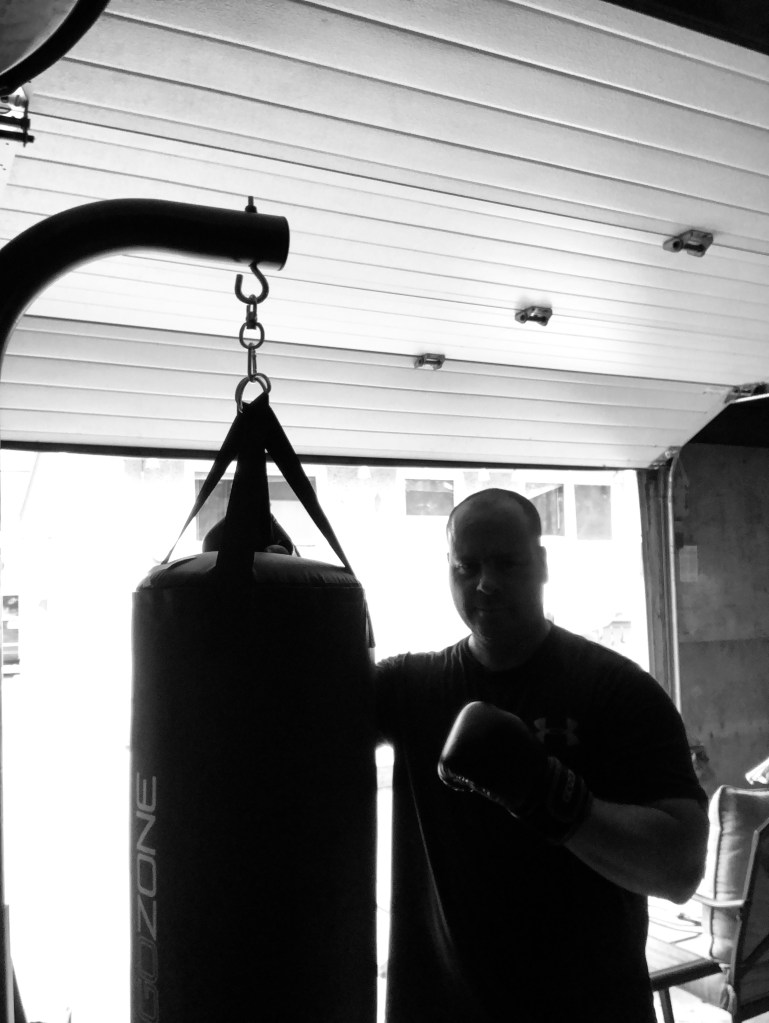
With the warmer weather becoming more prominent, the time has come to shake some of the cobwebs off and start doing more physical activity outside. As such, I decided to stop being such a cheapskate and purchased a punching bag. Although the garage was effectively full last year as we demolished and braced our basement, we’ve moved enough stuff back into the house that I now had the available space to set up a bag. It didn’t take me long to run out to my local sports outlet and purchase what I needed.

The punching bag stand is made by Century, which if you recall is the same martial arts equipment company that makes the karate gi that we wear at Kenpo. It only took about a half hour to assemble, with nuts, bolts and washers included for easy assembly. The stand is unfortunately required, since the beams of the garage would no doubt hold a heavy bag but likely wouldn’t last under the constant barrage of strikes and impact I would inflict upon it.

Interestingly enough, the sports outlet that sold the stand had no punching bags available. Since it was the last stand they had in stock, I gambled and purchased it, sans punching bag. I really wanted a 100-pound bag, but I knew I would have to do some searching in order to find one. The first place I stopped at was a local retail store, which I won’t name for liability issues but it involves the color blue and usually has a fast food or coffee outlet inside. Draw your own conclusions from that.

Anyway, I managed to find a nice little kit containing a 70-pound bag, bag gloves, hand wraps and binding cords. Not too shabby. I added it to my cart so that I had a bag with which to start training and made my way home. I figured I could wok on getting a heavier bag later, depending on how much time I actually put in on it. I lifted the bag up to the hook and my wife helped by attaching it. A few experimental punches and kicks told me I would be enjoying some garage time, this summer.

Despite the fact that I usually enjoy cycling and swimming, a punching bag offers a wide variety of workouts that one can perform. These can include circuits and drills and even workouts where you incorporate the bag as a “set,” meaning you go do a number of sets of other exercises and keep coming back to the bag. Nathan and I like doing a back-and-forth where one of us punches the bag for a straight minute while the other is on a jump rope for that minute. Then we switch. It makes for a wicked sweat. This is what we did yesterday. Little bugger actually held his own for the whole half hour!

It worked nicely!

Punching bags can be nice as they allow you to experience the impact of your strike and help to properly develop them. But it also works almost all your muscle groups, provided you maintain correct posture, stance and incorporate punches AND kicks into your workout. Last but not least, sticking it out on punching drills makes it so that you end up with a killer cardio aspect, as well.

I’ve been in a bit of a fitness slump in recent weeks, which I attribute to the fatigue of starting a new job and having no access to my actual karate dojo. So I’m looking forward to doing something that will allow me to work up a sweat and start building back some arm strength. With our basement renovation plans expected to happen over the summer, the next step will be to get a bench and some free weights. here’s hoping it’ll be a good summer… ☯

The “What’s It For?” Side Of Food…

I’ve been writing this blog for a few years at this point and I have some posts that I like more than others. And one of the best posts I feel I’ve ever written is one that describes the purpose and use of most vitamins and minerals that we get through our food. People usually focus on what they can eat that’s healthy, can make them lose weight or accommodates certain food allergies or aversions. But very rare is it do people take the time to consider what the actual nutritional aspects of food provide for the human body.

We ultimately consume food for two reasons: for energy, which we obtain through the consumption of calories, and nutrition. As a Type-1 Diabetic, I usually focus on the energy side of things, things carbohydrates are the form of fuel we obtain that affects blood sugars. But the nutritional aspect is important. Because if you’re taking in tons of calories but getting none of the nutrition, you could be causing issues for your body that nobody wants.

So, what do all of these vitamins and minerals do? Each one can serve a purpose and provide something for the body, and I compiled a list about two years ago that walks us through all of them. It’s a bit of a long read, but the good news is the list is mostly in alphabetical order, so you can go straight to the vitamin and/or mineral you’re looking for. And without further ado, here’s the regurgitated list:

Vitamin A: This is an all-around vitamin that provides a number of functions including but not limited to the proper health of various bodily functions, tissues and helps to fight chronic disease and is known to be good for the eyes.

Vitamin B: This one is a bit complicated, as there is a large grouping of enzymes, vitamins and minerals that fall under the “B” category. In general, B-vitamins are used for energy production, immune function and absorbing iron. Some them include B2 (riboflavin), B3 (niacin), B9 (folate) and B12. There are a few more that I can’t recall, but B12 is considered amongst one of the most important of vitamins overall because it helps you turn food into energy.

Vitamin C: At some points, this one has been referred to as the sunshine vitamin. I’m thinking that’s mostly because people’s main source of Vitamin C is from citrus fruits. But this vitamin also helps with iron absorption, immune function and is a natural antioxidant that helps with the elimination of free radicals. Eating citrus fruits are also what sailors used to eat on long voyages to prevent scurvy.

Vitamin D: This vitamin helps with the strengthening of bones and teeth. Our bodies are designed to self-generate this vitamin naturally through exposure to sunlight, but obviously that needs to be done in small doses. Modern life has created an environment where more people spend their time indoors, away from the sun. So supplementation becomes important.

Vitamin E: A pretty straight forward vitamin, this one helps with proper blood circulation and clear skin.

Vitamin K: This vitamin is essential for blood-clotting. In order words, if you’re deficient in this vitamin, small cuts or injuries can cause excessive bleeding that can become dangerous.

Folic Acid: We hear people speak about this one as being necessary during pregnancy. And they would be correct! Folic Acid helps to prevent certain complications during childbirth but is important to everyone for proper cell renewal. This one is also known as Folate, or Vitamin B9 (as listed above).

Calcium: Most people should be familiar with this one. Teeth and bones, people! Teeth and bones! Good calcium levels are required to keep those body parts healthy.

Iron: This helps to build muscle tissue naturally and helps with proper health of the blood. As an interesting sidebar, it’s also what makes your blood red through the reflection of light!

Zinc: Immunity and Fertility. I’m a little unfamiliar with this one and haven’t had the opportunity to research it a great deal.

Chromium: This one is near and dear to my heart. Because it helps to control blood sugar levels. Chromium is what helps all the systems of your body to get the energy they need when they need it. Some traditional medicine practitioners will suggest Chromium supplements for Type 1 Diabetics who may have difficulty in maintaining proper levels.

Magnesium: This one helps your body to absorb all the other vitamins and minerals. It also acts as something of a relaxant to muscle tissue and play a role in proper muscle contraction.

Potassium: This mineral helps with the proper hydration of your body and helps to control blood pressure.

These are really just the major ones and there are plenty more. But these are the common ones that you’d be looking for in your food and your multi-vitamin. There’s a lot of mixed opinion about multivitamins, with some believing that you get nothing out of them and some swearing by them. Although we’d like to think we get everything we need out of our daily meals, such is not always the case and a multivitamin can help. My doctor has always sworn by them, so I make a point of taking a daily capsule. This can be of particular importance, especially if you’ve had a lazy day where your meals may not incorporate everything your body may need. ☯

“But Daddy, Zombies Are Real…”

That title isn’t just an abstract one; these are words that my 6-year old son chose to utter, just a few weeks ago. When I asked him what made him believe that zombies were real, he explained that he had seen them in “real shows,” not cartoons. So they must real. This not only prompted me to have an in-depth discussion with him about the realism of what he sees on television, regardless of cartoon or live, it also prompted me to thoroughly scrub his restricted list on Netflix, since he obviously accessed something he shouldn’t have been watching.

The unexpected result that it had, was it caused me to question how easy it would be to survive through a “zombie apocalypse.” This thought is further deepened by the fact that I’ve recently started re-reading a bunch of Brian Keene books, a well-known horror novelist. He’s had some really great ones, including The Rising and City of the Dead. But the one I’ve been reading recently is called Dead Sea, and it follows the story of a down-on-his-luck protagonist who saves a couple of kids from fires and zombie hordes when the zombie apocalypse comes. They wind up on a ship on the open sea, hence the title. CAUTION: There will be spoilers on this book, ahead. Here’s the cover, in case anyone is interested in looking it up:

So, you may be asking yourself, “Why are we talking about zombies on a Buddhist/Fitness/Diabetes blog?” Well, the answer is quite simple: because I can. But even more so, sometimes it can be refreshing to take a different perspective at things, and books often provide a means of doing just that. But what’s more than that (he says, calming his sarcasm) is that something that a lot of these stories bring up is a person’s propensity to keep fighting and survive, even when faced with what appears to be insurmountable odds. And as I mentioned in the second paragraph, it’s made me question and wonder what my odds of survival would be when faced with a situation like a zombie apocalypse.

First, let me start by pointing out that the possibility of zombies is something I find ridiculous at best, for a host of reasons. Between rigour mortis, decomposition and the concept that reanimating dead and rotting tissue in such a way as to allow mobility is an impossibility, I’m of the opinion that zombies are right up there with vampires and unicorns. Anyone with a medical degree that could correct me is free to do so in my comments section. Granted, at least the concept of a horse growing a horn out of its head is more likely than a reanimated corpse. But I digress…

The topic of this post is actually supposed to be about survival; a topic that the main character of this book touched on quite well in the first page of the first chapter. He said, “Listen… you never know what you’ll do until you find yourself in an impossible situation, so don’t ever say never. Survival instinct is a motherfucker, and when your back is against the wall, everything changes. Everything. I know. It did for me. It all changed for me.”

In the pages that follow, a number of specific aspects of dealing with any survival situation is addressed. The need for food, supplies, a safe haven for rest as well as the resources to protect yourself are all aspects of such a situation. And not only protection from whatever may have prompted the emergency, but from the people who would benefit from it as well. There are always some of those. Even in the face of our current pandemic, there have been people who have sought to use the current state of the world to their advantage, preying on those who may not know better.

I think the reason this story resonates with me so much, besides the fact I occasionally enjoy the horror/fantasy genres, is the fact that about midway through the book once everyone is aboard ship and cruising to relative safety, a character named Stephanie is identified as having Diabetes and being without insulin. She succumbs to a Diabetic coma and passes away in her sleep shortly thereafter. And THAT more than anything provides an important wake-up call for me, from a survival standpoint. It raises the question of how long would I last in an apocalypse scenario given that I would need to find some means of securing an insulin supply and the materials needed to inject it.

In all reality, I can live without my pump and even without a blood glucose monitor. It’s not ideal, but I could do it. I lived until my late 30’s without a pump. And in a total breakdown of societal resources where stores and retail locations would ultimately be looted and emptied of their contents, insulin may not be everyone’s top choice of things to grab. So I could potentially manage to scavenge and find an adequate supply. For a while. Even when you consider that a breakdown in utilities could mean that insulin supplies stored in pharmacy dispensaries would eventually spoil due to temperature extremes and lack of proper refrigeration.

But then what? If society breaks down, it’s doubtful that there’ll be manufacturers still producing insulin. So, although I could no doubt survive for a period of time (especially since the self-defence aspect would be no issue) there would no doubt come a point where, no matter how prepared I am, the Diabetes aspect of me will cause me to succumb to the new, apocalyptic environment in which I find myself. Maybe that’s why I enjoy these types of stories so much; because I know they involve an environment I couldn’t survive in and is the only format through which I can experience it. Not that I WANT to experience a disaster… I’m jus’ saying’…

Hopefully, we’ll never have to deal with an “apocalyptic”-level event in our lifetime, but it’s humbling to think about how a simple medical condition that I’ve lived with for almost four decades would bring about a swift end for me, based on the state of the world. It’s a bit of an eye-opener. Even if I fortified my home, stored non-perishable foods and did everything I could to be prepared in the event of a cataclysmic event, my downfall is more likely to be, not from zombies, lack of food or the inability to defend myself but from the lack of a small, glass vial. ☯

“Pump” Up The Insomnia…

It’s been an interesting change in routine, having started a new job last week and being half way through my second week. My wife was just commenting this morning that we seem to have developed a trend where our routine starts by waking up at 5 a.m. early in the week and on that evening, we’re so blasted from our “start of week” that we usually crash shortly after we put the kids to bed. This is followed by getting into the groove later on in the week, allowing us to stay up a bit later and completely throwing caution to the wind on the weekend, which likely leads to our exhaustion on that first morning. But I digress…

As much fun as I’ve been having, meeting new people and learning new skills, adapting my habits at home and getting proper sleep has been the biggest challenge. I’ve often said that technology is really only as good as the person wielding it and how involved they choose to be. But sometimes technology takes it upon itself to be a total pain in the ass, despite the intended programming. I faced just such a situation last night. Now, I know I tend to write these stories on occasion and it seems as though I’m just complaining about my condition. In truth, I write about these things in the hopes that other people with Diabetes will read them and relate to them, maybe acknowledge that they’re not alone in their situation. But anyway, here we go.

Finally coming down to normal

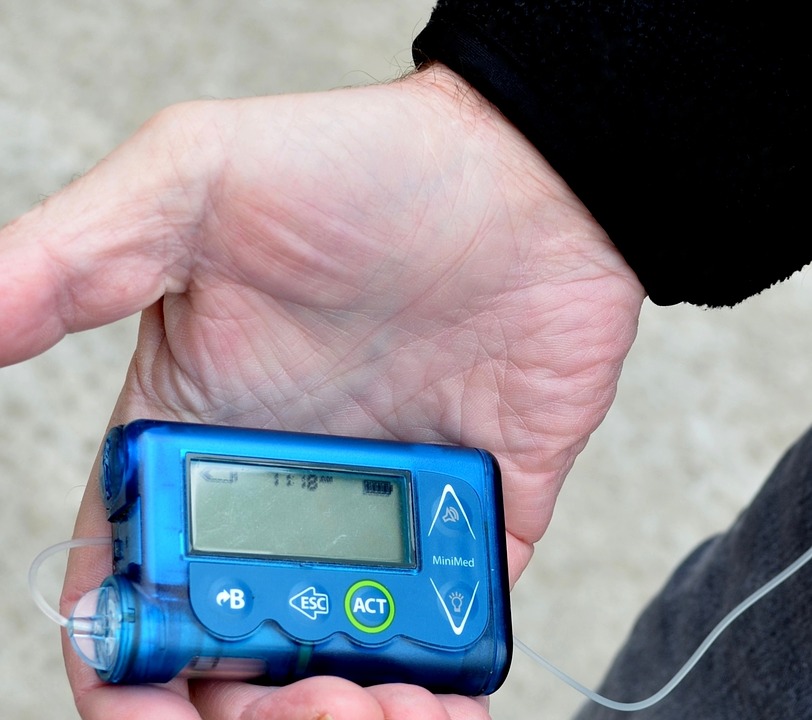
My wife was also exhausted last night, and we ended up crashing just shortly before 8 p.m. I know, I know… We’re like an old couple. Things were fine, we even allowed ourselves a brief snack in bed as we watched our respective streaming services and within the hour, I had fallen asleep. I performed a calibration of my CGM before bed, my blood sugars were normal and I anticipated a full night’s sleep. I anticipated wrong. At about 9:30 p.m., my pump began vibrating wildly. It woke me instantly and I checked what the problem was. “Insulin Flow Blocked. Auto Mode Turned Off. Consider Changing Infusion Set.”

In retrospect, if I’d been smart I would have gotten out of bed and dealt with the issue. But since I had already fallen asleep, I was groggy and pissed at being woken so I did the only logical thing. I jiggled the infusion set at the site on my stomach, acknowledged that it was likely due to my sleeping on it and reset the pump. Resetting Auto Mode involves going through a multi-level menu and turning it on, saving, then going back and providing a BG reading to get Auto Mode to kick back in. Although only a one-minute process, it’s a tedious one to perform when you’re barely awake. I also delivered a bolus to correct the fact that during this “block,” my blood sugars had creeped into the low teens, making me even groggier.

Once I fell asleep, I was once again awoken for the same reason sometime during the midnight hour. Are you kidding me??? Same issue, same error messages. Once again, the smart thing to do would have been to get out of bed and go deal with it, but I managed to acknowledge that I still had about 120 units in the reservoir, which I didn’t want to waste on a set change. I also managed to realize that if the insulin delivery had worked for the past few hours, it had to do mostly with my sleep position and less with the pump itself. I reset everything and provided a further bolus due to being in the mid-teens, and tried to will myself to stay on my back, away from the infusion site.

You can see the slight rise from my snack, followed by a bolus at around 9 p.m. when I was first awoken and how the night went to hell from there.

Just shortly after 2 a.m., the same issue happened for a third time, so this time I opted to leave Auto Mode turned off, make sure I was on my back and go back to sleep. At this point, I knew I only had a few hours left to productively sleep in some given way, shape or form, so I opted for rest over proper blood sugar control. Maybe not the smartest choice, in retrospect. But I stand by it. You can see in the photo above, how the pink drops disappear from the screen, shortly after 2 a.m. This is when Auto Mode was shut off. I also provided a bolus to help treat the fact that I was still sitting at roughly 14 mmol/L.

My alarm went of at 5 a.m. as scheduled and I turned and sat up, with my body protesting in the way it generally does at my age, when I’ve been woken every few hours. I tried turning on Auto Mode once I was standing up, but it provided the same error messages again so I called it quits and sacrificed the remaining insulin units in favour of changing out the infusion set. From the first photo, you can see that I’m slowly dropping back to normal. All I can say is that the Keurig machine in my office will be working overtime, today.

It just goes to show that Diabetes management can be trying and challenging, even during the nighttime hours when you should be able to get some sleep. And don’t get me wrong; I love my insulin pump. LOVE IT! I’ve had the best blood sugar levels and the lowest A1C results ever, this past year. But even with a device that’s as advanced as my current pump, there can still be some user error, issues and corrections that need to be made. And since life rarely cares about one’s plans, those issues can sometimes take place at night.

Moving forward, I’ll need to see about maintaining some infusion sites that don’t involve sites that are pressed against the mattress when I turn over at night. That should be pretty easy; I have plenty of real estate on my abdomen to choose from. But the Diabetes challenge never ends. The high blood sugars, repeated wake ups and required adjustments have left me feeling drained. Just one more day of battling the T1D beast! Now if you’ll excuse me, I have a much-needed morning coffee calling my name. ☯

Taking A Little Respite…

I’m an incredibly long way from what I would consider to be lazy. Between my continued efforts towards fitness, Diabetes control and giving my maximum in everything I do, I very rarely sit still. The fact I have difficulty sitting still in general tends to help, as well… But once in a while, even the most dedicated person needs to take a step back and throttle back on life and take a rest. And mental exhaustion being a very real thing, it can lend a heavy impact on one’s motivation.

A couple of weeks ago, I found myself skipping karate classes and performed personal workouts a lot less than usual. I’ve had the pleasure of throwing a couple of quick, 10-kilometre bike rides into the mix, which was nice. But with the warmer weather coming along, the opportunity for different and increased number of workouts is becoming a thing. The recent heavy snows we’ve had in Regina notwithstanding, of course. But a severe lack of motivation has unfortunately thrown a monkey wrench in my otherwise rusty gears.

I’m a big advocate of pushing oneself, and of making an effort to workout, even when you don’t feel like it. Given the nature of Diabetes and the effects it has on a person’s body, it’s no surprise that there are days where either the body or the mind simply don’t want to put in the effort. I had both my body AND my mind gang up on me in recent weeks when I’ve skipped the majority of my workouts. Even while acknowledging that I should have been doing something, I just didn’t want to. To use the vernacular of today’s younger generation, I can’t even…

And you know what? That’s okay. Even if it may feel like you’re being lazy, stepping back and taking a break from your fitness habits can have a lot of benefits. Yes, yes, I know… The benefits of doing SOMETHING definitely outweigh doing NOTHING. But here are some quick benefits that I’ve noticed, whenever I’ve taken a break:

  • You Can Relax: I think we can all agree that being “switched on” all the time can take a toll. There is such a thing as over-training, and it’s important to recognize that point. Taking a break week can let your body fully recuperate and allow you to relax a bit and maybe focus on other interests, such as reading or playing with your kids;
  • You Can Regroup: Honestly, there’s something to be said for having the time to just sit back and contemplate things. Whether you want to take the time to meditate, focus on work or even come up with some new workouts, taking a break can allow you the time to figure it out. Personally, I get bored of doing the same workout over and over and I like to design new circuits and try new things. Otherwise, I feel my fitness is becoming stagnant;
  • You Can Heal: Constantly working out can be taxing on the human body, and even more so when you’ve reached my age. Even though you can continue to work out with mild injuries (with limitations), it can be nice to allow some extra time for the systems on your body to reset themselves and for any outstanding injury to heal completely.

Given the particular life changes and adjustments tat have taken place within my household in the past week, it’s no surprise that I continue to be exhausted. Like many people, I’ve spent the last little while hibernating at home while COVID-19 has marinated on the outside. The result of this has been that waking at 5 in the morning every day is no longer something I’m used to. I’m slowly getting adjusted o it, now. But I’d be lying if I said that I haven’t been sneaking off to bed as soon as my wife and I get the kids down. Surprisingly, my blood sugars have fared quite well during all of this. I think that can be attributed to routine, since I eat my meals at pre-planned times and don’t snack or eat outside of those times.

As one always does, I’ll adjust. I usually find that taking a “lazy week” once in a while will allow me to reap all those benefits mentioned above. The important thing to remember is not to go on some sort of junk food bender while you’re sitting around doing nothing. And I’m definitely not saying that you should do this indefinitely. Or often. Especially since a sudden change in your level of fitness and activity will play hell with even the best balanced blood sugars. But if you allow yourself the occasional break, it can even help improve your mood and energy levels for when you DO get back to it. And one always needs a little time to adjust to any new routing. Food for thought… ☯

Time To KID Around, Part 2 (The Diabetes Aspect)

Have you ever tried to explain to a young child what Diabetes is? Not an easy task, especially when you take all the good, the bad and the ugly into consideration. My biggest fear when Nathan was born was the possibility that in a few short years, he would be diagnosed with Type-1 Diabetes himself and would have to deal with many of the same difficulties that I had. Since Type-1 Diabetes does involve an inherently genetic component, it’s a very real fear and one that I wasn’t looking forward to having him deal with.

Those fears were somewhat put to rest a year or two ago when we had him tested and found no issues with his immune system and insulin production. We were warned that there was still a few years of risk involved, but as it stood he was free and clear. Now, if we can be so lucky with his younger brother, Alex, I’ll be a happy camper. Dealing with the disease affected and altered my childhood in ways that I can’t help but make me wonder how life might have been different for me if I HADN’T been diagnosed. But I digress…

I don’t think I need to point out how many moving parts and components there are to the effective daily control of Type-1 Diabetes. It can be overwhelmingly irresistible for a young child to see all the equipment and electronics involved and they’ll no doubt want to touch, see and play with everything there. The important part is to be honest and not try to sugar-coat any of the details (see what I did there?).

In Nathan’s case, I’ve always been very honest and explained everything in plain language. One of the unexpected benefits to that level of honesty, is that he’s been exposed to seeing blood drawn since the day he was born. I consider this a benefit because he doesn’t have the same fear of blood that most other children do, be it mine or his own. He’ll acknowledge pain, of course. But if he’s bleeding, the blood in and of itself isn’t an issue for him.

I remember dating a girl who already had a son that was about Nathan’s age now. And if he’d scrape his knee and a bit of blood would show, he’d basically blow up and have a panic attack. Although one can understand that children view things differently than adults, even I have to admit that it was a bit much. That’s why I’m happy that Nathan has grown to be desensitized to certain things as a result of having a Diabetic father.

The biggest challenge I’ve face with Nathan, and now his brother Alex, is my insulin pump. When you have a baby sitting in your lap and he’s looking around and grabbing at everything in sight, an infusion set can be a temptation for those little hands. It took a bit of time as well as trial and error, for Nathan to understand bot to touch “Daddy’s Ouchy,” and to leave the pump alone.; something that I am now working at making Alex understand, as well.

The important thing, as I mentioned earlier, is to use plain language and explain things as they actually are. Nathan has seen photos of a pancreas, he knows it helps with the regulation of glucose in the blood through the release of insulin and he’s aware that my pancreas no longer produces insulin, which is why I need to have it artificially injected through the pump. He’s also made his peace with the fact that certain fast-acting sugared goods are for Daddy only, when my blood sugar drops. He’s not a fan of that last one, but he gets it.

Nathan has held all of my Diabetic equipment and supplies in some way, shape or form and has even had the opportunity to press buttons on my pump (with my guidance) in order to see what everything does. By doing this and ensuring his understanding, there’s less risk of him sneaking into my desk and messing around with my Diabetes equipment. But the nice thing is that although he doesn’t like them, Nathan has less fear of needles than the average kid, since he’s been around them and has watched me injecting myself since he was born. Educating is always better than forbidding. ☯