A Quick Weekend Reminder…

I know a lot of people who reuse needles, whether because of the cost or laziness. I’m guilty of this myself, having spent weeks a a time jabbing myself with the same pen needle over and over before switching it out. Usually, I would only switch out the needle when I was switching out an insulin vial, which meant I could end up using a single needle DOZENS of times before finally realizing that I needed to change it.

I’ve written plenty of posts where I’ve shown the effect of using a needle mu;triple times, but I’ve never shown the effect on actual flesh. The above photo shows the hole that a needle makes in your skin. I fogey where I found the photo, but you’ll notice that it doesn’t indicate whether it was a fresh needle or not. Therefore, one is inclined to believe it’s made by a new needle. Under a microscope, that hole looks substantial. I mean, I can just picture cartoon microbes walking in with their suitcases to set up shop inside the tissues.

This photo shows why it’s important, not only to change out your needles after every use, but to make sure you clean your sites and especially during finger pokes, wash your hands before and after. This will prevent a whole batch of issues that I won’t ruin Saturday morning breakfast by describing…☯️

Hungry For Some Facts?

I was having a conversation with someone from work yesterday who had an unfortunate incident involving his lunch. Since he typically works out during his lunch hour, we were discussing whether he would walk to somewhere nearby and purchase some food or if he would simply go to his workout as usual. The conversation led to the benefits and disadvantages of working out on an empty stomach. And as with all things in life, there’s a case to be made for either one.

Sometimes, it’s more about HOW you do something than the actual WHAT. In this case, there are times when exercising on an empty stomach is fine. In fact, I’ve often heard that exercising on an empty stomach can lead to a better fat burn, since the only energy the body has to depend on is one’s fat stores. Unfortunately, this isn’t correct.

According to an article on WebMD, working out on an empty stomach will cause your body to use a source of energy that’s readily accessible, which may include breaking down sugars from the muscle tissue, followed by the production of sugar by the liver. Fat stores simply aren’t the go-to secondary fuel that many (myself included) believe it to be. By that logic, training heavily on an empty stomach may inadvertently cause you to sacrifice your own muscles in order to fuel them.

The article goes on to explain that if you’re doing a consistent form of aerobic exercise like running or cycling, doing it on an empty stomach can work. But the overall risks of a fasting workout aren’t worth it. The article suggests consuming small portions of low-glycemic, complex carbohydrates, like steel-cut oatmeal, apple slices or whole-grain cereal without the milk. Click on the article link for more of those suggestions. I won’t list them all here.

From the Diabetes standpoint, a fasting workout can be difficult at best. This is especially true since different types of workouts will affect different people’s blood sugars in different ways. Ain’t Diabetes grand??? It’s a wonderful kaleidoscope of bullshit. For example, if I head out on a long bicycle run and may blood sugar is normal, I can expect to hit a high before I get home. Unless my ride is wildly inconsistent in terms of speed and resistance. Then I’ll have a low. Working out on the punching bag or doing heavy weights will almost always make my levels drop. Unless I suspend or remove my pump, then they’ll sky rocket.

See what I mean? And those conditions may be different for each person. So if we add an empty stomach to the mix, it makes things all the more complicated. Not least of which is the fact that hunger can be extremely distracting. Try focusing on lifting weights or working the bag properly when your stomach won’t stop rumbling. It ain’t easy. Plus, hunger can cause fatigue, dizziness and/or nausea, none of which are ideal during exercise.

The next perspective is the martial arts. If your karate classes are anywhere near as intensive as mine are, the last thing you want is something heavy sitting in your gut, sloshing around and making the bile rise in your throat. This is where that small portion of complex carbohydrates comes in. Give yourself the fuel you need to get a more intense workout in, without the risk of throwing up all over the dojo. Contrary to SOME opinion, projectile vomiting is not an effective means of self-defence. That’s a story for another time…

Bottom line, fueling up before a workout will still allow you to burn fat. In fact, that WebMD article linked above indicates that “If you’re doing a killer workout… non-fasting is better. You’ll get to the fat burn because you’re going to deplete carb stores quickly by working out so intensely. You’ll start burning fat within 16 to 20 minutes.” Since I average workouts at 30 to 60 minutes, I’m getting a burn no matter what.

There you have it; empty stomach = not good. More or less. Some people just flat out can’t exercise with food in their stomach, so there are exceptions to any concept, right? For us Diabetic martial artists, eating the right foods at the right times in the right circumstances is all that it takes. Sounds easy enough… (rolls eyes sarcastically) ☯️

Try To Stay Awake As You Read This…

I’m actually pretty dozed as I write this, so it’s an appropriate post for today, I think. Sleep. It serves quite a number fo handy and necessary functions for the proper health of one’s body. Sleep is thought to contribute to overall brain health and allows a better focus and concentration when awake, among other things like letting your body rest and recharge after a long day.

There are quite a number of benefits and functions that take place while we sleep for the night, which I’ve covered in previous posts so I won’t delve into those too deeply here. Although a lot of what I‘ve read and researched tells me that science can’t confirm without a doubt why sleep is necessary for the functions it provides, I CAN say that I like it. A lot. Sleep rocks. I only wish that I had recognized this at a younger age when I could have gotten more of it. this is a lesson I struggle to impart on my 6-year old son. But I digress…

If you have Type-1 Diabetes, you may find yourself having difficulty sleeping at the best of times. In fact, depending on how well your blood sugars are controlled, sleep may be as elusive as trying to grab that stray hair down the back of your shirt that has you squirming and drives you batty. Of course, I don’t have that problem, being bald and all…. Did I mention I was a bit tired, this morning?

On average, sleep helps with energy conservation, elimination of bodily toxins and waste and helps with the body’s immune responses. Not to mention that lack of sleep will lead to lack of concentration and alertness, and will likely leave you moody and cranky. Ever try to deal with someone who hasn’t gotten a full night’s sleep? They usually aren’t all rainbows and sunshine. Add some chaotic Diabetic symptoms into that mix, and you’ve got a recipe for disaster. Here are my top 5 ways that Diabetes usually disturbs my sleep:

1. Diabetic Neuropathy: If you or someone close to you has Diabetes, you’ve likely heard this term before. For Diabetics, neuropathy is nerve damage that can develop over time. Although there are a number of things that can cause it, such as damaged blood vessels due to high cholesterol, the cause for Diabetics is usually attributed to high blood sugar levels over a long period of time, which can damage nerves and cause something known as “restless leg syndrome.” This is usually the bad boy that keeps me up at night. Basically, your limbs feel unsettled and one gets the urge to move and adjust them in order to gain relief. That relief is usually short-lived as the unsettled feeling returns within moments. It can be an excruciating pain in the ass, especially in the middle of the night when you’re trying to sleep.
2. High Blood Sugar Levels: The thing about Diabetes is that multiple sources will site certain symptoms for high blood sugar (like my favourites, WebMD and HealthLine.ca), but symptoms are subjective to the person. For example, most sources will cite aggression as being a symptom of low blood sugar. But I’ve always experienced the bad moods and crankiness when my levels were high. Anyway, if you hit a high in the middle of the night, you can potentially experience cramping, nausea, dry mouth, thirst, urge to urinate frequently and a partridge in a pear tree! Not to mention that annoying “hot but not” feeling where you kind of sweat but aren’t really warm. SO annoying…
3. Low Blood Sugar Levels: If you thought highs were bad, lows can be much worse. At least in my opinion. At least highs will sometimes make you sleepy, which can be handy if it’s the middle of the night. So long as you don’t mind little issues like ketoacidosis or the various damage you’re doing to your eyes and other organs. But you may sleep through the night and wake to correct and bring your blood sugars down. But when you’re low, it requires immediate action. If you’re lucky enough to have a “tell” (a symptom that will wake you due to a low), then you get the pleasure of crawling out of bed to grab some fast-acting carbs to get you back to normal. For me, my body will feel numb and I’ll feel off in general. It’s usually enough to wake me from a deep sleep. the hardest part is the lethargy that accompanies a low, as it urges you to just close your eyes and keep sleeping. But even once you treat the low, it’ll usually take some time for your body to start feeling normal so you can drift back to sleep.
4. Dehydration: Here’s the thing; dehydration isn’t JUST a Diabetes thing, but we’re prone to it. And dehydration will cause a lot of the nasty symptoms that fluctuating blood sugars will: thirst (obviously), pains and cramping, discomfort, nausea, dizziness and confusion…. And of course, dehydration will affect one’s blood sugars. Oh, and blood sugars will affect your level of hydration. Fun, right? That’s why it’s so important to keep your fluid intake steady and drink plenty of water.
5. The Insulin Pump: Last, but certainly not least is the insulin pump. this one is obviously subjective to whether or not you use one in your therapy. But never in my life has an electronic device been such a light-send while simultaneously being a pain in my ass. Blood sugars are steady and normal for more than 2.5 hours? Better beep incessantly and request a BG check, JUST in case! Been micro-bolusing for more than an hour? Better set off an alarm, even if blood sugars are sitting at 9.5 mmo/L! Although I have the best A1C’s I’ve ever had in my life, the pump has disadvantages as there are some alarms that can’t be silenced. And the pump doesn’t discriminate against what time of day (or night) that it may be, so I get woken often even if things are smooth and normal. In fact, often BECAUSE things are smooth and normal. And people wonder why I get testy against technology; even when it helps, it also hinders.

There you have it; my top 5 reasons that Diabetes wakes me up at night. Let’s not forget, as negative as my sleep-deprived perspective may be this morning, that outside factors such as stress, illness and weather will affect blood sugars and cause most if not all of the above-mentioned scenarios. Therefore, this is the part of our day where I remind everyone to eat a proper diet, get regular exercise, stay hydrated and test your blood sugars often. You’ll sleep better at night. Pun fully intended. Now if you’ll excuse me, I need a nap…☯️

A True Warrior’s Bike Runs On Muscle…

Last year, I managed to log almost 1,100 kilometres, over 850 of which were on the bike. The remainder was walking and some foolish attempts at jogging. I hate jogging. It’s bullshit. Prove me wrong… Seriously though, I absolutely hate running. But I lOVE cycling, and thanks to all the free time I had during the pandemic, I logged quite a lot of time on two wheels. Since the snow has disappeared, I’ve been a little slow on starting up this year, but I’m slowly starting to catch up and I’ve decided on some pretty fun goals.

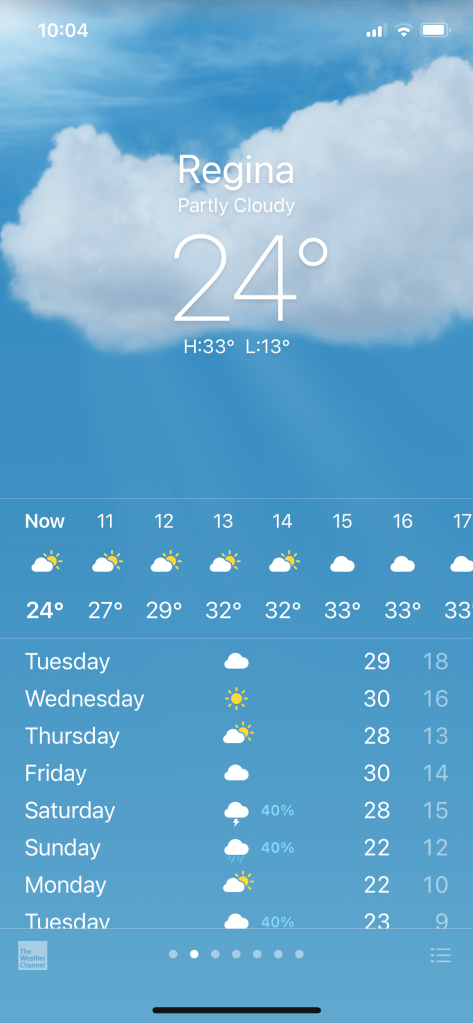
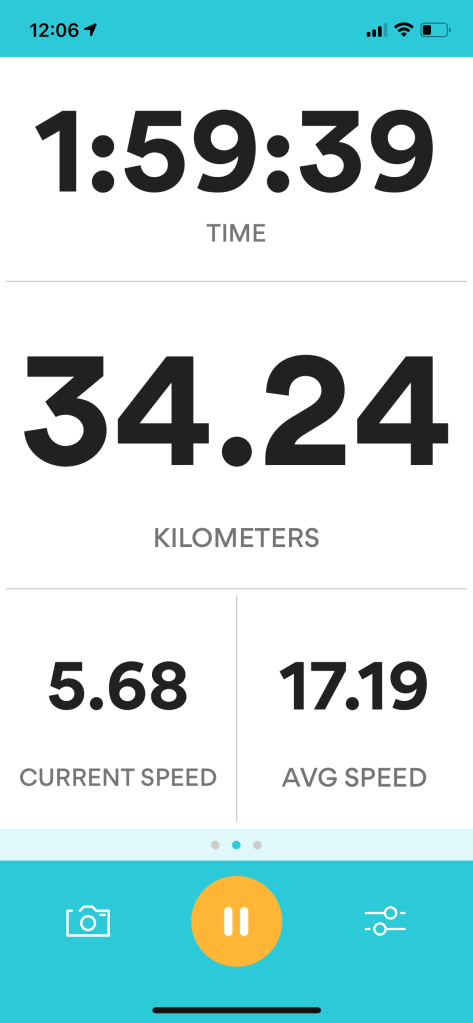
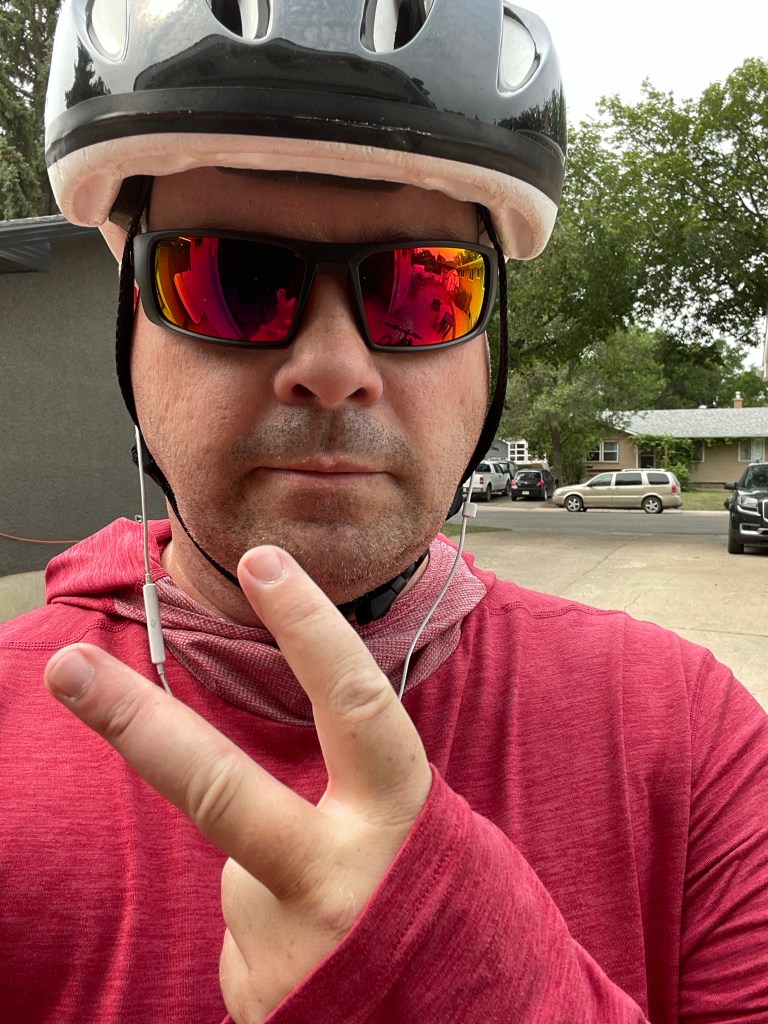
I had grand ambitions to be out of bed by 6:00 am and hit the road after some brief preparation, but as you can see from the time stamp in the image above, it didn’t quite work out that way. Caffeine was singing its sirens song and I couldn’t resist the pull of my arm chair as I sat and sipped while doing my daily crossword puzzles. By the time 10:00 am struck, I recognized that if I wanted to use this particular day to get some mileage in, I would need to get at it.

I should point out that this was last Monday, which was a statutory holiday in Saskatchewan. This meant that my wife and I both had the day off, facilitating my ability to take off on the bile for a couple of hours to try and get a solid sweat in. I peddled my way down to Wascana Lake, one of my favourite spots for cycling. The reasons are quite simple: there are paved paths that allow for a smooth and measured ride. there’s also a lot of trees and water, lending a small reminder of my home Province of New Brunswick.

However, with the recent lessening of restrictions and conditions in regards to the pandemic, the walking path has become less than ideal. During the pandemic, foot traffic was restricted to one direction AND social distancing was required. Now, not only is there two-way traffic, making it more difficult to navigate, but people are walking and filling the paths with impunity. You wouldn’t believe how easily two people can take up the entire width of a public path and seem oblivious to the words “excuse me.”

As the morning wore on, the temperature began to increase. The day was blessed with a light overcast, a combination of clouds and smoke from recent wild fires in neighbouring Provinces. The result was that I wasn’t TOTALLy exposed to the sun, but the heat was still mounting enough that I was dripping onto my handlebars. Luckily, I brought along a bottle of sugar-free electrolytes and my glucometer, so I was set in terms of hydration and ensuring my blood sugars were level. Insert a PSA here about how extreme heat can affect insulin pumps and CGM…

By the time I got home, my legs and arms were killing me, my shirt was soaked to the point you could almost see through it and I looked like something the cat dragged in. The mileage shown above is what I managed to complete by the time I got there. I took a short period of time, sitting in my garage and sipping the remainder of my electrolytes and some water before hammering a half-dozen jellybeans to regulate my blood sugars.

Remember in the opening paragraph when I mentioned that I was working on some pretty fun goals? I’ve decided to try this app called The Conqueror Challenges. Basically, (and I’m not endorsing this app, I’ve simply installed it for personal use) these are virtual marathons that you can sign up for, pay a fee and it tracks your distance until you’ve reached the goal. You can choose a package where they issue you a completion medal when you’re done or a package where you get the completion medal as well as a t-shirt. They have some pretty cool ones, like climbing Mt. Everest or crossing the English Channel.

Just about anything can be virtual, nowadays. So, why would marathons be any different. I’ve completed a couple of challenges already, so I’ll keep y’all posted when I receive a completion medal. But for someone try to set goals and achieve them without getting involved in something according to someone else’s schedule, this can be it. And that’s pretty much where I find myself; between work and home life, I don’t really have the time to sign up for scheduled marathons or join public events. I’m just waiting on baited knee for karate to open up again. I don’t know, it’s something different and helps to keep me on track. There’s one medal that’s 4,000 kilometres! That’s crazy! I could basically cycle my way home to New Brunswick! That would certainly be a strange and wonderful adventure. ☯️

Let Time Be The Judge…

If you walked into a karate dojo today, it would be pretty fair to say that you wouldn’t be proficient the following week. If you joined ballet or dance today, you wouldn’t be able to stand on point or start competing the following week, either. Important things take time and this is especially important as it relates to one’s health.

People these days are all about the right here, right now. Immediate gratification is often the expectation, and we live in a society where everyone is plugged in and always looking for something that will help them melt fat, slim down or build muscle. But like endeavour, the results won’t appear quickly. And even when do appear, it’s important to keep at it.

There’s nothing quite like the feeling of getting home after a long day and flopping down on the couch with a cold drink and binge-watching something on television. It’s easy, right? Humans as a whole will usually prefer to take the path of least resistance, much like the course of a river. But health and fitness REQUIRES that you step off the path of least resistance and persevere on the harsher path.

Recently, I started to dislike the way I looked. This can be attributed to a number of things, including indulging in a less-than-favourable diet, consuming beer and alcohol and allowing my fitness trends to slide off the rails, where I would go full weeks without working out. It’s okay to take the occasional break, but not when it’s to the detriment of your overall health and fitness. And not least of all, is the constant adjustment to my system from exercising consistently to being more sedentary and vice versa…. It plays hell on the blood sugars!

My point is, I took a few very simple steps to start doing something to slim down a bit. I don’t think I need to explain that as I get older, weight becomes harder to shed and Diabetes control becomes more important. But all I’ve done is chit back on my carbohydrate intake and alcohol consumption, increase my intake of fluids and have started working a few small fitness challenges. It’s taken a while, but I’ve managed to shed almost ten pounds over the past couple of months, the results of which I’m starting to see (in small doses).

A pair of pants I purchased four months ago that fit decently are now loose enough that the waist band folds over when I cinch my belt. A golf shirt that six months ago pretty much drew the eye directly to my gut now fits comfortably and I’m wearing it right now, as I type. It’s small difference that come from persevering and not giving up. There will always be days when the couch is calling, but if you push through and get that workout in to maintain your consistency, you’ll eventually start to see the difference. Slow and steady wins the race on this one…☯️

Let The Energy Flow Through You…

There’s no denying that keeping your energy levels up throughout the day can be challenging. Diabetes makes that challenge even greater, since uncontrolled blood sugars and Diabetes complications can lead to sleepiness, grogginess and apathy. But Diabetes aside, there are a number of things that one can do to boost and improve their energy levels throughout the day. And just to be clear… I don’t mean “energy” as it relates to what makes you a person and keeps you alive. I mean one’s ability to keep on trucking when the afternoon slump gets to you.

In order to gather an appropriate list, i consulted articles from two of my favourite websites: HealthLine.com and WebMD. After consulting these articles, I picked out my top five as it relates to what’s easiest and manageable in what I consider to be a typical day-to-day existence. These are subjective of course, so take these with grain of salt. Alright, here we go…

  1. Drink More Water And Cut Out Booze: Considering I’m a guy who likes his wine… In fact, I enjoy my “adult beverages” a fair bit after a long day at the office and after my workouts. But the reality is that hydration plays a key role in keeping one’s energy levels up. Dehydration can leave you feeling tired and lethargic. In fact, drinking cold water has shown some promise in helping with weight loss, since the body has to work to warm itself if you drink cold water;
  2. Sleep More Or Improve The Sleep You Do Get: If you’re anything like me, your 8 hours of sleep can often leave you feeling drained and that fuckin’ alarm seems to go off right about the time I manage to fall into a deep sleep. Some common practices include avoiding screens and doing something relaxing as part of a good pre-bed routine. And don’t be afraid to take a nap. Naps are underrated. Just remember not to let it linger too long, as it can interfere with your actual sleep patterns;
  3. Eat Healthy: This one is pretty subjective, since every person is different in terms of how their body responds and functions based on diet. I’m not a big believer in fad diets. They work for some and not for others; same as any other diet. The problem is that you only typically hear about the positive outcomes. The bottom line is if you include plenty of vegetables, of different varieties and lean proteins, you’re good to go. Keep your total carbs down (not eliminated, just reduced) and you’re off to the races. Ever feel exhausted after having a plate of pasta? Those carbohydrates are absolutely horrible…
  4. Exercise More: If you’re exhausted, get up and do something. It probably seems counterintuitive, but doing something physical will increase blood circulation, which will absolutely pull you out of your funk. Exercise will also help with your blood sugar levels and overall well-being. As I’ve written about on previous occasions, living things move. Movement brings energy. Energy promotes life. Wash, rinse and repeat. You can’t live without movement. Sedentary people who sit on the couch all day with always seem lethargic, and for different reasons. Anything is something more than nothing. Start by stepping away from your desk and taking a ten-minute walk. Have a routine where you work out for 20 to 30 minutes of intensive exercise, every day; and
  5. Calm The Hell Down: This one should be pretty obvious, but reducing or eliminating stress will go a long way towards helping you boost your energy levels. Experiencing constant stress will usually sap your energy and leave you feeling drained at the end of the day. This is where the other side of my life kicks in… meditation, exercise and martial arts can go a long way. But whatever works for you in reducing your stress is gravy! Work out on a punching bag. Cross-stitch. Whatever.

All of this goes hand-in-hand with monitoring and maintaining good blood sugar levels. Even if my intention was to provide a list outside of the Diabetic realm, I’d be remiss if I didn’t at least mention that high blood sugars will usually leave you feeling exhausted and sleepy. And suffering a low will have you craving a nap once you correct it. Especially if you over correct. But whether you have Diabetes or not, the above list is guaranteed to help you maintain or boost your energy levels and help you get through the day without needing that second cup of coffee. or in my case, the fifth or sixth… ☯

Booze Is Bad, Mm-Kay?

If none of you have ever watched South Park, you may not get the reference in the title. There’s a character called “Mr. Mackey,” and he’s big on using the line, “Drugs are bad, mm-Kay?” If you have time to Google or go on YouTube to hear how he says it, you’ll get why it’s funny. But i digress…. Today’s post is about alcohol, as it relates to Diabetes and the difficulty that can be associated with trying to enjoy an adult beverage without sending blood sugars and one’s overall system into fits.

I don’t usually endorse specific products, services or items here, besides talking about my pump and the fact that it’s manufactured by Medtronic. It’s a little hard to hide that fact and STILL talk about it, which is why I allow it. But in general, my blog isn’t a platform to advertise for others. But when it comes to my personal use and review of something, especially if it makes Diabetes easier for me.

As most Type-1 Diabetics are aware, consuming alcohol can be a difficult concept for a number fo different reasons. If you’re a beer drinker, you need to consider the amount of carbs you’re consuming and be able to bolus accordingly for them. The biggest issue is knowing how many carbohydrates are in any particular alcoholic drink. For example, the average 355mL can of beer contains between 6 to 12 grams of carbs. Interestingly enough, “non-alcoholic” beer contains anywhere between 9 to 17 grams of carbs, as well.

Wine is certainly a better option, considering some of the anti-oxidant aspects and the fact that an entire bottle of red wine is only between 10 to 14 grams of carbohydrates (not that I’m suggesting you drink an entire bottle at once, mind you). And keep in mind that pure spirits that haven’t been mixed with anything else have absolutely no carbohydrates. There are some exceptions, of course. Because why would life be simple? Here’s a chart by Diabetes.ca for some basic reference.

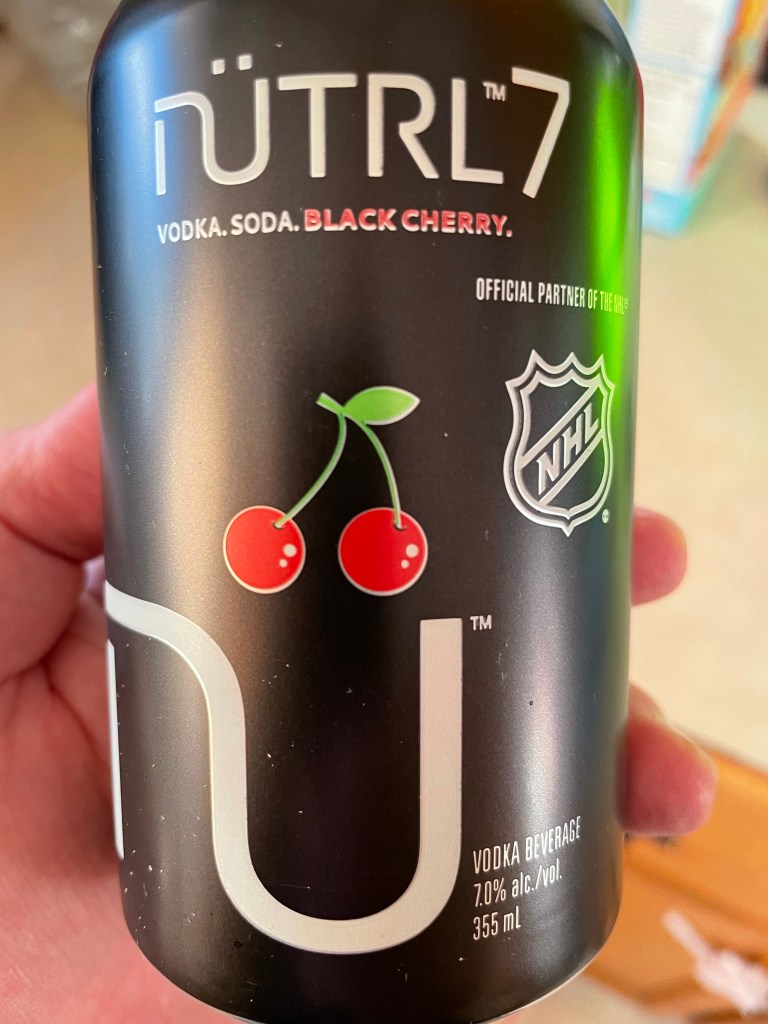
This brings me to the product I tried last week…. While visiting my in-laws last week, my mother-in-law introduced the above-shown product as “something new” for my father-in-law to try. He had a can, but preferred his beer. I decided to try one, since it boasts zero sugar and zero carbs (a discernment that ins’t always made). I tried a can and I have to say that considered its ingredient content, it was pretty good. It became my vacation go-to beverage for my week away.

Sitting at 5% alcohol content, this is a vodka-soda drink that’s light, refreshing and easy to drink. There were a variety of flavours that included lime, lemon, raspberry and grapefruit. I tested my blood prior to drinking the first one and was sitting comfortably in the 5’s, and was still sitting in that range after two cans and a couple of hours’ elapsing. I was tickled pink (the vodka MAY have had something to do with that) and it was nice to find something that ACTUALLY allows me to enjoy a drink without affecting my blood sugars.

The can you see above is one of a case I purchased once we got back home to Regina. Sitting at 7% as opposed to 5%, these come in three flavours: black cherry, blackberry and raspberry. they’re pretty good and the added 2% DOES make a difference. But I once again, they seem to have no measurable effect on my blood sugars, which is nice. While looking for a case of this stuff, I realized that there are a few of these drinks that fall into the same category. I’ve spent so much time getting on the “making fun” bandwagon against White Claw, I never stopped to recognize that a can of the stuff is only 1 gram of carbs!

Anyway, I wanted to offer up this brief review of this product. As anyone with Type-1 Diabetes is aware, enjoying a drink is painful at the best of times, so this is definitely a helpful aspect that allows T1D’s as much normalcy as possible. One simply needs to remember all the other fun details, such as the consumption of booze ties up your liver as it processes the alcohol, so it can cause your blood sugars to drop, carbs or not. No matter what your plans or what you’re drinking, remember to make certain to check your blood sugars regularly and have a safe plan for administering some fast-acting carbs if needed. ☯️

Pain Is All In Your Head…

No, really. That’s not just a title…. Pain really IS all in your head! That’s not just me, trying to act like a tough guy. Pain is basically the body’s way to let you know that something is wrong. Either you have a visible or unknown injury, you’ve caused damage or something has caused damage to you, or you’ve been exposed to something that causes damage to you tissues.

According to an article by Medical New Today, pain happens when a signal travels to the brain for interpretation. Once there, the brain sends back a signal telling the body to respond. I’m paraphrasing there, but you can read the article. The point is, something hurts you, a signal is sent to the brain, the brain says, “that’s not good, stop doing that” and your body respond by feeling the unpleasant sensation we know as pain.

For most pains, like touching a hot surface, our body has a reflex system that forces us to pull our hand away from the heat source. This can apply to a number of different sources of pain, but I don’t want o dive too deeply into this aspect. Like I said, you can read the article. The article describes the types of pain as acute or chronic, with the former being sharp, intense pain that goes away shortly and the latter being long-lasting in some way or another. Both types have sub-types of course, because nothing is ever simple.

According to another good article that I found on HealthLine.com, the types of pain can be described as acute, chronic, nociceptive, neuropathic and functional. The articles describe all of those types in detail, so once again, I won’t get into it, but you can read the article. The important ones to remember are nociceptive and neuropathic, especially if you have Type-1 Diabetes.

Nociceptive pain is the one that’s caused by injury. Cuts, bruises, tissue damage… that fun stuff. This can be important for someone with Diabetes because those wounds need to be treated quickly and may have difficulty healing, depending on how well your Diabetes is controlled. Since folks with Diabetes are also prone to infections, treating and caring for nociceptive injuries becomes doubly important, from a health standpoint. It’s important not to ignore these types of pain.

Neuropathic pain is particular to folks with Diabetes as well, since it’s caused by nerve damage, which can be a side effect of Diabetes. Neuropathic pain is particularly unpleasant and since it’s associated with tissue damage that the patient generally can’t test themselves, almost always requires medical intervention. Other conditions can cause it, as well. My father has a degenerative spine, which causes neuropathic pain that’s also chronic, meaning he is in a constant state of pain. To add insult to injury (no pun intended) he’s also Type-1 Diabetic.

But now that we have the science stuff out of the way, let’s discuss the types of pain that you CAN ignore… Are there any? Since pain is the body’s way of telling you there’s something wrong, should you really ignore any of them? My thought is that there are forms of pain that you can work through. For example, if you’ve had a particularly rough workout, you’ll feel “the burn,” or an aching of the muscles.

When you workout, you cause micro-damage to your muscle tissue. As this damage is healed, you can experience passive aching and bruising and that fun feeling of being unable to use those muscle groups to do little things like, oh, I don’t know… get out of bed gracefully without looking like your limb has been lopped off in a bad Monty Python sword fight. Have at thee! This type of pain is temporary and will usually pass on it’s own, but you can certainly help it along by maintaining good blood circulation to those tissues, eating an appropriate diet containing protein and fibre that help heal and build muscle tissue and even icing.

If it’s particularly bad, you can wuss out and take something over-the-counter, like ibuprofen or acetaminophen. But those are bad habits you don’t want to start unless you really have to. If any pain resulting from fitness is sharp, debilitating and isn’t going away, you may need medical attention. Muscle and ligaments tears are no joke and can sometimes be mistaken for an after-workout burn to some people. Whether internal or external, an injury requires medical attention is there’s blood involved, seeping out or pooling beneath the flesh.

Other situations that would require immediate medical attention are bone protrusions, whether they break the skin or not, hanging appendages (like an eyeball popped out or something) or paralysis of a body part. Learning and recognizing the acute pain associated with things like a heart attack, or “referred” pain. This means something like sore neck and arm when experiencing a heart attack.

Hopefully, your workouts aren’t extreme to the point where you’re dealing with protruding bones and heart attacks, but knowing the difference between these types of pain can mean the difference between maintaining one’s health or facing some serious problems. Different people deal with pain in different ways, as everyone experiences pain differently. What seems like a passive after-workout ache to one person may seem debilitating to another. So, it’s important to know your limits and how you experience things.

Pain is all in your head. Literally. This doesn’t mean that certain levels of pain can’t be managed and others should be ignored. The healing of injuries can be difficult for Diabetics, so it’s important to pay close attention, clean and bandage any injuries you get and get to your health professional if they don’t heal within days. Eat well, exercise regularly and keep your blood sugars in check and healing will be all the easier. Have you ever noticed that those three things (diet, exercise and blood sugars) are repeated through most of my posts? It’s almost like they’re important, or something…. ☯️

Longer Life Or Happier Life…

There’s a particular trend that seems to take place where people usually fall under two groups: those who take their health and fitness in hand in order to be healthier and live a longer life and those who claim to only live once and they’d rather spend a short time being happy, enjoying the many indulgences of life. Although the latter would seem like the easier way to go, it doesn’t necessarily equate a happier life; especially when you’ve been “living” your happy life and time and health has caught up to you…

I’m a big fan of the occasional indulgence. Many of you may have read about my occasional meal that contains enough carbohydrates to kill a small army. Although I make an effort to control my carbohydrate intake, sometimes a person’s just gotta have their damn burger! But outside of wolfing down a patty of meat with cheese, toppings and a soft, toasted bun (great, now I’m hungry) I try to focus on lean proteins and salads in order to help control my overall weight, energy and blood sugar levels.

Having enough discipline to maintain ones health is not always an easy thing. But uncontrolled Diabetes can lead to a host of very unpleasant and debilitating conditions that will make your shorter, “happier” life more torturous than it needs to be. When you consider blindness, loss of limbs, organ failure, not least of which includes the kidneys (you may have heard that you can’t live without these) circulatory and heart issues, it rather seems as though throwing caution to the wind is an unreasonable way to live.

I used to have a friend back home… I say “used to” because I haven’t spoken with him in almost 20 years and if I’m being honest, I don’t even know if he’s alive. But I remember he used to take really bad care of himself, eating sugary goods with abandon and never testing his blood sugars. He was in his 20’s and had been diagnosed as Type-1 early in his teens. I’ve seen this trend a lot; where a diagnosis late in life can be more difficult since the person has already developed bad habits.

I was diagnosed when I was 4 years old and my household was already pretty limited diet-wise, due to my brother. So I can see where he was coming from. But I was the manager of a local pharmacy back home and we had a special on soda products (I’m sure you know where I’m referring to). He walked in and grabbed a cart. He grabbed four, 2-litre bottles of sugared cola and added them to his cart. I walked over to say hi and asked him if a family member had sent him out on an errand. He replied that no, the soda was for him.

Free choice is also an important aspect to a happy life, folks. And I hate feeling the need to ask a question of someone that borders on being intrusive. But a once-over of my friend showed him to be pale, sweating profusely and looked as though he hadn’t slept well in weeks. He had his hair cropped close enough to his scalp that I could see scar tissues from the bed sores he developed from his many Diabetic comas. Based on his current condition, I could tell he was running extremely high.

I asked him if he felt he should really be drinking that stuff, to which he replied, “It’s all good, man. Just gotta take more insulin.” Oy vey… Are you serious? I totally get that one should be able to eat what they want in relation to taking insulin. After all, that’s kind of the point. And that’s what a non-Diabetic body does. But what about miscalculations? What about consumable products that may not necessarily match up with the carb levels indicated on their nutritional labels? There’s a HUGE margin for error.

Not least of which is the aspect that all of this can be aggravated if you have a shitty or non-existent control of your blood sugars. That was the case with my friend. He had no control over his blood sugar levels and was always running high. I can’t imagine the pain he was in and the uncomfortable existence he was in. Maybe in his mind, since he was suffering anyway, his indulgences were his only little form of happiness. But it’s kind of a “chicken and the egg” scenario…

They say we only have one life to live. The problem is that no one knows for sure. That being said, a person owes it to themselves to try and take the best care of themselves and their health as possible. Not only do you deserve a long, happy life but there are ways to be happy without letting go of your fitness and eating like a trash receptacle. Enjoy the “occasional” treat and know how to bolus properly for it. Exercise consistently but don’t look at it as a chore. Do something physical that you enjoy. I LOVE cycling. And it’s excellent cardio and exercise. It doesn’t have to be difficult, you just need to break the cycle of apathy.

Diabetes doesn’t discriminate. And while you may lie on your death bed claiming you got to enjoy yourself for the short period you lived, wouldn’t it make more sense to live twice as long AND be able to say you enjoyed yourself? Even controlled Diabetes will still shorten your lifespan. If you give Diabetes an open door, it’ll squeeze its way in and mess you up. And like the image above says, not only will it kill you, it will hurt the whole time you’re dying. Take care of yourselves. ☯️

Stress? We Don’t Need No Stinkin’ Stress…

You guys may recall that I posted a video back in May after my first doze of the Pfizer COVID-19 vaccine. I posted the video in the hopes that it could be of assistance to other Type-1 Diabetics who were considering doing the smart thing and getting vaccinated against the virus. Now, I’m not here to debate the merits of vaccination or to argue about what any individual person’s choice may be. Based on my life and my thoughts on the matter, vaccination was a smart thing for my family and I. I have no regrets.

Without writing out the entire content of the video I posted, I’ll briefly describe what happened after my first dose. I walked into the pharmacy about ten minutes before my scheduled appointment. My blood sugars were relatively normal. Bear in mind, I wear a continuous glucose monitor. I get the injection. Less than an hour later, my blood sugar spike to above 22.0 mmol/L! A couple of important details to point out include the fact that it climbed from a normal range to that level in about an hour and that it happened SO fast that my pump didn’t even register and have time to set off the “High” alarm at 14.0 mmol/L like it’s programmed to. Still with me? Good.

I’m used to having things screw up on me on occasion, so I drank some fluids and slowly bolused and brought my blood down to a normal level before going to sleep. It wasn’t until a week later when I was at the pharmacy filling out one of a bajillion prescriptions, that the pharmacist asked me about any symptoms after receiving the vaccine. I told her I hadn’t suffered any symptoms that I knew of. My blood sugar had spiked, but nothing vaccine-related. She was shocked at the spike and asked me fill out a form for the health authority as she felt it may have been a side effect of the vaccine.

It took a few weeks for the health authority to get back to me, but their determination was that the spike in blood sugars were a result of “stress associated with getting the COVID-19 vaccine.” Wait. What? Are you fuckin’ kidding me? So, I’ve been getting near-constant injections and needles almost since the cradle, I’ve had scores of vaccines and immunizations and I used to work a job where my life was genuinely in peril on more occasions than I can count, and you think getting this particular vaccine “stressed” me out? What a joke! By that definition, why didn’t everything I listed above cause a massive and rapid spike in blood sugars? None of it ever has…

I was pretty pissed off at this response and I made it clear to the caller, who wasn’t a doctor or health professional but simply passing on the information to let me know I was good to get my second dose. I explained that I was in no way stressed about getting the vaccine and that the health authority’s assessment was inaccurate. In fact, besides being a little tired I was quite relaxed and chatting with the pharmacist while getting the vaccine. I explained that I felt that it would be foolish to write this off as something trivial, considering Saskatchewan has somewhere near 100,000 people with Diabetes and it could potentially be dangerous for someone with less control than I have. The caller assured me that everything was documented. Great.

I can just imagine that if I DIDN’T wear a continuous glucose monitor and had as much experience as I do with managing my own blood sugars without an ER visit, the night would have turned out quite differently. I would have easily gone to bed, given that I was sleepy from the extreme high. Without any monitoring, the pump would have continued with nothing more than the base rate of insulin and I could have faced some dire results.

According to article posted by Diabetes UK, “common ingredients in the coronavirus vaccines include sucrose (a type of sugar) and salt.” Well, ain’t that a bitch??? That would have been nice to know. The article carries on by later indicating that the body produces an immune response because of the vaccine. The “body needs energy to produce this immune response, so it may release some extra glucose (sugar). This is what leads to your blood sugar increasing.”

Setting aside the fact that I can’t help but feel that this is something that perhaps I should have been warned about, the combination of existing sucrose in the vaccine (however minute the amount) mixed with my own body’s immune response resulting in the release of glucose into the bloodstream is what resulted in my spike in blood sugars. I would have liked to assume that the health authority should have known this. Unless the immune response is what they meant by being stressed. Who the hell knows?

I attended Coronavirus Vaccine 2: Electric Boogaloo, last Friday and this time I was ready. Extra Gatorade and fluids were available and I watched my blood sugars like a hawk. I’m happy to report no issues, besides the typical crap one feels after getting any immunization. I felt exhausted for a couple of days afterwards, but since I made a point of incorporating my meals around the vaccination, there was no reflexive release of glucose by the liver and my blood sugars stayed consistent. But this just goes a long way towards making it clear that when I complain about how Type-1 Diabetes affects EVERYTHING, I’m not exaggerating. ☯️