Better Days Are Not So Far Away…

Despite our efforts to avoid them, we all have bad days. Typically and for the most part, we suffer through them, deal with them and let them pass after a good night’s sleep. Remember I said that; it will apply later on in the post. But most people will actively do whatever they can to avoid bad days, despite the fact that they’re essentially unavoidable and a part of life.

Last week, I experience one of the worst “bad days” that I can recall in quite some time. What exactly happened to make it a bad day is not important (and I don’t need to come off like a snowflake for my woes) so much as how I dealt with it. Given everything I’ve been through in my life, I’ve prided myself on being able to maintain healthy tools to manage my emotions, more specifically anger. Please note that I said “manage” my anger and not control or suppress it.

Suppressing or bottling up one’s anger is a little like shaking a bottle of carbonated soda (something Nathan loves to do). Although the bottle will hold the soda, pressure will continue to build and gather until eventually the cap will pop and that pressure will explode outward, saturating everyone and everything near it. Anger is very much the same; if you don’t have a healthy outlet for it, it will eventually build up enough pressure to eventually burst and affect one’s entire environment.

Unless someone is close enough to me to have been told this fact, people believe I maintain my calm because I study the Buddha Dharma when in reality, I study to Buddha Dharma to help calm me. The difference is important because like any other living person, I feel and experience the entire spectrum of emotions and they affect me very much in the same way as anyone else. But it’s how I choose to deal with these negative emotions that’s important.

Just to be clear, anger, sadness and any other emotion labeled as “negative” still has a purpose, even if we dislike them and don’t assume so. Much like feeling fear let’s us known that we are potentially in danger, anger and disappointment tell us something about ourselves and the situation we’re facing that we may not have been aware of, otherwise. It doesn’t mean it isn’t normal to dislike being on those situations or that something shouldn’t be done about them. Cue the advice…

Meditation can be a fantastic way to help alleviate the effects of negative emotions. By entering oneself and allowing oneself to calm, breathe and focus on the lighter things, anger will often seem to lose its strength. This may not always be the case and may not work for everybody. But it’s definitely a good starting point. Finding the time and space to do this can be challenging, but never impossible.

Physical fitness is also an important aspect. Pushing yourself through a rigorous workout that can include martial arts or just hitting a good ol’ fashion punching bag can go a long way towards cooling the intense heat that your anger may have created within your soul. Even something that isn’t intense, like taking a walk, getting some fresh air and being alone with your own thoughts can be quite effective.

Sometimes there just isn’t anything that can be done and you have to just ride it out. This can be tough, especially if you’re already angry and you have to be in the same environment as loved ones and that anger become clear and obvious to them. An important step is not to bottle it up and isolate yourself. Letting those loved ones know WHY you’re angry is not only important towards making sure they know it isn’t directed at them but also pursues potential means of help as they could say or do something to provide relief from that anger.

Ultimately, sometimes all one can do is call it a day, hit the sack and get a solid night’s sleep in order to recharge one’s batteries and let one’s soul reset. This is what I did. Once I recognize I simply had no life left in me to deal with the day, I kissed my wife goodnight and let my head hit the pillow. In keeping with the mood I was in, a strong thunderstorm raged through most of the night. The next day was a new day with new challenges so I was grateful for having gotten the extra rest. Anger is a normal part of life. The idea isn’t to avoid it and the important thing is how you DEAL with it; and deal with it, you must. ☯️

Some Sleepy Facts For A Monday Morning…

It’s the start of the work week for most, and I’m sure we can agree that all of us would prefer to roll over, pull our blankets in closer and just keep sleeping until Monday goes away. Much like Garfield, most people aren’t fans of Mondays. ever wonder why Garfield hates Mondays so much? It’s not like he has a job to go to or any responsibilities. But I digress…

The topic of today’s post is about naps. I love naps. I often think back to my youth, when I would have had much more free time to grab a nap here and there but neglected to do so. It reminds me of my son, who outright refuses to nap and I keep telling him he’ll regret that choice when he gets older and no longer has the option. Our two-year old still gets put down for a nap and even when he fights it, ends up getting some sleep. Ah, the innocence!

I’ve written about naps in several previous posts and the reality is that naps are actually beneficial, as long as you don’t overdo them. Like everything else in life, there needs to be a balance. But if you nap in reasonable increments for short periods of time, they’ve been shown to lower the risk of heart disease, improve one’s memory, increase productivity and improve one’s mood. In Japan, nap periods during the workday are encouraged as they’ve already acknowledged that it increases the company’s overall productivity.

I once worked in a call centre (please don’t hold that against me) and they had a break lounge with dim lighting and soft, plush chairs for a staff to use their 15-minute breaks to grab a quick snooze. I was taken aback at the prospect that someone could actually nap for that short a period of time. But once I tried it a few times, I was surprised at how much good it did. Some experts I’ve read about have explained that sleep happens in four stages of a cycle, starting with the “falling asleep” stage, followed by the slowing and relaxing of the body, followed by slipping into deep sleep and finishing off the cycle with rapid-eye movement sleep, or what’s known as REM sleep.

So how long should one nap? This is a deeply debated aspect, since most professionals tend to agree that naps shouldn’t be TOO long or you risk falling into a deep sleep that will negatively affect the remainder of you or day and potentially prevent proper sleep at night. For the most part, I’ve always read that a 15 to 20-minute nap was enough to get you to the relaxing and slowing of the body stage, without allowing you to slip into deep sleep, which can be much more difficult to come out of.

The World Sleep Society claims that naps should be less than 45 minutes. This makes sense, since slipping into “deep sleep” can make waking up difficult and leave you feeling groggy and make it harder to push through the rest of your day. There’s nothing worse than feeling as though your nap made things worse or made you more tired. The whole point is to gain a bit of rejuvenation, right?

I read an article where Dr. Sara Mednick, a cognitive neuroscientist with the University of California, explained how taking an hour-long nap can be ideal since you start to slip into REM sleep. This is where all the beneficial aspects of sleep start to kick in; body regeneration, immune system repair and improved cognitive function. And coming out of REM sleep is actually way easier than coming out of a deep sleep. Apparently. I hate waking up in general. I’d live in the matrix, if it meant I could stay asleep. But once again I digress…

Napping through all four stages of a sleep cycle can do wonders and if t you have the time for it in your day, can increase your productivity and mood significantly. But even if you have time, anything more than an hour, hour and a half and you’re looking at possibly interfering with the sleep you try to get at night. So it’s important to find some balance. If you grab yourself a nap and still feel tired and/or exhausted, it could be a sign of something else so you shouldn’t be afraid to discuss it with your doctor or medical practitioner.

Now if you’ll excuse me, as much as I’d love to keep napping I have to get on with my Monday. perhaps the day will bring an opportunity for a snooze. We’ll see… ☯️

On The Road To Recovery…

It’s been something of a rough week. This head cold has totally kicked my ass and made me feel like I was dying. Okay, okay, maybe I’m exaggerating just a bit, but I was on a downer there for a while. It started last Sunday night when I realized that my throat was feeling scratchy and my nose wouldn’t stop running. As I’ve often mentioned in the past, just about every little bug that floats by latches on to me, thanks to good ol’ Type-1 Diabetes.

I worked from home for a few days in order to recover. This is a definite advantage from previous jobs I’ve held, where my presence was actually required and things couldn’t be done virtually the way I do them now. I think it stands to reason that one can’t work from home as a police officer but even prior to that; working from home as a restaurant or pharmacy manager wasn’t a possibility, either. This usually meant going into work, even when I was feeling sick. This is a terrible thing, and not something anyone should have to endure.

I’m making it sound a bit more dramatic than it needs to be. After all, I had a small head cold, I wasn’t dying. But the sad reality is that not everyone has the benefit of continuing to work from home when ill, or the benefit of paid sick days. I think we can agree that everyone has bills, debts and responsibilities and not everyone can be absent from the job for several days to recover. And some employers are unfortunately cruel enough to worry only about their bottom line and may take action against an employee who does. I’ve been there.

Luckily, such is not the case for me now. I’m blessed to have an understanding employer who not only provides me with paid sick days but also has policies allowing remote work, so I was able to keep hammering through while sitting in my jammies and downing cold meds like they were tic tacs. Granted, it’s important to remember that pushing yourself is not always a good thing, either. It’s important to allow the body some genuine rest and even when you’re sitting at a desk, it isn’t comparable to lying down and staying warm and hydrated.

Allowing yourself some recovery time, even for common colds (which there’s no such thing, FYI) is an important step towards maintaining one’s health and wellbeing. It’s also extremely important as it relates to good Diabetes control and blood sugar management. I had a couple of readings this past week that will likely make my endocrinologist’s eyebrows raise but I worked it out. No matter what your work or life situation, just remember that you can’t work and pay the bills if you get worse and end up hospitalized.

Take the time to care for yourself first. Then you can hammer at the challenges of life afterwards. As I’ve often said and written, you need to take care of yourself before you can take care of anyone/anything else. That’s a hard lesson for any of us to embrace, especially when we’re committed to what we do and the responsibilities we have. But self-care ALWAYS has to come first. Food for thought…☯️

The Pebble In Your Shoe

The title refers to a much-referenced quote by Muhammed Ali. The full quote reads, “It’s isn’t the mountains ahead that wear you out. It’s the little pebble in your shoe.” It’s usually referenced to represent how the smaller challenges are what usually wear you out along your journey, as opposed to reaching the ultimate goal. That being said, it can also apply to one’s physical health. I recently wrote a post about things one can expect when living with someone who has Diabetes. if you missed it, you can read that post here.

Illness and pain are subjective to the person and it can be REALLY hard to compare oneself to another person. A paper cut can seem like a trivial pain to one individual, while another individual may do everything to avoid using that hand until the paper cut heals. One person may work through a common head cold, going to work and even attending fitness sessions while they recover. Another person will be completely on their ass and on the edge of debilitation from that same head cold. It’s all subjective and dependent on the person and their tolerance.

As much as I’d like to agree that one should just toughen up, hammer through and beat any illness before it beats you, there’s something to be said for taking the time to recover, even when it’s something minor. People tend to forget that the symptoms we feel are not only part of the overall illness but also part of the body’s defence mechanism. A good example is a fever. People tend to try and take medication to reduce or eliminate a fever. In truth, the fever is the body’s mechanism to kill whatever is making the body sick. That’s why it’s important not to ignore symptoms and to allow the body the time it needs to recover.

I’ll fully admit that I’m bad with pushing through. I recognized this last weekend when I started to feel a bit off but continued to do yard work, chores around the house and prepare meals. By the time Sunday rolled around, I started to seriously feel like shit. It was all in my head and I don’t mean that I was imagining it. My head felt heavy and foggy, my nose wouldn’t stop running, despite there being no airflow through it. I ended up sleeping downstairs and spent most of the night up, tossing and turning, taking nasal spray every couple of hours, which we all know is WONDERFUL for the body…

At time of posting, it’s begun to pass and I’ve returned to the office. The important thing to remember, is not to ignore illness when it hits. I don’t need to remind everyone that absolutely EVERYTHING affects Diabetes and as a result, even a small head cold can have nasty results. Take time to rest. This can be tough, depending on one’s adulting responsibilities. Not everyone has the sick days available to take a few days to recover from a cold, especially if they need to save them for more serious illness down the road. Given the way of the new world, maybe you can work from home. That’s what I did, for a couple of days.

The important thing to remember is that your health has to come first. Small colds and illnesses can seem menial but like the small pebble in one’s shoe, it can wear you down worse than the mountain you face. And because this is me and given the subject matter of today’s post, stay hydrated, test your blood often and if your body is weary, for the love of the light, SLEEP! Take rest when you need rest and can get rest. Trying to hard to push through can weaken one’s body further and lead to worse illness. Food for thought… ☯️

Supplementation, Part Trois…

This is my third time posting this material and no, I’m not being lazy. I consider the consumption of vitamins and minerals to be an important part of maintaining one’s health. It’s no surprise that modern nutrition is sorely lacking in most people and with every reposting of this material, I’m reminded of the importance of taking a steady multivitamin on a daily basis; a fact my doctors keep reminding me of, as well. So, bearing in mind that I’m not a doctor or nutritionist, here’s what I posted all the way back in June of 2019. Enjoy!

One of the key reasons behind the consumption of food is to obtain carbohydrates for energy. The human body requires energy to carry on normal functions and, well… stay alive! But what else do we get from the food we eat? A proper diet will also include a number of vitamins and minerals that we require to maintain proper health, growth and energy levels within the body. We’ve all heard about getting enough vitamins from a young age. I remember getting my Flintstones vitamin everyday as a kid.

But if you’re like most people, you’re likely wondering what these vitamins are for and what they do. My goal is to cover off the main ones here:

Vitamin A: This is an all-around vitamin that provides a number of functions including but not limited to the proper health of various bodily functions, tissues and helps to fight chronic disease and is known to be good for the eyes.

Vitamin B: This one is a bit complicated, as there is a large grouping of enzymes, vitamins and minerals that fall under the “B” category. In general, B-vitamins are used for energy production, immune function and absorbing iron. Some them include B2 (riboflavin), B3 (niacin), B9 (folate) and B12. There are a few more that I can’t recall, but B12 is considered amongst one of the most important of vitamins overall because it helps you turn food into energy.

Vitamin C: At some points, this one has been referred to as the sunshine vitamin. I’m thinking that’s mostly because people’s main source of Vitamin C is from citrus fruits. But this vitamin also helps with iron absorption, immune function and is a natural antioxidant that helps with the elimination of free radicals. Eating citrus fruits are also what sailors used to eat on long voyages to prevent scurvy.

Vitamin D: This vitamin helps with the strengthening of bones and teeth. Our bodies are designed to self-generate this vitamin naturally through exposure to sunlight, but obviously that needs to be done in small doses. Modern life has created an environment where more people spend their time indoors, away from the sun. So supplementation becomes important.

Vitamin E: A pretty straight forward vitamin, this one helps with proper blood circulation and clear skin.

Vitamin K: This vitamin is essential for blood-clotting. In order words, if you’re deficient in this vitamin, small cuts or injuries can cause excessive bleeding that can become dangerous.

Folic Acid: We hear people speak about this one as being necessary during pregnancy. And they would be correct! Folic Acid helps to prevent certain complications during childbirth but is important to everyone for proper cell renewal. This one is also known as Folate, or Vitamin B9 (as listed above).

Calcium: Most people should be familiar with this one. Teeth and bones, people! Teeth and bones! Good calcium levels are required to keep those body parts healthy.

Iron: This helps to build muscle tissue naturally and helps with proper health of the blood. As an interesting sidebar, it’s also what makes your blood red through the reflection of light!

Zinc: Immunity and Fertility. I’m a little unfamiliar with this one and haven’t had the opportunity to research it a great deal.

Chromium: This one is near and dear to my heart. Because it helps to control blood sugar levels. Chromium is what helps all the systems of your body to get the energy they need when they need it. Some traditional medicine practitioners will suggest Chromium supplements for Type 1 Diabetics who may have difficulty in maintaining proper levels.

Magnesium: This one helps your body to absorb all the other vitamins and minerals. It also acts as something of a relaxant to muscle tissue and play a role in proper muscle contraction.

Potassium: This mineral helps with the proper hydration of your body and helps to control blood pressure.

There are many others of course, but I’ve tried to cover off the main vitamins and minerals required for a proper diet. We get most of what we need by eating regularly and including a variety of healthy foods. A lot of people take a daily multi-vitamin, which is fine. But unless you are experiencing symptoms or unexplained illnesses, there shouldn’t be a need to actively try and take added amounts of anything. Your medical practitioner should be able to advise you if further supplementation is required. For example, patients who are recommended to take Folic Acid and Iron during pregnancy.

Obviously, all of this is extremely important; not only for proper health and fitness, which is important to me, but to help with Type 1 Diabetes as well. Taking a daily multivitamin can help to ensure that your body gets everything it needs, in combination with carbohydrates, lean proteins and fibre. My wife Laura originally gave me the idea for the post I wrote in 2019 when she asked about B-vitamins. Every time I re-post this material, I think of her. The credit for this post is all her! ☯️

All Things Good And Bad…

I’ve written a handful of posts about things you should never say to someone with Type-1 Diabetes… And without getting into any of them, let’s agree that there is a shit ton of different things that, unless you have or know someone who has Diabetes (and even if you do) you should never say/ask them. It’s not as bad as being asked about one’s faith, orientation or personal beliefs, but asking about one’s medical status and/or requirements is right up there. I’ll step off my soapbox now and get to the actual point of today’s post.

Although there are plenty of things you shouldn’t assume or say to someone with Diabetes, living with one can be all the more difficult. More often than not, people don’t know what they’re get into when they become involved and begin to live with someone who has Type-1. Because of this, I consider my wife to be one of the strongest people I’ve ever met because she puts up with more of my shit than a wheelbarrow could hold. But previous relationships haven’t fared quite as well. They’ve ALL ended up on the losing end, mostly because despite claiming they understood certain aspect of Diabetes, they really didn’t. And now, let’s get into a list of things you can expect while living with someone who has Diabetes…

  1. We’re moody as shit: People in general don’t tend to realize that fluctuating blood sugars affects just about every system in the human body. Every. Fucking. System. As a result, people with Type-1, even when properly controlled can experience mood swings and crankiness. This happens even when it seems as though it shouldn’t and although most of us do our best to control it, it’s important to remember that it isn’t personal. It’s also not an excuse, and someone who regularly gets pissed for no good reason should look within and consider some better control methods.
  2. There’s medical stuff all over the place: I have at least three glucometres. I have boxes of sensors, insulin reservoirs, vials and various Diabetic equipment. It can get tedious and take up space. If we could live without it all, we would but the reality is that every piece of medical equipment in our environment is necessary for good control and our overall health.
  3. We get sick with EVERYTHING that floats by: “Man-flu” notwithstanding, our immune systems make it so that we catch every cold, flu and annoying bug that happens to float by. As a result, we tend to get sick a lot and some people tend to interpret this as being a hypochondriac or even Munchausen. The truth is, it’s more annoying to us than it is to you, despite the fact you may have to deal with us being sick, often.
  4. There are unfortunate “surprises”: Picture this… You meet someone you make a connection with, you go on a few dates and before you know it, you end up back at their place or they end up at yours. The evening starts heating up and clothing starts falling off… Before this slips dangerously into a steamy romance novel (I’m not sure I’d be great to write that genre), you notice tubes and devices attached to the other person’s abdomen. Turns out they have Diabetes and are using an insulin pump. maybe even a CGM, making them look like a bad, 80’s B-movie cyborg. Communication and forthcoming is important. It’s totally one’s right to choose not to share that information but for the Diabetic in the equation, it’s important to recognize that the topic will come up eventually, so you may as well be open about it.
  5. Plans will get cancelled: The unfortunate reality is that if one is suffering from an extreme high or low (blood sugars), they may not necessarily want to go out to whatever plans were made, be it a restaurant, a get-together or otherwise. It may even interrupt and kill the mood if one is seeking some “quality” time. But it can make things difficult for just about any plans one may be seeking to make.
  6. Everything takes planning: I saved this one for last because it’s the one that grates on my soul the worst. Even the smallest of things require intricate planning. Going out on errands for an hour? Gotta test my blood, remember when I ate last and have a contingency plan in the event I suffer a low, depending on where I’m going. Karate class? That’s even worse. Even if my blood sugars are fine, I need to consider how my blood sugars will be affected depending on whether we have a more cardio-heavy workout or if it’s more technique-based. Fast-acting carbs are a must, and I have to be ready for the embarrassment of stepping out of class early, should m y blood sugars refuse to cooperate.

Having Diabetes can be tough, but refusing to own one’s truth and face what needs to be faced will make it even tougher. I know some people with Diabetes who have refused to take the appropriate steps and be open and communicative about their condition. Such is their right. But all of them I’ve encountered are in the ground, now. A pretty morbid reminder that being open and willing to talk to the people in your inner circle about your Diabetes is a key component in maintaining healthy control. And last but not least, you should NEVER compromise your health to accommodate someone who won’t understand or isn’t willing to meet you halfway. That’s why I’m so lucky. Food for thought… ☯️

Sweatin’ To The Facts…

Most people don’t like to sweat. And that makes sense, right? It’s uncomfortable from a dampness standpoint. Humans have an instinct to try and stay warm and dry, and being all wet from sweat tends to contravene that. And it’s considered somewhat taboo from a societal standpoint as well. It’s seen as gross, especially if you it’s seen on someone in a work or social setting. And last but not least, depending on one’s body chemistry and what cocktail of bacterial cultures may be living on you (depending on one’s personal hygiene), it can lend for some rather pungent odours.

From a fitness and physiological standpoint, sweating is not only important but also beneficial to the human body. there are a number benefits to heavy sweating, including the release of toxins, alcohol and other waste byproducts of the body, which helps with detoxifying the body. It also helps with the overall beneficial increase in blood circulation, which has a whole score of other benefits outside of the sweating aspect. But besides being gross and making people think something’s wrong with you, what are some other benefits of sweating?

According to an article posted by HealthLine.com, heavy sweating during exercise can help to potentially reduce the amounts of heavy metals in the body. This is important for the detoxifying process. This is also true for the elimination of certain chemicals that can be harmful on the body in the long term. The sweating process is said to be an excellent elimination route for these chemicals. Sweating also helps with the elimination and removal of certain bacteria from the body, which can be beneficial.

People usually view sweat as a nasty thing but it’s actually a natural and necessary function of the body. Sweating is the body’s primary way to cool down, which is why we tend to do it when we exercise. It also happens when we’re sick as a result of having a fever. When that fever breaks, sweat will appear. The idea is that when the warm sweat evaporates on your skin, it cools your body temperature. All the other potential benefits mentioned above are just icing on the cake. Although sweat contains traces of ammonia, urea and salt, it doesn’t smell bad, in and of itself. The odour typically comes from whatever your sweat mixes with.

As with all things in life, sweating requires a balance. If you sweat too much, it can be a sign of low blood sugars or certain nervous system and thyroid disorders. If you sweat too little, you can potentially face dangerous and life-threatening overheating of the body. This can also be a result of dehydration. If you don’t sweat normally and consistently when exercising, it should be addressed in order to prevent further issues.

If you see someone at the gym who’s completely drenched while working out, don’t judge and keep your comments to yourself. Either they’re pushing as hard as they SHOULD, since a workout isn’t a workout if you don’t sweat through it, or they have a condition that makes them sweat excessively, such as hyperhidrosis. If you find yourself sweating in awkward and inappropriate times, like in the office with huge pit stains on your dress shirt, there are several treatments and prevention methods you can talk to your doctor about, in order to stem the problem. The important thing to remember is not to sweat it (see what I did, there?). ☯️

Bringin’ On The Pain…

Over the regular course of the year, Tuesdays hold a particular place in my schedule, for a variety of reasons. It’s the only weeknight that I don’t have karate classes, with Mondays, Wednesdays and Thursdays being the norm. Fridays are a weekend night and usually reserved to hang out with my son Nathan and then the actual weekend hits. Because of this, Tuesdays offer a unique piece of time in my week that I can’t find elsewhere. I often use this time to do some reading, writing or take care of chores like laundry.

Since I don’t have karate classes on Tuesdays (at least for now), I try to do something outside the martial arts realm. It’s always a good idea to keep the body moving and I enjoy changing things up. Doing so can help with weight loss and keep one engaged in their personal fitness journey. Keeping yourself engaged and interested in your fitness can mean the difference between hammering forward in your fitness goals or getting lazy and taking too many breaks, which inevitably lead to a self-fulfilling prophecy of going long periods without exercise.

A short start back to the cardio world.

As any of you would have read in light-knows how many posts last summer, I’m a big fan of cycling. I can comfortably manage about 20 kilometres or so in about a hour, which is a decent outing. But considering that I’m gone most evenings due to karate, I try to do things a bit different on Tuesdays. When the stars align and I actually remember to bring fitness apparel, I work through my lunch hour on Tuesday. I know, I know… bad habit! But I do eat, I just keep working through that hour. Moving on!

I work through my lunch hour and exit the office an hour earlier than scheduled and make my way down to the office tower’s gym. There, I’m able to take advantage of various cardio machines including elliptical, treadmills and a weird stepping machine that I haven’t figured out how to use yet. there’s also stationary bikes, but I peddle enough on the weekends, so I steer clear of those. I usually opt for the elliptical, since decades of martial arts have rendered the cartilage in my knees nonexistent.

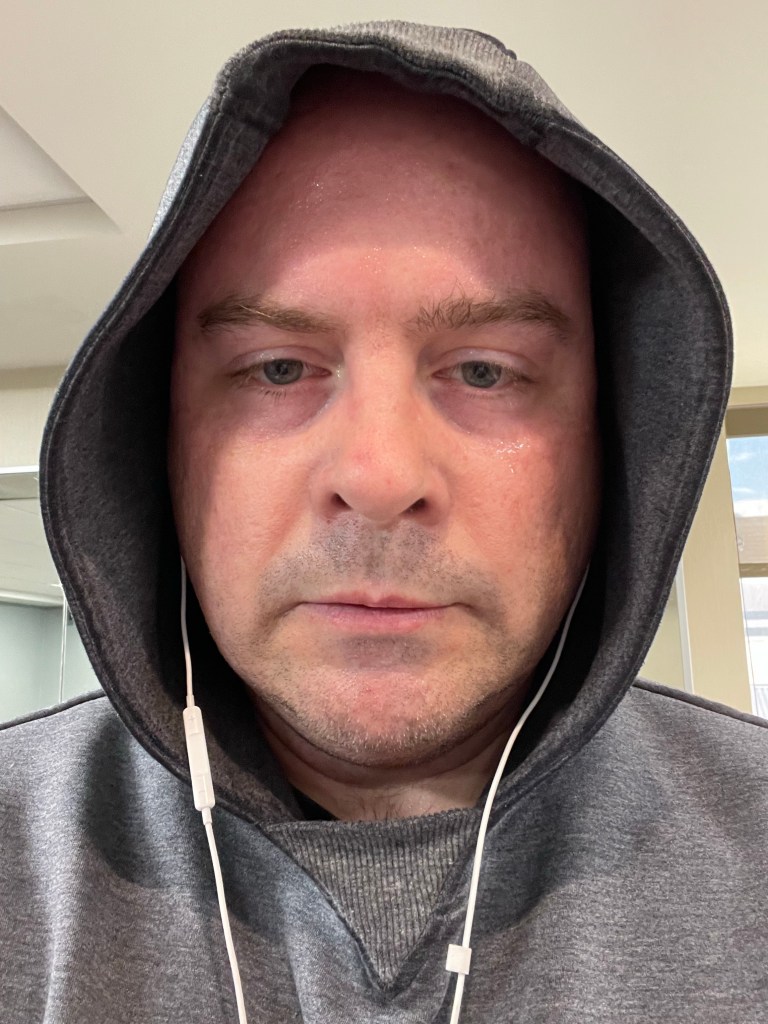
If I look like death, it’s because I feel like it!

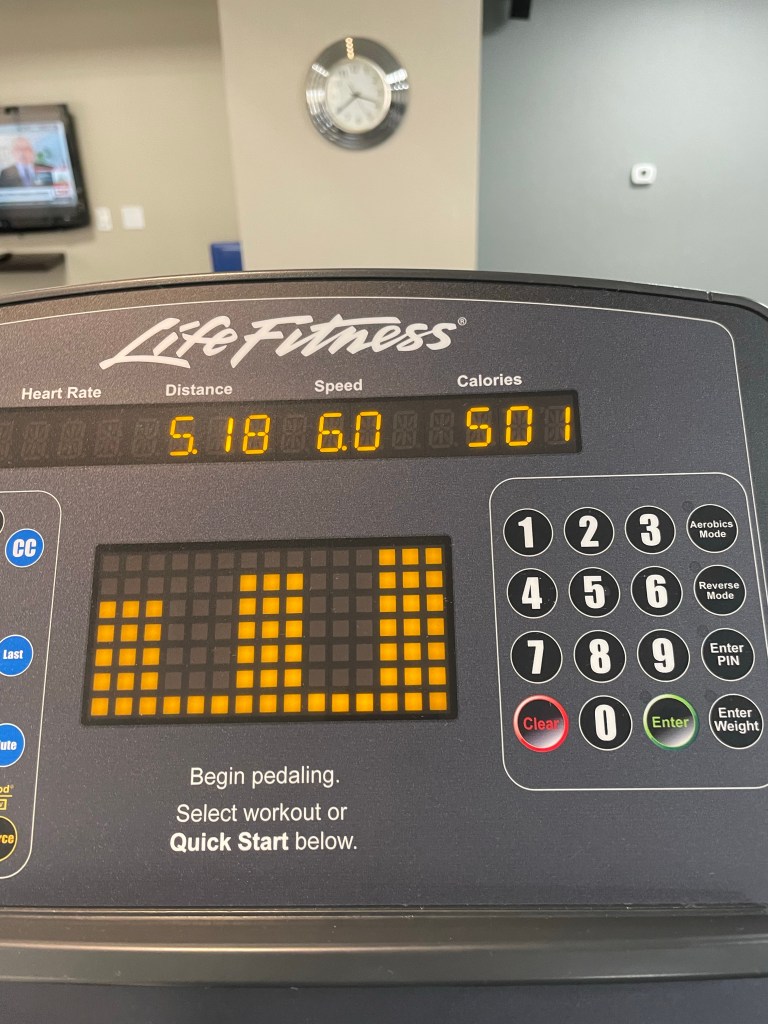
Last Tuesday was my first time making it back to the office gym in quite a while. It was a rough session and I only ran for 45 minutes as opposed to an hour but it felt good to break that intense sweat and burn those calories. I slept solidly that night, no question. As the summer progresses, especially with less karate classes for the next month, it should be easier for me to pull off these Tuesday workouts more often.

As most of your likely know, maintaining one’s proper health and fitness involves a variety of different exercises. Focusing solely on cardio or strength training will provide benefits but perhaps not the totality of what you’re looking for. That’s why it’s important to sprinkle in a bit of everything. Most martial artists avoid bulking up too significantly as large muscle mass will restrict one’s fluidity of movement. Doing only cardio can be significantly helpful with cardiac health and weight loss but muscle build will be minimal and won’t be focused on strength.

That’s why it’s important to incorporate all types of exercise and workouts. Don’t be afraid to get out there and try something. Hell, I once bought a Zumba game for my xBox 360 and the first time my wife and I tried to keep up with the game, it kicked my ass! One can find the most interesting workouts in the least likely of places. Ultimately, as long as you keep moving, you’ll be headed in the right direction. Stay sweaty, my friends! ☯️

It’s Not Me, It’s You…

It’s pretty easy to dismiss someone else’s situation when you’re not in it. I’ve dealt with a lot of that in my life and it continues to this day. ironically, even my own family maintains this practice, despite the fact that they should know better. It’s one of my biggest pet peeves and something that should never be done, especially to ANYONE with a condition that others may consider “invisible.”

For most of my life, I’ve had people commenting about how “it could be worse” or knowing someone who has some chronic disease or disorder in an apparent but perhaps unintentional attempt to one-up the situation I may be dealing with in regards to my own health journey. Although in some instances, the person in question isn’t intentionally trying to be harmful and may simply be trying to make one feel better by illustrating that it could, in fact, be worse.

Unlike being part of a support group or social club aimed at discussing such things, trying to trade “war stories” about whose illness is worse or what the worst sickness you’ve witnessed won’t help the person you’re talking to. In fact, besides making them feel as though you’re belittling or dismissing their illness, it’s likely to simply make them feel like shit. Unfortunately, this is something that I deal with several times a month whenever I speak to a certain, beloved family.

Not looking to create hard feelings on the off chance the family member in question may read this or be told about, I’ll simply say that this person has been there, from the moment I was diagnosed withy Type-1 Diabetes and for the entirety of my life. One would be inclined to think that this would make them enlightened to the struggles and difficulties I’ve suffered in my life. Not so. And that’s unfortunate.

Illness and disease isn’t something meant to be compared. Each person’s journey is unique to them and it serves no purpose trying to explain how someone else’s journey may be rougher or more difficult. How exactly, does that help the person you’re speaking with? It doesn’t, and that’s the lesson. It doesn’t take away from whatever struggle or difficulties that person may be experience, even if someone else has it harder.

This concept applies to all things in life, whether it’s exercise, dieting, managing pain or disease… It’s all the same. We can never truly know what someone may be going through and if they take the effort to share it with you, it’s not an invitation to try and make it seem like nothing. Just offer an open ear, a touch of compassion and caring. You’re not there to try and fix the problem. Just be a good fried, a good family member and acknowledge the person’s situation. Food for thought…☯️

When A Facepalm Isn’t Enough…

So a couple of days ago, I wrote a bit of a lengthy post surrounding my weight loss ambitions, some of the background behind how/why I’ve gained some weight and different times during the past ten years. I was a little taken aback by the number of people who reached out through my feedback function and I felt that I should take time today to address some of the comments and concerns that were sent my way.

First and foremost, I will once again reiterate (for the millionth time) that I am not a doctor or health/medical practitioner nor am I a nutritionist or dietitian. When I write posts in my blog, I do so based on what research I’ve personally done and what has worked or not for me. Anything anyone reads in my posts should be taken with grain of salt and your own research should be done. After all, how can you confirm anything I may have looked up myself? I do my best to cite my sources when they’re attached to a webpage that i can include.

For example, I’m not opposed to diets. That’s a feedback comment I’ve often gotten, regarding previous comments I’ve often made about how fad diets don’t work. Here’s the thing: they don’t work for ME! Every person is different. Every metabolism and level of health is different and as such, every fad diet will provide different results for different people. This doesn’t mean that they’re universally bad, they may simply not provide the results that EVERY person is looking for.

If someone decides to try and lose weight by cutting carbs, that’s fine. So long as you’ve consulted a professional and you acknowledge that carbohydrates are actually a primary source of fuel for the human body, there’s nothing wrong with cutting back on them. Trying to eliminate them altogether brings a certain host of problems but this is why you should consult a professional before making such a change.

Since every person is different, maybe going on a specific diet has helped you shed some weight but does absolutely nothing for someone else you know who has tried it. This doesn’t make it bad, especially if it worked for you. Just be cognizant that as with all “fad” diets, the weight will likely return unless you stick to it permanently or make significant lifestyle changes.

The next aspect I’d like to address, which seems to be thrown at me often, is self-image. One’s self-image is important because it helps to define you to YOU. It’s important to one’s overall sense of wellbeing to be okay with one’s body type, weight and overall image. If you are not, it’s incumbent on YOU to make the changes necessary for you to be happy, provided it doesn’t risk your health. And that’s the caveat; being overweight and/or obese is unhealthy. But positive body image and positive health are two different things. Is it a good thing if you love yourself regardless of your weight and have a positive self-image? Abso-fucking-lutely! However, do you need to acknowledge that your health may be impacted if you’re overweight? Also abso-fucking-lutely! I

t’s up to the individual to discern and recognize that difference. I’m not lending an opinion on what any one person’s body type SHOULD be, I’m simply pointing out that weight loss is good for the body. granted, that’s to an extent, as well. As with all things in life, there needs to be a balance. One can lose TOO much weight and that becomes dangerous, as well. Living a healthy life contains many moving parts that all require attention.

Last but not least, it’s not just about the food. If you’re committing to eliminating certain “bad” foods and eating healthier, good for you. Just be sure that you recognize that you exercise regularly as well, as part of your fitness and health journey. Lack of exercise will render all other efforts moot. Diets help but you need to burn some of those calories in order to lose weight. Fat won’t necessarily burn away JUST from eating better. But don’t take my word for it, I’m struggling to slim down.

My blog is a platform for me to describe and share the experiences, knowledge and information I’ve accumulated during more than three decades of studying martial arts and four decades of living (reasonably successfully) with Type-1 Diabetes. And flex my writing muscles but that’s neither here nor there. As with all things in life, if one does not agree with content I write, I’m always open for constructive discussion, so long as the respect due to the person whom you’re addressing is observed. Otherwise, to those sending snarky or rude comments, this is why I won’t reply or engage. I don’t intentionally allow others to bring suffering into my life. Have a great weekend, everyone! ☯️