It’s Not Their Fault…

We all know that there’s suffering in the world. I think this goes without saying, but sometimes we encounter these prozac-dosed individuals that walk around with tweeting-bird sounds floating around their heads who seem to think that suffering doesn’t exist. In all honesty, good for you if you can truly believe this and live your life in that mindset; even if it’s false.

My point is that for the most part, we are all firmly aware that the world contains suffering. And we all endure some of that suffering, as much as we would prefer not to. As sentient beings, we have an unspoken responsibility to do our part to reduce and/or eliminate this suffering in the world, which leads one to wonder why any individual would intentionally CAUSE it…

“Pain Is Inevitable; Suffering Is Optional”

David Kessler

A few days ago, I was out running errands with my family. We rarely all go out together. Especially given the labour-intensive process required in getting an infant ready and out the door during winter months, and trying to maintain control over the destructive force of nature that is my five-year old son… But as usual, I digress…

During some of our errands, I will occasionally run in quickly without the rest of the family in order to complete one of the quicker stops. This is where the subject of today’s blog post took place.

I grabbed the couple of items I needed from this particular business and headed up to the checkout, which included two tills and two employees. There was a man there, and he was trying to return something without a receipt. I think we’ve all been there, but one also needs to understand that many locations won’t accept a return WITHOUT the receipt from your purchase. This was the case for this particular gentleman.

He immediately became belligerent and started arguing with the cashiers, which included grabbing another package off the shelf to “prove” that he had purchased the item at this specific location. The cashier calmly explained that although it was an item they carried, they couldn’t prove he had purchased it there and that it was their store’s policy not to accept a return without proof of purchase; something which was out of the cashier’s control.

The man became angry and started yelling that he had grabbed the wrong one by mistake and that it was absolutely imperative that the cashiers allow him to exchange or return it. The cashier, who to her credit maintained her calm throughout this entire exchange, explained once again that it was the store’s policy and that she had no authority to go against it.

Now folks, I can understand the frustration on both sides of this equation. I’ve tried to return items without a receipt and I totally understand how angering it can be when it doesn’t work. I have also worked retail and can tell you for a fact that in Canada, with the exception of some specific commercial laws, retail locations are under NO obligation to accept a return or issue a refund. Once the sale is made, the sale is made.

All this being said, despite the fact I try to exude calm as much as possible I have very low tolerance for people who cause suffering and cost others their time for trivial things. Especially an item that’s only $14.99 and especially when you’re tying up both cashiers with your stupidity, holding up the four people behind you. I kindly asked the gentleman to set aside his complaint for a few moments so that the staff could clear the line. This snapped the cashiers out of their stupor and one of them called me over while the other continued to deal with this angry man.

As I was finally and thankfully exiting the location, the cashier was trying to convince the man in much calmer terms that his incorrect choice did not constitute a problem on her part and that she could get him the number for the store manager and he could deal with the matter this way.

For most people, things tend to dwell on our minds. If these two employees were having a decent day, this jackass and his negative energy likely damaged or ruined these poor peoples’ afternoon. Now, I’m not saying that this particular exchange wasn’t important to this person. Maybe that $15 was the last of his money for the week and he really needed the item he sought. But one needs to acknowledge that his approach not only DID NOT get him what he needed, he spread the suffering in the attempt.

Even while dealing with something or going through something negative yourself, take a moment to consider how your actions may affect others. You have the same responsibility as the rest of us in preventing the propagation of suffering. ☯

Bald As A Baby’s Bottom

Those who know me well are aware that for the most part, I’ve kept a shaved head. This has had a bit to do with aspects of my beliefs, although one might be surprised to know that I don’t NEED to shave my head, I simply choose to do so as a show of discipline and as a sign of my devotion to said discipline.

If I can be BRUTALLY honest, it also plays a role in the martial arts as having a bald head gives a sparring opponent one less thing to grab onto. This has also been a practical application in my chosen career, as the very real threat of someone pulling on long hair and exposing a throat is a significant concern.

However, what most people don’t know is that you can practice Buddhism and NOT be bald. It’s not actually a requirement. In Buddhism, the shaving of one’s head and face signifies one of the first steps involved in becoming a monk and starting a monastic life.

This has been a common trait in monasticism for a number of different religions throughout the ages, including but not limited to Hinduism, Buddhism, Judaism and some sects of Christianity. This was usually done as a means of showing religious devotion or humility, but has also been used as a rite of passage at certain stages in life.

But for Buddhist monks, the shaving of one’s head acts as a symbol of denouncing worldly attachments. It also helps to act as a symbol of monkshood and to emulate the Buddha, who also shaved his head prior to attaining enlightenment.

So yes, Buddhist monks shave their heads and this is an observance they must follow. No, Buddhist practitioners who are not ordained as monks are not required to do so. Some of us simply choose to do so for the reasons I mentioned in the first paragraph. And no, rubbing a Buddhist’s bald head for good luck is absolutely NOT a thing. In fact, it is strongly discouraged. ☯

The Learning Stops When The Attitude Begins…

Karate requires a lot of dedication and commitment. This should go without saying, although as an instructor I have often found myself HAVING to say it. I have had a number of people who have come to train and have seen it all: sports enthusiasts, athletes, boxers and practitioners of a different style of martial art. But one thing remains consistent, regardless of your background: you have to start from scratch.

“Empty Your Cup…”

Zen Proverb

I’m sure some of you have heard the story… The one about a scholar who visited a wise Zen master and asked him to teach him Zen. Although the Zen Master did his best to try and teach the scholar, he kept interrupting and providing his own stories and opinions. The Zen Master calmly suggested that the pair have tea.

The Master poured a cup for the scholar. Although the cup was full, the Master kept pouring until the cup was overflowing. The scholar asked the Master to stop because the cup was already full. The Master agreed that it was and replied, “You are like this cup; so full of ideas that nothing else will fit in. Come back to me with an empty cup.”

There are a number of different versions of this story. I believe that even Bruce Lee offered up his own version at some point, but the lesson remains the same. You can’t walk into a dojo with a chip on your shoulder and expect to learn something. This reminds me of two stories…

“Empty Your Cup So That It May Be Filled; Become Devoid To Gain Totality.”

Bruce Lee

The first story goes back to the late 80’s, early 90’s… I was a white belt on the cusp of promoting to green. I had been training hard; three days in class and the remaining days, training at home. I was pretty good, despite being in my teens and how much of a conceit that likely sounds. I had gained mass and became larger than life; speed and precision were my tools.

One day, we had a guy who walked in off the street and wanted to learn karate. As was our custom, we explained that he could try a couple of classes to see if he liked it and if it would be something he would pursue. The man agreed to this and participated in his first class. It seemed to go well.

On his second class, we were paired off and practiced some punching drills. As luck would have it, I was paired with him. He struck me several times, causing pain and some mild injury. He had a grin on his face and when I explained that we weren’t supposed to be having contact with each other for this drill, his explanation was that this was karate and I should be able to block if someone punched. Really, asshole? That’s what you’re taking from it?

Sensei saw the entire exchange and opted to pair up with the man on the next run. Foolishly, the man tried the same tactics with Sensei, who was having none of it. Sensei exchanged blow for blow with the guy, without harming him (in any significant way). The guy inevitably ended up bowing out and stepping to the back of the class. Sensei stopped the drill and followed the man to the back of the class and spoke the words that have stuck in my head for almost three decades…

We are here to learn and teach karate. In order to learn, you have to let yourself be taught. You can’t learn if you bully your way through the people trying to teach you. And you certainly don’t come into a karate dojo with the attitude you possess. Come back when you’re ready to learn…”

The man left and we never saw him again. The second story comes much more recently… It started when I joined the Regina Institute of Kempo Karate in 2016. By that point, I had been studying karate for over 28 years. I hold a black belt and have proven my skills more times than I could count.

But when I walked into Kempo to watch that first night and the head instructor asked if I’d ever studied karate, I admitted that I had. But I wanted to learn their art in as pure a way as possible. I told the Master that I wished to start with them as a white belt. He was taken aback, considering I was already a black belt.

I walked into the Kempo dojo the following class with a white belt around my waist. I’ll admit it felt strange, wearing white around my waist when I hadn’t done so in over twenty years. But I bowed into the class and was as proud of the white belt around my waist as I was of the black one that represented my style.

The head instructor ended up forbidding me from wearing white, as he considered it an insult to my Sensei for me NOT to acknowledge my rank. The next class saw my gi adorned with my black belt, but I still held fast to the back of the class and remained humble. And this has been my practice for the past three years.

I’ve had opportunities to coach and correct some of the junior students, which has been great. But for the most part, I’ve accepted my role as a student and have spent the majority of my time learning as opposed to teaching. And this is the important part of today’s post…

The most important part of mastering any skill is rooted in one’s ability to learn. You have to open yourself up not only to learning, but to criticism and correction. Even if you’ve studied something prior to walking in, you have to be willing to admit that you may know NOTHING about the art you’ve chosen to add to your repertoire.

Although studying two arts at once includes a significant number of issues on its own, as long as you humble yourself and be wiling to empty your cup, there’s always a little more room to learn.

Think about it… Let’s examine one of the most basic techniques in the martial arts: a punch. If a 20-year student tells you that they’ve learned how to punch, that’s fine. If that same 20-year student told you that they “mastered” how to punch, they’d be lying as there’s always something more to learn.

And that’s how you should approach anything you try to learn. Face it as a beginner and learn as much as you can. Even a master can be humble in the face of learning something new. ☯

There’s No Crying While Meditating…

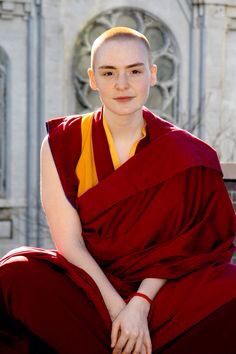
You know, there’s a reason why monks prefer to live out their lives within the walls of a monastery. Sure, some of them do it as part of a vow of silence, some do it because they prefer to live a simplistic life of minimalism.

Living a monastic life has some measurable benefits when it comes to meditation. For the most part, monks have an easier (notice I said “easier”, not “easy”) time finding harmony and inner peace, thanks to the quiet and serenity that comes with living within the boundaries of a monastery. Although finding one’s balance and harmony is possible even when one does not live within a monastery, there’s a hiccup to modern life that the monks likely didn’t anticipate: kids!

Picture this, if you will… You settle into a comfortable position, perhaps cross-legged, perhaps sitting on your knees. You close your eyes and start taking several deep, steadying breaths. Maybe you even have a bit of relaxation music playing in the background. As you feel yourself sinking deeper and deeper into your meditation, you feel a shift in the air. A disturbance in the Force, if you will! You have your suspicions about this disturbance, but you continue to concentrate and focus on your breathing.

Then it happens: you feel a light, nasal breathing against your face, followed by a soft whisper, “Daddy?” This is accompanied by the typically expected poke of a small, bony finger; perhaps against my cheek and if I’m a real winner in tonight’s story, perhaps against the eyelid. “Daddy, you’re a statue…”

You try your best to stay focused and concentrate, hoping that your first-born will take a hint at your lack of a response and back the hell away. But of course, my offspring is stubborn and tenacious and refuses to surrender. Especially when faced with the mystery of what daddy is doing (I have no idea where he gets THAT from!) He’s fascinated at what his father is doing and wants some answers.

Just then, salvation comes in the form of my wife who steps into the basement and softly whispers that Daddy is meditating and that he should leave me alone. The boy responds, “Daddy’s not meditating, he’s a statue!” My wife agrees that it’s fine, I’m a statue but to leave me alone nonetheless.

Just then, my infant son who was until this point quietly cradled in my wife’s arms, decides to burst out with a mighty wail equivalent to someone getting their family jewels stomped during a mosh pit. This effectively dissolves my focus with the imaginary sound of a shattered pane of glass.

Meditating is already something that requires a deep level of focus and practice. It takes time to find your groove, become comfortable with what your doing and get to a point where it provides you with any sort of noticeable benefit. So learning, practicing and becoming proficient is all the more challenging when attempted in a modern family setting.

Eventually my son may come to learn and understand what I’m doing and respect the need for a few moments of silence. In the meantime, be sure to find time for yourself in order to search for harmony and inner balance. As the skills develop, it will become easier even WITH all the “little distractions” that come with life. ☯

To Be Born Twice…

When I take stock of my life, I realize that through time and circumstance I have experienced something of a rebirth on more than one occasion. In my youth, the path of my life and how I grew up was determined by a single diagnoses of Type-1 Diabetes at the age of 4. I’ve often reflected on how differently my life may have been had I not been diagnosed as such.

Later on, I would start my training in karate; a move that I would ultimately come to see as a rebirth. The person I became and the health I gained showed a marked departure from where I began. It also helped define the kind of drive and ambition I would have in almost everything I’d do in my life.

My chosen career, although started later than most, was most definitely a rebirth. It was almost like being under water for so many years, only to finally come up for air. When you finally find what you were meant to do, it seems like a perfect fit and everything else seems to melt away.

But sometimes, these rebirths don’t happen on their own. Sometimes you have to take yourself in hand in order to make them happen. I’ve often said that life doesn’t are about our plan. Things will happen in due course, but this doesn’t mean you should just sit back and wait for it happen.

Change may be organic to life, but POSITIVE change requires your active involvement. You can’t remake yourself by hiding away from the outside world. You are part of the living organism that is the world, and the only way to have a positive impact is through positive thinking and positive action. ☯

I Don’t Care How You Spell It, Honor Is Important…

Honor is an important aspect of life and society. We hear a lot about it in the movies and in books, but we don’t always lend much thought to the prospect of honour within our own lives. Most people adhere to a system of honor without even realizing it. Maybe you were raised on a system of honor and you stick to it without acknowledging that this is what you’re doing.

Honor is a very fluid word, and holds a number of different definitions depending on the context. For the most part, it means sticking to what’s right or following a code of conduct. If you look at it as an action, it means to have great respect for something/someone or hold them in high esteem. it can also mean to fulfill a previously made agreement.

“Stand Up For What’s Right, Even If You Are Standing Alone!”

Suzy Kassem

For the most part, honor is mentioned and/or covered in great detail in many of the books I’ve read; the Hagakure, The Bubishi (Karate bible), The Art of War, Bushido’s Code and The Book of Five Rings, among many others. And those are just the “non-fiction” books. One of the main characters from my favourite book series, The Wheel of Time by Robert Jordan, lives his existence based on a code of honor he sticks to quite fervently.

Depending on what system or style of martial art you’ve studied, aspects of honor is covered by a number of different rules; protect the weak, never attack the helpless, follow the rules, etc… Despite an inherent aspect of violence in the martial arts (kind of hard not to be when you’re training to punch and kick), there is also an inherent peace and discipline involved, which leads to a realized practice of politeness and gentleness. Some would call this “balance”.

Maintaining one’s honor is important; not only for yourself but for your family and the people close to you. And with that honor comes a level of irreproachable honesty that should be observed as well. ☯

Meinh, It’s Not My Problem…

Contrary to most people’s opinion, emergency situations of varying types are not only the norm in today’s society, they tend to happen frequently and almost daily. Whether it’s someone in medical distress or someone being attacked or harmed, it happens far more than any of us care to consider.

Although I would be far from considered the type of person to intentionally install fear in people, my field of work has given me a particularly subjective look at this type of phenomenon. And what’s worse is that if the average person knew just how much chaos takes place in their “quiet little town”, they would likely think twice about going out and/or locking their doors.

But before I get too dark and morbid, what I’m talking about is the propensity people seem to have to ignore something happening right in front of them. What I’m referring to, is a phenomenon known as the Bystander Effect.

There was a case that took place where a New York City resident was attacked and killed outside her apartment complex in 1964. There were apparently dozens of witnesses who saw the attack taking place and heard the woman crying out for help, but no one intervened despite witnessing the incident. Once the attack was over someone phoned police, who responded within two minutes.

Imagine if this was you. You’re screaming for help and despite all these people watching, no one steps in to help. It’s actually an effect that’s been documented and studied by a number of sources. I’m sure some of you may recall an incident in the early 90’s where a two-year old boy was dragged away against his will by two older boys, who subsequently killed the toddler.

Although there are a number of common sense reasons why any given person may not want to get involved in an emergent situation, the need and importance of intervening is critical. Let’s back up to that 1964 attack I mentioned earlier. That attack is said to have lasted for over 30 minutes while people watched. If someone had phoned the police right when they saw it happening, the police likely would have arrived on scene in two minutes and the victim’s life would be spared.

The biggest problem, if we examine it from today’s perspective, is that most people are more preoccupied with whipping out their cell phone to film the incident rather than help. And there’s an after-effect to the Bystander Effect known as a “diffusion of responsibility”. This is a concept that explains that the larger the crowd of onlookers, the less likely a single person will lend aid. this is because there is a tendency to believe that someone else will step in and that you won’t need to.

I’m reminded of the multiple occasions where I’ve received a call from someone stating that there was a vehicle off the road along a major highway. I’d ask the caller if there were any injuries or casualties. That question would always be met with “I don’t know, I didn’t stop…” When asked why they didn’t stop, I’d either be told that it wasn’t their problem or that it was “my job.”

I asked this question earlier on, but imagine if this was you. Wouldn’t you want someone to help? Providing aid certainly is everyone’s responsibility. If you come across something, step in and help. And if you feel the need to whip out your cell phone, take the time to dial 911. You may be saving someone’s life. ☯

Selfish vs. Selfless

Being selfless isn’t easy. In fact, most people don’t manage it to save their lives. And for good reason. Biologically speaking, humans are built to be selfish; not because we’re assholes but because it’s a survival mechanism. Don’t get me wrong, humans ARE assholes as well! But I digress…

Selfishness is a survival mechanism, because if our ancestors weren’t selfish with their food and gathering of basic needs, they wouldn’t have survived to evolve into what we are today. But considering the fact that we are a society of self-aware people who understand the difference between right and wrong, shouldn’t selflessness become the priority?

The average person with any modicum of common sense would assume so, but it’s still surprising how easy it is for people to remain selfish in the face of situations where they could and should be thinking of others instead. Allow me to provide an example…

Let’s say you walk into your Christmas staff party. You feel light-headed and check your blood glucose level to see that you’re running low. You walk over to the buffet table and notice that there’s only one piece of sugared food left. As you reach for it, someone else grabs for it and picks it up. You explain that you need it to raise your blood sugar. The other person shrugs and takes a bite. You ask if they have Diabetes, to which they reply that they do not. You explain that you need it to raise your blood sugar as you ARE Diabetic. The other person says something akin to it being your problem, not theirs and walks away while munching on the sugared food you needed.

So, who’s right? Does what that person did make sense? Sure, it’s easy to figure that it isn’t the second person’s problem and that since it’s a first come, first serve buffet, they’re totally entitled to that piece of food. But let’s consider that word for a moment: entitled. If it comes at the cost of someone else’s well-being, are we ever truly “entitled” to something? The second person really had no need of that piece of food, they simply wanted it. Even faced with someone else’s genuine need, they selfishly choose to keep it for themselves.

And no, this specific scenario didn’t happen to me (although something similar may have taken place to someone close to me recently). I’m merely using this example to illustrate a point.

In a modern world where we understand the difference between right and wrong and are able to realize when someone genuinely has a need for something, there’s nothing wrong with being selfless enough to step aside and let the other person have the moment. After all, there’s enough suffering in the world. We, as people, should recognize that it’s our responsibility to lessen that suffering. ☯

Merry Christmas From The Blogging Buddhist

No matter what your plans are this Holiday Season, be safe, be warm and enjoy all the pleasures that celebrations with your families allow! Be kind and loving to each other and take the time to reflect on life and all the good things it can bring.

From my family to yours, Merry Christmas & Happy Holidays! ☯

Respect Should Be Remembered, Despite Your Beliefs…

Over the years, there has been a slow decline in some of the verbal freedoms that we’ve always taken for granted. The best example would be the fact that when I was growing up, saying “Merry Christmas” was the expected greeting you gave people during the holiday season. But in recent times, it’s become almost anathema to some people, bordering on the rude, to wish someone a Merry Christmas.

For the most part, this decline in the use of a time-honoured holiday greeting has been attributed to a difference in background and religious beliefs. I’ve lost count of how many times someone has told me, “I’m not Christian and so I consider it offensive for you to offer me greetings based on a religion I don’t practice…”

I’m paraphrasing, of course. But my question to these people has always been simple and straightforward: why? This trend has reached most branches of society, going as far as retail and business locations forbidding their staff from giving a specific greeting in favour of a generic and dry greeting of “Happy Holidays”.

That’s all well and good, but doesn’t restricting someone from using a greeting based on their own beliefs violate the same freedom the ones complaining about it are trying to maintain? Seems a tad on the hypocritical side…

I was baptized into the Catholic faith when I was a child. I was raised in an environment where my family celebrated Christmas and the birth of Christ (although most scholars have indicated this didn’t ACTUALLY happen on December 25th, but that’s for a different post). But given the changes in my life and faith since then, I consider it a sign of respect for someone to use the greeting associated with their faith.

For example, if someone from the Jewish faith were to say, “Happy Hannukah” I would respond with, “Thank you so much. And Merry Christmas.” In Canada, we have the significant freedom to exercise the faith of our choice; a choice not everyone in the world gets to enjoy. So why butt head’s against each other to try and “have it our way?”

There is room enough in this world for everyone’s faith. One of the beautiful things about faith is that it doesn’t take up any physical room. So why take up room exercising it or restricting others? Let’s take a moment this holiday season to see the beauty in everyone’ faith and appreciate the fact that time has been taken to wish us well. After all, the holidays should be about family, celebration and freedom. Merry Christmas! ☯