When You Just Can’t…

I recently had a reader comment on one of my posts, where it was mentioned that one of the issues faced with traditional forms of meditation is that staying in a relaxed position with one’s eyes closed will usually result in the body slipping into something akin to a dream/sleep state. At least for one of the posts, I was discussing the use of meditation as a means of refreshing oneself from fatigue, so this wouldn’t be an unexpected result. But the reader made a good point about the importance of experiencing one’s day with open eyes, to live in the moment to experience all the beauty that life can potentially offer.

I remember in my pre-teens when I started toying with the concept of meditation and more often than not, trying to meditate for more than ten minutes would typically result in my falling asleep. At that age, it was entirely a bad thing. But during adulthood, we scarcely have the free time to meditate in any form, much less being available to fall asleep randomly. Imagine taking your lunch hour to meditate at the office and falling asleep? Only to have your boss give your shoulder a shake and ask you what the hell is going on?

I’m not saying this has happened to me, and the fact that some employers not only encourage but provide the resources for lunch-hour naps notwithstanding, that’s a topic for another post. The question is, can one meditate with eyes open? Are there any benefits to such a practice and how does one do it? The answer isn’t as simple or easy as a yes or no. And there are a LOT of conflicting sources. Depending on what definition you read, meditation is simply defined as working towards an enlightened state of focus, concentration and awareness. It’s thought to be a technique capable of changing one’s consciousness, allowing for a number of physical and mental benefits. If you’re a reader of some old classics, you may remember that Marcus Aurelius wrote a book simply called “Meditations.” In this context, meditation is considered someone’s written discourse on a particular subject, weighing heavily on their opinion. The focus of today’s post is obviously the definition as I’ve provided it, above.

Nathan, taking his first crack at meditation

Meditating with your eyes open, or “wakeful meditation,” as I’ve heard it referred to, is a practice where one can go about one’s day and perform daily activities all while maintaining some basic level of awareness towards meditation. In some respects, this can be a handy tool for allowing yourself to be freed from distractions in one’s environment, to increase one’s focus and even in some circumstances, to block out certain forms of pain.

This is not without challenge, and I’d be lying if I said it was something that could be sustained indefinitely. But it’s certainly possible and definitely recommended. The thing about meditation that most people seem to forget, is that you don’t need to be dressed in robes, sitting in the lotus position with your eyes closed in order to achieve it. I had a math teacher when I was in high school, who would take the fifteen-minute recess to close his classroom door, sit at his desk and simply close his eyes and perform a simple, deep-breathing meditation. Fifteen minutes. That’s it. And it would leave him refreshed and ready to continue on with his day.

I found an analogy online that would seem to be fitting. The word “meditation” is a bit like the word “sports.” If you tell someone you play sports, they’d likely ask you what sport you play, since there would be hundreds upon hundreds of possibilities. Meditation is very much the dame thing. There are many ways of meditating, different methods, techniques and postures, all with the goal of helping one increase their overall awareness and consciousness. The key thing is to find a method that works for you and suits your purposes. Otherwise, it’s like picking out a car to buy. If you don’t get the model you want with the options you were looking for, it’ll get you from point “A” to point “B,” but there’ll always feel like there’s something missing. Meditation falls very much under the same comparison. A huge shout out to the reader who provided comments that elicited this post. If you’re reading this, inspiration is always appreciated. ☯️
Walk Away And Keep Your Hands To Yourself…

De-escalation. It’s a word one rarely thinks of, when faced with a potential threat against one’s safety and well-being. For the most part, our survival instinct (fight or flight, if you will), will kick in and unless you’re some kind of macho jerk with a point to prove, you’ll do whatever is necessary to bring conflict to an end.

All that being said and without getting into the details of whatever self-defence laws your local jurisdiction may carry, every person has an inherent right to protect and defend themselves. And in most cases, others. But the ability to de-escalate a situation is one of the most effective resources in a properly trained martial artist’s toolbox; one that is usually and widely overlooked. There are tons of quotes and passages from martial arts’ reading that explain how the best victories are from the battles you didn’t have to fight and I would be inclined to agree.

As children, our parents were always very quick to tell us to “just walk away” and to “keep your hands to yourself,” when faced with confrontation. Speaking from experience, that rarely EVER worked during my childhood. Surprisingly, it works a bit better as an adult and it may be because adults are sometimes prone to actually consider another person’s words as opposed to being a kid hopped up on hormones and lack of sense. I say sometimes because I’ve definitely encountered adults who basically act like children. But I digress…

A colleague of mine recently clued me in to a YouTube channel that discusses and covers de-escalation and examines confrontations and what may have caused them. The channel is called Active Self Protection and it’s pretty good. I have to agree with my colleague, once you start watching some of the videos, it can get pretty addicting, especially from a martial arts perspective. It provides the opportunity of examining the question “what if,” without having to get into the actual situation.

The point is, a big part of learning martial arts the proper way is understanding that physical force isn’t always the way. I would personally push it one step further and point out that getting into a fight should ALWAYS be the last resort but I’m realistic enough to know one does not always have the choice. If someone attacks you, you can find yourself on the defensive trying to ward them off and likely answering their attack before you reasonably have time to try any “verbal judo.”

Throughout my personal and professional life, I’ve lost count of the number of times that I’ve managed to avoid a physical confrontation, simply by using my words to de-escalate the situation. Remember that there’s no shame in preferring not to fight. And it’s always amazing to look at a given situation after the fact and realize that it could have been avoided if the parties involved had tried to talk it out, rather than beat the snot out of each other. Build that verbal judo. It can be a life-saver. Food for thought… ☯️

The Little Things Add Up…

There’s plenty of reading out there that speaks to the fact that your day will play out based on how you start it. For example, if you wake up, walk to the washroom and proceed to throw up, the safe bet is you’ll likely have a rough day. Your stomach may be sore and cramped, you’ll have little to no appetite and you’ll feel like crap, thereby affecting your overall day. This is just one physical example, but the concept is the same for the emotional or mood-related side of things.

Sometimes it’s as simple as having a morning routine. Wake up, stretch, use the washroom and get coffee going. It’s a structured way to ensure that your body awakes and is receptive to the fact that sleep time is over and the day is beginning. But doing a couple of little things at the start of a day can go a long way towards ensuring that the day will have a more positive energy.

One good example is saying good morning. As the decades have passed and people have fallen a bit deeper into the digital frontier, taking a simple moment to say good morning to the people around has taken the wayside. I can guarantee that a good number of people make a point of posting on social media, first thing in the morning. So why not take the moment to actually do that in person? This is one of the first things I do when I get to work, every morning. I stop by every member of staff’s office and simply stick my head in for a quick “Good morning.” Sometimes it evokes a brief conversation about how things are going, sometimes it simply results in a smile and my greeting is returned. But the result is ALWAYS positive.

It may seem like a little thing but as we all know, little things eventually add up. A dripping tap will eventually fill the sink, if left long enough. By the same token, a little touch of positive energy in your day will lead to another and another, until your sink is overflowing with positive energy. And the funny thing about positive energy is that it will influence you. Kind of like being in a horrible mood when that catchy song comes on. You may have been in a funk but then you realize that you’re crooning along with the song and moving your head, while the folks in the car next to you giggle and point at you… But that’s a story for another time. Stay positive, friends! ☯️

It’s Better To Give…

Is it, though? The expression “It’s better to give than to receive,” is a quote from the Holy Bible (depending on the translation you’re reading). It’s pretty straightforward and direct in it’s meaning, suggesting that’s it’s always better to give to those who have not, than to receive. Today, I’m looking to ramble a bit on the implications behind this line of thinking and how it applies to modern life. For the most part, I think most people in general would agree that it’s a good thing to help others, whether that means giving them something they need or providing a service that may help them.

The question becomes whether one NEEDS or SHOULD give, through the course of their daily lives. Environment and upbringing also play a significant role. A good example of this would be my mother. My mother still lives in a reasonably sheltered corner of New Brunswick, with a French-Acadian population of just a few thousand. She’s spent the entirety of her life without ever being exposed to the outside world. This means that she’s never seen the racial diversity that exists in our country, nor has had the opportunity to see the dark side of society, where some are forced to live on the streets and beg for money or food.

This lack of perspective came to grinding halt during a visit with my aunt in 2002, where she travelled to Ottawa. Like most major cities, Ottawa has its fair share of homeless, and it isn’t uncommon to walk along the main drag and see people on almost every corner, asking for change. When I lived in Ottawa, I made my peace with the fact that not only did I not often carry change but a person could easily bankrupt themselves trying to give to everyone who needs, My mother had no such filter. She’d stop at every corner, handing out change to every person she found who would ask, to the point that my aunt had to physically drag her from the area. Since my mother comes from a diehard Catholic family, the title rings true in her mind and she felt it was better to give, almost to the point where she’d find herself needing, as well.

There’s no issue with handing off some change to someone who needs it, if you feel you should. In fact, I observe this practice myself. I’ve lost count of the number of times that someone would be standing outside my local convenience store asking for change. If I’ve had some change, I’ve offered it. Once in a rare occasion, I’d even ask if I could bring them out a hot beverage, if the weather was cold. On even rarer occasions, if they catch me on the way out, I’d even sacrifice a can of my beloved energy drinks in order to slate their thirst and give their day a boost. As with all things in life, there’s a balance to this phenomenon. I’ve seen people begging for change while texting on a smart phone. I don’t know about you, but if I found myself in a situation where I was begging others for money, I probably wouldn’t be using a $1,000 electronic device while doing it. Although one can never truly know another person’s circumstances, it tends to take away one’s credibility where need is concerned. But I digress…

The important thing to remember is that yes, it’s good to give. And yes, perhaps you should give. If you can. But if you don’t, this doesn’t automatically make you a bad person. Nor should you be judged or belittled because you haven’t. But there are things to keep in mind when giving to others, and I’ll cover my thoughts in a short list (I promise to keep it succinct, it’s Saturday. You likely have other things to do than read my ramblings):

1. Make Sure You Have It To Give: Number 1 and most important; if you’re contemplating giving to others, whether it’s money, clothing, food, whatever…. Be certain that you have it to give. And what I mean by this is, it may seem like a good idea to donate a large sum of money to a local charity you agree with. But not at the cost of providing a needed level of resources to your family. It may seem like a good idea to donate your winter parka so that someone else doesn’t suffer through a harsh winter. But unless you have the means to keep yourself warm as well, maybe reconsider or alter how you plan to help. Make sense? Good. Moving on…
2. Be Kind And Don’t Judge: I know a lot of people who voice the fact that they wish they could just simply walk from point “A” to point “B” without being “harassed” for money. In downtown Regina, one of the more frequented commercial areas has a sidewalk er that’s usually lined with people holding their hats out or asking for change. The old line “get a job” no longer applies. And one needs to keep in mind that a given person may not be in the position to actually secure a job. There may be elements at play that aren’t visible on the surface. After all, everyone’s got a story…
3. Know Who You’re Giving To And Why: This one applies mostly to charitable giving, as in, donations provided to a charity. Given that we live in an age of immediate information at everyone’s fingertips, it should be pretty easy to research the charity you’re donating to and how your donation will be allotted. If you donate $100 to an organization only to find out that a heavy percentage of your donation goes to salary, staff and overhead and only about 10% ends up ACTUALLY being donated, you may wish to reconsider. Giving someone some change or the coat off your back is pretty straightforward. But if you’re making a “donation,” you should be aware of where your donation is going.
5. Believe In The Cause You’re Donating To: For the past twenty years, I’ve made a point of occasionally donating a large sum to Diabetes Canada and/or the Cancer Society. Between the fact that I have Diabetes myself and many if not most members of my family on my mother’s side have had some form of cancer, these are causes that I’m close to and firmly believe in. This not only makes it easy to try and help. A motivating factor, if you will.

The takeaway to that list (and I still made it longer than I planned) is that you have to ensure that you’re safe and secure first. After all, you can’t help others if you allow yourself to fall into a bad way yourself. There is suffering in the world. This, we know. And it’s always a good idea to try and reduce that suffering in whatever way we can. Just make sure that you know WHY you’re doing it, that your motivations are pure and keep yourself safe and secure while you do so. After all, no person can save the entire world. All one can do is try to help in their own little way; one person at a time. ☯️

The Baby Buddha…

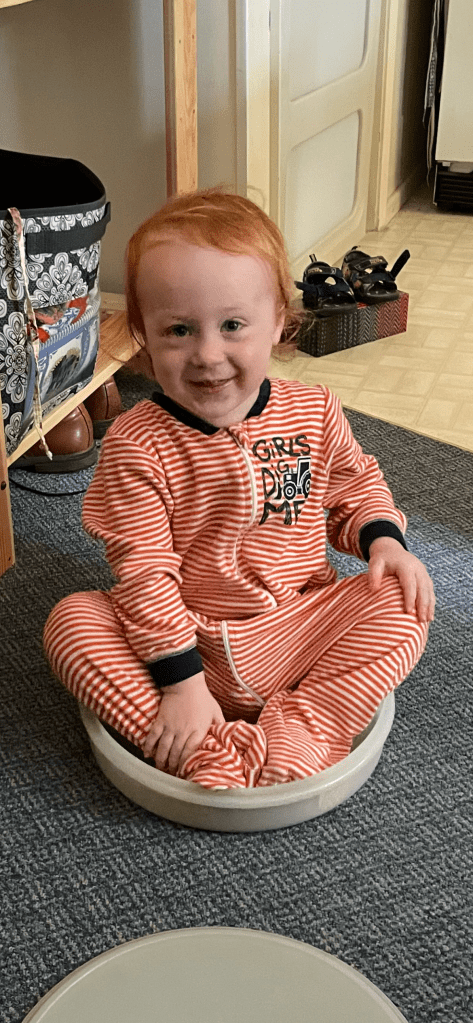
A nice, simple feel-good post today. My toddler was playing with a bunch of stuff that aren’t his toys, as kids are want to do, when he sat cross-legged in a cake dish borrowed from his grandmother. I thought it was a cute representation of a meditating Buddha. Enjoy!

Come To Me First…

Society has a propensity for trying to take the easiest and most stress-free way possible, when dealing with issues in their daily lives. And I get that. Stress sucks. Confrontation sucks. None of it is fun, but if you live in modern society, there’s a safe chance youwon’t go through life without dealing with at least some of it, in some given way, shape or form. How you choose to deal with these things not only speaks to your character but could potentially dictate how certain life scenarios play out for you.

One of the best examples I can provide is a classic scenario that many people know all too well…. The noisy neighbour. Depending on how you live and where life has taken you, at some point, you may have had to deal with a neighbour who lives it up and parties at the wee hours of the night when you and your family are trying to sleep. If this were an 80’s “Brat Pack” movie, you’d likely see the adults next door waking up, shaking their heads in a combination of disbelief and ire, followed by trying to roll over or pull a pillow over their head.

Here’s the bad news: this ain’t a movie, so your situation needs to be dealt with. In the real world, this means that if you expect any sleep, someone’s going to have to go next door and ask those neighbours to lower the volume. Personally, I’ve been pretty lucky in this regard. When we moved to Regina, we were lucky enough to be blessed with a family that not only had kids close to my son’s age, but were accommodating in almost every way. We’d help each other clear out snow, take each others’ garbage bins to road on trash day…. I couldn’t imagine better neighbours.

They moved out, almost a year ago. The fear of who may move into a house that shares a tandem driveway with us was concerning, but we were once again blessed with a neighbour who communicates and has some understanding of good neighbourly relations. Our neighbours on the other side of our fence are equally as friendly and understanding. I even had them climbing a ladder in the pouring rain to clear out one of my gutters when I was out of town, to prevent water damage.

But for the sake of conversation, let’s say you’re neighbours aren’t all that and a bag of chips. I’ve had a lot of different neighbours over the years at different residences as my law enforcement career moved me around a lot. I’ve had quiet neighbours that I’ve basically never seen, neighbours who have been obnoxious and keep me up at night and neighbours that as described earlier, were salt of the earth people who would bend over backwards for others. But for this scenario, let’s say you’re woken in the wee hours of the night by your neighbours music/party…

In my experience, I’ve had a lot of people reach out to me to go get their neighbours to quiet down. It became my common practice to always ask the same question, “What did they say when you asked them to turn it down?” I would ALWAYS get the response that they haven’t spoken to them and that they expected it was my job to do so. Let that sink in for a moment. Your neighbours, the people whom you live next door to, are creating noise. Instead of trying to speak with them first, your impulse is to contact law enforcement. Brutal.

This is only one example of this TYPE of scenario and I’ve already been wordy enough on this post, so I should likely get to the point, which is that as humans, we usually prefer to have others do our “dirty work.” Now, maybe there are reasons behind it. Maybe you already have a bad relationship with your neighbour and you’re afraid of aggravating an already tense situation. That can happen. But for the most part, one should always make the effort to communicate with the person in question BEFORE escalating things.

I know a lot of people don’t agree with this thinking. Insert a joke about “Karens” and “Kyles,” here. But no matter what one is dealing with in life, one’s first step should always be to directly communicate with other person in question. There’s a saying about how one can only control what they say, not someone else’s reaction to it. And this is quite true. But if you approach someone with whom you have an issue with an open mind, calm demeanour and the ability to properly voice your concerns, you may be surprised at how often the situation may right itself.

This may not always be possible, especially if you’re going in with fire in your blood. In such instances, it may be better to give it some time before approaching the other person. Then again, every situation is subjective to the individual. maybe the situation doesn’t allow one to wait. And who am I to tell anyone how they SHOULD act? I’m not a therapist, but I do have the benefit of years of dealing with other people’s problems. But my ultimate point is this: you shouldn’t always start by asking for the manager. You shouldn’t always start by calling police. You shouldn’t always START by making a complaint, filing a complaint and/or complaining in general. You SHOULD start by communicating. If everyone did this, society would be a whole lot better off. Or go join the party, instead fo complaining about it. After all, life is short. Food for thought…☯️

Don’t Force It…

Sitting at over 900 posts (over 500 of them in a row without missing a day), I’ve had a number of people asking me where I find the inspiration provide content on a daily basis, And yes, that’s a bit of a brag, and rightfully so. Finding moments to write posts while working full time and having a family with two young children vying for constant attention isn’t easy, by any means. Throw in working out and Diabetes-related issues, and you’ve got yourself some effort!

But to answer the question, some of the content writes itself. Considering that Diabetes affects every aspect of a person’s life, all one needs to do is write about all the shit that goes down with Diabetes. As I write this, I’ve had to switch up my CGM. Since it takes a couple of hours to warm up, followed by a couple of calibrations over the hours that follow, it can be DAMNED inconvenient. And as most of you know, I tend to write about this stuff.

The same goes with karate and some of the basic concepts behind Zen Buddhism. When you write about something you know, it makes providing daily content pretty easy. Especially when you’re passionate and committed to what you’re writing about. Not only does this make it easy, it makes it damn hard to shut up. And I’m sure some of you may have noticed that I can be a “little” long-winded.

For the rest, it’s important to develop the ability to observe life. If you pay attention to the world around you, it will help to jog one’s inspiration. I never go out to work or to run errands without seeing something, hearing something or having something inspire a thought process that ends up becoming a post. This is what’s important; being able to draw on life to provide inspiration.

That’s all I got. There’s no big secret to it. If you’re riding on the bus, pay attention to the environment and the people in it, as opposed to having your nose buried in your phone. Be sure to write about something you’re passionate about and it will be reflected through your printed words. Then, give yourself a goal. Mine was to post daily. I had almost reached a full year before missing a day and pissing myself off. My new goal became posting for a straight year, which I’ve long surpassed.

Bottom line, make certain to write because you WANT to write. Make sure that whatever you write about, be sure it’s for you. If you do that, you’ll definitely be successful. But lastly, don’t push it. If you throw up a post simply for the sake of throwing up a post, the quality just won’t be there and won’t hook your readers. Let it come to you, naturally. ☯️

My Rights…. A Matter Of Principle…

“It’s a matter of principle…” Have you ever heard someone utter that phrase? It usually comes right after the part where the person in question may have been proven wrong or shown why their perspective or opinion is incorrect and their trying to find a reason why something should still be pursued. People in general have a tendency to misinterpret what principles are, and how they should be applied.

Principles, as they relate to this specific context, are defined as a fundamental truth or proposition that serves as the foundation for a system of belief or behaviour or for a chain of reasoning. Basically, trying to do the right thing can be construed as acting on principle. But for a lot of people, they’ll seek to make others suffer or seek punitive action against someone “as a matter of principle.” That’s where the waters get muddied, a bit…

Something important to remember is that even if one’s guiding principles tell them something may be the right thing, this doesn’t make it accurate. One’s principles can be heavily influenced by many of the same factors as one’s perspective or set of beliefs, where environment, family values and even religion can determine how your principles apply. When considering one’s principles, one also needs to contemplate the difference between “legal” and “moral,” as many people seem to think that those two concepts are one and the same. Even though they can sometimes apply to one another, they’re entirely separate and may not relate to the principle of a particular matter.

Where am I going with this? Well, consider the following scenario…. You come to an agreement with someone about something specific. Doesn’t really matter what; a transaction or a service, whatever. At some point, you find that this agreement is not in your favour and you try and negotiate with the other party in order to reach a resolution that suits you. They don’t agree and as a result, you seek outside help in the form of some legal entity… either the police or whatever agency may deal with your specific scenario/incident.

You come to find out that it doesn’t fall under the umbrella of whatever help you were seeking, but you still push the issue despite being shown that it doesn’t qualify as something wrong or dishonest on the other party’s behalf. And then, you utter the words that anyone unwilling to admit defeat have uttered… “It’s a matter of principle…” Sure it is, cupcake. Sure it is.

It’s important to develop the ability to pick your battles, in life. In fact, once you do you’ll discover that a great deal of daily stress will be eliminated by simply letting go of certain things, especially once it’s been made clear that there may be no turning back or changing someone’s mind. It’s kind of like the Serenity Prayer, which if you weren’t raised in a religious home you may not recognize. But the short version goes like this:

God, grant me the serenity
To accept the things I cannot change;
Courage, to change these things I can; and
Wisdom to know the difference.

If that isn’t an old school religious way of saying “pick your battles,” I don’t know what is! And that’s what’s important. Being able to recognize the things you won’t be able to to change and move on. Although there’s a great deal to be said about being able to fight through anything and never giving up, one DOES need to acknowledge that some things just aren’t worth it. It kind of ties in to that whole “eliminate suffering in yourself and others” thing I have going on.

Lastly, there are many people who prefer to be unhappy but be right, and may seek to find some way of taking punitive action against someone else by virtue of wanting to be right, Don’t be that person. That isn’t a matter of principle. That’s a little thing called “vengeance.” And no good can come of it. Sometimes, you just gotta let shit go. Food for thought. ☯️

A Sharp Dressed Man…

We all eventually reach a point in life where life begins taking away more than it gives. While this may seem like a negative view of life, it’s intended to be a realistic one. It’s inevitable. As we walk through life, all the people, things and in some cases, the places we grew up knowing are simply no longer there. What rings true the most for me, and where this applies heavily, is with the influences I had in my youth.

When I take the time to look back, a number of influences were gone before I genuinely had the chance to know them, prior to adulthood. Bruce Lee is a good example. Despite being one of the most prominent influences on me as it relates to my martial arts journey, he actually died five years before I was even born. This didn’t prevent “Enter the Dragon” from being one of my favourite movies and encourage my entry into the martial arts. But the influence I’m mostly referring to in today’s post, is music.

Music holds a special place in my heart. I’m one of those people who are heavily influenced by music. A jaunty, upbeat song can quickly turn my bad mood into having me awkwardly shake my dad bod around the kitchen, much to my wife and children’s amusement. By the same token, certain sad songs that relate to situations in my life can almost move me to tears. I’ve learned to play certain instruments, although I never delved into them heavily, and I even had a brief foray into singing, having provided the vocals for a small band during my college days.

One of my favourite memories from my childhood, is going on road trips with my father. He kept a heavy, D-cell “ghetto blaster” tape player wedged between the two front seats, since our family car (a Chevette, in case you were wondering) didn’t have a tape deck. Despite the fact we were mostly travelling to Montreal to join my brother and mother at the children’s hospital, it was always a fun, 8 to 10-hour drive filled with all the classic rock you can imagine. And as you may have guess from today’s title, one of those bands was ZZ Top…

ZZ Top was formed in 1969 and is an iconic rock band responsible for some of my favourite songs including but not limited to, “Legs,” “Sharp-dressed man” and “Can’t Stop Rockin’.” Although somewhat older, their sound and genre totally stands up, even by today’s standard and their songs have been covered and sampled more times than I can remember. Last Wednesday, I read that ZZ Top’s bassist, Dusty Hill, passed away at the age of 72.

Recent years have taken a number of prominent artists from us. Some of them have left a measurable void, including David Bowery and Eddie Van Halen. EDDIE VAN HALEN!!!! In 2015, when Mitch Malloy released a song he did with Van Halen in 1996, I was thinking we may see some new music come out. But then Van Halen passed away in 2020, punching those hopes. Right in the feels.

Such is the way of life. It gives, then it takes away. With the loss of their bassist, ZZ Top may choose to find a replacement and continue on. For their own sake, I hope they do. But for me, ZZ Top was about more than just the quality of music they provided. It was about the performance itself, which always had a special little something when you consider Billy Gibbons and Dusty Hill with their matching beards, glasses and hats and Frank Beard ironically being the only one NOT sporting a beard…. They were even fantastic playing in Back to the Future III. Don’t remember that? ZZ Top was the band that played at the town dance that Marty and Doc attend. True story, go check it out.

You can read a short news article on Dusty Hill’s passing here. With the passing of yet another great musical influence from my youth, I’m sombrely reminded of my own mortality. Such is life. But the memories and the music will continue on. ☯️

I Regret Nothing…

Oh, yes. I regret nothing. I’ve written several posts on this topic because I feel that it’s important. And it keeps coming up in some way, shape or form. The most prominent question I get asked is if I ever wish I hadn’t been diagnosed with Diabetes. Really? One would think that asking me if I would have preferred to grow up without a dangerous and difficult to manage auto-immune condition would be redundant. But the question has been posed more times than I can remember. Sometimes, I think people lack content to discuss and ask questions just for the sake of asking them. But I digress…

It’s okay to wish for something. Do I wish I never developed Type-1 Diabetes? Of course. Do I wish my brother hadn’t passed away at the age of 18? Obviously. Would I have preferred not to go through the personal and professional difficulties I’ve dealt with in the past three years? Oh, you damn right! But as I’ve often said before, it’s important not to live a life of regret. One can easily spend all of one’s time looking towards the past and regretting some of the choices and situations that have happened to them. The problem one faces when doing this, is that they fail to live in the now; and there’s a lot of life you can miss when you’re busy dwelling on the past.

Another important aspect to bear in mind, is that every situation one has been through, good or bad, has ultimately contributed to the person one has become. And there’s really no negative aspect to this. If you believe in who you’ve become and trust that you’re a good person, then those events that you may otherwise regret have likely helped forge you into the strong, capable person you are. If you’ve become a bad person, there’s always the ability to make a change, going forward (unless you’re totally fuckin’ evil and don’t care. I know a few people like that).

“ I Am The Master Of My Fate, I Am The Captain Of My Soul”

– William Ernest Henley, Invictus

I’ve been an admirer of William Ernest Henley’s poem, “Invictus” for years…. Poetry is always open to the reader’s interpretation (unless you have a pretentious art teacher who feels she needs to force her perspective on you) but I always felt that this poem demonstrates how no matter how difficult or rough life gets, one needs to persevere and push through, keeping a firm control of one’s destiny. As romantic and hopeful a thought that may be, that’s rarely the case. As I’ve often said before, life rarely cares about one’s plan.

We may be the masters of our fate, but fate deals us the hand and we’re usually stuck playing the hand we’re dealt. That may seem a bit of a negative perspective and it certainly isn’t meant to be. But it all comes down to the old saying about sometimes you just got to roll with the punches. This is often the only way to be the “master of my fate.”

Do I ever look back and wonder how life would have been for me, had I not been diagnosed with Diabetes? Absolutely. Not a week goes by where it doesn’t cross my mind. And I would be lying if I said I didn’t tear up while reading about the medical researcher in Alberta who has found a promising treatment that could reverse Type-1. I’ll believe THAT when I see it, but I can’t help but feel that I may have grown up to be a significantly different person if I had never had Diabetes. After all, Diabetes forces one to develop perseverance, tenacity, an unwillingness to quit and a will (and need) to keep fighting.

I sincerely believe that those qualities would be lacking, if my life hadn’t turned out the way it has. Maybe with the ability to eat anything I chose as a child, I would have become obese. Maybe I would have developed an affinity for sports and become a jock, potentially bullying people much in the same fashion as the hated hockey players I had to deal with in high school. There’s no telling how different things might have turned out. This is why one can’t allow oneself to regret. You gotta learn from it all and keep going. ☯️