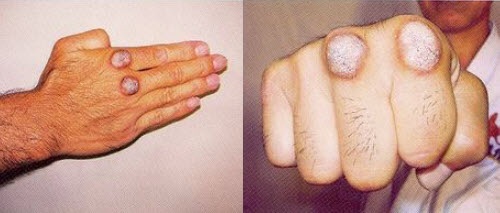
In The Most Unlikely Places…

I had an interesting encounter last week with an individual at a local coffee shop. Usually, and like most people, I walk with a certain level of indifference to the world around me and simply get to where I’m going. That being said, what differentiates me from most members of the general public, is an increased state of situational awareness. This is born out of decades of martial arts training mixed with law enforcement experience, which has cursed me with an unshakeable case of hyper-vigilance.

On this particular day, I was running a couple of errands and asked my wife if she’d like a coffee. As I walked into this particular location, I saw a guy waiting for his coffee that, at first glance, appeared to have a CGM on his tricep. This, in and of itself is not unusual. After all, I’ve used devices such as the Freestyle Libre, which is essentially best used on one’s tricep. However, as I got closer I realized this was an actual Medtronic Guardian sensor, which pairs with a Medtronic insulin pump.

When I started with my second insulin pump, I was introduced to the wonder that is CGM, which ultimately changed my life and the way I control my blood sugars. However, during the training sessions for CGM, I was warned that the Guardian sensor was to be placed on the abdomen or lower back around the love handles. I was trained that the Guardian sensor would not function properly on the back of the upper arm by virtue of the reduced amount of interstitial tissue at these sites. I’ve never tried it and always took it as a given, since the people who made the damn thing said so.

This is why seeing the sensor on a tricep caught my attention. Never one to be shy, I had to ask. I approached the individual and asked how the sensor had been functioning for him at this sight. And to be clear, for my Diabetic brethren who may inquire, this individual appeared to be slim and muscular, made references to farming and did not appear to have an abundance of, shall we call them, “bingo wings.” This made it all the more fascinating that he was using the sensor at this site.

The individual explained that he couldn’t use the sensor on his abdomen as he tended to sweat excessively during his farming duties, which would result in the adhesives giving out and the sensors to fall out. While experimentation and sensor failures are a part of pump training, it becomes an issue where you have to pay for these bad boys out of pocket. At best, you’re looking at $250 to $400 per month, if your sensors all function properly. So, if you have failures, the financial cost can start to build up. This was one of the issues this individual was dealing with.

It took him a bit of experimentation on the placement and calibration, but he was successful in getting it to work and had been doing so for some time. The only issue he faced now was the occasional ripping off of the sensor if he hooked his arm on something wile working. We had a good conversational exchange on sensors, where I also passed on my use of Patchabetes adhesives, which would likely provide him with better protection for his sensors. He was grateful for the conversation and said it was nice to have a conversation with another Type-1 Diabetic who could relate.

The interaction, although unintentional, was refreshing and acted as a stark reminder that Diabetes treatment is never a black-or-white thing. Rather, it’s subjective to the one receiving the treatment and what works for them. While the standard in this case is to use a CGM on the abdomen and never on the tricep, this individual tried it and made it work; something that would have otherwise meant that he wouldn’t have been able to indulge in pump therapy otherwise. Speaking from experience, that would have been a huge loss for him.

But it was interesting and gave me hope, considering that eventually, I’ll likely develop enough scar tissue on my abdomen that I’ll have to move on to different areas of the body. It also reminded me how important it is to keep your eyes up and observe the world around you. After all, I would have totally missed this if I had been a phone zombie walking with his head down. That’s why it’s so important to pay attention. You never know what you might miss. Food for thought… ☯️

Review: Superman (2025) – Some Spoilers

As with just about everything I review, be warned that I WILL be discussing aspects of the film and its plot; so if you haven’t seen the movie yet and intend on doing so, you may want to stop reading here. In all honesty, I’m not an overly big fan of all the reboots that have been happening in the past ten years. Some of the “continuations” are pretty slid, Cobra Kai being one of the best examples that come to mind. instead of rebooting the movie series, they took it upon themselves to continue the story from the 1980’s, effectively introducing a new generation of people to the wonder that is the Karate Kid and the martial arts. I’ve even heard that Tremors (1990) is getting a limited series where Kevin Bacon returns to the town of Perfection to face the graboids again. Not a reboot, per se. But I digress…

Enter: the new Superman film… Like most people, I’m a huge henry Cavill fan and felt that Zack Snyder did a wonderful job of providing that Superman that was both powerful yet susceptible to damage. I genuinely enjoyed Dawn of Justice and the Justice League. Bear in mind that I’m from the Christopher Reeve generation and believe that he is the one and only, true Superman. But henry Cavill fit the role wonderfully. So, I was sceptical when David Corenswet was annouced as the new Man of Tomorrow. I decided not to join the nay-sayers and opted to reserve judgement, good or bad, until I had the opportunity to see the film myself. I’m most pleased to say that I had a “me” date last Tuesday and had the opportunity to watch the film in all its iMax splendor.

Other than the fact that I absolutely LOVE iMax for its huge screen, surround sound and 3D options, I can go on record as saying that I absolutely enjoyed the movie. Superman provided a Man of Steel that was a bit less seasoned, younger and a bit more campy than most other films. I like how they omitted the whole “this-is-where-I’m-from” business, since everyone and their fuckin’ dog know who Superman is. I think we’re decades beyond providing the origin story and departure from a dying Krypton. Nathan Fillion’s portrayal of Guy Gardner’s Green Lantern added some much-enjoyed levity to the plot, and Edi Gathegi’s Mr. Fantastic was spot on. As someone who has read all the iterations, the originals, the New 52, Rebirth, etc… I feel that the film did the Superman mythos justice.

The film opens with Superman crashing into the antarctic snow, battered and bruised. he whistles and calls for Krypto, his trusted Kryptonian canine, to drag him back to the Fortress of Solitude. Once there, the fortress droids use focusing lenses to bombard Superman in yellow Sun energy, healing several brutal injuries that would take forever to heal on their own. The film goes on to explore a lot of modern issues, such as oversees conflicts, political climates, global domination plans and a bit of sci-fi thrown into the mix. Superman’s relationship with Lois is less than the picture-perfect portrayal from the comics. In fact, she suggests at one point that their relationship m,ay not work out.

The Superman from this film is fallible, can be injured and isn’t the all-powerful juggernaut that I’ve come to know and love from my youth. In a way, it’s a bit more on the realistic side and provides a bit more of a relatable character. They certainly delve deep into the modern rhetoric, where everyone has their damn cell phone out, taking photos, bowing to social convention and the pack mentality. The best, is Nicholas Hoult’s portrayal of Lex Luthor. Hoult was pretty solid in the X-men movies with James McAvoy and he played a great zombie in “Warm Bodies.” The recent “Renfield” movie wasn’t worth writing about but he played an absolutely spot on Lex Luthor. Including his unflappable cool, immeasurable logic and intelligence mixed with the genius plans… It smacked of everything Lex Luthor is all about.

In the end, Superman saves the day, defeats and exposes Lex Luthor and shows the world he is the hero they need and deserve. It’s a definite feel good ending that’s sorely lacking in the modern trend of allowing the bad guy to win as some sort of shock and awe tactic for the audience. If you’re looking for a great film, with exciting characters, great effects and a happy ending, Superman may just be the movie for you. And of course, if you have the opportunity to see it in iMax, it’s the only way to fly. Pun fully intended…

Kids Do The Damndest Things…

It’s no secret that having children significantly changes a person’s life. For the most part, having children involves sacrificing a significant portion of one’s previous existence in favour of one that accommodates the needs of the child. While many people boast that having kids shouldn’t change your life, the reality is radically different. The ability to come and go as you please without worrying about babysitting, attending locations that allow children and saving significant time and money are just a few things that change drastically. But even some of the more simple things, that don’t involve any of the aspects named above, can be painfully changed.

One significant example for me, is the ability to train, meditate and sleep at my leisure. In my case, my boys are old enough now that we’re no longer woken at the absolute buttcrack of dawn to a squalling infant who needs direct and immediate attention. But they hinder in other ways. Cue an incident from last week, when I needed to catch up on some kata work I was contemplating. Setting aside for a moment the fact that I’m roughly 3,500 kilometres from my Sensei and get very little correction, I focus my time polishing my forms and kata using Uechi Sensei’s original instructional textbook and the few video clips from Sensei that I have. But the challenge of staying polished is significant, in the absence of an actual dojo to attend.

On this particular date, I had made a point of letting my wife know that I had some kata work to be done and that I would skip supper in favour of getting a workout in before I sat down and the cement dried on my evening. My oldest was camped out on the basement floor where he usually spends his downtime, albeit a ways away from my training area. So, THAT was fine. The problem is usually the 5-year old. Now, I get it… Daddy’s home, he’s been gone all day, a kid wants to see his father. I not only get it but I understand it. But as I’ve often written before, in order for me to take care of others, I need to start by taking care of myself. And taking care of myself means karate.

I had just changed into my karate gi, when my youngest came barrelling downstairs demanding hugs. Okay, hugs delivered. After all, what kind of father would deny his small child a hug? But then, I got down to brass tacks and clearly outlined that he needed to allow me to train or head back upstairs. He wanted to stay downstairs, so I listed three very clear and simple rules for the 30 minutes that would follow:

  1. No talking or loud noises.
  2. No wrestling or fighting with your older brother.
  3. Absolutely NO walking into my training area until I was done.

The premise was simple; I needed quiet to focus and concentrate on my kata. Otherwise, distraction leads to mistakes, mistakes lead tot imperfect form, imperfect form leads to incorrect technique in the event I ever need to defends myself. I stretched and started some simple warm-up exercises, which were going fine. The boys were huddled in my oldest’s corner, mumbling quietly to each other. Fan-fuckin’tastic. Then, right as I was in the middle of the first kata, they both bolted upstairs. Within seconds, there was yelling, crying and fighting on the stairs landing. My concentration broke and my temper flared. I crossed the floor to the bottom of the steps to determine what the hell was going on.

Setting aside that such things can distract me, and I don’t anyone commenting on that fact, they were fighting over who would go outside to move our recycling bin to the road for the following day. Of all things, these little weasels were arguing over who would GET to perform a chore their mother had given. It didn’t take me long to get them in line but the damage had been done. I gave the younger one his things that he had brought downstairs and instructed him to stay out of the basement. I fumed for several minutes and tried to perform some cleaning breathing exercises before throwing in the towel and runnning out to the garage and by ringing off 30 minutes on the punching bag, instead.

When my workout was done and I was sweaty, tired and breathing hard, I sat down on one of the comfy chairs I keep out there, lit a stick of incense and took some time to reflect on what had just happened. Should I have given up so easily? having somewhat remedied the situation, could I not have simply continued my kata workout in the house? A big part of the problem, is I allowed my temper to get the best of me. A positive is that I took it out on the punching bag, which is a darn good way of directing that negative energy. But weighing out the difference between the time I would lose trying to bring myself back to a calm focused point, or simply channeling that energy into a different type of workout became the key point that made the bag more worthwhile.

Children have a direct and significant impact on everything we do, and this includes training. When it comes to something you do as a lifestyle, like martial arts, this can pose some interesting challenges. I’ve introduced my children to martial arts on more than one occasion. The oldest wants nothing to do with it and my youngest usually doesn’t want to focus on technique only wants to spar. Which can be fine in small doses. My point is, as important as it is to make the necessary sacrifices for one’s children, taking proper care of oneself is equally as important. In some cases, even more so. This is because, as I’ve mentioned frequently in the past, one cannot help care for others if they haven’t taken care of themselves first.

So, taking time for yourself to train and practice is important, whether it means setting clear boundaries or training away from home. An important detail is to have a plan “B” in the event your intended workout goes belly up and you have to use an alternative. It’s not always ideal but it’s better than skipping the training. And once you’ve managed to have that “you” time and take care of your training, you can certainly roll around on the floor and play with the kids to your heart’s content. After all, kids won’t understand that you need that time to yourself once in a while. And it’ll be a few years yet before my boys start to realize the importance and have some level of understanding and acceptance. In the meantime, I just need to keep training in whatever way I can. ☯️

No Water Or Food In The Dojo… Important Lesson Or Unnecessarily Harsh?

When I used to train in my home dojo, there was a hard and fast rule that carried all the way until the day Sensei closed the doors; no food or drink in the dojo. For the most part, this seems pretty reasonable. His rationale was that those two hours were his to teach, and taking the time to eat or drink detracted from that time. Further, the eating of food during a karate lesson shows disrespect for those who were sweating and putting in the effort while you sat at the back, wolfing down whatever you may have brought.

There were some exceptions to this rule, of course. My black belt test was an all-day affair, lasting nearly eight hours. It would be categorically inhumane to expect a person, especially someone with Type-1 Diabetes, to go an entire day without food. But for the majority and all regular classes, Sensei would limit the allowance of food or drink past the boundary of the dojo door. This included parents or spectators, who would often bring their coffees in. It wouldn’t be unusual for him to go ask parents to step out and finish their coffee elsewhere or get rid of it.

I never questioned the reasoning behind this rule until I got older and started teaching myself. After all, I had a bit of a carte blanche to step out and treat lows, if I had to. So I had more leeway than some of the other students. I never saw it as a benefit or an advantage; just another part of my condition that needed to be addressed. But in essence, Sensei held the belief that one needed to be able to control their needs for the short, two-hour period that we were in class. One could have a sip of water in anticipation of the class, even consume as much as they wanted after. But the discipline required for those two hours included abstaining from food or drink. It would be loosely comparable to being in the middle of a real fight, where you ask your opponent to pause for a moment so you can grab some water. Wouldn’t make much sense.

The other aspect is the sheer distraction it can cause students. And for this, I have a perfect example. Just a few short years ago, I was training in a dojo as a guest. I won’t disrespect this dojo by naming it; suffice it to say I haven’t trained there in a few years. We were having a weekend class with plenty of students present. We were in the second half of class when my nose detected something familiar. Off to the side, not ten feet from me, one of the students was standing there eating a fast-food burger from a paper bag. Having arrived late for class, he opted to finish up his meal in the dojo instead of skipping class. While I can admire the dedication, one does not gain much by standing there eating instead of training.

But the more important detail is the overall effect it had on the class. Within minutes, most students could smell the tempting aroma of fried meat and condiments. Almost as soon as I detected the smell, my stomach responded with a series of audible grumbles, indicating that if I valued my life, I would get us some of that! The effect was distracting and made it challenging to focus on the lesson while most of us now had to contend with an unexpected hunger pang. In my old dojo, Sensei would have definitely told this student to leave the dojo until he had finished his meal. Of course, Sensei also didn’t allow for late arrivals. If you couldn’t be on time, better not to show up. Come to the next class instead.

This raises the question that is the whole point I do this post: Should food or drink be permitted in the dojo? Certainly, and strictly from a discipline and traditional standpoint, the answer would be no. But in all reality, we live in a world of Starbucks soccer moms and people addicted to their coffees and snacks. The thought that a parent will sit for a couple of hours on a Saturday morning watching their child practice without their hot cup of java is practically ludicrous. But then, it also raises the question about the parent showing the same level of discipline and restraint as they hope to instil in their child through this training.

So what do you think? As personal health and wellbeing is pretty important these days, staying hydrated is quite important. This raises the same question about food or drink, once again. I would still be inclined to believe that one should be able to go a couple of hours without a sip. Plus, having water or food during a karate lesson can have detrimental effects. Burping, indigestion, water and/or food sloshing around your gut while you’re trying to train… It can cause quite a bit of discomfort and nausea, leading to inherent distractions all their own. My personal take would be to leave the food and drink for after the class. Especially since most classes these days only seem to be for an hour or so. Some traditions are best kept. Food, but not in the dojo, for thought… ☯️

That White Gi Needs Some Colour…

I saw a pretty interesting post recently that got me thinking. And I really wish I had saved the post so that I could have shared it here but the way things go for me is, I’ll read or see something of interest and move on. Over the course of a few days, I’ll dwell and think about what I read, which will elicit the drafting of a post. By then, I’ve forgotten where i saw the source information, which shouldn’t be surprising given the number of martial arts pages I’m subscribed to. but, on to the meat and potatoes…

The post I read spoke about how karate isn’t;t pretty. It isn’t about flashy kicks and fancy techniques, looking good or breaking boards. Karate is brutal, effective and to the point. Karate is intended to defend oneself and inherently stop the threat in the most efficient, quickest and brutal manner possible to prevent a continuation of the threat. People pictured their favourite action star and assume that a real fight with a karateka will involve some fancy footwork and graceful dispatch of their opponent.

In reality, someone genuinely seeking to defend themselves or others will take the shortest path between two points. They’ll strike the groin. They’ll gouge eyes. They’ll break bones and render their opponent unconscious. Because at the end of the day, I, or any other traditional practitioner, don’t want the fight to linger or last one second longer than it has to. I can guarantee that none of us wanted to be in the fight to begin with, and likely didn’t instigate it. I can’t speak for everyone else, of course. But in my experience, traditional karate practitioners will carry a “walk away rather than fight” mentality.

In reality, this doesn’t take away from the level and intensity of training required in order to have those skill sets. And this brings my colourful title (pun intended) into play. Sensei used to say that a practitioner whose gi was always Snow White and never had a blemish was probably in the back painting their nails instead of practicing karate. The point was that learning karate in its true form invovles a lot of things that people don’t realize. Injuries, cuts, abrasions and wounds are common. never intentional, mind you, but it’s hard to train to your full capability without the occasional injury or slip up.

A landed hook punch while sparring will cause a nose to gush blood with the best of them. A grappling match will tear and rend fabric, causing holes, wear marks and damaged uniforms. An old adage of traditional karate is that a black belt will eventually turn white. This comes from prolonged and frequent wear and tear, which exposes the while fabric core under the black. The same happens to your gi. And your flesh.

That’s kind of the point. I’ve lost count of how many times one of my fellow students punched me in the face or stomped my toes. Hell, back in ‘23, a black belt managed to fracture three of my ribs during a scored sparring match. The jury’s out, but I’ve maintained that it’s both our faults. I should have blocked and he should have had better control. But shit happens in the heat of the moment during training and accidents WILL happen.

You can’t train in tradition martial arts without getting literal blood, sweat and tears on your uniforms. And you’ll never get anywhere without breaking nails, bleeding and going home with the occasional shiner that will have your mother have a stroke and ask “WHO DID THIS TO YOU???” Ahem,… jus’ sayin’… Totally not recounting previous childhood experiences. But this is an important aspect to keep in mind if you’re on the hunt for a place to train. If you walk in and the instructors all have a pristine gi with no stitching, tears or yellow blood anywhere, if they’re black belts are pristine and black as coal, there’s a good chance the workouts are shit.

This isn’t a universal rule, of course. But it’s a good standard to bear in mind. As I started out by saying, karate isn’t meant to be a sport. It isn’t meant to be pretty, graceful or fancy. It’s meant to be brutal, effective and destructive. And one does not forge a perfect sword without first passing the steel through the fire. Much the same is true of karateka. We aren’t for the faint of heart. Food for thought as you all keep training. Stay healthy, my friends… ☯️

Slow And Steady Wins My Race…

I may have written about this before. Who knows? At this point in my life, I can’t keep half my fuckin’ shit straight with planners and calendars, so I can’t say much. But I wanted to touch on a significant change in lifestyle that I’ve had over recent years that has played a pretty major role in my overall health and wellbeing. It’s something most people don’t recognize or acknowledge within themselves but I’ve been fortunate enough to grab onto it. I’m talking about slowing down…

To be clear, I don’t mean slow down while driving. I still exist in a perpetual state of heavy-footed goodness and I don’t envision that changing anytime soon. And light help you if you slow down in front of me WHILE I’m driving behind you. But I digress… No, I mean slowing down in the sense of approaching the daily grind on a much slower scale. For decades, I spent every morning where I would it the ground running and keep up the pressure and speed until my head hit the pillow at the end of the day.

Certainly as one begins to get older, one recognizes that there’s an inherent value in seeing the importance of slowing down. As a child, I used to become incensed whenever I would walk with my mother, because she would shuffle along at a slow gait that took twice and often three times the amount of time that normal walking should. She had no health issues or problems that caused this, she simply chose to go that slow. I would often try to coax her along, to which she would usually reply, “There’s no hurry and this is a fast as I’m going. So you can deal with or you can slow down with me.”

For decades, it drove me nuts because I always felt like I had to get the task done so I could move on to the next one as quickly as possible. I often lacked the vision that my mother had, where there was nowhere we NEEDED to be and we could take our time; something people very rarely see. By virtue of this, she would often be of the opinion that there was nowhere need to hurry, since the task would get done regardless. I never recognized the importance of this until the past few years.

As a law enforcement officer, I always had somewhere to be and someone’s wellbeing often depended on how quickly I would respond. Stands to reason. Even in the more administrative side of things, I was always rushing, in a harassed state, and striking the panic button when my tasks became many. No matter what job I held or what position it entailed, I would often be at work nearly an hour before my scheduled time, putting in extra work, rushing to get things done early and stressing myself beyond reason.

In recent years, I’ve changed gears. Now, when I wake up in the morning, I spend the first ten minutes sitting at my desk instead of rushing to shower, shave and dress. I start the morning with those first few sips of caffeine, take my meds (Diabetic bullshit) and check my news feeds. I usually touch on a few daily tasks in some of the games I play on my devices, since I can’t do this at work. Then, in the comfort of my jammies, I prepare my work bag and my lunch and start to move towards a hot shower and slowly get dressed, often while sharing “good mornings” with one and/or both of my sons, who usually don’t sleep in even if they’re perfectly positioned to do so.

Once ready, I make my way to my vehicle where I casually make my way towards the office. Music playing and sun shining, I focus on the songs and not on what work tasks may be waiting for me once I arrive. I think and look forward to the more pleasant aspects that I’ll experience towards the end of my day, including having dinner with my wife, playing with my children or just flat out relaxing at home. The difference is I walk into work with a sense of purpose but without being pent up with stress that hasn’t yet been justified or needed.

The results I’ve seen include less tress, more calm, less irritability towards my colleagues and staff and it contributes to lower overall blood pressure. Too many people spend their lives dealing with a state of hypertension due to job-related stress. While it’s important to have coping mechanism outside the job to deal with that stress, and I’m not talking drinking or smoking but things like meditation, relaxation exercises or even things like gardening or sitting out on a deck and watching nature, how you approach you day and address it go was a long way, as well. One should never have to “get through” or “face” their day. It’s far more important to experience the day, or live it. This will contribute to better overall health and much better outlook on life. Food for thought… ☯️

Unintended Dependences…

I remember my childhood with bittersweet fondness. The reason I say bittersweet certainly includes the Type-1 Diabetes diagnosis I got at the tender age of 4. I lived a simple life, even before that. Unlike many people who are diagnosed, I had no “bad habits” to speak of, no addictions to sugary products and no horrible diet. This, in part, was due to my older brother and his own ailments, which kept anything artificial, sugared or high in sodium out of the house. By virtue of this, the biggest pain in my ass (literally) were the insulin injections. Otherwise, I was an overall pretty content child.

One of the best aspects that I can remember from my childhood is a lack of dependence on technology. The concept of “binge-watching” television wouldn’t become a prominent aspect of home life for another thirty years. Computers in the home weren’t common. Cell phones weren’t a domesticated thing. When I woke up in the morning, I had breakfast, at. A dining table and conversed with family. this was followed by either school or playing with toys and/or going outside. My entertainment came from my own imagination as opposed to streaming clips of random people doing weird bullshit out in society for my enjoyment. It was simpler time.

As I got older, friendships developed and my time was spent playing away from the home. Once I learned to tell time., I had a simple wristwatch and was given a curfew. As long as I was back by that time, my parents rarely knew where I was, what I was doing or who I was with. There was a simple freedom to it all; knowing that if one needed a touch of peace, one could escape to the cliff-side ledge I used to sit on, that looked out over our open bay, or sit on the stone outcrop atop Dalhousie Mountain and stare out at kilometres of lush boreal forests spreading south of me. If someone wanted to get a hold of me, they’d call my home, where a message would be taken and not delivered until I decided to return.

While the respective peace of my childhood is greatly missed, this isn’t to mean that I don’t have a fond appreciation for the advancements in technology that we’ve made over the past several decades. After all, those advancements have brought me from manual insulin injections and poorly controlled blood sugars to a world of insulin pumps, constantly monitored and adjusted blood sugars and better health. I predict that in the next couple of decades, I may find my way into something akin to never having to address my Diabetes again, even if it means it’s controlled and monitored by technology instead of me.

The negative side to all of these advancements comes from how society uses the technology. Privacy, while deeply coveted by most, has become a thing of the past. People can reach you anywhere, anytime, at any hour via cell phones. Apps, devices and even our televisions listen to us and make “recommendations” or “suggestions” based on our habits, preferences and even what we say in a room. It’s no coincidence that if I mention to my wife that I’m craving pizza, an ad for a pizza chain will “coincidentally” pop up on my social media feed. Big brother is always watching.

But we’ve become inadvertently tethered to our technology. I’ll be the first to admit that I’d be in horrific health, if not for my continuous glucose monitoring system. But we all have our devices, our smart phones, our streaming services… And they effectively govern our lives, now. No one ever needs to try and find directions somewhere or ask for them; just look it up on your phone. No one ever needs to research a particular topic. Why would you, when you can just Google it? Ever sit in public transit or in a food court? No one is usually speaking; everyone has their eyes down at their phones. A major pain in my ass when I’m trying to walk from point A to point B and some wretched son of a bitch is walking into me because his eyes are on his fuckin’ phone… But I digress…

Technology is fast becoming a commonality in daily life, with many aspects of it considered more of a necessity than a luxury. In many ways, this is reminiscent of when cars were invented and became common. While only the wealthy may have initially taken advantage, eventually it became a necessity for most family households to have at least one vehicle. The same can be said now, with the internet. In the 1990’s, the internet was that annoying thing that took almost ten minutes to get connected, where a full page would take minutes t boot up and would usually have that shitty 8-bit feel to it, with no picture resolution and everything seemed to be written in Times New Roman.

These days, the internet, and more specifically wifi, controls almost everything. Our phones, tablets, computers and televisions are primarily wifi-driven. And even some smart homes are designed with their critical functions tethered to the home’s wifi. So this begs a very important question; what happens when your wifi fails? My family and I discovered this the hard way this past weekend. After a brief power outage, we realized our wifi connection was no longer maintaining itself. After attempting resets and reboots on my own, a short call to our service provider confirmed it; our modem was outdated and would no longer function. A situation brought only to light by the brief outage of power.

It was Friday night, a night famous in my household for gaming and movies with my oldest, who has never known a world without internet and devices. I made my peace a long time ago with the fact that my children would never have the childhood I did. But I never realized just dependent they were on internet until this weekend happened. The earliest we could attempt a fix would be Saturday afternoon. This was made possible only if I brought the old modem into my local provider’s store and got an upgraded replacement and installed it myself. Waiting for. A technician would require a further number of days.

Anxious to restore the status quo, I got up first thing on Saturday morning (my usual morning to try and sleep in) and made my way into the downtown area to hit up the shopping mall that held my nearest supply store. I hate crowds of people at the best of times. Hobnobbing with shoppers on their weekend excursions did NOT appeal to me. But i got the replacement modem and installed it on my own. Using the instructions the tech on the phone provided the previous evening, I was able to get it up and running and connect wifi to our television and devices around the house. A collective sigh of relief ensued.

It was barely twenty four hours but it was a significant wake up call for me to realize that my family was utterly dependent on the internet. Despite books, toys, puzzles and games, the outdoors, the almighty Skynet still reigns. Ultimately, there’s no putting pandora back in the box. Technology, barring some major global catastrophe, will continue to evolve and improve our lives in some ways. But it will also strengthen our dependence on it in other ways. is it a bad thing? Time will tell. But it’s important to remember that we’re still human. And as humans, we should occasionally take the time to sit on a stone outcrop and stare at the sea. Food for thought…☯️


Monday, Bloody Monday…

I’ve often written ab out how Type-1 Diabetes affects just about everything in a person’s life. And this is true. But on occasion, it hits a particular level of annoying. This was the case with a particularly troublesome infusion set change that took place a little over a week ago. For those who aren’t familiar with insulin pump therapy, the infusion set and reservoir for an insulin pump needs to be changed out every three days. This is because after three days, insulin will start to crystallize within the tubing walls, causing an inaccurate delivery of insulin.

On this particular Monday, I noted that I only had about two or three units left in the reservoir. Usually, this means that I’ll need to change it up before I reach my next meal, since I won’t have enough to bolus for any carbs I may consume. I was walking towards my home office and had just finished a round of rather hot, sweaty yard work at home. The weather was summery as fuck and I was wearing khaki cargo shorts. I pulled the pump from my waistband and raised my shirt enough to access the infusion set. A quick twist of the infusion set disconnected it from the cannula injected into my abdomen.

Then, came the bloody part. The cannula is injected into the abdomen using an IV-style injection method. This means that the cannula sits over a surgical needle that injects into the abdomen. As I pull the needle out, the cannula stays in. Seems pretty simple, right? It usually is… The infusion set is then held in place by a significantly solid adhesive. This not only prevents the cannula from prematurely coming out of the abdomen but provides some water-proofing as well, for when I shower, swim, etc.

Ever use wax strips? Had a piece of packing tape, a sticker, anything, stuck to your flesh and pulled it off suddenly? It’s uncomfortable and irritates the skin at the best of times. It’s even worse for people with body hair that wasn’t MEANT to be waxed off! As I walked towards my desk, I gripped the cannula cover and pulled hard in order to peel the adhesive from my abdomen and free the cannula.

While it’s normally never comfortable to start with, I felt a searing sting, not unlike walking into an area with a number of wasps buzzing around. I felt skin stretch and hair tear away; once again, hair that wasn’t meant to be removed. I whimpered ever so slightly, aware that being any louder would likely alert my two young sons, who absolutely LOVE any excuse to expose daddy’s weaknesses. I continued to walk towards my desk to get fresh components to refill my pump and thought the worst was over.

Oh, how wrong I was… As I was filling a fresh reservoir with insulin, I felt an odd dampness every time I leaned forward. Not one to usually wet myself, I looked down and saw a grapefruit-sized blood stain across the front of my shorts. I also noticed a trail of quarter-sized droplets of fresh blood on the basement floor, starting roughly where I had pulled the cannula patch out. Looking like something out of a shitty horror “B” movie, there was blood everywhere.

I quickly stemmed the bleeding at its source and proceeded to install a fresh infusion set so that I could restore insulin delivery. I made my way upstairs, only to be greeted by my wife and both my kids in the kitchen. They looked at me with a horrified look. My wife asked what happened. The boys were just fascinated. After quickly explaining what took place, the boys ran downstairs, enthralled by the prospect of spilled blood. Little psychos.

They came back up giggling, with the oldest saying “Wow, dad… It looks like you murdered someone in the basement!” This prompted a tirade of “Daddy murdered someone, Daddy murdered someone” from the youngest. I had to calmly explain how perhaps we didn’t want to be yelling that Daddy murdered someone. But they were having way too much fun. I spent the next thirty minutes cleaning up my floor and spot treating my shorts before the blood could set.

Pulling out any of my pump equipment will rarely cause such a level of bleeding. But once in a while, the stars align JUST right for there to be a gushing comparable to an arterial spray! This was just such an occasion. Just one more aspect of type-1 Diabetes that causes extra work and issues. What is one to do? Luckily, everything my pump does to keep me alive and healthy far outweighs any occasional, negative aspect that rears its ugly head. ☯️

Don’t Stress About It…

Ahh, stress… Like a constant, unwanted passenger on an otherwise uncomfortable ride. Everybody experiences stress in some given way, shape or form over the course of their lives. In many ways, without even realizing it, but there are no exceptions. While not inherently a good thing, most folks don’t realize that stress is a normal function of the body and is usually the response to a significant change or challenge that pops up on you.

According to WebMD, which I love to peruse. “When you feel stressed, your body releases certain hormones. […] The hormones your body releases when you’re stressed get you ready to meet the challenge or demand in your environment. During the stress response, your body gets ready to flee or fight by increasing your heart rate, breathing rate, and blood pressure.” Sounds pretty reasonable, right? Something that preps you for the challenge you’re about to face?

The point, and the article touches on this, is that stress, in controlled amounts, helps us to get things done and accomplish tasks. Without stress, we’d be left with a “fuck it” mentality where most of us would accomplish very little. The problems arise from being in a stressed state constantly or semi-permanently. The problems arise is that prolonged periods of stress can affect the entire body and mind. It’s taken a lot of decades for people to wake up and realize that emotion and mental health plays a huge part in physical health.

On the emotional side, prolonged periods of stress may cause unusual bouts of emotion, good or bad, sadness, depression, restlessness, short term memory issues and issues focusing long enough to meet your goals or get things done. A lot of this actually sounds like symptoms of poorly controlled Diabetes. Imagine that? And I know for a fact THAT shit is stressful! But an important thing to keep in mind is that every person deals with stress differently. While something may be a big deal to one person, it may come off as nothing at all to another.

On the physical side, there’s a lovely grocery list of potential symptoms that may arise from prolonged stress. These symptoms apply to so many things that one may be experiencing stress while simultaneously thinking they’re just unwell. I’m talking about headaches, inability to sleep or sleeping too much, muscle and joint pain, increased heart rate and blood pressure, fitfully breathing, upset stomach and/or diarrhea and loss of sexual desire. Sounds fun, eh? Pair that with the fact that prolonged stress affects your overall immune system, making it easier to get sick. Also sounds like Type-1 Diabetes.

Ultimately, there a varying forms of stress, not just the emotional or physical, and there can be long-term, permanent effects to prolonged or “chronic” stress. The challenge is in recognizing it and taking steps to address it and manage it in a healthy way. Personally, I’m likely the worst in taking steps to address stress. I’m more of a “jump towards the threat head-on” kind of guy. The result is that I’ll often fight my way through stress instead of recognizing and addressing it. The problem with this is that stress releases a bunch of hormones into the body that can significantly increase blood sugars; cortisol being among them. As I’ve often mentioned before, EVERYTHING affects a Type-1 Diabetic’s blood sugars.

At the end of the day and as I mentioned in the opening paragraph, stress is normal. There’s no getting away from it. But staying healthy depends on how you address it and deal with it. When speaking with others, I’ve often compared getting through a period of increased stress to falling into a river with strong current. If you try to swim against the current or get directly out of the water, you’ll likely exhaust yourself and drown. But if you swim with the flow and slowly make your way to the outer edge, you’ll likely exhaust can manage your way to safety. Stress is very much the same. Food for thought… ☯️

Clothes Can Make The Man…

Before everyone jumps on the bandwagon and fills my comments section with hate, this post is intended for everyone, not just men. The title is just what the saying is. Aw, who am I kidding??? No one comments on my posts! But enough about me. A few years back, I posted a video on my YouTube channel (yes, I have one of those, it’s called “The Blogging Buddhist. Imagine that!) about the difference between executing techniques in the dojo versus on the street. If anyone is curious, you can watch the video here.

The jist of the video demonstrates how we train consistently in the dojo, usually wearing fitness gear or a gi, which allows for free movement, flexibility and proper execution of techniques. So what happens when you’re on the street wearing clothing that may hinder or prevent certain movements? It’s been a few years since the video and I don’t get in front of the camera a great deal these days, so I thought I’d summarize my thoughts here.

First and foremost, I got to experience this firsthand, likely more times than I can count, during my time as a police officer. Karate has saved my life in the field often enough that I became a seasoned user of the lessons I’ve learned. That’s not necessarily a good thing but here we are. And there’s nothing that hinders your free movement quite like 50 pounds of gun belt and body armour. So when I say that doing techniques in the dojo are different than doing techniques in the street, take it as gospel truth.

Let’s look at some examples. Starting from the bottom and working your way up, footwear can be both a benefit or a hindrance, depending on the technique. In the majority of dojos, the practitioner trains barefooted. I say “majority,” because I’ve seen some dojos where the students wear sneakers or Kung fu shoes. But if you’re used to executing your kicks barefooted, suddenly trying to carry out muscle memory when your tender tootsies are wrapped in a sneaker or boot can feel different and cause a difference in how you carry out the kick. This can lead to ineffective delivery or potential injury.

Pants! Gi pants are usually loose-fitting and have some give them, allowing for flexibility and fluidity of movement. Ever try to do a solid front kick wearing a pair of skinny jeans? Granted, if you’re wearing skinny jeans, you have a whole other problem. But I digress… My point is, your pants can hinder your movement and limit the height and effectiveness of your kick. This is why it may be ideal to consider either a difference in clothing or allow yourself to train with your street clothes so that you can adapt and adjust to the potential hindrance they may cause.

Tops, shirts and jackets will cause the same issue. A regular, run of the mill shirt isn’t a big deal and should cause much issue but a snug-fitting top or a thick jacket can inhibit your movements and prevent you from effectively carrying out some techniques. In our style, we have a circular middle block that is most difficult to execute while wearing a coat, since the sleeve tends to twist and hold back the arm. If your life depends on blocking an incoming attack, the last thing you want is for your movement to be hindered and potentially cause injury.

There are plenty of little details to consider, as well. Things like whether you’re carrying a purse or a backpack. Most people’s instinct is to hold on to their possessions but this can limit your free movement. Whether you’re wearing a hat or ball cap that can potentially limit your peripherals or get pulled down over your eyes, etc. While one can’t possibly think of every scenario and prepare for every contingency, these are all just things to bear in mind and that, in a self-defense scenario, you may need to decide and adjust on pretty damn quick. It’s just one way to remember that the romanticized version of karate portrayed in shows and movies are very rarely accurate and fighting in the street in the exact same way as you train in the dojo is unlikely. Food for thought…☯️