When It Doesn’t Make Sense Is When You Need To Keep Working At It

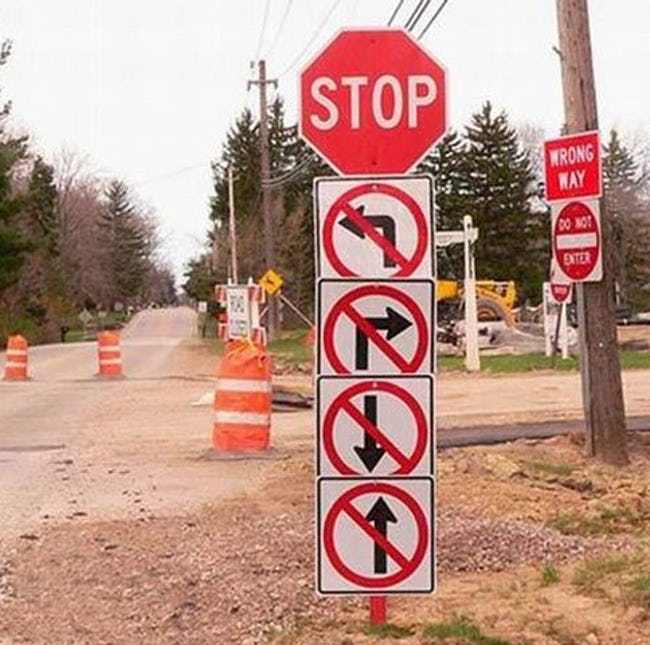
One of the weirdest lessons in life is how things have to be the opposite of the result you seek to achieve in order to realize you have to change it.  For example, most people won’t necessarily realize it’s time to change their diets and hit the gym until they gain a noticeable amount of weight and start experiencing health issues.  Or we often won’t eat properly until we are diagnosed with some measurable health deficiency or dietary issue caused by eating too much junk food or making bad health choices.

I think it was Albert Einstein who said, “If you don’t understand it simply, you don’t understand it well enough.”  There’s a depth of truth in this that applies to all persons, regardless of their goals. Here’s the simple truth: you shouldn’t wait until you fall out of shape or gain weight to start “getting into shape” or exercising.  You shouldn’t wait until your blood sugars run rampant or your health falters before you change your diet and eat better.  And live better.

That’s an important aspect as well.  It’s not all about diet and exercise (although they are two of the most important factors and the focus of this post).  You have to be well within your own existence.  You have to be able to wake up in the morning WANTING to face the day instead of dreading the next 8 hours that may be coming.  Trust me, when I say that this is not always an easy aspect.

But let’s focus on the two first factors, diet and exercise.  I once read that the only way to get in shape is to show how out of shape you are.  What I interpret this to mean is, there’s nothing impressive about the 250-pound muscle jock benching huge amounts of weight and screaming with every rep. Sure, he no doubt worked to get to the state he’s in, but what’s more impressive is the brave soul who steps onto the treadmill and sweats within a minute and has to struggle to speed walk for five minutes.  Then they come back the next day.  And the next. And the next.  And before you know it, this person is losing weight and becoming stronger, faster and better.  That’s how change is made.  By showing up and doing it!

Your diet is the next big aspect.  It has to be specific to what you’re trying to accomplish.  The athlete training for a heavy weight boxing match won’t have the same diet as someone trying to slim down and lose weight.  And most people seem to be confused about what diets can work and what specific foods can do for you and/or against you.

Let’s discuss carbs for a moment.  Carbs are a Type 1 Diabetic’s biggest nemesis.  Why? Because carbs are the reason we need to take insulin.  The more carbs we ingest during a meal, the larger the dose of insulin that’s required. That’s an over-simplification, but carbs are meant to provide energy for the body.    This is true for all people, Diabetic or not.  So it’s usually not advisable or healthy (unless instructed by your health practitioner) to try and be completely carb-free.  Carbs get broken down into glucose or stored as fat.

Carbs get stored as fat when we take in more calories than we require or burn within the day, and get stored in all those lovely areas we hate to look at when we hop in the shower.  That’s why many professional athletes will “carb load”, because they know they’ll need the energy and it will all get used up, as opposed to being stored as fat.

The lesson here is that in order to lose weight and get into shape, you need to combine exercise AND diet.  There’s no getting around this.  You have to fire up your metabolism to help you along, and there’s no magic pill that will accomplish this.  You just need to get off the couch and do it.  You can’t diet but sit around like a lump and expect t lose weight.  You can’t exercise like a pro athlete then go out and eat the entire value menu at your local fast-food restaurant and expect to stay healthy.  You have to combine both aspects.

You want to avoid refined carbohydrates and sugars such as pastries, white breads and pastas as well as sweetened drinks and sodas.  Base the amount of carbs you ingest on your level of exercise.  If you are just starting, then keep your carb intake on the lower side in order to prevent increasing those fat stores.  Eat plenty of fiber and lean protein to help with muscle repair and development and the continuance of “friendly” bacteria in the digestion.  Lean protein means meat options that are low in fat and provide the healthiest totality, such as skinless chicken or fish (sorry vegetarians, cutting out meat does NOT help you lose weight).  And last but not least, don’t make any major changes to your lifestyle without consulting your health practitioner and/or professional trainer.

All pebbles seem small until you have one stuck in your shoe.  I forget who said that, but it’s true.  Getting into shape and reaching your health goals always seem like a HUGE challenge… until it’s not.  Then you get to maintain that health instead of trying to fight for it, and you can look back on the days you wished you were in the shape you are now. But you have to start.  One step, that’s all it takes.  Then once you get moving, you’ll be amazed at how difficult it is to stop! ☯

Sugar Pie, Honey Bunch… You Know I Love You! 🎶

You know, when you spend every day minding what you eat and watching your health it can get a little tedious.  Sometimes we forget that it’s okay to take a step back, take a breath and let ourselves enjoy simple pleasures that we’ve always been told were a no-no.

Enter sugar pie!  As some of you may remember from earlier posts, I’ve been living in the Canadian Prairies for the past ten years.  During the past decade, one fo the things I’ve missed the most from the east coast is exactly that: sugar pie.  This delicious desert has many different backgrounds in North America, but the one I’m referring to traces its roots to the Province of Quebec.

French Canadians have a bit of a dark history and faced many difficulties during the country’s development.  Many of the recipes created during this period were rich in calories with lots of fat and sugar.  This helped early French settlers to survive the harsh living conditions they faced due to the elements.  Of course, the modern recipe is made with brown sugar, a rare commodity that wasn’t available back then.  The original recipe called for maple syrup as opposed to brown sugar, so the flavor may have been different but many recipes still use either, or both.

The results of my attempt at a sugar pie

Today I decided to try my hand at making a sugar pie.  It’s one of the few vices that I long for whenever I visit my family in the Maritimes, and I’ve never been able to find one anywhere in Saskatchewan. Although some people have mentioned having heard of sugar pie, no one has ever been able to provide me with a place to get one.

I happened to find a recipe for it online today, and decided to try my hand at it. The ingredient composition may have been a bit more complicated than the original recipe, but I figured I’d give it a shot.  Depending on the taste, it may be an indulgence I can now allow myself.

Watery and unsuccessful…

Ultimately, it tastes like a bowl of jellied s&*t!!!  I should leave the baking to those who know how.  The French settlers would have likely opted for starvation over eating this thing.  I’m not sure where I went wrong, but it’s watery and tastes nothing like any sugar I’ve ever had out east.  But hey, at least I tried… ☯

All About The Books, But…

It’s been a quiet few days and all things considered, it’s good to take a step back and let your mind cool and relax a bit.  This is not the easiest task in the world with a newborn and a destructive 4-year old in the house.  But one of my very favorite hobbies just happens to be reading.

I’ve tried not to limit myself in regards to what medium I use when I read.  I have an e-reader, my laptop, my smart phone and I share a collection of several hundred books (likely close to a thousand if not more) with my wife.  Our books cover just about every genre imaginable to some extent or another.

But the book I want to talk about in this post is James Clavell’s Shogun.  Written in 1975, it’s the story of a Dutch ship that gets lost during a sea storm, only to land in feudal Japan.  The English pilot, John Blackthorne, ends up befriending many of the samurai and daimyos and becomes a trusted advisor to one of the local Regents who retains him as a trusted advisor.

Cover of the 1st Edition, which is the one I originally read.

The book is quite lengthy and I read it for the first time in the mid-90’s.  When I eventually made my way to Japan and subsequently Okinawa, I had the opportunity to really appreciate how accurately the book portrayed some of the Japanese culture and how many similarities Clavell included in the novel.  The novel is about 1200 pages long, but if you’re looking for a solid read, I would highly recommend it.  I’ve read it three times since first picking it up, and the rich story allows for something new to be noticed every time I read it.

The book was made into a television miniseries that was a little over 9 hours long, in 1980.  I didn’t discover it until years after the first time I read the book.  I’ve always been a touch leery about movies based on books, considering how much they usually shave away from the full story of the book. But the television series covered just about everything as accurately as possible.  It was impressive, considering the lack of special effects and such in the early 80’s.  They also released a 2-hour feature length movie, but if you’ve seen the mini series, the movie pretty much sucked.  They cut out so many important details it no longer resembled the actual book.

I focus on this book because the story covers many aspects of life that I hold dear.  This includes aspects of Buddhism, martial arts and Bushido’s code.  But whatever genre of book you enjoy, reading helps to reduce stress, has a calming effect and can even lower blood pressure and help you sleep better.  Not least of which is the fact that it allows a person to stretch their imagination and explore worlds that would otherwise be impossible. ☯

Bear Beats Battlestar Galactica…

Bears have an important place in human history.  Powerful, authoritative animals, they have been the subject of mythology and legend in many cultures throughout the centuries and are featured in many diverse ways.  For example, bears can even be found in astronomy.  Ursa Major is considered the “Bear Constellation”.  The bear has, at times been feared as a significant opponent and there are legends of defeating a bear as a symbolism for overcoming significant adversity.

For those of you who may not be as big a nerd as myself, Battlestar Galacticais a science fiction show that came out in the late 1970’s.  The show basically involved a group of surviving humans on a lone ship (the Galactica) trying to overcome incredible odds to maintain their way of life.  It only ran for two seasons, but it amassed a significant cult following that inspired a reboot in 2004.

I’m going somewhere with this, trust me…  I feel like I’ve been battling a huge, angry bear for the past two years. This bear is bigger, stronger and has more resources than me.  And it seems as though no matter how hard I push, the bear seems intent on breaking me. Much like the crew of the Galactica, I often feel like I’m throwing in my last ditch effort in order to maintain my way of life.

Okay, maybe this is a bit of a stretch to get a message across… but it’s an important message.  We all face overwhelming odds at some point in our lives.  After all, life is hard!  It kind of has to be, right?  If life were smooth and easy, what would be the point without some kind of challenge? But despite the severity or depth of the challenges we face, the important is to keep fighting.  As long as you can still draw breath, you can still fight.  And as long as you can still fight, there will always be a chance of overcoming those odds.

No matter the odds you face, don’t ever give up.  Although the saying goes, “Nice guys finish last” we get there eventually, right?  That’s the important part.  Take of yourself, your health and your family and don’t be afraid to ask for help if you need it. ☯

My Get Up And Go, Got Up And Went!

Being alive hurts!  From the moment of our birth, we suffer traumas.  Think about it: everything a newborn infant feels is for the first time.  A little bit cold?  Hungry? Gassy?  These are all the WORST things that an infant experiences because they’ve never experienced anything else.  The things that could be remedied with a bottle and a warm blanket become traumatic to them.

The same can be said for us as adults.  We simply tend to grow into these pains much easier than a newborn infant.  I remember a time, not so long ago, that I could hop out of bed after only a couple of hour’s sleep and hit the ground running.  Train and work all day, study and write before going out with friends and spend half the night up.  Bear in mind that this was all before I introduced coffee into my routine.

These days, a bit of cold weather makes my knees sound as though I’m walking through a room full of loaded mousetraps and I’m setting them all off.  The pain is about the same, as well!  My mornings start with a wave of fatigue that result in a daily battle of wills against my body’s instinct to simply lie back in bed and keep sleeping.  Caffeine has become a required step in my daily routine as opposed to an enjoyable commodity (don’t kid yourself, I still enjoy it as a commodity as well)

The point is that I don’t recall how all these little pains got this point.  They were so gradual that for the most part, I still remember being full of oomph instead of waking up full of oops!  There is no defeating the ravages of time.  That probably sounds a bit morbid, but it’s intended as a reminder of the importance of taking care of oneself.

From the Diabetes standpoint, exercise, proper nutrition and frequent testing are important as we get older in order to maintain ourselves.  From everybody’s standpoint, being idle is extremely detrimental and can lead to all the aches and pains we begin to experience as a few extra birthdays come and go.  So be sure to take good care of yourself and stay physically fit, Diabetic or not.  ☯

Conditioning Doesn’t Always Leave You In The Best Condition

The human body is a phenomenal machine.  It can be trained, developed and taught to perform wondrous feats. For the most part, hard work and effort can allow just about anyone to become better, stronger and faster than they were before.  Training and muscle memory are wondrous tools.

For example, I remember reading about monks in China called the Leaping Kung who trained tirelessly for hours everyday at jumping.  That’s it, just jumping.  They would train and develop their jumping and leaping abilities to the point where they could jump to exaggerated heights from a standing start.

Another good example would include athletes who train to swim for long periods of time in water that would be at temperatures considered unhealthy and dangerous for the human body.  Although one would never stay in water of these temperatures for periods of more than fifteen minutes (usually accompanied by a beer and sitting still, mind you), these athletes train and condition themselves not only to withstand the increased temperature, but the rigors of physical activity within said increased temperatures.

Although these feats sounds amazing and many people watching would easily wish for the ability to do the same, conditioning ourselves to endure more is not always a good thing.  Sometimes we can push in the wrong way and the results can be detrimental.

When I was a child, I would suffer multiple symptoms from having low blood sugar.  My vision would blur, my muscles would weaken and my tongue would go numb, of all things.  Over the years, some symptoms have changed to include loss of coordination and fine motor skills, mood swings and anger to passing out.  It was annoying and frustrating, especially if I were out with friends or trying to train at karate.

Over the years, I pushed myself to keep going, even when my blood glucose levels would drop.  The end result is that some symptoms were reduced and some disappeared altogether. I have been a Type 1 Diabetic for 37 years, and I can honestly say that when my blood sugar drops I get a mild feeling of discomfort and test my blood to find it quite low.

Anything below 3.9 mmol/L is considered low and dangerous.  Anything below 3.0 mmol/L can cause loss of consciousness.  I’ve often remained fully functional well into the low 2.0 mmol/L.  Although one would think that this is a good thing, it really isn’t.  Extreme lows can cause damage to the body that we rarely consider.  Even now, I’ve felt a low and tested only to have my glucometer read “LO”.  This means that my blood glucose levels are too low to register on the machine.

Conditioning ourselves to handle more can be an exceptional advantage in the martial arts, fitness and even with Diabetes.  But if you train yourself TOO well, you can reach a dangerous level.  Be mindful of what goals you set but more than that, be mindful of what the results may be once you reach those goals.  Your health may depend on it. ☯

I Practice The Way Of The Empty Hand, But I’m Not Always Empty-Handed

For the most part, when people ask me what martial arts I study, I tell them I do Karate Do, or the Way of the Empty Hand. “Karate”, as it’s known in the Western hemisphere, is a striking art that predominantly includes punching, kicking, knee and elbow strikes as well as a variety of blocks and open hand techniques (hence the name).

Although different schools will tell the history differently, all karate is descendent from Chinese martial arts.  This is a hard reality.  In fact, karate was create and adopted on Okinawa in the mid to late 1300’s, after large groups of Chinese families moved to the Ryukyu Islands and introduced aspects of their culture, including martial arts.  There have been some mild exceptions, such as the originator of my style having migrated to China and studied with the monks, who subsequently taught him the style of Kung Fu he brought back and adapted to become a style of karate.

But before I get lost in a history lesson, many schools of karate include the use of weapons, but they mainly focus on empty-hand fighting because, well… karate MEANS “empty hand”!  But there have been a number of weapons incorporated over the decades including, but not limited to the tonfa, bo staff, sai and nunchaku.  But the primary style I’ve studied over the past three decades, Uechi Ryu,has not included the use of weapons.

So what do you do if you find yourself in a self-defense situation where your opponent has a weapon in his/her hand?  Sure, it’s great to have confidence in your hands and feet but let’s be realistic: if someone swings a baseball bat at me, I’d feel a lot better if I could block it with a similar weapon (especially if getting the hell out of there isn’t an option).

An aspect of my martial arts training that I have rarely spoken of, is my weapons training.  I’ve always been a firm believer that one must focus one’s attention on one style at a time.  But realistically, should you be lacking a piece to this puzzle, you should make every effort to fill that gap.  That’s what brought me to Kendo.

Without slipping into ANOTHER history lesson, Kendo or “The Way of the Sword” is a Japanese martial art that focuses on the use of the sword.  It is a descendent of Kenjutsu.  The carrying of swords by the samurai and warrior class was outlawed in the late 1800’s during the Meiji Restoration, but police and military were still permitted to carry a sword. In an attempt to try and standardize the style of sword techniques that police would use, certain techniques and forms were uniformly adopted, and this birthed the art of Kendo.  More or less.  There’s a long history involved, but it’s too long for me to write all of it.

Back in 1994, I began studying the sword under an instructor back in New Brunswick. I had a couple of options, such as a local school of Kobudo,which is the Okinawan style of weapons training.  I felt this would be a good addition to my repertoire, since I was studying an Okinawan style of karate anyway.  Made sense, right?  But the multiple weapons and all their associated forms and techniques left me confused and I quickly lost interest.  It flew in the face of my belief that one must focus on one aspect in order to master it.  So when I found the Kendo school, I was enthused.

I studied for about 11 years, if memory serves correct.  During that time, I was exposed to techniques, forms and strengthening exercises that used the sword.  I thought a sword was pretty badass, if I’m being honest.  I had the benefit of focusing my attentions on one weapon, and it was a cool one.  If you think about it, most civilizations have had swords included in their history at some point.  So it was a fluid and practical weapon to learn.  My parents even bought me my first sword, as they had learned their lesson many years before about how effective “forbidding” me to study any fighting art had been for them.

I also considered it the best weapon to adapt to non-bladed situations.  What I mean by this, is if I find myself in a self-defense situation, the Kendo techniques can be applied to just about any length of material I wrap my hands around; a stick, broom handle, a pipe… anything!  In fact, even though it’s been almost 20 years I still remember enough of my Kendo training to apply some of the basic concepts to the kali sticks I use in Kendo while doing escrima.  And one of the defense tools I use on the job also allows for the application of Kendo techniques, even if it is not a sword.

So yes, it’s always best to focus your attentions on one style of martial arts at a time.  It’s exceptionally hard to master techniques from multiple style at the same time. Eventually, the techniques and forms begin to blend together and become convoluted.  But there’s nothing wrong with allowing yourself to keep an open mind to other possibilities.  And supplementing one “type” of training with another is certainly not a bad idea either. ☯

Shut Up, Kryptonite!

In all my travels, I’ve yet to meet someone who isn’t at least VAGUELY familiar with Superman.  Even folks who aren’t into comic books and such will have at least some idea of who this iconic superhero is.  And why wouldn’t they?  Incredibly powerful, but still noble and true…  The best of all things with none of the bad.  Truth, Justice and the American Way… (you’d never guess that Superman is actually Canadian!)

But my point is, as strong and powerful as Superman may be, he still has a weakness: Kryptonite.  Able to weaken and even kill him, kryptonite was the one thing that Superman could never overcome.  And even though it’s a comic book, there’s an important lesson, there.

The importance behind how hard you train should be directly related to the fact that no matter how strong or skilled you get, there will always be someone stronger.  That’s just a fact of life.  But by giving your training the maximum effort you can muster, you ensure that you can continue to grow and progress, and should the day ever come that you face an opponent, your odds of getting out in one piece are much better.

One good example of this is Diabetes.  Diabetes is my kryptonite.  It weakens me, leaves me vulnerable and gets in the way of even some of the simplest joys in life.  But I’ve trained and conditioned myself for decades to overcome and outsmart my kryptonite. And through training, education and help from the appropriate healthcare professionals, I’m much better prepared to deal with it (even though at times, it still weakens me!)

Sometimes overcoming our weaknesses means taking steps and pursuing treatments that we personally don’t approve of.  I can certainly attest to having been prescribed medications or been put on diets or treatment regiments that I haven’t liked or wanted to do. But sometimes getting over one’s kryptonite requires swallowing our pride, and recognizing that it’s for the greater good.  It’s not a weakness to accept these treatments or the help that comes with them.  In fact, recognizing that you need the help and accepting it takes more strength than we usually care to acknowledge.  Especially if you find yourself in a life situation where there are many loved ones who depend and count on you.

There are always ways to be fit, get stronger and stay healthy.  The trick is finding what works for you, then sticking with it no matter whether you like or not.  Because no matter what personal kryptonite you face today, there may be bigger fish to fry tomorrow. ☯

Run Or Keep Up, The Debate Of Machine Over Muscle…

Cardio is an important aspect of fitness.  Like any other part of working out, there are safety guidelines and recommendations as to how one should perform their cardio.  One point of discussion I had with a colleague recently involved the difference between running under one’s own steam or using a machine, such as a treadmill, elliptical or tread-climber.  So what, if any, is the difference?

Here’s the thing:  I hate running.  Like, with a passion!  I have the center of gravity of a boulder and I tend to move like one as well.  Cardio is simply a reality of my workouts and I often push myself to perform at least SOME level of cardio when the opportunity arises.  For example, I make frequent use of my bicycle during the appropriate seasons.  But you’ll very rarely see me run.

When I do run, I tend to favor the treadmill.  The reasons behind this are quite simple.  I get to have my water bottle and my music nearby, I can control the pace and incline AND I don’t have to deal with weather, stray animals or bad drivers.  But there are significant advantages to running both on machines and outside.

For the most part, the important thing is to just get out there and exercise!  If all you do is run on a treadmill, great! You’re already doing more than the average couch potato who does nothing.  Treadmills are fantastic for a number of advantages, such as speed training.  You can adjust the speed to increase or decrease at specific intervals, making for a nice interval workout.  A treadmill provides a controlled environment.  Treadmill and machine use in general tends to be a bit easier than running outdoors because the machine is technically pushing you along.  That’s why it often feels as though you can run faster on a treadmill than you would outside.  On the other hand, treadmills and cardio machines tend to be easier on the joints and body as they have more “give” to them when your foot hits the pad, as opposed to running on pavement, sidewalks or paths.

But before you go out and splurge on a machine to stick in front of your television, running outdoors has some significant advantages to it, as well.  According to an article from WebMD, running outdoors will provide a better overall workout for a number of reasons.  When running outside, you need to adjust for the terrain and changes in surface.  This works different muscles in your feet and legs in a way that a treadmill can’t. The article also points out that running outdoors provides the opportunity to run downhill, which engages different muscle groups than flat running will provide.

Another difference is that you’re the one physically pushing yourself off the ground, as opposed to a machine that’s trying to push you backwards.  As the article describes, “running outside stresses the body in a variety of ways […] Outside is tougher, but more rewarding.” The benefit of running on hills is also significant, since you can normally max out a treadmill at a 10 percent incline, but this doesn’t compare to running up a real hill.

The article also explains that if your primary goal is simply to improve your cardiovascular health, a treadmill is just fine.  It also allows you the opportunity to run after dark or in inclement weather without having to face the elements.  It’s an interesting article and worth a read, if running’s your thing: https://www.webmd.com/fitness-exercise/features/is-it-better-to-run-outside#2

I still hate running. Nothing will likely change that, but as I always say, the important thing is to get up and do something.  Whether you use a cardio machine, hit the outdoors or get in some weights or any other kind of workout, variety is the spice of life and what matters is that you do it.  I’m sure if I had a treadmill sitting in front of my television, I could run while binge-watching Star Trek on Netflix.  But the important thing is to stay active. ☯

Chew, Don’t Inhale…

Look, I totally understand that in the fast-paced environment we all live in these days, there’s a propensity to do everything quickly.  We live by the clock, and sometimes we’re moving so quickly that we fail to realize the consequences of being so rushed.  This is certainly the case when it comes to our meals.

There are a number of disadvantages to rushing your meal.  According to an article posted by Medical News Today, “eating too quickly may add an extra size to your waistline, as well as raising your risk of heart disease, diabetes, and stroke”. Further, the article goes on to explain that studies have shown that eating too fast can contribute to insulin resistance.  Here’s the article, if you want to give it a read: https://www.medicalnewstoday.com/articles/320056.php

The big problem is that it takes at least 20 minutes for your brain to signal that your stomach is full.  So if you rush your meal and stuff your face as though it’s going out of style, you’ll shovel in way more food than is necessary for you to actually be full. The problem is that you’ll overeat before you start realizing that you’ve eaten enough.  The additional calories will inevitably lead to weight gain and can contribute to the onset of Type 2 Diabetes.

That’s why eating at a buffet is such a problem; you rush through your first and possibly second plate of food in the interest of getting your money’s worth but you outrun your nourishment requirements before you can realize you’re full.

Let’s look at it from the perspective of the lion…  A lion will take the time to hunt its prey and kill it.  Then, the lion will settle in and take its time eating its prey.  And once the lion has had its fill, it will go lay in the shade, clean and groom itself and take a nap.  Doesn’t that sound WAY better than shoveling food into your face like a preschooler? Granted, very few of us have the benefit of being able to nap after a meal, but the message is clear: you should take your time while eating your meal.

There are a number of things you can do to help the process of eating at a slower pace: 

  1. Take smaller bites.  This will allow your brain the time to register and send the appropriate signal once you’re full.
  2. Eat regular meals at regular intervals.  It’s easier to slow your pace if you’re never hungry to the point that you’re starving.  Make certain that you never leave more than four hours between meals.
  3. Drink plenty of water.  It’s been documented in several different forums that dehydration can cause feelings of hunger.  Drink plenty of water throughout the day and include a large glass of water during your meal to prevent overeating.
  4. Skip second helpings.  Once you have your planned plate of food, avoid filling up on a second plate. Depending on your caloric requirements, the average person will never need more than one average plateful of food per meal, especially if you eat at regular intervals.

In a world where everything tends to whip by at break-neck speed, do yourself a favor and slow down your meals.  Take the time, whether it’s a 30-minute lunch hour at work or all the time you need at home, to enjoy the eating experience and allow yourself to eat and digest properly. You’ll avoid heartburn, indigestion and long-term complications.  Your body will thank you.  So will your stress levels! ☯