I Apologize For This Post…

I’m sorry. That doesn’t seem difficult to say, does it? Yet, most people are reluctant, even hesitant, to say they’re sorry and apologize, even when the situation warrants it. And why is that? As reasonable, rational people, should apologizing be so difficult? For most people, it certainly is.

I found myself thinking about this recently, when I had a small confrontation with my 5-year old son. I had woken and got my first caffeine of the morning with the intention of sitting and enjoying it before having to deal with matters of the day. My son was playing nicely on the floor with his baby brother, Alex. When I came down to the floor to check on the baby, Nathan and I got into a playful wrestling match. Once it was done, I started to stand, but he was holding firmly to my leg.

When I finally convinced him to let go, I stood and took the first step towards my morning coffee. He grabbed my leg once again, shifting my balance and forcing me to bring my foot down hard to stabilize myself. I very nearly stepped on the baby’s leg. I was not impressed. I sternly told him never to grab someone’s leg when they were walking as he could have tripped me and harmed the baby.

He took direct offence to this, and started pouting. Without getting into unnecessary details, the interaction ended with Nathan being sent to his room for talking back and being the basic little brat he occasionally enjoys being (I blame his damned cartoons!) I instructed him not to move from there until he was ready to apologize and be good.

It took well over an hour before he finally emerged from his room and presented me with a scribbled piece of construction paper. The scribbling apparently was a written apology, which he delivered verbally as well. (Doesn’t it tug your heart strings?) I freed him from his imprisonment and as an afterthought, I apologized as well…

Did I do anything wrong? Did I need to apologize? Maybe not. But I got angry with my child. I raised my voice and I doled out punishment. And I was sorry for both of those things. So I voiced as much. We exchanged a hug and he carried on with his day. I’ll admit that I felt better for apologizing.

So, if it makes one feel better, why does it seem so hard to do? According to an article posted by PsychologyToday, people who fall under the category of “non-apologists” will avoid or refuse apologizing, even in the most required of circumstances. The reasons for this may include trying to separate actions from character, feeling shame from having to apologize, fear of further conflict and assuming full responsibility for the situation.

But even if you’re not a non-apologist, saying that you’re sorry, even when you may be responsible, can be difficult for most people. For some, apologizing can be difficult because it makes them feel vulnerable or humiliated. For others, it can be a matter of self-image as apologizing for something can make a person feel inadequate or lacking in something, since apologizing can often be interpreted as assuming fault or responsibility. Even if that’s not necessarily the case.

Saying that your sorry can be the easiest thing that is so hard to do. But there’s no denying that there would likely be less suffering in the world if we could all swallow our pride and simply say “I’m sorry” when it is asked of us. Whether wrong or not, sometimes it can mean all the difference. Maybe even to yourself. ☯

Riding In The Sun…

We had a warm, balmy afternoon of 20 degrees Celsius on Monday afternoon. This was a perfect time for me to take advantage and hit the road on the bike. I sold my black mountain bike a few days ago, as it no longer suited my needs and wasn’t allowing me to reap the full benefits due to improper sizing and tire issues. I have been using my wife’s bicycle for the past month, which is described as a “comfort” bike. This basically means that it’s mostly meant for riding on hard surfaces, such as pavement, and isn’t meant for gain on gravel and difficult surfaces.

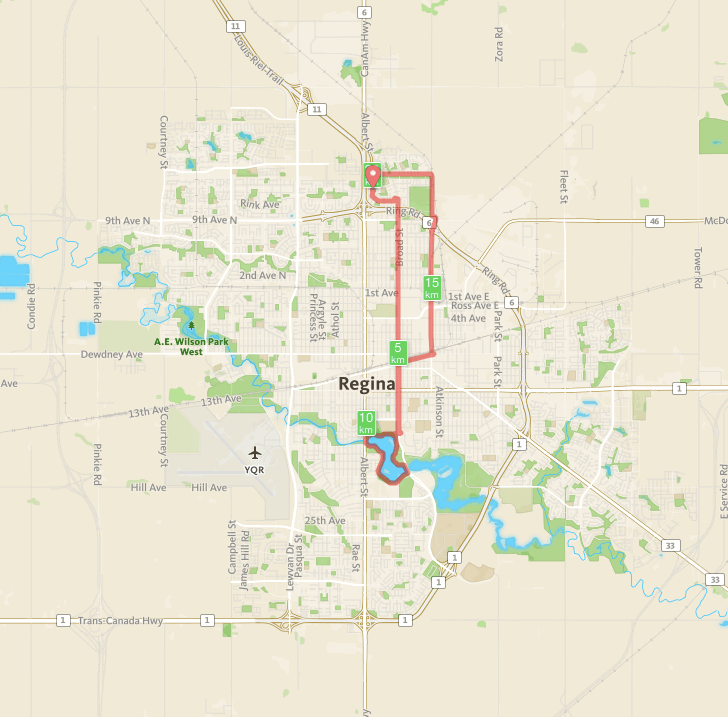
We drove an hour up the highway to meet with my mother-in-law for a “social distancing” appropriate meeting, where we all stayed in our respective vehicles and chatted from several feet away. Once we travelled back home, I loaded up the bike and took off on a southern route to reach Wascana Lake, which is a man-made lake sitting near the Parliament building in Regina.

I pedalled down Broad Street and was remarkably surprised at people’s ignorance to a cyclist in clear view. I was almost struck repeatedly by passing vehicles, not least of which was a city bus that seemed to think it was a god idea to cut across my front to make a right-hand turn, despite my clear intention to go straight. Despite the many moving obstacles (or maybe I was the obstacle to them, depending on one’s perspective) I made it from my home to the lake in just under 20 minutes.

My northern view of the lake as I pedalled by…

Once I reached the lake, I noticed that the City of Regina had altered the travel path that circumvents the lake to be in one direction only. So everyone who was walking, jogging or cycling was doing so in a clockwise direction. I usually love driving around the lake, as the view and the wildlife is usually plentiful. Getting around the lake proved much more difficult on a bike, since nobody on the trail seemed particularly interested in making way for a passing bike.

The GPS mapping of my 20-kilometre route

But the lake was a sight, the weather was beautiful and I was getting my workout in, so it more than made up for all the little inconveniences. Between the people and vehicles in the way and the stop-and-go nature of the traffic lights on Broad Street, it took me just short over an hour to go down to the lake, make one full circuit and make my way home. Not my best time, but it was still a good sweat.

During these restricted times, it’s important to take advantage of some fresh air and get a workout outside. Whether it’s a jog, a walk or a bike ride… Even a back yard kicking a ball around with your children will do. Staying active and getting some fresh air will go a long way towards helping you get through quarantine/self-isolation. ☯

Let’s TEA Off…

I’m not a fan of tea… In fact, anyone who knows me is well aware that I have a particular affinity to coffee and caffeine in general. But despite my personal preferences, tea in general does tend to have a reasonable amount of caffeine. In fact, a normal cup of pure green tea (without any additives) usually has almost 30 milligrams of caffeine, despite some sources claiming that green tea is “naturally” caffeine-free.

I learned this lesson the hard way last week, when I decided to enjoy a cup of green tea at about 7 o’clock in the evening and wound up being awake for most of the night. I spoke to my Sensei about it, who studies herbs and Chinese Medicine, only to be told not to consume tea after 5 p.m. for this very reason. I should have asked BEFORE trying it. Nothing like learning the hard way…

I wrote a post last year, outlining the benefits of green tea, called My Tea Is Green With Envy. In fact, I also wrote about the aspects of coffee called Sweet, Blessed Caffeine…, although it doesn’t necessarily cover the benefits of coffee so much as it discusses the appropriate levels of caffeine one can consume. Regardless, I won’t get into the benefits of Green Tea in this post, as you can easily read them in the linked article above.

As I said in the beginning, I’m not a fan of tea. I remember the first time I tried a cup. Although I don’t remember exactly when it was or how long ago, I had decided to try a cup in lieu of my constant stream of coffee. I remember wondering why in the hell I subjected myself to the brew as it reminded me of a cup of hot bath water (And no, I’m not speaking from experience. Before anyone asks…)

But I try and enjoy (and I use that term lightly) a cup of green tea at least once an afternoon. According to an article posted by the Pacific College Of Health And Science, “Green tea polyphenols and polysaccharides are effective in lowering blood sugars. […] The polyphenol group of green tea catechins has been shown to lower blood sugars, as well as the polysaccharides in green tea.”

Some other studies have explained that some blends of black tea can also have the same benefit, although I can’t seem to find my source so I’ll leave it to you to decide. But after my little insomnia “incident” with the green tea, I asked Sensei about some different teas that provided some, if any benefit. Here are some of the options he threw at me:

  • Ginger Tea: This is good for helping to stomach pains and nausea. It’s also been shown to help with muscle aches, making it ideal for post-workouts. A true herbal tea, this is a genuine caffeine-free alternative when compared to green or black teas;
  • Barley Tea: I honestly had never heard of barley tea until Sensei mentioned it. But it’s also good for helping with stomach issues and can help alleviate problems with your sleep patterns. Some also enjoy drinking it for it’s nutty flavour. Since barley tea is made from, well… barley, it falls under the same category as ginger tea and is said to be completely caffeine-free (I’m seeing a trend and I think Sensei is trying to tell me something!);
  • Dandelion Tea: Alright, this one sounds straight up disgusting! Sensei even suggested picking and drying my own dandelions to make this tea. But once I got to researching, dandelion tea has a significant number of benefits, according to an article posted by Healthline.com. These benefits include reducing water weight, helping with stomach issues, increasing liver health and preventing urinary tract infections. Sounds pretty good, although dandelion root can interact with some medications, so chat with your medical practitioner before drinking it in any serious way. Another caffeine-free alternative, some claim it tastes surprisingly similar to coffee;
  • Ginseng Tea: I’ve heard for decades that the consumption of Ginseng helps with increased brain function. Healthline.com also has a pretty decent article on this one. But some of the benefits include helping with erectile dysfunction, boosting the immune system and may increase energy levels. The interesting benefit to this one is that it could also help to lower blood sugar levels. Ginseng is actually on par with coffee on the caffeine front, which is likely how it “helps” with energy levels.

Last but not least, is a blend of tea that I actually kind of enjoy. This would be mint tea. Sensei recommends having a cup of mint tea in the evenings as it helps you to relax. Peppermint tea is said to be caffeine free as it is an herbal tea, and has a significant number of benefits that include the ones listed above. Not least of which would be the fact that it also helps to freshen your breath.

Although you can easily obtain any of these teas at your local grocery store, it’s also important to know what you’re putting in your body. Take a close look at the ingredients listed on the package. Some commercially-made teas will include additives, preservatives and ingredients you may not want with your tea.

I stand by my preference of coffee over tea, but there’s no denying that the benefits make it worth having a cup. Whether enjoyed while reading a book, streaming your favourite show or simply because you like it, a cup of herbal tea can be a great idea. Although I admit that I won’t be harvesting my own dandelions from the back yard anytime soon… ☯

It’s Going Semi-Well, And I May Have Woken Up…

Back in December of 2019, I wrote a post called Here Comes The New Year. I wrote about the New Year’s resolution I was making and I maybe bragged a bit about the fact that I was starting my resolution a month early in order to get a leg up on my goals. I’ll admit that for the most part, things were going decently. Then the world went to hell and everyone had to stay home in self-isolation…

I know I promised I wouldn’t constantly be posting about my New Year’s resolution. But since we’ve already gotten through a third of the year, I felt it might be a good time to provide at least a rudimentary update. Especially since I’ve already identified my weak spots. See, people tend to need something to fill their time. No matter how much we usually think that some quiet, down time would be nice, humans become bored reasonably quick and will do whatever seems reasonable and safe in the moment, in order to entertain themselves.

Friends and associates who know me personally are aware that I experienced my first beer at the age of 23. Since then, I’ve allowed myself the occasional indulgence whenever time and location permits. Although never consuming in order to become intoxicated, some of the gut-swelling effects will take place even if you drink very little.

My Resolution spreadsheet at a glance

If you take a look at the image above, it isn’t hard to see where my problem spot may be. Granted, I didn’t exactly make the spreadsheet easy to adhere to. Perhaps if I’d made the spreadsheet a day-to-day checklist as opposed to a weekly one, there would be more green in the first column. But one drink at anytime during the week currently results in a red “X” as opposed to a green check mark.

Workouts are workouts. I make no excuses for the red in that column. One can clearly see some occasions where I’ve been ill or absent in some manner. Once in early February where I was down and out with a cold and the first week of March when I travelled to New Brunswick, limiting the number of times I was able to fit in a workout. I know, I know… But you always tell us that’s you can workout anywhere and there’s no excuses… As right as that statement may be, sometime life gets in the way.

And the soda in recent weeks is a result of deciding I wanted a little something different than water. I found cases of mini-cans of Diet Coke Xtra. This is a blend that has an extra hit of caffeine in it and, well… y’all know me and my caffeine. Definitely not a permanent issue, but I don’t allow for a green check mark unless I’ve had a full week without having any.

The obvious problem is that first column… Whether one random beer, or the indulgence of several days of quarantine, I’ve only had five green check marks out of eighteen weeks. Last Monday, I travelled to Saskatoon for my usual eye injections. I was upgraded to a jacuzzi suite at my hotel, which allowed for me to soak and relax my back, which has been bothering me lately.

Because I have no sense of temperature and I enjoy making myself suffer, I made the water in the jacuzzi tub far too hot. As a result, I occasionally had to sit on the edge of the tub and allow myself to cool. I unfortunately caught a glimpse of myself in the mirrors that make up the wall behind the tub. I did NOT like what I saw. It seems that months of isolation and beer have had a noticeable effect on the “life-preserver” area of my torso. We are not impressed…

I only have myself to blame, considering the fact that I KNOW full well that people with Diabetes have difficulties with weight fluctuations. Adding beer into the mix has obviously had a negative effect. And even though I’m fully on board with the fact that a person’s value has to do with more than one’s physical appearance, there’s also something to be said about being happy with the person you see in the mirror.

Now, I’m not seriously suggesting that I’m obese. Simply that, for lack of a better term, I’ve pudged up in all the wrong places. As I’ve often written before, weight loss HAS to include a combination of fitness AND proper nutrition. So even though I work out consistently (for the most part, but I did work out 6 days in a row last week), my body will still pack on some pounds unless I cut out the bad and maintain the good.

Hence why I’ve decided to knuckle down and cut out the beer for the next while. I already knew going in that I would have some squares with a red “X” on the sheet. After all, one is more prone to failure if an indulgence isn’t permitted on occasion. But sometimes we need a swift kick in the keister; a wake-up call, if you will. It will be interesting to see what the spreadsheet looks like in September. ☯

That’s Tight, Yo!

Not a month goes by where I don’t read or hear about some new fad, diet or gimmick that’s meant to help a person get into shape faster and/or easier. For the most part, these things are usually a passing thing and don’t hold much sway in the actual progress of your fitness.

I’ve never been one for the purchase of expensive name-brand apparel. In fact, I’m usually happier wearing whatever generic brand I can find at my local retail chain. But I would be lying if I said that I don’t derive some guilty pleasure in the purchase of FITNESS apparel. I’m talking certain popular name-brands such as Under Armour and LuluLemon. And yes, before all the guys in my following start commenting about the Lulu reference, their outlets have a LOT of guy clothes.

The specific aspect of this apparel is that it is generally some form of compression clothing. Just to be clear, compression clothing doesn’t simply mean tight clothing. It usually refers to an elastic garment composed of spandex or lycra and mixed with either cotton or polyester, depending on the quality and type of garment. There has to be a certain amount of give. If it’s cutting off your circulation or feels uncomfortable, it’s kind of defeating the purpose.

Working out in compression gear

So, do compression fitness garments serve any beneficial purpose? Well, besides making my biceps look rockin’… Sorry, I took a minute to flex. My apologies. What was I saying? Right, compression garments are said to increase blood circulation and stabilize the muscle groups, allowing for a more efficient workout and less recovery time. Most importantly, compression garments can be helpful in wicking away sweat in order to keep you warm and dry while working out.

Compression garments, such as socks, have been used by hospitals for years as a post-operative way to prevent blood clots and increase blood circulation. Considering that some Diabetics have pretty bad blood circulation, this can be extremely helpful. So if it’s good enough for the medical world, it should be adequate for the fitness world as well, right? Maybe not.

According to an online article posted by Men’s Health, some studies have shown no ACTUAL or MEASURABLE effect from wearing compression garments during a workout. Any effect is attributed to something called the “Placebo Effect,” which is basically where you believe that the garment is having an effect so it causes you to work harder and produce a greater result. The Placebo Effect is a real thing, and there have been a number of studies that support it.

Dri-fit but not compression

The jury is out, since some studies say yay, some studies say nay. At the end of the day, the moisture wicking aspect is definitely real and is a great benefit. Nothing messes with my immune system like getting cold from a heavy sweat while working out. You can take advantage of that benefit by wearing a dri-fit garment that isn’t necessarily a compression garment.

At the end of the day, using what’s comfortable and best for you is what will produce genuine results. I use dri-fit and compression garments frequently, depending on the workout and what I’m trying to accomplish. And you don’t have to pay a fortune for them. It’s about the composition, not the name brand. I can concede that some popular name brands may be of a higher quality and might, key word MIGHT, last a bit longer, but if you’re working out and sweating constantly into it, how long will it last, really? ☯

When You’ve Bruised More Than Your Ego…

Don’t let the title fool you, today’s post is about actual, physical bruising. let’s leave the emotional bruising for another day… If you train in the martial arts, it stands to reason that you’ll get bruises. Let me repeat that: YOU WILL GET BRUISES!!! If you think, for one moment, that you’ll train extensively in karate or any other style in the hopes of becoming proficient without suffering bumps, bruises and abrasions, you’re kidding yourself.

I’ve recently written about the fact that proper martial arts training requires hitting something. I’ve mostly been referring to the use of pads or punching bags. But when training with a partner, speed and precision need to be developed. This can usually only be accomplished by executing techniques to their fullest extent against your partner. Your partner, on their end, need to develop their blocks in such a way that they can intercept and counter.

I have unfortunately known quite a number of instructors who have adopted a policy of “no touching” in their dojo. Although this can seem ideal, especially in a modern society where everyone gets easily offended and can construe physical contact as something inappropriate (despite martial arts being a contact sport), such a policy does you no favours. It prevents your ability to learn martial skills in the way they were meant to. If your instructor preaches no contact, he or she is doing you a great disservice.

But if you’ll indulge me for a moment as I climb down off my soap box, let’s discuss actual bruising for a moment. A bruise is basically a pooling of blood beneath the surface of the skin. There are different types of bruising, but we’re keeping it simple (for a change). Bruising happens when your tissues come into some traumatic level of contact with something solid. The capillaries beneath your skin burst and release blood into the tissue beneath the skin. The collection of this blood is what we see as a bruise.

Although bruises will initially hurt or ache, the feeling should pass within a day or two. And you should likely know that the bruise will change colours as it heals. That being said, there are certain medical conditions that can cause bruising without trauma to the tissues. Some bleeding disorders like hemophilia, and some forms of cancer, can cause abstract bruising that you may not be able to explain.

You should definitely seek medical help if your bruise is accompanied by swelling and extreme pain, bruising without knowing how it happened and if you suspect you may have broken a bone. If you have bruising and also have blood coming from ANY extremity (nose, mouth, urine…) then it requires immediate medical attention. On the milder side, bruises will usually heal on their own within a week or two at most, depending on the cause.

If you have Type-1 Diabetes, you’re likely already aware that it’s tougher for us to heal ANY wound. A simple bumping of your leg can cause bruising that will need to be treated by a medical professional, through draining or medication. This all depends on how well you manage your Diabetes, especially through the practice of good nutrition, exercise and frequent blood sugar testing. ☯

Remembering When… (It’s A Long Read, FYI)

April is always a bit of a catch-22 for me, because it contains so many dates and milestones in my life… Some good, some bad but all remembered. For example, it was in April of 1988 that I first set foot inside a karate dojo and forever changed the direction of life as I knew it. It was in April of 2013 when my wife and I became a couple and April of the following year that we got married.

As fond as I am of those memories, April is also the month that my brother passed away after a chaotic, 18-year battle against kidney failure, heart issues, Epilepsy and a score of other illnesses too many to list. Ironically, April is also the month in 1982 where I passed out cold into my bowl of morning cereal, which resulted in an emergency visit to the hospital where I was diagnosed with Type-1 Diabetes…

For weeks, my parents had started seeing a change in me. I had been going to Kindergarten for a while and had joined a younger version of the Boy Scouts called “Beavers” (insert the NSFW jokes here). Life was playing out the way it should for a child my age, with the exception of spending the majority of my free time at the hospital with my brother and my strange affinity to reading books.

But as the next couple of months passed, I began to lose weight. I couldn’t stand foods I usually enjoyed and I was always moody, bordering on crabby. I started wetting the bed again, and I’m not sure who that chagrined the most; my parents or myself. I was constantly thirsty and often suffered from bad stomach pains and cramps. Having never experienced a normal childhood through my brother, my parents felt that I was likely just going through growing pains. How very wrong they were!

I awoke on a quiet morning in April of 1982. I remember my body feeling like a lead weight and my head was spinning. My stomach hurt like hell and I couldn’t seem to formulate any words. I managed to make it to the washroom, although I had wet myself once again. When I stumbled out to the main area of the apartment we all lived in, I found that my mother had prepared a bowl of my favourite cereal: Froot Loops. I remember sitting at the table and my mother saying something to me, then everything went black.

That’s the last thing I remember before waking up in a hospital, several days later. According to my mother, I sat down at the table and stared at my cereal. She started asking me questions, to which I apparently frowned at her and continued to stare without answering. She started asking me what my problem was and what was wrong. And then my face flopped down into my cereal and I was out cold.

I don’t recall how I would have gotten to the hospital. As I remember it, my father was gone to work and we only had one vehicle, so I have to assume that my mother either called for an ambulance or a neighbour in our building helped out. I opened my eyes and found my parents standing there with some medical staff. Oddly enough, I wasn’t scared. I was more upset about the fact that their voices seemed to have woken me than I was about my locale.

This was the first time I heard the term “Diabetes.” I had no idea what it meant, but the mention of it brought a look fear on both my parents’ face. I recognized that it must be something bad, although I wouldn’t fathom the seriousness for quite a few years to come. The next week flew by in a blur as I was taught how to test my blood and use a massive plastic brick called a “glucometer.” I was taught how to properly load and inject insulin into my thighs, butt and triceps, although my mother took care of injections for the first couple of years. And I spoke with nutritionists and dietitians at length, all of whom repeated the same mantra: DON’T EAT SUGAR!

By the time I was released and sent home, I was wearing a shiny new metal bracelet that read: JUVENILE DIABETES, a term which is now considered a misnomer but still used. I had a batch of new equipment that my family couldn’t afford and significant limitations placed upon me. I had to quit the Beavers. My kindergarten teacher was advised of my condition who in turn, advised the whole class that “I had a special illness and had to be watched carefully” and to advise the teacher if I was found acting strangely or looking ill. This set the stage for the decade that would follow and permanently give me the top position on the weirdo podium of life, guaranteeing I would never be popular and most kids even went as far as to avoid me (this pre-dated a time when everyone had tender sensitivities and angry phone calls by parents to teachers were a common thing, so I actually had to DEAL with my problems).

Although Diabetes was a well-known condition in the early 80’s, many of the specific aspects weren’t as focused as they are now. Carb counting was not a thing in my household; it was always “DON’T EAT SUGAR.” This meant that my parents erred in some respects that I now know better. Thirsty? Sure, have that glass of milk. Milk has no sugar… or If you need a snack, stay away from Froot Loops and have a handful of crackers. There’s no sugar in crackers… When in truth, crackers are just as bad (in some cases worse) than sugared cereal.

The next five years included a number of short-term comas, complications, lifestyle issues and my presumed death in the years to come due to the onset of severe insulin-resistance. By the time I had reached 9 years of age, I had grown accustomed to going to sleep wondering if I’d be in my bed or the hospital the next morning. My brother also became a combat veteran at waking up and fetching my parents if I slipped into medical distress. I truly owe him my life in more ways than I can count.

Over the next year, significant lifestyle changes and taking myself in hand turned things around. I refused to let my mother provide my insulin injections and began doing it all myself. I tested multiple times a day as opposed to the once or twice a day that we could afford, sacrificing other things I didn’t need in order to make it work. I was able to spread out some of my supplies. For example, I used to cut ketone test strips down the middle, creating two thinner test strips. You’re pissing on them, for pete’s sake! Who cares how wide they are, right?

The I started karate. The following year is when I started to see light at the end of the tunnel. Structured fitness and exercise routines, mixed with a heavy dose of discipline, helped me to gain mass, increase my cardio and overall health and reduce the effects of insulin-resistance. I had been studying karate for a number of years before I finally told my parents, who didn’t approve of the choice for fear that I would get injured or succumb to the effects of my condition.

I developed a drive for life that has seen me succeed in every aspect I’ve ever pursued. Because I always refused to simply lie down and die. And those doctors who believed I would succumb to my Diabetes in my early teens? I’ll be celebrating my 42nd birthday this year, and guess what? I’M STILL HERE!

I sometimes look back at those early years and wonder what may have become of me, had things turned out differently. At the time, my brother and I shared a bedroom. What if I had slipped into my comatose state and he hadn’t gotten my parents? Or what if I hadn’t decided to get into fitness and karate and allowed my condition to take control? Would I have been more popular? Would I have had more friends, joined more sports, gone on to do something different with my life?

SO many variables that I’ll never know… But ultimately, it’s all led to the here and now. And all of it had created the person I am today; the person who is currently typing out this blog. In retrospect, I wouldn’t change a thing… ☯

Get Green With Some Knowledge

This is a subject that I’m far from being an expert on… If one assumes that I’m an expert at anything… But today, I’d like to touch on the importance of plants and vegetation. Anyone who knows me is aware that I’m not exactly what anyone would call a vegetarian. But if there’s one thing that vegetarians and I can agree on, it’s the importance of plants.

Anyone who paid attention in school knows the basic importance behind plants. Through a process called photosynthesis, plants use carbon dioxide and water to create oxygen. This is significantly important since, well… we kinda need to breathe to stay alive. Plants are able to provide a broad variety of other benefits, such as being a source of fibre, medicine and even clothing. Some plants filter water and heavy metals and without plants, none of us would likely be here.

The reason for this is simple: plants are consumed by plant-eaters. Plant-eaters are consumed by meat-eaters. All life eventually dies and returns to the earth from which it came and fertilizes it for further plants to grow. (Cue the musical theme to the Lion King). So if all vegetation disappeared from the Earth, we would not survive. Make sense? Alright, moving on…

According to an article posted on EcoWatch.com, having plants within your home can provide some pretty important benefits. These include helping to purify the air in your home, balancing humidity, improving mental health and strengthening one’s immune system, which I don’t need to remind everyone is important for Type-1 Diabetics. You can read the article for yourself, as it provides many more examples: https://www.ecowatch.com/health-benefits-of-having-plants-at-home-2608386260.html

Sometimes we forget just how integral a role the vegetation on our planet plays in our daily lives. That floor you’re walking on? The frame of the couch you’re sitting on while reading this post? The struts and skeletal structure of your home? These are likely constructed of wood. Last time I checked, trees were vegetation too!

Plants and vegetation have been proven to reduce stress, either through having plants within the home or using gardening as a leisure activity. Reduced stress leads to reduced blood pressure and improved immune systems, which lead to better Diabetes control and blood sugars. The benefits are plentiful.

I once had a small cactus plant that required next to watering and no attention. And I STILL couldn’t manage to keep it alive. So at the end of the day, having plants isn’t for me. But they sure are delicious when roasted and seasoned properly. Their nutritional value is definitely not lost on me. But when you feel you’re tired of hearing about the issues with deforestation or the importance of plants and vegetation, remember that ALL living things are necessary in order to preserve the balance that is life. ☯

Don’t Knuckle Under 👊

Yesterday, I wrote a post about the importance of striking in the martial arts; not only from a technique perspective, but the actual practice of striking solid objects (punching bags, pads and mitts) in order to refine and develop the techniques your specific style uses. After all, how can you learn to punch if you never PUNCH something? Makes sense, right?

I think that people in general tend to underestimate the importance of proper technique and practice when it comes to throwing an efficient punch. There are a number of elements to consider: bone alignment, stance, knuckle use and where to chamber the punch from… It’s not a matter of simply throwing the fist out there and hoping to make contact. This is one of the reasons why that first punch in an actual fight usually results in injury.

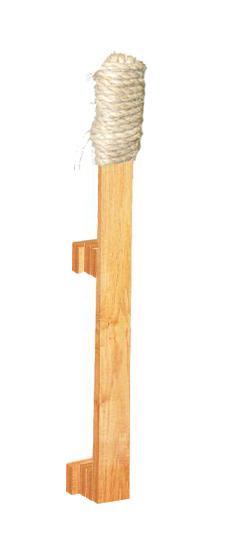
For years, karate practitioners conditioned their strike through the use of a punching post called a Makiwara. Although some may argue with this perspective, the Makiwara was originally developed in Okinawa. It involved a post driven into the ground and wrapped in rope or padded with rubber or a rice pad. Practitioners would strike the Makiwara in order to develop the knuckles on the index and middle finger, which are the two that SHOULD be used during a proper punch (unless you’re using Kung Fu’s punch, which uses the last three knuckles).

Example of a Makiwara

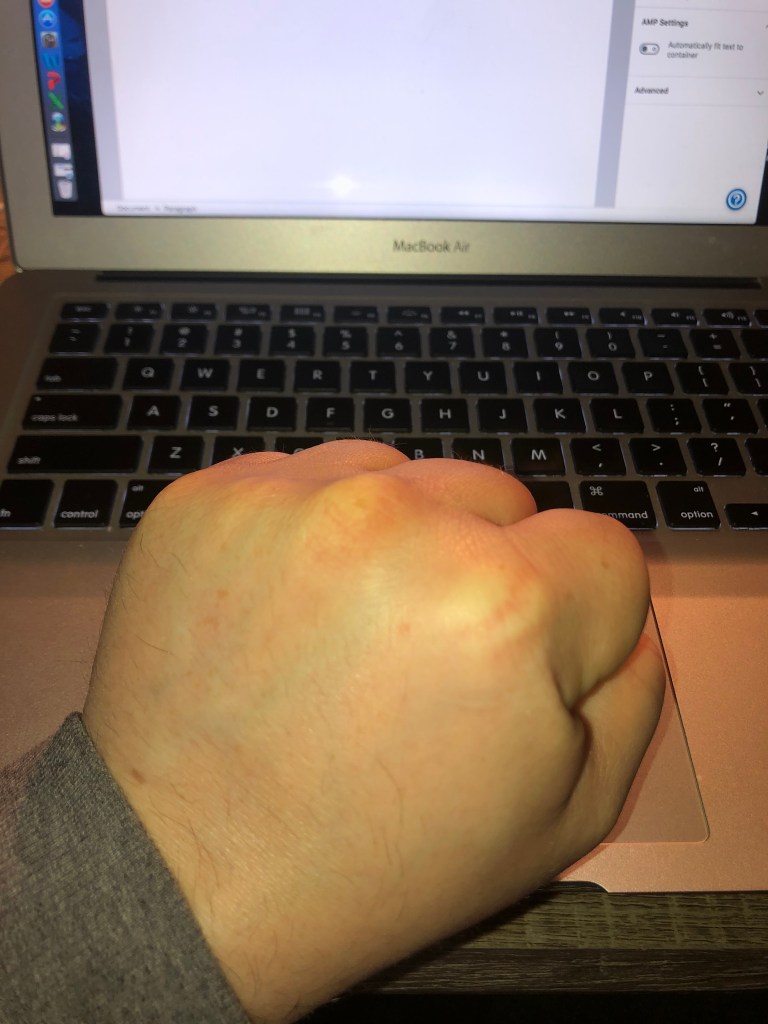
I tried to find an image of what a karate practitioner’s knuckles look like after years of Makiwara training, but all I found were extreme photos of excessively calloused and swollen fore-knuckles that don’t ACTUALLY happen to martial artists, even when they train consistently. After three decades of hitting everything in sight and doing knuckle push-ups during every class, my knuckles STILL don’t look like the examples provided online. Seriously, Google “karate knuckles” and you’ll see what I’m talking about.

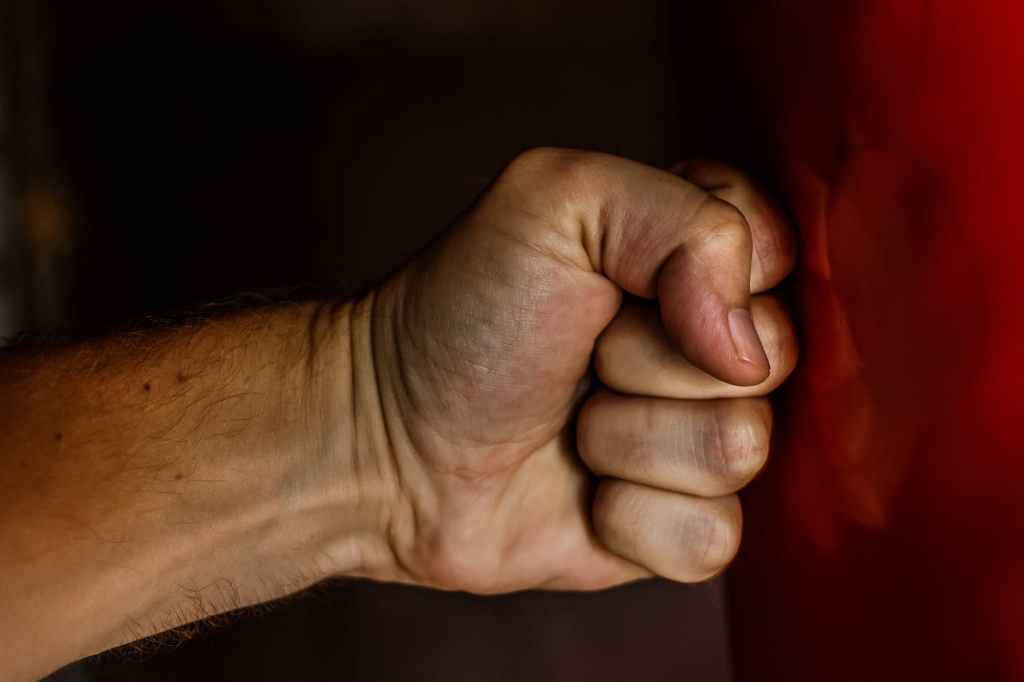
That’s MY left fist. Notice the enlarged fore-knuckles without callouses

Those knuckles are the result of years of knuckle push-ups and punching bags. If you do your punch properly, your knuckles, wrist, forearm and elbow are aligned and the two fore-knuckles will be the ones performing the strike. To do otherwise leaves you open to injury; wrist sprains, fractures and breaks, injured knuckles and lack of power behind the punch.

Knuckle push-ups are another controversial subject in martial arts circles. Are they worth it? Are they better than traditional push-ups? Well, speaking from experience, I can say that they provide a certain amount of conditioning for the fore-knuckles. They also help build the forearms, develop bone alignment for punches and builds the chest and triceps. It also helps to strengthen your wrists, but there’s a catch-22 to doing them…

You’re doing push-ups using a smaller area of stability, which can cause loss of balance and risk of falling over and spraining something. You can also injure the small bones in your hand due to the focused stress that knuckle push-ups put on them. So there is some risk in doing them, but they also offer all the same benefits that traditional push-ups do.

As with any other technique in the martial arts, the learning never stops. If you think you’ve mastered the perfect punch, I can promise you that you’re wrong. There’s always room for improvement, so work on finding the technique that works for you. Then train, train, train… ☯

Making An Impact

Of the many benefits associated with the martial arts, being able to train by yourself is likely one of my favourites. In fact, karate is one of the very few methods of training that you can literally do anywhere, anytime and with minimal equipment requirements. Given the current state of the world and the need for everyone to self-isolate, this is a comforting aspect to something familiar that I’ve been doing for most of my life.

But one of the things that is often lacking in some students’ workouts is a fundamental aspect of the martial arts… You need to hit something. Regardless of your reasons for training in the martial arts, you need to ask yourself: Have you ever punched someone? Have you ever initiated a technique and made contact with a solid object, be it a punching bag, board or a brick?

Depending on who you talk to, board breaking has been a topic of hot debate among martial arts practitioners for decades. For some practitioners, board and/or brick breaking is a pointless exercise. In the words of Bruce Lee in Enter The Dragon, “Boards Don’t Hit Back.” I’ve never been a fan of “breaking” something in order to develop my strikes properly. I’ve always been more of a bag or pad kind of guy. This is because you can practice and develop your strikes ad nauseam on pads, where boards and bricks require clean up and replacement.

But all jokes aside, you can train by yourself to your heart’s content. But honestly: YOU NEED TO HIT SOMETHING!!! How can you properly train in a striking art without actually striking something. Form and drills are fantastic for building your stamina and developing a technique. But in order to avoid injury in the event you ever ACTUALLY need to hit someone, you need to experience the feeling of your strikes making contact with a solid object; preferably something that won’t yield or give when you strike it.

This is the 8×8-inch punch pad I installed on my basement wall last Wednesday. Believe it or not, I only paid 10 dollars for this bad boy from a shopping website. I mounted it onto a piece of pressed wood, then I bolted the entire thing to the wall stud beneath this gnarly-looking 70’s clapboard. I placed it at chest height, allowing me to practice my punches, elbow strikes, knife and ridge hands. If I were still in my younger years, I’d probably even try doing my roundhouse kicks on this puppy.

Before finding this pad, I was looking into making one of my own. All you need is a square piece of high-density foam. Wrap it in canvass, leather or vinyl and stitch it shut. Then mount it on a backboard and decide where you’ll bolt it. Some of that green foam used for fake flowers can work pretty well as long as dense enough and it’s properly wrapped.

If you can’t get your hands on a punch pad or bag, and don’t feel you’re skilled enough to make one of your own (what am I, a seamstress?), another option is sand punching. Used in a variety of martial arts including karate, fill a bucket two thirds of the way with a fine grain of sand. Then you can practice punching into the bucket in order to build strength in the forearms, wrists and knuckles. If you want to add a little density to the mix, add some water to the sand.

Although fine grains of sand are generally used, my Sensei used to have a canvass sack of crushed rock hanging from a chain in his gym. I’ve never used it, but I can imagine he has. Density and type will depend on your preference and how you want to develop. You just need to be mindful of technique so that you avoid potential injury.

The bottom line is simply that even if you’re training to get in shape or learn to defend yourself, you can’t strike empty air indefinitely. Eventually, you gotta get in there and hit something. After all, you can play Grand Theft Auto until you’re blue in the face, but it won’t qualify you to drive. You need to get behind the wheel of an actual vehicle to do that. That same can be said for your strikes. ☯