My wife and I are both avid readers, with thousands of books lining the east wall of our home’s living room. Lately, I can’t even be sure who’s coming out ahead on the number of volumes read, since I’m currently reading Robert Jordan’s the Wheel of Time series for the third or fourth time and it’s a large, 14-volume series with about 600 to 700 pages per volume. It makes for pretty long reading, especially with children in the house as a distraction. And no, my 6-year old doesn’t sit still for books, before anyone suggests that.
Anyway, I recently started taking public transit to get to work and since it’s about a 20 minute bus ride, a friend of mine recommended that I use that time to read. Although I’m inclined to agree that this is a better option than sitting idle or crying on the bus, I was faced with the prospect that I carry a pretty full briefcase and didn’t have room for the collector’s edition volumes of Jordan’s books. Even the average pocket book wouldn’t have much space allowed in what I currently carry.
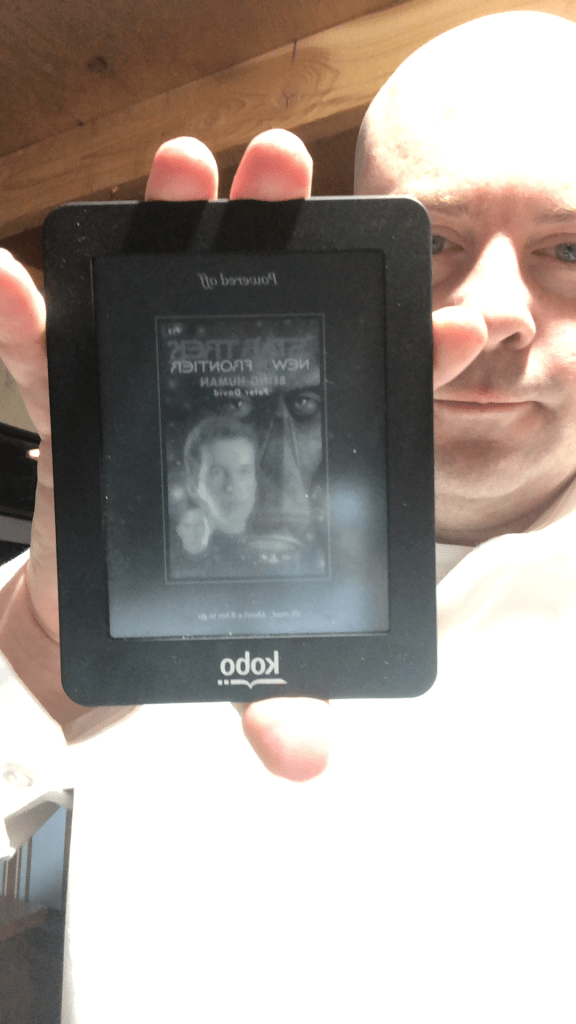
My friend decided to be a smart ass and said, “There’s an app for that,” referencing my post where I wrote about the various fitness and health apps I use. You can read THAT post here. But then e-readers were brought up and I remembered that not only am I a big fan of e-readers but I have one of my own. And weighing at only a couple of ounces and thin as a wafer, I could easily slip it among the other items in my duty bag. Problem solved.
Me, with my e-reader. I look like Powder!
A modern solution to a small problem. I don’t know if I would necessarily say that not having something to read on the bus is inherently a problem, per say. But it’s nice to have the option. This damn thing is so small that I occasionally forget that I have it. And to the friend who reminded me, thanks for the recommendation. It definitely takes the boredom out of the bus ride. ☯
I had a strange incident happen to me at my local corner store a while back. I’ve always been the type of person who covers up his debit machine PIN pad when entering my PIN number. This is something that everyone should do. If you don’t, I highly recommend that you do. Having a random person obtain your PIN number can lead to a host of financial and identity theft issues that you’ll find yourself having to deal with. Not to mention that they’ll likely drain your accounts. But anyway, on with the story.
Even before the pandemic started, I’ve always been a fan of maintaining a reasonable distance form other people. There’s a variety of reasons behind this, including my chosen profession making me somewhat paranoid. But health and hygiene issues have always been a consideration, as well as the security surrounding when one is at a cash register. I’ve often found myself asking folks to take a step back, with chosen replies including “no problem,” all the way up to “go fuck yourself.” Some people just like to watch the world burn.
On this particular day, I was at my local convenience store, checking my weekly lottery ticket in the hopes I had a winner and purchasing a few days’ worth of energy drinks. Since I hadn’t won the lottery (imagine that) I asked for the next ticket and placed my energy drinks on the cashier’s counter. While I was doing this, a tall, scruffy-haired guy saunters up next to me with a slurpee and asks for a certain type of chicken wing they had in a warming display. The cashier asked him to wait a moment as she was currently finishing my transaction.
Not only did he seemed annoyed at having to wait, but he approached the cashier’s counter as well and kind of floated into my comfort zone. The guy, I’ll call him Scruffy Bastard, was close enough that I could smell his mixture of unwashed flesh mixed with cheap aftershave. I knew I was done and on my way out, so I didn’t bother to ask him to step back while I punched in my payment on the debit machine. I did, however, cover the key pad with my hand as I entered my PIN and turned my shoulder towards him. This is the exchange that ensued:
Scruffy Bastard: You worried I’m gonna steal your number on you? ME: Excuse me? SB: You’re hugging that thing like you’re worried I’m gonna grab it from you. You worried about me, or something?
At this point, I thought maybe he was just joking around. It can be especially hard these days, since everyone’s face is covered up and one can’t get a read on other people’s facial expressions. In the interest of avoiding an unnecessary conflict, I kept my response polite and mild.
ME: Nope, just being safe and protecting my PIN number… SB: Funny you should do that as I walk up. Are you trying to say I look like someone who would try to steal it? ME: (now realizing he was actually annoyed and not joking) No, sir. I’m not suggesting anything. It’s simply a habit to ensure the safety of my PIN number. It’s something EVERYONE should do. SB: So, you do that everywhere you shop? With everybody who stands behind you? ME: Yes, sir. SB: Seems rude. As you can see, some people might take it offensively, as though you’re accusing them of being dishonest. ME: Honestly, that’s not my intention. But I’d rather someone think that I find them dishonest than have my bank accounts hacked but someone who WOULD copy my number. I’m not accusing you, but I certainly don’t know you. And my security and safety isn’t something that should offend you.
I grabbed my stuff and walked out. I was leery for the few moments it took me to load my cans into my car and hop in to drive away, as I was confident based on Scruffy Bastard’s body language that would potentially come outside to confront me further. Then I remembered he was purchasing items the cashier had to get for him and it gave me the time to make my way out of the parking lot. I abhor fighting and I’m just as glad I didn’t have to find out if he wanted a further confrontation.
When it comes to protecting one’s interests, you can never be too careful. But I’d be lying if I said it isn’t very entertaining (and just a little bit sad) seeing people’s reaction to someone taking protective steps. The worst part is people like Scruffy Bastard would be the first to raise hell if they had their identities stolen or their accounts hacked. It’s surprising how many people get frustrated and angry at certain protective steps that are taken in their interest. But the Light help those same people when something happens BECAUSE they didn’t embrace those protective steps.
Maybe Scruffy Bastard was taking in too much sugar from the slurpee he was drinking. Who knows? Like most encounters of this sort (and I’ve had more than I care to admit) it left me with a small knot in my gut, wondering why someone would choose this kind of approach with a total stranger. For all I know, maybe he HAS been accused of something in the past and this is why he reacts this way. All I DO know is that like the old saying goes, I can only control my words and actions. Not how others react to them. ☯
I’ve always said that inspiration comes from the most unlikely places. Based on today’s title, one could say I’m definitely reaching both extremes. Confucius is well and widely known for his philosophy and is responsible for the way of life known as Confucianism. Clark Kent is, well… Superman. Although a fictional character, inspirational quotes and knowledge have often come from such sources, albeit never credited to the writers who actually created the script. But I digress… My point is that both these sources have used a quote that I’ve been pondering of late.
“It May Be Easier To Hate, But It’s Stronger To Love”
– Clark Kent, Smallville Finale
Although I had firmly stepped away from social media in all its forms about three years ago, I’ve been allowing myself a soft return to the uncontrolled arena. This seemed like a natural next step to help share this blog, as platforms like FaceBook allow sharing on a broader scope than simply hoping people will like and follow directly from the blog, and my YouTube channel allows me to provide some “in person” perspectives on certain topics that don’t require me to cite sources or quotes.
For the most part, it’s been reasonable. I’ve even managed to make contact and reconnect with some people I haven’t spoken to since high school, which has been motivation enough for me to actually spend time on my personal accounts as opposed to interacting solely as The Blogging Buddhist. In recent weeks, I’ve come to notice a trend of negativity from a select few that I’ve known as friends for some years. As many of you are aware, the elimination of all forms of suffering is kind of my thing and negativity is very much a means of causing further suffering in the world.
The big problem is that despite being consistently negative and more often than not, spreading hatred, these select few don’t necessarily seem to be aware of it. But the effect is palpable. When you log into a social media platform and realize that every little thing a person posts is calling out, complaining, hating or boycotting something, it begins to weigh on you. Even when the topic of the post may not be about you. Negativity breeds negativity, and the more someone feeds negative energy into the world, the more it will negatively impact the people around them. It usually doesn’t matter if that negative energy was MEANT for a good purpose.
I found an article posted by the Psychology Spot that explains that psychologist from Harvard University concluded that “negative emotions are like the flu: the more friends you have that have the flu, the greater the chances of getting infected, the same applies to sadness and despair.” It’s pretty hard to disagree with that, when you can be in a perfectly good mood only to be brought down or “bummed out” by the simple act of someone else’s constant negativity. Negative energy is infectious and spreads like a virus.
“It Is Easy To Hate And It Is Difficult To Love.”
– Confucius
It can be difficult to be around such people when they breed negative energy on a constant basis. It’s even more difficult when they refuse to acknowledge or recognize their negative behaviour and consider it a personal attack on them when it’s brought up. I was the recipient of just such an attack recently, when a long time friend took my attempt at discussing an issue as a personal attack and began berating me for bringing it up. I didn’t necessarily oppose this person’s view, I was simply trying to offer up a perspective to help this person understand why the anger and hatred wasn’t necessary. The unfortunate side effect was damage to a long-standing friendship that could have been avoided.
So what is one to do about such situations? Block or unfriend such people? Delete all social media once again? It can be rough waters to navigate, but my main concern is wondering what’s gone so wrong in these peoples’ lives that cause them to be in a constant state of anger and hatred. Setting aside for a moment the fact that I’m a firm advocate of the “scroll on by” theory, where if one disapproves or is unhappy with something posted online they should feel free to simply scroll on by as opposed to becoming an armchair warrior and try to argue the point. But the reality is that if/when someone posts something on a social media platform, it needs to be understood that they’re inviting and even welcoming comments and discussion. If one does not want comments and discussion on a particular topic they post about, then the simple truth is that they should not.
Obviously, this is all opinion-based and it can be difficult to discern where the line is between one’s opinion and common sense. But there seems to be a growing trend of people constantly using social media platforms to spread their anger, hate and misinformed opinions. In both my personal and professional life, I’ve always considered it of the utmost importance to get the full story before taking action or speaking out against someone/something. But misinformation aside, the physiological and psychological effect that a constant state of anger and hatred has on one’s own body is measurable. The effects it has on those around can also be noted.
There are always battles to be fought. Such is the world we live in. But knowing how to pick your battles and being reasonable and level-headed about them are of paramount importance. Especially when it may lead to suffering and loss. As for myself, it’s given me a significant wake up call in regards to navigate the world of social media. I’m once again on the fence as to whether I’ll close up shop and walk away or if I’ll weather the storm and simply filter out the bad. Time will tell. ☯
Christopher Bullock, a British actor once said, “Tis impossible to be certain of any thing but death and taxes.” And this much is inevitably true. If there’s one thing that every person in this world has in common, it’s the fact that we’re all going to die someday. I was exposed to death at an early age, given the passing of my brother before I had reached my teen years. From that point on, my perspective and interest in the topic of death has followed me throughout my entire life.
Most people in general avoid the topic of death as they prefer not to think about the prospect of their lives coming to an end. For the most part, this is because of the fear that accompanies the unknown circumstances surrounding death. After all, no one truly knows what happens once the body dies. The thought of simply ceasing to exist is frightening, to say the least. It’s frightening, even to me. And I’ve had a LOT of experience witnessing and dealing with death.
So what’s the real deal? What happens after death? The physiological results are well-documented and well-known, so I’m just going to go ahead and ignore those since we’re focusing on what happens to the PERSON after death. Not the body. I read a great blog post over a year ago, where the author went into detail about how at this point we should be acknowledging the existence of an afterlife, based on how many accounts there have been from people who have reached the brink and peeked through. The post explained how it should be a foregone conclusion of SOMETHING that occurs after death, as opposed to wondering IF.
Some have even come back with information and details that they wouldn’t have known otherwise, unless they had spoken to passed relatives and such. Could some of it be coincidence? Maybe. It wouldn’t be the first times that a person was made privy to information that they heard on a subliminal level and only remembered when hitting a comatose stage. It’s possible that the person is remembering a detail that they didn’t know they had heard. But coincidence will only take you so far, with people admitting to hearing and knowing details discussed outside the room while they were clinically dead, etc.
So, let’s examine the difference between the scientific approach and the religious approach. Catholicism is pretty straightforward and you can learn everything you need to know about death by reading the Holy Bible. Easy-peasy. Heaven, hell and the related steps are pretty clearly outlined for someone willing to read through it. Most Buddhist sects have a pretty firm belief that the end of one life simply transitions you into the next, with the person’s spirit leaving one body and finding a new life to live.
Some sects also believe that one’s reincarnation will depend on what kind of existence you led in the previous life. Bad people will become dung beetles. Good people become something better and so on and so forth. There are deeper details than that involved, but I won’t get too far beyond the fact that we believe in past lives and reincarnation. Of course, different schools of faith will have different beliefs but Buddhism and Catholicism is what I know. So there. The bottom line is that if you’re a believer in faith, life after death is a possible belief you carry. The only way to know whether it’s true or not is to take that last Nestea plunge. And then you’d be in no position to actually share the information anyway.
From a science standpoint, I think it’s important to acknowledge that we are all energy. And that’s not just a Buddhist perspective; we literally are made of energy. We’re composed of atoms, which are made of energy. Pure and simple. Electrical and chemical reactions within the body have been said to be enough to produce approximately 100 Watts of power in the average human body. Before I go down a rabbit hole of biology, let’s take a look at physics, instead. Depending on what level of physics you may be/have studied, the First Law of Thermodynamics tells us that energy is always conserved and can be changed from one form to another; never created or destroyed.
What does this mean for the human body at death? From a scientific standpoint, one would be inclined to believe that one’s energy will need to go somewhere and become SOMETHING. We simply don’t know what. If your belief is from a more theological standpoint, then the belief in an afterlife is a given and your spirit will depart the body and go up or down, depending on your specific beliefs. So one way or another, it would be reasonable to say that you’re covered. You’ll move on to a “next stage” after death. I should probably point out that this is all speculation on my part. I’m no theologian. And I’m sure as hell not a scientist. But I think that examining a subject that most people try to avoid such as death, is a good way of dispelling some of the fear and anxiety that comes along with it.
Last but certainly not least is who a person is as an individual. Our consciousness and self-awareness is something that is very hard to believe will simply blink out of existence at the point of death. I think, therefore I am, right? Consciousness needs to count for more than just a bunch of chemical and neural components of the flesh. I would think. Ultimately, the only way to know for sure will be to take that final road trip to whatever awaits. I’m sure as hell in no hurry to take that trip. All things in time. But to quote David Bowie, “I don’t know where I’m going from here, but I promise it won’t be boring.” ☯
Do any of you remember what certain things cost during your childhood? I remember SOME of them, and the difference is shocking. A lot of schools used to have that assignment where you had to figure out how much certain cost for our parents as opposed to what they cost now. I don’t know if they still do this, but it was pretty shocking to see the difference. It’s definitely something that today’s youth should recognize as it might curb some young peoples’ tendency to take their possessions and resources for granted.
For example, gas only cost 59 cents per litre when I was in high school, as opposed to the current 121 cents per litre in Saskatchewan. Car fuel is always an easy way to compare the increase in price of things, as it has consistently risen for decades, despite some mild back and forth. Another good example is bread, which only cost about 90 cents back in New Brunswick when I was growing up. This is compared to the fact that a loaf of bread is almost 3 dollars at today’s prices.
I remember my grandfather and father telling me stories during my childhood about how “in my day, things only cost THIS much…” I never thought I’d find myself in the same ballpark as them, but I’ve found myself using that very line in recent years. For example, some find it shocking when I mention that I’d get a weekly allowance of only 5 dollars when I was a kid. But the reality is that for 5 dollars, saved over three or four weeks, I could go to my local convenience store and pick up the latest Superman and Spider-Man titles, as well as indulging in a bag of chips and a sugar-free soda and have money left over. Not to mention that the original Infinity Gauntlet, Infinity War and Infinity Crusade comic arcs came out in early 90’s before the MCU came along and altered a whole bunch of shit about the storyline. But I digress…
My point is, inflation has made a person’s dollar more important than ever. And it’s all the more important to make every dollar count. That’s why it becomes important to take advantage of certain opportunities that present themselves. Talking about finance on my blog isn’t usually my “thang,” but I got to thinking about some of this stuff. Here are my top opportunities to save a few bucks when out and about.
Free Samples: The pandemic has eliminated this opportunity, but I’m hoping that there will eventually be a return to the practice. Going to Costco on an empty stomach was always easy when your could walk the store and sample meats, granola bars and cereals as you walk around. You’d essentially be full by the time you reached the cash register. Top it off with a sample of juice along the way and if you still find yourself hungry, grabbing a $1.50 hot dog on the way out is guaranteed to put you over the top; especially given the size of Costco hot dogs. Although this is the more prominent location for trying free samples, a lot of retail locations offer samples and allow you the opportunity to lessen the sting of one’s overall shopping bill. Too short term or in the moment? Alright, then. On to the next one…;
Using Coupons: If you had told me ten years ago that I’d be saving and/or using coupons, I’d have called you hilarious (or an idiot). I happen to hate flyers and junk mail, but if you’re willing to sift through weekly flyers and useless crap, you can find a lot of coupons that will save you a great deal of money, overall. My wife is part of some mailing lists that send you small sample packs along with coupons for purchasing the actual product. We’ve gotten free samples of coffee k-cups, laundry detergent and dish soap as well as a variety of products. And the accompanying coupon is sometimes exceptionally reasonable. Including a decent dollar amount deducted or certain percentage off the retail price, I’ve even gotten some that get you one for free. We recently got a coupon for a free package of paper towel rolls. It stands to reason that you have to use these consistently over time, in order to reap the money saving benefits;
Free Refills: Why people ignore this one has always baffled me. When you consider that the average cup of coffee will cost you about 30 cents when brewed at home, paying 2 dollars at a coffee shop for a small cup of coffee may seem ludicrous. And it is. Coffee costs pennies to brew, but most locations sell it at a several hundred percent markup. This is why you should take the sting out of your overall costs by taking advantage of free refills. Not every place does this, but many if not most do. It can be difficult to get a free refill if you’re grabbing tour coffee on the way to the office, but here in Saskatchewan there are a few locations that will grant you a refill if you present your receipt and it’s from the same day;
Check in Early And Check Out Late: I stay in hotels quite frequently, especially since my eye injections happen about three hours away and dragging my children with me to make it a day trip causes unnecessary suffering. So, I usually stay in a hotel room for the night. Now, I don’t think I need to explain that hotel rooms are expensive. But they are. Most locations are willing to accommodate an early check-in, so long as you give them advanced notice. Some may even want to know why but in my case, telling them I have a medical appointment shortly and need to check in prior as I won’t be able to once it’s completed usually satisfies them. And I like to make a point of waking up a bit on the later side and enjoy a quiet coffee (which is usually included in the room) and I never check out until the actual check-out time or later, if they’ll permit. This guarantees that I’m getting the most bang for my buck. Not least of all is the fact that most hotels will offer things that also help mitigate cost, including free sundries, complimentary breakfasts, water bottles and as I mentioned previously, coffee. Gotta have coffee!
There you have it. It’s a short list and it won’t make you a millionaire, but every little bit can help, right? Sometimes it takes a bit of effort to save a few bucks here and there, but with the rising cost of everything, it can be worth shopping the sales, using coupons and taking advantage of free items. What are some of your favourite cost-saving methods? Feel free to share some of them in the comment section. ☯
We live in a society of rules, with the regulation, application and enforcement of said rules being a dominant trait in the modern world. If you don’t believe me, just try to walk through a populated street without a facial covering right now. I, myself, have always been a firm advocate of following rules. But sometimes I can’t help but ask myself if the overall cost is worth the reward in relation to some rules and how they are imposed. If you live in the world of martial arts, the existence and in fact, necessity of these rules can be like swimming through murky waters without a flashlight.
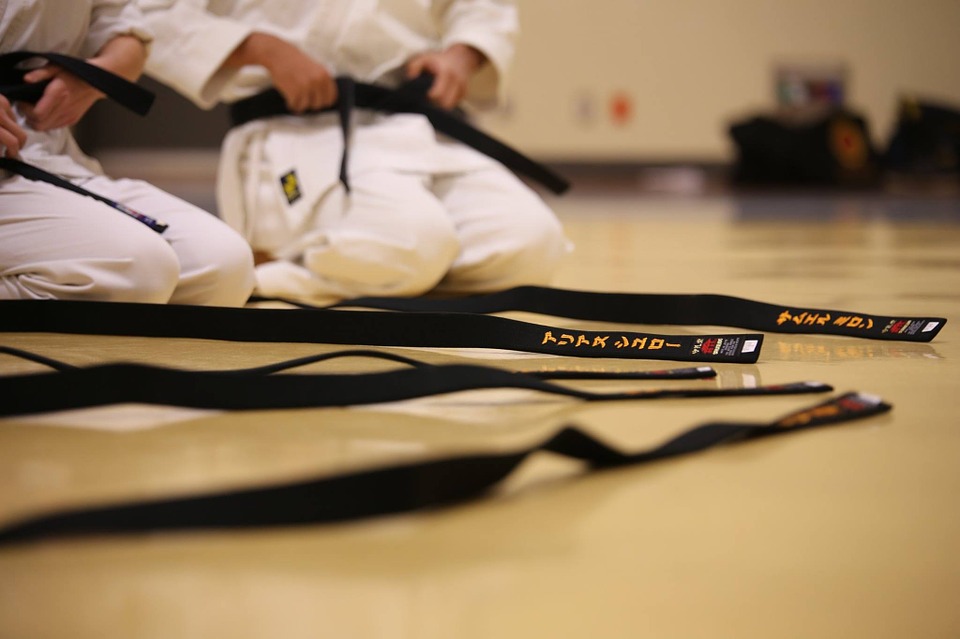
I always refer to my karate as a “traditional” martial art. And what’s usually meant by this is that our students follow traditions and training methods that are as original to the style and methods of when karate was created as possible. When I used to train in Sensei’ dojo, everything was done pretty much on par with how the Okinawans developed it and how they still do it to this day (or at least as they were still doing it in 2001 when I was there, last). But as time has gone by, certain rules and regulations have become part of the martial arts world. I always like to say that it only takes one idiot to ruin things for others, and this is where I’m going to vent about some of those.
Setting aside for a moment that karate is a fighting art… Yes, it is… YES, IT IS!!! As much as I prefer to focus on the “art” aspect and not so much the fighting, the reality is that karate teaches you how to fight. And unlike most traditional sports where contact with another person CAN occur, karate is something where contact SHOULD occur. If you’re in my dojo, contact WILL occur. I bring this up because there seems to be a growing number of dojos that have abolished physical contact; and I don’t mean because of CoVID-19.
When I came up in the dojo, we used to have many practices that involved things that could be painful. Body conditioning, checking, semi-contact and full contact sparring… There were plenty of activities that had the potential to bruise, pull and crush muscle tissue. And we sometimes got injured, albeit lightly. But it was a common understanding that this is something involved with learning a combat art. Like Mr. Miyagi mentioned in the first Karate Kid movie, it’s difficult learning karate from a book. Training in a combat art without striking and/or being struck will leave definitive gaps in one’s ability to properly learn their respective art.
In recent years, there’s been a tapering of such practices, especially since society is quickly developing the inability to let things go and become offended and affronted by almost everything. In the final years before he closed his dojo, Sensei halted all body conditioning and sparring was a rare thing, except with other black belts. His reasoning was quite simple; when new students would get those first whacks on their forearms or legs, they’d soon quit. In my day, we toughed it through because the end result was worth the momentary pain.
But now, there a number of different reasons why dojos have reduced or eliminated contact with students except for the occasional sparring match with senior belts, which often and usually includes the dojo’s insurance policies. Yup, that’s right! Most modern karate schools have “sport insurance” where an injured practitioner can be compensated for specific things, based on the circumstances of the injury. I think that this is a fuckin’ joke as it relates to karate… I don’t understand how you can properly learn WITHOUT some form of injury. But I’m old school.
I once read the stipulations of a particular dojos insurance policy that read (and I’m paraphrasing) that the policy wouldn’t pay out if the injury was found to have been caused by an intentional strike. FOR A MARTIAL ARTS DOJO!!!! Every strike is intentional… So this policy was restrictive to the proper teaching of the school and would not even cover a martial arts-related injury. This is just one type of “modernization” that is slowly eroding the fabric of traditional martial arts, which makes me sad since I’ve spent my entire life training in one.
An easy comparison is to look at it this way: If you join a knitting circle, you don’t expect to get a black eye. It wouldn’t make sense, as it has nothing to do with the skills you’re practicing and using. But if you join a FIGHTING ART, the safe assumption is that you’ll be getting struck at some point. Imagine someone going into boxing with the expectation that they’ll never get hit? Same kind of dynamic. The problem is that some person at some point, made a big stink after getting struck/injured while training and it caused a shit storm from the insurance and/or liability standpoint and many modern dojos have had to adapt.
As I mentioned earlier, this kind of adapting or “modernization” is slowly killing traditional martial arts. And if it continues in this direction, “contactless” dojos may become the standard as opposed to the exception. If that happens, most arts that have seen their teachings watered down in recent decades will suffer even further. And this is one of the reasons why I’ve opted not to bother opening my own dojo where I am. I would never allow myself to teach karate in any other way than how it was meant to: unfiltered and unabridged. The last thing I would need is some snowflake suing me or my dojo because they couldn’t take a hit… ☯
I know that I’m usually the first to rag on people’s addiction to technology and their smart devices. That being said, I also acknowledge that my health wouldn’t be what it is today, if not for advancements in the technology that make things like my insulin pump and continuous glucose monitor possible. So, I’m also the first one to swallow my words when technology works in my favour. Maybe that sounds like a double standard, but what are you gonna do? It’s my blog! Moving on… Anyone who reads my blog on a regular basis is also aware that I’m a big fan of fitness, exercise and maintaining one’s health. And these are all things that can work great in tandem with said technology.
It seems not a week goes by without hearing someone say “Oh, there’s an app for that…” And that’s usually pretty accurate. From finance to planing and organizing, dieting to social media, smart devices have pretty much opened the spigot on the market for programmers to put out an app for just about everything under the sun. This includes health & fitness. Now, I’m usually one to endorse working out and maintaining one’s health ‘au natural,” ifyou will. This means that I have no issues working up a solid sweat by using a small square of floor space and using nothing but my own body weight in order to work up a solid sweat.
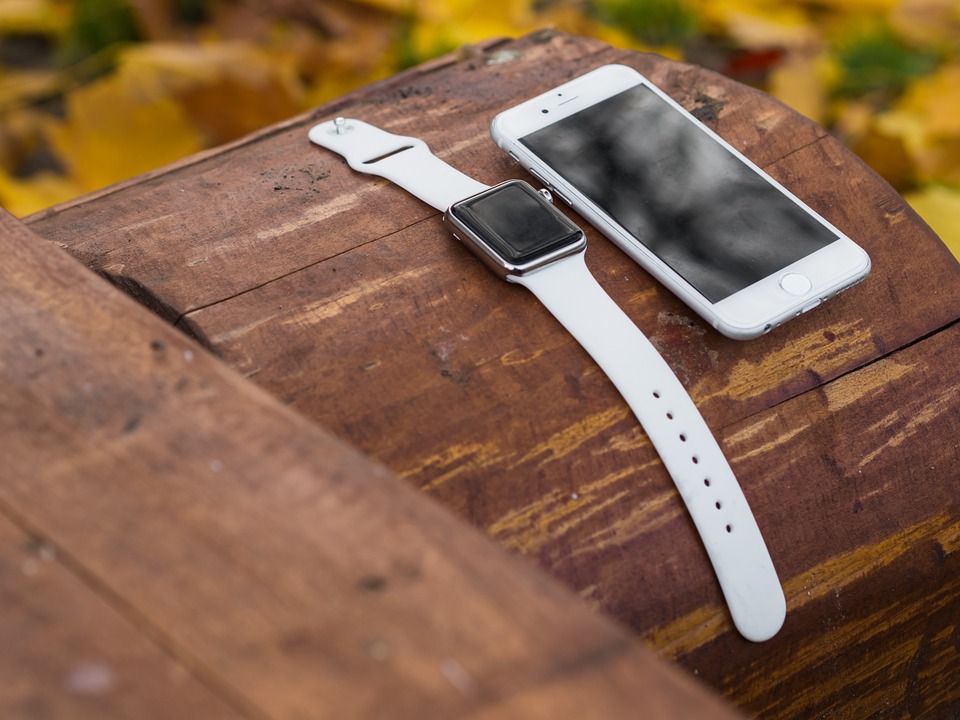
All this being said, I’ve also gotten into the routine of enjoying a number of different apps on my phone, which I use to track fitness and health habits in my daily life. Most of you know this already, as I use one particular app to prominently track my walking, running and cycling workouts. And since I’ve always used an iPhone, these apps will be ones that are available through iTunes and the App Store. I can’t speak to what equivalents may be available for Android users. But without further ado, here are my top five apps that I use to help improve my health & fitness habits:
LibreLink: Of course, I have to include something directly related to Diabetes, here. This is a free app that works in conjunction with the FreeStyle Libre, which as my Endocrinologist puts it is the “poor man’s CGM.” The FreeStyle Libre works by being injected into the tricep and held in place by an adhesive and can be read by specialized software. If you’re old school and don’t have access to a smart phone, you can purchase the Librelink Reader for roughly $50 (depending on the pharmacy you shop at) but you can definitely save the cost by using the app. Simply hold the phone up to the Freestyle Libre and it will read your sensor glucose, same as a CGM would. The app is fantastic as it allows you to input your age, weight and a bunch of other stats and will show you trends, graphs and even has an A1C calculator based on the readings held in its memory;
Noisli: If you have a whole bunch of brain-burning acronyms attached to your name like I do, sleep can be a fleeting thing. And even more fleeting when Diabetes issues keep you up as well. It can be difficult to find something to help you sleep that doesn’t involve medication or gets drunk. That’s where Noisli comes in. This is a free “white noise” app that allows you to use and customize a wide variety of sounds to help you drift off to la-la land. Sounds include rain, thunder, wind, rustling trees, leaves, trickling and dripping water (those ones would make me need a diaper overnight), crackling fire and even some more eclectic sounds like the background of a coffee shop and a train clacking on railroad tracks. The aspect I enjoy most is having access to white, pink and brown noise, which are all varieties of a static-like sound that are designed to help calm your mind and help you drift off. I actually did a full post on white noise, which you can read here. My favourite aspect of this app is that you can combine any combination of those sounds and even save them as specific profiles so that they’re available the next time you open the app, without having to combine them all together every time;
My Water Balance: If you guys aren’t tired of hearing me say how important it is to stay hydrated, you haven’t been paying attention! This app is a fun little program that allows you to set goals and track your daily intake of fluids. You can input your weight and hydration goals and the tracker will keep a tally of how much you’ve drank throughout the day. You can download the free version, which tracks the basics like water, coffee, tea and a few others. I’ve paid the small amount to download the full version, which has a batch of additional options and lets you track just about every type of beverage including, ahem… wine and beer! The app suggests how much you should be drinking based on your age and weight, but you can also set your own goal. The only downside is you have to manually enter the amount of fluids you drink, which can be problematic if you’re using a glass at home and don’t know how much it holds;
Seconds Pro: This app is actually called “Seconds,” but I forked over the added money to get the Pro version. This app features an interval timer that you can program yourself. in other words, you can develop your own circuit timers using your own, chosen exercises. Not only does it let you customize your workout, it also connects to your device’s music library, meaning you can link your favourite workout playlist and have it play in conjunction to the circuit you’re doing. Now, paying for the Pro version does have it’s share of increased features and functions, including different TYPES of circuits and certain tracking features. I purchased a Lightning to HDMI cable and I used to run this app directly to the large, flat screen available at one of my postings. It was incredibly handy to help keep my workouts on point. But the last benefit I’ll mention, is that the app’s voice over means you don’t require a screen. The app will tell you when a timer count is ending, what exercise you’re on and when the workout is done. Think Siri, but for fitness; and
Runkeeper App: This one was saved for last because it’s my overlord of fitness… I use it to track everything else. This app has features that allow you to enter your age, weight, height, fitness goals and what units of measurement you want to use for everything (metric or imperial, etc…) Then, you can use the GPS function to track your distance, speed, mileage and calories burned for trackable activities such as walking, running and cycling. It also allows you to manually log other activities, such as swimming, elliptical and even yoga and meditation (yes, meditating burns calories. Read about it here). The basic app is free and you can join fitness competitions, add “friends” through your contacts or Facebook (provided they’re also using the app). I use it to log ALL my activities including weight workouts and karate sessions. There’s a paid or “Pro” version you can sign up for, but it comes in pretty costly at $13.99/month, which may be cheaper than a public gym membership but more than a person is willing to pay on an app. I’ve been using the basic version since 2017, and it’s suited my purposes quite well. In fact, if you’ve read any of my posts on my cycling goals, the images that I feature are usually screenshots from this app.
There you have it, folks! My top five apps that I use for health and fitness. This is the part where I point out that I am in no way being compensated for speaking about these apps, nor do I endorse them specifically above any others that you may have tried/like. In fact, I’ve tried a score of others. Some have been as simple as a library of different exercises. Some have been so over-the-top complicated that I removed them from my device within the first week. The important thing is to find some helpful apps that work for you and your lifestyle.
I don’t endorse technology all that often, so mark this day on your calendars! Actually, besides the technology used for my pump and Diabetic supplies, I usually don’t endorse technology at all, haha. But since society as a whole is normally tethered to their smart devices, it only makes sense to use them to benefit our health & fitness. I find that all of these apps are somewhat subjective to the user. I think the five I’ve listed are fantastic and even if I’ve removed some of them on occasion, I always seem to come back to them. There’s plenty of good, free apps out there so don’t be afraid to install a few and try them. Worse that happens is you don’t like them and remove them. ☯
I’m going to start out this post by saying that it isn’t intended to judge or denounce anyone’s personal choices in relation to their children, nor am I trying to say that any one school of faith is better than another. Hey, I’m a man of pretty deep faith myself. But in today’s charged climate of becoming offended at absolutely anything and everything, I feel it’s important to point out that the content of this post is my opinion only. Although I’m always open to other people’s comments and/or questions, please keep them respectful, should you happen NOT to agree with my perspective here. As the last and most controversial post in my KID trilogy, religion continues to play a pretty dominant role in some households.
While faith can be a good thing, forcing one’s kids into it can have negative and even detrimental effects. When I was a child, I had Catholicism forced down my throat. My mother had gone to the seminary during an earlier chapter of her life. I had aunts who were missionary nuns and my Grandmother was about as close to the term “Bible thumper” as you can get without becoming offensive. One of the bigger problems is the fact that an hour-long sermon can be pretty damned boring to a small child, especially when they don’t understand what’s going on. It’s even worse when it’s forced upon you.
My Father worked shift work and I’ve never seen him set foot in a church for anything but a wedding or a funeral. But even on days when my brother was sick and my mother had to stay at home, I was still expected (forced, actually) to jump on my bike and go sit through church on my own. My mother would even go as far as asking me what the topic of the day’s sermon was, ensuring that I paid attention and stayed awake. Kids don’t like having things imposed on them at the best of times. Is it any wonder that I stepped away from organized religion as soon as my mother allowed me the choice?
The irony is, I have a deep love for the Holy Bible. I own two copies. Have you ever read that thing? There’s a reason why it’s one of the all-time most popular books in the world. If I had been permitted to explore the aspects of Catholicism on my own, there’s no telling what level of interest I would have developed during my formative years. Instead, I turned away and renounced any association with organized religion, much to my family’s dismay.
I found Buddhism almost by accident as a byproduct of my martial art’s training. What drew me to it was the peace of mind, body and soul. Also, the acceptance of everyone else’s faith-based perspective is a winning aspect as well. My wife’s family is of a different faith, but it’s not something that ever caused a problem between the two of us. And the important thing is that neither faith will be imposed on our children. Not everyone will necessarily agree with that perspective, and that’s okay. But I believe it’s important for someone to FIND their faith and understand what it is they’re getting into. I’ve seen too many young ones who are introduced into a school of faith without properly learning the basics concepts of birth, life and death.
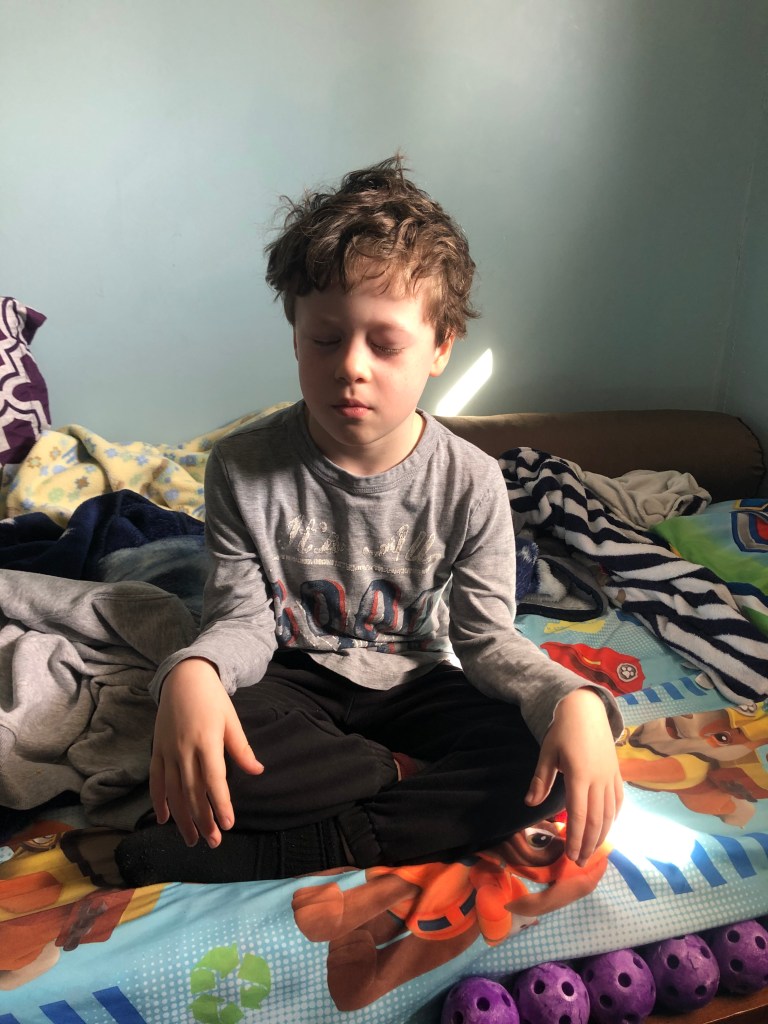
Nathan, pretending to meditate
I feel that religion falls under the same category as martial arts; you shouldn’t force your children into it. Rather, be the example, guide them in the right direction and teach them right from wrong. No matter what your religion, if you let them choose and show them the way you’ll be surprised at how easily their curiosity will lead them to come to you. We’ve grown and evolved to the extent that although faith is still an important aspect of modern society, the right to choose is just as important. As I bring this trilogy post to a close, I feel it’s important for me to repeat what I mentioned in the opening paragraph. This post isn’t intended as a judgement against people’s choices or how they deal with the topic of religion with their children or within their household.
Rather, it’s simply meant get one’s wheels turning in relation to all three of the main topics that my blog is based on: martial arts, Diabetes and Buddhism. My son has seen me meditating on numerous occasions and has occasionally asked what I’m doing and why. Sometimes he imitates me, sometimes he just sits there and watches. Perhaps eventually he’ll get curious enough to ask deeper questions. Until then, as with all things related to our children, patience is key. ☯
Most people like to act tough, especially those who are trained to fight. There’s a “never back down” mentality that kicks in when someone aggressive is challenged, but real fights never quite turn out the way we see it in the movies. For example, one of my favourite movies that just came out recently (recently, being a loosely-used term) is Creed II. The movie has the kind of inspirational tone one would expect from a Rocky spinoff; the protagonist is defeated by a larger, stronger opponent and is laid up in a hospital with severe injuries. Once he recovers, he goes on this wicked training montage to train and build himself back up before defeating the antagonist in an awesome rematch.
It’s very 80’s, which means I absolutely love it. Despite the unrealistic nature of it. Most people who suffer such injuries will usually call it quits and step away from fighting such opponents. Even in the most traditional of styles, we see a sort of expectation that you’ll hammer forward, even when the odds are against you. I’ve never been one who much felt this way, which makes sense when you recognize that I live my life trying to eliminate suffering and propagate peace. But even Sensei used to say, “If you’re going to fight, make sure you win…” I believe he was mostly referring to competing, which our school never did (officially). But it certainly applies to how we train.
I’ve always been a firm believer in drills. Correction and repetition are important in order to establish muscle memory and make it more likely that your body will react properly in a “real fight” scenario. But you’ll notice that the majority of dojos practice these drills by stepping forward, stepping into the opponent or meeting an attack head on. And there’s nothing wrong with that, but it’s also important to perform drills where the practitioner is stepping BACK. Most schools or dojos don’t recognize this, but it can be extremely important if you find yourself in a real fight.
Stepping back while performing drills holds many benefits. The first one is that it can be helpful in better positioning yourself to block an incoming attack. Sometimes a strike may be close enough to be effective against you without leaving you any room to block properly. Another benefit is that you may need to back away in order to set YOURSELF up for a particular attack. Although one needs to recognize that a real fight scenario likely won’t leave you with enough time to “plan out” an attack, a preferred technique that you’ve worked extensively may need some setting up.
The last point is that there is no shame in stepping away from a fight. If you can avoid the fight altogether, that’s always the best option. But if it means protecting yourself or someone else, avoidance isn’t always an option. This is where backing up or “tactically repositioning” becomes important. Maybe you need that little bit of space to examine and reevaluate the situation in order to make a proper decision. When you get right down to it, backing away isn’t cowardly but quite smart, in terms of finding a way to win your confrontation.
Never back down? Well, I’m not saying you should always quit or give up. You should never give up. But backing down is not the same as giving up. I’ll always be more than happy letting some ‘roided douchebag think he’s the tougher one, if it means I walk away uninjured and safe. As long as I can do without it being at the expense of someone else’s safety and/or wellbeing. The lesson here is that in very much the same way as a karateka should be ambidextrous in his or her techniques, said techniques should also be practice stepping in or stepping back. ☯
The title of today’s post poses an important question: Can you have honor while simultaneously hating another person/thing? The easy answer would be no. No you can’t. And the reason is quite simple. At its core, honor suggests a level of respect that you can’t achieve while hating something. This brings us to the question of whether you can respect a person or thing while hating them, but I don’t want to fall too far down the rabbit hole. Rather, the subject of today’s post is to focus on a strange phenomenon that I’ve seen in the martial for decades. I’m talking about the tendency to dislike and/or hate styles that are not our own. And it happens much more than one thinks.
I first ran into this phenomenon in the late 90’s, early 2000’s when I met a guy who had mutual friends within my small group of associates. We got to chatting one night and it was discovered that he also studied karate. I was a brown belt at the time and somewhat in the prime of my physical abilities, such as they were. But we got to discussing karate in greater detail and he revealed that he studied a style called Kyokushinkai. For those who may not be familiar with this style, it’s one that was developed and founded in 1964 by Masutatsu Oyama and loosely translates as “the ultimate truth,” making it less than a century old and one of the youngest styles of Japanese karate, with the exception of its own off-shoot styles.
When he asked what style I studied and I answered Uechi-Ryu, he asked if that was a style descendent from Naha-Te. I replied that it was and he sniffed and hitched his pants up and said, “Kyokushinkai incorporates Naha-Te as well…” He went on to explain the premise of his style involved constant, full-contact training to overcome the fear of being struck. I was always one to prefer learning to effectively block to PREVENT being struck, but that’s just me. But he showed a visible level of disgust at the fact I would study anything but the style he was in, and his bravado showed that he thought very little of MY karate.
Now, don’t get me wrong… Kyokushinkai is an effective style of karate, despite the fact that Master Oyama created it by bastardizing and combining elements from Shuri-te, Naha-Te, Tomari-te, Goju-Ryu, Shotokan and Shito-Ryu. Quite a colourful soup bowl, which rather goes against the whole premise of “One life, one love, one style” that most Okinawan karate practitioners believe in. But the style even practices Sanchin, one of the basic katas associated with my style, proving that most styles of karate share a background or ancestry that can be measured.
There’s a big difference between feeling one’s style is the better one and openly disrespecting and disliking another. I sincerely felt that the other martial artist disrespected my years of training and hard work with his belief that his style was “superior” and “the only real school of karate.” The boasting and the bravado went against what I was taught as a martial artist and what’s more, ended the friendship before it truly began. He might have been a great guy, overall. But when the first thing you have in common becomes a thorn in your foot, it’s a little hard to carry on.
Truthfully, one needs to understand that there is no such thing as a “bad style.” Simply a style that’s better suited to the practitioner. There are plenty of reasons why I would never practice Tae Kwon Do, but it can be easily argued as an effective martial art. In fact, one of the few combatants who genuinely rang my bell but good, was a practitioner of TKD, and he was more than quite good. The same can be said of any style, unless you refer to one of these jokers “knocking” people out by waving a hand at them… That shit’s crazy! But I digress…
A good analogy that I’ve enjoyed using to explain this to others, is one that I’ve used in martial arts circles and in my professional life. Imagine you’re installing a new bathroom in your home and the time has come to run water lines into your shower. In order to do the necessary plumbing, you’ll contact a plumber versus an electrician. By the same principle, you’ll contact the electrician to install your lighting and electricity as opposed to letting the plumber do it. Both are trained professionals, capable and necessary in their respective fields. But what they do is inherently different. Neither one is better than the other; just different.
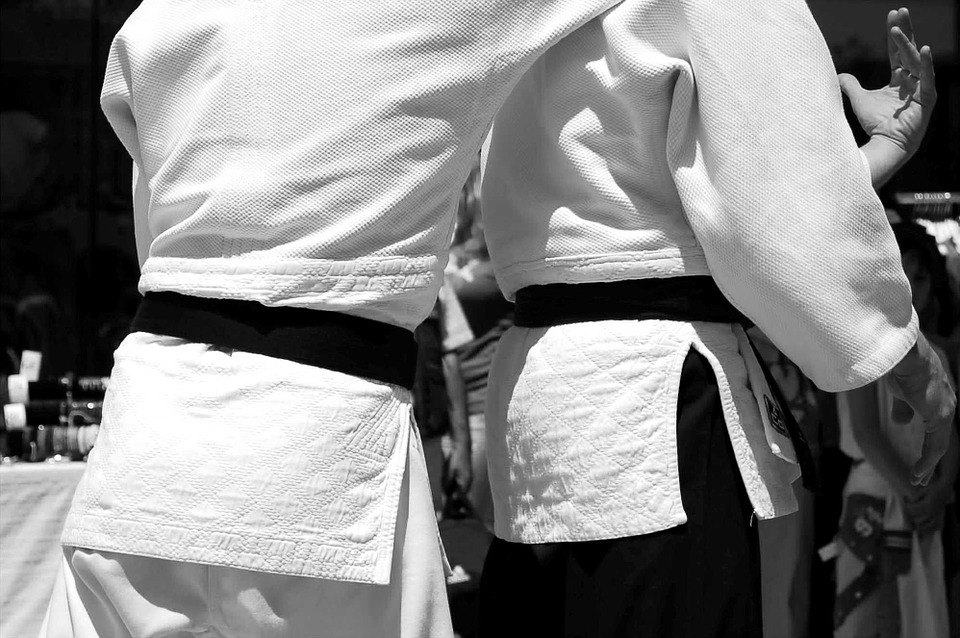
This analogy applies to the martial arts, as well. All schools, styles and types of martial arts are different. No one style is better than any other; just different. I’ve been studying Uechi-Ryu for 33 years, this year. But I’ve trained and practiced in Kobudo, Kenpo, Kendo, Judo and Tae Kwon Do. No one will ever convince me that any of those styles are better than mine. But I can respect that they’re just as good, in their own way and offer a different perspective into an art I’ve studied for most of my life.
This is why it’s so important to respect other schools and styles and to understand that if you tried it and didn’t like it, it isn’t because it was inherently bad. It simply wasn’t for you. This is without including the whole McDojo element in the equation, of course. But if one is to have true honor and respect, then genuine dislike and hatred for other styles can’t be something one permits oneself to feel. After all, this isn’t a bad, old-school kung-fu movie. Dojo rivalries were never really a thing on Okinawa, and that’s where karate was founded. It would be reasonable to think that it should exist today, either. ☯









 The Blogging Buddhist