Ain’t That A Bitch…

I usually try to keep calm in most situations. After all, that sort of lines up with the whole Zen thing, right? Most people, when hearing that I study Zen Buddhism, assume that I’m so calm BECAUSE I study Zen Buddhism. The unfortunate reality is that I study Zen Buddhism so that I CAN stay so calm. If you don’t grasp the difference between the two, don’t feel bad. Most people don’t.

That being said, there are times when my ability to acknowledge and manage my emotions and reactions is strained. Emotions are normal. Everyone has them and it would be foolish to think that one can suppress them. Nor should you. But it’s how you REACT to those emotions that defines you and controls who you are. I recently joked with a colleague that I really only have two emotions: anger and sarcasm. I was only joking, but I wasn’t really far off the mark.

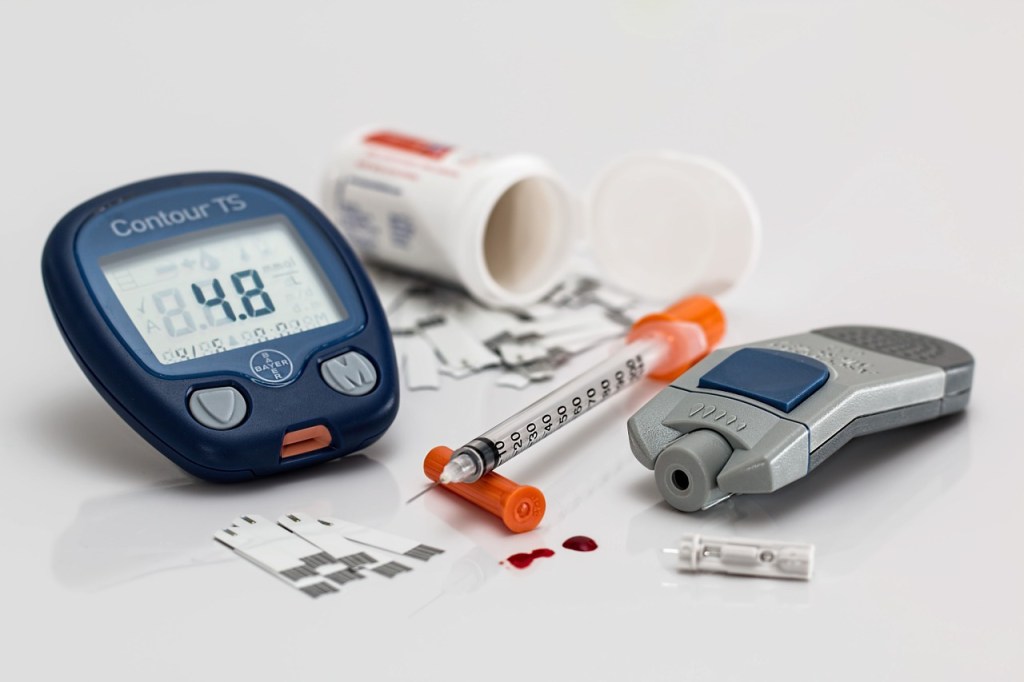
As you may or may not know, I recently started a new job. I’m incredibly happy, the staff are great, my superiors are supportive and the hours can’t be beat. Especially after spending a decade and half doing shift work. And along WITH that job, came medical benefits and coverage. Splendid. I don’t think I need to tell you that medical benefits are almost as important to a Type-1 Diabetic than the salary is. Diabetic and pump supplies are expensive and frequently need to be refilled, making for a heavy financial strain should coverage not be in place.

Not my current pump, FYI

Pump therapy has been an absolute life-saver for me, and has improved my overall control and health in ways I wouldn’t have thought possible without hospitalization mixed with constant, hands-on monitoring. But here’s the thing: it’s expensive as shit! The pump unit alone costs somewhere in the neighbourhood of $7,000 and that’s BEFORE adding in the reservoirs, infusion sets and the actual insulin required by anyone with Type-1.

In fact, when you get right down to it, having Type-1 Diabetes is expensive all around. Between insulin, blood glucose testing equipment and blood strips, lancets, needles, continuous glucose monitoring and any other medications one may need to help or assist in the proper control of one’s Diabetes can not only get costly, it can easily total to over $1,000 per month.

In Canada, we’re reasonably lucky that we have the health care system that we do. Although most people fail to realize that we technically still pay for that health care through the tax system and such. But for the most part, most things are covered, such as yearly eye exams. Under my Provincial health plan, I get a yearly eye exam at no cost. But prescriptions and pump supplies fall under a different batch of bullshit, which is where the need for medical coverage comes in.
When I started my new job last April, I received my coverage card about a month later. I walked into my pharmacy and ordered my required prescriptions and equipment and was pleased to see that everything was covered and paid for. Such as it should be. Diabetes isn’t going anywhere, and neither are the inherent costs of keeping myself alive. If one is provided with medical coverage, then PROVIDE the medical coverage, right? Apparently, not…

Last week, I went into the pharmacy and ordered reservoirs and infusion sets for my pump. Bearing in mind that this equipment comes in at about $400 and I go through a box of each a month, the cost can climb rather quickly. So imagine my surprise when the pharmacy technician walked up to the till and advised me that I had hit my “maximum” and I would have to pay the cost out-of-pocket. Excuse me? What the fuck???

I reached out to my insurance company requesting an explanation since I had been all over my online account and couldn’t find any reference to a maximum, but like most insurance providers, they were slow to respond. When they finally did, they responded with a single sentence reply that indicated that I was only entitled to $1,000 per calendar year for Diabetes equipment.

What does this mean? Is that $1,000 ONLY for the tangible equipment, or doe this apply to insulin and test strips as well? Am I now on the hook for the remainder of the year? Is there a way for me to potentially pay a monthly premium and get an increased limit? You gotta love when an insurance company gives you a generic, one-sentence reply that, although answers the base question, provides no clarity whatsoever.

I recognize that many and perhaps most people don’t have the luxury of medical insurance and often find themselves struggling from month to month in order to obtain the life-saving therapies needed to maintain control over Diabetes. For this reason, I’m extremely grateful for the resources and availability of the things I DO have. But now that life has taken a positive turn and things are looking up, I’m disappointed to find that I now have to make some very important life decisions as they relate to Diabetes. Do I come off pump therapy? Do I eliminate CGM to save on costs?

I shudder to consider going back to a basic version of injection therapy and blood sugar testing. I remember the increased difficulties I faced with my A1C’s and overall health. Some provinces have a 100% coverage for Diabetes in their health plans. I kind of wish Saskatchewan had the same. I somehow find it difficult to understand how this insurance company could actually believe that $1,000 is adequate to cover an entire calendar year of supplies. I guess I’m grateful that it all starts over in just over two months. At least I’ll have a few months of coverage to sort it out in 2022. Just another example of how Diabetes can throw a wrench in life. Not only in a physical and medical way, but a financial one, as well. ☯️

Martial Artists Do It With One Leg In The Air…

I read a really good post recently about how “movies lie to you.” It covered a variety of things we see in the movies that generally wouldn’t be genuinely possible in real life. Things like drawing a long sword sheathed on your back, gunshots or explosions throwing people across the room or getting that zwing! Sound when drawing a sword from a leather sheath were some of my favourites. It was a pop up story on my Facebook feed, so I unfortunately don’t have a link to share, which sucks because it was a pretty good article. The one thing they brought up that caught my attention was actually something that I’ve written about before: kicks.

Do I study karate? Yes. Yes, I do. Do we practice kicks in karate? Oh, most certainly. But here’s the thing: high-flying or flowery kicks are all but useless in a real fight. Movies and television shows make a pretty good show of having martial artists duke it out with each other and there’s no shortage of kicks and it usually looks all cool and stuff. But all those high-flying kicks can leave you extremely vulnerable and standing on one foot is never a promising endeavour when you’re squaring off against an opponent.

I usually like to think, and I know some of my martial arts counterparts would agree, that any technique has its place. Some techniques are taught and practiced solely for the purpose of increasing flexibility and mobility and to develop that whole thing that if you want to kick to a certain extent, you should train further. But in actual real-world applications, it would never do to try and use a high kick against an opponent.

Not only do high kicks expose your groin and various other areas that one would rather not have struck, even a practitioner who’s trained and or acted certain kicks ad nauseam will find their balance precarious during an actual fight. One can easily make the argument that during training, you’re in a controlled environment where if you do nothing more than block, there are certain safeties in place that’s don’t exist in a real fight. When “fight or flight” kicks in, keeping your balance and composure can be challenging, despite muscle memory.

My style of karate basically includes front kicks, roundhouse kicks and blade kicks with an occasional sprinkling of back kicks. But with the exception of doing it to increase flexibility, all of our kicks are generally focused no higher than the belt line or floating ribs. I’m usually dependent on my hand strikes and blocks, since most real-world scenarios won’t involve a great deal of distance between you and your opponent. And honestly, if there IS that much distance, there would potentially be opportunity for you to simply reposition and walk away. Food for thought… ☯️

The Uechi Chronicles, Vol. 6: Final Thoughts

Some weeks ago, I sent out a message to a reasonable number fo people with whom I’ve trained in karate for any number of years. People who have had an impact on my journey and who have left a lasting impression. In the previous 5 volumes of these stories, I have shared their thoughts and answers to a few short questions that shed light on what brought them to the martial arts and why they’ve continued or trained in it.

The most important aspect to take away from these stories is the fact that everyone’s answers were different. Why they joined, how long they’ve done it and what they’ve gained or hoped to gain differed significantly from one person to the next and made for some interesting insight into the thought process that goes into the making of a karateka. We had one person who was essentially forced into it, another who joined along, one who wanted to learn self-defence and one who needed it to save his life.

As good as it may be and as fun as it’s been to write about these journeys, what about the ones who didn’t respond? I’ve passed on 5 stories, one of which was mine and I don’t mind sharing that I sent out feelers to over a dozen people. So, what about those who didn’t respond? An interesting phenomenon that I’ve noticed with something like this is very much the same as a previous post I did about wearing karate “swag’ or apparel.

When a person joins karate and are genuinely motivated by it, they’ll talk about it constantly. They’ll wear “karate” shirts and warmup jackets in public. Hell, one of the first things I did in my first month of training was sew my extra school patch on a t-shirt and I wore that thing EVERYWHERE. It also drew some unwanted attention, since it basically broadcasted that I was training in self-defence, but that’s a whole other mess.

My point is that as time passes, so does one’s need to validate what their doing by broadcasting it in this fashion. The same can be said of speaking about it. When I was a young white belt, I couldn’t STOP talking about Uechi Ryu. As I got older and more seasoned in the art, I changed my perspective to simply answering questions if someone asked about it. Nowadays, I don’t generally discuss karate outside the realm of my blog or if I’m actually training somewhere. It seems as though many of my senior counterparts have chosen this path, as well.

in some respects, this is unfortunate and I believe it’s a great loss that we can’t hear their stories as well. For example, although I know some snippets, hearing Sensei’s responses to the questions I posed would have been enlightening. But despite a significant period of time passing and only four questions to answer, many have chosen to remain silent, which I totally respect and understand. This brings the chronicles to a close. Should any of them reach out eventually, or choose to respond after reading this, I’ll certainly be more than happy to add another volume. ☯️

Fair Weather Friends…

Friendships are important. More so than people realize. Making one’s way through life without peers in whom to confide can be difficult. Some people do it, but even they would need to admit that there’s a significant downside and difficulty to it. It’s almost something that society expects, as well. The old prospect of being an external loner with no friends or family is a bygone concept, and some professional aspects of one’s life may even require friendships.

Ever try applying for a job that requires “personal” references? I’ve applied for jobs that have required ten of them. Imagine, when your known circle of immediate friends doesn’t even extend to ten, how badly you scramble to suddenly contact people you may not have chatted with in years in order to ask if they’d be willing to act as a reference for you? It can leave you feeling embarrassed, even if what friendships you do retain are no one’s business but your own.

Outside the employment arena, friendships are important for a number of reasons. Having friends teaches us how to associate and communicate with others, how to function outside the realm of our own mind and how to act and conform (for lack of a better word) within the boundaries of normal society. Whatever the hell “normal” is, these days.

A small problem that I’ve noticed, especially in recent years, is the sudden disappearance of a good number of people who would easily identify themselves as “friends.” You’ll notice that I refer to “them” as opposed to “us,” because although we can easily tell who we’re friends with or not, some of them may not feel the same. As a child, I can remember having a small circle of peers that I would easily identify as friends. As I got older and our respective personalities evolved and changed, these friends moved on, relationships were altered, old friends went and new friends came. But there were always a small handful who would stick around. Or so it seemed.

I recently read a quote online…. Light knows where I saw it; considering how much time I spend online researching my posts, it’s no surprise that I’d lose track. And I don’t even remember it verbatim but the gist of it is that some people aren’t loyal to you, they’re loyal to their need of you. Once their needs change, so does their loyalty. And this is an unfortunate truth that I’ve learned the hard way, especially in the past few years.

One good example I can think of is a particular friend (and obviously, I’ll omit names) who used to lean on me for all of their personal and professional problems. Never one to turn away a friend, I used to sit for long hours while this friend would vent their problems, fears, concerns and issues to me. I’m definitely not a medical professional and more often than not, I would simply be an ear to listen as opposed to trying to fix the problem.

I’ve never had an issue doing this for any of my friends when they’ve needed it. Hell, I once flew back home to help a close friend in need during one of the most difficult periods in their lives. We’re talking an expensive plane ticket, time away from my wife and kids and time off of work to go and help solve someone else’s problems. I can freely admit that I’m no saint, but one can surely admit that this at the very least falls under the category of a good friend. However, previous and subsequent visits have proven that this friend usually can’t find the means to make an effort to visit ME, despite the fact I may have no vehicle and no means to reach them.

I used the title “Fair Weather Friends” for this post and the literal definition of that term is for a friend who disappears on you when times are difficult. Although I’m referring to friendships in general, a unexpected side effect of the important difficulties I’ve dealt with in recent years have exposed these fair weather friends. The ones who were quick to turn silent once certain difficulties were brought to light. Or the ones who, despite being in close residential proximity, never return the effort that’s made to keep contact with them.

This is why I value the friendship I DO have and the ones that are maintained. The ones where we may not speak for a couple of weeks but then make a point of taking time to communicate and catch up. We stay involved with each other, even when life gets in the way. And we appreciate each other FOR each other; not for what we DO for each other. I still have some of those friendships. I appreciate and value them. You know who you are!

Yes, friendships are important. Social interactions and relationships help us to develop and grow and are an integral part of a person’s life. The important thing is to be cognizant of those fair weather friends and to be sure that you acknowledge and appreciate the important people in your life. Given the state of the world, this is more important than ever. Food for thought…☯️

Bravery And Fear may Not Be Separate

Everyone likes hearing tales and stories of bravery or knowing someone they consider to be brave. In those situations, most people would utter phrases like, “they’re SO brave…” and “I’d never be able to do THAT! I’d be too afraid…” And the latter is particular, because most people seem to associate bravery with the lack of fear and this is about as incorrect a thought as one could have. Being brave or displaying bravery doesn’t mean that one isn’t afraid. Let’s dive in, shall we?

Let’s start with my preferred habit, which is to define what is is I’m talking about. Merriam-Webster’s dictionary defines “bravery” as, “the quality or state of having or showing mental or moral strength to face danger, fear or difficulty.” A pretty straightforward definition, but I want to point out a certain aspect of that definition that sticks out and digs to root of what I’m getting at today. The definition by no means indicates the absence of fear. It does, however, define it as being strong enough to confront one’s fears. And THAT is the important difference.

To be brave doesn’t mean that you aren’t afraid. fear is a normal and expected response to something that is worrisome, stressful or dangerous. It by no means suggests that if you’re afraid that you can’t be brave. Bravery (or valour) kicks in when you make the decision to confront that danger despite that fear. This can apply to a significant number of aspects of ones life, including work, interpersonal relationships, medical situations… hell, just stepping out the door in the morning. Some folks have something called Agoraphobia, which is the fear of spaces outside the home.

But if one can find it within themselves to do a thing regardless of the fear it incites, this would be bravery. Not the absence of the fear itself but the ability to confront or embrace it. Some good examples I can provide would include in 2015, when I started getting my eye injections. I don’t think I need to explain that the prospect of having someone slide a needle into my eyeball with the intentions of injection a medication into it definitely had my lizard brain saying, “Nope. Not happening. get us the fuck outta here…” Obviously, the prospect of eventually going blind outweighed my fear and I confronted it, and I continue to get these injections every seven to eight weeks.

In the beginning, I had plenty of people commenting and telling me how brave I was for going through that and that they’d never be able to, because they’d be too afraid. Bloody hell, you think I WASN’T afraid??? I sit through something that’s usually reserved as a bad scene out of a horror movie. Of course, I’m afraid. But I confront that fear. The result is that I come out of it with a maintained ability to see clearly, which allows me to do the little everyday things like retain the privilege of operating a motor vehicle and doing my work without special accommodation.

Another good example is testing for black belt. I’ve always trained very hard in karate. I’ve always been confident in my knowledge and abilities in karate. By that logic, testing for black belt shouldn’t have been an issue. But I would be outright lying if I said that I wasn’t scared shitless in the days leading up to the test. But I knew that if I wanted to continue my education in the martial arts that I had to take the added step. The result is that I was able to continue on my martial arts path, start teaching and continue this education, even today.

Granted, the inherent danger associated with those things are passive. Think about a firefighter who rushes into a burning building to save someone trapped inside. Do you think for one second that they aren’t scared? The fear is very real and the danger associated with it is very real, as well. Every time a police officer performs a traffic stop, there’s always a fear that they may be confronting someone violent and dangerous. There’s a CONSTANT fear. But they do it anyway. Now, this is the other end of the stick, of course. But the concept still stands.

Bravery doesn’t mean you aren’t afraid. It simply means that you find the strength within yourself to confront those fears and do it anyway. That’s where you’ll start to notice that you can accomplish far more in life. And you’ll be happier. No one wants to be controlled by their fears. And everyone can be brave. All it takes is the strength to step out that door the first time. And once you do, taking it one step at a time. ☯️

Let the Bodies Hit The Floor, Let The Bodies Hit The Floor…

No, the title doesn’t refer to Drowning Pool’s song. It refers to a particular reality that most people don’t seem to acknowledge about fights in the real world; y’all goin’ to the ground. Unlike what’s seen in the movies, real fights don’t involve a long, drawn out exchange involving multiple landed hits by both parties while exchanging witty, macho banter. Unless the one who initiates the fight manages to land that first hit, a real fight will usually involve a good handful of missed swings and awkward trips, followed by one or both opponents grappling each other and going to the ground.

For the most part, most traditional instructors advise that a practitioner should focus on one style, only. Sensei always used to preach, “One Style, One Religion, One Love.” And for the most part, i can get on board with that. How can one work towards mastering any given style if one spends their time diluting their time with multiple styles, schools and combat types. Martial art is a subjective thing. One style that suits a particular practitioner may not suit another. This is why one should take time and be patient when choosing a school.

That being said, one also needs to recognize that one can’t truly learn or understand the martial arts without including certain aspects that aren’t included in all styles. For example, we can agree that karate is primarily a striking art. Before everyone jumps on my comments section, I said “primarily.” This means that certain combat styles will lack certain required tools to properly defend oneself in a fight. If your style is mainly offensive or striking, you may not be able to adequately defend yourself by blocking incoming attacks. If one practices nothing but blocks and never learns to throw a strike, one will always be on the defensive and won’t be able to bring the confrontation to a close.

So what happens when the striking and blocking ends and the bodies hit the ground? You ever have someone weighing hundreds of pounds on top of you? Before anyone lets their mind slip down into the gutter, it can be very difficult to throw an efficient strike when you’re rolling around on the ground. This is where learning a grappling art can be integral to proper self defence. Beyond integral. Necessary. I was lucky in that my Sensei also held a black belt in Judo and he incorporated throwing, grappling and pressure points as a standard along with the karate aspect (his school was called The New England Academy of Karate & Judo)

I’m reminded of a full contact match I had while going through basic training. Our instructors thought it would be a good idea to pit me against a Tae Kwon Do black belt. It was an incredible match and we both got our bells rung, but good. We faced a very specific obstacle; our styles weren’t compatible for a controlled fight. As long as he kept his distance, I couldn’t reach him with my small circles blocks and strikes. If I managed to get in close, his high-flying and spinny techniques were useless.

I’m being a bit of a dick in terms of that last comment, but the reality is that in an actual combat situation, that incompatibility would inevitably lead to those opponents going to the ground. The fact that I was in a controlled match is the only thing that prevented that, in my situation. But that’s why I highly recommend taking the time to learn at LEAST the basics of rudimentary grappling and ground work. It could make all the difference in a real life situation. ☯️

Some “Social” Commentary…

A couple of weeks ago, I posted about social media. You can read that post here, but the irony is that last Monday the world got a brief, if albeit very real taste of being without social media for a period of time. For me, it went unnoticed until my wife texted me and asked if my Facebook was working. I opened up my app and found that I was able to scroll through my feed without issue and it looked like folks had posted stuff, so I thought nothing of it. In fact, we were convinced it had something to do with our internet at home, or perhaps my wife’s devices. Turns out that the feed I was looking at was exactly the same as it had been hours earlier and hadn’t refreshed. I keep so few friends on Facebook that apparently I didn’t even notice.

Within a couple of hours, I began to see articles online about the outage and the impact it was having on people. It was entertaining to me, the one who was able to make his way through the entire day without a care whether he had social media or not. The fact that I was at work kind of helped, since I was focused on that as opposed to my phone. But the outage apparently affected several social media platforms besides Facebook. By the time I got home from work that evening, the outage had been rectified and things were back to normal.

When I took the time to reflect on it, I found it disheartening how so many people were “affected” because they suddenly couldn’t use these platforms. I felt that it further went to fortify my position that we, as a society have come to depend on social media and the internet far more than we should. It wasn’t until my voice of reason (my wife) pointed out that some people actually depend on social media platforms to run and advertise their businesses and an outage can be detrimental to those businesses. When viewed through that lens, I can get how having an outage of several hours would be detrimental.

Despite the love/hate relationship I occasionally have with it, for better or for worse, social media is here to stay. Hell, I don’t even make money off this blog, but I’d be upset if our platform went down for any period of time. So I get it. But I think it should serve as a bit of a wake-up call for some who were unable to get through their day without posting, viewing and using their social media platforms. It’s definitely a demonstration of the current mindset of society. Who am I to say whether it’s good or bad? ☯️

Squid Games: A Review (includes spoilers)

I’m not one to jump on the bandwagon for anything (unless it’s required by law) as I typically find most fads and “popular” shit are usually overrated. That being said, some things tend to slip through the cracks on occasion and my wife and I sat through all the episodes of Netflix’s Squid Games in the last week. I’m going to provide my thoughts on the series and be warned, there will be significant spoilers herein. Read at your own risk…

I have to say, it contained a number of ups and downs and ultimately didn’t disappoint. To provide a bit of background, the show involves hundreds of people who are in financial strife and facing harsh collectors on their debts, participating as contestants in a contest of children’s games where the losers are killed. The show is based in South Korea but isn’t subtitled. There are only 9 episodes but Netflix shows it as “Season 1,” leading me to believe there may be more episodes in the future.

The series follows the movements of Gi-Hun, a down-on-his-luck Korean man who is heavily in debt and at risk of losing contact with his only child when his ex-wife is threatening to move to the United States with her new husband. Right around the point where Gi-Hun believes there may be no way out, he’s approached by a man on the subway who offers to play a child’s game in exchange for money. When they’ve finished playing, the stranger offers him a business card with a phone number to participate in more games for more money. The show is a bit slow-paced at the start, but once Gi-Hun calls the number and accepts, the real show begins.

Gi-Hun is rendered unconscious and wakes up to find himself in a room with several hundred other people. Masked individuals, armed with weapons come in and explain the rules of a child’s game they must participate in. The first game they play is “red light, green light.” When the people who are still moving after “red light” is called are killed, the horrific reality of the contestants’ situation becomes clear. Over the episodes that follow, the herd is significantly thinned as defeated opponents or losers are shot and killed, with a secretive side business of sending the bodies down to a sun basement to harvest the organs for the black market.

Alliances and partnerships are made, and quasi-friendships are developed. Not least of these include a previous friendship between Gi-Hun and his childhood friend, as well as a connection with an elderly man who appears to be slowly losing his coherence due to a tumour in his head. Emotions run high and heart strings are tugged as the final contestants are all killed, one after another, including the elderly man. The best friend kills himself when the games come down to him and Gi-Hun, crowning Gi-Hun the winner.

Gi-Hun leaves the games, now a wealthy man but burdened with the guilt of all the deaths that were forced upon his soul. this causes Gi-Hun to reject his fortune, which prompts the mastermind behind the games to reach out. It was a bit of a stunner to discover that the old man who had been killed by losing to Gi-Hun turned out to be the one behind the Squid Games. He plays one last cursory game with Gi-Hun, after which he dies in his bed, having succumbed to the tumour in his brain, apparently one of the few actual truths behind the man.

The season ends with Gi-Hun wearing a nice suit and walking through a subway terminal on his way to the airport to see his daughter in the US. He’s stopped short by seeing the same man from the first episode, playing the same game for money and providing a card to a random stranger. Gi-Hun confronts the stranger and takes the card and calls the number, on my to be addressed as “Player 456,” which was his number in the games. He’s told to get on the plane and go, fo this own good. It ends with Gi-Hun turning around and walking back into the airport terminal, which leads me to believe there’ll be another season.

All in all, it was what i would easily describe as a train wreck. Weird and gory, but difficult to peel your eyes away. Once we started watching, we made it through all nine episodes within a week. What’s more is that they’re roughly 1-hour episodes, so they can be a bit long to sit through. But the content keeps you engaged and it has plots and subplots, which makes it more than just a random show about contestants being killed for losing a game. I highly recommend it. ☯️

Work Hard, Play Hard, Everything’s Hard…

You know, I wrote a post yesterday about how a person’s energy levels tend to be lower during the colder season due to the change in weather and the fact that the average working person is exposed to less sunlight due to the shorter days. And then this morning I found myself just as blah as I was yesterday. And it makes me wonder, is this life now? Waking up and existing in a perpetual state of fatigue, all the time? Some weeks, it certainly feels like it.

Throughout my life, I’ve heard the expression “word hard, play harder,” which is supposed to represent that although it’s important to put a solid effort into one’s work, it’s just as important to put the same effort or more into one’s leisure time. That’s IF you have leisure time. So, what if you don’t? The old adage about working to live and not living to work doesn’t always seem to apply, nowadays.

Typically, I tend to feel as though the weeks are flying by. When Monday morning hits, I wake to an alarm, make lunches, get dressed and ready and blast out the door. I usually like to think that I always hit the ground running, occasional blood sugar issues or mid-week slumps notwithstanding. And although some days seem to feel a bit on the long side, by the time I get home there’s supper followed by household chores and then it’s either a workout (if the energy and motivation is there) coupled with bathing the kids and getting everyone to bed. If we’re lucky, there’s an hour, sometimes two, where we can sit back and watch something on television or read a book. All of this happens prior to the blessed release of one’s head hitting the pillow for what’s ultimately never 8 hours of uninterrupted sleep. Wash, rinse and repeat until Friday…

Weekends are usually better by virtue of having 8 to 10 hours of one’s day freed up that isn’t spent at work. But having both boys at home at the same time rather nixes that freedom and whatever chores weren’t completed throughout the week need to be taken care of. Nathan is usually pretty good at accompanying me outside if I need to mow the lawn, bring recycling to the depot for deposit or have errands to run. But any “down time” usually involves bringing the boys to a park or taking them outside to play so that they burn off some of the excess energy that all adults are so jealous of. I swear, if I could find a way to bottle Nathan’s energy and take it as a supplement, I’d be downing that shit like tic tacs! But I digress…

My point here, besides passive-aggressively complaining about how busy I am, is that no matter how busy you get, significant effort should be put into ensuring you have some down time for yourself. And to be clear, this can include time with your spouse and family as long as you’re able to relax and let your head cool. I’ve previously written about the importance of having time specifically by yourself. And that’s still true, but the idea in today’s post is that even when it seems like there’s no time to relax, you need to find time to relax. Hand in hand with yesterday’s post, it’s an important way to ensure that one’s energy levels stay consistent and you don’t get overwhelmed. Food for thought… ☯️

When You Start Lacking Some Pep in Your Step…

We’re slowly starting to creep into that time of year when it takes the sun a bit longer to decide to grace us with its presence. Just a short month ago, I would leave to work just prior to 7 a.m. and the sun would already be blinding me on my transit down the road. However, if I take this morning as an example, I stepped outside and walked to the car and I felt the distinctive chill of the season seep through my layers and the sky was still dark. That first little while that this starts happening can be disconcerting and confusing, especially if you leave work late enough that the sun has already started to go down.

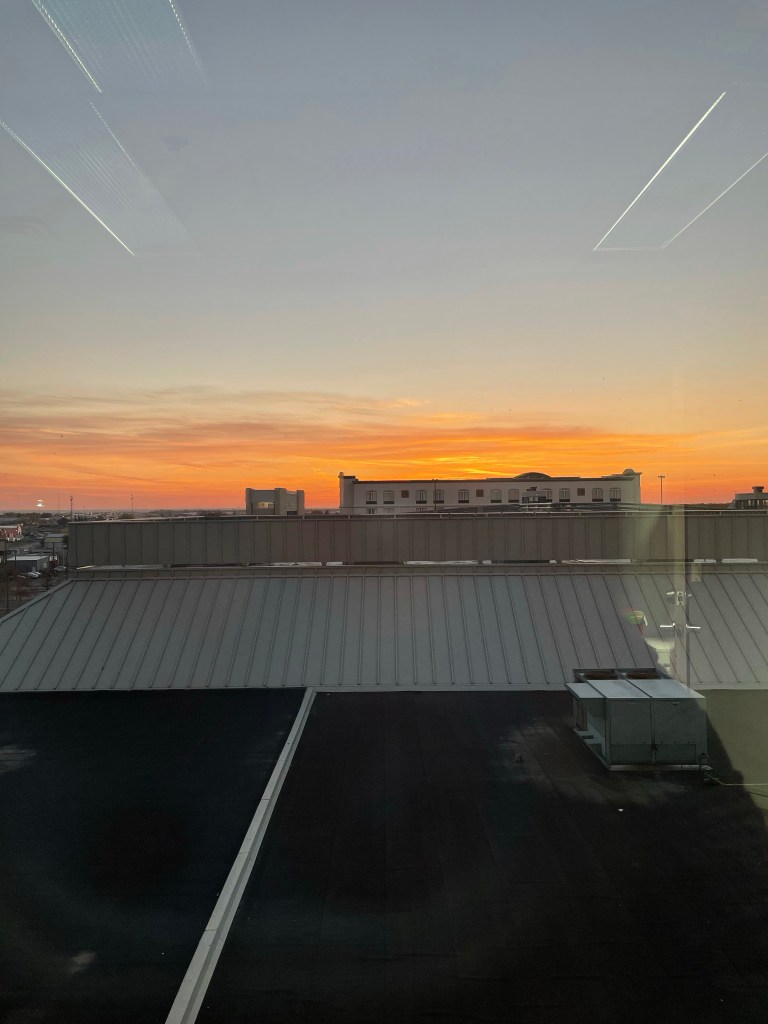
The view outside my office window

Depending on the environment you’re in throughout your day, this change in season can wreak havoc on your system. And no, I’m not just referring to the presence of pumpkin-spiced everything… I promise I’ll stop picking on those who enjoy those treats eventually; I just need to get a few shots in before the caffeine levels in my blood make me more reasonable. MOVING ON! My point is that some folks are fortunate enough to work in an environment where they can actively see the daylight. Some are not so fortunate and may work in a remote environment or an enclosed office where access to daylight isn’t always possible.

It should come as no surprise that the daylight plays an important role in a person’s health. First and most importantly, access to sunlight helps our bodies to naturally produce Vitamin D. Since I intended this post as an opinion piece and not necessarily an educational one where I’d have to cite sources and shit, I’ll keep it light. But the reality is that Vitamin D is necessary for all sorts of things like good bone health, stronger immune system and certainly not least or last, it helps with managing Diabetes. That last one is a touch important to me, as you might imagine.

Sunlight plays an integral role in the body’s function, including proper sleep patterns and managing your circadian rhythm. That’s your “internal clock,” which helps you to manage getting to sleep and waking up. So you end up feeling all sorts of fucked up, when you wake up for the day and it’s still looking pitch dark outside. Most people don’t have a regular work day where they wake up with the sun streaming through their window while soft violin music plays.

For all the reasons I’ve described above and much more, it’s important to take some preventative steps to ensure the colder weather doesn’t get you down into the dumps. Once you’re in the groove, these steps can become overall good daily habits. Here are a couple of things you can do to try and ensure you keep your energy levels on the up-and-up:

1. Starts Your Morning With Exercise.
This is the best one, and something I wish I had more drive to maintain. I will FULLY admit that I’m terrible at doing anything, first thing in the morning, other than reaching for some caffeine. But doing exercise first thing in the morning gets you or blood flowing and oxygenated and will help you to hit the ground running far better than any cup of coffee you may grab. My wife is an absolute champion at this, usually starting her morning with a rigorous exercise routine she follows. During the pandemic winter, I used to walk my spin to the bus stop then walk anywhere from 5 to 10 kilometres. The result was the cold air woke me up and brutalized me before facing my day.

2. Drink Some Water.
I’m a huge fan of caffeine for a variety of reasons. So I can’t honestly say with a straight face that I do this one, but there are studies that show that gulping down a glass of water first thing in the morning will jump start your system and help to wake you up. I have no idea if it works or not, since I guzzle caffeine minutes after waking. And don’t ask me what studies I’m talking about. I don’t have enough caffeine to remember where I read them…

3. Get Outside And Take A Walk.
If you don’t work in an environment where you can see the sun, then go to where you can access it. Get some fresh air, take a walk and get some natural light on your body (and no, I’m not condoning stripping down and sunbathing while at work). Twice a day, I’ll take fifteen minutes to take a short walk outside, get some air and move around a bit. It makes all the difference and helps greatly with productivity. Most jobs entitle you to breaks throughout the day, so you should take advantage of them.

4. Control Your Blood Sugars.
It’s obvious that you should be doing this anyway, but maintaining balanced blood sugars will help keep your overall energy levels up. Nothing saps your energy faster than having an extreme high or low, followed by balancing it out. I don’t know about the rest of you, but that usually leaves me feeling like all I want to do is sleep. Keeping your blood sugar levels balanced is not only a good idea for Diabetics in general, it can go a long way towards keeping you energized and moving throughout the day. Especially when in conjunction with everything else on this list.

There you have it. I’m no genius and none of this is reinventing the wheel, it’s simply common sense. But not everyone thinks about these things so maybe this will spark some ideas for the cold weather ahead. Especially here in Saskatchewan, the morning blahs tend to hit all that much harder once there’s snow on the ground and the weather reaches -50 degrees Celsius. That almost guarantees wanting to stay curled up in bed, despite whatever steps you may take. But life happens and facing the day is a necessity. May as well try to make it a energized and motivated as possible. ☯️