Cookie Cutters Should Stay In The Kitchen

If you look back about fifty years, society had certain expectations from a person. Hell, even just thirty or twenty years back will let you see it. In general, a person was expected to study, work hard, get a job, meet that special someone, buy a house, get married and have kids. Raise those kids to do the same, wash, rinse and repeat ad nauseam.

During my mother’s generation, schooling didn’t need to be completed in order to have a successful life, with many dropping out in early high school in favour of getting a job and starting their lives early. Such a thing isn’t COMPLETELY unheard of now, but it’s discouraged and even frowned upon in most instances, with even the simplest and lowest paying jobs requiring a high school diploma at minimum in order to be hired.

Why is this important and why am I bringing it up? Well, it relates to a phenomenon that’s caused a shift in societal view in recent decades. Although the expectation in the past couple of decades is that a person will not only attend school but see it through to graduation, there was a rising wave of belief that post-secondary education was the most valuable route to a successful life. That wave has crested and fallen in recent years, with many people acknowledging that a college diploma or university degree isn’t the “be all, end all” of a successful life.

Along with this changed perspective comes the enlightened view that not all persons learn in the same way. Some are visual learners, some need to practice and exercise the material themselves while others simply need to hear something once to absorb it. I think we can all admit to being a little jealous of the latter. The point is, that learning institutions are slowly coming around to the fact that one can’t expect to deliver a single curriculum to three dozens individuals and expect that they’ll absorb it the same way. Many schools have started to incorporate some of this forward thinking into adaptive learning for the students who may struggle or show difficulty in certain environments.

This also applies to the martial arts. Over the decades, I’ve come to understand that not all practitioners are created equal and not all students will learn the entire curriculum the same way. If we apply this principal to class in general, we come to realize that one-on-one learning with some personalization becomes necessary in order for the practitioner not only to learn the material but to apply it properly. Depending on the size and style of a given dojo, this presents SOME difficulty, although there are always alternatives.

When I was coming up in the ranks, it was common that most students wanted a piece of Sensei’s time. After all, he was the patriarch of the dojo, had “been there, done that” decades before any of us had, and was the image of the kind of martial artist we all aspired to be. But getting some time with him was usually difficult when held up against actually starting the class, teaching and coaching all the students and the awkward ask of having him stay on after hours for some additional coaching. All things considered, Sensei often did this for me and a number of other students.

Considering I never paid more than $25 for a karate class in my life, it was pretty generous of him when you consider that he was basically teaching us for free and our monthly tuition barely covered the month’s rent on the dojo. But there was one concept he maintained that was sound: I would never be allowed to move on to the next step until I had mastered the current one, which is likely why reaching senior belt levels took well over a decade as opposed to just a few years like some other dojos.

School teachers face an interesting challenge because students are generally MADE to go to school, whereas the majority of students in karate are there by choice. This makes teaching them somewhat easier, despite frustrations faced when dealing with aspects of training a particular students dislikes. If I take myself as an example, I was always more of a forms guy than a sparring guy. I never really enjoyed the fighting aspect, preferring the careful, meditative nature of a well-performed kata. So, Sensei trained me as such.

It’s important to tailor one’s curriculum to how the student will learn, and to help ensure that they absorb it, as opposed to force a cookie cutter curriculum to an entire group, expecting that everyone will learn it. Work on one thing at a time. yes, it’ll be slow as hell, but it ensures the roper progression of a student. It’s better for a practitioner to learn and absorb one technique properly and completely, than to learn very little of the entire art. Food for thought… ☯️
It’s Not Me, It’s You…

People can be cruel. I don’t think that’s a grand revelation, by any means but there’s definitely something to be said for how we, as a people, treat each other on a daily basis. Matters have been aggravated in recent decades with the inclusion of social media and the internet. As I’ve often voiced before, having the world’s information at one’s fingertips has some potential negative connotations.

I spent SOME time wandering the realm of social media as it often provides me with ideas on what i can blog about and I notice that people will often comment on things negatively, rather than simply scroll on by. This is perplexing to me, as I’ve always been taught that if you have nothing nice to say, you should say nothing at all. It boggles the mind how some folks will reach out and complain about even the most insignificant of things, often for the sole purpose of inciting hate or anger.

The kind of energy you put out into the world is contagious. One might almost say it’s insidious… working it’s way into other people that you direct said energy at. If you put out negative energy, it will incite negativity. And if you put out positive energy, it’ll likely have a positive effect. To moist, this concept makes sense, despite the fact that they will sometimes go on a rant or tirade that will adversely affect others.

The other side of the coin in this situation, is the fact that people will react in different ways to different things and that positive/negative energy will be absorbed as such. one good example is within the workplace. If one gets a “good job” from someone, most people will be motivated and feel positive from it. But if one is given corrective feedback or correction on something they’ve worked on or done, they’ll be inclined to feel slighted, belittled or insulted for being corrected on something they’ve done.

This brings about the concept that one can only control what one says and not how the other party reacts to it. however, it’s important to recognize that you’re ultimately responsible for the TYPE of energy you release into the world and whether or not you choose to make it positive. It’s easy to admit that there’s enough negativity and suffering in the world without intentionally adding to it. Maybe your don’t need to name-call that person online. Maybe you don’t need to comment on every little thing you don’t agree with. It’s okay to be wrong. It’s okay not to agree. But it’s also okay to let things go. You’ll be happier for it. Food for thought. ☯️

Spectators Have A Role…

As the father of two young boys, nothing would make me prouder than attending a sports event or extra-curricular activity to watch my kids in action. And I know that day is no doubt coming. Although Nathan i 7-years old, he hasn’t actively expressed any interest in sports or outside hobbies beyond playing with me, at home. But I’m sure it’ll happen eventually. It would be all the better if he joined me at karate, but I don’t believe it would be constructive to push him into that.

However, there are a lot of parents who DO attend karate classes to watch their children. And although some of it can appear dry or boring to a non-practitioner, adhering to dojo etiquette is almost as important (if not more so) for the parents and observers as it is for the children and practitioners who are part of the class. After all, those children and practitioners are looking to their parents and visitors as an example of how to behave, right? Here are some key points to remember when visiting a dojo as a non-practicing observer:

1. Remove Your Shoes: Okay, I get it… You’re not participating and the thought of removing your footwear in a public space isn’t for everyone. The takeaway here is that the removal of footwear within a karate dojo is not only a sign of respect but also a matter of cleanliness for the dojo. If it happens to be a rainy or snowy day or you simply drag mud and/or dirt in from outside, your causing an issue for the practitioners who NEED to be barefoot in the dojo environment;
2. No Food Or Drink: Although this one obviously makes sense for the students and practitioners, observers don’t usually give it much thought. But even though the thought of sipping on your favourite mocha-choca-latte with skim milk and non-fat foam while your child trains may seem like a reasonable idea, not only is the potential for spills and messes a bad idea, the smell of food can be incredibly distracting to someone who’s working hard at their training;
3. Get Off Your Device: Look, be in the now! If you’re there to observe your kids, then observe your kids. That game of candy crush can wait until later. Be respectful enough to pay attention and be present for your child or whomever you may be visiting with/for. If it’s a phone call and it’s necessary to answer it immediately, have the respect to excuse yourself out of the dojo to answer it, which brings me to my next point;
4. Keep Noise And Idle Chatter To A Minimum: This one is a personal pet peeve of mine and should go without saying but since I’m here I’m gonna say it, since some folks don’t seem to understand. Quiet while observing a karate class is a must, not only from a respect standpoint but from a training one, as well. Not only does karate require a certain level of focus and concentration, which can be broken by the distraction of a couple of Karens trying to decide who’s voice can reach the highest volume but it can be difficult to properly hear instructions AND is incredibly disrespectful. Conversation among the observers should be saved for outside the dojo, for break periods (if your dojo has them) or for after class; and
5. Be Respectful In All Things: I get it. Even if your kid is in this class or you’re visiting a friend or family member who’s a participant, this world may not be yours and it can be confusing and the rules may not be clear. That’s why it’s not only important to ask but once you know for certain, be respectful and follow those rules. Be seated only where you’re told you can sit and do no more than what you’re told you can do. Respect for the dojo and maintaining the ambiance of the environment can be critical for proper training.

Every school of martial arts is different and even two schools of karate may have different rules and protocols, so don’t be afraid to ask questions. There’s nothing more embarrassing than getting kicked out of your 5-year old’s karate class because you decided to answer the phone and laugh loudly while chatting with someone DURING class. Not that I’m speaking from experience… Jus’ sayin’. But by clarifying the rules from the get-go, you can better ensure that you won’t cause unnecessary distractions or disrespect the rules of an art that holds respect as one of its core values. ☯️

Ah, Symptoms…

I scarcely remember life before I was diagnosed with type-1 Diabetes. bearing in mind that I’m in my 40’s and I was diagnosed at the age of 4 years old, that should be all that surprising. But I do have memories of enjoying certain foods with impunity, drinking sugared soda and being able to go to bed without getting poked by needles and wondering if I would make the night. And no, before anyone starts commenting, the aforementioned consumption didn’t play a role in my being diagnosed with Diabetes.

Although the content of some of my posts tends to repeat itself, I find that some of them are worth a reminder, every six months or so. I’ve written about Diabetic symptoms before, but it’s never a bad thing to get a refresher. This can be particularly important for folks who WORK with Diabetics, as not everyone is as forthcoming about their health in the workplace as I am. There a lot of reasons for this, including embarrassment. Some people are embarrassed at the prospect of divulging ANY health condition, but there’s often a stigma behind Diabetes where a good portion of the population assumes it’s caused by poor diet and lack of exercise.

I’ve always lived by the concept of full disclosure, choosing to divulge my condition and its potential symptoms and treatments, as opposed to claiming privacy or keeping it hidden. When it comes to a condition that could potentially kill me if something happens and no one knows what’s happening, I prefer this method to the alternative. But that’s just me; to each their own. But it’s good to recognize some of the outlying symptoms of Diabetes, in the event someone in your life may be diagnosed with this condition.

In someone who hasn’t been diagnosed, it may be noticed that they’ll have an increased thirst, increased hunger and frequent urination. In fact, these three symptoms may be the most common in someone who hasn’t yet been diagnosed. But body weight fluctuations, mood swings and irritability, fatigue and blurry vision will also appear. In children and even some adults, they may catch themselves wetting the bed in stages where they wouldn’t have done so before.

One would think that bed wetting may be a strange symptom. The problem is that since a Diabetic person doesn’t process glucose properly and creates that increase in urine (frequent urination, remember?), the strain on one’s bladder can cause wetting of the bed where there was none before. I know that when I was first diagnosed, I wet the bed for the first few weeks until my blood sugars were brought under control. The temporary solution was to have me wear a diaper to bed, which was SUPER fun for a 4-year old. But i digress…

But for someone with Diabetes, there can be different symptoms based on whether you’re experiencing high or low blood sugars. I should point out that these symptoms can also be subjective to the person and are not all-encompassing. For example, high blood sugars will cause many of the overall symptoms of someone who hasn’t been diagnosed. This can include thirst, frequent urination, fatigue, nausea and body pains. Someone may get close enough to you to realize that your breath also has a fruity tinge to it.

The increased thirst is the worst, in my opinion, since it causes what I call “the Diabetic Loop.” You have increased thirst and dry mouth, so you drink more water. This aggravates the frequent urination and makes it worse, having you running for the bathroom constantly. But you’re still thirsty, so you pile more water down your gullet. Rinse and repeat. It can be a particularly huge pain in the ass during the night when you’re trying to sleep but your bladder wakes you almost every hour.

If one is suffering from low blood sugar, they may experience or demonstrate symptoms such as shaking, sweating and pale skin. They’ll have difficulties concentration and may be irritable or even violent. This is a particular one because in my case, the irritability comes out when my blood sugars are high. Low blood sugar may cause confusion and numbness in some extremeties (I used to know I was low because my tongue would go numb, of all things).

The irritability thing is subjective but tends to happen because your brain needs glucose to function properly. This means that if you’re suffering from low blood sugar, your brain isn’t being fed adequately and may malfunction, for lack of a better term. It can cause a whole slew of emotional responses, most of them not good. I usually get angry, although I prefer to think it’s “hangry.”

If you have Diabetes, you can avoid many of these symptoms with a few lifestyle adjustments and being prepared. Exercise regularly, eat properly, get enough sleep and test your blood sugars often. Just doing these few things will go a long way towards ensuring you don’t have to do battle with a constant armada of Diabetic symptoms.

If you’re a friend, co-worker or family member of a loved one w you believe is experiencing Diabetic symptoms, the situation will always fall under two categories. If the sufferer is able to communicate clearly, he/she will tell you what they need or take care of it themselves. If they are unconscious or unable to communicate clearly, simply call 911.

Although opinions vary, I always advise people never to try and feed a Diabetic any glucose. Setting aside the fact that they could potentially choke on whatever you try and feed them, without knowing whether the person is suffering a high or a low, you run the risk of aggravating the situation. Better to wait for the professionals to arrive and deal with the patient accordingly.

If you choose to keep your Diabetes private, good for you. That’s your choice and you’re free to exercise it. Myself, I’ve discussed my Diabetes at length with my boss and my family, including what treatments I obtain and what preventative measures I take, as well as what they can do if something happens. It’s a hell of a safety net and makes me feel safer. After all, a problem shared is a problem halved, right? ☯️

Where’s The Quiet Place?

Something that a lot of people seem to sell short is the occasional need for good ol’ peace and quiet. And this can be an extremely difficult thing to obtain, especially in modern society. I recognized this issue last summer, when I was sitting outside in my garage on a warm, sunny day. Some birds were chirping, a light breeze was making the beaches of nearby trees sway and I was peacefully puffing away on a cigar (Yes, yes, I know! Bad habit! One problem at a time, people!)

As I settled into my moment of serenity, I began to notice an audible hum in the air. It was almost unnoticeable at first, like something fleeting at the very edge of my hearing. I slipped into a light meditative state and allowed myself to open up to what I was hearing. I came to realize that among the chirping birds and summer breeze was the background noise of hundreds of cars on the highway about a kilometre away, the rumble of a passenger plane passing overhead and various sounds of society and industry.

It took away some of the magic of my afternoon, especially since once I recognized it was there, I couldn’t “I hear” it. We live in a pretty quiet, suburban neighbourhood of our city and I usually pride myself on being able to get the aforementioned peace and quiet during the warmer seasons by sitting outside. But this post isn’t about noisy neighbourhoods, it’s about the need for quiet as a part of your life.

Surprisingly, many people are uncomfortable with the quiet, preferring a constant barrage of background noise and something to fill the auditory void, whether they’re watching television, reading a book or even trying to sleep. I, myself, use some white noise or Netflix to fall asleep at night. Although the white noise is perfectly fine and in some cases recommended, using a lit screen with a streaming service isn’t the best for a variety of reasons, but that’s one for another post.

The point is, occasional quiet is a good thing. It allows you to simply BE with yourself, something not a lot of people indulge in. The person who should you best is you and without being alone with your thoughts, it’s pretty hard to take that particular step of self-discovery. But even if you’re comfortable being alone with your thoughts, modern life doesn’t always allow for it. After all, as I always say, life doesn’t care about one’s plan…

I noticed how badly I missed having periods of silence when my wife and I recently put the baby down for a nap and our oldest was in the basement entertaining himself. The tv was off, she was reading a book and I was searching for something online through my phone. At some point, I realized that my breathing had slowed, I felt calm and the house seemed peaceful. I commented about it to my wife and I recognized that this is the kind of benefit that silence can bring.

There are some who may argue that once you are adept at meditation that you can do it anywhere, regardless of the distractions. While this is an arguable point (try properly meditating while your 7-year old is running circles around and screaming), some quiet will make it easier for you to do most things. Meditation will be easier, practicing karate is easier and simply letting your head cool while you contemplate the matters of the day will be easier.

Whether you enjoy the quiet or not, don’t sell it short. It can provide unspoken mental and physical health benefits and make the rigours of the day easier to get through. And if you’re in a situation where finding a moment of silence is difficult, there are ways you can still get a moment, whether it involves taking a drive to grab coffee or even staying up a bit later so you can have some quite time once the kids are asleep. Trust me, peace and quiet can be worth the effort. ☯️

Stick A Pin In That…

In the course of my training, I’ve been exposed to a number of different things that may relate to the martial arts but aren’t always directly connected. Traditional forms of medicine being one of them. For those who may not be “in the know” or are unclear, traditional medicine refers to the practice of diagnosing, preventing and healing ailments before the time of modern medicine, which is where we are now. Despite its arcane and older origins, many people aren’t familiar with the various aspects of traditional medicine and many doubt its effectiveness or worth.

At the risk of sounding opinionated (because I never do THAT), traditional Chinese medicine has been around for over 2,000 years, with modern medicine as we know it only existing for the past few hundred years. Even though older doesn’t always mean better, it stands to reason that having had this form of medicine around for this long has got to mean that there’s some inherent value to it. Of course, I think bloodletting is the stupidest thing in the world but it’s been around forever and is still used in some parts of the world, today. So, there’s that, I guess. But I digress…

I recently helped an old friend of mine with some writing he was doing for some schooling and it reminded me of some of the materials I’ll talk about today. An Acupuncturist from back home in New Brunswick, he’s made a successful life of maintaining a traditional medicine practice and helping to heal others. I’m thinking I may have written about this before, but at this point I think y’all should expect that some of my material will start to repeat itself. M y mind isn’t a bottomless pit, after all. Here are the three forms of traditional medicine I’ve been exposed to the most, in recent decades:

Acupuncture

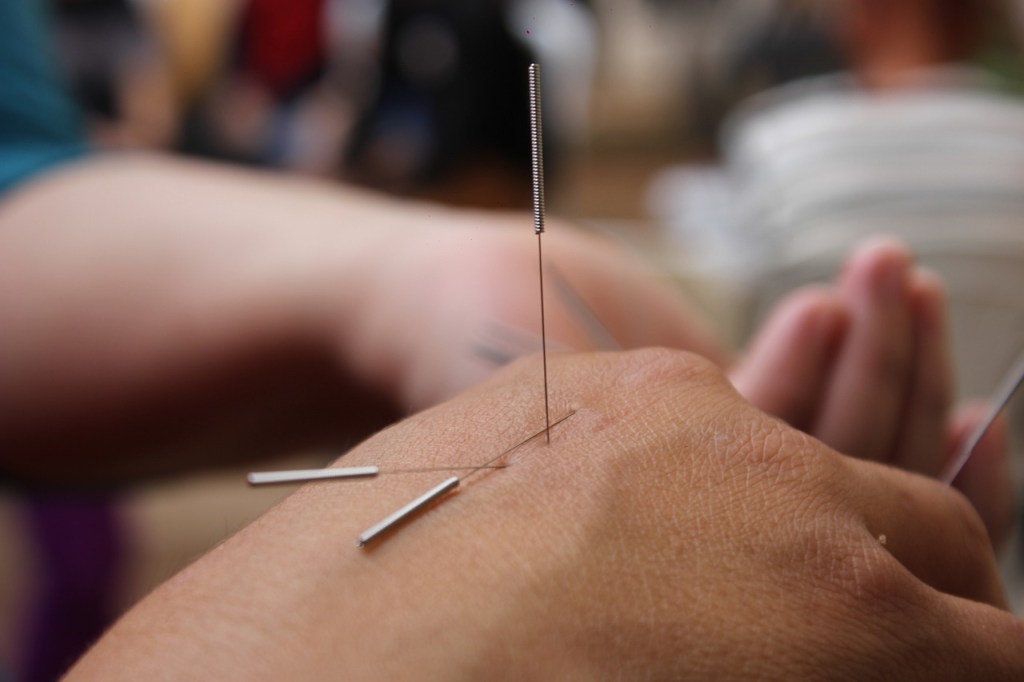
I think just about everyone is familiar with acupuncture in some way, shape or form, even if they’ve never experienced it. Rather than try and define it myself, I’m leaning on an article posted by the Mayo Clinic, which states, “Acupuncture involves the insertion of very thin needles through your skin at strategic points on your body. a key component of traditional Chinese medicine, acupuncture is most commonly used to treat pain. Increasingly, it is being used for overall wellness, including stress management.”

Although traditional practitioners of acupuncture believe that the insertion of needles helps to rebalance one’s flow of energy, western medicine tends to attribute the effects to the stimulation of nerve endings and muscles, which boosts your body’s natural painkillers. No matter what the thought process, acupuncture is no different than any other form of medicine. It works for some but not for others. One of the biggest problems with traditional medicine is that it often takes several treatments to see any measurable results and in today’s society of immediate gratification, most people prefer popping a pill that takes immediate effect.

The jury is out on how effective modern-day acupuncture may be. I know that I experienced it, back in 2007. I was travelling from northern New Brunswick to Ottawa and decided to stop in at my friend’s place for the night, the same friend mentioned in the third paragraph. He had just started his acupuncture studies and asked if he could practice some insertions on me. I agreed and he had me lie down on a mat and proceeded to insert a couple of needles near and in the elbow joint of my arm. He manipulated the needles a couple of times and it was slightly uncomfortable but not painful.

When he was done, I asked him what the needles were supposed to do, to which he replied that he had “stimulated my digestion.” Assuming nothing worse, I got back on the road for the short, 2-hour drive to Ottawa. Within an hour, my stomach made a gurgling sound the likes of which I had never heard before. I was suddenly struck by bad stomach cramps and before I knew it, I was struggling to find a public washroom as I felt the onslaught of an expulsion I would be powerless to stop, coming my way. I purged my gut for what seemed like forever. “Stimulated my digestion,” indeed. Asshole. He could have warned me. The point is, that shit works.

Acupressure

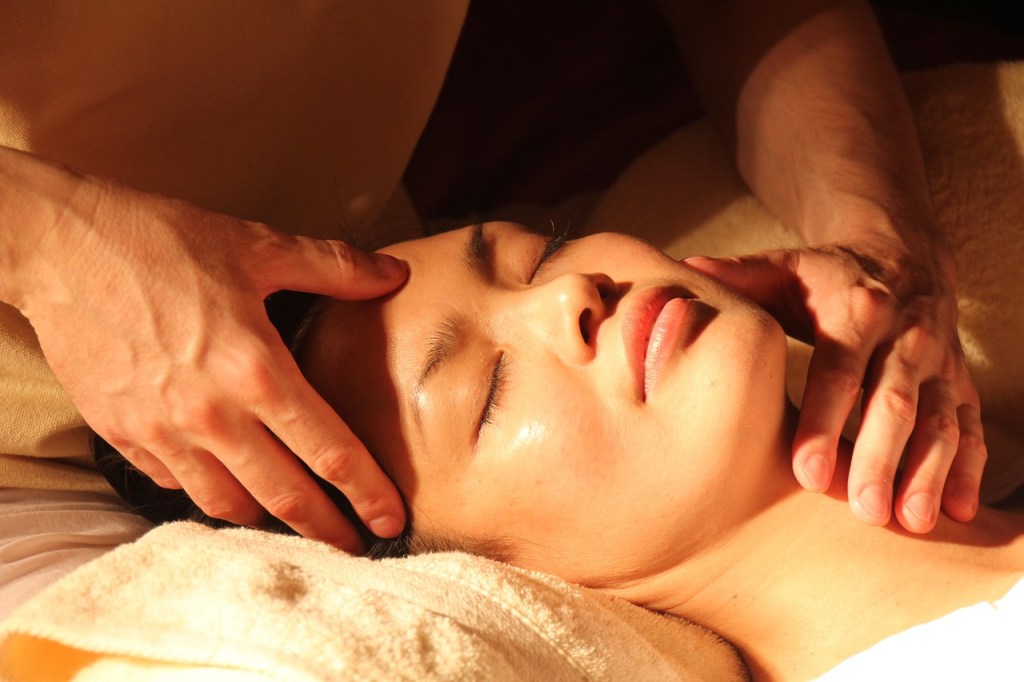
Acupressure is a form of traditional Chinese medicine that’s based on acupuncture but uses applied pressure from the hands and fingers as opposed to needles. it functions on the basis of increased blood flow, better circulation and shares the concepts of increased energy flow with acupuncture. This is the form of traditional medicine that my Sensei practices and it should be noted that acupressure is almost ALWAYS combined with some other form of naturopathic or traditional medicine, such as herbology, reflexology, massage or acupuncture.

The jury is out on acupressure, with various studies advocating its effectiveness in helping to alleviate certain pains and ailments in the body and even more studies arguing that there’s a significant amount of bias involved and that there really isn’t any viable evidence that acupressure is effective. In my opinion, massages do a great deal to alleviate pain. So does a chiropractor. And through my study of the martial arts, I’m aware of the existence and use of pressure points in certain aspects of combat arts. When you combine all of those factors together, you more or less get acupressure.

Chinese Herbs

This is always a sticky one for people, because most of the population fall under one of two categories: those who think herbs work and those who don’t. The ones who don’t are usually bound by the western logic that modern medicine alternatives are faster, safer and more effective than their-herb-based counterparts. The ones who solely adhere to herbs believe that modern medications are al chemical-based and do more harm than good. The reality is that there’s some truth to both. Modern medications are a combination of things that are found in nature anyway.

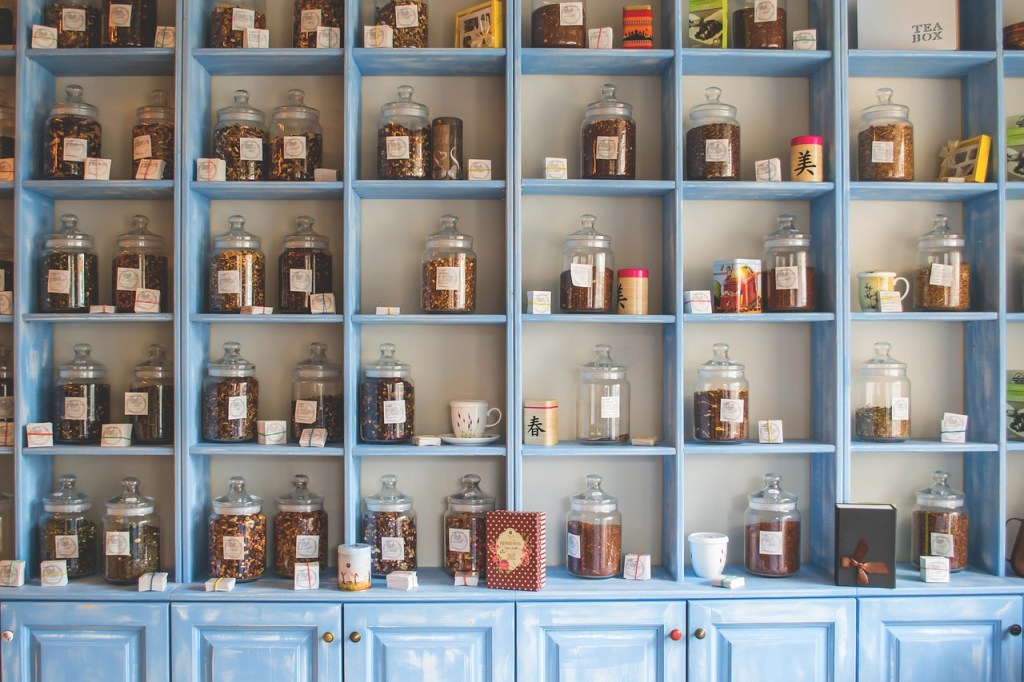
Chemicals are nothing more than the combining of naturally-occurring substances through artificial means. The difference between using these artificial compounds or herbs simply involves speed or immediate effectiveness. Once again, this is where that mindset of immediate gratification or results comes in. Some herbs can be very effective at helping certain ailments but they can take a lot longer than their modern counterparts. A really good example are the various teas that are sold just about anywhere that can help with digestion, headaches, stomach aches, menstrual pains and vast array of other conditions. I’ve used tea in a lot of instances, minus menstrual pains, of course. They work, but one could easily argue that it doesn’t kick in or show a measurable or noticeable effect like taking an artificial counterpart.

The important thing is to be wary of starting anything new or different without consulting your doctor or medical practitioner AND ensuring that you do your research before trying any new form of treatment. You want to be certain that you’re dealing with someone trained and certified to practice the form of traditional medicine they profess to be knowledgeable on. Although I can’t speak for other countries, any and all of the different forms of traditional medicine I listed above requires years of study to become proficient. Don’t be afraid to ask to see their certification; if they’re on the level, they should have no issues letting you see it.

And don’t be disappointed if you try something and it doesn’t work. Out of ten people with a headache, maybe only half will be able to treat it with a pill. For the others, a pill won’t work. It’s the same for traditional medicine. It’ll work for some and not for others. So even if your best friend claims that acupuncture changed their life and got rid of all their aches and pains, be aware that it may not work quite as well for you. Food for thought… ☯️

How’s The Weather Down There?

Friendships are a strange part of life. They have the potential to be both a positive and/or negative influence on one’s life, depending on their outlook and how they behave around you. No matter how one chooses to deal with the aspect of friendship, everyone needs them. And everyone should have them. Humans are inherently social creatures and one could even say that we’re pack animals, hence the fact we usually gather in large groups and communities, such as towns and cities.

During my youth, my father always used to tell me, “Beware of fair-weather friends.” I never knew where he got the quote and I can’t be bothered to research it now. But I know he always said it in the context of being wary of others, especially as it related to friendships. So what does this expression mean, exactly? The term fair-weather friend refers to someone who is there for you when times are good but will usually conveniently disappear when times are tough. This type of person can also be referred to as a good-weather friend.

There are plenty of these terms, such as an all-weather friend, which refers to a friend who will stick by you, no matter what the circumstances. These types of friends are rare and should you have one, you should hold onto them with your best effort. Last but not least, are foul-weather friends. These are the ones who only seek you out when they have a problem or have need of you. Although I’ve been blessed with the benefit of some pretty awesome all-weather friends, I’ve recently come to understand that some of my oldest acquaintances are foul-weather friends. Not a realization I take lightly.

It’s a bit like the concept of giving someone an inch to have the other person take the whole yard stick. One good example I can provide is a friend who moved three times in a two-year period. Obviously I stepped up to lend a hand when I was asked to help. On the second occasion, I had my reservations, but it wasn’t any of my business and the friend simply needed my help. So once again, I gave my time and effort to help move my friend from one residence to another. But when that third time came around, I made a point of indicating that I had to work and couldn’t afford to take another day off to help once again. It took a long time before that friend spoke to me again.

Another friend only makes a point of coming to see me or contacting me specifically when they need something. This can be disheartening, especially if you’re the type of person who does like to help. Making a point of bringing this up can be difficult, especially when you’ve been friends with such individuals for so long that souring the friendship can be harmful. The worst part is when these individuals don’t realize what they do. And even though it would be incumbent on me to recognize these toxic situations and step away from these relationships, it’s tough when you’ve been friends with such people for years and even decades.

Part of it is my fault. Perhaps I simply need to learnt o be a bit firmer and say no. But it would definitely be nice if some of these long-standing acquaintances didn’t just come to me when they needed something from me. And that’s the lesson; be certain that YOU are the one who dictates and decides where the line is. Helping others is a wonderful thing. Being taken advantage of by others is not. It isn’t until you learnt o see the difference that you’ll know what the weather’s like, and who may be worth weathering the storm with. Food for thought… ☯️

Perceptions…

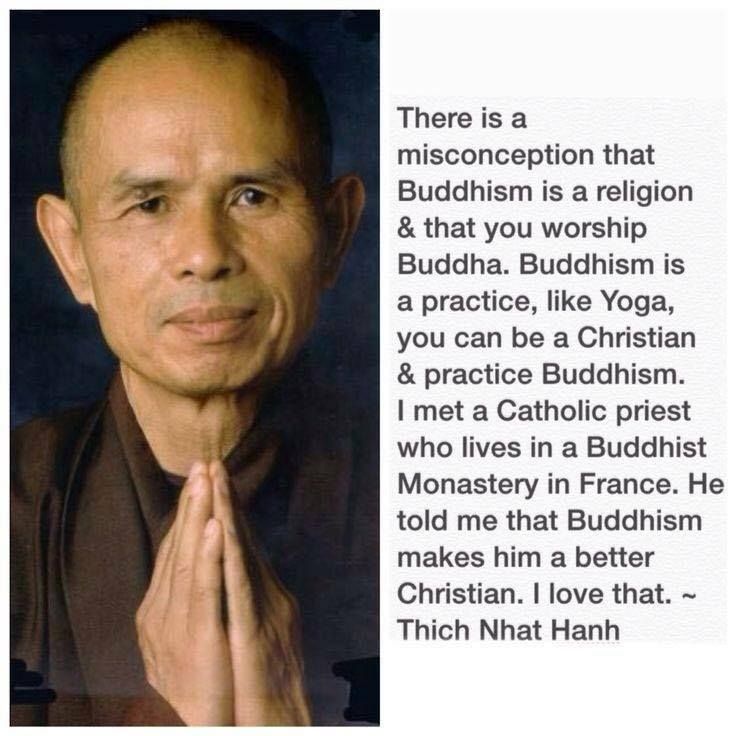
I’ve seen this on the odd occasion, as I navigate the murky waters of what we know as the internet. Despite the fact that I’m not that familiar with Thich Nhat Hanh (I haven’t actually read any of his stuff besides what I’ve found incidentally), I love this quote. I know that there are sources that denounce it and tend to belittle the message he’s trying to relay. But I think there’s some depth to what he’s expressing. For years, I’ve made a point of telling people that studying the Buddha Dharma is a practice. It’s a way of life more than an organized religion. Just wanted to share this as some food for thought… ☯

Oodles Of Appreciation…

The holidays can be a really fun time of year. Enjoying a spread of food you may not usually make, including baked goods, seeing family and friends and potentially travelling a bit (for those who are brave enough to try it, at the moment). Depending on your familial and faith-based background, your celebration may differ in some ways but I think we can all agree that the average person has a tendency to enjoy the holidays, even if for no other reason than getting some time off and being at home.

The “hows” and “whys” for that enjoyment have changed over the decades. I remember making my way through the Christmas break as a child… My mother would bake a mass amount of food, including sweets and meal-based foods. We almost ALWAYS hosted Christmas at our home, despite growing up in a reasonably small apartment. Between my illnesses and my brothers and my father working shift work, my mother was left with all of the preparations as well as worrying whether or not one of us would need a hospital trip over the break.

The big thing is that I didn’t have a care in the world, back then. I indulged in as much food as my body could hold (despite the fact carb-counting wasn’t a thing for me and my Diabetic system was terribly balanced), I watched Christmas movies, including National Lampoon’s Christmas Vacation, How the Grinch Stole Christmas and Die Hard. Yes, Die Hard is a Christmas movie. Yes, it is… YES, IT IS!!! Ahem, I’m getting off track here. My point is that my biggest concern was staying up late enough on Christmas Eve to make it in Christmas and/or get through midnight mass (my mother is Catholic and attendance was a must).

Enjoying the holidays through adulthood becomes a very different kind of creature. Besides worrying about the state of one’s household, including bills, job retention and the state of the world, it’s a pretty fair assumption to say that many if not most can’t enjoy the benefits of having no cares as they make their way through the holidays; a fact aggravated by the aspect that once you reach adulthood, you’re the one paying for all of those lovely gifts under the tree. It makes quite a difference. It also becomes a matter fo the household turning into a disaster area as it gets bogged down with stray wrapping paper, cardboard and packaging that swarms our bins a week earlier than pick-up and kids who refuse to eat because they’re too excited to play with the new swag they’ve acquired.

Don’t even get me started on the FACT that it creates an added amount of stuff in the household. I’ve always been something of a minimalist, and increasing the amount of junk we have in the household does not for a pleasant holiday, make. But there’s no denying that the look of sheer happiness on my sons’ faces as they opened up their gifts was heartwarming. My oldest son left out a “bowl of cookies and milk” for Santa, a benefit I never had since my belief in the red, fat man never took hold as a child.

I have a deep and distinct gratitude for everything my parents did for us throughout the holidays. Now that I have the adult’s perspective, I can certainly appreciate the time, money and effort that goes into the holidays. And we don’t even host our entire family the way my parents did. Life was a bit different back then, since most households included one stay-at-home parent, but I can’t imagine that made it THAT much easier, especially considering the handful I was as a child. I’m grateful to my parents for everything they did for us back then, and it allows me a bit of perspective as my children grow up. Take time to thank your folks for the things you DID have during the holidays. I know, I will. Food for thought… ☯️

I Feel Like I’m 19 Again!

Not literally… If I actually felt like I did when i was 19, I’d be out there taking on the world instead of sitting in front of a keyboard at this hour, typing a blog post. instead, I rather feel like a hundred mousetraps going off at once when I rise in the morning and I’m still trying to explain how gravity seems to pull harder at my body for the first ten minutes of my morning or until I get that first, sweet kiss of caffeine. But I digress…

I was never one for drinking in my teen years, having consumed my first beer at the tender age of 23. The legal drinking age in Canada is 19, for those who may be from another country. Always the steadfast designated driver, it was hilarious for me to watch friends and counterparts try to purchase alcohol without presenting valid ID or using a fake one. You see this in movies as well, with a protagonist awkwardly and nervously walking up and trying to sound older while showing a fake ID in the hopes of walking out with a prized case of beer. Classic.

In later years, you’ll usually start hearing people say they miss being “carded,” or asked to show ID for things. Just recently, I saw a younger person (younger than me) get carded for the purchase of cigarettes at my local convenience store and they were flattered by the fact that the cashier thought they looked young enough to require being carded. The person was apparently of legal age (or had a fake ID), but it struck me that most people often feel a sense of disappointment that they’ve reached a point in their lives where they no longer NEED to prove that they aren’t too young.

This is why I find it entertaining that proof of vaccination and valid ID are required for most non-essential locations one tries to enter, these days. I can’t speak for everywhere but here in Saskatchewan, one needs to show proof of vaccination and valid matching ID for liquor stores, restaurants and a host of other locations, much to the dismay of many who feel they shouldn’t be obligated to do so. To each their own, I guess. People forget that they don’t HAVE to shop at specific locations and they don’t HAVE to attend or participate in events that stick you in the middle of large crowds.

What’s unfortunate is seeing how some grown-ass people react in the face of being asked to present these things. Besides the fact that you can go online and find videos from just about every conceivable source of people losing their absolute minds over the matter, which is ridiculous for a grown adult, one should know to pick their battles and be aware of what hill is worth dying on. I know that for the most part, when I’ve been asked for proof of vaccination and valid ID, I usually joke about how I was never carded at an age where I should have been so life is making up for it, now.

Humans are special creatures, to say the least. In a world of immediate gratification and entitlement, it’s amazing to see how many people are willing not only to suffer for their choices but cause suffering in others. It’s genuinely unfortunate. Hopefully, the year that comes will be better than the previous two. ☯️