The World May Burn While It Continues To Turn…

Life is tough. I don’t think I’m providing any enlightened insight, there. It’s even tougher when you’re alone. And that solitude is all the more difficult when it comes as no fault of one’s own. Throughout my youth, I spent many an hour by myself. Always a bit of an outcast, I didn’t have many friends during my childhood and the ones I did have were quick to leave me behind when they found someone better. By “better,” I mean better from THEIR perspective; not realistically better.

In fact, I remember a kid I used to spend time with that I considered to be my best friend, whatever that means at such a young age. He quickly started spending time with another kid who had more money, better gadgets and toys and access to a car when we reached our teens. It didn’t matter that the other guy was an absolute asshat who used people until he grew tired of them and then tossed them aside. I was left in the weeds despite all of that. Things don’t get much better into adulthood, with self-proclaimed “friends” often leaving you behind in favour of what they consider to be greener pastures.
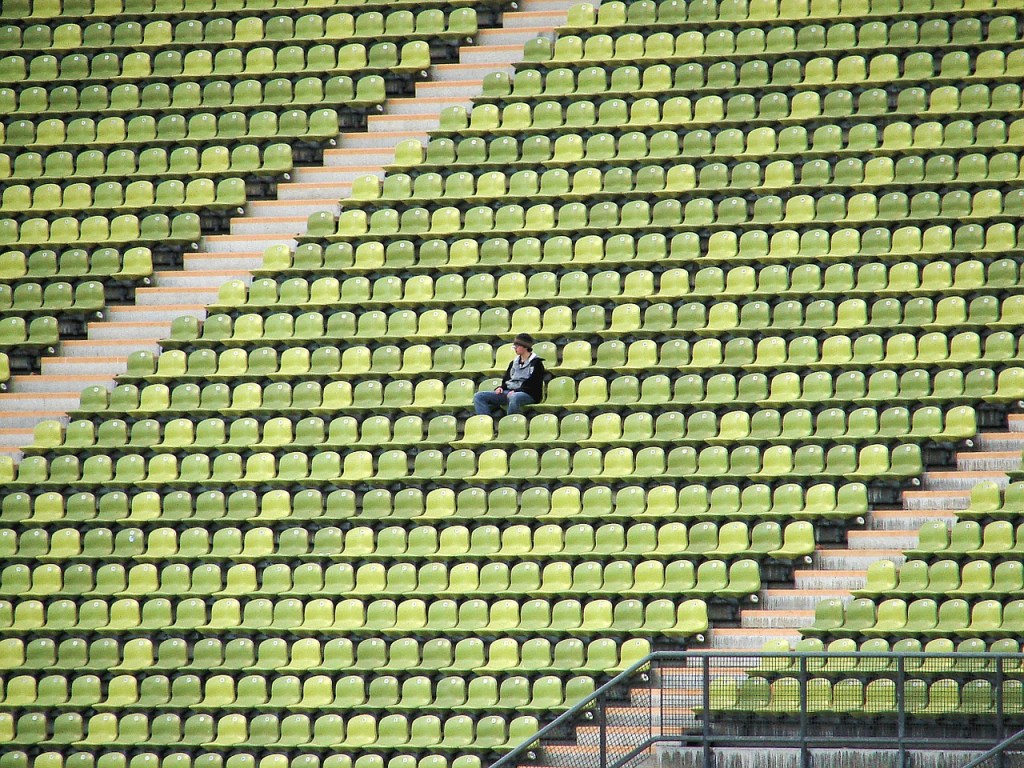
You only get out of life what you choose to put into it. If life serves you lemons and all you do is stare at them, you’ll never get to taste the lemonade. It’s only through the effort of cutting, squeezing and zesting those lemons, then adding sugar and water to the mix that it will become the tasty accomplishment that we know as lemonade. Maybe that’s a bit of a cheesy comparison but it’s accurate. People will often use you and toss you aside when they’re done with you. In some cases, this doesn’t mean that they’re inherently bad people; it simply means they were never taught any better.

When life gets you down and you feel like you’re all alone, use that time to your advantage. Spend some time getting to know yourself and discovering who you are and what you want out of life. Read that book you’ve left sitting on your shelf for the past few years. Spend some time outside watching the world. Sit in on a movie at a theatre that you’ve wanted to see. Take a trip. Some time alone can be important in order to help one reflect and truly allow themselves to become who they are.

Take it from someone who spent most of his youth by himself; being a loner doesn’t mean that you ARE a loner. It simply means that you’re unique and outside the confines of the expected social norm. And there’s nothing wrong with that. If the people within your scope of existence don’t like who you are and don’t want to stick around, so be it. That means that they weren’t meant to be part of your inner circle. Eventually, people will come into your life that are worth keeping around. And at that point, you’ll discover that they not only appreciate you for who you are and HOW you are; they’ll also become an integral part of that journey and may help you discover a few things along the way. Food for thought… ☯️
There’s No Time…

I’ve trained in a variety of different dojos, with slightly different styles from my own. It’s been great from an experience perspective. I’ve had the opportunity to recognize that not everything is structured in only one way, which is a perspective I clearly lacked during my time back home. One particular detail is that not all classes have the same length. Sensei used to believe in a two-hour class and would never sway from that. I’ve taken classes that have been as short as an hour. In fact, my current dojo has one-hour class times.

Ultimately, it’s not the amount of time that the class lasts that really matters but what you do WITH that time. A twenty minute session can be invaluable, so long as you actually train and learn something while you’re there. If you’re spending half the class taking water breaks and stalling your instructor with questions you already know the answer to, so that you can recover, you’re wasting your time. And time is exactly the purpose behind today’s post.

They say that time flies when you’re having fun. I’ve heard that on a few occasions. Karate is fun. At least, I think it is. And anyone who practices it should be fully committed in this manner, as well. While I was coming up through my formative years, Sensei has a small wall clock mounted in the dojo. Now, our dojo was a small storage room off a large basketball gymnasium. I say small but it was about thirty by fifty feet. A decent space for a larger class. But the clock didn’t belong to us, it belonged to the building. The problem came when students started glancing at the clock repeatedly.

There’s nothing worse, and this is one of my biggest pet peeves, than training and trying to explain something when the student’s mind is a million miles away and staring at the clock. It eventually got to the point that Sensei just took the clock down and stuffed it aside. After all, Sensei would open the class and indicate when it ends. There’s no need for students to be watching the clock. Unless they’re bored or don’t want to be there.

Unfortunately, I’ve fallen victim to this phenomenon, as well. For a few years while I was training in a particular dojo, I would compulsively stare at the clock. The class was an hour and half long; definitely not the longest I’ve ever been through. But as the months elapsed, I began to notice that whenever there was a “lull” in the class I would glance at the class to see how long there was left to the class. It took me a while to recognize that it was because I was unfortunately bored.

At that point, I had a difficult decision to make. I could allow my stubbornness to keep me rooted where I was or I could realize that this style and class format wasn’t for me and move on. I have a history of sticking it out, long after In should move on. Ultimately, I moved on. Sometimes, sacrifice is necessary in order to gain clarity. But even in the current dojo I train with, some students watch the clock as though they’;re hoping to see the needle move quickly around the face, which leads me to feel some of them really don’t want to be there.

When you study the martial arts, you have to be in the moment. You have to focus and concentrate on what you’re doing and not worry about the time. Your instructor will let you know when class is done. there’s no need to watch the clock. If you find that time is ALWAYS dragging on for you and you just can’t help it, maybe where you are isn’t for you. Food for thought… ☯️

Hit The Bag Or Hit The Bricks…

Not literally… I mean, what have bricks ever done to you? But the bag comment stands. And for a bit of clarity going in, I’m referring to a punching bag, not just any random bag in general. Punching bags are a fun and easy way to blow off some stems and relieve stress but they’re also an integral part to learning your techniques and actually executing them properly.

When performing forms or kata, we learn techniques, strikes and blocks through repetition and muscle memory. Form teaches us proper movement, proper bone alignment, proper footing, proper steps and proper technique. When done properly, doing forms will help you to work up a sweat and can be a fantastic workout on their own. The only downfall is that you’ll eventually hit a wall (pun fully intended) by combating a phantom opponent through form. Eventually, y’all gotta hit something…

And this is where a punching bag comes in. I got this thought during a karate class last week when we took a break from forms to try and accurately executed a certain double-handed strike. It involved slide-stepping in and striking with the blade of both hands. The movement is a bit awkward, I’ll admit but the problem comes from needing enough flexibility in the wrists to prevent tensing while striking with the appropriate area of the hand.

After a number of attempts by some of the students who were trying hard to work at it, I recommended that it be applied to a punching bag. After all, this is intended to be a strike, so it should/could be developed by actually striking. This is something that I’ve often done when I find that trying to perfect a technique isn’t quite working. It’s pretty effective since, in order to prevent injury, you’re more likely to strike properly against a surface like a pad or punching bag than you will be when doing form.

Techniques in your forms may look pretty and smooth, but they hold no value unless they’re effective while being used. Let’s also not forget that if you spend years practicing and training without ever ACTUALLY striking something, you may get a nasty surprise if/when the day ever comes that you physically have to strike an actual opponent. After all, you may have been playing Grand Theft Auto for years but it doesn’t mean you’re ready to get behind the wheel of an actual car.

The same can be said of striking. I’ve lost track of how many students train and train well, maximum effort, developing their strikes and doing the best they can. Then, they step up to someone holding a strike pad or walk up to a heavy punching and try those same striking techniques only to have their shoulders sink back, sprain their wrists or perform a completely ineffectual strike. Then they’re right back at square one and have to re-learn the strike.

Punching bags are reasonably inexpensive, unless you go all out and buy some Cadillac of equipment. But even most big-box retailers will have some inexpensive options. Finding a second-hand sporting goods store can also be ideal, since people will often get rid of their strike pads or punching bags even if they’re still in excellent condition. The point is, if you’re going to learn something like karate, your training can only go so far until you start practicing your strikes on an actual surface. Food for thought… ☯️

Changes In Perspective Can Be Good…

One of the more interesting aspects of studying the martial arts is that there are so many different perspectives one can subscribe to. This is why it can be initially difficult to find a style or art that suits you. What seems to be absolutely great for one person may be completely wrong for another, and pushing yourself to study in an art that you aren’t fully invested in can be harmful and difficult. I’ve known a lot of students who have entered into my dojo because they WANTED to learn martial arts but couldn’t consolidate the fact that my style didn’t suit them. That, or they’d be forced in because of their parents.

The important thing to remember is to keep an open mind. For many people, the perspective they hav going in will change over time, especially if they’re learning a style that suits them and accommodates their life. It’s also important to remember that martial arts isn’t necessarily all about the fighting. I was reminded of this recently during a fascinating conversation about different styles that I was having with a colleague. If you want to learnt to fight, there are plenty of things you can do that would no doubt be easier than joining karate. People hear the word “karate” and they automatically assume one is learning to fight. in fact, when asked, most new students will say that they’ve joined in ORDER to learn to fight, despite the fact that karate and martial arts in general is a study, a philosophy, a way of life… and fighting is only one small aspect of it. Food for thought… ☯️

Different Strokes For Different Folks (or “It could be worse”)

Some of the more difficult issues in living with any chronic condition are the stigmas that are often associated with them. Often, people will assume that one’s condition isn’t bad by virtue of what they may have heard about it, or they have pre-conceived notions about its severity because one may not present visible or physical symptoms. It’s an issue I’ve had to deal with often throughout my life, ironically from family members as well as peers, employers and friends.

It’s kind of like some of the videos I’ve seen online where someone walks up to an individual in a parking lot and starts betraying them for parking in a handicap spot, despite having a handicap placard. The old line of “but you look fine” or “you’re walking normally” usually comes into play. Or knowing someone has fibromyalgia but suggesting it’s nothing because they seem to be getting on fine with their day, not recognizing the immense pain and effort it takes simply to “get on with one’s day.”

The best line and the one that usually pisses me off the most, is when people say “it could be worse.” What does that even mean??? I’ve actually spent my entire life hearing that line from my mother, of all people. I know that she’s usually saying it in the context of trying to face the positive but it never feels that way and comparing a person’s medical condition to something YOU perceive as being worse helps no one.

This irks me far more than it probably should but when I have someone who suggests that matters could be worse, I could have cancer or flesh-eating virus or any score of other ailments, it cheapens the severity of my own condition. I may look fine, but inside I have a tumultuous typhoon of symptoms, pains, bodily issues and a strict check and balance that needs to be maintained, just so that I can “look fine.”

The irony is that for those of us who see fit to work hard and push through, we’re not rewarded by praise for maintaining our overall health. We’re told that it doesn’t seem so bad and that it “could be worse.” Do anyone with a chronic condition a favour; don’t assume or presume how a person is doing solely on what your eyes can see. And don’t lessen the severity of someone’s condition simply because you know someone else who may be worse off. That helps no one. Food for thought… ☯️

Guilt No More…

I think it’s safe to say that Diabetes is one of those “invisible” illnesses. After all, if one were to see me walking down the street, one would never be able to KNOW that i have Diabetes. Contrary to what you may see joked about on mainstream media and in the movies, having Diabetes doesn’t unilaterally mean that one is obese, missing toes or eats too much candy and junk food. Granted there ARE some like that, but it isn’t the standard. Most people don’t see what’s happening below the surface and they don’t realize the effort and control it takes just to get through the day. Some of that has led to some extremely uncomfortable situations throughout my life.

When you reach a certain age, you start to contemplate your life. And that isn’t a bad thing. Although I’ve grown to accept and acknowledge that I live my life without regret, contemplation is a completely different thing. My life is pretty awesome; I can’t deny that. To live with any regret means that I wouldn’t want my life being what it is now, and that just wouldn’t be true. But like anyone else, I’ve made some mistakes and have hurt people along the way with the choices I’ve made. And that’s what I’ve been contemplating.

For the most part, I was a pretty stubborn kid during my teen years. This cost me a lot, when i consider friendships, relationships and even experiences. Always a bit of a loner, I went it alone and dealt with the many ups and downs that Diabetes caused without ever sharing what I was going through with anyone. That includes my parents. Given the significant lack of control I had over my blood sugars, I tended to be cold, distant and a bit of an overall asshole. I know what you may be thinking: how is that different from how I am now? Well, first of all, fuck you! Second of all, I’m going to explain…

Wildly varying blood sugars can cause all sorts of behavioural issues, including fatigue, depression, mood swings and unprovoked anger. This didn’t bode well for friendships and relationships. And wouldn’t you know it, I just HAD to be going through it during my teen years when i was trying to be a typical teen… have friends, date girls and go out and have fun. None of that was conducive to good blood sugar control. I think back to the number of times I had to bail on friends and just stay home because In felt like absolute shit due to my Diabetes.

This doesn’t even begin to cover how much of a dick I was to girls I dated (NSFW pun fully intended). My mood swings and behavioural issues due to Diabetes made for some pretty harsh treatment from me. Couple that with the typical torrential wave of teenage hormones I was subjected to that just made all of it worse. This led to some pretty in-depth guilt, which cause some of the aforementioned depression. Unlike most teenagers of my generation, I never touched drugs or alcohol. In fact, as I’ve written in previous posts, I only had my first beer when i was 23 years old. So I had to ride the guilt wave with none of the safety or floatation devices that most people have.

Even now, knowing what I know and having the control that I do, my time is better preferred sitting at home relaxing with my wife than making plans and trying to leave the house. I keep a pretty tight reign on my Diabetes nowadays and since absolutely everything tends to affect blood sugars, I also keep a tight reign on how late I stay up and how I spend time outside my house. But I no longer feel the guilt that comes with the issues I faced during my teen years. As an adult, i recognize that my life and family come first. And there can be no guilt in that. The rest of the world will simply need to understand that. ☯️

Not All Paranoia Is Healthy…

If you want to properly piss off a medical professional, try telling them you checked something about your health online. Seriously, give it a try sometime when you’re discussing your health with a doctor. Even the more seasoned and controlled professionals will usually give you a look of disgusted disdain as you bring up symptoms, treatments or anything else that you may have found on the internet. Ah, the ol’ “Dr. Google!”

One good example I can provide is many years ago during my management days, where I felt absolutely floored all the time, regardless of how much sleep I got or my overall diet. I had gone to a couple of doctors who usually just diagnosed me with being tired and pushing myself too much and giving me a note excusing me from work for a few days. Not only was this pissing off my employer, it wasn’t working. So, I decided to check my symptoms online.

Basically, when I looked at what I was experiencing, I was always tired and sore, even when I had slept all night but even when I slept, it was fitful and rarely attributed to bad blood sugars. This would leave me with the feeling like I had recovered from a bad cold and I had difficulty concentrating. When I combined all of these things online, I was shown something called Chronic Fatigue Syndrome. I remember bringing this up to the next doctor I saw, who actually got ANGRY with me because I dared to suggest something she hadn’t thought of.

I would think that a wise person would want to examine ALL the possibilities but apparently I was wrong. But the point of today’s post isn’t about doctors disliking Dr. Google… I’ve written about that before. The point is being wary of what you find online and what actions you take in accordance with those findings. In my story above, the outcome was that I DIDN’T have chronic fatigue. Dr. Google was wrong.

Many would argue that there’s nothing wrong with doing a bit of research in order to ascertain why something may be happening in your body. Prior to the early 1990’s, that was usually limited to accessing medical books at the library or going to the actual doctor’s office. Of course back then, getting in to the doctor’s office was far easier and faster than it is now. But these days, individuals literally have access to the world’s information at their fingertips. This can be a great asset. It can also be incredibly dangerous.

The danger comes from how an individual chooses to interpret the information they receive. For example, if you went online and searched for something with symptoms including pain and numbness in the left arm, you would no doubt be directed to pages describing a heart attack. This won’t necessarily mean you’re having a heart attack but you can see how one can become paranoid of their actual physical condition when reading all of these things.

The important thing to remember is that although there’s nothing inherently wrong with trying to find some information online and even discussing it with your doctor (whether they like it or not), one mustn’t let paranoia set in and believe that they may be afflicted with something they don’t actually have. Online information is great and you’re kidding yourself if you think doctors aren’t searching online in certain respects as well. But medical professionals are the only ones who should be interpreting that information and assessing your health. Don’t let paranoia get to you; you don’t have everything you find online. ☯️

An Empty Toolbox Is Useless…

I chose today’s post title based on something my father once told me when I was a child. He was repairing or installing some damned thing in the apartment we were icing in, when he asked me to fetch him a certain screwdriver. Always quick to help (and since my dad had a a booming voice that brings out one’s pucker factor) I immediately ran to his toolbox in our storage closet and it took me all of five full minutes to dig through the absolute plethora of tools and gadgets, most of which I’d never seen him use, before I found the screw driver and brought it to him.

When he got it, I asked him why he had all these tools if he never had need of any of them and he said, “When I see a tool that I MIGHT use, I make a point of picking it up. After all, it’s better to have it and not need it than the opposite and an empty toolbox is basically useless. Those words stuck with me and although completely unrelated, I realized during a period of contemplation that it also applies to the martial arts.

This certainly isn’t rocket science and in fact, I’ve written about this before. Martial arts, like many things in life is a very subjective thing and needs to be chosen with care. I walked in to several dojos before finally landing on karate and specifically, Uechi Ryu karate. And as much as I’d like to claim the crown for practicing the BEST style of karate around, I know that even though it was suited for me, that isn’t the case for everyone.

As a student, it can difficult to recognize the shortcomings of one’s style. During one’s formative years, one usually toes the line and follows instructions; step here, stand this way and strike like are usually what’s on a student’s mind as opposed to asking why, which can actually be one of the most important questions in karate. It doesn’t help that some instructors aren’t necessarily amenable to being questioned during training. I was lucky enough that Sensei welcomed his students’ questions. I often just didn’t know to ask.

The thing is, although it may be important to commit yourself to one style, it can also be extremely difficult to identify what that style’s shortcomings may be, if you never venture outside of it. A happy medium of exposure to other training and fighting methods, other styles and schools, can be useful in ensuring that your toolbox will be a full as possible.

Now, it’s important to recognize the difference between dabbling and exposing yourself to other styles and actively training in multiple styles at once. The former will allow you to identify some of the shortcomings you may have in your style while the latter will dilute and confuse your overall training and prevent you from mastering any one style. But identifying one’s weaknesses and shortcomings can be extremely important, especially if/when one ever faces a real-life situation.

Let me frame it with an example that most people will understand, since everyone is obsessed with hockey for some unknown reason… Imagine a professional hockey player who has the very best slap shot and can outshoot the puck on any other player. Now, imagine how ridiculous it would be if, despite being such a proficient puck handler, that same player can’t skate to save their life. They would need to recognize that gap and take steps to bridge it. The same is true for karate.

I’ve recently come to recognize that my style has a significant gap in that most of my techniques are close in and small circle. This means that if I have an opponent who is out of my reach, I won’t attack. This is how I’ve always been taught. But in a real world scenario, closing the gap between yourself and an opponent can be extremely important. This is where my new dojo comes in. there, I’m learning to extend my stances and learn different means of performing certain key techniques, which will ultimately make me a better overall martial artists.

Don’t be afraid to branch out and explore. Even if you’ve found a style that works for you, it can be useful to examine what other methods of training may have to offer. If you’re primarily a grappling style, maybe look into something with some striking. If you only employ hand techniques, look into something that focuses on kicks or pressure points. A little variety can good. After all, an empty toolbox is useless… Food for thought… ☯️

Don’t Get In Your Own Way

One of the more frustrating things when practicing the martial arts is being held back. And this happened a lot to me as I was growing and learning. It happens far more than the average person would be inclined to believe and often for good reason. one might be inclined to ask themselves WHY this would happen… Why would a sensei or sifu hold back one of their students? That seems counterintuitive to teaching someone…

In some respects, an instructor may hold back a student for a variety of reasons including health issues, danger of injury, the student’s progress staling or stalling and in some cases, where a student hasn’t mastered the material they already have in hand so the instructor doesn’t want to pile more on until they’ve learned properly. Hell, I remember Sensei once held back someone’s progression because he found out that the student had been bullying other kids at school and didn’t want to teach him further until he could counsel them against such things.

A committed student will often be a fiery tempest of dedication, training outside the dojo environment, pushing themselves and ultimately having a constant and non-stop thirst for more learning. This can be a positive thing. But it’s important to remember that there is a balance to all things. A fiery dedication must be balanced by gentleness and calm. A big part of effective self-defence is being able to respond to one’s opponents as opposed to hammering towards them.

Take the time to study what’s coming at you. It can be frustrating to practice a technique that you feel you may not be getting right but it’s just as important to detach from yourself and become responsive to your opponent instead. once you gain calm and fluidity, you would be surprised how easily you can develop your techniques without all the frustration and discouragement. Let’s not kid ourselves; there WILL be discouragement. You’re not truly committed and dedicated if you don’t occasionally feel that discouragement. As long as you keep pushing at it. ☯️

I Didn’t Know I Was In A Zombie Movie…

I usually fancy myself a pretty patient person… I’m really not, which is one of the reasons I began studying meditation and got into the Buddha Dharma but I like to THINK that I’m patient. I manage to keep a rein on my anger at the worst of times, which is a skill that’s suited me well over the years, especially during my years as a police officer. One exception is going to Costco. Now, if you’ve read some of my previous stuff, you’ll know that I’m not a big fan of naming the retail locations I shop at, for liability and for safety purposes (I don’t need my adoring fan base to track me down). But this is the one exception I’ll make because it’s a unique phenomenon, I think.

Going to Costco is a problem for me. Not because of the location itself; I actually quite like the ability to purchase certain things in bulk. It keeps me from having to run around on a day-to-day basis for stuff. But it often feels as though I’m trying to navigate through a sea of zombies in a bad B-movie. Everyone is shuffling along at a slow gait, looking around as though they’re seeing commercial products for the first fucking time in their lives and acting as though they’re the only ones there!

I think the meat of the problem comes from the fact that I’m a generally fast-moving individual to start with. I usually go into any place knowing what I need to pick up. On this occasion, I had two items to grab but ended up shopping for more and I STILL moved through the store with the kind of rapid efficiency that should be the standard, not the exception, in a crowded retail location. But the propensity people have to make eye contact with you when you ask them to please move their cart and they still sit there often makes me wonder if I’ve died and the living can’t see me!

Another issue with Costco is that it’s ALWAYS busy. And while this is great for business, it makes it difficult for folks who don’t enjoy large crowds like, oh, say… an ex-police officer with PTSD and anxiety to shop in relative peace. If you try to go at opening, you’ll usually have a line-up of people waiting. If you go at any other time, the store is already packed and trying to get from one point in the store to another takes a gut-wrenching amount of time and patience. Patience that as previously mentioned, I don’t have.

Obviously, there are worse things to worry about in the world. I choose to shop there, so I can’t complain. But despite my ranting and raving, the focus of this post is actually about the people, not the experience. Folks needs to be more wary of their surroundings. Respect should be paid to those trying to make their way through and if you see someone is trying to get by and you’re sitting there, staring at that bulk jar of pickles trying to decide if it’s worth your attention, take a second to move over so that you don’t FORCE everyone else to share in your moment. Food for thought… ☯️