A Modern Touch Of Nostalgia…

I had a bit of a unique experience on Monday night. The evening was carrying on as it often does in our household. My wife was working her remote job diligently in her home office, my oldest son was hiding away in his room like the preteen he’s becoming, and the toddler and i were relaxing downstairs, watching cartoons and doing laundry. Around 7 p.m., we got a doorbell ring. For the most part, our neighbourhood is pretty quiet and we rarely have someone come to our, with the notable exception of food delivery or the few door-to-door salespeople we get in the summer.

In answering the door, two young boys were standing there. Perhaps 12 or 13 years old, they were exactly what you would expect of boots their age. A bit disheveled but not necessarily dirty, hair all over the place and a kind of contained, quiet energy that they would access to at any moment. They asked me if I would like them to rake my front yard. I know a lot of people who would have simply said go ahead but this is 2024… I asked them how much they charge. They asked me what I thought was fair, so I told them if they would completely rake the front yard and bag the leaves, I would give them $20 each. I would even provide the bags. They agreed and went to the front yard to wait.

They had an interesting combination of eagerness and wariness and when I brought the rakes and bags to them, they actually asked me if I planned to rip them off. I asked them what they meant and they indicated that they’ve had a few households refuse to pay them afterwards. I flourished two crisp 20-dollar bills and explained that they knew where I lived and knew I was in the house. Refusal to pay would warrant them getting their parents involved and MAKING me pay, which seemed to satisfy them. The fact that some folks reneged on payment bothered me more than the fact they asked the question. I also explained that so long as they raked the yard properly and collected all the leaves, they would get paid. They soon got to work.

I did warn them that they only had about an hour of daylight left before it would start getting dark and it would be difficult to spot any missed leaves. My two sons were fascinated and were watching out the window. It was a good learning lesson for them as, at their age, I would have been the one doing the raking. My father wouldn’t have paid someone else to do it. I explained all of this to them. My toddler was totally on board with raking. My oldest kind of shrugged and retreated to the sanctuary of his room.

Shortly, the doorbell rang again and the boys said they were done. I stepped outside to “inspect” their work and I have to admit, the front yard looked pretty sweet. I fulfilled my part of the deal and paid them each their $20. I got to talking to them a bit and asked if they’d had the opportunity to do many yards in the neighbourhood. They replied that they hadn’t as many residents either didn’t want them doing it or planned on doing it themselves. They were trying to make and save up some money so they could pay for things throughout the summer.; something I rarely see in today’s youth, including my own children.

What was nice about this occurrence and why I felt it important to write about it is, I fancy myself as someone who doesn’t paint everyone with the same brush. It’s easy to consider modern youth to be tethered to their devices, vane and entitled and typically lazy. I’ll go out on a limb and admit that I’ve met many who are like this. The important lesson and the little ray of hope for the future, is that there are still those select few who will work for what they want or need and aren’t afraid to put themselves out there instead of hiding behind a screen. It reminded me a bit of myself when I was a kid. ☯️

Form vs. Force

There’s a significant division in martial arts circles surrounding the purpose and value of form or kata in martial arts training. People usually fall in one of two main camps; those who think kata is useful and those who do not. Reasonably speaking and for the most part, both sides have the ability to present cogent arguments to back up their position but the problem is that said position is often the result of subjectivity as a result of one’s specific style lacking forms or kata. Every style of Okinawan karate I’ve ever observed has had form, mine included.

From my perspective (because it’s the only one I can share), kata serves a number of purposes that I would argue is integral to proper martial arts training. For starters, it’s no secret that muscle memory plays a HUGE role in properly learning techniques. Kata allows a practitioner the opportunity to learn techniques in a timed, structured manner. Further, it allows you to practice in such a way that your footing, posture and placement are developed before trying to exert it at full force against an actual target or opponent. Balance and strength are also developed.

That last piece is the one that often divides discussion groups when it comes to form. Some seem to believe that there can be no strength or force exerted in a kata. I would argue that not only is this inaccurate but it certainly takes away from the purpose of the kata. In my style, Sensei would always have us train for each kata at three different speeds. The first speed would be a bit slower, with focus on stance and proper technique with minimal force behind the strikes. Second speed would involve moving a bit faster and third speed would essentially be full strength and speed, akin to a bunkai or kumite.

Such is the balance and symmetry of karate, that what is soft is also hard and vice versa. The same can be said in the dojo environment when training with others, which is the point of today’s post and something that irks me to no end. For the most part, learning a new technique and training with a partner involves a mutual respect and a lot of time and repetition. If I showed you a new kick and told you to go practice it at full strength against. One of your dojo-mates, not only would you likely fuck it up and learn it improperly but injury would likely ensue.

The flip side to that reality is that eventually, you’re gonna need to include the strength. One cannot effectively learn a technique, or KARATE for that matter, by always going slow and soft. While it may be great to say things like “it’s not a race” and “ the important part is to learn,” eventually it will become a moot point if you don’t develop the strength and speed aspects of those same techniques. Otherwise, light help you if you ever have to use one of those techniques to defend yourself or someone else. While learning the form of any given technique is key and necessary, the natural progression to one’s training HAS to include pushing the envelope.

Be leery of any dojo that not only shows little interest but actively discourages use of strength, sparring or other more intense styles of study. It’s important to eventually push yourself beyond form so that strength, speed and precision can become common place. Otherwise, you may as well go join a knitting circle. ☯️

From The Depths Of Memory…

I’ve usually written on this particular subject and person every year at this time, so I’m going to do something that’s reasonably out of character for me… I’m going to apologize for being repetitive. For those of you who are recent followers, hopefully you learn something from the post. Granted, last year I made an intentional point NOT to write about this particular topic in the hopes of finding a different way to cope and remember… As with most things in life, everything comes full circle and since a colleague of mine recently experienced the very thing I’m about to write on, today’s date has come stretching from the depths of memory. Today is the anniversary of my brother’s death.

First and foremost, and just a touch embarrassingly, I learned a couple of years ago that my brother’s death took place on April 5th, not April 4th. My mother turned over a folder of medical and personal records for my brother some time ago that revealed the correct date of death. I attribute that oversight to the length of time that’ elapsed mixed with the skewed and grieving perspective of a twelve-year old boy. It also didn’t help that this took place in the early morning hours, long before the sun had come up. But in an effort to share my thoughts and experiences, I usually write something about my brother. This time, I’d like to write about my experience on that night and how it changed me forever. Perhaps it’s no coincidence that today is a Friday, as was the fateful April 5th when I would see my brother for the last time. Here’s what went down…

It had been a pretty typical week for our household. Every Monday morning, my brother would be brought to the local hospital for routine bloodwork. Routine for everyone else but given all the health conditions he was afflicted with, the results of that blood work would determine whether he could live out the week at home or be rushed to Montreal to attend the children’s hospital. This week saw his blood work clear; at least, as clear as it could be for him. However, he felt ill and couldn’t shake the exhaustion that seemed to plague him. Living with essentially a non-existent immune system, getting sick was a big deal for him, even when it was something simple like a cold. By mid-week, my mother had admitted him to the hospital for breathing difficulties and to help get over whatever bug he may have caught.

People often read things online about how someone may do something or see someone for the last time and not even realize it. I experienced this firsthand as I visited with my brother earlier in the week. He and my mother spoke and like the average pre-teen, I was antsy and fidgeting to leave. With time and the maturity of adulthood, I like to think that if I’d had known that it would be my last time seeing my brother alive, I would have clung to his bedside like a drowning victim to a life preserver. But I didn’t. Instead, we left the hospital that day with “goodbyes” and “see you tomorrows” and made our way home; confident in the fact that this was status quo and he would be out of the hospital in a few days as usual.

Friday was a pretty normal day for me. I went to school, came home, had a bite to eat and my mother would be headed to her weekly bingo game at the Lion’s Club. This was my mother’s one and only outing that she ever went on. She had a three or four women that she had known for decades and their evenings would usually include a couple of hours of bingo games followed y a small snack at a local restaurant. On this Friday, and given the fact that cell phones weren’t a thing yet, I was pretty confident that my mother had gone out to her game. After all, everything felt routine, as I mentioned earlier. My brother being admitted to the hospital was right on the ground floor of normal for us. So I fail to understand how what happened next came to be…

I was awoken suddenly by a bad feeling in the pit of my stomach. My room was quiet and all I could hear was a soft crying, coming from the living room. I assumed it was coming from whatever show or movie my father might have been watching. I glanced at my alarm clock to note that it was a few minutes past midnight and it only took a few minutes more to realize that the crying was coming from my mother. A heightened sense of fear mixed with what I can only describe as that feeling when an elevator goes down after expecting it to go up, was nestled deep in my gut. I stayed motionless, afraid to move and bring about whatever had caused my mother to cry. After several minutes, she came to my bedroom and sat on my bed, apparently oblivious to the fact that I was awake at this hour. She explained in short, forced words that I needed to get up and get dressed. We had to get to the hospital to say goodbye. Today was the day my brother would die.

Having grown up in hospitals, both for myself and for my brother, I considered myself something of a knowledgable person when it came to death. I understood the processes of life far better than my counterparts, which I’m not saying is a good thing for a kid at my age but I knew what was coming and none of it was good. At only 18-years old, my brother rightfully should have had decades of life ahead of him, if not for a cruel twist of fate that had him start life with a number of his organs unsuited to support life. I threw on whatever clothes I could grab, oblivious of what the garments were and trying to get it all on through blinding tears.We stepped out into the night’s chill and piled into the family car and I sat silently as we drove the short distance to the only hospital we had in town.

We rode the elevator up to the floor that housed the ward my brother was staying on. When we stepped off the elevator, two things happened; our family doctor, Dr. Furlong, met us at the landing. The second is I could hear the low, pained sounds of my brother’s moans floating down the hallway. our doctor took a few moments to explain that there was nothing to be done, he wasn’t in pain, despite the sounds coming from his room and that this would be our opportunity to say our goodbyes as he would never wake again. We walked to the room and found him lying there. Tightly covered in white, starched sheets to keep him warm. Machines and tubes attached to his arms, legs and face. And every few minutes, a low moan escaped his mouth, which was the only indication we had that he was still alive.

After a short period, other family showed up. My mother soon arranged for nursing staff to take me to a different room so I could “get some sleep.” I remember thinking that sleep was the last thing I would be doing but knew enough to keep my thoughts to myself and followed the nurse out into the hallway. I was brought to the other side of the hospital, which was only a short distance away (our hospital was a pretty vanilla, small facility. Google St. Jospeh’s Hospital in Dalhousie, New Brunswick, and you’ll see what I mean). I was given a bed and I was essentially out of earshot of my brother’s voice. As I lay in the bed, crying and contemplating what life would be like without my brother, I was visited frequently by my father, my doctor and some nursing staff. A few were even glib enough to suggest I needed to get some sleep as it was the middle of the night. Idiots.

Oddly enough and something that I’ve never been able to explain since, is it took a couple of hours but I suddenly found myself drifting off to sleep. I had a nurse at my bedside and my father came in shortly thereafter and woke me. It appeared that my brother had passed away. What was odd, is that according to the nurse and my family, I had apparently fallen asleep at the same moment as my brother’s life ended. I was walked back to his room where, my mother was sitting in a chair with him cradled tightly in her arms. He was still and quiet. I could almost understand how people associated death with peace. He showed no signs of pain, no signs of illness. He looked like he was in a deep sleep. In the moment that it took for my brother’s life to end, my whole family’s life had changed forever.

The days that followed were a blur. The wake, the funeral and the sympathetic words from others who either couldn’t or shouldn’t understand. My parents and I took a brief trip up the coast afterwards in an effort to “get away” from everything. But the reality was firmly in place; my older brother was dead and nothing would change that fact. I remember thinking that my return to school was more tedious than difficult. At some point, having everyone tell you how sorry they are and asking you how you’re doing causes more damage than good. It took some time but life began to slowly move back to some level of normalcy, albeit with some noticeable changes. My mother now had an abundance of free time, due to the lack of medical appointments and acre for my brother. One would assume this would be a relief but when one is grieving, free time can be a horrible thing.

I always say that I learned more from my brother than from any other person in my life. Despite how sick he was, always standing at the threshold of death’s door and with the end of his life always hanging in the balance, he had a love of life and others, a smile that never faltered and an appreciation for all the people and things in his life that made it so wonderful. The irony is not lost on me that it always seems to be those whose life is slated to end so soon that appreciate and love everything far more than those with a full and healthy life do. It’s the latter that should ultimately appreciate the gift of life and make the most out of it. My brother wasn’t so lucky. I often believed that to be in his shoes, I would have been angry and bitter at the world, resentful of the fact I would die, knowing that others who appreciated it less would go on. But not him. He loved everyone. He loved everything. He lived life to its fullest for the short 18 years that he had it.

It’s hard to believe it’s been 33 years since he died. One thing about one’s brother’s dying is the wound never closes. And I don’t think it’s meant to close. It’s up to me to remember him and everything he stood for. Knowing how hard he fought to keep living the life he loved so much is what motivated me to fight so hard to preserve mine. He would be turning 52 years old, this year. I can imagine him playing with my kids, spending time with my family and continuing to enjoy life. He wouldn’t know how to do otherwise. The world could take a lesson from him. That’s probably why I’ve grown to have so little tolerance for bullshit and people’s petty squabbles and entitlements. Rest in peace, brother. ☯️

Always Something Else…

Life is all about finding balance and recognize the positive, despite the occasional shit storms of negative. This isn’t always an easy thing and some folks don’t do so well with focusing on the positive. I can freely admit that I’ve been guilty of this, myself. Often feeling depressed or despondent at the aspects of life I don’t have, as opposed to appreciating and liking the things I do have. I think we would all agree that there are integral aspects of life that will always be more important than everything else. These include family, health and a safe living environment. But the daily rigors of life sure can make those aspects hard to appreciate, sometimes…

I know for a fact that I’m not the only who’s been there. The work day is done and I slowly trudge my way to my car. Tired, head pounding and perhaps even a touch on the sweaty side, despite sitting in an office all day, I eagerly yearn for a period of quiet serenity in the safety of my home. Unfortunately, life rarely cares about one’s plan, which is a doctrine I use in daily life. My trip home is anything but serene as every fucker and their dog conveniently decides to choose THAT moment to head home as well, burying me in a flood of traffic, rude and incompetent drivers and turning what should be a 10-minute drive into nearly half an hour. Certain needs at home prompt a stop at the local market, where I contend with slow walkers, gawkers who seem to think they need to block every aisle as they blankly stare at one product for minutes on end and staff who believe it’s okay to sweep at my feet as I shop. Even the self-checkout, which I assume will give me respite from interacting with others, causes me issues as there is always an item that doesn’t go through or an issue with the scale that prompts the required intervention of staff.

Getting home doesn’t provide the sanctuary I had hoped, as my children all but pounce on me as I walk in the door. Exasperated and tired with my hands full, I resent their level of energy and the fact they don’t permit me to get in the door and offload my burdens before piling on with theirs. I then find myself needing to pass on necessary information from the day to my wife, who also provides key messaging about our oldest’s school day and things that are needed around the house. All of this takes place before I have even unknotted my tie. This is followed by trying to determine a meal that all four family members will gladly eat as well as where to eat it, since my toddler has commandeered the dining table for his latest, greatest Duplo block creation and there is no room to dine effectively. My oldest retreats to his bedroom, already exhibiting teen tendencies despite only being nine years old.

Once supper is done, the burden of daily chores that don’t happen on their own begin to take place. Dishes, laundry, washing the kids and getting them prepared for bed in a timely fashion consumes the majority of the evening. once all of this is accomplished, I may have a brief hour of uninterrupted quiet to myself before my aging body tells me I need to lie down for the night or potentially face deeper exhaustion the following day. All of this is keeping in mind that some nights involve trying to hit up karate class or bringing my oldest to Scouts, which adds a further delay to the evening and potentially a later bedtime. Then, if I’m lucky, I may sleep through the night or I may face issues with my blood sugars that will have me lose several hours of much-needed rest. And the hours I do get aren’t adequate as they are few and far between and sleep isn’t cumulative; you normally have to get it al in, in one sitting. Wash, rinse and repeat…

If one were to read through that narrative, it would likely be agreed that it seems pretty bleak and negative. Sounds horrible on its face, actually. It depicts the daily life of someone with little to no time for themselves and who spends their day in a perpetual state of servitude. It’s how most people go through life and how they see things. Sure, some will usually find escape in certain activities like sporting events, evenings out with the guys or hitting the local watering hole. These things don’t offer a solution to the burdens of life but rather compound them as any of them means time away from your home and family. And the requirements of life outlined above don’t go away; they just keep piling up until they’re dealt with.

That being said, there are always two sides to the scale and for every negative, there must absolutely and inevitably be, a positive. Such is balance. So while the average person may be exasperated and fed up with their daily grind, there is a sugar-coated, frosted silver lining to their dark cloud that most people choose not to acknowledge. Read the narrative of my daily grind from above one more time. Recognize how it might seem negative on its surface but take note of the important aspects of life that it includes. Now come back and read the following paragraphs, that outline the positivity to that narrative…

I have a job. I have stable, sustainable employment. Let me say that again: I HAVE A FUCKING JOB! This is important because realistically, not everyone today has stable employment. That, or they don’t make enough money to sustain their household’s needs. I’m blessed with the fact that not only do I have a job that ensures a daily work/life balance, it provides enough financial security to allow me to provide for my family and all of our needs. And if that wasn’t enough icing on the cake, I just happen to work a job where I get to help people and this provides satisfaction that I wouldn’t get elsewhere. Although most of us would love to win the lottery and spend our days sprawled in a hammock, there’s something to be said for having this aspect in one’s life. And it leads to many of the other points in the daily routine…

Being able to stop in at the grocery store and having ready access to whatever food and dietary needs my family may have, is a gift and blessing in and of itself. Not everyone is so lucky, In fact there are more and more people in Canada going without adequate food with every passing year. Despite traffic jams and other drivers, I am financially stable enough to have a safe, reliable means of travel that I not only use to come and go from my job but to transport my family to whatever we need to do, as well. I so often see people walking or standing at the bus stop, their hands full and their backs burdened, carrying several bags of groceries because they don’t have a car to get home. Or walking to their job in the rain because they can’t financially sustain themselves to purchase a vehicle.

When one gets home, one would expect to have some peace and quiet. Although it would be lovely to be able to step in, drop my burdens and change out of my daily work attire, it’s a blessing to have people who love me greet me excitedly at the door. To know that I was missed and that others are happy to have me home is a blessing, one that needs to be appreciated and recognized as opposed to resented. Given that for years, I wasn’t even certain if Diabetes would allow me to have children, they need to be seen for the acknowledged miracle that they are. Too many people spend their lives in a state of imposed solitude. Alone and with no one to help them through the struggles of life. My wife is a damn veteran in dealing with life and walking with me through the difficulties it presents.

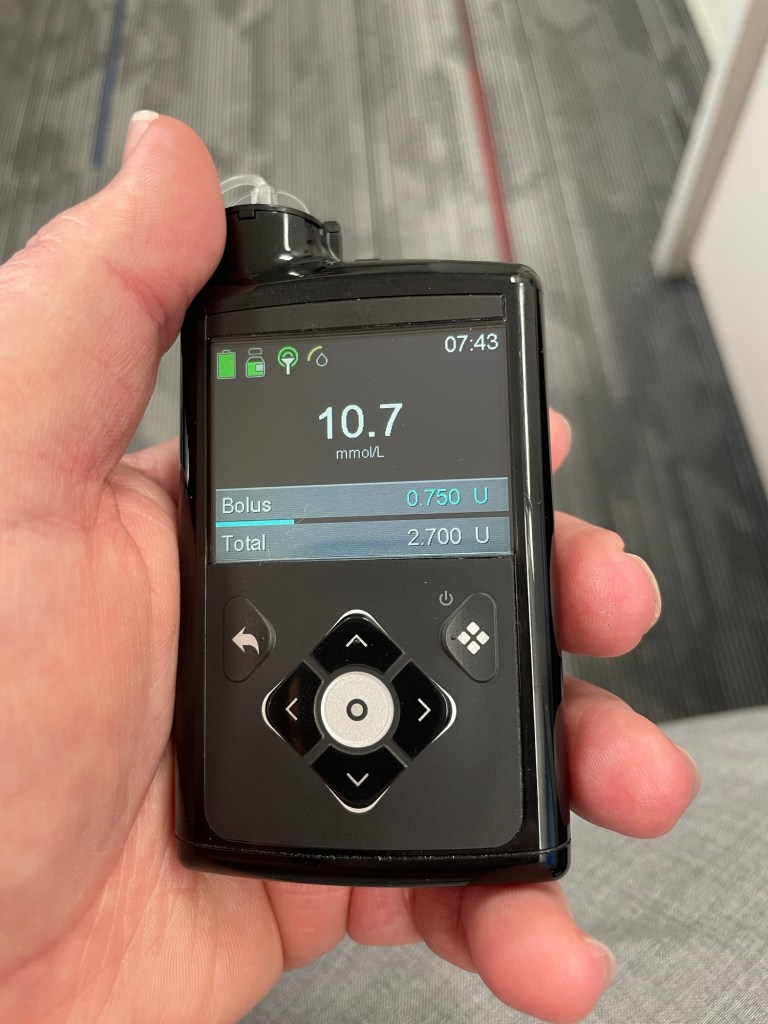
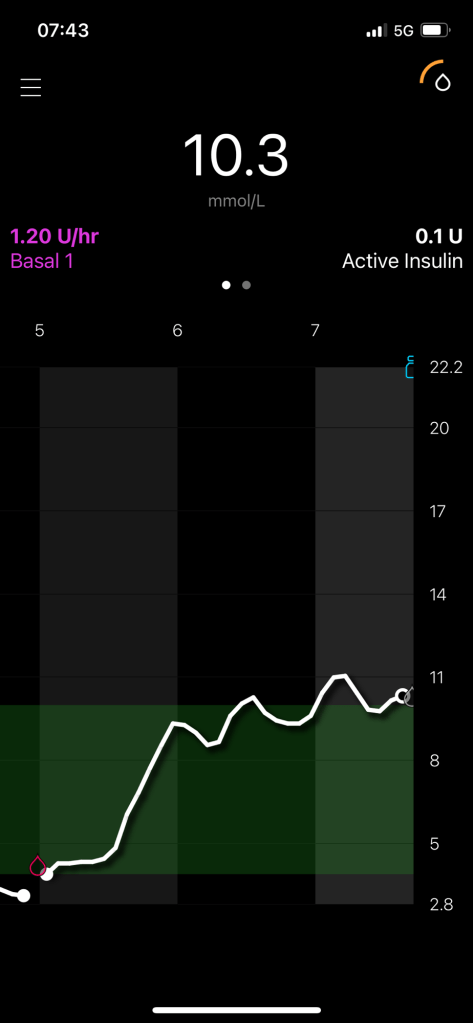
Last but not least is how lucky I am to have access to medicines and technology that make the managing of my Type-1 Diabetes not only possible, but sustainably easy. If I were born a century ago, I would have lived for a couple of weeks past my diagnosis before succumbing and dying to Diabetic symptoms. Hell, I was born in the 1970’s and even then, our lack of understanding and poor technology was enough to put my life in peril. Nowadays, the access to insulin and medications needed to keep me alive and healthy is nothing short of miraculous. Despite the occasional issue, I live well. My insulin pump is a piece of absolute, fucking technological marvel and I can’t imagine ever going back to life without it.

The point I’m trying to make with this long-winded post, if you’ve managed ot keep reading this far, is that life is good. Despite the fact that most people choose to see life through the first lens, it’s important to acknowledge the positivity that comes with seeing it through the second lens. Doing so will help you in recognizing that even when you’re tired and exasperated with life, you should be happy and fortunate with all of the good things you have in your life that not only make your life worth living but add significance substance to who you are as a person. A secure job, safe, comfortable home and a loving family are aspects of life to be revered and appreciated. Doing so will ensure a deeper sense of happiness and accomplishment in life. Food for thought… ☯️

Plan Ahead or Else…

Variety is the spice of life… Or so I’ve been told. Training in the martial arts is a puzzle with a million pieces that requires the practitioner to acquire a new piece every class. Otherwise, the full picture will never come to fruition. That being said, studying and teaching are two very different things. Even if you have an excellent teacher/instructor and train hard, manage to absorb all those teachings and become a stellar practitioner of your respective art, passing on those teachings is an entirely different bag. And it’s certainly not everyone’s cup of tea. I was often considered one of my Sensei’s most promising students. That probably sounds like I’m bragging and, well… I AM. But it’s also the truth. I lived, breathed and existed only for karate until I hit my thirties.

When I was in my mid-twenties, we opened a second dojo and Sensei asked me to lead it. I excitedly accepted, looking forward to passing on everything I had learned to the next generation of karateka. Sounds ambitious, right? I lasted six months. Although I definitely have the ability to impart knowledge and teach karate to someone else, leading an entire class was definitely not MY cup of tea and I found myself leaning on Sensei to lead classes more than I did. It taught me an important lesson about the humility required to accept what niches one can operate within. And one important detail I learned, is that you need to preplan your classes and have at least some mild semblance of what you’re going to teach on a given night.

Just winging it once the class opens up is not an option. Although being fluid and adaptable is an important part of karate, you should have at least some passing idea of what concept you intend to cover on a given night. Maybe you want to focus on kicks. Maybe it’ll be blocks or you’ll do stations to build some cardio and break a sweat. In any event, starting a class and waiting to see “where the evening will take you” is not an ideal way to impart knowledge on a student. This is why you need to at least come up with some modicum of an idea on what you’ll cover. This is also extremely important in order to keep students engaged and allow them to progress. Although I’ll be the first to admit that the belt is not important, it’s the learning, that learning does need to take place.

Variety is also incredibly important. Especially in today’s world of “right here right now,” doing the same routine over and over again, every night and in every class, can lead to negative results and the loss of practitioners. Eventually, the students will move on. And then, who will carry on the teachings? Everything, from your warm up to your core teachings to how you close out the class or allow students to train and practice on their own will ultimately show the results of what direction your dojo will take and what future it maintains. And last but not least, know what YOU want. If you don’t want to be teaching, then don’t. There’s nothing worse than an instructor who’s doing it because they think they have to. This leads to phoning it in and your students will ultimately pay the price. Food for thought… ☯️

Read Your Labels… (A Diabetes Story)

I’ve spent more years treating Type-1 Diabetes than not. It’s sometimes hard for me to imagine a time when I WASN’T Diabetic. By virtue of this, I often find myself in a position where I become… shawl we say, complacent? Laziness has never been an issue for me but I would be lying if I said that I don’t occasionally get a bit too comfortable with certain routines and overlook some important details. And as anyone living with Type-! Diabetes will agree, even a small detail can be an important one and can adversely affect you.

One of those details is the proper and thorough reading of the nutritional label on absolutely everything I eat and drink. The reason behind this is quite simple: I need to know the amount of carbohydrates I’m ingesting. Although I’m quick to say how marvellous a piece of technology my insulin pump may be, it still requires significant attention and care on the user’s part to ensure everything is working as it should. Letting my pump know how many grams of carbs I’m about to eat allows it to inject the proper amount of insulin for my meal according to the different ratios I have programmed for the different times of the day.

This is where my tale begins… Over recent years, we’ve started buying large, club pack boxes of ramen noodles. Setting aside for a moment that one pack of ramen noodles contain more than half one’s daily intake of sodium, they often make a quick meal when there’s little else available. It’s also a great “sometimes” meal for my boys on the weekend, who tend to be fussy as fuck and will barely touch prepared meals that my wife and I make. We’ve taken to buying the chicken-flavoured no name brand, since it costs a bit less and no one in the house will eat any of the other flavours, other than myself. This is where my complacency comes into play…

For years, I’ve been accustomed to the fact that each pack of ramen noodles contains about 50 grams of carbs, give or take. And I usually bolus for this amount. I rarely question this and I don’t bother checking the label as it’s the same stuff, every time I have one. Yesterday, my wife and I took our boys to the grocery store to grab a few items as we had also completely ran out of ramen noodles. As usual, I grabbed a club pack box of the chicken flavoured for everyone to have but I also decided to grab a few name brand ramen noodles in the other flavours. I grabbed a beef, a shrimp and an oriental flavour. I figured I could bring one to work sometime in the next week.

So today, I decided to crack open the oriental flavour for lunch. As I was mixing the noodles and seasoning with the water, I decided to glance at the nutritional label, since its’ theoretically something new, given that it’s name brand, and maybe the carb count is different. See? I’m not completely negligent. I do TRY to stay on track. Anyway, I was surprised to see that not only was the carb count about half of what the no name brand usually has, the package size is also much smaller. This struck me as odd but I didn’t question it and bolused accordingly. I proceeded to enjoy my noodles while I worked.

About an hour later, I started to feel flush and nauseous and couldn’t seem to sit still. I pulled out my pump and noted that my blood sugar levels were rising pretty damn quickly. The CGM reading had three arrows pointing straight up which, for you non-Diabetics, means my levels were skyrocketing. I was mildly confused but bolused a correction dose of insulin to counteract the high. I remembered I had a spare package of no name noodles in my desk and pulled it out. Same as usual, the total carb count was shy over 50 grams. What I realized is that the package didn’t really feel bigger than the name brand one.

I pulled the wrapper out of the trash and took another look at the nutritional label. There it was… the smaller size was because the label measured on SERVING, not one PACKAGE. And one serving was approximately half of the package, which is why the carb count was so much lower. In reality, the total package was abut the same as the no name brand. Now, I don’t know who the hell would prepare and only eat half a pack of ramen noodles or what kind of communist bullshit that serving size is, but shame on me for not picking up on that. The result was an adverse effect on my blood sugars.

So, the important takeaway for today’s post is to pay attention to details and read your nutritional labels carefully. Bolusing properly can be difficult at the best of times, even when there is a label. But overlooking small details such as serving size can have a meaningful impact on proper control. And there’s nothing worse than being on the blood sugar roller coaster; where you’re high so you can correct, then you drop low and have to treat. Wash, rinse and repeat. I’ll be watching my nutritional labels far closer now, believe me. ☯️

Preparing For The Road…

Travelling is often considered one of the best ways of taking a vacation. That’s why most people use the saying “getting away from it all” when they go somewhere. But for someone with Type-1 Diabetes, travelling can present its own set of headaches and problems that often just doesn’t make it worth one’s while to take a trip. I’ve posted often before about what people should bring with them or carry in their vehicles while travelling, especially in the winter. But while rounding the corner on 1,600 posts, who the hell remembers what I provided three or four years ago. By virtue of this, today’s post will focus mostly on my own experience and what you should bring with you, if you have Type-1 Diabetes.

I think there’s a distinct irony in the fact that until about ten years ago, travel was no big deal. A couple of boxes of insulin, a box of syringes and my glucometer with a full jar of strips and I was off to the races. My biggest issue was worrying about getting through security at an airport with all the sharps in my bag but besides the occasional longer time to get processed through, I’ve honestly never had a problem. But these days while being on pump therapy, I fnd myself needing to pack and carry about a dozen separate components, most of which act off of one another so forgetting one is just as bad as having brought nothing at all. I still aheva bit of an extended wait time at airport security and often need to be patted down since I have medical devices attached to my body, but I still don’t have significant issue in that area.

Whether I’m driving or flying, the main nissue comes with proper preparation and packing before the trip even happens. For example, we’ll start with the most important piece of equipment, which is my insulin pump. What’s nice about the pump is I use a model that has continuous glucose monitoring and tracks my blood every five minutes, making micro-adjustments as I go through my day. This can be exceptionally important while travelling since, as you all know, absolutely EVERYTHING affects blood sugars. But the pump itself uses four separate components (including the pump itself) that need to be changed out every three days. Time and insulin calculations can make the difference between having a smooth trip or scrambling to the nearest pharmacy to try and figure out if they carry what you need. For the pump, this includes the insulin reservoir, the infusion set and the bottle of insulin. It’s kind of hard to travel WITHOUT the pump, since its attached to me. In ten years of being on pump therapy, I’ve yet to leave the house without it.

My CGM, or continuous glucose monitor, is even worse. It uses five separate components, including the inserter, adhesive bandage, the sensor, transmitter and charging cradle. Every time I cahnge this bad boy, I need to put the transmitter into the charging cradle for about an hour. Then all the other components come into play. A small price to pay for well-controlled blood sugars but if you’re keeping score, we’re slowly creeping towards a dozen separate pieces of equipment I need to drag with me when I travel. This is why the calculation is important. For example, I’m currently sitting in a hotel room in Saskatoon where I travelled for my scheduled eye injections. Although I’m only away from home for a little over 24 hours, I checked how many units of insulin I had left in my pump and “assumed” I would have enough to last until I get home. But it’s surprising how many carbs were in that burger and fries I had the previous night. By the time I rolled out of bed about an hour ago, I only had five units left. Thank the light I brought a spare set of everything…

And that’s the take away lesson for today. Bringing extras of everything, even when you don’t believe you’ll need them, will avoid problems and make your trip smoother and less stressful. Calculate how many infusion sets and CGM sensors you’ll need and double it. After all, it may not just be your schedule or your usage you have to contend with. What if you have a set failure? What if you sit in a hot tub at the hotel and fry your sensor? What if your infusion set gets ripped out by something? These are all things that I’ve had happen to me. Always bring more than you need and that includes your insulin. Bearing in mind that I’m aware that not folks are in a position and have the additional resources and equipment to always carry extra, of course.

Over the years, a key component I’ve always carried with me is a full bag of skittles or gummy bears. yes, you read that right… While some folks use orange juice ro something similar, that shit takes FOREVER to work on me, if I’m having a low. If boarding a flight or travelling a long distance on the road, you may find yourself in a compromised position if you have a low and suddenly can’t get immediate access to something sugary. If you’re travelling the vast expanses of Canadian highway with hours between stops when you suffer a low, that bag of skittles could mean the difference between carrying on safely or finding yourself in a seriously compromised position.

All of this should be pretty common sense, especially if one has had Diabetes for any significant amount of time. On a final note, keeping a small, basic first aid kit with you is always a good idea. Basic kits will usually come with small bandages, adhesive tape and bandaids. People with Type-1 Diabetes are prone to infections when an injury happens. That cut you got while hiking or the knee you scraped falling off your bike, can become a problem quickly, if left untreated for a significant period of time. Quickly cleaning it and slapping a band aid on until you get home can make all the difference. Unexpected injuries can occur while travelling, as well. These are just basic steps to try and take some of the stress off of travelling. Given the added steps and effort it takes, sometimes it doesn’t seem worth travelling. But it also isn’t worth staying hidden at home to avoid that effort. Not my style. Diabetes shouldn’t prevent you from doing anything you want to have a happier life. Food for thought… ☯️

Food For Thought…

It’s ironic because I end so many of my posts with the phrase in today’s title but I just couldn’t help myself. As I‘ve often written before, living with Type-1 Diabetes comes with a broad set of difficulties that can make navigating daily life more complicated than it needs to be. From having to measure and calculate everything you, when you sleep and how much you work out, to dealing with equipment failures and battery replacements all while never being quite sure if you’re doing it all right can be exhausting. And one’s personal nutrition through all that mess is no exception.

As with many of my posts, I’ll start using off by clearly stating that I am not a nutritionist, dietitian or medical professional and that you should always consult your family doctor or medical practitioner before starting (or stopping) any particular dietary regimen. Unlike my experience in karate, I post these things based solely on my own experience and what I’ve found to be true. But what works for me may not work for you, which is why it’s important to consult a professional. That being said, I’ll touch on that last point. Bit later in this post.

It wasn’t until 2014 that I figured out that crab-counting was a thing. That may shock some people but throughout my childhood, Type-1 Diabetes or “Juvenile Diabetes“ as it was called at the time, involved taking your one shot of NPH insulin in the morning and staying away from sugar. That was essentially it. My parents were never provided any education on how carbohydrates basically equate to sugar and affect blood sugars in much the same way. Hungry? Here, have a slice of bread with peanut butter. There’s no sugar in that. Thirsty? Here, have a glass of milk, there’s no sugar in that… I cringe, even just writing that, as I imagine the dozens of carbs being pumped into my young body without the realization that it will adversely affect my blood sugars.

This would be the reason why I suffered the most of my complications throughout my childhood and before I entered adult life. The early damage to my eyes, the comas I suffered through and my insufferable mood swings in my teens that were aggravated by being a teenager likely could have been avoided, or at least improved, had we known about carb counting. I say “we” because as a child, I consider it to have been my parents’ responsibility to look into and acknowledge these things. But as I grew into adulthood, my knowledge of Diabetes was somewhat skewed by the practices observed by nut family during my childhood. Although inherently no one’s fault, I often wonder what might have been different, had I been armed with the knowledge I have now.

Starting on insulin pump therapy and being trained in carb counting back in 2014 changed the game significantly. I began to see markedly improved blood sugar control, better A1C results and things were looking up. But as time marches on, so does the wear and tear on one’s body, which leads to different complications. For me, the ever-present “dad bod” and the apparent inability to lose weight despite a reasonable diet and proper exercise, has begun to cause some issues with my kidneys and has led to some pretty radical lifestyle changes, not least of which is my starting on Ozempic. I’ve posted about this a couple of times already but I will update that since starting on it, I’ve lost nearly 30 pounds, which is no doubt helpful.

Although weight loss and proper exercise are important, what you stuff in your mouth is JUST as important. And starts with you. I’ve always been a bit of a heavy eater but I always justified it with the fact that I work out consistently and keep active. But my gut has always persisted. Some people have often tried to get me on fad diets, keto-this or paleo-that… The bottom line and what needs to be acknowledged by anyone, is that weight loss requires a healthy diet coupled with regular, rigorous activity. Full stop. Although some fad diets will work for some, they likely won’t work for others. It’s important to remember that every person is different, so if cutting out certain foods helps you shed some pounds, good for you! The next person who tries that same thing may lose no weight at all. This can lead to discouragement and giving up on losing weight.

That’s why, much like the martial arts, one’s weight-loss journey will be unique to them and they need to find the method that works for THEM, not the one that your favourite celebrity is toting on the infomercial. Portion size has been a big thing for me. Instead of a full plate of food, cut it back to half. Less calories means better weight management. Although the base concepts are pretty simple and make plenty of sense, regardless of what diet you’re trying to follow, it amazing how that detail seems to slip past everyone’s mind. And that, my friends, is food for thought… ☯️

What Fills Your Cup…?

Once in a while, I come across a meme or a saying or something that I believe is worthwhile sharing or referencing on this blog. Writing about specific aspects of karate or Diabetes can become a bit saturating at times and I like to focus on the more philosophical aspects of life. This leads us to today’s post. I’m going to kick this off by pointing out that I can’t recall where I got this from, only that I read it online from one of the many sources I explore. I really should start writing this shit down but with all the reading and research I do on my own time, there would be no end to it, if I did. plus, I can never tell what I might use in a post and what I don’t. But I digress…

We’ve all heard the saying that it’s hard to fill a cup which is already full. Depending on where you’ve read or heard this saying and like many others, there are several sources credited with it. Some say it’s a Chinese saying, others attribute it to being a Zen proverb, which is the context under which I started hearing it. Either way, it refers to the concept that when one is learning, it’s exceptionally difficult to teach someone who already assumes they know everything. Life is an ever-constant journey of knowledge and one’s cup should never be full. But there are those who seem to operate as if it is…

But my point today is that there’s more to that than simply the teaching context. And here’s where my sourced material comes in. Here’s the scenario: You’re walking with a full cup of coffee when someone comes along and bumps into you or shakes your arm, making you spill coffee everywhere. Why did you spill the coffee? One would be inclined to say that it was because someone bumped into them. But this would be a wrong answer. The correct answer would be that you spilled the coffee because there was COFFEE in your cup. If you had tea in the cup, you would have spilled tea. Whatever is in the cup is what we spill out.

This means that when life comes along and shakes you, which will inevitably happen, whatever is inside of you will come out. It’s often easy to fake it or keep it concealed; until you get rattled. So, it becomes important to ask oneself, “what’s in my cup?” When life gets tough or you face adversities, what spills over? Will it be joy, gratefulness, peace and humility? Or will it be anger, bitterness and negativity? Life provides the cup. You choose what you fill it with and what you will inevitably spill onto the world.

I’ll admit that I agree with this line of thinking but I’m going to take it a step further and add my personal perspective to it because, well… my fuckin’ blog and all that. My view is that YOU are the cup. And life fills it. When life pours negativity into your cup, you need to find a way to empty it out to make room for the positivity. There are two ways to do this. The first is to allow it to spill out. Although this may not sound ideal, letting it spill out doesn’t necessarily mean you’re unleashing your rage on the world. It can mean finding healthy and proper ways of dealing with your negative thoughts and feelings. Exercise, working out, asking to someone about it… It can be a pretty hefty list.

The other way to empty your cup is to drink from it. But I if you’re looking to empty out negativity, drinking it will only cause you to internalize it, which is not only horrible for you but only delays the inevitable. That which is the eventual spilling over o the negativity. The difference is you may not have as a much of a say in how it spills out. That’s why every person sometimes needs to get help pin emptying their cup. If it’s positivity we’re talking about, have at it! Let that shit spill out on the world and drink it all in as much as you can. It’s all good. Just be sure to take care of yourself and keep yourself healthy. The cup isn’t going anywhere. And neither should you. Food for thought… ☯️

Through Someone Else’s Eyes…

Throughout the years, I’ve often given some thought to the many missed opportunities and paths I haven’t walked down as a result of being diagnosed with Type-1 Diabetes at the age of four. With that one fateful event, many doors suddenly closed and certain things that I might have contemplated were no longer available to me. Although often disappointing, it also thought me to develop an instinct that I would use to work hard for certain things simply by virtue of the fact that they told me I couldn’t have it.

It wouldn’t be until years later, when I had reached adulthood, that I would ultimately realize that some things that had been refused me were the result of others’ laziness or fear as opposed to the fact I genuinely couldn’t or shouldn’t do it. One of those things were the Beaver Scouts. I ironically joined the Beaver Scouts when I was four years old, back in my town in New Brunswick. Although I was young enough that I didn’t really understand the implications of what I was doing beyond needing to wear a stupid hat with a beaver tail, it was something nut father believed would be invaluable as I got older.

The Scouts are a fantastic way to learn some basic, rudimentary outdoor and socialization skills that can be easily carried into adulthood. When I got my diagnosis, it was decided that the Scout leaders had neither the knowledge nor the training to have me in their group, in the event I found myself in medical distress. Although I understand that perspective, neither did my parents, if I’m being totally honest. But the result was that I was unceremoniously punted from the group. It set a poor standard for the remainder of my childhood, which is why I had to do most of the activities I loved in my youth without my parents’ knowledge or consent. Not something I would encourage in others but here we are.

Little did I anticipate that almost four decades later, I would get to experience that lost opportunity through the eyes of my son. Nathan is a bit of a withdrawn individual; often preferring to sit quietly in his room or the basement, playing on electronic devices rather than spending time outdoors or doing something active. He has no issue socializing with other kids but getting him to willingly do something structured and active has always been a challenge. That’s why when my wife indicated she had signed him up for Scouts, I was surprised that he was not only willing to go; he seemed to be enjoying it.

Last week, I attended a ceremony where Nathan was officially given his investiture into the Scouts. It was a nice thing to watch and I was proud of how attentive he was to the instructions he was getting. He appears t have a few kids in his respective “lair” that he gets along with quite well, and even spent his first weekend away from home at a camp out event with his Scouts group. He hand-crafted some crafts, started a fire and slept two night with his group. It can sometimes be a bit hard to get Nathan to open up and share his thoughts or experiences but he was able to mention that he enjoyed himself and would be willing to do it again.

He still needs to get a uniform shirt, since they didn’t have one in his size that night. But he got some attention and took his oath, got his scarf and some patches that he earned during his weekend. Now, we just need to get him a blanket to start sewing those on. That’ll be fun, since he doesn’t know how to sew. Neither do I. Considering I nearly severed my thumb recently, I’m probably no safer with a sewing needle. But I digress…

Scouts can be a great way for young people to learn the basics of life; not only in the great outdoors but in general. Part of the “tasks” he needs to accomplish include aquatic abilities, helping out neighbours, doing chores around the house and doing good things for others. It’s the foundation on which a well-rounded young individual can base their life and get a bit of discipline while still having fun. As Joe Clark used to say, discipline is not the enemy of enthusiasm. Here’s hoping he sticks with it. In the meantime, I get to live out my missed experiences vicariously through my son. ☯️