Life May Move Fast, But Its Speed Should Be Slow

Anything one experiences in life should be taken slow. This isn’t without exception, of course. I could barely wait to put a ring on my wife’s finger and did so quite a period of time sooner than most other guys would have. But in terms of life in general, sometimes it’s better to take it slow. Consider a fine bottle of wine… Perhaps it’s a blend you’ve never tried before and maybe it cost a little more than you’d usually pay. Are you going to simply chug it down like a $9 bottle of wine cooler, picked up on the fly? Or will you take the time to breathe in the bouquet, sip it slowly and enjoy it?

“Life Moves Pretty Fast. If You Don’t Stop And Look Around Once In A While, You Could Miss It.”

– Ferris Bueller

All things in life involve a balance. The same can be said for the speed at which the world turns. The REQUIREMENTS of life come at you pretty fast. Getting to work on time, paying your bills and making sure your kids get on the bus. All the more reason for the PREFERENCES of life to be taken slowly. Enjoy your meal and take time to chew. Taste and enjoy that ethnic food you’ve decided to try. Shed a few tears at the sad scene in the movie you watch with your significant other.

As Mr. Bueller indicated in one of my favourite movies, “Ferris Bueller’s Day Off,” life can come at you pretty fast. It’s important to stop and smell the roses once in a while. Whether it’s choosing to read a book, slowly enjoying a glass of wine or simply taking an hour to play on the floor with your kids without looking at your phone, it can make a difference in the level well-being you experience in your daily life. ☯

What’s Your Dollar Worth?

Despite the downward spiral that my fitness routine has taken in recent months, I’m a big fan of staying healthy. All the time and effort seems well beyond worth it, when I get the opportunity to visit with my endocrinologist and he tells me that I have the heart of a horse and all my systems are functioning ALMOST as well as someone who doesn’t have Type-1 Diabetes. This was further confirmed last week, when a visit with my ophthalmologist confirmed no presence of macular edema in my eyes, the first time in over five years.

Now that I’m done bragging about how I AM ALL THAT IS DIABETES!!!! I can get to the point of today’s post. Something I’m not a big fan of, is crowds. I prefer to train in private or in the company of my family or like-minded martial arts individuals. This doesn’t mean I won’t train with anyone who wants to learn or get in shape, but I’m not a big fan of working out in public gyms. There are a few personal reasons behind this, but there are some definite pros and cons behind getting a gym membership and working out in the public eye.

I try not to be cynical about things that can be of definite benefit to someone’s overall health, so I’m going to share my top five pros and top five cons when it comes to joining a gym and working out in public. This isn’t sourced from anywhere, it’s all me. Here we go:

PROS:

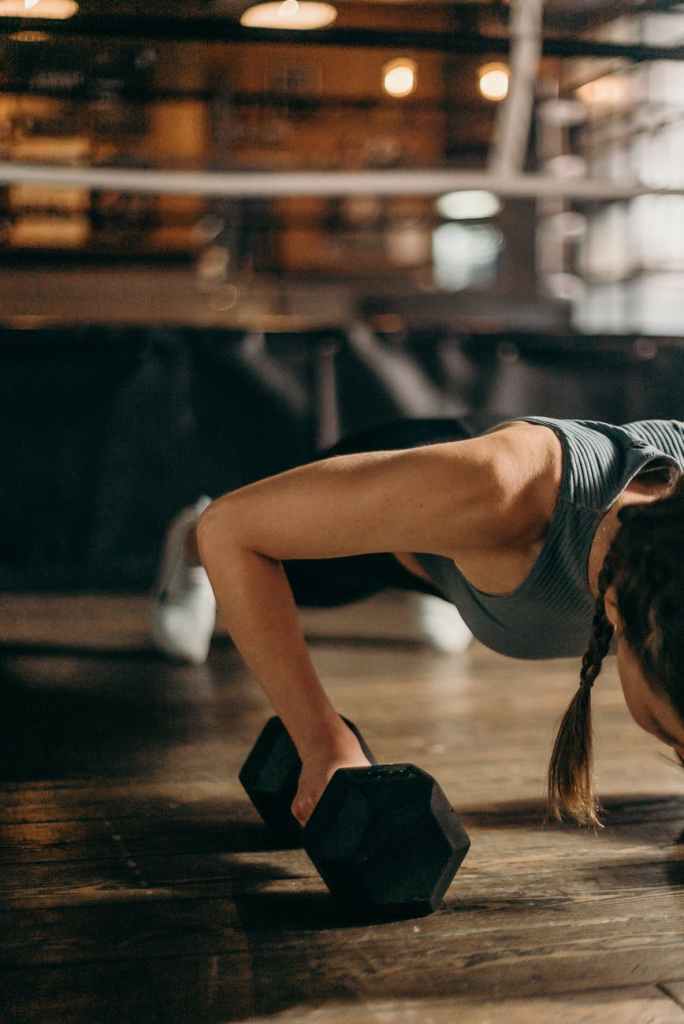
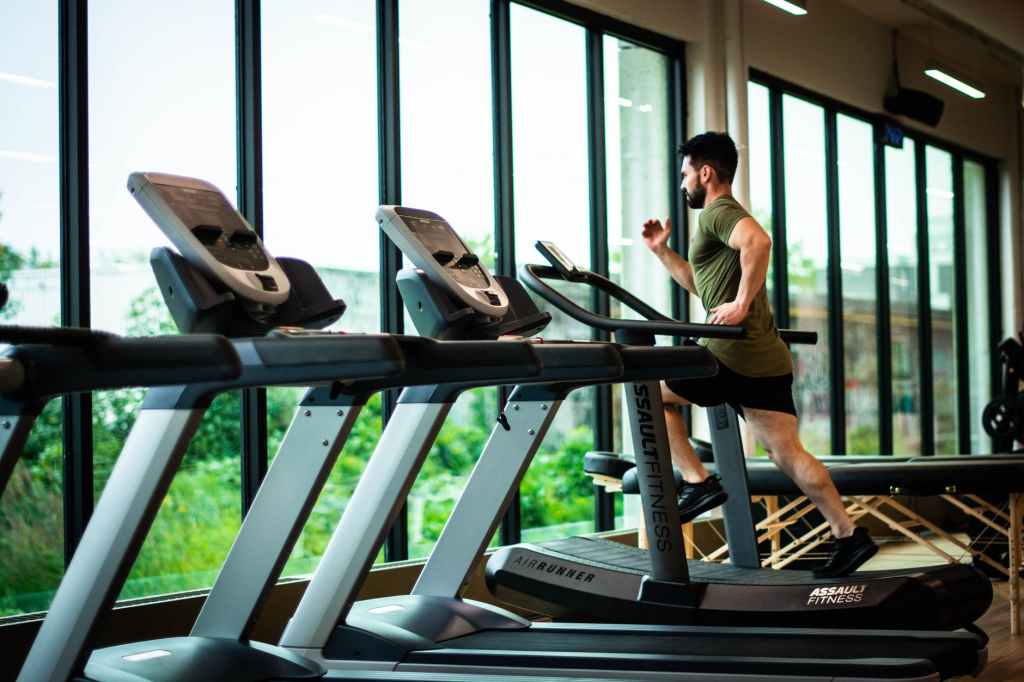
  1. They have equipment you can’t afford: I’ll be honest, paying for fitness equipment is killer. Most retail and fitness equipment outlets charge more than a dollar per pound for dumbbells, which means you’ll be hitting the 100-dollar mark for a pair of decent 45-pound hex dumbbells. The cheapest treadmill I’ve been able to find online (that isn’t second hand) came in at just over $500 dollars. Working out with a variety of different equipment can be costly. Working out at a gym can circumvent the need to buy everything you need;
  2. They’ll have resources: Most gyms offer personal coaching, group workouts as well as access to things like yoga and Zumba classes. It’s a great place to meet like-minded people; not the weirdos who are all muscle and no brains that monopolize workout stations, but people who are genuinely interested in getting in shape and working on their personal fitness;
  3. It’s convenient for the working population: You can take advantage of lunchtime workouts, get to the gym right after work or even before you start work. Since most membership-based gyms offer shower service, you can be cleaned up and on your way to the office before start of shift;
  4. It’s great for motivation: There’s no denying that humans are pack animals. There’s a reason why we gather in towns and cities. Fitness and working out is no different. Trying to get in shape can be easier if you try to do it around other’s who have the same goal in mind;
  5. It gets you out of the house: I enjoy working out in my basement, garage and back yard. But once in a while, quarantine measures be damned, you need to get out of the house. A gym membership can be a good way to get out of the house a few times a week, even if it only means a simple travel from “A” to “B”.

CONS:

  1. Memberships are expensive as shit: Honestly, a year’s worth of gym membership could effectively pay for that $500 treadmill I mentioned in the PROS list. And don’t even get me started on these fuckin’ gyms that are so high and mighty that they make you sign a “contract” that makes it almost impossible to quit once you’ve joined. I’ve had gym managers I had to verbally fight with, just to cancel a membership so that I could transfer with my job;
  2. They smell like a warm bucket of hamster vomit: Not all gyms are created equal. As much as the Rocky franchise romanticized the concept of gyms that smell like blood, sweat and puke, no one wants to be in a bacteria-infested environment that smells like the backside of a dead calf. Especially if you’re breathing hard during some extreme cardio or trying to use some equipment that the last douchebag forgot to wipe down;
  3. You may be forced to deal with haters: In my opinion, a gym should be a haven of fitness for anyone who wants to work on themselves and improve their lives, either physically or mentally. But there is an unfortunate small group of people who go to the gym and belittle people who are trying, making fun of them and making them feel worse about themselves. It can make working out difficult;
  4. You sometimes have to wait: The one, nice thing about working out from home is that you don’t have to wait to use whatever you have available. Even if gyms have a ton of equipment you either don’t have or can’t afford, you may find yourself in a position where you have to wait in line for someone else who may be using the particular piece of equipment you need;
  5. You gotta leave the house: Go figure, I’ll share point #5 with both lists. I’m weird, that way. And a bunch of other ways, but honestly I LOVE working out at home. I prefer it, in fact. But that’s just me. It’s always a good idea to get out of the house once in a while. But honestly, I like the practicality of having my wife and children nearby, access to my own shower and snacks, drinks and all the other stuff.

At the end of the day, I’ve worked out in public gyms AND I’ve found ways to work out at home. My personal preference is to work out at home. If I had to weigh out the pros and cons, cost ends up being the big deterrent. I’d love to keep a membership and enjoy all the benefits of working out at a gym. It would be incredibly fun to bring my wife and have her enjoy those benefits as well. But considering there are dozens of “body-weight only” workouts that one can do from home, it’s hard to justify the cost.

The rest of the PROS and CONS can sort of cancel each other out. But it’s a matter of preference. My best advice would be to give it a try. But be sure to protect yourself and join that gym that doesn’t require a contract membership and that you can leave with only a month’s notice. That’s usually pretty reasonable. You should be able to let them know within the month if you plan on quitting. But with the reasonably balanced amount of good and bad, you really can’t tell if a public gym is for you less you try it. ☯

Staying Alive, It Isn’t Just A Catchy 70’s Song…

Last Sunday, I wrote a post about Halloween and how my wife and I chose to allow our children to celebrate by indulging in treats at home as opposed to putting them at risk by wandering from house-to-house (here is last Sunday’s post, if you didn’t read it). I felt the post was well-written and was clearly categorized as an “opinion” piece, but some felt that my opinion was wrong, perhaps even presumptuous. And people can, by all means, feel however they wish to feel about my opinion. It doesn’t necessarily make it wrong. However, it raises something of an important issue that I’d like to address today.

There are a lot of thoughts floating around about what the next best step should be in regards to the current pandemic. Some people believe that we need to lock ourselves down tighter in order to mitigate the COVID-19 issue we currently face, while others believe that we need to loosen the noose a bit and try to start living normally again. In order to examine and open a constructive discussion on this topic, I’d like to start by sharing a post that an ER nurse apparently wrote. I got this from a friend on FaceBook, and I have no source for it, so you need to take it with grain of salt. But here it is:

“Anyone out there who can tell me what our end game is with the COVID-19? What is the magic formula that is going to allow us to sound the all clear? Is it zero cases? The only way that will happen is if we just stop testing and stop reporting. Is it a vaccine? It took 25 years for a chicken pox vaccine to be developed. The smallpox inoculation was discovered in 1796 the last known natural case was in 1977. We have a flu vaccine that is only 40 to 60% effective and less than half of the US population choose to get one, and roughly 20,000 Americans will die of the flu or flu complications. Oh, you’ll mandate it, like other vaccines are mandated in order to attend school, travel to some foreign countries, etc. We already have a growing number of anti vaxxers refusing proven, tested, well known vaccines that have been administered for decades but aren’t necessarily safe! Do you really think people will flock to get a fast tracked, quickly tested vaccine, whose long term side effects and overall efficacy are anyone’s best guess? How long are we going to cancel and postpone and reconsider? You aren’t doing in person school until second quarter? What if October’s numbers are the same as August’s? You moved football to spring? What if next March is worse than this one was? When do we decide quality of life outweighs the risks? I understand Covid can be deadly or very dangerous for SOME people, but so are strawberries and so is shellfish. We take risks multiple times a day without a second thought. We know driving a car can be dangerous, we don’t leave it in the garage. Many speed and don’t wear seat belts. We know the dangers of smoking, drinking and eating fried foods, we do it anyway. Is hugging Grandma really more dangerous than rush hour on the freeway? Is going out with friends after work more risky than 4 day old gas station sushi? Or operating a chainsaw? When and how did we so quickly lose our free will and give up our liberty? Is there a waiver somewhere I can sign that says, “I understand the risks, but I choose a life with Hugs and Smiles, and the State Fair and go to Church and go hug my Mom in her retirement home? I understand that there is a minuscule possibility I could die, but I will most likely end up feeling like crap for a few days. I understand I could possibly pass it to someone else, if I’m not careful, but I can pass any virus onto someone else. I’m struggling to see where or how this ends. We either get busy living or we get busy dying. When God decides it’s your time, you don’t get any mulligans, so I guess I would rather spend my time enjoying it and living in the moment and not worrying about what ifs and maybes, and I bet I’m not the only one.”

– Unknown ER Nurse

Like I mentioned at the beginning of today’s post, I got this from a friend’s FaceBook page and I wasn’t able to locate its source online. Maybe one of you will have better luck and if so, please free to name the source in the comments. But I think it’s important to give that paragraph a careful read. Look at the two-sided message it provides and how there are significant contradictions involved. A lot of what’s written in that quote is shared by many member of the public.

Although I agree that we need to start working on developing some level of normalcy within your society, what that “normal” will look like may not be what we’re all expecting or hoping for. Do I agree that we face risks of danger and imminent death on a daily basis? Absolutely. But most of what’s written in that quote is a matter of choice. We CHOOSE to operate motor vehicles. We CHOOSE to drink, gamble, smoke, use recreational drugs and have unprotected sex.

But nobody should CHOOSE to take unnecessary risks and potentially catch COVID-19. Even the comment on strawberry and shellfish allergies is a bit on the ridiculous side, and isn’t a choice. It’s an allergy one is either born with, or developed. That’s a far cry from allowing yourself exposure to a life-threatening virus. There’s nothing I want more than to travel back to New Brunswick and see my family, but in doing so, I risk endangering their lives. People are of the unfortunate belief that COVID-19 “isn’t all that bad” and that “it’ll pass.” Yeah, sure. It’ll likely pass, but it’ll change the world and how we do things before it does. It already has.

Folks, you need to realize and understand that getting COVID-19 isn’t like getting a bad cold or flu that you’re likely to recover from. It carries serious risks, and even a healthy person can succumb to it if it isn’t taken seriously. Everyone is tired of quarantine restrictions and self-isolation. I, for one would like to walk down my street without worrying if that jogger who’s panting heavily will spit Corona particles into my face, or worrying about what my child may be exposed to while in school.

This pandemic is far from over, and there are steps we all need to take to help mitigate the damage. It isn’t about a “minuscule possibility” of dying, it’s about protecting ourselves and the ones we love. That’s what it all comes down to. I don’t do politics. And I generally don’t follow trends. But I also know common sense, if such a thing exists, when I see it. Don’t take unnecessary risks. Wear the mask. Don’t go out into large crowds unnecessarily. Don’t expose your family to things because you think you need to “either get busy living or get busy dying.” That, in and of itself, is a defeatist attitude and humanity deserves better. ☯


Fear Is Not A Diabetic Symptom

Having Type-1 Diabetes involves a lot of preparation and planning ahead. Even simple trips out of the house or a full 8-hour work shift requires good memory on my part, including blood testing equipment, fast-acting carbohydrates and extra equipment in the event my pump’s infusion set fails. It can be arduous, especially if you’re dashing out in a hurry. Light knows, I’ve had many times in my life were I’ve gotten to where I’m going and suddenly remembered, “Damn, I forgot to bring an insulin vial!”

For someone who isn’t QUITE as ancient as I am, and hasn’t had the opportunity to go through the ups and downs of Type-1, the task can seem daunting. What’s worse is that to some, the task can even be overwhelming or frightening, as some Type-1’s may believe that they face serious complications or death if they forget something, leading to self-isolation in the face of that belief. Although this is certainly a possibility, life for a Diabetic becomes much easier once you realize that it’s also the extreme. And a rare one, at that.

Essentially, almost everything you need for proper Diabetes therapy can be purchased over-the-counter. Even insulin. It’s been this way for years, and there’s even been a growing trend of Americans crossing the Canadian border to purchase insulin, as our prices seem to be significantly better than theirs. My point is that depending on one’s financial situation, running out of insulin is pretty much the worst thing that can happen, and even THAT has some solutions.

You can walk into any pharmacy and buy a vial of insulin without a prescription. That’s one of the nice things. Blood testing strips, lancets and devices for injecting insulin are all available over-the-counter, making for a certain level of safe comfort if you should happen to be travelling and forgot some of your supplies. Obviously, you’ll have to deal with retail cost if you don’t have a prescription or coverage. And pump supplies will usually cost you your first born, as well as a pint of your blood.

One good example would be my trip to New Brunswick in September of 2019. I was only there for a few days for a job interview. I was contacted by a different agency in New Brunswick and a second interview was scheduled for the following week. I now found myself in a situation where my pump supplies would run out, right around the time I’d be trying to board a plane home. I couldn’t chance it, so I walked into a local pharmacy and purchased a vial of Lantus, which I hadn’t used since getting on the pump. I had no issues walking into a pharmacy and simply buying the vial, out of pocket.

Because this is me, and life likes to see how much I can handle, there’s an aspect of over-the-counter purchases that tend to be a rather burly thorn in my posterior. In Canada, insulin is in the Schedule 2 drug class. This means that not only is it meant to be kept behind the counter and can’t be accessed without speaking to a pharmacist, they require your full profile in order to ascertain if you’re getting the “correct” insulin in the “correct” doses. As if the person buying the insulin WOULDN’T know that…

If you’re ever-so-slightly paranoid like I am, you’re not a fan of giving out your name, date of birth and home address to every random pharmacy that you may need to buy insulin from. And to be quite honest, one could argue that it should be their right to purchase an over-the-counter item without having to share a bunch of personal information. Right? Maybe? Or is that only me? It’s caused me some difficulty, in the past.

A few years ago, my wife and I had travelled to visit her parents. I ran out of Humalog towards the end of our trip, and I decided that rather than packing us up and heading home a couple of days early that I’d simply go purchase a bottle. I walked into the local Walmart and asked the pharmacist for a vial of Humalog. She then proceeded to start asking for all my personal info, which had never happened to me on previous attempts to purchase insulin.

I explained to her that I had no desire to provide my personal information as I didn’t live in the area and simply wanted to buy a vial of insulin. She made a big production in saying that she had no way to sell it to me without entering my information. I explained that I’ve managed pharmacies in the past, and since the insulin box has a barcode like every other item, all she needed to do was scan it and charge me the price. She refused service. I was taken aback. Rather that “Karen” out on her, I left and took my business elsewhere

Despite the fact that there can be obstacles, what did you notice from those two examples? The end result is that there were always options. And there always will be. In the first example, I had access to plenty of pharmacies and resources. Even in the second example, we could have simply driven home, which would have ultimately solved the crisis, had I not been able to secure insulin elsewhere. I used insulin as my examples because let’s agree that you can likely get by without testing your blood for a couple of days, if need be. You shouldn’t but it won’t cause the damage that being out of insulin will.

Over almost the past four decades of having Type-1 Diabetes, I’ve known doctors, lawyers, teachers, accountants, police officers, olympic athletes and even professional football players who have Type-1 Diabetes. The take-home lesson is that our condition doesn’t prevent us from enjoying any aspect of life that we may be seeking out. And it SHOULDN’T. Yes, there’s a lot to think about. Yes, there’s a lot you have to drag around. But none of that should prevent you from doing the things you want to do. You can’t let Diabetes force you to live in fear. ☯

A Type-1’s Naming Day…

Okay, I’ll be the first one to admit that maybe I need to lay off the YouTube for a while, because I personify the type of person who slips down the rabbit hole and finds way more than he expects to. Then I keep watching, and watching… And watching… But I found this video interesting, because it involves someone I’ve been watching on television over the past few months that I wasn’t even aware has Type-1 Diabetes! This catches me with a bit of egg on my face, because one of my biggest pet peeves is when someone tells me, “You don’t LOOK Diabetic…” What the fuck is someone “supposed” to look like if they have Diabetes?

The video depicts the Diabetes journey of American actress Mary Mouser, who has most recently played Samantha Larusso, the daughter to protagonist (depending on your perspective of the storyline) Daniel Larusso, in the popular web series, Cobra Kai. Now, being a long-time fan of the original Karate Kid movies, I jumped on this series without hesitation and watched both available seasons within days and am greatly anticipating the third season, which is said to be coming out in early 2021.

In the included YouTube video, Mouser describes her discovery of Type-1 and how it affected her life. She was diagnosed in 2009 at the age of 13, which I can say from having many friends in the same boat, is incredibly rough. I had the benefit of being diagnosed at the tender age of 4, which means I had barely a clue as to what the hell was going on. But you can see Mouser become visibly emotional at certain points in the video, and it definitely brings it home for me. Check it out:

Mouser talks about the tenth anniversary of her diagnosis and the video was posted on YouTube by Mouser herself, last year. I can’t help by note the similarities in the fact that although she’s only portraying it in a role, she plays a character who grew up in a karate environment. This rings true with a great deal of my own upbringing, as I grew up training in karate, as well.

I was diagnosed with Type-1 Diabetes in 1982, after passing out in a bowl of Froot Loops. Honestly. That’s what got me diagnosed. There were a number of symptoms that presented themselves for months before that incident, including weight fluctuations, severe mood swings and I even started wetting the bed again. One of the big problems with having a brother with Epilepsy, kidney failure and Fanconi Syndrome (a post for another day), is that my aches and pains often went ignored. Despite all of these symptoms, nothing appeared to be “seriously” wrong, so it was chalked up to growing pains or being a moody kid (which I was).

This wasn’t a slight on my parents’ part, it was simply the result of my brother constantly being on death’s doorstep where I was not. At least not that they knew of… Apparently, they were wrong. Imagine passing out on a Tuesday and waking up on a Wednesday… Of the following week! That’s how my journey started. And it was all downhill, from there.

When I woke from that first incident, I had severe Diabetic Ketoacidosis and my blood sugars were being slowly lowered and I was being rehydrated by way of an IV infusion. I had a number of family members present, including my parents, brother and grandparents. They already knew what the doctor hadn’t yet told me: I had Type-1 Diabetes. My life and my future were effectively changed, forever.

Over the two weeks that followed, I was taught a number of things including how to test my blood sugars, how to take insulin injections, dieting (which basically just involved avoiding sugar) and what would be involved in my day-to-day life for the rest of my life. It was hectic and stressful. I can admit that at the young age of 4, I only understood a small percentage of it. A lot of it went over my head, which created strange combination of indifference mixed with anxiety.

To my mother’s credit, she practiced injecting saline water into her own arms as opposed to practicing on an orange, which is what doctors and educators would provide, back in the day. Her perspective was that she wouldn’t allow anything to be done to her child that she hadn’t experienced herself. She bruised herself up pretty good, before starting to help me take my daily injections.

It was a disgustingly rough journey and over the years that followed, which included no less than 5 comas (the longest of which lasted almost two weeks), multiple changes in therapies and doctors and constant adjustments, I faced the inevitable lack in most of the advantages that kids my age enjoyed. I never joined sports, never had sleepovers and never enjoyed the usual social normalcies that kids my age had. But I adjusted and fought through all of it. My brother, who is now deceased, saved my life in almost every instance of the comas I mentioned, as he shared a room with me and would be the one to alert my parents that I was in distress.

In 1988, I faced a situation that no child should ever have to. I was told I was going to die. It wasn’t said in those exact words, but the reality sunk in regardless. Severe Diabetes complications including insulin resistance were causing my body to fail. Doctors really had no solution at the time, other than changing up my insulin type, which did absolutely nothing. Insulin resistance can be dangerous, since it prevents the proper use of glucose in your body.

That’s when I took matters into my own hands and joined karate. I started taking responsibility for my own diet and fitness and started to develop myself, physically. It worked for me. It may not work for everyone. But the important thing is to keep fighting and find what works for you. The nay-sayers over the years, have stated that they don’t believe that martial arts and fitness would help overcome medical complications. But the question is, how could it not? There may be no cure for Type-1 Diabetes, but you can still kick its ass. There are tons of ways to improve your health and stretch your life expectancy as opposed to what we faced, even 20 or 30 years ago. Keep fighting. Keep looking for a way.

And if Mary’s video inspired you or touched a chord, be sure to check her out on Cobra Kai, which is currently available on Netflix. There are only two seasons, with Season three coming out soon, but it’s definitely a hard-hitting show that covers martial arts, karate, the social condition and stars a lot of talented people from the 1980’s and modern day. ☯

A Little Something To Inspire…

I quote a lot of articles and posts in my blog. This is because I’m not a doctor, dietitian or fitness expert, although 32 years of intensive martial arts training HAS to count for something. But for the most part, I speak from the heart and try to be as genuine as possible while quoting sites and people that I know will add some credibility to what I say. Last weekend, I was free-falling down the YouTube rabbit one one night, since my wife was out of town and my 5-year old was fast asleep. And I found a video that moved me to tears…

Those who know me well are quite aware that I’m not a man who exudes emotion easily. But this man’s journey did it for me… The man in the video is named Vance Hinds. An assistant DA in Texas, he was living an extremely unhealthy life and weighed in at 475 pounds, which is over 265 pounds heavier than I’m currently sitting. Hinds was ironically first inspired to lose weight by a comedian named Burt Kreischer.

Although I don’t know why a comedian, of all people, would motivate someone to lose weight (I haven’t researched this person), Hinds reached out to a former professional wrestler named Diamond Dallas Page. I’m familiar with Page, having watched him wrestle throughout my 20’s and my early 30’s, and I know that he contributes a significant amount of time to helping other people achieve their weight-loss goals as a motivational coach.

I’m linking the YouTube video below. I don’t claim ownership, nor do I have any rights to this video. As I said, I just happened to land on it while surfing YouTube, one night. The video is only about 5:30 minutes and you can watch Hinds’ journey from 475 pounds to 277 pounds, for a total loss of 198 pounds. It’s pretty inspirational…

This motivates me. Here’s a guy that did it simply for the sake of improving his health and his overall lifestyle. No endorsements, no financially charged motivation; he did it for himself and his family. It brings my own journey into perspective. In 1988-89, I joined karate in order to help me overcome insulin resistance and Diabetes complications that threatened to end my life before my 20’s. I succeeded.

Now, as I move into my 40’s, I’ll admit that my own weight and living habits have fallen to the wayside. I’ve tried a number of different things to overcome these issues. And I believe that it’s important to try as many different things as possible; it allows us to find the path that’s right for us. But seeing Vance’s weight loss journey has made me realize that losing the 20 or 30 pounds I need in order to be healthier is small potatoes in comparison to what this man just went through.

When I attended the police academy in 2009, I weighed in at 185 pounds. By the time I graduated six months later, intensive training, exhaustion and diet brought me down to 165 pounds. It was the lightest I had ever weighed, at that point in my life. I’d like to say I felt great, but the exhaustion was palpable. Within two years of walking away from the academy, I broke the 200-pound threshold and I’ve been fighting to dip below it, ever since.

Obviously, Diabetes plays a significant role in how my metabolism functions and the weight I carry. That being said, I’ve seen Type-1’s who have been in the “skinny” category. Am I trying to be skinny? Fuck, no! I believe in carrying some mass, it’s one of the only way s to maintain strength. But I think that dropping some weight and finding a way to keep it off should be possible. In 2014, I was down in the low 190’s and that simply involved consistent cardio and weight workouts and a “reasonable” diet of three regulated meals a day.

Body image is an important part of who we are. You shouldn’t aspire to be who you see in magazines or on the internet, but rather who you feel you genuinely are. We can all gain inspiration from other people’s journey. The important part is finding a way to make it work for you, and to achieve the goals that you aspire to in order rot be healthy and happy. Hopefully, you all find that path. ☯

Don’t Stop… Believin’…🎶

The past few months have had quite a negative impact on my overall health and fitness. Considering the flood damage to my basement, which took away my workout space, to having everything we had IN the basement moved out to the garage, thereby taking away my backup workout space, my four to six workouts a week have pretty much melted down to nonexistence. Include the fact that the temperatures here in Saskatchewan have fallen into the minuses and there’s snow and frost on the ground, making it impractical to go cycling and the fact that my dojo still hasn’t re-opened due to COVID-19, and I’ve slowly been turning into a couch potato.

My wife and I had started a routine where we would do yoga stretching in the mornings, once Nathan had gone to school. But depending on work obligations and how fussy our 1-year old infant might be on a given day, even those have slowly taken the wayside. It also doesn’t help that recent months have seen me include CGM and Auto Mode into the mix, and any new Diabetic therapy always has the potential to be touch-and-go during the first months. So working out with all of this going on has been a challenge. And the results are visible and very much felt…

I often write about all the benefits and the good things that happen when you work out consistently, but most people don’t consider the effects that may happen when you stop. Or even if you never started in the first place. I know some people that have essentially never worked out before and never had the inclination, as they’re in good health and their weight seems manageable. Does this mean they don’t NEED to work out? Absolutely not; everyone should include fitness in their weekly routine in one form or another.

There are a number of things that will happen to you physically, as well as psychologically, if you suddenly stop working out and exercising. There are plenty of good articles online that will describe the exact details, but I’m providing my personal list, based on my metabolism and the fact I have Type-1 Diabetes:

  1. Blood sugar control will be altered: This is a pretty big one for someone with Type-1 Diabetes, because it took me all summer to condition my system and get my blood sugar levels controlled to endure 70-kilometre bike runs or 2-hour karate workouts. Now that those have ground to a halt, some of my blood sugar readings have been higher than they should be, since I’m no longer exercising and burning as many calories as I used to. Which brings me to my next point…;
  2. Your body will store more fat: You use two primary forms of energy in your body. Carbohydrates, which is the immediate energy source you obtain by eating your meals. The second are your fat stores, which are only accessed during rigorous exercise. Carbs are a temporary energy source and need to be constantly replenished, whereas fat stores offer a wonderful amount of energy but won’t burn unless you do. So less exercise means that fat will more readily stick to your body;
  3. Cholesterol and Insulin resistance: Lack of exercise means bad cholesterol goes up and good cholesterol goes down. Brutal, right? That’s without taking diet into consideration. And your insulin sensitivity will decrease as well, meaning you’ll need more insulin to process the same amount of carbs as before you stopped exercising;
  4. Your endurance will vanish: Your endurance is one of the first things to start decreasing when you stop working out. The only silver lining to this one, is that it’s quick to come back once you commit yourself to training again. But it definitely makes it harder to work out as intensely as you did before, which is why it’s important to maintain certain levels;
  5. Your mood and sleep will be altered: I could go on a long rant about the hormones and endorphins that are released in the body during exercise, but that would be a hell of a long rant and that isn’t why we’re here, today. Suffice it to say that quitting exercise will adversely affect your mood, make you more prone to seasonal depression, irritability and feelings of worthlessness. Not least of which is the fact that your sleep pattern will be all screwed up. Ever notice your level of exhaustion after a long night of cycling or working out? Once you’ve taken that hot shower, it doesn’t take long for a person to pass out once their head hits the pillow;
  6. Your self-image will be affected: Let’s be honest with each other… You may not have a goal in mind to join the olympics or look like a supermodel. Perhaps you do and if so, good for you. But your fitness is your responsibility and you only get out of it what you’ve put in. And one must admit that having that gut start poking out when you’ve been used to being in decent shape can have a negative effect on your self-image.

People work out and exercise for different reasons. Some do it for health, some do it for sport, some even teach particular skills, like martial arts. And there’s really no bad reason for working out, but there are bad reasons for stopping. Life and obligations get in the way and let’s be honest; some days we just don’t feel like it. But it’s like trying to ice skate uphill… sometimes it’s a slippery slope, but you’ll never reach the top unless you keep on pushing. ☯

“Maybe I Won’t Be All The Things That I Want To Be”

Life doesn’t care about your plan. There is no such thing as an expected schedule in nature, and all things happen within the scope of one’s life, not a specific timeframe. One of the sadder things I’ve seen in my life is friends or family who are rushing and stressing to reach certain milestones in their lives because they believe it’s expected of them or they HAVE to do it, in order to be considered socially normal. Well, screw that noise…

The reality is that everyone’s journey is different and everyone’s life is unique. What works well for one may not work well for another, and vice versa. Just because the folks you graduated high school with, have Bachelor’s Degrees, spouses and children by the time they’re 30 years old doesn’t mean that’s a standard one should aspire to. There are no hard and fast rules that say you HAVE to get a certain job or you NEED to get married and have kids by a certain age. Things will happen for you in their own time and trying to manifest destiny won’t get you there faster; it will simply cause you more stress and suffering.

One good example I can think of, are an aunt and uncle of mine in New Brunswick. They’ve been together for over 30 years. They’ve never gotten married, but they’ve always been together, own a house together (which they built themselves) and have always lived as man and wife, despite not being married. Sure, they’ve been poked and teased by family throughout the years with the usual question of, “Why aren’t you married yet?” But life worked for them the way they were doing it, even if it fell outside the typical social paradigm.

Now, they went ahead and got married, a couple of years ago when they found out that it would make things easier for end-of-life requirements and for legal issues arising from either one of them passing away. A pretty morbid reason to get married! But realistically, they were happy with the life they had and they suffered no greater because of it.

The flip side to this concept is that BECAUSE life doesn’t care about your plan, you may not always end up doing what you want to do or being what you want to be. I’d love to live in a two-storey log cabin on the side of a fresh-water lake, spending my days meditating, reading and doing karate. But instead, I’m writing this post sitting in a house I can’t seem to sell while sledgehammers are diligently tearing apart my basement for foundation repairs.

The important thing to remember is to continue to work towards the goals you WANT, not the goals you think you NEED or that others may have implanted in your head. Certain key people in my life were of the opinion I should never have gotten into my chosen profession but this was my journey, not theirs. I shudder to think where I’d be today, had I listened to some of the nay-sayers. It may not all work out perfect, but the good news is it will work out. Life is a “one day at a time” kind of puzzle. ☯

Do What You Love

Almost twenty years ago (from what I recall), Sensei made a rather drastic change in his life. He had spent the previous decades in various levels of law enforcement and had been working at the head correctional officer for a municipal jail. At some point, he faced some work-related issues that ironically, are eerily similar to my own. But he took this opportunity to knuckle down and try to find something he wanted to do that would make him happy.

I remember him coming to karate class and being full of piss and vinegar (more so than usual) and talking about the research he was doing and the studies he had begun. I didn’t understand most of it at the time, but ultimately he was studying to transition into a career involving Chinese Medicine, Herbology and Acupressure. Much to my dismay, he transformed his home dojo into a clinic and once he graduated all the certifications he needed in order to do so, he bang taking in clients and stepped down from his current career.

I say it was to my dismay, because I had passed a number of belt tests in that dojo and changing it into a clinic meant I wouldn’t be passing my black belt there. Which I didn’t. Unfortunately. But hey, good for him! I asked him why he chose acupressure over the more popular and recognized acupuncture, to which he replied that he preferred the personal touch it involved, as opposed to jabbing someone with a bunch of surgical needles.

My point is that once his clinic was in full swing and things were picking up, I asked him how things were going. He said, “I’m doing something I love and enjoy, five days a week. It provides me with income to live and I get to continue doing it. So ask yourself, if I love what I do, and the money is coming in on its own, when am I doing actual ‘work’?” His choice of words and the look of serenity on his face have not only echoed in the back of my mind over the years, I’ve been hearing it prominently over the past two or three.

“Choose A Job You Love, And You Will Never Have To Work A Day in Your Life.”

– Confucius

It can be difficult, painful even, to try and find a career that you want to do with something that you LOVE to do. But if you manage to find it, you no longer have to concern yourself with money as it will come on its own. You simply need to keep doing what you love; whether that means owning your own business, being in law enforcement or working as a mortician. Not everything if for everybody, so the challenge comes from finding what’s right for you.

To this day, Sensei still has his clinic open. Pandemic issues aside, of course. In fact, his choice of career inspired his son to study and take up acupressure and open a clinic of his own, as well. Besides doing what they love, it also puts them in that coveted employment category of being business owners, which has its shares of ups and downs, of course. But the point is that if you go into work everyday, unhappy and unsatisfied with what you’re doing, maybe it’s time for a change. There’s like to be something better waiting you, just around the corner. ☯

Who Are You?

That’s not just a title; it’s an actual question! Take a moment and ask yourself, who the fuck am I? Do you know yourself, inside and out? One of the defining characteristics of humanity is that we have sentience. We are self-aware. Ask yourself, what are you, once this body ceases to exist? Do we simply wink out of existence? Of course not! Even science has proved that something about us is energy-based, and energy can only be transformed or transferred, never destroyed. That means that whether your beliefs are religious or fact-based, there’s something of an after-life. That’s right, folks! It’s gonna be “one of those” posts, so buckle up!

Why is knowing yourself so important? Well, according to an article posted by PsychologyToday.com, “When you know yourself, you understand what motivates you to resist bad habits and develop good ones.” IS that it? Or am I missing the ultimate lesson, here? There’s a lot more to it than that, depending on your point of view. And of course I’m gonna explain a bunch of it…

Knowing yourself is the penultimate aspect of life; the ultimate aspect is to do good and eliminate suffering, but I won’t get into that today. Without knowing yourself, you can’t know others. And by proxy, this makes it very difficult to help, associate or befriend others. But more importantly, how can you hope to navigate through life without knowing who you are? And what is knowing oneself? Is it simply acknowledging your genealogy? Knowing your ancestry? Or is it something more primal?

To be honest, I don’t have an answer. I’m mostly venting some of my free-floating thoughts that have focused on something my wife mentioned last week, which precipitated this post. I like to think that I know myself pretty well, yet every once in a while I surprise even myself. And I think that’s the important aspect: a person’s journey of self-discovery really never ends. The day you finish discovering yourself is the day that this life is over. Hopefully, I still have a few more decades of self-discovery ahead. ☯