Don’t Stop… Believin’…🎶

The past few months have had quite a negative impact on my overall health and fitness. Considering the flood damage to my basement, which took away my workout space, to having everything we had IN the basement moved out to the garage, thereby taking away my backup workout space, my four to six workouts a week have pretty much melted down to nonexistence. Include the fact that the temperatures here in Saskatchewan have fallen into the minuses and there’s snow and frost on the ground, making it impractical to go cycling and the fact that my dojo still hasn’t re-opened due to COVID-19, and I’ve slowly been turning into a couch potato.

My wife and I had started a routine where we would do yoga stretching in the mornings, once Nathan had gone to school. But depending on work obligations and how fussy our 1-year old infant might be on a given day, even those have slowly taken the wayside. It also doesn’t help that recent months have seen me include CGM and Auto Mode into the mix, and any new Diabetic therapy always has the potential to be touch-and-go during the first months. So working out with all of this going on has been a challenge. And the results are visible and very much felt…

I often write about all the benefits and the good things that happen when you work out consistently, but most people don’t consider the effects that may happen when you stop. Or even if you never started in the first place. I know some people that have essentially never worked out before and never had the inclination, as they’re in good health and their weight seems manageable. Does this mean they don’t NEED to work out? Absolutely not; everyone should include fitness in their weekly routine in one form or another.
There are a number of things that will happen to you physically, as well as psychologically, if you suddenly stop working out and exercising. There are plenty of good articles online that will describe the exact details, but I’m providing my personal list, based on my metabolism and the fact I have Type-1 Diabetes:

  1. Blood sugar control will be altered: This is a pretty big one for someone with Type-1 Diabetes, because it took me all summer to condition my system and get my blood sugar levels controlled to endure 70-kilometre bike runs or 2-hour karate workouts. Now that those have ground to a halt, some of my blood sugar readings have been higher than they should be, since I’m no longer exercising and burning as many calories as I used to. Which brings me to my next point…;
  2. Your body will store more fat: You use two primary forms of energy in your body. Carbohydrates, which is the immediate energy source you obtain by eating your meals. The second are your fat stores, which are only accessed during rigorous exercise. Carbs are a temporary energy source and need to be constantly replenished, whereas fat stores offer a wonderful amount of energy but won’t burn unless you do. So less exercise means that fat will more readily stick to your body;
  3. Cholesterol and Insulin resistance: Lack of exercise means bad cholesterol goes up and good cholesterol goes down. Brutal, right? That’s without taking diet into consideration. And your insulin sensitivity will decrease as well, meaning you’ll need more insulin to process the same amount of carbs as before you stopped exercising;
  4. Your endurance will vanish: Your endurance is one of the first things to start decreasing when you stop working out. The only silver lining to this one, is that it’s quick to come back once you commit yourself to training again. But it definitely makes it harder to work out as intensely as you did before, which is why it’s important to maintain certain levels;
  5. Your mood and sleep will be altered: I could go on a long rant about the hormones and endorphins that are released in the body during exercise, but that would be a hell of a long rant and that isn’t why we’re here, today. Suffice it to say that quitting exercise will adversely affect your mood, make you more prone to seasonal depression, irritability and feelings of worthlessness. Not least of which is the fact that your sleep pattern will be all screwed up. Ever notice your level of exhaustion after a long night of cycling or working out? Once you’ve taken that hot shower, it doesn’t take long for a person to pass out once their head hits the pillow;
  6. Your self-image will be affected: Let’s be honest with each other… You may not have a goal in mind to join the olympics or look like a supermodel. Perhaps you do and if so, good for you. But your fitness is your responsibility and you only get out of it what you’ve put in. And one must admit that having that gut start poking out when you’ve been used to being in decent shape can have a negative effect on your self-image.

People work out and exercise for different reasons. Some do it for health, some do it for sport, some even teach particular skills, like martial arts. And there’s really no bad reason for working out, but there are bad reasons for stopping. Life and obligations get in the way and let’s be honest; some days we just don’t feel like it. But it’s like trying to ice skate uphill… sometimes it’s a slippery slope, but you’ll never reach the top unless you keep on pushing. ☯
“Maybe I Won’t Be All The Things That I Want To Be”

Life doesn’t care about your plan. There is no such thing as an expected schedule in nature, and all things happen within the scope of one’s life, not a specific timeframe. One of the sadder things I’ve seen in my life is friends or family who are rushing and stressing to reach certain milestones in their lives because they believe it’s expected of them or they HAVE to do it, in order to be considered socially normal. Well, screw that noise…

The reality is that everyone’s journey is different and everyone’s life is unique. What works well for one may not work well for another, and vice versa. Just because the folks you graduated high school with, have Bachelor’s Degrees, spouses and children by the time they’re 30 years old doesn’t mean that’s a standard one should aspire to. There are no hard and fast rules that say you HAVE to get a certain job or you NEED to get married and have kids by a certain age. Things will happen for you in their own time and trying to manifest destiny won’t get you there faster; it will simply cause you more stress and suffering.

One good example I can think of, are an aunt and uncle of mine in New Brunswick. They’ve been together for over 30 years. They’ve never gotten married, but they’ve always been together, own a house together (which they built themselves) and have always lived as man and wife, despite not being married. Sure, they’ve been poked and teased by family throughout the years with the usual question of, “Why aren’t you married yet?” But life worked for them the way they were doing it, even if it fell outside the typical social paradigm.

Now, they went ahead and got married, a couple of years ago when they found out that it would make things easier for end-of-life requirements and for legal issues arising from either one of them passing away. A pretty morbid reason to get married! But realistically, they were happy with the life they had and they suffered no greater because of it.

The flip side to this concept is that BECAUSE life doesn’t care about your plan, you may not always end up doing what you want to do or being what you want to be. I’d love to live in a two-storey log cabin on the side of a fresh-water lake, spending my days meditating, reading and doing karate. But instead, I’m writing this post sitting in a house I can’t seem to sell while sledgehammers are diligently tearing apart my basement for foundation repairs.

The important thing to remember is to continue to work towards the goals you WANT, not the goals you think you NEED or that others may have implanted in your head. Certain key people in my life were of the opinion I should never have gotten into my chosen profession but this was my journey, not theirs. I shudder to think where I’d be today, had I listened to some of the nay-sayers. It may not all work out perfect, but the good news is it will work out. Life is a “one day at a time” kind of puzzle. ☯

Do What You Love

Almost twenty years ago (from what I recall), Sensei made a rather drastic change in his life. He had spent the previous decades in various levels of law enforcement and had been working at the head correctional officer for a municipal jail. At some point, he faced some work-related issues that ironically, are eerily similar to my own. But he took this opportunity to knuckle down and try to find something he wanted to do that would make him happy.

I remember him coming to karate class and being full of piss and vinegar (more so than usual) and talking about the research he was doing and the studies he had begun. I didn’t understand most of it at the time, but ultimately he was studying to transition into a career involving Chinese Medicine, Herbology and Acupressure. Much to my dismay, he transformed his home dojo into a clinic and once he graduated all the certifications he needed in order to do so, he bang taking in clients and stepped down from his current career.

I say it was to my dismay, because I had passed a number of belt tests in that dojo and changing it into a clinic meant I wouldn’t be passing my black belt there. Which I didn’t. Unfortunately. But hey, good for him! I asked him why he chose acupressure over the more popular and recognized acupuncture, to which he replied that he preferred the personal touch it involved, as opposed to jabbing someone with a bunch of surgical needles.

My point is that once his clinic was in full swing and things were picking up, I asked him how things were going. He said, “I’m doing something I love and enjoy, five days a week. It provides me with income to live and I get to continue doing it. So ask yourself, if I love what I do, and the money is coming in on its own, when am I doing actual ‘work’?” His choice of words and the look of serenity on his face have not only echoed in the back of my mind over the years, I’ve been hearing it prominently over the past two or three.

“Choose A Job You Love, And You Will Never Have To Work A Day in Your Life.”

– Confucius

It can be difficult, painful even, to try and find a career that you want to do with something that you LOVE to do. But if you manage to find it, you no longer have to concern yourself with money as it will come on its own. You simply need to keep doing what you love; whether that means owning your own business, being in law enforcement or working as a mortician. Not everything if for everybody, so the challenge comes from finding what’s right for you.

To this day, Sensei still has his clinic open. Pandemic issues aside, of course. In fact, his choice of career inspired his son to study and take up acupressure and open a clinic of his own, as well. Besides doing what they love, it also puts them in that coveted employment category of being business owners, which has its shares of ups and downs, of course. But the point is that if you go into work everyday, unhappy and unsatisfied with what you’re doing, maybe it’s time for a change. There’s like to be something better waiting you, just around the corner. ☯

Who Are You?

That’s not just a title; it’s an actual question! Take a moment and ask yourself, who the fuck am I? Do you know yourself, inside and out? One of the defining characteristics of humanity is that we have sentience. We are self-aware. Ask yourself, what are you, once this body ceases to exist? Do we simply wink out of existence? Of course not! Even science has proved that something about us is energy-based, and energy can only be transformed or transferred, never destroyed. That means that whether your beliefs are religious or fact-based, there’s something of an after-life. That’s right, folks! It’s gonna be “one of those” posts, so buckle up!

Why is knowing yourself so important? Well, according to an article posted by PsychologyToday.com, “When you know yourself, you understand what motivates you to resist bad habits and develop good ones.” IS that it? Or am I missing the ultimate lesson, here? There’s a lot more to it than that, depending on your point of view. And of course I’m gonna explain a bunch of it…

Knowing yourself is the penultimate aspect of life; the ultimate aspect is to do good and eliminate suffering, but I won’t get into that today. Without knowing yourself, you can’t know others. And by proxy, this makes it very difficult to help, associate or befriend others. But more importantly, how can you hope to navigate through life without knowing who you are? And what is knowing oneself? Is it simply acknowledging your genealogy? Knowing your ancestry? Or is it something more primal?

To be honest, I don’t have an answer. I’m mostly venting some of my free-floating thoughts that have focused on something my wife mentioned last week, which precipitated this post. I like to think that I know myself pretty well, yet every once in a while I surprise even myself. And I think that’s the important aspect: a person’s journey of self-discovery really never ends. The day you finish discovering yourself is the day that this life is over. Hopefully, I still have a few more decades of self-discovery ahead. ☯

You Can’t Go Back Again…

If there’s one thing I know, it’s that you can’t go back again. What’s been is gone, with nothing left but what’s to come. Although I’ve always lived my life on the concept that one should never have regrets, there’s nothing wrong with missing certain aspects of one’s past. It’s encouraged, in fact. After all, as philosopher George Santayana once said, “Those who cannot remember the past are condemned to repeat it.” Of course, I believe he was referring mostly to being mindful of the lessons learned from our mistakes, so as to avoid repeating those mistakes in the future.

I was on a popular blog site this afternoon, when I came across a post about what people miss about the 90’s. The 1990’s were an exciting decade for me. I was never a fan of “boom-chick” music that seemed to be all the rave (see what I did there?) in the 90’s, preferring the more classic versions of true rock that emerged in the 1980’s, despite the hair and scrotum-strangling jeans that came with it.

It got me thinking about the specific things I miss about the 1990’s, and since I haven’t written one of my wonderful lists in quite a while, I thought this would be a fantastic opportunity. Without further ado, here is my top seven things I miss about the 1990’s:

  1. No Social Media: I’m coming’ out swinging on the first one and it may not be a popular or shared opinion. But I miss the days when social media DIDN’T rule the world. The likes of Facebook, Twitter and Instagram were barely an idea in some nerd’s brain at this point, and life seemed all the better for it. People actually did things together in groups (imagine that?) instead of spending nights up chatting online;
  2. Gaming Systems: Oh, to have an original NES system at my disposal… I use an online emulator to play some of my old favourites like Super Mario Bros. 3, but it’s just not the same. And yes, I totally get the irony of bashing on technology while admitting I use it to revisit the past. Let’s not go there! The arrival of the N64 changed gaming forever with the two best games for group parties: 007: GoldenEye and Super Mario Kart 64. It always felt as though we could play those games forever and never get tired. Games these days are all purchased on one’s phone or tablet. It lacks a certain “je ne sais quoi…”;
  3. Television Was Better: Many may argue on this point, and I’ll admit I’d have difficulty living without the miracle that is the MCU, but television in the 1990’s was LIT! TGIF lineup on Friday nights, movies that didn’t have a bunch of CGI thrown in and if you missed an episode of your favourite show, you were pretty much fucked as you couldn’t go back and rewatch it like you can on streaming services today. But the overall content just felt more real and genuine;
  4. There Were No Cell Phones: Smart phones have made our lives easier in so many ways, I’ve lost count. Emailing, scheduling, surfing the internet… Not to mention using it as a phone! But there was something liberating about knowing you could leave the house and not be pestered by texts, calls and emails at all hours of the day. Just because it’s convenient doesn’t make it good! It seems as though there’s simply no way to just “get away” these days, short of turning your phone off. And then you have to explain to folks why your phone was off and you ignored their contact. It’s a mess;
  5. Things were cheaper: I’m probably wrong about this, but the 1990’s felt like the last decade before inflation starting bending us over a log and jamming a red-hot poker up in there! Back in the mid-90’s when I got my driver’s licence (and purchased my own first vehicle), gasoline was only 56 cents per litre! Can you imagine? I had no idea how good I had it! Gasoline is currently 1.22 cents per litre, and when it dropped into the 90’s during there pandemic, people lost their fuckin’ minds! I used to work at a Catholic church’s bingo hall every Thursday night, collecting bingo cards for $15. On Tuesdays, I would walk or bike to my local corner store and purchase all four latest Superman comic titles, as well as a diet soda and a bag of chips for about $5. Financially, I was living large! Nowadays, it pretty much costs the $5 to purchase ONE comic book, let alone three of them with snacks;
  6. I Was Home: In a lot of ways, I don’t miss being a kid or a teenager. Living under someone else’s rules has never been my forte, but I had no idea how good life was. Everything was provided, I was safe and comfortable and I was with my family with my whole life ahead of me, and I had my Sensei and my karate school available to me. Although many would agree that being an adult and making your own way through life holds its own aspects of freedom, youth brought its own freedom, as well;
  7. Everything Was Fresh And New: Most people who think back on their adolescence will find memories of everything they did for the first time. Getting their driver’s licence, that first vehicle, first job, first girlfriend, first everything with said girlfriend… cough, cough… But now, the stress of adult life has watered down most things. I remember getting my first car. It was an absolute piece of shit. A two-door 1986 Toyota hatch back, 3-speed manual transmission. Yes, you read that right: 3-speed! But I loved that car to the moon and back, despite it’s poor condition and for performance. In April of 2018, I purchased a new-to-me sports coupe because my previous vehicle’s transmission exploded on the highway (you know the car, it’s the one I wrote about in Goodbye, Sweet Car…🎶). And all I could think of at the time, was how I now had a new bill to pay every month. Some of the innocence is lost.

Folks, we can’t go back again. This much is certain. But we can always look back fondly on the good things that we experienced, even if at times we didn’t realize they were good things. Every emotion, every action and every experience we went through in our past helped to define the people we are today. And unless you’re a career criminal or intentionally make other people suffer, who you are is pretty great.

What are some of the things you miss most about your adolescence? Feel free to leave your best memory in my comments section. ☯

Excuse Me, Have You Seen My Dojo?

Most people have been adversely affected by COVID-19 over the past six to eight months. Either their finances or their jobs have been affected, people unable to pay their mortgages or rental fees, not to mention the poor souls who have contracted the virus and those who have unfortunately succumbed to it. Some areas of Canada have been doing fine, with the virus practically non-existent. Other areas haven’t been so lucky (like Ontario and Quebec).

But some of the smaller things can have a big impact on a person’s day-to-day life as well. For myself, one of the biggest losses I’ve suffered throughout the pandemic is the closing of the karate school I frequent. Although fortunate and grateful that my job, finances and home have not been affected and that no one in my family has contracted COVID-19, Tuesdays and Thursdays bring about a reminder that not only do I no longer have a dojo to train in, but the world is a long way from returning to normal.

Riding on the coat tails of yesterday’s post, the colder weather has had a profound effect on my level of motivation. Every joint in my body has started to ache every morning, thanks to 32 years of intensive training that’s caused wear and tear on almost everything. My feet are cold due to lack of circulation, thanks to Type-1 Diabetes. My sleep has always been horrible, but it’s all the worse now, with the fact that the sun doesn’t rise for almost an hour AFTER my alarm goes off.

All in all, the cold weather and pandemic have had a profound effect on my level of fitness and motivation. It’s already starting to be too cold for extended bicycle rides, even if I could sneak in a short one here and there in the afternoons. And with the renovation of our basement starting in a couple of weeks, we’ve started to move most of our belongings from the basement to the garage, thereby taking away my little “at home dojo” that I recently wrote about. I’ve also started to indulge in morning naps when my 1-year old takes his (my 5-year old is gone to school), which is a terrible habit to get into as my body has come to expect it. It’s gonna suck when I go back to regular work!

Can I train at home? Absolutely. DO I train at home? Most certainly. But there’s a lot to be said for training in the dojo environment. Not only to you get to feed off everyone’s else energy and motivation, thereby increasing your own, there’s a camaraderie that one gets to enjoy that can’t be found elsewhere. Unlike working out in a gym or by yourself, social interaction within the dojo is basically a requirement. Although not impossible, it’s quite difficult to train for an entire class without interacting with at least a few of your classmates.

The selfish side of me is disgruntled at the fact my dojo has remained closed throughout all of this. Considering the dojo runs on the school schedule and schools have let in, and the few students we have ensures a better chance at social distancing and lower percentage of contracting the virus than most classroom settings currently have, in some ways it makes little sense. The sensible side of me understands that a karate school is a far cry from being a “necessary service,” and that it would be an unnecessary risk to allow classes to resume.

There are some sources that have expressed that the world may factually never completely return to normal and that social distancing practices will become the new standard. If this is so, perhaps the dojo will never reopen. That would truly be heart-breaking, as it could mean the severe decline of modern martial arts and the possibilities that some arts may be lost. Only time will tell. In the meantime, I need to find my own motivation and continue to forge ahead, feeling that small twinge of loss every week when Tuesdays and Thursdays roll around. ☯

Cold Thoughts

If there’s one thing that’s usually consistent, it’s the changing of the seasons. Maybe not consistent in the fact that it always starts happening on the exact same date every year, but one could bet good money that autumn will follow summer and winter will follow autumn. So on and so forth. Although most people I know aren’t exactly huge fans of the cold, the seasons bring about the same process where most people complain about the heat in the summer and complain about the cold in the winter.

Personally, I’m a fan of autumn. Not only is the weather cooler so that I’m not sweating bullets when I’m outside, I’m not forced to shovel the copious amounts of snow that drift into my vehicle due to Saskatchewan winds. The autumn also brings a lot of beauty with the changing of the leaves and it almost feels like there’s a change in the atmosphere. Because there is. Even though we’re not in the swing of winter yet and there’s no snow on the ground (at least here in Saskatchewan), the weather has already started to drop and this has some measurable effects on the body and one’s mood.

First thing’s first: let’s dispel the old rumour that the cold weather causes a person’s blood to thicken. Not only is that total bullshit, your blood actually has a better chance of thickening in the hot weather, due to the dehydrating of fluids in the blood. But the colder weather does seem to bring a yearning for curling up and binge-watching a show with various pumpkin spice-flavoured snacks, compulsive napping and most importantly, lack of motivation.

That last one is rather important, especially if you have Type-1 Diabetes. Motivation is a key element in maintaining one’s eating habits, sleeping habits and fitness habits; all of which are affected by colder weather. One of the main conditions that help to make things worse is the fact that the days get shorter and darkness hangs around for longer. This causes change in our moods, appetite and sleep cycles, which brings us to the next problem: Seasonal Affective Disorder.

Yes, cold weather can bring on an actual disorder and it can play hell on your system. According to an article posted by the Mayo Clinic, Seasonal Affective Disorder, or SAD, can cause lower levels in energy, lack of motivation or mood, difficulties concentrating and loss of interest in activities you once enjoyed. There are a lot more symptoms, and I’d invite you to click the Mayo Clinic’s link to see them all.

The problem with SAD, especially during the colder seasons (the article does show that there’s a summer version as well) is that it can lead to nasty things like overeating, weight gain, lack of energy and flat out, good old fashioned laziness. As previously mentioned, all of these things are absolutely horrible for people in general, but even more so if you have Diabetes.

Although most health professionals will tell you that you can eat whatever you want so long as you take the appropriate level of insulin for it, that doesn’t protect you form the weight gain you may experience from doing so. If your sleep is affected, your blood sugar levels will be affected. If you have a lack of energy and motivation, the lack of exercise will also adversely affect your blood sugar levels and your overall health.

It can get tough to focus on routine and the status quo, when cold weather kicks in and all a person wants to do is curl up under a warm blanket and binge-watch Star Trek reruns for hours on end. No? Just me? Alrighty, then… But it’s important to maintain proper diet, sleep and exercise, Diabetic or not, in order to maintain one’s health and well-being. Especially since the winter season has the highest percentage of depression of the rest of the year. With the colder weather approaching, self-care and keeping a routine is most important. ☯

Perspective Means Everything, Even When You Occasionally Have None

We can’t always be aware of some of the help we receive. Every person has had someone in their lives that has done or said something, or perhaps even acted on their behalf, in order to help them in some way. And this often happens in the background, in such a manner that we don’t perceive it. Being helpful is not always an easy thing, as some people are pretty demanding and/or specific about the help they’d want and how it’s done.

And last but not least is the fact that if YOU are one of the people looking to help out a friend, family member or even a stranger, you should be prepared to help out with no thought of remuneration or reward. Otherwise, what’s the point? If you expect something in return, that’s not helping! That’s called a job. I’ve often heard people telling me, “You didn’t have to…” or “You shouldn’t have…” Well, of course I didn’t have to. That’s what makes it significant.

But now that I’ve rendered my opinion on the matter, which like everything else in life may not be shared by everybody, I wanted to share something I read last week that got me thinking about a people’s perspective. There was no author associated to the paragraph I read and I couldn’t find a source on the web, so if anybody knows where this comes from, feel free to let me know in the comments. Here’s what it says:

I Gave You $10,
He Gave You $20.
You Felt That He Was
Better Just Because He
Gave You More.  But He Had
$200 dollars, And All I Had
Was $10.

The verse is significant, as it demonstrates a bit of the selfishness of current society. More often than not, we tend to view more as better when we should be viewing better as more. I know some people who would do just as the verse describes; they would give their last dollar in order to help someone out. And that kind of help is invaluable. But we often lack the perspective to see it. As the saying goes, every little bit helps. And sometimes it’s the quality of the help that’s more important. ☯

Hope For The Best…

Having children is a pretty unique experience; one that can’t really be explained unless you’ve lived through it. Speaking strictly from a Diabetes standpoint, I had made my peace quite a long time ago that I would likely never father any children. Yet here I find myself with two sons. Throughout my teens and my twenties, I was led to believe by most of my health practitioners that one out of three male Diabetics end up sterile. Although the odds were greater that I’d be fine, there was a one-third chance that I wouldn’t.

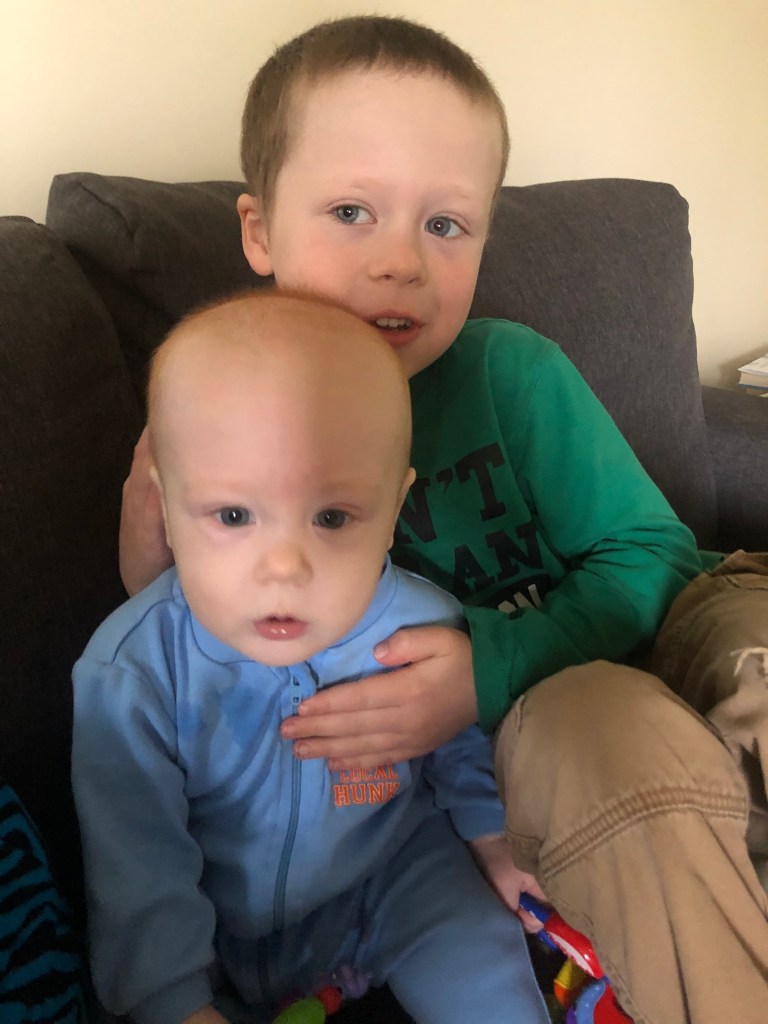
My sons, Nathan (oldest) and Alexander (youngest)

Once you have children in your life, things tend to change. You surrender any and all goals and achievements you hoped to accomplish in favour of ensuring your children’s safety and well-being. This is not without its sacrifice, and that sacrifice is usually a thankless one. Children usually don’t understand or acknowledge what’s given up for them, much less show appreciation for it. And that makes sense. They’re kids! They’re supposed to enjoy their childhood without being concerned with such things.

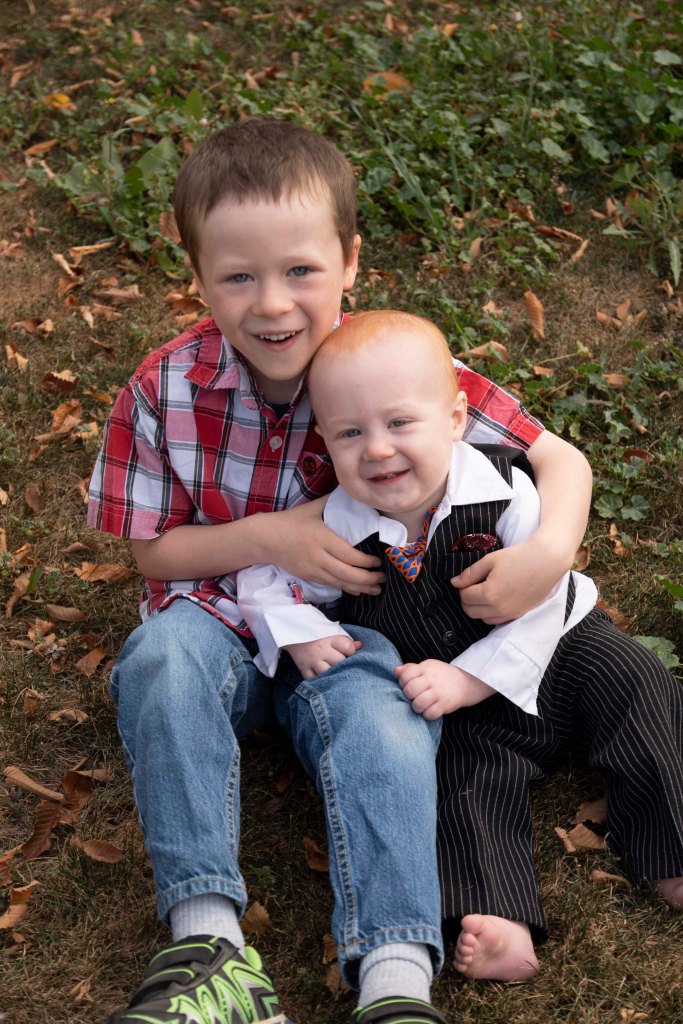
The boys, courtesy of Lavina Wagner Photography

Everyday feels like a rough ride. I can take last Friday as an example, where something as simple as having Nathan eat supper dissolved into a meltdown and resulted in Nathan being sent to his room for the night. At time of writing this, he’s fast asleep, and will likely start his day tomorrow without any recollection of the fact that he expressed his total hate for mommy and daddy and how he would never be friends with either one of us, ever again. Parenthood can be heart-breaking.

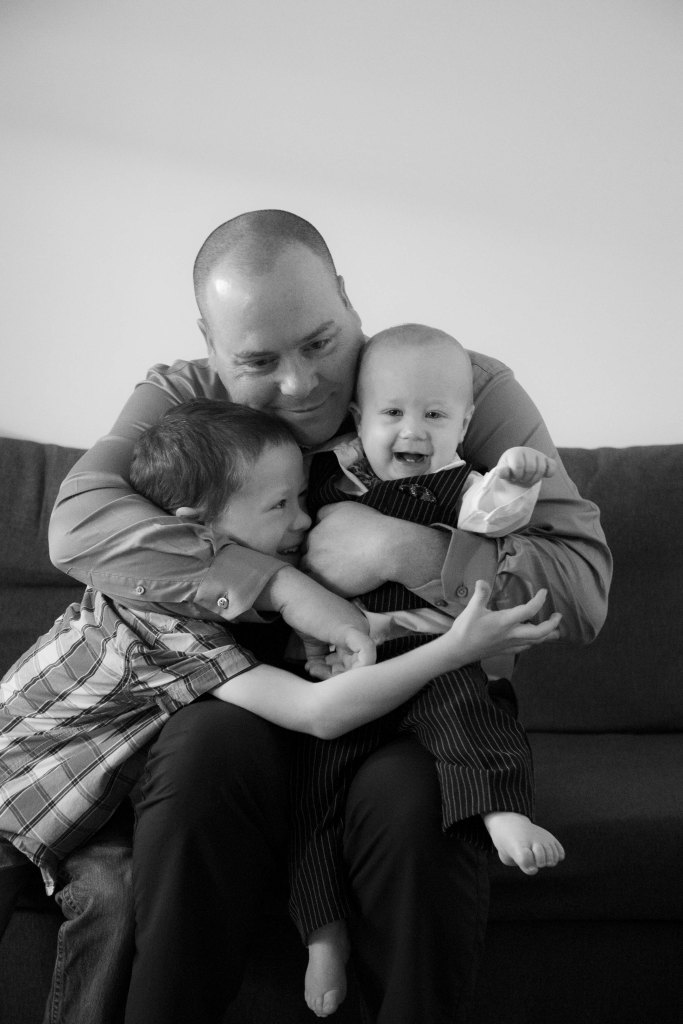
Me and my boys, courtesy of Lavina Wagner Photography

Most people wait on baited breath, hoping their children will go on to be a leader of people, a positive influence or go on to accomplish great things, such as curing cancer, ending world hunger or becoming the next CEO of Microsoft. Personally, I just want both my boys to become good people. I want them to love and appreciate life and recognize that happiness is possible, but it sometimes needs to be accomplished and not simply a given. If they can grow to be law-abiding citizens who understand these things, I will have done my job as a father.

Life is hard and it rarely cares about one’s plans. This has certainly been proven twice, with the arrival of both my sons. In truth, they likely have just as much to teach me as I have to teach them. Hopefully, I have the wisdom to recognize those teachings and hear them when they’re given. Parenthood is an equal balance of sacrifice and reward. ☯

Post Traumatic Stress Disorder

I feel that before I start writing about today’s topic, I should throw up a quick reminder that I am not a doctor. I have no formal training in any medical field, and everything I write about has been researched and has a source, or is something I have directly experienced or have trained in personally. So if anything I’ve written feels incorrect, please feel free to reach out on the “Contact Me” link on my Home page and feel free to voice your concerns. I’m definitely not above, nor do I object, to being corrected.

I think the title speaks for itself, and this is the topic of today’s post. This topic hits close to home for me. Much like Diabetes, this condition has affected many people I know and care about and I have in fact been affected by PTSD, myself. There has been a significant increase in attention on PTSD in the past two decades, and it has started to be recognized as a genuine mental health condition and not simply a passing thought process that the sufferer has the option of ignoring. Previously known as “shell shock” during the World Wars, it was originally associated mostly to combat veterans who had seen active military service, especially during times of war, and were exposed to the traumatic aspects of said war. This is no longer the case, and research has come to show that PTSD can affect anyone, based on their specific circumstances.

I’ll start with my usual, which is to define PTSD or Post-traumatic Stress Disorder so that we can all be on the same page about what’s being discussed. According to the American Psychiatric Association, PTSD is defined as “a psychiatric disorder that may occur in people who have experienced or witnessed a traumatic event such as a natural disaster, a serious accident, a terrorist act, war/combat, rape or who have been threatened with death, sexual violence or serious injury.”

Although accurate, this definition is certainly a broad and generalized one. And whether or not something is traumatic is usually subjective to the sufferer. But the symptoms are generally pretty universal, which can include flashbacks, nightmares, insomnia, anger and irritability, hyper vigilance and aversion to social gatherings or constant noise. According to an article posted by the Mayo Clinic, it may even be possible to develop PTSD without having personally suffered the trauma. For some people, just learning about the event can be enough to cause the damage. Like I said before, it can be pretty subjective to the sufferer.

At the outset, it can also be a condition that the sufferer isn’t even aware that he/she has. I can recall the story of a law enforcement colleague from years ago, who had been initiating a traffic stop along a busy highway. He walked towards the stopped vehicle and he saw something small sitting on the edge of the roadway. When he stopped and looked at the object, he identified it as a small child’s sneaker. He immediately threw up and went into convulsions, got vivid flashbacks of an investigation he had been working on that involved a small child who had been killed. Although he had coped well to that point, the sight of the child’s sneaker brought all the traumatic memories to the surface and he basically shut down, right on the edge of the highway.

Although it isn’t always to that extreme, I’ve heard a lot of stories like this one. And have had plenty of colleagues who have suffered in silence. The ultimate symptom of PTSD and the one that often takes hold before friends and family become aware that there’s a problem, is suicide. Because of the stigma associated with PTSD in previous decades, many people choose to stay silent about their condition and try to self-medicate or isolate from others. When that fails, many often feel the only remaining option is to end their own lives.

For myself, nightmares and insomnia have certainly been the prevalent symptoms. But hyper vigilance, irritability and anger are high on the list as well. I have difficulty being in large crowds and will often find myself with increased sense of anxiety and shaking when I’m surrounded by people, especially if it’s a room full of conversation and noise. I’m quick to anger when consistent loud noise is happening in my immediate environment, which makes my days difficult considering I have an infant in the house.

There is a lot a person can do to lessen and help treat symptoms of PTSD. I find meditation helps, although having the time and opportunity to do so has been far less in recent years. A rigorous fitness regime and plenty of fresh air. From a medical standpoint, there are many therapies and medications that can help manage and lessen, if not eliminate PTSD. I’m not a big fan of the medications route myself, but I’ve known folks that have benefited from it.

I think the big thing is to talk about it. There’s no shame and no embarrassment to having PTSD. It’s part of who you are and certainly isn’t your fault. And talking about it to family and loved ones can be a powerful means of treating PTSD, in and of itself. And if your family at least understands what’s happening, it can go a long way towards preserving those relationships in the face of the difficulties you’re facing. And if you or someone you know may be thinking of harming themselves, the Suicide Prevention Hotline is always available at 1-833-456-4566. That’s a Canadian line, of course. If you’re one of my readers from out-of-country, you’ll have to search for whatever equivalent number you may have in your country.

We’ve come a long way from the time when friends, family or employers would say, “you’re just making excuses” or “you’re just being lazy.” But there’s still a long road to travel. There’s plenty of research and articles on the diagnosis, treatment and assumed causes of PTSD. So feel free to have a read and educate yourself. And be certain that if someone you know says they have PTSD, don’t take it as a passing thing; they’re likely dealing with it as best they can. ☯