Two Conditions By The Same Name Are Not Created Equal…

***Total disclaimer here, folks. This is a post that I wrote a few years back. But as is usually the case when one has been blogging for as long as I have, sometimes you just have to recycle or repeat the material. So here we are. Enjoy!

You know, I’ve often written about the things I don’t like being said to me or assumed about me, in relation to my Diabetes. I think this is a common issue for most folks; everyone has SOMETHING they don’t like to hear about their specific health condition, lifestyle, choices, etc… But one of the most common misconceptions people have about Diabetes is the difference Type-1 and Type-2 Diabetes. There are a number of other “sub-types,” which I covered quite a while back in my post Everyone Has a Type… but Type-1 and Type-2 are the most common and the most “well-known.” I have that in quotations because it’s amazing how little the general population actually KNOWS about Diabetes.

Every once in a while, I write a fresh post to explain the generalized difference between Type-1 and Type-2. The population at large seem to confuse and even combine the two on occasion, and the questions and “suggestions” I sometimes get from people can border on the ridiculous and dangerous. I once had a guy who claimed to be some sort of holistic healer, who claimed that he could heal my Diabetes by having me sustain myself on a diet of nothing but cruciferous greens and no insulin. Hmm, sounds FASCINATING but I wanna live…

To give you the general difference so that this post doesn’t wind up being a mile long like they usually are, Type-1 Diabetes is a condition known as “insulin-dependent” or “juvenile” Diabetes (although I haven’t heard it referred to as that last one in a long time). It happens when a person’s own immune system attacks the body’s insulin-producing beta cells, leading to the required insulin injections. Although some Type-1’s will continue to produce insulin in small amounts, eventually the pancreas stops producing insulin altogether. There is NO cure (yet), only treatment. It’s a lifelong condition and usually takes hold early in life due to its nature, although some people are diagnosed much later (my father was diagnosed as Type-1 in his 50’s).

Type-2 Diabetes is a much different creature. It usually has to do with your body’s ability to respond to insulin the way it should. It usually has to do with the body’s insulin sensitivity, which is important to remember since most people attribute the condition to obesity (even if that’s only a possible factor and not a definite one). Perhaps the pancreas doesn’t produce the amount of insulin required or the body simply doesn’t respond to it appropriately. That’s the gist of Type-2. It can be treated in a number of different ways, including diet, exercise, oral medication and in some cases, insulin injections as well. Although there is no cure for Type-2 Diabetes, its effects can be reversed through proper diet and exercise so that oral medications are no longer necessary. Type-2’s CAN potentially progress to become Type-1.

It can be frustrating when someone offers the “miracle cure” they saw an ad for on FaceBook or tells you to “just eat this or that” in order to cure the condition. The take home lesson here is that there is currently NO cure for Diabetes. It’s a dark passenger that stays with you for life. And if someone tells you they have Diabetes, don’t be shy to ask what type they have. Most of us don’t object to reasonable questions and you may learn a thing or two that will prevent putting your foot in your mouth. ☯

Not All Supplements Are “Creatine” Equal…

Okay, maybe that isn’t my best pun, but I do my best. For most of my life, there’s been a fair amount of hype behind creatine. In my twenties, I had plenty of buddies who took creatine powder to try and bulk up, gain muscle mass or in the case of the one friend, just gain mass in general. But what is this stuff and really just how efficient is it? In most cases, supplements generally take months to start having a positive and/or measurable effect on the body or one’s metabolism. Mostly because supplements often have a “loading phase,” where your body requires a period of time to start processing and using whatever supplement you’re on. This is why most health practitioners (at least in my experience) will tell you that you not only have to be consistent with your supplements, but you need to keep taking them to see long term benefits. But let’s focus on the creatine, shall we?

To be honest, with the years flowing past me like some uncontrolled, torrent of aging (yes, I’m bitter), I’ve become very aware that my energy levels and motivation to get off the couch and keep moving is starting to disappear. Although the mind is willing, finding the motivation and energy after a nine to ten hour work day to go home and hammer out an hour of sweat-inducing exercise is not only difficult; in most cases, the lack of motivation wins and we end up binge-watching old episodes of Frasier rather than working out. It’s not a good thing. Especially when you consider that it isn’t about getting buff or becoming a star athlete. It never was, but even less so now. In reality, it’s about maintaining one’s health and constitution well enough to make it to old age and still be able to function independently.

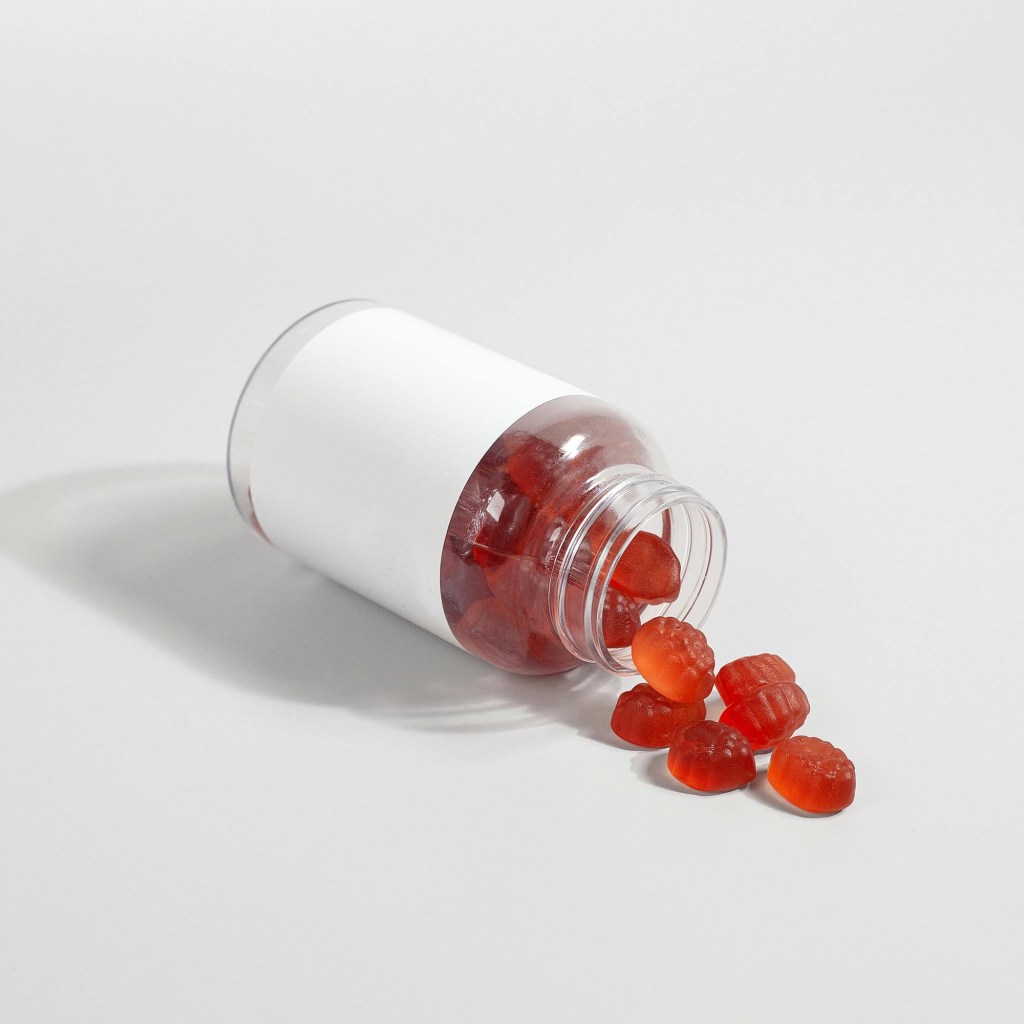
Because of this, I’ve explored a lot of different options for myself in recent years, in an effort to make sure that Type-1 Diabetes doesn’t gain leverage on me AND so that when I reach my seventies, I can still walk, function and take of myself without being relegated to a chair. Seeing both my parents confined to chairs may have had a bit of an effect on this approach. But it’s no secret that I’ve tried a number of things that just haven’t worked for me. And that’s perfectly normal, since what works for one person may not be as effective for another. For example, I’ve tried pre-workout on a few occasions. Doesn’t do a thing for me. Of course, I pound back a fair (but healthy) level of caffeine, so this should be all that entirely surprising. But it just lends itself to the fact that not all supplements provide benefits to all people. That where creatine came in. For months, I’ve been seeing adverts in my online feeds about creatine gummies. Given that I already have a powder-based shake every morning for my protein and my fiber, I was jazzed about the concept of adding another powder to it. Eventually, it stops being a shake and starts creeping into pudding territory.‘

But the gummy aspects fascinated me. So, I started to look into it. According to an article posted by the Cleveland Clinic, “Creatine is a natural source of energy that helps your skeletal muscles flex (contract). It helps create a steady supply of energy in your muscles so they can keep working, especially while you’re exercising.” The article goes on to explain that half of your body’s creatine supply comes from dietary sources, such as red meat, fish and milk. The other half is created naturally by one’s own body. Supplementing with creatine is often done because someone works out a lot or isn’t getting enough creatine through their mainstream diet. Like almost every supplement I’ve ever come across, the article warns of little information about how safe creatine may be if you have Diabetes. While I can confess that I’ve seen this type of warning on almost every supplement, over-the-counter painkiller and product in any pharmacy, this is a good reminder to consult with your doctor or health care practitioner if you’re unsure, or even just to confirm that it’s okay for you to take.

Many of the benefits identified in the article linked above include improvement of some brain function, speedier muscle recovery, increased anabolic hormones for muscle growth and tissue repair, as well as increased muscle hydration. And as we all know, hydration is an important part of not only fitness but your overall health. There are plenty of pros listed for creatine, mostly geared towards one’s muscle mass and development and hydration. But there can be some negatives, as well. The most prominent I’m seeing is potential bloating and/or weight gain due to water retention. Creatine works by pushing hydration into your muscle tissue, so you’ll likely retain much more of your water than you did, pre-supplement.

There are certainly plenty of benefits to creatine supplementation listed on verifiable sites. Another online article by HealthLine entitled “10 Health and Performance Benefits of Creatine” has a pretty comprehensive list, for those of you who want to have a read. The one that stands out for me is the one that suggests creatine “may lower blood sugar levels and fight diabetes.” That peaks my interest. But as with all supplements, it’s important to be patient and be cautious. Do your own research, consult your health care provider and determine what’s best for you. No supplement will automatically turn you into Superman overnight, so remember that you may need to partake of your supplements for some time before seeing any measurable effects. And even WITH the supplements, you may not see the effects unless you put in the work.

For myself personally, I did find some creatine gummies at my local supplements market. I’ve only been on it for a day or two and am still in the “loading” phase, but I’m anxious to see what kind of result it will provide once combined with some exercise. I’m not expecting miracles, of course but at my age, anything I can do to increase my energy levels, maintain my health and leave a prettier corpse behind is okay in my books. I reserve sharing what brand of creatine and where I got it. Maybe in a few months, I’ll share what some of my personal results and findings were. But in the meantime, as you all should, I’ll keep focusing on my blood sugars, my fitness and staying hydrated. Food for thought… ☯️

“One More Round…”

The title is an excerpt from Rocky V, where the main character, tired and beaten down by a younger opponent, stands up one more time and asks him for “one more round.” Widely panned by audiences and critics alike, I never really understood all the hate Rocky V received and in some cases, still receives. While I agree that it wasn’t the greatest out of the series of movies, it still had a reasonable storyline and some decent fight scenes. What struck the biggest chord for me in watching this movie, was how Rocky and his family basically came full circle; having gained riches through being a world boxing heavyweight champion to losing everything and moving back to the rough streets of Philadelphia where he got his beginnings. It’s an important life lesson and certainly one that wasn’t lost on me in my youth.

What’s even more extreme, is Rocky Balboa, a stand-alone movie released in 2006 that sees an aged Rocky living a life without his beloved Adrian and running a small bistro. Because of the rising unpopularity of the current reigning champ, an exhibition fight is set up between the champ and Rocky himself, bringing him out of retirement for one final foray in the ring. What’s a bit difficult in watching this movie is recognizing an aged Rocky, in his 60’s, going to town training like he did in the original Rocky movies. For old dogs like myself, it’s reminiscent of the old training montages you’d see in the original Rocky films; solid training music, working out, sweating, putting in a maximum effort to put on the best show for the crowd. It’s definitely motivational albeit a tad unrealistic. It reminds me of the recent fight between Mike Tyson and Jake Paul. Although the fight in Rocky Balboa showed significantly more substance and heart than the Tyson vs. Paul fight did.

The point to all of this and where I’m going with this post, is that much like the alpha lion stepping back from the pride so a new alpha can take the lead, there comes a time when one begins to realize that the fight is over. That the long hours of hard training and combining martial arts into one’s daily routines for maximum training and efficiency have started to pass. And eventually, one needs to recognize that there can’t always be “just one more fight.” Eventually, one needs to recognize that the last fight really was just that; the last. That’s probably the biggest and most difficult obstacle for a martial artist to face; realizing that one’s karate journey isn’t at an end but needs to significantly change to accommodate the needs of the practitioner. This recognition doesn’t come easily and is often only learned through hardship and injury.

My experience came rather painfully and roughly about three years ago. Granted, at the time, I weighed nearly 30 pounds more than I do now, and my gut definitely played a role in my speed and ability to execute techniques. I had joined a local karate dojo in the hopes of training in the dojo environment and connect with some like-minded practitioners. And with this particular dojo, I found just that. It’s without a doubt the only dojo that I found that managed to show as much interest in my style as I had in theirs. I was treated like a student as opposed to an invitee, and the instructors had as many questions for me as I had for them. It was almost symbiotic, from the karate standpoint, and I grew to enjoy training. But i did notice that it was difficult for me to keep up. Given that we were at the tail end of the COVID pandemic, it was also very difficult to breathe, since all the practitioners were required to wear face masks WHILE training. But I was getting a strong sweat going, working out and learning some new forms. I was in glory. Until I wasn’t.

I definitely started to notice that recovery time took a lot longer. I was tired and slept more during my down time and I started having difficulty finding the motivation to attend the dojo. I kept going, because I’ve been trained never to quit or give up. But I’d be lying if I said things got EASIER, the way they usually would or should. Rather, they started to get harder and more exhausting. As a result, I allowed my anger at the situation to fuel my motivation and keep pushing me harder. The penultimate event that changed my way of thinking came on a Sunday, of all things, on a day when we usually didn’t have classes. We had a weekend seminar, with several high-ranking instructors visiting the dojo to put on the seminar and provide instruction. Starting on the Saturday, it was a wonderful event. Everyone worked out hard, broke a solid sweat and enjoyed themselves. On the Sunday, we started the morning out with another workout and some instruction. Then, came the sparring…

As part of an instructional exercise, the lead instructor had two students face off within a ring. They would spar until the instructor either called one of them out, or one of the two managed to land a strike, which would eliminate the one who got struck. Then, a fresh opponent jumped in. In order to understand why this activity was a bit of an issue for someone like me, you need to understand my mindset. In my head, all the knowledge is still there. The techniques, training and muscle memory are all just as intact as the first year I trained in a dojo. As a result, and much like the aged dog growling in the corner, I’m often of the opinion that I can still respond and move just as fast as I used to. I would be proven quite wrong. I was called into the ring and sparred against my first opponent. Got him out. Second opponent, out. Third opponent? Fuckin’ out… I was on fire and became overconfident, feeling I still “had it” and couldn’t be topped. Then, one of my counterparts (in rank and experience) stepped into the ring next and everything went to shit.

While engaged in a rather spirited exchange back and forth, I overconfidently threw a left-hand hook punch that should have landed. However, my opponent ducked, redirected the hook punch and responded with a very well-placed uppercut punch straight into the lift side of my rib cage. An explosion of lightning burst from behind my eyes and my left side seized from immediate pain. Mercifully, the match was called and I stepped out, since the technique landed against me. I managed to maintain my composure long enough to walk to the edge of the circle and kneel on the floor. Once my body rested downward, the pain became aggravated, since the weight of my body was now adding stress to the injury. I realized at that point that something was very, very wrong. A doctor’s visit and some x-rays later, and I had three fractured ribs. I was on pain killers for quite some time after that.

The experience taught me several important lessons for the future. Not least of which included that the time had come for me to start slowing down and recognizing that fighting someone the same way I did twenty years ago wasn’t likely. And that in any fighting art, overconfidence and vanity can get you injured, or worse. It took several weeks and many pain-filled sleepless nights for the ribs to mend and the muscle wall to heal. After that, I made the conscious decision to continue my training in the privacy of my home. Part realization, part embarrassment, my karate journey has been a solitary one, ever since. This doesn’t mean I won’t still train with others. It simply means that I’m not trying to pretend I’m still a 23-year old black belt who is still in his prime. And that’s the important key to all this. I’ll never stop training. Martial arts is a life-long journey. But the way I started that journey can’t be the same way it ends. I’m getting older. My body is changing. And some of the amazing things I could do with karate decades ago are not the same things I can do now. And we all get there. Realizing is just one important aspect of the journey. An important piece of the puzzle. Food for thought… ☯️

Letting The Hate Flow Through You…

Okay, maybe “hate” is a bit of s strong word but I couldn’t help to have a small play on words from Star Wars. But the focus of today’s post is negative emotion, more specifically, anger. We all get angry sometimes. The best example of anger in action is in toddlers. Think about it, when a toddler doesn’t get what they want or can’t vocalize what they need, they tend to let their internal anger grow and bubble up to the surface. As adults, we tend to identify these emotional outbursts as “tantrums” and usually do our best to stop them from occurring. Sometimes, punitive discipline, such as being relegated to one’s room or having a favorite toy away, is used as a means of not only stopping these angry outbursts but to also prevent future outbursts from happening. But is that the right approach? Just to be clear, folks, this post isn’t an attempt at telling folks how they should parent their child. In fact, with the exception of this particular example, the post will be about anger in general and not focused on children. It’s just an extremely good example.

I need to confess that I’ve probably re-written this post about three times, followed by deleting the content and starting from scratch. Why? Because anger, and really, most emotion in general, has always been a bit of a difficult concept to me. As a child, I was usually timid, withdrawn and never really displayed huge outbursts of visible emotion. During my formative years, I was what most Trekkies would consider to be a proverbial Vulcan, perhaps experiencing the emotions inside but keeping them internalized so that all you see is the creepy, unsettling calm of a young child showing you nothing that you could gauge. As I got older, I was victim of bullying all throughout my school career. While this has a measurable effect on anyone it would happen to, for me, it had the effect of encouraging my martial arts training and to begin using some of my emotion as a valuable tool for growth. Some of the after effects surrounding anger didn’t work out for me so well. By the time I had graduated high school and made my way through college, anger started to become a very real part of my reality. And I externalized it likely far more than I probably should have.

It wouldn’t be until I reached the young stage of adulthood that I would begin to embrace martial arts, not only as a fighting art and means of self-defense, but as a focusing tool to allow me to channel and move my anger in a constructive way, instead of constantly losing my shit over the smallest things. Soon after, I began studying Zen Buddhist concepts, immersing myself in meditation, breathing exercises and finding ways to center myself. You would be amazed at how simple, deep-breathing exercises and clearing one’s mind can help focus and eliminate the anger in your heart. But the combination of both the martial arts and Buddhist concepts have allowed me to work through the past couple of decades in rather stressful and dangerous circles, all the while keeping my cool and controlling my anger. It doesn’t mean I don’t experience that anger; I’ve simply found a way to channel it. I often quip that I’m not calm because I study Buddhism; I study Buddhism to ensure I maintain that calm. To the average person, there likely doesn’t appear to be a difference. To the one working through, the difference is palpable.

So, what is anger? hell, what is emotion in general? Well, on the not-so-physical front, there’s a reason why people refer to emotions as “feelings.” Because it’s something you often end up feeling. Or your emotion elicits some physiological reaction in the body. If you’re sad, you’ll begin to weep. If you’re attracted to someone and begin to develop amorous feelings, your pulse and heart rate increases, you may sweat a bit and if this happens when you’re unfortunately in your teenage years, you may experience some embarrassing visible effects, which usually happen to you right around the time the teacher calls you up to the board to solve a math problem. Such is life. But because of this, and the physiological reaction they cause, most people throughout the ages have believed that emotion comes from the heart. My 11-year old son wisely commented to his mother recently that according to him, the heart only pumps blood. It doesn’t house feelings such as love. Smart kid. I may get to retire early yet…

So, where do emotions like anger actually come from, if not the actual heart? Well, that’s a complicated question and bearing in mind that I’m not a doctor, proceed at your own risk and take what I’m writing with grain of salt. For the most part, emotion stems from a number of systems within the body working together. Starting with the amygdala, which processes everything and tells your brain what emotion you should be feeling, this is coupled with the systems in the body that release key hormones and cause the physiological responses one feels. Then, your body generally pairs that with memory to connect the feeling with the thought, which elicits whatever response you may have. Some of that is primal and genetic and can’t be avoided, such as freezing in place when one hears a hissing snake. Evolution has given us certain genetic memories of when we should feel fear. There’s a whole mess of other moving parts mixed in there but as I said, I’m not a doctor and I certainly don’t understand some of it.

I found an interesting article in Psychology Today, which was posted in September of 2024, that says “(Charles) Darwin assumed a universality of emotional expressions – that they are expressed the same way across cultures and many species. He proposed that emotions are evolutionary adaptations that have helped humans and animals survive and reproduce, and argued that certain emotional expressions are linked to particular physiological responses and behaviors. Influenced by Darwin’s assumptions about emotional expression, in the second half of the twentieth century a theory developed that postulated that there are several basic hardwired emotions arising from deep, ancient, subcortical parts of the brain and that these basic emotions are universally expressed by all humans and shared by many animal species.

Some of this makes a lot of sense. After all, people across the world who speak different languages and live in different cultures all feel the same happiness, the same anger, the same sadness… Emotion is almost a universal language. This is why people know what a smile is, even from infancy, and use it to express happiness. But some of Darwin’s thoughts focus on the fact that emotions are hard-wired as a result of evolution. If you have ten minutes for a constructive read, click on the hyperlink above and work through the article. It has some great insights into different emotional models. I’m slowly working my way off topic here and going down a bit of a rabbit hole, since my initial intention had been to discuss anger. But it’s difficult to look at a singular emotion without recognizing some o the generalized processes that occur in all of them. So here we are. And we should get back on topic. Before I get angry. You wouldn’t like me when I’m angry… (see what I did there).

This raises the very basic question of, is anger a bad thing? The easy, high-level answer is no. All emotion one feels is not only perfectly normal and part of who you are as a human being, but experiencing them and expressing them is not only healthy, it’s necessary. The key point is HOW you express them. That’s what can make the difference between acknowledging that the asshole in the next lane didn’t MEAN to cut you off and you should get on with your day, or following them aggressively, while honking your horn and nearly causing a collision, just so they can see you flip them off at the next red light. And no, I’m not necessarily speaking from experience. But I have had a lot of experience. And I’ve existed in various states of anger and how I’ve dealt with it. In my teens and early 20’s, I didn’t experience or feel much anger. I’m always reminded of a time when I was out to coffee with a friend. He had always had a bit of an anger issue, and we were sitting at a corner table that had windows around it. Three youngsters stood outside one of these windows and began smoking. They were laughing and occasionally looking inside at us. My friend felt they were laughing at us and felt it was his obligation to step outside and teach them respect. I felt nothing.

Not feeling anger is not necessarily a good thing. In certain circumstances, it can signal that a person is suppressing or repressing them, perhaps as a result of an earlier trauma in life or because you were raised to believe anger was bad and would be punished. That being said, those feelings often surface as something else, such as anxiety or depression. During my younger years, I never looked at myself deeply enough to understand any of that but as I’ve gotten older, I’ve realized the importance of anger. Most people don’t take the opportunity to realize that anger can signal some very important things, like knowing that a personal boundary or belief has been crossed, that something is unfair to you or requires you to step up, emotionally. Anger is also important to help one with self-reflection; looking deep within themselves to potentially understand the source of this anger and why it was triggered. Last but not least, anger can be an incredible motivator. I’ve channeled my anger into workouts, karate sessions and as a tool to properly assert myself and re-examine situations I find myself in.

So, in closing, the important key aspect to note is to acknowledge that anger isn’t inherently a bad thing. Like most emotions on the spectrum, it’s how you process and deal with it that will make the difference. If you allow your anger to control you and drive your decisions, you can find yourself in compromising and even dangerous situations before you know it. But if you can learn to understand your anger and channel it appropriately, it can serve as an important tool that not only teaches you a few things along the way but can also be a powerful motivator for the adversity of life. The important thing is to find what works for you. Meditation and karate has been absolute life changers for me. But that may not work for someone else. After all, we’re all different people. So, the next time you get a craving for your favorite salt & vinegar chips and some wretched bastard ahead of you grabs the last bag, don’t grab them and put them through a window in rage. Instead, stop, take a deep breath and look within yourself. Don’t try to suppress your anger. Simply channel it and learn from it. You’ll be all the better for it. Food for thought… ☯️


Proper Etiquette, Or False Entitlement?

It’s a clam, quiet Saturday morning. After waking up and getting dressed, you decide it might be nice to bring your child to a local coffee shop for a breakfast pastry of a muffin. You take the opportunity to avail yourself of your favorite breakfast sandwich and a dark roast coffee, intent on watching the world around you as your 6-year old enjoys a rare outing combined with a treat. You walk into the popular coffee chain and as one could expect, the place is what the kids would call “jumpin’.” Just about every table is occupied with at least one person. You begin to consider that maybe you’ll have to take your treats to go, when you spot one remaining table with no occupants. It happens to be a 5-seater with plush chairs and a round table. Your kid excitedly runs to the table and takes a seat. you take the one next to him. You settle in and begin to relax, letting the hot caffeine course through your system. Your kid does some people watching, and stares out the window at the sunny scenery of the world.

Just about then, a group of four loud, laughing individuals come walking in to the coffee shop. They appear to be happy in their entourage, smiling and seemingly enjoying their own company and environment. They order from the coffee shop staff with an almost intentional detachment., essentially ignoring the human beings serving them coffee outside of mumbling their drink order. As they receive their drinks, they scan the room for a place to sit. Their eyes fall on you and your child and they begin to walk over. You feel your sense of relaxation shatter and already know what’s coming. As they approach, the first one speaks, “Excuse me… Would mind freeing up the table? You and your kid are taking up the only space we can sit…” You casually remind this person that there are several 4-seater tables with only one occupant that they could ask, or wait until one of them departs but this is a rare weekend outing for you and your child and you won’t be moving until you’re both done. The group become indignant and begin raising their voices and making a scene, claiming you need to move for them and have no right to take up the space when they need it. You sigh heavily and look to your child, who watches you, wondering what your reaction will be…

It raises an important question, and one that you should ask yourself: What would you do in this situation? Would you cede your table to this loud, rude group? Or would you stand firm on the basis that as a paying customer, you have just as much right to the table, since you got there first? It’s a much more common occurrence than you might think. The world seems to have evolved to a place where people carry an undeserved sense of entitlement and expectations from others, instead of recognizing that the world does not revolve around them. They lack the understanding that respect, especially as it relates to strangers in the surrounding world, if very much earned from both sides. And the moment you step out of the door, the outside world owes you nothing. But people don’t seem to understand that. Modern society seems to think they can simply demand and expect, and the world will kowtow to their demands.

I’ve seen this in dozens of stories and posts where people expect others to give up certain seats on airline flights and pitch a fit when the occupants don’t comply. It’s right up there, with expressions like “the customer is always right” and “do you know who I am?” It can make it difficult to navigate the world unmolested or without being harassed, or even enjoy the word, as it sits. The scenario in the coffee shop is just one of many things that society throws at the reasonable people when all they’re trying to do is relax and enjoy their environment. Those entitled people don’t acknowledge the world around them and when they do, they only do so when they need something from them. It reminds me of a situation I ran into at the grocery store a short time ago. I was walking through the grocery store, picking up a couple of items before going home.

As I was making my way through the far back corner of the supermarket to start heading towards the front, a lady was walking along, idly thumbing on her cell phone. She appeared to have what I assumed were two sons with her; one about six or seven years old and one in his late teens. The teen son was pushing the cart. The first problem came as the lady casually cut in front of me to walk past, nearly colliding with me. I cleared my throat but she never noticed. Then, in a display of oblivious ignorance, the older son parked his cart diagonally across the aisle, effectively blocking anyone’s ability to walk through. Then, he sat there, waiting for his mother who had gone down the adjacent aisle. I coughed once. He didn’t move. Then, I said, “Excuse me?” The boy turned and saw me and said, “Oh, my bad, man…” and stepped away from the cart.

I felt my patience waning as I saw the scene play out and considered that I may be on film, perhaps for some reality show, that I wasn’t aware of. After all, how can rational people be that oblivious, right? I said, “Could you move your cart? You’re blocking the aisle, no one can get through.” The boy grabbed the cart and pulled it away. I barely got ten felt away when I was approached from behind by the mother, who had now hung up her phone and was acting as though I had just punched a puppy. Her puppy. “How dare you speak to my son that way…?” I almost laughed at her anger. I hadn’t raised my voice, I hadn’t been rude and all I did was ask him to move his cart so that people, myself included, could get through. Despite explaining this to her, she was acting like I had kicked her kid into the gutter and spat on him. She was indignant at the fact that I had the audacity to speak up or try to get by. This is also a common occurrence that I often see within the world.

Folks, life is short. Your time on this world is fleeting. And light knows that there’s enough suffering in the world. It’s important to remember not to intentionally cause more. The world owes you nothing. And the important thing is the energy you put out into the world is what will eventually come back to you. So, if all you do is live with an inflated sense of entitlement and you think the world owes you a living, you may be in for a rude awakening. No one owes you a damn thing. And respect is earned. So, if this is you, and you can relate to the scenarios outlined in this post, put your phone down, keep your eyes up and pay attention to the world around you. And focus on putting good out into the world. Important food for thought… ☯️

That’s A Wrap, 2025!

So, my last post was something fairly festive. I had just discovered that my treatments for Diabetic Macular Edema has improved significantly. When I started the whole “eye injection journey,” I was getting them to 4-week intervals. Over the course of the past ten years, in conjunction with exercise, weight loss and continued blood sugar management, my most recent appointment on December 19th was a 14-week interval. This time around, my doctor advised that my eyes were clear and pushed me up to a 16-week interval. On this next appointment, he will be re-assessing my eyes based on the interval, to decide whether I can come off the injections or whether 16 weeks may have been too much. For someone who’s been getting needles jabbed into his eyes over the past decade, this was a big deal. It gave me some augury of thought that 2026 may be a pivotal point where things will turn around. However, and as I’ve often said, life rarely cares about one’s plans.

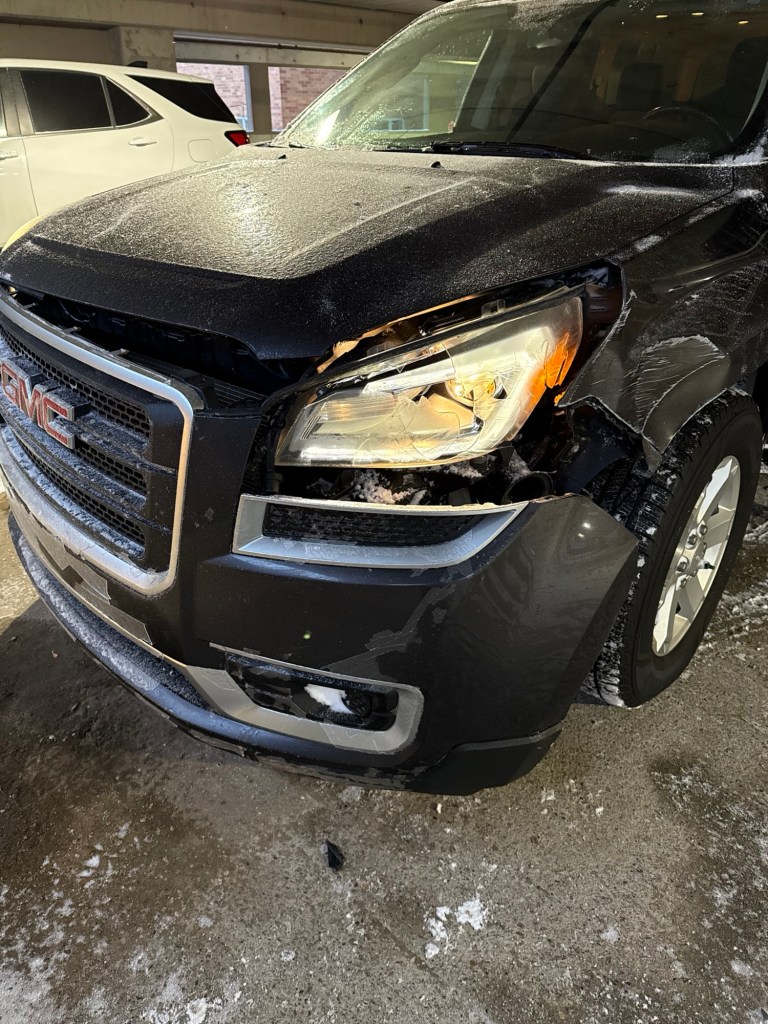
About an hour AFTER my last post, I checked out of my hotel and made my way to my vehicle. Because of the inclement weather, I had taken our SUV, which is our usual family vehicle. I was parked in an unfamiliar area of the hotel’s parkade, and my driver’s side was flush against a concrete pillar. As I was backing out, I had my eyes aimed towards the passenger side in order to avoid the other parked cars. I cut my wheels too early and the front driver’s side corner of my vehicle “kissed” the concrete pillar. Under normal circumstances, it likely would have caused some dents, scraped some paint and maybe cracked a few parts. But given that it was -35 degrees Celsius and colder than the devil’s balls, the fiberglass fender shattered like a cheap chandelier. The front driver’s side bumper, fender and headlight were damaged. Upon initial inspection, everything was solidly fastened in place and I felt confident that the vehicle could be driven safely. I took the road towards Regina. Here’s a pic of the vehicle…

The big problem with modern vehicle is simply this; even if this potentially looks like it could be remedied by fastening everything back together, the reality is much worse. Repairs to get the vehicle back to how it was will likely cost thousands of dollars. Merry fuckin’ Christmas to me… Perfect. I travelled back to Regina, in extremes storm conditions, no less, and stopped at the appropriate dealership. They confirmed my fears, as well as the potential cost. I left the vehicle with them. Repairs are still outstanding. Then, and shortly after getting back home, I came down with a brutal cold that had me on my ass for the duration of Christmas and a few more days after that. Once I started to feel better, the element in our oven gave out and no longer works. The stove tops still function but the oven doesn’t, which means we can’t bake anything or cook anything large-scale. Not ideal for a household of four people. So, there’s that.

And then, to add icing on the cake and because I was feeling better, I brought my sons to an indoor play park with obstacles and trampolines. During a heated obstacle course race with my oldest, I bounced too hard on one of the trampolines and got thrown sideways. I landed with my left kidney against a wooden base on one of the obstacles. At the time, the wind got knocked out of me and I had assumed the pain would pass after a bit. But the following day, the ache in my back remained. Over the course of the past few days, it’s not only remained but deepened. Obviously, I don’t believe anything is broken and I don’t need medical attention. But it was certainly a wake-up call to show that I’m no spring chicken and can’t heal quite as quickly as I used to. Hopefully, after a few hot baths and some time, it’ll heal up but it’s making it quite hard to do everyday chores and even bend down to tie my shoes.

2025 has been a whirlwind of chaos. My father made it through a coma in May as a result of pulmonary issues. My mother no longer recognizes me and is now living in the same care home as my father. My last two trips home have been a negative roller-coaster and dealing with the aspects of later adult life that we all get to, eventually. But the last month has just been a few added thorns in the black roses of my life. Luckily, my children are in good health and my home life is good. As I step into 2026, I’m hoping for happier things, better things. ☯️

Making Type-1 Diabetes my B%&ch…

Anyone who’s read a number of my blog posts will know that it’s pretty clear that Type-1 Diabetes carries a number of complications that can make a person’s life a living hell. The routine stuff, for the most part, has become so routine for me over the past four and half decades that I’m ABLE to call it routine. But there’s no arguing that T1D basically affects absolutely EVERYTHING in one’s life and has an influence on everything I do, from working, sleeping, eating and even my relationships. More on that last one some other time, but the bottom line is that with the exception of organ failure or amputation, I’ve seen it all, done it all and have suffered through it all. By virtue of this, Diabetes has yet to throw something at me that I haven’t met head on and overcome. This was a solemn promise I made to myself in my early teens, when I realized I would need to take my own health in hand in order to live into adulthood.

About ten years ago, a slightly different kind of Diabetic complication landed on my plate. As a matter of routine, I had a yearly ophthalmologist appointment to clear my eyes. This was generally done at the request of the Force, to ensure my vision was clear. I had a particular doctor that I had been seeing for almost five years at this point, so I was a bit surprised when I was met with his partner in the eye clinic, instead. He explained that some patient files had been passed to him as my previous doctor was moving on to different projects. Okay, fair enough. I’ve never been a big fan of changing doctors or even changing meds, when it’s happened. In my experience, doing so almost always results in “rocking the boat,” and basically fucking up the nice, healthy balance I maintain in my life. But it would turn out that this one change would not only lead to the identification of this complication but would lead to its treatment.

During this exam, I was asked if I had noticed my vision blurring. Being a police officer in the field with Diabetes made this a difficult question to answer, given that shift work, fatigue and fluctuating blood sugars would all affect my vision. But as it turned out, I had developed a condition known as Diabetic Macular Edema. For those of you who haven’t read my previous posts, Diabetic Macular Edema is a condition where fluid begins building up behind the back of the eye, around the macula, which is what controls how your vision focuses. When this fluids builds up, it causes swelling at the back of the eye that can lead to all sorts of vision and eyesight complications. The link to a HealthLine post above will provide further context, but this condition usually occurs as the result of poorly controlled or high blood sugars, something that I had in abundance before I took my health in hand. There are a few treatments, including but not limited to laser treatments for the retinopathy aspect (which I’ve had) and injectable medications that teat the swelling, which was what was needed next.

I’m not gonna lie here, folks… I’m usually pretty good at acting like a tough guy, shuffling off scary stuff and ignoring pain. And up to that point, I have had needles in just about every area of my body. Except my fucking eyes! For what was probably the first time in my life, I was frightened of what would come next. Based on the doctor’s explanation, I needed these injections to maintain my eyesight. But I couldn’t ignore the thought of a needle sliding into a part of my body that wasn’t meant to be pierced. I mean, conceptually, NO part of the human body is “meant” to be pierced… But getting a needle in the eyes is something that up to that point, I had only seen in horror movies. One can see how this might have fed my anxiety. Setting my fears aside, I made the appointment, booked the time off work and booked my very first hotel room in the city, since my wife and I had just recently had our first child and she couldn’t join me. I would need to stay in the city overnight since I would be effectively blind, as it relates to operating a vehicle, especially after dark.

That first appointment came with a slew of stress and anxiety, which did nothing to help some of the pre-procedure tests I needed. Did you know that heart rate and stress affects your eye pressure? I sure found out. My vision was a touch below normal, even with normal blood sugars and my prescription glasses on, which prompted further confirmation that I needed this treatment. Once I was in the chair for the injections, the doctor walked me through the steps and proceeded to put eye clamps in to keep my eyesight open. Ever seen the movie “Clockwork Orange?” That messed up scene where they clamp his eyesight open and force him to watch stuff? Picture that, but without the psychological torture. The worst part is that you’re awake, your eyes can move and in fact, you NEED to move them in order to look in a specific direction to allow the doctor to inject into the white part of your eyes. All that build-up and anxiety for it all to be over in about thirty seconds. Reminds me of my teens (if you know, you know). But all jokes aside, it was painful, no question.

What followed was a blur (literally) of booking the next appointment and stumbling my way back across a public park to my hotel. I stretched out on the bed with all the lights closed and tried to nap intermittently as the freezing drops wore off and the full extent of the pain kicked in. For hours after, I could see shapes, colors and general outlines, allowing me to make my way down to the quaint, Irish pub located on the ground floor. I spent my evening there, nursing my pain with the only type of “painkiller” I had available. This had been the routine for the past decade. Now, it’s become such a routine that the sting is almost imperceptible. If it weren’t; for the loss of vision keeping me from driving, I wouldn’t even need to stay in the city afterwards. But in the beginning, i had to get the injections every four weeks and in most cases, some of the swelling had returned by that fourth week. Over time, with better controlled blood sugars (I had recently started pumping therapy around this time), consistent exercise and keeping a firm grip on the reins of my health, those periods began to stretch. Every five weeks, then six, seven and so on. With every new, longer interval, I felt a small twinge of personal victory.

My last appointment was a 14-week interval. It took a long time to get me to that point and it was the longest I’ve gone without getting the injections. Given some recent headaches and blurriness, I fully expected to go in to my appointment with the announcement that some swelling had returned and we needed to claw me back to 13 weeks. But lo and behold, my scans were completely clean. No swelling at all. My doctor opted to push me all the way to 16 weeks, which is the longest interval possible on this medication. If I can make it to 16 weeks without any swelling returning, we’ll be re-assessing my treatment and deciding if I’ll stay at 16 weeks indefinitely, or if I’ll come off the injections entirely, with scheduled follow-ups to ensure the swelling doesn’t return. Needless to say and right before the holidays, this makes for one of the best Christmas gifts I could imagine getting.

The bottom line and despite that this is good news, the point of today’s post is to illustrate that when one takes heir own health in hand, in tandem with properly trained medical practitioners, they can make a significant difference in the maintenance of one’s health and the potential outcome of certain treatments. While I fully admit that there are things that simply can’t be healed or treated, there’s a lot that can and it’s important to give yourself and your body the best fighting chance to be in good health and live a happy life. For myself, and as much as I’ve been enjoying my little Irish pub, I’ll certainly look forward to a break from traveling and being away from home overnight. And, you know, getting fuckin’ needles in my eyes… Food for thought… ☯️

To Fight Or Not To Fight… That Is The Question…

Given the direction that the world is heading in, and some of the thoughts and opinions that seem to float around out there, I feel that this is a topic that is not only near and dear to me as a martial artist, but as someone who was terribly bullied as a child. In fact, if you can think of it, I’ve probably had it done. From wedgies to practical jokes, all the way to having a group of three peers beat the ever-loving shit out of me for having the audacity to speak up for myself, being thrown fully clothed into the gym showers first thing in the morning and even having my car vandalized and moved on me. On one occasion, which could be a story for another post, I was even attacked by a fellow student with a pocket knife. That knife successfully found purchase in my wrist. Karate saved the day on that occasion. And this bring me to today’s topic.

In keeping with the social climate, I need to point out that this post solely reflects my opinion on the subject. And bearing in mind that I’m speaking strictly in generalities and none of what’s written here should be construed as legal advice (especially since I’m not a lawyer), you should definitely do your own research and maintain your own opinions on this subject. Recently, I’ve seen a number of posts in social media where a person or in some cases, a couple, would hold up a placard that reads something akin to, “Stop sending your kids to school and telling them that if someone hits you, to hit them back. You are part of the problem.” In all seriousness, this line of thinking breaks my usual serene sense of calm and pisses me off beyond rational thought. Part of the problem? Are you kidding? Maybe we should start by addressing the fact that someone insisted on starting that scenario by hitting first. For my part, I’ve always taught my oldest the important steps of ask, tell, make.

If someone hits you, start by asking them to stop, followed by telling them so, if asking doesn’t work. If you’re in school, seeking the assistance of a teacher or adult can help. But you still need to be able to defend yourself and prevent harm or injury to yourself if none are available. This is where fighting back comes in. For 37 years now, I’ve trained in the martial arts. I’ve both benefited and been forced, to use my skills in real life scenarios where I’ve had to defend myself or others from harm and in some cases, mortal danger. Sounds dramatic. That’s not the intent. But the reality is that bullying is not a new concept. The attention on it is, with every armchair warrior and/or peace advocate strongly believing that we should all embrace peace, love each other and avoid violence at all costs. And trust me, true believers, I’m right there with you. I commit my life to the elimination of suffering in my life and the world around me. And embracing peace while avoiding violence would seem to be a logical step in that direction. However, logic is often lacking in someone who makes the conscious decision to bully others.

For over 35 years (probably longer, but the mat eludes me), I’ve trained in the martial arts. This has been an extremely important tool for me to promote and maintain my health. What most people don’t understand is that it was also a means of ensuring I could protect myself from those who sought to harm me or bully me. There had been instances, during my youth, where teachers or my parents got involved but the result was exactly what you would have expected to see in any 1980’s brat pack comedy film; it usually made maters worse. Eventually, my skills in karate not only allowed me to protect myself but it allowed to end the fights that others started. It took very little time for the bullies to start realizing that I was no longer an easy target and that they would likely suffer just as much injury as I would, just for the sake of a laugh. So, would one be correct in thinking, in those circumstances, that I shouldn’t have hit back? When one considers the fact that the bullying and abuse wouldn’t have stopped otherwise, I would say it was an important lesson for the bullies. I like to think that some of them may even have changed their bullying ways. Maybe that’s just hopeful thinking, though…

Telling people they shouldn’t teach their children to defend themselves when someone brings harm or injurious behavior their way is tantamount to encouraging “victim shaming,” where the victim is blamed for the outcome instead of bringing blame to the bully who initiated the situation. While I wholeheartedly agree that one never knows what may be happening in someone’s life to elicit this behavior, I believe even stronger that this singular fact doesn’t grant them the right to attack or bully my child. There are mechanisms in place to help you assess and find a way to channel those feelings, that anger and that energy. And I believe that in order to become a productive and successful member of modern society, my son will need to learn the importance of standing up for himself, up to and including defending himself. To do otherwise would make him a perpetual victim for the rest of his life; something I swore I would never be myself and I would never allow for my children.

Sensei often told me during my formative years never start a fight or use your training to harm others. But if someone brings harm or starts a fight with you, make sure you finish it. Doesn’t mean you have to cripple someone for life to get your point across, obviously. But under no circumstances should someone ALLOW themselves to get struck or injured just for the sake of being passive. Stop telling your kids to hit back? Maybe start telling your kid not to hit in the first place. That would solve one problem. But when it comes to bullying, sometimes you just gotta pop them like a balloon for them to float away. That’s not mine; that was from Rocky V. But a better one might be a reminder that “the only thing necessary for the triumph of evil is that good men do nothing.” While I might not agree that a bully is inherently evil… misguided, perhaps, but not evil, it doesn’t mean that one should do something about it.

Again, this is a pretty charged topic and I know some folks have their own thoughts and opinions on it. The important thing is that an opinion is comparable to being a smoker. Smokers don’t care that non-smokers DON’T smoke. Because it causes them no harm. But to the non-smoker, the smoker is causing them all sorts of damage, if they do it on their vicinity. It’s the same thing with bullies. They continue to operate as they do until someone brings the harm to the forefront and makes them stop. So the lesson here is, even if you’re not the one who starts the fight, don’t allow yourself to be bullied, taken advantage or harmed. End the fight. Protect yourself. And for the naysayers who believe that scenario can be avoided, you may want to spend a bit of time in the real world before you assume friendship and hugs will fix your problems. Food for thought…☯️

Off Warranty, And Lacking Replacement Parts…

I’m sure many of you can relate… It’s early morning. Your soft alarm goes off and you groggily click it off. You yawn and stretch and roll slightly, feeling creaks and pops in your joints that you don’t recall being there before. You make your way out of bed and slowly walk to the shower, noticing the chill on the morning soaking through to your bones. Once under the shower head, you let the warm water revive some articulation and relieve some of the aches from the previous day. You slowly trudge through your morning routine with the same amount of speed as a sloth trying to climb a tree. Sound somewhat familiar?

I often look back fondly at my twenties and remember the almost surreal ability I had to train for absolute hours on end, sweating and core temp skyrocketing… Performing line after line of full contact shadow boxing up the length of the dojo, doing dozens of katas, one after another, staying on my knuckles for 20 minutes at a time or in a horse stance for half an hour without missing a beat… This was usually followed by grabbing a shower and hitting the town, either for a game of pool with friends or a quiet coffee and soup at the local coffee shop while making my way through the latest book in the “Wheel of Time” series. The speed, reflexes and ability to recover I maintained was almost supernatural, despite being Type-1 Diabetic AND despite my blood sugars never being quite as well balanced as they are today. By the light, times have changed…

In the past couple of years, I’ve come to acknowledge a couple of hard truths; that I can’t maintain fitness to the level I did twenty years ago, which should go without saying, and, it takes me far, far longer to recover. While the stubborn part of me would love to knuckle down and say “Hell no, we won’t go,” and keep pushing just as hard as I always have, that’s just not a fair reality for me anymore. I recognize that I’m saying this while simultaneously remembering that Sensei is in his 70’s and easily puts me to shame, in the physical activity department. But I digress… The point is, I’ve grown older and as we grow older, the body’s ability to heal and recover effectively begins to diminish. This is why adults will often complain about the cracks and pops they never noticed there before. None of this has been quite as obvious as it has been for me, over the past few months.

AT some point earlier in the year, and I can’t recall exactly when, I started to notice a twinge in my right shoulder. It was subtle, at first. A bit of difficulty scrubbing my back using that hand, or a slight pain when I would reach a high cupboard. I chalked it up to having slept wrong or just tired muscles. MOST workouts were reasonable uninterrupted as a result. But over the course of a couple of months, the pain worsened and mobility in my right arm depended, to the point where I actually ordered a shoulder brace for some of those more extreme workouts. As an aside, the shoulder brace I found was one designed specifically with sports and martial arts in mind. It’s made by a company called Anaconda Fightwear, and their stuff is pretty good. If you’re interested in a braces for almost any of your joints, you can check out their website here. My shoulder brace has been a life saver, especially when I’m performing a lot of the circle blocks or techniques that I need through karate.

Once I recognized the need for external support just to do the things I’d been doing for decades, I started to contemplate the usual; appointment with the chiropractor, massage therapist, acupuncturist, etc. Anything more extreme or medical would come as a second step. But as is often the case in adult life, time passed and busy schedules dominated and I didn’t get to the chiropractor until about three months ago. Now, chiropractic medicine gets a bad rap from a lot of people. Some of this is born out of fear of having one’s joints (especially the neck) cracked. Some of it is because of one-offs where someone with something pre-existing may have had it aggravated by a chiropractic adjustment. Whatever the case, I’ve yet to have a chiropractor’s visit where I don’t feel better afterwards. The first time I went to the chiropractor was back in 2010. The relief that flowed through me after my adjustment almost brought me to tears. But once I again, I digress…

My point is, my shoulder was examined and it was determined that I may have weakened muscles in the shoulder that are limiting my mobility. Not an uncommon thing for a decades-long martial artist who is getting up there in age. Although not yet what one might consider a senior, my body’s ability to heal is less than it was, even a few years ago, so here we are. The solution? A set of simple body movement exercises to try and build back some strength in the stabilizing muscles of the shoulder. That lasted all of a couple of weeks. Towards the end, the exercises themselves became too painful and I needed to find an alternative. Going back to the chiropractor a few weeks ago, a deeper, more extensive examination of my shoulder was done. It was determined that I had a condition called “frozen shoulder.”

So, what the hell is frozen shoulder? Well, according to an article by the Mayo Clinic, whose web link I’ve conveniently lost, frozen shoulder, also called “adhesive capsulitis,” is a condition where the connective muscles and tissues in the shoulder thicken and tighten around the shoulder joint, causing limited range of motion and pain. While it’s not exceptionally rare, people over 40 and who have certain conditions like, oh, say, DIABETES, are at higher risk. Great. Thanks, T1D! One more issue on the checklist. The treatment is pretty simple; movement. yes, you read that right. Range-of-motion exercises, working the shoulder and on occasion, some pain-numbing medications injected into the joints. But, it does take years for it to completely recover. The article goes on. To explain that it’s unusual for frozen shoulder to come back to the same shoulder, so I guess THAT’S good.

Why do they call it “frozen shoulder?” As described in the article from Mayo, which I managed to find here, it hits in three stages:

  • Freezing stage. Any movement of the shoulder causes pain, and the shoulder’s ability to move becomes limited. This stage lasts from 2 to 9 months.
  • Frozen stage. Pain might lessen during this stage. However, the shoulder becomes stiffer. Using it becomes more difficult. This stage lasts from 4 to 12 months.
  • Thawing stage. The shoulder’s ability to move begins to improve. This stage lasts from 5 to 24 months.

When looked at from this perspective, it paints a long, bleak picture of recovery. While this falls under the category of “this could be worse,” y’all know just how much I love hearing THAT. If you do the math on this, I’m looking at nearly four years to recover, bearing in mind that everyone is different. The good news is that I appear to have passed the freezing stage. After that initial chiropractor visit and the subsequent working of the joint and the pain it accompanied, I head a couple of weeks of limited mobility in the shoulder and neck that saw me walking around like a fucking robot. You don’t realize just how much you need the supportive muscles in your neck until you can’t use them. Sitting, lying down and even rolling over in your sleep becomes an extremely painful prospect. And when every movement during the night jolts you awake in pain, your rest goes to shit, so your recovery is lengthened even further. But i seem to have a fair mobility back in most areas, with only a bit of limited mobility in the shoulder with very little pain. Looks like I’m at the frozen stage. Yay.

Growing older is a part of life. There’s no getting away from it or getting out of it. That’s why it is so critically important to maintain one’s physical fitness, nutrition and getting proper rest. That will go a long way towards ensuring that you can ride off into the sunset with some reasonable constitution left, as opposed to a lump of scarred, immobile old man crankiness. I mean, let’s be honest, I’m still ticking that very last box with the crankiness but that’s a whole different thing. Next week, I’ll be starting a form of vibrational shock therapy that will help to break up any potential scar tissue and potentially help with the healing process. While I’m looking forward to it, as one would expect, I’m not a fan of the whole “shock” aspect. But I’m sure it’ll be fine. Stay tuned for updates as this treatment progresses. In the meantime, I take solace in the fact that even while having had Type-1 Diabetes for 43 years at this point, my organs are in great health, my blood sugars are phenomenal and even my eye injections have been spaced out to fourteen weeks. Not too shabby. I’d say I’m doing quite well. ☯️

Let the Hate Flow Through You…

Okay, so it’s probably a bit odd that I’m quoting from the original Star Wars trilogy for a post that touches on something a bit more philosophical and important but in my defense, wisdom and knowledge can often arise from the most unlikely places. So, take for what it is. As someone who studies Buddhism (yes, I still do, despite the fewer posts on the topic) I recognize that the world has suffering. One of the most important precepts is to eliminate that suffering, in order to live a happier, more fruitful and satisfying life. This isn’t always an easy thing, especially in modern times. The type and frequency of the world’s stressors only seems to be increasing. It can make things difficult to navigate, especially when one succumbs to one of the most difficult to navigate emotions; anger.

Anger is insidious. And it tends to creep in at the most unexpected times for the most ridiculous reasons. red light not turning to green quickly enough? Anger. Boss adds another project on your plate during your days off? Anger. Your kids eat the last of your Skittles right before you need them to treat a low? Anger. Accidentally stub your toe on the corner of a wall that’s always been there and is absolutely on one’s fault but your own? Inappropriate levels of rage and anger… It seems to strike more than the average person cares to think about and the issue with that, is that anger eventually does cause physical and psychological damage, over time. On the physical side, constant anger will lead to health issues like increased blood pressure, cardiac issues, stomach ulcers. On the psychological side, poor thoughts, depression, lack of motivation, to name a few. And let’s not forget that nasty vices one may undertake in order to forget or forego one’s anger. Or realistically, we think we do it to “relax.” In reality, we try to stem our angry emotions.

Without a proper outlet, anger can lead to a number of negative results in one’s life, outside of the direct effects on oneself. Someone who is constantly angry may be perceived as difficult or unpleasant to be around. Anger in the workplace can lead to damaged working relationships, perceived poor performance and if you happen to be in a position of authority, extremely poor perception by your staff. At home and in your personal life, a near-constant state of anger can damage relationships, create a toxic home environment and alienate the very people around you who could potentially help stem some of those angry thoughts. I’m making it sound like everyone is walking around like the hulk and it likely isn’t this bad for everyone, but the key is recognizing that anger. One may find themselves a bit surprised at how often this emotion seeps in without notice or warning.

Miyamoto Musashi, one of my favorite writers and author of “The Book of Five Rings,” a famous book on strategy, touched on anger in his book. While I won’t be quoting the book directly (you can find ebook versions of it through Kobo starting at $0.99), his thoughts veered more on the concept that one should recognize and acknowledge anger as it builds, as opposed to waiting and recognizing that one IS angry. Musashi wrote that loss of control over one’s anger, especially towards others, means that the other person has a control over you. If you allow anger to creep its way in during a given situation, it can also allow one’s potential adversaries to note your vulnerabilities, your weaknesses and allow them to take advantage of you or make you a potential target for those who mean to do you harm.

The trick to anger is to control it before it controls you. Some of it is as simple as starting by recognizing that most situations, if not all, are not worth getting angry about. Do you think that person who cut you off at the intersection has spent the rest of the morning contemplating how they cut you off? Of course not. They likely forgot you as soon as the sound from your car horn died down. Despite this, if they live rent free in your head for hours after the incident, this is a clear sign that you’re allowing anger to control the most minimal events of your life. This makes it an obstacle to peace as opposed to an elimination of suffering. And as I’ve often said before and I don’t know about y’all, but I have a strong dislike of suffering. I’m all about trying to find that peace.

Instead, when one begins to feel that anger bubbling up to the surface, it becomes important to find ways to harness and channel that energy into something productive or useful. By channeling and harnessing one’s anger, it can become an important tool for discipline, training and achieving one’s goals. It can be aimed for a positive purpose as opposed to exploding or erupting out of you like an uncontrollable tempest that threatens to damage you and/or those in your environment. By using it as a positive tool, you can also acknowledge that anger is normal. A perfectly normal and expected human emotion that everyone experiences. It isn’t about having that emotion that’s bad. It’s what you do with it. How you allow it to affect you.

If you find yourself in a position where anger is slowly starting to rise to the surface and you have no means of channeling or using it, there are ways to control it. Deep breathing exercises or meditation can be valuable tools in ensuring that your anger doesn’t bubble over into something negative. And will ultimately help in eliminating the suffering within your life. And at the end of the day, finding peace will not only help maintain your health and promote a happier, fuller life but will also allow that energy to be shared or passed on to others. As the old saying goes, don’t sweat the small stuff. Food for thought…☯️