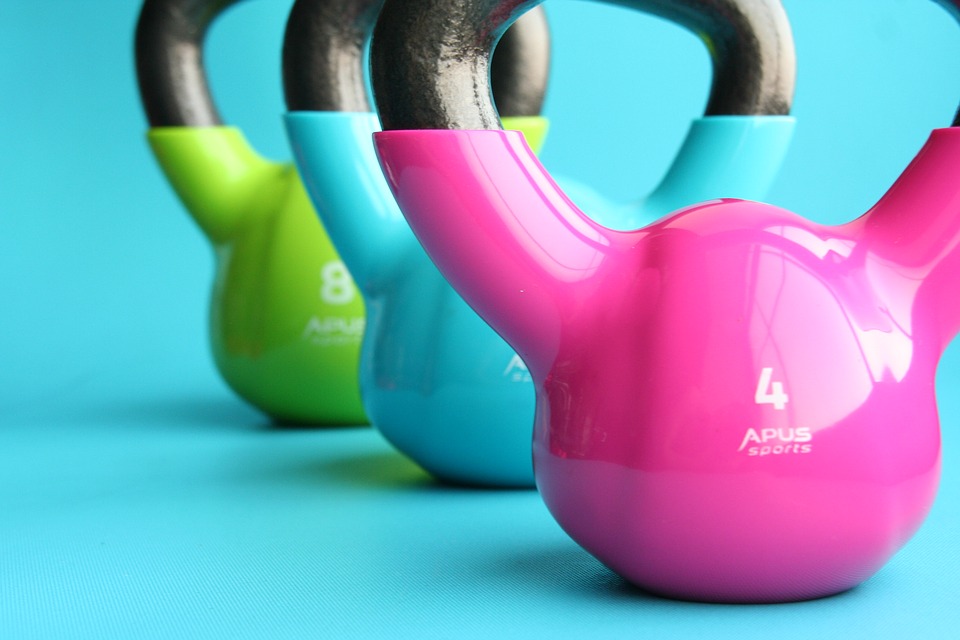
I decided to get myself a belated Christmas gift on Boxing Day and purchase a couple of 10-pound kettlebells and an 8-pound exercise ball. I like to change things up a bit and thought that kettlebells would be the way to go, since I don’t believe I’ve ever used them in an actual workout. The exercise ball was intended for a number of specific exercises but once I had the box open, I discovered it was a soft ball that was partially filled with sand. Not what I was expecting, but it’ll do for some of the exercises I had in mind.
Kettlebells are a special creature, and they seem to add a little “something” to workouts. As opposed to dumbbells, a kettlebell’s weight is focused in one ball with the handle acting as an added lever. Dumbbells have their weight equally distributed at both ends of a handle, making them a little easier to use in some respects. I started by doing a short, circuit workout with my wife on New Year’s day. We each held one bell and went through a series of different exercises, working different areas of the body. It was a good burn.
Some of the benefits is that the added lever created by the shape of the kettlebell works to activate the entire posterior chain of muscles. Dumbbells don’t usually do that. As you swing a kettlebell, different muscle groups are engaged depending on the grip you have and whether you allow the bell to roll with the swing or try and hold it stationary.
What I’ve found is that kettlebells can also be extremely effective at helping to condition and develop martial arts techniques. Different movements as well as some parts of my forms can be performed while holding a kettlebell, which provides a deeper intensity while training. Although the bells I’ve purchased are pretty light in comparison to dumbbells I’ve used (it’s always better to start off small when doing something new), I’m looking forward to using them regularly and increasing the weight as I get acclimated to them. ☯
I’ve been studying karate for over thirty years (yes, I know that I mention that a lot) and the benefits of the martial arts on my health, my Diabetes and my overall mental well-being can’t be over-stated. My reasons for starting karate have changed and/or altered throughout the decades and there have even been periods when I’ve walked away from it for a while, even though no genuine martial artist can ever truly quit; they’ll always maintain it or come back to it in some way, shape or form.
Martial arts hit the big screens in the mid-1950’s, although what they were showing on screen could hardly be called martial arts, in any true sense of the term. In the 1970’s, martial arts blew up the big screen with Enter The Dragon, Bruce Lee’s hit movie where he infiltrates an island tournament held by a monk turned criminal drug lord. Since then, people have been fascinated and infatuated by the presence of martial arts and will often whistle through their teeth if you tell them that you study it.
The 1980’s showed a huge surge of television shows that focused on the martial arts. One of my favourites was The Master, a show about an old ninja master taking on a younger student while they search for his missing daughter. It only aired for one season, but it was timeless (plus, I was 6-years old at the time so it all looked great!). By the time the late 1990’s and early 2000’s rolled around, there was a noticeable lack of interest in the martial arts.
Unless you had already been doing it and were part of a dojo that had enough students and enough steam to host tournaments and events and keep itself going, a lot of schools (especially back in New Brunswick) saw serious lacks in attendance and students. Sensei’s dojo also felt the sting of this phenomenon, with our classes going from several dozen students per class to about a half dozen students before I moved away for work. It was disheartening to see, and it took a certain something away from the ambiance of the class. This has led me to ask the question: Is traditional karate dead?
I remember watching the very first Ultimate Fighting Championship in 1993; back when it was actually ABOUT the martial arts and not about pitting two ‘roid heads in biker shorts against one another. I got to enjoy watching a variety of realistic fights, as the original events involved individual martial arts styles, no gloves or protective equipment and most importantly, no rules. It saw matches the likes of a sumo wrestler against a savate fighter, kickboxing against karate and traditional boxing against Jiu Jitsu. It was exciting, it was bloody and it was traditional. Everyone had on their specific gi or uniform and held true to their style.
These days, so-called MMA, or mixed martial arts has taken over, and people have become less and less enthused about traditional forms of fighting such as karate. It seems the growing trend is geared towards trying to discredit traditional martial arts, filming unqualified instructors and turning one’s preference on the more streamlined punch/kick training such as the MMA. People enjoy seeing some of the fancy, high-flying antics shown on the big screen, but very few people are interested in the actual training or disciplined required to learn the actual art.
Styles such as Tae Kwon Do have managed to ease their way through these troubled waters. But in many cases, this is because their style contains such dynamic techniques as to keep the students’ focus and attention, as well as include things like board breaking, flips and intricate spin kicks, which although look nice, hold no practical application in an actually fight unless your opponent has ABSOLUTELY no fighting skills whatsoever. It may look impressive to have someone hold a board and have you spin twice through the air before kicking through it. But explain to me in what world anyone will sit still long enough for you to execute that overly complicated maneuveur?
The MMA’s end goal more closely resembles that of traditional boxing, where two opponents square off and beat the living shit out of each other until one of them submits or gets knocked out. I know I harp on MMA quite a bit in my posts. This is mostly because I’ve seen the decline in its development from a sharing of various martial arts to the barbaric bloodfest they’ve turned it into. MMA’s goal is literally to get the opponent on the ground and keep pounding on them until they tap or pass out. Not exactly something that can be referred to as an “art,” which makes sense since a singular student can’t “mix” martial arts when training.
Now, don’t get me wrong… I’m not focusing on these two sports, I’m simply using them as an example of how society has lost its infatuation with the martial arts. In fact, one of the toughest opponents I’ve ever squared off against was a Tae Kwon Do black belt (looking at you, Jesse!) And there’s no arguing that training in the MMA is a ridiculously tough workout regiment and taxes the body. No question. But the prospect of convincing students to move slowly and smoothly, doing forms for an hour at a time is much more difficult when faced against spin kicks, board breaking and the television glam of MMA.
One of the true problems may also be the fact that the modernization of society has taken away the mystery. Back in Bruce Lee’s day, the martial arts was exotic and mystical; a means of fighting not seen by most people and it was something to be sought out. Modern times and the advent of high-speed internet has taken away that aspect, as everyone has the world’s information at their fingertips. Some of the mystery and mysticism is gone.
Karate is still a highly effective and potent fighting art. I should know, I’ve used it in both personal and professional settings to protect myself and others. And I can speak from experience when I say that it is every karate practitioner’s dream to find a student who will commit to the art so that it may be passed down to the next generation. I was that person for Sensei. His art lives within me and is carried in everything I do. I still hope to find such a student.
Traditional karate may not be dead, but its spark of life is certainly dwindling. In the modern, fast-paced world where everyone expects immediate gratification, spending a decade or longer trying to reach a black belt doesn’t appeal to the younger generation when you can walk into the neighbouring McDojo and get your black belt in two years. You won’t be able to fight worth a damn and God help you, should you ever have to protect yourself or someone else, but good for you! Hopefully someday, the appreciation that traditional martial arts held will come full circle and once again be prominent. ☯
Ah, Simon & Garfunkel… Part of the endless soundtrack of my youth, the Sound of Silence is a haunting classic with rich lyrics that stir the imagination and move the spirit. And most recently in 2015, a band called Disturbed covered the song and did a fantastic job. Both versions stir a little something in my soul and the song is fantastic. If you haven’t heard either version, I highly recommend you fall down the youTube rabbit hole and watch both. Then, you can judge for yourself. But enough about my musical preferences; let’s get on with the point of today’s post.
Today, I’d like to talk about silence. A beautiful thing, silence. Not many of us get to enjoy it. In fact, modern life almost makes it impossible. Depending on where you live, even if you happen to be childless and live alone, you’ll still hear the residual background noise of the world around you. And sometimes, the static can get to be a bit much. This is one of the purposes behind meditation. Quieting your mind can often be achieved through intense and mindful meditation. But what about being quiet yourself? There are plenty of stereotypes about Buddhism; in fact, I’ve written posts on that very thing. But one of the stereotypes that happen to be true is that some of us choose to take a vow of silence.
Vows of silence are used in many different religions and even by some non-religious affiliates of those religions. The reasons behind it vary, ranging from simply a disciplinary requirement of the particular religious sect, forms of protest and all the way up to helping self-enlightenment and the belief that it potentially brings one closer to God. But for the purposes of today’s post, I’ll focus on what’s familiar, which is the Buddhist aspect.
In Buddhism, taking a vow of silence can certainly represent will-power and self-discipline. But it also serves as a means of being at one with your thoughts, developing a better ability to listen to others (something most people should develop) and making certain that one observes Right Speech, which is part of the Noble Eightfold Path of Buddhism. A vow of silence helps to ensure that you have the ability to think about what you’ll say before it comes barreling out of your mouth. This prevents you from bringing harm o yourself or others by saying something foul or negative.
Definitely, one of the main reasons one should take a vow of silence is not only to stop talking, but to quiet one’s mind. I’ve spoken about how Zen involves achieving peace and enlightenment through meditation, and this is pretty difficult with a disquieted mind. During a vow of silence, one does not simply stop talking; one needs to be aware and be mindful of one’s thoughts, eliminating the negative and focusing on the positive.
That last aspect can be a challenge, and certainly one of my own, personal obstacles during meditation. Being mindful and in control of one’s thoughts is a difficult thing, requiring years of practice and self-discipline. After all, even though focusing on nothing is still focusing on something, trying to keep the mind clear becomes difficult because the human brain simply isn’t designed NOT to have thoughts coursing through it. A vow of silence can help with that.
Contrary to some sources and popular opinion, a vow of silence doesn’t have to be a life-long thing. Some monks will take a vow of silence for a specified period of time or for specific reasons and then resume speaking. Some will simply stop using verbal communication, although most are of the belief that even written communication is a form of speaking and will avoid writing as well.
Last but not least, silence can lend some physiological benefits to the body. According to an article I found on PsychCentral.com, even just short periods of silence can help lower blood pressure, boost the immune system, decrease stress, promote good hormone regulation and even prevent plaque formation in the arteries. The article goes on to suggest a variety of ways to achieve that silence, including a walk in the woods, meditating, deep breathing (which you’ll do while meditating anyway) and my favourite, which is staying in bed an extra five minutes before getting up for the day. That last one is pointless with two young boys in the house. But I digress…
Some people aren’t big fans of being in silence. Some can even say they have a phobia of silence. Be that as it may, there’s no denying that any period of glorious noiselessness can have a variety of physical and emotional benefits and isn’t simply restricted to the religious side of things. Interested in trying it out? It doesn’t have to be a vow or last for a significant period of time. Choosing one hour every day to simply enjoy some silence can allow for all those benefits as well. Of course, I know a number of people who could definitely benefit from taking a vow and keeping their mouths shut for years. But that would mostly be for the benefit of the rest of the world. ☯
Respect is a bit of a strange creature. We all think we deserve it, we all think we’re entitled to it, but very few of us do anything to genuinely deserve it. You’ll notice that I include myself in there because there have been times in my life where I’ve definitely thought I deserved the respect, even when faced with scenarios where I did very little to earn it. One good example comes to mind from all the way back, twenty four years ago…
I had suffered my first failure during my time at college and decided to take a year off, get a job to raise some added capital and hit hard again the following year. Little did I know at the time, life gave less than two shits about my plan and what started out as a part-time job quickly inflated to a full-time one within a couple of weeks. Further training and effort on my part saw me become a shift supervisor within six months, overtaking several people who had been at their job for years if not decades. (Yes, I’m a bit of an overachiever!)
Despite the celebratory nature of that accomplishment, I suddenly found myself overseeing and supervising people that I had spent the previous six months becoming friends with. This is never a good situation to be in, but it’s even worse when you suddenly take stock of the fact that you think they should respect your current station. The reality is that there is a big difference between authority and respect, and the latter needs to be earned despite having the former.
The same can be said for the martial arts, where tradition and ceremony are an integral part of the learning process and where respect is a free-flowing river that goes both ways. Bowing is a good example. What is a bow? In the simplest terms, bowing signifies a number of different things including greeting, affirmative response, gratitude or reverence as well as being a show of respect. In a karate dojo, a student is always expected to bow when entering and exiting the training area and whenever addressing one’s Sensei. Although there may not be another person there to receive that bow, it’s a ceremonial gesture that shows respect.
But what about the Sensei him or herself? Do they automatically deserve your respect? They certainly have authority over matters pertaining to your martial training, but the question is whether or not they should be respected from day one. The simple answer is yes, they should. If for nothing other than their station and as the head of the school, your Sensei should be shown respect from day one. But the kind of in-depth respect or reverence one feels for their Sensei after years of tutelage falls under a slightly different category.
Honestly, students who found themselves unable to show the basic elements of respect within Sensei’s dojos never lasted very long. After all, if you aren’t interested in the traditions and ceremonies that come with karate, go join boxing or MMA. Martial arts may not be for you. But having respect for someone is something that is generally earned by the recipient through gestures, words and actions. It isn’t something that’s automatically given.
This is especially true in the example I provided at the beginning. I’ve had a significant number of supervisors, managers and bosses throughout my life. Some have been good, some have been bad, but all of them had authority over me in some way, shape or form. All of them had my obedience (within reason); only a few have received my respect. This is because only a certain handful have been able to show that their employees and staff mattered and issued directives in the interest of them, instead of in spite of them.
The last important aspect I’ll touch on, is that respect needs to be maintained. Just because someone has gained your respect, doesn’t mean that they’ll keep it indefinitely. Through their words and/or actions, there’s a great deal a person can do to lose your respect. Certainly, the first step towards gaining someone’s respect is by showing respect yourself. But then, if that person hasn’t gained your respect, this can be difficult. It’s a tumultuous back-and-forth process that isn’t easy to navigate. The important thing to remember is to always give respect where it’s due or deserved; never expect it without earning it. ☯
It’s the time of year when it’s nice to take a break from complaining about all the side effects that come with having Diabetes and just be grateful for what you have. A home to sleep in, food on the table and clothes on one’s back are essentials that not everyone has, but most of us who do, tend to take them for granted and always yearn for something more. But there’s usually plenty to be thankful for in each person’s life, even when we don’t always see it.
One of the things I’m most thankful for in my life, is karate. It’s hard to believe that in a few short months, I will have been practicing the martial arts for almost as long as most people I know have been alive. Longer than some, in fact. And although my reasons for getting into karate may have been particular, STAYING in karate was a choice. One that I’ll never regret making. And like any journey, this one may have begun with a single step. But I’ve been walking the path long enough now that I’ve lost count of how many steps I’ve taken. And the stories that accompany those steps could fill oceans…
A younger, sleeker me as a green belt
I don’t think I’ve actually ever told the story of how my black belt test went down, so buckle up; this’ll be a bit of a long read. Although black belt should never be the end goal of a martial artist, it’s an obvious important step and should be given the weight it deserves. I’ve seen some folks go through something that’s referred to as a “test,” which involved little more than doing a couple of forms, breaking a couple of boards and answering a few questions before the pomp and ceremony of kneeling in front of the head instructor to remove their old belt and replace it with a black one. For some schools, the involved ceremony outweighs the actual need to be tested for black belt. But I digress…
Many of these people got their black belt without even breaking a sweat. And although I won’t get into the specifics of the testing, since you need to get to that point if you wanna find out, I think that sharing the experience of what I went through is important. Not only is it important because it’s a story to tell, but because it signifies the challenge that a traditional black belt test SHOULD pose to a practitioner. That may come off as a bit subjective, but my blog is my soapbox, so here we go…
In late 2001, I travelled to Okinawa with Sensei, his wife and two other students. I was a brown belt at the time, and one grade short of qualifying for Shodan (black belt). It was the trip of a lifetime, despite the fact it almost didn’t happen. The terrorist attacks on 9-11 had taken place literally one month before our scheduled departure, and many travellers were cancelling their plans for fear of being on a plane. Our group met to discuss the issue and it was decided that we had invested the money and resources, plans were in place and we would proceed unless the airlines stopped us.
My time in Okinawa was amazing. I’ll never be able to say otherwise, but there was something missing. The experience wasn’t quite what I expected it to be. We attended two karate classes a day, one in the morning and one in the evening. We’d spend our afternoons on the beach since, despite being mid-October, temperatures were in the high 40’s. My thought, and my intention, was to test for black belt in Okinawa at the parent dojo, where my name would be forever registered with the masters. This would ensure the future of Sensei’s student lineage, since the day would inevitably come when he’d step down and retire. But this was something that I would need to be invited to attempt. I couldn’t ask for it.
Performing Seisan Kata in Okinawa, 2001
Even though our dojo closed during summer break (we adhered to the public school schedule), I trained like a mad man all summer in anticipation of studying with the masters. I did karate four days a week and filled the remaining days with cycling and swimming. I worked on body conditioning and some light weights. I had no idea what to expect or what I would be subjected to once I reached Okinawa. But I vowed to be ready. With the exception of Sensei, I was the only one who trained throughout the summer. The impression we gave the Okinawans left something to be desired…
I enjoyed travelling with the team, genuinely and honestly. But when it came time for us all to demonstrate for Nakama-Sensei (my Sensei’s Sensei, try to keep up!), I performed a brown belt kata that put all my heart and energy behind my karate, which is what any true practitioner should do on every form. Sensei’s wife could barely remember the steps to the kata she was currently studying. Daniel, the other white belt who came with us, was very much in the same boat. Philipe, who was the other brown belt who came with us, was able to perform his kata without issue, but there was no energy or spark behind it.
Sensei would later tell me that my kata was done well and he couldn’t have done better himself. But we demonstrated as a team and Nakama-Sensei was left unimpressed. He asked Sensei, “Is this it?” to which Sensei merely shrugged and said yes. What else could he do? The culture prohibited Sensei from “defending” the quality of his students. In fact, the students were meant to demonstrate not only their prowess but the quality of Sensei’s teachings by showing effort, skill and energy. Apparently, I was the only one who got that memo…
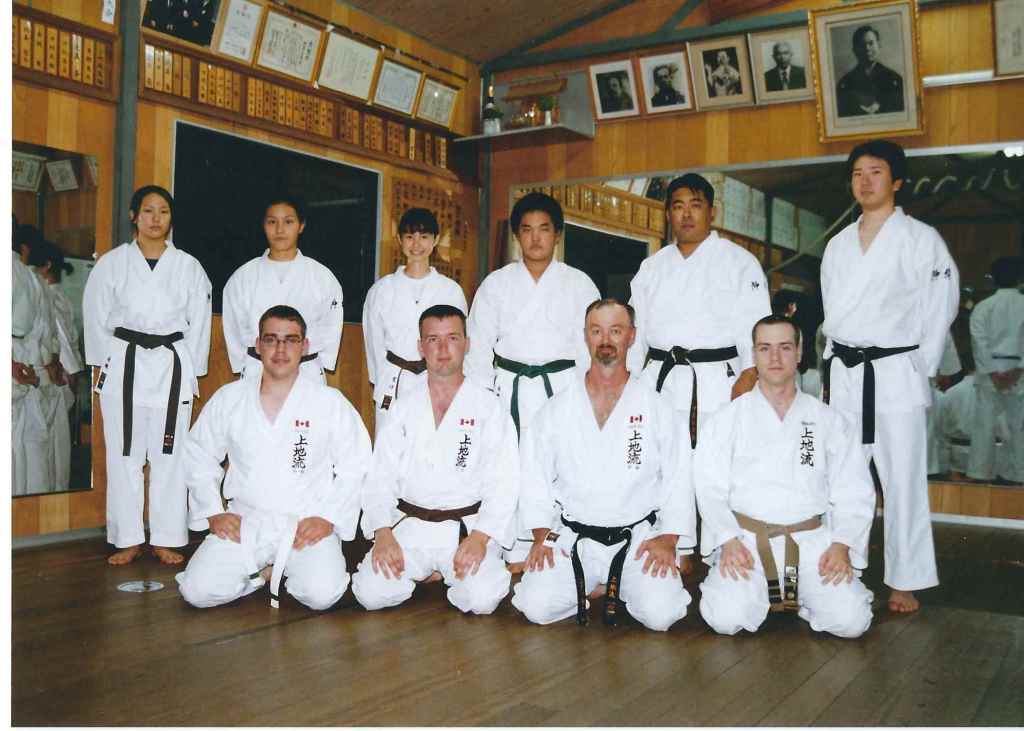
Nakama-Sensei’s senior class in Okinawa, 2001
The rest of our time on Okinawa was… nice. We visited some museums, neighbouring dojos and even attended the All-Okinawan Karate Tournament, which was interesting to watch. But because of the poor, total effort put forth by the others, I was never invited to test for black belt during my time in Okinawa. The masters were unimpressed with us and we were not worth their time. I returned to Canada feeling slighted. I was hurt, angry and resentful of the others as I believed they should have trained harder and that my loss was because of them. In retrospect, that sounds profoundly selfish but I was young and committed to the next stage in my development and I wasn’t used to having others stand in my way.
I spent the next six months focusing my anger and rage into my training. It wound up being a useful tool as well as being a healthier way to focus that negative energy than placing blame. But I’d be lying if I said there are days that I think back to 20 years ago and still wish it had been different. Karate has an unfortunate way of being political, a fact that I experienced firsthand in Okinawa. After some lengthy discussions and one-on-one training with Sensei, my black belt test was scheduled in the early months of 2002. And since the content of the test is a well-kept secret by the select few who have passed it, I won’t be sharing the specifics.
The night before testing, I had grand plans to get to bed early and get some rest on the night before testing. Then I fell asleep around 3:30 in the morning and woke again at 6:30 when my alarm went off. So much for getting some rest. There was a tight knot of fear and anxiety in my stomach and I had no idea what I was in for, which is likely what had me worried the most. Green and brown belt testing had gone very well for me, but the content of the tests were known to me before taking them. I couldn’t say the same for this test, which was only described as an all-day, 8-hour test of absolutely everything I had learn in karate since day 1.
The next hour consisted of eating a very light breakfast and packing my gym bag, which included a sandwich, granola bar and some fast-acting carbohydrates in the event I suffered a low. Sensei had instructed as such, saying that we would take a break for some lunch. I drove to the dojo and was there at 7:45, thinking that as per usual I would change and stretch prior to the start of testing, which I was told would be 8:00. I sat nervously in my car for the next fifteen minutes, wondering where Sensei was and thinking I had mixed up the days, until I saw him turn the corner and walk towards me with a jovial smile on his face.
Sensei and I
We changed in silence and went upstairs to the training floor where we took several minutes and stretched properly prior to beginning. Much to my surprise, the actual test was started at about 8:30. Once it began, I was all-in. That morning felt like the longest three and half hours of my life. I was put through the ringer like I never had before. I may have thought I’d sweated through workouts, but it was nothing like this. Sensei was relaxed, pensive and observant of everything I said and did. And that was the clincher: everything involved in-depth explanations of EVERYTHING I was doing. That’s what made it so intense. Ask me to fight? No problem. Ask me to fight while simultaneously explaining what I’m doing, how I’m doing it and why I’m doing it? Not so easy!
We broke for lunch around noon. I was of the impression that we would be taking a quick half-hour, wolf down our food and carry on. It was, after all, an 8-hour test and we needed to be conservative with our down time. This is why I began to wonder what was going on when we had reached nearly forty minutes of lunch break and Sensei was calmly looking outside, commenting on the weather. I was pacing on my spot, anxious and raring to continue, and he was acting like we had all the time in the world. I thought that maybe this was part of the test; maybe it was to test my patience and ability to keep calm. If so, I was failing miserably but said nothing.
The afternoon was a blur, with everything being mostly applied techniques and the physical aspect. We were done with words and if I thought the morning was tough, the afternoon was tough and painful. I didn’t break any boards. I didn’t demonstrate for a gymnasium full of friends and family and I wasn’t testing in tandem with a handful of other students. Everything was real. If I got struck, I suffered the actual result. Our only bodily protection was a pair of thin, white sparring gloves. Every part of my body held a mixture of sheer exhaustion, pain and adrenaline. The final stages of the test involved a couple of timed endurance exercises. Yes, you read that right; I had to do this AT THE END OF THE FUCKING TEST!!! Imagine doing a plank for twenty minutes after running a full marathon. That kind of thing.
When the timer finally rang, I unceremoniously dropped to my knees. My body begged me to let go and just close my eyes. My blood sugars were all over the place with a mixture of lows from exertion and highs from the adrenaline and glycol release. To this day, it was the most intense and physically-demanding challenge I’ve ever been through. It was made all the more important by Sensei dropping my black belt in my hands and saying, “I guess this is yours to wear now…” He went on to explain that I shouldn’t become complacent and that passing Shodan was a student’s way of formally asking his Sensei to learn karate. The true learning could now begin.
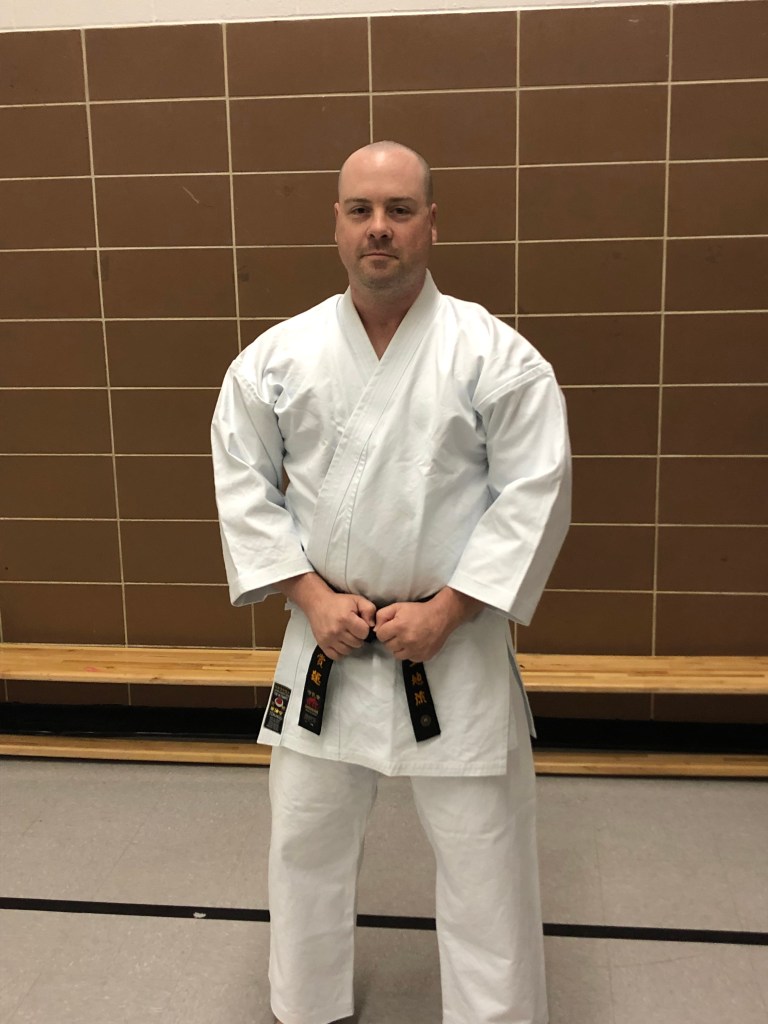
The finished product, 2018
Sensei invited me to his home after the test and we cracked a cold beer (of course). His son, who has been one of my best friends for decades and also holds a black belt, came rushing into the house like a tornado and hugged me tightly in celebration. Just about every inch of me hurt worse after that. But it was all worth it. Sensei explained that we were able to take a longer lunch and the test ultimately only lasted about six and a half to seven hours because there was very little he needed to correct me on. After we reminisced about the previous years I’d spent as his student, I made my careful way home where I enjoyed an overdue long shower and took a nap. When I awoke, I was able to share my accomplishment with my parents as well as a brief visit to the cemetery to visit my brother.
Since then, I’ve had schools of my own. I’ve trained a little bit everywhere, sharing knowledge and techniques with different schools, different styles and different people. I’ve taught others and continue to be taught, myself. A true martial artist will NEVER be done learning. And I can truthfully say that not only has karate played an integral role in maintaining my health and fitness, I’ve used it in defence of myself, in defence of others and in the line of duty. For the nay-sayers or MMA freaks who like to say that traditional martial arts don’t work, I know firsthand how very wrong that belief is.
In over forty years of teaching, Sensei has only ever graduated less than a dozen students to black belt. At the time of writing this, there are only seven or eight of us. And that’s the mark of how challenging the style may be. If you walk into a dojo and there are black belts floating all over the place, including on the kids, you can expect that you may not be getting the quality of training that the rank deserves. But those of us who have achieved Shodan in Uechi Ryu Karate can say without question that only those who are truly committed and have the will to do so, will succeed.
The greatest gift that karate has given me, other than saving my life, is having the opportunity to teach and protect others. And this is also the mark of a true martial artist, when your skills are used for the betterment of the world. I still have days when I look down at my black belt, which is starting to fray and come apart at the edges, and remember all the blood, sweat and tears that I paid in order to wear that particular colour around my waist. And it’s near and dear to me but you know what? I’m still a student. I’m still learning. I’ll continue to train and learn something new until the day they nail my coffin shut. And that’s why my belt may be black, but my soul will always be white. ☯
Help ME To Keep This Going!
My content may be free and I absolutely love providing it, but my time is not! I’m trying to make a go of it as a full time writer but obviously, everyone needs to get paid for the time they put in. Your donation to this blog can mean the difference between seeing daily content or wondering “whatever happened to The Blogging Buddhist.” Help me keep this permanent. Any small donation helps and will not go unappreciated.
No, I’m not being lewd or dirty-minded. I’m referring to something world-renowned but often disputed in martial arts circles. I’m talking about Bruce Lee’s one-inch punch. Depending on what circles you walk with, you may have grown up in the 70’s and 80’s watching movies such as Enter the Dragon, Fist of Fury and Game of Death. I loved those movies and spent my childhood throwing out my forefist, pretending I WAS Bruce Lee.
Lee is well-known for his fighting prowess, even to those who don’t travel in martial arts circles. And one of his best known techniques, famous even by today’s standards, is his one-inch punch. People are always quick to associate this technique to Lee, despite the fact that the one-inch punch is well-known in many traditional styles of Chinese martial arts. So the question is: does the one-inch punch actually work?
As you can see from the included YouTube clip, Lee is shown as able to impact a target from only an inch away, hence the name of the technique. The strike then sends a fully grown male staggering back into the waiting chair and sends him sliding back several inches while seated. The thing I like about this clip is that they show it in slow motion, allowing a trained martial artist to see exactly what may be going on when Lee executes the technique.
According to an article posted by Popular Mechanics, “[…] you first have to understand how Bruce Lee delivers the blow. Although Lee’s fist travels a tiny distance in mere milliseconds, the punch is an intricate full-body movement.” The article goes on to quote Jessica Rose, a Stanford University biomechanics engineer who points out that Lee’s technique starts with his legs. And that’s quite accurate. If you watch the video closely, you notice that Lee starts by carefully setting himself up and lining his entire body. This is followed by the explosive straightening of the knees, swivel to the hips, turning of the shoulders and straightening of the arm to deliver the punch.
It’s a matter of simple physiques. After all, Newton’s second law of motion tells us that Force equals the mass of an object multiplied by its total acceleration. So despite Lee’s average stature and slim musculature, the faster the fist travels, the bigger the expelled force once it impacts against its target. And all the individual components (legs, hips, torso, shoulders, arms) add to the total acceleration of Lee’s fist, prior to impact. This means that not only is the one-inch punch possible, it’s easily explainable with high school physics. Who knew?
It all comes down to proper bone alignment and velocity. That’s what makes it happen. Even in Uechi Ryu Karate, we train with a specific technique where we perform a structured, uppercut punch to the floating rib that looks suspiciously like a bastardization of the one-inch punch. We execute the technique by forcing from the thigh and hip, allowing all the major muscle groups to lend force to the fist, which is usually braced to the hip at the elbow. It’s effective and debilitating to one’s opponent.
This isn’t to mean that just anyone can do it. It actually takes years of training and precision to develop the technique in such a way that it can be effective in an actual fight. Even if it looks like the fist is only travelling an inch in distance, all the necessary parts require a whole lot of coordination. And even then, I wouldn’t use it. Gross motor function is always preferable over fine motor skill when it comes to a fight. If you have to take the time to line up your attack before you do it, it’s already too late.
It’s important not to believe everything you see in the movies. Especially martial arts movies, where the techniques and fights are grossly exaggerated. But as far as my personal jury goes, Lee is the genuine article and his one-inch punch is very real. It takes a lot of training and skill to properly execute it, but it’s real. At the risk of once again sounding lewd, for some people, one inch is enough. ☯
Taking proper care of yourself is one of life’s top priorities. This is true for any person, but especially true for someone suffering from Type-1 Diabetes. Although you can certainly find medical practitioners to help you navigate the complicated labyrinth of medications, treatments and methodologies required to properly balance your Diabetes, the ownership of your care ultimately falls to you. And even when people are fully aware of this, they very rarely recognize and acknowledge it.
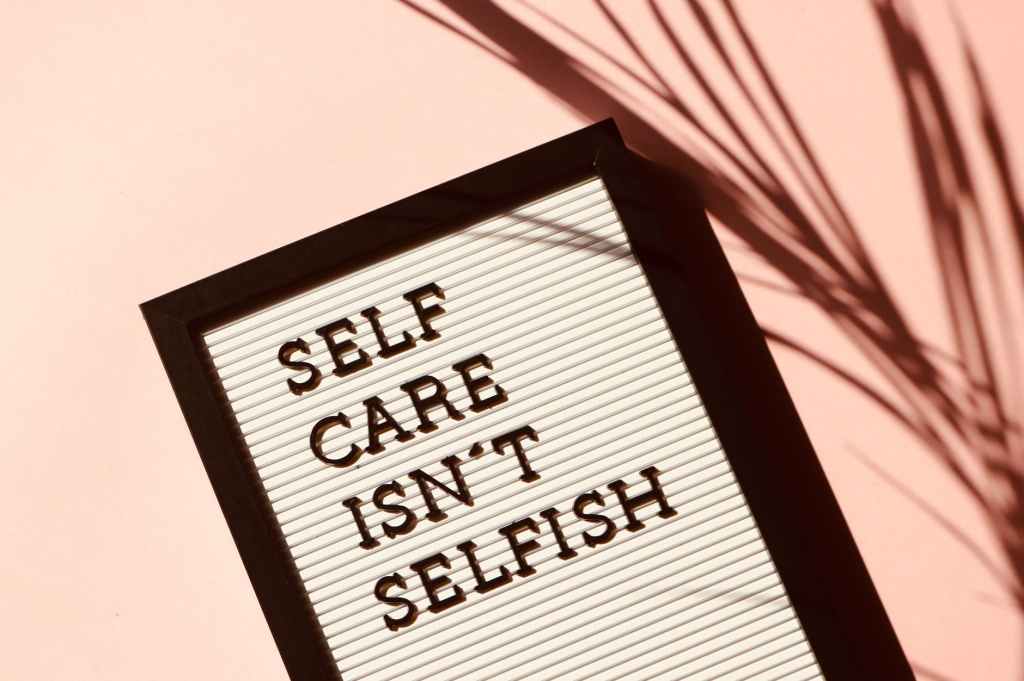
In order to be healthy, you need to be happy. In order to be happy, you need to be healthy. As Sensei would say, these two go hand-in-hand and it’s very difficult to truly have one without the other. Over the years, I’ve found myself sacrificing my wellbeing for the betterment of others, often going as far as damaging my health, exhausting myself and/or making myself sick. Although sometimes duty, honour and obligation requires it, it’s pretty difficult helping others if you first don’t help yourself.
So what does self-care look like? I don’t necessarily mean taking your medications or frequently testing your blood, although these are every important. I mean the self-care that includes one’s mental wellbeing as well as the physical. For example, did you know that if you’re tired in the middle of the day and decide you want a nap, you really don’t need to explain yourself to anyone? (Unless you’re at work, in which case I don’t recommend trying it. And if you do, please don’t name drop me…)
In order to illustrate my point I’ll provide two examples from my personal life, which took place some years ago. The first is work. I don’t think I need to to explain that work is a necessary part of modern life. Unless you happen to have been born into a wealthy family, most of us are forced to punch a clock and usually contribute somewhere in the range of 2,100 hours a year to help line someone else’s pocket. When I used to work for a certain popular franchise, who shall remain nameless for liability reasons, I let myself fall victim to my attempts at being an all-star.
Although not always the case, most employers are not only more than happy when an employee goes above and beyond, they come to expect it without any form of additional remuneration or praise. If you happen to be a prospective go-getter, this plays havoc with your health. This was me, up until a little over a decade ago. I would never miss a shift, driving in dangerous, inclement weather, going in to work when I felt ill and even going as far as passing out twice on the job, to be brought to the hospital for diagnosis, only to return the next day.
Despite the fact I was in management (and in light of that fact), it really gave me no benefit to be sacrificing myself this way. I ignored critically low blood sugars, worked through bleeding polyps and even did the work of two people when I was short and couldn’t replace them. And it wasn’t until I finally put my foot down and tried to call in sick that I got the ever-popular retort from my boss. I’m sure you’ve all experienced it; it was a dialogue that went a little something like this:
ME: “I won’t be coming in today. I’ve been ill all morning…” BOSS: “Well, just how sick are you? I need you for tonight’s shift.” ME: “Sick enough that I don’t feel I should be coming in to work…” (Bearing in mind that Canadian Labour laws take a dim view of an employer asking about ANY medical condition, my answer was more accommodation than was required) BOSS: “Alright, fine. I’ll see if I can replace your shift. I’ll call you and let you know.” ME: “Let me know what?” BOSS: “Whether I can replace your shift or not!” ME: “Why do I need to know that?” BOSS: “Because if I can’t replace your shift, I need you to come in…” ME: “Maybe I’m not being clear. I’m calling in sick. I won’t be in tonight.” BOSS: “Well, if you’re going to be like that, you’ll have to bring me a doctor’s note.” (Also against the Labour Code) ME: “I’m not going to a hospital! I just need to get some rest and I’ll probably feel better tomorrow. THAT part, I will let you know…” BOSS: “If you aren’t sick enough to go to the hospital or see a doctor, then you aren’t sick enough to miss your shift.” (Also not a permissible statement, unless you HAPPEN to have “M.D.” after your name, but what do I know)
Any of my readers or followers from back home can probably guess at what employer this was and would likely be nodding their heads furiously right now. But given my propensity for picking my battles, I would foolishly go into work despite feeling like absolute shit. I can’t tell you the number of times I’ve worked through a shift with frequent trips to the washroom where I would accommodate either end of my anatomy (Enjoy getting THAT image out of your head). Was it worth it? Definitely not. It didn’t result in a pay increase or any advancement to my career. All it did was cause damage to an already damaged body. Not smart, on my part.
The next story is about relationships. For the most part, relationships on their own can be rough and challenging waters to navigate, especially when dealing with someone who has little concern or understanding for your wellbeing. This brings me back to my earlier comment about napping. You all know that I’m a big fan of napping, but for this story, I’m referring to the need for actual sleep.
You see, as an adult, there really isn’t any reason why you should have to explain yourself, should you decide you’re tired and want to go to bed. Tired means tired, and is about the farthest thing from selfish that I can think of; next to needing rest from illness. But this was something of an alien concept to the woman I will identify simply as “Ex” (my ex-wife).
Ex had a nice, cushy daytime job, 9 to 5, Monday to Friday. I worked shift work, which often included overnights. This is not to say that she didn’t work hard AT her job, the issue mostly arose from her time at home. The scenario would involve working overnight and getting off work at 6 a.m. By the time I’d get home, it would be closer to 7 a.m. and I would sneak carefully into bed as to not wake Ex. But one’s circadian rhythm can be a bitch, and she’d often wake up less than an hour later, despite being on a day off.
Now, one would be inclined to think that any reasonable person would understand that someone who’s worked throughout the night would need more than an hour or two’s sleep. Not Ex. She’d wake me shortly after she’d have breakfast in order to “get the day started.” When I’d argue that I needed a solid period of proper sleep because I had to work overnight again that night, it would be met with argument, including but not limited to the fact that I “was not to waste her entire day off sleeping.” Nice, eh? There’s a reason WHY she’s an ex.
I’ve provided both these scenarios, not because I wanted to complain about these two negative aspects of years past (despite the fact that venting about it was kind of nice), but to point out that both these scenarios wreaked havoc on my health, my blood sugar levels and even my mental wellbeing. The stress and anxiety associated with always having to explain yourself for things that should be an understandable requirement of physiological survival can have permanent repercussions on your sense of self-worth, value and confidence.
That’s why it’s important to take time for yourself and do things that are uniquely for yourself. Have that nap. Run out to grab a coffee. Take an hour a day to meditate or work out. None of that makes you selfish, it simply guarantees that you’ll be in a better state of health and a better state of mind to help take care of the daily grind, whether that includes family, work or whatever. And should you encounter an obstacle in your life that prevents your self-care, whether work or personal, that makes them a cancerous cyst that you need to down a shot of whiskey and quickly slice off in one quick swipe. You’ll be all the better for it. Surround yourself with people who will not only accept your needs, but will encourage them, as well. I know I did. ☯
Depending on the style of martial art that you study, the way you develop your strikes can be integral to a solid progression towards your goals. Personally, I have always had an issue with things like brick and/or board breaking, because I’ve always seen it as a futile exercise meant only to show off or demonstrate one’s prowess in breaking through an object that’s been set up to yield. For example, my Sensei’s school of karate never involved board breaking in class. If it ever did, it predates the time I joined.
“Boards Don’t Hit Back!”
– Bruce Lee, Enter The Dragon (1973)
But while I’ve never been a fan of breaking, it can lend some specific benefits to the traditional martial artist. Other than scaring your mother’s new boyfriend into submission, that is. The first point that I’ll bring up is unfortunately a negative one. The boards and bricks that are typically used for breaking are special, in that they have a thickness and composition that makes them ideal for breaking. The boards are usually thin, about 3/4″ thick, and cut with the grain to allow an easy break.
The bricks are usually thinner than you’d usually see for any practical building application as well, and are stacked in such a way that there is usually a minuscule gap of air between each one. This is where physics comes in. So long as you strike the brick properly, The strength and force of your fist will be assisted by gravity and help to break every subsequent brick. This is where the positive point comes in. You’ll notice I specified that you need to strike the brick “properly.” That’s where the big difference comes in…
From a martial arts perspective, if you walk into a dojo on Day 1 and try to punch through a board, you risk spraining and/or damaging your wrist, tendons, muscle tissue and potentially fracturing fingers or knuckles. It takes a reasonable period of training and developing one’s striking techniques before you can properly apply them against a hard surface like a board or a brick. And even then, the amount of focus required to strike safely and keep from injuring yourself is paramount.
“Very Good. But Brick Don’t Hit Back.”
– Bolo Yeung, Bloodsport (1988)
As I mentioned in the opening, the value of breaking is not a universally shared aspect among all styles. Most traditional Okinawan martial arts styles, such as karate, don’t lend much value to breaking, although some of our hand-strengthening methods are just as brutal, if not worse. And any style that focuses primarily on weapons or grappling won’t give breaking a second (or first) thought. But some “high-flying” styles, such as Tae Kwon Do, take breaking to a whole other level.
You can see senior belts breaking boards after flowering spin kicks, or boards held high above head level. While these types of breaks look spectacular to spectators, they lend little (if any) value in an actual fight situation. That being said, the precision, speed and skill required to pull off those techniques, even if they’re only worthy of demonstration, is beyond MY skill. So I can’t help but feel a little impressed by them, despite their worthlessness.
The bottom line is that as I explained in my previous post Making An Impact, training in the martial arts for any sort of long-term period will eventually require you to hit something. Whether it’s air, wood or fire, allowing your strikes to impact a surface is an important part of learning to strike properly. I’ve always been a bigger fan of pads or bags, because you can work on your precision, strength and speed without the risk of injury associated with striking a board or brick. That, and I don’t feel the need to convince others of my skill by smashing inanimate objects in front of them. But I digress.
As far as the jury ruling on breaking, the pros would include the development of strength, accuracy and getting those knuckles calloused up for proper striking. Don’t even get me started on using a knife hand on something like a brick. I wouldn’t even use a knife hand against an opponent, unless I was striking soft tissue or cartilage. There’s too much risk of breaking fingers, which would render them useless if the fight isn’t over or you face multiple opponents.
The cons would include junior students attempting to break before gaining the experience required, resulting in injury. It’s also an effectively useless display, since you need to clean up and replace every board and brick you break. There are no such issues while using a punching bag. Another con is the fact that some schools require breaking as a part of belt grading, which can be an issue if you have all the skills and precision to respectfully earn the belt. Would breaking bricks have made me a more effective black belt? I don’t think so, although I believe some would disagree.
At the end of the day, this is simply another aspect of the martial arts that has evolved as a means of impressing others as opposed to the use of skill for the betterment of oneself or the style. Much like competition, it’s been around for a long time and isn’t in any danger of disappearing any time soon. But should you find yourself starting the martial arts and join a school that maintains the practice, bear in mind the aspects I’ve written. And try not to break your fingers… ☯
I like to think that one is never too old to learn something new. The prospect of being unable to “teach an old dog new tricks” is something of a myth, as is the concept I’ll be speaking about today. I’ve spent decades believing this was actually a thing, and incorporating it in many, if not most of my workouts. I’m referring to a term known as “muscle confusion.” The term, which is arguably not a scientific one, describes the act of changing up your workout routine frequently in order to “confuse” your muscles in order to prevent hitting a plateau.
But how effective is it? I’ll admit that I’m a really big fan of variety in one’s workouts, if for no other reason than to keep things interesting. But if I’m training in something, I’ll keep at it until I master it. A decent article posted by Men’s Journal explained it best by saying, “One big problem with the muscle confusion principle is that you don’t spend enough time working on an exercise to really master it. It’s like training to ride a bike one day, then a skateboard the next, and then rollerblading after that. Your skills on the bike aren’t really going to get better.”
Traditional karate is really big on repetition in order to master movements, techniques and fitness methods. As Ziad K. Abdelnour once said, “Don’t practice until you get it right. Practice until you can’t get it wrong…ever.” So there’s heavy importance in doing things properly. But I would be lying if I said that we often have tons of material and new techniques piled on at the same time. But the way to prevent or get past hitting a plateau is simple: increase your weights, increase your time and push yourself harder.
An article I just read by HealthLine.com states that the theory of muscle confusion is just a myth, created to help propagate popular fitness programs. The article goes on to say that muscle confusion is hype when compared to other fitness theories that are grounded in science. I highly recommend reading the article; it has some really good information.
So despite the fact that I’ve been on board the muscle confusion train for years, every reputable source that I’ve found seems to agree that it’s a myth and the better method is to remain consistent. At the end of the day, there’s nothing wrong with changing up your routine. It’s especially important to experience new fitness routines and programs, if for no other reason than to keep things interesting and have some fun. Your chances of reaching your fitness goals will increase exponentially if you enjoy what you do. ☯
One of the bigger problems in regards to fitness, especially when you have Diabetes, is the consumption of food in tandem with your workouts. There’s nothing I dislike more than having an hour earmarked for a workout, only to realize that my blood has significantly dropped and I have to treat the low before doing anything. This often (although not always) results in a feeling of being full and depending on what you’ve eaten, mildly bloated and is not conducive to a productive workout. So this begs a question: Is it better to work out on an empty stomach?
There are a few schools of thought on this, but none of them provide an easy answer. In my mind, I’ve always thought that working out without eating first was an easy way to ensure that your body used its stored fat as a source of fuel and help to trim down. But the flip side to this is that one needs energy in order to effectively exercise, and depending on one’s fat stores is not as effective a way of doing this as having food in your system. So, which perspective is the correct one? I call it “perspective” because in my experience, their preference is one that’s adhered to by most people, regardless of the information provided.
According to an article posted by the Mayo Clinic entitled Eating and Exercise: 5 Tips to Maximize Your Workouts, “studies suggest that eating or drinking carbohydrates before exercise can improve workout performance and may allow you to workout for a longer time or at a higher intensity.” It goes on to say that not eating may result in sluggishness or light-headedness. If you workout in the morning, ensure to have finished your breakfast for at least an hour before exercising.
The article touches on portion size, explaining that large meals should be eaten three to four hours prior to exercising, with smaller meals being eaten one to three hours before a workout. Snacks effectively won’t provide any energy if you have them immediately before a workout, especially if your workout if less than 60 minutes in length. The article also makes two important point about eating AFTER a workout in order to help your body recover and repair itself, as well as staying properly hydrated. Which you should be doing, anyway.
According to what I’ve read in relation to the body’s fat stores and how they’re used, if you’ve fasted before a workout, you’re essentially guaranteed to be in calorie deficit, leading to the burning of fat. This is because the body’s only available fuel source IS your fat stores, if you’ve skipped a meal before exercising. And that’s all well and good, so long as you monitor your blood sugars and make sure you don’t crash from low levels, depending on the type of workout you’re doing.
If you’re doing a shorter workout, an empty stomach likely won’t affect performance. A quick, 30-minute workout over your lunch break won’t send you into a frenzy. But if your workout is one or even two hours long, working out on an empty stomach can lead to a whole bunch of nasty symptoms like dizziness, light-headedness, nausea and will likely make you drag your ass throughout your routine. Better to have something to eat prior to a long workout.
No matter what your preference is (and it should be based on your preference), the important takeaway is to make certain to eat after your workout to aid in recovery, stay hydrated and make certain that whatever you do doesn’t interfere with proper blood sugar control. At least no more than exercising usually does. One issue I’ve often had with karate, is that weekday classes have ALWAYS been around the 6 to 6:30 pm timeframe, meaning I might be in the middle of digesting supper when we start up. That’s when you want to ensure that your meal is light and easily digested, otherwise you’ll inevitably face difficulties during class.
In closing, I’ll point out that most sources have stated that even if working out on an empty stomach promotes the burning of fat as fuel, it may not provide the amount of fat reduction a person is looking for. But being in a calorie deficit is the only genuine way to truly get slimmer. Also, there’s no way to focus on just ONE area. For example, you can’t do hundreds of crunches for the purposes of burning belly fat. That’s a myth. Your abs will get strong enough to crack walnuts, but your fat stores will burn equally throughout your body. ☯






 The Blogging Buddhist