Almost twenty years ago (from what I recall), Sensei made a rather drastic change in his life. He had spent the previous decades in various levels of law enforcement and had been working at the head correctional officer for a municipal jail. At some point, he faced some work-related issues that ironically, are eerily similar to my own. But he took this opportunity to knuckle down and try to find something he wanted to do that would make him happy.
I remember him coming to karate class and being full of piss and vinegar (more so than usual) and talking about the research he was doing and the studies he had begun. I didn’t understand most of it at the time, but ultimately he was studying to transition into a career involving Chinese Medicine, Herbology and Acupressure. Much to my dismay, he transformed his home dojo into a clinic and once he graduated all the certifications he needed in order to do so, he bang taking in clients and stepped down from his current career.
I say it was to my dismay, because I had passed a number of belt tests in that dojo and changing it into a clinic meant I wouldn’t be passing my black belt there. Which I didn’t. Unfortunately. But hey, good for him! I asked him why he chose acupressure over the more popular and recognized acupuncture, to which he replied that he preferred the personal touch it involved, as opposed to jabbing someone with a bunch of surgical needles.
My point is that once his clinic was in full swing and things were picking up, I asked him how things were going. He said, “I’m doing something I love and enjoy, five days a week. It provides me with income to live and I get to continue doing it. So ask yourself, if I love what I do, and the money is coming in on its own, when am I doing actual ‘work’?” His choice of words and the look of serenity on his face have not only echoed in the back of my mind over the years, I’ve been hearing it prominently over the past two or three.
“Choose A Job You Love, And You Will Never Have To Work A Day in Your Life.”
– Confucius
It can be difficult, painful even, to try and find a career that you want to do with something that you LOVE to do. But if you manage to find it, you no longer have to concern yourself with money as it will come on its own. You simply need to keep doing what you love; whether that means owning your own business, being in law enforcement or working as a mortician. Not everything if for everybody, so the challenge comes from finding what’s right for you.
To this day, Sensei still has his clinic open. Pandemic issues aside, of course. In fact, his choice of career inspired his son to study and take up acupressure and open a clinic of his own, as well. Besides doing what they love, it also puts them in that coveted employment category of being business owners, which has its shares of ups and downs, of course. But the point is that if you go into work everyday, unhappy and unsatisfied with what you’re doing, maybe it’s time for a change. There’s like to be something better waiting you, just around the corner. ☯
Winter is coming! I’m not really a Game Of Thrones fan, but I love that line. Granted, I’ve never actually seen it as I don’t have cable. I am, however, a pretty big fan of the Rocky movies, which probably dates me more than I care to admit. But the one that comes to mind is the fourth instalment, where the antagonist kills one of Rocky’s best friends during an boxing match and Rocky travels to Russia to train for a revenge fight.
In this movie is likely one of the best winter training montages I’d ever seen at the time and even since then. With Vince Dicola’s “Training Montage” playing in the background, you can see Rocky using unorthodox training methods to build and develop himself in preparation for his fight against Drago (played by Dolph Lundgren). I included a YouTube video of the scene I’m referring to. Now would be a good time to point out that I have no ownership in the video nor am I responsible for it; it’s just a linked video I found on YouTube.
The scene actually demonstrates a clear difference between intensive training using machinery and a comfortable environment versus using the elements and whatever one has at their disposal. And now that I’m writing about it, I need to find a copy of this damn movie so I can watch it again! But in all seriousness, it got me to thinking about the effects of training in a cold weather environment.
First of all, let me just say that I’m a bit of a fussy bastard when it comes to temperature. I don’t like it when the temperature is very cold and I don’t like it when the temperature is very warm. So I’m basically screwed, all year long, living in Saskatchewan. But realistically speaking, I’ve found myself training in just about every climate and temperature I have available to me, and a couple that I don’t.
What I mean by the latter, is that when I travelled to Japan in 2001, we trained almost every day in 40 degree weather. It felt tropical to us, but it was autumn to the Okinawans. I was drinking litres upon litres of water and rarely went to the washroom. My body was literally using the hydration as fast as I could provide it. But the flip side to this, and the purpose behind this post, is that I’ve also gone running in snow storms. Not recently, mind you. I’m old as disco, now.
Back when I was training for my black belt, I would get off work at 1 in the morning, head home, change into workout gear and grab my walkman (think iPod, but much bigger) and circumvent my hometown of Dalhousie. This made for about 10 kilometres of running in wintery conditions, which is not a lot by my cycling standards. But I guarantee that it felt like forever while I was doing it. It probably doesn’t help that Dalhousie stands on the side of a reasonably steep hill that slopes down into the Restigouche Bay, so there was a fair bit of uphill running.
Let’s start on a positive note, because I am frequently way more negative than I should be, and let’s discuss the benefits of training in extreme cold weather. According to a post written by Dr. Adam Tenforde for the Harvard University website, working out in colder weather can help improve your endurance as “your heart doesn’t have to work as hard, you sweat less, and expend less energy, all of which means you can exercise more efficiently.”
The article goes on to explain how working out in the winter can give you some exposure to sunlight, which people tend to get much less of during the winter, as well as helping to transform certain areas of white fat, like the stomach and thighs, into a calorie-burning fat. This can be helpful if you’re like me and are struggling to tone down some of the “Micheline effect” I seem to have developed in my midsection.
Another benefit is that if you have a preferred trail that you run on, you’ll likely have it to yourself as most people have an unfortunate aversion to working out in the cold and likely won’t be sharing your enthusiasm. Now, if only I could guarantee the trail around Wascana Lake would be vacant and ice-free, I’d bike around that bad boy all winter! But I digress…
Since all the world is balance, we wouldn’t have the positive if not for the negative. So let’s cover off some bad aspects. If you have an underlying or chronic medical condition, cold weather training may not be for you. Listen to me, I sound like one of those commercials for a new prescription drug. “Talk to your doctor, if you think that running outdoors and freezing like a dumb ass may be right for you…” But seriously, things like heart conditions, asthma and many others can be adversely affected by pushing yourself when it’s cold outside.
Next, one needs to consider all the typical wintery hazards such as frostbite, which can affect any patch of exposed skin, hypothermia and even dehydration. Yes, that’s right! You can dehydrate in the cold; it’s not just an extreme heat thing. People also forget to consider sunblock when running on sunny days in the winter, despite the fact that UV rays are UV rays, regardless of the temperature. But maintaining your core temperature is important in order to prevent getting sick, as well.
According to the Mayo Clinic, you should dress in layers. Their article says to start with a synthetic layer that wicks moisture away from your body, followed by a layer of fleece or wool for insulation, topped with a breathable, waterproof outer layer. They also mention that you may have to experiment and try a few different combinations to find what’s right for you.
I use a base layer of Under Armour, specifically their “cold gear” apparel, which moves moisture away from the body but also helps to keep my body’s heat contained. I follow this up with a cotton shirt, since I don’t have fleece or wool. Even if cotton has a propensity to stay wet, it also provides a layer that will absorb moisture that makes its way through. then I have a waterproof Columbia jacket I throw on top of that. Couple it all up with a comfortable pair of waterproof boots and some windproof pants over thermals and you’ve got yourself a winter running outfit.
The last aspect I’ll cover off is the Diabetic one. Obviously, all of the problems I’ve described can affect someone with Type-1 Diabetes in some given way, shape or form. One of the bigger problems is that the cold will sometimes block or numb some of the recognizable signs of hypoglycemia, which can potentially be dangerous if you’re running far from home. Here’s where technology pays its due, as you should be carrying a cell phone and/or letting your family know where you’re going, if training outside.
The winter season shouldn’t be an excuse to stop working out. I’ll admit, I much prefer curling up on the couch with my wife, munching on nachos and binge-watching Kitchen Nightmares. But Diabetes doesn’t take a day off and neither should your health and fitness! Dress well, monitor your blood sugars and stay hydrated. Whether we like it or not, the colder season will be in full swing, shortly. ☯
What is fear? Why are we afraid of certain things? First, let’s agree that there’s a big difference between having a fear and being afraid. Fear is a rational or irrational perception to danger, whereas to be afraid is an active response to that fear. And if it happens to be an irrational fear, it’s referred to as a phobia. Phobias are considered irrational because they usually stem from a fear of something that doesn’t actually and/or usually present genuine danger, such as clowns or spiders.
Even if on the face of it these things won’t harm anyone, a person with a phobia of such things will usually go to great lengths to avoid them. This often leads to being made fun of by friends and associates, especially if they have no phobias themselves. But let’s focus on fears, as this is the topic of today’s post. The human brain is an incredibly complex machine, and it holds a great many mysteries, even in today’s advanced environment of science.
Physically-speaking, fear is rooted in a region of the brain called the amygdala. I won’t get too specific on THOSE details, especially since I haven’t studied medicine and I’m likely to fuck something up. On the “non-physical” level, fear stems partly from experience. This means that you’ve been exposed to something that was taught to you. For example, if a child sees their parent reacting in fear of something they’ll likely learn to be afraid of that particular thing as well.
But some of it is born of a primal, prehistoric instinct that’s still buried deep inside your brain. Have you ever walked through a dark basement? Ever notice that tickle at the base of your spine, as though someone or something is watching you? Even if your basement has four, bare walls with nowhere to hide, that feeling is still there. This is born of an animal instinct that teaches us to be wary of predators, which are more likely to take us by surprise in the dark. Or maybe it’s the ghosts in your house. Who knows? But that’s a post for another day.
The point is, fear is healthy. It teaches us a proper level of caution as we navigate the world and keeps us from doing stupid things (mostly). Being fearless doesn’t mean a person HAS no fear but rather how they deal with said fear. According to an article I found on Psychology Today (one of my favourite sites), you don’t actually need to be in danger in order to be scared. Sometimes fear can stem simply from the thought of what COULD happen.
At the end of the day, everyone has a fear of something, even if we’re unaware of what that fear may be. There are ways of dealing with one’s fears, such as facing them, therapy and in extreme cases, medication. But the reality is that some fears are a good thing. They’re part of our survival instinct and fears are what helped us get as far through history as we have. But succumbing to certain fears have also led to some of history’s worst practices, such as with trials. Acknowledge your fears but don’t indulge them. This can mean the difference between screaming when you see a spider or appreciating their presence in your home (mine is named Hubert). ☯
Back in the 1980’s, my parents were of the opinion that all I required for proper Diabetes control was to avoid “sugar.” The concept of carbohydrates never entered their mind (and somehow my dieticians never brought it up, either). So plenty f high-carb consumables, such as bread, milk and apple juice never entered their minds as something that could affect blood sugar. Thank the light that i took control of my own Diabetes care before any permanent damage was done.
I can’t place TOTAL blame on my parents; like most parents, I was their first exposure to Diabetes and they did the best they could. But their best can’t answer for the multitude of comas I suffered through as a child, or the Diabetic Retinopathy I had to deal with in later years, as a result. And truth be told, carbohydrates have gotten a pretty bad rap in recent decades. Multiple “fad” diets have burned carbohydrates (pun fully intended) in such a way where people genuinely believe that carbohydrates should be eliminated from their daily diets.
Here’s the thing: carbohydrates are a necessary form of energy on a person’s everyday diet. And although it’s possible to reduce your sugar consumption (you won’t catch me eating donuts every morning), reducing your carbohydrate intake is a bit trickier, since your body needs it as a primary source of fuel. But are sugars created equal? I would certainly say no!
You would think that sugar is sugar, right? It’s all 100% carbohydrates. But carbs are actually a combination of carbon, hydrogen and oxygen, which is what makes up the name carbohydrates. There are many more complexities behind this, and I don’t want to drop y’all down the rabbit hole to an extreme extent, but it gives you an idea of what carbs truly are, besides the usual “you need them” rhetoric I usually stuff down your throat.
So, although regular, everyday processed sugar is 100% carbohydrates (100 grams of sugar is 100 grams of carbs), did you know that brown sugar is actually a couple of grams less in carbohydrates for 100 grams of sugar? Although that doesn’t make a huge difference in terms of usage, over the long it can mean a lower carb-count for the amount of sugar you’re using.
I’m on a bit of rant in terms of sugar, but my point is that you can never be sure of how many carbs you’re actually taking in unless you do the research and the measuring yourself. Even some nutritional information labels may not be accurate, although it can be hard to tell as your insulin sensitivity plays a big role in how you deal with those carbs.
That’s why a well-informed nutritionist or dietitian can be an invaluable tool, in tandem with your endocrinologist being on top of his or her game in ensuring your pump settings are on the ball. And most importantly, remember that not all foods, even sugar, are created equally. ☯
One of the biggest challenges I’ve faced in recent years is the thickening of my mid-section. Although I’ve never really been a big fan of a traditional six-pack (traditional Okinawan karate’s custom believes the hara, or the source of life, is in the midsection), I’m also not a big fan of having a hanging gut. Most people tend to forget that insulin is a hormone and can cause weight gain depending on its use. And given that I’ve reached my 40’s, my metabolism is no longer what it used to be.
Most of the time, and as I’ve written before, fad diets and gimmicks are usually useless. There is generally only one true, effective way to lose weight and burn fat and that’s to burn more calories than you consume. The prospect of reducing your food consumption or filling up on foods that are low in calories, such as lean meats and vegetables, are obvious ways to accomplish that goal when combined with rigorous exercise performed several times a week.
That fact doesn’t prevent some people from trying their best with things that they believe will help them along on their weight-loss journey. I’m saddened to admit that even I gave it the old college try, back in 2015. Despite how hard and how often I was working out, I decided to jump on the bandwagon and look into a supplement that I was told was “guaranteed” to help trim stomach fat. I’m talking about Conjugated Linoleic Acid, or CLA.
CLA is a fatty acid that can be found naturally in a number of foods, but it is not an “essential” fatty acid. This means that you don’t necessarily need it in order to be healthy. We consume CLA through these natural sources, but many people use an artificial CLA supplement in order to help shed some weight. For the most part, the jury is out and although it shows SOME potential towards shedding weight, it’s negligible.
According to an article posted by Healthline.ca, there have been numerous studies performed in relation to CLA and weight loss. The results usually showed only a minimal loss of fat compared to those who were given a placebo. The article talks about a matter of half a pound per month. For those who are a bit weaker in math, this means that consistent use of CLA supplements over a full year would see you lose no more than about six pounds.
The article actually offers a sadder total, estimating that long-term use of CLA over the course of six to twelve months only reduced body fat by 2.93 pounds. That’s pretty pathetic, when compared to the cost of paying for the supplements, coupled with some of the negative side effects that one will likely develop from its use. You can click on Healthline’s link above to read about some of those, but wouldn’t it be easier to simply exercise more?
I was living proof of these studies when I used CLA supplements for the better part of a year. My muscle mass increased with all the exercising I was doing but in terms of body fat, there were no results. Plus, I had dished out a bunch of money on buying the supplements when I could have been using that added money on lean meats. I love lean meats. And fish… Damn, I’m getting hungry now…
Just to give you a bit of an idea behind the financial toll this attempt took on me, I would purchase a 60-capsule bottle at about $25. I won’t make myself civilly actionable by naming the retail chain I purchased the capsules from, but the dosage is 3 to 5 capsules a day. So at the lowest dosage, I would need another bottle roughly every three weeks. This means that over the course of a year, I paid $450 for those supplements. At the highest dosage, I would need to replace the bottle every two weeks, meaning I would have paid $650 over the course of a year. Thank the light I only stuck to the lowest dose…
There are no easy shortcuts to weight loss. No magic pill or secret formula you can consume will make the fat magically melt off your gut. This is one of those things in life where you need to put the time and the work in. Despite the fact I should have known better, I had to learn it the hard way. And sometimes it needs to be that way, but I’m hoping that my post will help some understand.
Eat well, rest well and exercise well and you can be assured that weight loss will happen in its own time. And remember that every person and every person’s metabolism is different, and what works for one person may not work for you. Hopefully you won’t waste a bunch of money figuring that out. But if you are thinking of trying out a new supplement, be sure to consult your medical practitioner and do your research. ☯
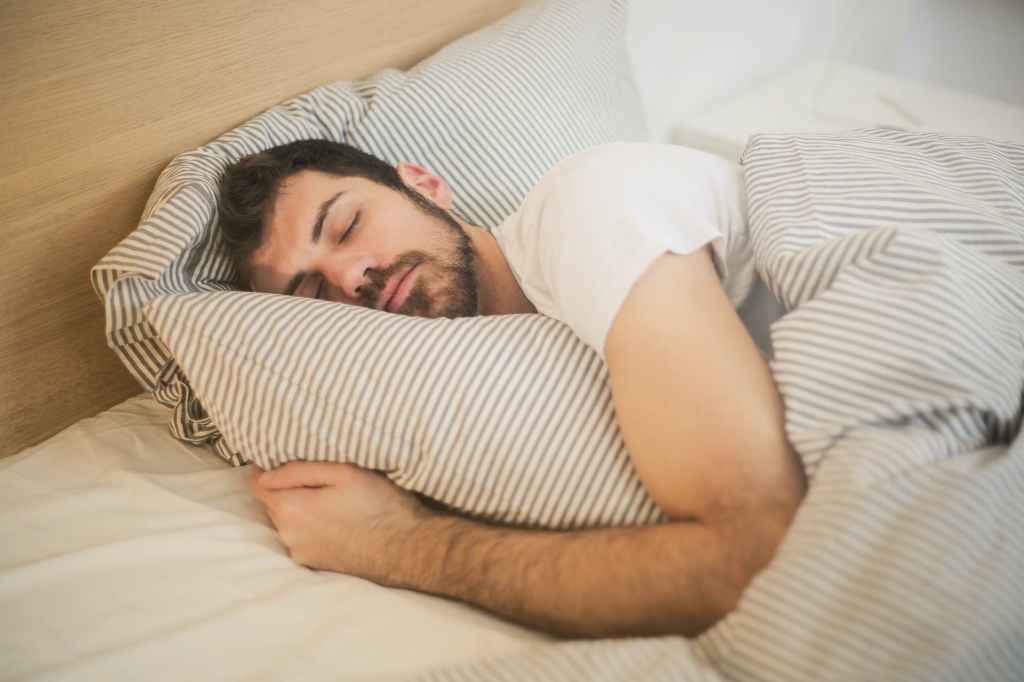
Anyone who reads my posts on the regular knows that I tend to bitch about Diabetes complications a lot. And with good reason; Type-1 Diabetes affects just about every system and every organ in the body, to one extent or another. Sleep is no different, with fluctuating blood sugars causing insomnia, nightmares or restless leg syndrome. There’s plenty that can go wrong during a Diabetic night’s sleep, including being woken from a drop in blood sugar. Believe me when I say that I’m grateful that I DO wake up. But for the most part, I haven’t had a full, uninterrupted eight hours of sleep in a very long time.
The focus of today’s post isn’t exactly a symptom, per se. But rather an unfortunate side effect of the current Diabetes therapy I use. I’m referring to trying to get a full night’s sleep while wearing an insulin pump and/or CGM. It stands to reason that as I sleep, I need to carefully consider how I position myself in order to avoid kinking my cannula (say THAT three times fast) or applying consistent pressure to the CGM sensor, which may cause it to fail.
There are all sorts of websites that provide some interesting (if not altogether accurate) explanations regarding different sleep positions, what they mean and apparently describe your personality. I’m not a big believer of that last one, but to each their own. My point is that for the longest time, I’ve slept on my stomach. I have no other explanation for this other than it’s always felt the most comfortable. But over the past year or so, I’ve slowly adjusted myself to remain on my back while sleeping, due in part to the pump set sitting on my abdomen and the CGM sensor embedded in my tricep.
There have been a number of times where I’ve rolled over during the night, since the average person can’t necessarily control their movements while asleep. This has caused a score of issues including but not limited to, my pump slipping out of my pocket, my infusion set being pulled out and even my pump slipping off the bed and yanking at the injection site. Wanna talk about rude awakening? That’ll do it for ya! I’ve rectified this with a silicone sleeve, which makes the pump less slippery and less prone to slipping out of my pyjama pockets. There are also neoprene belts you can purchase, if you don’t mind paying a fortune.
CGM sensors are a different bastard, since any sustained pressure against their injection site will cause them to fail. This means that if I roll to my side and my tricep is pushed against my mattress, it prevents the sensor from reading the interstitial fluid in a way that’s required for consistent CGM readings. And since the Medtronic 670G absolutely LOVES chirping at me in the middle of the night, it only takes a few minutes before the pump wakes me with an alarm to tell me that something’s wrong. Two times out of three, if I’ve kinked or blocked the sensor in this way, it won’t right itself and I find myself disposing of a sensor long before I was due for a change.
I’m likely making it sound worse than it actually is. In reality, the sensors aren’t AS delicate as the previous paragraph makes them out to be. But it’s a very real concern. The biggest concern, which has happened before, is having the pump’s infusion set pulled out of my injection site. The problem with this one is that it can take a long time before my CGM acknowledges that my blood sugars are starting to rise. And even as they do, the Auto Mode will start pumping out more insulin to compensate, which will do nothing but soak into the bedsheets.
After a long enough period of time, an alarm will start beeping on the pump to warn me that my intervention is required since the insulin isn’t working. But by then, my blood sugar level can have potentially gotten high enough to require multiple boluses, monitoring for hours and plenty of fluid intake. Something everyone LOVES to spend the overnight hours doing. Luckily, this has only happened to me a few times, and the sting from the adhesive being pulled usually wakes me anyway.
When we talk about Diabetes complications, most people associate the term with vision problems, organ failures, amputations or Ketoacidosis. But we often forget that the technology we use, although helpful in many respects, can be a hindrance in others. This is what’s led me to sleep like a poorly posed Egyptian mummy. If you’re on pump therapy, try and train yourself to sleep in a position that will prevent issues with your equipment. Store your pump in a protective silicone sleeve in case it tumbles out of bed or consider using pyjamas that have zippered pockets. It makes the sleep process more complicated, but it’s a small price to pay for decent blood sugar control. Now if you’ll excuse me, I need a nap… ☯
Most people have been adversely affected by COVID-19 over the past six to eight months. Either their finances or their jobs have been affected, people unable to pay their mortgages or rental fees, not to mention the poor souls who have contracted the virus and those who have unfortunately succumbed to it. Some areas of Canada have been doing fine, with the virus practically non-existent. Other areas haven’t been so lucky (like Ontario and Quebec).
But some of the smaller things can have a big impact on a person’s day-to-day life as well. For myself, one of the biggest losses I’ve suffered throughout the pandemic is the closing of the karate school I frequent. Although fortunate and grateful that my job, finances and home have not been affected and that no one in my family has contracted COVID-19, Tuesdays and Thursdays bring about a reminder that not only do I no longer have a dojo to train in, but the world is a long way from returning to normal.
Riding on the coat tails of yesterday’s post, the colder weather has had a profound effect on my level of motivation. Every joint in my body has started to ache every morning, thanks to 32 years of intensive training that’s caused wear and tear on almost everything. My feet are cold due to lack of circulation, thanks to Type-1 Diabetes. My sleep has always been horrible, but it’s all the worse now, with the fact that the sun doesn’t rise for almost an hour AFTER my alarm goes off.
All in all, the cold weather and pandemic have had a profound effect on my level of fitness and motivation. It’s already starting to be too cold for extended bicycle rides, even if I could sneak in a short one here and there in the afternoons. And with the renovation of our basement starting in a couple of weeks, we’ve started to move most of our belongings from the basement to the garage, thereby taking away my little “at home dojo” that I recently wrote about. I’ve also started to indulge in morning naps when my 1-year old takes his (my 5-year old is gone to school), which is a terrible habit to get into as my body has come to expect it. It’s gonna suck when I go back to regular work!
Can I train at home? Absolutely. DO I train at home? Most certainly. But there’s a lot to be said for training in the dojo environment. Not only to you get to feed off everyone’s else energy and motivation, thereby increasing your own, there’s a camaraderie that one gets to enjoy that can’t be found elsewhere. Unlike working out in a gym or by yourself, social interaction within the dojo is basically a requirement. Although not impossible, it’s quite difficult to train for an entire class without interacting with at least a few of your classmates.
The selfish side of me is disgruntled at the fact my dojo has remained closed throughout all of this. Considering the dojo runs on the school schedule and schools have let in, and the few students we have ensures a better chance at social distancing and lower percentage of contracting the virus than most classroom settings currently have, in some ways it makes little sense. The sensible side of me understands that a karate school is a far cry from being a “necessary service,” and that it would be an unnecessary risk to allow classes to resume.
There are some sources that have expressed that the world may factually never completely return to normal and that social distancing practices will become the new standard. If this is so, perhaps the dojo will never reopen. That would truly be heart-breaking, as it could mean the severe decline of modern martial arts and the possibilities that some arts may be lost. Only time will tell. In the meantime, I need to find my own motivation and continue to forge ahead, feeling that small twinge of loss every week when Tuesdays and Thursdays roll around. ☯
Advancing to pump therapy and including Continuous Glucose Monitoring has been something of a rough journey for me over the past five years. All things being equal, the concept of Auto-Mode is a little bit scary. If your blood sugars start to rise, your pump will start trickling some extra insulin into your system. If you begin to drop, it will taper off your basal delivery (or suspend it, depending on how low you’re going). It demands a certain level of trust in an inanimate object that most humans won’t necessarily have. Myself included.
Artificial devices are the new way to go, since transplanting an actual pancreas is more complicated than it sounds, comes with its own batch of complications and has a pretty low success rate. Therefore, finding some other way to replicate or imitate the functions of a pancreas is the next logical step. Something akin to obtaining a prosthetic limb after an amputation. My new Medtronic pump, when including CGM and on Auto-mode, is about as close to what they refer to as a “closed-loop system” as you can get. The hardware and software basically work towards controlling your highs and lows on its own.
Sounds a bit like Skynet is taking over to me, but whatevs. Given my age and the fact I’m not getting any younger or stronger means I need to be open to new therapies and methods of controlling my Diabetes. The decision was ultimately taken away from me around mid-July, when constant issues with Auto-mode and multiple faulty sensor issues caused me to scrap the whole thing and simply use my new pump manually. I got some further coaching and guidance and have now been on CGM for well over two months, with minimal problems and/or difficulties.
That’s why, after being contacted by Medtronic to ask me “how Auto-mode is going,” I thought I should take another crack at it. With a fresh vial of insulin, fresh sensor set and a bit of patience, I activated Auto-mode and have been on it for about the past two weeks. Given that the pump has had two months to accumulate data for the purposes of Auto-Mode, I would have been pretty pissed off if it didn’t take. But I have to say, its been going much smoother and my blood sugar levels have been fantastic.
I’m still a bit leery and I’ve been waiting for the other shoe to drop because, well… this is me, we’re talking about. But besides my pump clip breaking last week (don’t even get me started on that one), I’ve had no issues except one infusion set failure, which was mostly due to scar tissue. Auto-mode certainly includes more alerts than I’m used to on manual mode, but I’m getting used to them. Skynet seems to be working just fine.
I guess it’s still better than having an internal artificial organ that I can’t see, or have any direct control over. And as long as it continues to do its job, I guess I’ll have one less aspect of Diabetes to bitch about. As with all new technologies, all it takes is a little patience and some getting used to. ☯
I feel that before I start writing about today’s topic, I should throw up a quick reminder that I am not a doctor. I have no formal training in any medical field, and everything I write about has been researched and has a source, or is something I have directly experienced or have trained in personally. So if anything I’ve written feels incorrect, please feel free to reach out on the “Contact Me” link on my Home page and feel free to voice your concerns. I’m definitely not above, nor do I object, to being corrected.
I think the title speaks for itself, and this is the topic of today’s post. This topic hits close to home for me. Much like Diabetes, this condition has affected many people I know and care about and I have in fact been affected by PTSD, myself. There has been a significant increase in attention on PTSD in the past two decades, and it has started to be recognized as a genuine mental health condition and not simply a passing thought process that the sufferer has the option of ignoring. Previously known as “shell shock” during the World Wars, it was originally associated mostly to combat veterans who had seen active military service, especially during times of war, and were exposed to the traumatic aspects of said war. This is no longer the case, and research has come to show that PTSD can affect anyone, based on their specific circumstances.
I’ll start with my usual, which is to define PTSD or Post-traumatic Stress Disorder so that we can all be on the same page about what’s being discussed. According to the American Psychiatric Association, PTSD is defined as “a psychiatric disorder that may occur in people who have experienced or witnessed a traumatic event such as a natural disaster, a serious accident, a terrorist act, war/combat, rape or who have been threatened with death, sexual violence or serious injury.”
Although accurate, this definition is certainly a broad and generalized one. And whether or not something is traumatic is usually subjective to the sufferer. But the symptoms are generally pretty universal, which can include flashbacks, nightmares, insomnia, anger and irritability, hyper vigilance and aversion to social gatherings or constant noise. According to an article posted by the Mayo Clinic, it may even be possible to develop PTSD without having personally suffered the trauma. For some people, just learning about the event can be enough to cause the damage. Like I said before, it can be pretty subjective to the sufferer.
At the outset, it can also be a condition that the sufferer isn’t even aware that he/she has. I can recall the story of a law enforcement colleague from years ago, who had been initiating a traffic stop along a busy highway. He walked towards the stopped vehicle and he saw something small sitting on the edge of the roadway. When he stopped and looked at the object, he identified it as a small child’s sneaker. He immediately threw up and went into convulsions, got vivid flashbacks of an investigation he had been working on that involved a small child who had been killed. Although he had coped well to that point, the sight of the child’s sneaker brought all the traumatic memories to the surface and he basically shut down, right on the edge of the highway.
Although it isn’t always to that extreme, I’ve heard a lot of stories like this one. And have had plenty of colleagues who have suffered in silence. The ultimate symptom of PTSD and the one that often takes hold before friends and family become aware that there’s a problem, is suicide. Because of the stigma associated with PTSD in previous decades, many people choose to stay silent about their condition and try to self-medicate or isolate from others. When that fails, many often feel the only remaining option is to end their own lives.
For myself, nightmares and insomnia have certainly been the prevalent symptoms. But hyper vigilance, irritability and anger are high on the list as well. I have difficulty being in large crowds and will often find myself with increased sense of anxiety and shaking when I’m surrounded by people, especially if it’s a room full of conversation and noise. I’m quick to anger when consistent loud noise is happening in my immediate environment, which makes my days difficult considering I have an infant in the house.
There is a lot a person can do to lessen and help treat symptoms of PTSD. I find meditation helps, although having the time and opportunity to do so has been far less in recent years. A rigorous fitness regime and plenty of fresh air. From a medical standpoint, there are many therapies and medications that can help manage and lessen, if not eliminate PTSD. I’m not a big fan of the medications route myself, but I’ve known folks that have benefited from it.
I think the big thing is to talk about it. There’s no shame and no embarrassment to having PTSD. It’s part of who you are and certainly isn’t your fault. And talking about it to family and loved ones can be a powerful means of treating PTSD, in and of itself. And if your family at least understands what’s happening, it can go a long way towards preserving those relationships in the face of the difficulties you’re facing. And if you or someone you know may be thinking of harming themselves, the Suicide Prevention Hotline is always available at 1-833-456-4566. That’s a Canadian line, of course. If you’re one of my readers from out-of-country, you’ll have to search for whatever equivalent number you may have in your country.
We’ve come a long way from the time when friends, family or employers would say, “you’re just making excuses” or “you’re just being lazy.” But there’s still a long road to travel. There’s plenty of research and articles on the diagnosis, treatment and assumed causes of PTSD. So feel free to have a read and educate yourself. And be certain that if someone you know says they have PTSD, don’t take it as a passing thing; they’re likely dealing with it as best they can. ☯
As human beings, we’re creatures of habit. And to be honest, most of those habits are terrible for us. Smoking, drinking, gambling, addiction to electronics or social media… It’s all horrible and it all has terrible short and long-term effects on a person’s health. I can promise you without any doubt, that any of the people whose life was brought to a sooner end as a result of any of these bad habits wish they had never gotten into them in the first place.
Don’t get me wrong; in the past twenty years, I’ve effectively indulged in everything I’ve listed above at one time or another. Even now, I admit to being guilty if enjoying the occasional cigar or having a bottle of wine while watching Lord of the Rings and contemplating life. I don’t really do the whole gambling thing, unless you count my weekly lottery ticket (don’t get me started on THAT one). And since I’m currently writing this blog on a laptop, the use of electronics speaks for itself.
My grandfather lived to be 96 years old, after surviving active service in World War II and enjoying his drink just a little bit more than the average person. Actually, if I’d fought on active front lines during World War II, I’d likely enjoy my drink a LOT more than I do. But I digress… My point is, some people have the ability to manage their vices without it being detrimental to their lives. And as I’ve often said, all things in moderation. But here’s the part that sucks: all of it is worse for someone with Type-1 Diabetes.
Although I can totally admit that gambling is more of a detriment on one’s life in general, it’s mostly the consumption of alcohol and smoking that has some measurable effects on the system of anyone living with Diabetes. And yes, this applies to both Type-1 and Type-2, as well as any of the unpleasant in between versions of Diabetes that I’ve written about before.
As far as alcohol is concerned, a Diabetic first needs to be knowledgeable on the amount of carbohydrates contained in their drink of choice. The average can of beer usually contains about 11 grams of carbs. That likely doesn’t seem like a lot, but if you sit to an evening with your pals during your favourite UFC pay-per-view and down a six pack on your own, you’re looking at 66 grams of carbs you need to bolus for! And that’s without taking into consideration the fact that by your sixth beer, you’re likely starting to forget you should bolus.
Wines and spirits are just a little bit better, with wine coming in at about 4 grams of carbs per glass and most pure spirits having no carbohydrates at all. One of the secondary concerns is that we tend to snack on some rather nasty snack foods when we drink, which can also lead to bad blood sugar control. Don’t get me started on the fact that increased alcohol consumption can lead to higher blood pressure, sleep and weight issues, all of which can adversely affect Diabetes.
Next, let’s look at smoking. Because I enjoy bumming everyone out. It’s no secret that smoking will lead to a host of health complications, not least of which includes high blood pressure and cancer. But according to an article posted by the Junior Diabetes Research Foundation, an important study was conducted from 1983 to 1993, which was named the Diabetes Control and Complications Trial. It found that increased levels of smoking led to higher HbA1C results, increased chances of retinopathy and kidney issues. The only good news is that the Diabetes-realted complications disappear almost immediately, if you quit smoking.
The bottom line is that poorly-controlled Diabetes will cause increased blood pressure on its own. Why make it worse by introducing something that will aggravate that condition? This doesn’t mean you can’t enjoy a beer with your friends. It simply means to consider moderation, monitor your blog glucose levels closely and don’t allow yourself to get into a situation where you start neglecting your insulin and/or blood sugar levels. ☯







 The Blogging Buddhist