Don’t Force It…

I don’t know if any of you have experienced this… Those of you who are reading from a country that doesn’t get snow every year likely haven’t… I remember being in grade school during the winter, and we’d often try to make a giant snowman. This would usually include gathering snow and slowly starting to roll it so that the ball would get bigger and bigger until we were ready too use it as our base. Then we’d start the process over in order to make a smaller one for the torso, followed by an even smaller one still, for the head.

It was loads of fun and usually ate up recess and lunch hour for a couple of days (weather pending) until we had our gargantuan snowman completed. The key to a successful construction was to go slow and be gentle. If you had even one of the participants push too hard, force at the wrong time or go against the flow of movement we had going, the snowball would fall apart. Even though a certain level of strength/force is required to get such an amount of snow moving, it’s the amount of force and how it’s applied that makes the difference. This concept can be easily applied to the martial arts. But today, I’ll address two different perspectives; force and size.

First, let me make a statement that’s seldom heard from guys… Size matters! And before y’all go thinking I’m being lewd, I mean the size of a person, overall. Let’s examine this from a real-world perspective for a moment. You find yourself in a situation where it appears that things are going to take a violent turn. Setting aside the fact that there’s always an alternative to fighting for a moment, you square off with your opponent as you fight off your body’s fight or flight instinct and brace yourself for the physical confrontation that’s about to take place…

You size up your opponent… Maybe they’re the same approximate size and body mass as you are. This would be good. That would mean that the outcome of the fight will be dependent solely on individual skill, mixed with a generous sprinkling of luck. But let’s assume for a moment, that your opponent has a significant weight advantage on you. 60, 80, maybe even 100 pounds of added weight. It’s safe to say that if they manage to land a strike against you with that bulk, they’re going to do damage, regardless of your skill.

This may be an unpopular opinion for those who enjoy seeing the little person overcome the larger enemy. We all have a David and Goliath story to draw from, and there’s a reason why that story has endured for so long (besides where it originates from). People love seeing the little guy win… It’s an example of overcoming great opposition when faced with impossible odds. I get it. It’s inspirational. It just isn’t very realistic. The idea that someone who weighs, let’s say 150 pounds can fend off and win against someone who may be 250 pounds is reasonably laughable. is it impossible? Of course not. Is it unlikely? Pretty much.

That may be an unpopular opinion among those who train in a dojo where everyone is taught material in a consistent fashion and they like to encourage their students that proper skill will allow you to overcome any enemy. And I’ll admit and believe that increased fighting skill will certainly be an asset if you find yourself against a larger opponent. But if that larger opponent manages to lock a hand on you and deliver a strike, all the training in the world won’t help you if you’re unconscious.

Now that I’ve likely pissed off half of my martial arts readers, let’s get into some physics and the aspect of not forcing things. Martial arts employs more physics than your 11th grade physics teacher knows. After all, this is the physics formula for Force:

F = m x a

For those of you who slept through high school physics, this formula basically tells us that Force will be equal to the mass of a given object times its acceleration. This is important in the martial arts because a 1-pound weight moving at a given acceleration will do as much damage as a 2-pound weight moving at half that acceleration. Make sense? Or did I just give everyone nightmarish flashbacks of school where they couldn’t wrap their heads around the concept? The important thing to remember is that speed and acceleration can be important in the amount of force that a given strike will deliver.

Problematically, the martial arts are not designed to be learned using maximum force. You can’t, really. One needs to take the time to properly learn the nuances of particular technique and develop some muscle memory before putting the full strength that one’s body allows behind it. Soft and slow can lead to hard and fast. And in the martial arts, it almost always does. Take Tai Chi as a good example…. When Tai Chi is mentioned, most people picture groups of people in a public park, swaying and moving slowly like a pack of zombies. Most wouldn’t associate Tai Chi with a combat art, but it’s actually based on a very effective and powerful style of Kung Fu.

It may seem a little convoluted, as I seem to be indicating that bigger and stronger will always win while simultaneously claiming that you have to take things soft and slow in order to become faster and stronger. The former won’t be true, 100% of the time. But the latter is. At least in my experience, they are. There may be some who would view it differently and have a different perspective. But that’s why I have a comments section and why I always invite good discussion and conversation. ☯️

If You’re Sick Of My Posts, Too Bad!

No, I’m not mad at anyone. It’s just a play on words to illustrate the topic of today’s post. Today, I want to talk about how to deal with common illnesses when you have Type-1 Diabetes. First and foremost, no illness is ever common when you are Diabetic. Especially in light of the fact that our lovely immune system tends to catch each and every little bug that happens to float on by. Thank you very much, random person on the bus who sneezed in my direction… But for the sake of clarity, I’m referring to the common cold, the flu, maybe pneumonia and lovely conditions like chicken pox.

Being sick when you have Diabetes is a special kind of hell, because any illness you get is likely to aggravate your condition. Or your condition may be responsible for catching whatever it is you have, which is TOTALLY icing on the cake. As a child, I would get ill at the drop of a pin. Although back then, my blood sugars were very poorly controlled, I suffered through a number of comas and my immune system was about as flimsy as parchment paper stretched over too large an area. So it stands to reason that viruses would choose to set up shop in my body; my immune system made for a pretty poor bouncer.

I used past tens on that last sentence because honestly, over the past two decades, I’ve managed to gain some augury of control over the illnesses that decide to storm my beach front. It hasn’t been easy; there’s a lot of hands-on involvement that goes into something as simple as trying NOT to catch a cold. Having Type-1 Diabetes complicates everything, as I’m sure I don’t have to explain to any of my Dia-brothers or sisters. But here are the issues I’ve noticed that are aggravated by Diabetes, as it relates to illness:

  1. You Dehydrate WAY Easier… As a child, into my teens and even into my twenties, I would usually experience at least three or four instances a year, where I would need to be rushed to the hospital and hooked up to an IV drip to rehydrate. This was regardless of how much water I consumed and let’s remember that prior to my early 20’s, I hadn’t EVER consumed caffeine or alcohol. Anytime I caught an illness as simple as a common cold, it was almost a guarantee that I would be hospitalized due to dehydration. Lovely, right?
  2. Your Blood Sugars Decide To Screw You Over Completely… I can’t stress how this one is likely the biggest problem. On the one side, you may be nauseous and unable to eat, but have no choice but to attempt to do so, as Diabetics can’t go days without nutrition the way a normal person could, provided they have adequate fluids. The balance of carbohydrates and insulin need to be closely controlled, although there was no such control in the 80’s and 90’s before I took a firm control of myself. On the flip side, various medications and treatments for almost any ailment would usually make my blood sugars skyrocket, pushing me towards my lovely arch-nemesis Diabetic KetoAcidosis.
  3. You Can’t Heal Worth A Shit… I’m sure you’ve heard that Diabetics have difficulties healing wounds on their feet and extremities. This is usually because of poor blood circulation to those extremities. But the reality is that healing in general is complicated issue for Type-1 Diabetics, especially if their blood sugars aren’t well controlled for whatever given reason. I caught the chicken pox when I was in my 20’s. Yeah. Splendid. I have worse scars because the bastards wouldn’t heal. I have a lovely one, right at my hairline. A result of it tearing and the pus drying against my hair, followed by the scab getting torn off when I combed my hair.

Luckily, over the years I’ve become adept at consuming a non-stop flow of fluids, making point #1 moot. I also have a much better control over my blood sugars and thanks to my insulin pump (when I’m actually able to afford CGM), I keep my levels within range almost constantly, with some occasional exceptions. The key is knowing one’s body. Besides keeping fast-acting glucose at hand, one should also consider keeping plenty of fluid-based electrolytes on hand, in the event of dehydration. Recognize the signs of illness and be prepared for them. Test your blood sugar frequently to ensure you’re staying within levels.

Getting ill sucks, no matter who you are. But it can be all the more annoying (and dangerous) when it’s aggravated by a condition like Diabetes. Knowledge and preparation can help prepare you and save you some visits to the ER, especially in light of the current state of the world. ☯️

Caffeine, Not For Every Situation…

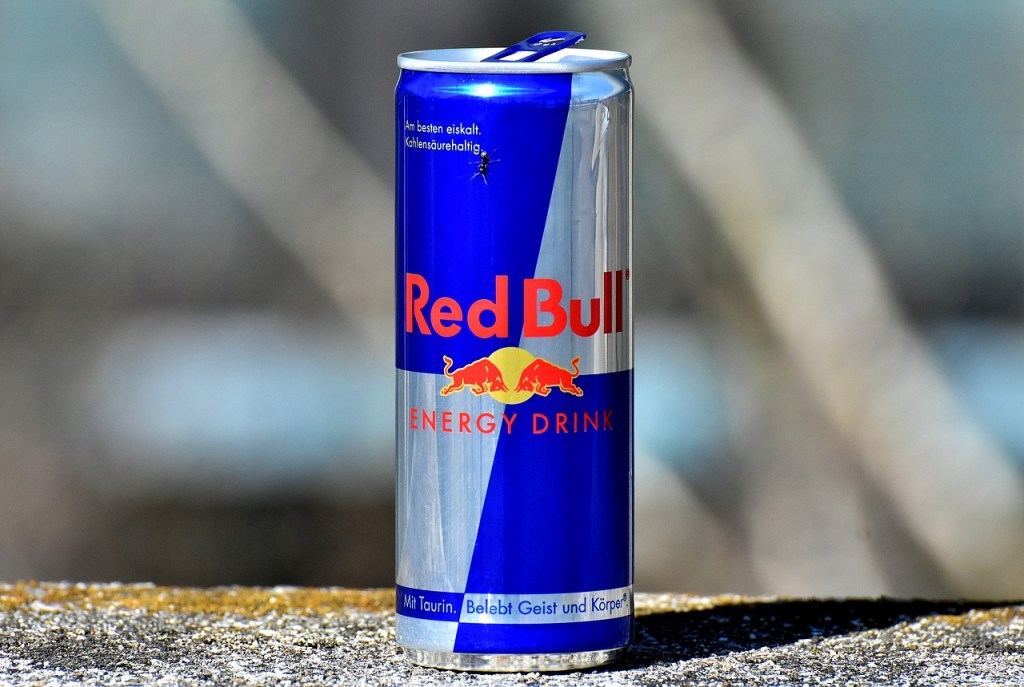
There’s no denying that caffeine plays an important role in the daily grind of many people. Most will start their day by reaching for a steaming cup of joe… and will usually follow up by consuming two or three more cups throughout their day. I, personally start my day with an energy drink. I enjoy the fact that energy drinks are cold and can be consumed easier than hot coffee, first thing in the morning. And the B Vitamins sure add some kick to my day.

But as with all things in life, there’s good and bad to every situation. And the consumption of caffeine is obviously included among that concept. Recently, I’ve noticed that getting through a cardio workout after consuming an energy drink or coffee is difficult. I’ll often feel sluggish, start sweating long before hitting my peak and will be exhausted, even when I’m only at my halfway point. Are they just bad days? Maybe if it was only one of these on very rare occasions, but I’ve come to notice that I’ll usually have an energy drink on the go prior to the sluggish workouts in question. Is there a correlation?

I decided to look into if it was possible that a beverage meant to stimulate me and make me feel more awake and alert could be causing me to feel sluggish and affect my workouts. I found a bunch of different information, although the bare bones information didn’t make for a definite answer. This is why I won’t be citing any sources, since I couldn’t find anything certain. But here are some things I know about caffeine that could have something to do with it.

  1. Caffeine Can Dehydrate You: It’s no secret that consuming large amounts of caffeine will cause dehydration. If you experience even mild dehydration, it can cause bodily pain, headaches, sluggishness and profuse sweating. Imagine all that WHILE trying to run, cycle or perform some level of cardio?
  2. Caffeine Is A Diuretic: Your workout will be cut pretty short if you have to take a piss every five minutes. Increased levels of caffeine will cause you to urinate frequently. And if it isn’t bad enough that blood sugar fluctuations will cause that to begin with, downing coffee or an energy drink before your workout may have the same effect.
  3. Coffee And Caffeinated Beverages Can Cause A Wide Variety Of Symptoms: Stomach pains, headaches and upset stomachs are only some of the symptoms you might experience while working out, if you’ve consumed significant caffeine beforehand.
  4. It Can Have An Effect On Your Heart Rate: Some people will feel an effect on their heart rate when they consume caffeine. This is one of the reasons why you’ll be told not to consume caffeine before a stress test or a fitness test. Imagine, for a moment that your heart rate can be measured on a scale of one to ten, where one is at rest and ten is where you die because your heart give out. Let’s assume that an average run gets you to a seven or an eight, depending on your age and overall health. This would be normal, right? Your heart rate will increase the more your exert yourself. But if consuming an energy drink or caffeine already gets you to a seven or an eight, then you add cardio on top of an already elevated heart rate, I’m sure you can do the math and see where the problem comes in.

As with all things, caffeine is best enjoyed in moderation. The key point for me, will be trying to resist the urge to gulp some caffeine before a run because I’m already feeling like shit. The lesson here is that all you have to do is get yourself going. Once you’re in the groove, you may find you perform just as well as you would with caffeine on board. Don’t get me wrong, I still love my caffeine. I may simply have to re-examine its use during my fitness routine. now if you’ll excuse me, it’s early and I need a coffee… ☯️

Sex & Cardio…

I’m definitely not one to shy away from tackling something that’s mildly on the taboo side. I’m not the most “risqué” writer, but I do like to occasionally take on subjects that would potentially be avoided by others. And although not the most NSFW topic you could potentially be reading today, I thought I would discuss the correlation between cardiovascular health and sex. It’s no secret that good cardiovascular health will help to avoid a bunch of heart-related medical issues, but did you know that sex will also help with this? Let’s see if we can discuss this topic like mature adults without having me crack any sarcastic jokes. Because that TOTALLY sounds like me. Moving on…

This is the part of the post where I throw out my usual disclaimer, explaining that I’m not a doctor or medical practitioner, have no formal training and base my writing on personal experience mixed with information gathered from reputable, peer-reviewed sites. Despite anything I may say or write in this post, you should DEFINITELY consult your medical practitioner or doctor before engaging in any new activity that could put a strain on your heart. And yes, that includes sex. Now that I’ve gotten that out of the way, let’s get on with it!

First of all, let’s consider the fact that there are a number of similarities between sex and cardiovascular exercise, or “cardio.” Sex is fun. If you haven’t had it, I highly recommend it. It’s an amazing coming together (hopefully) of two people, releases an amazing number and amount of endorphins and leaves you feeling relaxed and sleep easier when you’re done. It can also cause you to break a mean sweat, works every part of your body (when you do it right) and burns a wicked number of calories. Sex aside, does any of that sound familiar?

Cardio and exercise can also be fun. Some motivational tunes blaring in your ears, working up a great sweat and reaching a greater distance and/or speed than your previous workout will also leave you feeling relaxed and refreshed, tired but in a good way. Albeit without the “happy ending.” But I digress… The point is, there are similarities between what the body goes through during sex and what it goes through during cardio. Some might argue that in their younger years, one could easily cause the other and vice versa. Good for them.

Strictly from a personal standpoint as a Type-1 Diabetic male in his 40’s, there are a lot of issues behind the prospect of sex. Testosterone levels and blood circulation begin to decrease with age and Diabetes complications will aggravate both of those factors. This can make it difficult to keep everything up and coming *wink, wink*. But this is where the importance of good exercise comes in, whether you have Diabetes or not. And the importance of good, consistent sexual activity as well.

An article posted by John Hopkins says that, “Studies suggest that men who have sex at least twice a week and women who report having satisfying sex lives are less likely to have a heart attack.” The article goes on to say that, “Sex is a form of exercise and helps strengthen your heart, lower your blood pressure, reduce your stress and improve sleep.” That all sounds pretty f#$kin’ good to me… Almost just as important is the fact that consistent cardio will reproduce many if not all of these benefits, as well. Once again, without the happy ending. I just can’t let that go, can I?

So it stands to reason that sex can provide a plethora of health benefits, as also outlined by this list on WebMD. But when it comes to having Type-1 Diabetes and sex, sometimes a guy’s get-up-and-go has gotten-up-and-gone. It can be frustrating and potentially lead to complications in a relationship. This is where we reach a bit of a chicken and the egg scenario. And no, I’m not making a “who came first” joke… Jeeze, grow up guys! But good, consistent exercise will lower blood pressure, help control blood sugar levels, control cholesterol and increase your ability to reach and sustain a solid increase in heart rate safely, so that you can reach and sustain “other” things…

Ironically, if you already have heart issues, your libido may be taking a hit. Some doctors assess one’s cardiovascular health by asking some questions about their sexual libido, activities frequency. For people with Diabetics, arousal can be an issue due to poor circulation, which can be a problem for both men and women. Once again speaking for the male side of the equation, a noticeable lack in libido or sexual interest could point to a testosterone deficiency or something else that may be missing from the overall required recipe of one’s physiology.

The bottom line is that a strong sex life is healthy and will help sustain one’s health in much the same way as consistent cardiovascular exercise would. On the flip side, consistent and frequent cardio exercise may make it more likely that you’ll have the heart health and good blood circulation to park your Ferrari in it’s assigned stall… Ahem, cough, cough… I only have a few of those left in me, and the post is coming to an end, anyway. I apologize for my inability to grow up, but offer no apologies for my enjoying it. Once again, moving on…

For my Diabetic brothers and sisters, some advice I can offer through my many years of learning the hard way (there we go again, I didn’t even TRY that time and the pun came on its own. OMG, I just made a pun inside my pun…), is that communication is key. Even though a prospective partner may already know you have Diabetes, it doesn’t mean that he or she may necessarily understand what they’re in for and what COULD happen, if T1D decides to be a cock-block. Or a… What is the feminine version of “cock-block?” My point is, communication is important so that your prospective partner understands that it isn’t them, should your little soldier fail to “rise” to the occasion…

Further, like any exercise you may plan on doing, you should be prepared by ensuring you check your blood glucose and having some fast-acting carbohydrates and fluids available; a good idea during sex even if you AREN’T Diabetic. Exercise and staying hydrated will all be a help as well. So, what are you waiting for? Haven’t you been paying attention? Get out there and run a few miles so that you can have sex, damn it! I mean, work on your fitness for the sake of your heart health, of course. ☯️

Screaming At A Brick Wall…

Communication is hard. One wouldn’t think so, given that we live in an age where we have so many different ways to do it. With electronic communications and social media becoming all the rage in the past two decades, one would be inclined to think our ability to communication would have increased and improved. But it continues to amaze me how many if not most people have difficulty communicating effectively. And I’ve observed a number fo reasons for that. Let’s explore this line of thinking a little bit…

I remember an instance years ago when I was texting my wife about supper. She was at work and nearing the end of her day and was no doubt tired and looking forward to coming home. She asked if I had eaten yet, to which I replied “no why did you want to eat with me?” Read that poorly crafted sentence once more time… Do you notice what’s missing? I didn’t, until my wife came home and appeared to be upset with me. What I SHOULD have replied with is, “No, why? Did you want to eat with me?” This would have been a correct sentence structure and would have posed the question as whether my wife wanted to have supper with me. The lack of punctuation in the first one basically makes it look like I’m an asshole questioning WHY she wants to eat with me.

This is a pretty simple example, but a pretty accurate one as it relates to written communication. We live in a society where text messaging and messaging apps have become the primary means of communication. There are plenty of jokes floating around about one’s phone ringing and the the recipient thinking, why aren’t they just texting me? before ignoring the call. I’ll admit that I’ve been guilty of doing that very thing on more than one occasion. Much to the chagrin of the people trying to call. I make exceptions for the folks I know who don’t use text messaging, like my mother. But otherwise, come on! That totally could have been a text!

All jokes aside, grammar and punctuation play an important role in how one’s message is relayed. In a world of emojis and abbreviations over text-written communication, it can be difficult to discern the sender’s intended message. It can be EASY to misinterpret it and assume a different message than what the sender meant. Plus, communicating through a device or by text takes away all those little aspects of communication that humans have spent their entire existence using, such as hand movements, body language and facial expressions. If you’re on a date and the girl says, “You’re an idiot!” but laughs and gently places her hand on your shoulder, you’ll likely be inclined to be relaxed and assume it has an affectionate meaning. If she looks at you with a frown or screams it at you, she may genuinely think you’re an idiot. But I digress…

The point is that body language plays a bit part in how effective one’s communication can be and how the message is interpreted. But even bigger than that, is the fact that communicating effectively requires a minimum of two parties. there’s nothing worse than trying to communicate with someone who’s shut down, distracted or not listening. Sensei always used to tell me that I have two ears and only one mouth, so I should listen twice as much as I talk. I always thought that was so clever of him. It wouldn’t be until years later that I would find out the expression was coined by the greek philosopher Epictetus. But regardless of the source, they’re wise words, nonetheless.

Communication is a core aspect of socialization. In a world where the average person spends their day with their neck craned over a smart device, two-way communication with another person in good conversation is also part of a person’s mental wellbeing. Even people who “prefer to be alone” eventually get lonely. Although some people can sit together in comfortable silence, this usually isn’t achieved with the average pairing of people in everyday situations. Communication must be a two-way street, with both parties actively listening AND hearing and both parties contributing. This can mean the difference between effective communication or being misunderstood, whether type-written or in person. Food for thought… ☯️

Swing Low, Sweet Blood Sugars…

If you were to Google “hypoglycemia,” you would no doubt find several reputable, peer-reviewed web pages that will give you a list of symptoms that one might experience during low blood sugar. While this is so, it’s important to remember that every person is different and you can experience symptoms that are unique to you. So long as you’re able to recognize those symptoms for what they are, it’s all good.

A good example of this is how in my teens and twenties, I would realize I was experiencing low blood sugar because my tongue and face would go numb. It was a bit disconcerting at first, but once I made the connection and realized that this numbness signified low blood sugar, I even started treating without testing. Not a recommended practice, BTW. But it can be important if you’re caught up somewhere and can’t whip out a glucose monitor to test.

Recently, I found myself coming off of CGM by virtue of my medical insurance having a cap on “Diabetes equipment.” Not prescribed medications, mind you; just the equipment. So, infusion sets, reservoirs and non-medicated equipment items that keep the pump running and maintain better “time-in-range” blood sugar readings have a yearly cap that will only cover me for about three months of the calendar year. Swell.

Considering this coming April marks my Dia-birthday of 39 years, I’m no stranger to a bit of hard work when it comes to controlling one’s blood sugar levels. But I have to admit that I had become quite comfortable at wearing a device that measured my sensor glucose every five minutes and made micro-adjustments to maintain better time in range. Since coming off the CGM sensor, my blood sugars have been a violent roller coaster of highs and lows.

Oh, I’m wearing a Freestyle Libre, but the difference is that the Libre doesn’t monitor my sensor glucose on its own; I have to scan it intermittently to get a reading AND the pump won’t micro-bolus to adjust the way SmartGuard did while using CGM. I think it’s fair to say that I’ve pretty much guaranteed that my A1C’s in February will be a bag of smashed ass, thanks to my insurance company refusing to cover my equipment. It’s a sad world we live in when a proven, working therapy that maintains one’s life and keeps them alive needs to be paid for out of pocket. But such is life. It doesn’t care about one’s plan.

The point is, I’ve lost my vigilance when it comes to monitoring my blood sugars. One good example was yesterday morning. I woke to my alarm, as I usually do. But I felt like absolutely hell. I was groggy and confused about what I needed to do next and I couldn’t quite understand why i felt this way. I checked my sensor glucose and found myself sitting at 2.3 mmol/L. There was my answer…. I had to treat my low before I could do anything else but I couldn’t remember the last time I awoke to such a low. The point is that I felt absolutely zero symptoms of this low. In the past, I would have been awoken by low blood sugars.

I’m living proof that should you have the means and are considering pump therapy with SmartGuard and CGM, it makes a world of difference. I used to complain about the frequent alarms and finger pokes required to calibrate and such but now I’m seeing the difference in the quality of life and balanced blood sugars it provides. Now, I just need to find a way to afford the CGM sensors so that I can get back to that. Luckily, January is just around the corner and my benefits will renew for the year, so I’ll be able to enjoy a better quality of life for at least a few months until I figure all this out. ☯️

The Beetles Were Wrong…

Falling in love is one of the great gifts of life. When you finally find that special someone that completes your life, it can be overwhelming and all-encompassing. It can also bring a level of happiness and joy that’s rarely matched by anything else you may experience in life. In fact, the good things in life become better when you have that special someone to share it with. Ultimately, love heals and the world could certainly use a little more love than most of what’s spewed out in society, even at the present moment.

But love is also conditional on one’s ability to understand that unlike the Beetles’ song, you do, in fact, need much more than love. This is one of those times where I should throw up a quick sentence or two explaining that I’m not an expert in relationships and my advice should be taken with grain of salt. Especially since I’ve had enough failed relationships in my younger years to write a digest. But failure in name isn’t always failure in fact. And these failed relationships have taught what’s necessary in order to make a relationship work. But since this post has been flagged as my “opinion,” we should be good to go.

A good, strong relationship takes much more than love. It takes patience, communication, understanding and just enough similarities to mesh well, together while having enough difference to challenge and help each other grow. There are a bunch of other things that are necessary, as well. But what am I, a couple’s therapist? Definitely not. Like many people in modern society, I’ve been married more than once. It’s not something that I talk about much, but that failed marriage taught me the important aspects that I carried over into future relationships and ultimately into the relationship that will last me well into my next life. Let’s examine a few of these aspects in greater detail…

Patience is the biggest one and the first in my list. Without patience, there can be nothing else. The reasoning behind this is quite simple. No matter how much you love someone and how much you may or may not have in common, patience is needed in order to pave the way for the other relationship virtues I named above. If one is not patient with one’s partner, it can leave the relationship open to unnecessary conflict and hostility, which is never healthy for any relationship. I know many sources will say that it’s good to occasionally open the spigot and let the pent-up aggression out and that it can actually help make the relationship stronger. Maybe. But that’s a BIG maybe. I prefer to think that if one communicates properly, one can avoid the trappings of aggression and conflict, which leads me to the next virtuous aspect…

Communication is an integral part of living among a population of people, whether you happen to be involved with them intimately or not. Those who find themselves unable or unwilling to communicate effectively will usually face a host of issues with the other parties involved and this is no different with personal and intimate relationships. You need to be able to talk things out, discuss important topics and be willing to compromise and concede the point. You can love the other person with every fibre in your soul but if you can’t communicate, the relationship will inevitably falter.

And to be clear, good communication doesn’t just mean telling the other party what you want/feel and expecting them to accommodate you. It also involves hearing what the other person is saying and be willing to compromise on key points. For example, what’s their stance on finances? Do they want children? Even political positions can have a bearing and consequences on how well and how long the relationship may last. But if you have open and willing communication between two people and they’re willing to compromise and meet in the middle on key issues, it will make life and love all the easier and smoother.

Lastly, understanding is the result of patience and good communication. Sensei used to tell me that I was born with two ears and only one mouth, which means I should listen twice as much as I talk. granted, I think that saying was coined elsewhere but the lesson is sound. Understanding is part of the foundation of a solid relationship. It isn’t enough to listen and HEAR something from your partner. you need to understand the message they’re trying to impart, bearing in mind that you deserve all these same things, as well.

Loving someone is an important part of a relationship. You should never tether yourself to another person is love isn’t there. But love isn’t enough. You need to be able to communicate with that person effectively. You need to be understanding and not make demands of that person, nor should they be demanding things of you. I’m sure you’ve heard the expression, “Love is patient, love is kind…” But you and your partner are the ones who need to be patient with each other. Don’t be afraid to be brutally honest with each other, talk to each other and compromise on key points. Contrary to what you may have read, don’t be afraid to go to bed angry. If nothing else, you’ll both have the opportunity to cool off and think things through before saying something that you’ll both regret. There’s my two cents on relationships. Food for thought… ☯️

No Good Deed…

They say that no good deed goes unpunished…. I’m not sure I agree but some of the experiences I’ve lived through in the past three years would certainly seem to suggest this. But I was raised to believe that it’s important to help others if you can. In fact, my grandfather used to say that if you COULD help someone, you essentially have a responsibility to do so. For the majority of my life, that lesson has rattled around in my head every time I see someone struggling to carry something heavy, someone who needs help in a more ambulatory sense.

Last Thursday, I was at a retail location in the city and was walking to my car when I saw a small, silver Honda Civic sitting halfway out of a parking space and appeared to be spinning in place. Two guys appeared to be pushing at the front of the car and I thought to myself, Okay, they got this. I’ll just get myself home… Then I heard one of the guys say, “You’re hung up bad, dude. We can’t get you out.” And both guys walked away. What? you push once, car doesn’t move so you walk away from this guy who’s by himself? That dog won’t hunt, monseigneur!

I walked over to find a skinny, young guy trying to shovel himself out with a small shovel and appeared despondent. I offered to push while he gave the car small bursts of acceleration. I instructed him to cut his wheels a particular direction, but there was a significant language barrier and he basically just floored the accelerator and waited while I struggled against the vehicle. Now, I’m not an Olympian by any standard but I’m also not the smallest guy around. And a Honda Civic is a pretty small and light vehicle. That’s why it was hung up; it didn’t have enough weight to touch ground through the snow.

I heaved, pushing and lifting with my legs and giving it all my strength. My back popped and cracked and groaned in protest but the car started moving. trying to make the driver understand to allow the vehicle to rock back and forth to help get it out of its rut, but that wasn’t happening. He had me take the wheel, citing that I’d likely know how better to drive. not sure where THAT came from, but I gave it a try. When that didn’t work, I went back to trying to push.

The big problem is that he was blocking an entire travel lane for the parking lot and people were sliding around, trying to avoid his rear bumper and nearly colliding with other, oncoming vehicles. I felt I couldn’t just leave this guy to deal with all this alone. I also recognized that if it were my wife stuck in this situation, I’d want someone coming to help her if I wasn’t there.

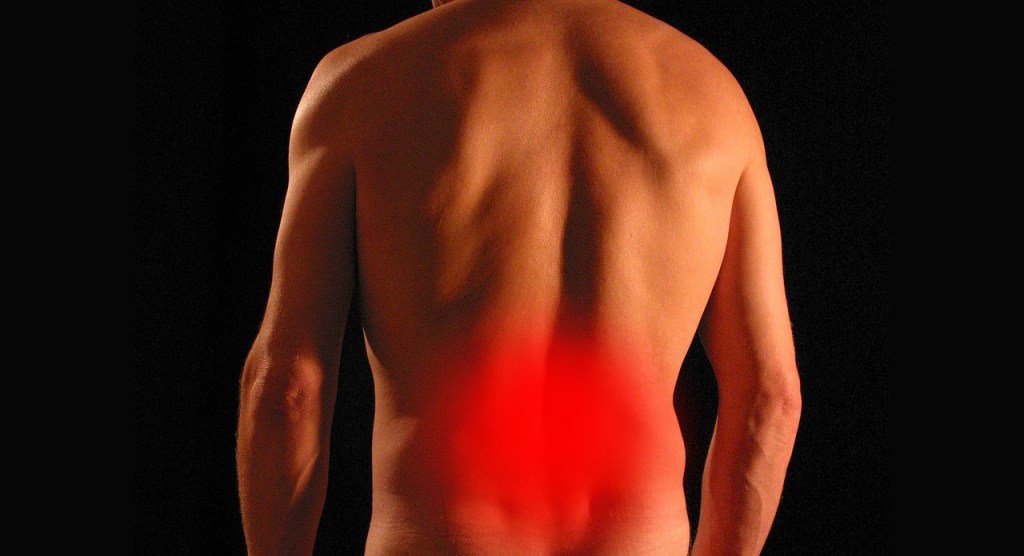
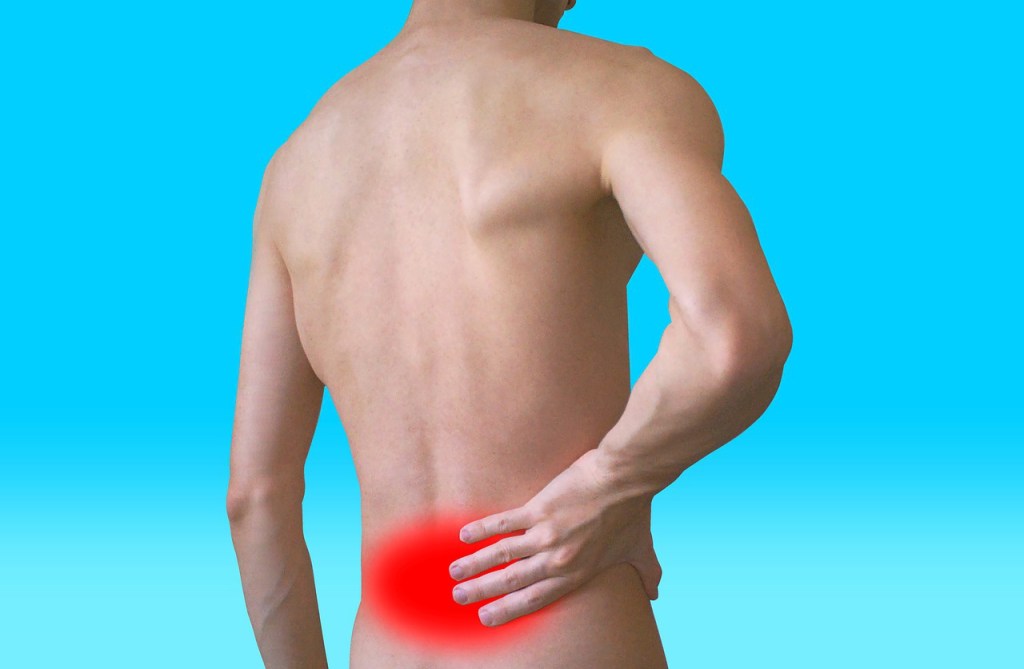
Two other people finally came and helped me push and the driver’s vehicle finally got out. But the damage was done. My back flared and I could already feel a tightness beginning that I knew I would be paying for later. When i got home and explained to my wife what had happened , she quickly gave me some anti-inflammatory caplets. But the pain persisted and worsened as the evening progressed. The worst came when I bent over to hug my toddler and the pain flared like a bright light behind my eyes, to the point where tears started rolling down.

My wife asked if I needed a hospital visit. Not in today’s climate, thank you very much! Besides, I didn’t have four to six hours to wait in a triage room for the staff to send me home with ibuprofen. My back wasn’t broken, I likely just pulled something. It feels alright at the moment but I’ve certainly been taking it easy, the past few days. Winter has just started and this isn’t the time to be out of commission, considering that snow won’t remove itself.

Do I regret helping that person? Would I have reconsidered, had I known I would injure myself? In retrospect, it’s easy to say no but I likely would have altered how I would have given that help in order to prevent injury. But this taught me two things: I’m no longer young as springtime and my body has no compunctions against letting me know. It also shows that strength isn’t everything. Even if one is strong enough to do a thing, it won’t necessarily mean you SHOULD do a thing. But helping another human being is important, and definitely felt good despite the pain. Worth it. Food for thought…☯️

I Can “Sense” It…

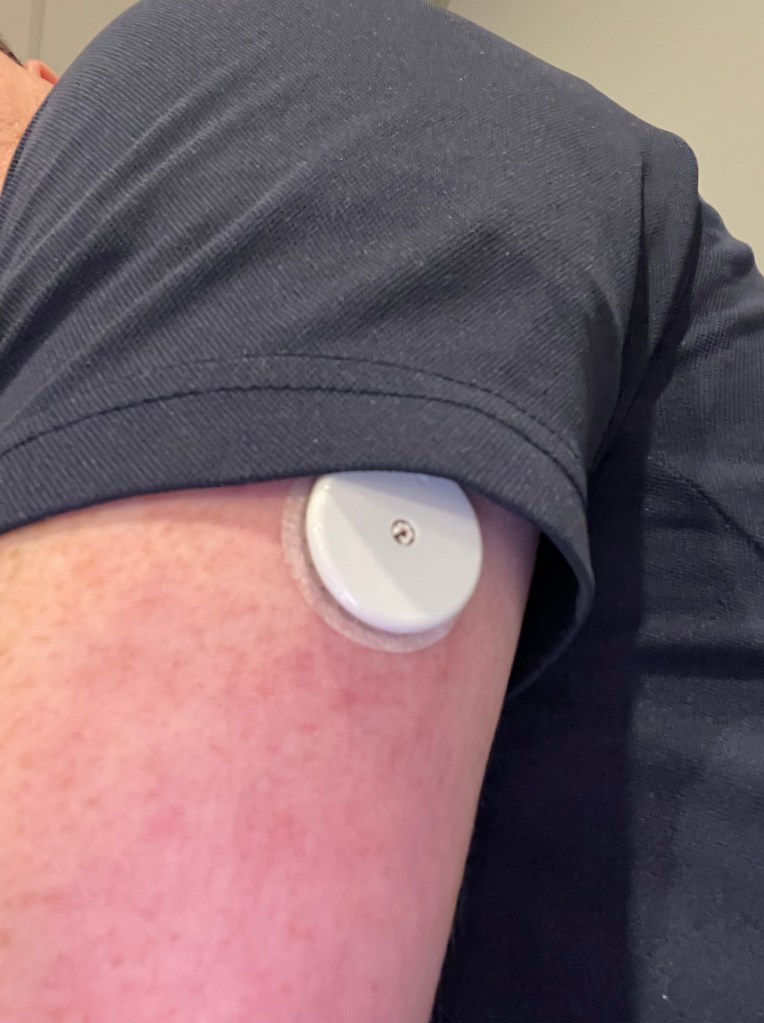
It’s been about a week since I ran out of CGM sensors and transitioned back to Freestyle Libre. To provide some context, I recently found out that the health benefits at my new work only covers $1,000 worth of Diabetes equipment. Prescribed medications seem to be fine, but tangible “equipment” seems to have a cap on it. Imagine my surprise, when I got to the pharmacy to pick up my $360 worth of sensors only to be told I had to pay for them. I shouldn’t complain TOO much, since I know many people don’t have the benefit of, well… benefits!

My recently placed FreeStyle Libre

I remember the long-gone days of having absolutely no coverage and living by manually injecting two different types of insulin using pens and re-using the needles ad nauseam because I couldn’t afford to buy fresh ones. Don’t even get me started on how often I used a finger lancet before I changed it. Those were dark days, considering I had months where I couldn’t afford to insure my car because I had to choose between a vehicle or paying for Diabetes supplies.

Considering my posts over the past two days have been a bit on the morose side, I don’t want to necessarily focus on the negative. Once I joined the Force, I was blessed to have complete coverage without ever needing to worry about paying for something. The only exception was my eye injections, which required me to pay up front and be reimbursed later on. No big deal, right? My new coverage plan apparently has some limitations. Unfortunately, given the cost of pump supplies, this coverage maximum only provides for about three to four months of coverage.

I’m currently doing research to ascertain if I can obtain some type of external coverage to supplement these costs or else I may face the prospect of coming off pump therapy. This would be detrimental to my health, considering how well I’ve been doing and how nice my A1C’s have been. The only saving grace is that my benefits start back up at the beginning of the calendar year. So I really only need to make it through until January in order to get some coverage, albeit for only a few months.

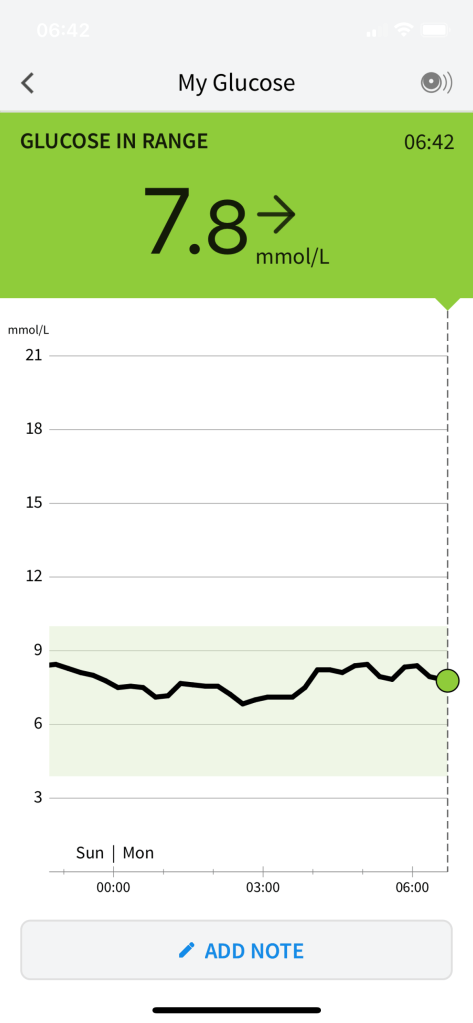
My sensor glucose, first-thing in the morning

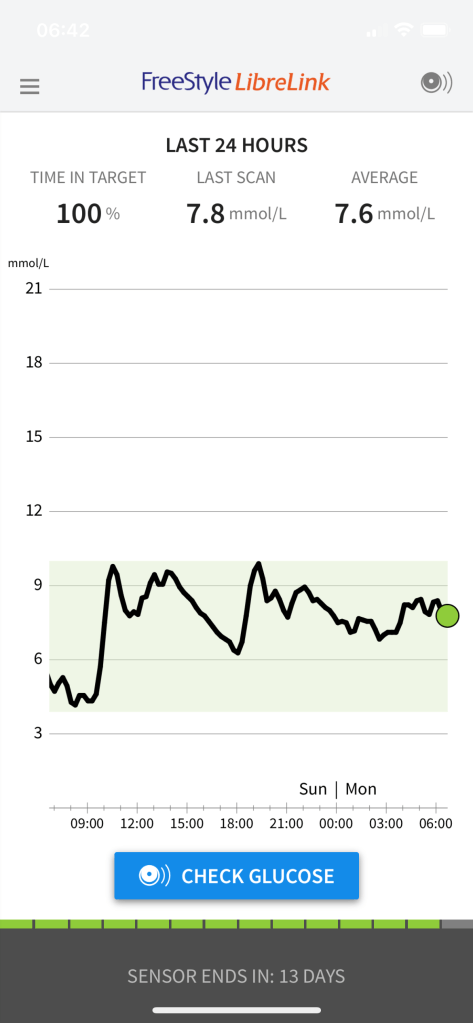
As seen from the image above, using a Freestyle Libre has some benefits and disadvantages. Unlike CGM, it requires my active involvement to read sensor glucose. The CGM would read glucose on its own every five minutes. The Libre lacks some precision where the CGM would provide much more precise readings and tether with the pump so that it can provide micro-boluses to accommodate rising blood sugars. Luckily, a free app that can be downloaded to my iPhone allows me to take readings without paying the approximately $65 for a reader that does the excat same thing.

Some of the benefits include the fact that unlike CGM, the Libre lasts for 14 days instead of 7. As to why CGM hasn’t caught up with that trend is beyond me, since it’s supposed to be more advanced. The other benefits is that a 1-month supply of Freestyle Libre is far cheaper than CGM (almost half the cost, in fact), making it easier for me to get by and pay out of pocket. The nice thing is that once I had switched to CGM I stock-piled some of the Freestyle Libres I had coming in, so I have more than enough to get me through until January.

My readings look a bit more chaotic when compared over 24 hours

My whole reason for upgrading to the Medtronic 670G was because of its supposed amazing sensor usage and SmartGuard technology. Despite the fact that there was nothing wrong with my previous pump (besides being over five years old and off warranty) I decided to try it and I wasn’t disappointed. Sometime last summer, I was slapped in the face with the lowest A1C reading I’ve had in decades: 6.9! My last one, which would have been in September, had crept back up to 7.4, but this was mainly attributed to the stresses associated with starting a new job and overseeing renovations of my basement.

Am I pleased to have dropped down to using Freestyle Libre again? No. Could it be worse? I hate it when people tell me this, but yes. Yes, it could be much, much worse. I still have control over my blood sugars, albeit with a little more effort. I’ll still maintaining my health and taking active steps to ensure that I manage myself properly. Hopefully when the dust settles and I manage to figure this out, it’ll be back to business as usual. Until then, I just have to appreciate what I have as opposed to complaining about what I don’t. ☯️

All The Colours Of The Alphabet, Part 2

Alright, so this is a continuation of yesterday’s post. If you haven’t read that one, I highly recommend that you do before reading this one. Should you choose not to, it can easily stand on its own as an individual post. But just to provide some context, in the past thirty years I’ve been diagnosed with ADD, OCD and PTSD. The difficulties and complications I’ve faced as a result of these letters attached to my name have been plentiful. When combined with Type-1 Diabetes, it pretty much means I won the bullshit lottery of life. But as most would agree, there are worse things in life.

I’ve often written about some of the worst things that you can say to someone with Type-1 and even type-2 Diabetes about their condition. And trust me, there a lot of things you shouldn’t ask or tell someone with Diabetes, although educating these folks is the key. But it recently dawned on me that there are a number of things that people have told me over the years that absolutely grates on my nerves, as it relates to ADD, OCD and PTSD. I thought it would be productive to provide the top five things you should never say or ask to someone with ANY of the conditions I’ve named herein:

  1. Can’t You Just Sit Still? No, asshole! I can’t! Next question… Seriously though, this one is the top of the list because it drives me absolutely nuts. If I could sit still, don’t you think I could? If I could sit without constantly clicking my nails, playing with the hem of my jeans or constantly surveying the room I’m in and needing to have my back against a wall, I would. But I can’t, by virtue of ADD and OCD but forced upon me by PTSD. Moving on…
  2. It’s All In your Head… Umm, yeah. No shit! This one is actually correct, although not in the context that it’s intended. All of my acronyms are part of who I am and are, in fact, in my head. PTSD has been proven to alter one’s brain activity and causes a measurable injury to one’s brain. ADD and OCD can cause severe anxiety in the involved person, as well it feeling as though it’s beyond our physical capability to stop doing certain things that we do, including but not limited to trying to live in a clean and neat environment, compulsively repeating certain behaviours as well as dealing with the recurring trauma by inadvertent triggers in the general public. These things aren’t anyone’s fault but still cause damage and makes a sufferer’s life all the more difficult.
  3. Maybe You Should Just Let It Go… Oh, this one is like the shit that has nuts in it! Picture holding someone in your arms as they die and you’re the last thing they see as the light of light extinguishes from their eyes. Picture spending HOURS searching for a victim’s leg on the snowy highway before a coroner will allow the body to be removed. Picture staying by a man in his 20’s bedside for several hours because he attempted suicide and failed, leaving him with no face, no ears and no mouth and you’re the only one at his bedside as he faces death with no contact to the outside world. It took him over six hours to finally die… These are not things one can let go. And they are NOT something one can forget. And they are NOT things that any human should have to suffer through or witness.
  4. It’s Just Their Excuse To Drink… Mmmm, no! Unfortunately, since there’s no cure for PTSD, it’s left a lot of sufferers trying to find solace in things like alcohol or elicit drugs. Although these aren’t ideal, they’re often the only recourses for someone stuck in a serious funk because of their condition. War veterans who have historically and recently found themselves without work, seeming to suffer from mental health disorders and alcoholism suffer from PTSD and are usually misjudged by the public. They aren’t lazy, unwilling to work or trying to live a hobo life. They’re simply so deep into their condition that they can’t find a way out. At least not on their own.
  5. It’s No Excuse… Maybe not. And this one hits close to home for me, because I’ve always made a point of trying NOT to use my conditions as an excuse for anything I do. But for some people, a lot of people, they can’t help the compulsions they feel and have to act one. When someone suffers from extreme PTSD and succumbs to it, they can harm not only themselves but others. This is where it becomes important to recognize those signs and be able to remove themselves from that scenario, especially for family members.

ADD, OCD and PTSD are still widely misunderstood and often misdiagnosed conditions, even in modern times. The latter is probably the most prominent in my life and causes me issues and challenges t overcome on a daily basis. It’s at times like this that I’m grateful for martial arts as well as Buddhist and meditative training. they’ve gone a long way towards helping me to maintain myself and prevent issues within my own life. But it isn’t without challenge. Loud and constant noise, such as that created by my children for example, tend to create a static inside my head that I can’t fight off.

If you question or doubt someone’s personal situation on the basis of some mental health related, be sure you know what you’re talking about before you comment. Even though you may be commenting from a place of concern or maybe even exasperation, your comments can have damaging repercussions. Asking why they AREN’T doing something can be far worse than asking what YOU can do. Sometimes it can mean just leaving the person be. Sometimes, they may actually need help with something. Everyone is facing a battle others won’t know about. At the end of the day, helping and healing should take precedence over questions and judgments. Food for thought… ☯