On The Run Doesn’t Have To Mean Without Fun…

Growing up, my household had a bit of a wash, rinse and repeat approach to meals. For the most part and being raised by a French Acadian mother meant that feeding a group of people involved tossing meat, potatoes and veggies into a giant pot and boiling it until it became mush. usually served with dinner rolls and pickled beets, this was also the ONLY meal my grandmother ever served; a testament to a leaner time when wartime families had to feed a dozen people or more at every meal.

As grateful as I am for having had the opportunity for a warm plate on my table growing up, there’s no arguing that it seriously influenced how I choose to consume my meals now, as an adult. Throughout school, I was always burdened with the same ol’ peanut butter sandwich without the benefit of adding jelly, due to the sugar content. It became tedious and boring and i usually dreaded lunch time as something to get through as opposed to a period to sit, enjoy a meal and contemplate the events of the day. Things have changed…

As an adult, I find myself dealing with the same challenge of bringing lunch for myself that doesn’t involve something generic and won’t throw a significant curve ball against my blood sugars. I usually have breakfast AND lunch at work, which allows me to get to work a bit early so that I can get a jumpstart on my day. This morning for example, I had a leftover boiled egg from yesterday’s potato salad. carb-free and filling enough to get me through my morning, it was a good option.

So what about lunch? The big problem I had during my youth is that the classic sandwich poses logistic issues that, from a flavour standpoint, can’t be ignored. If one makes their sandwich first thing in the morning and includes all the constituent parts, t you run the risk of having things sit and meld together in a way that may cause your bread to get soggy or the flavours of certain ingredients to change, once they absorb some of the others. Refrigerating a sandwich over several hours will also tend to alter the flavour and let’s be honest, who really thinks a cold sandwich is tasty?

The alternative is simple; be willing to do some assembly DURING your lunch hour. I’ll use yesterday as an example. I packed a large, flour tortilla into a sandwich bag. provided they’re fresh, they’ll be plenty flexible and will fold nicely. Then, pack some shredded cheese and your preferred sauce in small, reusable containers. Then, I chose my meat, which on this occasion was some very lovely slow cooker chicken that my wife had prepared the day before. Keeping all these ingredients separated prevents the flavours from mixing with one another, come lunchtime. Another thing you prevent is needing to heat the meat portion of your meal with condiments that likely shouldn’t be nuked. Ever try reheating fries that already had ketchup on them? It usually doesn’t go well…

The benefit with allowing yourself some time to assemble your meal at lunch time is you’ll get a better, fresher tasting meal and you have the opportunity to heat up your protein without heating up your wrap or condiments and sauces. This can apply to a number of different meals. Today, for example, I’ve brought a small bowl of homemade chili with a container of cheese. Sprinkle a bit of buffalo sauce in that bad boy after heating it up, mix in the cheese and allow the heat of the chili to melt it just a bit and you’re off to the races.

So, this all rather feels like a first world problem and it begs the question, why am I bringing it up? Well, for a number of reasons. The first being that just because you’re having a meal at work doesn’t meal it should be an enjoyable experience. Fast meals intended to be jammed down your gullet so you don’t starve during your shift shouldn’t be the norm. I say this while fully acknowledging that some folks only have a brief window for meal breaks. I, myself, never had a scheduled meal break while I was a police officer.

That being said, and something I learned a long time ago, is that a rushed, stressed meal period will also affect one’s blood sugars. Although every meal can’t be a pageant, being able to take the time to actually consume your meal without rushing and having a hot alternative in front of you can have a significant impact on one’s blood sugars. Given everything else that’s affected by Type-1 Diabetes, it should be no surprise that event he way you consume your food can have an impact. Just something to consider. Food for thought, pun fully intended…☯️

A White Gi Is Useless…

I chose this title carefully, as practitioners of traditional arts that use a white gi might take offence to such a statement. But it can apply to many things. White sneakers are also useless. Dusty weights serve no one. Take your pick, they’re basically all the same and have the same meaning. It basically refers to the purchase and/or use of equipment of any sort that usually just ends up sitting there and is neglected or rarely used. My biggest pet peeve is when someone buys a decent pair of training shoes and worries about using them for fear of the white parts becoming stained or coloured. To do so is to prevent the intended use of that equipment. This is especially true for a gi.

I have a karate gi from years ago that I purchased when I achieved my brown belt. I remember the odd comments I got from other students, asking why I would pay so much for a uniform when I had not yet achieved my black belt. Up until that point, my dojo usually purchased thin, loose-fitting gi from a Canadian company called GeneSport. Based in Montreal, Quebec and having opened in 1969, Sensei purchased everything from there; karate gi, punching bags, sparring gloves… you name it. Their equipment was an inexpensive option for beginners and intermediate students (a standard gi would cost you $40) and they were close enough to our Northern new Brunswick location that getting an order took only days. Unfortunately, they closed permanently in 2017.

My point is, my dedication and commitment to my training was as such that I felt I needed something thicker, stronger and of better quality. I ordered myself a Tokaido, which is a high-quality gi made of thick, sanforized cotton. I used that uniform for years. Over the course of those years, I sweat heavily into it, causing its pristine whiteness to slowly gain a light, yellowish hue. Further, several missed techniques resulted in bleeding noses or bleeding fingers and toes. For those who are not aware, blood does not come out of white cotton easily, especially if it’s left to sit there for the remainder of the class and well into getting home. Really seals in the colour. I still have that gi and occasionally use it. The crotch is worn out and the stitching has frayed. But those decades-old bloodstains certainly make for conversation starters when seen.

the same can be said of any and all fitness equipment, not only martial arts uniforms. I know so many people who purchased weight sets, exercise machines or equipment, only to have it sit for months, unused. The dust that gathers on them speaks volumes to their neglect of use and also speaks to the owner’s lack of commitment and dedication to what they’ve intended to accomplish. I feel the urge to get out on my bike as soon as the snow has left the ground, usually. I have weights and a variety of equipment that I have at home and usually LOVE incorporating them into my workout routines. Our recent renovations have forced most of my equipment into an unusable corner but once I can clear up some floor space, I can guarantee it’s all coming back out.

Staying on track can be difficult and tedious. Between keeping one’s motivation going and finding time (and having one’s children getting in the way), keeping the dust off one’s equipment can be difficult. It’s important not have goals but one should not bite off more than one can chew. There’s no point in paying thousands of dollars for an elliptical machine, for example, if you’re just going to use it to hang your sweatshirts on. And if you do take the opportunity to get some equipment or clothing, don’t be afraid to get it dirty. Use it, stain it, tear it, restitch it… All of this tells a story of one’s fitness journey. And that story should be yours to show and share. ☯️

A Wolf In Sheep’s Clothing…

One of the hardest aspects of good blood sugar management is carb counting. I was introduced to carb counting in 2015 when i began pump therapy. This is a bit ironic since I was diagnosed Type-1 Diabetic in 1982 and have spent most of my adult life bragging about my tight control. I never realized just how much deeper control I could have until I started carb counting. But despite the better control, it’s still one of the hardest aspects of bolusing properly.

The reason for this is quite simple. Either nutritional labels are incorrect, my body reacts differently to certain foods and the carbs aren’t absorbed the same, or after four decades of living with my condition, there’s simply still some shit I don’t know and I’m still learning. This is where the title of today‘spost comes in. Once in a while, something will catch me by surprise and have me realizing that no matter how much I read, learn and come to discover, there’s always something more to gain.

For years, there’s been a solid trend of sweet goods that are labeled as “No Sugar Added.” This has often prompted to have people thinking they can consume an increased amount of these treats, especially those with Type-1 Diabetes. The big problem is that “No Sugar Added” is not the same thing as “Sugar free,” and there can be hidden amounts in the total carbohydrate count that people often ignore, thinking they don’t need to check. This is where due diligence needs to come into play to prevent rising blood sugars.

An example I can provide is my recent discovery of No Sugar Added gummy worms at a local supplier. My first thought was that this would be a good way for me to enjoy some gummy worms without all the excess sugar and need for bolusing. It isn’t until I checked the nutritional label that I realized there may be a problem…

If you look at the total carbohydrates, 7 worms add up to 34 grams of carbs, which is basically on par with regular gummy worms. Although they boast 0 grams of sugar, they do carry 31 grams of sugar alcohol, which is an organic compound that’s normally derived from different sugars. Although lower in calories and apparently better for your teeth, sugar alcohols are a type of carbohydrate and will have a direct effect on one’s blood sugars.

So there you have it! If you decide to try out some of these “No sugar Added” foods, be sure to check the nutritional label and compensate for the carbohydrate count included, since it may not be any less than plain, old sugared goods. I’ve been caught by this before, where I’ve indulged in some candy or chocolate items that were “No Sugar Added“ and couldn’t understand when my levels skyrocketed. It wasn’t until I learned about sugar alcohols that it made sense. The carb counting helped, too. There’s always something more to learn or new ways to improve. Stay healthy, folks! ☯️

Some Like It Hot, Or Cold…

We’ve had an interesting change in the weather recently. With temperatures reaching in the low teens and clear skies, it’s been nice to see a lot of the snow piles starting to dwindle down and melt away. This means that warmer times are ahead and I may soon be able to start spending more time outdoors, including riding my bike and playing with the boys in our back yard. However, changes in weather bring about changes in one’s physiology, which isn’t always a good thing. People rarely consider this change in physiology since we’ve become accustomed to living in controlled environment where if it’s cold outside, we turn on the heat and if it’s hot, we turn on the air conditioning.

But outside weather involves a number of different things, including but not limited to air pressure and overall temperature, which can affect different people in different ways, regardless of what artificially controlled environments they may live in. For me, this includes an aching in the majority of my joints as well as the unfortunate inability to sleep properly. I’ve also noted a few micro-cracks in the foundation of my house, where light trickles of water have made their way in. makes me wonder what may be happening behind the walls that are insulated and dry-walled.

Changes in season and weather occur in the same way every year, yet we always act surprised and grateful when it arrives. For example, during the intense heat of summer, many will long for the cool temperatures and lighter skies that accompany winter. But once the freezing temperatures of winter, longer nights and not least of all, shovelling, make their appearance, most people can’t wait for the warmer seasons to come. It’s an endless cycle of always wanting what one doesn’t have, which is on par with humanity and how we tend to operate. For me, I prefer the in-between seasons; spring and autumn, where the temperatures still allow you to be outside and enjoy life without either freezing or dehydrating.

Being inside my home during this transition into a new season is a catch-22. Most of my daily activities take place in my basement, where I have my workout space, my shower and my home office. The problem is that once the sun is up, the temperature is warm enough that the main floor doesn’t require the heat to kick in. This means that all the cold from below ground level still seeps through the basement walls, making the basement colder than it would usually be. The result is hoodies and space heaters while my family is enjoying the temperate comfort of the upstairs. It’s kind of weird.

The main floor suffers the same kind of issue overnight, where it’s still cold enough for the furnace to kick in and belch out heat but warm enough that I feel like I’m hard-boiling my eggs while I’m trying to sleep. It’s unhappy balance but one I can happily live with, on my way to the oncoming spring. Honestly, I don’t know how much of my recent lack of sleep is a result of the recent changes in weather or something else. As you may be aware and as I’ve written about before, failure to get an adequate amount of sleep overnight can lead to a host of issues such as affecting blood sugars, blood pressure and cognitive abilities throughout the day.

I’ve tried a few different things, including dipping into some melatonin. I’ve only tried melatonin a couple of times, since I don’t relish the thought of sleeping so deeply or soundly that I may sleep through one of my children needing me during the night or light forbid, someone breaks into my home. But my last attempt with melatonin yielded no results, with my waking after only about four of five hours in the same fashion as though I hadn’t even taken it. My good ol’ friend, whiskey, hasn’t even helped. Somehow, I always wind up waking, unable to fall back asleep, after only four or five hours of sleep, if I get that much.

A lot of things can affect one’s ability to sleep, including things like stress or having something on one’s mind. Although I’d like to think I know myself well enough to recognize if this may be the case, I honestly don’t. One’s subconscious can fool one quite easily. I recognize that eventually, I may need to consult a health professional. this can be a slippery slope, especially if said professional decides to prescribe something to “help you sleep.” using prescribed sleep aids can lead to permanently needing those aids and preventing you from being able to sleep properly on your own. I don’t know about the rest of you but I’m on enough prescriptions without throwing something to sleep in the mix. ☯️

When Your Get Up And Go Has Gotten Up And Gone…

I’ve noticed that I seem to be letting more and more time elapse between my posts… What with my last one being nearly a week and a half ago, I think I’ve become far too comfortable letting go of my compulsion to post on a daily basis. On the one side, I have the my oldest son who, like every other kid in modern times, has become obsessed with Minecraft and often monopolizes the laptop during the evening hours. Although it’s my laptop and I could easily object, watching Minecraft tutorials is far better than other, more nefarious activities he could be getting up to, so I tend to indulge him a bit. I’ve also allowed my work to consume me to a certain extent; something that I had always promised myself I wouldn’t allow. Given that my agency is currently moving to a new physical address, the entire staff has been sent home to work remotely. I never realized how easy it was to start work early and work through my end time, when I’m sitting in the comfort of my home. But I digress… My self-imposed increased workload has also had me working as opposed to writing.

The biggest hit I’ve taken lately is my fitness routine, which has taken a seat to make time and room for other obligations and daily necessities. While I would be the first to admit that when something is as important as one’s health and fitness, one can find the time no matter how busy they are, I also recognize that there are a finite number of hours in a day and time is the only commodity that humanity can’t create. Therefore, by the time my work day is done, meals and children are seen to, which includes homework, baths, laundry and dishes, this leaves me precious little time to flop down on the couch and let me head cool as I contemplate the events of the day. Wash, rinse and repeat.

For the most part, I was on a pretty good track with performing a brief, 10-minute circuit in the morning that helped wake me up, increase my circulation and give me some get up & go before I even cracked my first energy drink. You can read about that here. Although my first went swimmingly, the second week was a bit like a worn out commodity and I haven’t been quite as effective at getting out of bed early enough to do the circuit and shower before I need to plop down in front of a keyboard for the day. Given that my evenings are filled with all the daily requirements of family life that outlined in the previous paragraph, it leaves one to ask: When will I have time to work out?

One of the biggest things I consistently hear form most fitness sources is simply this: show up. Even if you’re tired, show up. Even if it hurts, show up. Even when it gets tough, show up. Great words. Putting them into practice can often take an effort that can be difficult to nail down. I consider myself to be a reasonably committed person. So I would like to think I can rise above this. And I likely will but that doesn’t change the fact that at the moment, I feel a bit like a smashed piece of ass with no hopes of getting myself off the floor if I fall. Ironically, my blood sugars have honestly been pretty good, considering the lack of fitness. Of course, my continued lack of appetite may have a little something to do with that.

The lesson here is that if you find yourself in this type of situation, it’s important not to get hard on yourself. Let yourself have the time to rest and heal, if it’s what you need. Obviously, you don’t want to sit around all sedentary for an extended period of time as that will start to seriously affect your overall health, especially if you have type-1 Diabetes. And if you feel that you’re lacking energy or that your emotions are what’s affecting your fitness, consider the possibility that you may want to speak with your doctor or medical practitioner. Winter blues can sometimes be more than winter blues. Food for thought… ☯️

Rise And Grind…

I’ve never been much of a morning person in general. I know what you’re thinking; is ANYONE ever really a morning person? But in my case, it’s pretty much always been an issue of consciously forcing myself to function for the first few hours of my mornings. I’m often surprised that my posts are so coherent. During my school years, I always attributed it to just being a teenager. I mean, what teenager DOESN’T fall asleep in class, right? But considering it’s carried on into my adulthood, it’s pretty clear that I just can’t handle morning in general. At least not without several hundred milligrams of caffeine pumped into my system.

For years, I’ve tried to find a way to incorporate fitness into my morning routine. The thought behind this is pretty simple; increased fitness first thing in the morning will increase blood flow, raise my heart rate and start my day off with a kick. I may even potentially need less caffeine, if I’d manage to get my little dynamo pumping. But most attempts I’ve made have failed. What usually happens is when m,y alarm goes off, I’ll roll over, nope the fuck out of it and reset the alarm for an hour later.

The root of the issue is it has to start with you. No matter which way you look at it, you have to show up. Tired? Sore? Don’t feel like it? Too fuckin’ bad! Keep showing up and do it. It sounds ideal but most people, myself included, often can’t bring myself to do this. I’m not suggesting that you should work out if you’re injured or ill but otherwise, “pushing through it” is a very necessary part of a successful fitness routine.

A few months ago, I had this bright idea to get a membership for. A local swimming pool, since they have lane swimming that starts at about 5:30 in the morning. I figured I could sneak in there in the morning, hammer out 30 minutes of laps, grab a shower and make my way into work. I recall from my academy days that lap swimming is an incredible cardio workout and works almost all the muscle groups in the body. It would have been fantastic. Would have been. Had I been able to get myself out of bed to start doing it.

I needed to do something simpler. Something more straightforward. Something that allowed me to just jump straight into it without thinking about not and didn’t involve dealing with the public, first thing in the morning. This is where I came up with a simple circuit that I could do as soon as I woke up. It only takes about fifteen minutes, or closer to twenty, depending on how exhausted I am, I can do it in my basement before grabbing a shower and heading to work. I have a set group of exercises for Monday to Friday and I do it despite whatever structured workouts I do in the evening when i get home from work. I call it my “tragic warm-up to help embrace the pain.” Here it is:

Monday
– 30 jumping jacks;
– 30 push-ups;
– 25 high knees;
– 10 burpees; and
– 25 crunches.

Tuesday
– 20 squats;
– 35 push-ups;
– 35 crunches;
– 35 jumping jacks; and
– 35 high knees.

Wednesday
– 30 jumping jacks;
– 30 push-ups;
– 25 high knees;
– 10 burpees; and
– 25 crunches.

Thursday
– 20 squats;
– 35 push-ups;
– 35 crunches;
– 35 jumping jacks; and
– 35 high knees.

Friday
– 30 jumping jacks;
– 30 push-ups;
– 25 high knees;
– 10 burpees; and
– 25 crunches.

It’s reasonably gruelling, especially first thing in the morning. I’ve also had days where I’ve simply skipped working out in the evenings by virtue of having done this morning gem. But it’s had the desired effect, in that my caffeine intake has lowered and I have a bit more energy and drive. granted, I also bottom out and get tired as shit by the time the end of my day comes along, but this is when you should be winding down and getting tired so you can sleep a full night, right?

Anyway, because I believe that variety is the spice of fitness, I thought I would share this with you. To be honest, I printed off the sheet this workout is on so long ago, I can’t remember if I found it somewhere or created it, myself. But it suits the purpose. Tomorrow is Monday and I will once again be seeing if I can’t “rise” to the occasion and make my way through the circuit. But it’s definitely worth trying, if you’re looking for something quick and effective to kickstart your mornings. Enjoy! ☯️

It’s All Just One Step At A Time…

Roughly 99% of people who walk into a dojo to join a style is doing so for the very first time. That is to say, they’ve never done martial arts before. And no, before y’all get snippy, I’m not saying that’s an actual statistic, it’s just my observations over decades of training in several dojos. One of the biggest challenges the new students face is the fact that they walk in, knowing nothing. This can leave them anxious, awkward and shy, which can make the learning experience harder and occasionally embarrassing. What sometimes makes things harder, is when you have a new student who thinks they know everything. That just makes things harder on the current students and can even be disruptive to the class in general.

The concept of learning in traditional martial arts will usually involve learning from someone who ISN’T the Sensei… As odd as this may sound, one needs to recognize that there are usually several students and only one Sensei, meaning that he or she may not necessarily have the time to spend with every student, even on their first day. This means that assistant instructors and even junior belts may be charged with teaching new students their basics on the first day. And this doesn’t sit well with everybody, especially those who think they already know better and feel they’re entitled to the Sensei’s attention. And as we all know, entitlement is currently the spice of society…

I remember an experience from years ago, when I was still back home in New Brunswick. Sensei had a policy that when a new student stepped into the dojo, one of the junior belts would show them the basic exercises and opening of our first kata, so that they would be able to keep up during their initial classes. This would usually involve fifteen minutes of kicks, punches and the opening of Sanchin, which is the first (and last) kata we learn in my style. this can be important and prevents the embarrassment of a new student standing there watching as the rest of the class engages in something they aren’t familiar with. There can be some of that even IF they get that initial show ‘n tell but at least it’s mitigated, somewhat.

I remember this one time, a large, muscled, athletic-looking guy came into the dojo. one of the first things he mentioned while introducing himself was that he was a hockey player and weightlifter. Although it isn’t completely unexpected that someone athletic would expect to be able to catch on to something athletic quicker than the average person, it would be a grave error in judgement to try and assume you know better than others who have been doing the art for years. Apparently, my turn had come around as Sensei asked me to show this individual the basics before his first class. I was comfortable with my level of skill and had no issues in showing the basics to someone else. I was motivated and pleased to be helping someone out.

I walked up to the guy and introduced myself. He was pleasant enough during the introduction. That is, until I explained that Sensei had asked me to show him the basics. He glanced down at my belt and saw that it was white. granted, my belt had a green bar on it, which in adult grading, is only one level prior to testing for green belt. But to his credit, this guy wouldn’t have known that. he held up his hands in a placating gesture and said, “no offence.” I don’t know about you, but experience has taught me that whenever someone says “no offence,” they’re about to say something that will likely offend.

He explained that he didn’t feel it was appropriate for a beginner to be teaching him and wanted to wait for Sensei. I responded that although I understood that perspective, Sensei usually used the 15-20 minutes before class to stretch and counted on the junior belts to show new students the basics. he said “no thanks,” walked away and began stretching in imitation of Sensei. When class began, the new student was completely lost. He gave it his best try and followed along with the class as best he could. Sensei noticed his struggle and the fact that he appeared not to know the basics and asked what I had shown him. he told Sensei I had shown him nothing.

The class carried on and Sensei came to talk to me about it after class let out. I explained what had happened and what had been said. He instructed us not to provide guidance or instruction to the new student unless he came and asked for it. Which he didn’t. Ever. The guy showed up for a couple more classes and then we never saw him again. Some say that was a harsh approach but the reality is that it was karate, not a fuckin’ knitting class. Besides, if you’re told something needs to happen a certain way in order to learn properly, one would assume that you should give the benefit of the doubt and do it. This guy chose to struggle and go against the flow before realizing he wouldn’t catch on. Be like water, dude!

Of course, had he stuck it out, he would have eventually caught on, received correction and started learning. But that was his choice. Martial arts is like a ladder. The students above need to help bring up the students below, in the hopes they’ll someday be above and help those who helped them. That being said, the one below needs to be willing to receive that help in climbing to the next rung on the ladder. Otherwise, they’ll always find themselves watching from below, while others continue to climb the martial arts ladder. This is something important to bear in mind, whether you’re currently a student of the Way or someone new contemplating joining a dojo. ☯️

Revisiting A “Sharp” Friend…

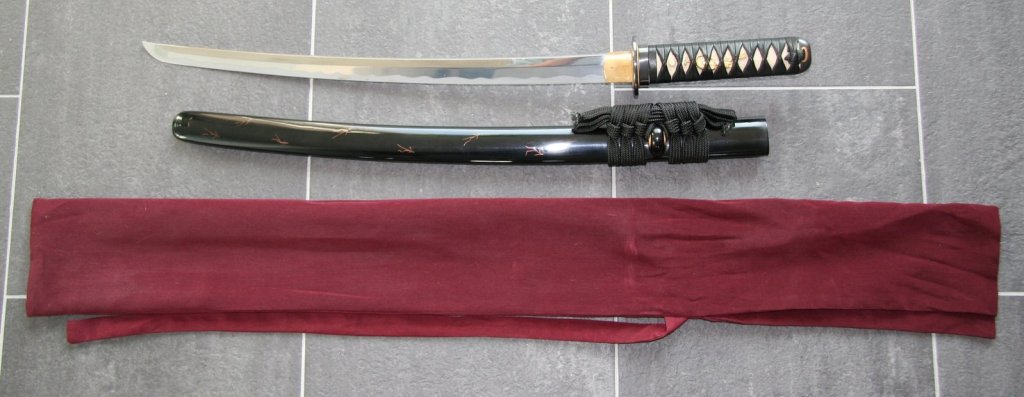
I’ve mentioned recently that I’ve been studying martial arts for over three decades and I’ve trained in a number of different disciplines during that time. Two of the styles I’ve played around with involve the sword. I mentioned the wakizashi in that post, which prompted questions about exactly what that was. Since I wrote a very nice post back in 2020 about this very thing, I thought I would re-post since, well, after 1,500 posts, I’m bound to repeat myself somewhere, right? It also gives me the opportunity to correct a few typos from the original post that I hadn’t noticed at the time. With that in mind, everything below this first paragraph was posted here on April of 2020. Enjoy…

Although it’s normally ideal to stick to one style so that you can master it (or at least attempt to), it gets a bit difficult NOT to dip your toes in the proverbial martial arts pool, from time to time. Training in the Way of the Empty Hand is usually the best option as it means that you’re never disarmed. But I would be lying if I said that the prospect of training with a weapon hasn’t appealed to me, from time to time. With that in mind, I began studying Kendo and Iaido. I studied for a number of years, although I didn’t stick to it long enough to reach mastery. But I have enough skill with a blade to make it a useful implement of self-defence if necessary.

A wakizashi or “short” sword

Samurai swords are iconic and have come to be recognized in and out of the martial arts world. An extremely fluid weapon, the samurai sword was normally a symbol of military nobility in feudal Japan, and was considered to be the soul of a samurai. The wearing two swords was outlawed by the Japanese government during the Meiji Restoration (I’ll let you Google that) but they continued to be used by police and military personnel.

So, what’s known about these famous swords? Well, samurai swords are unlike any other swords in the world, with their unique curvature and single-edged blade. They’ve been forged since as far back as the 10th century, and there are legends of the first actual katana being forged by a wordsmith named Amakuni Yasutsuna as far back as 700AD.

Samurai swords, or katanas as I will refer to them from here on in, are characterized by a long, curved, single-edged blade that is at least twenty-four inches in length and a grip that is long enough for both hands to hold. When samurais wore the two swords, the katana was the longer of the two, with the shorter sword being between twelve to twenty-four inches in length and called a wakizashi.

Because the wakizashi was shorter and had a grip that would only accommodate a single hand, it was generally used for closer combat as opposed to the katana, which was better suited for full combat (once the samurai worked their way through the plethora of other weapons they carried BESIDES swords).

Last but not least is the tanto. This is a short, dagger-style sword that usually measures six to twelve inches in length. Although intended more as a stabbing weapon for close combat, the edge could also be used for slashing. Over time, it became more ornate and acted as a ceremonial dagger, but there is a martial art called tantojutsu, which focuses on the use of the tanto.

The creation of a katana is an entirely unique process. Unlike most swords that are forged by pouring molten steel into a mold, then tempered, katanas are created by forging and combining multiple layers of different types of steel. The layers are folded, over and over again and the curvature happens over a long process of curing and tempering.

The forging process creates a curved blade that combines softer and harder metals. Hard and soft… Sound familiar? (☯) The curve and flexibility of the blade makes the katana incredibly fluid and durable. Then the blade is sent to be polished, which can take weeks, in order to get that mirrored look.

Katanas are fascinating weapons, and would often be customized with images, lacquered scabbards and even family crests and symbols on the guard and grip. And as Ryan Reynolds said in X-men Origins: Wolverine, “I love this weapon more than any other thing in the whole wide world […]. You whip out a couple of swords at your ex-girlfriend’s wedding, they will never, ever forget it.”

At the end of the day, learning to defend oneself with your bare hands should be your primary goal. After all, you’re more likely to find yourself WITHOUT a weapon than carrying one. But should you find yourself with a weapon, it’s also nice to be able to use it properly. The sword is definitely an ideal weapon to train with as it can translate to basically any stick or length of weapon you may wrap your hands around. Food for thought… ☯️

One Weapon In The Hand Is Worth…

I’ve been doing martial for well over thirty years now. In fact, I’ve reached the point where I’ve somewhat forgotten EXACTLY when I started, which makes it difficult to put a firm number on the years I’ve been a practitioner. If I go from memory, I’m pretty confident I started karate when I was ten years old, which means I’ve been practicing for thirty-five years this Spring. on the other hand, the year 1990 sticks out in my head for some reason, which would make it only thirty-three years. Not much of a difference and the only way I could confirm would be to see my original registration form, which Sensei would have back in new Brunswick. Fat chance of that, even if he should happen to still have it.

Even though my focus over those decades has been Uechi-Ryu Okinawan karate, I’ve dipped my toes in the proverbial pool and tried out a few different things in my time. If I had to put a number on it, I’ve trained in at least seven or eight styles, with some of them involving arts that don’t involve empty-hand fighting. When you ask the average person what they know about karate, they’ll usually point out the punching and the kicking, with rarely a mention of weapons. Which makes sense, if you look at the literal translation of karate. But it might surprise some to know that the average karateka usually WILL train with weapons at some point…

Outside of Uechi Ryu, I’ve trained in Kobudo, Kendo and Iaido. The first was because Kobudo goes very much hand-in-hand (pun intended) with karate and owes its roots to Okinawa. The last two, I got into because my parents were kind enough to buy me a wakizashi when I was younger and I wanted to learn how to use it, as opposed to leaving it in my closet. Most people are familiar with Kendo, given the use of the armour and grilled helmets you see when they square off, combined with the bamboo sword known as a shinai. Iaido is a bit of a different, still focused on the sword, that trains the practitioner to draw and execute techniques quickly, with a focus on situational and environmental awareness. It focuses on speed and accuracy.

Although everyone’s martial experience will differ based on their wants, needs and expectations, I chose to pick up a weapon because I knew that the day could potentially come when I would face an armed opponent and it’s never a good idea to do that empty-handed. I mean, if someone came at me with a sword and I had nowhere to go, what the hell am I supposed to do??? That bullshit that you see in movies where the person “catches” the sword between their palms is total bullshit. A properly honed sword, moving at a speed intended to kill, would slip past a defender’s palms with ease. And even if all the stars aligned and the defender managed to stem the sword’s approach, a skilled practitioner of the sword need only adjust the forward angle by a couple of degrees in order to cleave the defender’s hand off at the wrist. Assuming the sword is properly sharpened, of course. But I digress…

It paints a bit of a bleak picture but it’s a realistic one, which most people don’t usually adopt. What I like about Kendo and Iaido, is that the teachings allow me to apply techniques without necessarily holding a sword. If I find myself against someone with a weapon, I can adequately defend myself using a length of broomstick, a baseball bat or a random stick on the ground. It’s a better prospect than facing off against an armed opponent, empty-handed. Kobudo, for me, has its place but has been less useful throughout the years. After all, you won’t find most weapons associated with the art easily. Nunchucks are illegal in Canada, finding properly-weighed kamas is unlikely and walking around with a pair of sai on the streets is cumbersome and not recommended. The bo or staff is effective training as it falls under that same umbrella as sword training. I still own the last two, but seldom do I ever get to effectively train with them.

But let’s get into the meat of the post, which for those of you who frequently read my stuff, already know that I’m going to cover some of the positive and the negative aspects. And there are some of both, with weapons training. The positives are pretty obvious and I’ve already mentioned them; additional techniques, ability to defend against an armed opponent and the overall ability to actually USE the weapons you’ve trained with. By virtue of that, one would ask what possible negatives there could be. The biggest and most concerning is one that most people don’t consider, going into a confrontation: you could be disarmed. The problem with that is it opens the possibility of your chosen weapon falling into your opponent’s hands and being used against you. Not so ideal, if you train with a bladed weapon.

The second is more of a personal dislike but it ties up one or both of your hands. In karate, we use a variety of techniques that involve the open hand and grappling. If you’re using weapons that include both hands, like kama, sai, tonfa and even the bo, both your hands are tied up with your weapon and the ability to isolate and grip your opponent is lost. As I said, this is a personal dislike, since my karate style involves getting in close to one’s opponent an often involves gripping the gi, clothing, hair or other parts of your opponent so you can deliver the blow without them backing away or dodging. The last disadvantage I’ll point out, although I’m sure there are more, is the fact that training in some of these weapons styles may alter and change one’s stances and overall techniques they use in their home style. That can be detrimental to your advancement and progress.

All in all, training and familiarizing yourself with weapons is a positive thing. It’s a good addition to one’s martial arts toolbox and can be useful in certain situations. The same rules apply, when searching for a weapons school to train with. Make sure the style suits your wants, needs and expectations and be wary of the McDojo aspects I’ve written about so many times before. If a teacher is trying to sell you on joining by twirling a staff above their head, you should probably walk out. That theatrical shit has no use in the streets and may look cool but will likely get you hurt, more than anything else. Food for thought… ☯️

Some Salty Facts…

I don’t think I could sit here and try and convince anyone in general that salt is good for you. For the most part, the average person goes on with their day, knowing that the consumption of salt can cause some pretty serious health complications in one’s body. That being said, it’s important to recognize that salt has its place in a person’s diet and isn’t ALL bad. This would seem like a good time to point out that I’m not a doctor or a health practitioner and the post that follows should not be construed as anything by my own option. Moving on…

First and foremost, salt will cause in most folks what I like to call the “diabetic endless cycle.” As you consumer heavier quantities of salt, you’ll become more thirsty. As your thirst increases, you’ll consume more fluids, which will kick your kidneys into overtime to expel the excess and you’ll urinate more often. Wash, rinse and repeat. This is about the closest someone without Diabetes could come top understanding one of the issues that happens to someone with T1D, as it relates to blood sugar, drinking water and frequent urination.

realistically speaking, the human body does need salt. Salt is typically composed of roughly 40% sodium and 60% chloride and people will often use the terms “salt” and “sodium” interchangeably. Although too much can cause harm, salt is used by the body for good muscle and nerve health, proper balance of fluid levels in the body and to help absorb certain nutrients that we need to stay healthy. For example, while consuming too much salt can lead to dehydration, so can too little salt. Since you need salt to balance the fluids in your body, cutting out salt completely (or trying to) can lead to some issues.

In fact, one of the issues that too little salt can cause, is a condition known as hyponatremia. This is a condition where your sodium levels are too low, which will cause bodily pain, nausea and a score of other health issues too numerous to name. I had a bout of this condition a couple of summers ago, where I went on a near 100 kilometres bike ride and guzzled down water for the hours I was out. The sun was blazing and it was hotter than hell. I was sweating profusely and expelled too much of my body’s mineral salts, which caused the symptoms of hyponatremia.

All of that being said and like all things in life, balance is key. While one needs salt to remain healthy and too little salt can cause significant issues, too much salt can cause bloating, dehydration, blood pressure and cardiac issues, kidney disease, kidney stones, stroke and a partridge in a pear tree. The key is proper balance and a healthy intake of sodium/salt that helps to strike that balance. Since every person is different and may have pre-existing health conditions that would contribute to this, you consult your family physician or health practitioner to determine what a healthy level of sodium may be for you. ☯️