The Heart Of The Matter ❤️

The heart is a rather important piece of equipment for the human body. Although technically a muscle, the heart is responsible for pumping blood throughout the body, which in turn provides oxygen and nutrients. The heart is also responsible for helping to filter out certain wastes from the body. Without this particular organ, most of the tissues in your body would die out. And you would, well… die!

The heart also plays an important part in society as it represents the love centre of our very being and contributes to the emotional aspect of our lives. This is a misinterpretation, of course. Despite its importance, the heart is actually pretty frail and delicate and can suffer a huge host of problems, none of which are pleasant or easy to deal with. If you have Type-1 Diabetes, some of those conditions can be aggravated as well, since both Diabetes and Heart Disease share a number of similar risk factors, such as obesity, poor diet and blood pressure issues

According to an article posted by WebMD, “Data from the National heart Association from 2012 show 65% of people with Diabetes will die from some sort of heart disease and stroke. I general, the risk of heart disease death and stroke are more than twice as high in people with Diabetes.” (https://www.webmd.com/diabetes/heart-blood-disease#1)

Although it’s more prominent in people with Type-2, people with Type-1 are still at an increased risk. There are a number of things that one can do to prevent and mitigate some of the risk:

  1. Physical Activity: I know I sound like an annoying parrot with this, but exercising regularly will not only help maintain blood sugars but will control obesity; hence, my next point;
  2. Weight Management: Keeping your weight under control can help increase insulin sensitivity and help reduce the risk of cardiovascular disease;
  3. Control Cholesterol and Blood Pressure: My first two points will help with this, but there are also preventative medications that your doctor can prescribe to help maintain healthy cholesterol levels. The same can be said about your blood pressure;
  4. Take Drugs: This sounds worse than it is… Besides the cholesterol thing, some preventative drugs can be useful for people with Diabetes in reducing certain heart risks;
  5. Quit Smoking: This one is pretty self-explanatory and is a good idea whether you have Diabetes or not. I’m guilty of the occasional cigar, but any type of smoking carries and increased risk for heart disease and stroke. Quitting is not always the easiest thing and often requires some help, through therapies or quitting aids such as nicotine patches or gum;
  6. Brush Your Teeth: Although you may be asking, “What the hell do my teeth have to do with my heart?” the answer is, quite a bit. Bad dental hygiene has been linked to bacterial infections through the gums, which can propagate to the bloodstream and affect the heart valves. The mayo clinic has a short article outlining the reasons. (https://www.mayoclinic.org/healthy-lifestyle/adult-health/expert-answers/heart-disease-prevention/faq-20057986);
  7. Reduce Your Stress: This one is easier said than done, but reducing the active stress in your life will help with blood pressure and heart issues in general; and
  8. GET CHECKED!!!: There’s absolutely no problem with making an appointment and requesting a check-up for your heart. I, myself, run a stress test every three years and get checked regularly. Prevention is an extremely useful tool!

Everything that is usually recommended for good Diabetes management will also help with good cardiovascular health. Proper eating habits, good exercise and blood sugar control are paramount to preventing heart disease. When you get right to the heart of the matter, your health is in your hands (see what I did there?). ☯

Quit Bitching About It If You Won’t Fix It!

There is an undeniable truth in modern society that it’s far easier to whine and complain about things than it is to put in a genuine effort to try and fix whatever may be bothering you. This is not a generality, you understand. But for most people, it is much, much easier to complain about not getting that raise you wanted, or were overlooked for a promotion, than it is to constructively sit down with your boss and say, “I recognize that I wasn’t chosen for the promotional opportunity. Can we discuss what I can do to make myself a competitive candidate for the next one?”

This concept applies to most areas of life. Part of the reason is because it is, for the most part, much easier to complain than it is to do something about it. Diabetes and general health is no exception. I’ve had a lot of friends through the years with Type-1 who have often complained about their blood sugar levels, A1C levels and their weight or condition of their body. To these people, I’ve always asked the same question: What are you doing about it?

“Gardens Are Not Made By Singing ‘Oh, How Beautiful’, And Sitting In The Shade.”

– Rudyard Kipling

There needs to be a recognized acknowledgement that if you’re overweight and are not comfortable, healthy or happy with your body, then you need to do something about it. Start working out. Work on your health. Work on your diet. Consult a professional and get some help. There’s no shame in that. Some people feel they’ve become so far gone that they no longer believe it’s worth the effort. What are you doing about it?

If your blood sugars are running rampant and you’re suffering all sorts of complications with your eyes, kidneys and nervous system, then you need to start taking better control of your Diabetes management. If you only test your blood sugar once a month and indulge in every baked good that passes by, you’ve chosen an extremely slow and torturous form of suicide! There are nutritionists, dietitians, Endocrinologists and family physicians that can help bring you up to a healthier standard and get you to where you need to be. What are you doing about it?

If your fitness has gone to shit and you get winded walking from your couch to your kitchen, there’s a distinct problem. Humanity may have become sedentary, but staying in good physical condition is still an important aspect of a healthy life, whether you have Diabetes or not. Go for a walk, ride a bike, join a fitness club or go for a run. And if you’re uncertain how to go about any of it, there are plenty of resources both online and off that can help get you started and help you along. What are you doing about it?

“The Only Mistake You Can Make Is Not Asking For Help.”

– Sandeep Jauhar

There are obvious exceptions to every rule. It can be hard to get yourself going and there are people who have genuine conditions that make weight-loss difficult. Medical conditions can make it hard to achieve certain goals. For example, if you’ve gone blind, one would not expect that you’ll take up competitive archery! But the lesson here, is that if you find yourself capable of making a start but refuse to do so then you shouldn’t (as my title so eloquently put it) be bitching about it if you won’t fix it.

I think it was Confucius who said, “A journey of a thousand miles begins with a first step.” So take that step! Get off the couch and move a little. Test your blood sugar a few times a day instead of once a week. Opt for something healthier for your next meal instead of grabbing take-out or popping in a frozen tv dinner. Make a start. Improve yourself. Improve your life. And throughout all the progress, when faced with obstacles or adversity, keep asking yourself: What are you doing about it?

Keep An EYE On It…

Did you ever play that game as a child where you and your friends ask yourselves, “Which would you prefer? To be blind or deaf?” Yeah, it’s a weird game and I never said that my friends and I were normal! The point is, I always chose deafness or blindness. As an adult, I know that no physical impairment is ever preferred, but I always assumed that I could live without my hearing in a much easier fashion than without my sight. Maybe I’m wrong. Who knows?

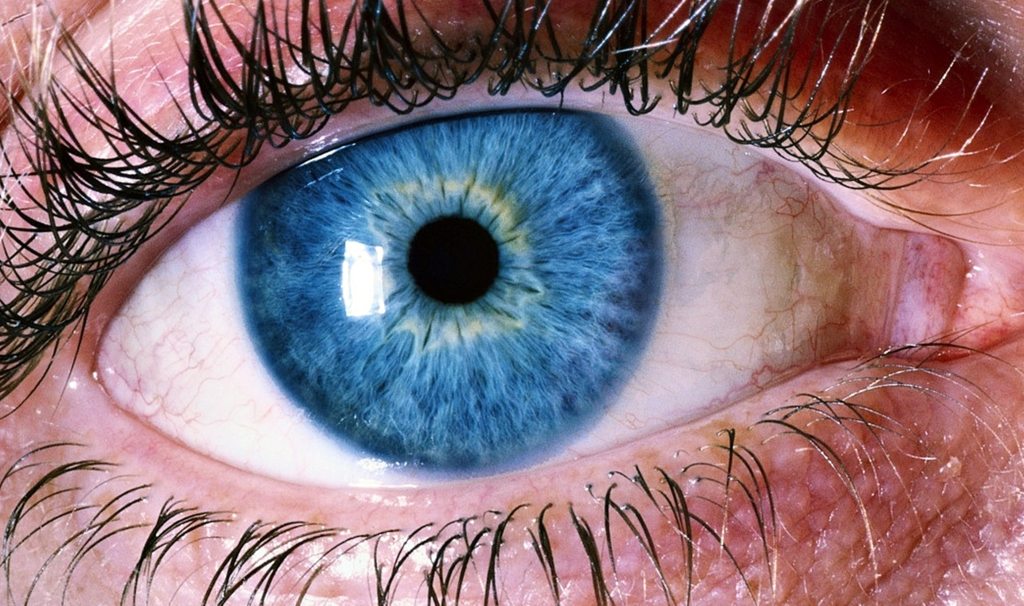
The point is, our eyes and eyesight are very important. And there are a number of serious complications that can be caused by Type-1 Diabetes that affect the eyes. Most people don’t seem to understand that the eyes are actually an extremity. one wouldn’t think so, considering the eyeballs are attached to the body mainly by the optic nerve. Despite being contained in the ocular cavity, the eyes are very much an extremity of the body and are subject to many of the same complications as your fingers and toes.

“The Eyes Are The Window To Your Soul.”

– William Shakespear

Diabetic eye disease is a common problem that affects people with Diabetes, regardless of type. And the risk of these problems increases in tandem with the length of time one has had Diabetes. There are a LOT of these complications, but I’ll cover off the most common ones as well as the ones I’ve actually had at some points, myself.

  1. Cataracts: This is a blurring of the lens of the eye. The blurriness causes your eye to be unable to focus on what you’re looking at. This means impaired vision and surgery is normally required to replace the damaged lens. People with Diabetes can develop cataracts much earlier than the average person and what’s more, it will get worse much faster;
  2. Diabetic Retinopathy: Here’s the first one that I’ve had to experience. This one is a condition where the blood vessels at the back of the eye are damaged. Although both Type-1 and Type-2 can get this condition, it’s usually attributed to poor control of blood sugar. It’s usually treated by way of laser procedures that burn away the damaged vessels;
  3. Diabetic Macular Edema: This is the second condition I’ve had to deal with, and still do. Macular Edema is a result of the accumulation of fluid near the retina and is usually a result of leaking blood vessels. If you’ve had Retinopathy, you’re likely to develop Macular Edema. Macular Edema can sometimes be treated by way of laser procedures or injections into the eyeball. I get the latter. Which sucks. A lot.
  4. Glaucoma: This is a pretty common one, and it involves fluid in the eye causing too much pressure that ultimately damages nerves and tissue. It can often be treated by medications, depending on the type but surgery is often required; and
  5. Corneal Ulcers: The most common way to develop corneal ulcers is by way of infection, and I don’t need to tell you how vulnerable to infections we Diabetics happen to be. It referred to as “corneal” because it presents as an open sore right on the cornea. However, it’s diagnostically called Diabetic Keratopathy. They usually won’t heal on their own and are usually treated by way of antifungals or antiviral medications.

There are other eye-related complications, but these are the most common ones that I’ve heard of/dealt with throughout my years with Diabetes. Obviously, prevention includes proper exercise, firm control of blood sugars and proper diet. Whether you have Diabetes or not, you visit an eye doctor at least once a year to ensure your health and prevent some of these conditions from worsening should you develop them. ☯

Warming Up Isn’t Just For The Cold

When people hear the term “warm up”, they usually associate it with stretching and getting the muscles warm. But there’s a whole bunch of other stuff that you should be paying attention to, especially if you want to prevent injury while doing your preferred activity. Warming up becomes all the more important when your fitness is taking place in a colder climate or during the winter season.

Muscle tissue is elastic. The whole point to stretching is to provide a bit of “give” to that elastic tissue, allowing for a greater range of motion with less chance of injury. take note that I say “less” chance as opposed to “no” chance… Stretching doesn’t guarantee you won’t pull o tear a muscle and in fact, muscle damage is actually how you get an increase in muscle mass. But I don’t want to get too technical on that aspect.

Most people seem to forget (or they simply don’t know) that it’s important to focus on your joints, cartilage and the fluid between your joints as well. This fluid is known as Synovial Fluid, and it’s responsible for reducing the friction in your joints as you move around. I’ll just let y’all Google that term, but these things need to be warmed up prior to a heavy workout as well, and are often neglected by most people. This is often because they aren’t even aware that these parts of the body require any warming up. But they do.

When stretching and warming, it’s important to chose a wide range of full-motion exercises that will include the joints by rolling them and getting a full articulation of movement. This ensures that you warm up that fluid and “activate it”, ensuring that your joints are as ready to go as your muscles.

The human body is an amazing machine. Despite the aches and pains we feel on a daily basis, the average human body thinks of almost everything. But you still need to nudge it along and give it the help it needs to work as efficiently as possible. Make sure that when you get ready for any strenuous, physical activity, you prepare muscles and joints for the hell you’re about to put them through. this will help to prevent injuries and potentially, long-lasting pain. ☯

Protocol And Ceremony ≠ Discipline And Effort

One of the biggest issues facing any martial arts club is when the club as a whole focus more on the bowing and ceremony and less on putting in the honest effort to break a sweat. Unfortunately, this is a trend I’ve seen all too often in some karate clubs, and although it provides the illusion of a nice, fancy martial arts studio, it actually provides nothing beneficial to the students. Or the instructors.

Picture this: The entire class is standing at the back of the dojo. the head instructor provides instructions on a specific set of techniques that he wants the students to practice while moving up the length of the dojo. The head instructor bows to everyone, and everyone bows back. The students perform their respective versions of the demonstrated technique and make their way to the very front of the dojo where they end their techniques and bow to the front. Then they run to the back, bowing to senior belts as they pass them. Some of them no doubt develop hip dysplasia from all the bowing they do. It doesn’t matter that they aren’t doing the technique properly; the importance is placed on ceremony and protocol of the class.

Now, I’m going to be very clear about one thing right now: proper respect and dojo etiquette are VERY important to me. There’s nothing worse than someone who can’t maintain discipline within a karate dojo and shows no respect to those who have been where they are. But you HAVE to be able to work on the learning at the same time! While it may look nice to have a clean, pressed karate gi, and bow at every opportunity, you’re essentially wasting your time and the time of your instructors if you don’t commit to what you’re trying to learn and break a damn sweat!

Some martial arts clubs focus on the “club” and neglect the “martial arts”. That’s all well and good if all you happen to be looking for is a place to congregate and socialize with like-minded people. But while you’re busy exchanging Instagram user names, don’t forget that you’re actually there to learn a skill set that’s centuries and even thousands (depending on your style) of years old. Show it the respect it deserves or go join a knitting circle. ☯

Runnin’ With The Devil…

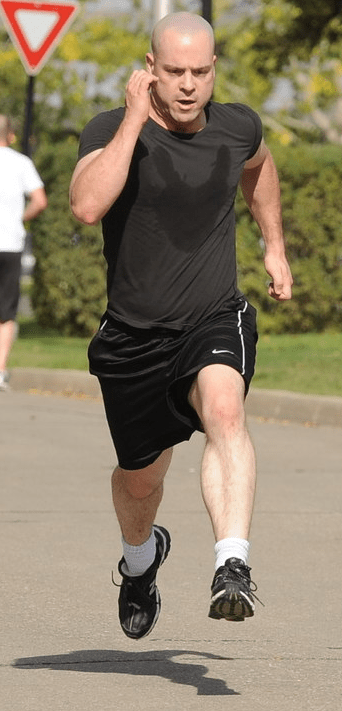
I come up with these ideas, sometimes. They always have the POTENTIAL to be good, but getting through them can be something of a laborious endeavour. A few days ago when I started getting over the illness I’ve been dealing with, I had this bright idea about going for an early-morning jog. Under regular circumstances, this wouldn’t be a big deal. But one of the ideas behind this decision is that I haven’t really focused on cardio in quite a while and some of my job requirements involve something more than a mastery of the martial arts.

Since I already broke my “no working out” seal on Saturday with a pool party I attended with my son, I thought yesterday morning would be an ideal time to just give it a try. When I was training for my job, I was able to run 3 kilometres in about 21 minutes (see my post about it here: https://thebloggingbuddhist.com/2020/02/08/it-isnt-about-what-youve-done-but-what-youll-move-on-to/)

Since my cardio has been pretty limited to the warm-ups we do at karate, I thought it might be a good idea to do something to increase my cardio and attempt the 3-kilometre run I used to do. I tried to get permission to use the gym facilities through my work, but they stopped me cold. So, I figured I may as well try an early-morning run in from home. Especially since I’m not much of a fan of treadmills.

My alarm went off at 6 a.m. yesterday morning and I rolled over and groaned as my body made a sound similar to a bowling ball rolling over a grocery bag full of corn flakes. Once all of my joints acknowledged the sudden movement I was forcing them into, I walked out to the living room to wake my wife, who had been up a few hours previous to deal with our infant. I didn’t have much time, since it was a school day for Nathan and I would have to get HIM out of bed in an hour.

I dressed up in thermals and slipped on my ear buds and stepped out into the morning chill. The streets were quiet and although I’m certain i wasn’t the only one who was awake at this hour, the streets hadn’t quite come to life yet and everything was quiet. I started my fitness app, which tracks my distance, elevation and plays my workout music.

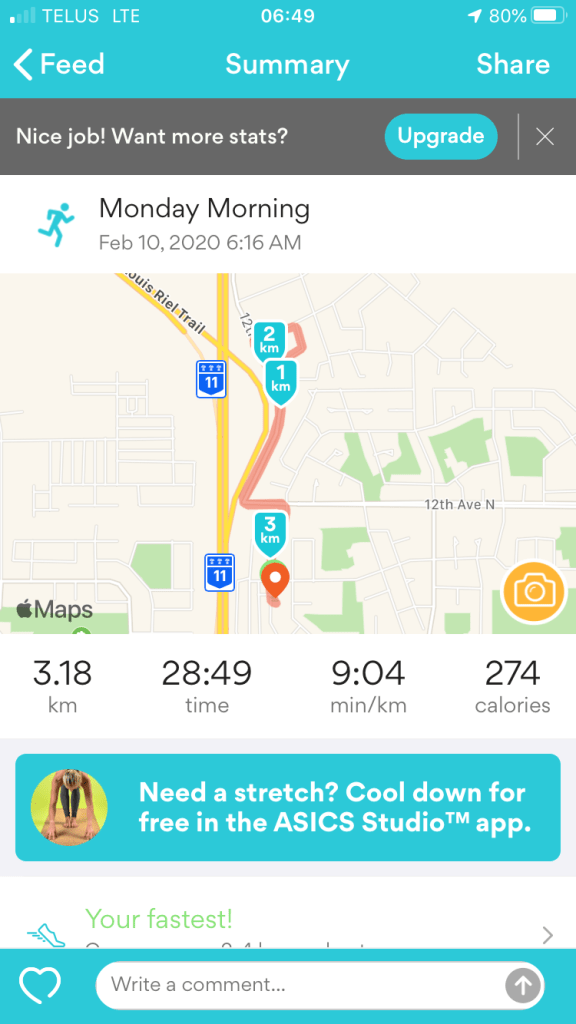
Monday morning’s stats on my run

The temperature was only -8 degrees Celsius, but that was apparently cold enough to cause my lungs to seize within the first half-kilometre. Running was fairly difficult, despite the quiet streets. But as you can see from the image above, I managed 3.18 kilometres in just under 29 minutes. Not too shabby, considering how long it’s been since I ran like that.

If I were to have planned it out better, I would have done a few things differently:

  1. I would have laced my boots tighter. It stands to reason that I couldn’t run during the winter months with my sneakers, so I had to wear a pair of my tactical boots. I’m reasonably used to running in those on the job, so I figured it would be the best bet. But those boots have a zipper down the side of each boot for easy removal, so I rarely have to tie them. This resulted in them being a bit loose yesterday while I ran. not only is this bad for your feet, it can cause blisters;
  2. I would have mapped out my route a bit better. My goal was to run a definite 3 miles. I used Google maps to track 1.5 kilometres with the intention of simply performing a round trip. The round trip should have totalled 3 kilometres, but either Google maps was a touch off, my RunKeeper app was a touch off or I don’t know how to trace a map properly. Luckily, the app calculates the average speed for me, so it took some of the math out of the equation; and
  3. I would have chosen my layers a bit better. I wore thermal pants and a long-sleeved thermal shirt, with nylon splash pants and a cotton t-shirt over that, followed by a winter jacket, balaclava and leather gloves. The balaclava was a good choice, as minutes into the run, I needed to cover my cheeks and it worked well for this purpose. However, my layering caused excess sweating (right, it was the layering!) and the cold was causing discomfort.

All in all, it was an alright run and it woke me up better than my usual first hit of caffeine. By the time I got back home, I was tired and sweaty but I felt good. This is encouraging for future runs. Not only will I be doing it again, but the goal now is to work on lowering that total time for a 3-kilometre run. The best part is that my blood sugar levels stayed consistent throughout the entire run. The worst part is that I have to go to karate tonight, and my legs are still screaming at me. this should be interesting! ☯

Get BACK To It…

Boys, I was having a rough go of it, for a couple of weeks. Catching any sort of illness when you have Diabetes always has a different share of complications and issues than it would for a non-Diabetic, and this illness was no exception. This is about as much complaining about being sick as I’m going do, but one point that sticks out is that I haven’t had a decent workout in almost two weeks.

Enter: kids’ birthday party! My son Nathan has reached an age where he’s been getting invited out to birthday parties for the past year or two. Given the state of the world and how many people believe everything has to be bigger than life to be worth remembering, we haven’t been attending simple at-home parties with cake and presents. There’s been a Dino-bounce party, involving an indoor bouncy house gym and a couple of waterpark parties, were the family books a room at a local hotel and let’s the kids free range all over a water park with slides and fountains.

The first one of these that we attended, my wife was pregnant with our second child and didn’t partake of the watery fun. Last Saturday, we attended the second of these water-themed kids’ parties and it had a long water slide that required climbing three stories of steps to reach the top. As our infant son is only four months old, he stays with my wife, so she once again couldn’t partake of our watery fun. This means that I was left running along the deck, climbing all those steps and riding down a high-speed water slide for almost two hours with my hyperactive 5-year old.

Now, just to be clear… It was loads of fun! I mean, who DOESN’T enjoy water slides? Probably some people, but my point is that I lost count of the number of laps I swam and the number of steps I climbed, making for a wicked overall workout. The following day revealed the tell-tale tightness in my legs that usually accompanies a workout, especially since I haven’t done anything in almost two weeks. But it also accompanied something that I haven’t had much experience with: back pain.

According to an article written in WebMD, lower back pain before the age of 50 is often the result of sitting for long periods of time, which puts an increased amount of stress on the discs in your back. This is something I can easily admit to, considering my writing, reading and movie-watching habits of late. The article goes on to say that “Strength-training and cardio exercise are both helpful.” This is because it can strengthen the pertinent muscle groups and increase blood flow, which can reduce the pressure and help with the ache. (https://www.webmd.com/pain-management/features/common-pains-of-age#1)

There are a lot of other reasons why your back may ache. As most of you are likely aware, muscle tissue is elastic. As years pass, your muscle groups lose that elasticity and you may lose some cushioning in your spine. When coupled with secondary conditions, such as arthritis, osteoporosis or infections, it can easily result in back back. In my case, I’m inclined to believe that I simply pulled my back muscles as a result of overexerting myself in a short period of time after sitting like a lazy lump, blowing my nose over the past ten days.

Your back is your body’s entire support system, so it’s important not to ignore lasting pain and to take good care of it. As with most things related to the body, the first line of defence is to get plenty of good physical exercise and drink plenty of fluids. keep your core and the related muscle groups strong, and this will go a long way to preventing those annoying twinges in your back. ☯

It Isn’t About What You’ve Done, But What You’ll Move On To…

Recent events and seeing old friends has had me feeling nostalgic lately. Despite my best efforts to try and keep myself going, the reality is that time affects us all. And what one is capable of at one point in life may not be what we’re capable of in the years to follow.

I’m reminded of a point in my martial arts training from almost fifteen years ago. I had reached brown belt and somehow I had hit a slump. My techniques weren’t quite as crisp, my kicks felt laborious and my energy just wasn’t there as it used to be. I wasn’t quite sure what to make of it. I was only in my mid-20’s and had been training more than consistently.

It reached a point where it was starting to affect my mood and my perspective of karate. This is not a good thing when you’ve made karate a permanent part of your life. I started dragging ass and getting down about the whole thing, until Sensei sat me down and snapped me out of it. He explained that everyone has low points and everyone hits a slump time and again. The important part is to keep pushing and working through it. Otherwise, that slump will take you over if you lie down and let it happen.

When you’re on top, it feels as though you’re floating on air!

Eventually, I pushed through whatever was holding me back and went on to black belt. And it’s a good thing I did. If I hadn’t pushed and continued on, I might have missed out on a lot of the great things that followed. And that’s the important lesson: no matter what difficulties you may be facing in the here and now, your perseverance will help you to get through it and be receptive to the positive things to come.

Float on air all you want… 3 miles in 21 minutes is exhausting shit!

I’ve spent my entire life pushing hard to achieve my goals. Even in the face of life-altering difficulties, no self-respecting person can/should do otherwise. Give yourself the benefit of the doubt and never stop fighting. If you give your best effort, once the smoke clears, there can only be warm sunrises and better things on the horizon. Stay strong! ☯

You Can’t Use Crosshairs When It Comes To Fat

Everybody is different. I’ve preached that often enough in this blog, but it’s an important detail considering the topic of today’s post. The reality is that a diet that works well for one person may not be as effective for another. There are a number of reasons behind this including metabolism, lifestyle, body type and a bunch more… The same can be said for workouts. Even though doing 30 minutes of fast, pulse-racing cardio may be the ideal workout for one person to reach their goals, the next person may require weights, or some other form of fitness that you may not even consider. This is why losing weight can be so difficult for some, but easy for others.

Fat is a particular beast, because the accumulation and loss relates directly to your metabolism, your genetics and the diet and fitness regiment you follow. Contrary to popular opinion, you can’t focus WHERE you burn fat. That means all those late-night infomercials where the dude and his girlfriend are randomly standing by a pool and both of them could crush walnuts with their abs because of this ONE machine they do for a few minutes a day? Impossible.

You CAN’T choose from which area of the body you’ll burn fat. You CAN choose to increase muscle mass in specific areas. That’s the difference most people don’t understand. If you perform hundreds of crunches a day, your abdominals will become developed and strong. No doubt about it. But there’s no guarantee that it will burn fat around your gut.

According to a post by HealthLine.com, “[…] one study in 24 people who only completed exercises targeting the abdominals for six weeks found no reduction in belly fat.” Further, the article goes on to say, “Another study that followed 40 overweight and obese women for 12 weeks found that resistance training of the abdominals had no effect in belly fat loss […]”

There have been plenty of other studies, most with the same result. Here’s the article, if you want to give it a glance: https://www.healthline.com/nutrition/targeted-weight-loss#section3

Your body stores fat as a spare source of energy. Targeting one specific area of the body not only won’t guarantee trimming that area’s fat, studies have shown it’s unlikely. Generally speaking, the only way to burn fat is a combination of intense physical conditioning combined with a proper diet that ensures your getting good, healthy calories.

It’s not all bad news; you can still burn fat, you just can’t focus where it’ll melt first. Toning down will be pretty much universal and consistent throughout your body. Fat burning and proper body toning is especially important for Type-1 Diabetics. ☯

Kicking Is Difficult With Diaper Rash…

The martial arts can be an important part of children’s lives and can help with a score of different aspects of their growth, including but not limited to increased attention span, better sleep habits, discipline and improved fitness. But how soon should kids start training? It’s an interesting question; one I’ve found myself asking even recently because my son usually sticks to me during my home workouts.

Depending on the type of fitness routine you follow, there are good and bad aspects for children. In general, the martial arts can be beneficial and even therapeutic for children and provide them with an outlet for their aggression and teach them some discipline; something that can prove difficult without. On the other hand, something that’s inherently physical that taxes the musculoskeletal system, like weight lifting, can be detrimental to young children.

According to an online article posted by the Mayo Clinic, “Trying to build big muscles can put too much strain on young muscles, tendons and areas of cartilage that haven’t yet turned to bone (growth plates) – especially when proper technique is is sacrificed in favor of lifting larger amounts of weight.” The article goes on to explain the difference between “strength training”, which can be beneficial, and weight lifting. The article can be read here: https://www.mayoclinic.org/healthy-lifestyle/tween-and-teen-health/in-depth/strength-training/art-20047758

My son Nathan showing off his push-up skills, about two years old!

When it comes to the martial arts, there are no REAL limitations, as they apply to something intense like weightlifting. Stretching, punching and kicking as well as practicing forms can have a number of benefits with none of the down sides that some other sports may include.

When I travelled to Okinawa in 2001, I was having supper at the home of our style’s master. His wife was holding one of his grandchildren, who happened to be about three or four months old. His wife was holding the baby and dipping him forward every few minutes. I politely asked what she was doing, to which she replied “Teaching him to bow.” I was taken aback and quite surprised. They start grooming and teaching their children some of the fundamental aspects of discipline in their society from the moment they’re born. And they apply that same aspect to karate and the martial arts.

The only basic detail I think is important, is to remember not to PUSH your children into whatever sport regiment you follow. Although it fills me with pride overtime Nathan does a push-up or joins me in a workout, I’ve never forced him to join or told him he had to. I think that this is an important detail. Your child will enjoy themselves and are twice as likely to stick with it, if the decision comes from them. ☯