When You’ve Bruised More Than Your Ego…

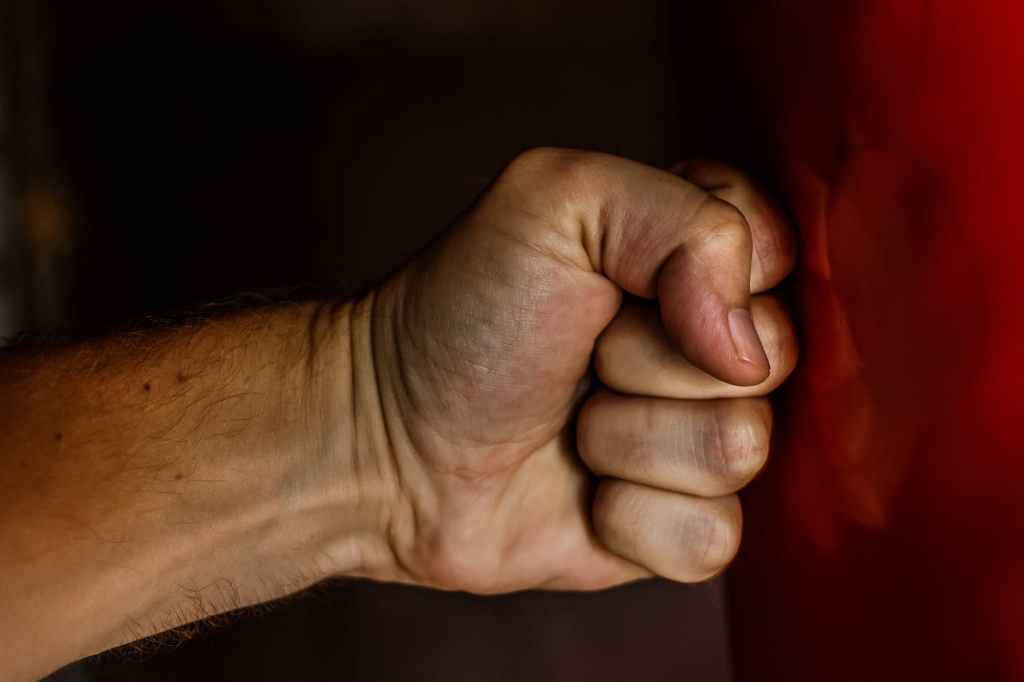
Don’t let the title fool you, today’s post is about actual, physical bruising. let’s leave the emotional bruising for another day… If you train in the martial arts, it stands to reason that you’ll get bruises. Let me repeat that: YOU WILL GET BRUISES!!! If you think, for one moment, that you’ll train extensively in karate or any other style in the hopes of becoming proficient without suffering bumps, bruises and abrasions, you’re kidding yourself.

I’ve recently written about the fact that proper martial arts training requires hitting something. I’ve mostly been referring to the use of pads or punching bags. But when training with a partner, speed and precision need to be developed. This can usually only be accomplished by executing techniques to their fullest extent against your partner. Your partner, on their end, need to develop their blocks in such a way that they can intercept and counter.

I have unfortunately known quite a number of instructors who have adopted a policy of “no touching” in their dojo. Although this can seem ideal, especially in a modern society where everyone gets easily offended and can construe physical contact as something inappropriate (despite martial arts being a contact sport), such a policy does you no favours. It prevents your ability to learn martial skills in the way they were meant to. If your instructor preaches no contact, he or she is doing you a great disservice.

But if you’ll indulge me for a moment as I climb down off my soap box, let’s discuss actual bruising for a moment. A bruise is basically a pooling of blood beneath the surface of the skin. There are different types of bruising, but we’re keeping it simple (for a change). Bruising happens when your tissues come into some traumatic level of contact with something solid. The capillaries beneath your skin burst and release blood into the tissue beneath the skin. The collection of this blood is what we see as a bruise.

Although bruises will initially hurt or ache, the feeling should pass within a day or two. And you should likely know that the bruise will change colours as it heals. That being said, there are certain medical conditions that can cause bruising without trauma to the tissues. Some bleeding disorders like hemophilia, and some forms of cancer, can cause abstract bruising that you may not be able to explain.

You should definitely seek medical help if your bruise is accompanied by swelling and extreme pain, bruising without knowing how it happened and if you suspect you may have broken a bone. If you have bruising and also have blood coming from ANY extremity (nose, mouth, urine…) then it requires immediate medical attention. On the milder side, bruises will usually heal on their own within a week or two at most, depending on the cause.

If you have Type-1 Diabetes, you’re likely already aware that it’s tougher for us to heal ANY wound. A simple bumping of your leg can cause bruising that will need to be treated by a medical professional, through draining or medication. This all depends on how well you manage your Diabetes, especially through the practice of good nutrition, exercise and frequent blood sugar testing. ☯

Don’t Knuckle Under 👊

Yesterday, I wrote a post about the importance of striking in the martial arts; not only from a technique perspective, but the actual practice of striking solid objects (punching bags, pads and mitts) in order to refine and develop the techniques your specific style uses. After all, how can you learn to punch if you never PUNCH something? Makes sense, right?

I think that people in general tend to underestimate the importance of proper technique and practice when it comes to throwing an efficient punch. There are a number of elements to consider: bone alignment, stance, knuckle use and where to chamber the punch from… It’s not a matter of simply throwing the fist out there and hoping to make contact. This is one of the reasons why that first punch in an actual fight usually results in injury.

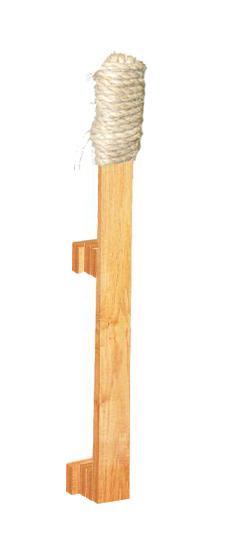
For years, karate practitioners conditioned their strike through the use of a punching post called a Makiwara. Although some may argue with this perspective, the Makiwara was originally developed in Okinawa. It involved a post driven into the ground and wrapped in rope or padded with rubber or a rice pad. Practitioners would strike the Makiwara in order to develop the knuckles on the index and middle finger, which are the two that SHOULD be used during a proper punch (unless you’re using Kung Fu’s punch, which uses the last three knuckles).

Example of a Makiwara

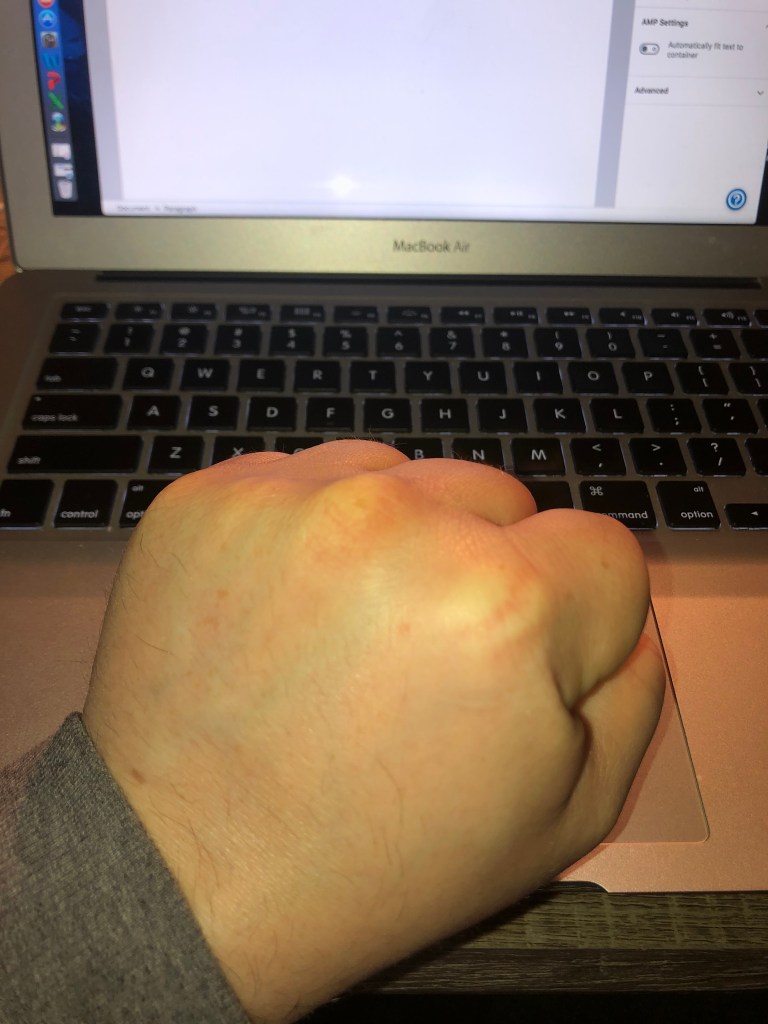
I tried to find an image of what a karate practitioner’s knuckles look like after years of Makiwara training, but all I found were extreme photos of excessively calloused and swollen fore-knuckles that don’t ACTUALLY happen to martial artists, even when they train consistently. After three decades of hitting everything in sight and doing knuckle push-ups during every class, my knuckles STILL don’t look like the examples provided online. Seriously, Google “karate knuckles” and you’ll see what I’m talking about.

That’s MY left fist. Notice the enlarged fore-knuckles without callouses

Those knuckles are the result of years of knuckle push-ups and punching bags. If you do your punch properly, your knuckles, wrist, forearm and elbow are aligned and the two fore-knuckles will be the ones performing the strike. To do otherwise leaves you open to injury; wrist sprains, fractures and breaks, injured knuckles and lack of power behind the punch.

Knuckle push-ups are another controversial subject in martial arts circles. Are they worth it? Are they better than traditional push-ups? Well, speaking from experience, I can say that they provide a certain amount of conditioning for the fore-knuckles. They also help build the forearms, develop bone alignment for punches and builds the chest and triceps. It also helps to strengthen your wrists, but there’s a catch-22 to doing them…

You’re doing push-ups using a smaller area of stability, which can cause loss of balance and risk of falling over and spraining something. You can also injure the small bones in your hand due to the focused stress that knuckle push-ups put on them. So there is some risk in doing them, but they also offer all the same benefits that traditional push-ups do.

As with any other technique in the martial arts, the learning never stops. If you think you’ve mastered the perfect punch, I can promise you that you’re wrong. There’s always room for improvement, so work on finding the technique that works for you. Then train, train, train… ☯

Making An Impact

Of the many benefits associated with the martial arts, being able to train by yourself is likely one of my favourites. In fact, karate is one of the very few methods of training that you can literally do anywhere, anytime and with minimal equipment requirements. Given the current state of the world and the need for everyone to self-isolate, this is a comforting aspect to something familiar that I’ve been doing for most of my life.

But one of the things that is often lacking in some students’ workouts is a fundamental aspect of the martial arts… You need to hit something. Regardless of your reasons for training in the martial arts, you need to ask yourself: Have you ever punched someone? Have you ever initiated a technique and made contact with a solid object, be it a punching bag, board or a brick?

Depending on who you talk to, board breaking has been a topic of hot debate among martial arts practitioners for decades. For some practitioners, board and/or brick breaking is a pointless exercise. In the words of Bruce Lee in Enter The Dragon, “Boards Don’t Hit Back.” I’ve never been a fan of “breaking” something in order to develop my strikes properly. I’ve always been more of a bag or pad kind of guy. This is because you can practice and develop your strikes ad nauseam on pads, where boards and bricks require clean up and replacement.

But all jokes aside, you can train by yourself to your heart’s content. But honestly: YOU NEED TO HIT SOMETHING!!! How can you properly train in a striking art without actually striking something. Form and drills are fantastic for building your stamina and developing a technique. But in order to avoid injury in the event you ever ACTUALLY need to hit someone, you need to experience the feeling of your strikes making contact with a solid object; preferably something that won’t yield or give when you strike it.

This is the 8×8-inch punch pad I installed on my basement wall last Wednesday. Believe it or not, I only paid 10 dollars for this bad boy from a shopping website. I mounted it onto a piece of pressed wood, then I bolted the entire thing to the wall stud beneath this gnarly-looking 70’s clapboard. I placed it at chest height, allowing me to practice my punches, elbow strikes, knife and ridge hands. If I were still in my younger years, I’d probably even try doing my roundhouse kicks on this puppy.

Before finding this pad, I was looking into making one of my own. All you need is a square piece of high-density foam. Wrap it in canvass, leather or vinyl and stitch it shut. Then mount it on a backboard and decide where you’ll bolt it. Some of that green foam used for fake flowers can work pretty well as long as dense enough and it’s properly wrapped.

If you can’t get your hands on a punch pad or bag, and don’t feel you’re skilled enough to make one of your own (what am I, a seamstress?), another option is sand punching. Used in a variety of martial arts including karate, fill a bucket two thirds of the way with a fine grain of sand. Then you can practice punching into the bucket in order to build strength in the forearms, wrists and knuckles. If you want to add a little density to the mix, add some water to the sand.

Although fine grains of sand are generally used, my Sensei used to have a canvass sack of crushed rock hanging from a chain in his gym. I’ve never used it, but I can imagine he has. Density and type will depend on your preference and how you want to develop. You just need to be mindful of technique so that you avoid potential injury.

The bottom line is simply that even if you’re training to get in shape or learn to defend yourself, you can’t strike empty air indefinitely. Eventually, you gotta get in there and hit something. After all, you can play Grand Theft Auto until you’re blue in the face, but it won’t qualify you to drive. You need to get behind the wheel of an actual vehicle to do that. That same can be said for your strikes. ☯

Tai Chi, The Underestimated Martial Art ☯

When one thinks of martial arts, what springs to mind are the mainstream styles that almost everyone has heard about. In that respect, I’m referring to Karate, Tae Kwon Do and Kung Fu as prime examples. And any of their offshoot styles, of course. But when someone tells you that they study the martial arts, the first thing that comes to mind likely isn’t Tai Chi

First of all, what is Tai Chi? According to a page on the Tai Chi Foundation’s website, “Based on softness and awareness instead of force and resistance, tai chi chuan (also referred to as tai chi, taiji or taijiquan) has been recognized for centuries as a method of self-cultivation and an unexcelled form of self-defence. In Chinese, tai chi means “Supreme Ultimate.” (https://taichifoundation.org/what-tai-chi-chuan?gclid=EAIaIQobChMIupeU-Kjr6AIVLf_jBx2uOA6SEAAYASAAEgLrrfD_BwE)

Fitness group doing tai chi in park on a sunny day

That’s just scratching the surface, really. Tai Chi is a Chinese martial art, which makes it a style of Kung Fu. In the Western hemisphere, people associate Tai Chi with something that the older population does to improve flexibility and blood flow in the body. Although these certainly are some of the benefits, people often seem to forget that Tai Chi is actually a fantastic style of self-defence, and traditional Tai Chi includes all the same aspects as any other martial art including weapons, forms and faster movements than the slow and steady pace we usually see happening at a public park.

The beauty of Tai Chi, which has often been referred to as “meditation in motion”, is that it’s low impact and places very little strain on the joints. For an old dog such as myself, who has been practicing high impact and full-contact martial arts for over 30 years, this can be a welcome change. The movements automatically cause you to inhale and exhale appropriately to control breathing and helps you to solidify your posture.

Tai Chi also helps by providing other benefits, including but not limited to improved flexibility, balance and muscle strength despite the slow speed and low impact. These are a result of circular movements that never extend or stretch the joints or connective tissue. The Mayo Clinic’s website has an excellent article on further benefits and advantages of Tai Chi, which can be read here: https://www.mayoclinic.org/healthy-lifestyle/stress-management/in-depth/tai-chi/art-20045184

Much like Karate, Tai Chi boasts a number of different styles and offshoots that focus on different aspects as they relate to their respective benefits. So if you’re thinking of starting Tai Chi, you may want to observe a couple of classes before you make a choice. Like any martial art, styles are subjective to the practitioner so you’ll want to ensure that you join a school that will fit your needs and requirements.

Lastly, I’d invite anyone who still thinks of Tai Chi as an “old person” style of the martial arts to do some research into the more traditional forms of the art. In fact, there are a number of reasonable videos on YouTube that demonstrate Tai Chi at combat speed and some with weapons. I, personally, have studied Taoist Tai Chi, which is an offshoot of Yang-style Tai Chi. I never stuck with it, given everything else I try to cram into my brain, but it was certainly an enjoyable experience. ☯

Fuel The Machine 🍔

A big part of maintaining good health is nutrition. Food plays an important role in most of the aspects I write about, including Diabetes and fitness. Obviously. So how does one use their eating habits to maximize their fitness? I may have used a cheeseburger emoji in the title, but this doesn’t mean you should start wolfing down burgers. I’m just a fan of burgers…

It stands to reason that some of the basic food elements should be observed. Protein is important for the construction and repair of muscle tissue and carbohydrates are required as fuel. I’ve covered those aspects in previous posts, but when is the best time to eat when working out? The jury is out and sometimes it depends a bit on preference.

According to an article posted by HealthLine.com, exercising on an empty stomach could have some benefits. A fasted system means that the body may burn through its fat stores as fuel as opposed to using carbs, especially if you haven’t ingested any. There’s no firm evidence showing that will lead to permanent weight-loss, and the article also indicates that food should be consumed some hours prior to a long workout, as your body may need the additional fuel to get through the workout.

Either way, the article postulates that one should definitely eat AFTER a workout, especially if you worked out with a fasting system. The body will need to replenish its energy store and replace lost nutrients. (https://www.healthline.com/nutrition/eating-before-or-after-workout#long-duration-exercise)

Timing can also be an important factor. One usually shouldn’t eat immediately before working out, as this can cause stomach problems as your blood supply is dedicated to your muscle tissue instead of digestion. But you should certainly snack/eat a meal within an hour of working out in order to replenish yourself.

Try to choose healthy options that will provide what your body needs. Chocolate milk is a fantastic fitness staple, since its loaded with protein and carbs. Excellent for replenishing your body. It’s also made primarily of water and will help to keep you hydrated. You want to avoid fatty foods as these will take your body longer to break down and digest and, well… fat, right?

At the end of the day, the best course of action comes down to your preference. Every person’s body is different, so the requirements may be different as well. But the important and common factors are to drink plenty of water to stay hydrated, eat well to replenish AFTER a workout (but mind your portion size) and don’t be afraid to snack. Bear in mind that one of the things your mother told you growing up was accurate: breakfast is the most important meal of the day. ☯

Take Time To Heal

Like most martial artists, I’m no stranger to blood, sweat and tears. There have been multiple times in the past thirty tears when I’ve “pushed through the pain” and trained and/or worked out even when I felt ill or weaker than I should have. It’s no mystery that high blood sugar and other Diabetic issues can weaken the body’s immune system and make Type-1 Diabetics more prone to colds and other annoying illnesses.

But despite one’s pride and hard-headedness, is it IDEAL to train when one is sick? Depending on who you speak to, recovery time is always the best route. Allowing your body the time it needs to heal is preferable, especially when Diabetic, to pushing your body to where you compromise your immune system and potentially open yourself up to infection.

I’ve been struggling with a cold for the past four days. At the risk of being accused of having “man flu,” my face has been swollen and in pain, sinuses are pooched and I have an extreme lack of energy. Today is one of the first days that I’ve begun to feel better. I’ve stayed off my feet and taken it easy but my wife has suggested that maybe the best medicine would be a solid workout to build up a sweat and burn the illness out of me.

I’ve done some reading from all of my general go-to websites, including WebMD and the Mayo Clinic. I’m surprised to find that most of the sources I consulted all seem to agree on the same limitations and factors when considering working out when sick.

According to a quote on WebMD by Neil Schachter, MD, “if your symptoms are above the neck, including a sore throat, nasal congestion, sneezing, and tearing eyes, then it’s okay to exercise,” He goes on to explain, “If your symptoms are below the neck, such as coughing, body aches, fever and fatigue, then it’s time to hang up the running shoes until these symptoms subside.” (https://www.webmd.com/cold-and-flu/features/exercising-when-sick#1)

According to a Q&A response provided by Edward R. Laskowski, MD on the Mayo Clinic’s website, the same “neck check’ rule is to be considered when thinking of working out while sick (https://www.mayoclinic.org/healthy-lifestyle/fitness/expert-answers/exercise/faq-20058494)

The point at which you should NOT work out, includes when one is suffering from a fever. Having a fever puts you at higher risk of dehydration, muscle cramps and aggravated Diabetic issues. Below the neck symptoms that should be considered include vomiting, diarrhea, coughing where something is expelled, body pain and fatigue.

At the end of the day, the decision whether you work out or not falls on your shoulders. If you’re not feeling up to it, don’t do it. Another option, if you feel well enough to do anything, is to simply tone down your workout so that it doesn’t floor you. Take a walk instead of a run. Do Tai Chi as opposed to shadow boxing. And if you are returning to your workout routine, do it gradually.

If your workouts are done in a public setting, such as a gym or fitness centre, then be considerate of others in relation to your illness. Don’t be blowing your nose every five minutes and putting your hands all over the equipment, spreading your phlegm on every surface. Carry a towel and be certain to place it on the bench before you lay on it. Use an alcohol-based sanitizer after you’re done with the equipment. And be certain to scrub your hands with soap and hot water often.

At the end of the day, you and your body will dictate whether you decide to continue exercising or not. Considering my cough, fatigue and all over bodily aches, I don’t regret choosing not to workout over the past several days. And a decent workout can even be beneficial as it can provide benefits such as opening the breathing passages. But I’ll admit that I can’t wait to get back at it. And don’t forget to test your blood sugar often. ☯

Keep On Rolling

If you’re anything like me, the day or two after an extreme workout will have you feeling like hell. For the most part, this sensation is temporary (see my post from four days ago entitled, Grin Through The Pain) but it can often feel as though you need an extra little something to help your tired and sore muscles along; especially if you work out frequently.

Under normal circumstances, one could easily include certain medical professionals in their training routine such as massage therapists, acupuncturists and chiropractors, bearing in mind that the three provide different functions. But with the current state of the world, it’s difficult to find a productive way of getting the same relief for your muscle tissues. Heating pads and over-the-counter pain killers can only take you so far.

This is where foam rollers come into play. Foam rollers are reasonably popular with athletes nowadays, and they first came into play in the late 1980’s when physical therapist Sean Gallagher began using it as a self massage tool. But like everything else, there’s some good, bad and ugly associated to using one.

Example of a textured foam roller

The proper use of a foam roller will help to ease knots and tightness, increase blood flow through the muscle tissue and help loosen scar tissue. All of these things will significantly help with recovery time after an intense or gruelling workout. You can use a roller before and after a workout, to help with stretching and the prevention of injury.

Another good use for a foam roller is if you spend your day working in a sitting position or if you got a kink somewhere from improper sleeping positions. According to an article posted on Healthline.com, foam rolling has a number of benefits including but not limited to easing muscle pain, increasing your range of motion, temporary reduction of the appearance of cellulite, relieves back pain, helps to manage fibromyalgia and is a handy tool for relaxation.

It is advised that one needs to be careful when rolling and that one should avoid rolling over joints and to avoid foam rolling if you have a muscle tear or a break. There different types of foam rollers, including smooth rollers that are suggested if it’s your first time rolling and textured rollers that work deeper into the muscle tissue. Here’s the Healthline article: https://www.healthline.com/health/foam-roller-benefits

Like anything else, consult your doctor or medical professional before starting any new fitness routine. But foam rolling can be a reasonable addition to your at-home workout routine. It won’t completely replace a registered massage therapist, but it can provide some relief during trying times. ☯

I Stole My Wife’s Bike! 🚲

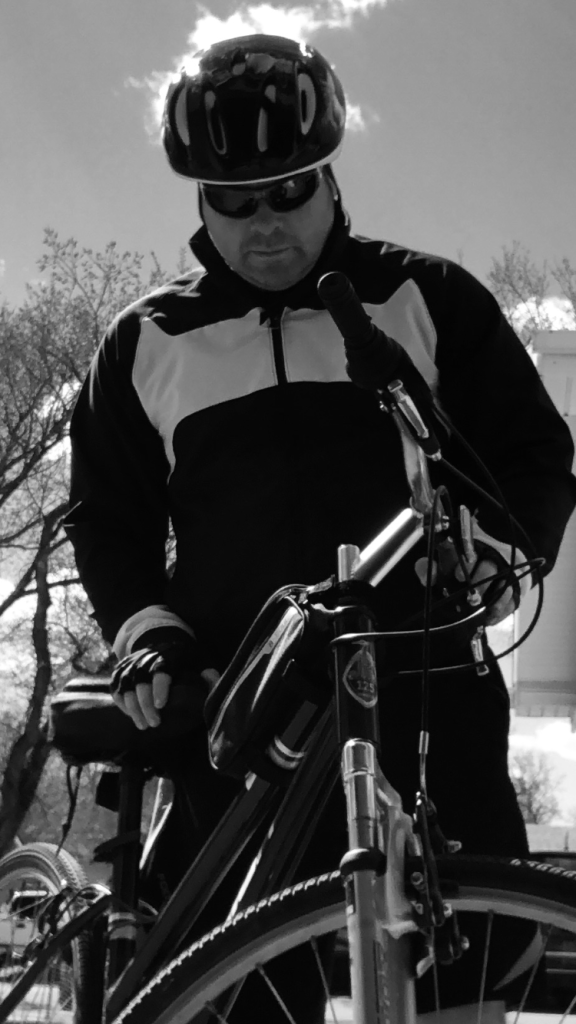
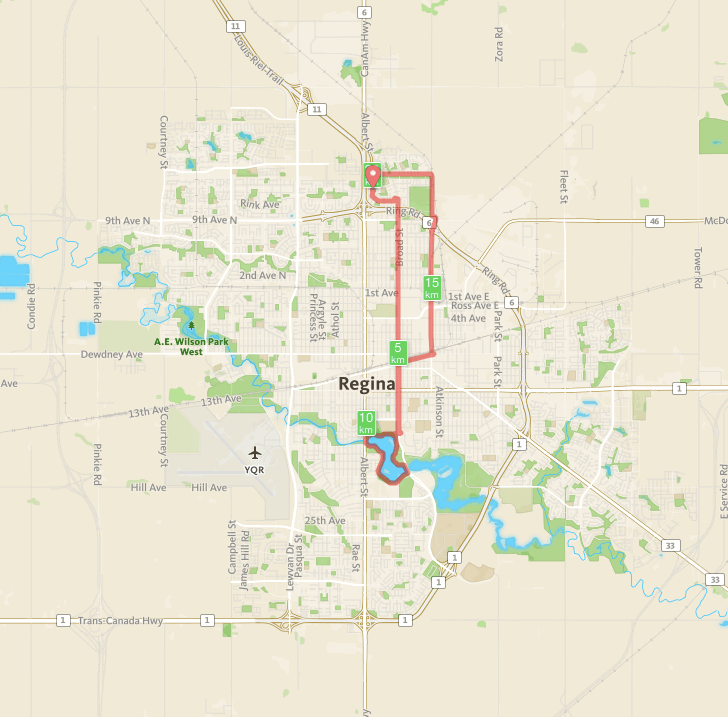
Yes, you read the title correctly; I stole my wife’s bike! Although a borrowing a marital property can hardly be referred to as theft, and she knew I was boring it. It was 14 degrees Celsius in Regina, Saskatchewan yesterday afternoon (although it may have reached higher but that was what I saw when I checked). As such, I decided that it would be a good idea to spend some time outside for the day’s workout.

Last year I logged a reasonable number of kilometres over the warmer months on a bicycle, and I discovered a love for it. I even cycled to work, on a number of occasions, which happens to be about ten kilometres away. The best aspect of cycling is that it’s a low impact exercise, so the past three and a half decades of wear and tear on my knees from full-contact martial arts doesn’t impede my ability to peddle.

There are a number of measurable benefits to cycling, including but not limited to;

  • increased heart health;
  • increased flexibility and blood flow;
  • muscle gain and joint mobility; and
  • weight loss stress reduction.

As long as you push and bike hard for at least 30 to 60 minutes, several days a week, you’ll get a good burn and see some noticeable results.

I stepped out of the house shortly after 3:30 p.m. and pulled my bicycle out of the garage. It had been sitting there all winter, so I knew I’d have to lubricate the chain and gears, as well as inflate the tires. The first two items went off without a hitch. I hit a hiccup on the third…

Using a small hand pump, I inflated the rear tire. When I moved to the front tire, I worked up a sweat trying to inflate it, to no avail. It was soft to the touch and had no firmness whatsoever (I just heard it, get your mind out of the gutter!) I started my car and plugged in a small emergency compressor that my father-in-law gave us for Christmas. I used it to inflate the front tire. Success!

That success was short-lived, as I could hear an audible hiss that resulted from the front tire deflating. I had a leak. This is not surprising, considering the bike was in the garage through the cold of winter, and rubber tends to crack under such conditions. I was pissed. Given the temperate weather, dry roads and the need for a workout, I was hell-bent on getting behind a handlebar.

I brought out my wife’s bicycle and repeated my prep cycle: lubricate the chain and gears and inflate the tires. No issues, and within minutes I was on the road. I pushed and peddled, all while singing along to Kenny Loggins’ “Nobody’s Fool” (It’s an awesome song, theme to Caddyshack II. Seriously, YouTube it!)

Once I started peddling, I felt it was hard to stop! I ended my run at just under 10 kilometres, feeling great! I think my wife may have lost her bike for the summer (at least until I can repair my front tire). Despite the current state of the world, there’s still plenty of opportunity to get some exercise and fresh air, so long as we stick to social distancing protocol. ☯

Grin Through The Pain

Nothing quite beats the feeling you get after an intensive workout. The burn, the aching muscles and the fatigue… They all have benefits, including a better night’s sleep and maintaining your overall health. However, one of my biggest pet peeves is the fact that the following day feels as though my entire muscular system feels as though it’s been dipped in battery acid and moving becomes a painful effort.

It’s not necessarily a bad thing. Aching muscles after a workout indicate that you’re getting stronger. As you exercise and workout, your muscle tissues become damaged and break down. As they repair themselves, they become bigger and stronger than they were before. Although this is how bodybuilding is done, it also applies to most forms of intensive exercise. In my case, doing an hour and a half of forms at full strength, coupled with shadow sparring, left me feeling floored yesterday.

If you’re new to the fitness scene and are just starting out, the pain after a serious burn can be a bit scary. Most people may be of the opinion that they’ve injured themselves and may not understand that this pain is normal. One important thing is to keep moving. Continued movement will help in recovery and keep the muscles warm. If you decide, “Uh oh, better stop until I feel better…” you may be doing more harm than good.

Don’t get me wrong; there’s a big difference between moderate aches and actual injury. Knowing the difference can mean preventing further and possibly permanent injury. If you have difficulties performing normal every day tasks, such as brushing your teeth or showering, then you’ve done too much.

According to an article posted on WebMD, there are a number of different things you can do to help with the aches and pains associated with working out.

  1. Keep Moving: When we feel pain, our instinct is to rest what hurts. This isn’t always ideal for continued physical conditioning. The article suggests that doing something light the following day after an intense workout, like swimming or cycling, can be beneficial;
  2. Get Some Rest: I’m not trying to be contrary here (considering the first point), but rest days ARE necessary for proper recovery. It’s suggested that the second day after a serious burn is the worst, so having a recovery day can be ideal;
  3. Apply Heat: People often debate which is better; heat or cold. The reality is that heat helps with pain and cold helps with swelling or inflammation. If you have aches and pains after a workout, applying light heat from a warm towel or heating pad can be beneficial. The important detail is to avoid direct contact with heating devices and to use heat in short increments, such as fifteen minutes at a time;
  4. Get A Massage: Massages have a number of great health benefits on their own, but getting one after a serious workout can help increase blood flow, relax your tissues and increase your range of motion. Be mindful of the type of massage you get and be sure to let your masseuse know that you’re getting one because of an intensive workout. He or she should be able to suggest something appropriate. As an alternative, foam rolling can also be beneficial, although this should be done carefully and moderately; and
  5. Take An Anti-Inflammatory: I’m not a big fan of this one. Although it will help with swelling and pain reduction, it’s one of those things where you shouldn’t take medication unless it becomes a last resort. My reasoning for this is because prolonged use of anti-inflammatories can cause a number of annoying side-effects on the body. So this should be used in moderation.

I’ve put my own personal spin on these five points, but the actual WebMD article can be read online here: https://www.webmd.com/fitness-exercise/features/sore-muscles-after-workout

Some important steps the weren’t mentioned in the article, is staying hydrated and fuelling your body through proper nutrition. Your muscle tissue will need plenty of water, fibre and protein in order to properly build and recover damaged tissues. And if you happen to have Diabetes, be sure to monitor your blood sugar levels frequently before, during and after your workouts. ☯

Half A Heart, All Of The Will…

Throughout the years, I’ve had many friends and associates ask me how I manage to control my Diabetes and still do martial arts to the extent that I do. I’ve been studying for so long at this point that it basically feels like second nature to me, but I’ve had friends who have come to watch karate classes to see what all the hype is, only to be blown away by the physical exertion, sweat and effort that goes into traditional karate. Given my age, I would be lying if I said that my flexibility and ability to push as hard and as long as say, twenty years ago still existed.

Although I’ve had an interest in the martial arts since a very young age, it wasn’t until my Diabetes complications started to overtake my ability to fight them that I tied on a karate gi and stepped into a dojo for the first time. The rest would be a lifetime story that continues to play out to this day. The martial arts has given me so much, and I think that the average person fails to understand just how many benefits there are to proper, traditional training.

When I say “proper, traditional training,” I don’t mean a commercialized martial arts club where there are hundreds of students, you basically fend for yourself and hardly ever have any one-on-one coaching. I mean the little bare floor dojo down a side street or back alley; the one that has a dozen students at most and push themselves to the point where the floor is literally soaking up blood, sweat and tears… The kind of place where you learn, not only to defend yourself but a definite lifestyle that you keep with you until your end of days. THAT’s the kind of training I was blessed to have throughout my childhood and into adulthood.

Now, I could go into one of my “fun” little bullet lists about all the benefits that martial arts can provide for someone who really dives into it and gives it their all. But instead, I’d like to bring up a very special martial artist that I read about years ago. I found a photo of this little guy while researching something else, and it reminded me of the importance of believing you can achieve your goals, no matter what. I’m talking about an inspirational young lad named Shoham Das.

Shoham Das, aged 11

Shoham Das was a young boy from San Jose, who was born with a rare heart condition in which he is missing his right ventricle and in effect only has half a heart. The condition is so rare that it’s thought to afflict only 1 in 10,000 kids. Das has had three open heart surgeries at three days old, six months old and four years old, respectively. This means his endurance tends to be low and he often requires more rest than a counterpart of the same age without this condition.

Despite this condition, Das has been studying Tae Kwon Do and mixed martial arts since the age of 7, and during a weekend in early May of 2014, Das tested and successfully graduated his first-degree black belt at the age of 11. The testing, which required two hours of combined skill in various areas of the art he studies, required Das to have his oxygen levels monitored by his mother throughout, but he was successful and continues to train.

Now if you do the math in your head (and hopefully you don’t actually have to), this means that he graduated his first black belt in only four years, and prior to maturity. Although I’m not a fan of this practice, which seems to be the norm in many modern-day dojos, you can’t argue with the focus and will required to reach this level given the specific ailments Das has been diagnosed with.

In fact, some of Das’ doctors have indicated their belief that all the physical activity and structured study involved in the martial arts has made Das’ muscles and heart tissues stronger, allowing him a better quality of life and to be able to do more without getting tired so easily.

Although Das has a lower endurance than a counterpart without his condition, he’s been blessed to study at a dojo that focuses on the skill rather than the endurance. An aspect in which Das has in abundance. Although many dojos turned him away due to his condition, Das eventually found an instructor who took him in. He kept at it and by last year Das is said to have achieved a third-degree black belt in Tae Kwon Do and continues to train.

Last month, at the age of 16, Das is looking towards the future and is considering a potential career in medicine. You can read about what he’s been up to here: https://healthier.stanfordchildrens.org/en/half-a-heart-and-a-whole-lot-of-spirit/

In the above link, Das has shown to be humble, attributing his health and continued life to his doctors and specialists. It stands to reason that he wouldn’t have gotten this far without them, but there is absolutely no doubt in my mind that the increased strength, discipline and skill he got from training in the martial arts all those years have definitely played a key role.

If you look at this impressive young man’s life and see how much he’s accomplished DESPITE his condition, it may lead you to ask what the hell some people’s problem is. Anything is always more than nothing, and amidst anything else happening in your life, it’ll always be up to you to take yourself in hand and ensure your continued health, whether you have a medical condition or not.

I look back at my life and I have a clear understanding that in order to survive given my personal complications, I couldn’t just sit back and depend on others. I had to stand up and make things happen for myself. Just like Shoham Das. Although he may only physically have half a heart, he’s got more heart than most. ☯